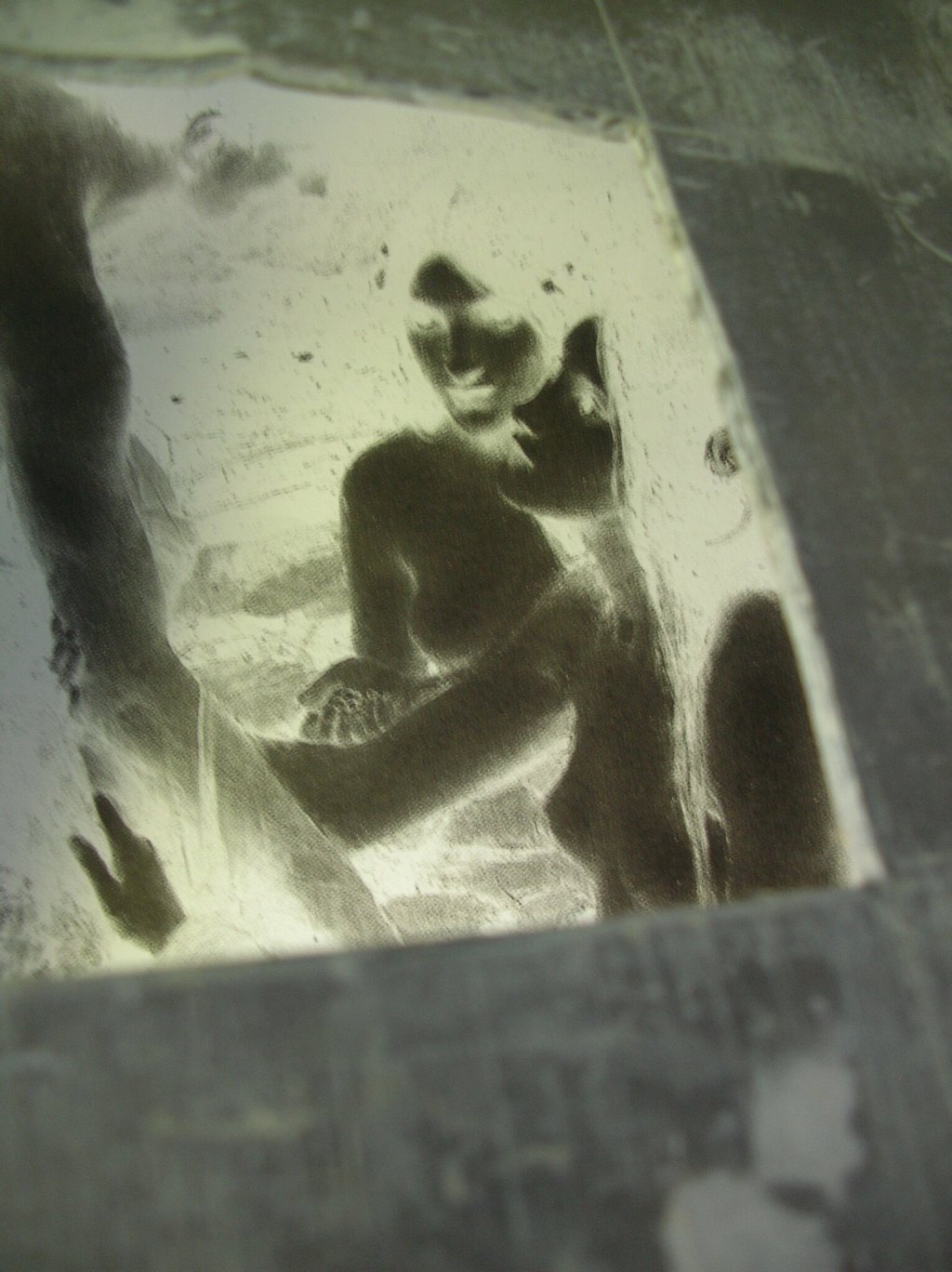
A Sensation of Looking/Manifesting Seeing
Looking becomes sensation when the body can no longer be separated from the surface through which it is encountered. Line, volume, skin and gesture begin to occupy the same unstable field. The drawn body is not simply represented; it is sensed through the movement of the mark. The vessel enters this correspondence almost bodily, carrying neck, shoulder, hip, foot, interior and surface into another material register. Drawing and ceramics begin to touch before either has fully become the other.
Archival / Anarchival
Archival, with considerable anarchival potential.
This is perhaps one of the most important posts in this cluster because the connection between life drawing and ceramics is already explicit.
The post moves through drawing, contingency, sensing and seeing; Julian Stair’s Quietus; death and the human body; life drawing and anatomy; flesh, muscle and bone; and finally the movement towards “Form-Movement / Mass-Volume / Skin-Surface.” It then makes the crucial proposition that line is “only the visual interpretation of an extremity of a volume” and that mark-making becomes a conduit for a sensation of seeing others.
It then directly connects anthropomorphic language in pottery—neck, shoulder, hip, foot—with the vessel as a bodily container.
Outpost 310323
A Sensation of Looking/Manifesting Seeing
Matters of Concern/Fact.
Drawing/Contingency/Sensing/Seeing
Drawing away from descriptive depictions that illustrate preconceptions/aesthetics.
Julian Stair.
Quietus. 2012.
The Vessel.
Death and The Human Body.
There is an alchemy to making ceramics. We take an inert material, fashion it, dry it and expose it to heat and flame. The practice of cremation, of exposing the body to fire, going through an alchemical change, echoes and parallels the process of firing.
Julian Stair.
The materials he works, lead and clay are dense, both physically and emotionally. But Stair’s use of these materials is not representational. These objects do not depict or illustrate, instead they enact and embody.
Stair’s achievement in this cyclical exhibition is to have expressed both the universality and the specificity of death, each as an aspect of the other.
The great hand-thrown jars that stand at the heart of the exhibition exemplify this doubleness. Though completely abstract, they exist at the scale of the body. They invite a tactile response, visitors might stroke the ridges circumscribing the jars or tap them, or even give them a gentle hug.
Glenn Adamson.
Life drawing on the psychology of nakedness and the human body in contemporary art.
Life-Class/Anatomy/Pathology.

The practical and theoretical problems of the confrontation with the human form.
Georg Eisler.
Herbert Boeckl.
His nudes speak a physical language, interpreting life and death in terms of human bodies, of functioning muscle and bone and the tactile aspects of flesh, and the knowledge of what lies beneath/behind it.
Alfred Hrdlicka.
A Group. 1973.
Proximity does not read as intimacy, the entangled naked bodies convey a sense of insecurity.
The Posed/Nakedness/Social Scrutiny.
The Life-Class.
Isabel Bradshaw/Michael Grimshaw
Drawings/Sculpted lines that bring sensations onto the surface of the paper.
Lines of Movement/Vectors
Lines of Static Forms/Boundaries
Mark-making, rendering the spatialities of the human form.
Form-Movement
Mass-Volume
Skin-Surface

Line is only the visual interpretation of an extremity of a volume. Mark-making on a drawing becomes a conduit for a sensation of seeing others.
The concept of anthropomorphism is central to the identity of pottery. We use bodily terms such as a neck, shoulder, hip and foot to describe the constituent parts of a pot. And the very nature of the vessel as a container, a holder of things, is analogous to the idea of the body as physical container for the soul or spirit.
Julian Stair.
BODY → LOOKING → DRAWING → SURFACE → ENCHANTMENT
or, in the vocabulary that is now emerging:
body → sensation → trace → surface → correspondence → other bodies
And there is a particularly strong migration through them:
Confronting the Human Body
→ the body becomes relational
A Sensation of Looking
→ looking becomes sensation
Drawing the Body / Luminescence
→ the body becomes spatial/atmospheric
Drawing Surfaces / Situated Knowledges
→ surface becomes a site of encounter
Enchantment / Sites of Sensual Engagement
→ the encounter opens into a world of other bodies
That makes In~~Touching feel less like a newly invented concept and more like something that has been slowly surfacing through the archive.
And I think that is exactly the kind of migration we want: not retrospective correction, but latent correspondence becoming perceptible.
There is also a very beautiful route now emerging between this cluster and the ceramic work:
body → flesh → surface → touch → trace → clay → firing → ceramic body → atmosphere
That is probably where we should return later when we work with your fleshbloodbody of others through sensate materials. I would leave that proposition open for now rather than prematurely resolve it. The archive has given us enough material to know that something is there.
Migration entry
From sensation of looking towards a material correspondence between bodies.
This post is now much more important than its original “drawing/seeing” designation suggests. It already contains the movement:
body → volume → surface → vessel → clay
That makes it an important precursor to your current thinking about fleshbloodbody and sensate materials.
Anarchival note
The post can now be read less as an investigation into representation and more as an early attempt to understand how sensation becomes material.
The phrase Skin-Surface is particularly important. It sits almost exactly at the threshold between the life-drawing body and your ceramic surfaces.
Likewise, the vessel’s bodily vocabulary gives you an early route from the drawn body into the ceramic body.

Posted by Russell Moreton anthropological, cyanotypes, drawing, Georg Eisler, Glenn Adamson, Herbert Boeckl, human body, Julian Stair, leper graves, life-class, Morn Hill, pottery, Quietus, russell moreton, vessel, Winchester


Leave a Reply