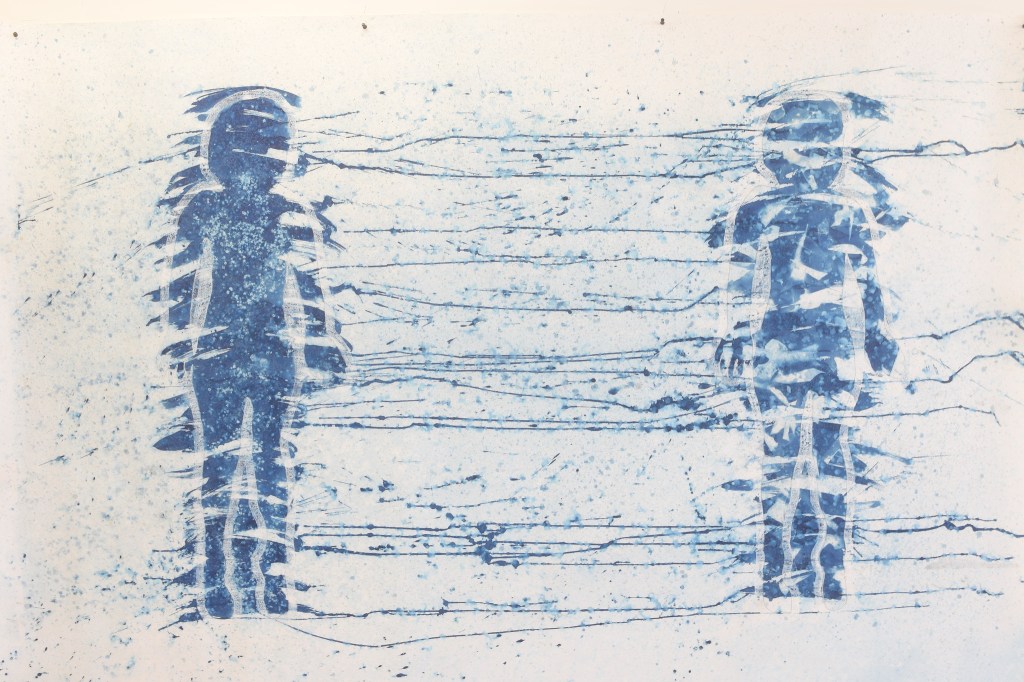
Interiority/Atmosphere
Indexical~Sensate~Bodies
The hortus conclusus is revisited not as a model of enclosed harmony, but as a situated body through which the troubled relations of shelter, difference, alienation and atmospheric openness become available for further spatial inquiry.
The important continuity is that the earlier material already understands place as something cultivated through sensory and material relations. The later matrix does not replace that understanding; it makes its tensions more explicit. Hospitality becomes more rigorous when it can accommodate alienation, and interiority becomes more generative when enclosure is understood as a condition continually negotiated through other bodies.
For Moreton, the key conceptual shift is from the earth as something that binds people to place towards earth~clay as a body through which place, making and belonging are continually negotiated. It brings in his earlier pastoral research into direct correspondence with his ceramic practice without making his ceramics a representation of the garden.
What kinds of bodies can gather a place, and what forms of alienation must remain possible for that gathering to stay open?
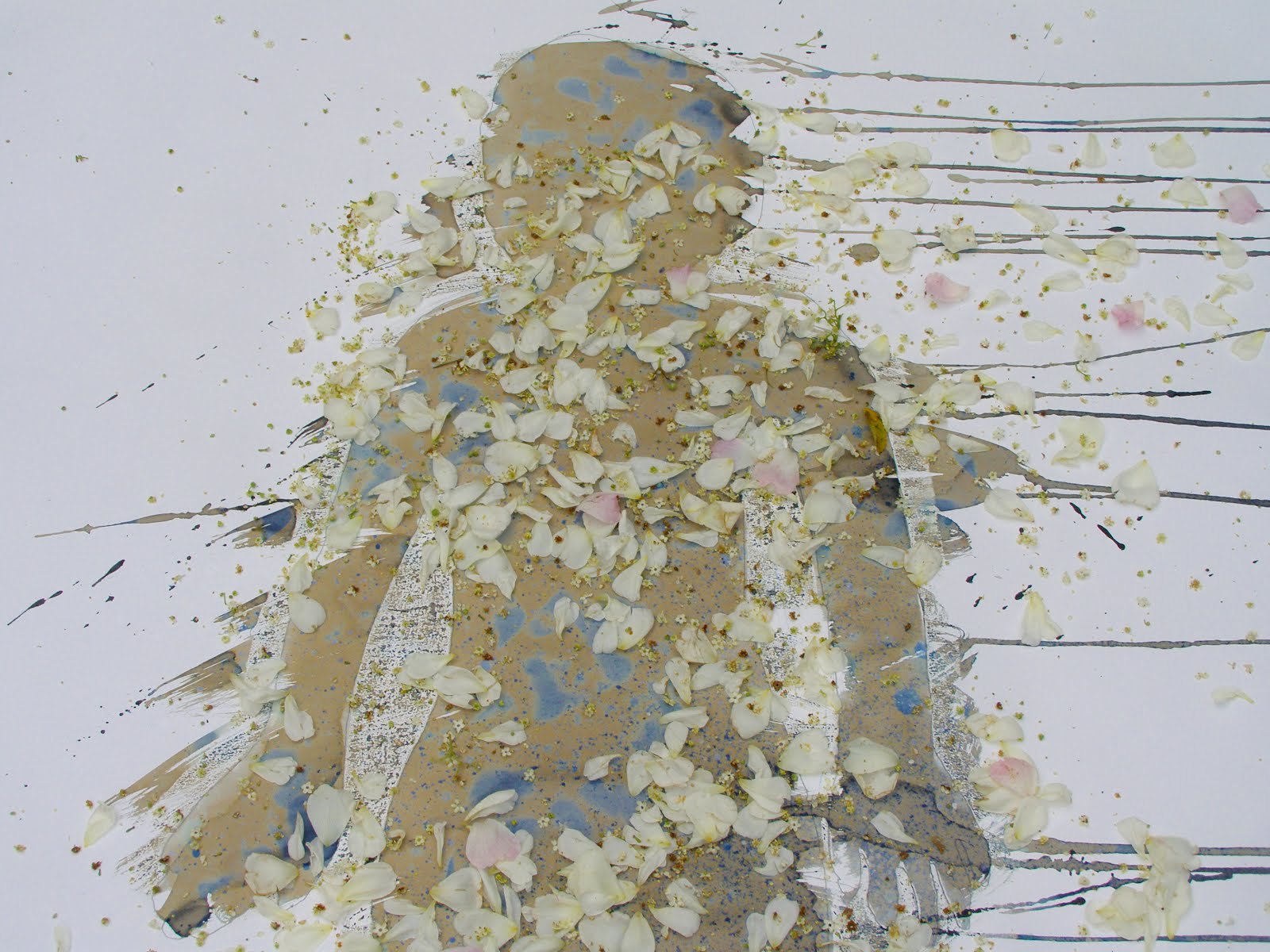
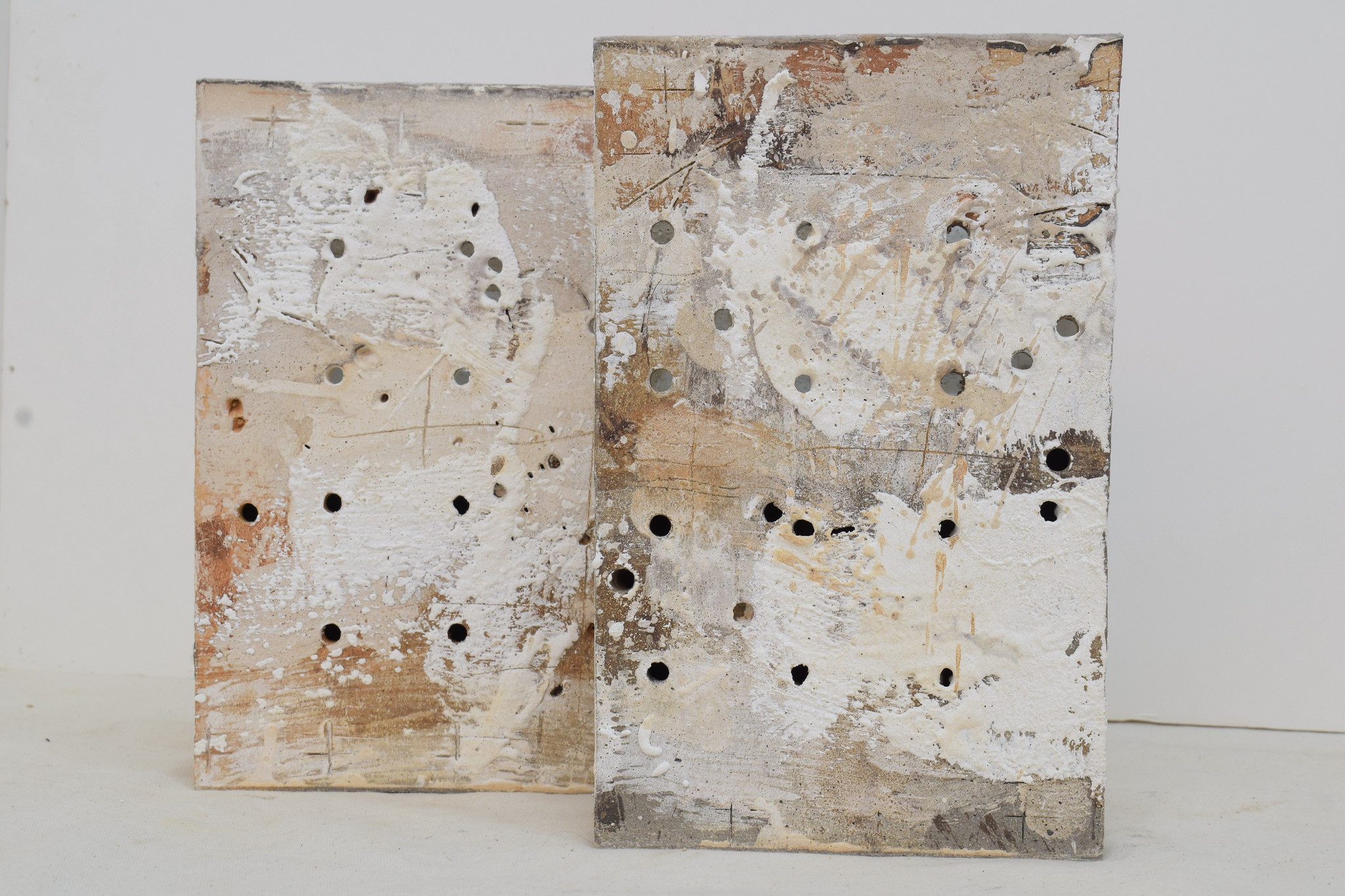
Indexical~Sensate Bodies as visual participants through which that matrix becomes active. This preserves a useful distinction: the matrix describes the movements of correspondence; the images and ceramics are not examples of those movements but bodies that make them possible to encounter.
Hortus Conclusus ~ Indexical Bodies ~ Diffractive Hospitality
The hortus conclusus returns as a situated body of inquiry, encountered now through other indexical~sensate bodies. The garden’s earlier propositions of enclosure, cultivation, intimacy and care are neither preserved unchanged nor displaced. They are diffracted through material encounters in which bodily presence becomes uncertain, surfaces retain traces of contact, and interiors emerge through relations between bodies.
In the dispersed figure, petals, pigment and linear marks trouble the body’s apparent limits. Organic matter becomes detached from its originating body, entering another material arrangement. Presence persists through dispersal; the body remains perceptible while becoming unfamiliar to itself. In the perforated ceramic bodies, enclosure acquires another condition. Weathered surfaces retain the traces of making, while apertures and the interval between forms allow a chamber to emerge through proximity rather than containment.
Hospitality becomes inseparable from this troubling of bodily identity. To receive another body is not necessarily to assimilate it, nor to guarantee its belonging. The hosted body may remain unfamiliar, resistant or only partially available. Alienation therefore does not simply oppose hospitality; it marks the difference that hospitality must encounter without resolving. Diffraction keeps these relations active, allowing the garden, the image, the ceramic and the reading body to enter correspondence without converging upon a single account of interiority.
Atmosphere emerges through this correspondence as a sensate condition of material and spatial exchange. It gathers through surfaces, apertures, colour, light, organic traces, proximity and the movements of attention. The interior is no longer understood solely as a protected space within an enclosing boundary. It becomes a provisional condition continually produced and troubled through relations with other bodies.
The hortus conclusus is thus revisited not as an image of enclosed harmony, but as a persistent spatial proposition. Its questions of shelter and intimacy remain in play, acquiring further capacities through bodies that disperse, receive, resist and endure. What persists is not a completed meaning of the garden, but the possibility of encountering its relations otherwise.
Hortus Conclusus ~ The Troubled Hospitality of Interiorities 2026.
Diffraction~Hospitality~Alienation~Atmosphere: A Situated Spatial Inquiry
1. The sheltered place and its conditions of hospitality
The hortus conclusus, or enclosed garden, offers an early proposition within Russell Moreton’s developing spatial practice. In the earlier Interiors MA material, the garden is approached as a place of sensory experience, contemplation, cultivation and spatial identity. Drawing upon Peter Zumthor’s account of sheltered places of intimacy, the enclosed garden establishes a particular relation between protection and openness: it gathers a world within boundaries while remaining open to the sky, to light, weather and the movement of living things.
The garden is consequently more than an architectural enclosure. It is a sensate gathering in which material, memory, cultivation and bodily attention become implicated in the experience of place. Its intimacy emerges through the particularity of relations between soil, plants, light, smell, sound and human activity. The garden becomes a place through the ongoing correspondence of bodies and conditions rather than through enclosure alone.
Alexander Kluge’s account of the enclosed garden as a space of reflection beyond ordinary utility extends this proposition. The garden offers a form of interiority that cannot be fully assimilated into the demands of production or instrumental purpose. Its significance lies partly in sustaining a space whose value cannot be exhausted by what it produces or how efficiently it functions.
Read through Moreton’s later spatial matrix, however, the sheltered garden becomes a more troubling proposition. What does it mean to offer shelter? Which bodies can enter? What remains outside? How does the intimacy of an enclosed place depend upon the differences it gathers, excludes or renders less perceptible?
These questions do not invalidate the garden as a hospitable space. They make hospitality more consequential. The enclosed garden becomes a situated body whose capacity to shelter is inseparable from the boundaries through which its interiority is established.
2. Diffraction ~ the difference within enclosure
Diffraction introduces a way of understanding the garden beyond the opposition between enclosed interior and open exterior. The wall does not simply divide two already constituted spaces. It participates in establishing their differences, regulating passage and shaping the conditions through which bodies encounter one another.
The garden’s enclosure produces intimacy by distinguishing an interior from its surroundings. Yet this distinction is never absolute. The sky remains present above the walls; light, air, weather and seasonal transformations enter into the garden’s conditions. Plants extend through growth, decay and reproduction, while cultivation brings human gestures into relations with material processes that cannot be fully controlled.
The garden is therefore neither entirely separate from its environment nor simply continuous with it. Its interiority emerges through a relation that simultaneously gathers and differentiates.
Diffraction allows this relation to be understood without treating difference as a problem that must be resolved. The sheltered interior and the surrounding world remain distinct, but their distinction becomes consequential through the ways they affect one another.
Within Moreton’s spatial inquiry, this operation extends to the withdrawn ceramic body. Its surface establishes a material boundary, while its apertures and spatial relations trouble the apparent completeness of that boundary. As with the enclosed garden, interiority is not simply a pre-existing space contained by a body. It is produced through the relations that establish and unsettle enclosure.
The garden and the ceramic thus become different but corresponding spatial bodies. Neither is reducible to the other, yet both make it possible to investigate how a boundary can shelter while remaining exposed to relations beyond itself.
3. Hospitality ~ the intimacy of shelter
Hospitality names the conditions through which a place gathers and sustains bodies. In the hortus conclusus, shelter offers protection and the possibility of remaining. Cultivation requires care; intimacy develops through duration, repetition and attention to the particularities of living matter. The garden is hospitable not simply because it is enclosed, but because its conditions allow relations to be maintained.
The earlier material’s emphasis on shared cultivation is important here. Working with the hands becomes a practice through which people and place are brought into correspondence. The garden is not merely an image of intimacy; it is a condition of activity, care and material engagement.
Yet hospitality cannot be understood as an uncomplicated openness. The garden’s capacity to shelter depends upon its capacity to establish boundaries. It gathers particular bodies and conditions while remaining selective about what it protects, cultivates or allows to flourish. The same enclosure that affords intimacy may also produce separation.
Moreton’s later formulation of hospitality makes this tension explicit. Hospitality is not the dissolution of boundaries, nor the guarantee that those who gather will become familiar to one another. It is a willingness to sustain encounter while allowing difference to remain consequential.
The garden consequently becomes a troubling host. Its intimacy is neither innocent nor complete. It depends upon relations of care and exclusion, proximity and distance, cultivation and resistance. These conditions do not simply negate hospitality; they reveal its material and spatial complexity.
The withdrawn ceramic body extends this question into another register. Its apertures offer the possibility of passage, but its material density remains. Its surfaces retain their resistance, and its interiority is never wholly available. The ceramic gathers without becoming an unrestricted container. Its hospitality consists in the spatial relations it makes possible, rather than in the promise of complete access.
4. Alienation ~ the unfamiliar within the sheltered place
Alienation introduces a necessary disturbance into the intimacy of the garden. It names the strangeness that persists within a gathering, even where care, familiarity and protection are established.
A sheltered place does not eliminate the unfamiliar. Plants, soil, weather and other material processes exceed the purposes assigned to them. The garden changes through conditions that cannot be wholly anticipated. Its living bodies participate in relations whose consequences may remain uncertain, resistant or beyond human understanding.
Alienation therefore need not be understood simply as exclusion from a place. It may also emerge within the place itself, when what is encountered cannot be fully assimilated into an existing understanding of its interiority.
This distinction troubles the assumption that hospitality culminates in familiarity. The garden may be intimate without being entirely knowable. Its shelter may sustain relations whose differences cannot be reconciled, and its interiority may remain open to conditions that unsettle the very identity it appears to protect.
For Moreton, this provides an important correspondence with the withdrawn ceramic. The ceramic persists as a materially particular body, but its relational capacities exceed the meanings assigned to it. Its apertures, weathered surfaces and material traces invite attention without guaranteeing comprehension. The body may become intimate through encounter while remaining strange.
Hospitality and alienation are thus not mutually exclusive. They are interdependent conditions through which the limits of an encounter become perceptible. Hospitality allows a relation to continue; alienation prevents that continuation from being mistaken for complete knowledge or possession.
The sheltered place becomes productive precisely where its intimacy remains troubled.
5. Atmosphere ~ the sensate life of interiority
Atmosphere brings these relations into the register of bodily experience. In the earlier garden material, sensory memory, light, smell, sound and the movement of plants contribute to the experience of an intimate landscape. The garden’s atmosphere does not reside in any single element. It emerges through the correspondence of bodies, materials, architectural boundaries and temporal changes.
The garden is therefore not a static container for an atmosphere that has already been formed. Its atmosphere develops through the conditions of shelter and exposure, cultivation and weather, proximity and movement. The enclosure participates in the atmosphere without determining it completely.
This understanding extends to Moreton’s ceramic bodies. Their surfaces, apertures and spatial arrangements establish particular conditions for light, shadow, bodily attention and surrounding space. Atmosphere emerges through these relations rather than being added as an aesthetic quality to the finished work.
The relationship between garden and ceramic becomes especially productive here. Both gather conditions of interiority while remaining exposed to transformations beyond their boundaries. Both establish a particular spatial situation without fully containing the relations through which it becomes sensate.
Atmosphere is therefore the field through which hospitality and alienation become felt. It allows intimacy to persist alongside strangeness, and it carries the consequences of spatial gathering beyond the limits of an individual body.
6. Inhuman touch ~ the more-than-human interior
The garden also opens the earlier material towards the question of inhuman touch. Its sensory life cannot be reduced to human perception, even though human experience remains central to the garden’s cultivation and appreciation. Soil, plants, water, light and weather participate in material relations that exceed the intentions through which the garden is designed or maintained.
This does not require the garden to be understood as a self-contained organism or as a harmonious ecological whole. Its relations may include dependence, resistance, interruption and transformation. The garden’s aliveness emerges through interactions whose consequences are not fully determined by human intention.
Read alongside Moreton’s correspondence with Karen Barad, this unsettles the assumption that the human subject encounters an entirely separate material world. The boundaries between bodies and environments become consequential through the relations in which they participate. Inhuman touch names a proposition through which the material conditions of encounter are understood as active rather than merely passive.
The withdrawn ceramic offers a different but related material situation. It is not alive in the same sense as a plant, nor does it need to be anthropomorphised to participate in an ecology of relations. Its material persistence, apertures and surfaces affect the conditions through which light, atmosphere and bodily attention become possible.
The garden and ceramic therefore remain distinct while troubling the boundary between human-centred experience and the more-than-human relations that sustain it. Their correspondence allows interiority to be reconsidered as an active, permeable condition rather than a space possessed by an autonomous subject.
7. From the hortus conclusus to the Permeable Chamber
The earlier garden proposition and Moreton’s later Permeable Chamber can now be brought into correspondence without treating the ceramic as a translation of the garden.
The hortus conclusus gathers intimacy through enclosure, cultivation and protection. The Permeable Chamber gathers through the material persistence of ceramic bodies, their apertures and their relations with surrounding space. Both make interiority available as a situated experience, but they do so through different material and spatial conditions.
The garden’s enclosure establishes a sheltered interior that remains open to the sky and to the transformations of living matter. The ceramic chamber establishes a provisional spatial relation through bodies that gather without fully containing the interval between them. In both cases, interiority becomes consequential through the relation between gathering and exposure.
The difference is equally important. The garden’s hospitality may be understood through practices of cultivation, care and shelter. The ceramic chamber troubles these conditions through material withdrawal, resistance and the persistence of bodies that cannot be fully assimilated to human purposes. Its openings do not guarantee access, and its gathering does not resolve alienation.
Diffraction~Hospitality~Alienation~Atmosphere therefore provides a matrix through which these two spatial propositions can enter correspondence. Diffraction identifies the differences produced through their distinct modes of enclosure and permeability. Hospitality considers how each gathers bodies and sustains relations. Alienation preserves the unfamiliarity that remains within those relations. Atmosphere describes how their spatial conditions become sensate and consequential.
The matrix does not collapse the garden and ceramic chamber into a single model. It allows each to trouble the other, making possible a more complex understanding of interiority as a condition that shelters while remaining exposed, gathers while retaining difference, and persists without becoming fully resolved.
Conclusion ~ the troubled hospitality of interiority
The hortus conclusus remains a significant body within Moreton’s spatial practice because it offers an early proposition concerning the relation between enclosure, sensory experience, contemplation and care. Revisited through Diffraction~Hospitality~Alienation~Atmosphere, however, the sheltered garden becomes more than an image of protected intimacy. It becomes a situated condition through which the limits and responsibilities of hospitality can be examined.
The garden gathers, but does not escape the differences through which its interiority is established. It shelters, but cannot wholly determine the relations that enter its boundaries. Its atmosphere emerges through bodies and processes that exceed the intentions of its cultivation. The sheltered place is therefore hospitable without being entirely knowable.
The withdrawn ceramic body carries this difficulty into another material register. It persists without closing its spatial proposition, offering a body through which intimacy, resistance and indeterminacy may become consequential. Its chamber is neither wholly enclosed nor entirely open; it gathers relations without resolving their differences.
Moreton’s spatial inquiry develops through this correspondence between situated bodies. The earlier garden and the later ceramic chamber remain materially and conceptually distinct, yet each allows the other to be encountered otherwise. The spatial matrix does not provide a final synthesis. It sustains the conditions through which these bodies can continue to trouble and extend one another.
The proposition is therefore not simply that a place should be hospitable. It is that hospitality becomes spatially consequential when it remains responsive to the alienation, difference and more-than-human material relations that its gathering cannot fully resolve.
The sheltered place persists, but its interiority remains in formation. It gathers bodies without possessing them, sustains intimacy without guaranteeing familiarity, and remains open to the atmospheric indeterminacies through which further spatial propositions may emerge.


Leave a Reply