Visual artist working in the UK.
UCA Farnham, Interior Design MA.
Canterbury School of Architecture, Spatial Practices MA.
University of Southampton, Visual Fine Art BA hons.
Epsom School of Art and Design, Ceramics HSND.
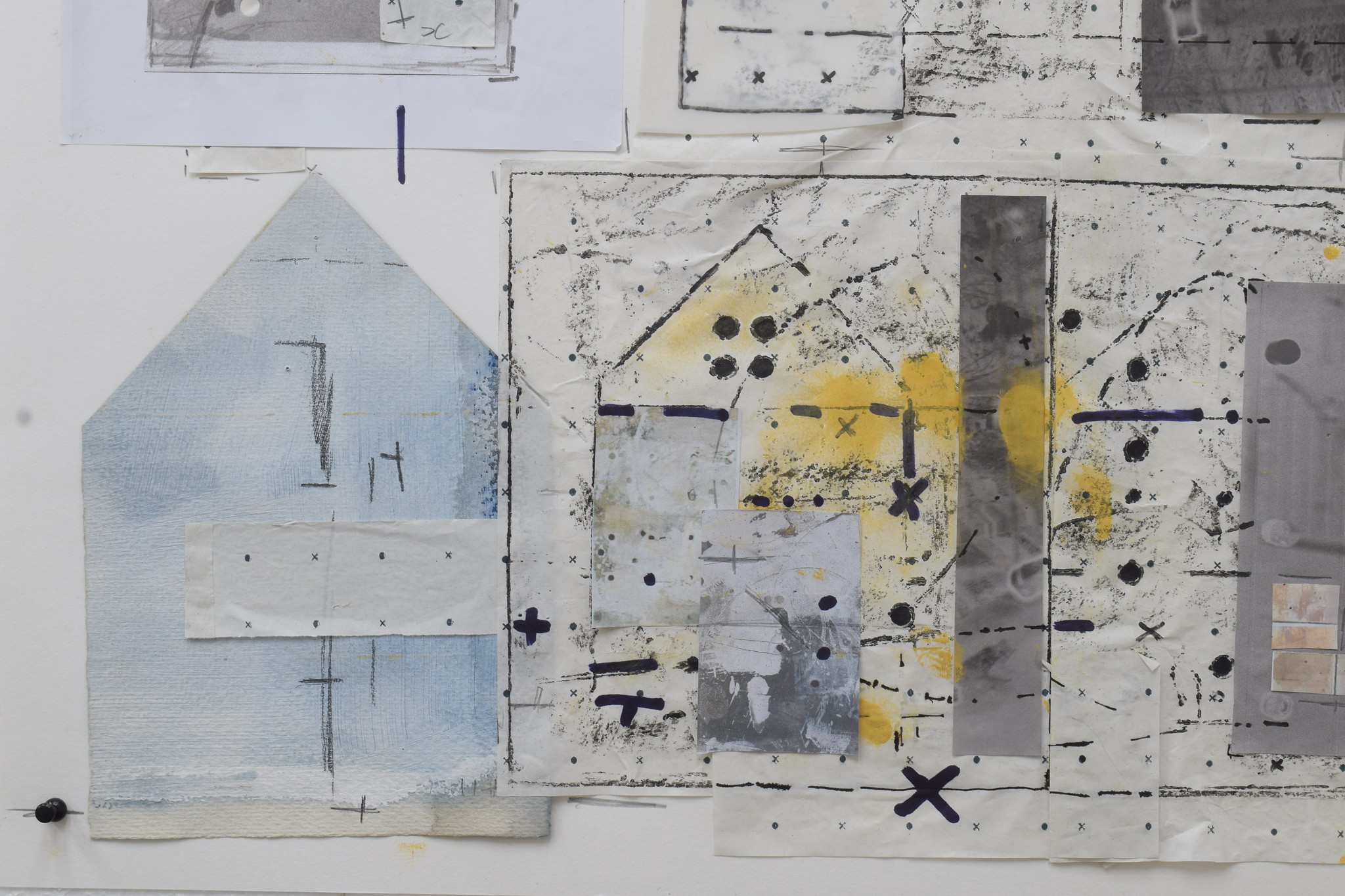
Trace drawings on paper with organic and material from the built environment.
Drawing/Making Processes.
Architectural Body : Organism, Person, Environment. Arakawa and Gins.
“[…] the body […] continually transforms itself and is already not, at the moment when I speak of it, what it was a few seconds ago.” (Laplantine, 2015:13)
Laplantine, F. 2015 [2005]. The Life of the Senses: Introduction to a Modal Anthropology. United Kingdom: Bloomsbury Academic.
Through the choreographing of our learning processes we create the conditions for engagement/entanglement and production/transformation, which are all modalities of movement and action. So we see pedagogical, architectural and professional practices as potential practices of transformation and co-learning. Dance – somehow both connected to and different than choreography – brings with it a whole set of values which we consider significant for the architectural pedagogy we enact.
Lepeki lists the ‘constitutive qualities’ of dance as
“ephemerality, corporeality, precariousness, scoring and performativity” (Lepecki 2012:15)
He goes on to say that “[t]hese qualities are responsible for dance’s capacity to harness and activate critical and compositional elements crucial to the fusion of politics and aesthetics …”(Lepecki 2012:16)
His ‘compositional’ and ‘critical’ elements echo the event/discourse relationships within our pedagogy and in our use of choreography as dance/writing. These qualities allude to specific modes of engagement and making, and state particular values. We will use them to underscore our pedagogical modes, and develop them as necessary in a teaching practice which desires students’ engagement, empowerment, and caring.
In that sense, ephemerality can be related to immediacy and an engagement with the here- and-now which cares about effects and duration. Corporeality speaks of a body, but if we ask whose body or what body, then we can expand it to be any-body, in order to speak of matter or, more precisely, of mattering and bodying. Other names for precariousness can be fragility or vulnerability, somehow always already a condition of our impossibly immediate interventions. Scoring, which can be both a ‘writing’ and an unfolding, creates spaces and times and modes for and of improvisation. And performativity always returns us anew to movement, multiplicity, effects and life.
Performative Intraventions and Matters of Care: Choreographing Values
OREN LIEBERMAN
ALBERTO ALTÉS
Abstract
Thinking through choreography as dance/writing – both the doing and the score for that doing, the event and the discourse – we propose to shift the focus of architectural practices and pedagogies from an emphasis in the attainment of competencies and static knowledge, to a privileging of processes and modalities of learning that nurture the values of engagement, empowerment and caring responsibility. Choreography situates our work in the realm of performative action and transformation, and it does so with and through our bodies; also, it helps us frame the power of our intraventions, which aim at transforming the world through immediate, responsible and often fragile acts of engagement with matter, movement and life.
Keywords:
Intravention, matters of care, choreography, architectural pedagogies, modalities of learning.
More on ’intraventions’ can be found in:
Altés, A. and Lieberman, O. 2013. Intravention, Durations, Effects: Notes
of Expansive Sites and Relational Architectures. Baunach: Spurbuch Verlag.
Choreography and Architectural Engagement: A Transformative Approach This title directly addresses key themes in the post, improving relevance for search queries related to architecture and choreography, which can attract targeted traffic.
Exploring Ephemerality and Corporeality in Architectural Practices By highlighting ‘ephemerality’ and ‘corporeality’, this title integrates crucial concepts, enhancing visibility in searches focused on contemporary architectural discourse.
Intravention and Care: Redefining Architectural Pedagogy This title emphasizes ‘intravention’ and ‘care’, making it appealing for users searching for innovative educational practices in architecture, thus fostering user engagement.
Independent research for Studio Practice Theory and Analysis.
UCA Farnham, MA Interiors. 2014.
Why does Edmund de Waal make architectural interventions through the arrangement of porcelain pots?
To what extent, if any is this Ceramist interested in the ability of the single pot to engender meaning?
How is the “innerness” of pots that he talks about so eloquently actually manifested in his architecturally staged installations and exhibitions?
Signs and Wonders: Edmund de Waal and the V&A Ceramic Galleries 2009.
During his career Edmund de Waal has moved from that of being a domestic potter to that of an installation artist.
His large scale installations show large groups of ceramic vessels, these are often in historic architectural settings. He is both an artist and an historian of ceramics. His installation Signs and Wonders contains up to 425 pieces of wheel thrown porcelain. This site specific installation is located at the heart of the galleries. The installation will be visible to viewers as they look upwards into the space of the monumental central dome.
Central to Edmund de Waal’s practice is the concern to offer a ‘dialogue about the use, preciousness, survival, preservation and display of ceramics.’ (Graves,2009:8)
He has further explored the use of installations and vitrines in the pursuit of framing and underpinning these intellectual concerns. The use of purpose made structures, shelves and boxes adds the aesthetics of a tightly control clean minimalist style of presentation to his assembled collection of pots.
Interpretation and display are now central to these ‘grouped works’ that have become presented as ‘cargoes of pots’ that now seem at home in the collecting environment of the museum.
‘The way in which the pots are displayed has become an integral part of the work. And increasingly there is a sense that it is about putting on a show, albeit one that might be for a private audience.’ (Graves,2009:8)
De Waal working with specific settings has produced installations that by their very impermanence offer ‘new and unexpected dialogues’ through interventions that are ‘framing pots within architectural features or the intimate spaces of furniture.’ (Graves,2009:10)
‘By altering the character of a known space, by intruding on areas within it that might not usually be associated with the display of art, the viewer’s awareness of both the changes and the space are heightened.’ (Graves,2009:10)
This methodology of display ultimately disappears as if it were never actually present, leaving the underlying fabric of the interior space as it were untouched, the impermanence of the work now resides only in its memory.
What remains of these sensing spaces (interiors) through spectacle, event and place? Proposal for the ceramics department at the Victoria and Albert Museum.
Site specific work in the new contemporary ceramics gallery that responded to the architecture of the space, and that could remain in place for years. An installation or feature that could remain in place and yet allow the gallery to function as a location for frequently changing displays and exhibitions.
De Waal’s response is Signs and Wonders ‘a lacquer red metal channel tracking the circumference of the dome and housing more than 400 of his pots; is an act both of daring and of breathtaking elegance and simplicity, a magisterial achievement on a scale surpassing anything he has previously undertaken.’ (Graves,2009:10)
Signs and Wonders is in reality a major contemporary architectural adaptation into the very fabric of the historical building. Its very reality creates a physical link between the past and the present, and it represents a long term commitment that began with the redevelopment of the ceramic galleries into the new Contemporary Ceramics Gallery.
Edmund de Waal’s Signs and Wonders is an iconic statement of intent for the Contemporary Ceramics Gallery, it underpins a new platform for the expanding territory of creative practice in ceramics. Signs and Wonders actively seeks to simulate new ways of seeing ceramics.
Architectural feature that comprises of some 425 thrown pots made of porcelain by Edmund de Waal and installed under the oculus of the great dome situated directly above the main entrance hall.
Edmund de Waal reflects on the vitrines that used to be found in the old ceramic galleries (room 137) at the Victoria and Albert Museum in the 1970s.
‘Most of the vitrines were firmly policed into taxonomies of kiln or modeller or religion, less ’pseudo-scientific’ than a slightly desperate attempt to control the vastness of the collection. Some of the vitrines had the work of a single potter. All the pots by Hans Coper used to be in one mahogany case, huge early textured vessels shadowing the fine later Cycladic forms. They barely fitted.’(De Waal,2009:16)
De Waal’s memories of the old galleries in the 1970s was that they were an attempt to compare pots from different galleries, of the strangeness of seeing through one great case into another; the tops of a row of bottles cresting a line of dishes and the layering of one series of forms or colours onto another. And of course the fact that there were very few people.
Signs and Wonders; Edmund de Waal.
‘I have made an installation of pots for Gallery l41. There are 425 vessels made out of porcelain and they are placed on a red metal shelf that floats high up in the dome. You can just see it from the entrance hall through the square aperture in the coffered ceiling if you stand in one of the mosaic circles on the floor. It is called Signs and Wonders.’
I want to make this installation part of the fabric of the V&A. (De Waal,2009:20)
‘It began with the combination of a gesture of a pen and the plans to this austere bit of Edwardian architecture.’ (De Waal,2009:22)
The porcelain vessels are on a red shelf, the colour of lacquer.
The integrity of the shelf is upheld by being made from a proper material so as to form an accord with the historical architecture.
De Waal has experimented with placing porcelain on steel shelves and by having pots placed within lead lined boxes. He is aware of how these materials can form provocative combinations from their inherent densities.
The controlling presence of the vitrine is an intervention itself of its own display, (decommissioned mahogany vitrines from the V&A, illustrate the phenomenal weight of these enclosures)
De Waal’s porcelain vessels (shape shifters) are in effect objects from memory brought into a shifting nature of influences from the Chinese porcelains, the 1800 Century European porcelains and the collections of the Modem era from Vienna, Bauhaus and the Constructivists.
‘This is not a simple linear relationship, but part of a flow around into Modernism and back again. It is a perpetual rediscovery.’ (De Waal,2009:26)
On Pots Behind Glass:
The shadows of the stacked pots.
On the memory of objects, the afterimage, its distillation, and the blindness of looking away that gives it its form. What is left to be adapted or to be pared down through volume and angle into these new reflective forms?
Derrida on drawing from ‘blindness’.
‘I wanted to work with objects that have been part of my life for 30 years, and to make sense of my memories of how pots lived in the galleries.’ (De Waal,2009:26)
‘Other sections, one run of bottles that are in different celadons for instance, are a memory of vessels from disparate parts of the ceramics collections brought into a taxonomic focus. This is the use of memory and the after-image as the intense holding of a form on the retina.’ (De Waal,2009:26)
In Heidegger’s work ‘not least in his use of etymologies, his writings are imbued with a sense of historicity; a sense of the passage of time, of destiny, and of the past as a reservoir of thinking available to contemporary life.’ (Sharr,2009:99)
The Architecture of Place :
Architects that were sensitive to site, dwelling, inhabitation and place. Form Making as a Response to Site and Inhabitation.
In The Ethical Function of Architecture 1997, Karsten Harries seeks to reclaim a sense of meaning in architecture that he feels has been lost to a scientific rationality. He sees ornament as being able to convey meaning by linking and reflecting stories and in so doing it gives us an appreciation of nature. This type of ornament has a poetic function in that it helps to locate people with their place and community.
Dalidor Vesely believes that architecture can manifest the attitudes of its builders, and that this can describe through the very fabric of the building the very thinking of the society that implemented its construction.
Vesely ‘explored what he considered to be the tensions between instrumental and communicative, or technological and creative, roles of architecture. He argued that these roles have become divided; a split which is recorded in the respective roles of architects and engineers. Vesely traces the historical origin of this division to that of mediaeval optics and the development of perspective; to the first attempts to privilege a scientific description of light over immediate experiences of the qualities of vision. This division is a crisis of representation, that that is displacing meaning in architecture from human experience to the visual qualities of surface and appearance.’ (Sharr,2009:103)
For Vesely, creativity remains the antidote to technology.
Zumthor shares with Heidegger in that he believes in architecture’s potential to evoke associations and invite meaning.
Regionalism, a critical dialogue with the site, a rapport between place and building as if it had always been there.
‘Stone and water are more than materials or phenomena for Zumthor; they’re also intellectual notions, traditions of thought with a long history.’ (Sharr,2009:104)
Critical Regionalism, see Kenneth Frampton, ‘Zumthor aligns himself with Frampton when he writes about a critical dialogue between his designs and their sites, unafraid to claim meaning from locality.’ (Sharr,2009:105)
Choreographing Experience.
Zumthor ‘I need time to create an atmosphere, I have to be careful about things otherwise I won’t have this atmosphere and the whole objective of my work somehow would be gone. That’s the way I work.’(Spier,2001:19)
‘Much of the installation uses memory in a different way to produce the blurred after image.’ (De Waal,2009:28)
De Waal cites the photographer Hiroshi Sugimoto as being a revelatory influence on this notion of memory and the blurred after-image. In particular the series
‘Architecture’ which features blurred photographs of Modernist architecture. These images seemed to have the ability to take ‘you back to a particular moment standing in front of a particular building. It was that they seemed to be simultaneously images of a memory of place.’
Sugimoto ‘Architecture’ The German Pavilion from Barcelona, Mies van der Rohe. ‘A graduated run of whites into greys is a memory, for me, of the archive photographs of Bauhaus ceramics with their regimented attempt at teaching pottery by breaking forms down to component parts.’
(De Waal,2009:30)
Hans Coper builds up spatial interiors in his pots by using component parts thrown on the wheel.
The pot can be seen as a cultural trace that can bring a sense of immediacy from across the centuries.
‘The special historical value of pottery is due to its stillness underground. Almost uniquely, it does not corrode or disintegrate when exposed to earth and water, and so it forms the most important part of the physical record of the past. Like an invisible architecture, inverted and buried out of sight, they are our most reliable evidence of human endeavour.’ (Adamson,2009:36)
The Architecture of Natural Light, Henry Plummer 2009
Procession, the choreography of light for the moving eye.
Iconic works of space in motion: The Perceptual Flow.
‘Related concepts relevant to architecture are found in the films of Andrei Tarkovsky, for whom cinematic flow is a living rather than linear experience, achieved when film is stretched and lengthened by human memory and by images that evoke something significant beyond what we see before us, allowing time to flow out of the edges of a frame. ’(Tarkovsky, 1986:117)
Mies van der Rohe’s Barcelona Pavilion. Peter Zumthor’s Therme Vais.
Donald Judd’s Untitled 1980.
Jean Nouvel’s Culture and Congress Centre 1999.
‘More important still to de Waal’s project is the way that Judd’s stacks use interval. These cantilevered boxes are literally, one thing after another; but they do not touch. Rather the positive steel and plastic elements are separated by negative spaces that are their exact equal in volume. The works operate according to a binary, on/off logic, suggesting temporal as well as spatial extension.’(Adamson,2009:40) see also
Michael Fried, Art and Objecthood: Essays and Reviews: Chicago, 1967/1998.
Fried recognizes the durational aspect or dimension of minimalist sculpture, but condemned it for its “quasi-theatrical presence” that by occupying the time of the viewer this sculpture became mundane and everyday rather than transcendent.
Stacking is a way for de Waal to engage with the history of sculpture. It can be thought of as a compositional tool that suggests the storeroom, the kiln or a way of just putting pots together. Stacking produces a visual syntax through ‘exploring the formal and implicitly psychological relationships that pots can have with one another. ’(Adamson,2009:38)
Simultaneous Temporal Structures: Windows or Objects in Sequence.
‘Pictures in motion have long been exploited by Parisian architect Jean Nouvel, who describes his buildings as “scenographic” with routes composed along a series of camera angles and apertures.’ (Plummer,2009:56)
‘Another technique Tarkovsky employs to loosen time from any rigid progression is the directorial power to endow not only the entire film, but also its segments and even separate frames, with simultaneous temporal structures that are not unlike William’s “ice in March” or Viola’s “parallel times”.’ (Plummer,2009:56)
Steven Holl ‘movements are threaded rather than linear, pulled vaguely along by what Holl calls sequences of shifting and overlapping perspectives. Beckoning light draws the visitor onward step by step, and image by image, through a fragmentary rather than comprehensive narrative. (Plummer,2009:56)
Gianni Vattimo, Italian Philosopher.
The End of Modernity: Nihilism and Hermeneutics in Postmodern Culture. 1991.
Weak Ontology/Fragile Thought.
A latent learning under the safe light of the darkroom. The red pages of the signs and wonders catalogue links a narrative with spatial object of his installation by its colour, but it might also reflect the inner space of the photographic darkroom.
‘Light neither centres nor aligns space, as in the past, but appears in the periphery as a vague and marginal background event.’(Vattimo, 1991:85)
‘Filled with intricate constellations’: (Adamson,2009:34) Looking/seen from the oculus of the dome.
‘De Waal has placed his pots in circulation, but not in the sense that they can be held and passed around. They are even, to some degree withheld.’ (Adamson,2009:34)
“When they are so high up they become blurred”
Rather than the object stranded on the plinth attempting to flag you down, if you place it elsewhere there is a feeling of possibility and latent discovery, similar to the feeling that you get if you are lucky enough to see the stores of the museum.
(De Waal,2009:30)
In between spaces/stores and other latent spaces, re Mike Nelson, photographic darkroom between rooms. London 2007.
Wallace Stevens, Anecdote of the Jar. (1919) Heidegger, The Jug, “gathering vessel”
“What is de Waal charting in these looping circles within circles?”
De Waal acknowledges the influence of Wallace Steven’s poem “Anecdote of the Jar”. Glenn Adamson remarks how the special qualities of the round perhaps thrown pot is itself both an object, brought into the being by the world and encircled by it. (Adamson,2009:34)
In so “being” the vessel brings its own order, a subjectivity that acts and takes dominion everywhere. This communion (spatial relation) between the vessel and its environment is further echoed in the lines of the poem “the wilderness rose up to it, and sprawled around, no longer wild”(Stevens, Anecdote of the Jar. (1919)
Signs and Wonders is about seeing pots from a distance, De Waal is seeking to reflect the sentiments found in Wallace Stevens poem that makes the pot itself appear as a still centre from which we can step back from and observe as it/we gather our surroundings. This work is not about tactility, immediacy or possession, perhaps De Waal has succeeded in producing a collection that is also ‘a talisman of subjectivity’ of one man’s personal vision of ceramics.
‘When potters throw a certain curve in a vessel wall, they are in affect in dialogue with every kindred pot that they have seen or held. Like an archaeologist’s excavated sherd, the experiential dimension of making can act as a bridge across temporal distances.’ (Adamson,2009:44)
Temporal Zones/Re-Imagined Social Landscapes: Archaeology/Making : Pot Shard/Pottery.
See Tim Ingold the four A’s, Anthropology/Archaeology/Art and Architecture.
Working Notes : 26 February 2014
Theory and Analysis/Tutorial with Simon Olding CSC.
COMPONENTS :
Essay 2000-3000 words and a research journal that informs the essay/texts. Interested in using this research to inform my “Object Analysis” and its exploratory essay.
The Object:
Ceramic Vessel made by Hans Coper.
A Level Ceramics at Farnham Sixth Form College. Workshop experience locally at the Hop Kiln Pottery, Farnham and at Grayshott Pottery.
HND in Ceramics, Epsom School of Art and Design.
Self employed and freelance as a ceramist until 1992.
Currently working with clay in a contemporary practice that includes Architecture, Fine Art and Performance.
Research Questions.
What “anthropological traces” remain within the vessel of the “Pot”
What is its Symbol-Function-History.
How much of the artist’s social biography is caught up in its making.
Does the object in question underscore a deeper humanity/ a visionary present. How does the craft of making affect the perceptions of our surroundings.
The worn vessel/telluric values and the sensuality of humans.
Making: The Contemporary Craft Praxis. Research Texts.
Making, Tim Ingold.
The Perception of The Environment (Essays in Livelihood, Dwelling and Skill) Tim Ingold.
Heideggar for Architects, Adam Sharr. A Potters Book, Bernard Leach,
Hans Coper, Tony Birks/Contemporary Potters/Ceramic Review. The Psychoanalysis of Fire, Gaston Bachelard.
Rethinking Materiality, Colin Renfrew. (At The Potters Wheel)
How Things Shape The Mind/A Theory of Material Engagement, Colin Renfrew.
A movement of thought (Bergson) becomes active and in this activity a new register begins to take shape. This new register is neither art per se nor philosophy, it is study, it is practice, it is speculation.
The Minor Gesture, Erin Manning.
Exploring Bergson’s Active Thought Movement This title includes key terms like ‘Bergson’ and ‘Active Thought’, which are likely to attract readers interested in philosophy and promote better search visibility.
The Intersection of Art, Philosophy, and Practice By highlighting the intersection of diverse fields, this title draws in a wider audience searching for connections between art, philosophy, and practical applications.
Understanding Manning’s Minor Gesture Concept Focusing on Erin Manning and ‘Minor Gesture’ targets specific readers looking for insights into contemporary philosophical concepts, enhancing search relevance.
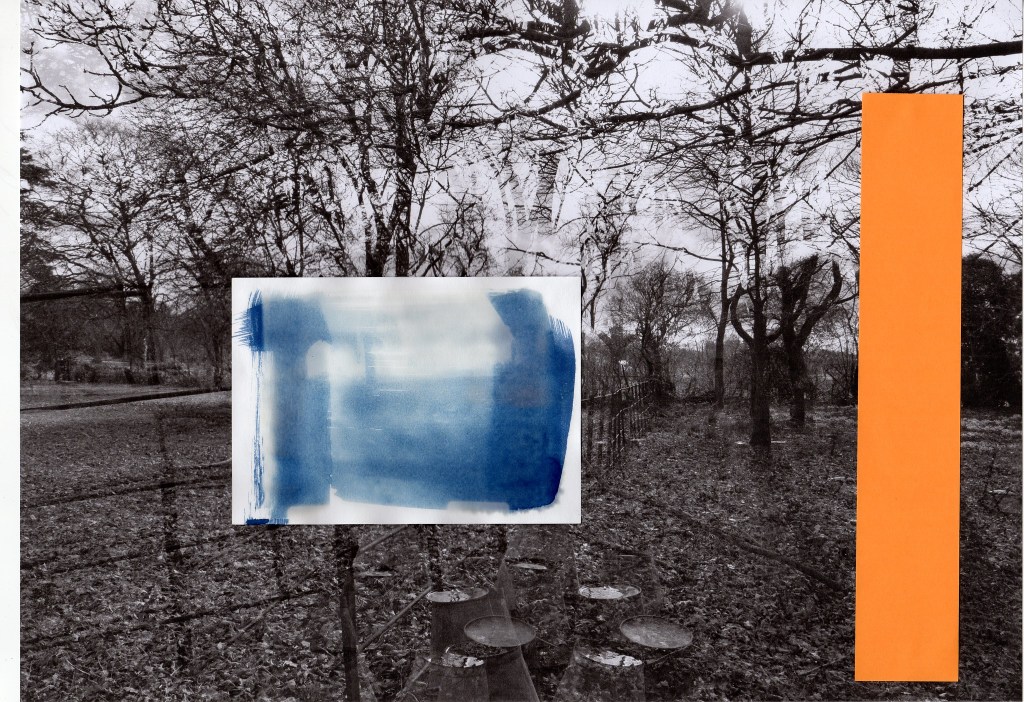
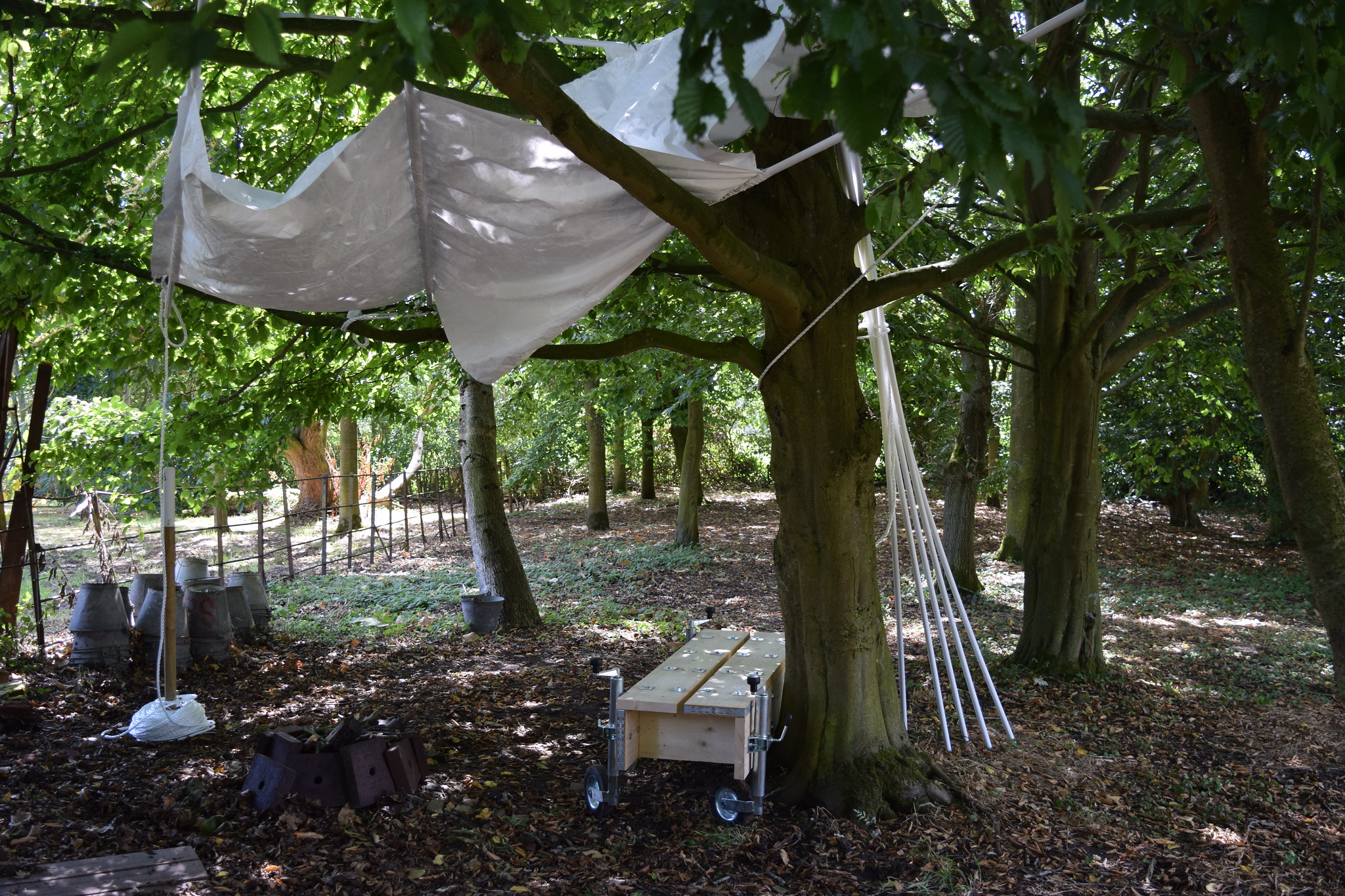
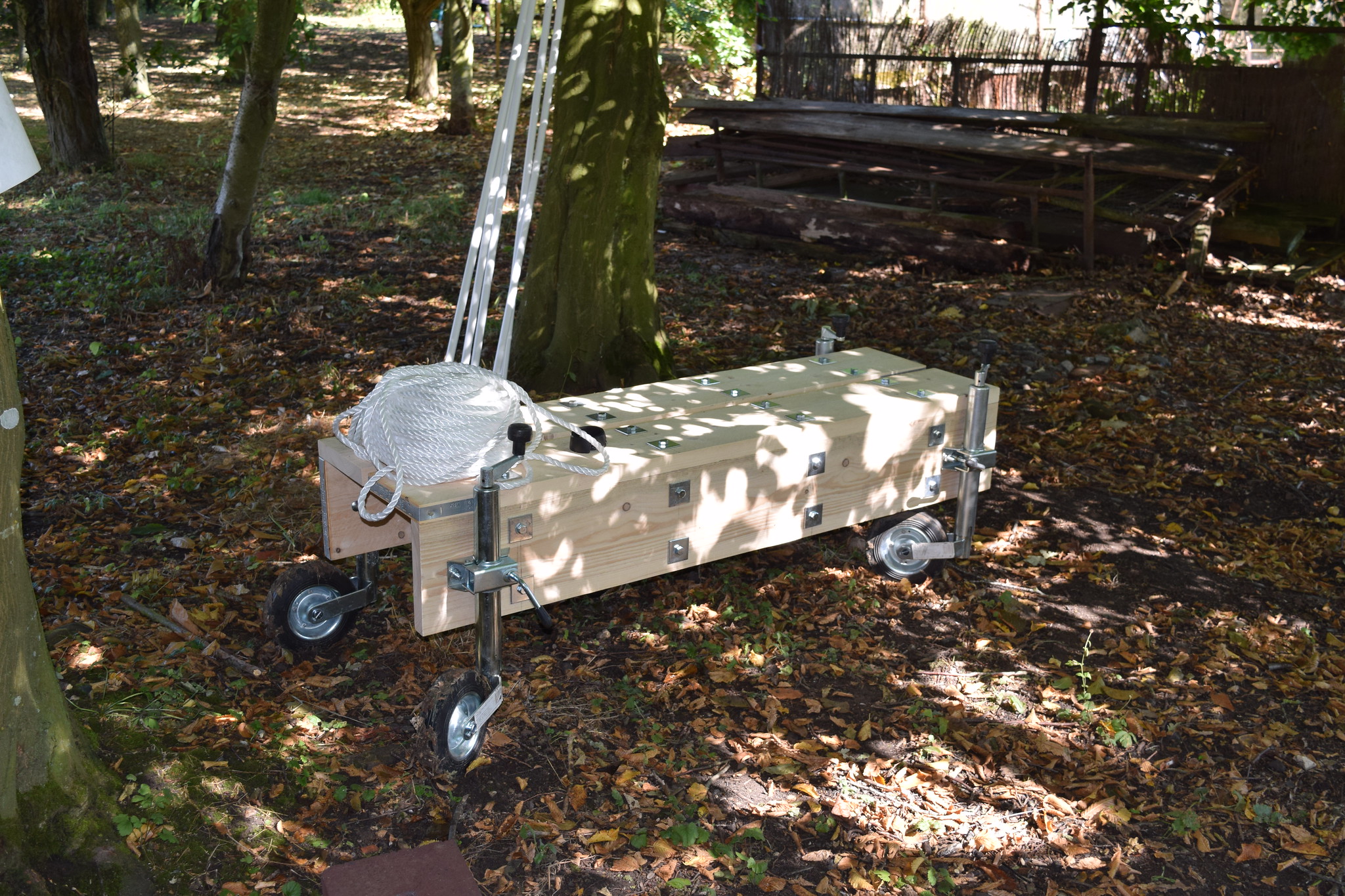
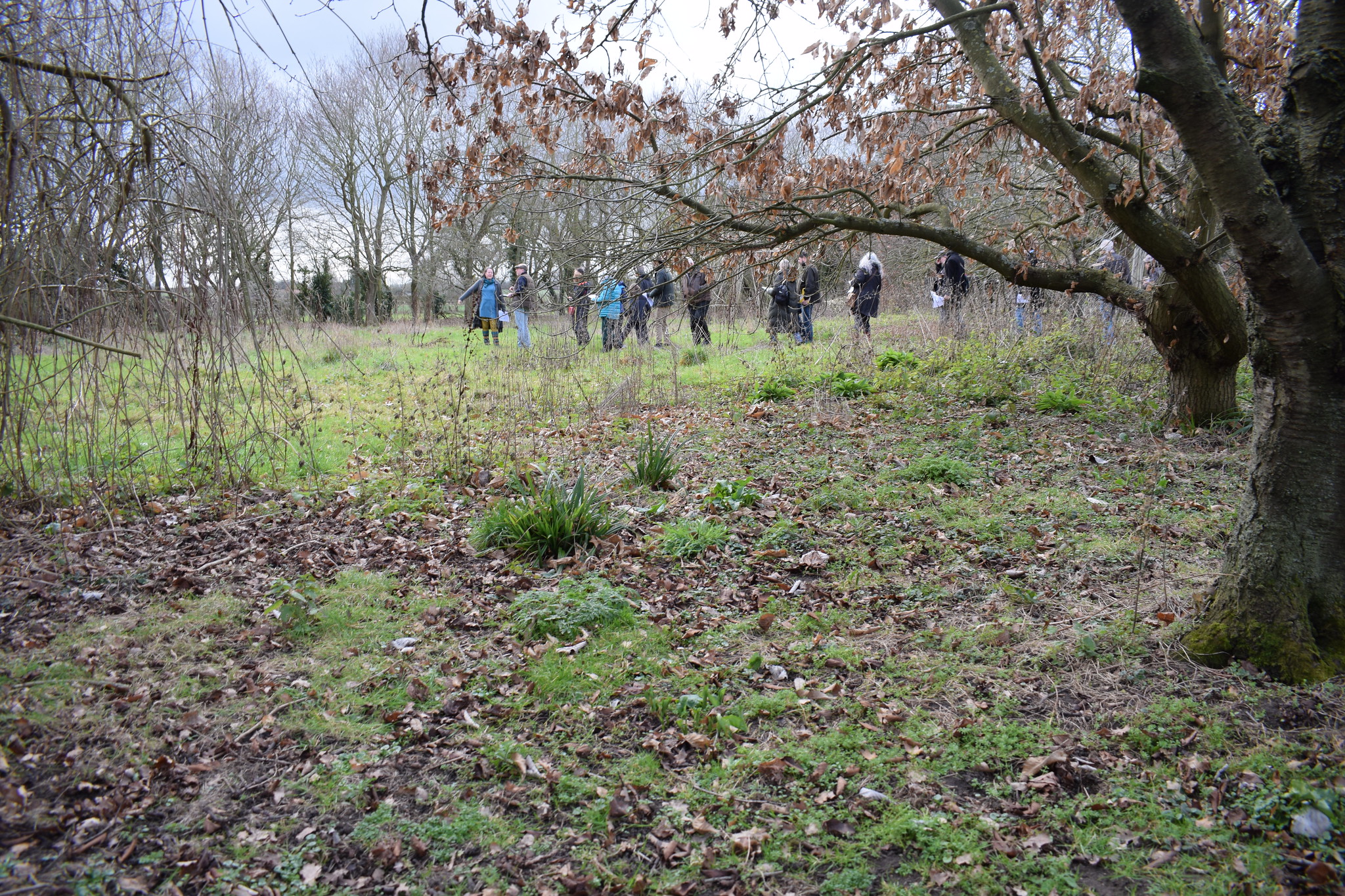
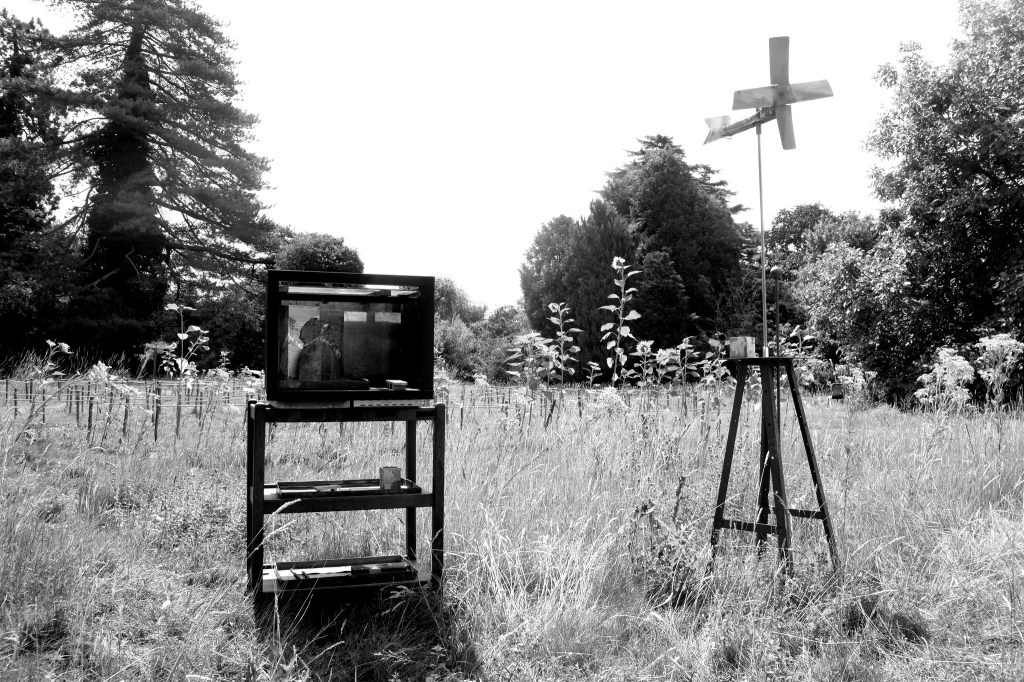
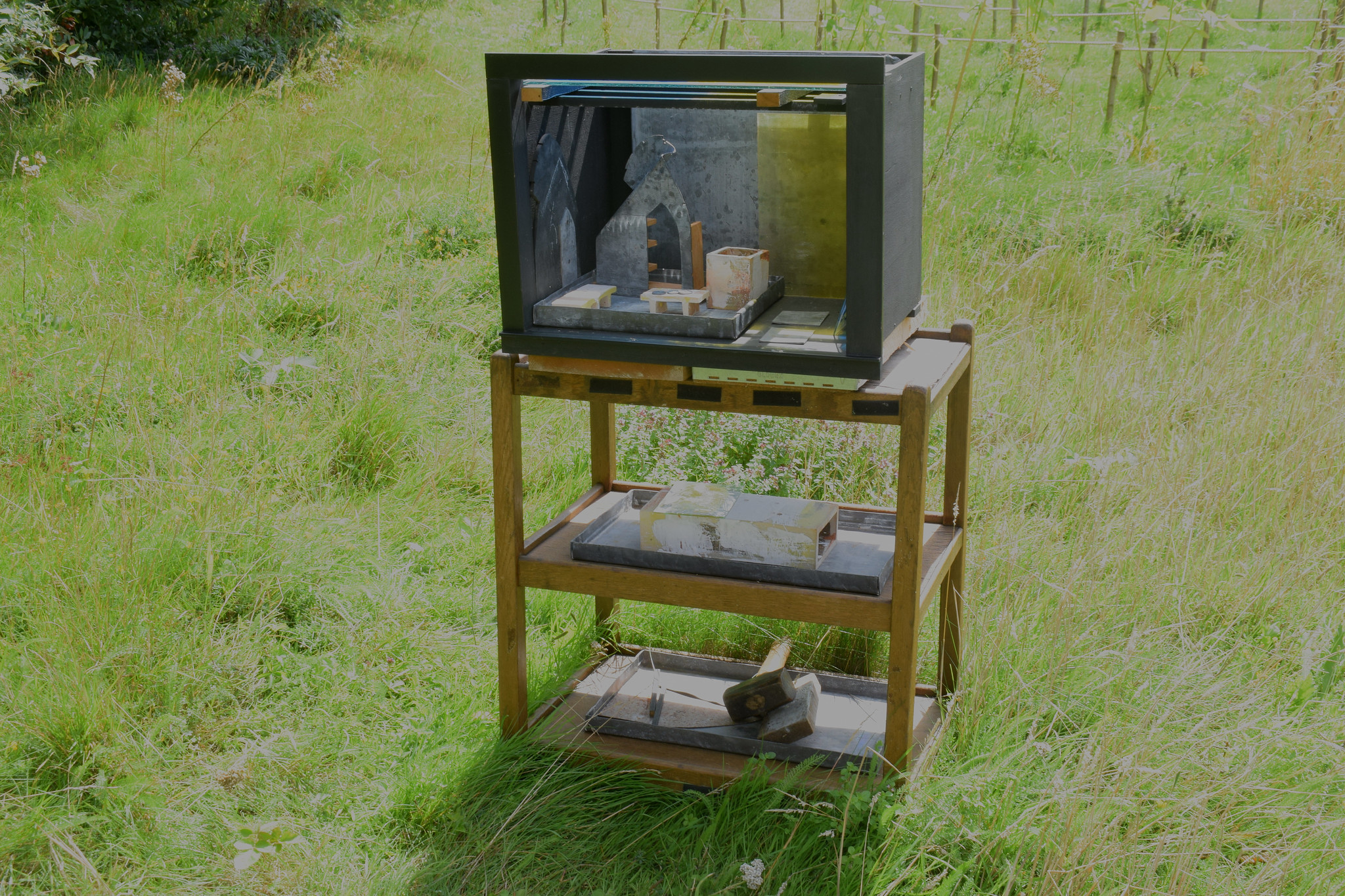
Architectural structure meets visual fine art, as a sculptural assemblage, a resting place created on-site; promoting an inquiry into making~inhabiting and feflexivity amongst a social event and the natural garden landscape.
Evaluation
IMMATERIAL ARCHITECTURES
MAKING IN THE LANDSCAPE
SCULPTURE TRAIL 2018
The House-sheds : Camping
There’s more truth about a camp than a house. Planning laws need not worry the improvising builder because temporary structures are more beautiful anyway, and you don’t need permission for them. There’s more truth about a camp because that is the position we are in. The house represents what we ourselves would like to be on earth: permanent, rooted, here for eternity. But a camp represents the true reality of things: we’re just passing through.
This site based exploratory apparatus, part self assembly, and part crafted brings together components, materials and filtered light. Built around the involvement of making in the landscape, this event based intervention creates a fictional space articulated through the alchemy of built spaces that merge the poetic with the tectonic.
Theatre for Research. MAKING PLACE Speculative/Performative Learning Space.
They will be schools no longer, they will be popular academies, in which neither pupils nor masters will be known, where the people will come freely to get, if they need it, free instruction, and in which, rich in their own experience, they will teach in turn many things to the professors who shall bring them knowledge which they lack. This then will be a mutual instruction, an act of intellectual fraternity. Michael Bakunin, 1870. Freedom in Education.
Anarchism, Colin Ward 2004.
Evaluation WORKING NOTES
Possible Outcomes.
Developing relations on the specificity of a landscape and the weather.
Construction site, towards an alchemy of thinking and making space and the instants of the wonderous.
Some ways of thinking.
Crafting Solitude~Philosophy : Interested in an interiority that confounds visual readings.
Processes enabling situations through strange constructions.
Diffractive apparatus of components, materials and filtered light.
Explorative, site specific and performative.
A fictive space articulated through the alchemy of light and water.
Sensing space, seating for a site of speculative inquiry.
Material Matters : Architectural/Perceptual/Sensing Phenomena. Correspondences, Human Bodies/Spatial Bodies. Reflections/Movements/Environments/Landscapes
Using site as a research instrument, a compounded object of self assembly, and crafted components, materials and substances. A sculptural intervention, event based merging the poetic with the tectonic.
Apparatus/Device/Model.
Sensing composition, situating a site for speculative inquiry.
An exploratory and site specific installation that can open up our interior world to the proximity of both the situation of a natural environment and the experience of a conceptually made object/space that facilitates a sense of wonder, resulting in an alchemy between these two realms of experience.
Art works constantly to brokers these relations within us.
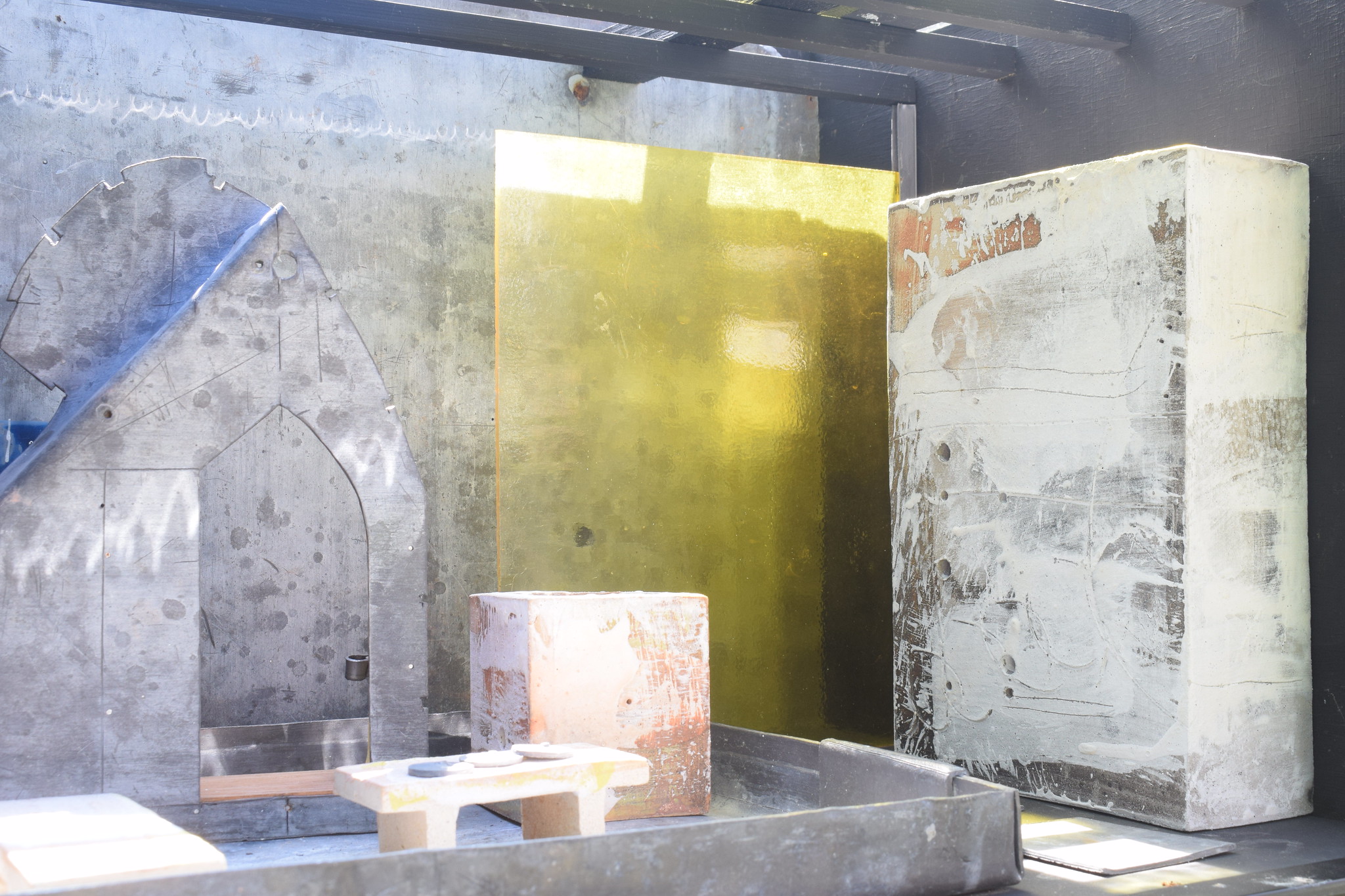
Influenced in part by John Piper (Ruined Cottages) and the materiality, of old stained stonework, lime wash, carlite plaster and yellow ochre.
On Materiality~Ruination Architectural Ceramics Of Scepticism.
Ceramic substances/coatings and the layering of markings, instances and gestures into a spatial decay.
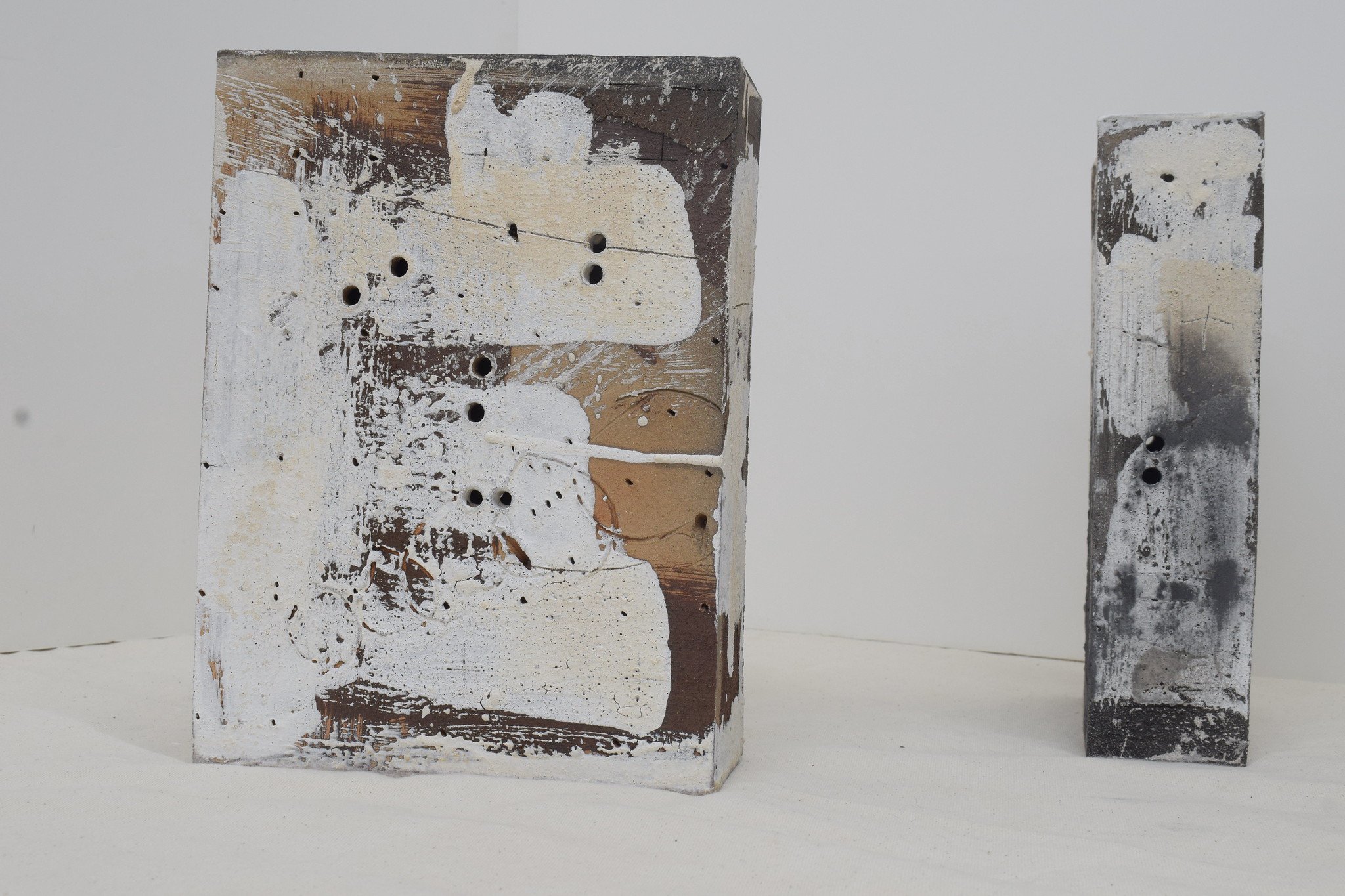
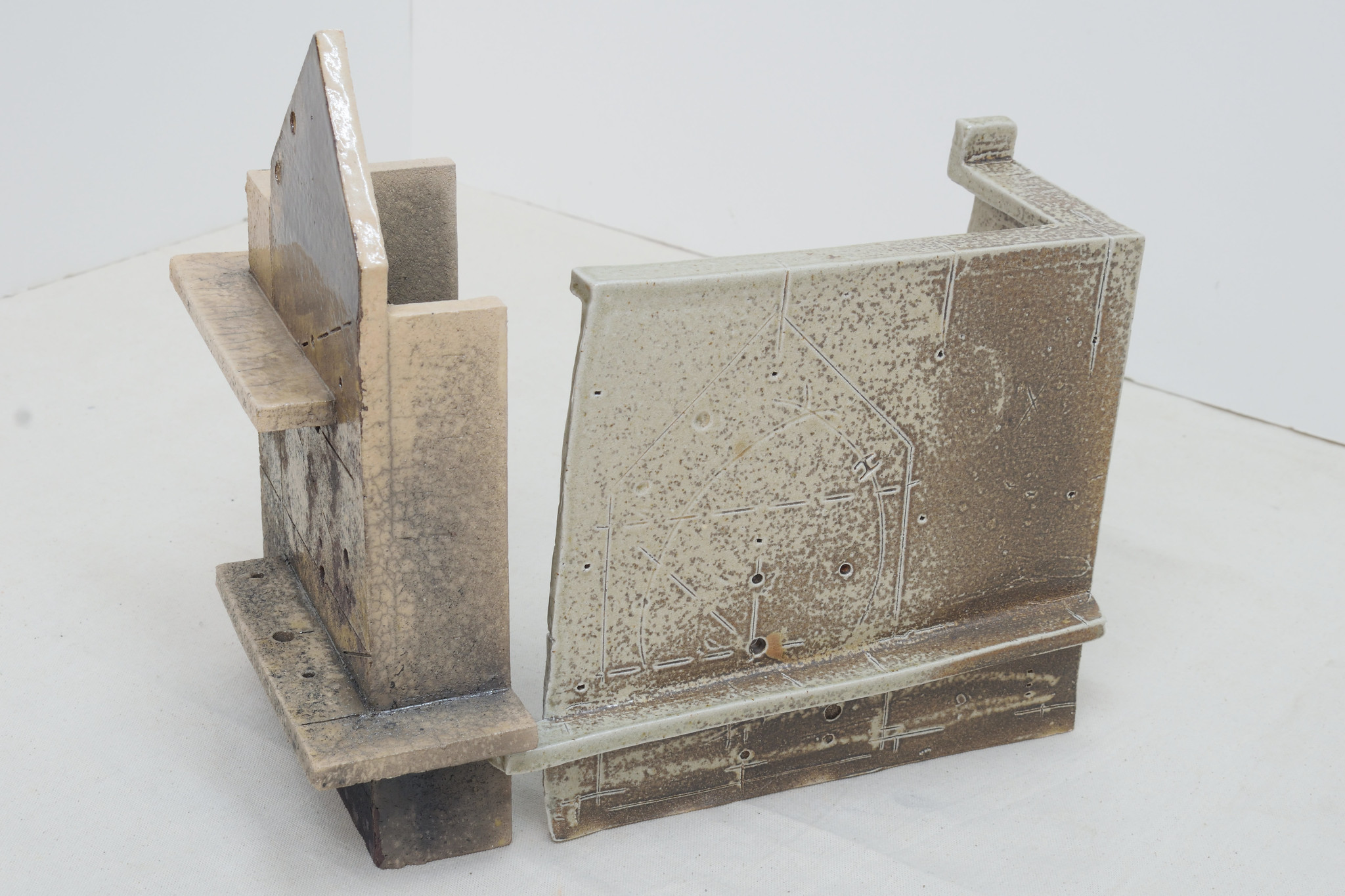
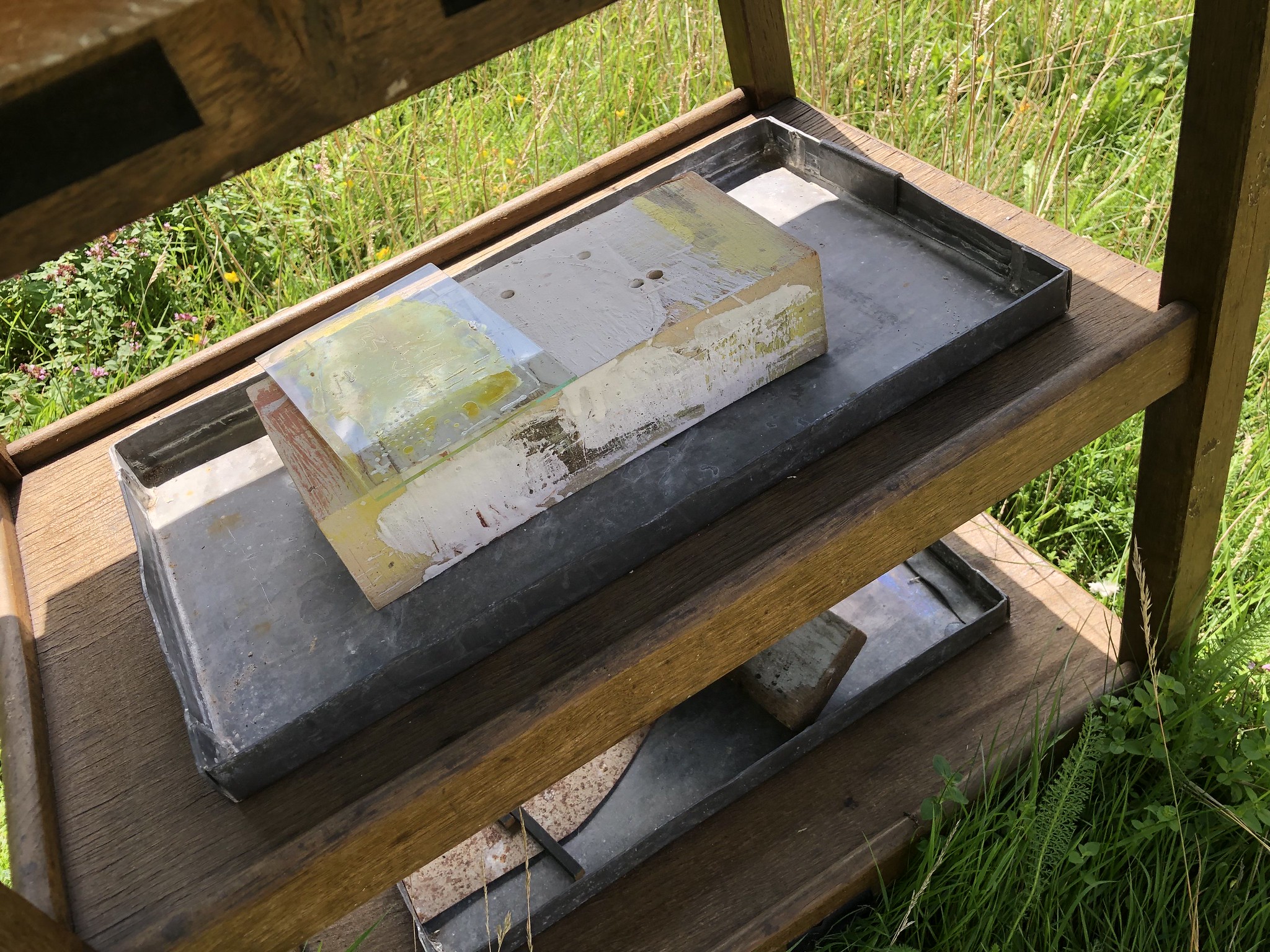
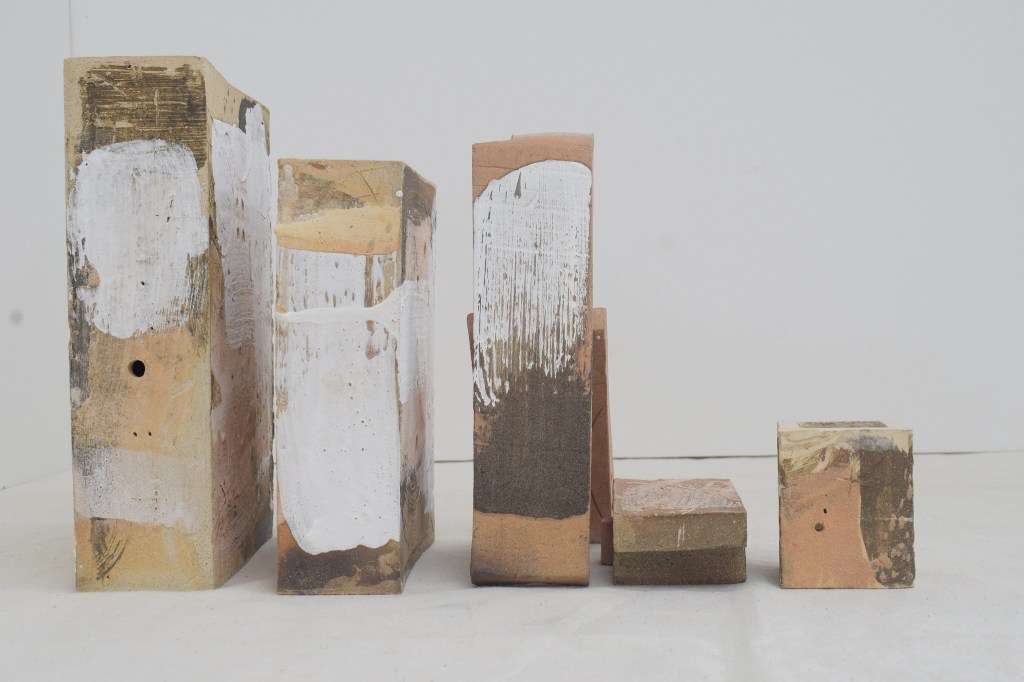
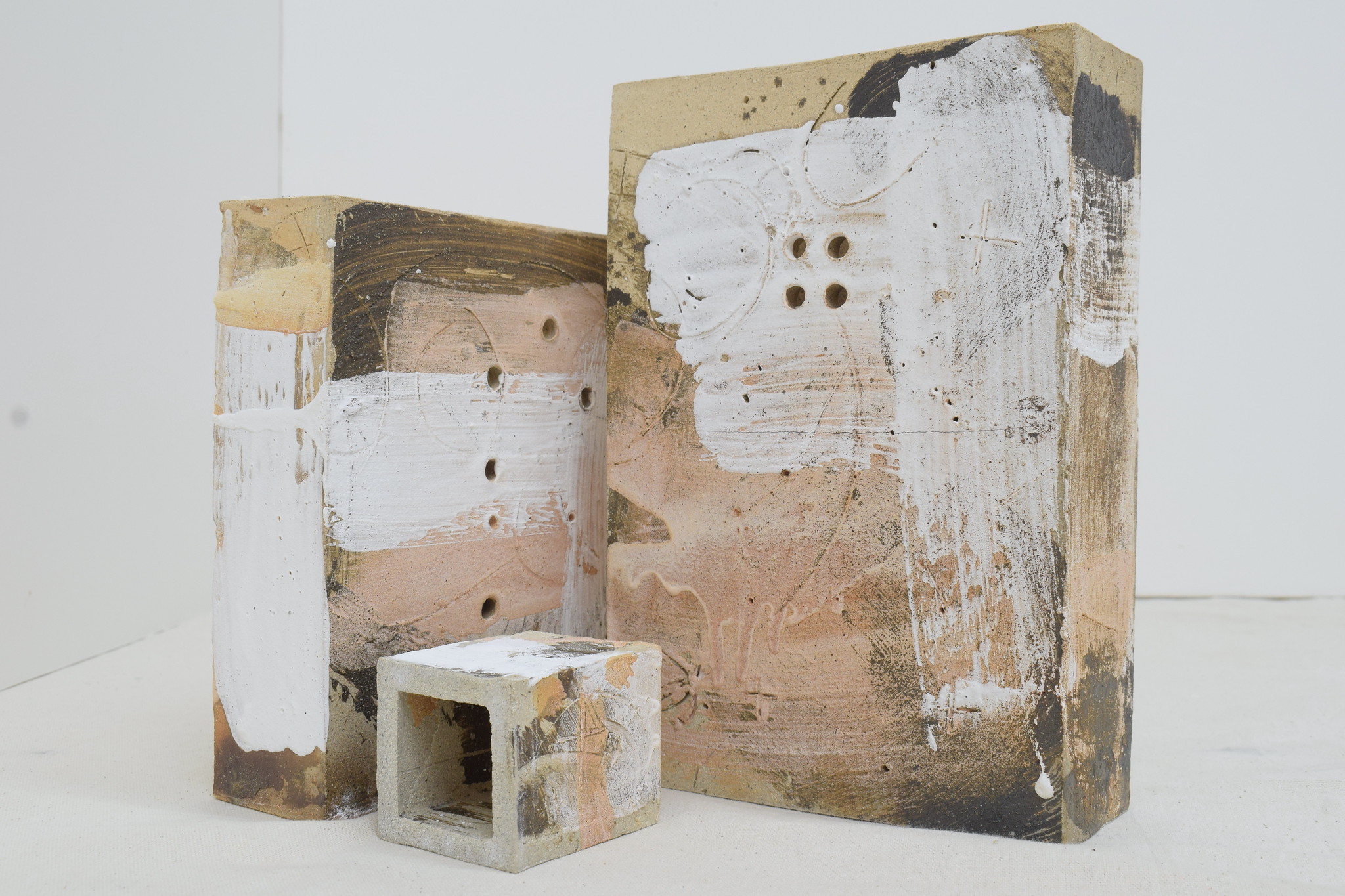
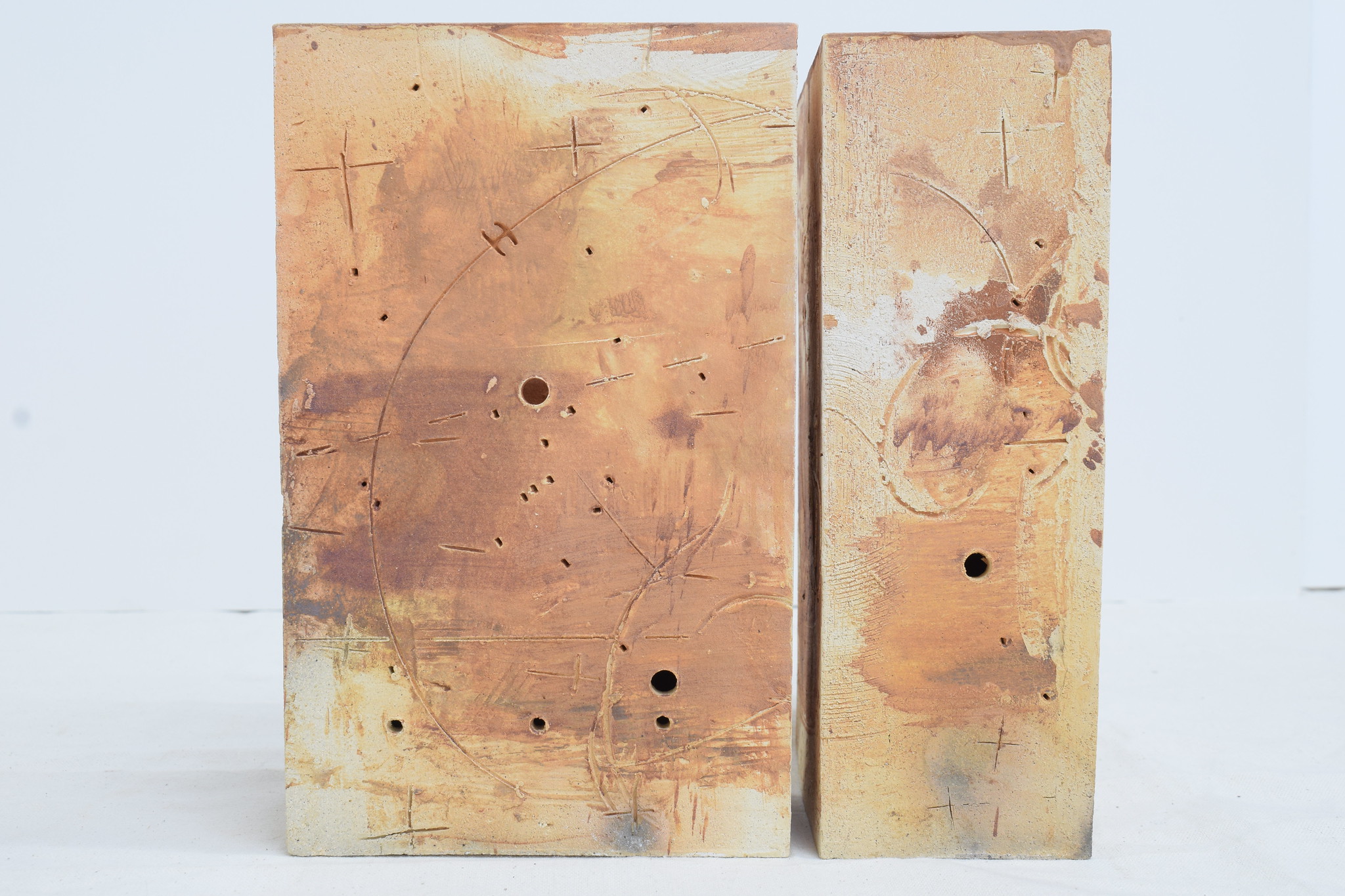
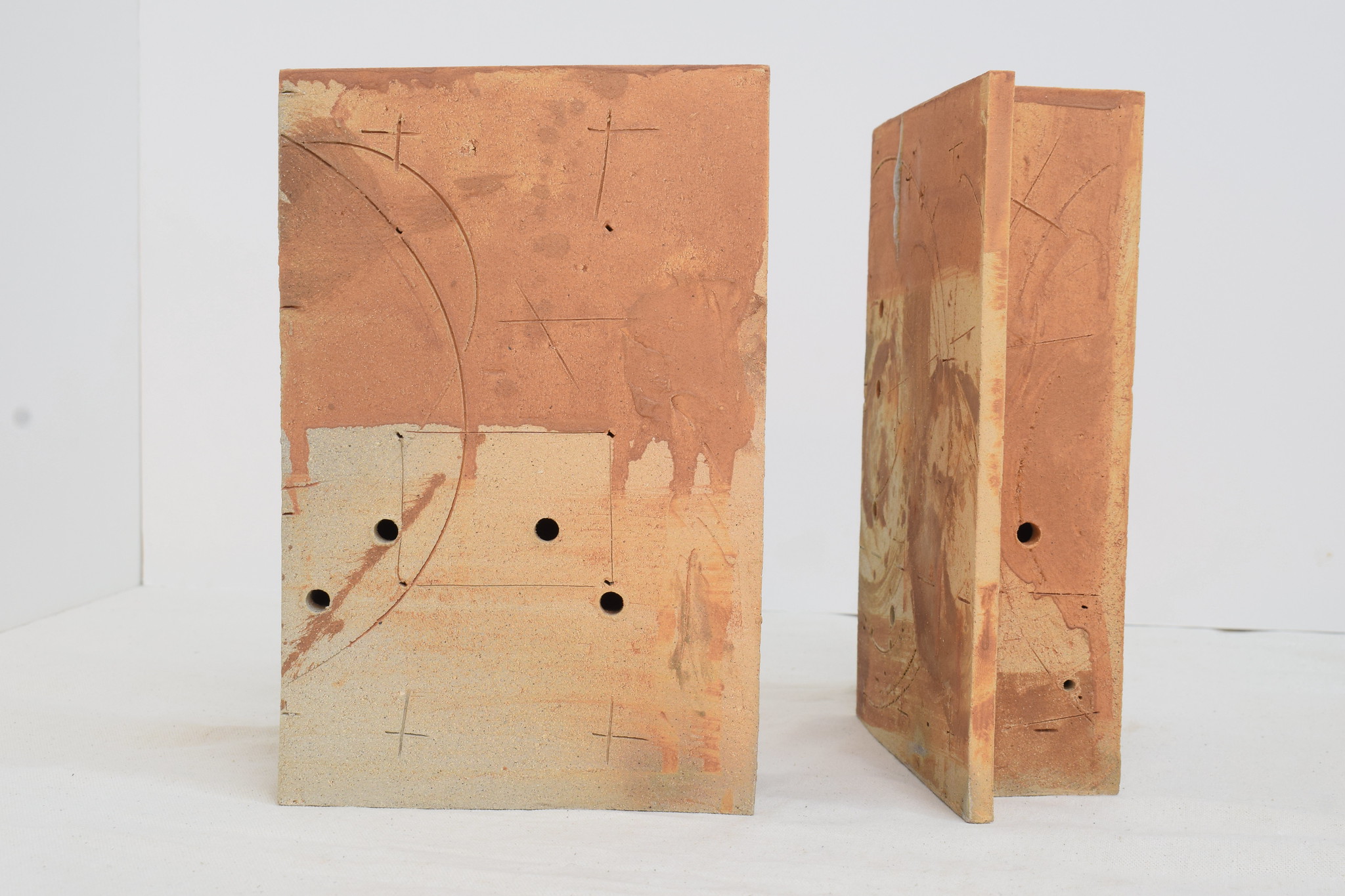
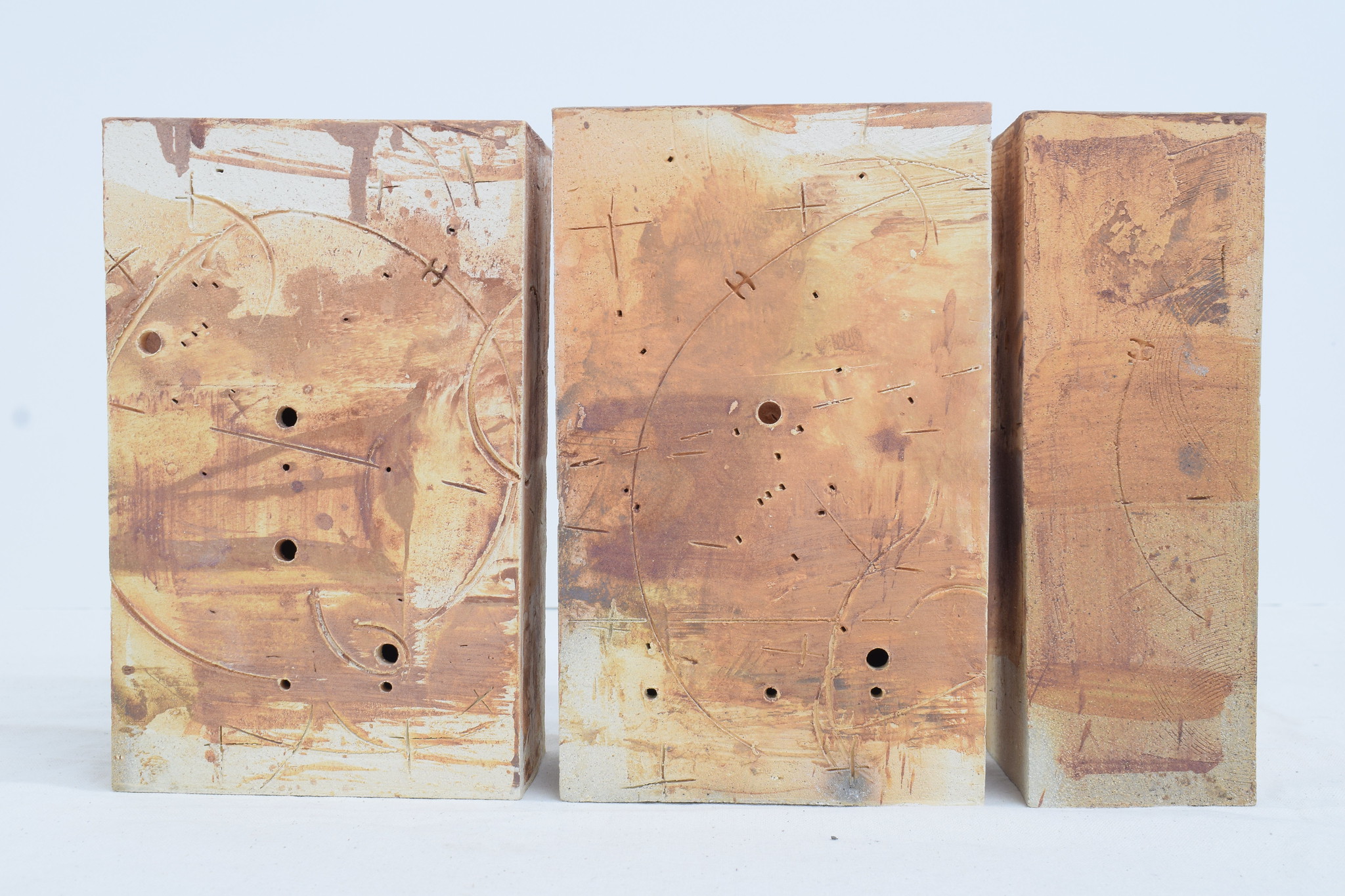
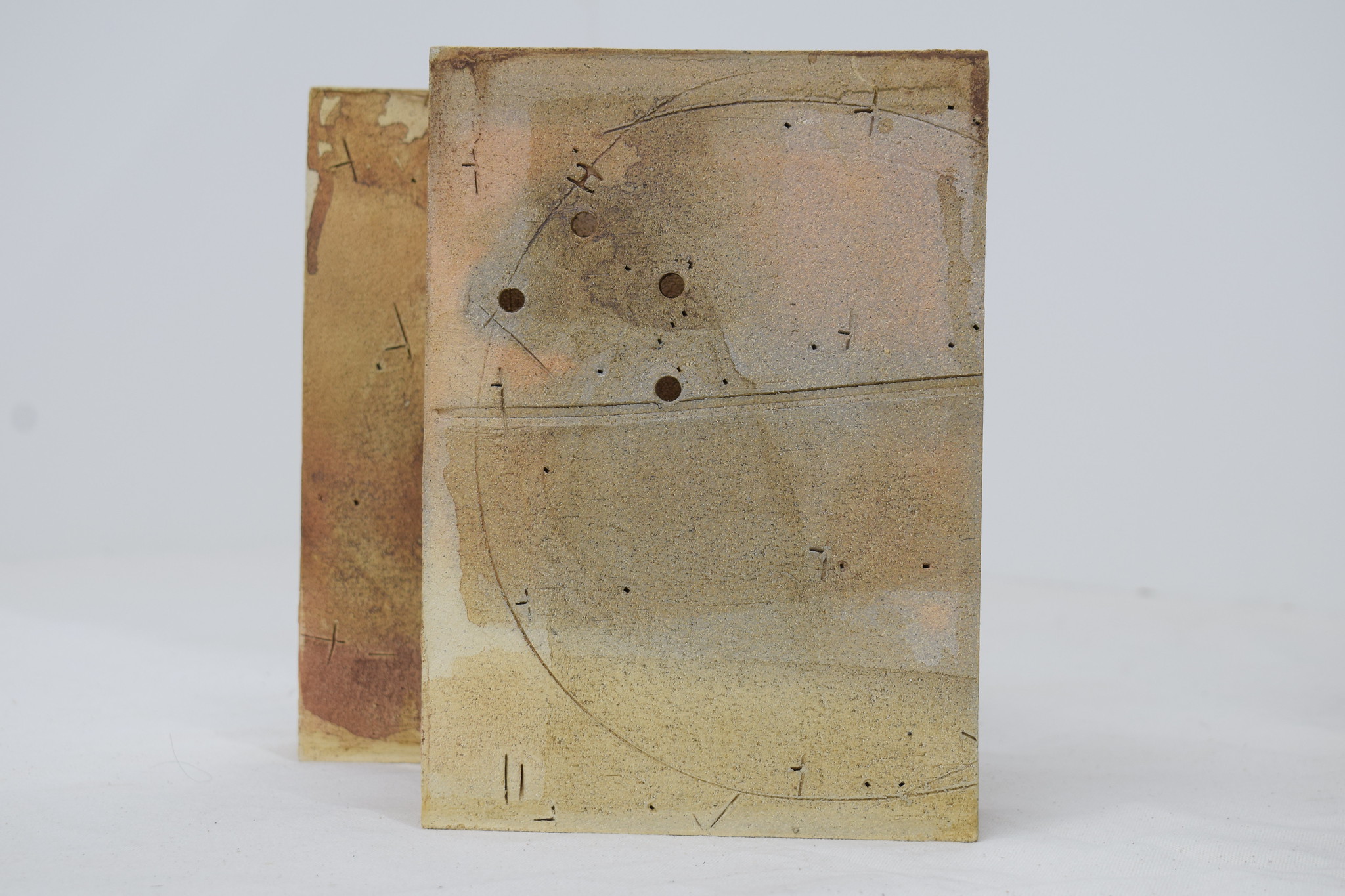
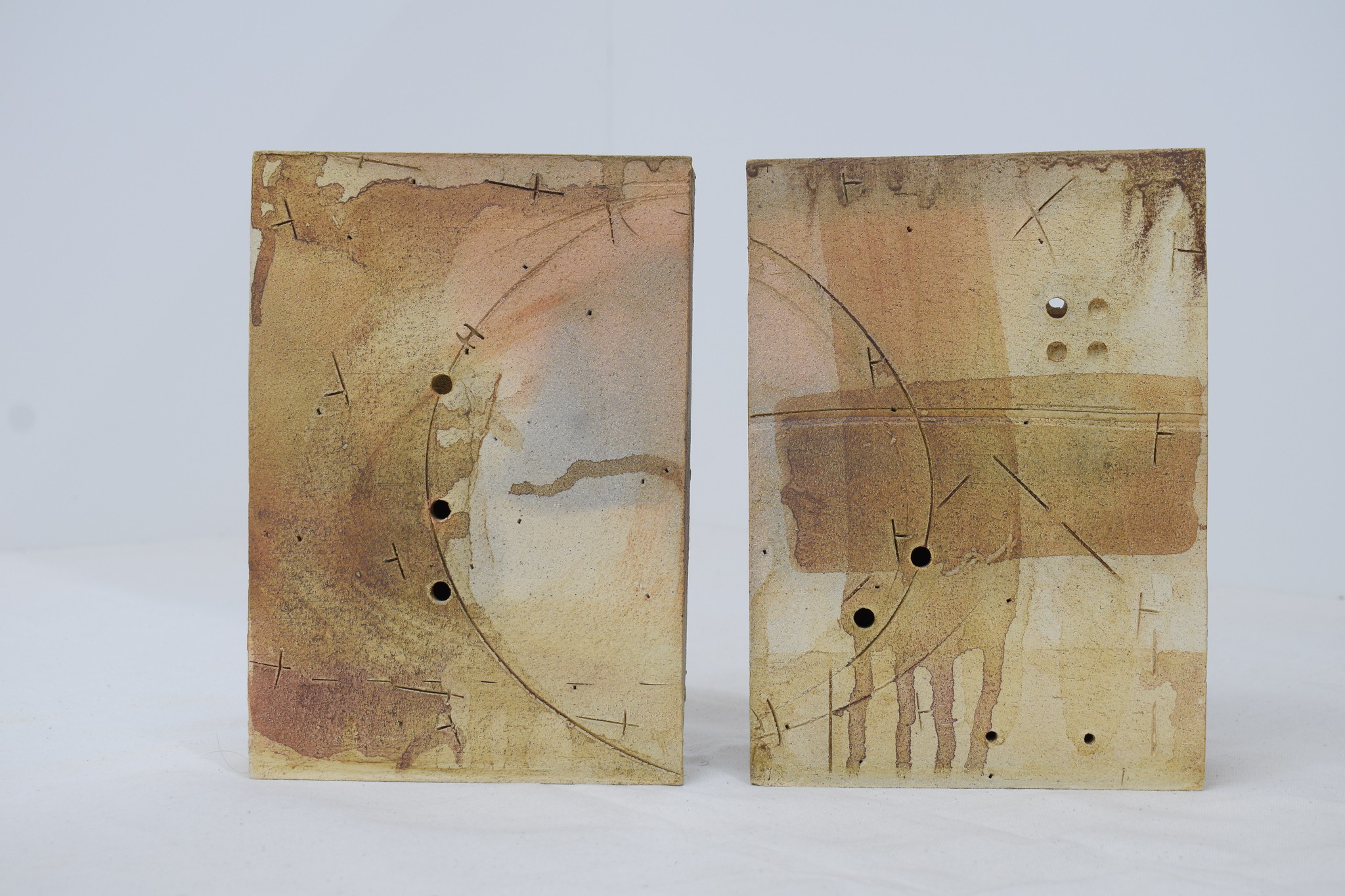
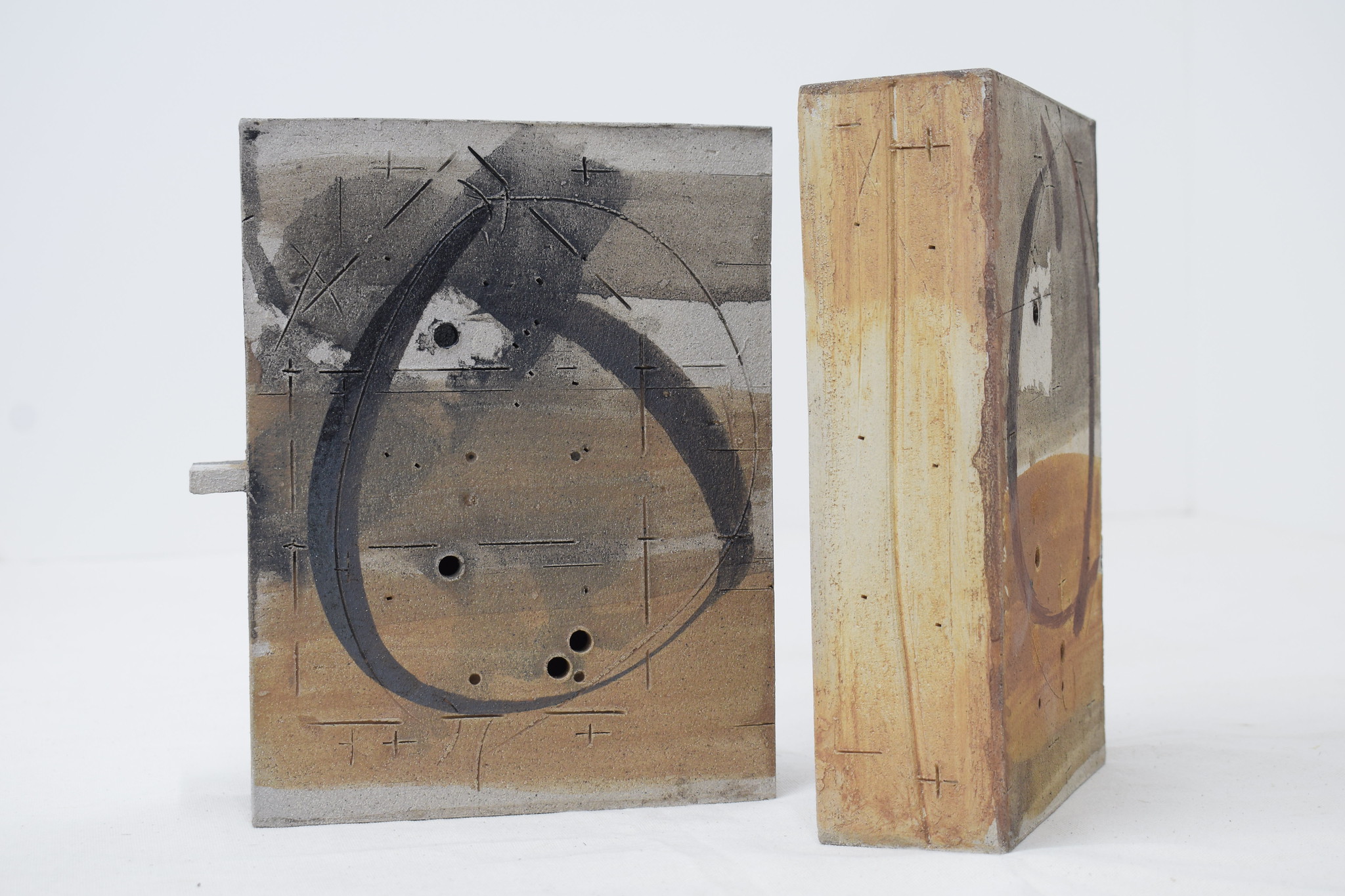
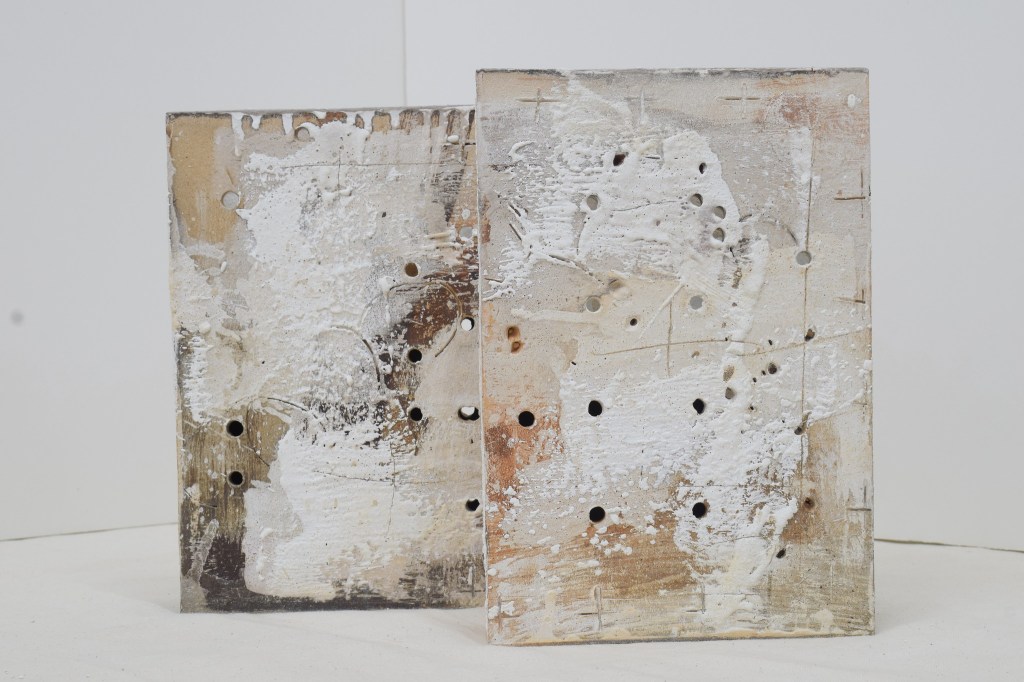
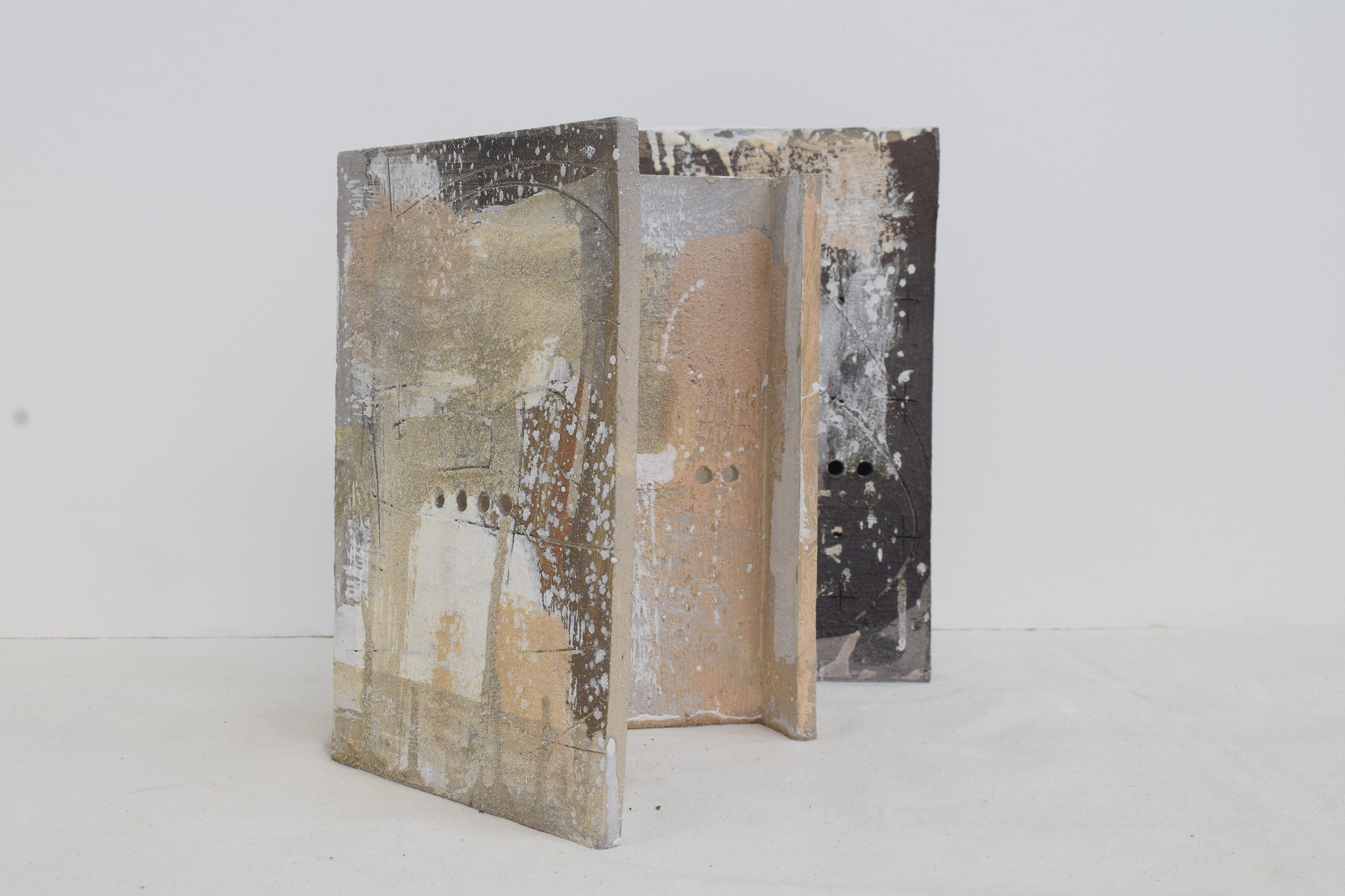
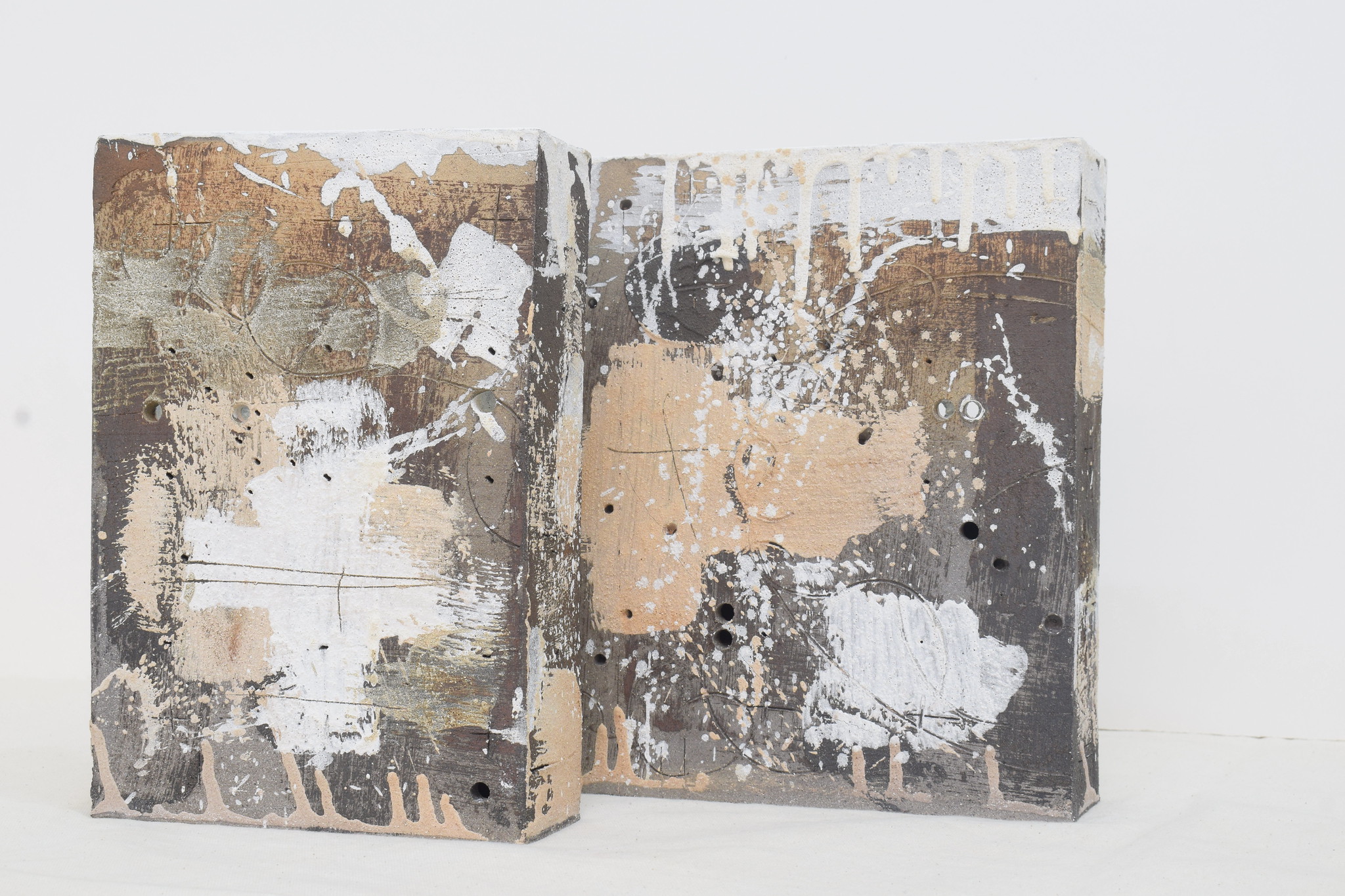
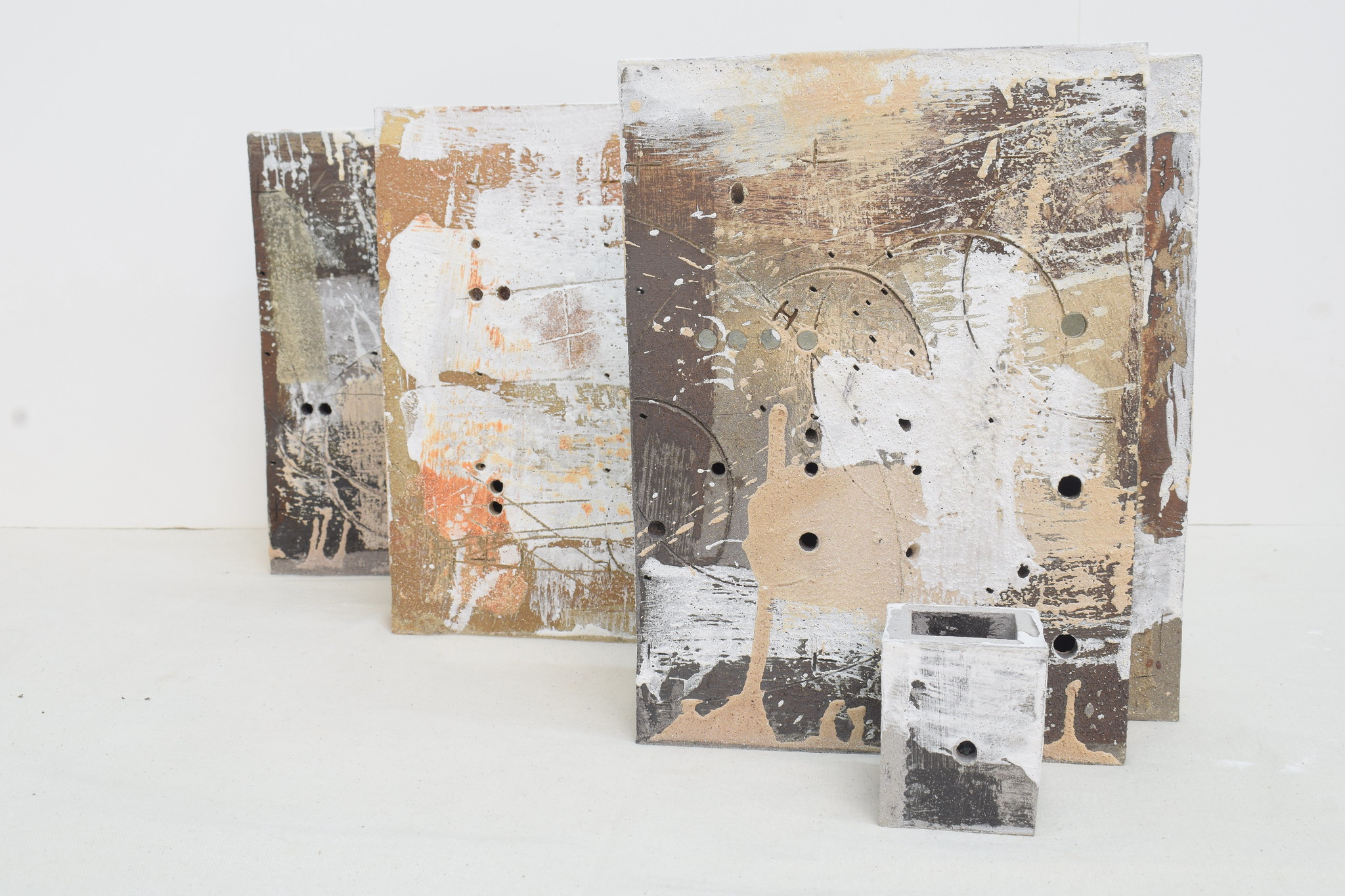
These are ceramic sculptures, specifically exploratory, architectural-themed works by artist Russell Moreton. The artist uses clay as a primary medium to explore themes of architecture and space. The works are processual in nature, focusing on the imprint of the artist and the material itself. The raw, distressed finish with white paint and visible cracks reflects the artist’s interest in the material’s vocabulary and the “drama” of a building when its use has ceased. The pieces are categorized as contemporary craft and design or fine art sculpture.
Year 2024
Medium Ceramic
Size 130mmW x 230H x 60mmD, 150mmW x 200mmH x 60mmD, 75mmW x 50mmH x 50mmW.
Wayfaring/Lines and Interior Spaces : Materials of movement and attention.
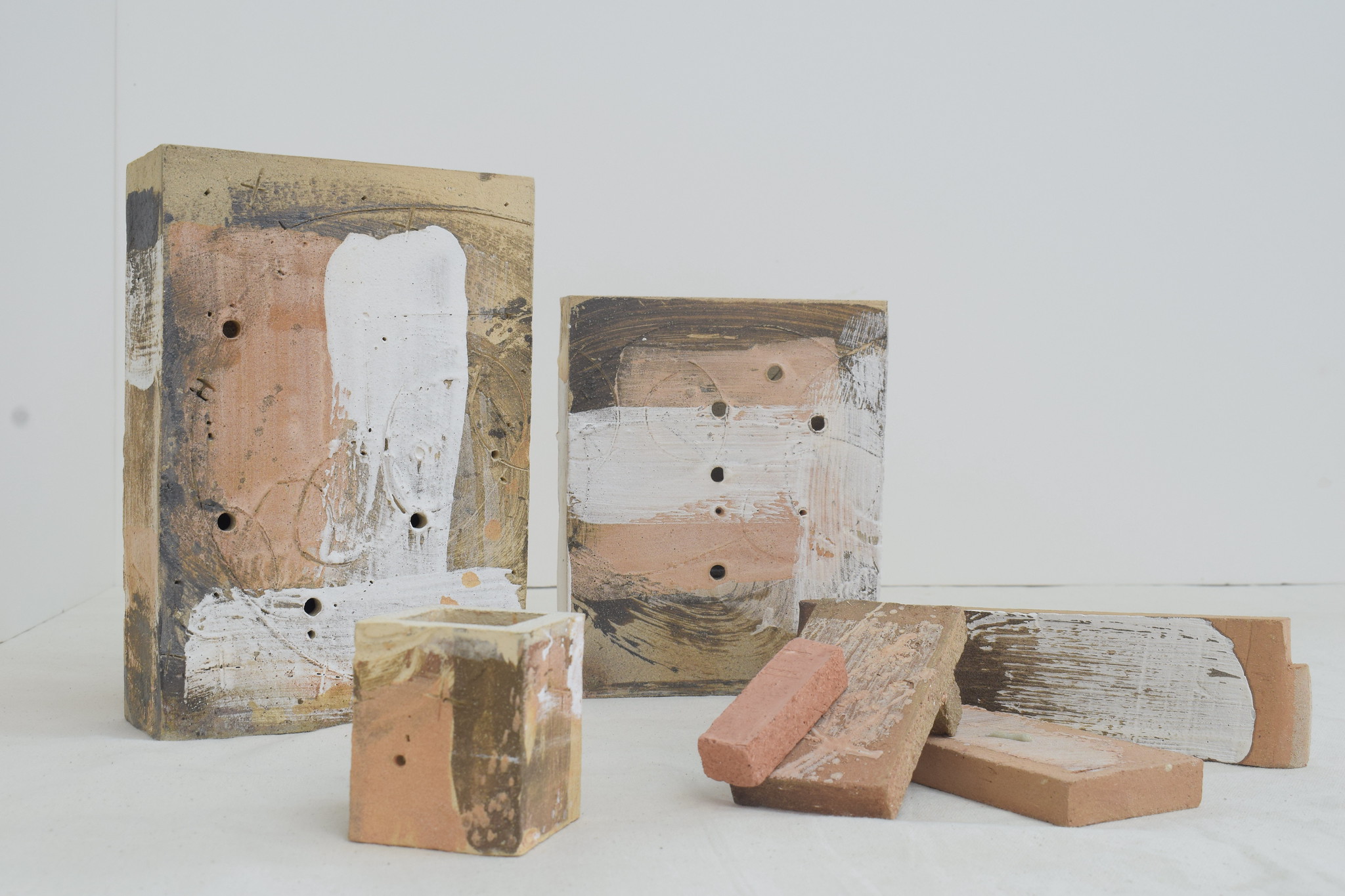
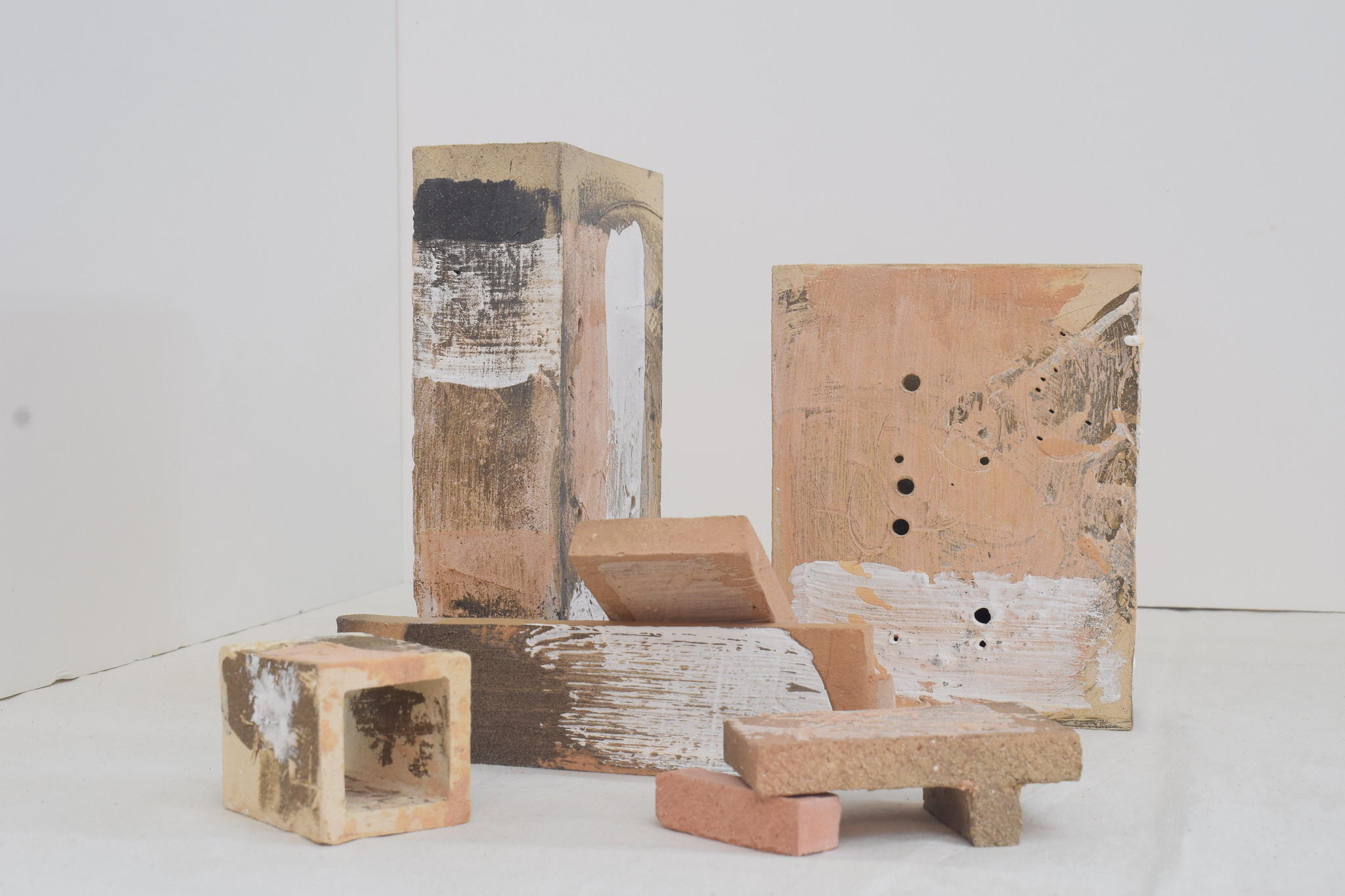
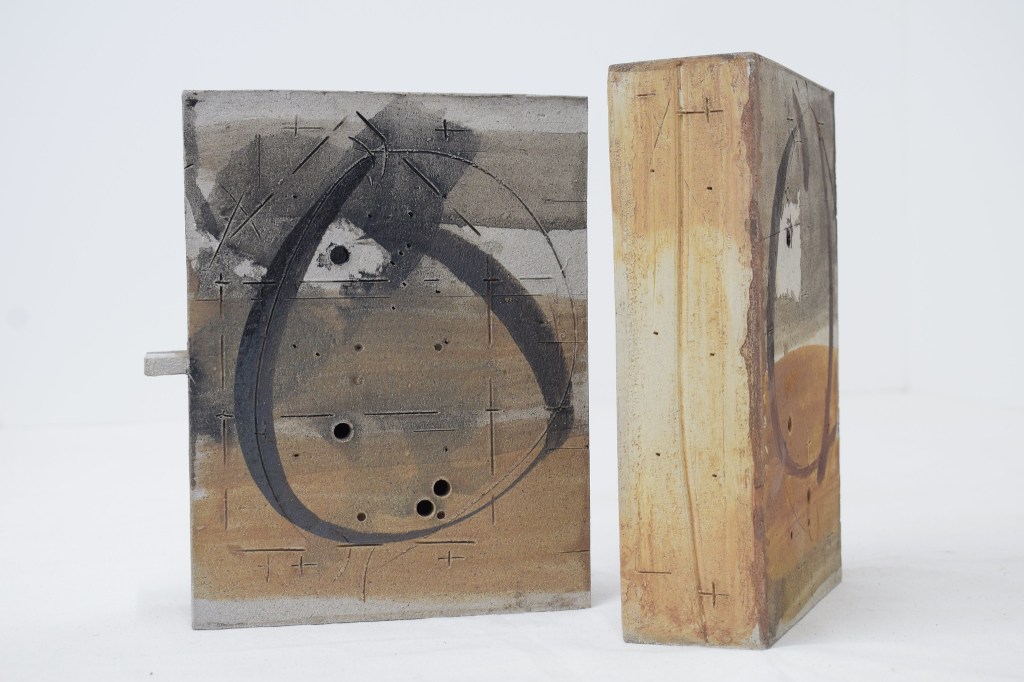
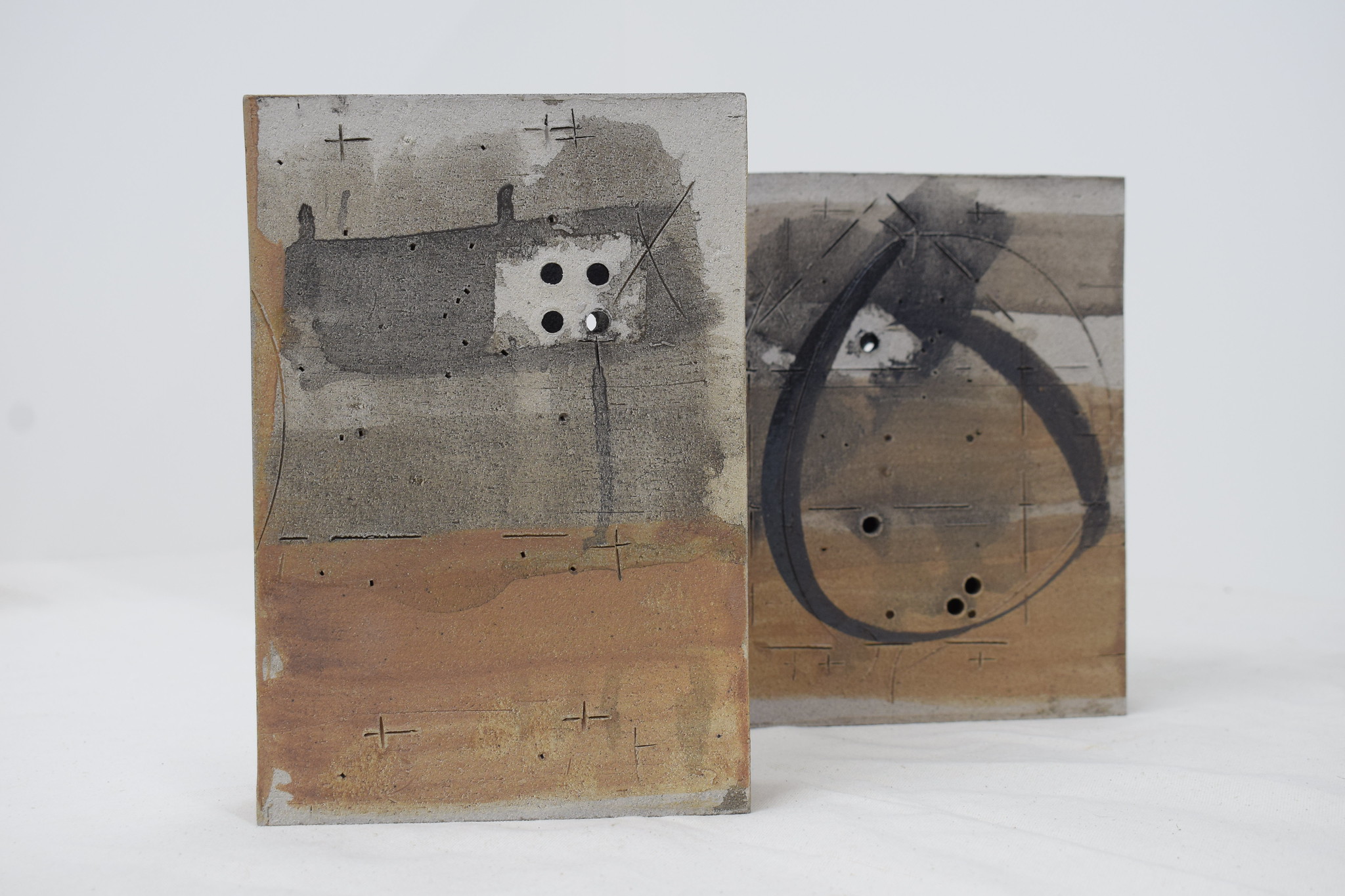
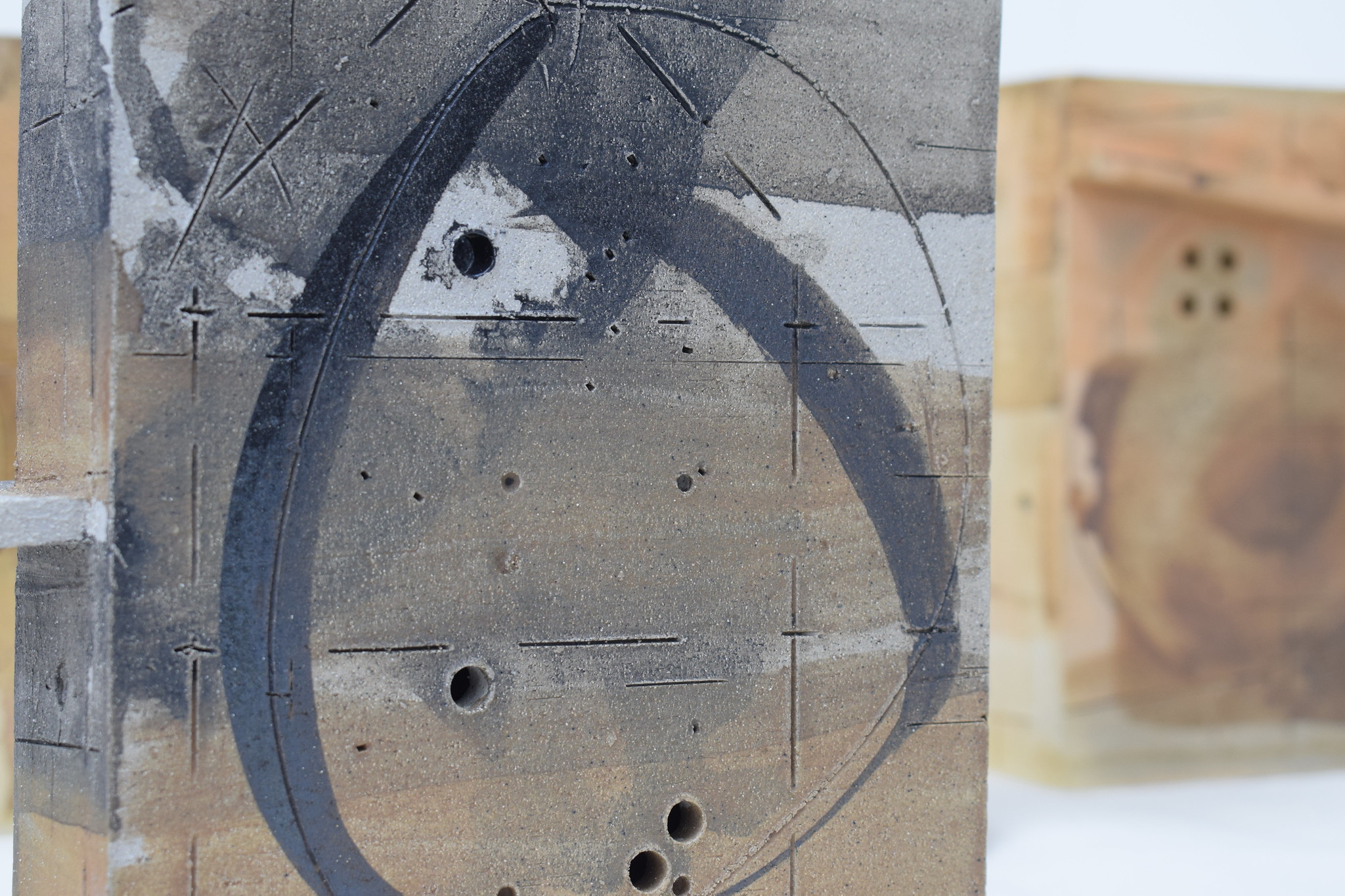
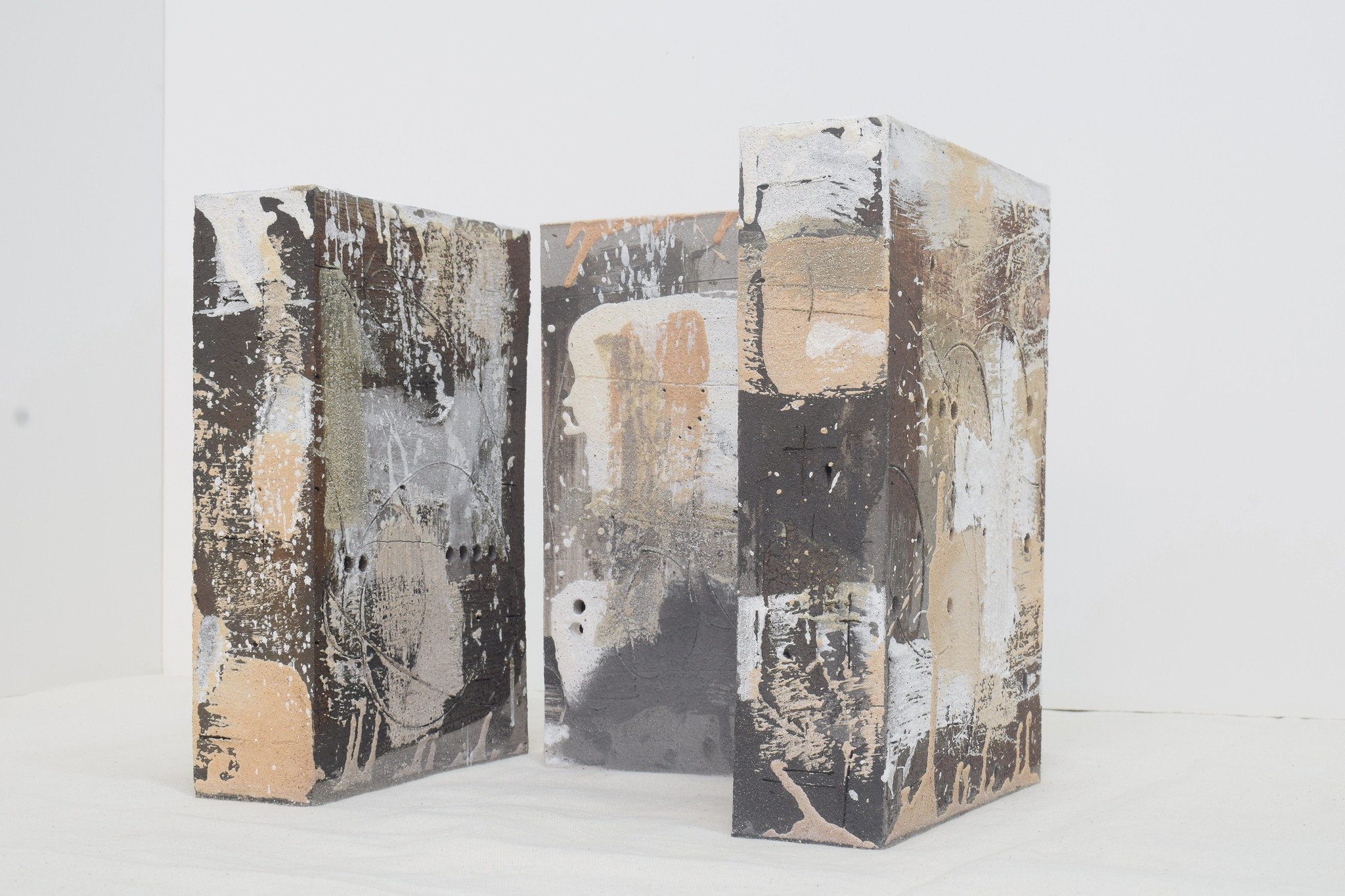
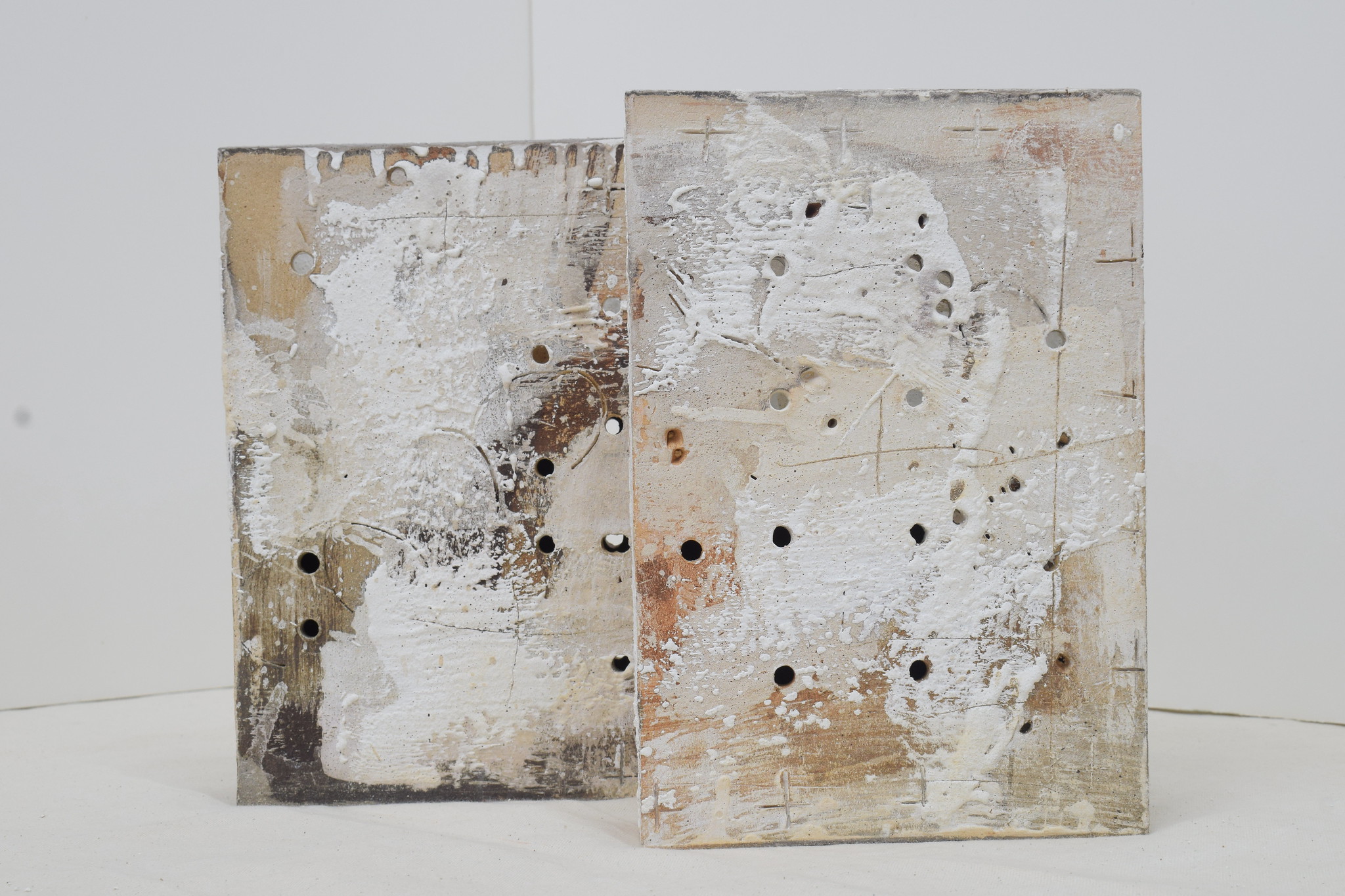
Processual clay+ceramic constructions that articulate through processes of mark making and intermediaries, surfaces spatial bodies and interiors all entangled in a complex scaffolding of its own making.
“Makers work in a world that does not stand still, Iteration allows for continual correction (material conversation) in response to an ongoing perceptual monitoring of the task as it unfolds, mixing the potential for blending or combining matter that already exists into new combinations” Tim Ingold, 2010.
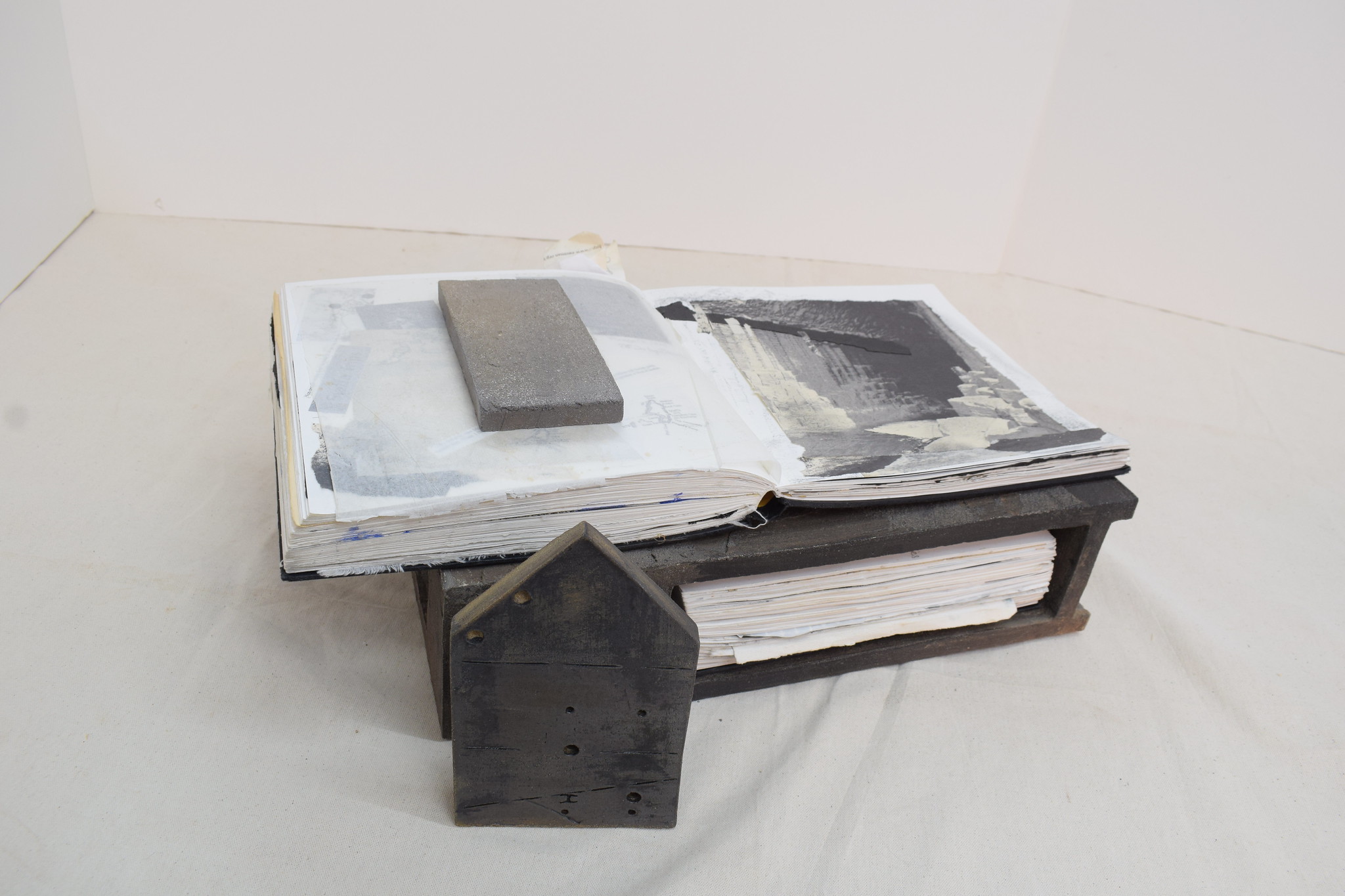
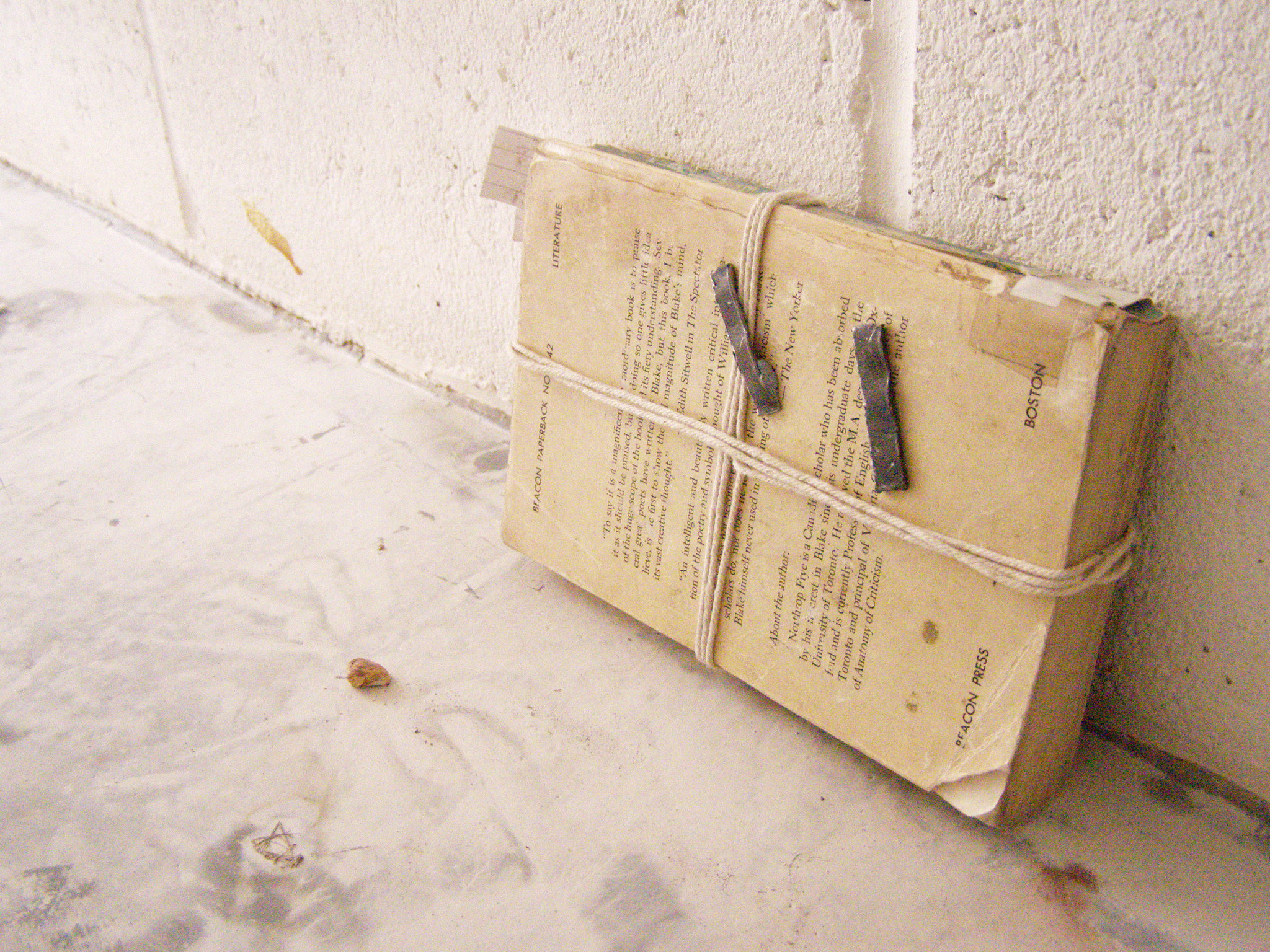
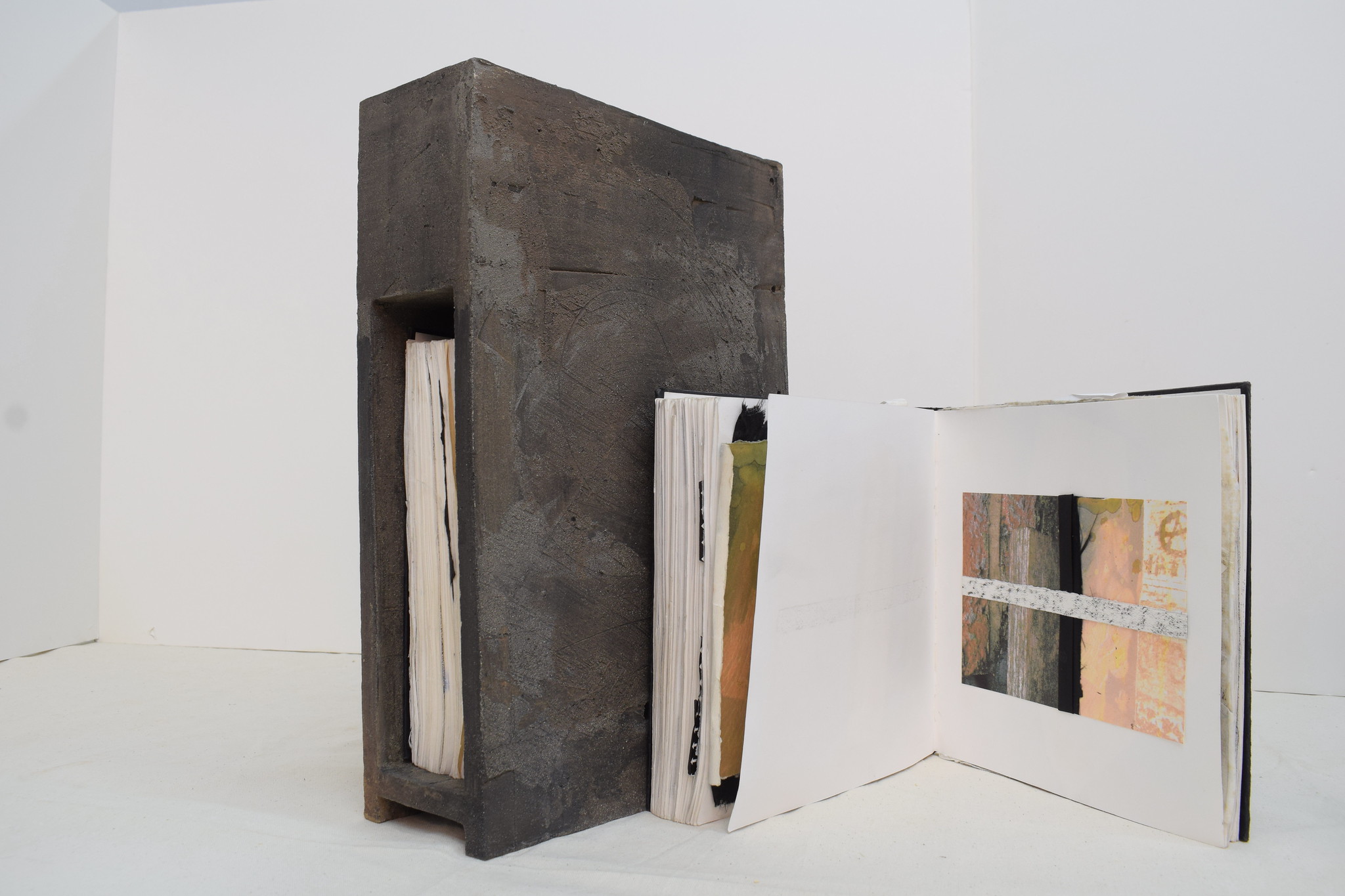
The Quiet Mind : Silently without resistance. Books/Reliquaries : Working of matters and the exteriority of their relations. Marking/Wayfaring Inscriptions : Clay+Ceramic
(Sound of barking) Do you listen to that dog? Wait, wait. Silently? Listen to it completely silently, which means without any resistance, without any irritation, just listen to it. When you listen quietly there is no resistance, there is no irritation, you do not identify yourself with the dog and the barking of it, your mind is quiet. Krishnamurti.
Meditation The meaning of that word is to measure, basically (for oneself).
Year 2024
Medium Ceramic
Size 170mmL x 240mmH x 60mmW
Exploring Ceramic Art: Movement and Attention This title targets specific keywords like ‘ceramic art’ and ‘movement’, enhancing SEO by attracting audiences interested in art processes.
Meditation and Art: The Quiet Mind in Ceramics Combines popular search terms ‘meditation’ and ‘ceramics’, appealing to those exploring mindfulness in creative practices, increasing search visibility.
Wayfaring Through Clay: Art and Perception Focuses on the unique concept of ‘wayfaring’ linked to clay art, appealing to niche audiences and improving content relevance in search results.
Intensified Surfaces : Anthropocene Aesthetics : Ceramics and Environmental Engagement.
Clay+Ceramic : Minor Gestures~Interstitial space of emergent expression.
Clay: Transitive Forces of a Minor Key.
Clay Bodies : Ceramic Atmospheres.
The Ceramic Surface~interiority~Made From Clay. Interiors and their ‘interiority’ made from the intensity of fire to create ceramic surfaces and volumes constructed through the malleability of clay and water particles.
Clay+Ceramic : Complexity grounded in basic things. Inhabiting Building Places : Eartha+Ceramic.
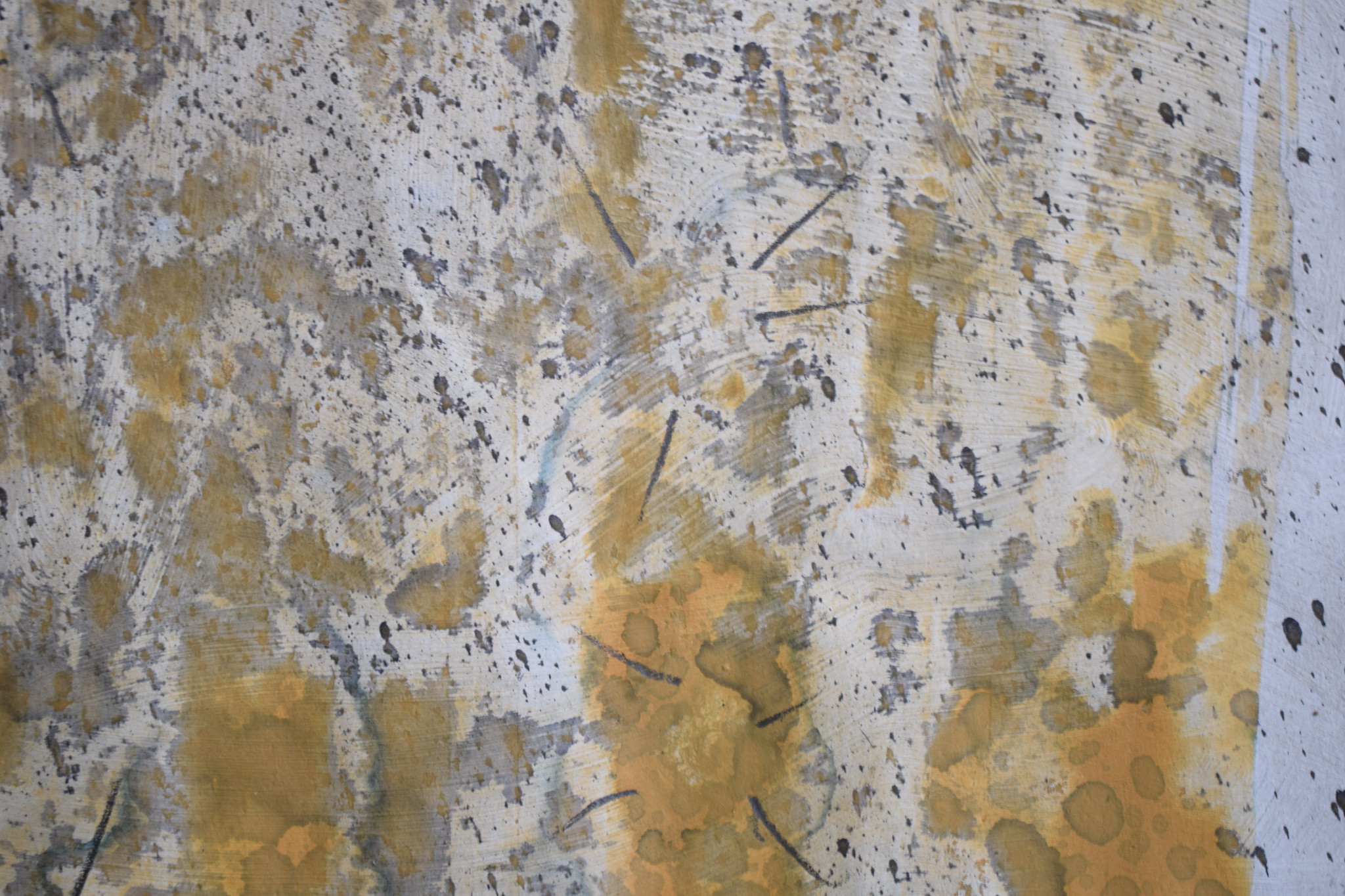
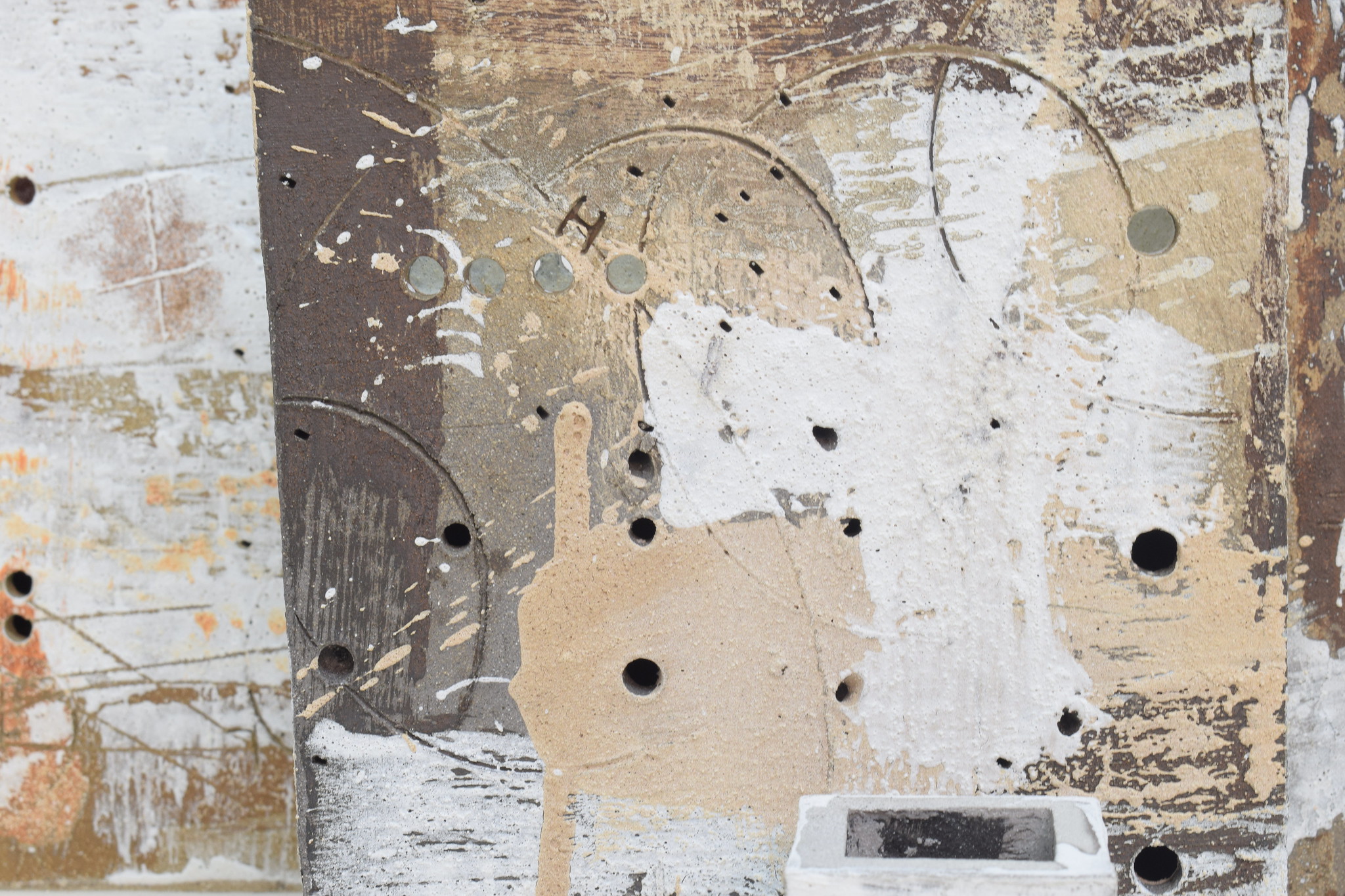
These are mixed-media ceramic artworks by artist Russell Moreton, part of his “Clay/With Fire” exploratory research. The works explore themes around “making” and the interconnectedness of interior spaces, using clay as the primary material. The artist uses a site-based practice, where ideas evolve from the direct experience of working with the material. The pieces are processual in nature, intended to demarcate and define space. Moreton is interested in how craft, theory, art, and architecture can intersect.
Materialisms : Interstitial Attentionality
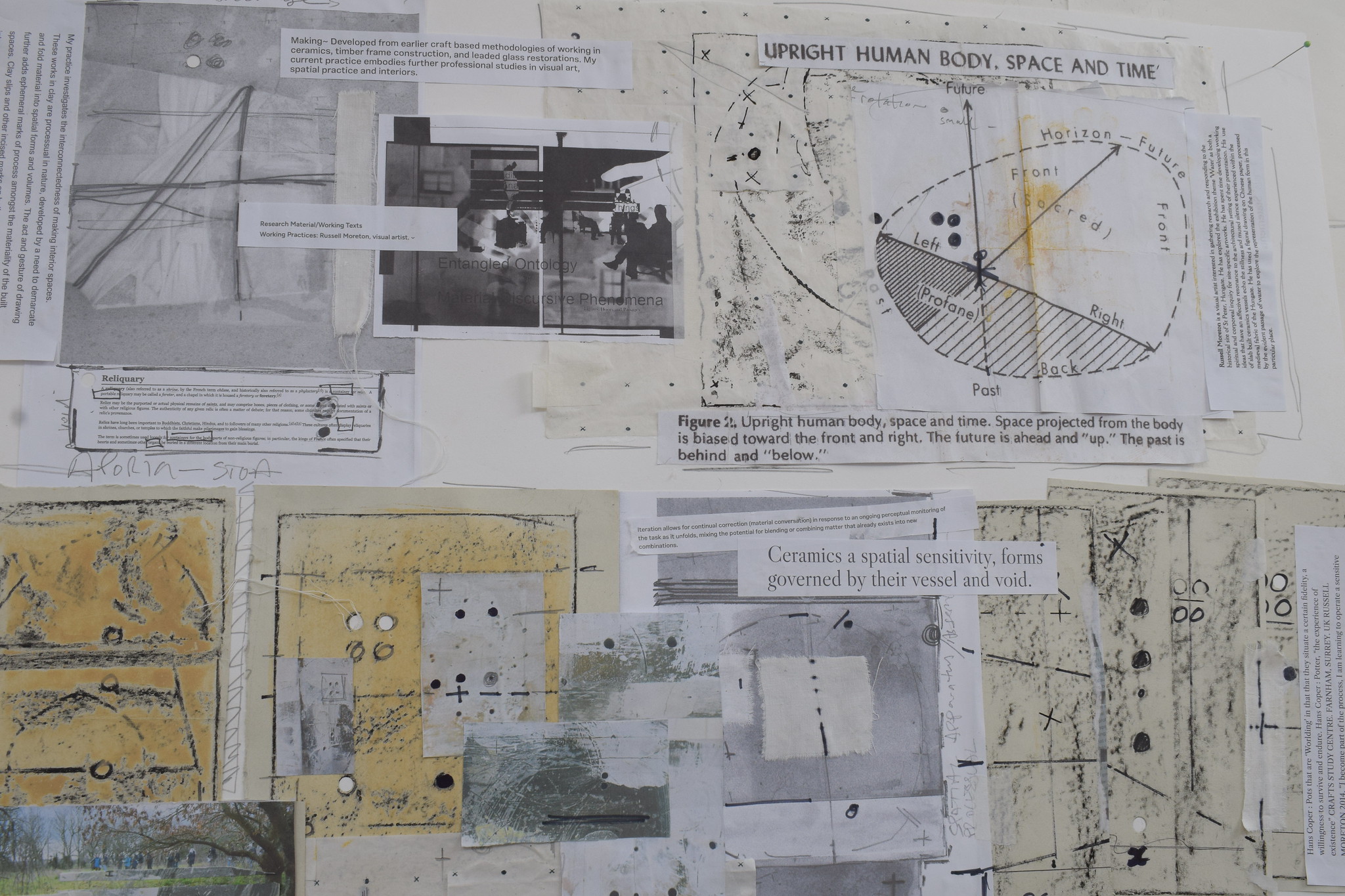
Collage~Spatial Bias
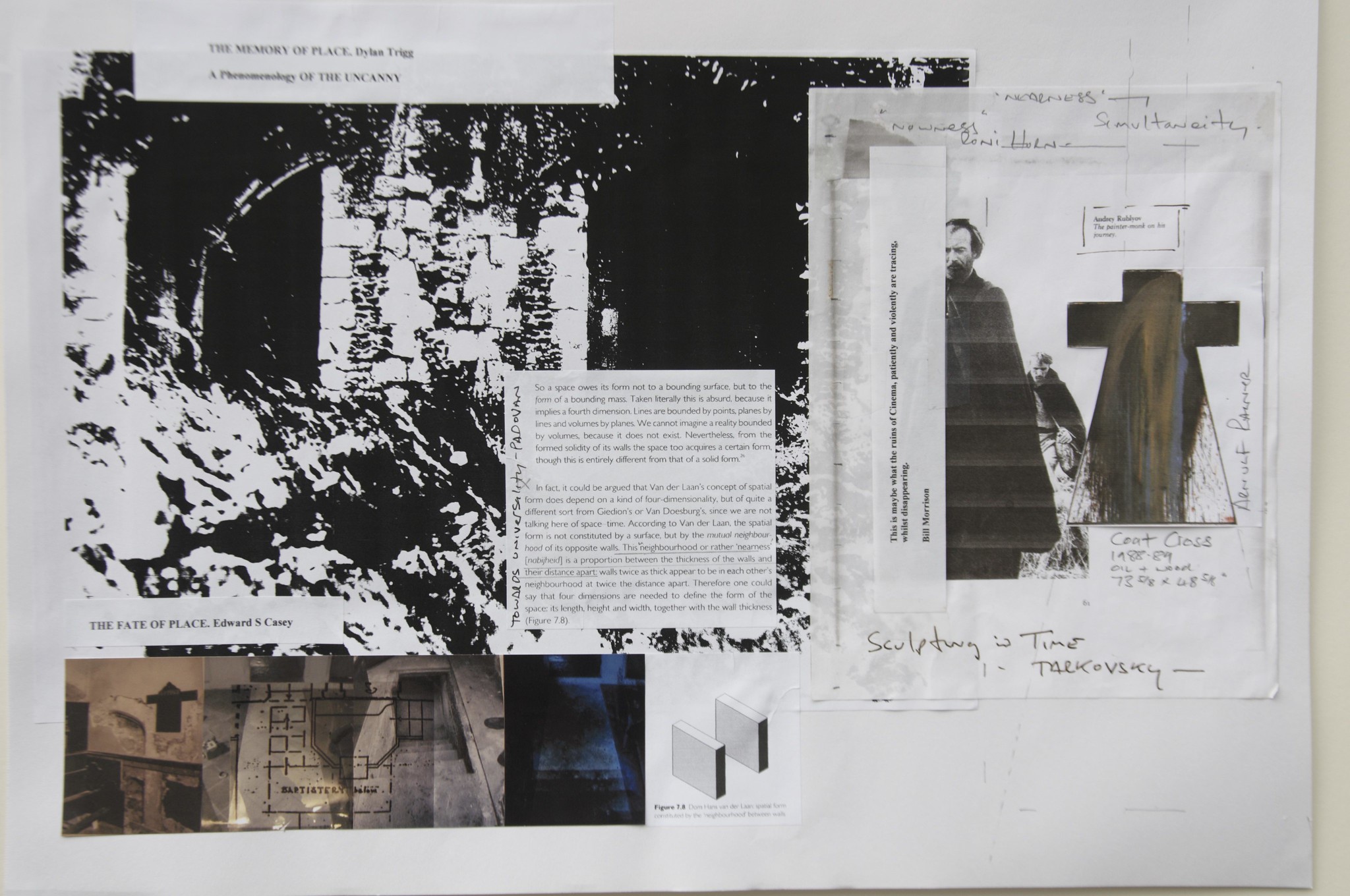
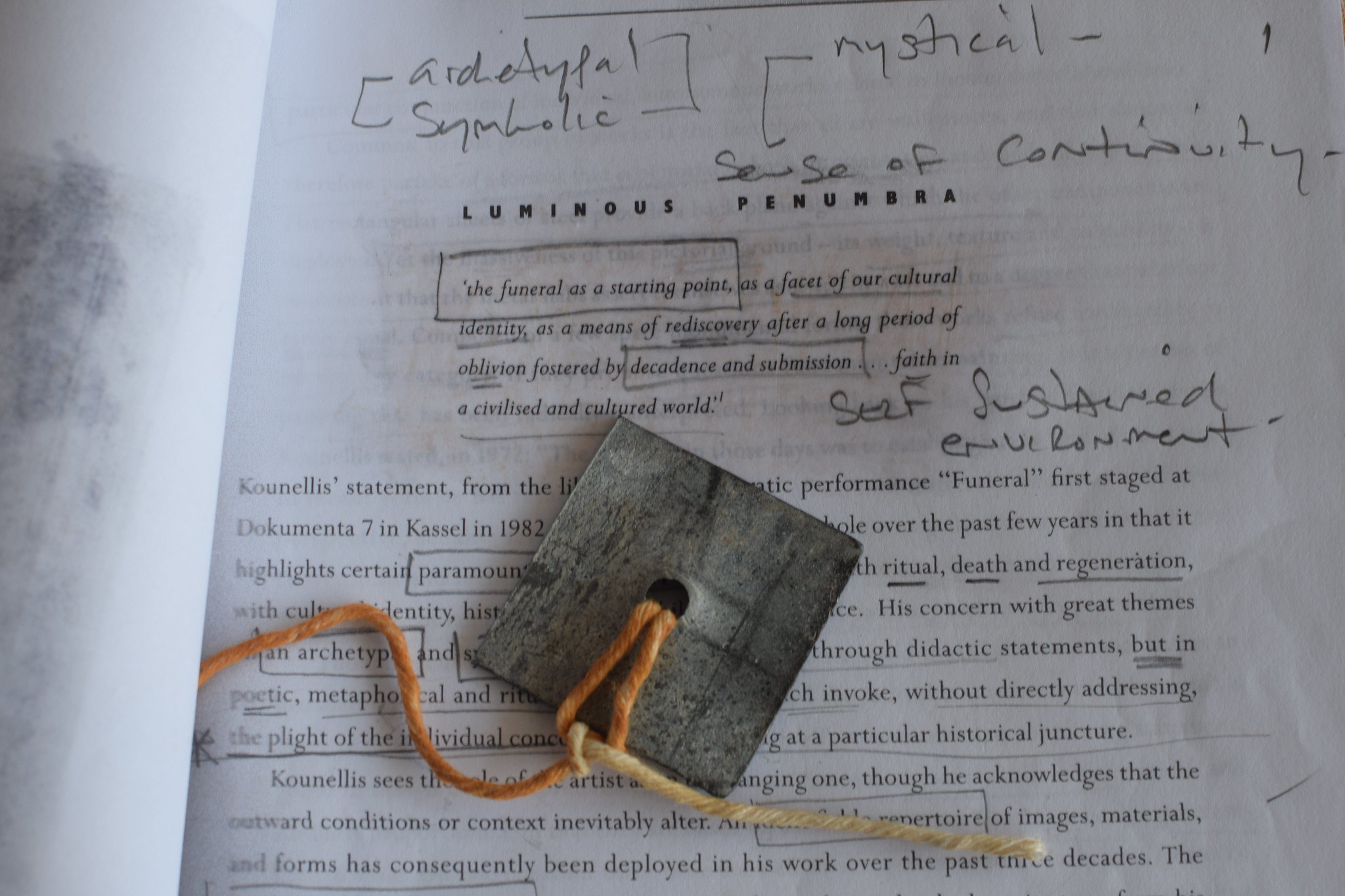
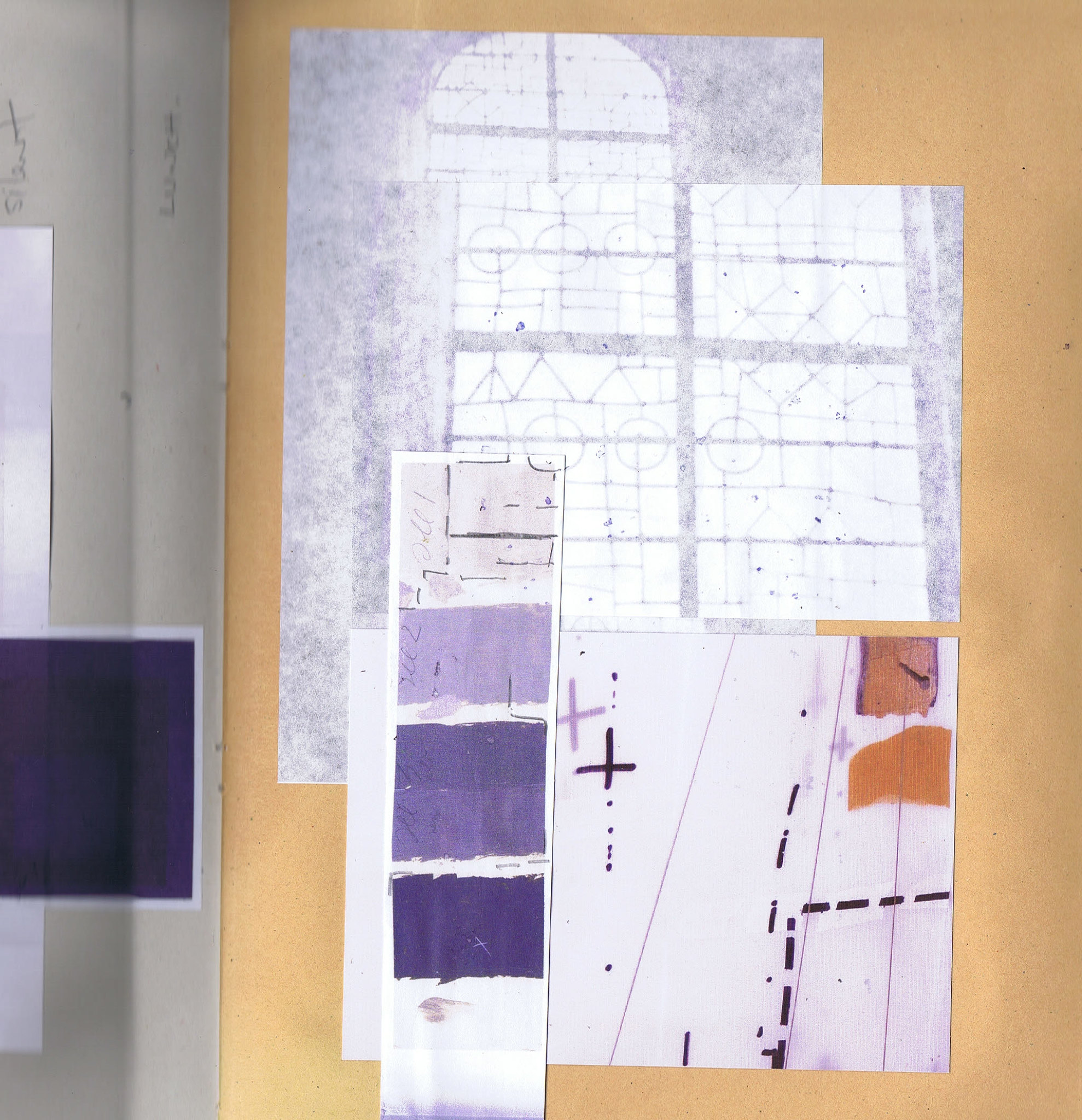
The image provided is an art collage incorporating diagrams and text snippets from the book Space and Place: The Perspective of Experience by geographer Yi-Fu Tuan. The artwork explores concepts of human spatial perception and time. Key Concepts Spatial Bias: The collage uses a specific diagram to illustrate that “Space projected from the body is biased toward the front and right”. This suggests a natural human tendency to perceive and prioritize space differently depending on its relation to our body’s orientation. Time Perception: The diagram visually represents the future as “ahead and ‘up’” and the past as “behind and ‘below’,” linking spatial metaphors to human conceptions of time. Art and Perception: The text “Ceramics a spatial sensitivity, forms governed by their vessel and void” suggests the artwork itself is a study in how form and negative space interact to create meaning, a common theme in art and design that explores kinaesthetic and multisensory perception. This collage integrates geographical, psychological, and artistic ideas about how humans experience and structure their environment.
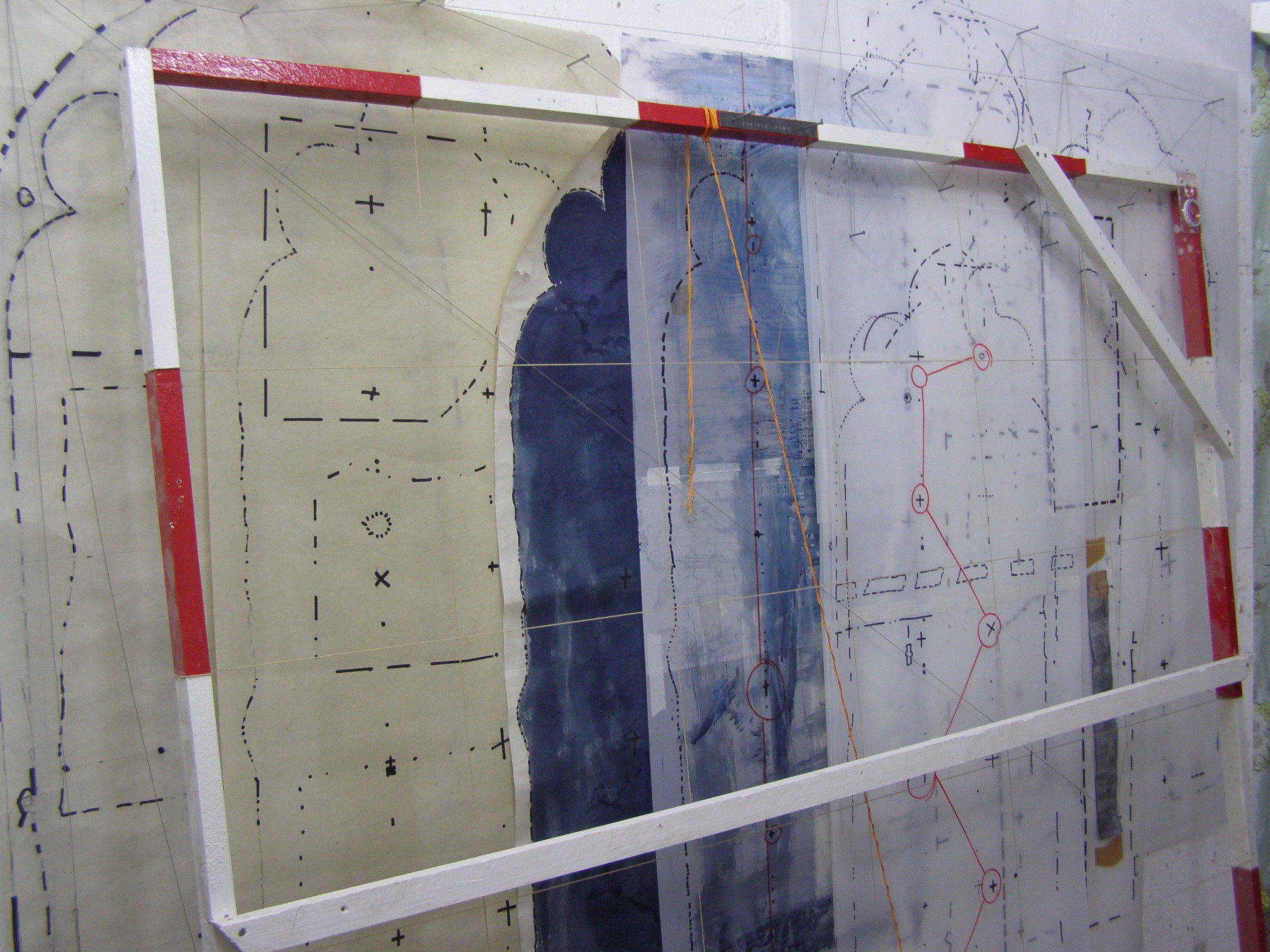
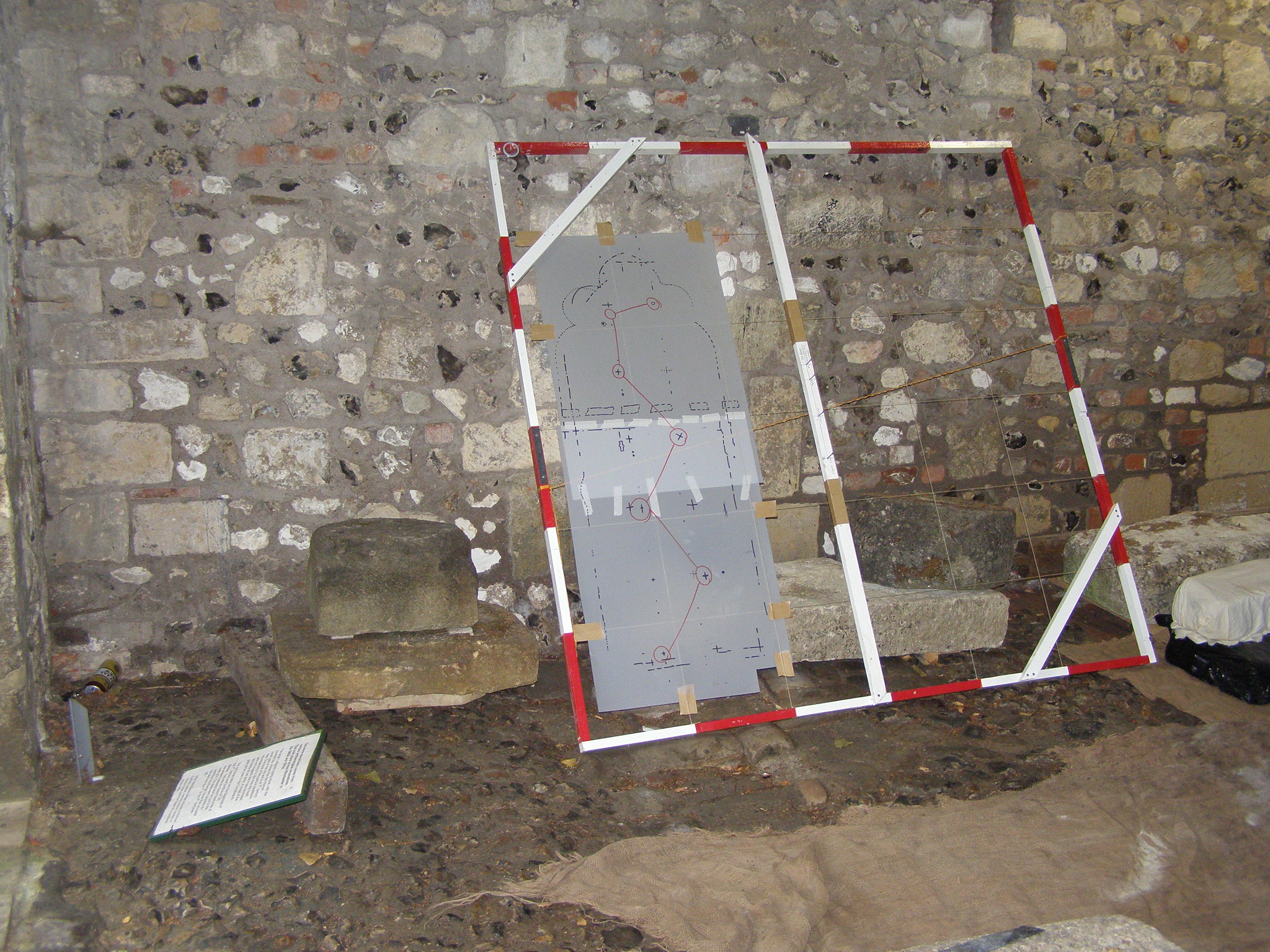
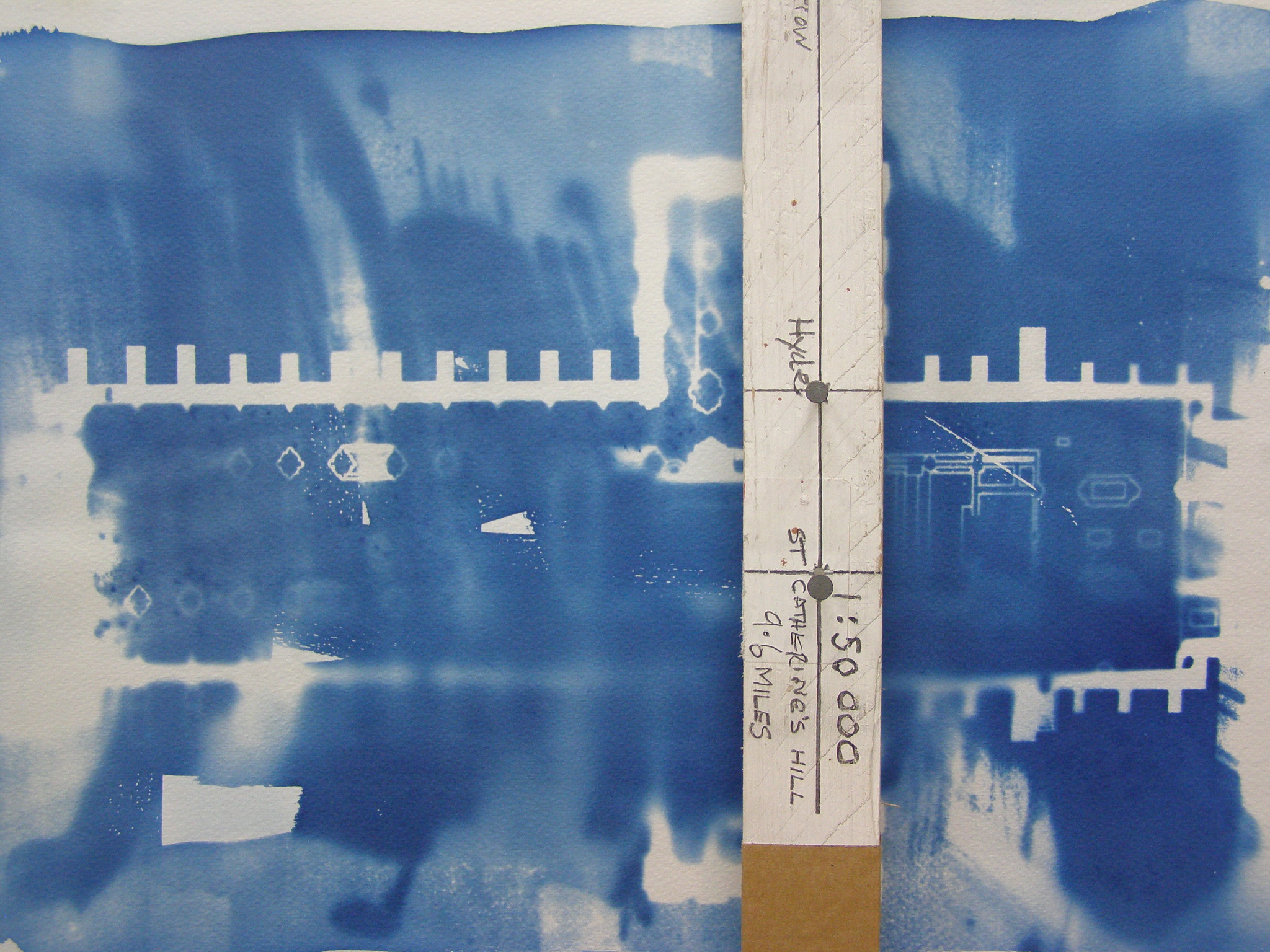
“Leylines” has been appropriated and employed as both a practical and as a conceptual strategy to inquiry into places and localities. Site visits and sensitive dialogues with the other artists at a number of locations have further brought materials and processes into the creative realm. The spatial practice of setting-up this work has also produced insightful local knowledge from those dwelling nearby.
Beams and Netting: Negotiations in the chamber.
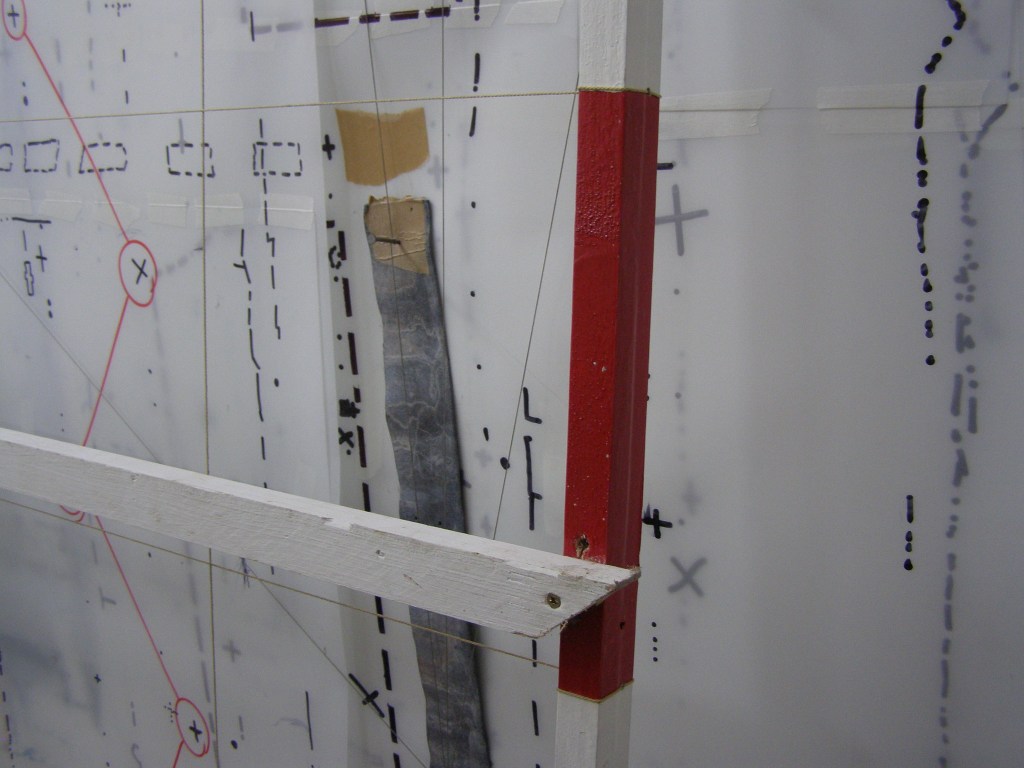
Clay, Hessian, drawings and transparencies from architectural openings, drawing frame, antique glass, lead and nylon lines.
This intervention into a listed building has become a temporary refuge for a work in progress. The work attempts to show a creative agency as it encounters a host of installed hierarchies and conditions. The architectural motif on the drawings has been derived directly from the open apertures of the chamber, and these drawings also reference the supportive ironwork (Ferramenta) which has been playfully re-registered as a graphic leyline . A drawing frame similar to that used in archaeology for drawing has been adapted to illustrate the relative positions of the leyline as registered by the ordnance survey grid, both terminuses being labelled on the frames periphery.
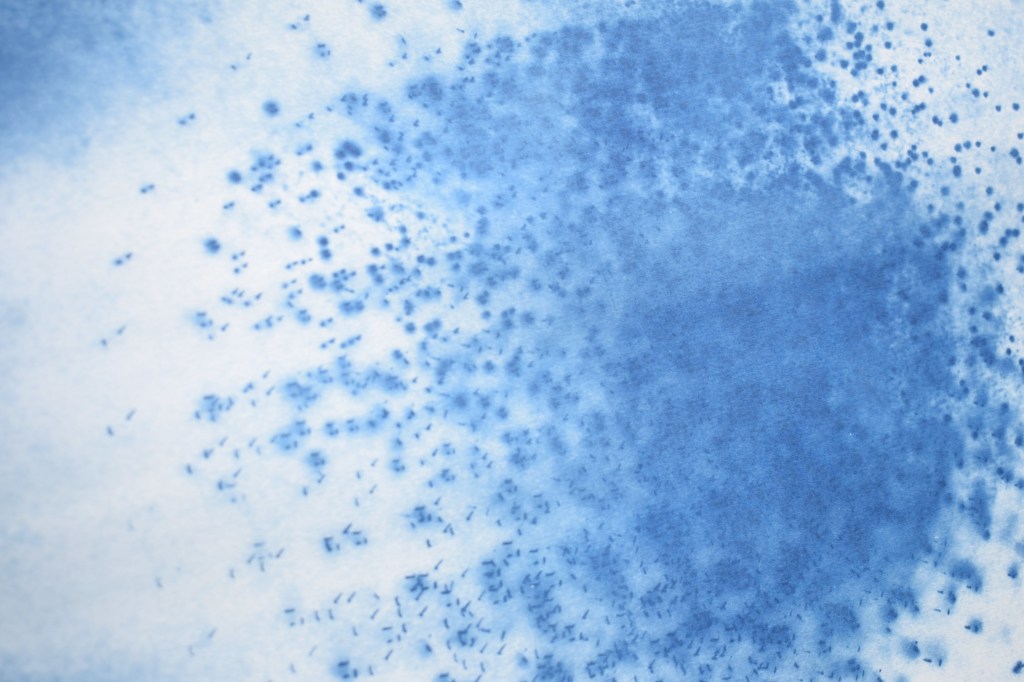
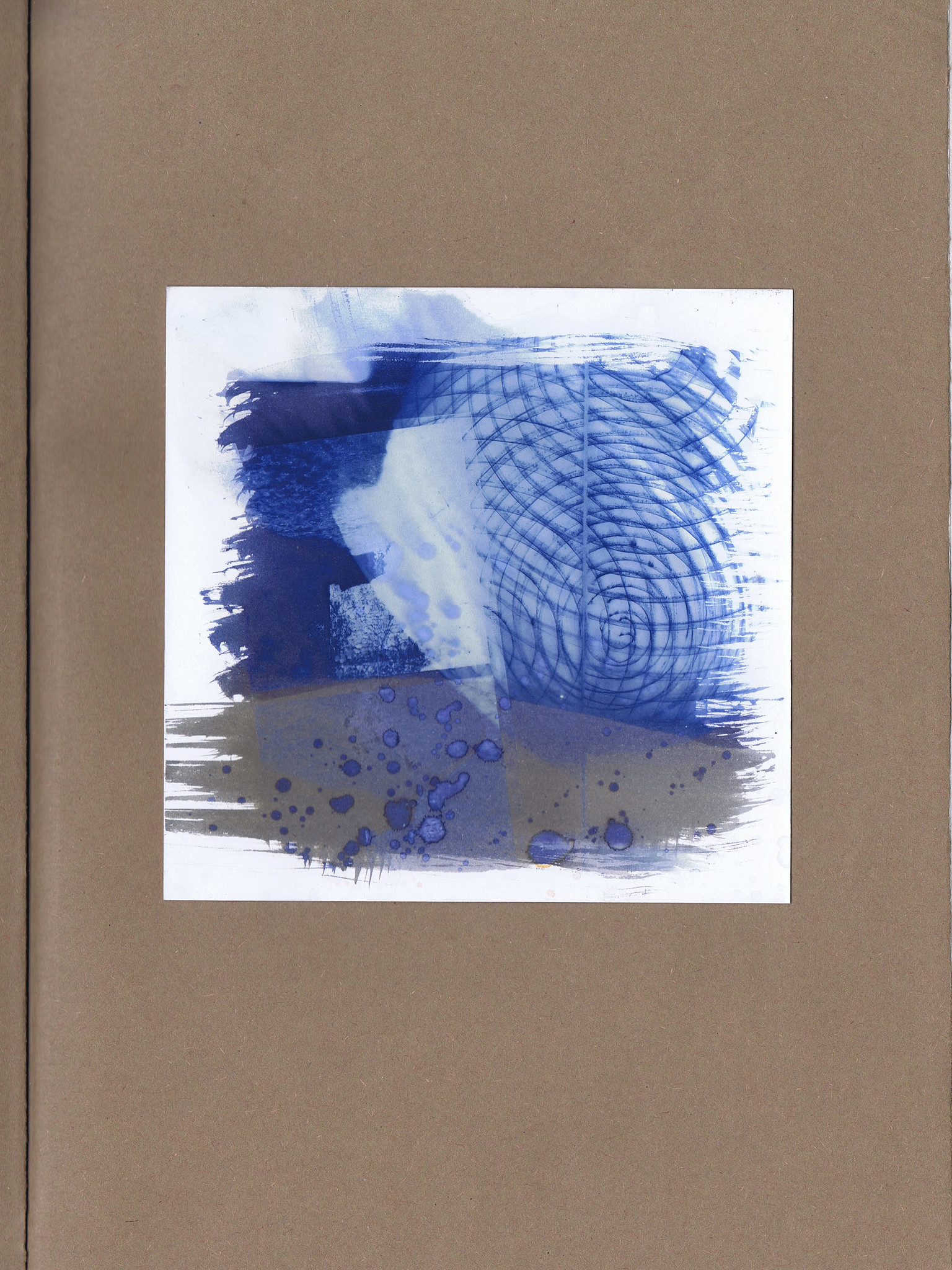
Artist’s Book: white and coloured pages, card covers with cyanotype of Winchester Cathedral.
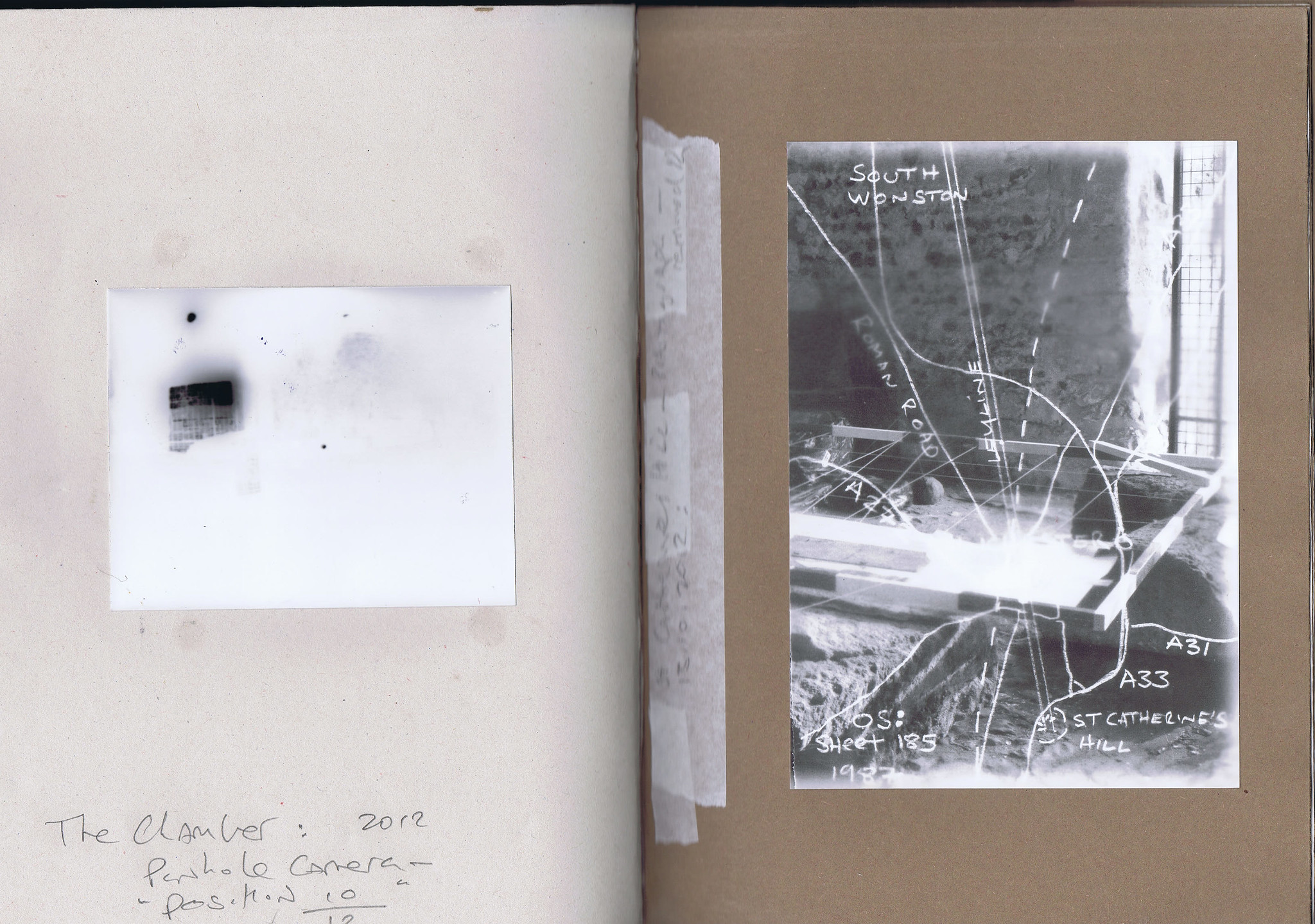
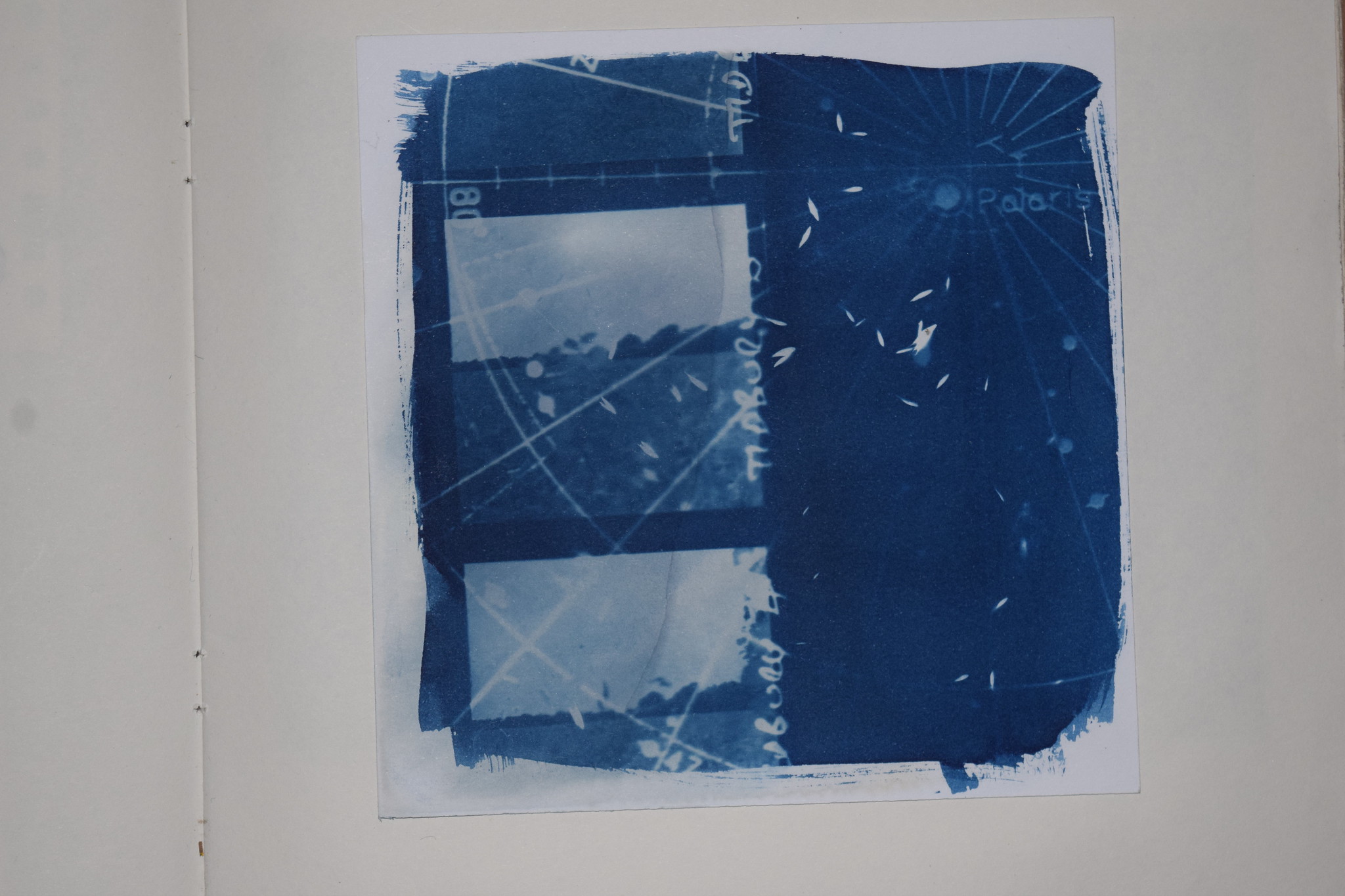
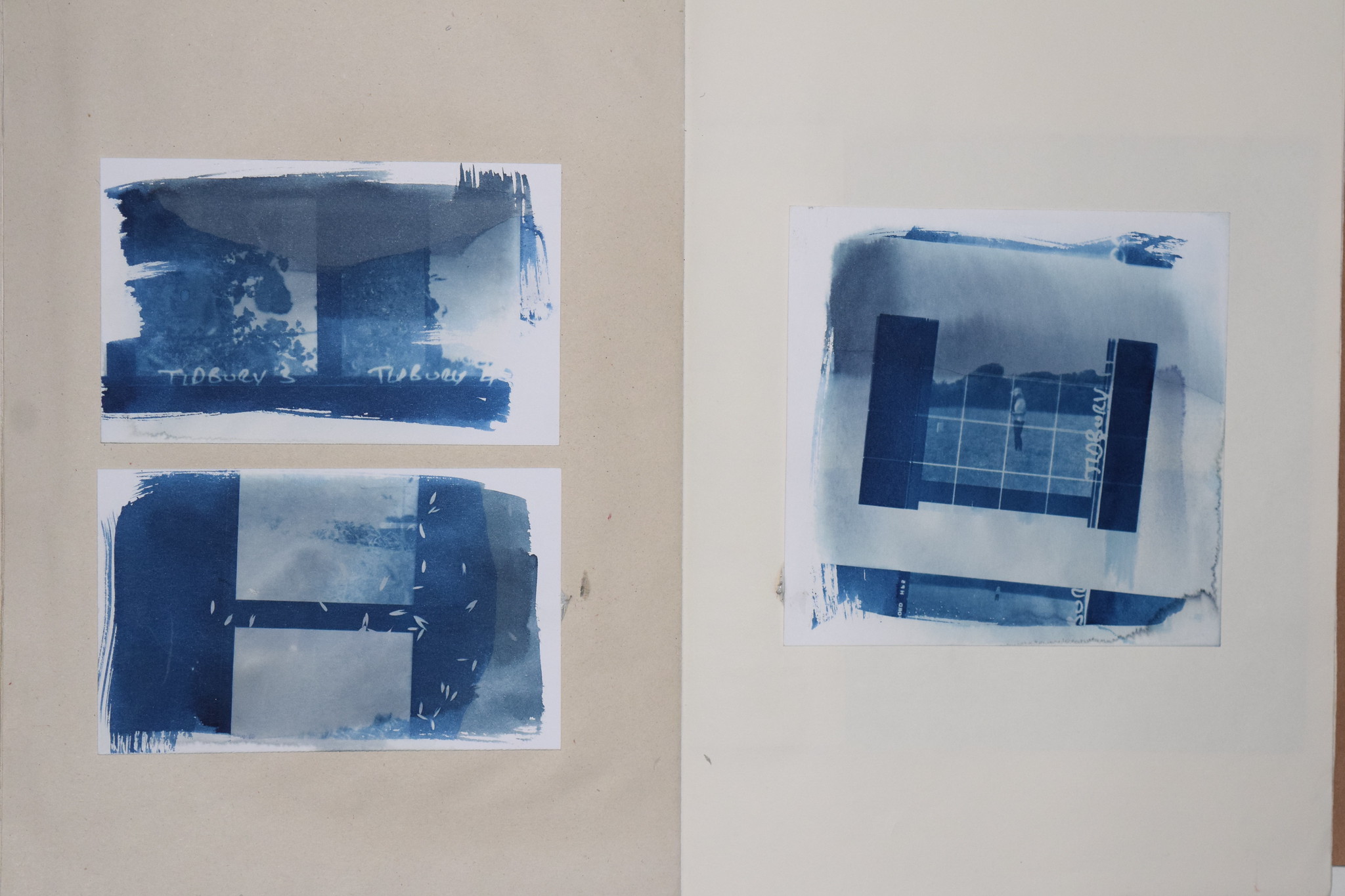
A hand bound book comprising of five signatures each with four folios. This book contains a collection of postcards made from contact prints and photograms from Tidbury Ring using the cyanotype process. Other pages contain some cyanotype paintings/abstracts around the theme of dwelling and hut. Silver gelatin images of St Catherine’s Hill are present as are some experimental pinhole photography.
Writing has nothing to do with signifying, it has to do with surveying, mapping, even realms that are yet to come. Deleuze, Guattari. 1988.
Year 2012
Medium Hand bound artist’s book with alternative photographic documents, images and diagrams.
Size 225mmL x 300mmH x 20mmD
Date(s) 01/10/2012
Venue St Bartholomew’s Church and Hyde Abbey Gatehouse.
Location Winchester
Exploring Leylines: Art and Local Knowledge This title focuses on key concepts like ‘leylines’ and ‘local knowledge’, improving search visibility for users interested in art and geography.
Creative Interventions in Architectural Spaces Highlighting ‘creative interventions’ and ‘architectural spaces’ targets audiences looking for innovative art practices, aiding in niche search rankings.
Spatial Practices: Art’s Dialogue with Environment This title emphasizes ‘spatial practices’ and ‘dialogue’, attracting an audience interested in interactive and site-specific art, enhancing SEO relevance.
The Poetics of Space. Gaston Bachelard. The classic look at how we experience intimate places.
The Eroded Steps. Giuseppe Penone. Dean Clough Contour Lines.
Land Drawings, Installations, Excavations. Kate Whiteford. Remote Sensing. Colin Renfrew.
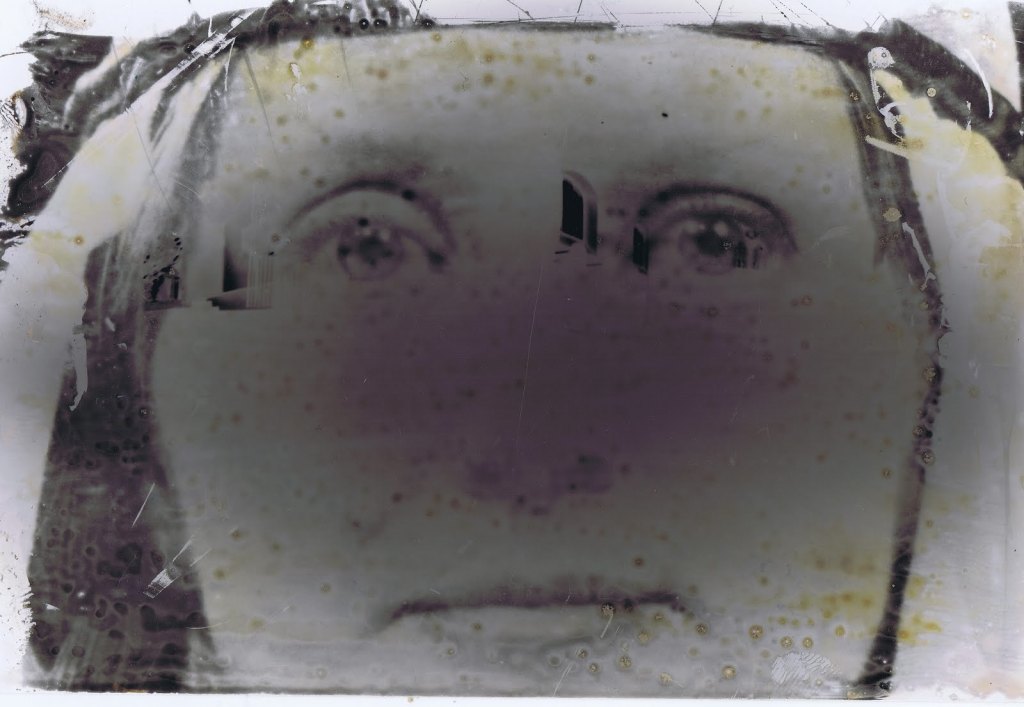
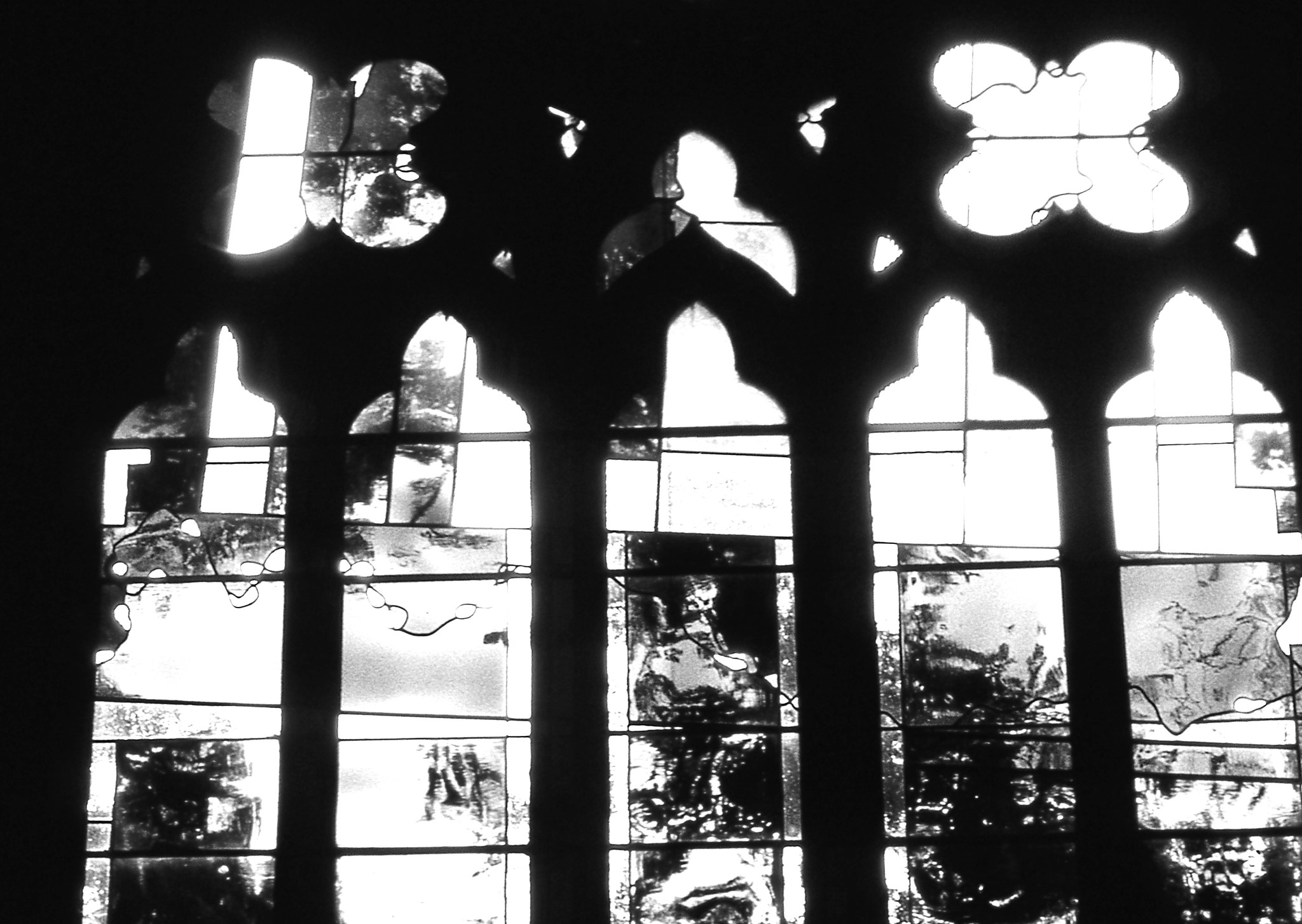
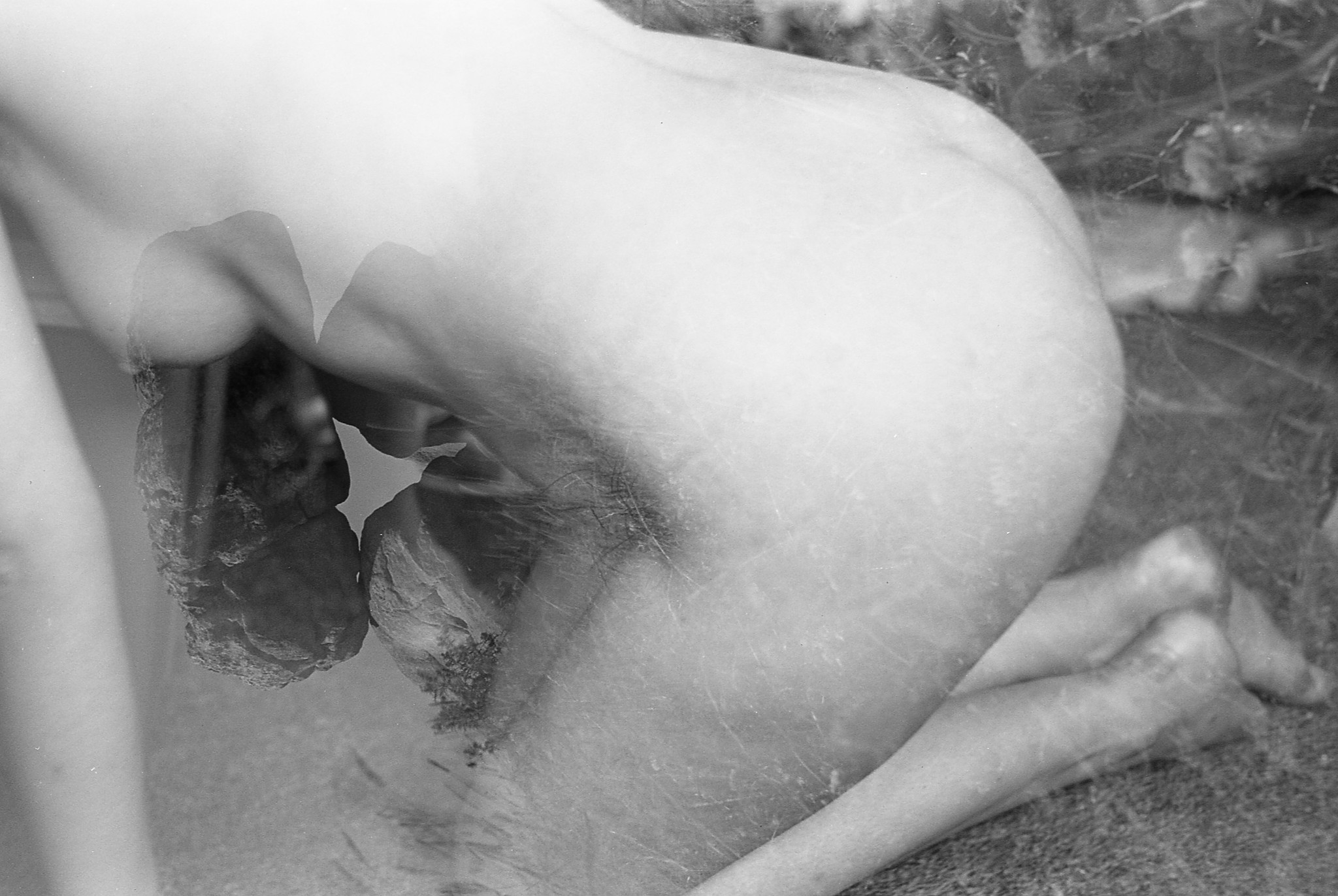
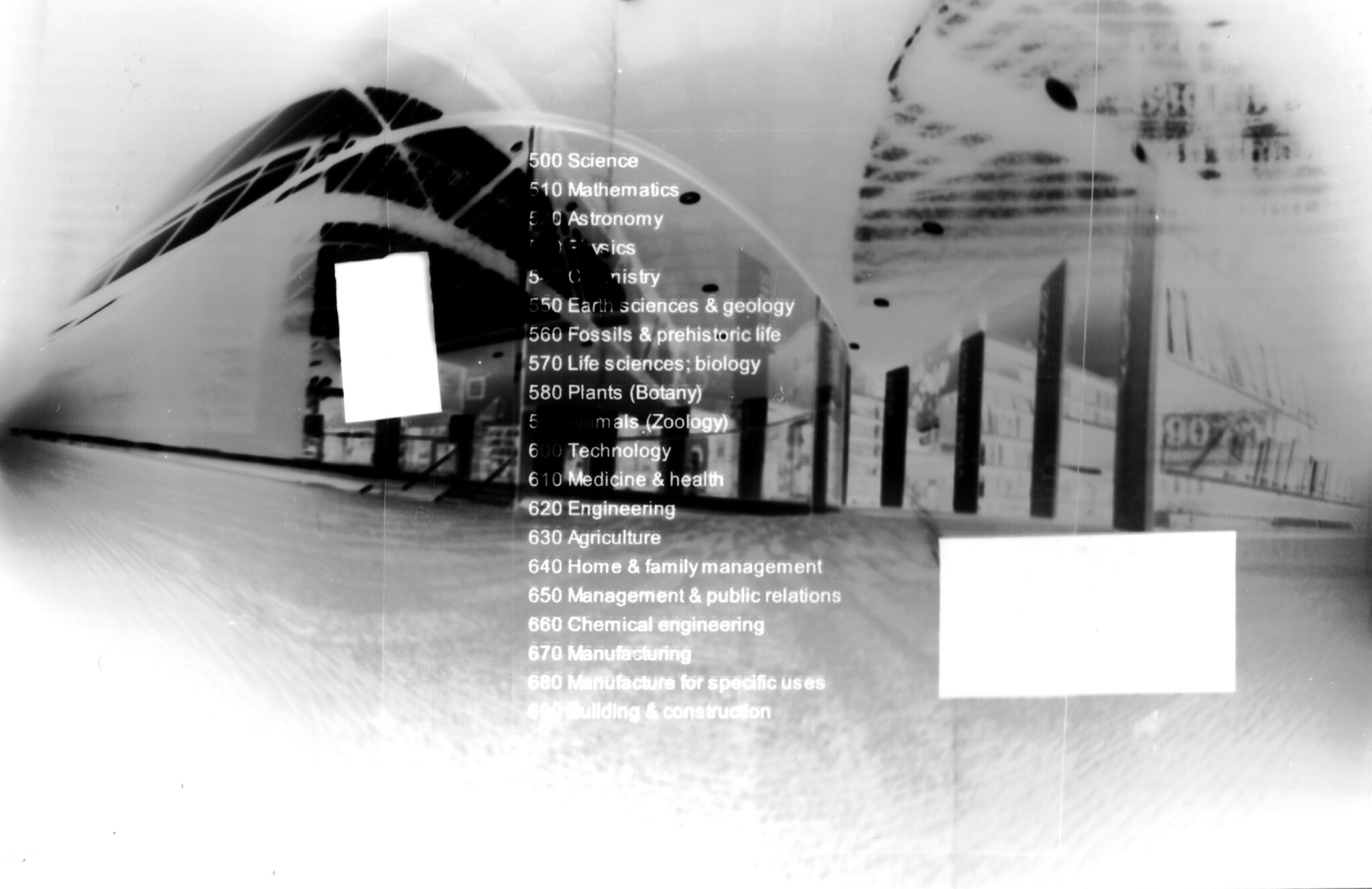
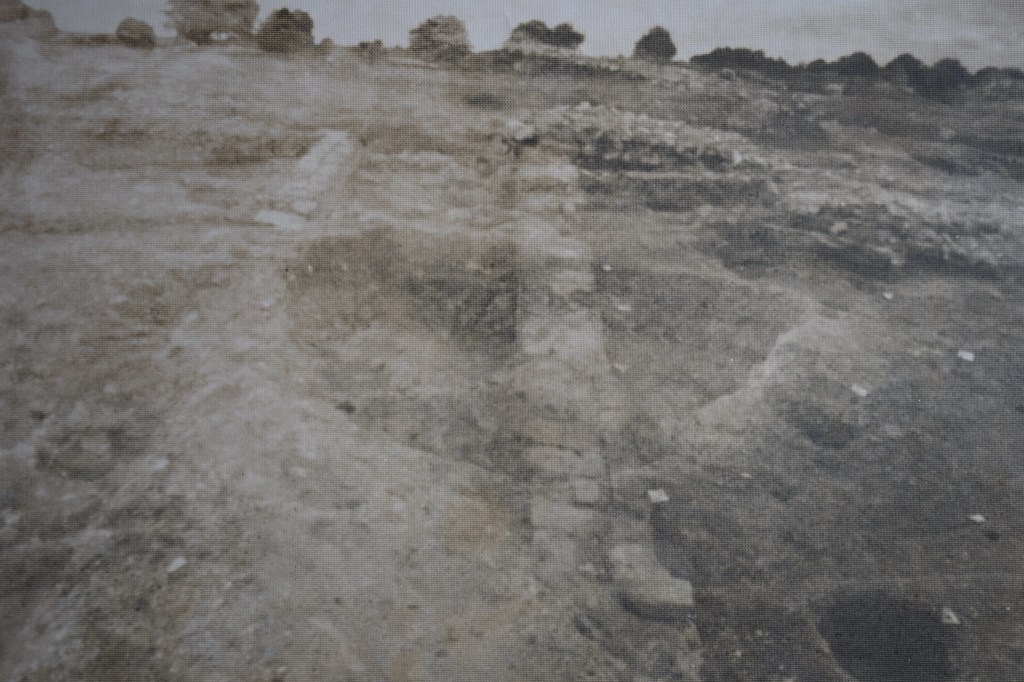
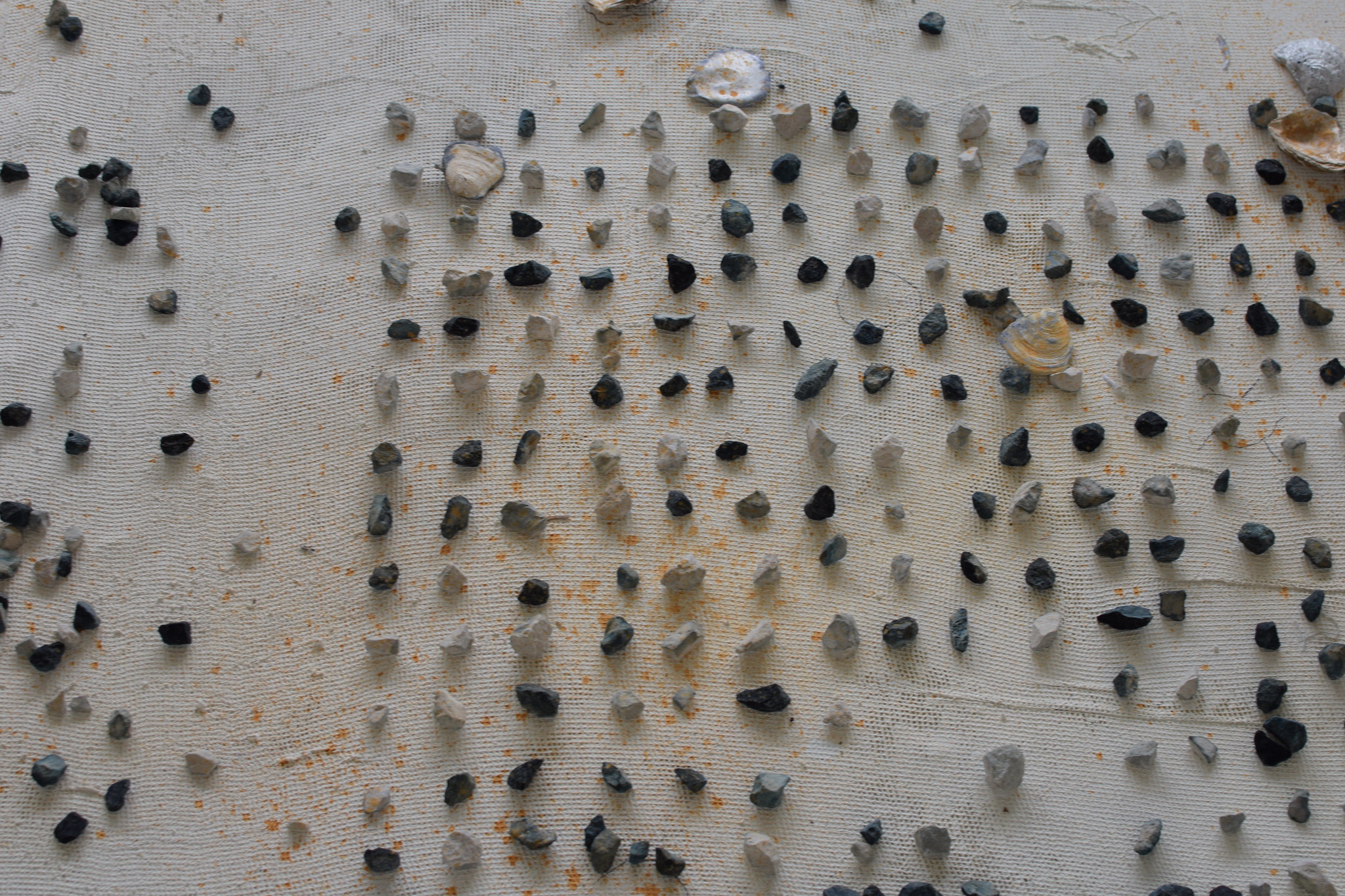
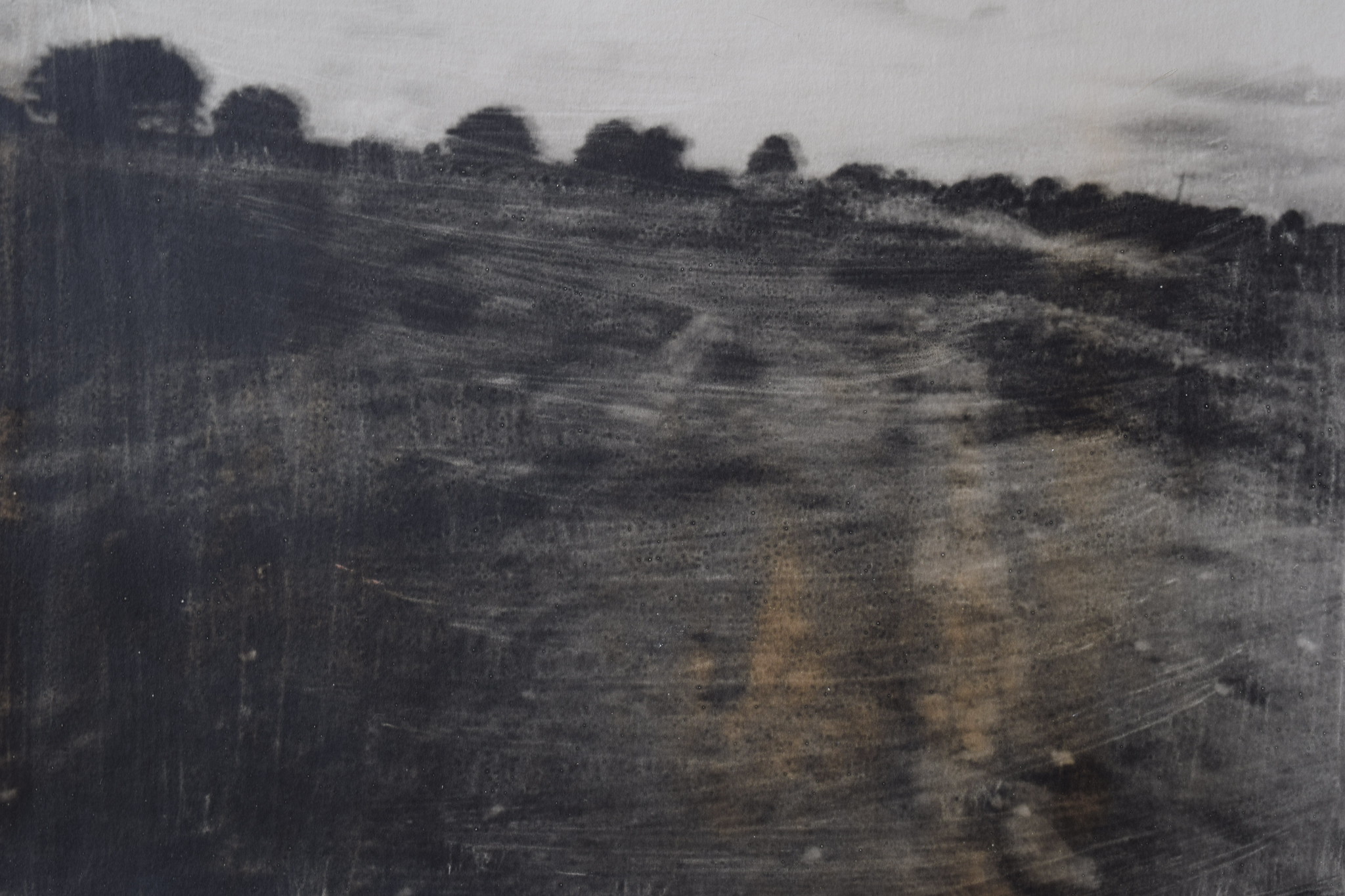
Negative Capability part I is an exhibition of visual and written responses to the University of Winchester’s Magdalen Hill Archaeological Research Project (MHARP), one of the most extensive excavations to date of a medieval leper hospital, almshouse and cemetery complex. The artists observed the excavation team at work, witnessing their process then displaying the results in the gallery and inviting writers to respond.
Year 2013
Medium Pinhole photography, liquid light emulsion, selenium toner.


 russellmoreton.com