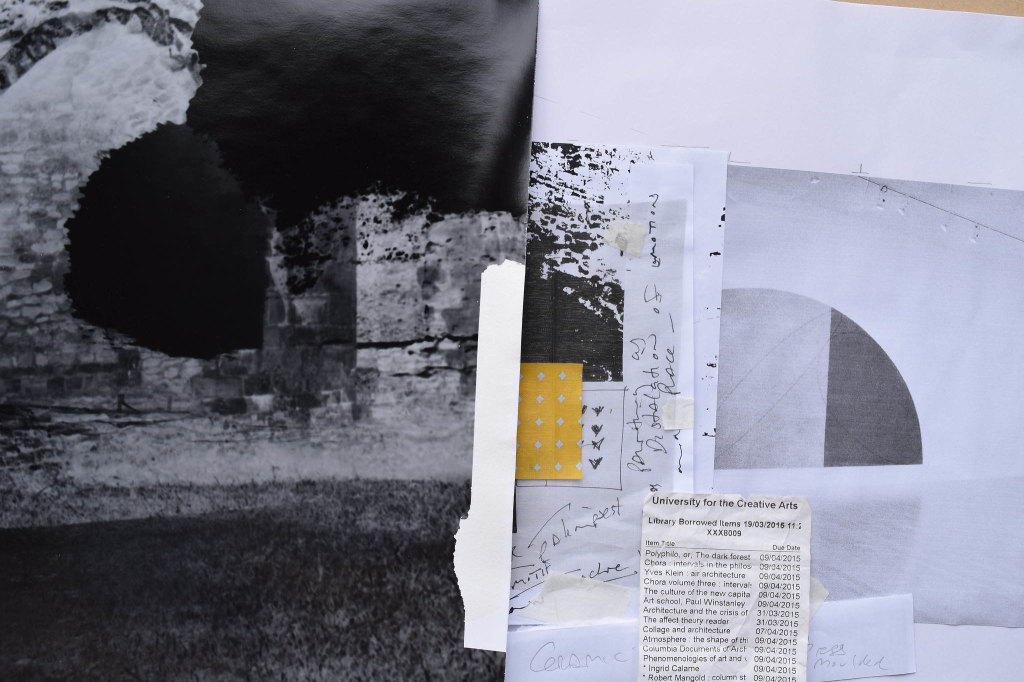
A body of allure, speculative gathering and withdrawn spatial interiority.
Spatial Practice~Reading Apparatus.
What happens when another body enters making without becoming its subject?
An image, a remembered space, a reading or another body may enter clay not as something to be represented, but as a correspondence: a force passing between bodies, gathering within material and becoming otherwise.
The research collage becomes a spatial body in which these encounters can remain partially withdrawn. Fragments approach without quite meeting. An interior is proposed without being enclosed. Something becomes perceptible without becoming entirely available.
Through clay, these correspondences acquire another condition. Through firing, they become materially persistent.
Yet what persists is not the image, the idea or the body as such. What persists is a relation capable of further becoming.
Vicarious touching names this uncertain proximity: a touching without direct contact, where one body may become entangled with another across an interval of material, image, atmosphere and time.
The withdrawn ceramic carries these soundings forward.
Its apertures, surfaces and interiorities offer enough to awaken curiosity, while retaining something of their withdrawal. The ceramic does not ask another body to enter. It makes another body curious about entering.
Perhaps this is the allure of the permeable chamber: a room for the curiosity of other bodies.
What has surfaced may withdraw.
What has withdrawn may surface otherwise.
The body persists. The correspondence remains~in~play.
Vicarious Touching ~ Persistent Becoming
Vicarious touching becomes more than a description of how bodies relate. Within Russell Moreton’s spatial practice, it becomes a body of allure: a spatial force that sets something in motion without determining what that something will become. It is a touching at a distance that creates the conditions for another body to become curious.
When other bodies enter the clay and subsequently the withdrawn ceramic, they become vicariously entangled through the material relations of making. An image, a body, a remembered space, a reading or an architectural proposition may enter the clay as another force within its becoming. The clay becomes a site of speculative gathering in which these bodies encounter one another without becoming a single body.
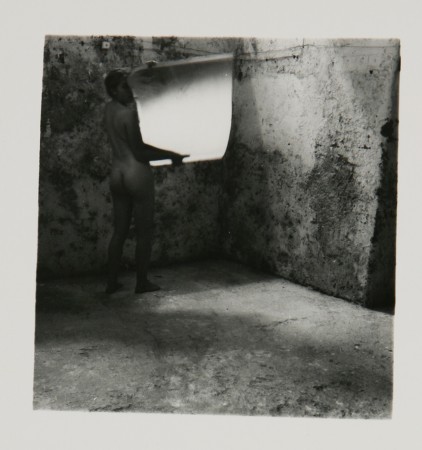
Francesca Woodman’s photographic body enters this field as one such correspondent body. It is encountered through image, reading, looking and correspondence before becoming materially implicated within the bodies of clay. What passes between these bodies is not direct contact, but a vicarious touching: an encounter at a distance in which something of one body becomes capable of affecting another without becoming identical to it.
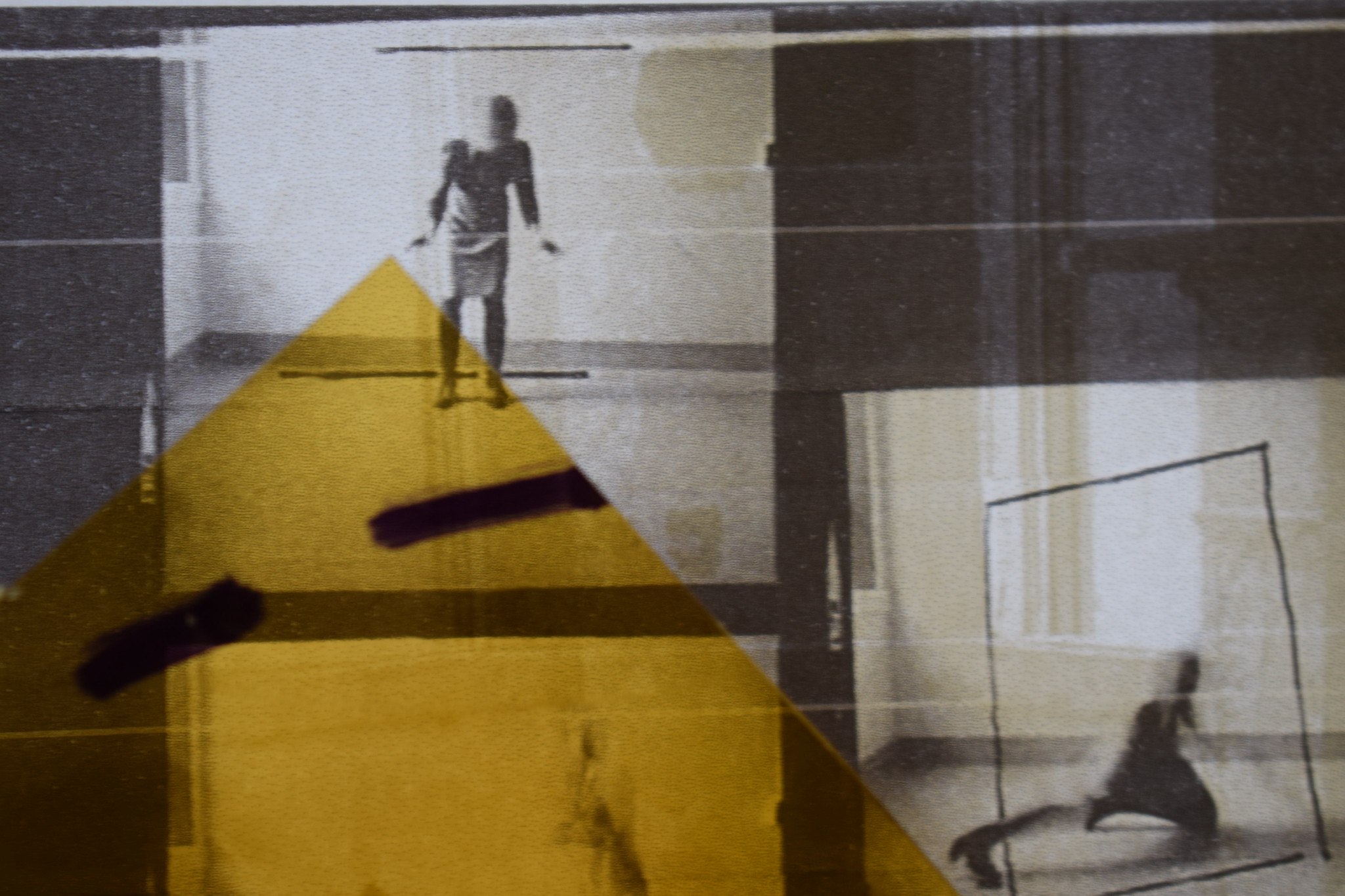
The movement is therefore not one of representation but of transformation:
Woodman’s body → image → reading body → clay → ceramic body → encounter
At each stage, the body changes condition. What enters the clay is not an image preserved intact, but a correspondence: something of the spatial tension between body, wall, aperture, concealment, exposure and interiority.
The photographic body becomes implicated in another spatial body, where its correspondence can acquire a different material existence.
Through firing, this gathering is withdrawn into ceramic.
What was provisional becomes materially persistent. What had been encountered through an image acquires another condition of existence. Woodman’s body is neither simply present as photographic representation nor entirely absent. It becomes part of a surfacingforce, a trace of correspondence that has changed its material condition.
The ceramic therefore becomes a permeable withdrawn interiority, made durable through firing but never closed by it. Its surfaces, holes, intervals and chambers carry the possibility of encounters that exceed the circumstances of its making.
Here, allure becomes spatially consequential.
The ceramic gives something to encounter while withholding the totality of what has entered it. Bodies gathered through research remain partially withdrawn. They can be sensed without being possessed, encountered without being fully recovered. The force of their correspondence persists through this withdrawal.
The persistent ceramic body becomes a body of other bodies, but not a container of them.
Its persistence is therefore not the persistence of a represented body. It is the persistence of a relation that has become capable of further becoming.
Allure ~ Vicarious Touching ~ Spatial Interiority.
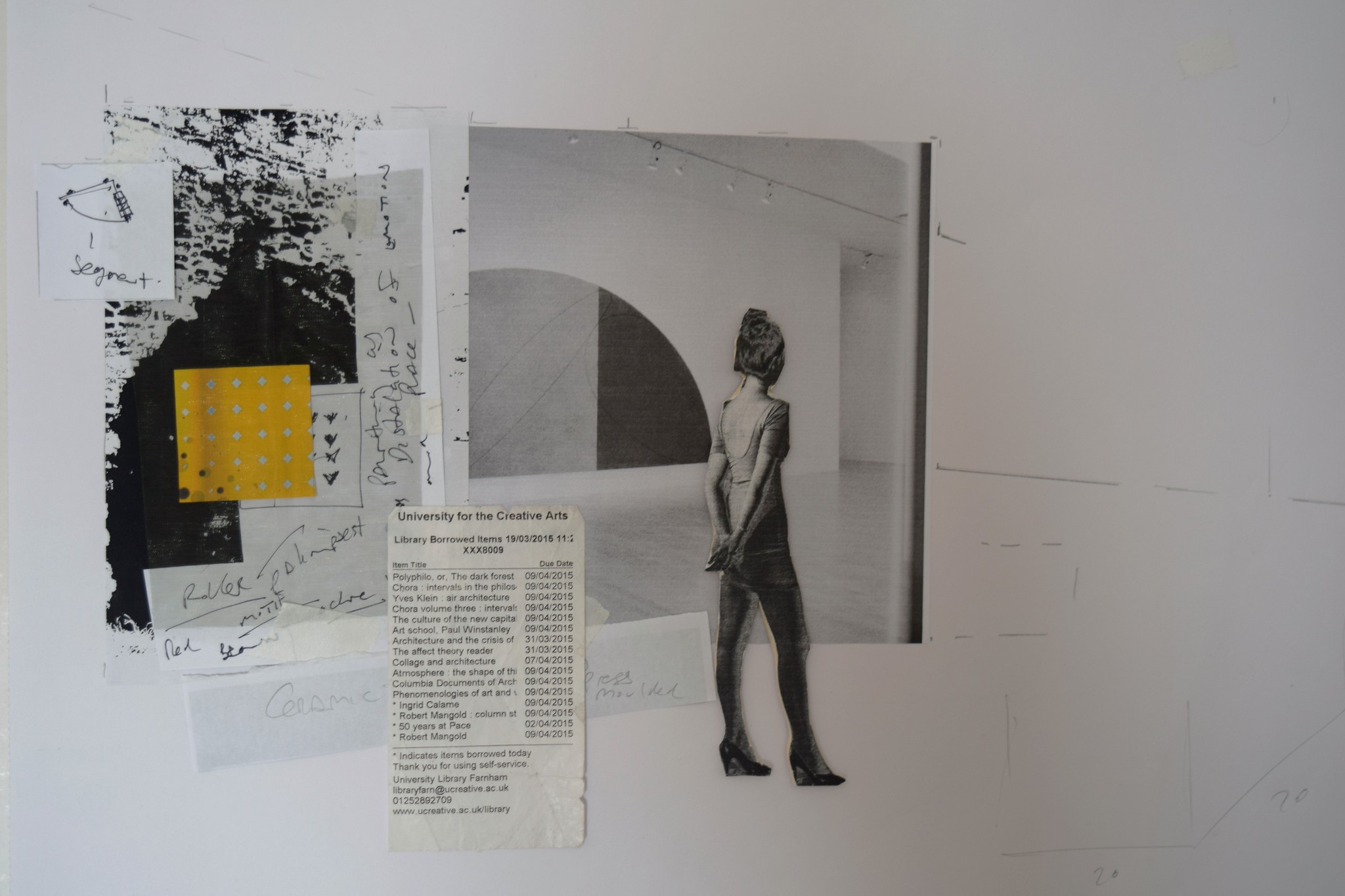
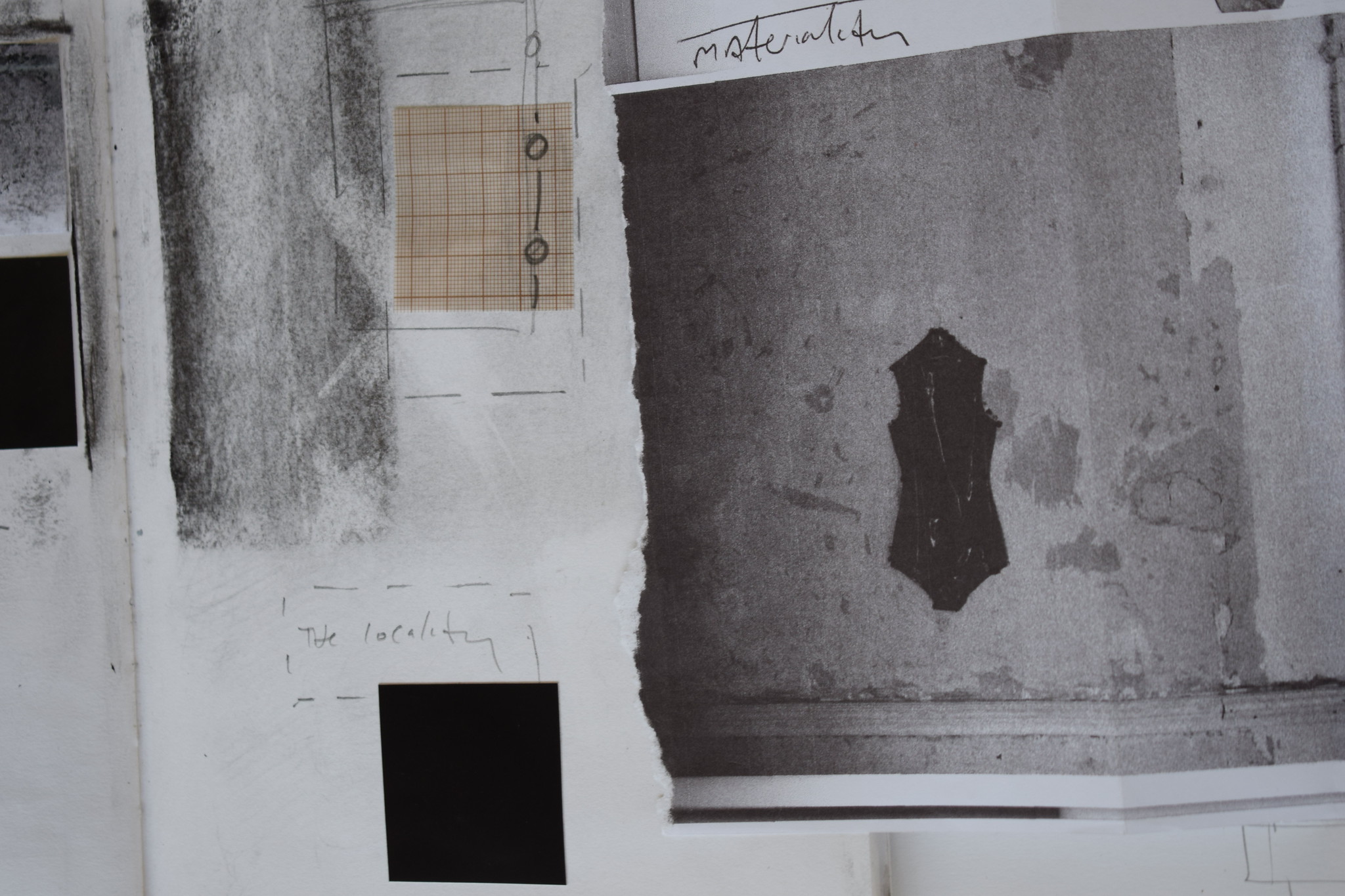
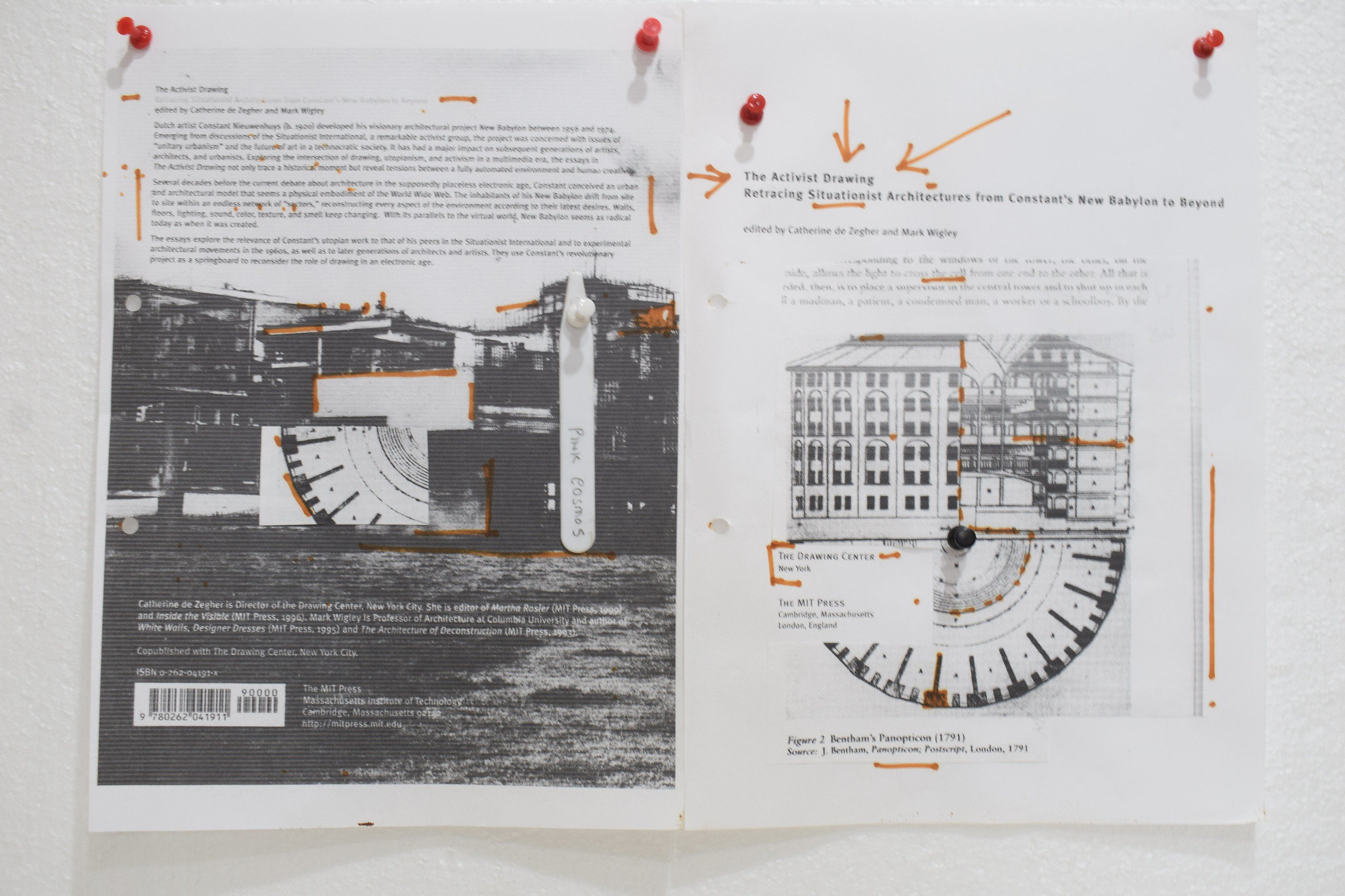
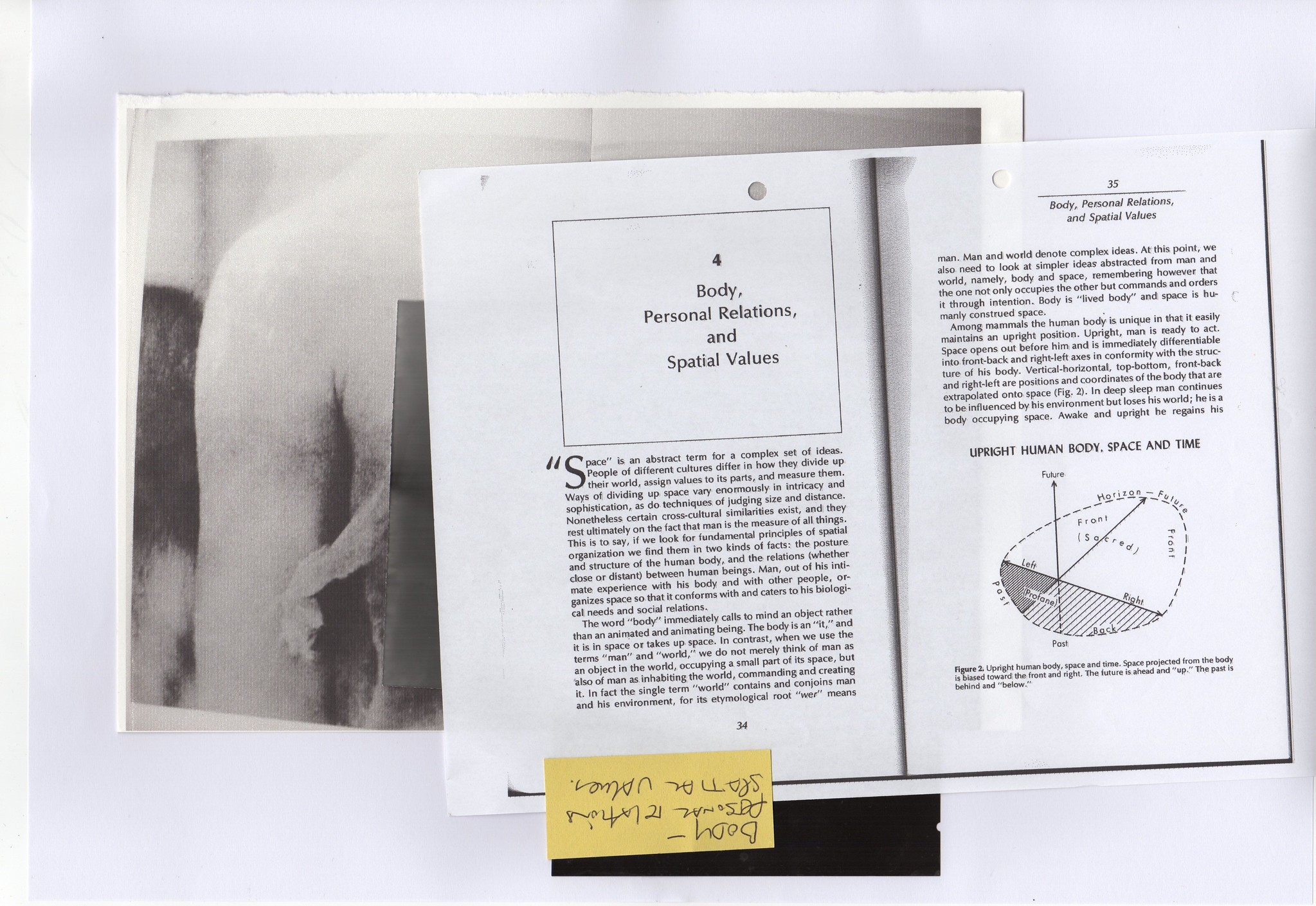
The research collage is another persistent body within this movement. Images, drawings, architectural fragments, material traces and textual residues are brought into proximity, but their relations remain partially withdrawn. Something passes between them without becoming fully possessed by any one of them.
The collage produces an interior that is never quite given as an interior. A darkened figure, an opening, a grid, a drawn line, a black field or an overlaid surface gives enough for an interior proposition to begin while withholding the possibility of fully entering it.
Allure therefore becomes less an attraction towards an object than a forcefeeling generated through uncertain proximity.
The touching happens between things.
The research collage becomes a speculative spatial body: an interiority produced through fragments that do not quite meet. Its spaces are intervals rather than rooms, openings rather than entrances, propositions rather than representations.
In this sense, the collage does not simply precede the ceramic as preparatory research. It is already thinking spatially through withdrawal. It tests how an interior might be sensed before it is materially constructed; how a chamber might be proposed without becoming inhabitable; and how bodies might encounter one another across a distance.
The ceramic does not reproduce the collage.
It withdraws its spatial propositions into another body.
Between collage and ceramic emerges a spatial interval~interiority: a condition in which touching can occur without direct contact, where correspondence is felt across distance, and where a proposition can remain present precisely because it is not completely available.
The allure of the research collage is therefore its capacity to touch the ceramic before the ceramic exists.
A Room for the Curiosity of Other Bodies.
Vicarious touching does not seek to complete an encounter between bodies. It opens a spatially driven room for the curiosity of other bodies.
The room is not necessarily architectural. It is a propositional interiority produced between bodies that remain partially withdrawn from one another. Something is sensed without being entirely disclosed; something approaches without being required to arrive. The ceramic body offers an interiority that is permeable yet withdrawn, making space for another body to wonder what might be encountered within, around or beyond it.
The allure is therefore an incomplete encounter.
A surface, aperture, chamber, trace or image gives enough to set curiosity in motion while retaining something of its withdrawal. Through vicarious touching, the bodies gathered in the research do not have to become present as representations. They become conditions for another body to enter the proposition.
Perhaps this is the force of the permeable chamber:
It does not ask another body to enter.
It makes another body curious about entering.
Curiosity becomes a form of spatial bodying.
The withdrawn ceramic remains materially persistent, but its allure keeps the proposition moving. It offers an encounter without exhausting it, an interior without fully revealing its interiority, a body that can be approached without becoming completely available. Vicarious touching becomes the spatial generosity of the withdrawn body: a room made through allure for the curiosity of other bodies.
Persistent Becoming.
The movement from Woodman to clay to ceramic is therefore not a passage from image to object. It is a passage between persistent bodies.
The photographic body enters the reading body. The reading body carries its sounding into clay. Clay gathers, transforms and materialises the correspondence. Firing withdraws this gathering into ceramic. The ceramic then enters another spatial situation, where another body encounters it.
Across these transformations, the original correspondence is neither preserved nor lost. It becomes a persistent possibility for further touching.
Vicarious touching enables the body to persist without remaining present.
What surfaces is never the whole correspondence. What withdraws is not lost. Both remain active within the persistent body, available to another encounter.
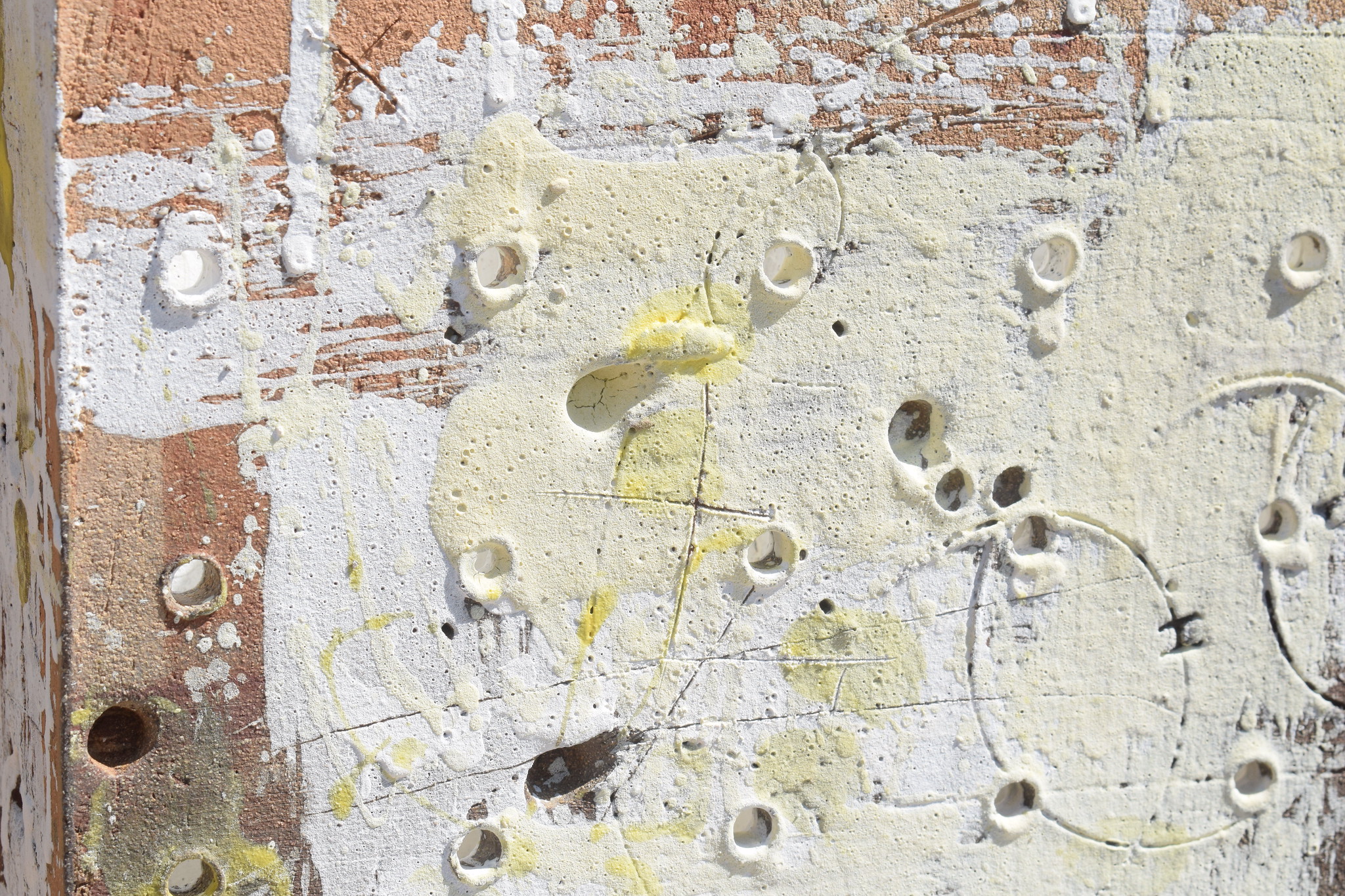
The ceramic becomes materially durable while its force~form remains propositionally open. Its interiority persists as a permeable condition of correspondence: a gathering that can continue to weather, withdraw, surface and become otherwise.
Persistent becoming is not the persistence of what a body was. It is the persistence of its capacity to enter another relation.
And perhaps this is where In~Touching finds another spatial condition: the ceramic does not need to touch another body directly. It creates the conditions in which another body might become responsive, attentive and curious—and therefore already, somehow, in correspondence.
Vicarious touching ~ persistent becoming.
A body of allure.
A permeable interiority.
A room for the curiosity of other bodies.


Leave a comment