This essay gathers a series of inquiries into Russell Moreton’s spatial practice: ceramics, photography, architecture, material correspondence, institutional capture, and the possibility of becoming a body of research for others.
The starting point is making. Making begins with an imprint, but not the imprint of a singular author upon passive matter. It is the trace of an encounter between body, material, tool, force, resistance and time. Clay receives pressure, hesitation, incision, collapse, correction and repetition. Yet it also redirects the intentions brought to it. Making is therefore a correspondence in which neither maker nor material remains unchanged.
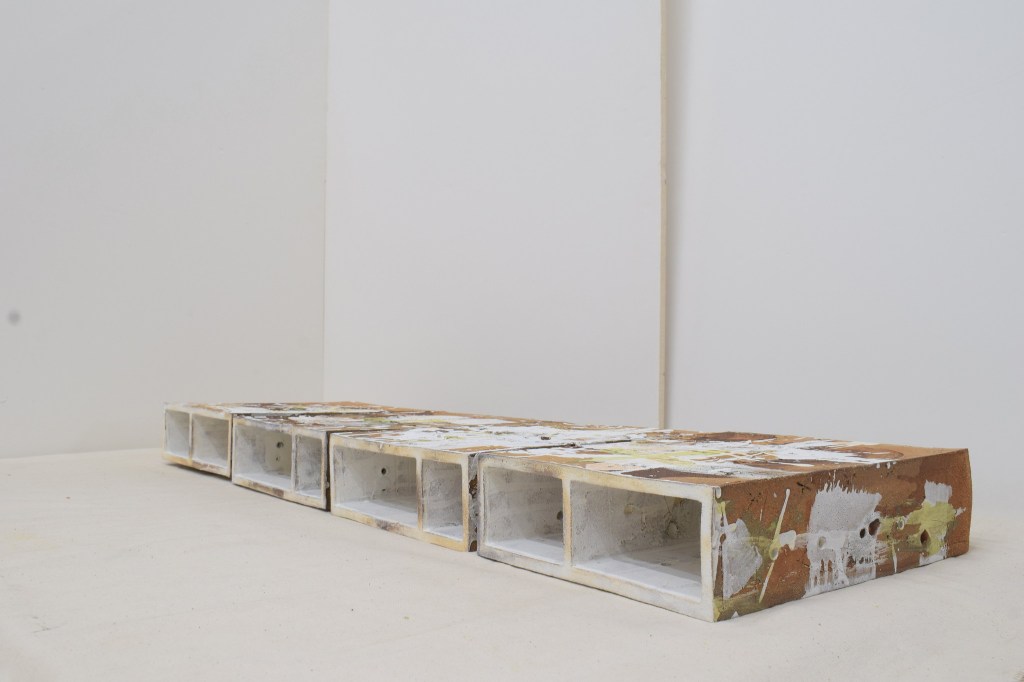
The ceramic bodies that emerge from this activity are not simply objects. They are spatial propositions. Their apertures, hollows, weathered surfaces and under-chambered passages establish relations between exterior and interior, surface and depth, holding and releasing. The interior is no longer merely a cavity enclosed within a form. It becomes an architecture of relations extending through and between bodies. The deep ecology of making begins to surface as interiority.
This is also a practice of withdrawal. Firing changes the material condition of clay. The ceramic can no longer be returned to its earlier plastic state, yet its capacity to matter does not end. It persists through new encounters with light, architecture, atmosphere, other bodies and different forms of attention. Withdrawal is not closure. The work remains materially particular, but its future relations cannot be fully anticipated.
I have described these works as troubling messengers. A messenger ordinarily carries something from one place to another. But in these ceramics, what is carried cannot be separated from what the body has become. The ceramic does not simply transmit an idea or preserve the memory of making. It participates in transforming what can be received. Its persistence allows relations to continue beyond the circumstances of its emergence.
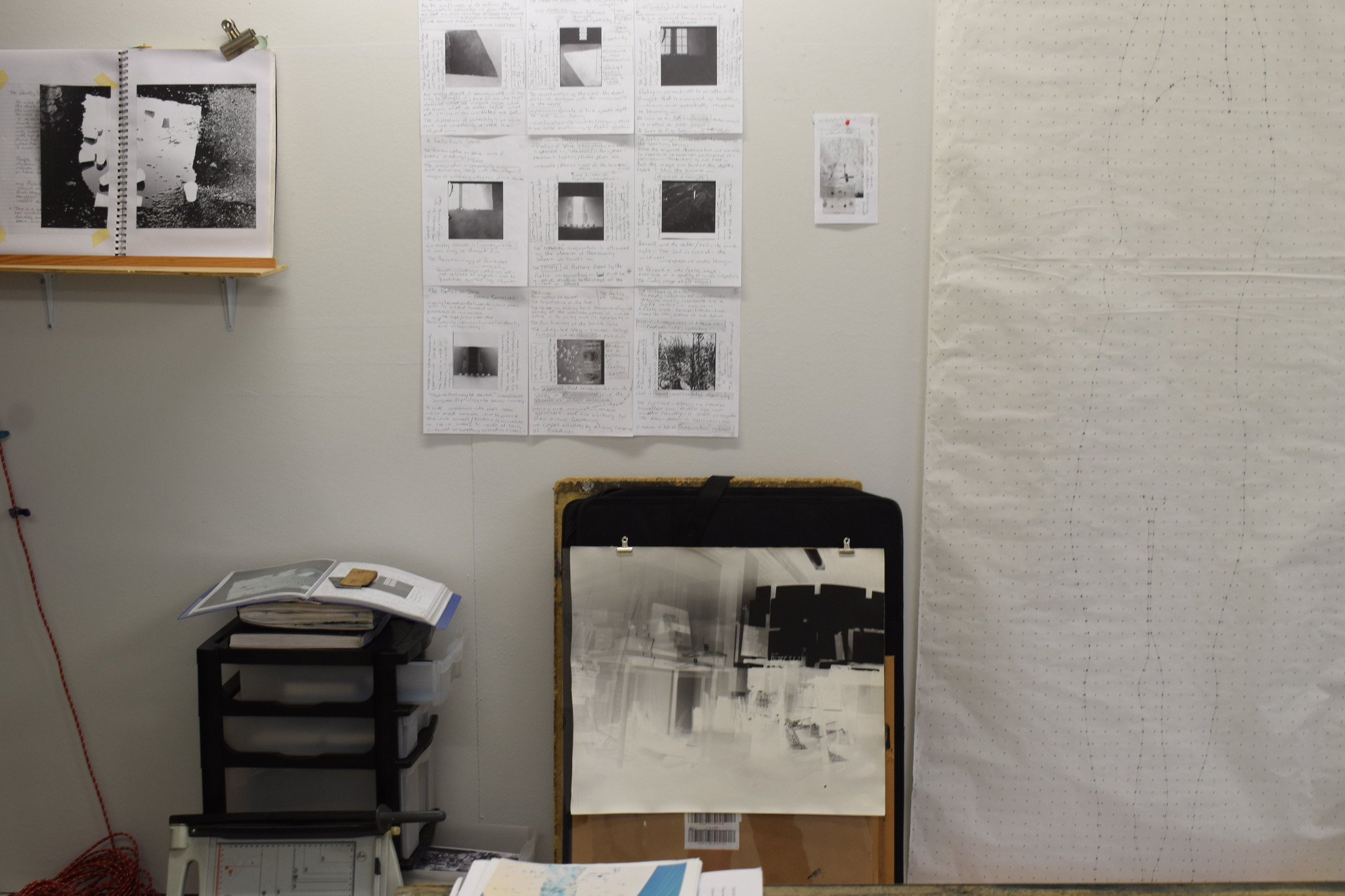
Photography introduces another body into this inquiry. It is not simply a documentary medium, nor a secondary means of recording the ceramic. Photography is an active spatial apparatus and body. It gathers, frames and stages troubling inquiries. It becomes a landing site for other bodies of thought, material histories and propositions.
But the photograph also governs. Its frame selects, excludes and organises visibility. Its representational scale can restrain the sensate and architectural propositions through which a place or object is encountered. Photography offers a limited sensate capture of architectural sensing. It can register an aperture, but cannot reproduce the bodily experience of moving around the ceramic, negotiating its scale or imagining its interior passages. The photograph holds the ceramic within a representational present; the ceramic persists towards a future that the photograph cannot contain.
This limitation is not merely technical. It has a micro-politics. The photographic apparatus helps determine what becomes visible, what remains outside the frame and how relations are arranged. Yet analogue duration, exposure, chemical development and material uncertainty can also blur distinctions and produce emergent spatial events. Photography is therefore both an apparatus of capture and a body capable of troubling its own conditions of capture.
The project Painting and Photography: Leper Grave brought these questions into an ethically difficult encounter with the Magdalen Hill archaeological site. Here, photography carried an indexical trace of a site marked by histories of exclusion and the remains of absent bodies. But the trace could not give possession of the life to which it referred. Painterly intervention, opacity and negative capability interrupted the expectation that the image should provide a complete or transparent account. The question became: how might an image host the trace of another body without claiming possession of its history?
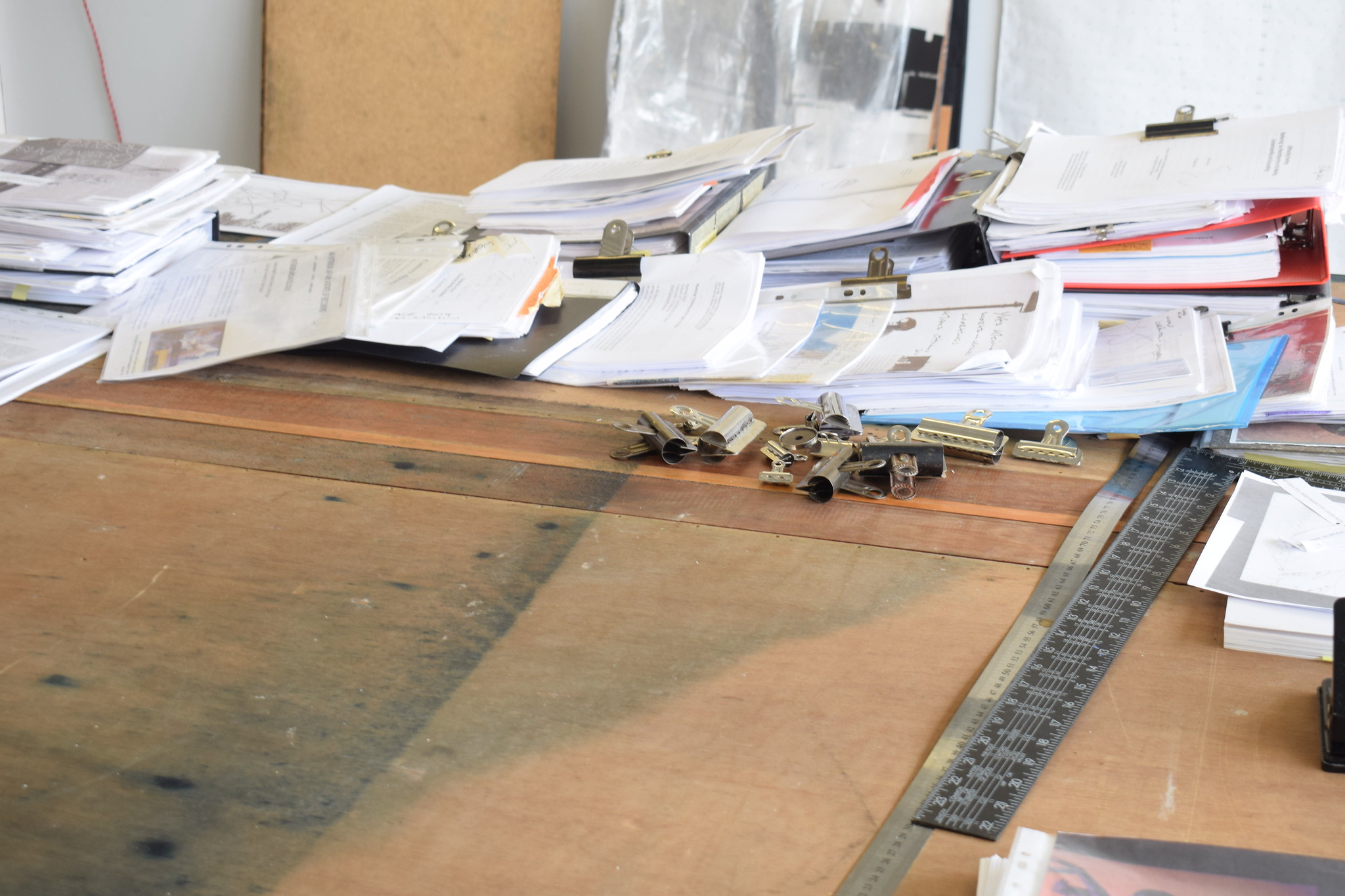
These questions now extend into the institution. The UEA Library is not a neutral container of knowledge. It is an organised body, structured through collections, classifications, disciplines, access conditions and systems of recognition. Drawing on Brian Massumi’s thinking about apparatuses of capture, I am interested in how institutions capture and redirect the activity they enable. Research is supported by institutional arrangements, but those same arrangements can organise what becomes legible, valuable and recognisable.
The figure of the piddock offers a way of thinking about this encounter. The piddock does not simply occupy a ready-made interior. Through its activity, it produces a cavity within an existing material body. Moreton as piddock is an image for entering the library as a situated researcher: encountering resistance, working through existing arrangements and producing new passages and interiors of inquiry. This is not an escape from institutional capture. It is a practice of attentive inhabitation, persistence and trouble.
The researcher may then become a body of research for others. Not a finished repository of knowledge, and not an authority whose conclusions must be adopted, but a permeable arrangement of materials, texts, images, propositions and encounters that other researchers can enter, question and extend. If you want something from Moreton’s body of research, you have to bring your own research body. Yet what you bring may not remain unchanged. The encounter can trouble the meanings and assumptions that arrive with you.
This is the wider proposition: research is not only something the researcher produces. It can become a body through which further research happens. Its hospitality does not require agreement, and its openness does not require the collapse of differences.
I call one aspect of this continuing movement felt-forwardness. It is not a projected destination or a promise that anything can become anything. It is a sensate movement towards an unknowable futurity, grounded in the particular capacities of a body that persists. Even within the restraint of the image, something continues to move. Even within institutional capture, the work may retain withdrawal, asperity and the capacity for further relations.
The photograph captures, but cannot contain. The ceramic withdraws, but does not close. The researcher enters, but is also changed by the body of research they encounter. The work persists; its relations remain unfinished. What it carries changes through what it becomes, and what it becomes remains open to the bodies with which it may yet correspond.


Leave a Reply