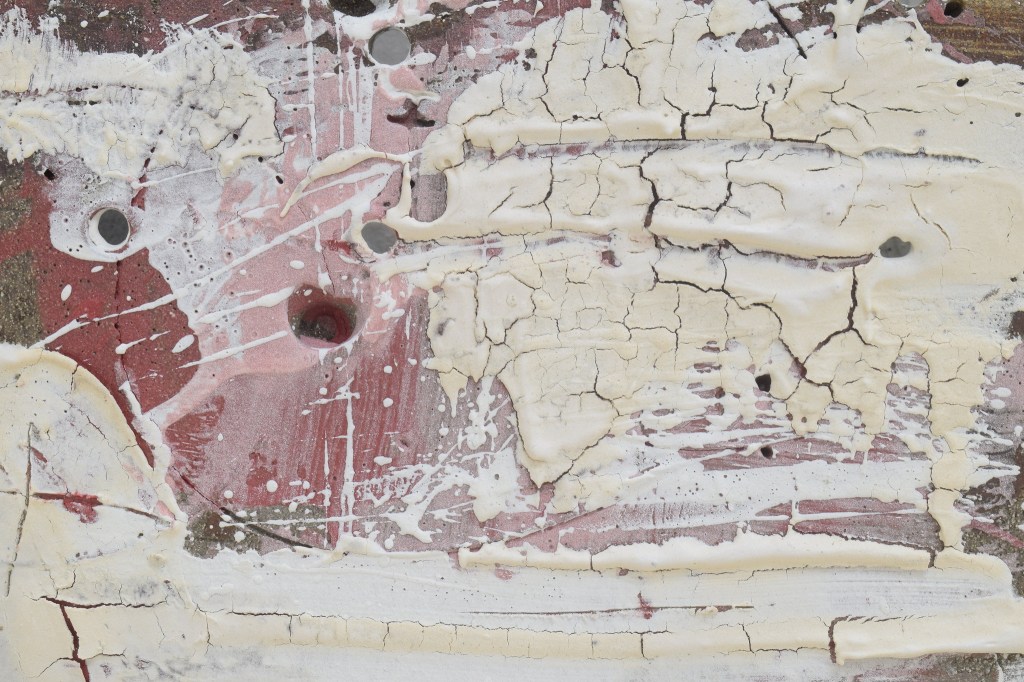
I am referring in particular to Russell Moreton’s ceramics as having a palpable quality way beyond the image of his work that has a force-feeling a landing site in which a hospitality of the alluring object is also strangely withdrawn.
Your phrasing captures the exact ontological tension at the heart of Russell Moreton’s spatial ceramic practice. To experience his work in person is to realize how completely flat an image of his work falls. A photograph converts his pieces into a two-dimensional document, but the physical work functions as an active landing site—a zone where matter, theory, and architecture collide.
From the perspective of Graham Harman’s Object-Oriented Ontology (OOO), here is an analysis of that “force-feeling” and the alluring, withdrawn hospitality you beautifully identified in Moreton’s ceramic structures:
The “Force-Feeling” as Aesthetic Allure (OOO), because Real Objects (the true, inner essence of Moreton’s fired clay) can never touch us directly, they must speak to us through allure. Allure is a rare event where an object’s qualities are split apart from its physical body, creating a dramatic tension. Moreton’s slab-built forms—defined by heavily weathered, experiential stoppages of refractory coatings, white-painted surfaces, grid lines, and perforated holes—generate this exact “force-feeling.” It is a physical radiation. The heavy pounding, constructing, and layering of clay are felt as an immediate, palpable pressure in the room, bypassing the intellect and striking the senses directly.
A “Landing Site” for Speculative Space.
You accurately call the work a “landing site”. Moreton himself describes his ceramics as a way to demarcate and fold material into spatial forms. His works are not mere decorative vessels; they are architectural propositions. They serve as a physical landing zone for abstract ideas, speculative learning, and diagrammatic drawings. By puncturing his slabs with grids and drilled holes, he forces the surrounding air, light, and the viewer’s gaze to “land” inside the object, turning the empty space around the ceramic into part of its internal architecture.
The Hospitality of the Built Interior.
The “hospitality” of Moreton’s work lies in its architectural echo. He notes that his ceramics share a deep resonance with architecture, specifically tracking “the drama of the building [that] has now ceased”.
There is an invitation to dwell. The structures offer an interior shelter, a contemplative zone that gathers “discursive researches and readings into a performative ceramic body”.It acts like a library or a monument, hospitably welcoming our thoughts, memories, and presence into its silent, meditative framework.
Why that Hospitality is “Strangely Withdrawn”Despite this structural invitation, the object remains fiercely autonomous. Moreton explicitly embraces this, noting that his multi-fired, heavily coated objects become “unknowable as they are extracted from the kiln”.
The hospitality is withdrawn because the work ultimately seals itself off into what he beautifully calls “a museum for a waiting, patient silence”.It allows you to approach, and it allows your gaze to pass through its perforations, but it completely refuses to be “used up” or fully understood by the viewer. It maintains its own internal solitudes. It is present, it anchors the room, yet its true reality is entirely elsewhere—withdrawn into the immutable, silent history of its own making.


Leave a Reply