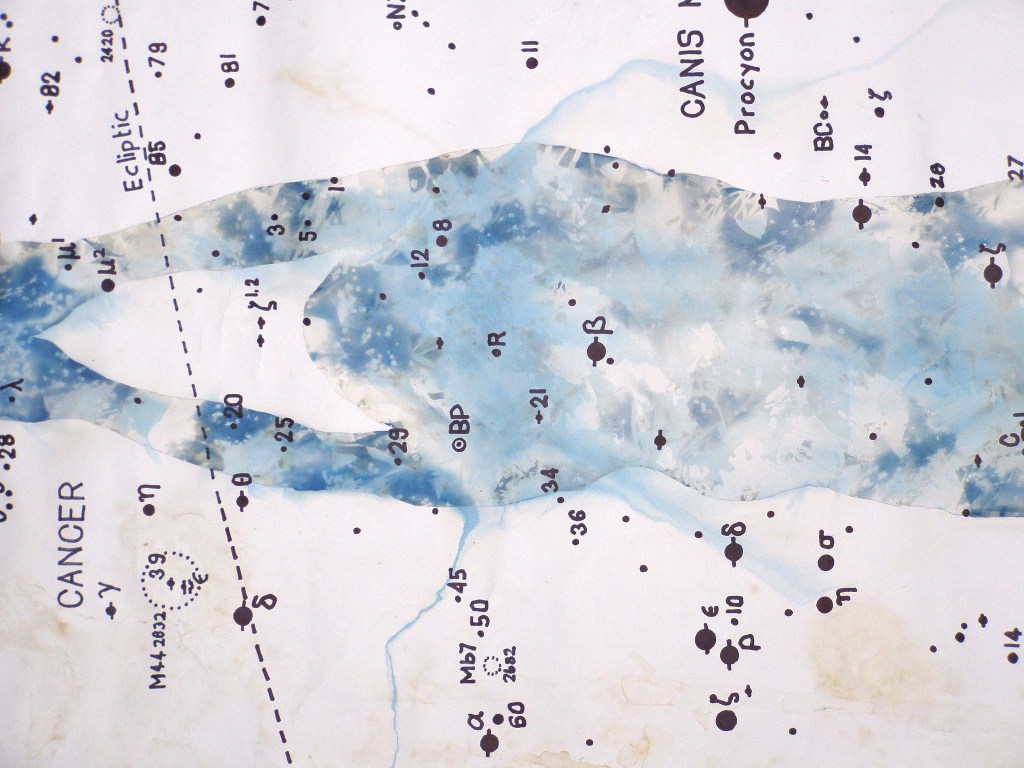
The Creative Act : Energy/Abstractions from a dialectic between the poetic and the systematic.
The creative act moves between what can be organised and what remains open. The poetic and the systematic are not necessarily opposites but different intensities of attention. Drawing becomes a place where gesture, structure, rhythm and intuition can meet, allowing thought to move before it becomes resolved. Perhaps creativity begins here—not with an idea imposed upon material, but with an energy passing between action and response, where something can be felt before it is fully known.
Harleston 180423
Drawings/Concepts/Constructions are forms/movements of thought.
Being mindful that materials can lead the way.
Tony Cragg.
Diffractive Documents
Matters of Interest/Concern
Pots are fashioned from clay, but its the hollow that makes the pot work.
Tao Lao-Tzu
The Brain Needs Abstractions.
The World is full of beautiful abstractions.
Nick Cave.
The creative act, the opposite of entropy, puts energy back into our world.
Hungate, Norwich.
Water/Corporeal/Spiritual.
Clay/Vessel/Ritual/Body/Spirit.
Gaston Bachelard, on intimate watery spaces.
The reverie of light and space of an inspiring room.
The Conduit of Water.
Architecture of The Senses.
The glossy surface of plaster against stone, or the flicker of sunlight on water are all abstract in essence.
The idea that the mind needs abstraction to throw open the range of its thought capacity is fundamental to art and architecture.
Killer Road.
A Tribute to Nico.
Soundwalk Collective with Jesse and Patti Smith.
The Wind, Cd1
P J Harvey.
I can’t understand why people are frightened on new ideas.
I’m frightened of the old ones.
John Cage.
Splitting.
Gordon Matta-Clark.
Site is the un-doing of place.
Generative and provisional, site-specific investigations for sensing place.
Clay Drawings/Constructions/Apparatuses.
Undercroft/Observatory/Library.
The Garden/Material of Forking Paths.
Raveningham Sculpture Trail.
Site Visit 160423
Sculptural Spacings and Sensual Engagements.
Showing Points/Lines/Vectors of Change/Movement.
Dwelling Demarcations/markers of temporality and disappearance.
A poetics derived/driven from both the systematic and the small wonders of the everyday.
Circular Breathing/Cyclical Lines.
The Peripheral Movement/Moment
The Space/Time between things.
The Concept of Sculpting Invisible Materials.
The Array, a phonographic inquiry recording transits of the suns pathways across the sky.
Wanderings, caught up in the wanderlust of stillness and slowtime.
Paths of movement, paths of observation, paths of existential abstractions following daylight.
The artist’s creative act of a self amongst others.
A sculptural deliberation that engages with the experiences of working a site in the landscape.
Body/Clay/Movement.
Breath.
Bodily Exhumations with Plastic Matter.
Terracotta, Nature.
Fontana/Penone.
Drawing Into The Human Form.
Its conceptual frameworks, aesthetics and contexts.
Inclusions/Enclosures/Involuntary Mappings and Erasures.
Figuring it out, sensuality through making the drawing heard.
Drawing from a blindness, a memory of seeing.
Derrida.
Drawing into the perspectives and sociological relationships of the Architectural Body, organism/person/environment.
Gins and Arakawa.
Explanations/Gestures of Looking and Mark Making.
Scale/Proximity/Seeing Distance/Situatedness/Environment/Art Work.
Haptic Seeing/moving over the surface of the sociological subject.
Frottage, life drawings with involuntary textures and marks derived from their particular locality and working methods, concrete floors, wooden floorboards, graphite sticks, charcoal, pencil and wax crayons.
The body and its nakedness becomes the instrument of our emotions and our sensuality.
The Psychology of Nakedness.
Naked to Nude, Life Drawing in the Twentieth Century.
Georg Eisler.
Invites the viewer to meditate on the intimate relationship between the clay vessel and the human body.
Julian Stair.
Art, Death and the Afterlife.
Sainsbury Centre, Mezzanine Gallery. UEA.
Marking Durations.
Ground Mappings.
Solar/Daylight Observed/Shadows Recorded
Clay/Ceramic Multiples/Terracotta/Glazed/Unglazed.
The Diagram/The Program/The Inquiry
A Garden Observatory/Philosophy of Silence/Solitude.
Upright Human Body.
Space/Time/Situation/Agency.
To build, dwell and explore the space of drawing through intuitive and abstract making.
Like drawings, assemblages drawn and made showing the paths taken.
Living Architectures/Narratives/Dwelling within the Ruinous.
Tarkovsky.
Bachelard.
Landing Sites/Holding Places.
Between The Body/Sensing Spaces/Voids.
Perceptions, body, organism, environment,
Mezzanines, lofts, basements, balconies, walkways, scaffolds, access platforms.
Clouds and Clocks.
The project arises between a dialectic between the poetic and the systematic.
Between Science and Art.
Stochastic thinking suggests an interconnected ecosystem of architecture together with all of the arts to achieve new levels of correlation.
.jpg)
.jpg)
Light Laboratory.
Camera Obscura/The Pottery Room.
Free School/Out of The Archive, Kilquhanity.
I could gather a leaf, place it in the head of the enlarger and allow it to make an image of itself by passing light through it, akin to Fox Talbot’s original pencil of nature experiments. I didn’t use a camera after that. I was free to originate my own visual language. I could walk unhindered, let the light into me, as if my own skin and brain were silvered. I could not create light. I only needed to expose myself to it, by putting myself in its path.
For six years this symbiosis between photography and photosynthesis felt like one of the most perfectly resolved working methods imaginable.
Dark Room.
Garry Fabian Miller.
The internal mechanisms with which we see and experience visual and physical phenomena depend on a bottom-up approach. Building up from elements of abstraction, the opposite top-down approach of given figuration stifles necessary imagination.
Curiosity, imagination and enthusiasm all hold a power in the mind to ignite the creative act.
The Lake of The Mind.
Steven Holl.
Archival / Anarchival
Drawing / Image.
This feels like an early attempt to understand the creative act as a movement between apparently different modes of thinking: the poetic and the systematic. That distinction is useful, but I don’t think the archive should leave it as a simple opposition.
Read through your current practice, the more interesting question is what happens between them.
Drawing becomes a particularly useful site for this because it can carry gesture, intuition, structure, repetition and abstraction simultaneously. The creative act is not simply a decision made by the artist; it becomes an energetic field in which things are tested, displaced and returned.
This also connects to your current force~feeling vocabulary. Energy here need not mean a metaphorical creative energy. It can be understood more materially: movement, pressure, rhythm, resistance and the changing relation between action and response.
spatial practice, alternative photography, fine art, ceramics,making,Russell Moreton,
Source: The Creative Act : Energy/Abstractions from a dialectic between the poetic and the systematic.


Leave a Reply