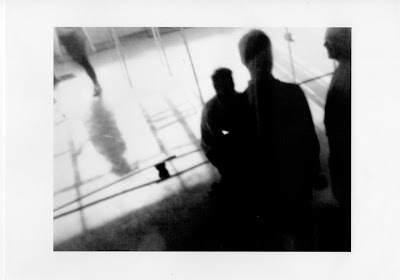
Drawing Into The Human Form/The Architectural Body
Anarchival note
Re-entering / 2026 — Drawing becomes a way of entering the relation between bodies: the human body, the architectural body and the spaces that pass between them.
Drawing Into The Human Form.
Its conceptual frameworks, aesthetics and contexts.
Inclusions/Enclosures/Involuntary Mappings and Erasures.
Figuring it out, sensuality through making the drawing heard.
Drawing from a blindness, a memory of seeing.
Derrida.
Drawing into the perspectives and sociological relationships of the Architectural Body, organism/person/environment.
Gins and Arakawa.
Explanations/Gestures of Looking and Mark Making.
Scale/Proximity/Seeing Distance/Situatedness/Environment/Art Work.
Haptic Seeing/moving over the surface of the sociological subject.
Frottage, life drawings with involuntary textures and marks derived from their particular locality and working methods, concrete floors, wooden floorboards, graphite sticks, charcoal, pencil and wax crayons.

.jpg)


The body and its nakedness becomes the instrument of our emotions and our sensuality.
The Psychology of Nakedness.
Naked to Nude, Life Drawing in the Twentieth Century.
Georg Eisler.
Archival / Anarchival
I would put this in Drawing / Image.
The important thing is that drawing here isn’t simply a representation of an architectural body. It is a way of entering the relation between human body and spatial body.
That makes it a useful precursor to your present understanding of drawing as something that can move between body, material and space, rather than simply producing an image.
It also belongs with the Inside This Clay Jug post because both are concerned with a form of spatial intelligence that is bodily rather than purely geometric.
In the migration, I would therefore retain this as a drawing-based ancestral chamber that feeds into the later ceramic body.
Drawing Into the Human Form / The Architectural Body
Drawing becomes a way of moving between bodies. The human body and the architectural body are not fixed forms but spaces of relation, scale, movement and inhabitation. Through drawing, gesture and trace, one body begins to enter another. The image becomes less a representation of space than an encounter with it—a way of sensing what happens between body, surface, interior and surrounding space. Drawing opens a spatial vocabulary that is tactile as much as visual.
spatial practice, alternative photography, fine art, ceramics,making,Russell Moreton,


Leave a Reply