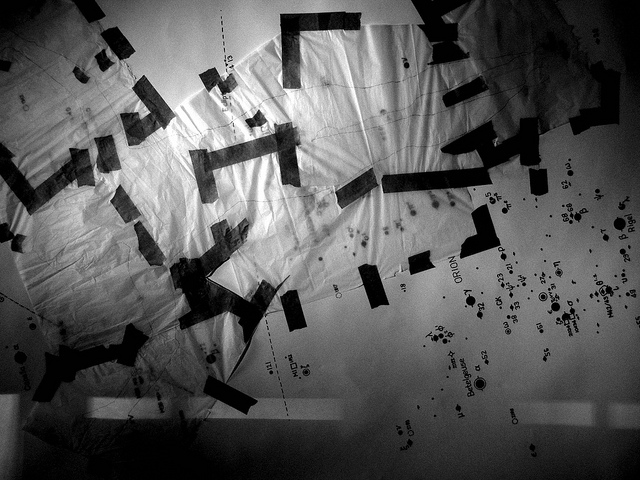
Drawing, tissue paper, tape, body outline with astronomical data on paper. on Flickr.
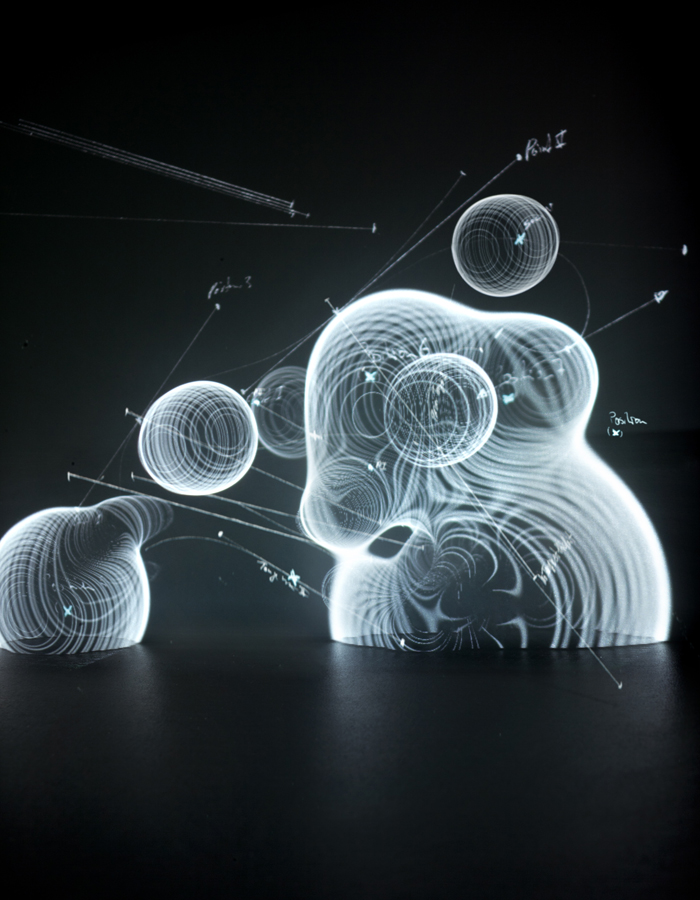
Now that location-based metadata waft through the space, thereby redefining contexts and places, a new field opens up to designers: How will information be usefully integrated into the physical space? Inspired by the fictional illustrations by Ingeborg Marie Dehs Thomas, who interprets the spatial expansion of radio waves, we attempted to lend metadata a form. Using the light painting technique, we placed our idea of these data in a room, making it haptic. The resulting forms depict possible data sets and examine the design possibilities between technoid holograms and personal notes.
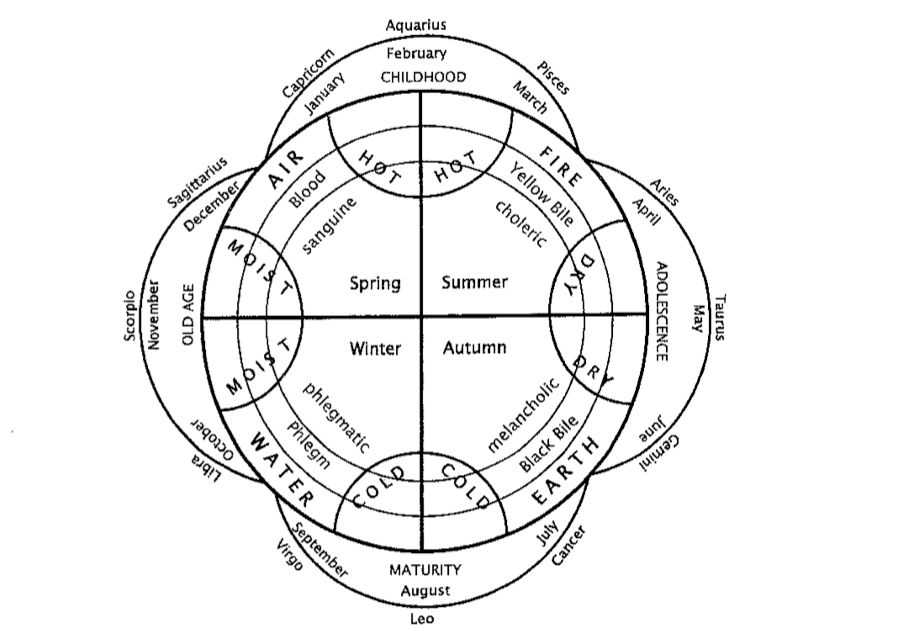
From a book called Medieval Islamic medicine by Peter Pormann and Emilie Savage-Smith.
via chagalov thank you yama-bato
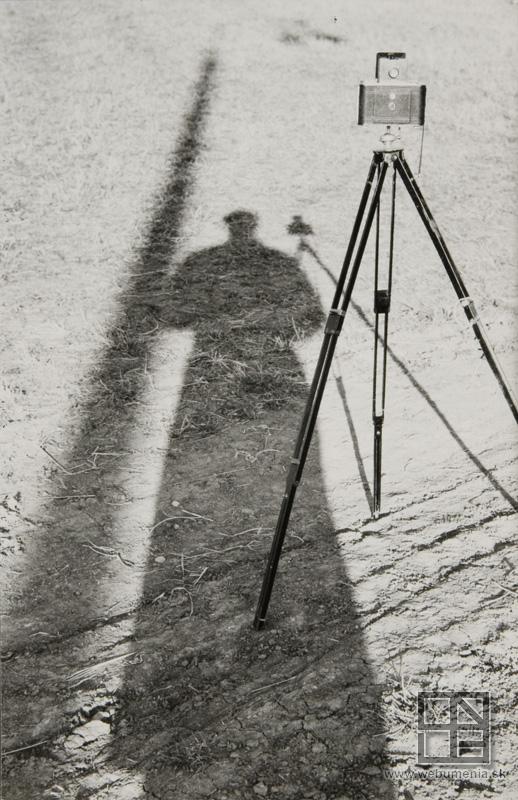
Martin Martinček, Self-Portrait, 1960-1961
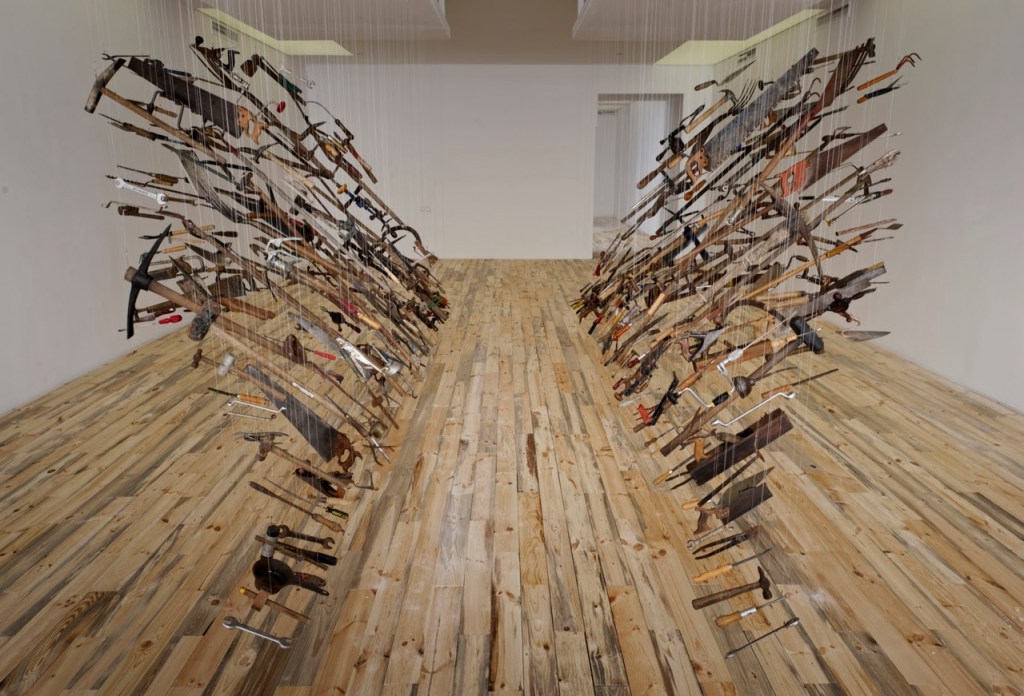
Damian Ortega
Moises
2007
Found tools and wire
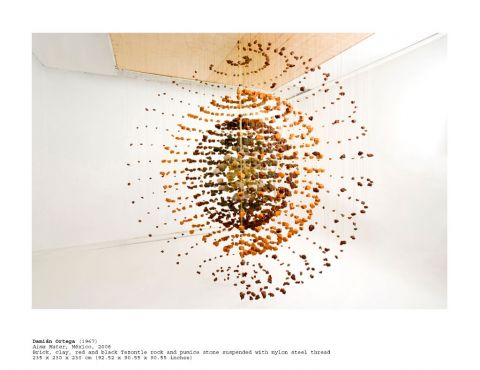
Damian Ortega
Alma Mater
235cm x 230cm x 230cm
Motoi Yamamoto’s salt installations:
“Following the death of his sister to brain cancer, Yamamoto adopted salt as his primary medium. In Japanese culture salt is not only a necessary element to sustain human life, it is also a symbol of purification. He uses salt in loose form to create intricate labyrinth patterns on the gallery floor or in baked brick form to construct large interior structures.
…Yamamoto views his installations as exercises which are at once futile and necessary to his healing.”
(Top image: the artist meditates upon the completion of a salt labyrinth)
 Russell Moreton : Matter(s) in Correspondence