Writing
Moreton ~ The Ceramics Persist
Spatial Practice ~ Wayfaring Inquiry ~ Persistent Bodies
The ceramics persist. The writing wayfares. Their accord allows the practice to surface without being brought to a conclusion.
Russell Moreton’s spatial practice develops through an ongoing correspondence between bodies, materials, places and thought. Clay~ceramic, drawing, photography, architectural interventions, research collages and writing do not constitute successive stages in a linear development. They are different bodies through which spatial relations become perceptible, gather intensity and remain available for further encounter. Each establishes particular conditions of touching, registering and making, while allowing something of the encounter to exceed its immediate formation.
Making begins with an encounter. The hand meets clay; pressure encounters resistance; a surface gathers traces of gesture, interruption, correction and time. Yet the resulting body is never simply the materialisation of an intention. Clay participates in its own becoming through plasticity, weight, moisture, gravity and the contingencies of drying and firing. The work emerges through this negotiation, carrying the imprint of an encounter that cannot be reduced to the agency of either maker or material alone.
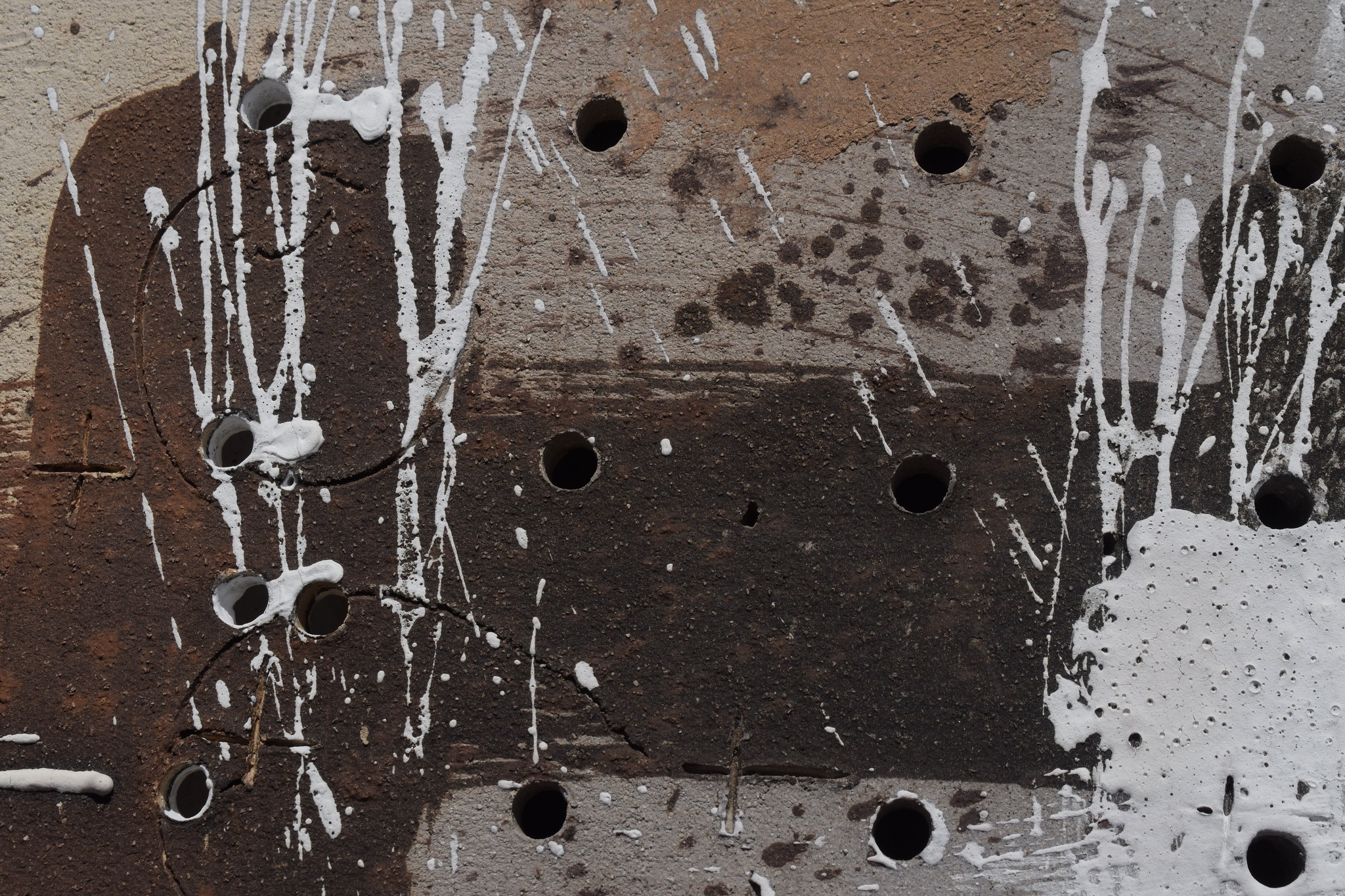
Firing changes the proposition. The provisional body of clay becomes a materially persistent ceramic, withdrawn from the immediate activities through which it was formed. Its surfaces, apertures, cavities and weathered textures carry traces of making into another condition. The ceramic has finished becoming clay, but has not finished becoming-with. It remains available to light, atmosphere, architecture and the movements of other bodies. Its persistence does not secure a final meaning; it allows relations to continue under conditions that could not have been fully anticipated.
These ceramics are not simply objects occupying space. They participate in producing spatial relations. An aperture admits light while troubling the distinction between interior and exterior. A cavity establishes an interior without necessarily enclosing it. Two bodies gathered in proximity may make a chamber perceptible between them, a space neither possesses independently. The ceramic body becomes a threshold through which other bodies and atmospheres enter into correspondence. Its spatiality lies not only in its dimensions or form, but in the relations it makes possible.
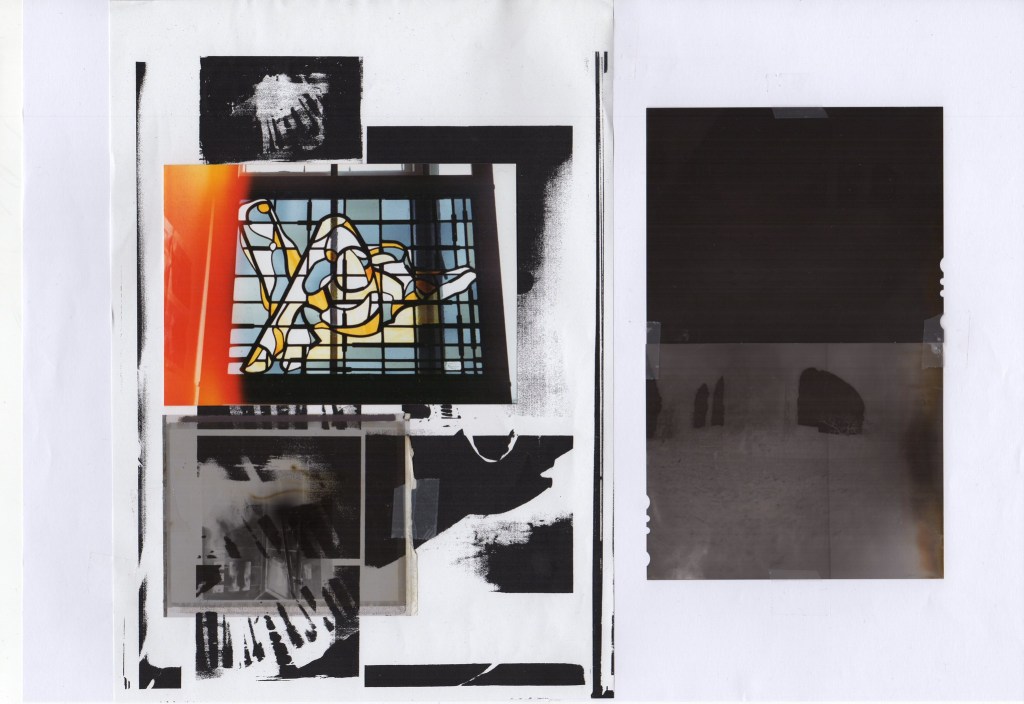
This understanding extends beyond the ceramic itself. Moreton’s earlier architectural interventions, drawings and photographic works establish other apparatuses of spatial encounter. Chambers gather provisional relations; lines and supports organise movement; photosensitive surfaces register the effects of light and duration. These works persist differently, yet each offers a situated proposition through which the world can be encountered otherwise. The practice develops not through the replacement of one medium by another, but through an ecology of apparatuses and persistent bodies.
Writing enters this ecology as another body of correspondence. It does not explain the withdrawn ceramic, and the withdrawn ceramic does not illustrate the writing. They enter accord as different persistent bodies through which the movements of the practice become capable of surfacing otherwise. Language gathers readings, memories, material encounters and spatial propositions, allowing relations that have remained implicit within making to become available for thought. The ceramic, in turn, resists any final verbal account. Its material specificity, sensate presence and withdrawal preserve something that writing cannot exhaust.
Their accord is therefore not agreement or convergence. It is a correspondence that allows difference to remain active. The writing wayfares between bodies of thought, images, places and materials; the ceramic persists through its altered material condition. Neither occupies the position of an original to which the other must answer. Each makes possible another encounter with what the practice is doing, and with what it might yet become.
Wayfaring names this movement through situated relations. Heuristic inquiry names the knowledge that emerges through such encounters, including the moments when material resistance or an unfamiliar proposition unsettles what was previously understood. Diffraction allows differences to remain consequential as bodies enter into relation. Hospitality and alienation trouble the encounter from within: bodies may gather without becoming identical, and intimacy may intensify without overcoming otherness. Atmosphere emerges through these relations as a sensate field of light, texture, shadow, proximity, memory and duration.
These are not stages through which the work must pass, nor categories that resolve its meaning. They are tentative orientations within a spatial practice that remains susceptible to what it encounters. A work may return differently through another reading, another place or another body. What persists is not an unchanged proposition, but the capacity for further correspondence.
The withdrawn ceramic stands testament to this condition. It bears material traces of activities that have passed, yet it does not restore them as a complete history. Its presence makes an encounter possible while preserving the opacity of what has withdrawn. It gathers without containing, shelters without securing, and persists without closing the relations through which it may continue to matter.
Moreton’s practice is thus an ecology of persistent becoming. Its bodies remain distinct, yet capable of affecting one another; its propositions gather, yet remain open to alteration. Making, writing and encountering continue to move through one another without arriving at a final synthesis.
The ceramics persist.
The writing wayfares.
Their accord allows the practice to surface without being brought to a conclusion.


Leave a Reply