Category: Research/Working Texts
-
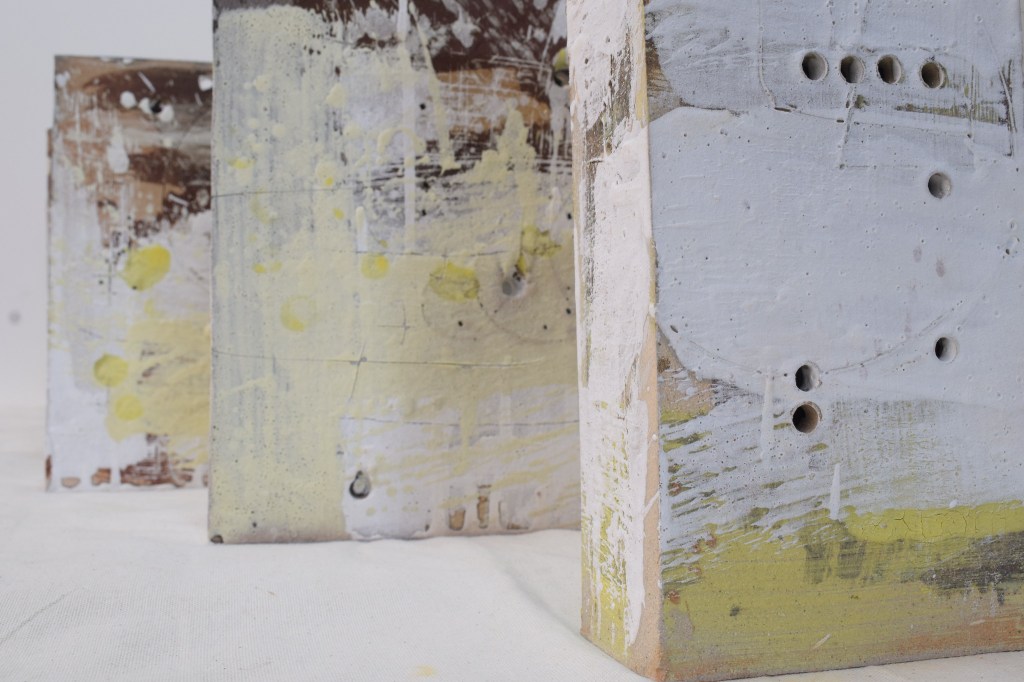
Persistent Bodies ~ Reading, Clay, Ceramic Reading does not remain outside making. Its soundings pass between bodies of thought, images, materials and places, sometimes surfacing as propositions, sometimes withdrawing into the material conditions of a work. The reading body moves between these correspondences without requiring them to converge. Ingold, Manning and Barad remain distinct within…
-
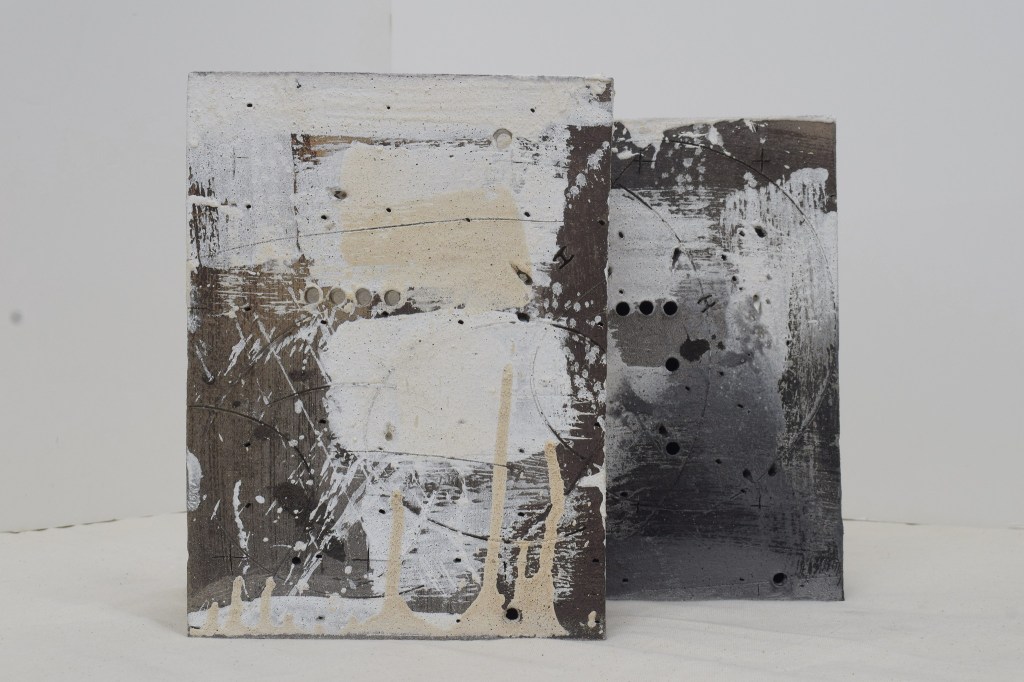
The ceramic bodies have not arrived to resolve these earlier questions. They have arrived as another access point. Earlier spatial propositions remain here as bodies: architectural, photographic, textual, remembered, imagined, lived. They gather without becoming one another. Clay offers another kind of hospitality. It allows these bodies to enter a material correspondence without requiring their…
-
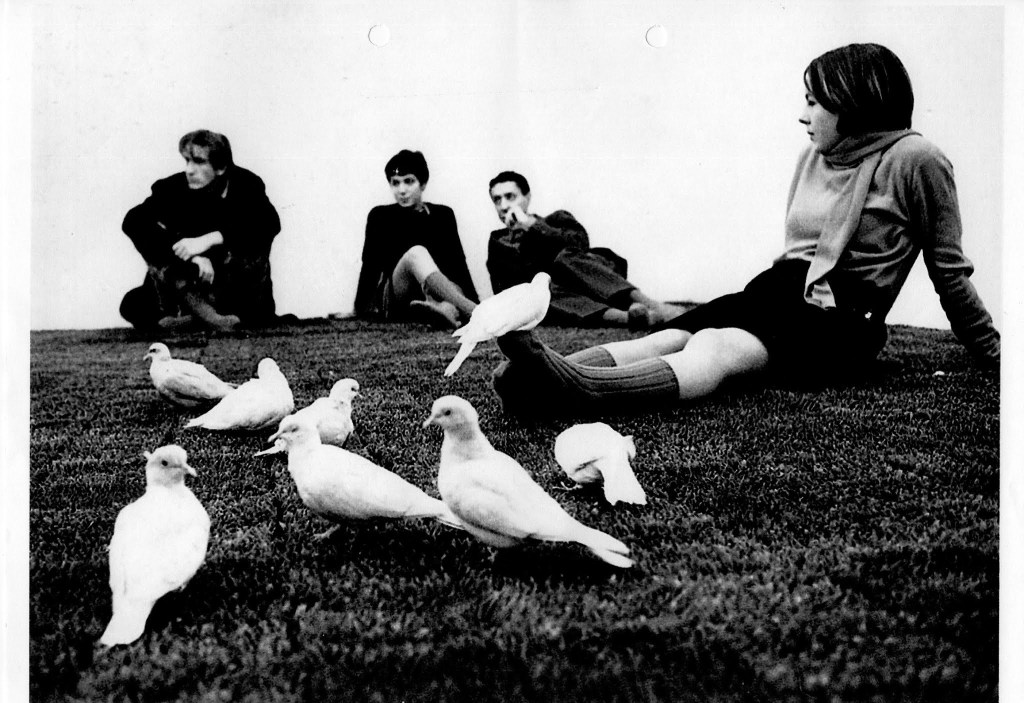
What kinds of bodies gather around making? A drawing enters architecture. Architecture enters material practice. The potter’s wheel becomes a site of cognition. The vessel opens a question about interior and exterior. Objects gather environments; environments become active within the making of things. These texts and references gather around propositions rather than a single discipline.…
-
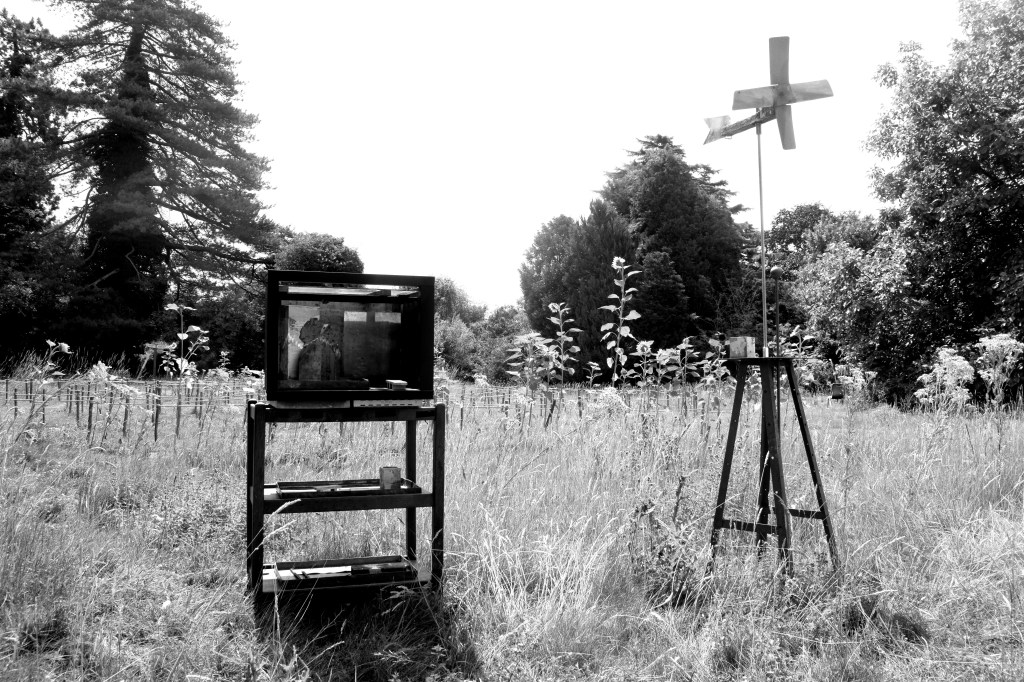
Bricolage begins with fragments that have not yet decided what they belong to. Images, readings, materials, memories and spatial propositions gather without needing to become one thing. The scaffold is provisional; it holds things close enough for something unexpected to pass between them. Perhaps this is a way of thinking through making—not assembling a conclusion,…
-
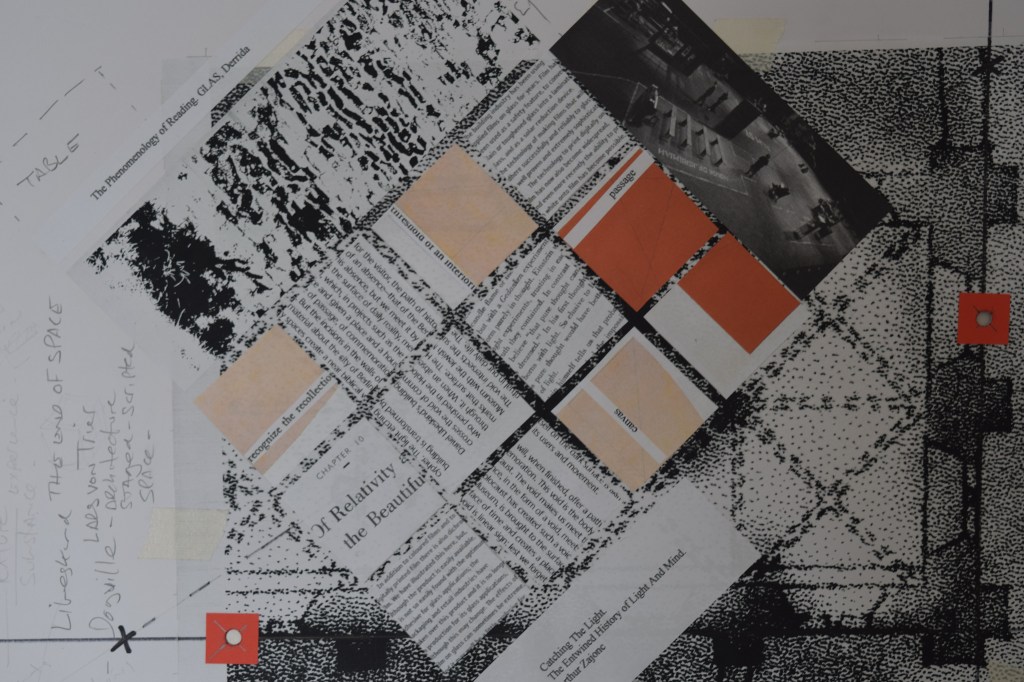
Spatial Markers. gatherings, spatial practice, correspondence, interiority, permeability, trace, chamber, hole, surfacing, material reciprocity, force~feeling, kairos, Scriptorium, Theatre of Research, futurity, This text revisits an earlier body of spatial inquiry through a vocabulary that has emerged subsequently through working with clay, ceramic bodies, reading, drawing and material encounters. Rather than correcting or replacing the earlier…
-
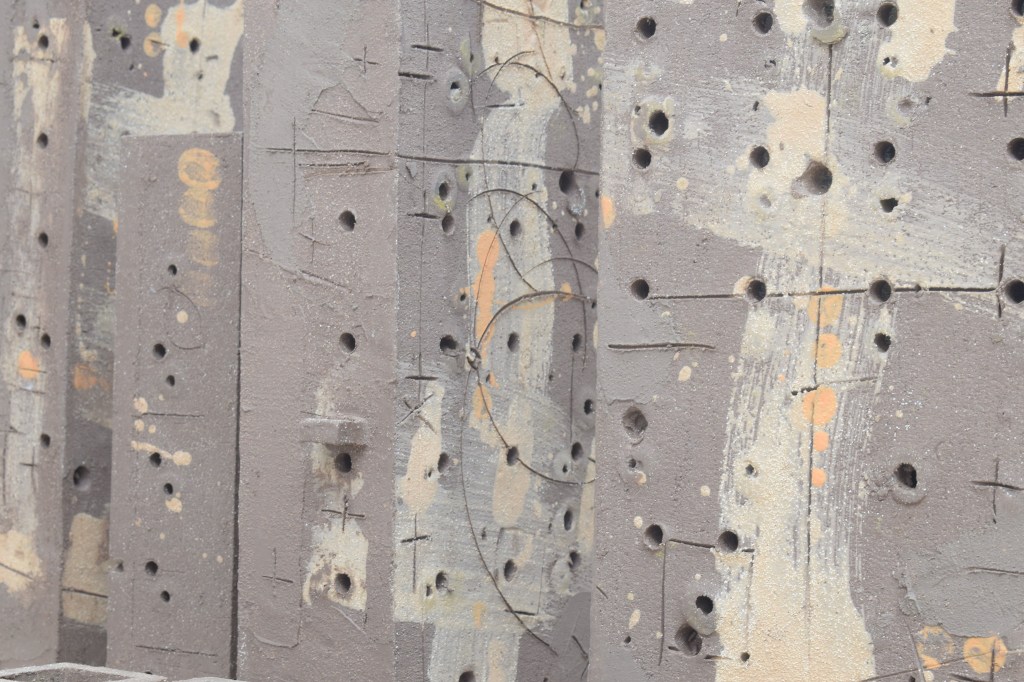
INSIDE THIS CLAY JUG/Like the piddock the studio is itself a living organism~a hospitable field of correspondence about learning to make. I think this is now a learning correspondence ecologically open with others participating in a spatial practice of learning to make. Yes. I think “learning correspondence” is a particularly productive development of what is…
-
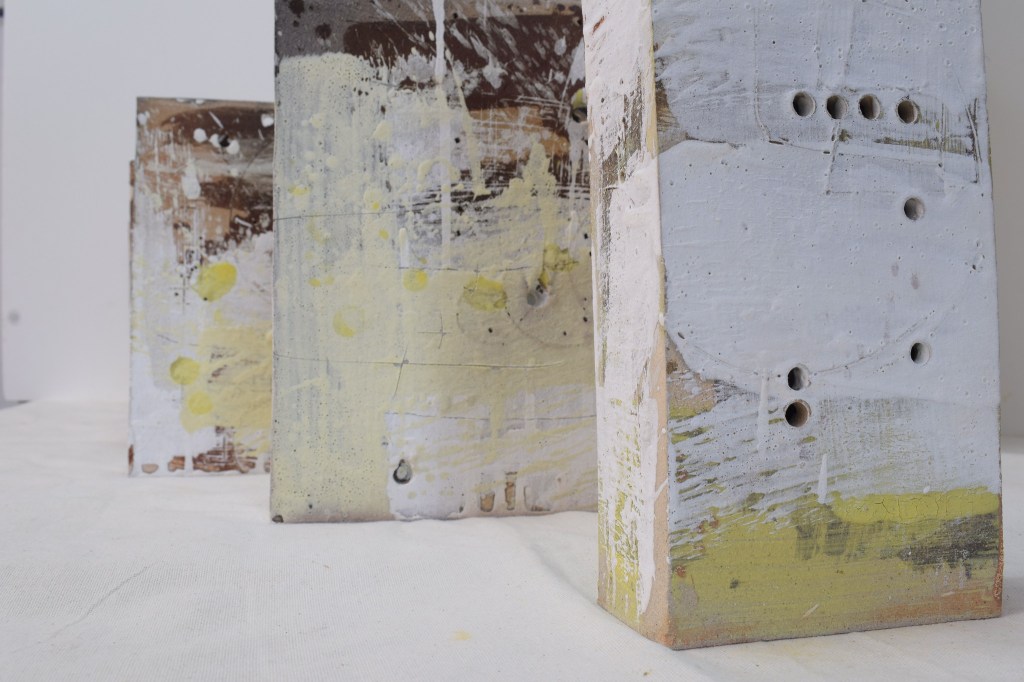
Atemwende, a breathturn : Adam Gopnik and Edmund de Waal Craft and Art, Skill and Anxiety. Craft is logic, and art defies it. The defiance is what makes art. The serenity of the artisan lies in her knowledge that it can all be done again. The anxiety of the artist; lies in knowing that if…
-
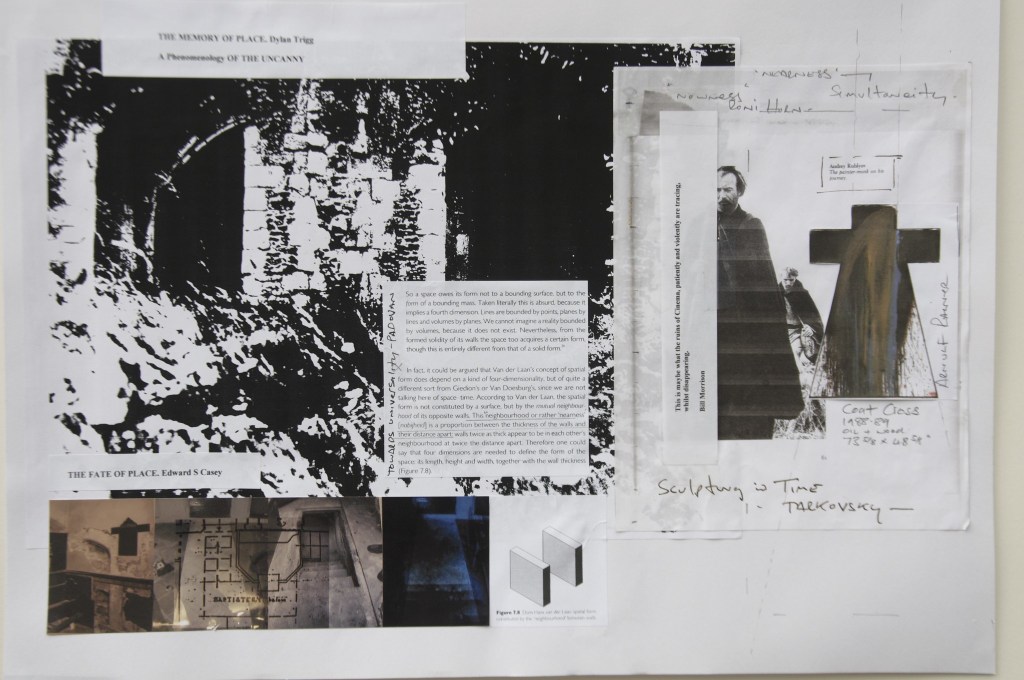
Inquiry is essentially the way of learning : Fragile Architectures of Hapticity and Time In an era in which architecture is once more learning its potential as a form of inquiry, rather than as a service — as a producer of knowledge, and not merely of ‘projects’. Brett Steele, Atlas-Tectonics in Barkow Leibininger, Bricoleur Bricolage.…
-

https://russellmoreton.blogspot.com Independent research for Studio Practice Theory and Analysis. UCA Farnham, MA Interiors. 2014. Why does Edmund de Waal make architectural interventions through the arrangement of porcelain pots? To what extent, if any is this Ceramist interested in the ability of the single pot to engender meaning? How is the “innerness” of pots that he…
-
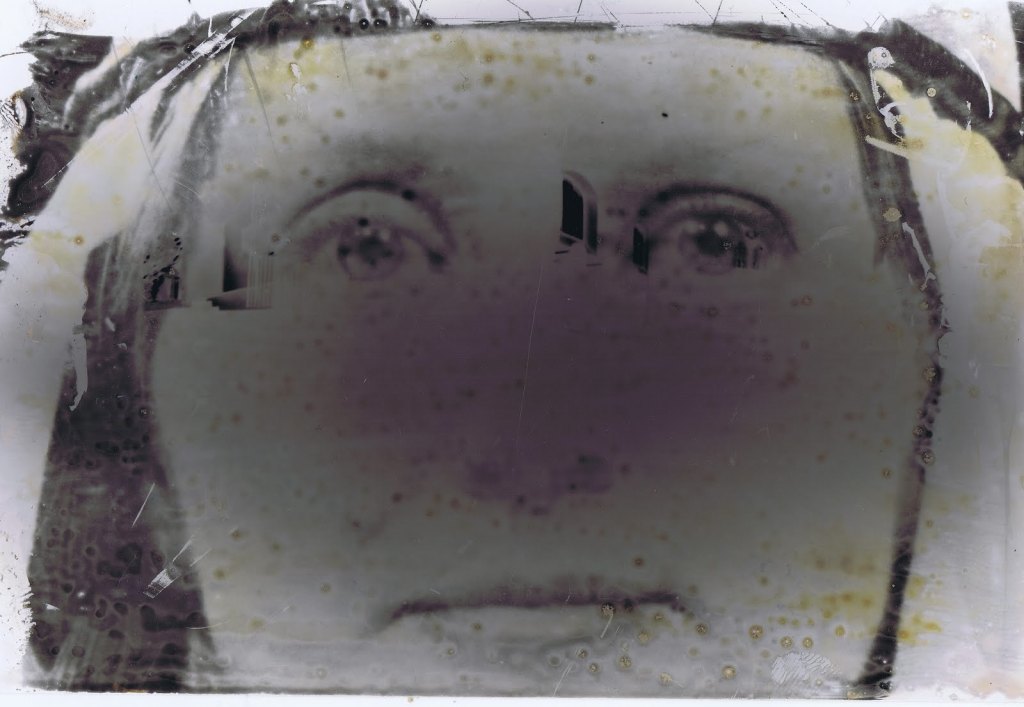
A movement of thought (Bergson) becomes active and in this activity a new register begins to take shape. This new register is neither art per se nor philosophy, it is study, it is practice, it is speculation. The Minor Gesture, Erin Manning. Exploring Bergson’s Active Thought MovementThis title includes key terms like ‘Bergson’ and ‘Active…

