
MAKING : Spatial Agency/ Mutual Knowledge/ Discursive Consciousness. Social apparatuses and agents that explore the possibilities of space.
Re-entering / 2026 — What was once considered as the organisation of information between bodies now returns as a question of movement: how knowledge travels, gathers and changes through bodies, materials and space.
Transactive Memory : INFORMATION/MOVEMENT differentiated/integrated
Archival / Anarchival
This is a useful research archive rather than a finished proposition. It brings together transactive memory, virtual teams, Laban’s Choreutics, movement psychology, embodied knowledge and landscape.
The important thing now is the connection between information and movement. The post asks how knowledge is not simply stored inside an individual but distributed across bodies, relations, locations and systems. Laban then provides a spatial vocabulary through which movement itself becomes a form of thinking: force, space, time and flow.
This makes it significant to the later development of your practice because it shifts the question from what does a body know? towards how does knowing move between bodies, materials and spaces?
It also connects strongly with your current thinking around correspondence and the body as a threshold of exchange. The ceramic body could eventually be understood in a similar way: not as a container of information, but as a material site where traces, forces, movements and encounters become differentiated and re-integrated.
The post’s original framing as “MAKING : Spatial Agency / Mutual Knowledge / Discursive Consciousness” is particularly worth retaining.
Transactive Memory
Systems Virtual Teams
The Body
Minds and Metaphors
Laban-CHOREUTICS
The Mind In The Cave
David Lewis-Williams
The Matter of The World
Minds and metaphors
Cathedrals of Intelligence
The ‘Looking mind’
Information Processing and Performance in Traditional and Virtual Teams
The Role of Transactive Memory
Terri Griffith, Margaret A. Neale
Acquisition/Sharing of Implicit and Explicit Information
Organisations increasingly rely on teams to do much of the work traditionally accomplished by individuals.
Successful groups are those who are able to create synergies in the form of information aggregation and innovation that is beyond the ability of any single member.
Nascent Knowledge
Information Diversity
Task Conflict
The knowledge and perspectives of group members from the same social networks may be more redundant than diversified. However a total diversity among work group members is not desirable; some ‘redundancy’ (agreement in perspective) among group members is necessary to ensure enough common ground to facilitate successful group interaction.
Transactive Memory : Knowing and Accessing What We Know
For teams to have synergy they must be able to access their information, it is important to know who does what.
Wegner 1987; 1995)
RELATIONAL DEVELOPMENT
TIME
Synchronous/ Asynchronous
COMMUNICATION
Transactive Memory : A Contemporary Analysis of the Group Mind
Daniel M. Wegner
The study of transactive memory is concerned with the prediction of group (and individual) behaviour through an understanding of the manner in which groups process and structure information.
Individual Memory
Information is entered into memory at the encoding stage, it resides in memory during a storage stage, and is bought back during the retrieval stage.
Organisation : differentiated/integrated
Label
Location
THE LABAN SOURCEBOOK
Dick McCaw
Rudolf Laban (1879-1958) was a pioneer in dance and movement, who found a extraordinary range of application for his ideas; from industry to drama, education to therapy. Laban believed that you can understand about human beings by observing how they move, and devised two complimentary methods of notating the shape and quality of movements.
Diagram : Three Planes of Movement from Choreography
Inner and Outer Tension : Inner and Outer Form
CHOREUTICS : Principles of Dynamic Space and Movement
Choreutics presents the grammar and syntax of spatial form in movement and the nature of movement’s harmonic content.
Effort
Exertion of Power, Physical or/and Mental
Force
Space
Time
Flight
Indulging/Contending
SPACE Flexible/Direct
WEIGHT Light/Strong
TIME Sustained/Quick
FLOW Free/Bound
Shadow Moves
An acute observer of Shadow Movement of a person in different situations and at different times will show the consistency of that individual’s basic attitude and personality.
Effort and Recovery
Movement Psychology
Thinking
Intuiting
Sensing
Feeling

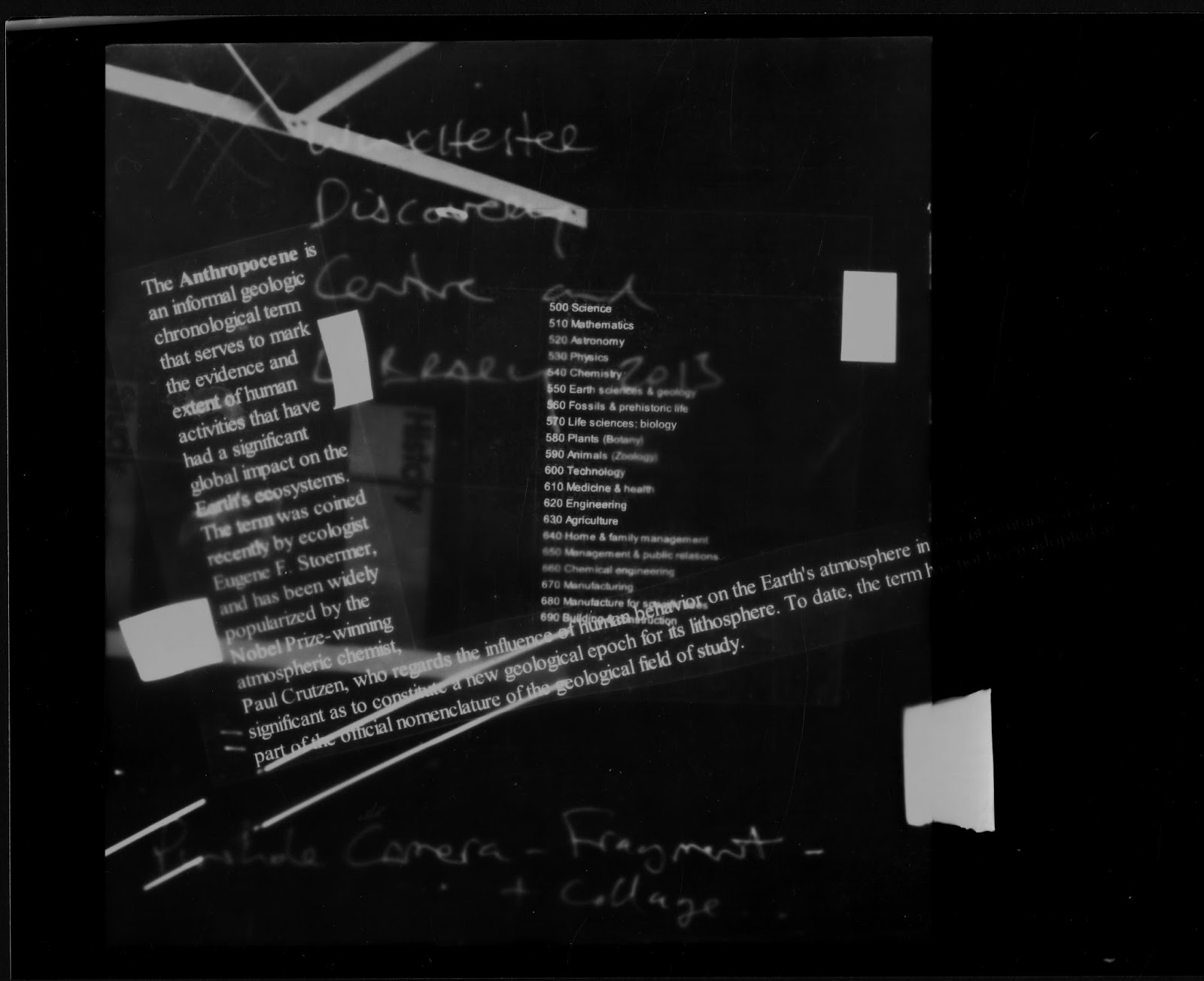
Source: Transactive Memory : INFORMATION/MOVEMENT differentiated/integrated
Category: Research / Working Texts
I would keep this in Research / Working Texts, rather than Spatial Practice. Its importance is less the spatial project it describes than the conceptual machinery it contributes to your emerging ontology of making. It is one of those older research chambers that becomes newly legible when read through your current concern with bodies, thresholds, correspondence and material exchange.


Leave a Reply