Spatial Practices : Experimental drawing and alternative photography.

  • Inside Phenomena : Innerness and Interior : Surface Pleasures

    Theory and Analysis.
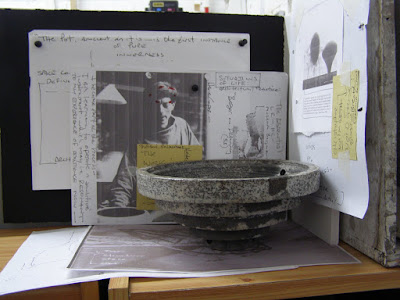
    In the future will we be able to extract the Platonic values that Hans Coper writes about with regard to the Egyptian vessel?
    This essay is an attempt to get to understand my current concerns centred around the interior spaces of things and places. This sense of the interior is itself held in place by the notion of some kind of vessel or material whether it is a pot or an architectural structure. It is this vessel and its materiality together with its form and its formlessness that I want to explore more closely.
    In architecture an interior can become a ‘sensing space’ with its own particular characteristics it becomes a host space, an extension of our own existential space; it can promote memories, sensations and can act as a reflective refuge from our post modern lives. Do these vessels and spaces re-enact the particulars of traditions and livelihoods, of other lives; are they in fact built expressions on the basic needs of a civilisation whether they be pots or architecture?
    Do we in some way attempt to reconcile and balance opposites, the outside with the inside; and as a result the practicality of a space depends on a larger degree to issues regarding its actual emptiness? I am interested in both the interior of a vessel, and the interior sensations of being in a space. The Poetics of Space by Gaston Bachelard is also interested in this dialectic between ‘inside’ and ‘outside’.
    In her essay The Essential Vessel, Natasha Daintry (Daintry, 2007:9) cites The Tao Te Ching ‘we turn clay to make a vessel, but it is on the space where there is nothing that the usefulness of the vessel depends.’ It follows then that this might be where the vessel starts to embody ‘something and nothing and becomes an effortless three dimensional manifestation of both form and formlessness.’ (Daintry,2007, :8) It is interesting to note that the potter is dealing simultaneously with both form and its attendant space as he hollows out the clay to create what might be termed an ‘essay to abstraction, a clothing of emptiness.’(Daintry,2007:8) This defined air is the ‘most transcendently human of all made things; volume, inner space, an interior, the carved out air that connects the morning teacup with the domes and spandrels of San Maco. There’s nothing there but clay and air, then there’s defined air.’(Gopnik, 2014:6) Adam Gopnik essay on the pots of Edmund de Waal speaks of an ‘innerness’ and De Waal speaks of ‘a breath held inward’. My own experience of De Waals work in the Architects House at Roche Court, Salisbury, is that of a multitude of similar porcelain pots that were all uniquely able to hold just a single thought or a memory. The installed pots and their simple wooden support became a permeable wall for remembered silences.
    This sentiment and its sensitivity to describing visible aspects of the world that are conjoining the concrete with emptiness becomes a poetic on the permeability of spaces and their vessels. The philosopher, Lucretius who was interested in infinitesimal entities comments in his poetic work ‘On the Nature of Things’ records how ‘knowledge of the world tends to dissolve the solidity of the world.’(Daintry, 2007:8) This lightness and its associative attendances can be found in ‘Hans Coper’s only extant piece of writing.’(DeWaal, 2004:34)
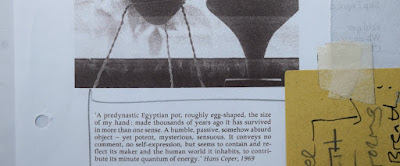
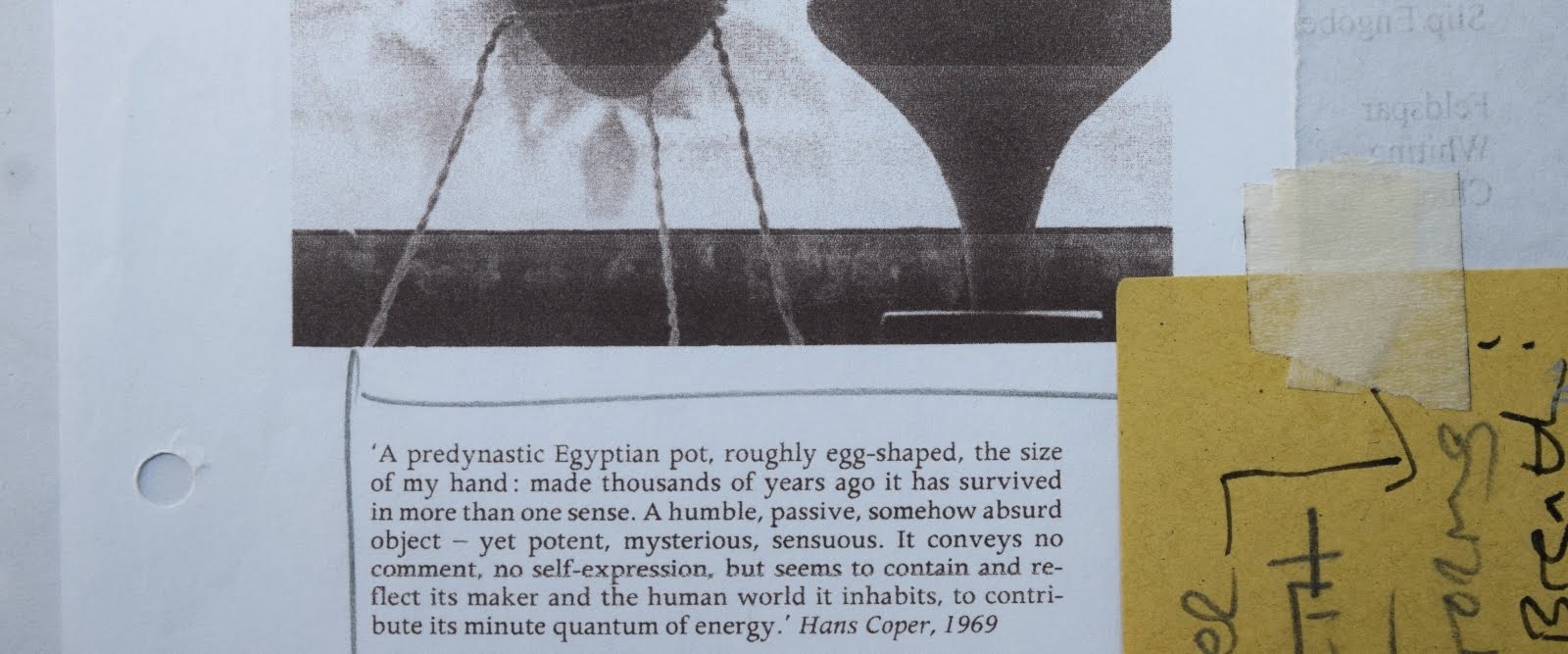
    A pre-dynastic Egyptian pot, roughly egg-shaped, the size of my hand made thousands of years ago, possibly by a slave, it has survived in more than one sense. A humble, passive, somehow absurd object – yet potent, mysterious, sensuous. It conveys no comment, no self expression, but it seems to contain and reflect its maker and the human world it inhabits, to contribute its minute quantum of energy – and homage. Hans Coper, 1969.
    Does Hans Coper’s text reflect through this archaic pot the human sense of innerness that this vessel still dwells with? ‘Theories of relativity and uncertainty have shown that all matter, even the airy oxygenated void inside a vessel is energy, and that it is composed of the same building blocks generated from exploded stars.’ (Daintry, 2007:8) Hans Coper’s Egyptian pot certainly as he observes, is still contributing its minute quantum of energy from thousands of years ago; an innerness put into being by the human hand. The sensing, doing and being that is caught, even marooned in this vessel talks of existential states, rituals, of things that shift and move as you inhabit the interlockingness of skin, volume and displacement.
    There is a material memory at work here, an artefact from another epoch, another mindset, but our corporality and the physical traces left in the clay concur its humanity. Pottery is given a priority in its ability to reveal cultures of the past.
    ‘The special historical value of pottery is due to its stillness underground. Almost uniquely, it does not corrode or disintegrate when exposed to earth and water, and so it forms the most important part of the physical record of the past. Like an invisible architecture, inverted and buried out of sight, they are our most reliable evidence of human endeavour.’ (Adamson, 2009:36)
    Gaston Bachelard writes in his Poetics of Space that ‘We absorb a mixture of being and nothingness.’ He is interested in the dialectic of ‘outside’ and ‘inside’. He asks is outside vast and fluid and inside concrete and small? He surmises that perhaps there is some membrane or intermediate surface that could separate the two states or rather a duality of ‘outside’ and ‘inside’. But these are concepts and abstractions, ‘the real experience is more kinetic, more fluid and interchangeable.’ (Daintry,2007:11) Can it be that as Bachelard argues that the mind and its imagination actually blurs the duality of inside and outside. He comments ’everything, even size, is a human value, even the miniature can accumulate size.’ In this way he explains further ‘being does not see itself, it does not stand out, it is not bordered by nothingness: one is never sure of finding it, or of finding a solid when one approaches a centre of being. We absorb a mixture of being and nothingness.’(Bachelard,1994:53)
    Bachelard seems to be in accord with the poetics of Lucretius as described by Italo Calvino in his Six Memos for the Next Millennium as ‘the poet of physical concreteness, viewed in its permanent and immutable substance, but the first thing he tells us is that emptiness is just as concrete as solid bodies.’(Calvino,1996: 61) There is a lightness and an exactitude in this ‘interior space’ that exists between its states of form and its formlessness. The vessel seems to have the ability to inhabit, mediate and transpose spaces between the ‘rich liminal territory of uncertainty and abstraction.’ (Daintry,2007:12)
    The transformative power of the vessel on changing spaces and our perceptions through its existential condition is illustrated in the poem “Anecdote of the Jar by Wallace Stevens” cited by Edmund De Waal. The jar or rather its vessel qualities becomes a spatial metaphor as it ‘practices’ the landscape around it by taking dominion as it were over the unmade. Perhaps Wallace Stevens’s ‘Jar’ promotes an architecture for the soul, an intimate yet social interior illuminated through the imagination?
    Natasha Daintry asks are we now using objects to lead us back to ourselves, objects that before were used as a way of feeling our way into the world? (Daintry,2007:13) She remarks on the strong resonance that clay in particular has to human civilisation and as a material that can socially inform us.
    I am interested in exploring further these notions of material and spaces, of form and formlessness through the social contexts and professional practices of Hans Coper and Edmund de Waal. I am particularly interested in the making process ‘throwing’ as it promotes the situation of attending to the physicality of things which has the effect of locating you in the world and connecting you to your own physicality. Daintry comments ‘it represents a way of existence of felt experience, of being known, and knowing the world through the corporeal.’ (Daintry,2007:13)
    Pottery Making, Inner Spaces, Installation Art and the Post modern.
    ‘When potters throw a certain curve in a vessel wall, they are in affect in dialogue with every kindred pot that they have seen or held. Like an archaeologist’s excavated shard, the experiential dimension of making can act as a bridge across temporal distances.’ (Adamson, 2009:44) The pot can be seen as a cultural trace that can bring a sense of immediacy from across the centuries.
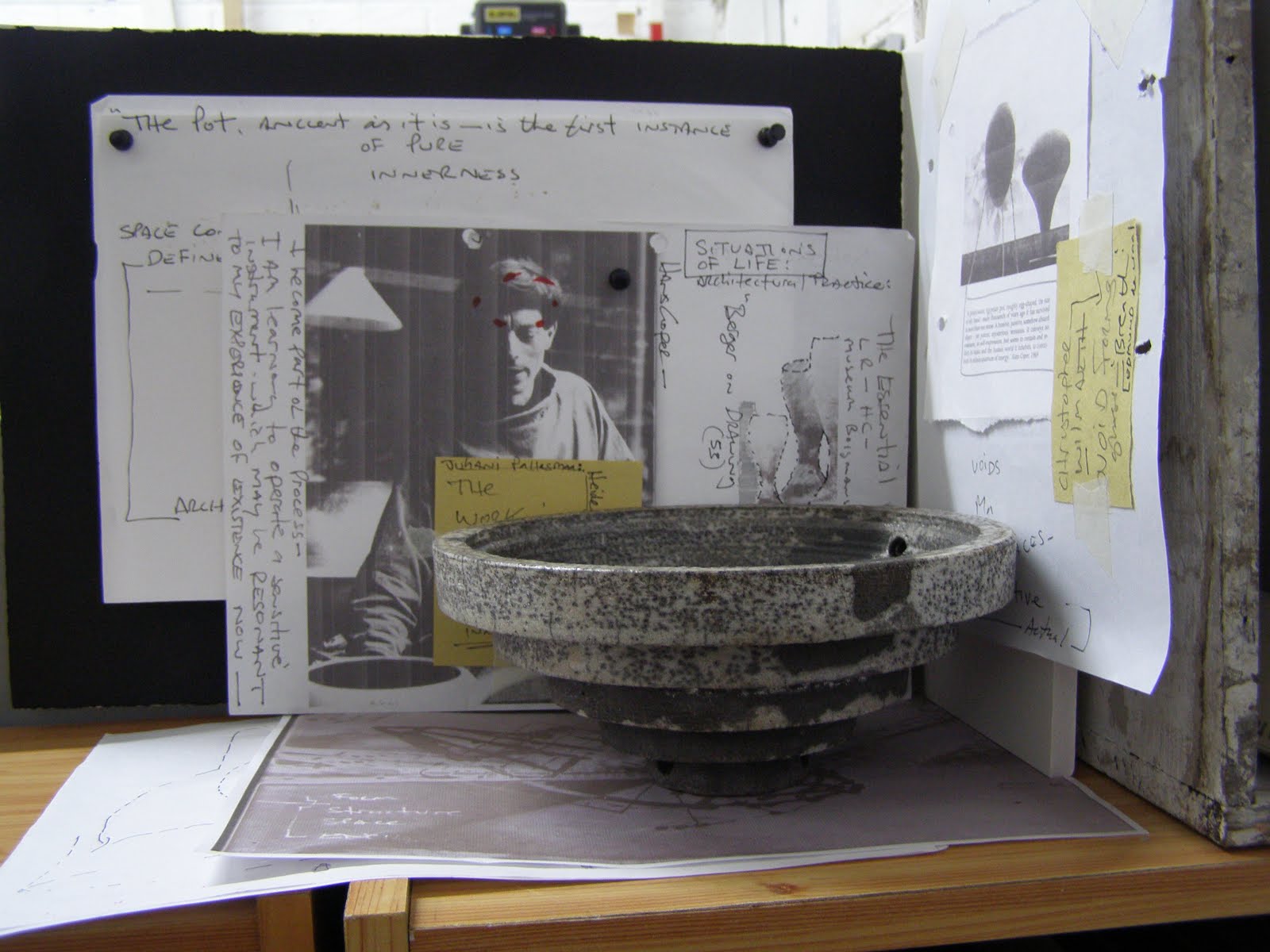
    Hans Coper’s assembled ceramics are constructed from a number of thrown components, throwing a process that he remarks on by saying ‘I become part of the process, I am learning to operate a sensitive instrument, which may be resonant to my experience of existence now.’(Birks,1983:63) Tony Birks comments that all his works were containers and that they were all thrown and that some of their energy is the direct response of being solely conceived on the wheel. This ceramic practice of throwing gave him his sense of livelihood, dwelling and skill.
    Coper’s pots celebrate the studio potters pioneering spirit of innovation and discovery through the daily practice and discipline of a craft. He produced composite forms of his own invention that underpinned his modernist aesthetic. His ceramics have evolved through a series of archetypes, families and groupings, from which he could propose subtle amendments and adaptations.
    Hans Coper’s pots are objects that seem to spatialize their surroundings with their complex inner spaces. They seem to set up in their interiors, narratives and intimacies that radiate outwards to the surface of the vessel and then beyond into the scale of the world.
    The Pots themselves have an almost mechanical surface treatment. This is caused by abrading the glazed engobe layer. This seems to give their interior space a reverence for the handmade and sensibilities of the once plastic clay.
    Hans Coper’s candlesticks made for Coventry Cathedral could be seen as epochal points of reflection and reconciliation with humanity.
    His pots take up dominion as thinking, sensorial vessels, artefacts that enter into our existential social realm.
    Hans Coper was part of an ethical avant-garde. He produced modernist artefacts that sat on his studio shelves; his pots had no need of biography, plinth or cabinet. They exist solely through the agency and inquiry of their makers’ situation; they reference the modernist traits of their time, yet they are touched by an archaic timelessness, an entropy that they and we can never escape. These pots now question the new social consciousness that has itself left art in the world of the Post modern, which is itself addictive, conditioned and fetishized. Hans Coper’s pots remain humble in their humility despite market forces; but can they really gives us some sense of ‘a vision that affords perspective on our existence and the hidden aspirations of man?’ (Kuspit,1994:5)
    Suzi Gablik in The Re-enchantment of Art confirms that our way of thinking about art (has become conditioned) to the point where we have become incredibly addicted to certain kinds of experience at the expense of others, such as community, or ritual. Not only does the particular way of life for which we have been programmed lack any cosmic, or transpersonal dimension, but its underlying principles (have become) manic production and consumption, maximum energy flow, mind-less waste and greed. (Gablik, 1991:2)
    In sharp contrast to the abraded and textured reworkings found on Hans Coper’s pots, Edmund de Waal’s contemporary installations furnished with his own hand thrown porcelain pots; shimmer and shine with a suffused surface of reflections producing a delicate aesthetic that promotes his ‘dialogue about the use, preciousness, survival, presentation and display of ceramics.’(Graves, 2008:8)
    His large scale installations show large groups of ceramic vessels, these are often in historic architectural settings. He is both an artist and an historian of ceramics. His installation Signs and Wonders contains up to 425 pieces of wheel thrown porcelain. Through working with specific settings De Waal has produced installations that by their very impermanence offer ‘new and unexpected dialogues’ through staged interventions that are ‘framing pots within architectural features or the intimate spaces of furniture.’ (Graves, 2009:10) This site specific installation is located high up in and under the main oculus window at the Victoria and Albert museum in London. The installation will be visible to viewers as they look upwards into the space of the monumental central dome.
    Signs and Wonders could be about seeing and sensing pots from a distance, De Waal is seeking to reflect the sentiments found in Wallace Stevens poem that makes the pot itself appear as a still centre from which we can step back from and observe as it helps us to gather in our surroundings.
    ‘De Waal has placed his pots in circulation, but not in the sense that they can be held and passed around. They are even, to some degree withheld.’ (Adamson, 2009:34) De Waal’s porcelain vessels (shape shifters) are in effect objects from memory brought into a shifting nature of influences from the Chinese porcelains, the 1800 Century European porcelains and the collections of the Modern era from Vienna, Bauhaus and the Constructivists. ‘The way in which the pots are displayed has become an integral part of the work. And increasingly there is a sense that it is about putting on a show, albeit one that might be for a private audience.’ (Graves, 2009:8)
    This work is not about tactility, immediacy or possession, perhaps De Waal has succeeded in producing a collection that is also ‘a talisman of subjectivity’ of one man’s personal vision of ceramics.
    His work and the interior spaces associated with it are in some way becoming endemic of his and our post modern world. Is there some sense that De Waal’s throwing, his vessel making has itself just become a function, an endless repetition. Is there a fear that the presentation and the framing of De Waal’s vessels actually ends up with him filling in the spaces he has strived to construct?
    Although the body has been existential throughout the throwing process and is clearly represented in Edmund de Waals work. It might now appear that these new thrown pots destined for another staged presentation, are being crafted with this aim in mind.
    Rebecca Solnit explores Susan Bordo’s claim that ‘if the body is a metaphor for our locatedness in space and time and thus for the finitude of human perception and knowledge, then the post modern body is no body at all.’ Solnit comments on this post modern body that it is more of a passive object, appearing most often laid out upon an examining table or in bed. ‘A medical and sexual phenomenon, it is site of sensations, processes, and desires rather than a source of action and production, this body has nothing left but the erotic as a residue of what it means to be embodied. Which is not to disparage sex and the erotic as fascinating and profound, only to propose that they are so emphasised because other aspects of being embodied have atrophied for many people.’(Solnit, 2002)
    We return back to the urgent need to make and experience things that in someway that lead us back to ourselves. The creative architectural work of Peter Zumthor is something that I am engaging with. He has developed architectural design practices that consider each project in terms of a comprehensive and encompassing sensory experience. He looks beyond the mere physical form and its fabric. He attempts to address issues of the body and how it may interact within a built environment. The use of memory as a spatial narrative to accompany the atmosphere of his spaces is realised through evocative material surfaces and densities. I feel that there is a synergy here between the opening up of the interior of a pot and the opening up of a space to dwell in.
    In sensing a pots interior from its surface, we are as it were in some intimate tacit correspondence with its spatial sensing centre. We become known to it through its maker’s creative gesture of innerness. This anthropological inner space linking us to the potter is both sensual and distant; its vacancy allows us dwell in the maker’s absence. We become part of the vessel, we enter its philosophy of solitude.


    Social apparatuses and agents that explore the possibilities of space. Other Worlds : Insistent moments of mark making/subjectivity.

    Source: Inside Phenomena : Innerness and Interior : Surface Pleasures

  • A humble, passive, somewhat absurd object, yet potent, mysterious, sensuous : Hans Coper

    Hans Coper, Theory and Object Analysis, Crafts Study Centre, Farnham.

    MA Interior Design

    A vessel (as membrane/threshold that can hold social rituals/traditions and memories) seems to occupy space but simultaneously be occupied by space.

    Theories of relativity and uncertainty have shown that all matter, even the airy oxygenated void inside a vessel is energy, and that it is composed of the same building blocks generated from exploded stars. (Daintry2007:10)

    Water, although fluid it is supremely germinative and represents the condition of all potentials.(Eliade Mircea l983)

    Permeable in flux, water and water’s symbolism became the pagan’s way of intuitively knowing the world. Matter was plastic, fluid and changeable. The body was plastic with parameters defined not only by individual consciousness, but also in relation to other realms of the physical world.

    The pagan participated in a vast mythology where his identity changed according to narrative fantasies that combined and recombined human and animal activity endlessly, weaving together memory, reason and sensation. In this permeable world there is no sharp division between things or between life and death. It is a world of energetic flow where bodies can indifferently become attached or unattached from myriad objects and forms. (Daintry2007:9)

    Flexible Ways of Seeing/Re-Making the World.

    “A large part of the reason for making is to see things that I have never seen before, to build something which I cannot fully understand or explain.”

    Artist Statement, Ken Eastman.

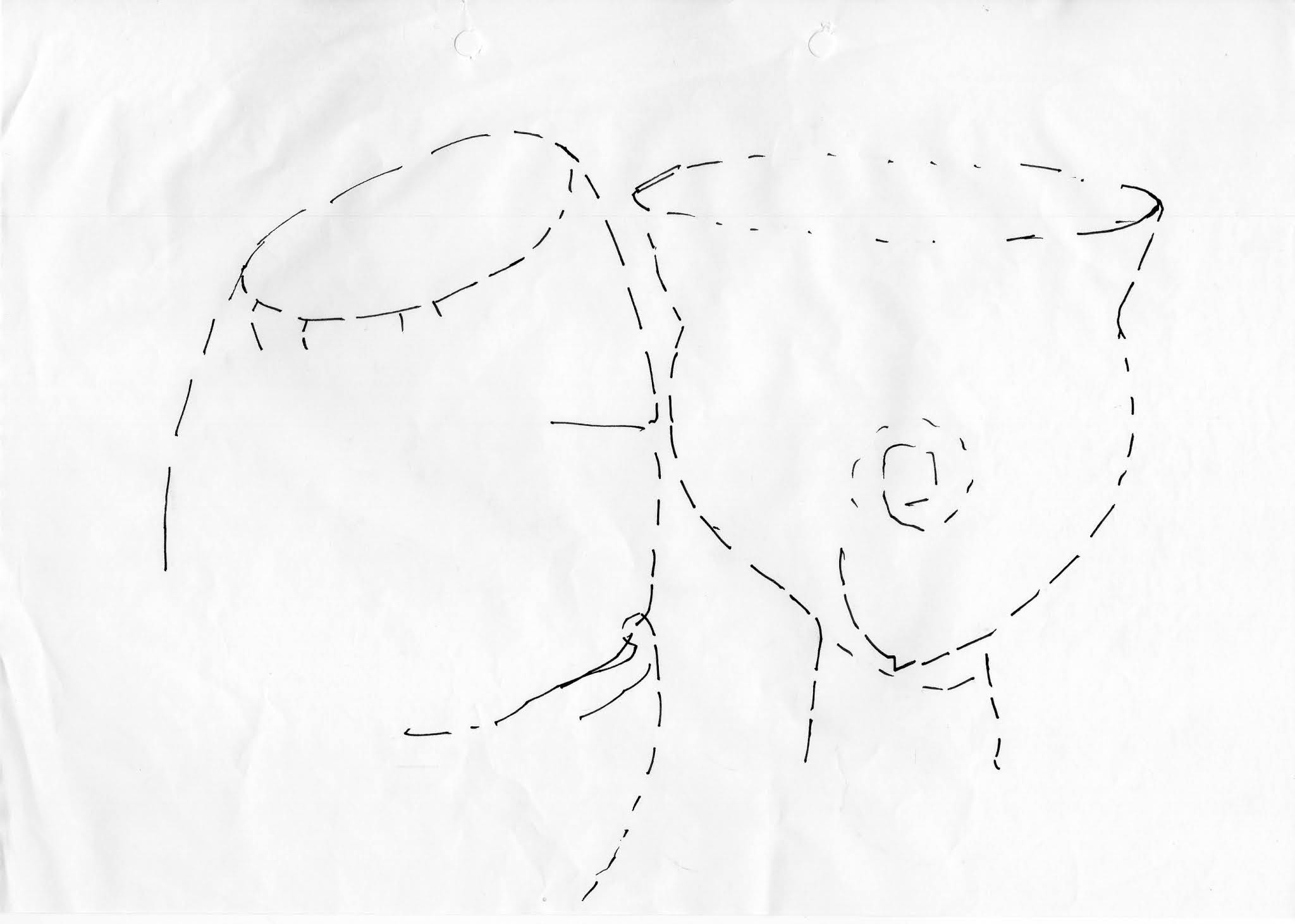
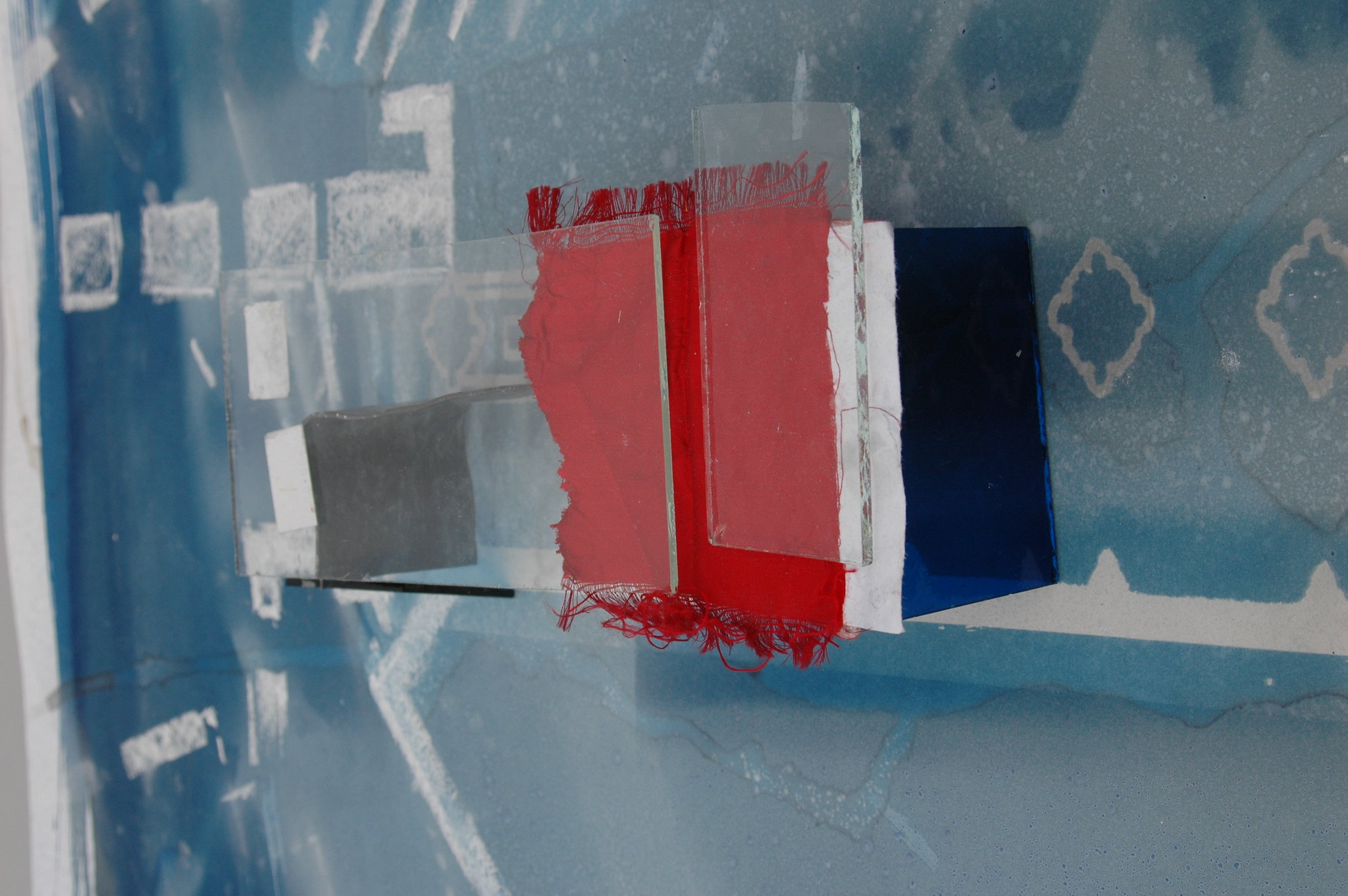
    Drawings in the form of tracings were gathered from the flat planes of the display cabinet; these were further superimposed in an attempt to map the surface and forms of the Hans Coper pots and to explore their volumes and interior spaces. These new sight lines subjectively link surface details with profiles into the possibility of new spatial forms. These plans and mappings became the starting point for a series of slab and thrown assemblages. Thrown and slab worked clay forms in T Material, preliminary drawings done in-situ some with annotations. (Russell Moreton. 2014)

    Rotterdam Exhibition with Lucie Rie. 1967 Hans Coper.

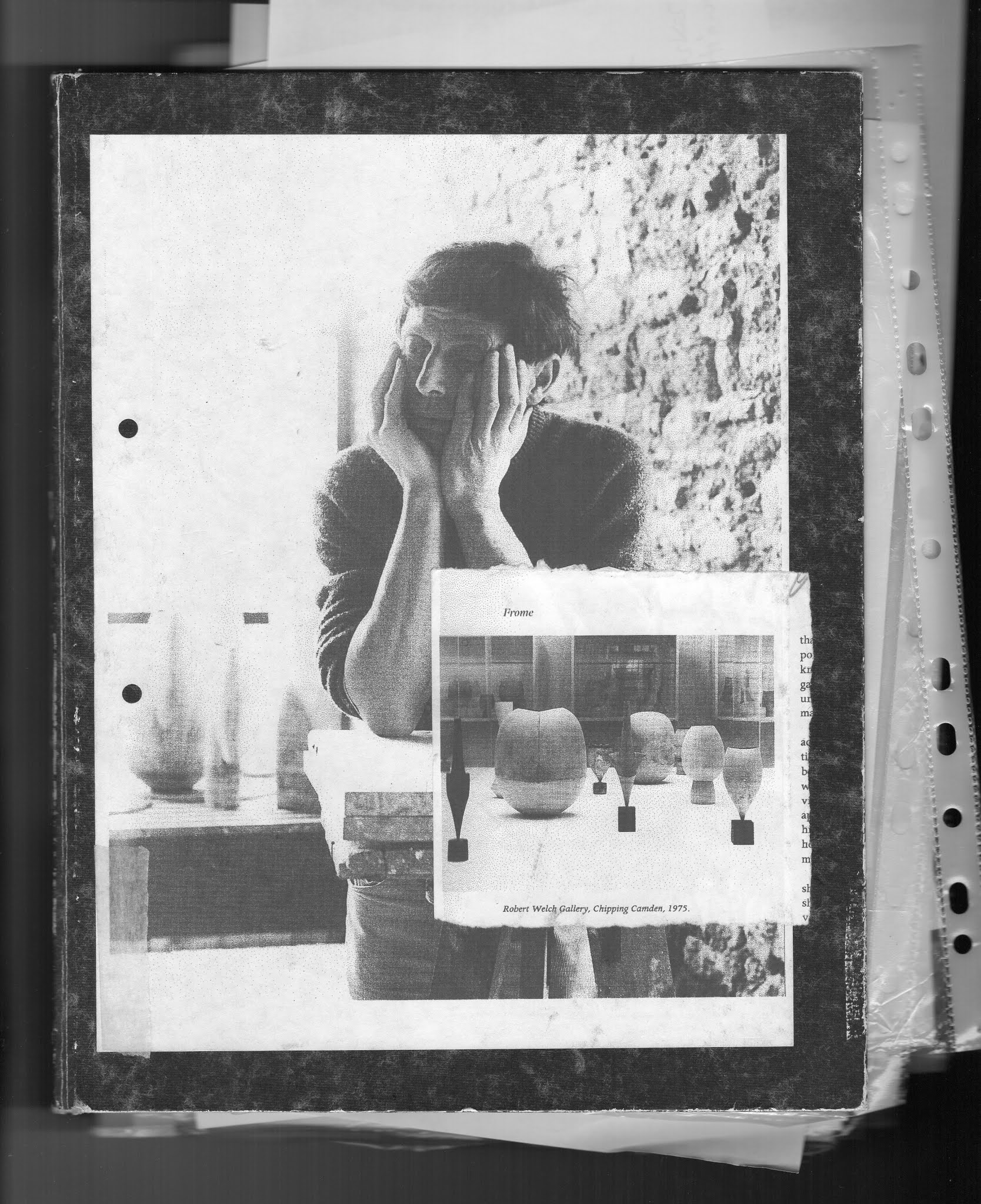
    His arrangement was highly original and innovative, he showed his families of vases in groups, emphasising their subtle differences in form and surface treatment. The space between the pieces was just as important as the objects themselves. The architectonic character of Coper’s pots become visible through their dry, stone like skin and the sophisticated way in which Jane Gate photographs the work.

    “Potters of reconciliation, they sought a marriage of function and beauty.” Douglas Hill SF author/intro to exhibition.

    Craft Study Centre Publication 2014

    Object Analysis

    Name of object:   Vase, flattened oval form on a cylindrical stem, pinkish cream to grey glaze over                                       manganese on exterior, manganese over interior and recessed foot. It is decorated                                    with incised lines on back and around the stem with concentric rings incised on the                                   foot

    Accession number:                P.74.28

    Maker:                                   Hans Coper

    Construction techniques:

    Materials:                               stoneware

    Dimensions:                           22.2 x 18.8 centimetres

    Date made:                             1960s

    Provenance:                           Made in Hammersmith, London. UK

    Given to Muriel Rose by Hans Coper in 1966

    This thistle-shaped vase is constructed from five individually thrown pieces. The joints making up the pot have been selectively accentuated with the residues of the manganese engobe. Incised geometric marks remain from the initial turning process of the component parts, prior to the construction of the pot. (Russell Moreton. 2014)

    Name of object:     Vase, unglazed rim. manganese interior, decorated with vertical scoring on the                                         exterior

    Accession number:                   P.74.103

    Maker:                                       Hans Coper

    Materials:                                  stoneware

    Dimensions:                              12.7 centimetres

    Date made:                                1950s

    Provenance:                               London. UK

    Single thrown form with the remains of the sgraffito technique after the ceramic has been heavily abraded after firing. The vertical lines of the sgraffito technique and the form itself are similar to Lucie Rie’s flower vases, see Lucie Rie by Tony Berks page 112.

    This single thrown form perhaps best illustrates the creative union of both Coper’s and Rie’s practices, the form almost a kind of beaker might itself been inspired by the “dark pots” Lucie Rie found whilst visiting Avebury Museum. (Russell Moreton. 2014)

    Name of object:     Squeezed ovoid-shape vase with flower holder inside, manganese interior

    Accession number:                    P.74.30

    Maker:                                   Hans Coper

    Materials:                              stoneware

    Dimensions:                          22 x 22 centimetres

    Date made:                            1970s

    Provenance:                          London. UK

    Wheel thrown forms, comprising of bowl, open cylinder and an interior ring acting as a flower holder. The bowl form has been turned before being jointed with the upper section. The piece was then indented at four points to form an ovoid form. Pronounced incised horizontal marks remain from the joining, which has been further transposed by the action of becoming ovoid. Very subtle and restrained use of the manganese engobe followed by Coper’s characteristic post firing technique of abrading the surface of the ceramic. (Russell Moreton. 2014)

    Hans Coper : Working Notes CSC/10 March 2014.

    Notes re/statements

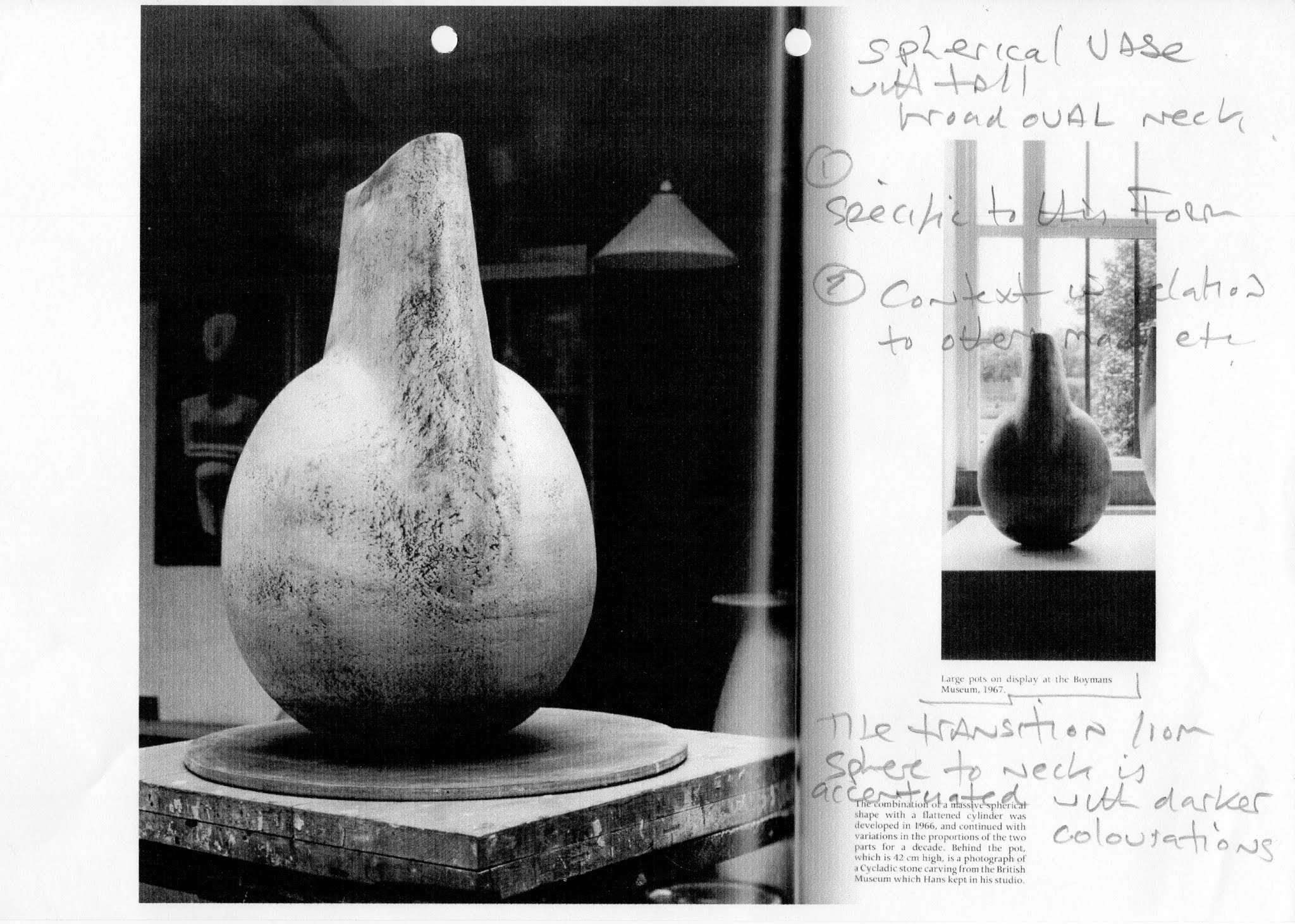
    1.   Specific to the form in question.

    2.   Context in relation other similar forms.

    3.   Key Words: Impregnated, Incised, Eroded, Reduction, Surface, Soil, Abraded Surfaces, Machining, Grinding, Assemblage, Components, Parts, Groups, “Aryballos,Spade, Thistle, Diabolo, Cycladic, Spherical,” Sculptural, Pottery, Architectonic, Space between Forms, Spatial, Sensuality, Form and Fold, Bodily Spaces, Light and Dark, Clay, Water, Fire, Agency, Difference,

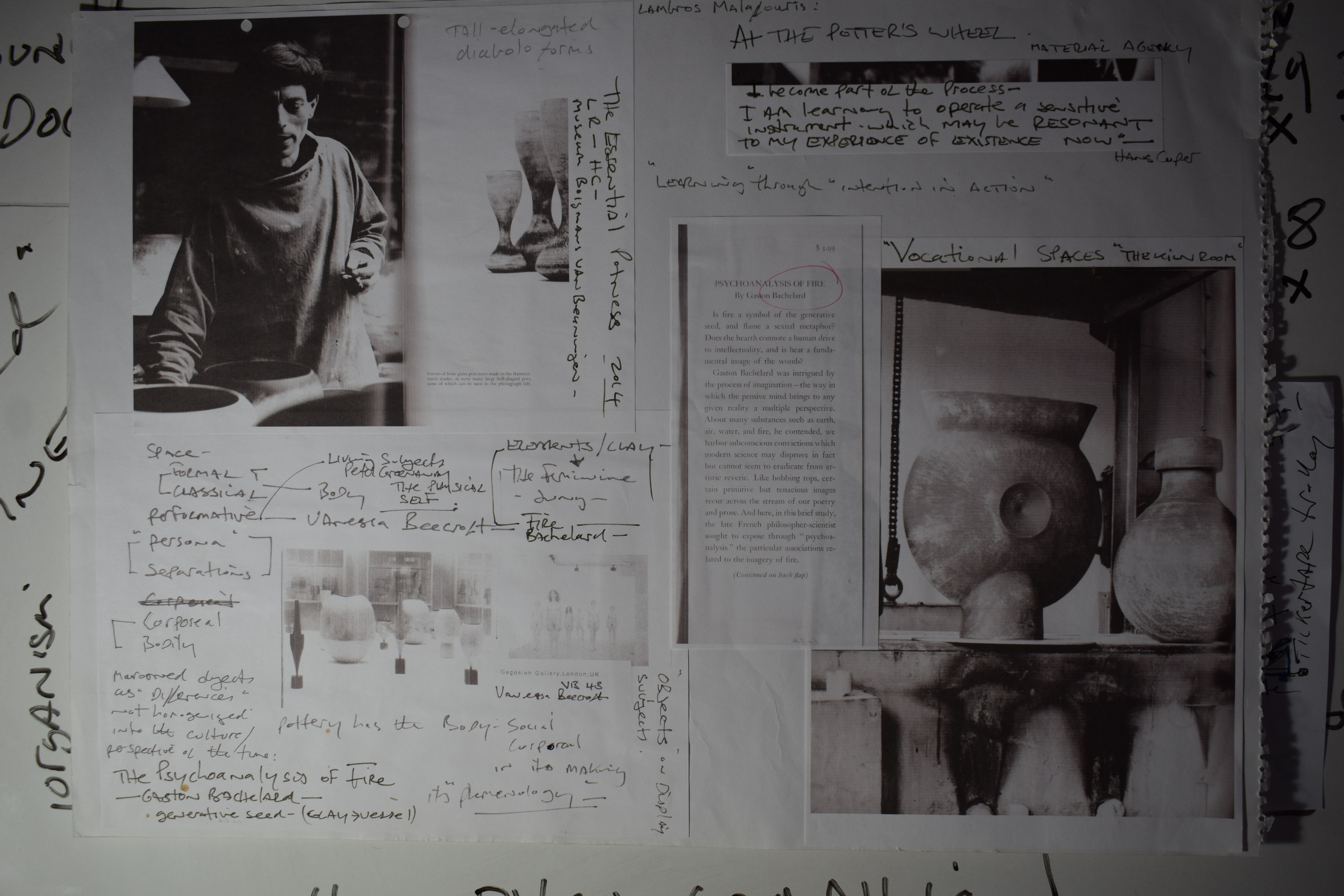
    Extracts from catalogue “The Essential Potness, Hans Coper and Lucie Rie 2014”

    “I become part of the process, I am learning to operate a sensitive instrument which

    may be resonant to my experience of existence now.”

    “My concern is with extracting essence rather than with the experiment and exploration. The wheel imposes its economy, dictates limits, and provides momentum and continuity. Concentrating on continuous variations of simple themes I become part of the process.”

    Artist Statement, Victoria and Albert Museum/Collingwood, Coper Exhibition 1969. Small Beige Spade 1966.

    The body comprises a thrown circular form, from which the bottom has been flattened into an oval and the lower section has been pressed together.

    Throwing rings are visible on the inside.

    Areas of the white engobe have loosened from the underlying layer during firing and formed blisters.

    Cycladic Vase 1973.

    Blisters in the slip have been sanded down to reveal a rust coloured underlying layer. Medium Sized Spade 1973.

    There is a clear delineation between the light upper section and the rougher and darker lower section.

    Small Thistle Shaped Vase 1973.

    There is a large incised circle on one side of the disc and a smaller circle on the other. Hans Coper’s characteristic use of light engobe and dark manganese oxide has produced a hazy texture.

    Black Aryballos 1966.

    This ceramic form has its origins with the Oil Flask used by athletes in Greece and Asia Minor.

    Tall elongated diabolo forms.

    After being thrown the cup has been formed into an oval and then indented at four points.

    Text Fragments. Momentum Wheel.

    It is difficult to determine in which order the parts were assembled.

    The underlying surface is showing through the grooves that are linking the body and the base.

    The manganese engobe is demarcating dark and light zones through an undulating incised line.

    “Rings” caused by the placement of a prop in the kiln. Brown-Beige Colorations.

    Sensations caught within the form.

    Soil like deposits/remains.

    Reductions of the fired surface.

    Abraded Surfaces

    Incised Line.

    Droplet.

    Blisters, pricked open and sanded after firing. This process has produced an irregular, patch surface.

    Parallel lines have been incised with a pointed object on the exterior of the base. Thistle Shaped Vase 1966.

    The dark brown patches (around the jointing of the pot) and flecks appear randomly distributed but have been purposefully placed to accentuate the structure of the vase. This flat vase with the contour of a stylised thistle flower is made up of five individually thrown pieces. The tall cylindrical foot supports a vertical disc, comprising of two individually thrown flat plates. It is as though the disc has sunk approximately ten centimeters into the foot.

    Spherical Vase with Tall Broad Oval Neck 1966.

    The transition from sphere to neck is accentuated with darker colourations.

    Hans Coper

    Hans Coper’s iconic assembled ceramics frame the later part of the twentieth century with an ambivalence of both alienation and reconciliation. His pots reveal differences that have resisted the homogenizing effects of the culture of the time. They embody and are a physical testament to what the potter himself has reflected on his life, “endure your own destiny”1 2 within the space and time of the human condition.

    Bom in 1920 into a prosperous middle dass background, his childhood years were spent in the small town of Reichenbach in Germany. In 1935 his father Julius, is singled out like many other Jewish businessmen for harassment and ridicule

    under National Socialist Party. This would result in the Coper family moving frequently to escape the attention of the Nazis. Tragically in 1936 Julius takes his own life in an attempt to safeguard the future of his family. The remaining family. Erna Coper and her two sons return to Dresden. In 1939 Hans at the age of 18 leaves Germany for England, the following year he is arrested in London and interned as an enemy alien. He spends the next three years first in Canada then returns to England by volunteering to enroll in the Pioneer Corps. In 1946 a meeting with William Ohly who ran an art gallery near to Berkeley Square, brought about an opportunity for a job in a small workshop run by Lucie Rie, a refugee potter from Vienna. Hans Coper now began earnestly through his engagement with ceramics to reveal a continental modernity “whose work seemed uncomfortably abrasive to the traditionalists.”*

    Hans Coper and Lucie Rie worked together at Albion Mews for 13 years forming a friendship and a working relationship that was mutually reciprocated through practical concerns, innovation and experimentation. There is a creative synergy in place through their mutual sharing of process and experimentation within the practicalities of the studio space. A documented instance of this reciprocal inventiveness is in the appropriation of the technique of “Sgraffito” which Lucie Rie employs after being inspired by some Bronze Age pottery at Avebury Museum bearing incised patterns, which are displayed with some bird bones, which may have been used as tools to incise the pottery. These “dark bowls of Avebury”3  are transposed through the use of manganese engobe and a steel needle into Lucie Rie’s ceramics, Hans Coper although not present appropriates the bird bone for the engineered steel of a pointed needle file and uses the action of an abrasive hand tool to remove layers of the manganese engobe. In this way Coper is enacting onto the surfaces of his ceramics, the very agencies that Modernism was acting out in the realms of architectural space and surface treatment of materials. In 1959 a move to Digwell Arts Trust would bring to a close his working relationship with Lucie Rie. Coper now became involved with a number of architecturally based projects through the Digswell Group of architects and building professionals. Coper’s engagement with the Digwell Group was not without problems and creative frustrations, but seen in retrospect it became an experimental period where Coper was strengthening his ability to bring his pottery into a spatial communion with the modernist architectural sensibilities of the time. However it was a wartime friend Howard Mason who introduced Coper’s work to Basil Spence, from this introduction Hans Coper was commissioned to design the candlesticks for the new modernist cathedral at Coventry. The Six Coventry Candlesticks completed in 1962 explicitly reveal a sensitive and progressive spatial awareness to the architectonics of built spaces. The candlesticks delicately tapered and waisted are made in sections and assembled on site onto rods set into the architectural interior. These assembled thrown and fired towering forms seem to be more about a presence than their actual physicality. They appear to paradoxically transcend the monumentality of their setting through their very immateriality, their slight of form being perfectly balanced to accommodate a single candle and its temporal flame.

    As a maker of pots he was in constant touch with his working process, an analogue process, a creative membrane that surrounded the agency of making and thinking. He was able to pursue his vocation “My concern is with extracting essence rather than with the experiment and exploration”4 His resultant works reflect what might be termed a “machining in” of a creative durability that is both ancient and modern that contains both tensions and fragility, and that above all seems to exist in a state of timelessness.

    His assembled “pots” are constructed from thrown components, “throwing” as o process that he remarks on “I become part of the process. I am learning to operate a sensitive instrument, which may be resonant to my experience of existence now”. It is through the wheel, the body and the interplay between clay and air that the inner space that defines the form is created. Adam Gopnik writing about the art of Edmund de Waal describes what I might be termed a spatial sensibility “the pot-ancient as it is. is the first instance of pure innerness, of something made from the inside out.”5 Hans Coper further adds sensuality to this “innerness” when he encloses it in a skin that appears archaic through a deeply physical surface treatment of engobes, incised grooves and scratching of the raw pot; then when finally once fired the dry vitreous surface is further machined and abraded to give a graphite-like sheen.

    Hans Coper’s pots speak in silence of this interior “architectonic” space that is itself reverberated through an almost archaic modernity. He seems to be able to tune the interior, to load its mass, its void.

    There is a strong sense of the vessel, the concrete with the emptiness, even an analogy to corporality set in motion by his treatment of the surface and interiors of his pots. The pots themselves belong to ever extended families, to new familiarities created by the subtle interlays between the negative spaces created through the spatial awareness that has been crafted into their very making. The pots through proximity with each other are in a spatial communion, they act to define particular spaces by defining boundaries and creating thresholds between exterior surfaces and space. These pots are themselves are ‘encounters’ they ask us to be attentive to the responsive sensory inner space set up in residence by the permeable world of the ceramic vessel.

    1 Birks. Tony. 1983. Hons Coper. London. William Collins Publishers. p75.

    2 Birks, Tony. 1983. Hans Coper. London. William Collins Publishers p22.

    3 Birks. Tony. 2009. Lucie Rie. Catrine. Stenlake Publishing ltd: p44.

    4 The Essential Potness. Hans Coper and Lucie Rie 2014. Collingwood and Coper Exhibition 1969. Victoria and Albert Museum.

    5 Gopnic.Adam 2013. The Great Glass Case of Beautiful Things : About the Art of Edmund de Waal. New York; Gagosian Gallery: p6-7


    Social apparatuses and agents that explore the possibilities of space. Other Worlds : Insistent moments of mark making/subjectivity.

    Source: A humble, passive, somewhat absurd object, yet potent, mysterious, sensuous : Hans Coper

  • The phenomenal nature of the idea : Architectural Intertwining/Environs, object scripted inquiry

    Architectural Body
    Madeline Gins and Arakawa
    Working Notes/Holding in Place
    Wayfinding/Movements through accumulated research
    Running scripts, enactments, instances, involvements
    Collaborative texts, complexity, emergent, discursive
    From The Bookcase to The Field Table : Landing Sites of Inquiry
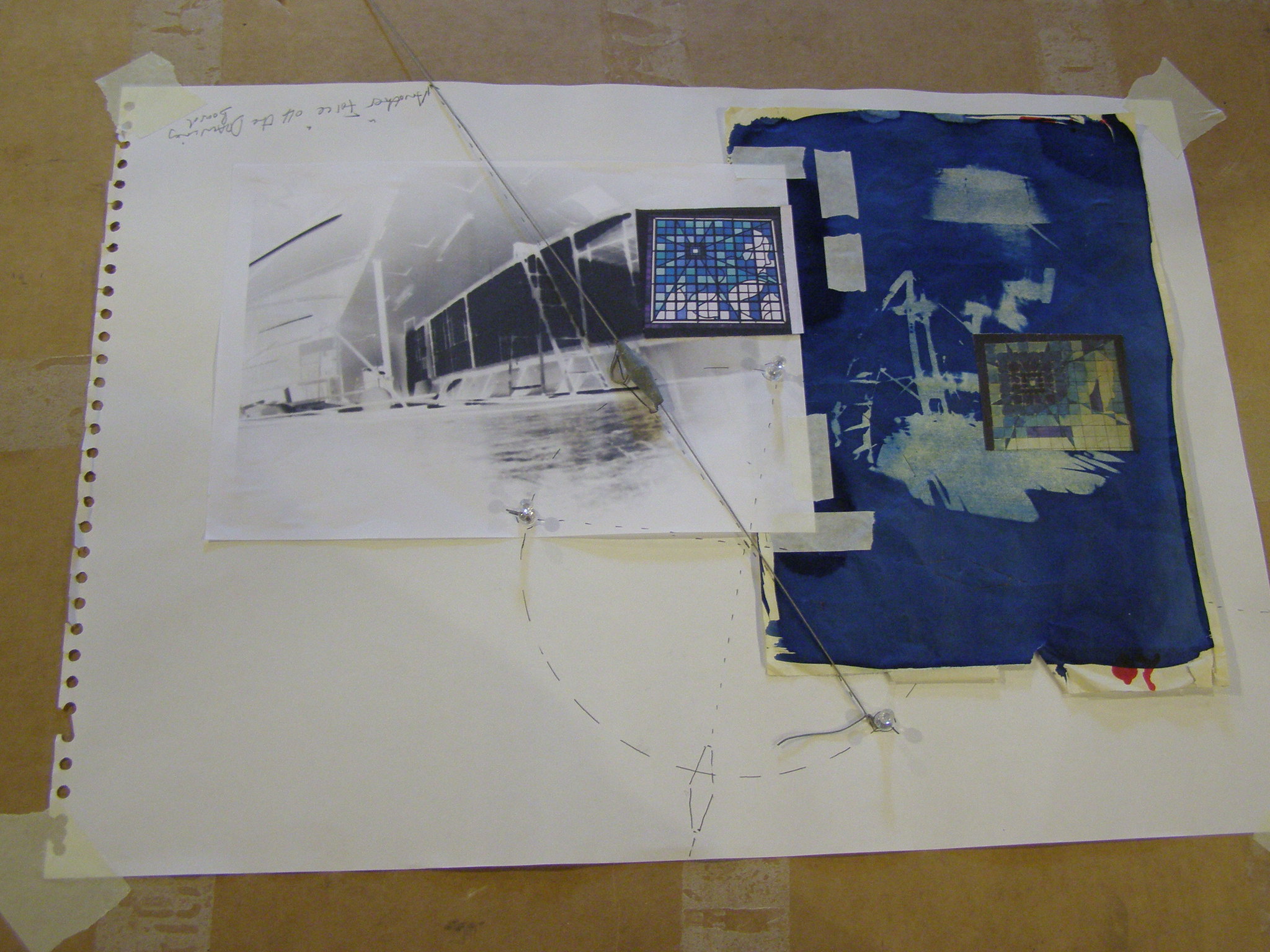
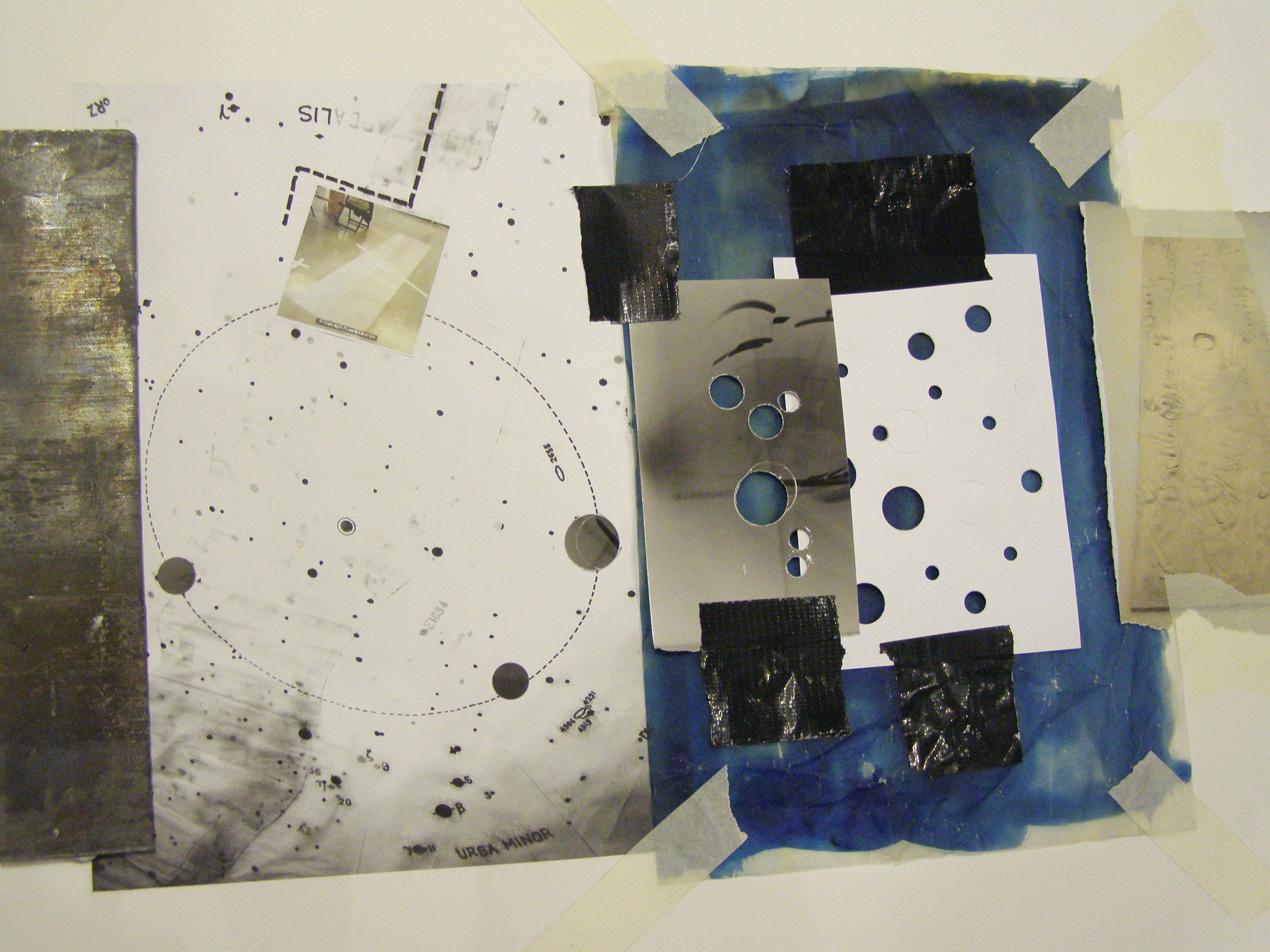
    Spatial Collage 2010

    Lead, photographic (pinhole) and inkjet visual material from flickr stream, fixing tapes, cyanotype on tracing paper, pierced and re-positioned elements on paper.

    Idea is,

    the invisible of this world, which inhabits this world, sustains it, and renders it visible

    Merleau Ponty

    Start by thinking of architecture as a tentative constructing toward a holding in place. Architecture’s holding in place occurs within and as part of a prevailing atmospheric condition that others routinely call biosphere but which we, feeling the need to stress its dynamic nature, have renamed bioscleave.

    Architectural Body

    Madeline Gins and Arakawa

    For Steven Holl, the intertwining of idea and phenomena occurs with the realization of a building as the means for the materialization of the idea force

    A methodology of connecting phenomenal properties with a conceptual strategy

    Camouflage

    Neil Leach

    For Benjamin, the twentieth century is an age of alienation. Human beings are no longer ‘cocooned’ within their dwelling spaces. Architectural spaces are no longer reflections of the human spirit. Something has been lost.

    Mimesis, 19.

    New Concepts of Architecture

    Existence, Space and Architecture

    Christian Norberg-Schulz

    A child ‘concretizes’ its existential space.

    A Philosophy of Emptiness

    Gay Watson

    Artistic Emptiness

    Everything flows, nothing remains.

    Heraclitus

    Rethinking Architecture

    Neil Leach

    Figure 1, Sketch by Jacques Derrida for Choral Work project. 343

    Foucault, Figure 2 Bentham’s Panopticon (1791). 360

    Page laid in, The Atrocity Exhibition by J. G. Ballard, new revised edition, annotations, commentary, illustrations and photos.

    Tracing Eisaenman

    Plenum, juxtaposed to form/haptic values/body absences

    Robert Mangold

    Between moments of ‘meaning’ lie spaces or blanks of immediate experience. Such blanks are actuality. Usually the blank, the actuality, goes unnoticed because it works so efficiently to differentiate one meaningful event from another. Kubler discussed this in The Shape of Time.

    Interactions of the Abstract Body

    Josiah McElheny

    Object Lesson/Heuristic Device

    The term ‘heuristic’ is understood here to denote a method of addressing and solving problems that draws not on logic but on experience, learning and testing. In this regard stories and fictional narratives can be heuristic devices in acting as ideal models that are not to be emulated but which help to situate characters, actions and objects.

    Space Between People

    Degrees of virtualization

    Mario Gerosa

    Adaptive Architectural Design

    Device-Apparatus

    Place

    Function

    Adaptation

    The second phase of project activity acknowledges that the proposal involves two sites; the landscape of settlement and the artifice of the factory. The design is intended to be a reflection of the conditions of each, so there was a need to work directly with the manufacturing process, at full scale, as early as possible. This would provide an immediate counterpoint to the earlier representations and a necessary part of exploring the manufacturing medium in the context of architectural design. 69

    Building The Drawing

    The Illegal Architect

    Immaterial Architecture

    Mark Cousins suggests that the discipline of architecture is weak because it involves not just objects but relations between subjects and objects. And if the discipline of architecture is weak, then so, too, is the practice of architects. Architecture must be immaterial and spatially porous, as well as solid and stable where necessary, and so should be the practice of architects.

    Jonathan Hill

    Index of immaterial architectures

    Herzog and De Meuron

    Natural History

    Exhibiting Herzog and De Meuron

    We are not out to fill the exhibition space in the usual manner and to adorn it with records of our architectonic work. Exhibitions of that kind just bore us, since their didactic value would be conveying false information regarding our architecture. People imagine that they can follow the process, from the sketch to the final, photographed work, but in reality nothing has really been understood, all that has happened is that records of an architectural reality have been added together.

    My studio is a piece of architecture that is silent. The things of which it is made say all and at the same time nothing. Its strength lies in its demanding silence. A stern silence in order to permit works to occur. I imagine that a painting by Newman could be hung there.

    The arrival of Beuys in a world that was gradually falling asleep amidst minimalism generated a kind of confusion that was truly excellent for opening up the mind. Comfort vanished, driven away by subversive complexity.


    Social apparatuses and agents that explore the possibilities of space. Other Worlds : Insistent moments of mark making/subjectivity.

    Source: The phenomenal nature of the idea : Architectural Intertwining/Environs, object scripted inquiry

  • Visual/Spatial Vocabularies and Narratives (Livelihoods and Social Interactions)

     The Solar Pavilion, Upper Lawn, Wiltshire. SP3 6SJ

    ‘A building intervenes between subject and space.’(Kengo Kuma)

    ‘Things need to be ordinary and heroic at the same time.’(Alison and Peter Smithson)

    ‘The Charged Void- contains references to the architects’ concern that their buildings should command a wider territory. The Solar Pavilion is perhaps their most compelling exploration of this theme.’ (Sergison,2005:100)

    The Upper Lawn Pavilion that Alison and Peter Smithson realised is actually nothing more than a primitive hut. Much of its appeal is that of its uncompromising simplicity a ‘light touch’ promoting a way of life like camping (or bathing) in the landscape; it has the kind of enchantment of a small building with big ideas, a building in the tradition of a garden pavilion or folly. The Solar Pavilion like the earlier Patio and Pavilion of 1956 is intended to be read as a symbolic habitat that could be seen as an attempt to self-consciously to embrace an intimate connection to nature; to tum back from the city and technology. For the Smithson’s the Solar Pavilion exemplifies a place for basic human needs, a piece of ground, a view of the sky, privacy and the presence of nature. It stands as a spiritual and physical counterpoint to urbanism and city life.

    ‘The Solar Pavilion, is both a lookout over the distant landscape on the north facade, sitting on top of the existing cottage wall, and a garden pavilion mediating between two types of controlled landscape. It aims to provide a minimal enclosure that allows as immediate a relationship between interior and exterior as possible.’

    (Sergison,2005:97)

    ‘Architect’s homes provide rare occasions where the two issues of architectural theory and practice can both find a natural symbiosis; not only did the Smithsons’ build their ideas as concretely as possible, they also built themselves a private place for retreat and reflection.’ (Dirk van den Heuvel 2004)

    Hybrid Construction; containing Mies’ tectonics and Le Corbusier’s pilotis and free facade.

    Interventions made and consisting of existing elements (garden wall, chimney and windows from an existing building).

    ‘The construction of the box on the wall consists of a wooden frame clad with zinc. On all sides its posts function as a casing for fitted window frames. The frame’s wooden beams are put into the existing outer wall and are supported on the inside by a concrete beam poured in-situ and anchored in the existing chimney wall, and supported on both ends by square columns placed at a 45 degree angle. This construction results in non-supporting ground level facades, allowing the creation of the teak sliding doors along the full length of the garden facade.’ (Dirk van den Heuvel 2004)

    Tony Fretton, working notes.

    STRATEGIC INTELLIGENCE is the most enduring/valuable quality of an architectural project.

    TEACHING informs my practice as an architect profoundly. It demands that I think, write and manage people, and places me in contact with great colleagues with theoretical and practical knowledge.

    We have developed a methodology that channels my activities very precisely into design direction, presentations to the office and clients, and collective decision­ making on the management of the practice.

    The Scheme It’s Style Their Form

    Even an interesting delicacy in the detailing of the work.

    MAKING architecture that is more prepositional, that reveals meaning and values in everyday objects and events.

    ARCHITECTURE is a cultural artefact and a social art.

    ARCHITECTS design buildings using knowledge of buildings that already exist, and the meaning of buildings is shaped by public attitudes.

    FORMAL and IDEOLOGICAL INNOVATION is also necessary.

    By WORKING TRANSPARENTLY with the relation between the present and past, it gives me access to richer cultural social and architectural territory.

    I have understood that you can accept your social duties of being instrumental to society, while remaining productively critical.

    I want to use the platform of contemporary architecture on one hand to make it more communicative and on the other more artistically enquiring about issues of the times.

    BUILDINGS can explore issues such as national presence and identity in a foreign place. Political imagery in the ambiguity of the present times, the nature of place in which groups of people come together to work and its relation to the surrounding world and the relation between representation, physical security in relation to sustainable construction.

    CRAFTS STUDY CENTRE Working Notes 2 July 2014-07-02

    The Production/use of Space into Places to engender Societies.

    A site specific induced inquiry into dwelling and building through/by way of an attentive awareness (anthropological) to people and place.

    ‘What I am post interested in now is inverting the structure of a culture that is centred around the city.’

    ‘The richness and strength of that (their) culture cannot be understood until one has worked with the people who live their- until one has eaten their food, drunk their sake, talked together with the craftsmen and made things with them.’

    Kengo Kuma, Complete Works, (preface) 2012

    ‘As found is a small affair, it is about being careful.’ Peter Smithson, 2001

    ‘The ‘as found’ attitude is anti-utopian; its form is (site) specific, raw and immediate. It calls the will to question. It is a technique of reaction ( Opposition/Kengo Kuma and Herzog and De Meuron and Multiplicity/Calvino and Zumthor) and a concern for that which exists.’

    Schregenberger, 2005

    The spatial practices of exhibition and education.

    The humanities and architecture, Heidegger/Bachelard/Ingold/Herzog and De Meuron/Zumthor.

    The politics of things/sociology and everyday life/dwelling and making. Natural History learning/thinking through things/situations and vocations. Contents/Contexts/Collection and Presentation.

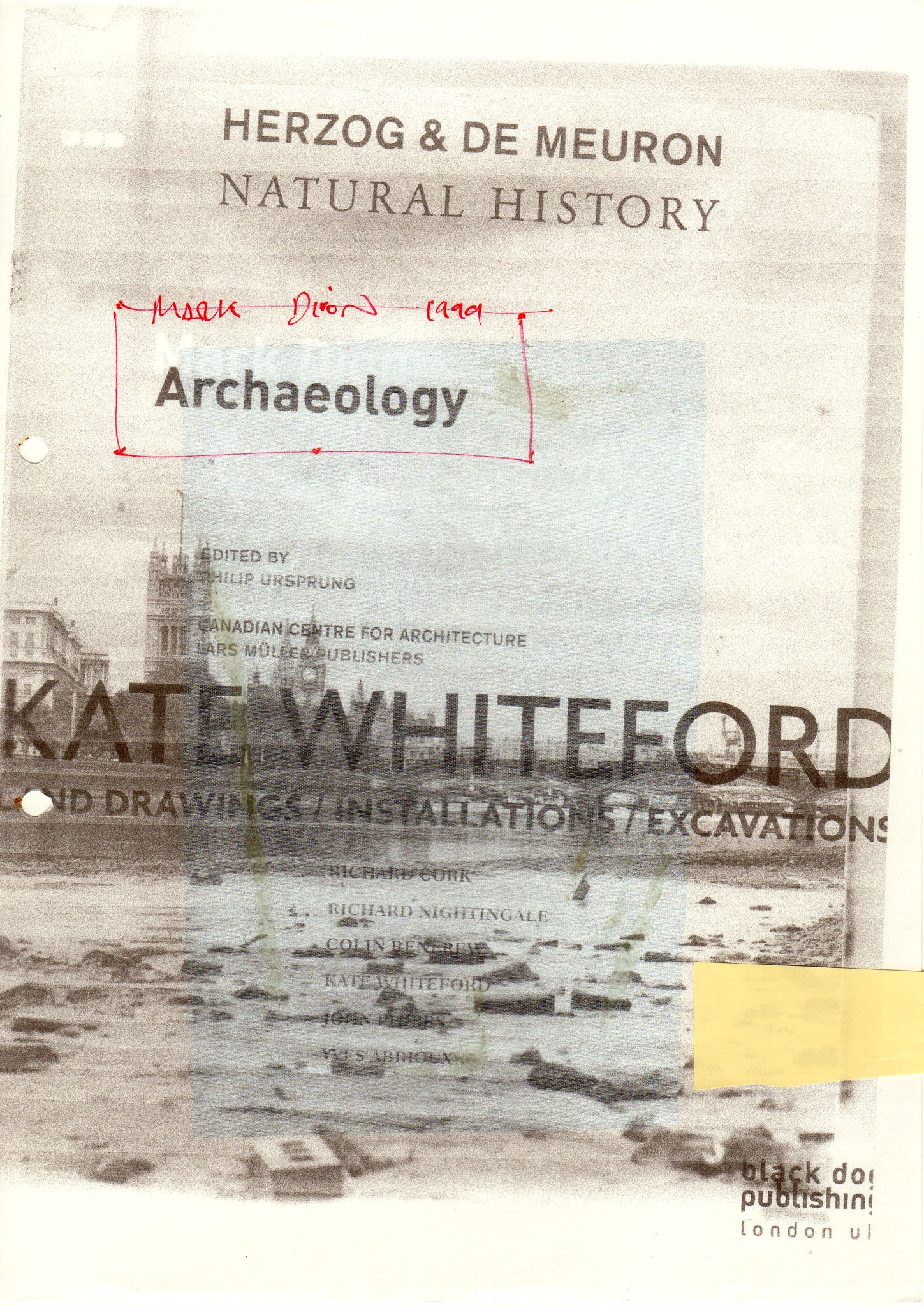
    Taxonomies and Subjectivity/Spatial Narratives of Layered Space (Spatiality) Mark Dion, Archaeology, Thames Dig.(Allegories of a pseudo-archaeology) Herzog and De Meuron, Archaeology of the Mind/Natural History.

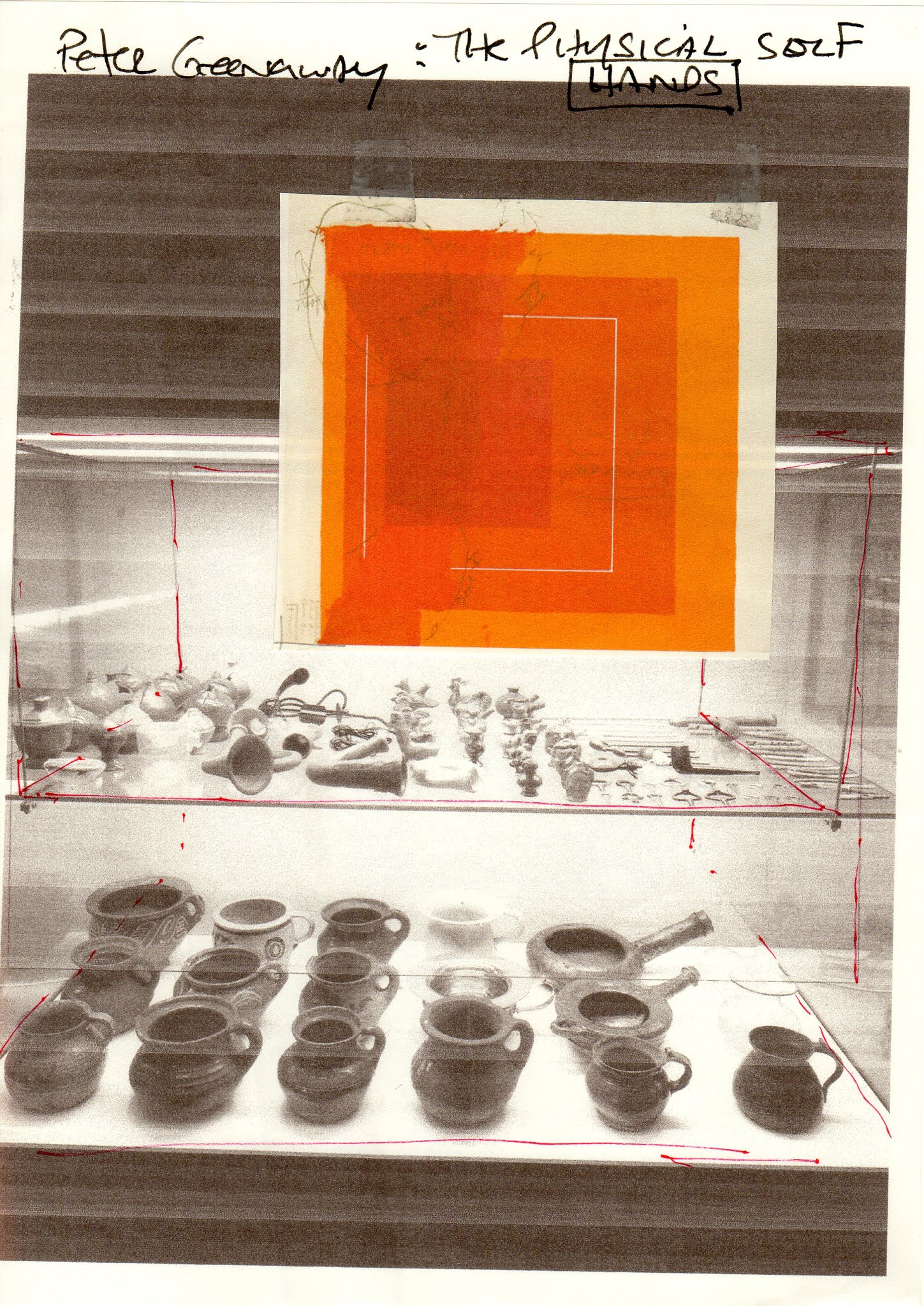
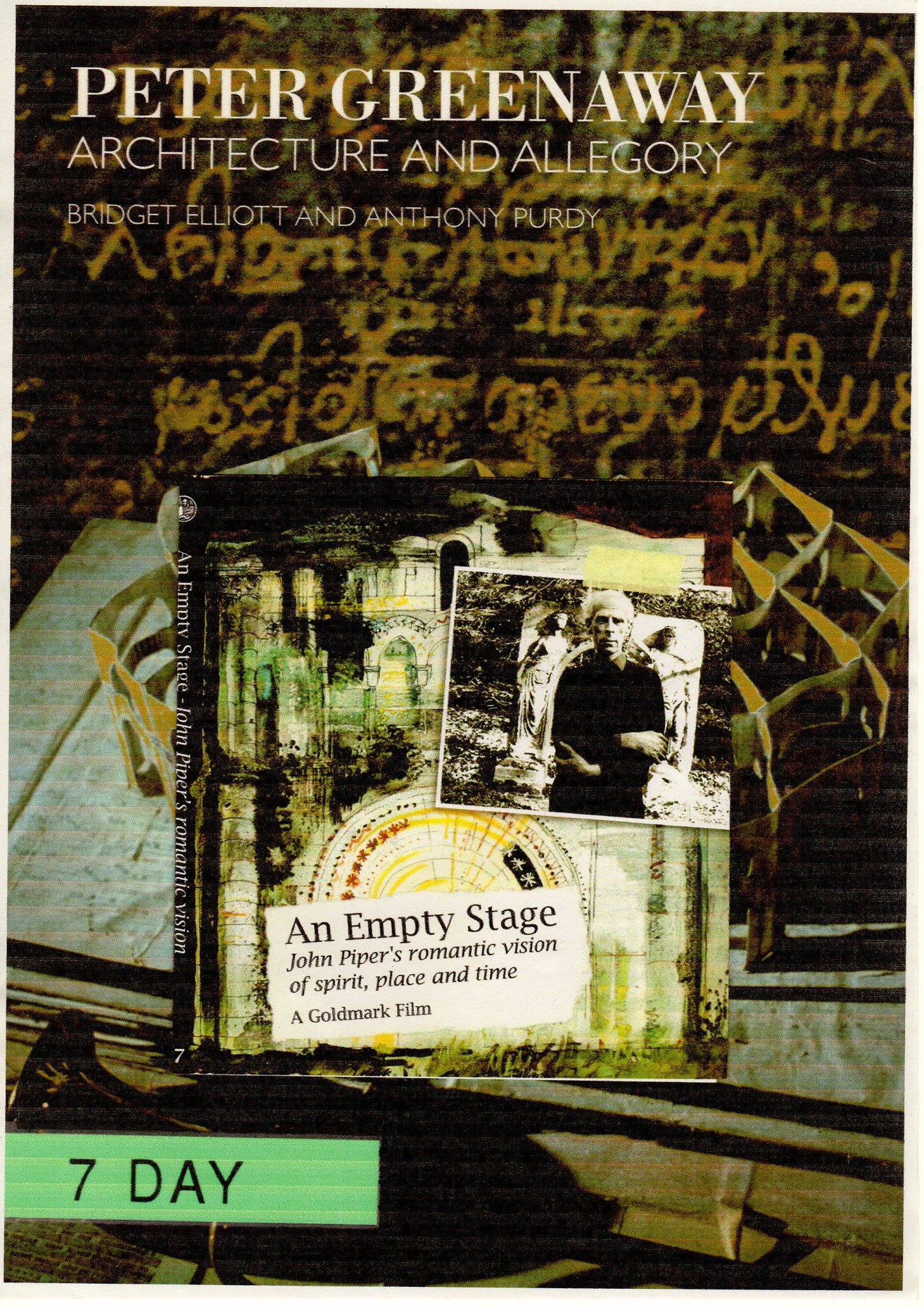
    Peter Greenaway, The Physical Self/Architecture and Allegory.

    Visual/Spatial Vocabularies and Narratives (Livelihoods and Social Interactions)

    Spatial Methodologies. Worlds and Thresholds.

    The Fanciful and The Scientific.

    The Playful and The Reverent.

    The Material and The Metaphysical.

    Tensions in built spaces.

    Between Evanescence and Substance.

    Between Illusion and Specificity.

    Between Slickness and Tactility.

    Making Places where times and tastes, human fabrications and accidents of nature, all collide; in these situations under the shelter of a forming/becoming architecture these ‘spatial texts’ or ‘visual conversations’ of one sort or another are suggested and are manifested and explored through a praxis of inquiry and making.

    The Projects Evolution.

    Philosophy of Solitude, thresholds/spaces of a vital serenity, a poetics of dwelling and its angle of repose hovering somewhere between the transcendental and the real.

    Relationships between Art, Photography, Craft and Building. Expanded through Exhibition, Performance, Teaching and Making.

    Realized as a dialogue/delivery (Built Work) into Architectural Terms between Sites of Collection and Sites of Construction.

    Working Analysis.

    CSC Object Analysis : Hans Coper/Innemess in the Ceramic Vessel and Architecture. Making (act/sacred bond of both an individual and a civilisation) from the inside out, from the interior, from the first movement or impulse, from the everyday condition/situation the as found nature of things. The innemess of the vessel of a room remains the property of our shared humanity, of our social being/becoming.

    Why did this opportunity produce a wealth of transformative insights (conduits and territories) that are now active agents working across all facets of my practice?

    Properties: Pastoral Setting.

    Built within and amongst a monastery.

    Facility and retreat for cross-disciplinary inquiry (Humanities and the Social Sciences).

    Repository and archive of artefacts, texts and objects.

    Exhibition and making spaces, workshops and residential living spaces. Walled garden complex containing a reading pavilion and library.

    Catalyst Events/Situations to engender the experience of learning.

    West Dean, Singleton. Residential courses in the arts, both the grounds and the house are fully utilised in the social activity of learning.

    Kilquhanity,Scotland. Free School in country setting, used as a site for exploratory fine art practices(converted a pottery into a camera obscura and drew a garden from the movements of the sun across a specific terrain).

    Brockwood Park School, Bramdean. Re-imagining learning, conducted a walk across a landscape with clay, and hidden curriculum in the library with objects and texts centred around philosophy and architecture.

    Winchester College, Winchester. Exhibition with talk on creative practice, display of large body drawings, cyanotypes, astronomical charts and architectural notebooks. Workshop conducted in the making and experimentation of using the cyanotype process (historical,light based,printing process 1843).

    Link Gallery Winchester University, Winchester. Art and Archaeology around the Keatsian notion ‘Negative Capability’ photograms of anthropomorphic leper graves with excavated oyster shells found at the site (Mom Hill, Winchester).

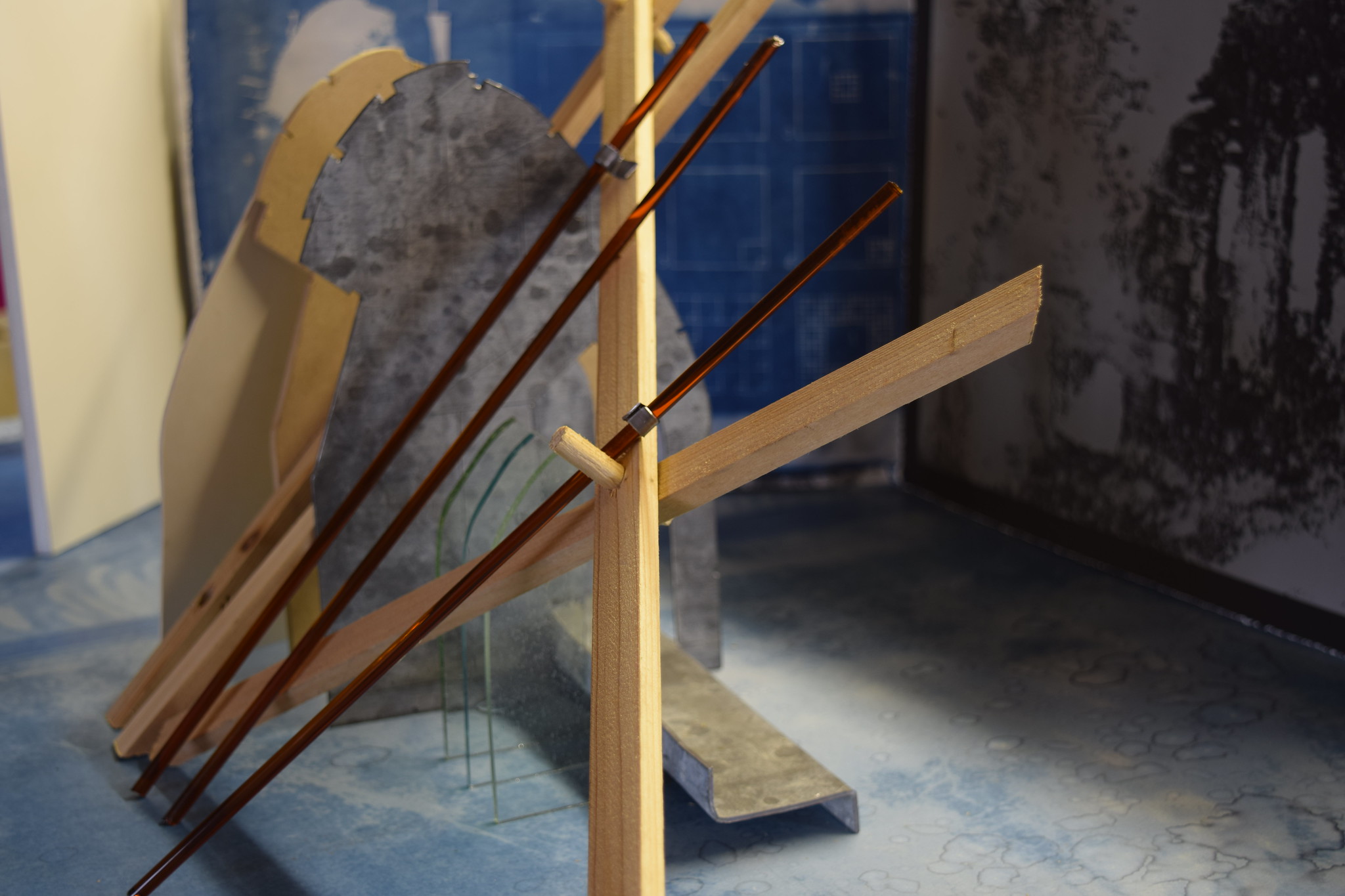
    Hyde Abbey Gatehouse and St Bart’s Church Winchester. Leylines exhibition of artist book photographs, drawings, maps and collages. Installation of archaeologist drawing frame with annotated lead labels, plumb bob, orientated to align with the speculative leyline phenomena.


    Social apparatuses and agents that explore the possibilities of space. Other Worlds : Insistent moments of mark making/subjectivity.

    Source: Visual/Spatial Vocabularies and Narratives (Livelihoods and Social Interactions)

  • Other Worlds : Insistent moments of mark making/subjectivity

     Outpost 260622

    CYANOTYPE SUN MAPPINGS

    SPAB

    Building Conservation/Casework Campaigning/Innovative Research/Immersive Training Programmes/Working Parties.

    INHABITATION, the inter-dependence of mankind within socio economic frameworks.

    SKIN, SURFACE, SUBJECTIVITY.

    Insistent moments of alienated encounter.

    Harriet Katherine Riches.

    Vernacular Concerns/Folklore/Heritage and Fabric of Buildings.

    TONALITIES

    BUILDING MATERIALS

    Site/Regional Specificity/Local Memory.

    MATTER AND MUTABILITY

    PRERSENCE AND AFFECT

    Jane Grant.

    AFFECTIVE ABSTRACTIONS

    INTERMEDIARIES

    CONSTITUENT PARTS

    SPILL

    IMMINENT REVELATION

    EXPOSURE

    NAMING THE LIGHTS

    AFTERWORD

    Garry Fabien Miller, Ian Warrell, Richard Ingleby.

    The solitary artist literally at the edge of his environment and in a state of profound meditation about our place in the wider cosmos.

    As if seeing herself from the desolate distance of a star, Woodman looks back through the alienating photographic lens of displacement and memory, her print the surface upon which she conjures an impossible moment of beautiful fusion.

    Those still involved in defining photography as an art are always trying to hold some line. But it is impossible to hold the line: any attempt to restrict photography to certain subjects or certain techniques, however fruitful these have proved to be, is bound to be challenged and to collapse.

    For it is in the very nature of photography that it be a promiscuous form of seeing, and in talented hands, an infallible medium of creation.

    ON PHOTOGRAPHY.

    Susan Sontag.

    Climate Action/Built Heritage.

    Jacqui Donnelly, Spring 2022.

    Traditional buildings are defined as those built with solid masonry walls, single-glazed timber or metal framed windows and timber-framed roofs usually clad with slate or tiles.

    One of the most effective ways of increasing the resilience of our historical structures and sites is the application of good conservation practices.

    Traditional  materials and construction techniques allow for the natural transfer of heat and moisture and relied on the thickness of the walls to cope with atmospheric moisture. It is therefore essential that all materials and finishes, including mortars, renders and plasters, used on traditional walls are vapour-permeable to allow this movement of moisture to continue.

    Proactive Maintenance

    Repair Programmes

    Upgrading through repair and adaptation.

    Mitigation

    Courses in traditional rural trades and crafts, Weald and Downland Open Museum.

    The SPAB has made sure that the project not only repairs the mill but integrates public access and education into the process.

    The scaffold design has allowed public access visits for the local community and students, offering opportunity to view the work while underway.

    Douglas fir weatherboards

    Vmzinc roof covering

    Insulating Render, Cornerstone.

    Developing a scheme that endeavours to fit a three-bedroom house into the existing footprint of the mud cottage and adjacent outbuilding,with some overspill into a new circulation space that connects the structures whilst clearly retaining the legibility of the existing modest forms.

    THE POETICS OF SPACE

    Gaston Bachelard.

    The numbers 1, 2, 3 that mark the titles of the index, whether they are in the first, second, or third position, besides having a purely ordinal value, correspond also to three thematic areas, three kinds of experience and enquiry that, in varying proportions, are present in every part of the book.

    Those marked 1 generally correspond to a visual experience, whose object is always some natural form; the text belongs to a descriptive category.

    Those marked 2 contain anthropological elements, or cultural in the broad sense; and the experience involves, besides visual data, also language, meaning, symbols. The text tends to take the form of a story.

    Those marked 3 involve more speculative experience, concerning the cosmos, time, infinity, the relationship between the self and the world, the dimensions of the mind. From the confines of description and narrative we move into the area of meditation.

    Italo Calvino, Mr Palomar.

    Jonathan Crary, Techniques of the Observer.

    Adam Nicolson, Sea Room.

    Rebecca Solnit, Wanderlust. A history of Walking.


    Social apparatuses and agents that explore the possibilities of space. Other Worlds : Insistent moments of mark making/subjectivity.

    Source: Other Worlds : Insistent moments of mark making/subjectivity

  • Plastic Horizons/Strange Attractors

     Outpost 010722

    Intermediaries/Exploratory Realities.

    Constructs/Apparatuses.

    Elastic Horizons/Schisms

    Space-Time Manifolds

    Heuristic Devices/Poetic Ideas

    Strange Attractors/Drawings/Diagrams

    Architectures that embody philosophy, through limited concepts that work with the contingent and the uncertain.

    Light has a new prolific dimension today as a means of measurement and communication.

    Light that is not seen with the eyes can be felt.

    Light’s psychological effects can lead to extremes of feeling with direct repercussions.

    The revelations of new spaces, like interwoven languages, dissolve and reappear in light. In magnificent spaces, light changes and appears to describe form.

    An eclipse of white clarity suddenly gives way to a pulse with colour; light is contingent, its shadows intermittent.

    In the mist of the metropolis at night, space dissolves before our eyes, only to take shape again within seconds.

    The spatial depth of the urban field cannot be objectified precisely. In its pulse the polarised position of our body and its perceptions are upset.

    If we explore spatial depth, then we can consider how objects appear correct or inverted. During our thought-experiments regarding space, especially space beyond the earthbound (Event Horizon, black hole) we accept new spatial levels and by the force of our imaginations, alter the known spatial levels of previous human existence.

    Horizon with aurora borealis.

    A horizon is not only an optical condition but also a spinning moment in space-time.

    In this sense, the earth is not the ground.

    As things continue to float, they spin and accelerate creating subtle centrifugal forces.

    We are organic beings.

    All of our objective relations begin from the inside out.

    We  must form an extended comprehension of space and time at the scale of astronomical events while not losing the perspective of the microscopic.

    Parallax, Steven Holl.

    Prototyping For Architects, Mark Burry, Jane Burry.

    Why it does not have to be in focus, Jackie Higgins.

    Studio Painting/Constituent Parts.

    Matter and Affect

    Presence and Mutability

    Affective Abstractions

    Robert Ryman

    Shifting perceptions into immersions within a sensate world.

    Japanese Minimalism

    Exploratory Diagrams

    Spatial Forms/Horizons

    Building as a body, a battleground of invisible forces. The spine is the central elevator.

    The structure is a tube of concrete covered with insulation and tarred black wood boards.

    Knut Hamsun Museum, Hamaroy, Norway.

    Works on Paper and Cloth, visible fixings, securely situated to the wall space.

    Architectural Panels/Painting Surfaces.

    Soundproofing social noise

    The solitary artist literally at the edge of his environment, in a state of profound meditation about our place in the wider cosmos.

    We are no longer on the outside as an objective, dispassionate observer, but are now part of the journey and perhaps more subtly part of a ceaseless life-giving cycle.

    When we are at the beginning of a journey we, like Odysseus, contemplate a character (or concept) that does not yet exist. Absence and loss precede the appearance of an abstract driving force.

    Chaos, confusion, and implosion of information bound up in rules, constraints, and limited means precede every architectural challenge. Once the imagined concept takes hold, its correctness is tested in the way it can work in different modes, from program to light, to space and to material.

    The journey from the abstract to the concrete is a metamorphosis from a poetic idea with an exploratory diagram, a coherent purpose to form.

    Mattering/Metaphor

    Dartmoor/Water

    Stream of thought, cascades of neural activity in your mind.

    Imprints of the natural environment, explorations of matter and light, self and other.

    Works that seem caught between this world and evoking a place that is otherworldly.

    She works outdoors using the nocturnal landscape as a darkroom.

    On The Presentness Of Photography, Craigie Horsfield.

    For Horsfield, by separating the act of taking the image from that of printing it, he believes he draws attention to the ‘pastness’ of the photograph, which is what the picture depicts, its subject and what he calls the ‘presentness’ which is how the photograph exists through its surface, its matter, and the physical object.

    The instant of the moment is also a past reality.

    Slow History/Slow Time on the presentness of things and their complicated relationships to time.

    Tactile Light/Casting Images.

    Pliny/Butades, tracing an outline of a shadow onto a wall.

    Christopher Bucklow has devised a process to depict figures composed of myriad pinhole photographs of the sun. He dispenses with the negative by casting images directly into photograms.

    She, is rendered not as a shadow but manifested as a radiant, luminous being.

    They flesh themselves in the astral remnants of dilated starlight.

    Skin

    Surface

    Subjectivity

    The composed image is given an apparent physicality, its surface should be constituted by and of  place and time, it should be vulnerable, porous to impressions like skin.

    Physical Forms

    Landscape

    Free Movement

    Cone of Vision/Refraction Diagram

    Parallax

    Elastic Horizons

    Science remains essentially mysterious, yet our daily scientific and phenomenal experiences shape our lives; experience sets a new frame from which we interpret what we perceive.


    Social apparatuses and agents that explore the possibilities of space. Other Worlds : Insistent moments of mark making/subjectivity.

    Source: Plastic Horizons/Strange Attractors

  • Tentative Building Profiles : Speculative landing sites of surface, image and texts.


    Tentative Building Profiles : Speculative landing sites of surface, image and texts. 

    5

    Procedural Architecture

    Start by thinking of architecture as a tentative constructing toward a holding in place. Architecture’s holding in place occurs within and as part of a prevailing atmospheric condition that others routinely call biosphere but which we, feeling the need to stress its dynamic nature, have renamed bioscleave.

    Architectural Body

    Madeline Gins and Arakawa

    Working Notes/Holding in Place

    Wayfinding/Movements through accumulated research

    Running scripts, enactments, instances, involvements

    Collaborative texts, complexity, emergent, discursive

    From The Bookcase to The Field Table : Landing Sites of Inquiry

    Camouflage

    Neil Leach

    For Benjamin, the twentieth century is an age of alienation. Human beings are no longer ‘cocooned’ within their dwelling spaces. Architectural spaces are no longer reflections of the human spirit. Something has been lost.

    Mimesis, 19.

    New Concepts of Architecture

    Existence, Space and Architecture

    Christian Norberg-Schulz

    A child ‘concretizes’ its existential space.

    A Philosophy of Emptiness

    Gay Watson

    Artistic Emptiness

    Everything flows, nothing remains.

    Heraclitus

    Rethinking Architecture

    Neil Leach

    Figure 1, Sketch by Jacques Derrida for Choral Work project. 343

    Foucault, Figure 2 Bentham’s Panopticon (1791). 360

    Page laid in, The Atrocity Exhibition by J. G. Ballard, new revised edition,annotations, commentary, illustrations and photos.

    Tracing Eisaenman

    Plenum, juxtaposed to form/haptic values/body absences

    Robert Mangold

    Between moments of ‘meaning’ lie spaces or blanks of immediate experience. Such blanks are actuality. Usually the blank, the actuality, goes unnoticed because it works so efficiently to differentiate one meaningful event from another. Kubler discussed this in The Shape of Time.

    Interactions of the Abstract Body

    Josiah McElheny

    Object Lesson/Heuristic Device

    The term ‘heuristic’ is understood here to denote a method of addressing and solving problems that draws not on logic but on experience, learning and testing. In this regard stories and fictional narratives can be heuristic devices in acting as ideal models that are not to be emulated but which help to situate characters, actions and objects.

    Space Between People

    Degrees of virtualization

    Mario Gerosa

    Adaptive Architectural Design

    Device-Apparatus

    Place

    Function

    Adaptation

    The second phase of project activity acknowledges that the proposal involves two sites; the landscape of settlement and the artifice of the factory. The design is intended to be a reflection of the conditions of each, so there was a need to work directly with the manufacturing process, at full scale, as early as possible. This would provide an immediate counterpoint to the earlier representations and a necessary part of exploring the manufacturing medium in the context of architectural design. 69

    Building The Drawing

    The Illegal Architect

    Immaterial Architecture

    Mark Cousins suggests that the discipline of architecture is weak because it involves not just objects but relations between subjects and objects. And if the discipline of architecture is weak, then so, too, is the practice of architects. Architecture must be immaterial and spatially porous, as well as solid and stable where necessary, and so should be the practice of architects.

    Jonathan Hill

    Index of immaterial architectures

    Herzog and De Meuron

    Natural History

    Exhibiting Herzog and De Meuron

    We are not out to fill the exhibition space in the usual manner and to adorn it with records of our architectonic work. Exhibitions of that kind just bore us, since their didactic value would be conveying false information regarding our architecture. People imagine that they can follow the process, from the sketch to the final, photographed work, but in reality nothing has really been understood, all that has happened is that records of an architectural reality have been added together.

    My studio is a piece of architecture that is silent. The things of which it is made say all and at the same time nothing. Its strength lies in its demanding silence. A stern silence in order to permit works to occur. I imagine that a painting by Newman could be hung there.

    The arrival of Beuys in a world that was gradually falling asleep amidst minimalism generated a kind of confusion that was truly excellent for opening up the mind. Comfort vanished, driven away by subversive complexity.

    Speculative architecture

    On the aesthetics of Herzog and De Meuron

    Without opposition nothing is revealed,

    no image appears in a clear mirror

    if one side is not darkened

    Jacob Bohme, De tribus principii (1619)

    Reflections on a photographic medium

    Memorial to the Unknown Photographer

    Thomas Ruff’s Newspaper Photos

    Valeria Liebermann

    Working Collages

    Karl Blossfeldt

    Anti Object

    We are composed of matter and live in the midst of matter. Our objective should not be to renounce matter, but to search for a form of matter other than objects. What that form is called architecture, gardens, technology is not important.

    Kengo Kuma


    Social apparatuses and agents that explore the possibilities of space. Other Worlds : Insistent moments of mark making/subjectivity.

    Source: Tentative Building Profiles : Speculative landing sites of surface, image and texts.

  • DSC_7317 Reading : Slow Philosophy/Ecology of Material Thinking

    Orange School Graph Books

    Harleston 2020-2021

    A Species of Spaces

    The Social Turn

    Museum Site and Display

    Political Philosophy

    Makers work in a world that does not stand still

    Iteration allows for continual correction (material conversation) in response to an ongoing perceptual monitoring of the task as it unfolds, mixing the potential for blending or combining matter that already exists into new combinations

    Tim Ingold 2010

    The social life of making

    Making speaks in vivid dialogue with two associated themes, material and skill

    Creativity involves not merely a spark of innovation or the execution of artistic inspiration. But the capacity to respond to unfolding iterations with materials. To use slowly accrued haptic knowledge to manipulate processes on the fly, and to judge how to counteract error and seize opportunities as they evolve

    Making becomes a process of iteration, and a maker works with this iteration prolifically

    Matter and materials are lively and require attention, materials continue to thwart in unpredictable ways, decaying and breaking down or wearing or breaking under force

    Vibrant Matter, A Political Ecology of Things

    Jane Bennett 2010

    Attending to the process of making opens up prospects for following the lead of the material, where the properties of the materials themselves shape the direction in which making proceeds

    Tim Ingold 2010

    New Urban Adventures in Collaboration/Conceptual Ceramics

    Ceramic Practice as a form of research engaged in a process/ecology of inquiry, an exploration of ideas predicated on and exploiting the characteristics of clay

    The transformation of the material is a central concern and semiotic significance unfolds with making

    Seeking a symbiotic relationship between idea and object

    Materials are substances in becoming

    Karen Barad

    Towards an Ecology of Materials

    Tim Ingold 2012

    From the ‘objectness’ of things to the material flows and formative processes wherein they come into being. It means to think of making as a process of growth or ontogenesis


    Materials-Centered Perspective

    Making, almost defies precise definition

    The composition and/or manipulation of materials that bring into being new or revised objects

    Tim Ingold 2010

    Cultures of thrift and scavenging, maintenance and repair

    Making encompasses the ingenuity of fluid, locally situated and adapted technologies

    Materials carry on overtaking the formal destinations that, at one time or another, have been assigned to them

    Sensibilities and dispositions that are centred on a deep and considered relationship with materials

    The Craftsman, Richard Sennett 2008

    Crafting, often reconnects mind and body in the sites and processes of production, thereby potentially reconstituting labour processes in ways that ascribe agency to workers

    Makers finding ways to resist norms of gender and neoliberal entrepreneurial subjectivities, finding ways and spaces for ethical practice to predominate

    Contemporary conceptual ceramics operates at the permeable boundary between art and craft, partaking of aspects of both, and ultimately demonstrating (or performing) that permeability

    The emergence of the museum as proactive laboratory of social evolution

    Extradisciplinary Investigations/Operative Principle

    At work here is a new tropism and a new sort of reflexivity, involving artists as well as theorists and activists in a passage beyond the limits traditionally assigned to their practice

    Microtopias, small contained sites of functioning democracy

    Tropism conveys the desire or need to turn towards something else, towards an exterior field or discipline

    The New Institutional Practice

    Projective Enterprises (should unsettle, activate, and raise questions)

    The exhibitions to emerge through new institutionalism are considered as points of exchange and collision, made through intersections of social, economic and political relations, it follows that the predominant forms of artistic practice included are the social, the spatial, the interdisciplinary

    So our understanding of site has shifted from a fixed , physical location to somewhere or something constituted through social-economic-cultural and political processes

    Site-Specific Art and Locational Identity

    Miwon Kwon 2002

    Collaborations and its Discontents

    Claire Bishop 2006

    The motivating factors for participatory projects is its critiquing of the essentialising of site and community in context-specific activities/exhibitions

    A complex environment, awash in affect and subjectivity

    When subjective and analytic processes mesh together to form a new productive and political ‘contexts’ of communicational labour

    New curatorial initiatives must unpack the terminologies we use to distinguish one project from another

    A playful psychogeographical situation, that resists the representative, illustrative and thematic narratives

    Unsettling-Complicit

    Provocative-Strategic

    Interventionist-Collaborative

    Perforative Curating/Prescribed Participation

    Creating new/more coded patterns of behavior/conventions/role play for visitor’s

    New Institionalism and the Exhibition As Situation/Social Experiment

    Claire Doherty 2006

    Participation

    In which people constitute the central artistic medium and material

    In the manner of theatre and performance

    Participatory art is both a social activity and a symbolic one, as it is both embedded in the world and at one, remove from it

    The artist is conceived less as an individual producer of discrete objects, than as a collaborator and producer of situations

    The contemporary artwork is finite, portable, commodifiable product, and is reconceived as an ongoing or long term project with an unclear beginning and end

    Artists are more interested in the creative rewards of participation as a politicised working process, than the relational aesthetic which renders discursive and dialogic projects more amenable to museums and galleries

    Artificial Hells (exposing the political and aesthetic limitations in the work)

    Participatory Art and the Politics of Spectatorship

    Claire Bishop 2011

    Site-Specificity/Spatial Practice

    The distinguishing characteristic of today’s site-oriented art is the way in which both the art work’s relationship to the actuality of a location (as site) and the social conditions of the institutional frame (as site) are subordinated to a discursively determined site that is delineated as a field of knowledge, intellectual exchange or cultural debate

    Miwon Kwon 1997

    Whilst temporary exhibitions can expand the scope of medium-specific discourse, they can also impose alternative, but equally restrictive frames

    Participation, creating a bridge between socially engaged practice and the permanent collection

    Expressing itself expressing

    Creating a conceptual and linguistic dexterity between absolutes, certainties, definitions

    Dissolving the intellectual relevance, with its symbiotic relationship with utility to create ‘vessels’ beyond art and artifact

    The strategy of making artworks as response

    The Ceramic Object, by means of preservation and display becomes a vehicle/vessel for a social and historical narrative/entanglement/engagement

    Making vessels, beyond the examining and intellectually impoverished questions

    A vessel is identified as such by its physical disposition, giving shape to the contents and clarifying what is inside and what is outside

    Few boundaries are impenetrable

    They are rather, semi-permeable membranes providing housing while allowing selective commerce

    Like the vessel, the house shapes and nurtures the life contained inside

    The Factory I build in the Tate is a place to discuss the transactions and transformations of Labour that Create Knowledge and Community

    In the Factory we will examine skills and how we form Exchanges at Work , with ourselves and with others

    Clare Twomey, Lead artist at Tate Exchange 2017

    Post Studio Ceramics

    Interfaces between Making-Makers-Museums

    Exploring object engagement beyond the known historical models of clay practice

    ‘Generate’ Historical Material and Spatial Relations as they interacted with the work, and reflected on the role of the Museum/Hospital

    Clare Twomey

    Ceramics In The Environment

    An International Review

    Janet Mansfield 2005

    With Fire, Richard Hirsch

    A Life Between Chance and Design (invites the unknown)

    Scott Meyer 2012

    Hirsch takes us to the heart of the interface between ageless earth and the spare evidence of the rhythm of human utility

    Raku as an Ideology

    Breath-Energy-Immanence

    Raku, A Review of Contemporary Work

    Tim Andrews 1994

    The Poetry of The Vessel

    A calm invitation to thought and imagination

    Chris Tyler

    The vessel (making, thinking, subject) as both a historically grounded form, and a vehicle to examine abstract aspects of the physical body and the natural world

    Arte Povera/Germano Celant, an aesthetic-philosophical movement

    An eclectic synthesis of knowledge fields, that emerges into a total space where disparate categories can meet; a art that asks only for the essential information, that refuses the dialogue with the social and cultural system, and aspires to present itself as something sudden and unforeseen


    Social apparatuses and agents that explore the possibilities of space. Other Worlds : Insistent moments of mark making/subjectivity.

    Source: DSC_7317 Reading : Slow Philosophy/Ecology of Material Thinking

  • DSC_6111 Spatial Drawing/Speculative Site

     BOUNDARIES AND JUNCTION POINTS

    Lefebvre, The Production of Space.

    Lefebvre in his chapter on Spatial Architectonics makes reference to the relationships established by boundaries and the relationship between boundaries and named places. These relationships promote significant and specific conditions or features to a space. This in turn results in various kinds of space. Lefebvre states that “every social space, then, once duly demarcated and oriented, implies a superimposition of certain relations upon networks of named places.”1

    It is this superimposition of space that can within it demarcate other thresholds of experiences, within an existing demarcated space that interests me.

    The act of “blocking in “ the dimensions of another space onto the floor of another create a temporal junction between a host space and a site within this host, a guest. This sets-up the notion of a temporal double occupancy held by the demarcation of a boundary and a site of proposal. This basic and temporal site marking could be said to have affinity towards some sort of anthropological marking, a territory. (Lefebvre defines anthropological marking as being at the stage when demarcation and orientation begin to create place and its social reality in archaic cultures)2. This activity also has associations with nomadic and agricultural-pastoral societies as they use paths and routes as spatio- temporal markers or determinants.

    Lefebvre acknowledges that geographical space created through the body, through routes which were inscribed by means of simple linear markings. These first markings, paths and tracks drawn into the landscape would become the pores through “which without colliding would produce the establishment of places (localities made special for one reason or another).”3Within my practice drawing is used to form sites which contain visual information, evidence of temporal activities and traces of actual objects. These territories within other territories create fields from with boundaries form material relations, differences. My drawings are inside the temporality of site I have instigated and yet they propose a territory and a surface of light years which could accommodate the temporality of terrestrial space.

    Interestingly Lefebvre comments “there is no stage at which ’’man” does not demarcate, beacon or sign his space, leaving traces that are both symbolic and practical.”4

    1 Lefebvre, The Production of Space, (London: Blackwell, 1991) page 193.

    2 Ibid.,page 192.

    3 Ibid.,page 192.

    4 Ibid.,page 192.


    Social apparatuses and agents that explore the possibilities of space. Other Worlds : Insistent moments of mark making/subjectivity.

    Source: DSC_6111 Spatial Drawing/Speculative Site