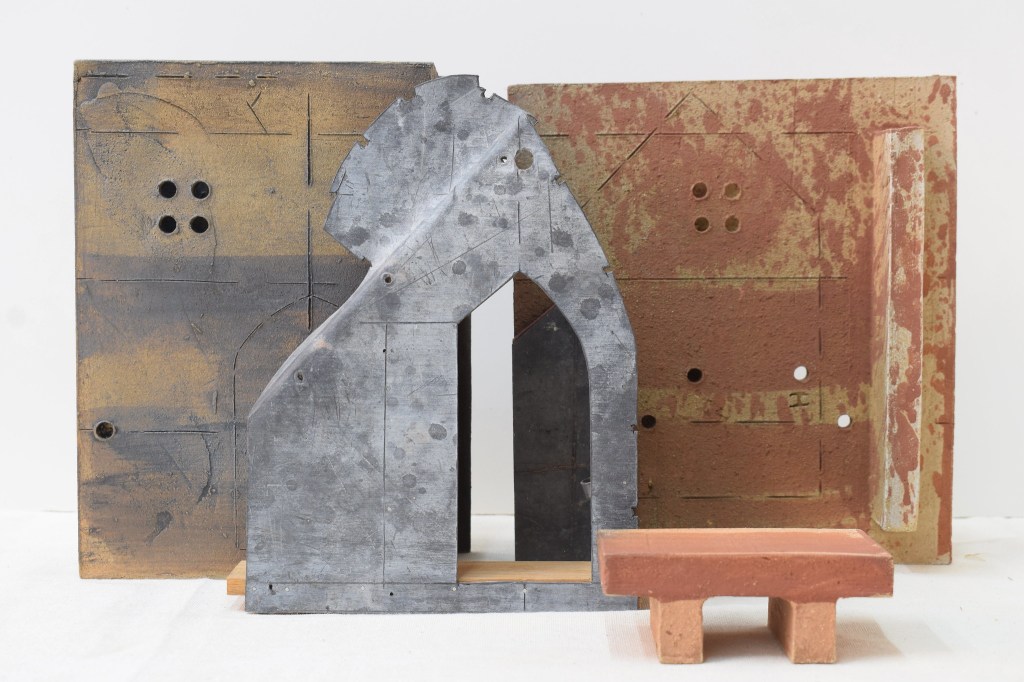
Composite assemblages developed around spaces, interiority and aesthetics.
The refuge is not simply an enclosure. It is a material threshold between exposure and protection, where the body encounters the weight, resistance and permeability of its surroundings.
Year
2024
Medium
Ceramic, Lead, Wood.
Size
190mmL x 230mmH x 80mmW 220mmL x 230mmH x 100mmW
Category
Interiority / Atmosphere
This is one of the clearest examples of that category. The post gathers spaces, interiority, aesthetics, refuge, reverie, vessel, architecture and the sensate experience of being within space. It also returns directly to your earlier thinking around Bachelard, vessel, inside/outside and “defined air.”
Re-reading / 2026 — The refuge imagined through Bachelard begins to surface materially through the vessel, where interiority is no longer contained within architecture but produced through relations between body, matter, atmosphere and place.
The refuge is not simply an enclosure. It is a material threshold between exposure and protection, where the body encounters the weight, resistance and permeability of its surroundings.
Lead shields the body; the aperture exposes it. Between them, interiority becomes a spatial accord.
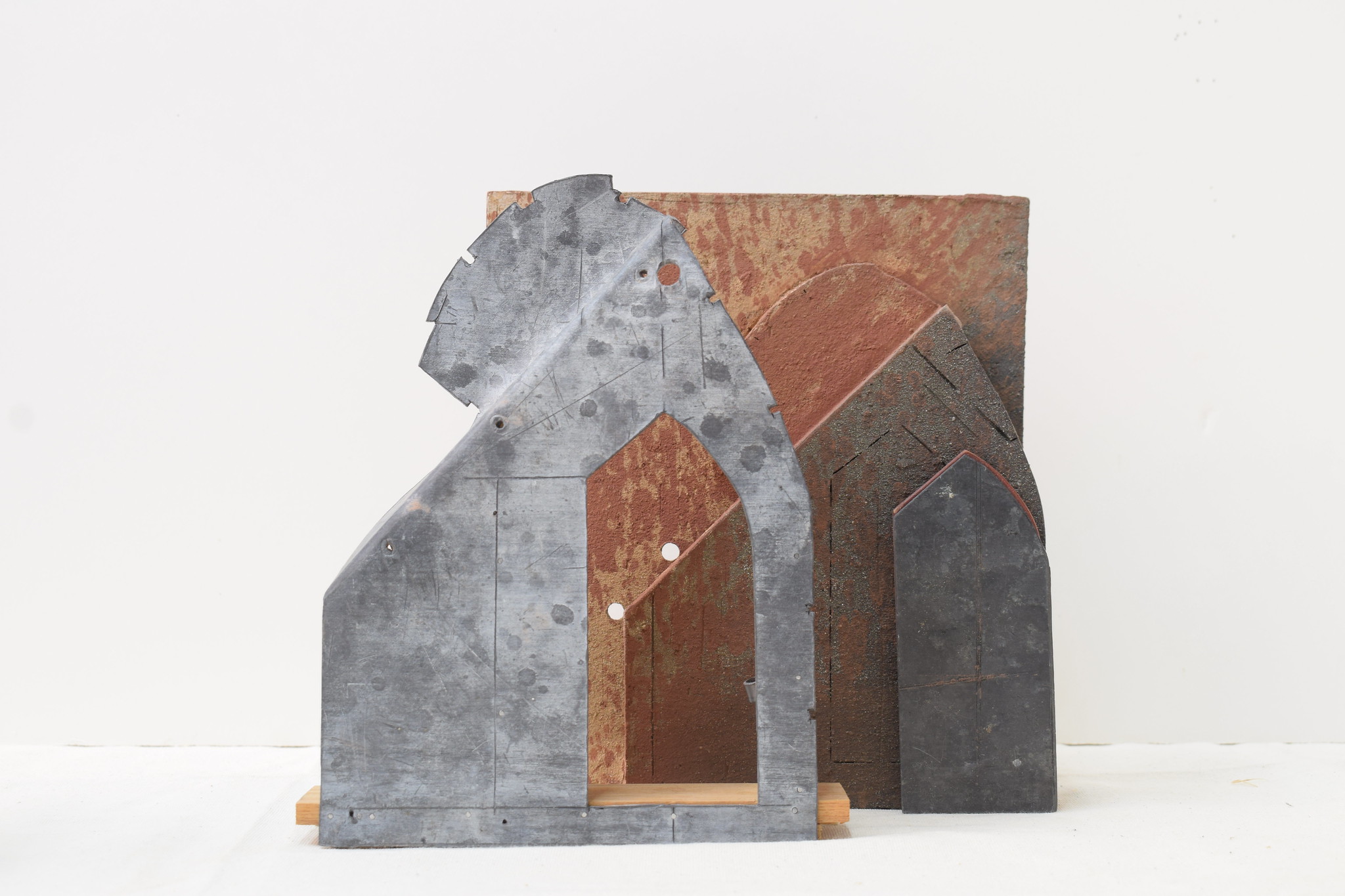
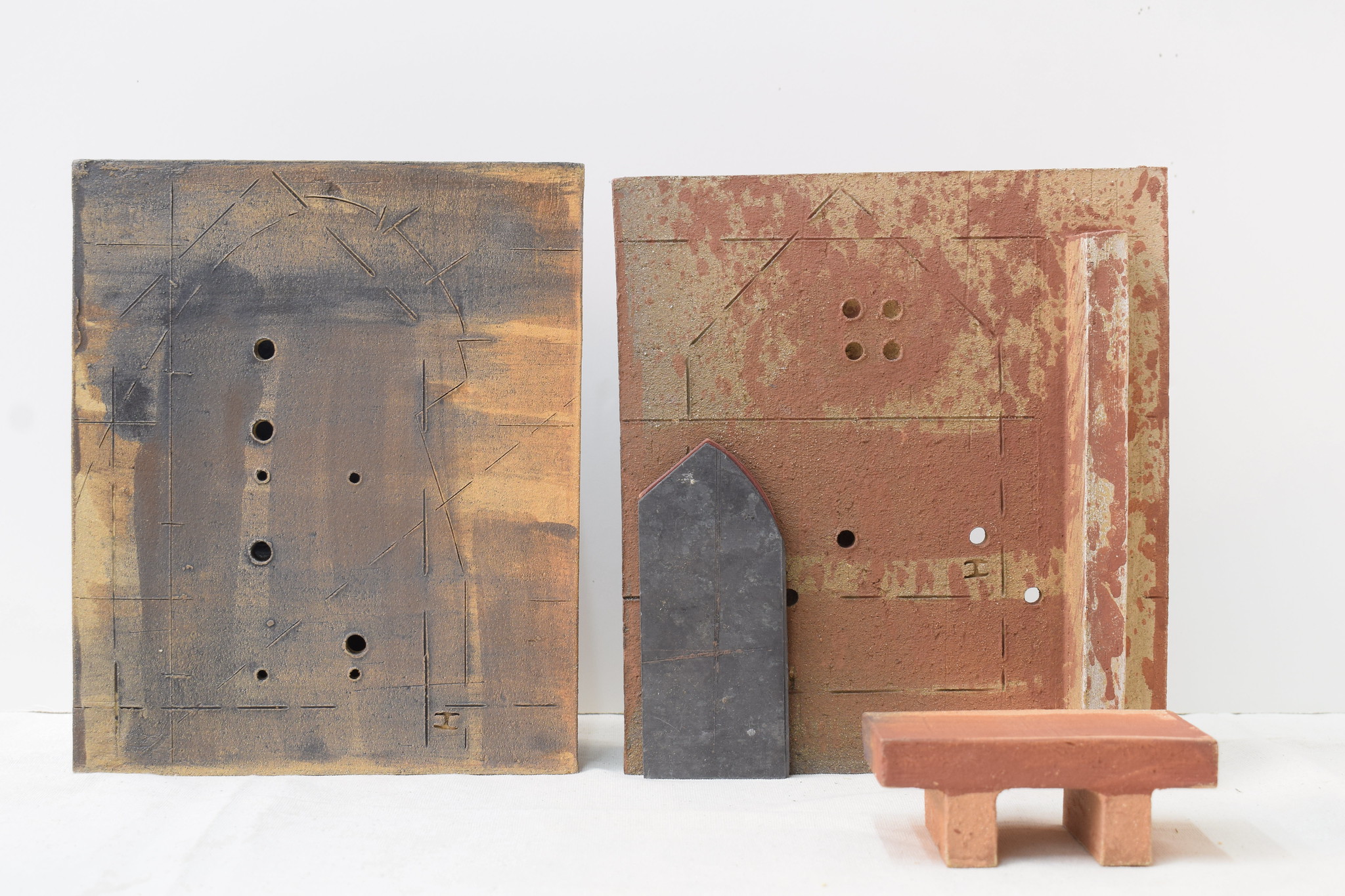
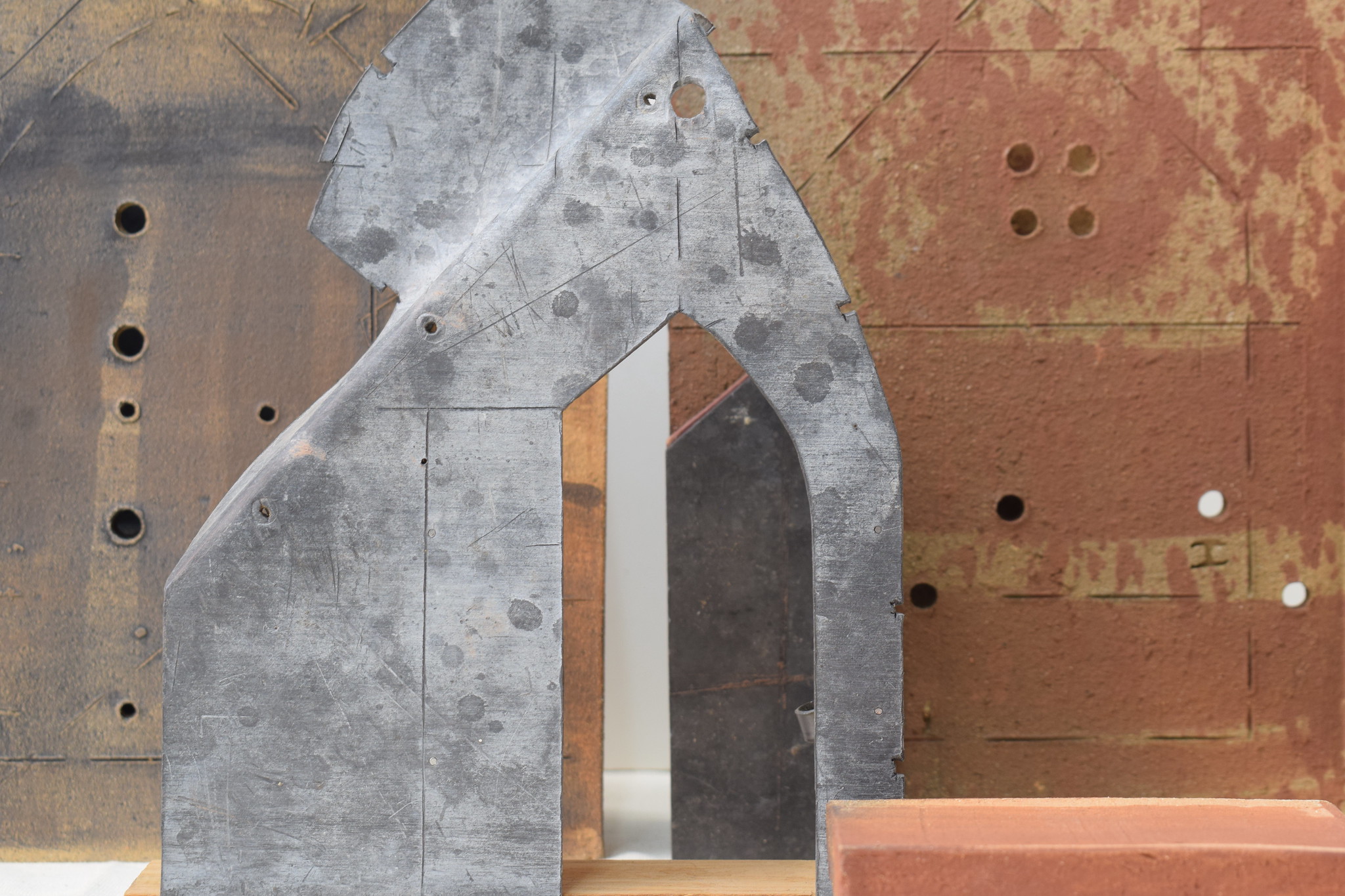
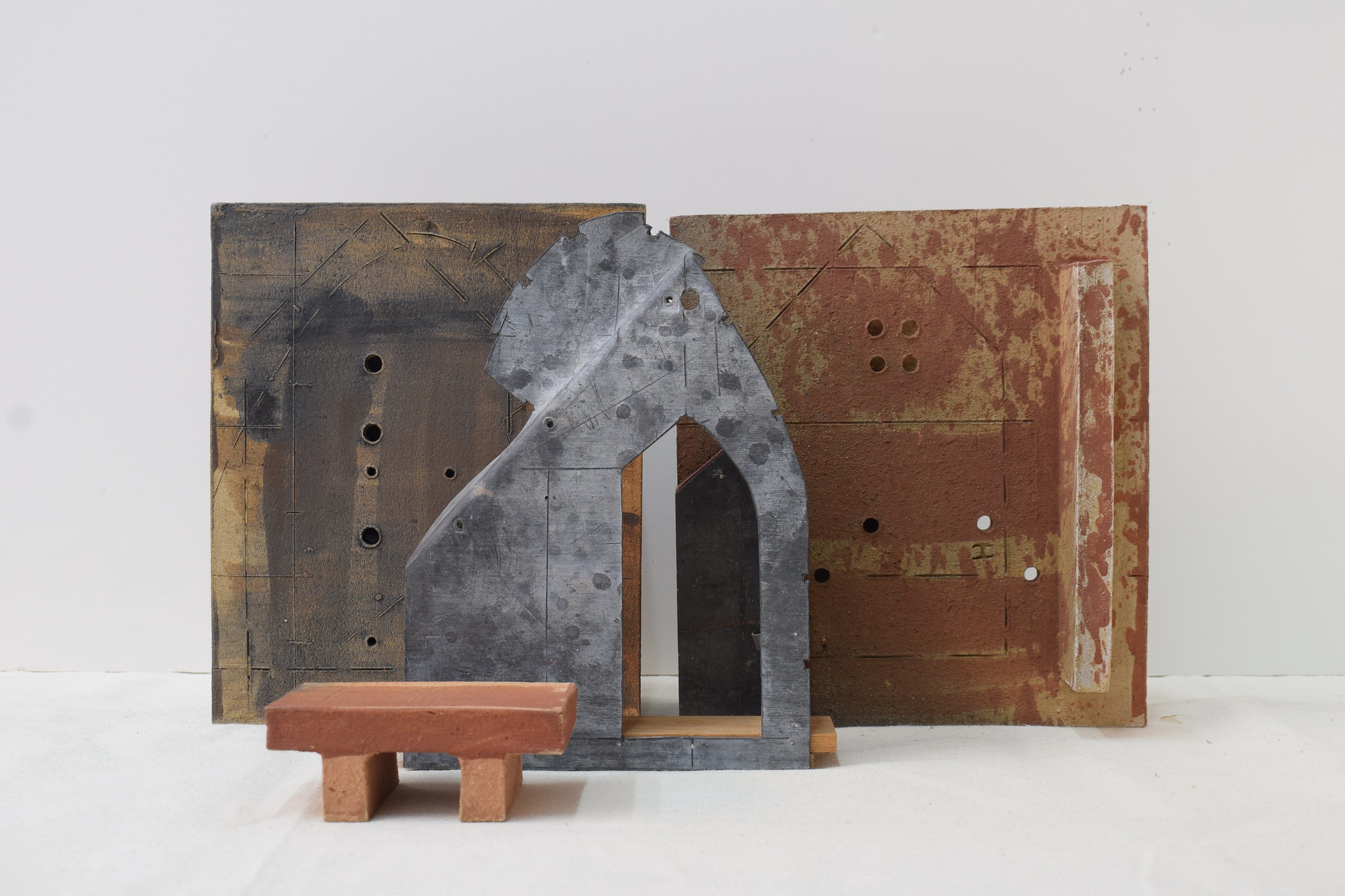
Lead changes the spatial accord quite profoundly. It introduces a material register that isn’t simply another material in the work, but one that carries unusually strong associations with the body, protection, weight, toxicity, inscription, shielding, conductivity and vulnerability.
That makes the relationship between Bachelard Readings and Water at Hungate more interesting. The accord isn’t only between refuge and dwelling, or interiority and architecture. It is also between materials and bodies.
Lead has an almost paradoxical spatial behaviour. It can be:
protective — a shielding material, creating a boundary between bodies and forces;
heavy — giving spatial situations a bodily sense of weight and gravity;
soft — unusually malleable, capable of receiving pressure and imprint;
cold / tactile — its surface has an immediate bodily register;
toxic — protection and danger are held together;
opaque — unlike the aperture, it refuses passage;
inscriptive — it can register contact, pressure, touch and duration.
So alongside the ceramic hole, which opens, lead introduces a material that closes, shields and withdraws.
That gives us a really productive polarity:
puncture ~ shielding
aperture ~ opacity
exposure ~ protection
permeability ~ resistance
light ~ weight
interior ~ enclosure
And these aren’t oppositions that need resolving. They are spatial relations held in tension.
Lead and the body
Water at Hungate. 2023
Hungate Architectural Explorations.
Air/Place/Breath/Light/Architecture/Ritual/Social Space
Cell-Court-Domain.
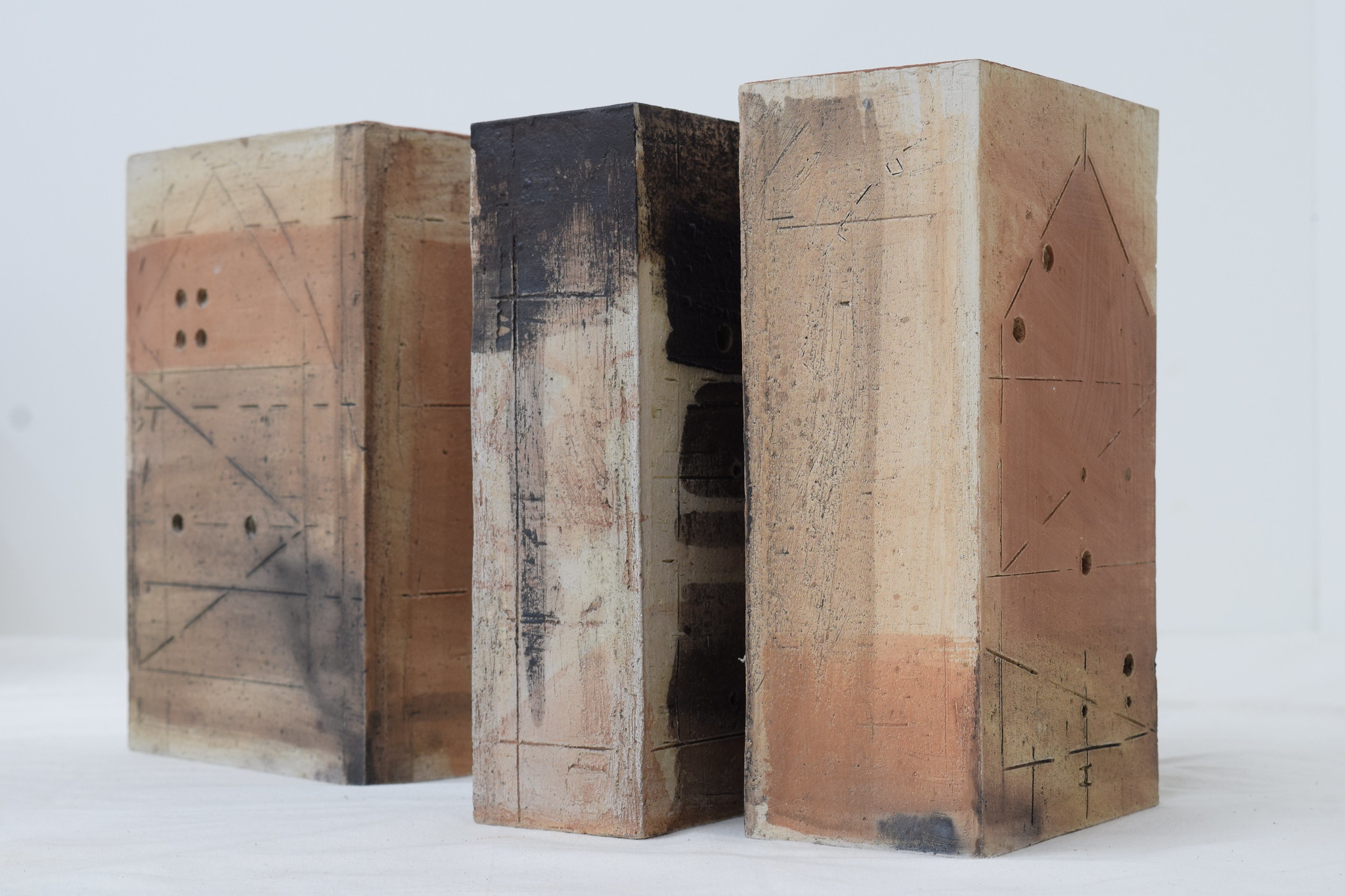
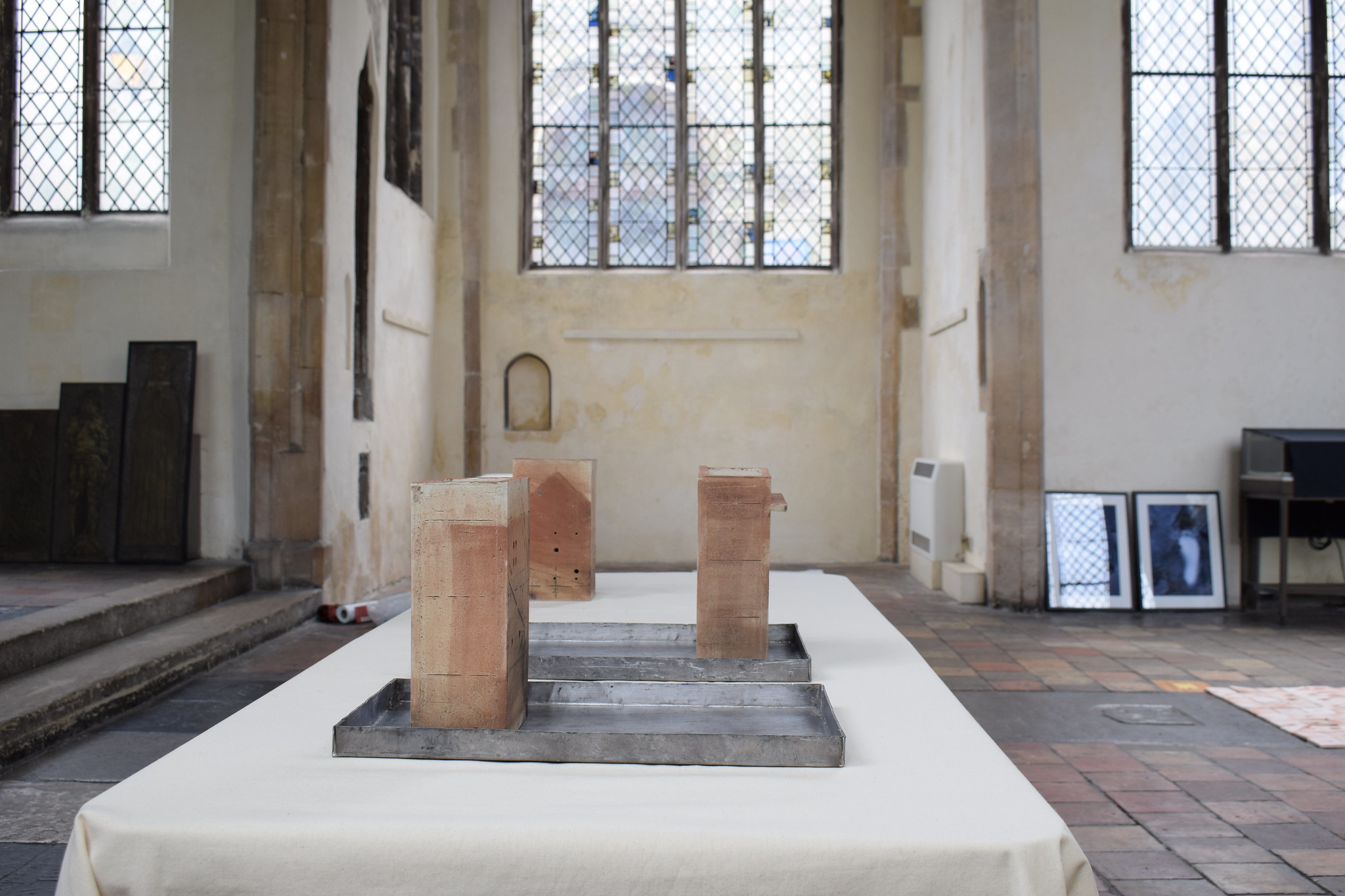
Hungate Vessels, Architectural Explorations, 2023, Ceramic, 165mmW x 250mmH x 90mmD.
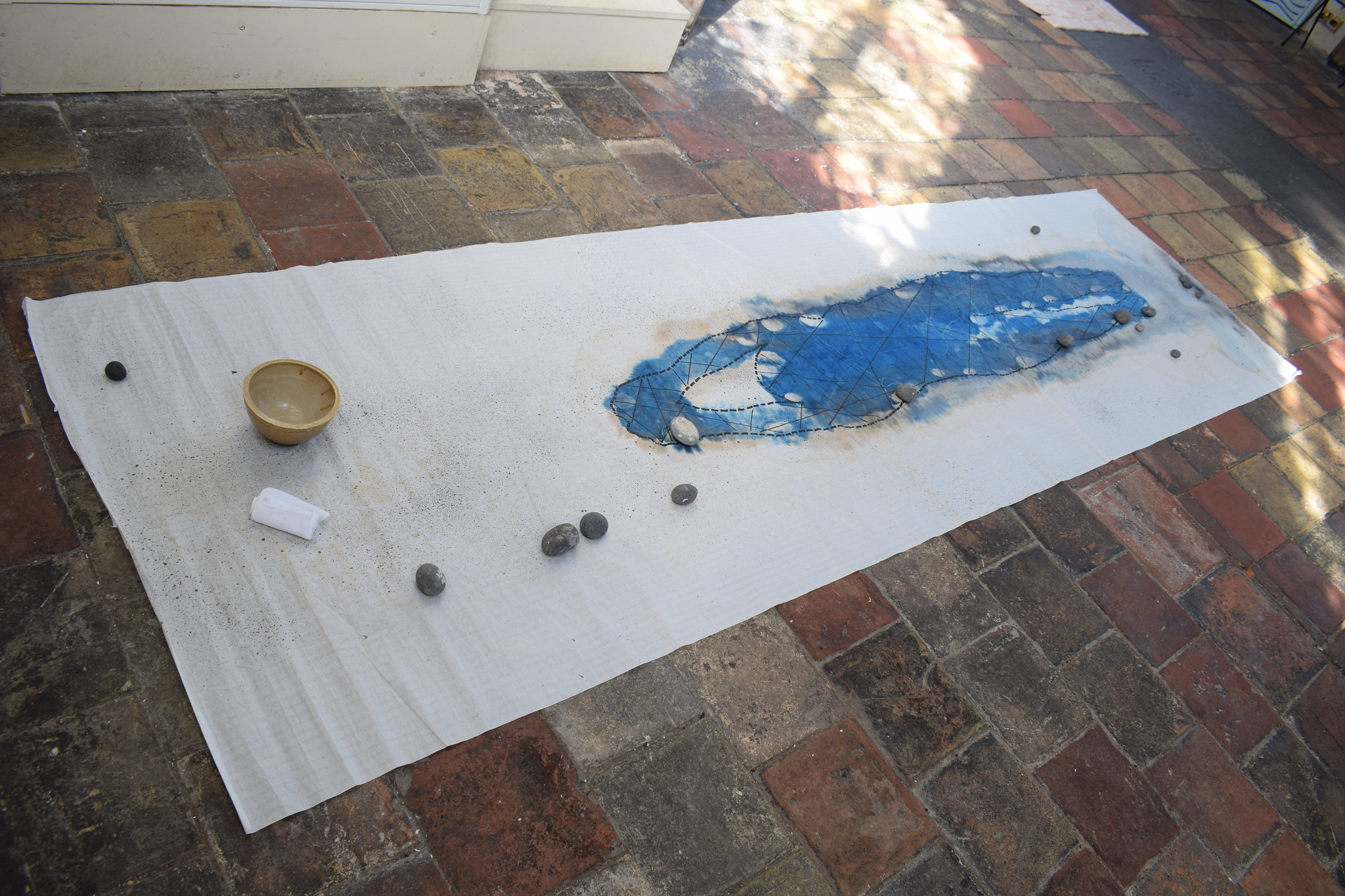
Russell Moreton is a visual artist interested in gathering research and responding to the historical site of St Peter, Hungate. He has explored the exhibition theme ‘Water’ as both a spiritual and corporeal inquiry for site-specific artworks. He has spent time developing working ideas that have an affective resonance to the architectural setting of their presentation. His use of slab built ceramics vessels echo the stillness and muted silence experienced within the medieval fabric of the Hungate. He has used a figural drawing on Chinese paper, processed by the evident passage of water to explore the representation of the human form in this particular place.
Anarchival Correspondence.
The interesting thing is that Bachelard Readings appears to provide a conceptual vocabulary for something that Water at Hungate later makes materially and spatially operative.
Bachelard
refuge → reverie → interiority → vessel → emptiness → defined air → inside/outside → inhabitation
Hungate
site → architecture → water → breath → light → vessel → interior → ritual → social space
So the correspondence isn’t simply:
Bachelard influenced Hungate.
That’s too linear.
I’d say something more like:
The refuge becomes a vessel; the vessel becomes a chamber; the chamber becomes a site; the site begins to breathe.
What Bachelard approaches through reverie becomes spatially and materially operative at Hungate: refuge becomes vessel, vessel becomes interior, and interior becomes a condition of relation between body, architecture, water, light and place.
That feels much closer to the nowness you’ve just been talking about.
And there is another important movement
The Bachelard post is concerned with inside / outside, but it doesn’t finally accept that division as stable. Your own text explicitly moves towards the idea that the lived experience is “more kinetic, more fluid and interchangeable.”
Then Water at Hungate seems to take that instability into the site:
inside ↔ outside
architecture ↔ atmosphere
water ↔ body
vessel ↔ space
site ↔ place
object ↔ environment
The ceramic vessel becomes the intercessor.
It doesn’t merely sit inside the architecture. It allows architectural, corporeal and atmospheric relations to gather around it.
The Bachelard post gives us refuge as interiority.
Hungate gives us interiority becoming site.
And your current ceramic work potentially gives us:
interiority → aperture → chamber → site → correspondence
That is a very strong little anarchival constellation.
Bachelard gives you the phenomenological interior.
Lead gives you a bodily material boundary.
Hungate gives you the situated architectural site.
The ceramic vessel gives you the volume in which these relations can become tangible.
And then the aperture introduces the possibility that the withdrawn interior is never entirely withdrawn.


Leave a Reply