Skip to content

Spatial Practices : Experimental drawing and alternative photography.

    • Research Material/Working Texts
    • Working Practices: Russell Moreton, visual artist.
      • Makers work in a world that does not stand still.
        • Russell Moreton: Visual Artist.

recent posts

  • Spatial/Diffractive Bodies Situated in Place : Matters of Fidelity and Precariousness.
  • Working Notes : Edmund de Waal : How the history of pottery and the philosophy of pottery has informed contemporary practice
  • Research~Creation
  • Dwelling Places : Raveningham Sculpture Trail.
  • Alchemy at Raveningham Sculpture Trail.

about

Visual artist working in the UK. UCA Farnham, Interior Design MA. Canterbury School of Architecture, Spatial Practices MA. University of Southampton, Visual Fine Art BA hons. Epsom School of Art and Design, Ceramics HSND.
  • Twitter
  • Facebook
  • Instagram
  • Mesh/Material/Light : Cyanotype Process/Drawing Place

    February 8, 2023

    Mesh/Material/Light : Cyanotype Process/Drawing Place

    Movements and Archaeology  : Traces and Piercings.
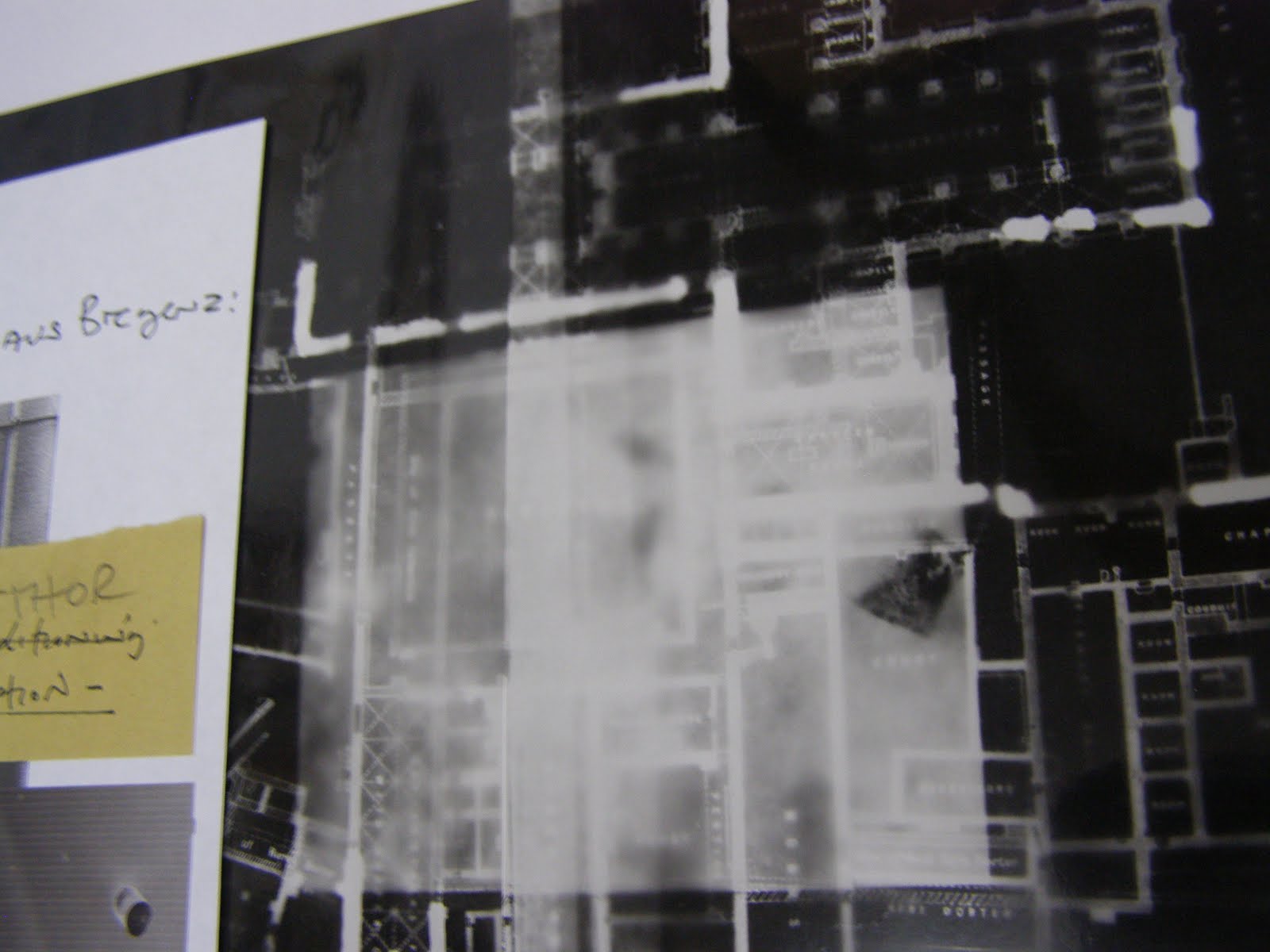
    Cyanotype photogram from Winchester Cathedral with pinholes.

    The Cathedral : Place Studies

    Pastoral Space: Material, Inquiry and Craft.

    Material Agency : Carl Knappett, Lambros Malafouris
    Visualising Environmental Agency

    “Agents are defined as persons or things, which have the ability and intention to “cause” something “in the vicinity” or “in the mileau” to happen ( Gell 1998)”
    “These latter artefacts are described with the term “index”, to remove the appellation “art” and to imply that they are indexes of agency.”
    Some Stimulating Solutions, Andrew Cochrane.

    Filament, drawing on lightweight paper.
    Chapel Arts Studios, Andover.

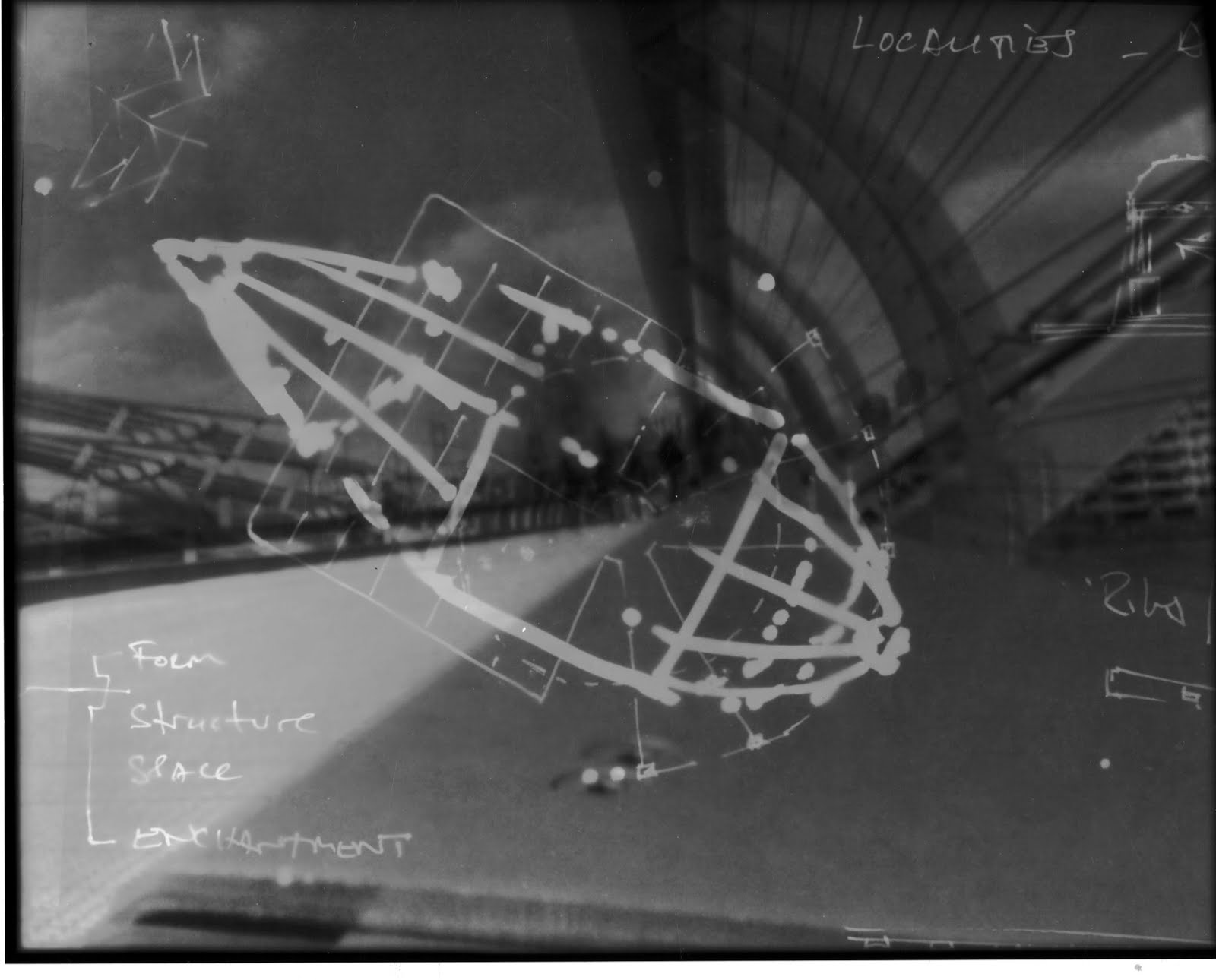
    Mesh/Material/Light, Cyanotype Process

    Remote Sensing : Medieval Structures

    Cyanotype is a photographic printing process that produces a cyan-blue print. Engineers used the process well into the 20th century as a simple and low-cost process to produce copies of drawings, referred to as blueprints. The process uses two chemicals: ammonium iron(III) citrate and potassium ferricyanide.

    The English scientist and astronomer Sir John Herschel discovered the procedure in 1842.[1] Though the process was developed by Herschel, he considered it as mainly a means of reproducing notes and diagrams, as in blueprints.[2] It was Anna Atkins who brought this to photography. She created a limited series of cyanotype books that documented ferns and other plant life from her extensive seaweed collection.[3] Atkins placed specimens directly onto coated paper, allowing the action of light to create a silhouette effect. By using this photogram process, Anna Atkins is regarded as the first female photographer.[4]

    From Wikipedia, the free encyclopedia

    Bookmark and Share
     #cyanotype, #russell moreton, agency, agents, Alfred Gell, Anna Atkins, body, indexical, sensing place, Sir John Herschel, Winchester Cathedral


    Social apparatuses and agents that explore the possibilities of space. Other Worlds : Insistent moments of mark making/subjectivity.

    Source: Mesh/Material/Light : Cyanotype Process/Drawing Place

    Share this:

    • Share on LinkedIn (Opens in new window) LinkedIn
    • Share on Tumblr (Opens in new window) Tumblr
    • Share on Facebook (Opens in new window) Facebook
    • Share on AddToAny (Opens in new window) AddToAny
    • More
    • Email a link to a friend (Opens in new window) Email
    • Print (Opens in new window) Print
    • Share on X (Opens in new window) X
    • Share on Pinterest (Opens in new window) Pinterest
    Like Loading…
  • Processual Drawing : Bioscleave/Blue Particle Cloud/Diagram.

    February 8, 2023

    Processual Drawing : Bioscleave/Blue Particle Cloud/Diagram.


    ARCHITECTURAL Body
    An ORGANISM that PERSONS
    Gins and Arakawa 2002
    Although the human condition is a crisis condition if ever there was one, few individuals and societies act with the dispatch a state of emergency requires. The fact that the human condition is a crises condition gets routinely covered up, with culture invariably functioning to obscure how dire the condition is and to float it as bearable
    If organisms form themselves as persons by uptaking the environment, then they involve not only bodies but domains, spheres of activity and influence
    Start by thinking of architecture as a tentative constructing toward a holding in place. Architecture’s holding in place occurs within and as part of a prevailing atmospheric condition that others routinely call biosphere but which we, feeling the need to stress its dynamic nature, have renamed bioscleave
    Procedural Architure/Architectural Body
    Gins and Arakawa
    The role of architecture as a tool for researching the body-environment towards the implementation of these considerations is paramount
    The goal of an experimental teaching and learning space based on architectural procedures would be that the process of design and construction would allow students/staff to rethink, re-imagine and enact the curriculum
    An Arakawa and Gins Experimental Teaching Space/A Feasibility Study 2013
    Jondi Keane
    An Architecture of Viability
    To help to sustain one throughout life/ to stay tentative
    Bioscleave House as an inter-active laboratory of everyday life
    Wayfinding (unpacking discourse/meaning) through Landing Sites and Architectural Bodies
    What is the metachallenge that bioscleave demands of us? Is it, I propose, wayfinding, a wayfinding defined at many scales from finding one’s way as a person to finding one’s way in a strange physical or social environment
    Exploring the Roles of Trajectoriness, Affectivatoriness, and Imaging Along 2013
    Reuben M. Baron
    Figure/Ground : Double Occupations of Discourses and Events (relationships/co-existances)
    So as a diagram (performative agent), the figure/ground does not function to represent even something real. But rather constructs a real that is yet to come (theoretical object/apparatus) as a new type of reality
    Situated Field/Constructed Site of People, Institutions, Apparatuses, Events, Discourses
    We see intraventions as heuristic devices, as apparatuses that are imbued with a will to transform.
    The intravention is not autonomous but contingent and relational and dependent on many other things
    The intravention is made as it happens, and it makes us at the same time
    Immediate Architectural Interventions, Durations and Effects
    Oren Lieberman, Alberto Altes
    AEffect initiating Heuristic Life
    Procedural architecture, developed in both their written and buillt discourse, providing a process by which to connect theory to practice, disciplinary inquiry to knowledge and art to life
    Research should be conducted , not in a library or laboratory but where living happens, enabling the complexity of relationships to be studied within and across the organism-person-environment
    Jondi Keane
    Carnal Knowledge
    Towards a New Materialism through the Arts
    Estelle Barrett, Barbara Bolt
    To provide observational heuristic devices so that persons may devise transformational and reconfigurative opportunities
    Heuristic tools whether built hypothesis or discursive sequences, are of no use if they do not provide a way forward, a way of learning
    This house is a tool, a procedural one
    A functional tool, whether it be a hammer, a telephone, or a telescope, extends the senses, but a procedural tool examines and reorders the sensorium
    Interlude : Cornering a Beginning
    An object becomes the threshold for thinking feeling
    Relationscapes : Movement, Art, Philosopy
    Erin Manning
    Born into a new territory, and that territory is myself as organism. There is no place to go but here. Each organism that persons finds the new territory that is itself, and having found it, adjusts it
    Ellipsis,(gaps in everyday narratives)
    The Construction of Representation of Identity
    Using their bodies and immediate surroundings and environment as both subject and context
    An Organism-Person-Environment
    You cannot see me from where I look at myself
    Francesca Woodman
    An organism-person-environment has given birth to an organism-person-environment
    Bioscleave
    Chaos, Territory, Art
    Deleuze and the framing of the earth
    Elizabeth Grosz
    Body, Personal Relations, Spatial Values
    Upright Human Body : Space and Time
    Yi Fu Tuan
    Figuring It Out
    The Parallel Visions of Artists and Archaeologists
    Colin Renfrew
    The act of relating is analysed as a constitutive feature of human agency. Relating is viewed as the continuous work of connecting and disconnecting in a fluctuating network of existential events
    Categories and things may make it easier for us to grasp reality but they also hide its underlying complexities
    Relationality 2005
    Robert Cooper
    Bookmark and Share
    Arakawa and Gins, Bricolage, Colin Renfrew, collage, data, diagrams, Elizabeth Grosz, erasure, interior design practice, intraventions, movement, overwritten, processual drawing, russell moreton, Yi-Fu Tuan


    Social apparatuses and agents that explore the possibilities of space. Other Worlds : Insistent moments of mark making/subjectivity.

    Source: Processual Drawing : Bioscleave/Blue Particle Cloud/Diagram.

    Share this:

    • Share on LinkedIn (Opens in new window) LinkedIn
    • Share on Tumblr (Opens in new window) Tumblr
    • Share on Facebook (Opens in new window) Facebook
    • Share on AddToAny (Opens in new window) AddToAny
    • More
    • Email a link to a friend (Opens in new window) Email
    • Print (Opens in new window) Print
    • Share on X (Opens in new window) X
    • Share on Pinterest (Opens in new window) Pinterest
    Like Loading…
  • Fields/Landscapes of Inquiry : A Spatial Practice

    February 8, 2023

    Fields/Landscapes of Inquiry : A Spatial Practice

     Outpost 010223

    A Spatial Practice.

    Bring things to life, creative entanglements in a world of materials.

    Art/Ontology/Education/Philosophy.

    Creative practice is a meshwork of what shall I do next?

    Tim Ingold.

    Things in general, like the mind-leak.

    Iteration, following the forces/flows.

    Organism-Person-Environment

    Gins/Arakawa.

    Improvisation is to join with the work or to meld with it, one ventures from home on the thread of a tune.

    Lines of Flight

    Lines of Becoming

    Critically these lines do not connect.

    A line of becoming is not defined by the points it connects, or by the points that compose it.

    On the contrary it passes between points, it comes up through the middle.

    A becoming is neither one nor two, nor the relation of the two.

    It is the in-between, the line of flight running perpendicular to both.

    Deleuze and Guattari.

    Brockwood Teaching Academy.

    Back To Free School, Kilquhanity.

    Curriculum Making, education for improved human-environment relations.

    For to live we must dwell in the world, and to dwell we must already relate to its constituents.

    Meaning inheres in these relationships.

    Raveningham Sculptural Array

    Solargraphy/Land Markings.

    Performative Intraventions

    Hungate

    Water

    Site-specific research and artworks.

    Water : A Phenomenal Lens

    Steven Holl.

    We start from the fluid character of the life process, wherein boundaries are sustained only thanks to the flow of materials across them.

    Life is all about relations that hold a being in place, an erotic ecology of matter and desire.

    Outpost Gallery

    Mentorship Programme.

    Bookmark and Share
     #cyanotype, #spatial practice, Arakawa and Gins, art, Assemblages from Environments, collage, curriculum making, education, emergent landscapes, Jiddu Krishnamurti, meshwork, philosophy, Tim Ingold


    Social apparatuses and agents that explore the possibilities of space. Other Worlds : Insistent moments of mark making/subjectivity.

    Source: Fields/Landscapes of Inquiry : A Spatial Practice

    Share this:

    • Share on LinkedIn (Opens in new window) LinkedIn
    • Share on Tumblr (Opens in new window) Tumblr
    • Share on Facebook (Opens in new window) Facebook
    • Share on AddToAny (Opens in new window) AddToAny
    • More
    • Email a link to a friend (Opens in new window) Email
    • Print (Opens in new window) Print
    • Share on X (Opens in new window) X
    • Share on Pinterest (Opens in new window) Pinterest
    Like Loading…
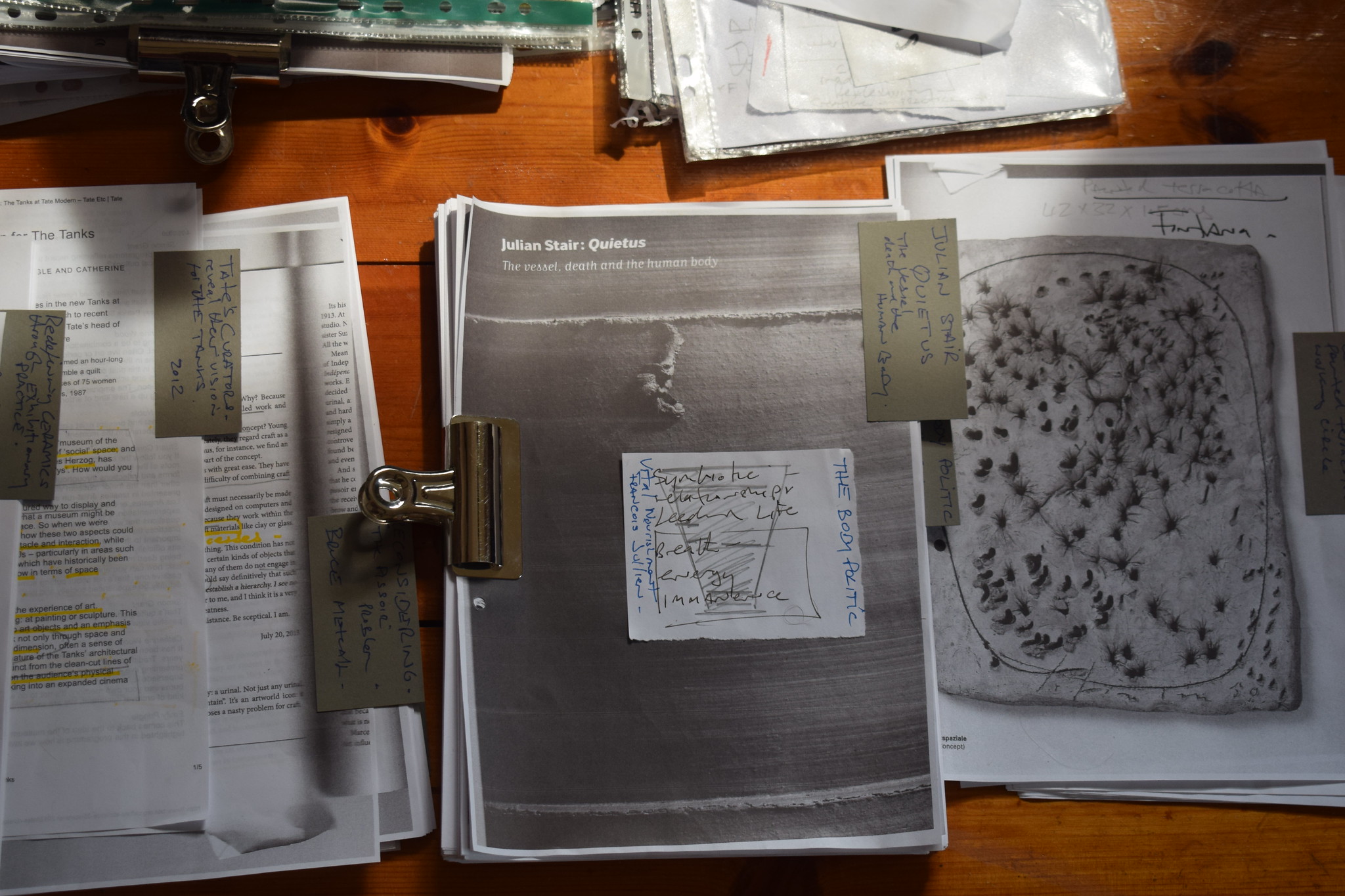
  • Working Out of the Archive : Praesentia

    January 31, 2023

    Working Out of the Archive : Praesentia

    Heidegger’s Topology
    Things exist rooted in the flesh (R. S. Thomas)
    Being, Place, World
    Jeff Malpas. 2008

    David Smith : Sprays, The Absent Object. Peter Stevens
    Eidetic Image, Nearness/Proximity/Atmosphere
    Temporal Structures,

    Unthinking Eurocentrism
    The Political Writing of Adam Kuper and Tim Ingold
    Justin Kenrick. 2011

    Pottery, The mindfulness of making social
    Anthropological Notebooks 17

    The War of Dreams
    Exercises in Ethno-Fiction.
    Marc Auge

    The Culture of The New Capitalism
    Richard Sennett.

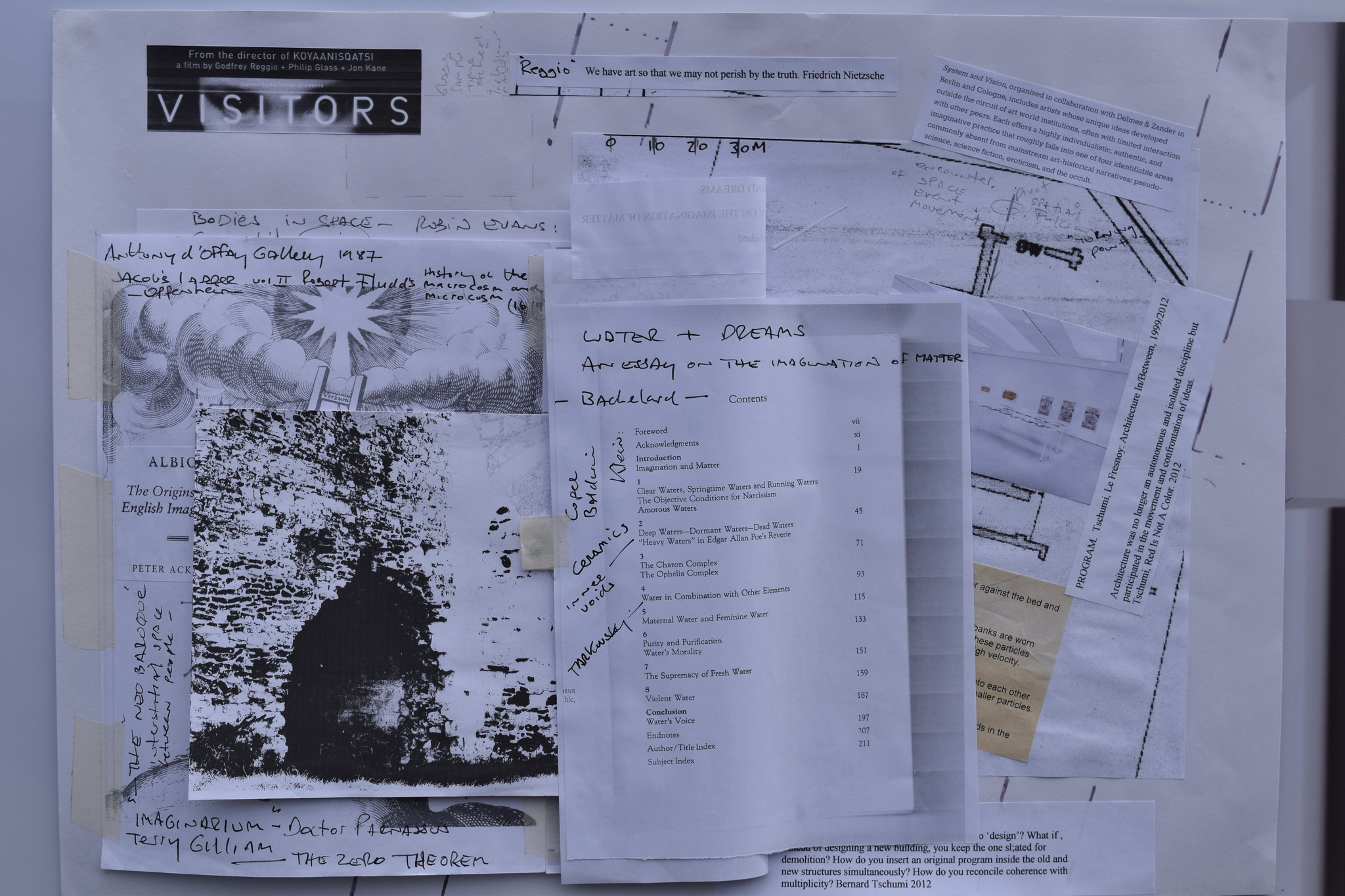
    VISITORS
    a film by Godfrey Reggio

    The World of The Anthropologist
    Marc Auge, Jean-Paul Colleyn. 2006
    The Field
    The basic methodology of anthropology is ethnography. This is the famous ‘fieldwork’ in which the researcher shares the daily life of a different culture (remote or close), observes, records, tries to grasp the ‘indigenous point of view’ and writes.
    Objects of Anthropology
    Politics is also the art of administrating and producing subjects, citizens.

    The Woman in The Dunes
    Kobo Abe

    Site-Specific Art
    Performance, Place and Documentation.
    Nick Kaye

    Heidegger For Architects
    Adam Sharr
    Poetically Man Dwells

    The Perception of The Environment
    Essays in Livelihood, Dwelling and Skill.
    Tim Ingold

    Hans Coper
    Sensations in the Vessel/Innerness
    Clay and The Engagements of Mind and Body

    Peter Zumthor
    Thinking Architecture/ A Way of Looking at Things
    Zumthor mirrors Heidegger’s celebration of experience and emotion as measuring tools.
    The physicality of materials can involve an individual with the world.

    The Visual Poetics of Jannis Kounellis
    Suzanne Cotter and Andrew Nainre
    He translates the painterly relationship of figure and ground into the space of real situations
    Kounellis’s engagement with the social and historical content and with the material fabric of a given space is critical to his art.

    The Castelvecchio in the Opus of Carlo Scarpa
    Possibly until very recently Scarpa’s work was still judged as anachronistic, small scale and craft intensive.
    An Attitude to History, The Drawings, Formal Language,
    Technical Specifications of Materials.

    What is the relationship between the visual arts and ‘performativity’?
    Site-Specific Art. Nick Kaye

    Wittgenstein : The Duty of Genius
    The work of art/aesthetics/ethics seen ‘under the form of eternity’
    Schopenhauer discusses, in a remarkably similar way, a form of contemplation in which we relinquish ‘the ordinary way of considering things’, and ‘no longer consider the where, the when, the why, and the whither in things, but simply the what’.

    Spatial Practices : Thinking Sociologically

    ‘What does it do’?
    Oren Lieberman

    Bookmark and Share
    Posted by Russell Moreton at Wednesday, December 15, 2021 No comments:  

    Email ThisBlogThis!Share to TwitterShare to FacebookShare to Pinterest
    Labels: #russell moreton, Adam Kuper, Adam Sharr, being, David Smith, Godfrey Reggio, Heidegger, Jannis Kounellis, Jeff Malpas, Justin Kenrick, Kobo Abe, Marc Auge, Peter Zumthor, place, Richard Sennett, Tim Ingold, world


    Social apparatuses and agents that explore the possibilities of space. Other Worlds : Insistent moments of mark making/subjectivity.

    Source: Working Out of the Archive : Praesentia

    Share this:

    • Share on LinkedIn (Opens in new window) LinkedIn
    • Share on Tumblr (Opens in new window) Tumblr
    • Share on Facebook (Opens in new window) Facebook
    • Share on AddToAny (Opens in new window) AddToAny
    • More
    • Email a link to a friend (Opens in new window) Email
    • Print (Opens in new window) Print
    • Share on X (Opens in new window) X
    • Share on Pinterest (Opens in new window) Pinterest
    Like Loading…
  • Work : Filtered Light

    January 31, 2023

    Work : Filtered Light


    Brian Clarke
    The Art of Light/Paul Greenhalgh,2018. Sainsbury Centre for Visual Arts
    Properties of Matter and Imagination
    FUSION OF PHYSICAL/METAPHYSICAL
    WORK : An Inquiry with Material Practice
    The poetics of glass as a super-cooled liquid. Molten Fluidity.
    An organic flux frozen for an instant.
    Chaos and order, flow and turbulence, pooling and shifting translucence.
    Chemistry becomes alchemy, the banality of the raw materials – sand, metal and minerals – turn into a magical universe of the imagination. Perhaps this is the key to Brian Clarke’s stained glass; it embodies the fusion of two things that normally don’t mingle; the physical and metaphysical.
    Botanical
    Cosmological
    Biographical
    The screens are an intense site of innovation and artistic consolidation. Some of the screens are principally about the organic flow of forms derived from nature; some of them deal with ideas that push into universal concepts and have a symbolist, otherworldly ambiance; and some yet their driving force incidents, memories and emotions that shaped the artist’s life.
    The Modern World (the artist’s attitudes to)
    Life
    Violence
    Mortality
    Many of the screens are highly specific to an incident or influence, the titles give us a clue to the complex symbology at work and the intertwining of the artist’s personal response with wider perceptions about place.
    Contrapuntal/Counterpoint music introduces multiple melodies that are equally important. Polyphony describes the use of overlapping melodies.
    For Clarke the concept of a screen as a vehicle of artistic expression is not a new concept, rather it clearly resonates back through his life, becoming part of his artistic consciousness virtually from the start of his work in glass.
    Literal and Phenomenal Transparency Layering of Planes/Layering of Spaces
    Rowe and Slutzky 1982
    What exactly is a screen and what does it mean in the context of modernity?
    A screen is simultaneously a physical object and a complex conceptual metaphor.
    We use screens to divide and to mask things off from each other, and as boundaries/barriers to hide behind.
    At the same time, the screen provides ways of looking at things/displaying; we screen films and we screen people.
    We look through them, and they can act as a catalyst that changes our vision of whatever is on the other side.
    In its usage in art, a screen is automatically a series of images – a diptych, triptych or polyptych – a sequence of free standing panels that allows the artist to develop a narrative and aesthetic theme.
    Screens divide up space and make it function differently.
    Alabaster windows before glass, contemporary windows by both Soulages/Sigmar Polke
    Iglesias,
    The Glass House
    The screen as emblematic of modernity.
    Conceptually, the sensibility at work in many early Modem buildings was one of space divided by screen walls and windows. In this sense, the giant windows at either end of Norman Foster’s seminal Sainsbury Centre building for example are light-screens.
    The nature of Brian Clarke’s architectural practice, in which his core practice is painting.
    It is through painting that I understand how to view architecture. It is through painting that I can appreciate the rhythm of the poem.
    It is through painting that I can appreciate and draw pleasure from the structure of a well-composed sentence. And it is through painting that the complexity of music makes itself understood to me. It is through painting, in fact, that I am.
    Brian Clarke, 1989.
    I do not identify mostly with painting, but I identify mostly with all other things because of painting. Brian Clarke, 2018.
    Clarke is gripped by the technology and engineering of how a building is made, but also by the psychological function and its emotional impact, he refers to himself as an architectural artist.
    The medium of glass in its modern form will only be seen when people have been sufficiently exposed to it.
    During the 20th century – the age of specialization – theorists and historians were obsessed with separating out the arts disciplines, positioning them in specific groups or classes, and then subjecting them to philosophical discourse as to why they belonged there.
    In short, the Anglo-Saxon world in particular artificially created the categories of art, design and craft, and then intellectually policed them. Stained glass was inevitably positioned as a craft, with all the confused cultural and economic consequences of this class allocation.
    Clarke with the complexity of his practice and interests has led to embrace the concept of gesamtkunstwerk (total works of art).
    A concept first championed by Richard Wagner, who perceived opera as a means of combining all of the arts, including music, and literature, in order to completely surround the spectator. In the visual arts, it is essentially about generating a complete art environment, in which all elements are orchestrated into an aesthetic whole.
    Charles Rennie Mackintosh, Frank Lloyd Wright, designers of the De Stijl movement.
    Bookmark and Share
    Posted by Russell Moreton at Friday, December 17, 2021 No comments:  

    Email ThisBlogThis!Share to TwitterShare to FacebookShare to Pinterest
    Labels: Brian Clarke, filtered light, handblown glass, Outpost Studios, Paul Greenhalgh, silver stain, skulls, watercolours, Work


    Social apparatuses and agents that explore the possibilities of space. Other Worlds : Insistent moments of mark making/subjectivity.

    Source: Work : Filtered Light

    Share this:

    • Share on LinkedIn (Opens in new window) LinkedIn
    • Share on Tumblr (Opens in new window) Tumblr
    • Share on Facebook (Opens in new window) Facebook
    • Share on AddToAny (Opens in new window) AddToAny
    • More
    • Email a link to a friend (Opens in new window) Email
    • Print (Opens in new window) Print
    • Share on X (Opens in new window) X
    • Share on Pinterest (Opens in new window) Pinterest
    Like Loading…
  • An Elemental Imagination Unfolding : Intuition of The Instant

    January 31, 2023

    An Elemental Imagination Unfolding : Intuition of The Instant

    Gaston Bachelard
    Intuition of The Instant

    A preoccupation with the discontinuous and the disruptive

    “relentlessly  hauling the cumulative detritus of our past”

     Analogue Shadow Projection  (Townshend Rock)
    Slowdive
    Sugar for the pill

    https://www.flickr.com/photos/russellmoreton/23826107748/in/dateposted-public/

    Bookmark and Share
    Posted by Russell Moreton at Saturday, December 18, 2021 No comments:  

    Email ThisBlogThis!Share to TwitterShare to FacebookShare to Pinterest
    Labels: #russell moreton, ambient light source, discontinuous, disruptive, elemental, film, Gaston Bachelard, Intuition of The Instant, movement, music, mute, nowness, poetics, projection, shadow, Slowdive, time


    Social apparatuses and agents that explore the possibilities of space. Other Worlds : Insistent moments of mark making/subjectivity.

    Source: An Elemental Imagination Unfolding : Intuition of The Instant

    Share this:

    • Share on LinkedIn (Opens in new window) LinkedIn
    • Share on Tumblr (Opens in new window) Tumblr
    • Share on Facebook (Opens in new window) Facebook
    • Share on AddToAny (Opens in new window) AddToAny
    • More
    • Email a link to a friend (Opens in new window) Email
    • Print (Opens in new window) Print
    • Share on X (Opens in new window) X
    • Share on Pinterest (Opens in new window) Pinterest
    Like Loading…
  • Architectural Interiors : Collage and Photography

    January 31, 2023

    Architectural Interiors : Collage and Photography

    (For architecture) to become highly human it must represent not only the beautiful action of the space, but above all that of time. For this matter the most refined art, the most difficult and dangerous, is that of patina.
    Luis Barragan

    Red Wall/Pace Gallery London 2014
    Robert Mangold

    Waverley Project/Research Collage
    Design based photogram
    Russell Moreton

    Speculative Drawings : Becoming Spatial/Figural

    Bookmark and Share
    Posted by Russell Moreton at Sunday, December 19, 2021 No comments:  

    Email ThisBlogThis!Share to TwitterShare to FacebookShare to Pinterest
    Labels: #russell moreton, #spatial practice, architecture, collage, Luis Barragan, Pace Gallery London, patina, photogram, red wall, Robert Mangold, space and time


    Social apparatuses and agents that explore the possibilities of space. Other Worlds : Insistent moments of mark making/subjectivity.

    Source: Architectural Interiors : Collage and Photography

    Share this:

    • Share on LinkedIn (Opens in new window) LinkedIn
    • Share on Tumblr (Opens in new window) Tumblr
    • Share on Facebook (Opens in new window) Facebook
    • Share on AddToAny (Opens in new window) AddToAny
    • More
    • Email a link to a friend (Opens in new window) Email
    • Print (Opens in new window) Print
    • Share on X (Opens in new window) X
    • Share on Pinterest (Opens in new window) Pinterest
    Like Loading…
  • Anthropomorphic Form : Photogram with shells/text

    January 31, 2023

    Anthropomorphic Form : Photogram with shells/text

     Landscape of Found Objects : Archaeological Photograms

    Bookmark and Share
    Posted by Russell Moreton at Monday, December 20, 2021 No comments:  

    Email ThisBlogThis!Share to TwitterShare to FacebookShare to Pinterest
    Labels: photogram, Thomas Ruff


    Social apparatuses and agents that explore the possibilities of space. Other Worlds : Insistent moments of mark making/subjectivity.

    Source: Anthropomorphic Form : Photogram with shells/text

    Share this:

    • Share on LinkedIn (Opens in new window) LinkedIn
    • Share on Tumblr (Opens in new window) Tumblr
    • Share on Facebook (Opens in new window) Facebook
    • Share on AddToAny (Opens in new window) AddToAny
    • More
    • Email a link to a friend (Opens in new window) Email
    • Print (Opens in new window) Print
    • Share on X (Opens in new window) X
    • Share on Pinterest (Opens in new window) Pinterest
    Like Loading…
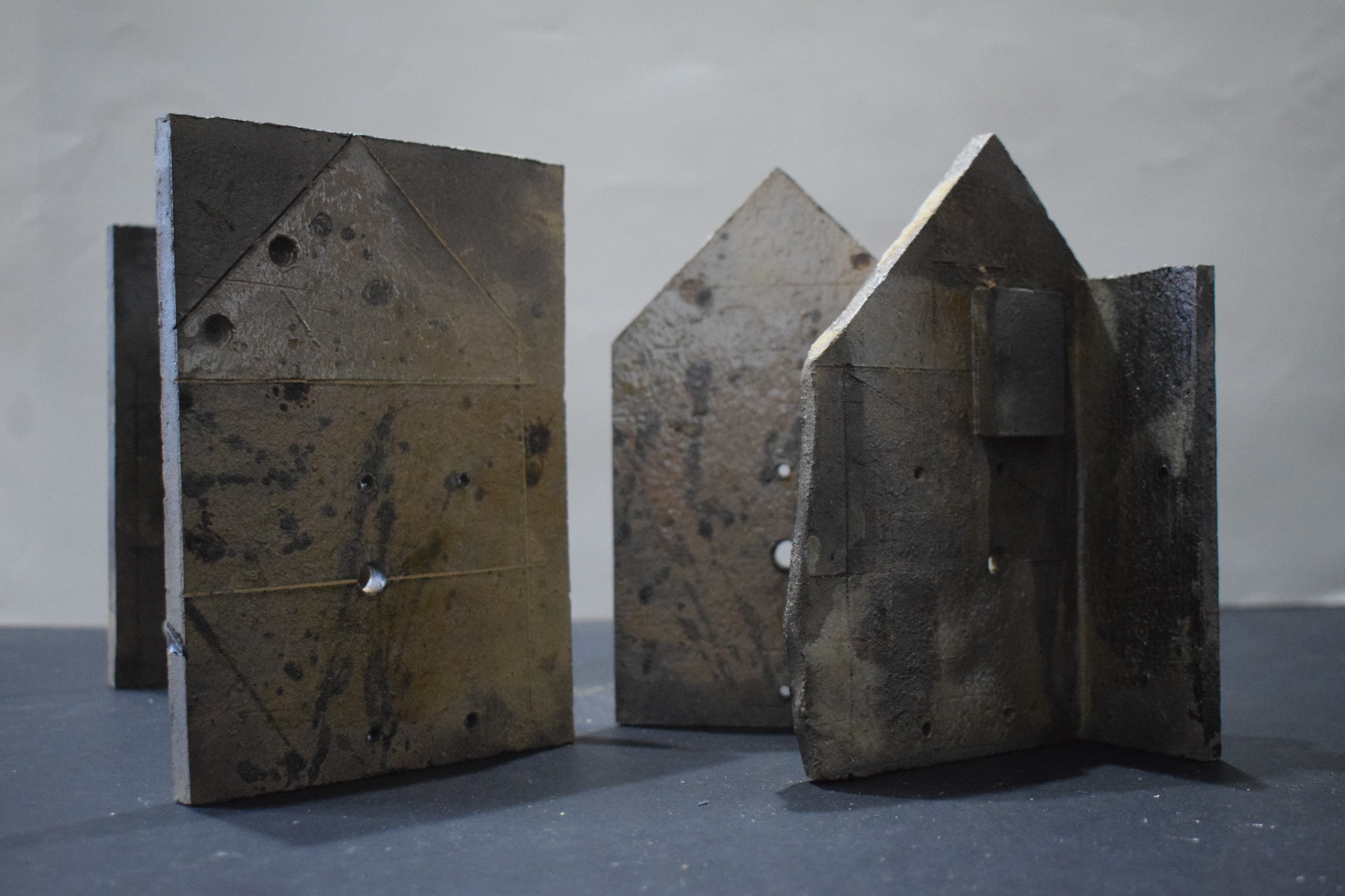
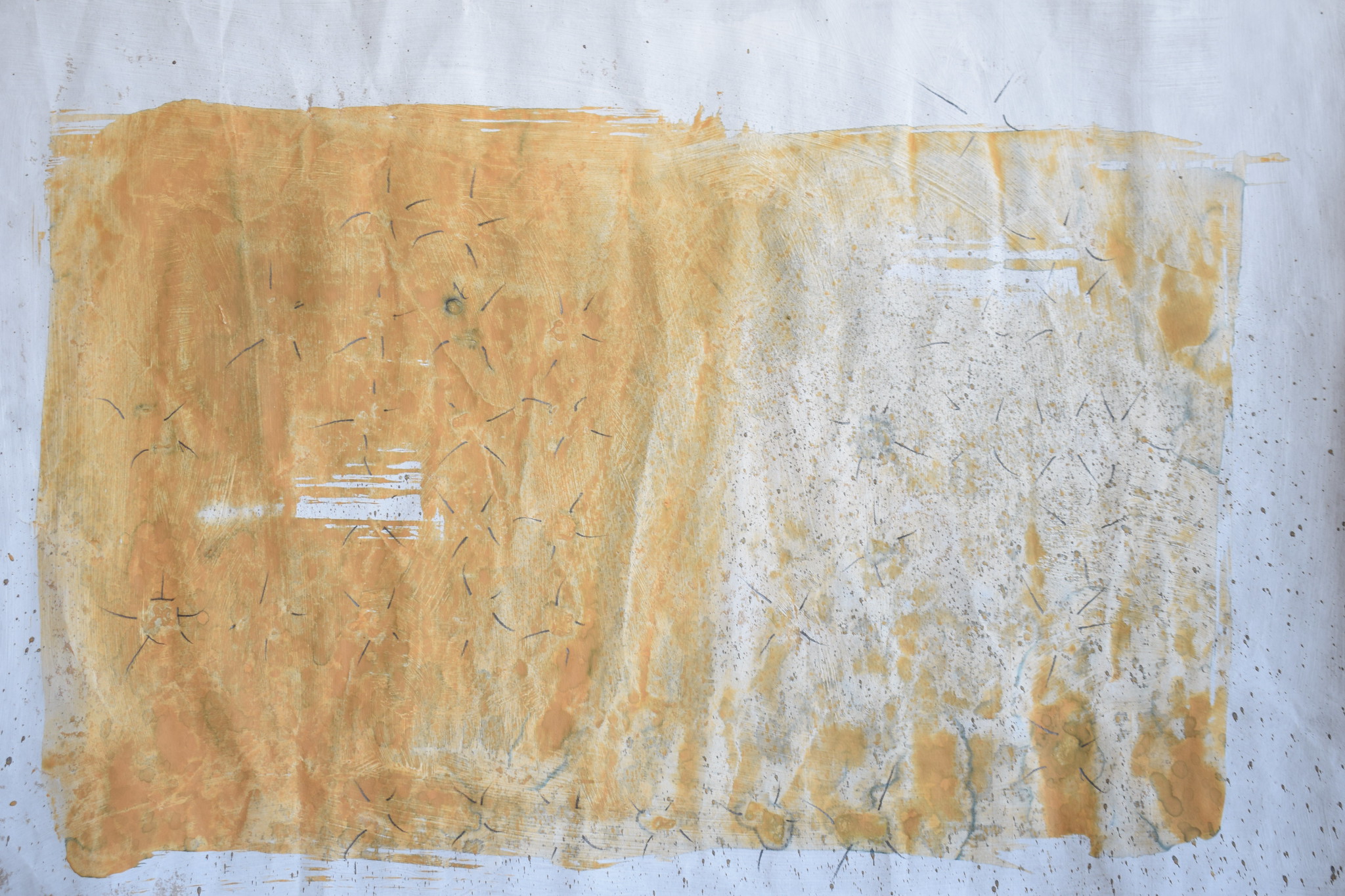
  • Studio Assemblages : Spatial Instant/Relationscapes

    January 31, 2023

    Studio Assemblages : Spatial Instant/Relationscapes

     Ever instant has a thousand memories : Henri Bergson


    Bookmark and Share
    Posted by Russell Moreton at Monday, December 20, 2021 No comments:  

    Email ThisBlogThis!Share to TwitterShare to FacebookShare to Pinterest
    Labels: #cyanotype, architectural models, artist’s book, assemblages for architecture, ceramics, collage, exploration, Henri Bergson, indexical, mattering, painting, process, surface, trace, yellow ochre


    Social apparatuses and agents that explore the possibilities of space. Other Worlds : Insistent moments of mark making/subjectivity.

    Source: Studio Assemblages : Spatial Instant/Relationscapes

    Share this:

    • Share on LinkedIn (Opens in new window) LinkedIn
    • Share on Tumblr (Opens in new window) Tumblr
    • Share on Facebook (Opens in new window) Facebook
    • Share on AddToAny (Opens in new window) AddToAny
    • More
    • Email a link to a friend (Opens in new window) Email
    • Print (Opens in new window) Print
    • Share on X (Opens in new window) X
    • Share on Pinterest (Opens in new window) Pinterest
    Like Loading…
  • BLUE LIGHT : Evoking an inner room in the Mind/Consciousness

    January 31, 2023

    BLUE LIGHT : Evoking an inner room in the Mind/Consciousness

    Walking In My Mind, Stephanie Rosenthal. Hayward Gallery 2009

    At last we could talk about and investigate mental imagery, subjectivity, imagination and creativity. At last scientists could tackle the mystery of consciousness without being laughed at.
    Mysteries Of The Mind, Susan Blackmore.

    Between The Microcosm And The Macrocosm, Mami Kataoka.

    A Field Guide To Getting Lost, Rebecca Solnit.
    The Blue of Distance

    The world is blue at its edges and its depths. This blue is the light that got lost. Light at the blue end of the spectrum does not travel the whole distance from the sun to us. It disperses among the molecules of the air, it scatters in water. Water is colourless, shallow water appears to be the colour of whatever lies underneath it, but deep water is full of this scattered light, the purer the water the deeper the blue. The sky  is blue for the same reason, but the blue at the horizon, the blue of land that seems to be dissolving into the sky, is a deeper, dreamier, melancholy blue, the blue at the farthest reaches of the places where you see for miles, the blue of distance.

    This light that does not touch us, does not travel the whole distance, the light gets lost, gives us the beauty of the world, so much of which is in the colour blue.

    Digital Dye : Blue
    Photogram

    Blue Spaces : White Absences #2. Silence/Void : Gap/Reveal

    DSC_6772 Absence/Potential  of Dialogue : Raveningham
    Cyanotype, paper negative on used canvas frame

    DSC_6761 CELL COURT DOMAIN FIELD

    Bookmark and Share
    Posted by Russell Moreton at Tuesday, January 31, 2023 No comments:  

    Email ThisBlogThis!Share to TwitterShare to FacebookShare to Pinterest
    Labels: #alternative photography, #material practices, blue, consciousness, cyanotype, distance, fine art, light, Mami Kataoka, mind, painting, Rebecca Solnit, russell moreton, Susan Blackmore, Walking In My Mind


    Social apparatuses and agents that explore the possibilities of space. Other Worlds : Insistent moments of mark making/subjectivity.

    Source: BLUE LIGHT : Evoking an inner room in the Mind/Consciousness

    Share this:

    • Share on LinkedIn (Opens in new window) LinkedIn
    • Share on Tumblr (Opens in new window) Tumblr
    • Share on Facebook (Opens in new window) Facebook
    • Share on AddToAny (Opens in new window) AddToAny
    • More
    • Email a link to a friend (Opens in new window) Email
    • Print (Opens in new window) Print
    • Share on X (Opens in new window) X
    • Share on Pinterest (Opens in new window) Pinterest
    Like Loading…
Previous Page Next Page

Blog at WordPress.com.

  • Subscribe Subscribed
    • russellmoreton.com
    • Already have a WordPress.com account? Log in now.
    • russellmoreton.com
    • Subscribe Subscribed
    • Sign up
    • Log in
    • Report this content
    • View site in Reader
    • Manage subscriptions
    • Collapse this bar
%d