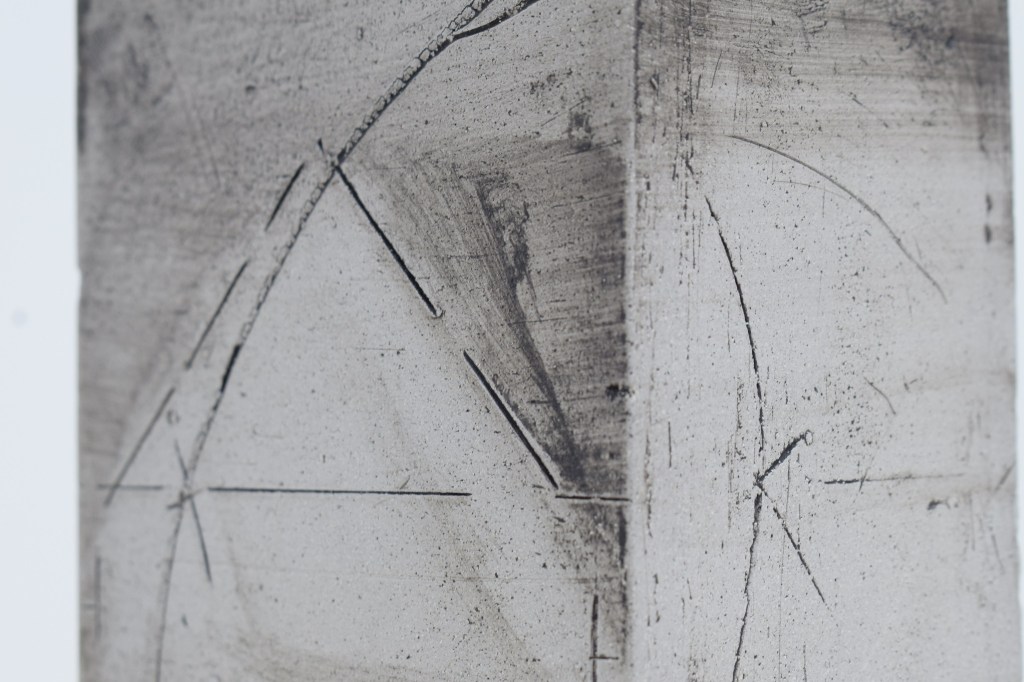
Dwelling begins here not as occupation, but as the material proposition of an interior.
Simple Dwelling Places
template → gesture → construction → dwelling → interior
The spatial condition is made rather than excavated.
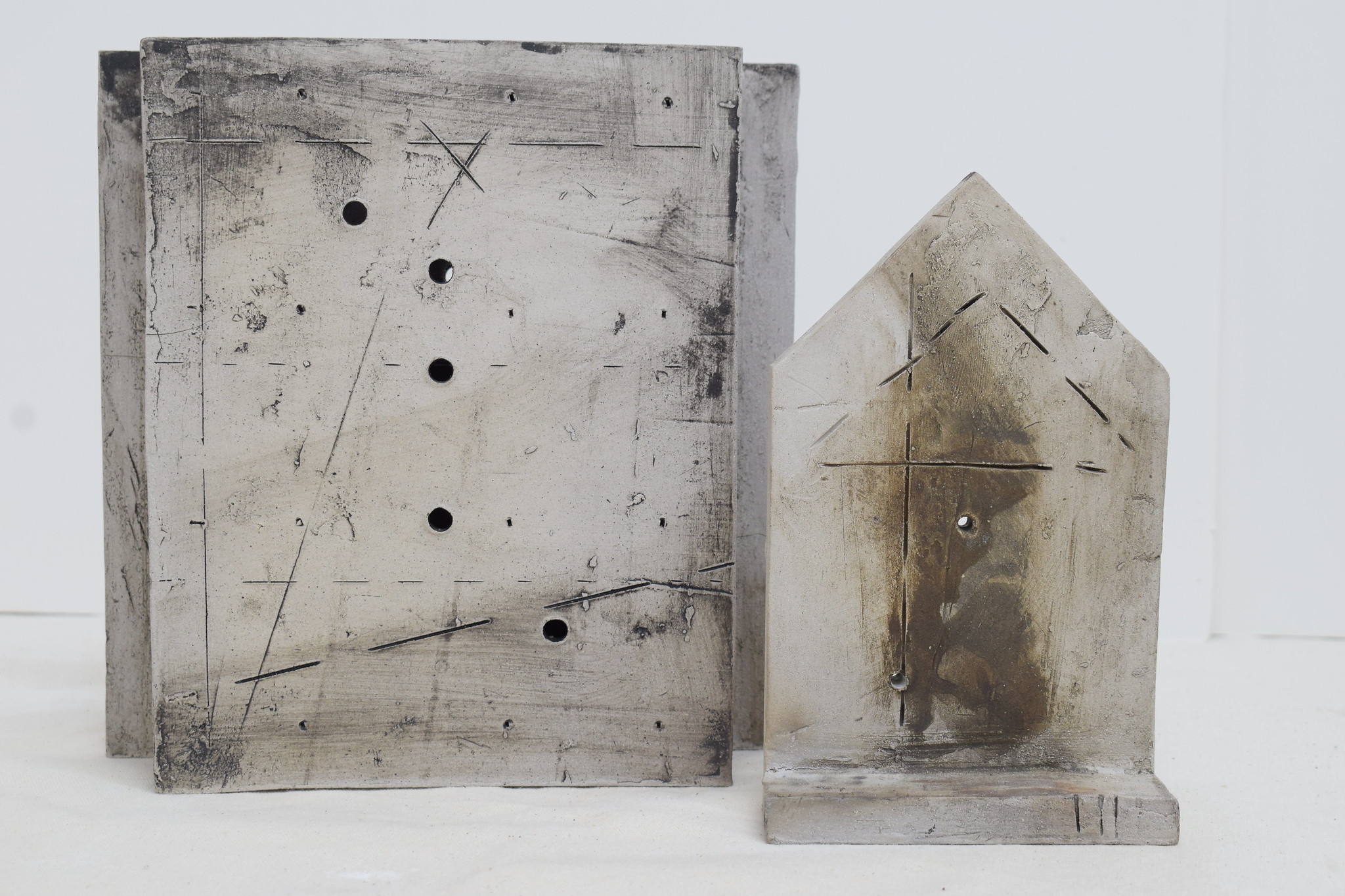
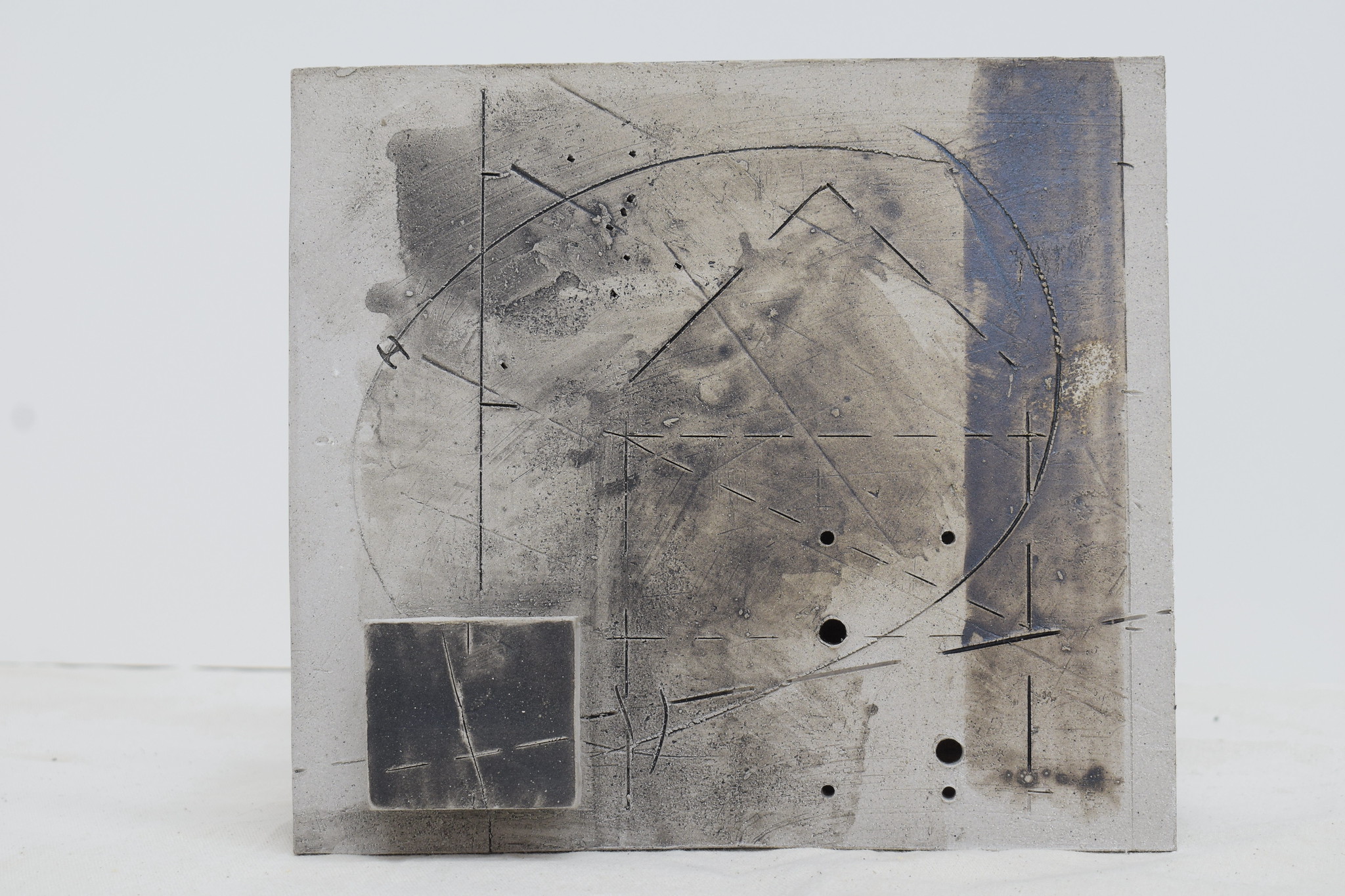
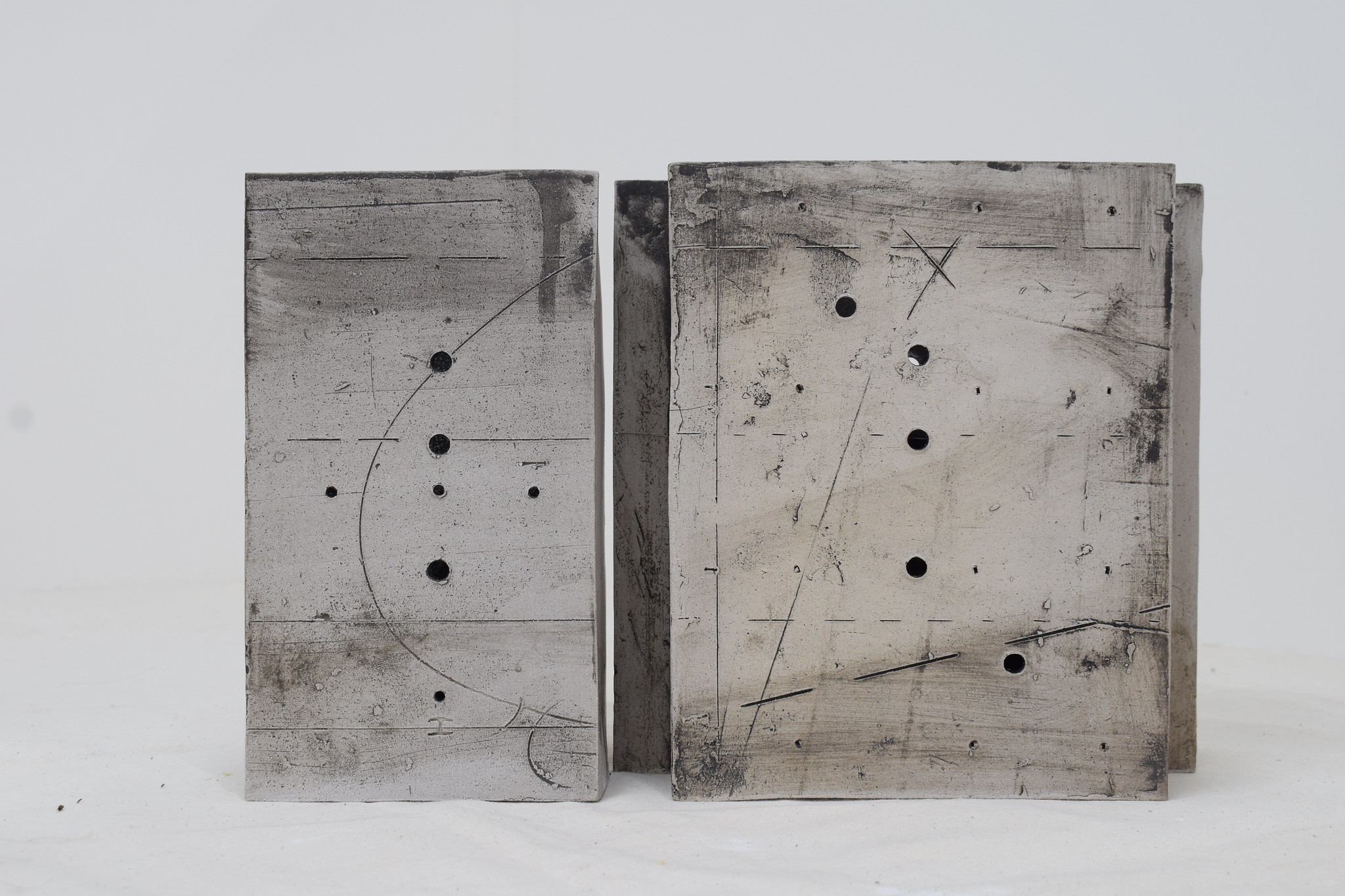
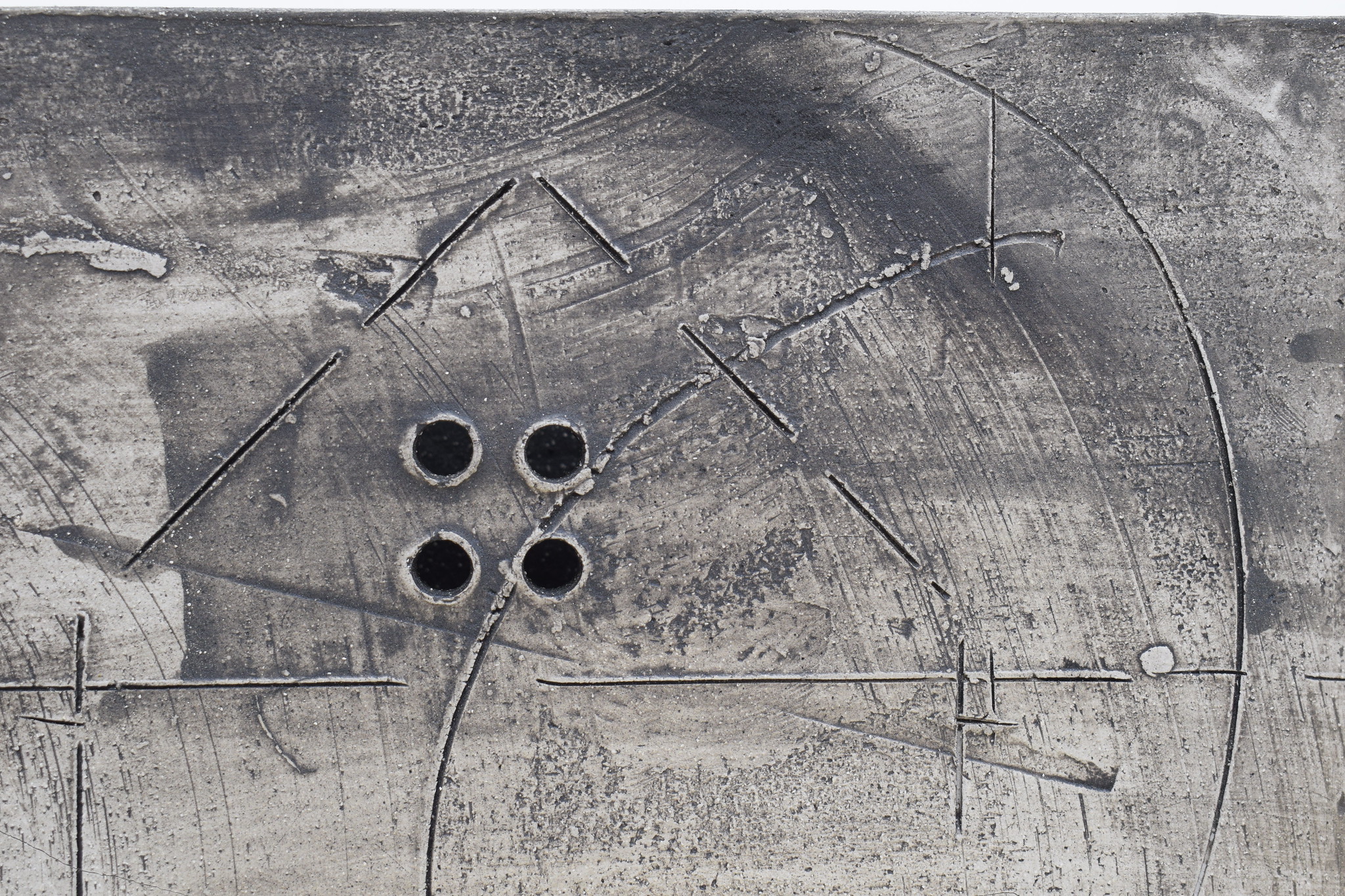
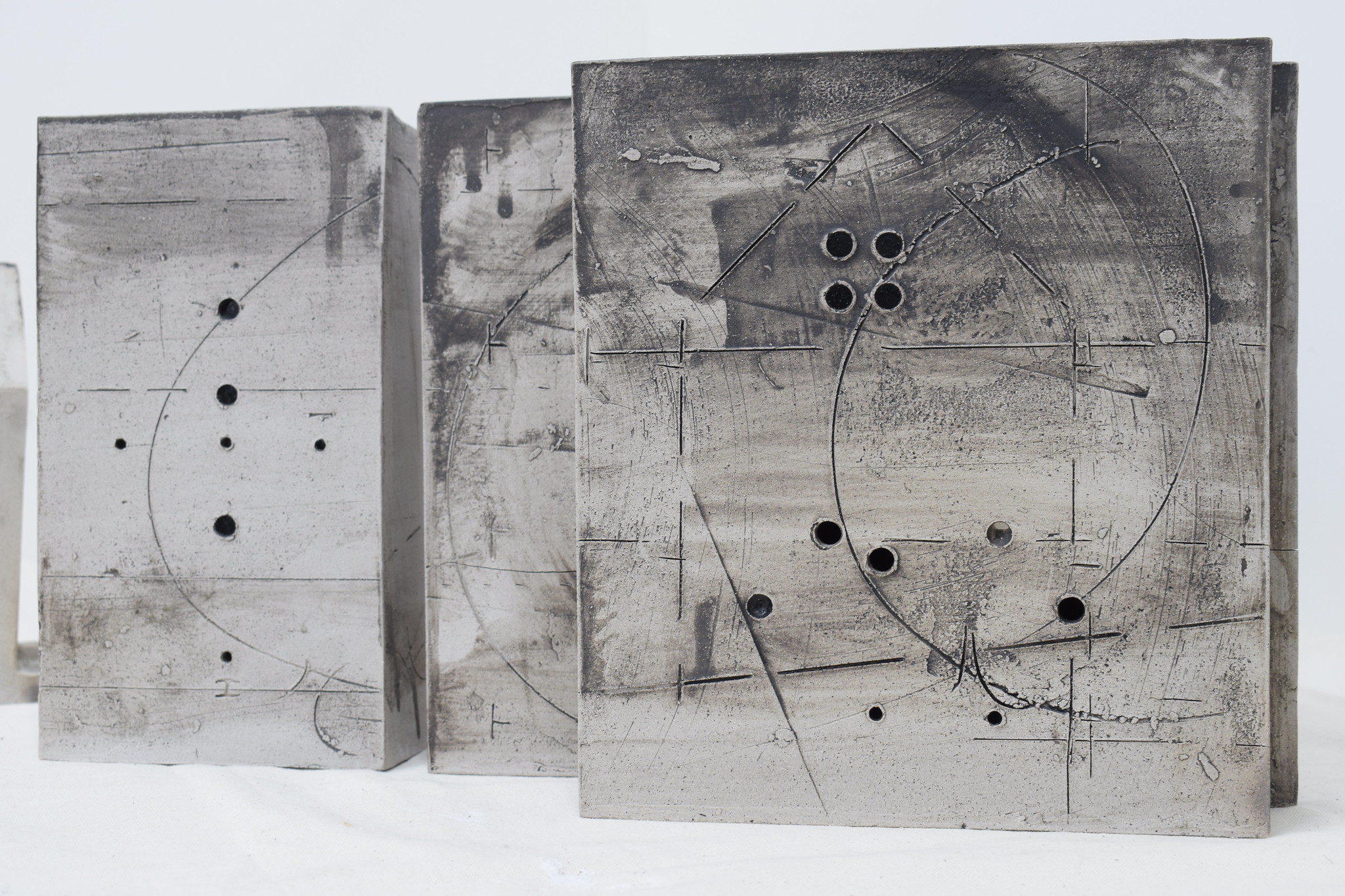
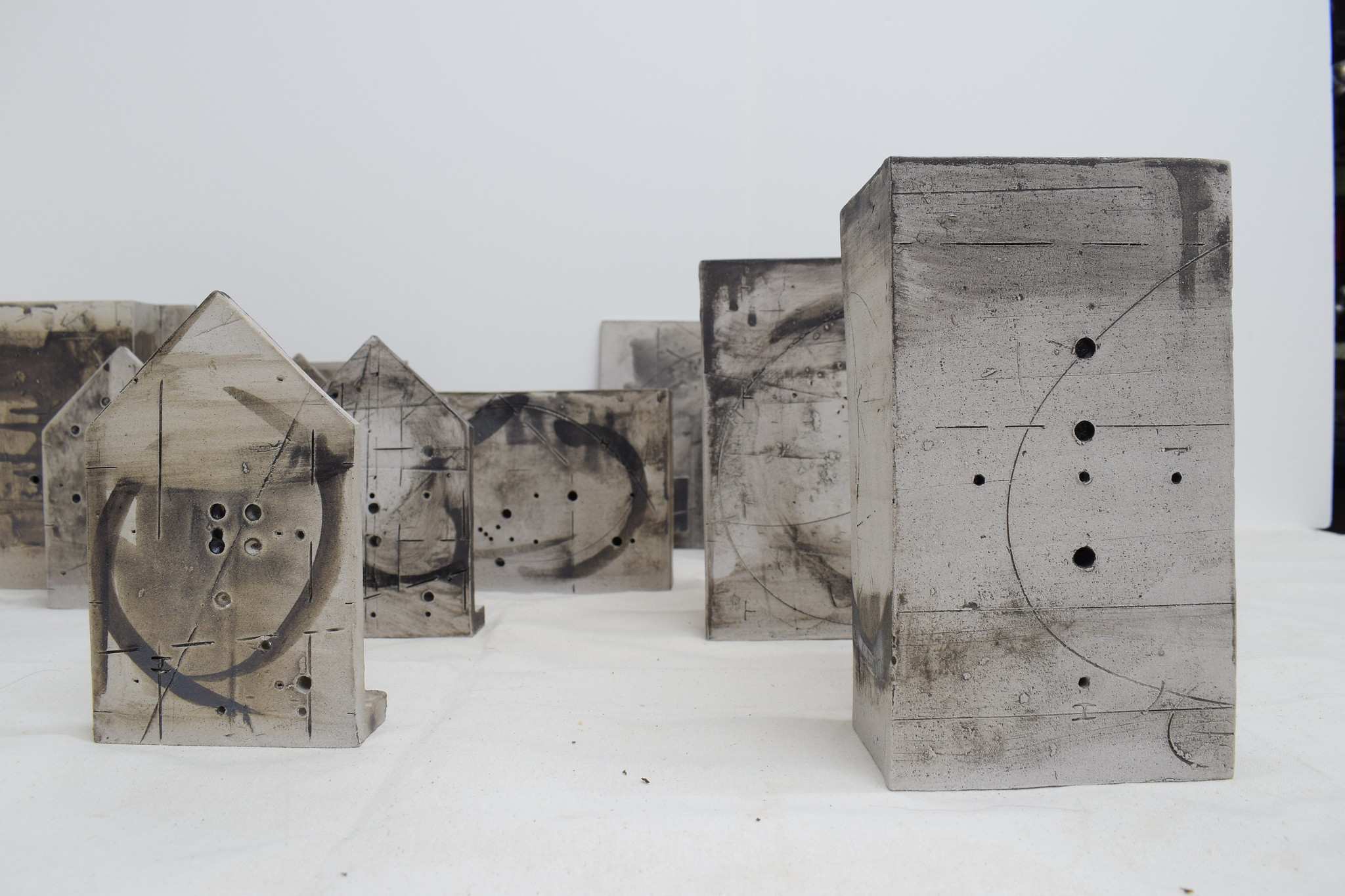
Slab built ceramic from templates and drawn annotations added throughout the construction process.
Working with an attention to material : Architectural forms as the excitement of making/building/dwelling.
Dwelling.
Rethinking the animate, re-animating thought.
Tim Ingold.
Ingold insists on a flat, continuous and processual ontology of dwelling and becoming.
Year
2024
Medium
Ceramic
Size
220mmL x 240mmH x 60mmW 130mmL x 240mmH x 90mmW
Category
Ceramic Bodies
This one is much more clearly a ceramic body than the Morn Hill post. It describes slab-built ceramic forms made from templates, with drawn annotations entering the construction process, and explicitly connects making / building / dwelling through Ingold’s processual ontology.
Simple Dwelling Places → Eartha~Ceramic
Here the relationship becomes more materially explicit.
Simple Dwelling Places is concerned with making/building/dwelling and slab construction.
Eartha~Ceramic then intensifies this into:
material → volume → interior → piercing → light → environment.
The dwelling becomes increasingly less like a model of architecture and more like a material environment in itself.
This is where your current ceramic thinking starts to become visible retrospectively.
The holes in Eartha~Ceramic aren’t simply decorative perforations. They establish a circulation for light into the interiors.
That is remarkably close to the aperture/camera-obscura thinking you’ve just been developing.


Leave a Reply