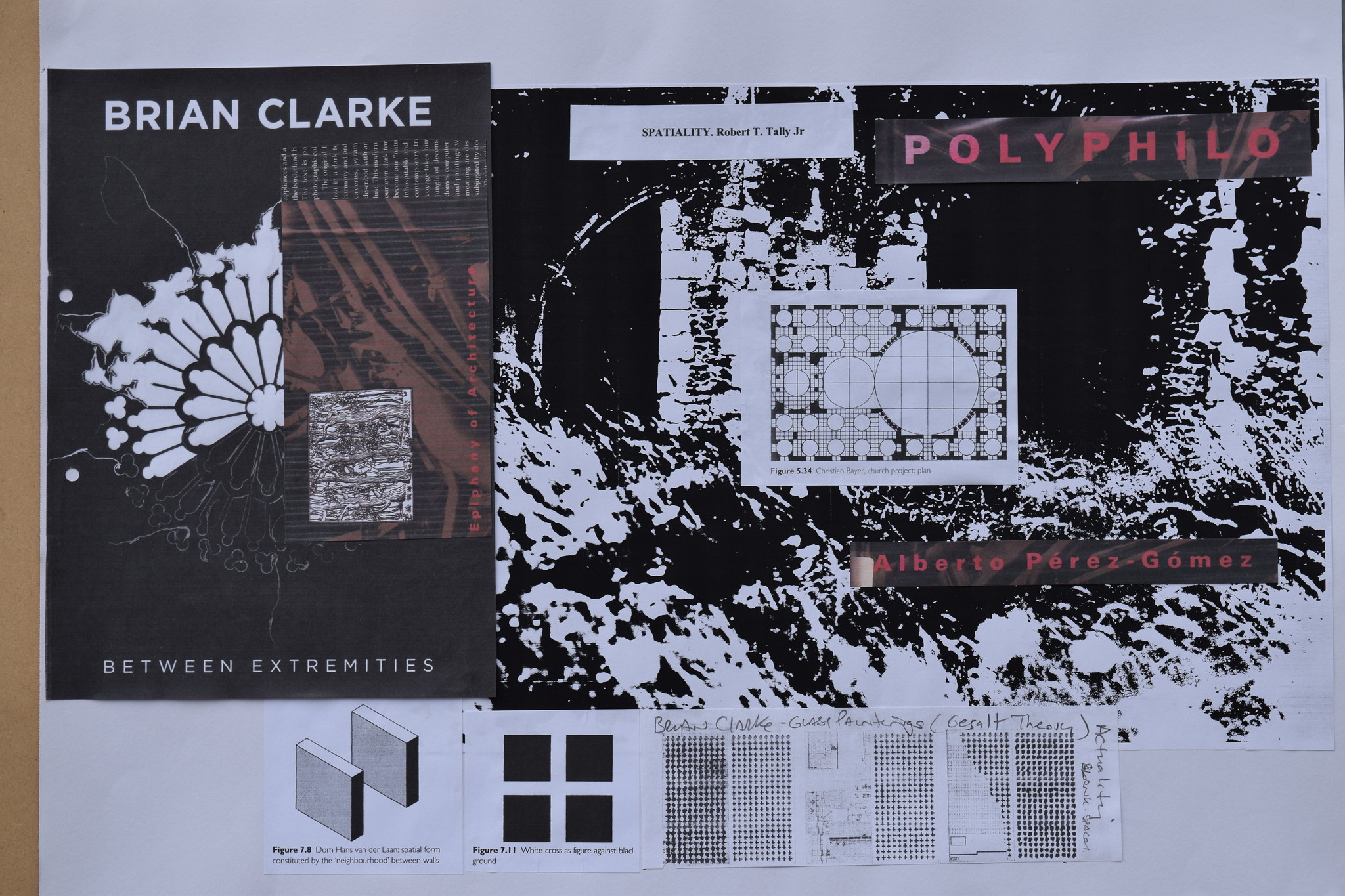
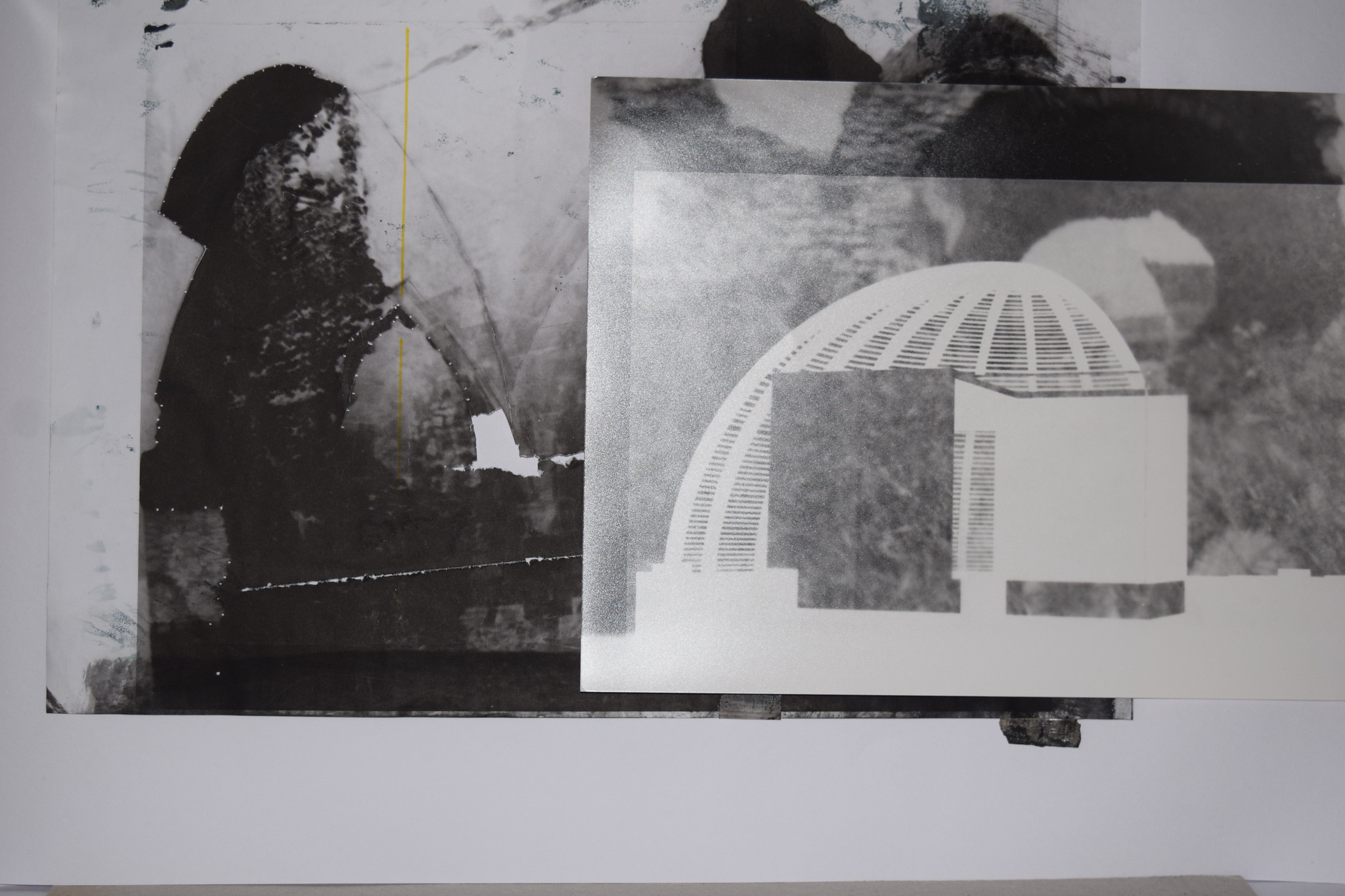
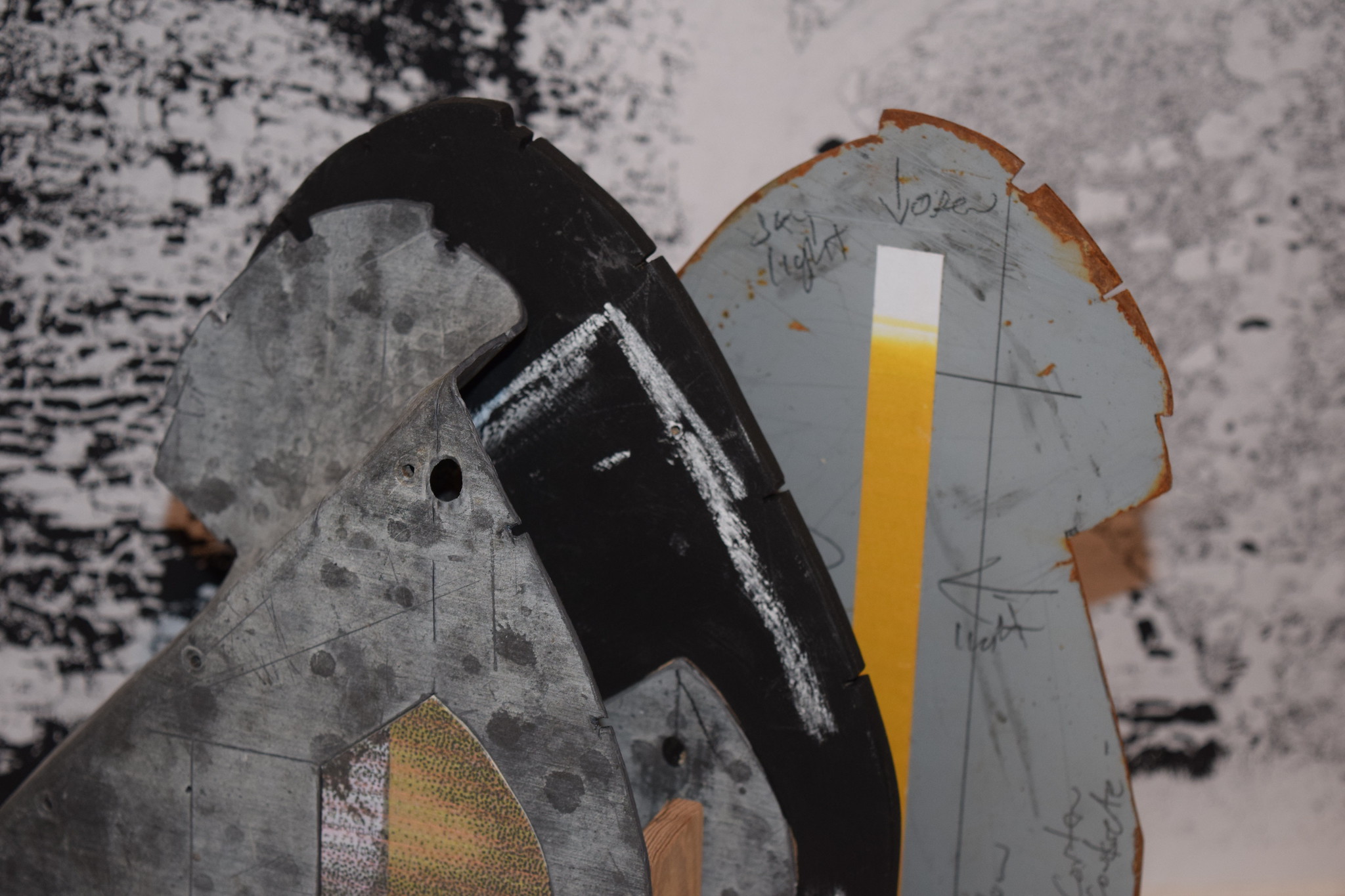
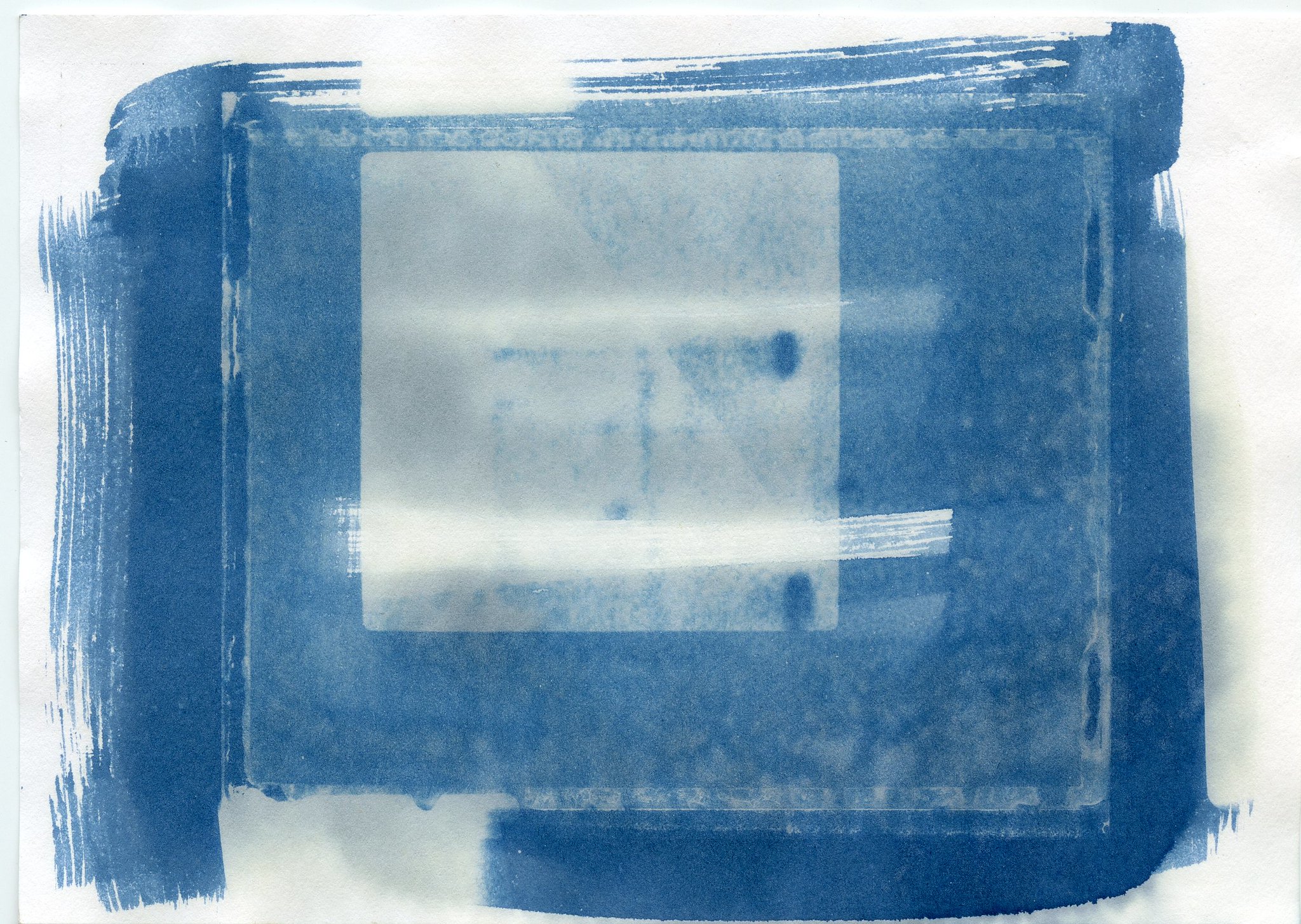
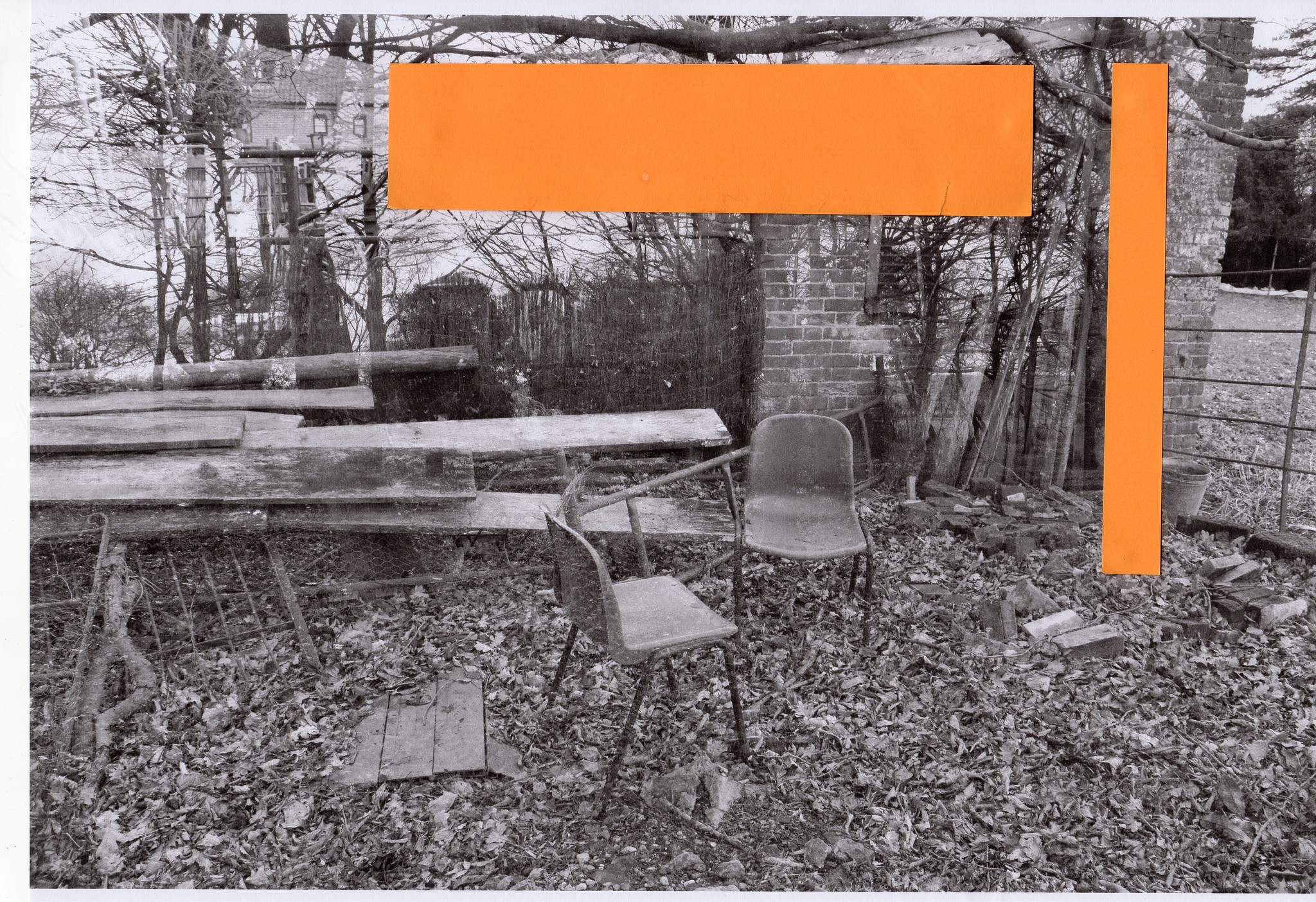
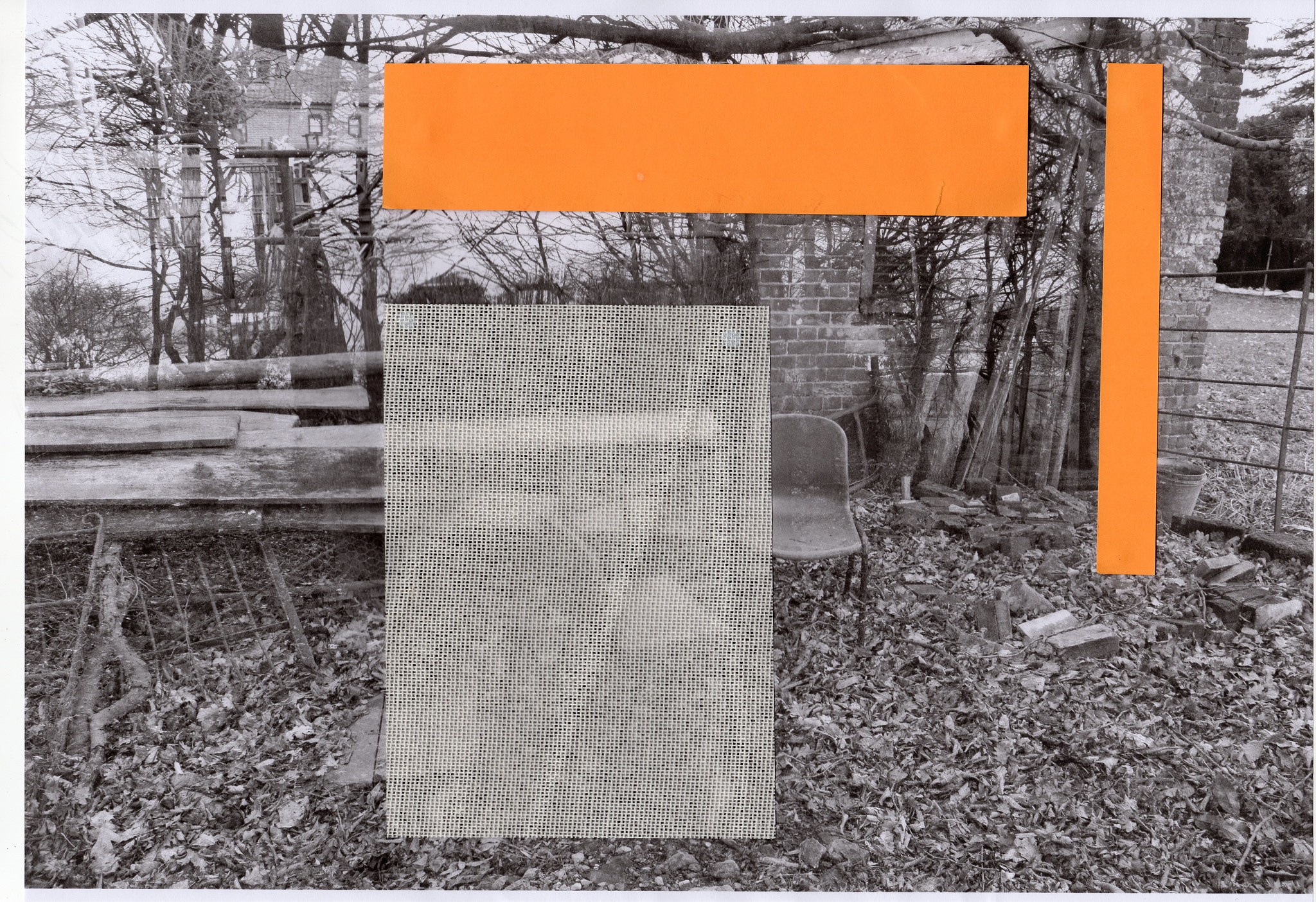
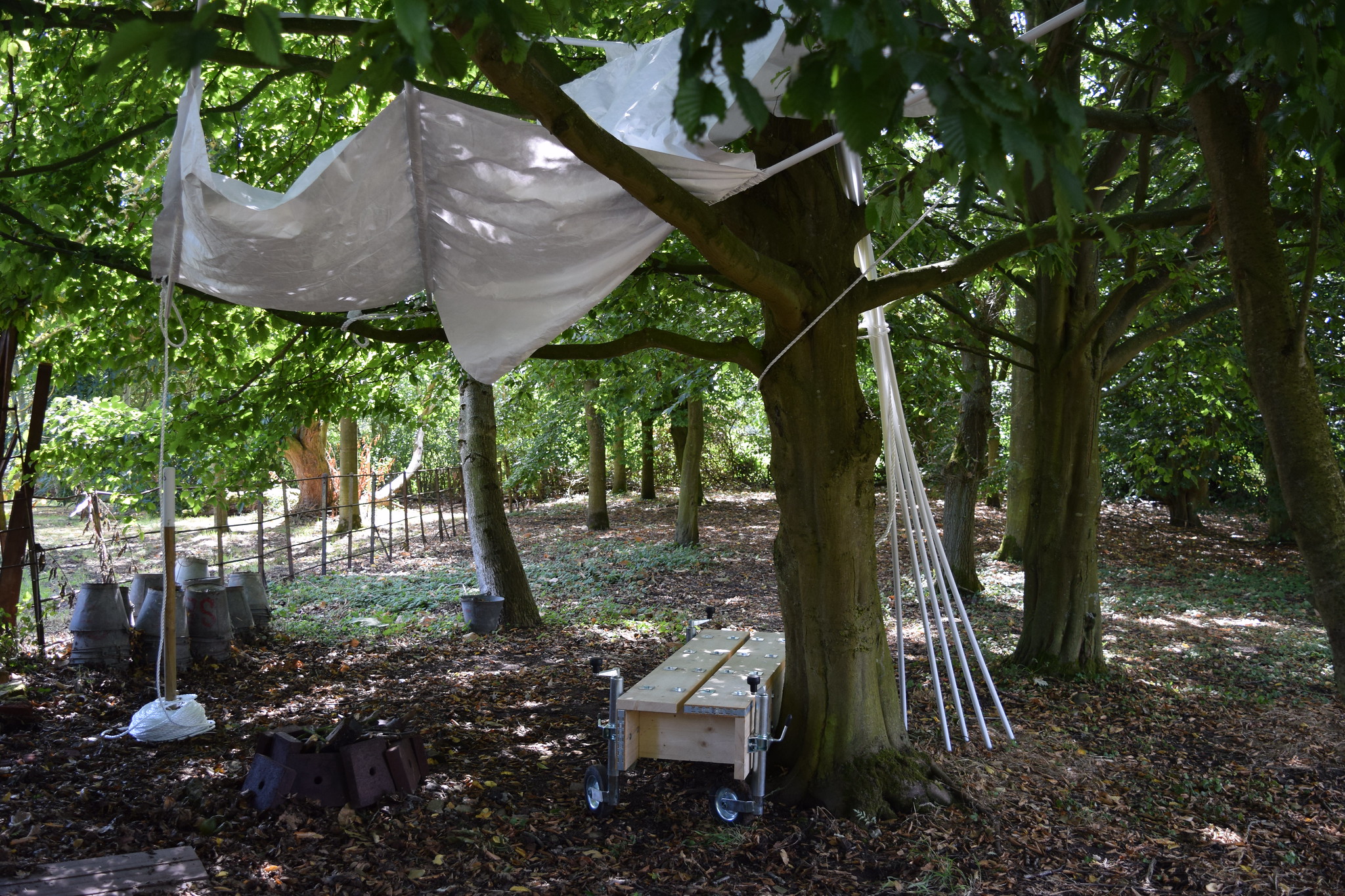
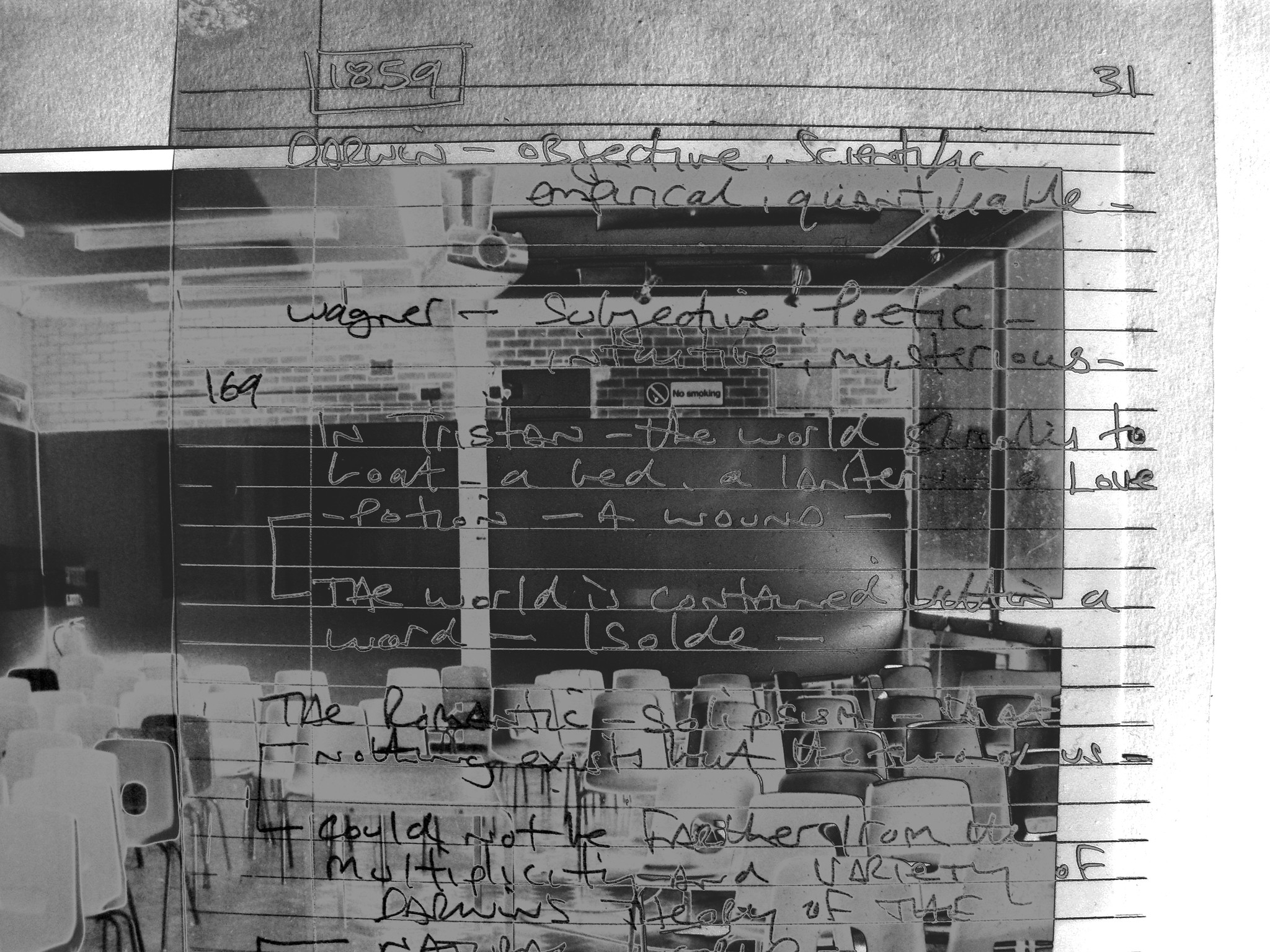
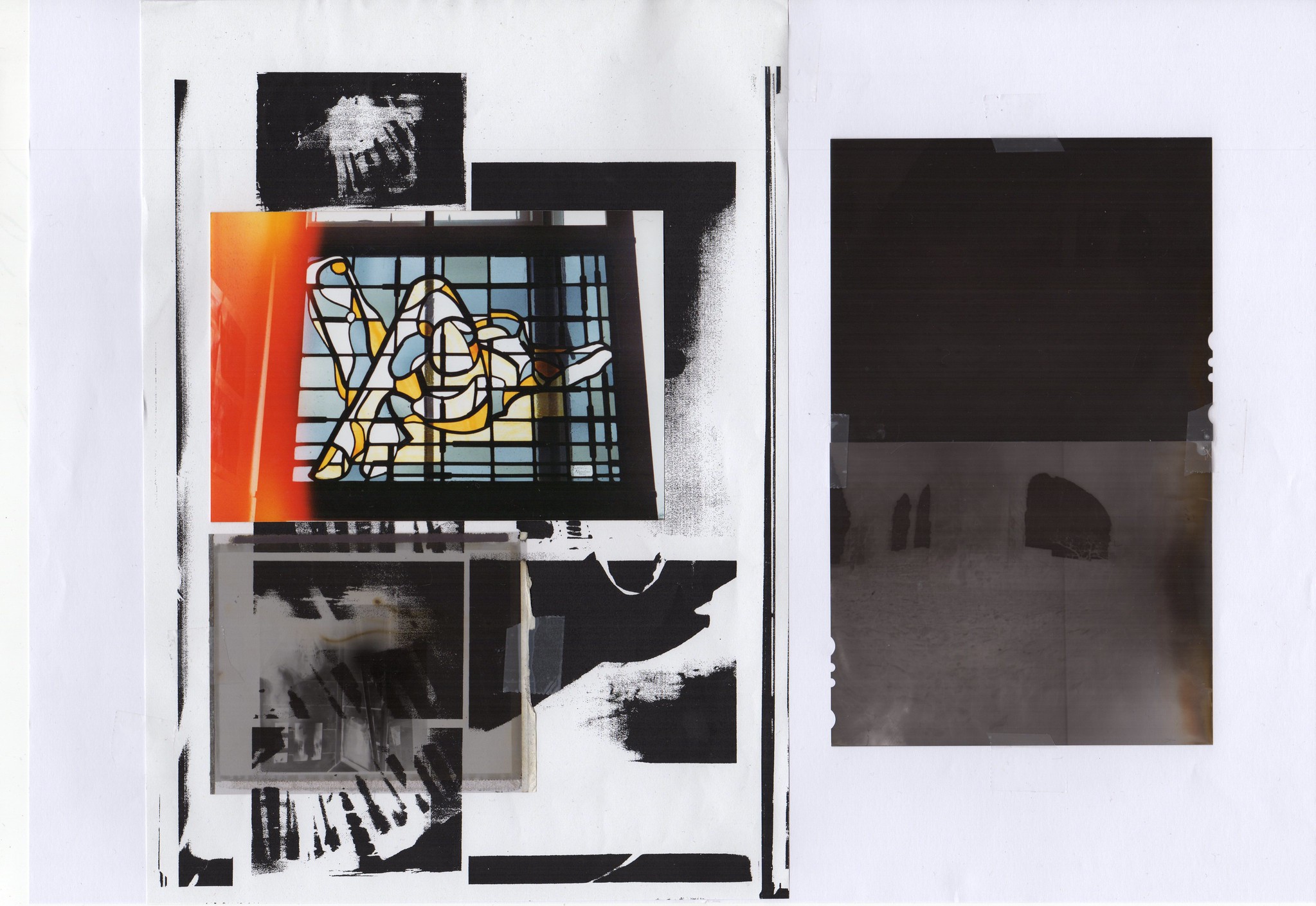
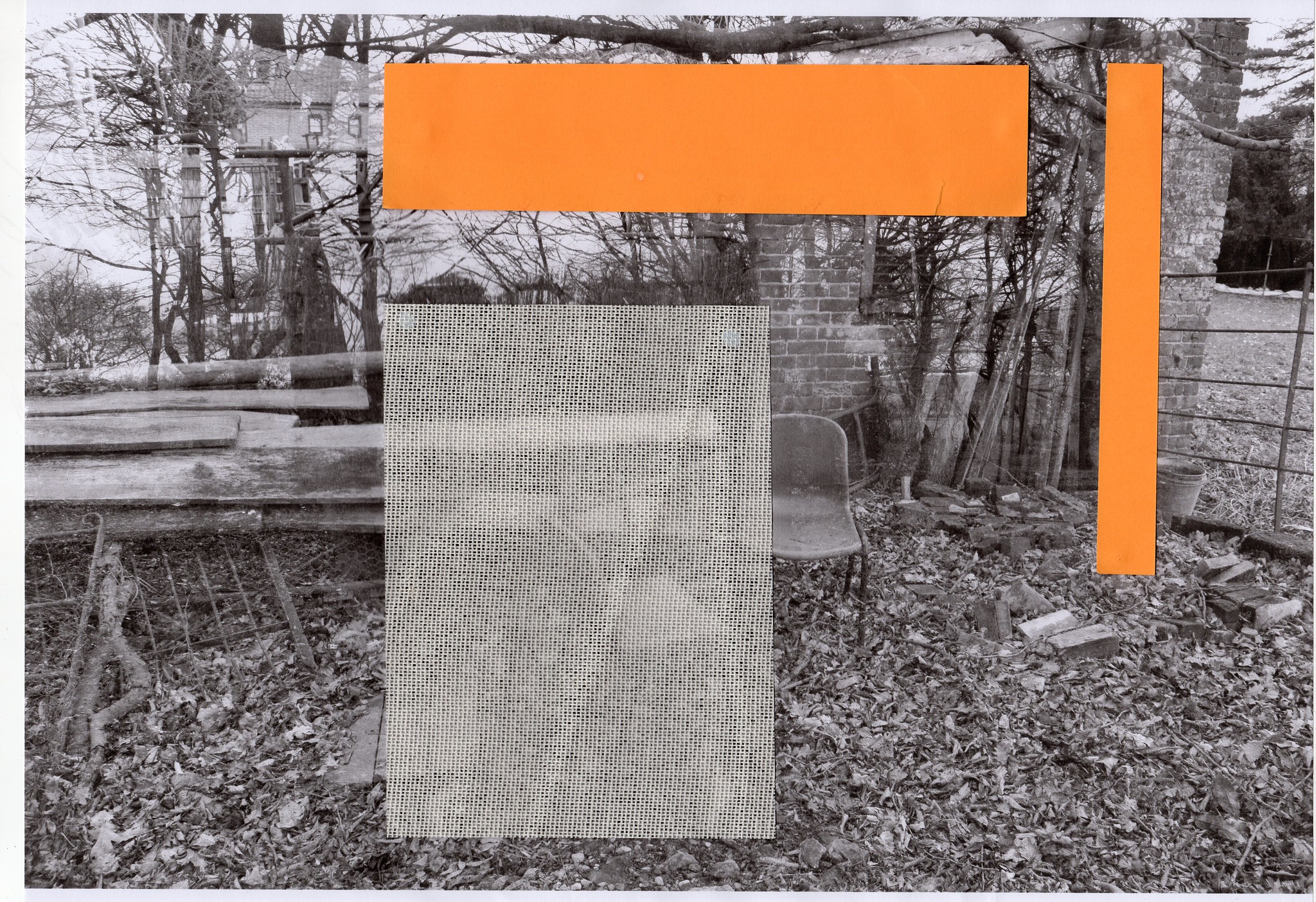
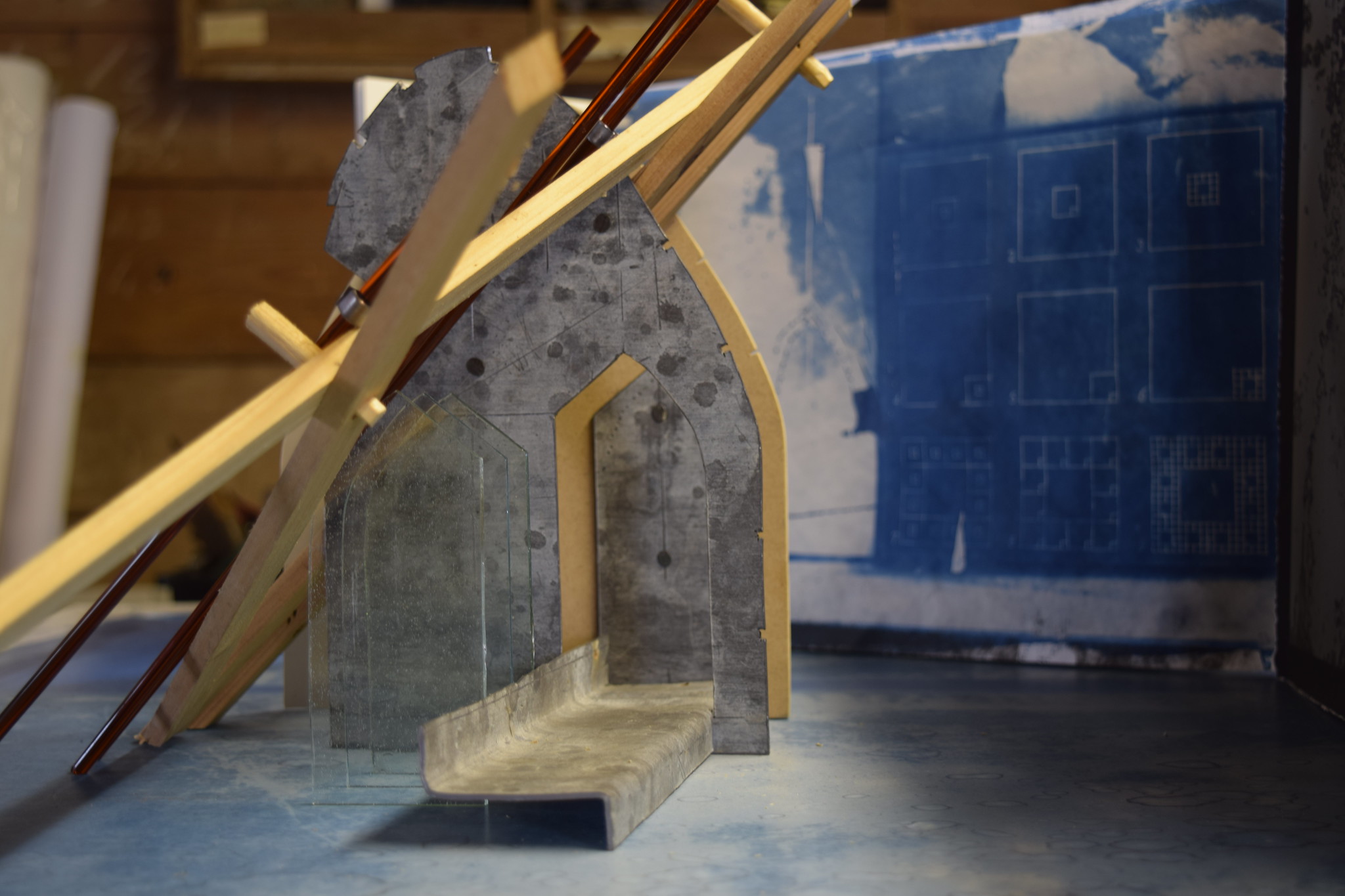
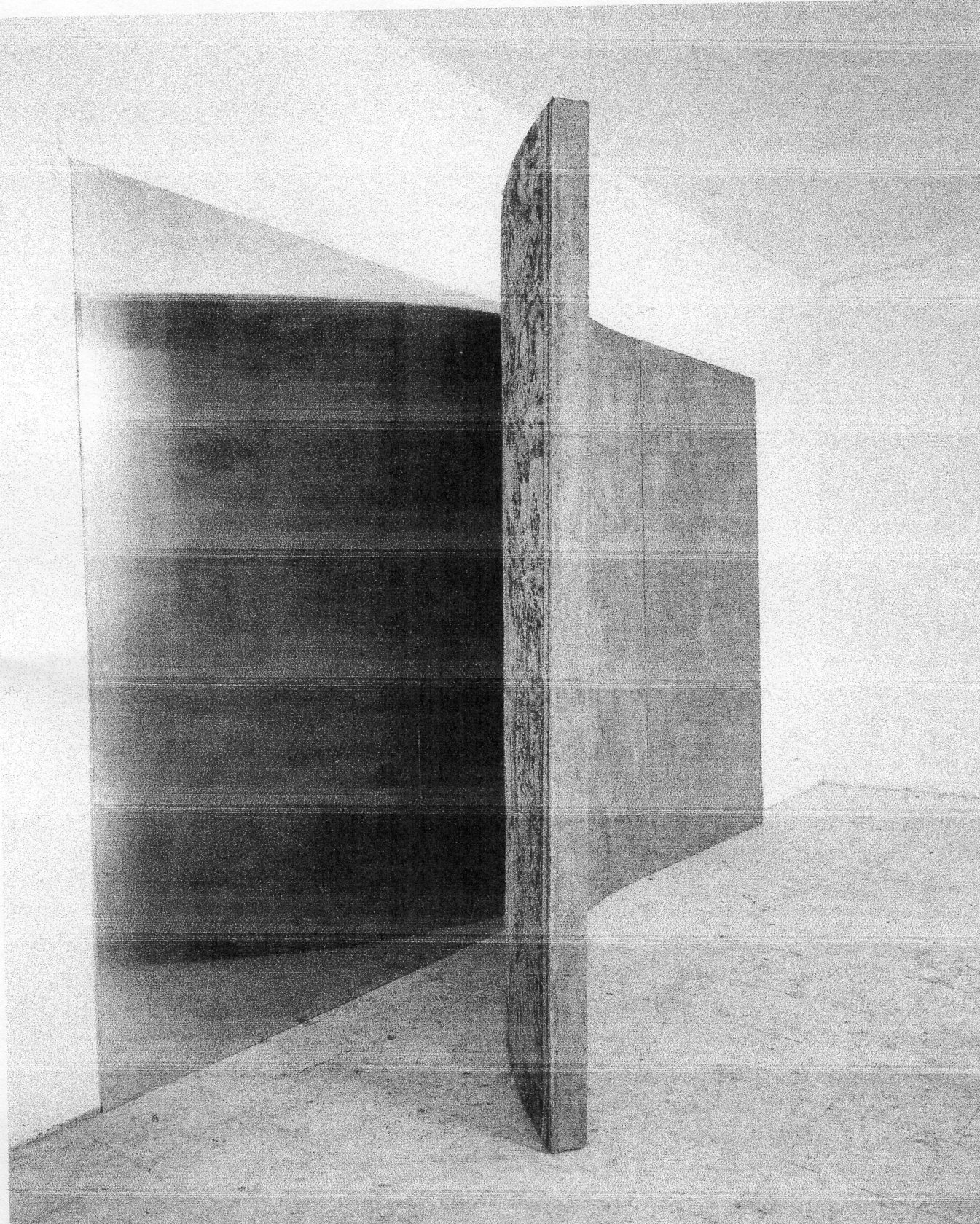
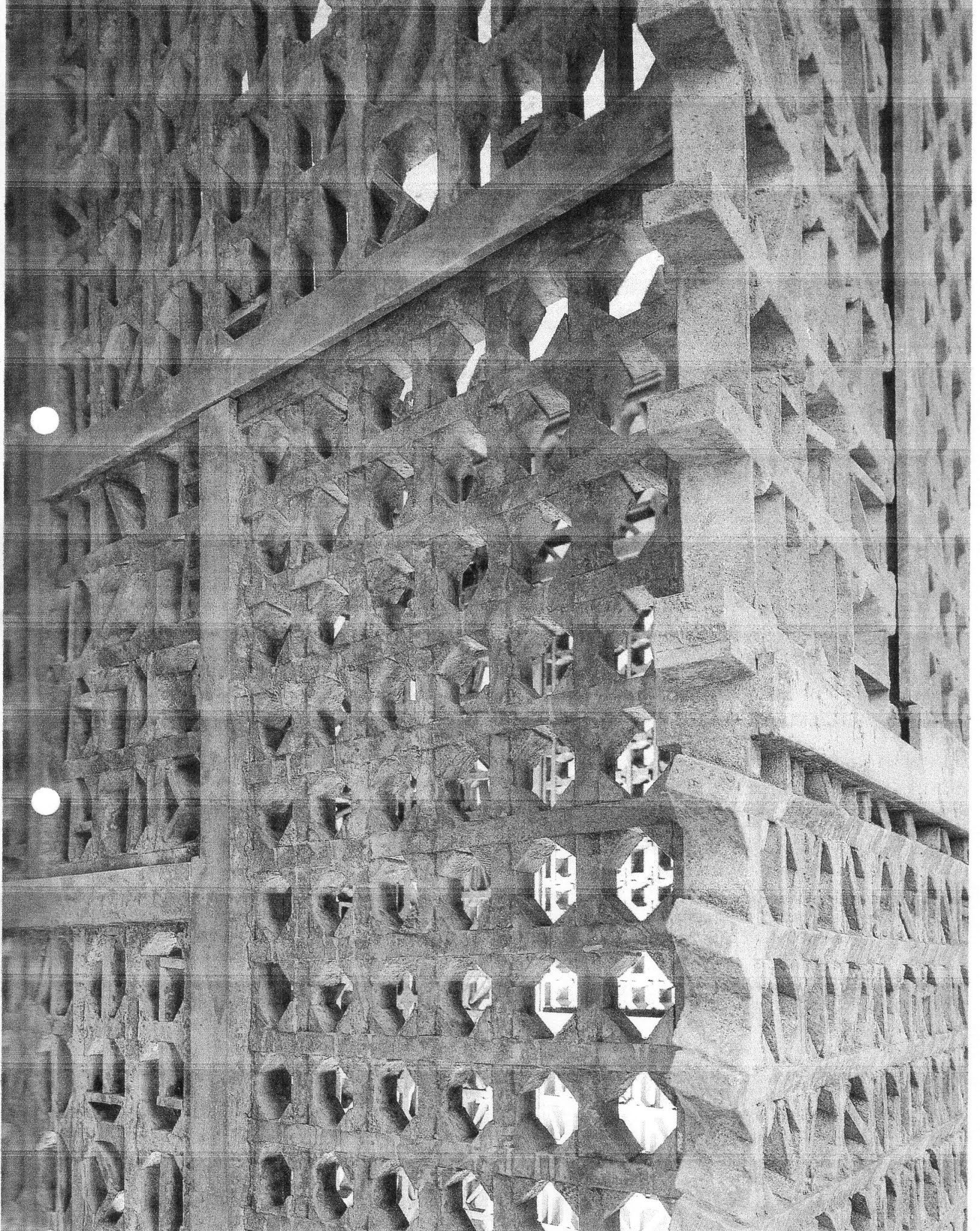
Collage Works : Architectural Studies. Outpost Studios, Norwich.
Source: Collage Works : Architectural Studies. Outpost Studios, Norwich.
Spatial Practices : Experimental drawing and alternative photography.
THE ARCHITECTURE OF NATURAL LIGHT, Henry Plummer. 2009 THE OTHER ARCHITECTURE, Constructing metaphysical space.
Catching The Light.
The Entwined History of Light And Mind. Arthur Zajonc
EVANESCENCE
Orchestration of light to mutate through time PROCESSION
Choreography of light for the moving eye VEILS OF GLASS
Refraction of light in a diaphanous film ATOMIZATION
Sifting of light through a porous screen CANALIZATION
Channelling of light through a hollow mass ATMOSPHERIC SILENCE
Suffusion of light with a unified mood LUMINESCENCE
Materialization of light in physical matter
ADVENTURES OF THE FIRE, VESSELS THROUGH TIME CERAMIC GATE
“The existing architectural environment is thought to be more or less official through the hierarchical arrangement, providing an rigidity to the public. The base for a creation is a freedom and I proposed an asymmetrical form for the gate to break the official space, bringing an atmosphere for freedom of creation. ”
Jung-mook Moon. CERAMIC PAVILION
“People make space, and space contains people. ” Seong-chil Park. (Exhibition Space Designer)
PALIMPSEST AS REMAINS OF A CREATIVE PRAXIS STUDIO SPACE AS A PHILOSOPHICAL WORKSHOP
PALIMPSEST IN ARCHITECTURE
“Architects, archaeologists and design historians sometimes use the word to describe the accumulated iterations of a design or a site, whether in literal layers of archaeological remains, or by the figurative accumulation and reinforcement of design ideas over time. Whenever spaces are rebuilt or remodelled, evidence of former uses remain. ”
Wikipedia
RODIN AND BEUYS
THE ALCHEMY OF BUILDING WORKING PRACTICES
RUINS, REDUCTIONS, and the LOSS of SUBSTANCE.
FRAGMENTS, ASSEMBLAGES and INTERIORS that re-enter the world of creativity.
The Theatre of Research is a working space that creates and crafts both theoretical and practical objects, things and documentation. Its reason for being is to explore the praxis for creative narratives between the Arts and The Humanities. It attempts through performance, fine art and architecture to collage qualitative and diffractive dialogues into new relational discourses, the results of which become exhibited or staged as open workshops engendering praxis, publication and production. In its fledgling state it is seen as being part of a University faculty that has interests in the Arts and The Humanities.
We have art so that we may not perish by the truth. Friedrich Nietzsche Can one achieve architecture without resorting to ‘design’? What if, instead of designing a new building, you keep the one skated for demolition? How do you insert an original program inside the old and new structures simultaneously? How do you reconcile coherence with multiplicity? Bernard Tschumi 2012
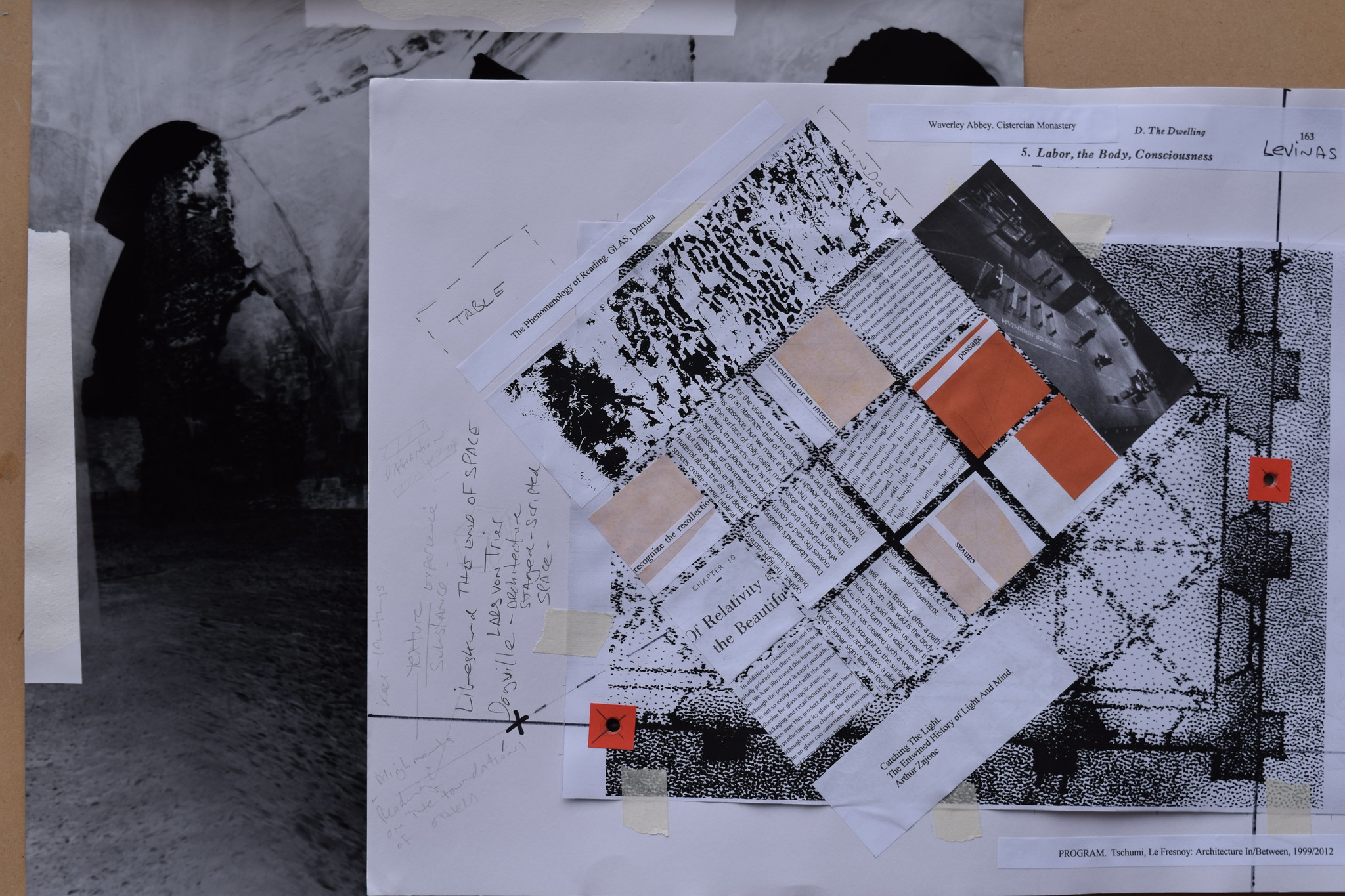
PROGRAM. Tschumi, Le Fresnoy: Architecture In/Between, 1999/2012 Architecture was no longer an autonomous and isolated discipline but participated in the movement and confrontation of ideas. Tschumi, Red Is Not A Color. 2012
Questions of Space
Abstract Mediation and Strategy
CREATIVE AUDIT of RESEARCH TOPICS The Craftsman, Richard Sennett. 2008
“Making is thinking, the good craftsman uses solutions to uncover new territory; problem solving and problem finding are intimately related in his or her mind. For this reason curiosity can ask, “Why” as well as “How ” about any project. ”
Prologue: Man as His Own Maker CRAFTSMEN
The Troubled Craftsman The Workshop Machines
Material Consciousness CRAFT
The Hand
Expressive Instructions Arousing Tools Resistance and Ambiguity CRAFTSMANSHIP Quality-Driven Work Ability
Conclusion: The Philosophical Workshop BRICOLEUR BRICOLAGE, Barkow Leibinger. 2013
“Bricolage indicates an approach that is inclusive, ie open-ended, and can come either from within architecture itself or from external sources. ”
CASTING WEAVING
FOLDING BUNDLING PRINTING ANTICIPATING
FROM MODELS TO DRAWINGS, Marco Frascari. 2007 CRITICAL STUDIES IN ARCHITECTURAL HUMANITIES
THE WAVERLEY PROJECT
Imagination and Representation in Spatial Practices (Architecture, Fine Art and Performance).
Historical Perspectives Emergent Realities Critical Dimensions
CRISTINA IGLESIAS Guggenheim Museum 1998
“Concrete and iron, glass, yellow, terracotta and tapestry, aluminium and photo etching, leather and amher glass, wood, resin and bronze powder, blue glass and alabaster. ”
Introduction, Carmen Gimenez
Screen Memories, Nancy Princenthal Stained With a Pale Light, Adrian Searle Wanting Shelter, Barbara Maria Stafford
CHRIS WILMARTH. 1986 Delancey Backs (and Other Moments)
Etched float/polished plate glass, steel and bronze, blown glass.
BURNING ISSUES AND PRACTICAL CONCERNS
THE READING ROOM
The Neo-Romantic Vision from William Blake to the New Visionaries.
‘A new alchemy is being formed which encompasses traditional methods of art, the new technology, and the revolutionary new scientific discoveries.’
Re-Enchanting the Land. (Woodcock,2000:140)
‘When one lacks outer space one creates inner space. Invention becomes more complex, cup and circle markings on stones, intricate Celtic spirals and knots, illuminated manuscripts, gothic architecture with its inherent story telling.’ (Woodcock,2000:131)
Reading The Landscape.
What distinguishes Neo-Romanticism from traditional romanticism is the feeling of danger, the juxtaposition of the urban with the countryside, the element of darkness, dissolution, an almost pagan reverie breaking through the ruins of post-industrialism. (Woodcock,2000:55)
Radio On by Chris Petit.
The film has a hallucinogenic noir-like quality, a weird hybrid of Fifties Americana and a displaced Britain. It is a seismographic disruption of British culture in a limbo land of displaced dreams, elements of an almost mythical Britain fleetingly appear. (Woodcock,2000:115)
England Dreaming.
Throughout John Piper’s long and prolific life he remained fascinated not only with churches, country houses and landscapes but also ancient sites. He comments on the landscape of Snowdonia, ‘Each rock lying in the grass had a positive personality, for the first time I saw the bones and the structure and the lie of mountains, living with them and climbing them as I was, lying on them in the sun and getting soaked with rain in their cloud cover and enclosed in their improbable, private rock-world in fog.’ Piper never dismissed the archaic spirit of place.
(Woodcock,2000:31)
The small ‘Scriptorium’ conceived as a space as a refuge, an intimate minimal construction that features a doorway and an interior that contains a place for objects, perhaps books, as well as a small sitting area. This construction, an open cell perhaps is evocative to a state of contemplation between the fabric of the everyday.
WATER AND DREAMS
AN ESSAY ON THE IMAGINATION OF MATTER Gaston Bachelard
Viscosity/Water in Combination.
Tacit and intimate contact, relationships and encounters between water and the potter. Water is his/her first auxiliary.
WORKING NOTES for InDESIGN Document/Mood Board.
Old Buildings/New Designs: Architectural Transformations. Charles Bloszies. Knocktopher Friary is a quiet place of contemplation. The new residential cloister unifies the friary and the church. The composition of the architecture is a knitting together of two original forms with a ribbon of concrete, glass and wood. The new buildings are crafted from a minimalist vocabulary where the palette of materials was kept to a minimum. One of the interesting design features is that the new elevations never touch the old facades with a solid-to-solid intersection; the new is either set back from the old (Ashley Castle) or the joint is glazed. The existing church floor is used as both a datum for maintaining the new floor level in the new construction, and as a vein of closely controlled changes of materials and finishes. The resultant architecture is played between subtle material exchanges of concrete meeting wood, concrete meeting glass, and concrete meeting concrete with slightly different surface qualities. What results is a clear differentiation between the old and the new, both are remarkably quiet architecturally reflecting the concerns of the site as a Carmelite monastery in the southeast of Ireland.
Working Thoughts
The Phenomenology of Reading. GLAS, Derrida Literature and Language.
Barbed Nature, Pierced Flesh. Graham Sutherland 1903-80
He never worked in situ but collected information to be worked on in his studio. The detailed sketches and notes he had made when through a transition in his mind before the final painting, culminating therefore in an inner landscape rather than a factual rendition.
These landscapes were no idyllic reverie but evoked a sense of the mysterious and dangerous. In many ways they emitted a foretaste of the approaching Second World War. (Woodcock,2000:25)
Ruins, Shadows and Moonlight. Elizabeth Bowen
“It is a fact, that in Britain, and especially in London, in wartime many people had strange, deep. Intense dreams. We have never dreamed like this before; and I suppose we shall never dream like this again.” Elizabeth Bowen.
The awareness of the social changes which broke through wartime society is evident in her novels and short stories, the feeling of boundaries being broken, physically, psychologically and also on a spiritual level, where the sense of the living and the unaccounted dead, caused by the bombing, mingle. Her evocative descriptions of the quality of light, the particular smell of a room, of a garden after rain of walking over charred wood and broken glass following an air-raid, and even the effect atmospheres have on the individual all contribute to evoking a strong sense of place. She is a master at conjuring up the minutiae of the everyday world and the presence of another dimension. (Woodcock,2000:74-75)
Rogue Male. Geoffrey Household.
The novel evokes the solitude of the landscape as it was before the advent of the mechanisation of farming and the availability of the countryside created by the growth in transport of the following decades. (Woodcock,2000:77)
Tn the heart of this hedge, which I had been seeking all the way from London, the lane reappears. It is not marked on the map. It has not been used, I imagine, for a hundred years. The deep sandstone cutting, its hedges grown together across the top, is still there; anyone who wishes can dive under the sentinel horns at the entrance and push his way through and come out in a cross hedge that runs along the foot of the hills. But who would wish? Where there is light, the interior of the double hedge is of no conceivable use to the two farmers whose boundary fence it is, and nobody but an adventurous child would want to explore it.’
Geoffrey Household, Rogue Male 1939.
The Stride of The Mind
Reading Rooms. Figuring Space. Text/Fumiture/Dwelling Reading with Paths
Relativity through Walking and Thinking. Subjectivity. Space – Politics – Affect
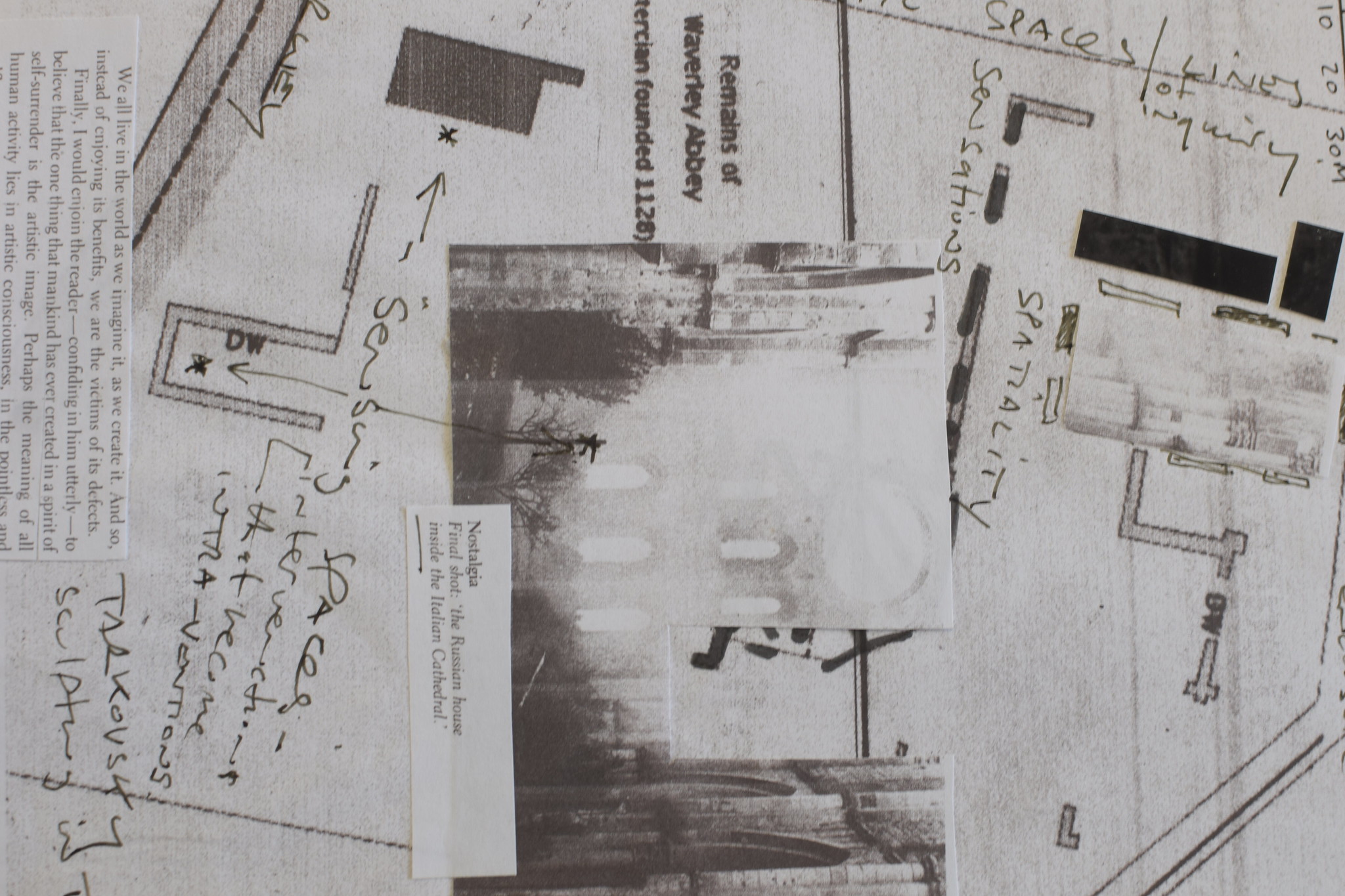
Waverley Abbey. Cistercian Monastery
The peculiarity of the ruin is defined in that it demythologises the impression of seamlessness and linearity. In the ruin, we are at once removed from dichotomised and levelled down space by entering a place at the threshold of experience. At the threshold, we return to the pre- spatial, if primordial, landscape, yet to submit to the suppression of space and site. Instead the place of ruin creates protrusions, which desolates the category of clean space.
The Aesthetics of Decay, An Uncanny Place. Dylan Trigg
Scarpa, extensive use of concrete with different aggregates and finishes.
Ashley Castle, restoration of ruin into a domestic dwelling, sensitive use of materials and methods of joining or revealing the historical fabric (allowing the ruinous to remain visible) of the building.
The Dovecote Studio, a building made of CORTEN steel built within the interior of a ruined Victorian dovecote (see further notes).
Source: Bricolage, Creative Audit of Research Topics and Processes
BOUNDARIES AND JUNCTION POINTS
Lefebvre, The Production of Space.
Lefebvre in his chapter on Spatial Architectonics makes reference to the relationships established by boundaries and the relationship between boundaries and named places. These relationships promote significant and specific conditions or features to a space. This in turn results in various kinds of space. Lefebvre states that “every social space, then, once duly demarcated and oriented, implies a superimposition of certain relations upon networks of named places.”1
It is this superimposition of space that can within it demarcate other thresholds of experiences, within an existing demarcated space that interests me.
The act of “blocking in “ the dimensions of another space onto the floor of another create a temporal junction between a host space and a site within this host, a guest. This sets-up the notion of a temporal double occupancy held by the demarcation of a boundary and a site of proposal. This basic and temporal site marking could be said to have affinity towards some sort of anthropological marking, a territory. (Lefebvre defines anthropological marking as being at the stage when demarcation and orientation begin to create place and its social reality in archaic cultures)2. This activity also has associations with nomadic and agricultural-pastoral societies as they use paths and routes as spatio temporal markers or determinants.
Lefebvre acknowledges that geographical space created through the body, through routes which were inscribed by means of simple linear markings. These first markings, paths and tracks drawn into the landscape would become the pores through “which without colliding would produce the establishment of places (localities made special for one reason or another).”3Within my practice drawing is used to form sites which contain visual information, evidence of temporal activities and traces of actual objects. These territories within other territories create fields from with boundaries form material relations, differences. My drawings are inside the temporality of site I have instigated and yet they propose a territory and a surface of light years which could accommodate the temporality of terrestrial space.
Interestingly Lefebvre comments “there is no stage at which ’’man” does not demarcate, beacon or sign his space, leaving traces that are both symbolic and practical.”4
1 Lefebvre, The Production of Space, (London: Blackwell, 1991) page 193.
2 Ibid.,page 192.
3 Ibid.,page 192.
4 Ibid.,page 192.
SENSORY THEATRE
EX MACHINA, Robert Lepage
While Legage continues to pioneer the use of technology, his work is imbued with an intimacy and humanity that few can match. Edinburgh festival 2015
ABBATOIR FERME, Jan Fabre (Troubleyn, Performing Arts)
A SOMATIC ARCHIVE, of subjectivities whose perceptions and environments are going to change forever; like the particularities of the analogue trace in photography that is now becoming a distant experiential condition, an orphan extinct from the subjectivities of its originating culture/organism.
The Waverley Inquiry
A Theoretical and Somantic search amongst Ruins and Archetypes Historical Perspectives
Dwelling/Poetics Heidegger Archetypes/Symbols Jung
Flesh and Stone, Richard Sennett
Flesh and The Logic of Sensation, Deleuze/Bacon Contemporary Spatial Practices
Feminist Geographies The Posthuman
Posthuman thought inscribes the contemporary subject in the conditions of its own historicity.
Posthuman Subjectivity ,Rosi Braidotti LIGHT into SOMANTIC SPACES
Continuum and Chora (light and the shadow of chora)
Life expresses itself in a multiplicity of empirical act: there is nothing to say, but everything to do. Life, simply by being life, expresses itself by actualiizing flows of energies, through codes of vital information across complex somatic, cultural and technologically networked systems. (Braidotti, 2013:190)
De Architectura, Vitruvius
Architecture consists of order, arrangement, proportion or eurythmy, symmetry and decor, and distribution.
Arrangement as an “Idea” refers to the Aristotelian notion of “Image representation” as phaantasia a precondition to drawing, effectively occupying and revealing a space between being and becoming.
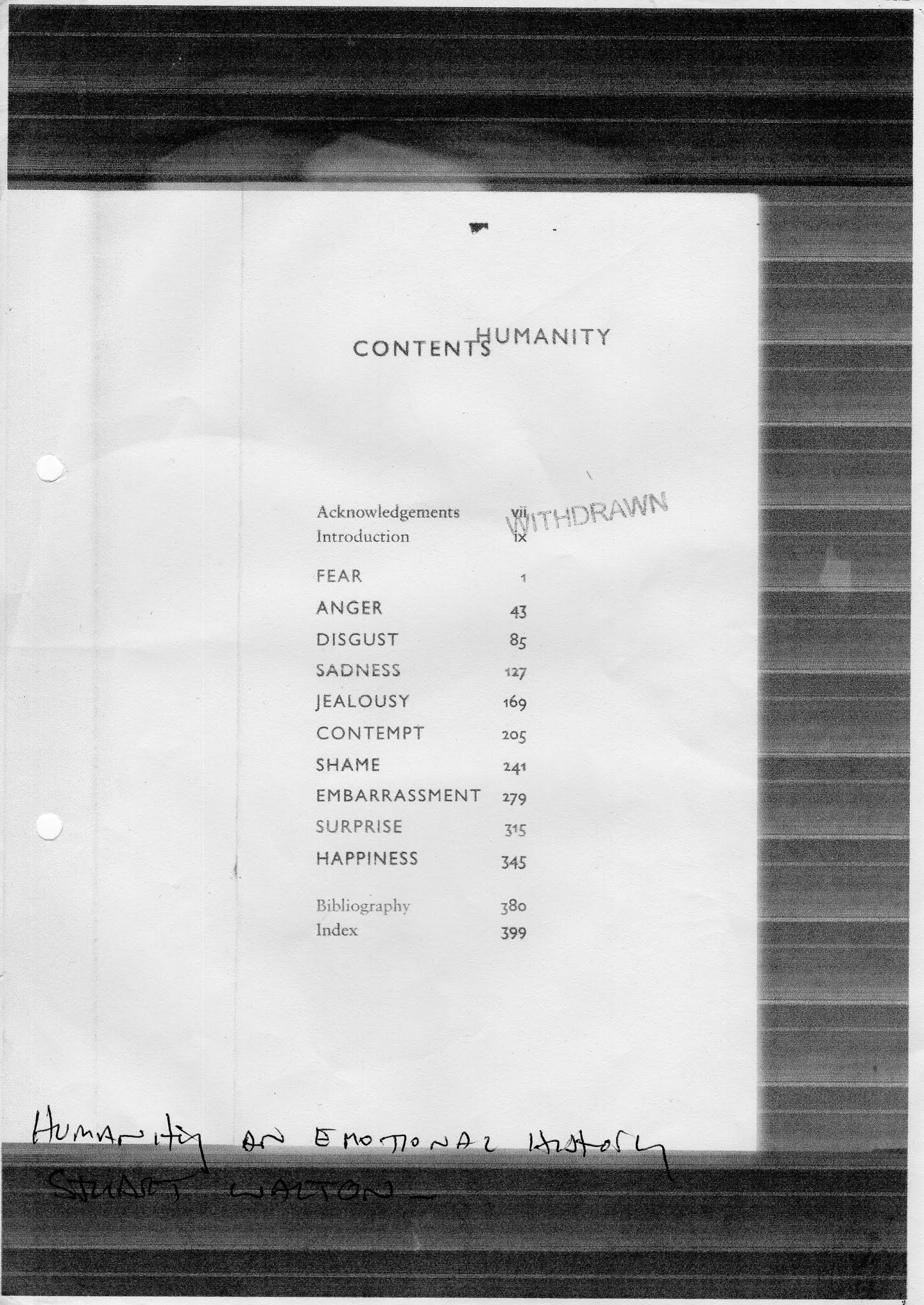
Contents List from a folder in the Theatre of Research Chora Body and Building
Space as Membrane
Chora (Exhibition) 1999
Lessons of a dream. Karsten Harries Concrete Blonde: Joanna Merwood
A probe into the negative spaces where mysteries are created. Surrealist Paris : Dagmar Motycka Watson
The non-perspectival space of the lived city Body and Building : George Dodds
Essays on the changing relation of body and architecture. Sphere and Cross : Karsten Harries
Vitruvian refections on the Pantheon Type Body and Building : Marcia f. Feuerstein
Inside the Bauhaus’s Darker Side
Desiring Landscapes/Landscapes of Desire. George Dodds A Tradition of Architectural Figures: Marco Frascari Interwining Metamorphoses : Germano Celant
On the work of Guiseppe Penone Space as a Membrane : Siegried Ebeling
Unlike a Library the Theatre of Research is a working space that creates and crafts both theoretical and practical objects, things and documentation. Its reason for being is to explore the praxis for creative narratives between the Arts and The Humanities. It attempts through performance, fine art and architecture to collage qualitative and diffractive dialogues into new relational discourses, the results of which become exhibited or staged as open workshops engendering praxis, publication and production. In its fledgling state it is seen as being part of a University faculty that has interests in the Arts and The Humanities. The possible linking with other establishments could be investigated. The working space becomes operational as a studio or laboratory that is engaged with full-time research led activities . Separate yet collaborative spaces and activities promote an environment for inquiry and personal development. The Theatre for research becomes a space that allows for the Post Production of ideas into new forms of social interaction. The theoretical merging with the practical into a relational narrative or methodology that enriches the practices of others, forming both new creative environments that can contain innovative ecologies that can question global perspectives.
INDEX OF IMMATERIAL ARCHITECTURES Jonathan Hill 2006
The Psychoanalysis of Fire. Gaston Bachelard 1964 (1938)
AIR
NATURAL FORCES
The Architecture of the Air (blurs the boundaries of architecture and nature) Loose spatial orders suggesting a fluidity of space, matter and use.
The experience of space was not a passive activity, nor was it considered to be pre dominantly retinal. Klein defines his subject matter ‘space’ as sensual, spiritual and an immaterial expanse in which the body is active and immersed; he sought to engage all the senses and to liberate the mind, body and imagination.
Quixotic Gestures that capture the experience and the engagement with natural forces. Klein’s architectural focuses on imprecise boundaries and inconsistent materials in active dialogue with the user.
Space through dialogue/movement defines the user
Most buildings make a clear distinction between the unpredictable natural forces outside and the predictable domestic spaces inside.
The Fireplace is unusual, therefore in that it is a natural force contained within the building.
The fireplace is also paradoxical in that if uncontrolled it threatens destruction of the home.
Evolving Atmospheres, Not Models
Architecture is the affect and its phenomena gained from the experience of the constructed form.
Architecture is a sensorial response to definitions of spatial arrangements. Architectures and their interiors can be infinitely re-imagined through interventions that might not noticeably alter their external appearance.
Materials and Place. The Secular Retreat. Zumthor and Heidegger.
Peter Zumthor acknowledges his knowledge and affinity with Heidegger’s writings, see Peter Zumthor, Buildings and Projects 1998,( Sharr,2007:91) In particular his Vais Spa is of particular note for the way in which Zumthor has created ‘evocative sequences of spaces’ within ‘its exquisite construction details’. (Sharr,2009:92)
‘Zumthor mirror’s Heidegger’s celebration of experience and emotion as measuring tools; he also emphasises sensory aspects of architectural experience. He notes that the physicality of materials can involve an individual with the world, evoking experiences and texturing horizons of place through memory.’ (Sharr,2009:92)
The measurement of a house through things that have sensual qualities, creating a memory of place, and its evocative measurement that can be choreographed through selective materials.
‘Flamed and polished stone, chrome, brass, leather and velvet are all deployed with care to enhance the inhabitant’s sense of embodiment when clothed or naked. The touch, smell and perhaps even taste, of these materials were orchestrated obsessively. The theatricality of steaming and bubbling water was enhanced by natural and artificial lighting, with murky darkness composed as intensely as light. Materials were crafted and joined to enhance or suppress their apparent mass. Their sensory potential was relentlessly exploited. With these tactics, Zumthor aimed to celebrate the liturgy of bathing by evoking emotions.’ (Shan,2009:95)
Zumthor comments about his architecture for the Spa at Vais.
‘In the bath there is a bit of a mythological sense of place, there are bits of theatricality, even the mahogany in the changing rooms looks a bit sexy, like on an ocean liner or a little bit like a brothel. They are where you change from your ordinary clothes to go into this other atmosphere. The sensual quality is the most important, of course, that this architecture has these sensual qualities. (Spier,2001:17)
He is trying to configure particular theatrical and phenomenal experiences in architectural form. It is only when the qualities of these prospective places emerge, can Zumthor begin to configure and design the particulars of the buildings construction.
‘The measuring of body and mind, the navigation by intuition and judgement which Heidegger makes sense in sparks of insight, these all become ways for designing, for imagining future places on the basis of remembered feelings. He feels that this process creates the contexts with which people will experience his architecture. (Sharr,2009:95)
The Spa at Vais was conceived to appeal to sensual instincts first, and then open itself up to interpretation and analysis, the spa should be tactile, colourful, even sexy to inhabit. (Sharr,2009:96)
‘Zumthor imagines experiences of the spa to be punctuated by things which evoke memories, which represent associations. He like Heidegger conceives of human endeavour in terms of traditions; Zumthor crafts spatial representations of those traditions by locating things in what he considers to be their proper place in time and history. Heidegger was also anxious to locate his farmhouse dwellers according to rites and routines longer than a life.’ (Sharr,2009:96)
Dwelling and livelihood, rites and routines, are all authenticated and located by design; the simple, sensual, primary and elemental associations that create traditions that both Heidegger and Zumthor can subscribe to. All help to root the spa in an agrarian view of the mountains that is associated with livestock and the necessities of shelter.
Zumthor shares with Heidegger ‘a sympathy for the mystical, claiming mythological qualities for moments in the spa’, and to champion’ the immediate evidence of experience and memory over that of mathematical and statistical data. ’(Sharr,2009:96)
‘ It seems that, for Zumthor, the Vais spa achieves his design intentions by locating rituals of dwelling in place with all the Heideggerian associations of those terms. By choreographing enclosure, mass, light, materials and surfaces, Zumthor sets up conditions from which he can propose a rich layering of place perceptions, by allow people to identify places through their bathing rituals and their associative memories.’ (Sharr,2009:96)
There is perhaps for Zumthor and other Heideggerian architects ‘the suggestion that design involves the choreography of experience’. He advocates a piety of building, of trying to develop a design in a away it wants to be, ‘of configuring physical fabric around real and imagined experiences’.
Heidegger notes of Western societies and their professional architectural regulations do much to ‘obstruct proper relations between building and dwelling by promoting buildings as products or as art objects’. (Sharr,2009:98)
Genius Loci: Towards a Phenomenology of Architecture. Norberg-Schulz. Presents an opportunity for people to achieve an existential foothold in the world. Norberg-Schulz notes that inhabitation as like a layer over the architecture. In effect the architect designs, the contractor builds, and only then do the inhabitants build and dwell.
Zumthor with particular reference to his Vais project likes to perceive his architecture and the things within it as becoming associated with traditions, perhaps these become re-enacted as rich, operative histories made in and for the present.
Steven Holl shares similar working methods with Zumthor, he to is influenced by phenomenology on his thinking. He makes watercolour sketches in perspective, as a means of choreographing experience, painting itself is an intuitive act, which opens up spontaneous and unintended design possibilities.
Drawing processes and mapping that can re-imagine the spatial possibilities of architectural experiences.
The Choreography of Experience. A Manifesto.
Being attentive to atmospheres, moods and sites.
Being concerned with the social and political geometries of human gatherings.
Being participatory to architectural tactics that enable informal gatherings.
Phenomenology and Politics.
Zumthor downplays the activeness of his role in design. The architect is keen to emphasise that he works instinctively with circumstances given to him. He claims a similar modesty in forming a rapport with site and locality. He is able to give the architectural idea a piety to become what it wants to be.
Heidegger’s problematic authenticity claims and the potential consequences of his romantic provincialism became more prominent in architectural debates about the merits of his model of building and dwelling.
Therefore ‘it remains a common assumption among architects that these positions are more or less in opposition. To caricature, phenomenology (at least in its Heideggerian incarnations) champions the value of immediate human experience over scientific, measurement and professional expertise, and tends to mytholize timelessness and situatedness. Critical theory, meanwhile, prioritises the political dimensions implicit or explicit in all human activities, and is opposed to monolithic claims of authenticity. (Sharr,2009:112)
Heidegger’s thinking, including that on architecture, is easily challenged from the perspectives of critical theory. The philosopher perceived the ‘essence’ of building and dwelling in authentic attunement to being, unapologetic about the tendencies of essentialism and authenticity to exclude people. His writings display little fondness for what he saw as the human distraction of politics. (Sharr,2009:112)
Heidegger’s work on architecture and, arguably, the architectural phenomenology which claimed him as a hero, has become a zero-sum game. Whatever it gives, its associations can also take away. Many architects and commentators have turned their backs on Heidegger in consequence although a few, including Zumthor, remain unswayed. (Sharr,2009:113)
Edward Casey, The Fate of Place.
Gaston Bachelard, Poetics of Space.
Maurice Merleau-Ponty, Phenomenology of Perception.
Source: BOUNDARIES AND JUNCTION POINTS ARE IN THE NATURE OF THINGS POINTS OF FRICTION
The Solar Pavilion, Upper Lawn, Wiltshire. SP3 6SJ
‘A building intervenes between subject and space.’(Kengo Kuma)
‘Things need to be ordinary and heroic at the same time.’(Alison and Peter Smithson)
‘The Charged Void- contains references to the architects’ concern that their buildings should command a wider territory. The Solar Pavilion is perhaps their most compelling exploration of this theme.’ (Sergison,2005:100)
The Upper Lawn Pavilion that Alison and Peter Smithson realised is actually nothing more than a primitive hut. Much of its appeal is that of its uncompromising simplicity a ‘light touch’ promoting a way of life like camping (or bathing) in the landscape; it has the kind of enchantment of a small building with big ideas, a building in the tradition of a garden pavilion or folly. The Solar Pavilion like the earlier Patio and Pavilion of 1956 is intended to be read as a symbolic habitat that could be seen as an attempt to self-consciously to embrace an intimate connection to nature; to tum back from the city and technology. For the Smithson’s the Solar Pavilion exemplifies a place for basic human needs, a piece of ground, a view of the sky, privacy and the presence of nature. It stands as a spiritual and physical counterpoint to urbanism and city life.
‘The Solar Pavilion, is both a lookout over the distant landscape on the north facade, sitting on top of the existing cottage wall, and a garden pavilion mediating between two types of controlled landscape. It aims to provide a minimal enclosure that allows as immediate a relationship between interior and exterior as possible.’
(Sergison,2005:97)
‘Architect’s homes provide rare occasions where the two issues of architectural theory and practice can both find a natural symbiosis; not only did the Smithsons’ build their ideas as concretely as possible, they also built themselves a private place for retreat and reflection.’ (Dirk van den Heuvel 2004)
Hybrid Construction; containing Mies’ tectonics and Le Corbusier’s pilotis and free facade.
Interventions made and consisting of existing elements (garden wall, chimney and windows from an existing building).
‘The construction of the box on the wall consists of a wooden frame clad with zinc. On all sides its posts function as a casing for fitted window frames. The frame’s wooden beams are put into the existing outer wall and are supported on the inside by a concrete beam poured in-situ and anchored in the existing chimney wall, and supported on both ends by square columns placed at a 45 degree angle. This construction results in non-supporting ground level facades, allowing the creation of the teak sliding doors along the full length of the garden facade.’ (Dirk van den Heuvel 2004)
Tony Fretton, working notes.
STRATEGIC INTELLIGENCE is the most enduring/valuable quality of an architectural project.
TEACHING informs my practice as an architect profoundly. It demands that I think, write and manage people, and places me in contact with great colleagues with theoretical and practical knowledge.
We have developed a methodology that channels my activities very precisely into design direction, presentations to the office and clients, and collective decision making on the management of the practice.
The Scheme It’s Style Their Form
Even an interesting delicacy in the detailing of the work.
MAKING architecture that is more prepositional, that reveals meaning and values in everyday objects and events.
ARCHITECTURE is a cultural artefact and a social art.
ARCHITECTS design buildings using knowledge of buildings that already exist, and the meaning of buildings is shaped by public attitudes.
FORMAL and IDEOLOGICAL INNOVATION is also necessary.
By WORKING TRANSPARENTLY with the relation between the present and past, it gives me access to richer cultural social and architectural territory.
I have understood that you can accept your social duties of being instrumental to society, while remaining productively critical.
I want to use the platform of contemporary architecture on one hand to make it more communicative and on the other more artistically enquiring about issues of the times.
BUILDINGS can explore issues such as national presence and identity in a foreign place. Political imagery in the ambiguity of the present times, the nature of place in which groups of people come together to work and its relation to the surrounding world and the relation between representation, physical security in relation to sustainable construction.
CRAFTS STUDY CENTRE Working Notes 2 July 2014-07-02
A site specific induced inquiry into dwelling and building through/by way of an attentive awareness (anthropological) to people and place.
‘What I am post interested in now is inverting the structure of a culture that is centred around the city.’
‘The richness and strength of that (their) culture cannot be understood until one has worked with the people who live their- until one has eaten their food, drunk their sake, talked together with the craftsmen and made things with them.’
Kengo Kuma, Complete Works, (preface) 2012
‘As found is a small affair, it is about being careful.’ Peter Smithson, 2001
‘The ‘as found’ attitude is anti-utopian; its form is (site) specific, raw and immediate. It calls the will to question. It is a technique of reaction ( Opposition/Kengo Kuma and Herzog and De Meuron and Multiplicity/Calvino and Zumthor) and a concern for that which exists.’
Schregenberger, 2005
The spatial practices of exhibition and education.
The humanities and architecture, Heidegger/Bachelard/Ingold/Herzog and De Meuron/Zumthor.
The politics of things/sociology and everyday life/dwelling and making. Natural History learning/thinking through things/situations and vocations. Contents/Contexts/Collection and Presentation.
Taxonomies and Subjectivity/Spatial Narratives of Layered Space (Spatiality) Mark Dion, Archaeology, Thames Dig.(Allegories of a pseudo-archaeology) Herzog and De Meuron, Archaeology of the Mind/Natural History.
Peter Greenaway, The Physical Self/Architecture and Allegory.
Visual/Spatial Vocabularies and Narratives (Livelihoods and Social Interactions)
Spatial Methodologies. Worlds and Thresholds.
The Fanciful and The Scientific.
The Playful and The Reverent.
The Material and The Metaphysical.
Tensions in built spaces.
Between Evanescence and Substance.
Between Illusion and Specificity.
Between Slickness and Tactility.
Making Places where times and tastes, human fabrications and accidents of nature, all collide; in these situations under the shelter of a forming/becoming architecture these ‘spatial texts’ or ‘visual conversations’ of one sort or another are suggested and are manifested and explored through a praxis of inquiry and making.
The Projects Evolution.
Philosophy of Solitude, thresholds/spaces of a vital serenity, a poetics of dwelling and its angle of repose hovering somewhere between the transcendental and the real.
Relationships between Art, Photography, Craft and Building. Expanded through Exhibition, Performance, Teaching and Making.
Realized as a dialogue/delivery (Built Work) into Architectural Terms between Sites of Collection and Sites of Construction.
Working Analysis.
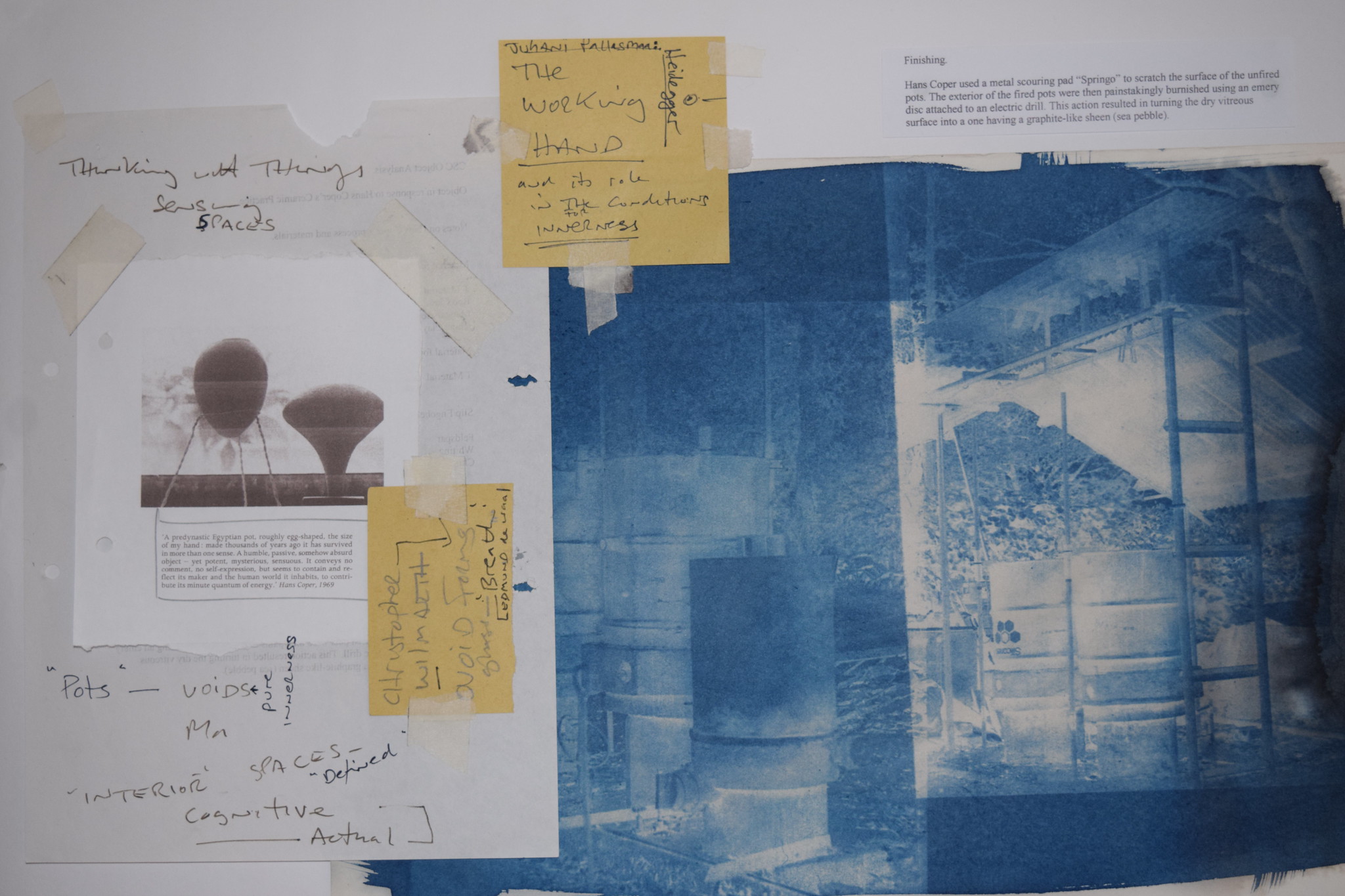
CSC Object Analysis : Hans Coper/Innemess in the Ceramic Vessel and Architecture. Making (act/sacred bond of both an individual and a civilisation) from the inside out, from the interior, from the first movement or impulse, from the everyday condition/situation the as found nature of things. The innemess of the vessel of a room remains the property of our shared humanity, of our social being/becoming.
Why did this opportunity produce a wealth of transformative insights (conduits and territories) that are now active agents working across all facets of my practice?
Properties: Pastoral Setting.
Built within and amongst a monastery.
Facility and retreat for cross-disciplinary inquiry (Humanities and the Social Sciences).
Repository and archive of artefacts, texts and objects.
Exhibition and making spaces, workshops and residential living spaces. Walled garden complex containing a reading pavilion and library.
Catalyst Events/Situations to engender the experience of learning.
West Dean, Singleton. Residential courses in the arts, both the grounds and the house are fully utilised in the social activity of learning.
Kilquhanity,Scotland. Free School in country setting, used as a site for exploratory fine art practices(converted a pottery into a camera obscura and drew a garden from the movements of the sun across a specific terrain).
Brockwood Park School, Bramdean. Re-imagining learning, conducted a walk across a landscape with clay, and hidden curriculum in the library with objects and texts centred around philosophy and architecture.
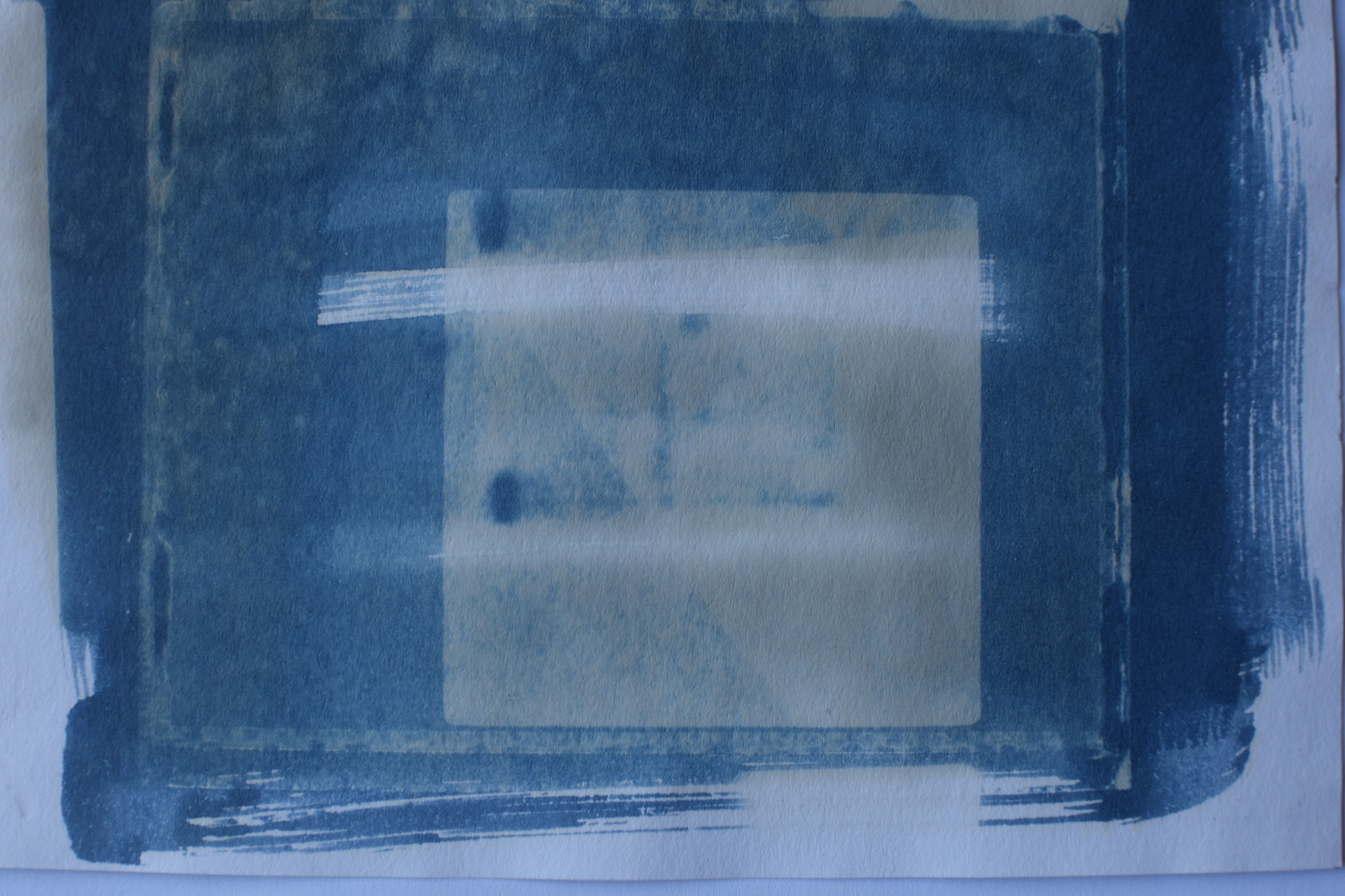
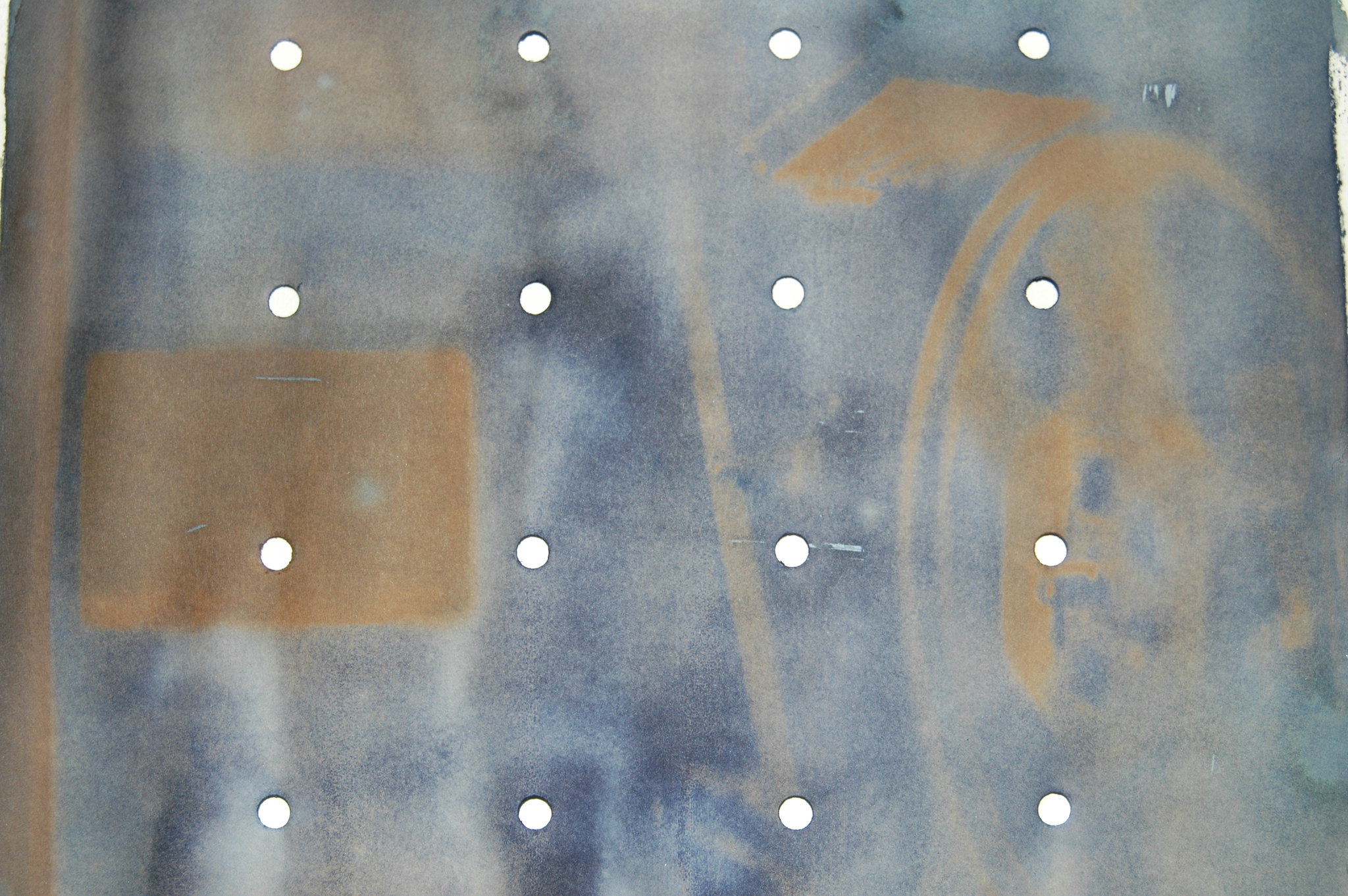
Winchester College, Winchester. Exhibition with talk on creative practice, display of large body drawings, cyanotypes, astronomical charts and architectural notebooks. Workshop conducted in the making and experimentation of using the cyanotype process (historical,light based,printing process 1843).
Link Gallery Winchester University, Winchester. Art and Archaeology around the Keatsian notion ‘Negative Capability’ photograms of anthropomorphic leper graves with excavated oyster shells found at the site (Mom Hill, Winchester).
Hyde Abbey Gatehouse and St Bart’s Church Winchester. Leylines exhibition of artist book photographs, drawings, maps and collages. Installation of archaeologist drawing frame with annotated lead labels, plumb bob, orientated to align with the speculative leyline phenomena.
Source: Visual/Spatial Vocabularies and Narratives (Livelihoods and Social Interactions)
Working Towards a Secular Retreat in the Landscape.
The task of architecture is to maintain the differentiation and hierarchical and qualitative articulation of existential space. Instead of participating in the process of further speeding up the experience of the world, architecture has to slow down experience, halt time, and defend the natural slowness and diversity of experience, architecture must defend us against excessive exposure, noise and communication. Finally, the task of architecture is to maintain and defend silence.
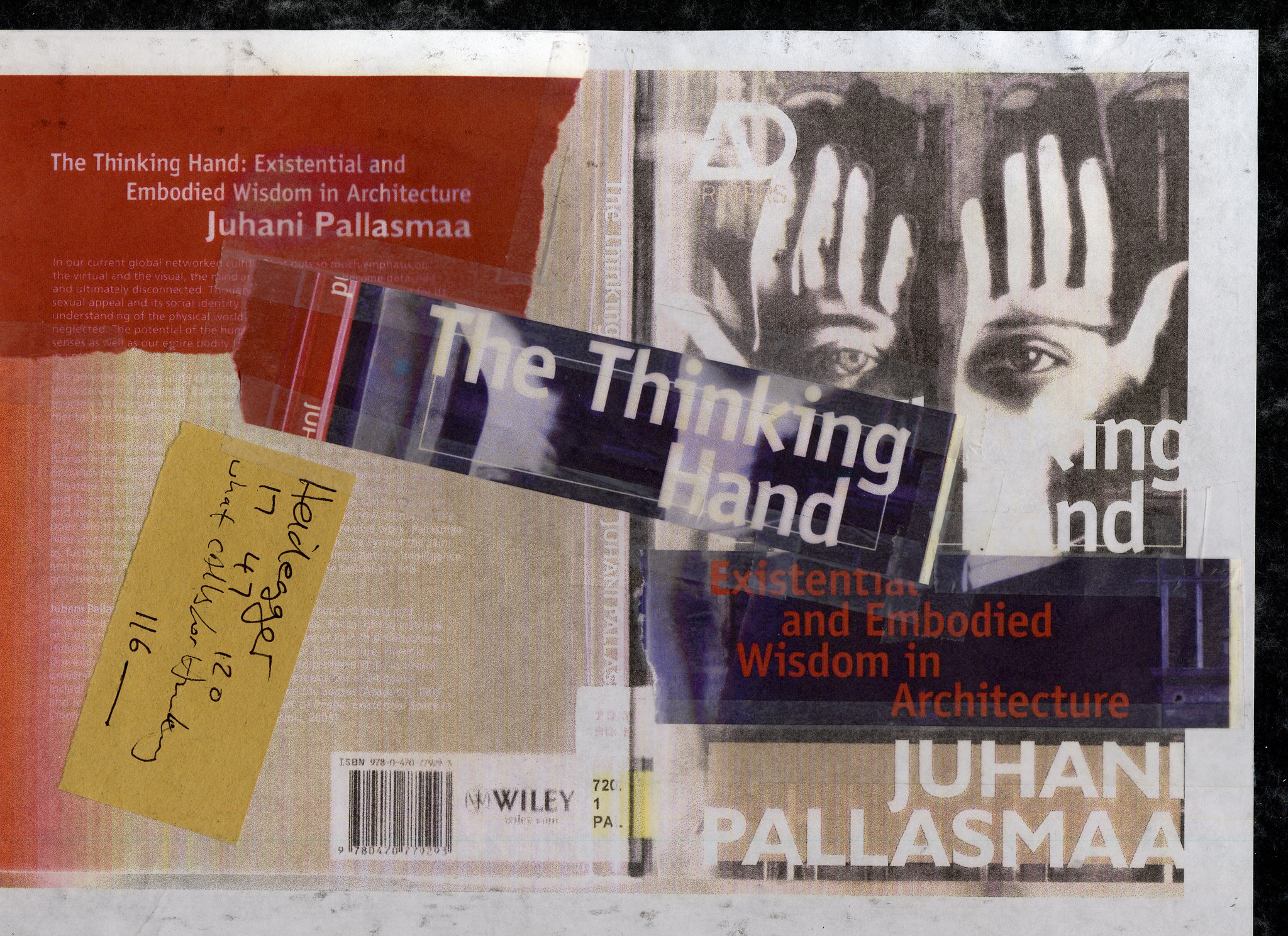
Juhani Pallasmaa : The Thinking Hand.
Existential and Embodied Wisdom in Architecture. 2009
This exploratory project centers around the heritage site of Waverley Abbey. This site has ruins from its ecclesiastical architecture that could be utilized in the sensory aspects of an architectural experience. The site offers up the possibility of constructing and choreographing enclosures and interiors by directly working with its unique sensitivities of place, mass, light, materials and surfaces. This project sets up real potentials to explore the possibility of crafting interior spaces that can host a rich layering of place perceptions. Currently my research has explored a number of themes and formal structures that might engender these concerns through my professional engagements with contemporary art practices and experience in the construction industry.
Peter Zumthor, Hortus Conclusus, Serpentine Gallery Pavilion 2011 Adam Sharr, Heidegger for Architects 2007
Leon van Schaik, Spatial Intelligence 2008
Henry Plummer, The Architecture of Natural Light 2009
Architecture is not made with the brain. The labour of Alison and Peter Smithson.
Architectural Association 2005.
Smithson’s on modernity, not as a goal but as an established reality that needs to be interpreted.
Articulation of the volumes based on rigorous rules that derive from the ordering capacity of the necessities of daily life.
Holistic Practices.
The way person and work fit together so seamlessly.
Embedding building within a specific contemporary cultural context. (Krucker,2005:85)
Transitions between spaces.
‘Building relationships to relate to what already exists.’ Herzog and de Meuron The Parallel of Art and Life
Aesthetics about Perception Poetics about Production
‘The approach leads from the static object of the mere picture to the dynamic process of imagining. ’(Schregenberger,2005:82)
‘As found is a small affair, it is about being careful.’ (attentive awareness (anthropological) to people and place) Peter Smithson 2001
‘The ‘as found’ attitude is anti-utopian; its form is specific, raw and immediate. It calls the will to question. It is a technique of reaction and a concern for that which exists.’ (Schregenberger,2005:81)
Complex Ordinariness Bruno Krucker
Urban Structuring.
Importance of urban planning, specific responses to the surroundings generated different shapes. Testing out spatial bound volumes and aligning them with the site or urban fabric/passages of use and existing features.
The Everyday.
The necessities of daily life (the repetition of basic sequences) giving shape and layout to the architecture.
Heavy Prefabrication. Whole wall sections used to a homogeneous expression that emphasises their tactile qualities.
To systematise transitions of both components and internal spatial orderings. The sizes of elements are determined by the inner spatial ordering in an almost organic, non-schematic way.’
We developed elements that embrace the entire thickness of the wall.’ (Krucker,2005:85)
The search for directness while avoiding too much design, but still ensuring that our buildings look right in their surroundings.
Cultural Background.
Fitting in with the ordinariness of the environment, an ordinariness that only reveals its strength over time.
Embedding building within a specific contemporary cultural context. (Krucker,2005:85)
The anonymous settings of settlements and agglomerations create documents/cinematic presences of familiarity within these architectural contexts. It is important to go beyond any superficial fascination with the ‘periphery’.
Structural Thinking. Anti Object: Kengo Kuma.
Identity out of structure/layers of latticed structure.
Character-forming ability of structures, through the transitions of interior to exterior spaces. ‘Our approach was to act decisively at an urban and a spatial level and to create precise alignments that would strengthen existing elements. Within the structure, it becomes possible to give specific places an individual identity and to create an awareness of the relation between repetition and difference. Seen in this way , the facades are less a surface around a volume, and more the outer edges of the structure itselfi importantly the structuring becomes independent of the programme, which can change over time). ’ (Krucker,2005:87)
The power of a building originates from its structuring (a character of a building that is not wholly subservient to its programme).
Neutrality and Character.
‘This kind of structural thinking supports the search for a more anonymous everyday architecture that can nevertheless develop a character of its own.
The prefabricated parts generate complex volumetric forms that remain only partly visible after assembly. The effect is similar to that of Japanese timber construction, in which the simplicity and clarity of appearance belie the complexity of the joining techniques involved.’ (Krucker,2005:89)
‘The Smithson’s embraced an architecture that was not purely driven by formal intensions but by questions regarding content. This is an architecture that results from an attitude of openness towards the world (of worlds) and an acute awareness of the impact of the architect’s actions. Such an architecture insists on addressing the nature of real conditions and how they fit into the fabric of a larger context.’ (Krucker,2005:90)
Lessons Learnt from Alison and Peter Smithson Jonathan Sergison and Stephen Bates.
‘I remember finding the work awkward, even ugly in its removal from architectural conventions.’
Research Contexts/Materials
The Shift/Italian Thoughts, both became pivotal in the understanding of the intensions behind their work.
What does it mean to be an English architect? The lessons presented as six themes.
Strategy and Detail, as a design concept and method.
A manual for negotiating our way through the development of a project.
‘All our projects begin with an interpretation of the specifics of the programme and a response to the place we are adding to, either as a series of sketches or a model exploring a building form. A dialogue then begins about the ‘feeling’ of the project, its material presence and its language of construction; this provides a framework in which to take decisions and a structure that can be referred to.’(Sergison,2005:92) Trying it out, testing its placement in place, its on-site feelings.
A detailing of open brick perpends (a breathing building envelope) that is overlaid on all three elevations, giving a quiet expression to the building’s tectonics.
Conglomerate Ordering, as an overall interconnected building solution.
‘A bold simple form adjusted by the forces of the site, thereby containing an equivalence, an overall tonality through the concrete frame as a structural solution and the block infill and their aluminium dressings. The building form and plan arrangement were adjusted according to the particularities of the site and to rhyme with the geometries of the neighbouring industrial buildings.’ (Sergison,2005:94)
Ways, (a spine providing a variety of spatial experiences coupled with the means by which circulation is distributed) sometimes Ways are employed in a manner that is latent and discreet; in other instances they are the most public part of a project.
‘The concept of Ways as a means of organizing circulation and supporting activity.’ (Sergison,2005:94)
A simple organizing circulation element that can be read, at one level, as a street or lane running the length of the plan, linking the apartments. This space is given a strong material intensity, entirely timber-clad on floor, walls and soffit. At selected moments views of the city are framed or the sky is revealed.
Janus Face, origins in Italian Thoughts, teaches us to understand how mediation is possible between inside and outside, or between one side of a building and another; as all faces are equally engaged with what lies before them.
By focusing attention on the enclosing envelope and how the building should engage with the conditions around it.
The opposing forces of a site and its relationships to the different faces of the building can become multifaceted, through scale, the choice of material or even the layering of its construction; a discreet link is sought which connects rather than confronts.
‘The Solar Pavilion, is both a lookout over the distant landscape on the north facade, sitting on top of the existing cottage wall, and a garden pavilion mediating between two types of controlled landscape. It aims to provide a minimal enclosure that allows as immediate a relationship between interior and exterior as possible.’
(Sergison,2005:97)
Ground Notations, the need to find an existing physical structure, see ‘Shifting the Track’ (Smithson.)
‘The Smithsons’ search for a strong existing element that could be added to and adjusted, if necessary, ensures that a project is grounded in its place. Successful ground notations operate at varying scales, ranging from large pieces of infrastructure (roadways, etc) to natural, seasonal landscape infrastructure (trees and meadows). Once absorbed into an existing situation, new ground notations begin to refocus a place and act as the basis for subsequent actions’ (Sergison,2005:97)
Drawing on an existing topographic ground notation (earth-bunds) matrices of bundways that help irrigate the marshlands and define land ownership.
‘New topographical features containing the infrastructure necessary for development, with roads on top and supply conduits inside them. Public buildings were located on top of swollen bunds, for visibility and orientation, while the spaces in between bunds became serviced fields for new settlement.’ (Sergison,2005:98)
Could it be that where a human settlement seems structure less, without purpose, we invent and build ‘ground-notations’ to offer an analogous power to that offered by strong natural landforms?
‘As Found, is a small affair: it is about being careful, the as found (is) where the art is in the picking up, turning over and putting with.’ (Smithson.)
‘The essence of ‘as found’ as a concept lies in accepting the value of the everyday. Any aspect of the built environment can be interpreted and employed as a trigger for architectural propositions. To consider ways in which the ‘ordinary’ can be harnessed through reinterpretation.’ (Sergison,2005:98)
Orange School Graph Books
Harleston 2020-2021
A Species of Spaces
The Social Turn
Museum Site and Display
Political Philosophy
Makers work in a world that does not stand still
Iteration allows for continual correction (material conversation) in response to an ongoing perceptual monitoring of the task as it unfolds, mixing the potential for blending or combining matter that already exists into new combinations
Tim Ingold 2010
The social life of making
Making speaks in vivid dialogue with two associated themes, material and skill
Creativity involves not merely a spark of innovation or the execution of artistic inspiration. But the capacity to respond to unfolding iterations with materials. To use slowly accrued haptic knowledge to manipulate processes on the fly, and to judge how to counteract error and seize opportunities as they evolve
Making becomes a process of iteration, and a maker works with this iteration prolifically
Matter and materials are lively and require attention, materials continue to thwart in unpredictable ways, decaying and breaking down or wearing or breaking under force
Vibrant Matter, A Political Ecology of Things
Jane Bennett 2010
Attending to the process of making opens up prospects for following the lead of the material, where the properties of the materials themselves shape the direction in which making proceeds
Tim Ingold 2010
New Urban Adventures in Collaboration/Conceptual Ceramics
Ceramic Practice as a form of research engaged in a process/ecology of inquiry, an exploration of ideas predicated on and exploiting the characteristics of clay
The transformation of the material is a central concern and semiotic significance unfolds with making
Seeking a symbiotic relationship between idea and object
Materials are substances in becoming
Karen Barad
Towards an Ecology of Materials
Tim Ingold 2012
From the ‘objectness’ of things to the material flows and formative processes wherein they come into being. It means to think of making as a process of growth or ontogenesis
Materials-Centered Perspective
Making, almost defies precise definition
The composition and/or manipulation of materials that bring into being new or revised objects
Tim Ingold 2010
Cultures of thrift and scavenging, maintenance and repair
Making encompasses the ingenuity of fluid, locally situated and adapted technologies
Materials carry on overtaking the formal destinations that, at one time or another, have been assigned to them
Sensibilities and dispositions that are centred on a deep and considered relationship with materials
The Craftsman, Richard Sennett 2008
Crafting, often reconnects mind and body in the sites and processes of production, thereby potentially reconstituting labour processes in ways that ascribe agency to workers
Makers finding ways to resist norms of gender and neoliberal entrepreneurial subjectivities, finding ways and spaces for ethical practice to predominate
Contemporary conceptual ceramics operates at the permeable boundary between art and craft, partaking of aspects of both, and ultimately demonstrating (or performing) that permeability
The emergence of the museum as proactive laboratory of social evolution
Extradisciplinary Investigations/Operative Principle
At work here is a new tropism and a new sort of reflexivity, involving artists as well as theorists and activists in a passage beyond the limits traditionally assigned to their practice
Microtopias, small contained sites of functioning democracy
Tropism conveys the desire or need to turn towards something else, towards an exterior field or discipline
The New Institutional Practice
Projective Enterprises (should unsettle, activate, and raise questions)
The exhibitions to emerge through new institutionalism are considered as points of exchange and collision, made through intersections of social, economic and political relations, it follows that the predominant forms of artistic practice included are the social, the spatial, the interdisciplinary
So our understanding of site has shifted from a fixed , physical location to somewhere or something constituted through social-economic-cultural and political processes
Site-Specific Art and Locational Identity
Miwon Kwon 2002
Collaborations and its Discontents
Claire Bishop 2006
The motivating factors for participatory projects is its critiquing of the essentialising of site and community in context-specific activities/exhibitions
A complex environment, awash in affect and subjectivity
When subjective and analytic processes mesh together to form a new productive and political ‘contexts’ of communicational labour
New curatorial initiatives must unpack the terminologies we use to distinguish one project from another
A playful psychogeographical situation, that resists the representative, illustrative and thematic narratives
Unsettling-Complicit
Provocative-Strategic
Interventionist-Collaborative
Perforative Curating/Prescribed Participation
Creating new/more coded patterns of behavior/conventions/role play for visitor’s
New Institionalism and the Exhibition As Situation/Social Experiment
Claire Doherty 2006
Participation
In which people constitute the central artistic medium and material
In the manner of theatre and performance
Participatory art is both a social activity and a symbolic one, as it is both embedded in the world and at one, remove from it
The artist is conceived less as an individual producer of discrete objects, than as a collaborator and producer of situations
The contemporary artwork is finite, portable, commodifiable product, and is reconceived as an ongoing or long term project with an unclear beginning and end
Artists are more interested in the creative rewards of participation as a politicised working process, than the relational aesthetic which renders discursive and dialogic projects more amenable to museums and galleries
Artificial Hells (exposing the political and aesthetic limitations in the work)
Participatory Art and the Politics of Spectatorship
Claire Bishop 2011
Site-Specificity/Spatial Practice
The distinguishing characteristic of today’s site-oriented art is the way in which both the art work’s relationship to the actuality of a location (as site) and the social conditions of the institutional frame (as site) are subordinated to a discursively determined site that is delineated as a field of knowledge, intellectual exchange or cultural debate
Miwon Kwon 1997
Whilst temporary exhibitions can expand the scope of medium-specific discourse, they can also impose alternative, but equally restrictive frames
Participation, creating a bridge between socially engaged practice and the permanent collection
Expressing itself expressing
Creating a conceptual and linguistic dexterity between absolutes, certainties, definitions
Dissolving the intellectual relevance, with its symbiotic relationship with utility to create ‘vessels’ beyond art and artifact
The strategy of making artworks as response
The Ceramic Object, by means of preservation and display becomes a vehicle/vessel for a social and historical narrative/entanglement/engagement
Making vessels, beyond the examining and intellectually impoverished questions
A vessel is identified as such by its physical disposition, giving shape to the contents and clarifying what is inside and what is outside
Few boundaries are impenetrable
They are rather, semi-permeable membranes providing housing while allowing selective commerce
Like the vessel, the house shapes and nurtures the life contained inside
The Factory I build in the Tate is a place to discuss the transactions and transformations of Labour that Create Knowledge and Community
In the Factory we will examine skills and how we form Exchanges at Work , with ourselves and with others
Clare Twomey, Lead artist at Tate Exchange 2017
Post Studio Ceramics
Interfaces between Making-Makers-Museums
Exploring object engagement beyond the known historical models of clay practice
‘Generate’ Historical Material and Spatial Relations as they interacted with the work, and reflected on the role of the Museum/Hospital
Clare Twomey
Ceramics In The Environment
An International Review
Janet Mansfield 2005
With Fire, Richard Hirsch
A Life Between Chance and Design (invites the unknown)
Scott Meyer 2012
Hirsch takes us to the heart of the interface between ageless earth and the spare evidence of the rhythm of human utility
Raku as an Ideology
Breath-Energy-Immanence
Raku, A Review of Contemporary Work
Tim Andrews 1994
The Poetry of The Vessel
A calm invitation to thought and imagination
Chris Tyler
The vessel (making, thinking, subject) as both a historically grounded form, and a vehicle to examine abstract aspects of the physical body and the natural world
Arte Povera/Germano Celant, an aesthetic-philosophical movement
An eclectic synthesis of knowledge fields, that emerges into a total space where disparate categories can meet; a art that asks only for the essential information, that refuses the dialogue with the social and cultural system, and aspires to present itself as something sudden and unforeseen
Site-Specificity/Spatial Practice
The distinguishing characteristic of today’s site-oriented art is the way in which both the art work’s relationship to the actuality of a location (as site) and the social conditions of the institutional frame (as site) are subordinated to a discursively determined site that is delineated as a field of knowledge, intellectual exchange or cultural debate
Miwon Kwon 1997
Whilst temporary exhibitions can expand the scope of medium-specific discourse, they can also impose alternative, but equally restrictive frames
Participation, creating a bridge between socially engaged practice and the permanent collection
Expressing itself expressing
Creating a conceptual and linguistic dexterity between absolutes, certainties, definitions
Dissolving the intellectual relevance, with its symbiotic relationship with utility to create ‘vessels’ beyond art and artifact
The strategy of making artworks as response
The Ceramic Object, by means of preservation and display becomes a vehicle/vessel for a social and historical narrative/entanglement/engagement
Making vessels, beyond the examining and intellectually impoverished questions
A vessel is identified as such by its physical disposition, giving shape to the contents and clarifying what is inside and what is outside
Few boundaries are impenetrable
They are rather, semi-permeable membranes providing housing while allowing selective commerce
Like the vessel, the house shapes and nurtures the life contained inside
The Factory I build in the Tate is a place to discuss the transactions and transformations of Labour that Create Knowledge and Community
In the Factory we will examine skills and how we form Exchanges at Work , with ourselves and with others
Clare Twomey, Lead artist at Tate Exchange 2017
Post Studio Ceramics
Interfaces between Making-Makers-Museums
Exploring object engagement beyond the known historical models of clay practice
‘Generate’ Historical Material and Spatial Relations as they interacted with the work, and reflected on the role of the Museum/Hospital
Clare Twomey
Ceramics In The Environment
An International Review
Janet Mansfield 2005
With Fire, Richard Hirsch
A Life Between Chance and Design (invites the unknown)
Scott Meyer 2012
Hirsch takes us to the heart of the interface between ageless earth and the spare evidence of the rhythm of human utility
Raku as an Ideology
Breath-Energy-Immanence
Raku, A Review of Contemporary Work
Tim Andrews 1994
The Poetry of The Vessel
A calm invitation to thought and imagination
Chris Tyler
The vessel (making, thinking, subject) as both a historically grounded form, and a vehicle to examine abstract aspects of the physical body and the natural world
Frames, Handles and Landscapes
Simmel 1965
A tools beauty springs from the many unintended and absolute causalities, instead of being a materialization of an aesthetic idea
The Thinking Hand
Pallasmaa
Affordances provide strong clues to the operations of things
Gibson
A psychology of causality is at work as we use everyday things
Donald Norman 2002
Perception of Environment/Relational Situations
Tim Ingold
A Species of Spaces
The Social Turn
Museum Site and Display
Political Philosophy
We have all the choice in the world in terms of products, but very little choice in terms of the kind of
economy within which those things are made, accessed and used
Whose Economy
Reframing the Debate
After Neoliberalism
Doreen Massey
Other ‘material interventions’ and the revaluation of making through strategies of repair and
maintenance
Making Ecological Politics
A world teeming with impulsive movements, deviations and many other lively (capacious) materialities
Influences that pervade, enable, and disrupt us
Vibrant Matter, Jane Bennett
Makers work in a world that does not stand still
Iteration allows for continual correction (material conversation) in response to an ongoing perceptual
monitoring of the task as it unfolds, mixing the potential for blending or combining matter that already
exists into new combinations
Tim Ingold 2010
Each thing framed dwells in the world differently
The frame and framing, through its configuration, must never offer a gap or a bridge through which as it were, the world could get in, or from which the picture could get out
The picture frame reminds us that the work of art, while it hangs in our room, does not disturb our day-to-day sentient and perceptual ecologies
It is like an island in the world that waits until one approaches it and which one can as well pass by and overlook
On The Picture Frame, Simmel
Art becomes art by virtue of literal and institutional framing
Aesthetic contemplation blurs reals and emotional space in a way that produces tangible affects in the world
The thinking hand that mediates a haptic bridge in which creating and holding, becoming and grasping are all practical everyday activities extending the thinking body
Objects that stand in two worlds at once and becoming drawn into the movement of practical life through the virtue of being held in the hand
The intermingling of persons and objects in pictorial space and the aesthetics of the intermingling of function and form in everyday things
The pictorial space is one in which persons and images intermingle and passions can be aroused
Gell
Source: The aesthetics of the intermingling of function and form in everyday things
DRAWING INTO THE READING ROOM
MAKING SPACES PARTIAL to the material flows and currents of sensory awareness in which IMAGES and OBJECTS reciprocally take shape/meaning.
FLEDGLING ARCHITECTURE IN THE MAKING ISOTROPIC SPACE
SOCIALIZED SOCIABLE
INTERIOR ARCHITECTURE through a sensitive adaptation of place studies, and using materials and built spaces to form the container/scaffold/stage for an activity not its contents. Working spaces that can be given a multiplicity of tasks that can accommodate the humanities and the life sciences.
Architecture and landscape, together with the localised weather, and the sheltering buildings all contribute to finding the mental spaces for the retreat.
APPARATUSES DURATIONS EFFECTS
THINGS-MAKING-PEOPLE-IN THE WORLD
Heightening the experiential experiences of place. Ramps, stairs and passages as devices (movable) to examine and to create immediate architectural interventions. Notion of the observatory as being part built/part still under development through drawing, (monuments as instruments, Japor).
The camera obscura’s darken room becomes a stage and a cinema; a drawing black boarded room for making creative reciprocal social practices.
Working Towards a Secular Retreat in the Landscape.
The task of architecture is to maintain the differentiation and hierarchical and qualitative articulation of existential space. Instead of participating in the process of further speeding up the experience of the world, architecture has to slow down experience, halt time, and defend the natural slowness and diversity of experience, architecture must defend us against excessive exposure, noise and communication. Finally, the task of architecture is to maintain and defend silence.
Juhani Pallasmaa : The Thinking Hand.
Existential and Embodied Wisdom in Architecture. 2009
This exploratory project centers around the heritage site of Waverley Abbey. This site has ruins from its ecclesiastical architecture that could be utilized in the sensory aspects of an architectural experience. The site offers up the possibility of constructing and choreographing enclosures and interiors by directly working with its unique sensitivities of place, mass, light, materials and surfaces. This project sets up real potentials to explore the possibility of crafting interior spaces that can host a rich layering of place perceptions. Currently my research has explored a number of themes and formal structures that might engender these concerns through my professional engagements with contemporary art practices and experience in the construction industry.
Peter Zumthor, Hortus Conclusus, Serpentine Gallery Pavilion 2011 Adam Sharr, Heidegger for Architects 2007
Leon van Schaik, Spatial Intelligence 2008
Henry Plummer, The Architecture of Natural Light 2009
The sewer is the conscience of the city. Here, no more false appearances, no possible plastering, the filth takes of its shirt, absolute nakedness, rout of illusions and of mirages, nothing more but what it is, wearing the sinister face of what is ending. Reality and disappearance.
Victor Hugo, Les Miserables.
Philosophy is the microscope of thought. Everything desires to flee from it, but nothing escapes it. In the effacement of things which disappear, in the lessening of those which vanish, it recognizes everything. It reconstructs the purple from the rag and the woman from the tatter. With the cloaca it reproduces the city; with the mire it reproduces its customs.
Peter Zumthor, interested in the authentic core of things, in emotions and imagining things and not theories. From the emotional/existential experience of things, Zumthor further embodies sensations of remembrance and memory into the fabric of his architecture.
For a moment there fell on Jude a true illumination: that here in the stone yard was a centre of effort as worthy as that dignified by the name of scholarly study within the noblest of colleges.
Thomas Hardy, Jude The Obscure.
An architecture that responds to the evanescence of natural light, in praise of shadows.
The Cemetery and The Allotment, differences and similarities. What is important is what is contained, not the container.
Space for an architect does not exist, so we design the limits that give the impression of space.
Eduardo Souto de Moura. RA Sensing Spaces 2014
There is a sense of pleasure in moving from darkness to light or vice versa because as human beings were cyclical. How light reflects and how light is contained is the stuff of architecture.
Grafton Architects. RA Sensing Spaces 2014
Space is already structured (Deleuze), it is place that is the relational human praxis of space.
The Dehumanised Nature of Human Consciousness, Silke Panse. Screening Nature : Cinema beyond the human. 2013
Metaphor (as a spatial experience/sensation?) is itself a philosophical concept. Multiplicity and Memory : Talking about Architecture with Peter Zumthor. Six Memos for The New Millennium, Italo Calvino.
Interiors as book, poem, essay, philosophical treatise.
To define these spaces one needs decisive characteristics woven into the fabric of the building in its everyday function. These characteristics or spatial zones will define exact physical limits to be read or navigated as an experiential experience. These zones mark the outside limits or boundaries of layered experiences.
GLAS; Derrida, (a philosopher interested with the “between”) Gias in French means the death knell tolling of a bell.
The methodology of reading.
Playful interrogations of the borders between philosophy and literary writing. “This anti-book stages a kind of linguistic battle between philosophy and literature.”
Destabilising tactics through different typographical styles, formats and languages.
Derrida’s text turns philosophers, thieves, fathers and families into unstable figures; their identities are no longer assured, and neither are the usual hierarchies.
On The Lefthand Side.
Philosophy as expressed by Hegel, who believed that the bourgeoisie family was an embodiment of absolute knowledge and its subsequent passing down through strictly controlled channels.
On The Righthand side.
Subversive literature in the shape of the writings of Jean Genet, whose writings celebrate the very opposite of family values.
The experience of the text is its reading (like that of a collage) is that neither column can be read without its internal boundaries or edges being constantly opened up to the other column.
In each column, Derrida cites and grafts (what might these terms generate in architectural space) from Hegel’s personal letters and documents or from his philosophical texts, and from Genet’s journal of the thief and his prose poetry.
GLAS; Has in fact a multiplicity (multiplicity and memory in architecture, Peter Zumthor) of author’s and their authority is always placed in doubt; in fact GLAS has an excess of boundaries that seek to divide it up inside itself.
Its fragments offer multiple beginnings and endings. Hegel’s Columns. (Heidegger)
Hegel’s “Absolute Knowledge” spirals through dialogues of thesis and antithesis into a higher synthesis that is in tum interrogated by conflict and resolution (dwelling) until it comes to rest as an “ultimate harmony” presided over by “absolute reason”.
Genet’s Columns. (Winterson)
Metaphors and puns seductively unfolding their colourful eddies, ruffles and dark labyrinths.
Derrida by placing both on the same page and in close proximity forces the reader to experience the literary effects, the unintentional connotations and insinuations and metaphors that blossom up in explosions of meaning; from within the most rigorously unruffled philosophical prose.
Architecture on reality and living (dwelling)
Architecture can go too far in completing and controlling social space and influencing the politics of the everyday. Spatial practices are needed as a plastic and permeable social architecture that loosens and adapts the everyday from the imposition of both state and history. From these first speculative oppositions, architectural practice can be informed with the differences between the logic of design and the reality of place.
Heidegger. Jung. Archetypes. Pottery
Architecture
Old Buildings/New Designs: Architectural Transformations. Charles Bloszies. Knocktopher Friary is a quiet place of contemplation. The new residential cloister
unifies the friary and the church. The composition of the architecture is a knitting together of two original forms with a ribbon of concrete, glass and wood. The new buildings are crafted from a minimalist vocabulary where the palette of materials was kept to a minimum. One of the interesting design features is that the new elevations never touch the old facades with a solid-to-solid intersection; the new is either set back from the old (Ashley Castle) or the joint is glazed. The existing church floor is used as both a datum for maintaining the new floor level in the new construction, and as a vein of closely controlled changes of materials and finishes. The resultant architecture is played between subtle material exchanges of concrete meeting wood, concrete meeting glass, and concrete meeting concrete with slightly different surface qualities. What results is a clear differentiation between the old and the new, both are remarkably quiet architecturally reflecting the concerns of the site as a Carmelite monastery in the southeast of Ireland.
Working Thoughts.
Scarpa, extensive use of concrete with different aggregates and finishes.
Ashley Castle, restoration of ruin into a domestic dwelling, sensitive use of materials and methods of joining or revealing the historical fabric (allowing the ruinous to remain visible) of the building.
The Dovecote Studio, a building made of CORTEN steel built within the interior of a ruined Victorian dovecote (see further notes).
Building Practices
The Everyday : The Jug.
The Dwelling Place : The Bridge Mediators for spatial experiences.
Libraries with research conduits for immersive and interactive cognitive mappings, allowing a praxis to enter the practicability of the everyday, a crafted philosophical inquiry, building new livelihoods.
Colour
Texture Surface Enclosures Voids
Sample Materials
Relationships through Localities/Mood Boards/Technical and Physical Details. Erasure in drawing and architectural planning (space voids) as a methodology to
superimpose multiplicities.
Erasing : Kirosan Observatory, Anti-Object, Kengo Kuma. Multiplicities and Memory, Peter Zumthor.
Learning Spaces as a performative spatial practice through a process of tuning and minimising (Minimising, NO stage in the forest, Kego Kuma).
Reading Rooms between the Body and the Book Not just a project but also a field of study.
Peter Greenaway, Architecture and Allegory. Peter Greenaway, The Physical Self.
Mark Dion, Archaeology (The Project as Archaeology/Thames Dig). Herzog and De Meuron, Natural History.
Appropriation and Modification/Interlocking Spaces.
Speculative Architecture : On the Aesthetics of Herzog and De Meuron. The speculative solution, which turns not the real world but logic itself on its head.
Without opposition nothing is revealed, No image appears in a clear mirror If one side is not darkend.
Jacob Bohme, De tribus principiis 1619.
Everything is interrelated and suffers when it acts, so too the purest human thought
Holderlin, 1798.
Text definitions/Spatial frames and small interventions.
Surfaces and Spaces. Colour and Material dialogues/engagements.
Source: Making Spaces : Between Speculative Movements of Reading Architecture
SPACE SITE INTERVENTION Through Archaeological Methods.
A space has been created, allowing for a different construction of what may be significant in these circumstances, relative to objects found in association with each other. (Robert Williams, Disjecta Reliquiae The Tate Thames Dig)
Associations and coincidences that become meaningful (or are unearthed) within the context of the activity.
Erika Suderburg. On Installation and Site Specificity
THE WAVERLEY PROJECT, methodologies in the making.
This research and its design proposal are centred on the arts and the humanities and their ongoing function in our contemporary society. The emphasis of this inquiry is located by the spatial practices of architecture, fine art and performance. My project is a field event and symposium that would be able to host intellectual dialogues, lectures (TED) workshops, performative events and exhibitions. I am particularly interested the relational production of social spaces and the aesthetics of builtspaces, both historical and ephemeral. The proposed use of Waverley Abbey near Famham as a possible site and retreat for this venture is valid as it links a possible interdisciplinary territory of anthropology, archaeology, art and architecture. Tim Ingold (Making) Colin Renfrew (Figuring it Out) and others have for many years been researching and mapping this new spatiality.
What remains of Waverley Abbey and its sense of place are critical to the holistic and contemporary underpinning of this experiential event. Founded in 1128 it was the first Cistercian Abbey to be built in England. It is recorded that Cistercian life was initially based on manual labour and self-sufficiency, this was further supplemented by other activities like agriculture and brewing that enabled the abbey to support itself. Later over the centuries education and academia began to dominate the concerns of the abbey. The abbey was suppressed with its dissolution in 1536, although records show its activities were already at this time substantially diminished. The ruins and their site then enter into the imaginary realm through classic literature in the novel Waverley by Scott. Further on a pictorial reference from an engraving shows the ruins now incorporated as a fashionable landscape feature within the newly built Waverley Abbey House.
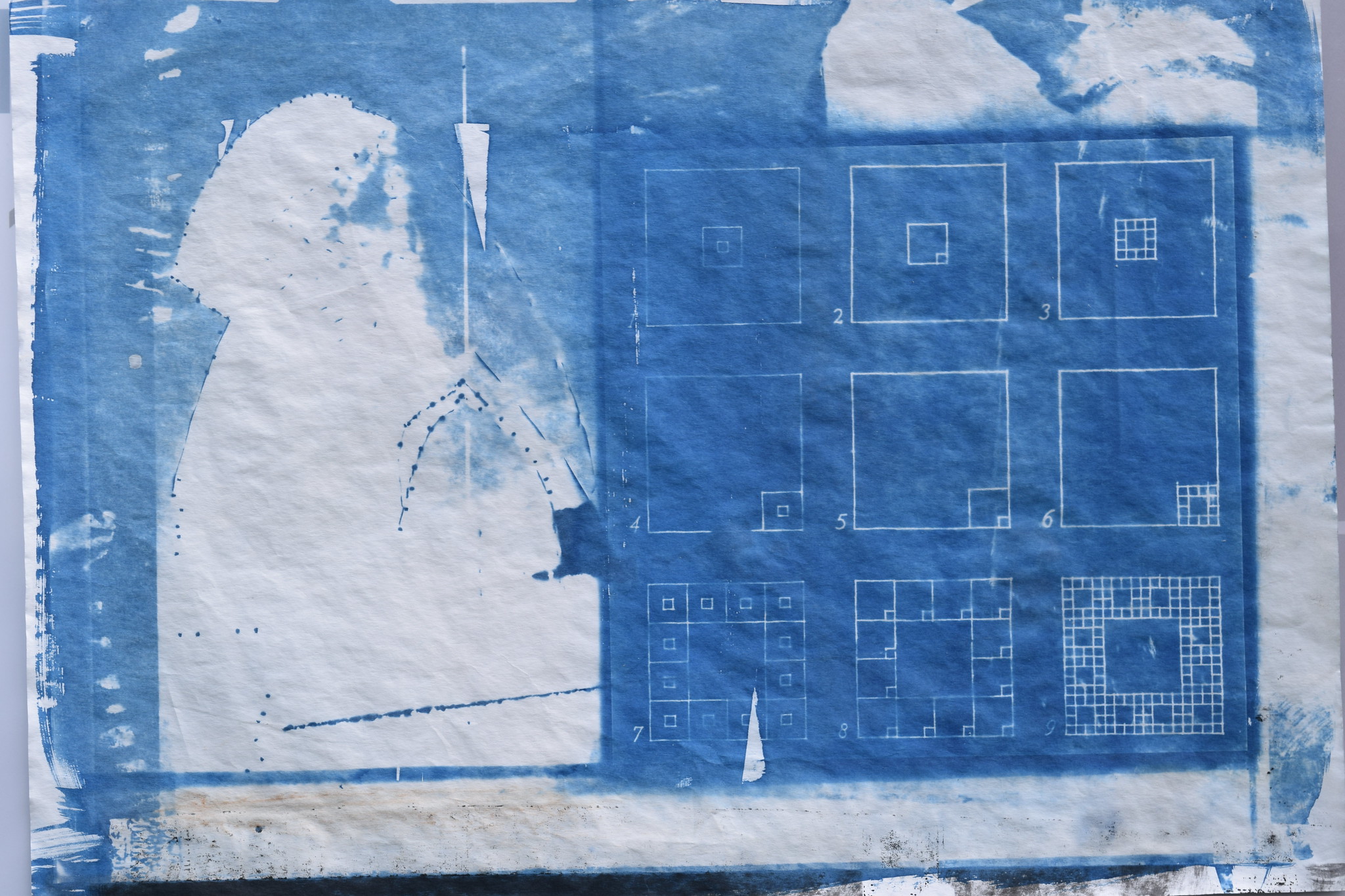
On a contemporary note Waverley Abbey has featured in a number of films ranging in genres from period costume dramas through to fantasy, together with post apocalyptic visions of dystopia. A recent film shoot required the construction of a sixty-foot tower made from internal scaffolding with a skin that recreated the adjacent ruinous fabric of this historic site.
Encountering the site is currently only manageable by foot; this short walk in the surrounding landscape sets up the sense of place and prepares our own subjectivities to its reception. It is in this expectation, this thinking in the landscape that the pastoral and educational aspects of the site become apparent. Currently access is only available through one directed pathway; a multiplicity of other access points and even other structures (bridges, earthworks and thickets) could begin to open up the spatial palimpsest already located at Waverley. What remains of the architectural fabric with its diminished interiors still grants a hospitality and refuge for both the body and the imagination. This activity opens up the experiential space of encountering ourselves through the enjoyment/entanglements of layered social space.
Waverley Abbey is a public monument in the custodian care of English Heritage. It can only be accessed by walking about a quarter of a mile from the limited parking spaces.
Waverley Site
Hortus Conclusus Sensing Spaces
Peter Zumthor, Hortus Conclusus 2011.
Directors’ Foreword: Julia Peyton-Jones, Hans Ulrich Obrist.
Zumthor’s architectural design practices consider each project in terms of a comprehensive and encompassing sensory experience. Looking at more than the physical fabric and form of the building, he often draws inspiration from memories of childhood experience. His projects aim to reference all aspects of sensory perception, addressing the relationship between the human body and the ways it may interact within the built environment. Many of Zumthor’s projects have been specifically noted for their thoughtful and evocative play on scale, colour, material and light in harmony with the buildings function and surroundings. (Peyton-Jones 2011: 9)
Using spatial practices as an inquiry into issues of “site” through architecture, art and performance.
What are the possible phenomenological assets of the site?
What remains of the interior spaces of the architecture and how much of the ruin has been submerged into the parkland setting?
How might these be explored and subsequently re-presented into the public realm?
A SITE BASED Symposium on ‘Making’ as experienced through the palimpsest of place.
Featuring the ‘Reading Room’ an ephemeral interior space, which gathers-up the experiential values of ‘Ruins’ and re-enacts them as a site to explore the architectures of images.
Library of Contents/Taxonomies Knots of Reference/Lines
Humanity, An Emotional History:
The Poetics of Space:
Architecture and Allegory:
The Psychoanalysis of Fire:
Existential Space in Cinema:
Natural History:
Sculpting in Time:
Land Drawings, Installations and Excavations:
The Physical Self:
Archaeology:
Making:
Politics of Rehearsal:
Palimpsest usage by Historians as a description, of the way people experience time. That is as a layering of present experiences over faded pasts. The production of augmented realities brought about by the melding of layers of material place with virtual representations.
Accumulated iterations of a design or site, evidence of the former use remains.
A kind of forensic science used to describe objects/things placed over one another to establish the sequence of events of an accident or crime scene.
The Concept of Palimpsest, a way of describing how generations alter the landscape.
Heidegger. Jung. Archetypes. Pottery
Architecture
Building Practices
The Everyday : The Jug.
The Dwelling Place : The Bridge Mediators for spatial experiences.
Libraries with research conduits for immersive and interactive cognitive mappings, allowing a praxis to enter the practicability of the everyday, a crafted philosophical inquiry, building new livelihoods.
Colour
Texture Surface Enclosures Voids
Sample Materials
Relationships through Localities/Mood Boards/Technical and Physical Details. Erasure in drawing and architectural planning (space voids) as a methodology to superimpose multiplicities.
Erasing : Kirosan Observatory, Anti-Object, Kengo Kuma. Multiplicities and Memory, Peter Zumthor.
Learning Spaces as a performative spatial practice through a process of tuning and minimising (Minimising, NO stage in the forest, Kego Kuma).
NAVIGATION AND CRITICALITY THE READING ROOM
ORGANISATION IN THE FIELD OF RUINS COMPONENTS, AGENTS AND ARCHIVES.
Categories of Architecture as Categories of Perception. Architecture and Nature.
Architecture as a reflecting/gathering of the phenomena of human nature/Nature.
The exhibition and research relationships around the nature of things.
The architecture provides a point of intersection between mass and its sublimation in imagery and thought, between immateriality and its reification. It allows apparent opposites to be seamlessly united – or parted again, at the whim of the weather god. (Building with Images, Herzog and De Meuron’s Library at Eberswalde)
Robin Evans. Translations from Drawing to Building
Figures, Doors and Passages
Essays and Other Texts (AA Documents 2)
The Social Condenser in Operation.
Five figures and a stature distributed evenly in its isotropic space-a picture of the socialized as opposed to the sociable.
Figures, Doors and Passages, Robin Evans. 1978 (Titled Image) Robin Evans (1944-1993) Historian of Architecture.
His writings covered a wide range of concerns such as society’s role in the evolution and development of building types, together with interests on architectural representation, aspects of geometry and modes of projection. Evans always drew on first-hand experience from direct observation to arrive at his insights. These insights ‘open up the way for alternative constructions of everyday reality-a reality, an architecture, which bears the traces, albeit invisible, of its own provisional circumstances.’(Mostafavi,Mohsen, Paradoxes of the Ordinary. 1997)
Peter Greenaway. Architecture and Allegory Gaston Bachelard. The Poetics of Space
The Psychoanalysis of Fire
Herzog and De Meuron. Natural History
Eberswalde Library (is both a concrete cube and a
pictorial skin)
Western Culture ‘Is a culture of blending and mixing substances until they are unrecognisable producing products fated to harden into a useless degenerative state in a dump or depot.’
Alchemy of Building using Images (Eberswalde Library).
Herzog and De Meuron have a sensitivity to irreversible, entropic processes.
Since the 1980s Herzog and De Meuron have been actively working with an art praxis that has positively saturated some of the outer skins of their buildings with images. Herzog himself acknowledge that it is impossible for him to be able to art and architecture at the same time, and he comments that ‘there is no longer any need to express himself other than in architectural terms. ’
Beauty and Atmosphere/ Science and Art in Motion.
Dialogues of built works between sites of collection/classification and construction. Building on the threshold of tensions (human fabrications/craft and social interactions) between the material and the metaphysical, between evanescence and substance and illusion and specificity.
Much of Herzog and De Meuron’s practice has focused on museums and libraries, or represented other transformative ventures around winemaking and medicine.
Tony Fretton. The Architecture of the Unconscious Collective
Abstraction and Familiarity Buildings and Their Territories
The Lisson Gallery, London. 1991
This was a building that had more in common with the sculpture of Donald Judd and Dan Graham than with any known architectural tendency. Like that work , it is presented less as an object demanding scrutiny in its own right and rather as an instrument (Observatory, Kengo Kuma) that directs the viewers attention to their relationship with the wider world, (bdonline.co.uk, Tony Fretton’s Fuglsang Art Museum 2008/Ellis Woodman)
Library as a ‘type’ of spatial classification (architectonics) through visual vocabularies and working practices.
Derrida. GLAS
This ‘Anti-Book’ (see also Anti-Object, Kengo Kuma) stages a kind of linguistic battle between philosophy and literature as it creates playful interrogations/situations around the methodology of reading. Derrida cites and grafts from the works of Hegel and Jean Genet. The physical qualities of the book are arranged in such a way as to make it read like a collage open for subjective and subversive interpretations. Its boundaries and borders, paragraphs and spacings are constantly becoming merged as a fugitive entity. In fact GLAS has an excess of boundaries (The Postmodern) that seek to divide it up inside itself (Deconstruct). Its fragments (What Remains from its reading) offer multiple beginnings and endings (or maybe Openings and Conclusions, see Lefebvre).
Kate Whiteford. Land Drawings, Installations, Excavations (Fictional Archaeologies)
Colin Renfrew. Remote Sensing (Subtle Transpositions between media)
The whole landscape is a palimpsest of human activities: lines (See also Ingold) which experience has etched on the ageing face of the past. Landscape history. Where does history stop and art begin?
Peter Zumthor. Multiplicity and Memory
Thinking Architecture Atmospheres
Heidegger for Architects
Juhani Pallasmaa. The Eyes of The Skin
Identity, Intimacy, Domicile, the phenomenology of home. The Thinking Hand
Source: The Waverley Project : Working Notes: 2014 Exploratory Project MA Interior Design