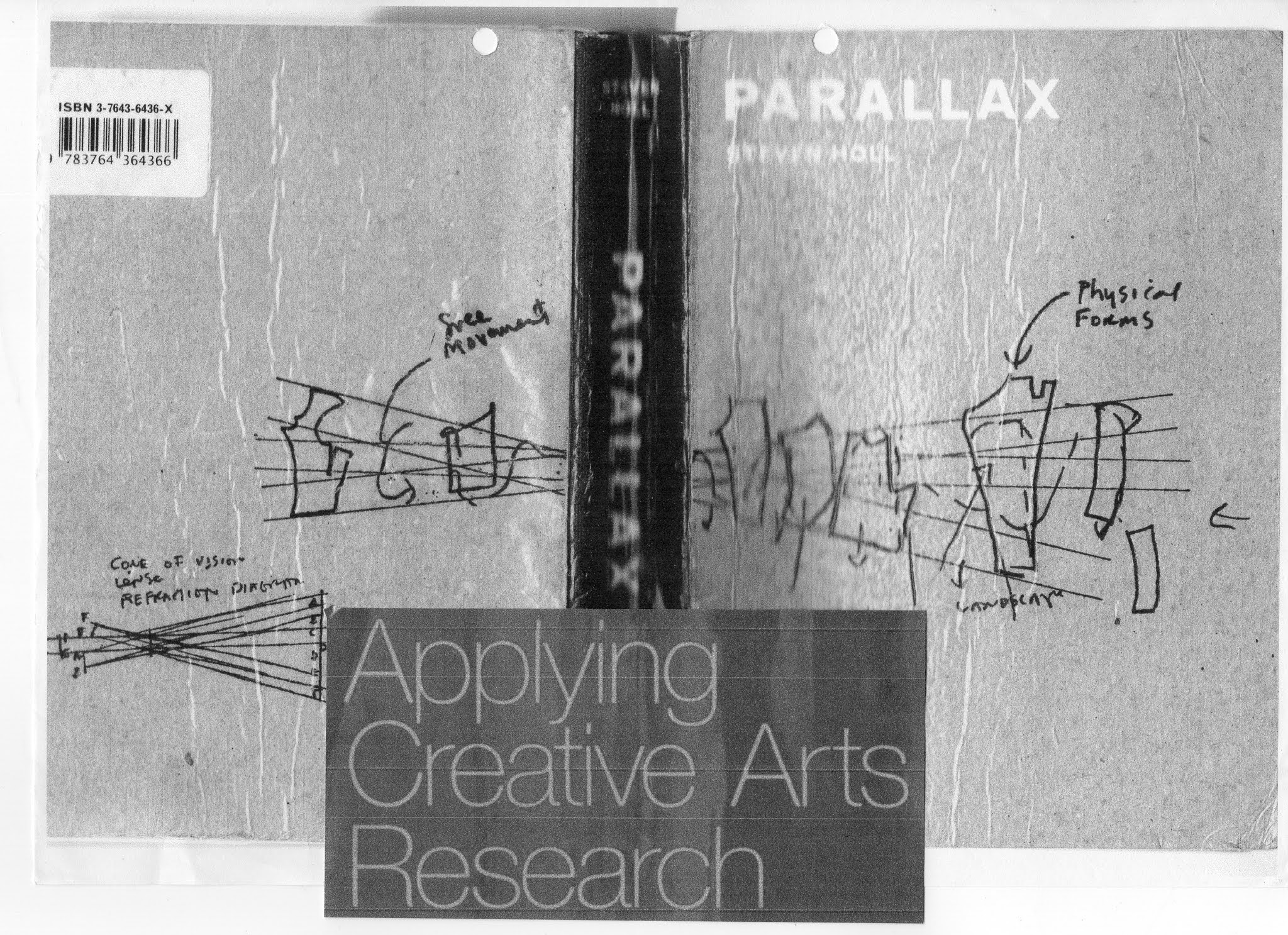
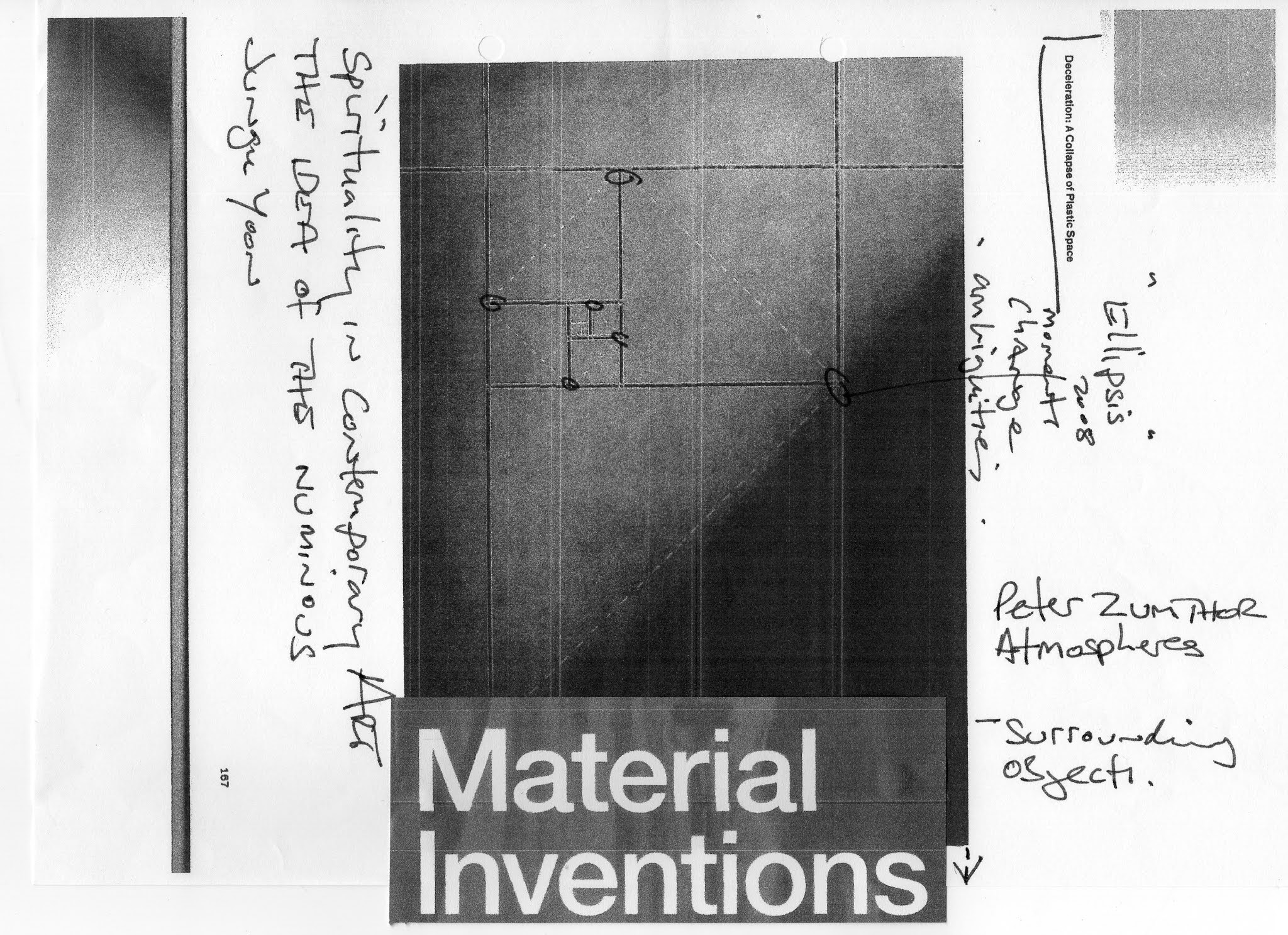
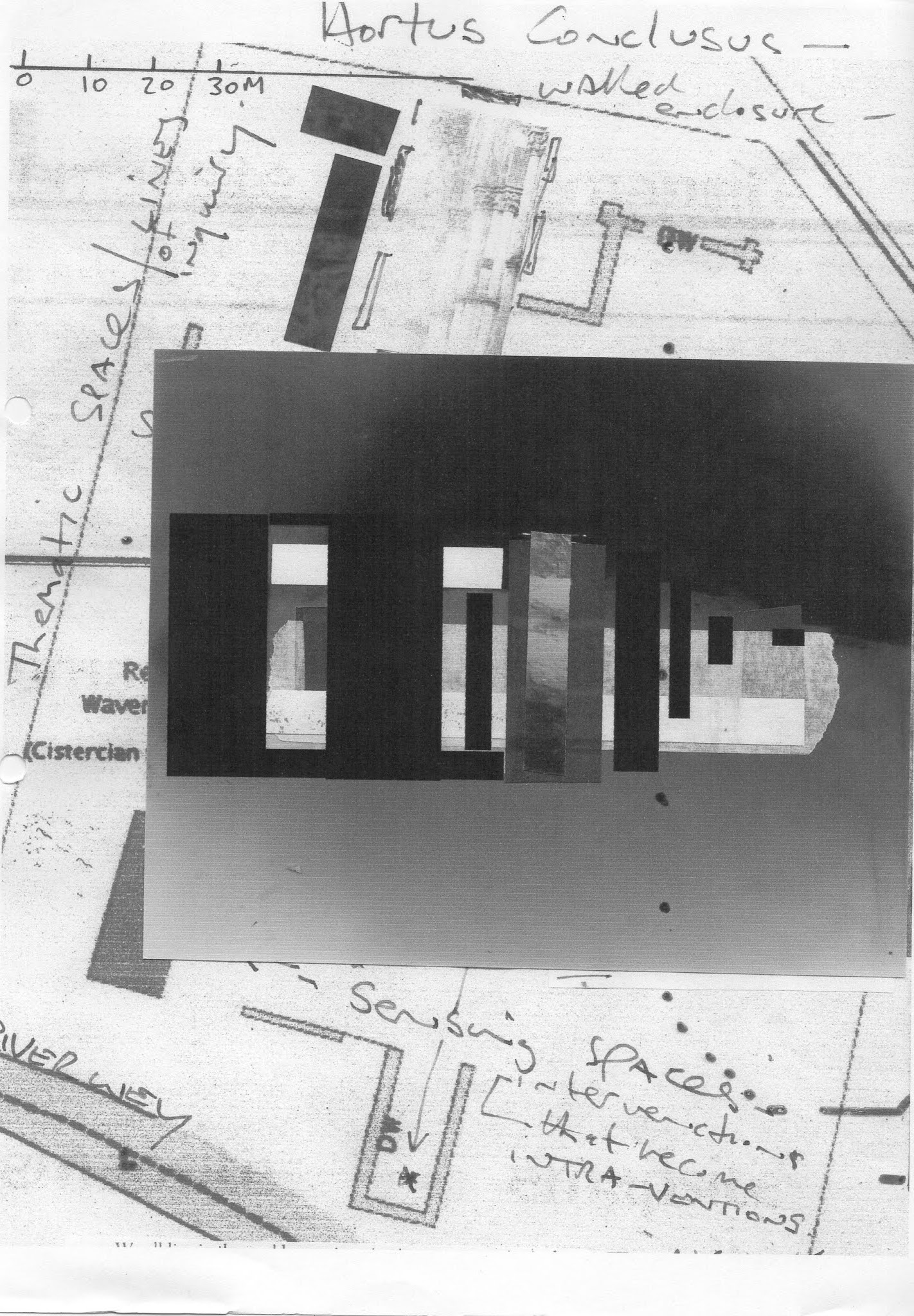
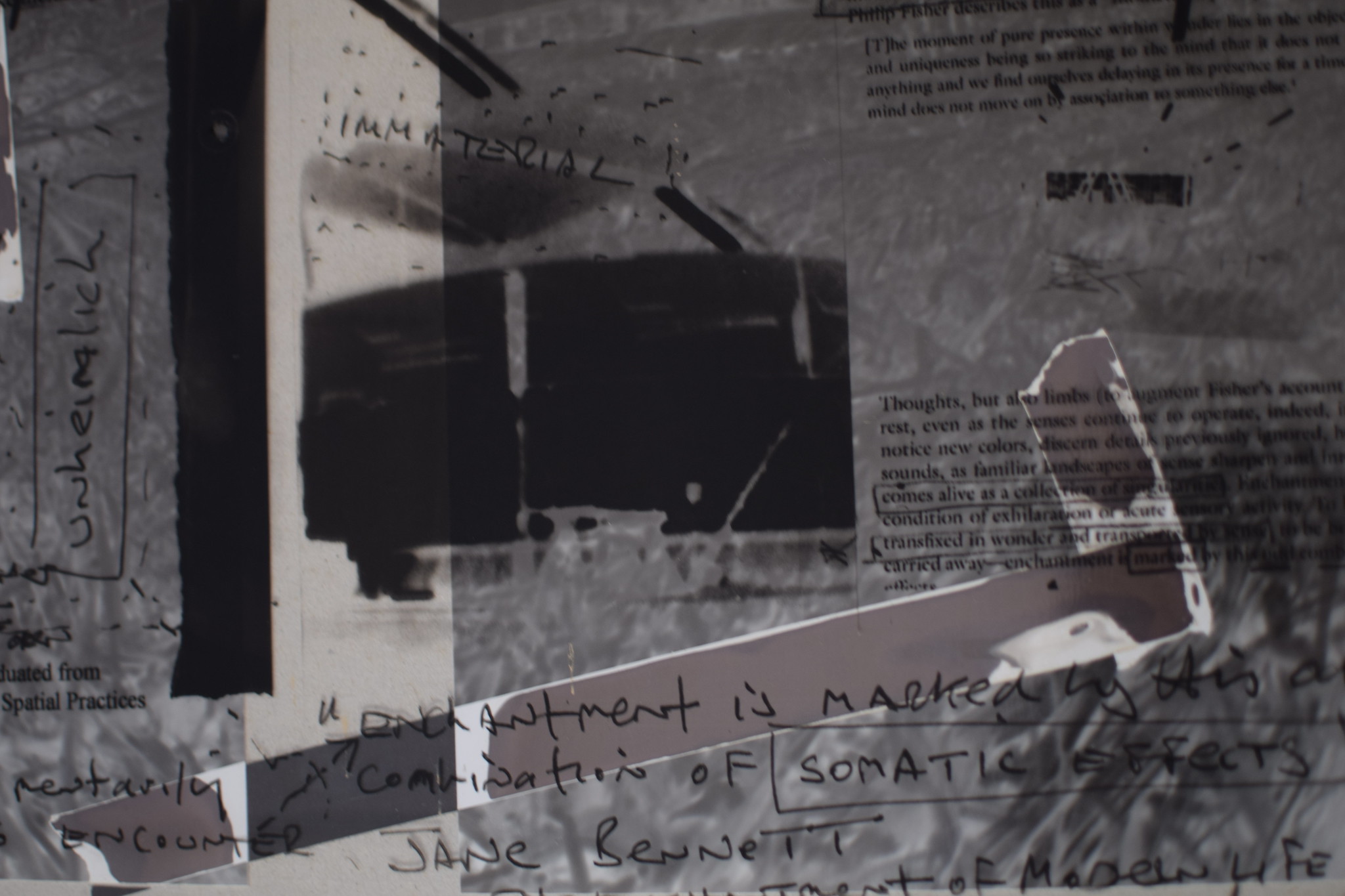
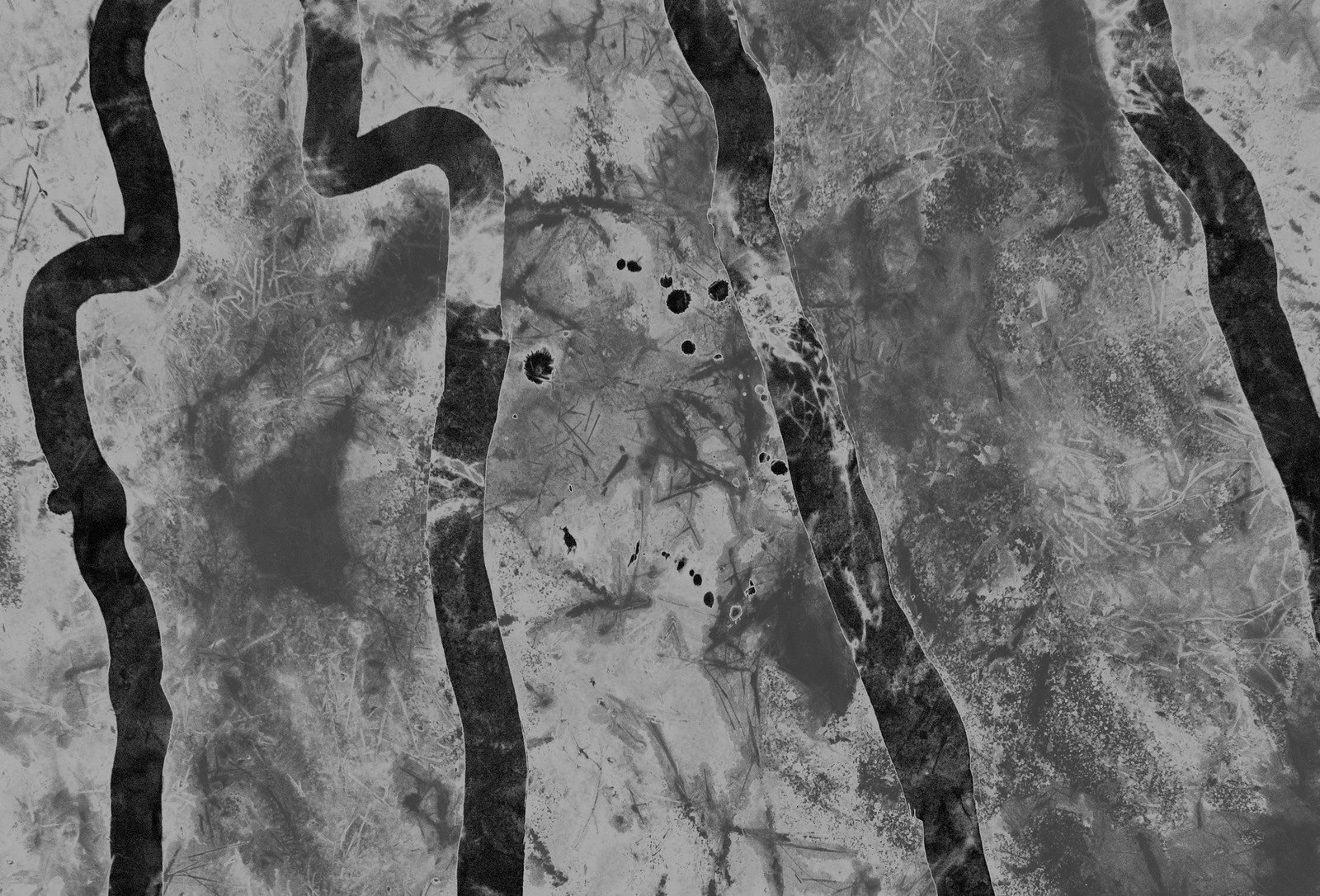
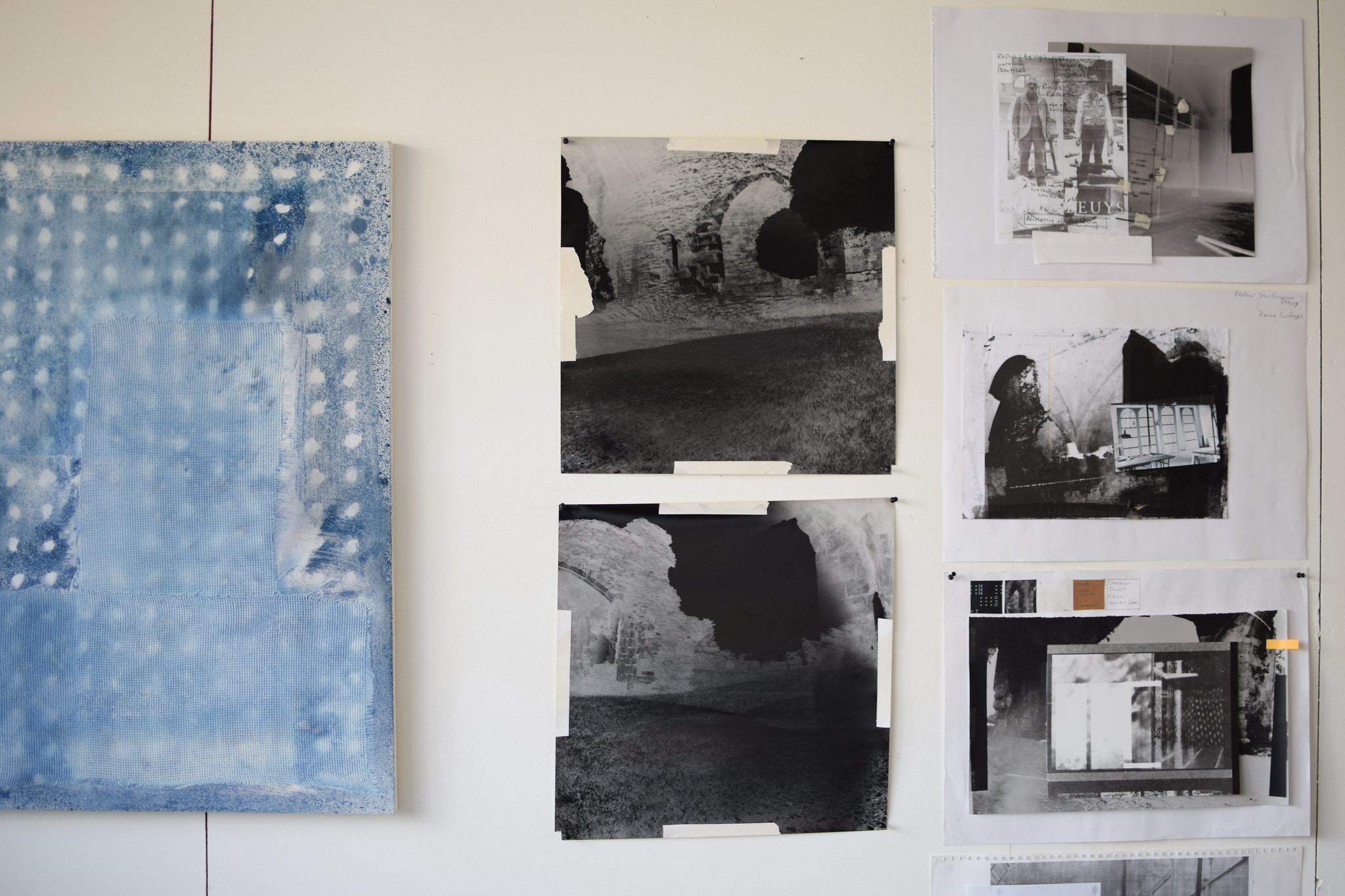
• A reflective building is an echo not a statement : SENSING AND SPATIAL PRACTICE

    IMMATERIAL ARCHITECTURES MAKING IN THE LANDSCAPE SCULPTURE TRAIL 2018

    The House-sheds : Camping

    There’s more truth about a camp than a house. Planning laws need not worry the improvising builder because temporary structures are more beautiful anyway, and you don’t need permission for them. There’s more truth about a camp because that is the position we are in. The house represents what we ourselves would like to be on earth: permanent, rooted, here for eternity. But a camp represents the true reality of things: we’re just passing through.

    Roger Deakin

    WILDWOOD

    A Journey Through Trees

    Russell Moreton, Speculative Spatial Practices

    A reflective building is an echo not a statement.

    Haptic devices/seating/dwelling in the landscapes of the mind. Landscape assemblages and the significance of solitude.

    The immensity/intimacy and its immediacy to the imagination. Immensity is within ourselves Bachelard

    The site a Raveningham offers the spatial practice of a social event and the opportunity to playfully engage with architectural forms, fine art surfaces and textures.

    The sensing space, a sculptural assemblage created at Raveningham is an inquiry into ‘making’ and ‘reflexivity’ amongst a social landscape.

    SENSING AND SPATIAL PRACTICE

    Creating a new viewer, who has to look in two self contradictory/self annihilating directions at once. Darkest Spaces of Our Times, Therese Oulton, Jacqueline Rose.

    CONTEMPORARY ART AND ANTHROPOLOGY : SPATIAL PRACTICE Making Place/Tools, cognitive enactments/materials and performativity/wellbeing Sociological aspects of the Arts

    Archaeology, Anthropology, Architecture, Art, Tim Ingold

    A FIELD GUIDE TO GETTING LOST : Rebecca Solnit Experiential anthropology I Walking as ‘being/becoming in place’ Sensate, Sensing Sensuality, Otherness

    WHITEBOARD : PAVILIONS/RAVENINGHAM

    Art as Contemplative Practice : An Applied Praxis/Inquiry

    Expressive Pathways/Building/Making as an extension to the Self/Selves In Response : To Place/Site and “Dwelling/Hut”

    Subjective Hypothesis Bricolage/Tectonics

    Poetic Abstractions/ Components, Elements

    Physical Experience/Experiential Phenomena ( Light/Gravity/Air) Sculptural Assemblage, Building/Making an Exposition of Itself

    Smithsons, The Parallel of Life/Art the everyday/quotidian Grounding/Earthing/Dwelling/Home : Reflexivity/Reflection/Reverberations

    Knowing Through Making/ Embodying Insights, Tim Ingold

    MAKING : Deliberation/Awareness : Constructed Situations/SURFACES and TEXTURES SENSING, Sensorium/Embodied Experience, Sensate, Intra/Intervention

    PLACES that transform Chaos into Cosmos, Karsten Harries

    PERCEPTUAL psychologist, J.J. Gibson departs from ‘the classical approach to depth or space’ in favour of an


    ECOLOGICAL approach to VISUAL SPACE PERCEPTION, which take SURFACES and TEXTURE as its starting point.

    Socializing a Sculptural Practice, Jack Robins 2015

    Strange Tools, Art and Human Nature, Alva Noe 2015

    Visual Tool, Post Studio, Daniel Buren

    INDEXICAL, Traits/Traces and subjective narratives Situational/Relational Aesthetics, Victor Burgin, Nicollas Bourriaud

    Handmade, Repetition, Empirical, Experiences.

    Metonymy, Cristina Iglesias ( Metonymic Thinking Processes)

    Architecturally Speaking, Practices, praxis between art .architecture and the everyday. Visual Perceptions/ The Image

    Surreealist Techniques, Collage, Photograms. Decalmania, Frottage. Assemblage, Brutalist/Modemity/Intervention

    Minimalist/Drawing/Painting ARCHAEOLOGY : Mark Dion

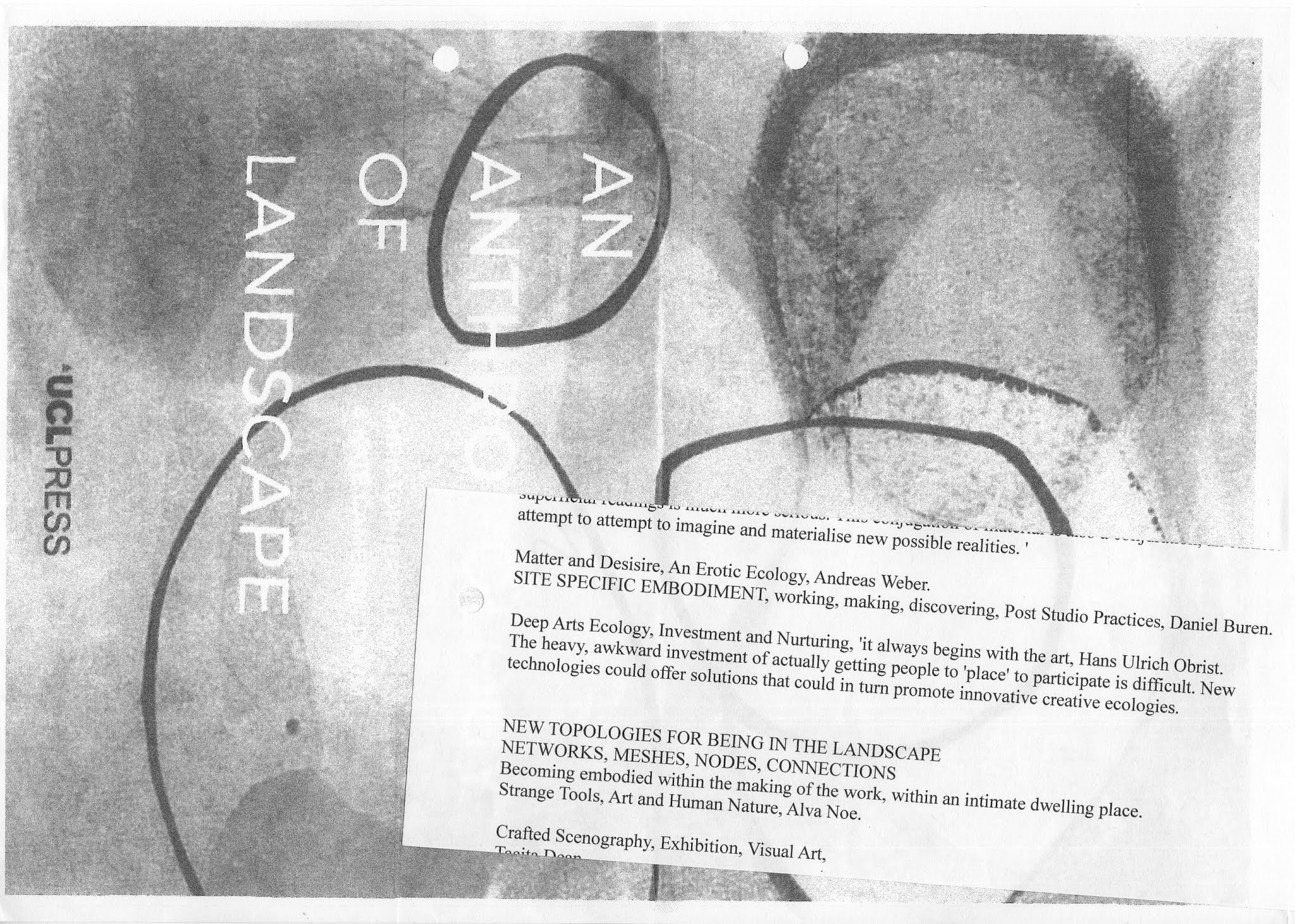
    Agency/Nature/Subject Matter. Collection of Finds, Metaphors/Interpretations for the lived experience. AN ANTHROPOLOGY OF LANDSCAPE :

    Taskscapes/Relationscapes

    Anarchism, everyday Aesthetics/The aesthetics of everyday LIVING Pragmatist Aesthetics/Interpretation of Concepts

    Materiality, material makes more than one language possible, excess of material. LANDSCAPES for an excess of Interpretation/Politics

    EXPLORING THE LANDSCAPE, through/with the CORPOREAL EXPERIENCE of OTHERS

    A STRUCTURE INTERPOSED between the sunlight and the interior space it encloses. Poetic abstractions/Physical experience

    Soft/Blurring boundaries between art and the everyday making/becoming REFLEXIVITY / TRANSLUCENCY surfaces into an architectural presence TEXTURES ILIMINALITY on the absence of material

    STATIC ENVIRON I ANIMATED THROUGH THE BODY

    THE ARCHITECTURAL SKIN / SURFACE. Blurring, revealing, masking, filtering, ARCHITECTURAL FEATURE / WALL / ARCH / PASSAGE /

    VISUAL TOOL / POCHOIR, hand coloured through stencils

    SCULPTURAL ASSEMBLAGES, towards Speculative Forms/Expression TECTONICS IN MAKING, and the tectonics of immateriality/traces hidden by building.

    Concerned with bringing the material from its physical form into the meta-physical world.

    PAVILION

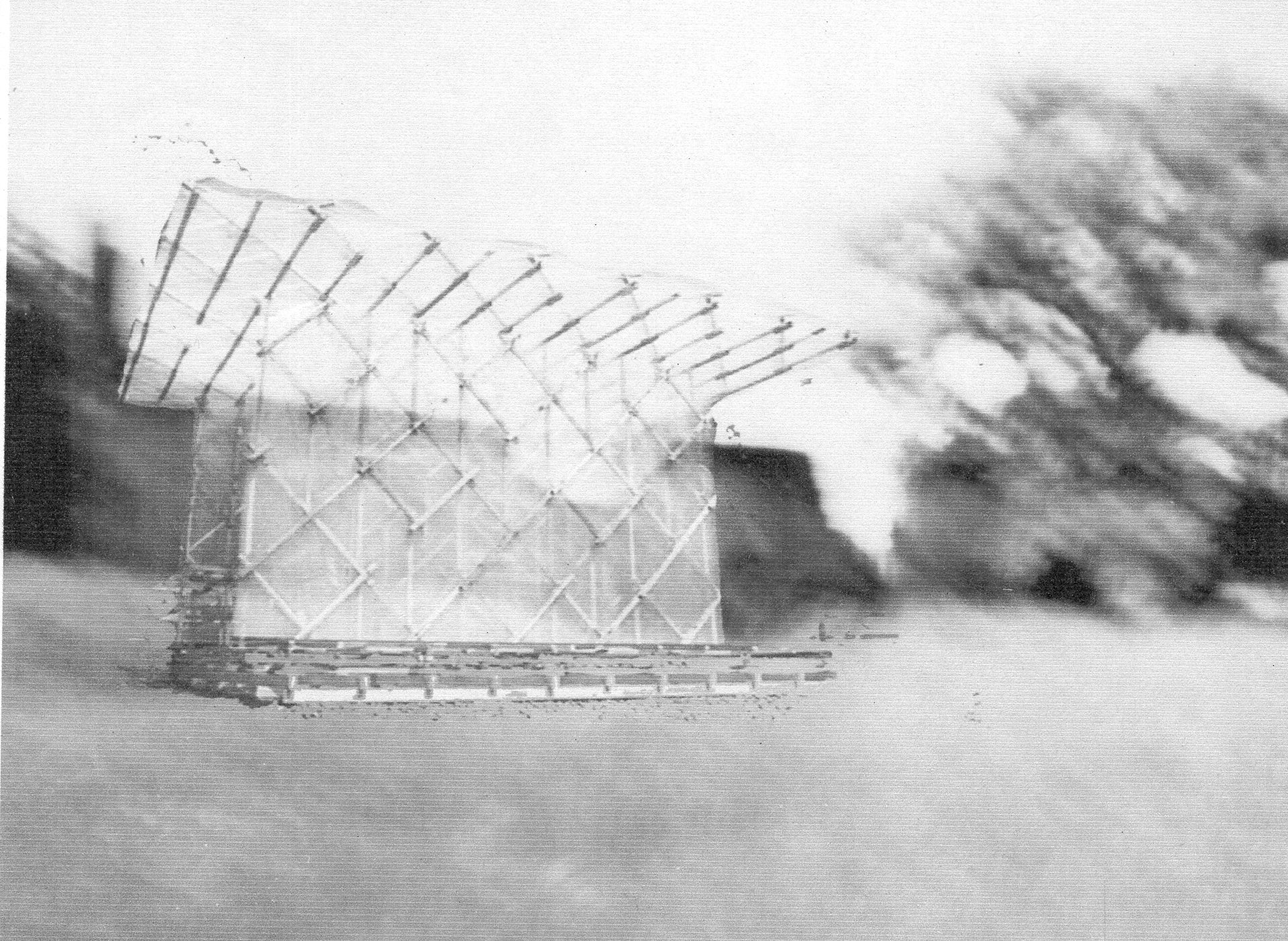
    FUSELAGE

    THE CAMP/HUT

    represents the true reality of things, Deakin.

    The building as nothing more than an exposition of itself.

    A subjective hypothesis, a drawing developed into an objectivity for experience/leaming.

    SITE, the undoing of PLACE

    BRICOLAGE / HEURISTIC PRACTICE, Using things at hand, temporal, self constructions, becomings, mind forming explorations.

    MOBILITY MOVEMENT

    TEMPORAL CONSTRUCTED SPACE

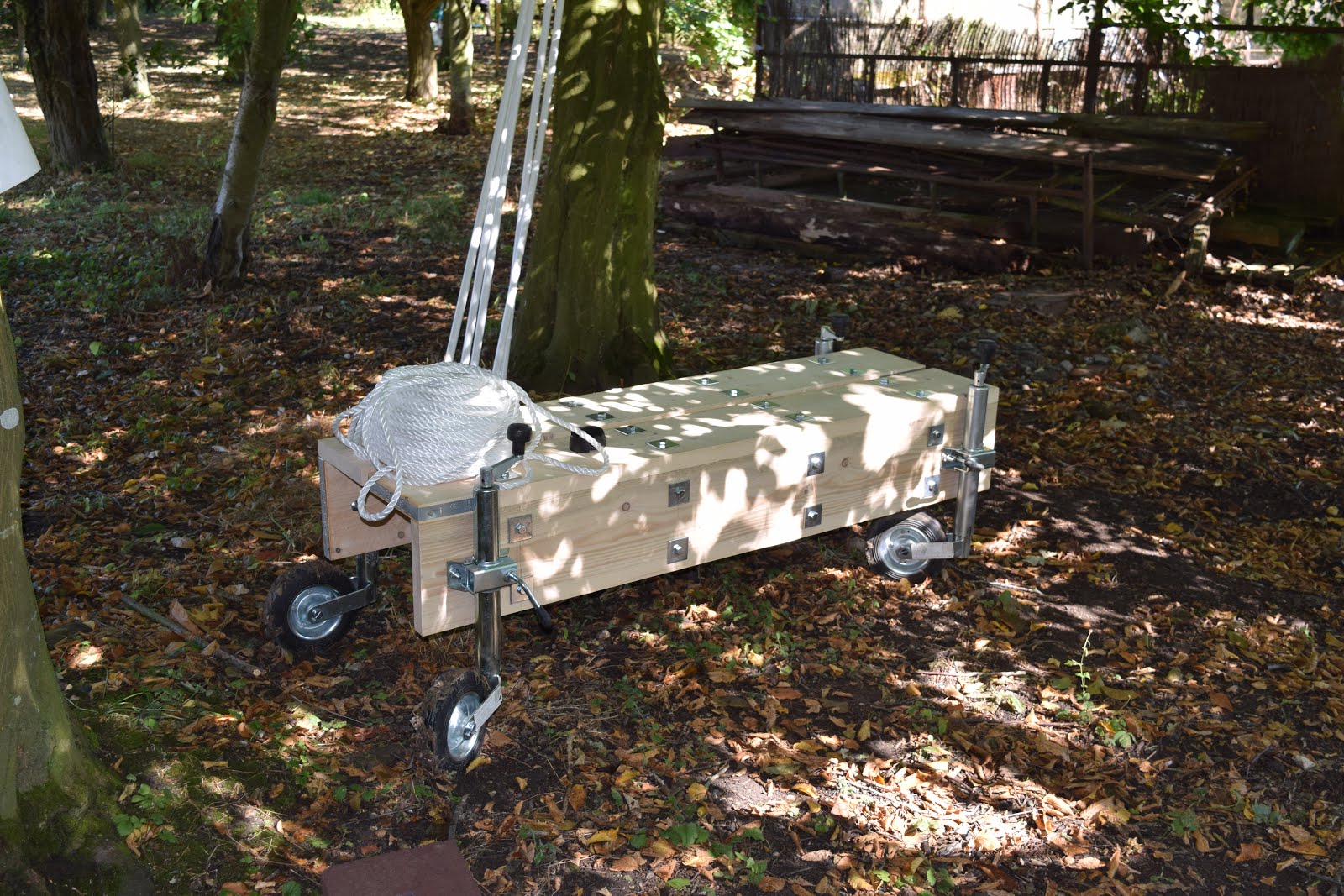
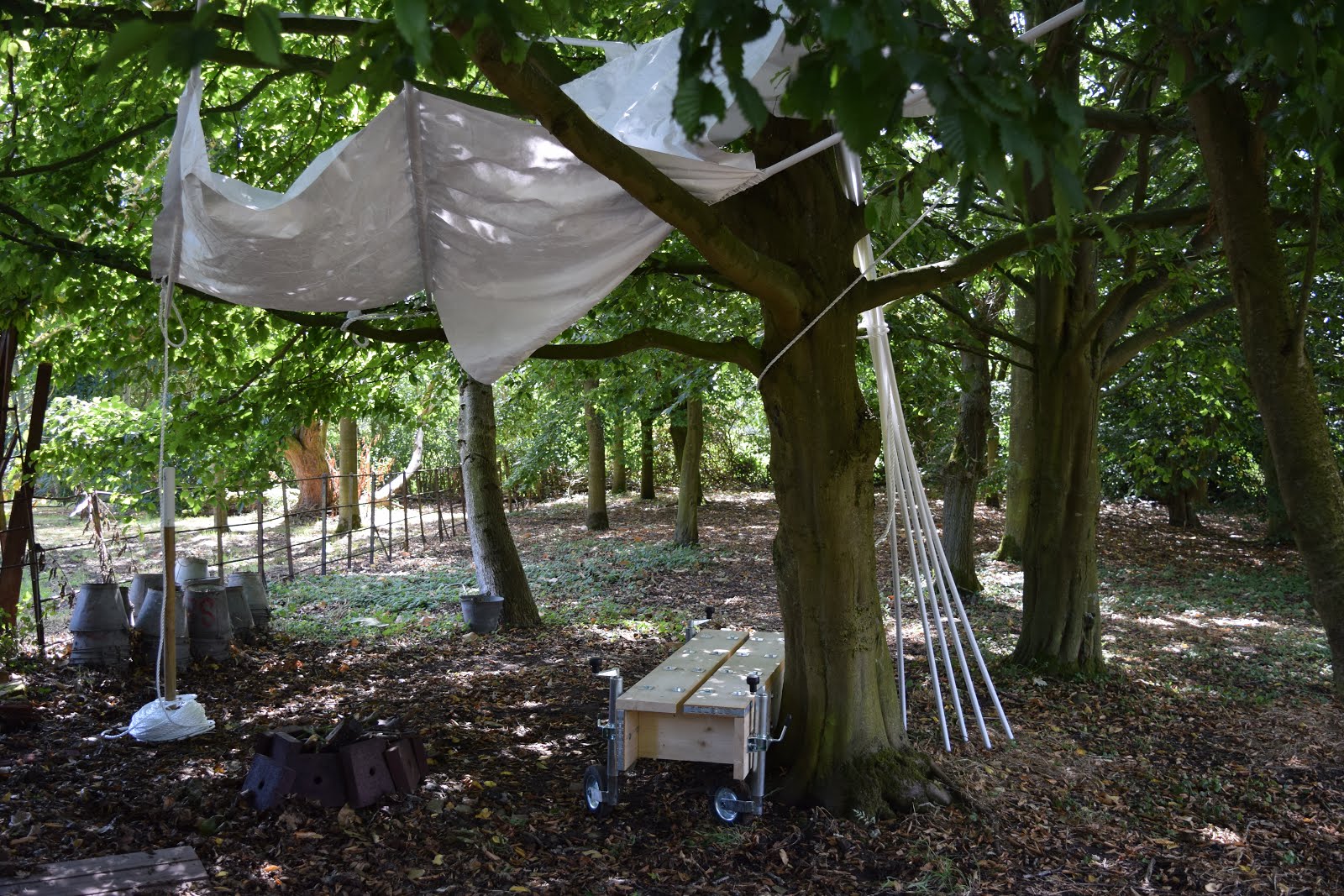
    A building component, scaffold, joists and fixings, a surface of absences and the movement of others come together.

    MAKING, from form to programme.

    WAVENEY VALLEY SCULPTURE TRAIL 2018 RAVENINGHAM

    AUDIT OF NOTE FRAGMENTS 27 August 2018

    Archive as a generative form/membrane Tarlaton, mesh, paper, liquid light,

    Presenting, Creating, Synergies, that further explore site embodiments. The Politics of Things

    Diffractive Practices : Agential Cut, Barak, Learning Spaces, Brockwood Park.

    In The Cave/Canvas of the Cave

    ART. began with the questioning of the involuntary, trace of a human hand, an otherness.

    Moments, Nowness, The Instant, Actuality,

    Habitus of Difference

    Robert Mangold text on painting/drawing minimalist interrogation into the spaces around perception Minimalist Works / Working Processes represent fields of energy/causality within our experiential perceptions.

    Drawing is the experience of seeing made visible/manifest Rhizomic feedback and flow, Deleuze

    Research Horizons,

    Culture drives growth, wellbeing, social enterprise and community

    Lines of intervals, linerality, chains of codes, intersections, utilities, interventions Causality and Chance of ideas, creative acts, art,nature, becoming, the everyday,

    Quotidian/Everyday Interests, Complexities of Contemporary Life. Ambients, Phenomenas, Objects, Subjectivities,

    Everyday aesthetics, heuristic practice,

    Photography, Social pathology of traces layered into ecologies (Anthropological localities of desire)

    Photography, The Body, Life, Death, Flemish Painting, Vivitas, Domestic Life, Nature on reclaiming the void left by the death of the mind

    Walking creates its own feedback loop, The Journey, The Return,

    The specific, Here and Now

    Psychogeography, Dossier, Forensic Study, Inquiry.

    Spatial Abstractions : Reflexivity on Reflection. Embodiment on Experiential Subjectivity LANDSCAPES Constituted by creative practice

    Walks as erasures, sedimentation, (Gardiner)

    Getting Lost, Walking whilst deep in thought/embodiment in the environment

    Working Towards a Secular Retreat in the Landscape

    Between PLACE and SITE

    Art Poverva, Materiality, Agency, Making, Nesting Building, NASCENT FINDINGS

    Encoding DATA, LANGUAGE

    Entanglements of Visual Data and Abstract Language CATHEDRALS OF INTELLIGENCE

    The Urban Documentary,Text, Sebalt, The River : The Colour of Light

    Albers/Colour Perceptions

    Vernacular Architectures, Building/Making beyond the design

    Footings, Voids, Roof Structures, Cavities, Between Walls, Sensing Spaces in the very making of the building.

    The Architectural plan/model and its proposal became the real virtual space for architectural energy and innovation.

    TRANSACTIVE MEMORY Texts, Contents, Particulars, Process,

    Working through ideas with things/devices/apparatuses Cognitive Landscapes /Relationalities ? Possible Worlds Subsumed by the causality of relationships/culture

    Mies van der Rohe

    The Art of Sculpture

    Moholy Nagy

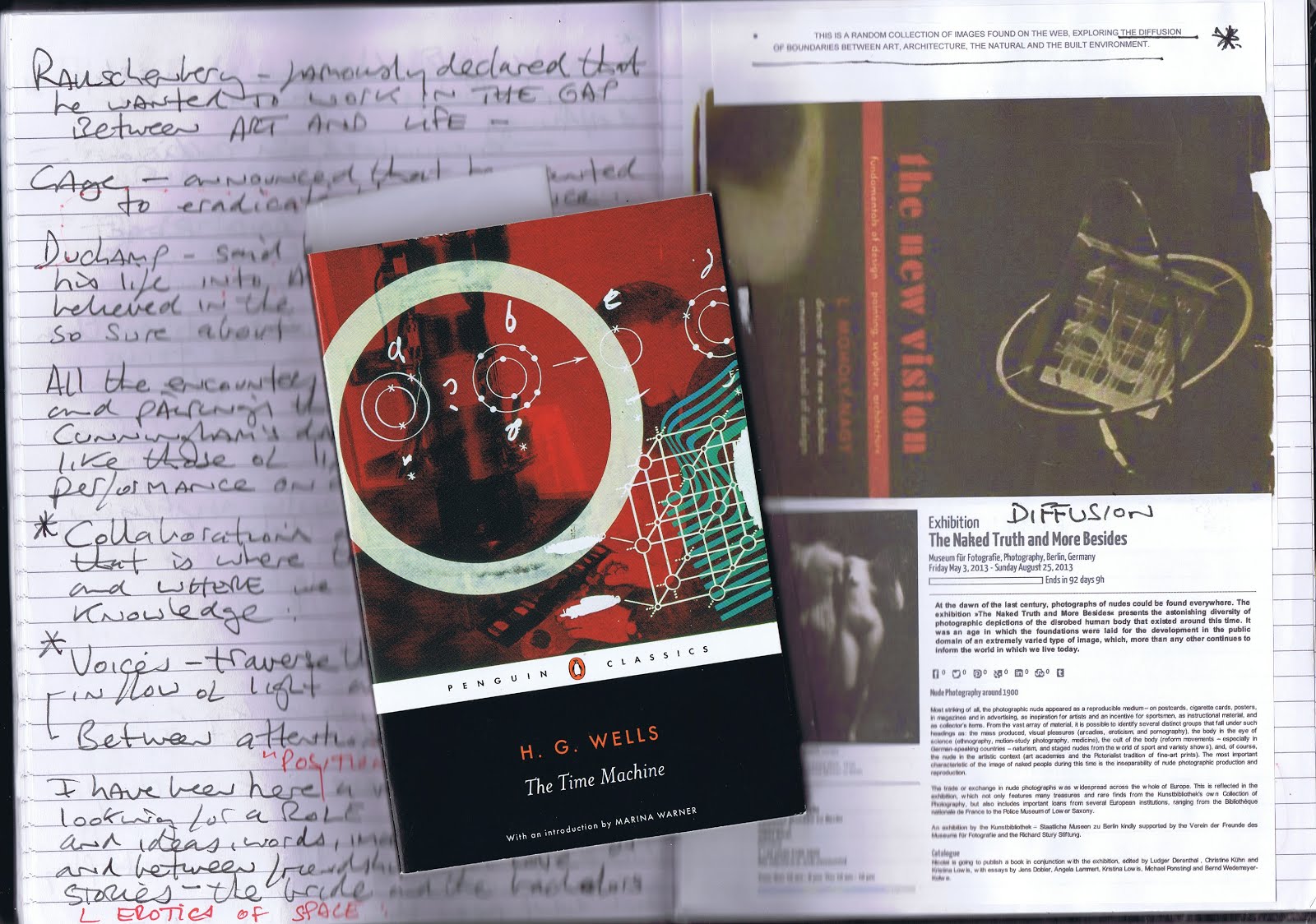
    The New Vision Abstract of an Artist

    Light brings the moment in time to us

    Presence, Praesentia, exactitude of light on place and time LAND, LANDSCAPE, CLAY

    Pot, Shard, Remnant, Culture, Jug, Dominion/Grounded Temporal/Spatial Perspectives

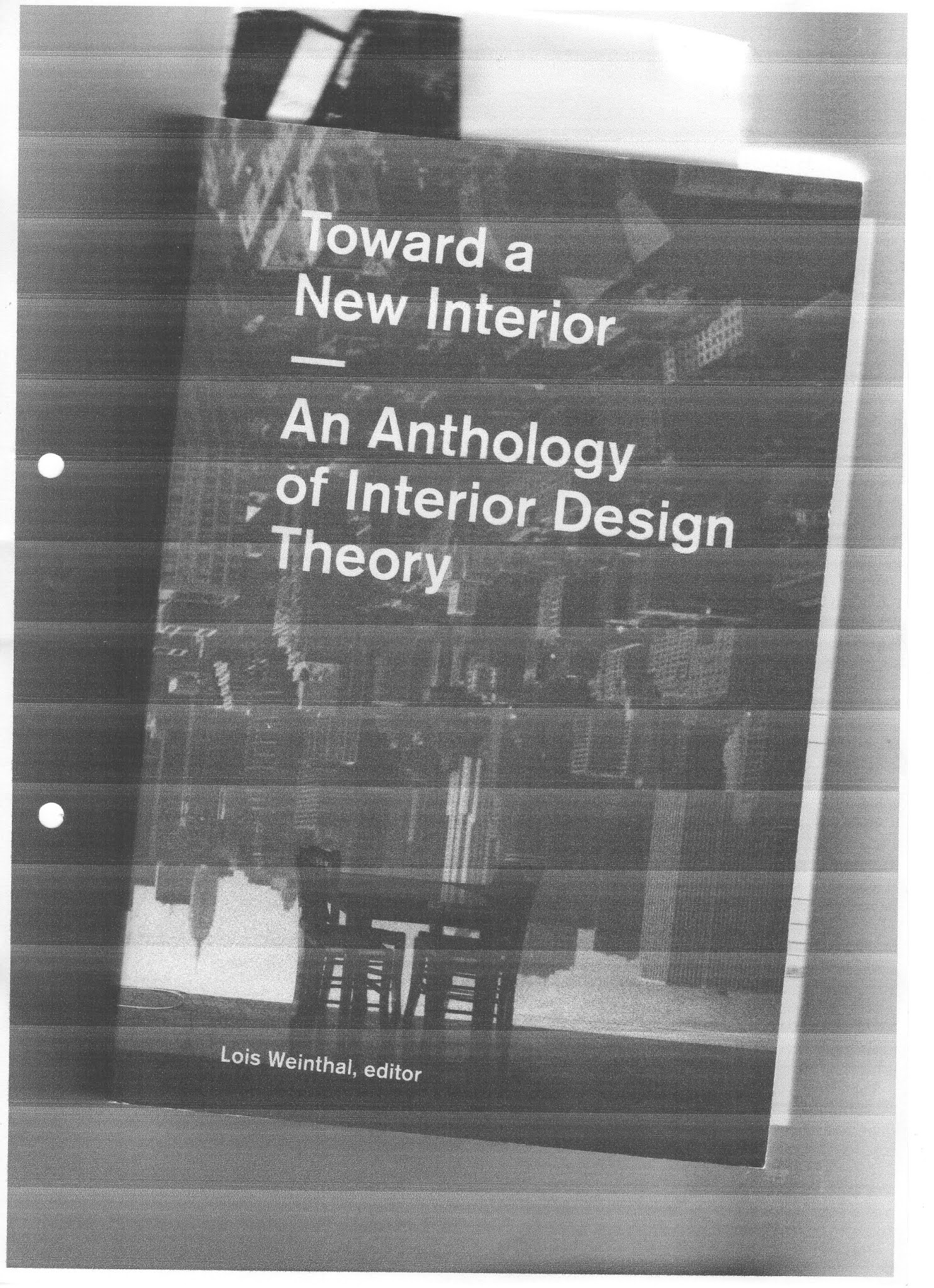
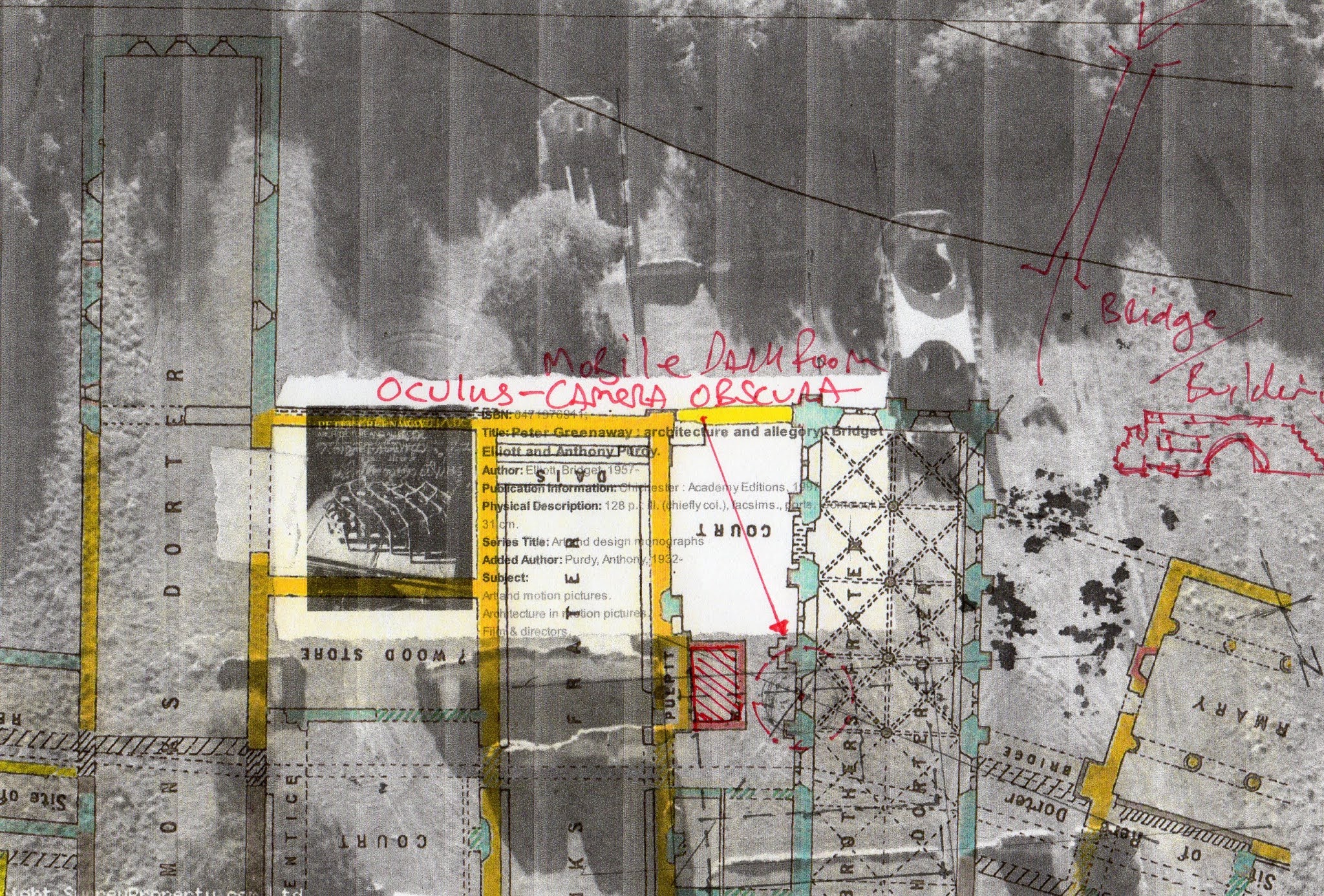
    Light/Dark Room : Towards a new Interior Experimental Vision : Research Collage

    Aesthetics of the Everyday Creative, Human Praxis

    Mediating/Architecting the experience of LANDSCAPE

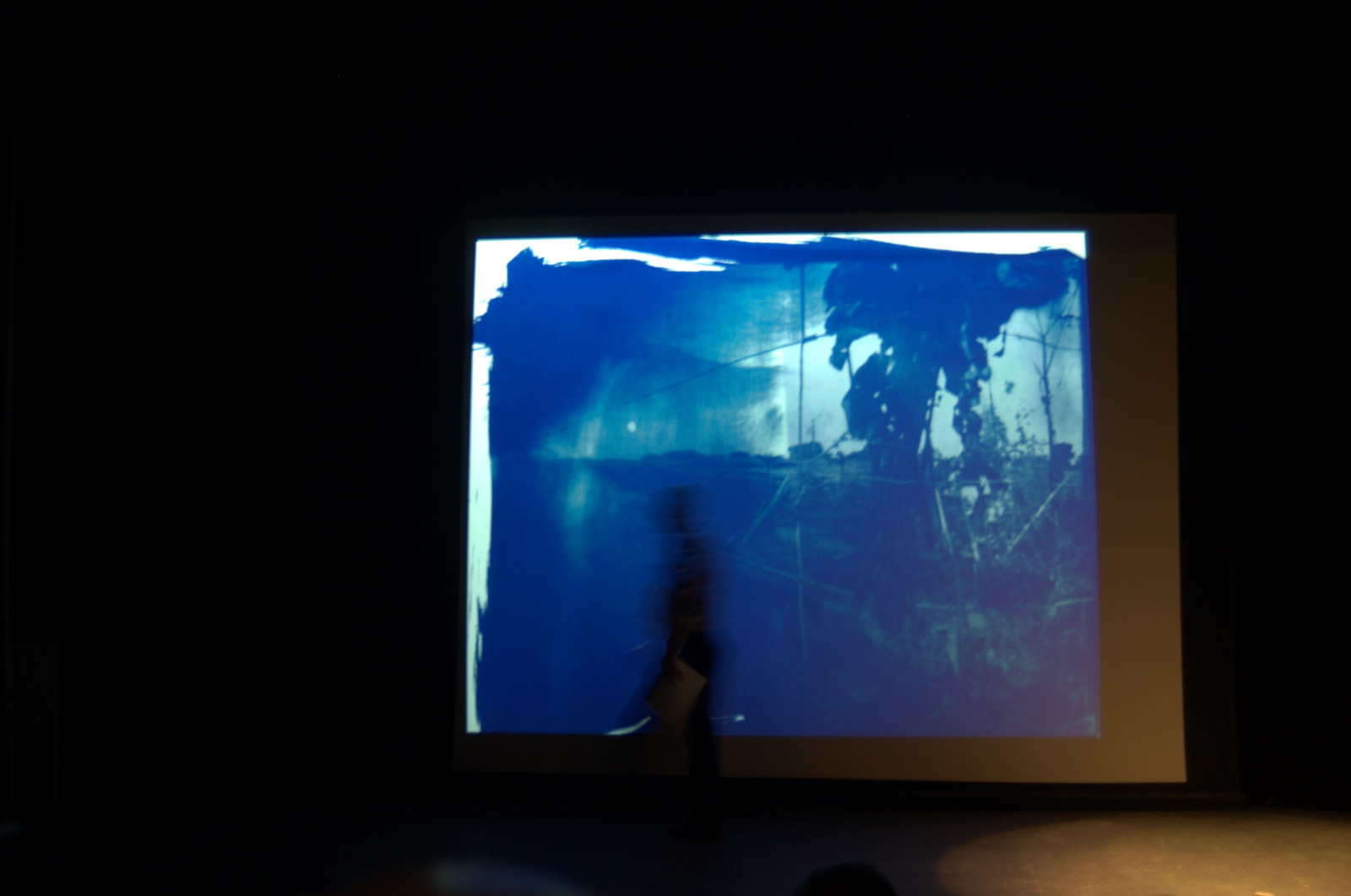
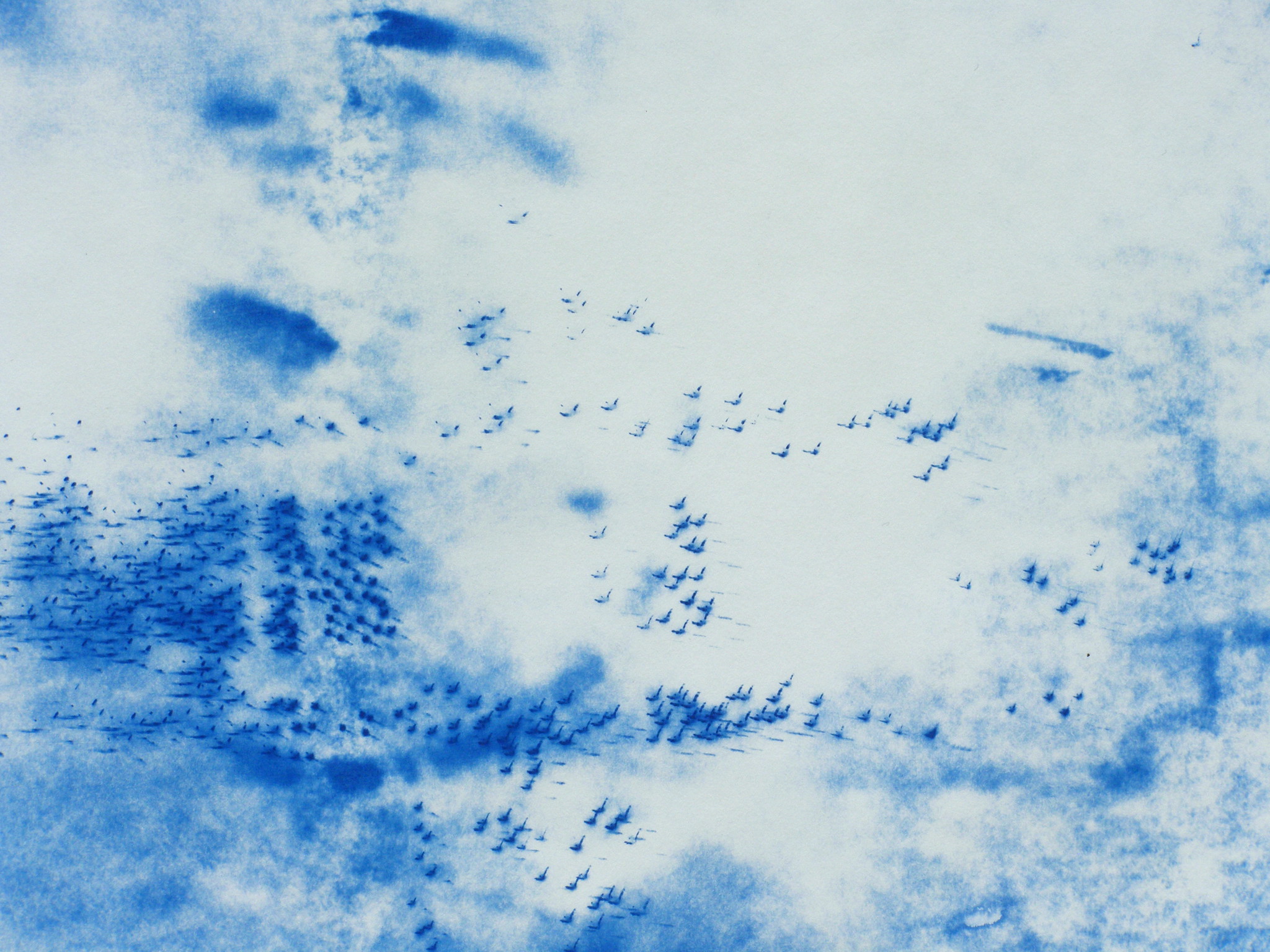
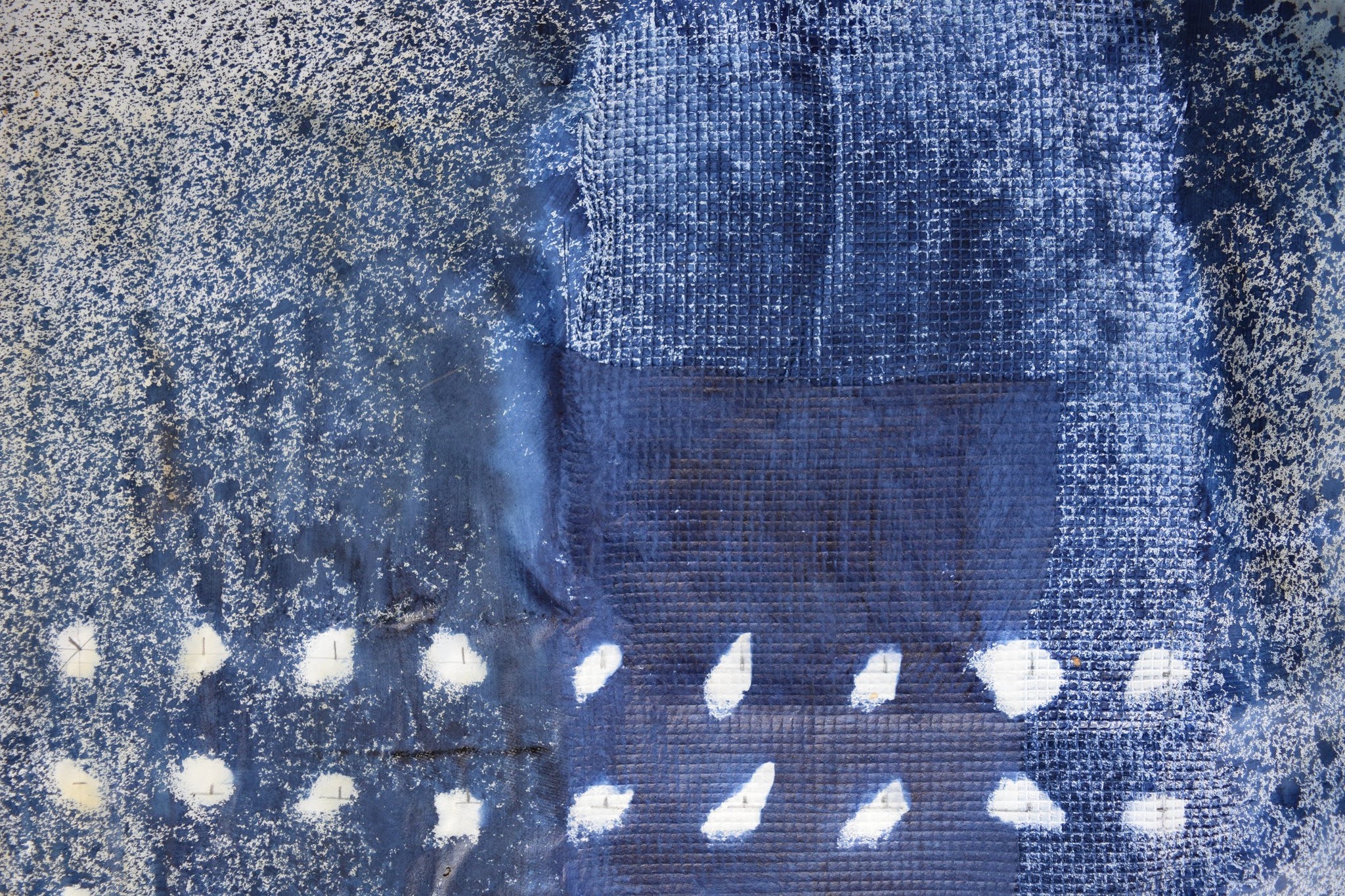
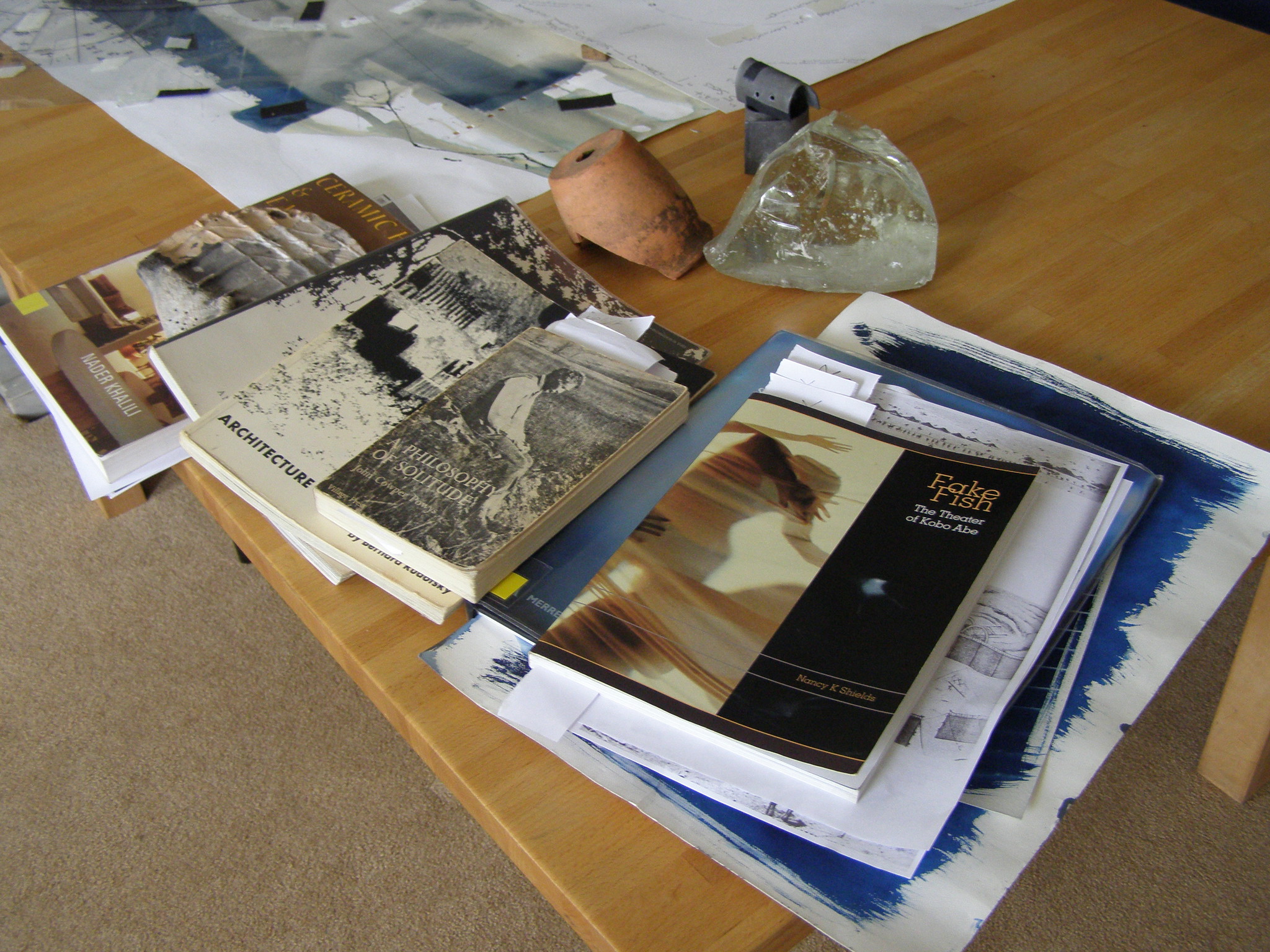
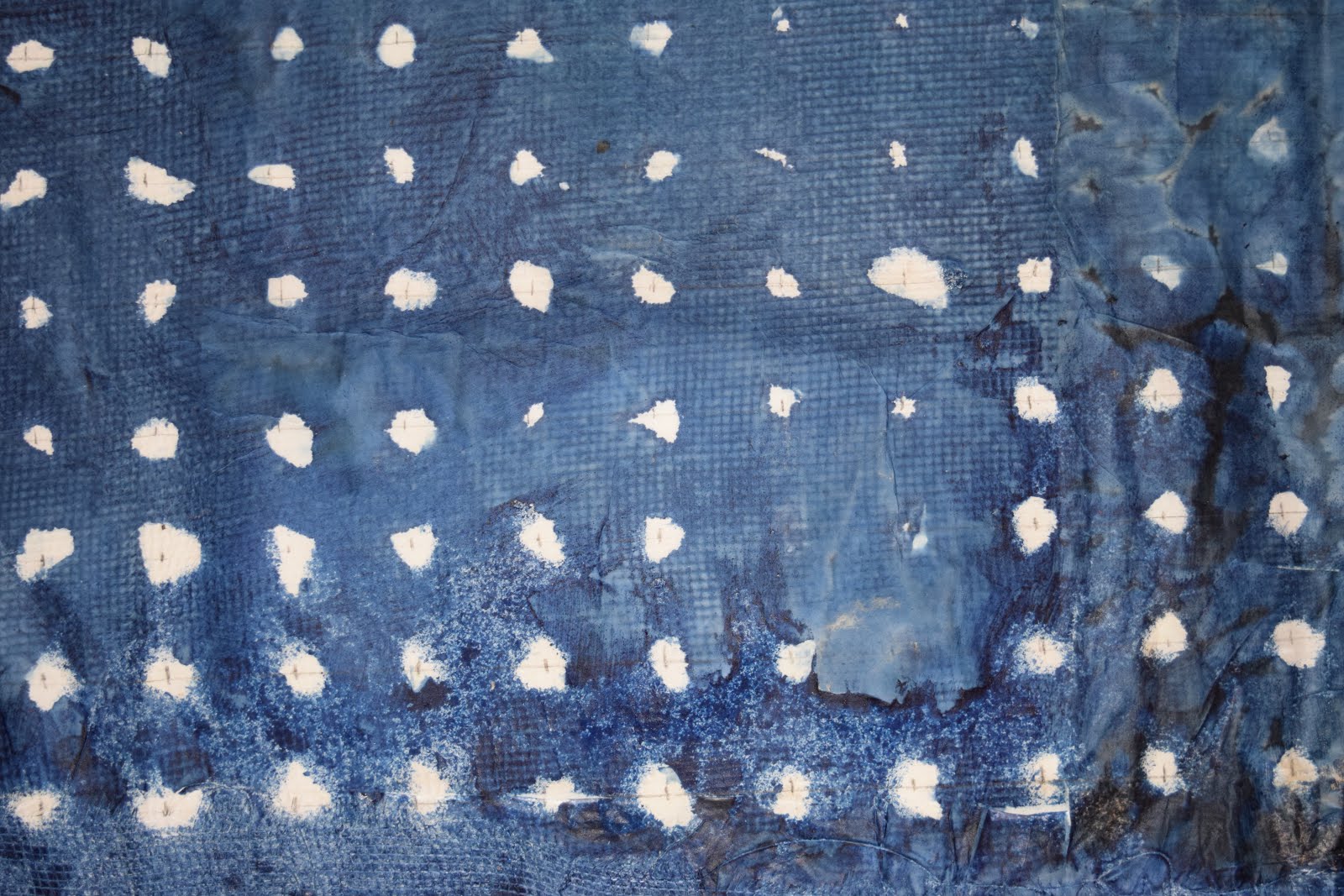
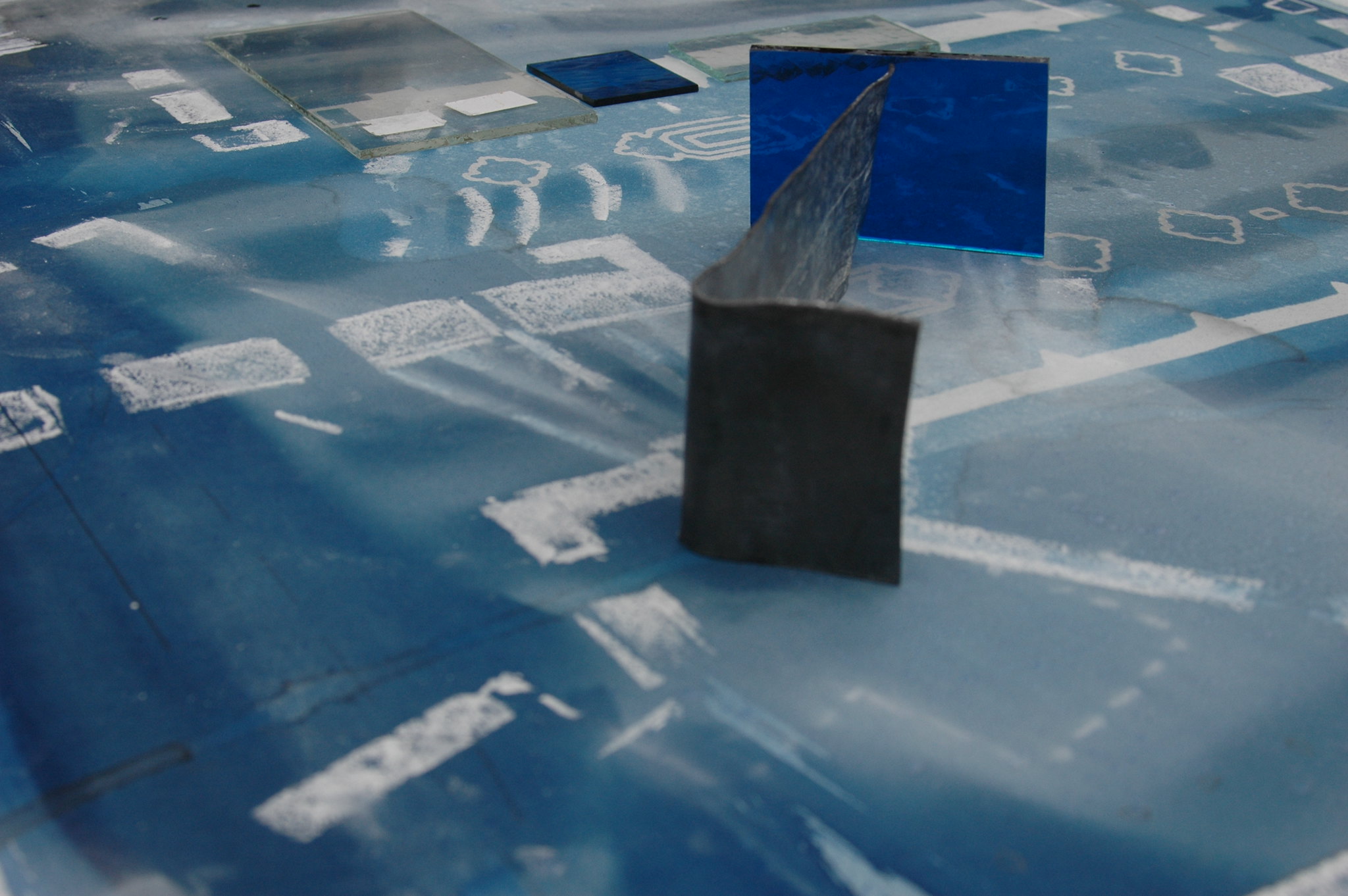
    Supportive Material/Texts/Cyanotype Drawings from found objects
    SITE / COLLAGE COMPONENTS working/walking, developing a creative spatial syntax
    AFFECT
    SENSATION / CAUSALITY LIVING
    THINKING LOOKING
    DRAWING and THE LAW OF STRATIFICATION, the inevitable results of the working of GRAVITY STRATIFICATION OF RECOLLECTION / MEMORY OF THE WORLD. (A Land, J Hawkes )
    FACTORING THE TACTILE CONDITIONS OF THE REAL WORLD into perceptual awareness.
    PERCEPTUAL psychologist, J.J. Gibson departs from ‘the classical approach to depth or space’ in favour of an ECOLOGICAL approach to VISUAL SPACE PERCEPTION, which take SURFACES and TEXTURE as its starting point.
    COLOUR AS CONDUIT I PERCEPTUAL ENVIRONS / CRAFT MEDIA I IMPROVISATION
    PIERCED I DAPPLED NATURAL LIGHT
    DIFFERENTIATED SHADOW I SURFACE
    EXTRAORDINARY MATERIALS I TECTONICS AND TEXTILES INDEXICAL I GESTALT / VISUAL PERCEPTION
    NETWORKS / RESOURCES / AGENCY for the potential of BUILDING SCAFFOLDS / GAUZE / POCHE solids of a building/architectural plan
    ABSENCES / INTERSECTIONS I GRIDS / MESHES / SPRAYS / MOTIFS ACTUALITY
    IMMATERIAL / REPETITION / SINGULARITY ENCLOSURES / ITERATIONS / THINKING FORMS
    MINIMALIST SPACES / INTERVALS, tuning objects to construct environments A child ‘concretizes’ its existential space.
    Dwelling, Reverberations, Epiphanic Instant, Gaston Bachelard.
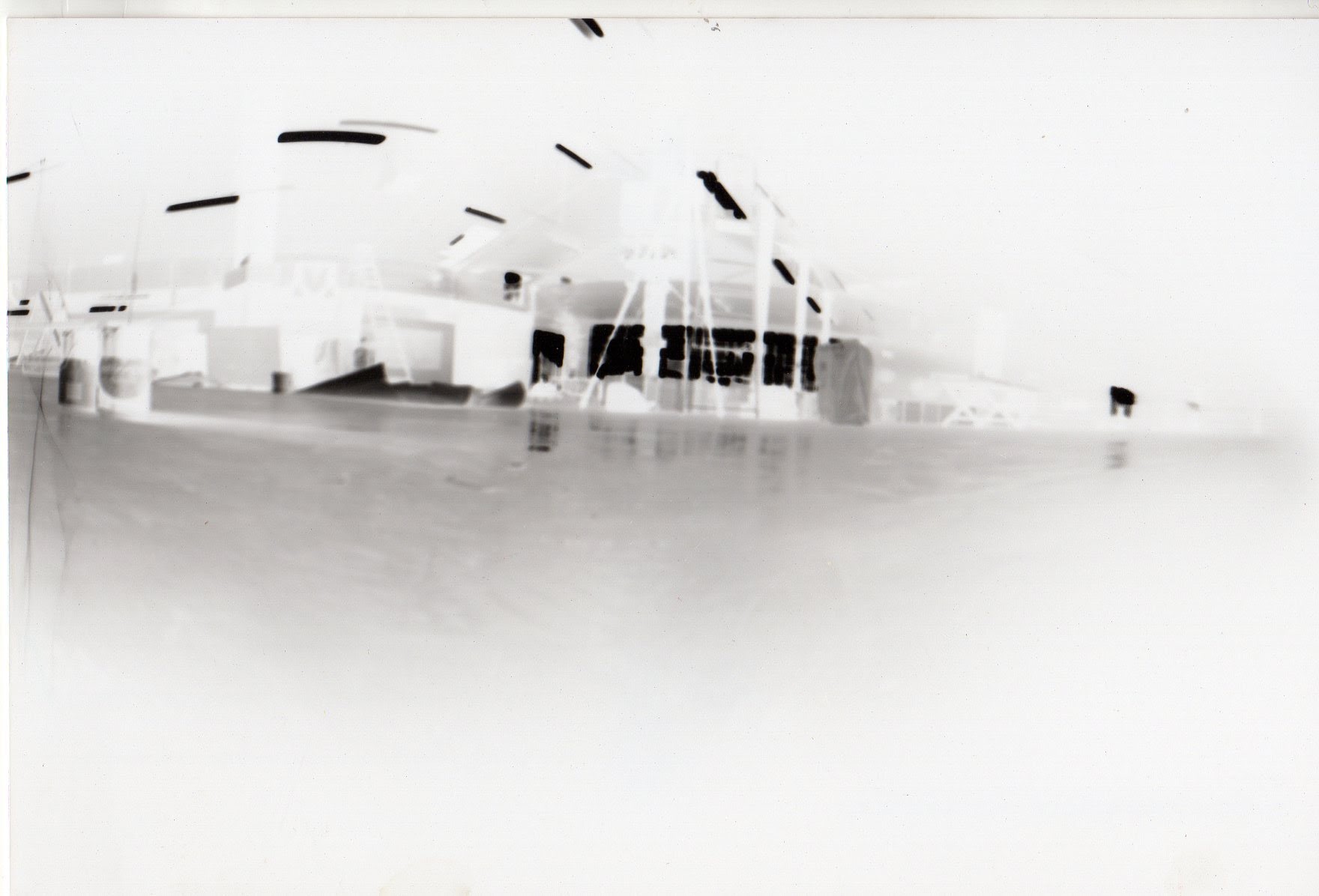
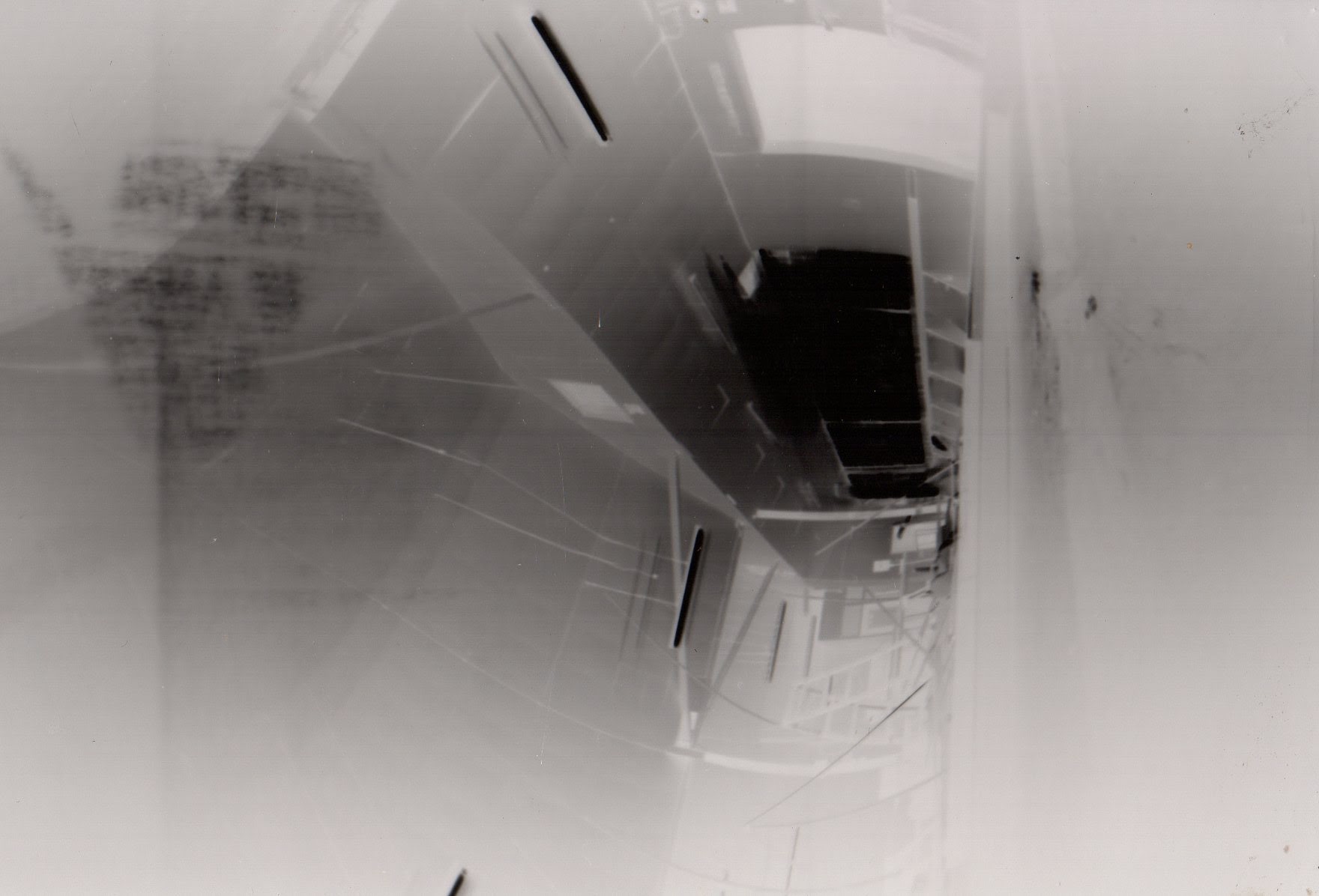
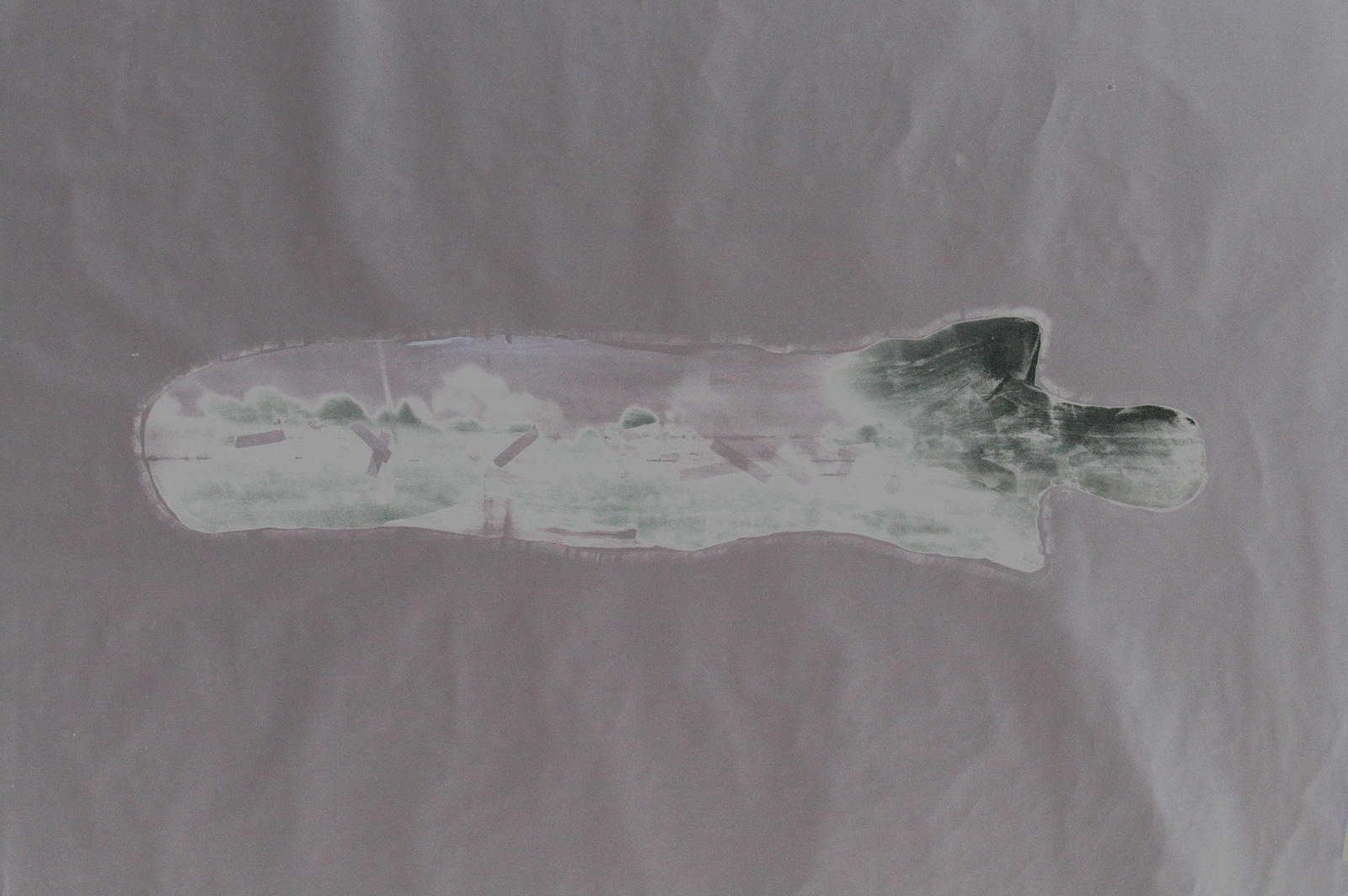
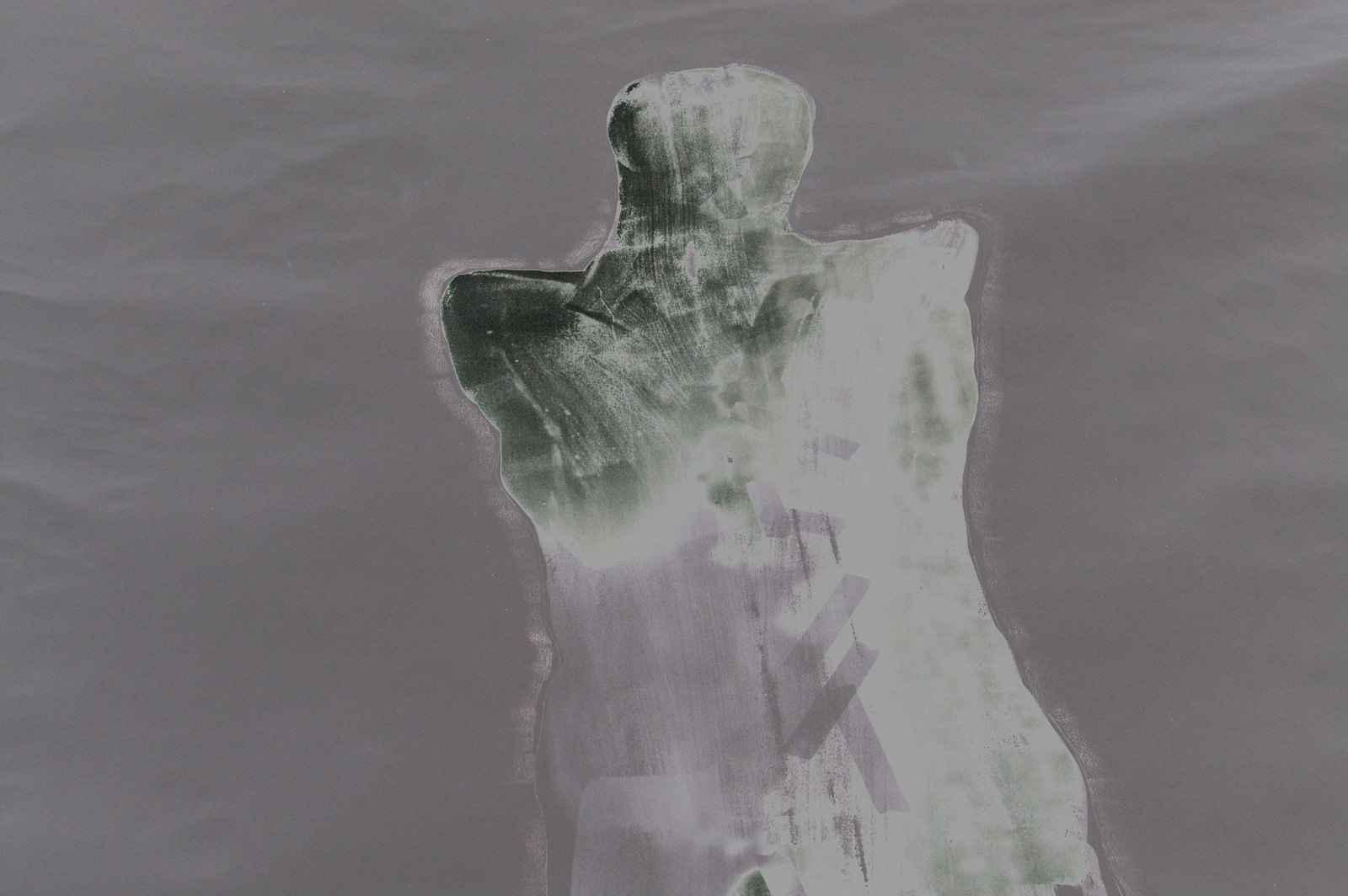
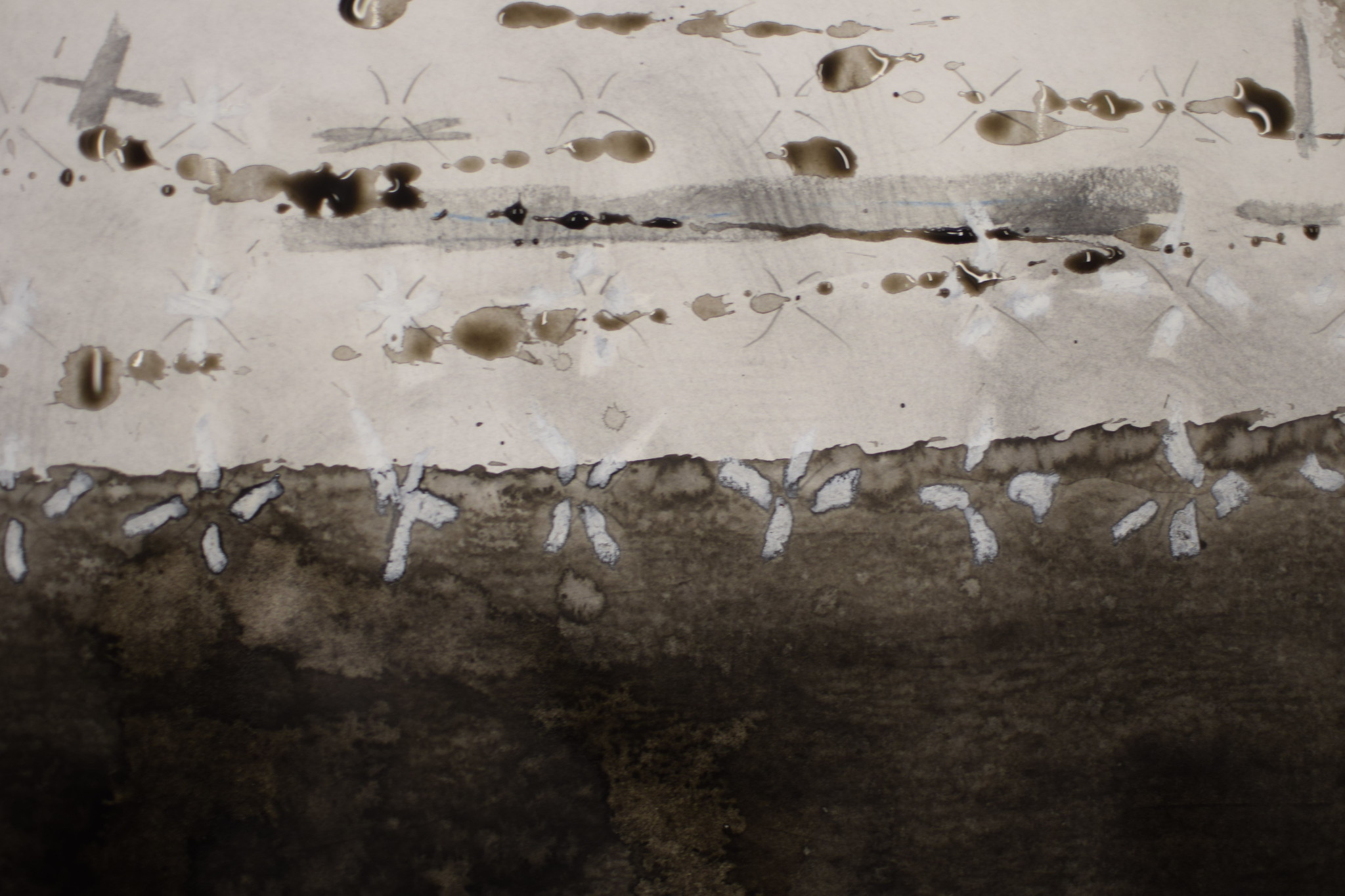
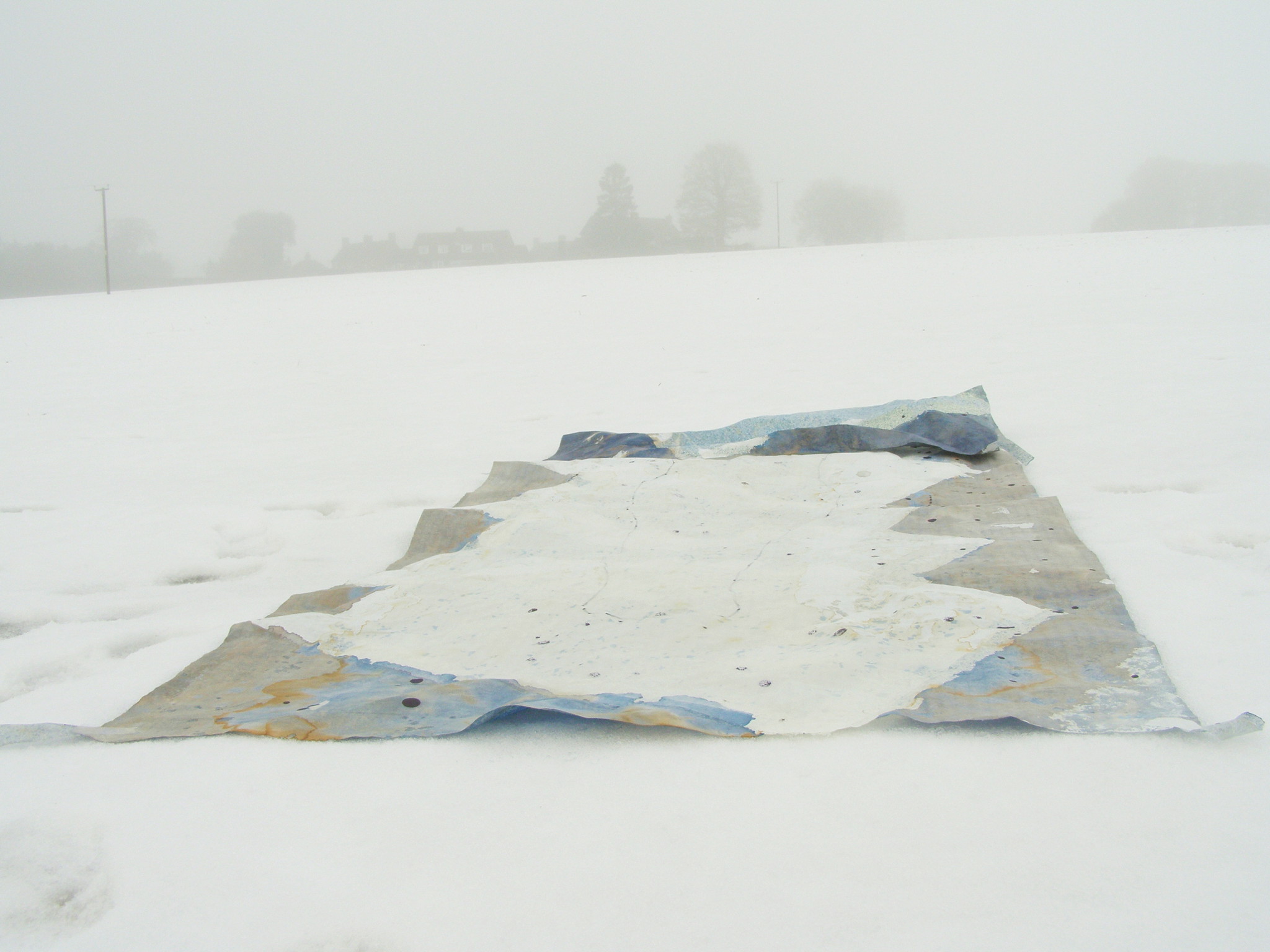
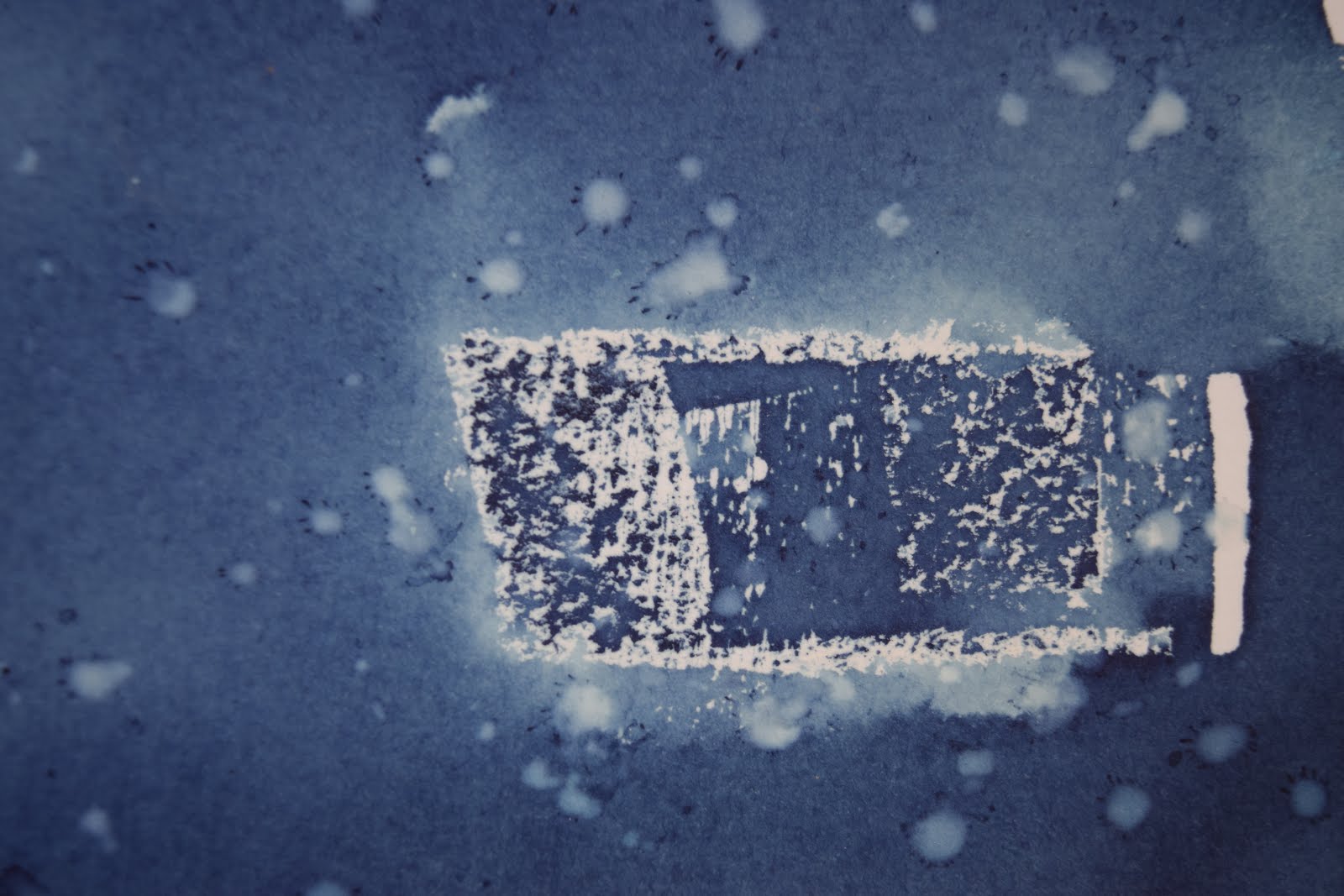
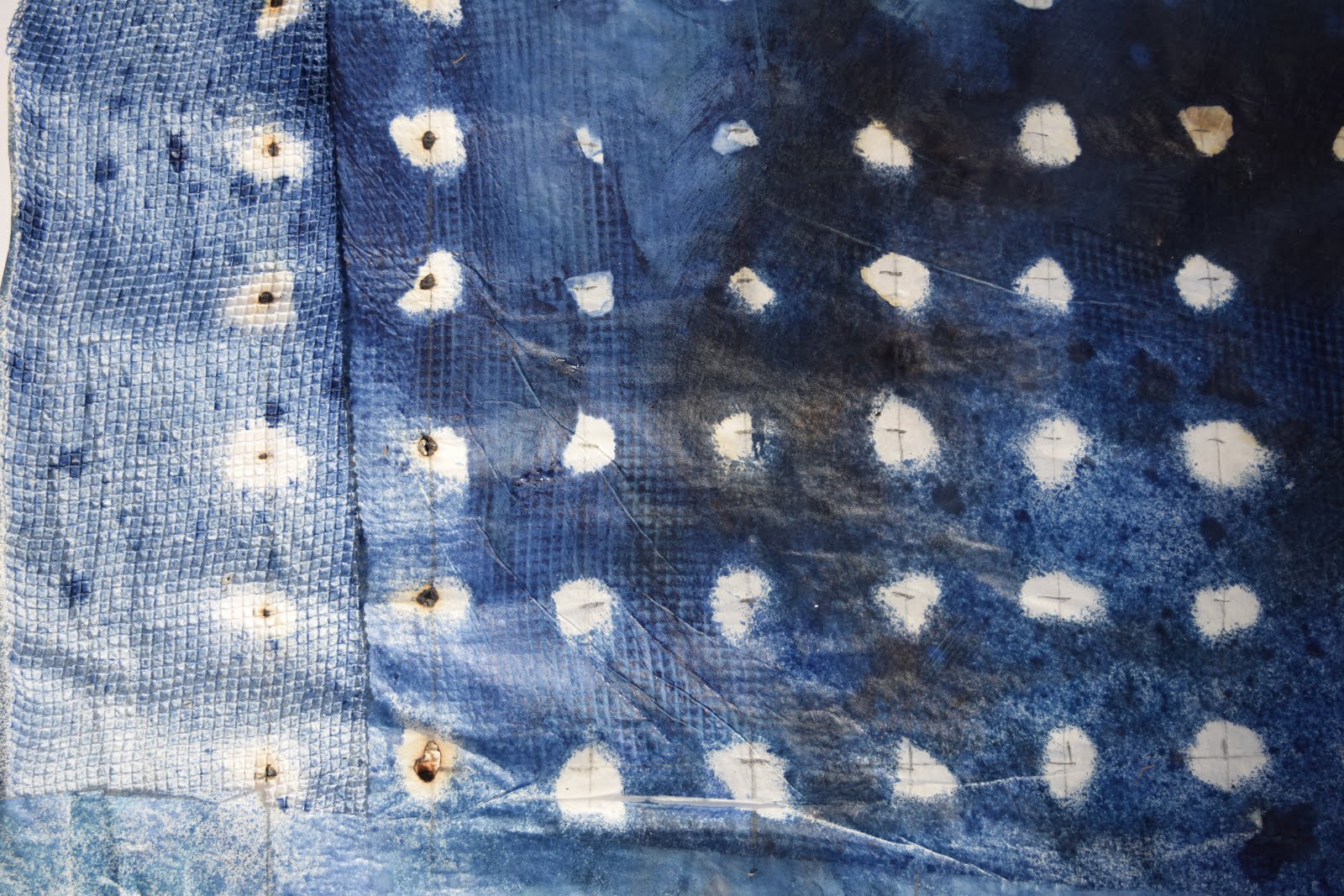
    Tidbury Ring, field drawings with cyanotype liquid on paper.
    A Hut of Ones Own. Heidegger for Architects.
    Immaterial Architectures.
    SENSING AND SPATIAL PRACTICE
    EXPLORING THE LANDSCAPE
    Soft/Blurring boundaries between art and the everyday making/becoming REFLEXIVITY / TRANSLUCENCY surfaces into an architectural presence TEXTURES / LIMINALITY on the absence of material.
    STATIC ENVIRON / ANIMATED THROUGH THE BODY
    THE ARCHITECTURAL SKIN / SURFACE, Blurring, revealing, masking, filtering, ARCHITECTURAL FEATURE / WALL / ARCH / PASSAGE /
    VISUAL TOOL
    SCULPTURAL ASSEMBLAGES, towards Speculative Forms/Expression TECTONICS IN MAKING, and the tectonics of immateriality/traces hidden by building. Concerned with bringing the material from its physical form into the meta-physical world.
    PAVILION / FUSELAGE
    THE CAMP / HUT
    represents the true reality of things, Deakin.
    The building as nothing more than an exposition of itself.
    A subjective hypothesis, a drawing developed into an objectivity for experience/learning.
    SITE, the undoing of PLACE. (Casey)
    BRICOLAGE I  HEURISTIC PRACTICE, Using things at hand, temporal, self constructions, becomings, mind forming explorations.
    DWELLING / MOBILITY / MOVEMENT IN THOUGHT
    TEMPORAL CONSTRUCTED SPACE

    TETHERED FOLLY against a fabric of time.

    ART AS INDETERMINATE, able to arrest perceptions into different states (becomings) Stone Worlds

    Narrative and Reflexivity in Landscape Archaeology Architecture and Ritual, how buildings shape society. Bought to Light

    Photography and The Invisible 1840-1900 CURATORIAL / DEVICE / BENCH / INTERLOCATOR

    Jannis Kounellis, Theatre, stage crew shifting actors during a performance. Interconnected, between contexts, opening places between the social fabric.

    Making spaces, expanding vision to create spaces ‘between’ in which to write ourselves.

    CONTEXT AND CONSIDERATIONS : MAKING, EXHIBIT, VIEW

    ART MUSEUM CULTURE

    THE CONTEXT FOR CONTEMPORARY ART IS THAT WE MAKE, EXHIBIT AND VIEW

    MUSEUM DIRECTOR, CURATOR, COLLECTOR, ARTIST

    None of that means anything anymore. Artists are now more DIVIDUALISTIC. They discover themselves not by securing a role within the historic narrative of a chosen medium. But by INTERGRATING into a more DIFFUSE ECOLOGY that involves not only making art, but also putting on shows, publishing, organizing events, teaching, networking.

    THE STUDIO is no longer a retreat, but it now INTEGRATES, IT IS ALL EXTERIOR. THE NETWORK places the artist as a ’like’ ITEM within an INTEGRATIVE

    INVENTORY or DATABASE.


    Source: A reflective building is an echo not a statement : SENSING AND SPATIAL PRACTICE

  • SPATIAL INTELLIGENCE through the conscious use of personally inflected mental space

    Architecture that forces us to confront our own spatial intelligence by moving us so much that we recall the eidetic origination of our own mental space.(Schaik,2008:80)

    “Thus we cover the universe with drawings we have lived. These need only to be tonalized on the mode of our inner space.”

    Gaston Bachelard. The Poetics of Space.

    The phenomenology of space – the matter of how we experience it.

    Gaston Bachelard, Poetics of Space (space and reverie), The Psychoanalysis of Fire. Poetics as an evolving and discursive system of dialogues that acknowledges environmental changes, of other spatial narratives and histories, and things that are not just about place and space.

    Thinkers and Vessel Makers

    Studio Practice : Social Sensing/Innerness Studio Practice

    UK based Visual Artist using drawing and experimental photography to explore issues around embodiment and existential space. Interested in creating spatial charged architectural interventions using glass and ceramics as conductive materials to articulate introspective spaces, surfaces and structures between buildings.

    Theory and Analysis

    Craft and Design/Interior Design Building, Dwelling, Thinking Scripting Rooms/Spaces and Events

    The pot promotes an architecture of the soul, of an intimate yet social interior illuminated through the imagination.

    Building human presence, to dwell shaped by ‘the vocational’ (physical and human topography)

    Everyday Aesthetics

    The Arts : As a Form of Experimental Psychology

    The Play Of Affect/Space and Politics

    Apparatuses and Architectures

    Rethinking Materiality/At The Potters Wheel How Things Shape The Mind

    Colin Renfrew

    Making

    Tim Ingold

    The Essential Vessel Natasha Daintry

    I think that part of our problem is that it is not easy to talk about sensing, doing and being? They’re not concepts as such neat little fixed shiny packages of ideas, but more existential states which shift and move as you inhibit them more amorphous, like clay.

    One can speak of this duality of inside and outside but the real experience is more kinetic, more fluid and interchangeable.

    Heidegger, Coper. Baldwin, De Waal, Zumthor

    The Potter/The Pot

    Where Brain. Body and Culture Conflate Lambros Malafouris

    ‘Speculations about the first shelters, the relationship between our home and the universe, about spaces that we first use as surrogate houses as we form our spatial histories and our mental space. It is about the contemplative effects of the miniature, about the paradoxical way in which the scale of many of our most cherished monuments can switch in our minds from large to minute- the quality of intimate immensity. It is also about propositions around the complex relationships between inside and outside and the surface between, about the phenomenology of roundness’ (Schaik,2008:86-87)

    ‘We are composed of matter and live in the midst of matter. Our objective should not be to renounce matter, but to search for a form of matter other than objects. What that form is called-Architecture, Gardens, Technology- is not important.’

    Kengo Kuma.

    On Anti-Object: An extended essay that is not so much history or theory as a volume of self-assessment that gives an opportunity for the author to contextualise his own body of work through considered self-reflection.

    My purpose in writing this book is to criticise architecture that is self-centred and coercive.

    Kengo Kuma.

    ‘Like McTieman or the theorist Paul Virilio, Kuma sees new digital and information technologies as leading us to an aesthetics of disappearance, rather than image or form.(Steele,2008:3)

    Beginning as one always does in the middle, in mediis rebus, one experiences a sense of disorientation, a sort of cartographic anxiety or spatial perplexity that appears to be part of our fundamental being-in-the-world. It is an experience not unlike that of Dante, in the opening lines of his Commedia:

    Introduction: Spatiality. Robert T. Tally Jr. The New Critical Idiom, Routledge 2013

    Midway along the journey of our life, I woke to find myself in a dark wood,

    for I had wandered off from the straight path. (Dante 1984:67)

    As a number of critics and theorists have noted, this bewilderment has increased with the modem and especially postmodern condition.

    This latest mutation in space-postmodern hyperspace-has finally succeeded in transcending the capacities of the individual human body to locate itself, to organize its immediate surroundings perceptually, and cognitively to map its position in a mappable external world.

    (Fredric Jameson 1991:44)

    ‘My ultimate aim is to erase architecture’ (Kuma,2008:3)

    How then, can architecture be made to disappear?

    ‘To be precise, an object is a form of material existence distinct from its immediate environment. I do not deny that all buildings, as points of singularity created by humankind in the environment, are to some extent objects. However, buildings that are deliberately made distinct from their environment are very different from those that attempt to mitigate this isolation, and the difference is perceptible to everyone who experiences them.’ (Kuma,2008:Preface)

    ‘A monument is a form that preserves time through the compression of space, a form in which visual perception is the parameter. A monument is a compression of time and space’ (Kuma,2008:92) Anti Object.

    Procedural Architectures : Collected Texts and Diagrams/Images

    Organism-Person-Environment

    Start by thinking of architecture as a tentative constructing toward a holding in place. Architecture’s holding in place occurs within and as part of a prevailing atmospheric condition that others routinely call biosphere but which we, feeling the need to stress its dynamic nature, have renamed bioscleave. Architectural Body

    Madeline Gins and Arakawa Working Notes/Holding in Place

    Wayfinding/Movements through accumulated research Running scripts, enactments, instances, involvements Collaborative texts, complexity, emergent, discursive

    From The Bookcase to The Field Table : Landing Sites of Inquiry

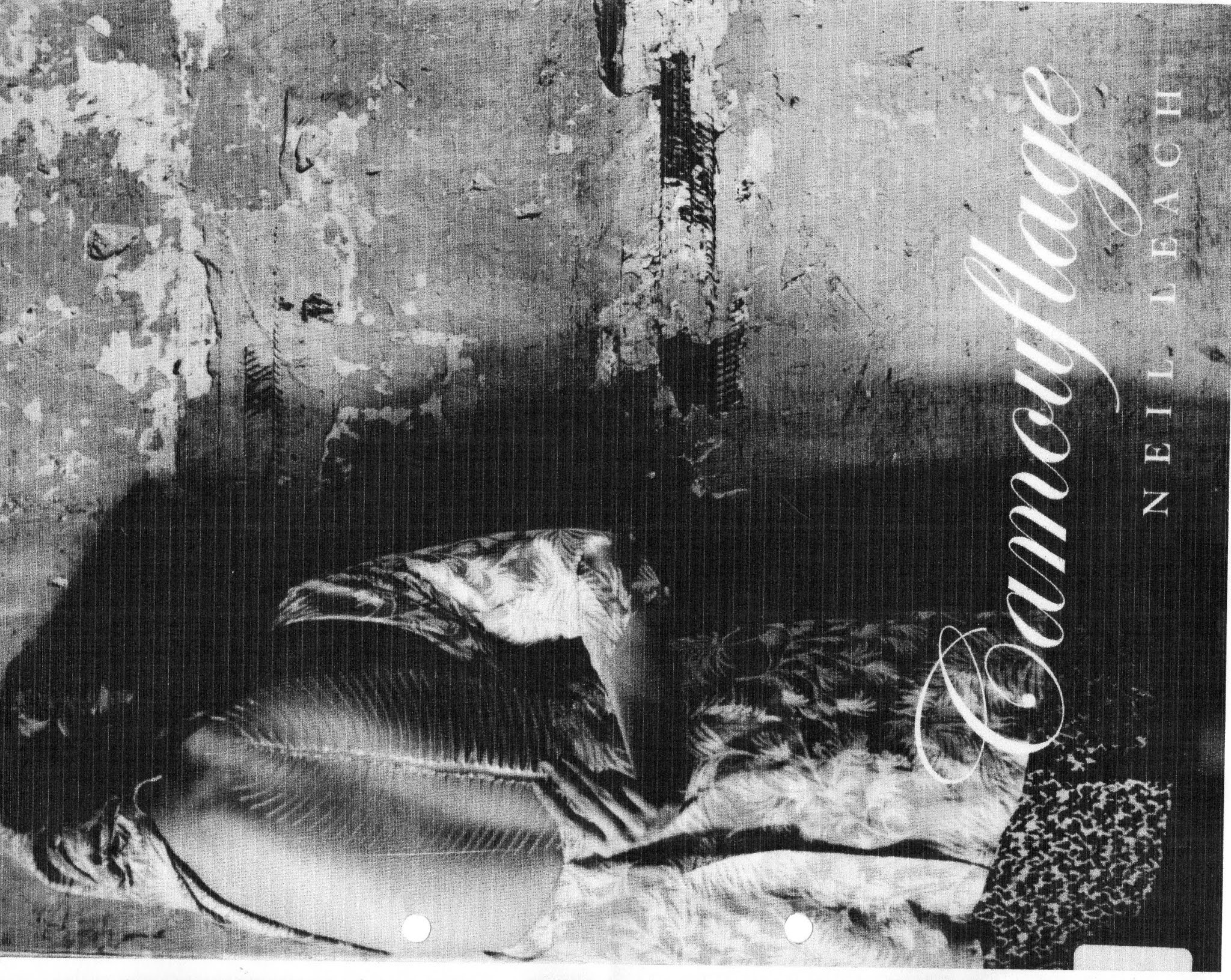
    Camouflage

    Neil Leach

    For Benjamin, the twentieth century is an age of alienation. Human beings are no longer ‘cocooned’ within their dwelling spaces. Architectural spaces are no longer reflections of the human spirit. Something has been lost.

    Mimesis, 19.

    New Concepts of Architecture Existence, Space and Architecture Christian Norberg-Schulz

    A child ‘concretizes’ its existential space. A Philosophy of Emptiness

    Gay Watson Artistic Emptiness

    Everything flows, nothing remains. Heraclitus

    Rethinking Architecture Neil Leach

    Figure 1, Sketch by Jacques Derrida for Choral Work project. 343 Foucault, Figure 2 Bentham’s Panopticon (1791). 360

    Page laid in, The Atrocity Exhibition by J. G. Ballard, new revised edition, annotations, commentary, illustrations and photos.

    Tracing Eisenman

    Plenum, juxtaposed to form/haptic values/body absences Robert Mangold

    Between moments of ‘meaning’ lie spaces or blanks of immediate experience. Such blanks are actuality. Usually the blank, the actuality, goes unnoticed because it works so efficiently to differentiate one meaningful event from another. Kubler discussed this in The Shape of Time.

    Interactions of the Abstract Body Josiah McElheny

    Object Lesson/Heuristic Device

    The term ‘heuristic’ is understood here to denote a method of addressing and solving problems that draws not on logic but on experience, learning and testing. In this regard stories and fictional narratives can be heuristic devices in acting as ideal models that are not to be emulated but which help to situate characters, actions and objects.

    Space Between People Degrees of virtualization Mario Gerosa

    Adaptive Architectural Design Device-Apparatus

    Place Function Adaptation

    The second phase of project activity acknowledges that the proposal involves two sites; the landscape of settlement and the artifice of the factory. The design is intended to be a reflection of the conditions of each, so there was a need to work directly with the manufacturing process, at full scale, as early as possible. This would provide an immediate counterpoint to the earlier representations and a necessary part of exploring the manufacturing medium in the context of architectural design.

    Building The Drawing

    The Illegal Architect Immaterial Architecture

    Mark Cousins suggests that the discipline of architecture is weak because it involves not just objects but relations between subjects and objects. And if the discipline of architecture is weak, then so, too, is the practice of architects. Architecture must be immaterial and spatially porous, as well as solid and stable where necessary, and so should be the practice of architects.

    Jonathan Hill

    Index of immaterial architectures Herzog and De Meuron

    Natural History

    Exhibiting Herzog and De Meuron

    We are not out to fill the exhibition space in the usual manner and to adorn it with records of our architectonic work. Exhibitions of that kind just bore us, since their didactic value would be conveying false information regarding our architecture. People imagine that they can follow the process, from the sketch to the final, photographed work, but in reality nothing has really been understood, all that has happened is that records of an architectural reality have been added together.

    My studio is a piece of architecture that is silent. The things of which it is made say all and at the same time nothing. Its strength lies in its demanding silence. A stern silence in order to permit works to occur. I imagine that a painting by Newman could be hung there.

    The arrival of Beuys in a world that was gradually falling asleep amidst minimalism generated a kind of confusion that was truly excellent for opening up the mind. Comfort vanished, driven away by subversive complexity.

    Speculative architecture

    On the aesthetics of Herzog and De Meuron

    Without opposition nothing is revealed ,no image appears in a clear mirror if one side is not darkened

    Jacob Bohme, De tribus principii (1619) Reflections on a photographic medium

    Memorial to the Unknown Photographer Thomas Ruffs Newspaper Photos Valeria Liebermann

    Working Collages Karl Blossfeldt

    Anti Object

    We are composed of matter and live in the midst of matter. Our objective should not be to renounce matter, but to search for a form of matter other than objects.

    What that form is called architecture, gardens, technology is not important.

    Kengo Kuma

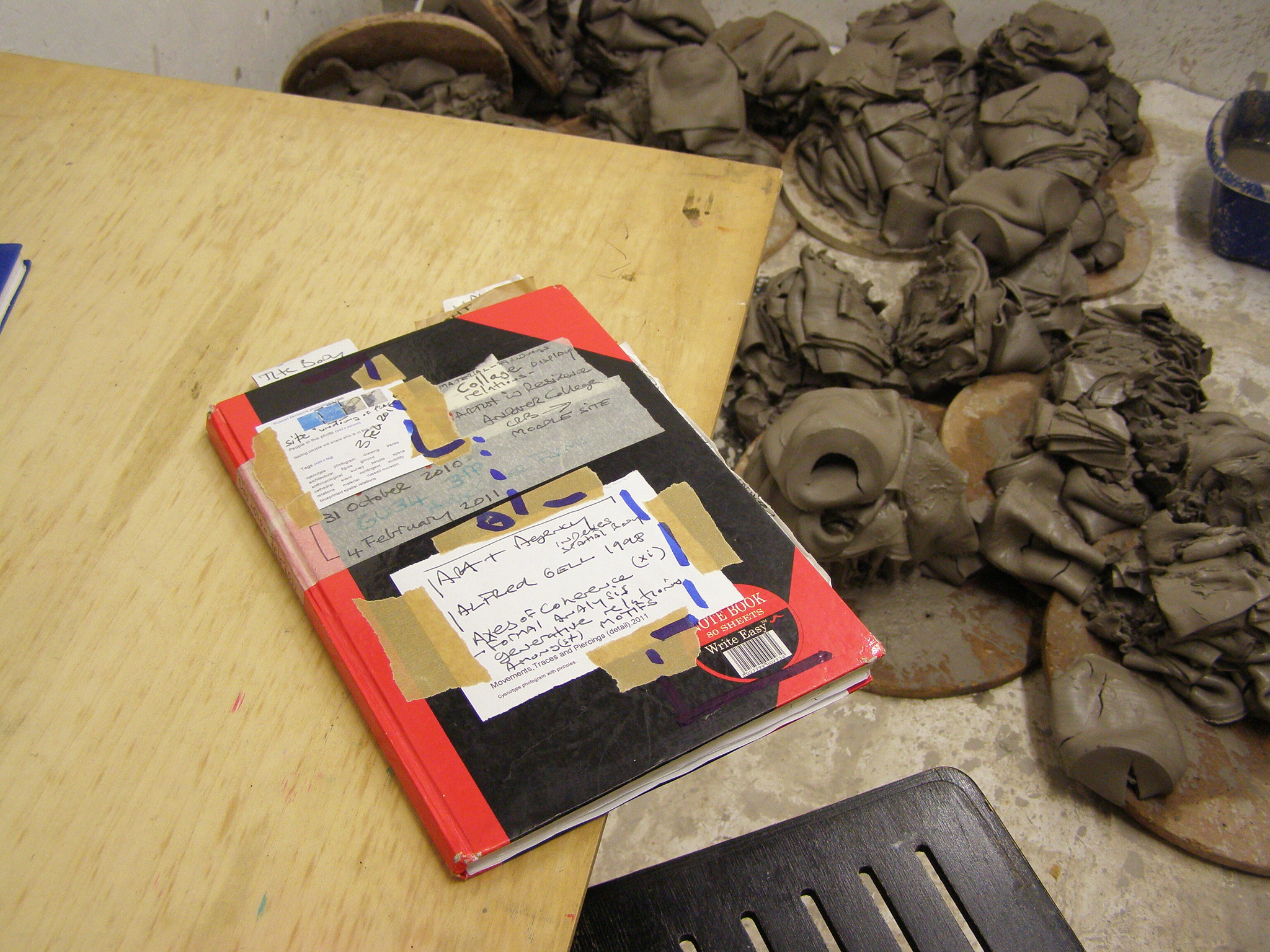
    NOTE BOOKS, June 2014-January 2015 SEQUENCE OF RESEARCH

    Re-Casting THE ABBEY as an INTERIOR SPACE within its own ENVIRONMENT THE EVENT CREATES A NEW BOUNDARY AROUND THE SITE

    The research found in my exploratory project has been further developed into the intellectual content of the event itself. To facilitate my organisation of the abbey site I am proposing to initiate detailed design based modifications to the circulation of the site. The project will be made functional from the proposal of an exhibition on-site that would act as a precursory event to gauge interest, support and possible funding partners, whilst also testing out some of the logistics that are specific to this site . Further to the theme and direction of the exhibition I propose to construct components that will make up the interior building spaces of the pavilion/stoa. Whilst investigating the actual experiential sense of place, I am proposing a small number of sensitive intervention/art works that will allow me to become more in tune with the possibility’ of inviting leading contemporary’ artists.

    Clare Tomely, Ceramic Interventions, buried and excavated objects.

    Mark Dion, Objects and Taxonomies from the River Wey

    Helena Elflova, Anima and Animus, live re-presentation of the Winchester Cathedral performance.

    How much of this research is really relevant to both the structure and assessment of a design orientated course/qualification and the proposal of a project brief designed to produce material to test its own suitability. In the light of these findings it would seem more beneficial to work directly with the subjectivities of aesthetics and materials that can be built into “interiors”. My working life has been centred around the craft disciplines of ceramics and glass, with a supplementary career in the construction of timber frame buildings and latterly in art education. My specialist design skills and knowledge’s rest within these experiences.

    Forming and Questioning Outcomes and Outposts around Interior Design.

    I create an exploratory body dedicated to things and to the world, of such sensitivity that it invests me to the most profound recesses of myself and draws me immediately to the quality of space, from space to object to the horizon of all things, which is to say a world that is already there.

    Maurice Merleau-Ponty

    Designing/Scripting interiors that are by their very nature contingent and unknowable till built.

    Drawing as a thinking process towards the dissemination of the brief.

    Creating something that when finished precedes the confinement of its origins.

    Clarifying the relation between space and place which contains inherent difficulties in as much as they are necessarily connected (inasmuch as place carries a spatial element within it even while space is also a certain abstraction from out of place), but there has been a pervasive tendency for place to be understood in terms of purely spatial. Jeff Malpas

    SPACE- ROOM TO MOVE

    or as a verb To Make EMPTY, EVACUATE, EMPTY OUT.

    The Production of Space/Human Agency/Place

    PLACE-VILLAGE, TOWN, or OTHER SETTLED LOCALITY.

    PLACE-HOME

    PLACE-A VERY SPECIFIC FORM OF BOUNDEDNESS/GATHERING

    As a gathering of elements that are themselves mutually defined only through the way in which they are gathered together within the place they also constitute.

    DESIGN-TO PUT IN PLACE

    Place referred to merely in the sense of position or location – usually the location or position of some already identified and determined entity .

    Slippages, Anomalies and liminal spaces. Our relationships with space and place.

    THE MEMORY OF PLACE

    A PHENOMENOLOGY OF THE UNCANNY

    Dylan Trigg’s The Memory of Place charts the memorial landscape into the body and its experience of the world. Trigg analyses monuments in the representation of public memory’, “transitional” concepts such as airports and highway rest stops; and the “ruins” of both memory and place in sites such as Auschwitz. The Memory of Place argues that the eerie disquiet of the uncanny is at the core of the remembering body, and thus of ourselves.

    STOA, a complex topology.

    The Stoics took their name from the place where they met. In the stoa they talked as they walked along the long shaded alcoves. The stoa offered shelter from the sun and rain without becoming an enclosed room. It was an in-between and transitional space, neither outside nor inside. Conversations could commence through casual interruptions in a site of gossip, rumour and information

    We imagine the stoa as a spatial metaphor for the emergence of critical consciousness within the transnational public sphere. It is a space for criticality without the formal requirement of political deliberation and for sociality without the duty of domestication.

    The stoa is the pivot point at which private and public spheres interact and from which the cosmopolitan sense of being and belonging from the vantage point of the stoa, then the telematic linking of two screens in the public squares of Australia and Korea can be viewed in a new light.

    The linking of these screens creates a new transnational public space, a space for the creation of a new discourse on the topology of the cosmopolitan imagination in contemporary art practice.

    Thinking the place of art within this context is more than jumping from either the local to the global, the private/’oikos to the public/bouletrion, or even the singular to the universal. It is more like the limmal zone of the stoa.

    Public Screens and Participatory Public Space. Nikos Papastergiadis, Scott McQuire

    Flesh and Stone,

    The Body and the City in Western Civilization. Richard Sennett. 1994

    Basically a long shed, the stoa contained both cold and hot, sheltered and exposed dimensions; the back side of the shoa was walled in, the front side consisted of of a colonnade which gave access onto the open space of the agora. Though free-standing the stoas were not conceived as independent structures, but rather as edging for the open space of the agora.

    Sennett: Flesh and Stone, page 50.

    Bringing Things to Life

    Creative Entanglements in a World of Materials Tim Ingold

    EWO= The Environment Without Objects

    THINKING AT WAVERLEY, as a site of multiplicity and memory. Walking is Thinking, Richard Long

    Heidegger-To participate with the thing in its thinging

    Our most fundamental architectural experiences, as Juhani Pallasmaa explains, are verbal rather than nominal in form. They consist not of encounters with objects – the facade, door-frame, window and fireplace – but of acts of approaching and entering, looking in or out, and soaking up the warmth of the hearth (Pallasmaa 1996. 45).

    As inhabitants, we experience the house not so much as an object but as a thing. (Ingold 2008: 8)

    Curriculum making as the enactment of dwelling in places

    One Place After Another: Notes on Site Specificity, Miwon Kwon. 1997


    Source: SPATIAL INTELLIGENCE through the conscious use of personally inflected mental space

  • MORE FORMING THAN FORM : Sensorium, Journeys in Art, Architecture, and Film

    Landscape/Sensorium : Journeys in Art, Architecture, and Film.

    Sensorium : A Partial Taxonomy, Caroline A. Jones.

    Drawing into the contemporary sociological imagination

    Contemporary artists aim to produce specific relations with the technologies they adopt and adapt;

    This schematic offers a partial taxonomy.

    Caroline A. Jones, Sensorium : Embodied Experience, Technology and Contemporary Art 2006 Immersive

    the “cave” paradigm, the virtual helmet, the black-box video, the earphone set Alienated

    taking technology and “making it strange,” exaggerating attributes to provoke shock, using technologies to switch senses or induce disorientation

    Interrogative

    work that repurposes or remakes devices to enhance their insidious or wondrous properties; available data translated into sensible systems

    Residual

    work that holds on to an earlier technology, repurposes or even fetishizes an abandoned one Resistant

    work that refuses to use marketed technologies for their stated purpose; work that pushes viewers to reject technologies or subvert them

    Adaptive

    work that takes up technologies and extends or applies them for creative purposes, producing new subjects for the technologies in question

    Atlas of Emotion : Journeys in Art. Architecture, and Film. Giuliani Bruno.

    The development of subjectivity as spatiality hinges on architectural construction and is written in the very articulation of architectural discourse.

    The Mobile Home

    Post Studio Practices, Daniel Buren. Rem Koolhaas

    A space is something that has been made room for… A boundary is not that at which something stops, but as the Greeks recognized, the boundary is that which something begins its presencing. That is why the concept is that of horizons, that is, the horizon, the boundary. Space is in essence that which room has been made, that which let into its bounds. That for which room is made is .. . joined, that is, gathered, by virtue of a location, that is by such a thing as a bridge.
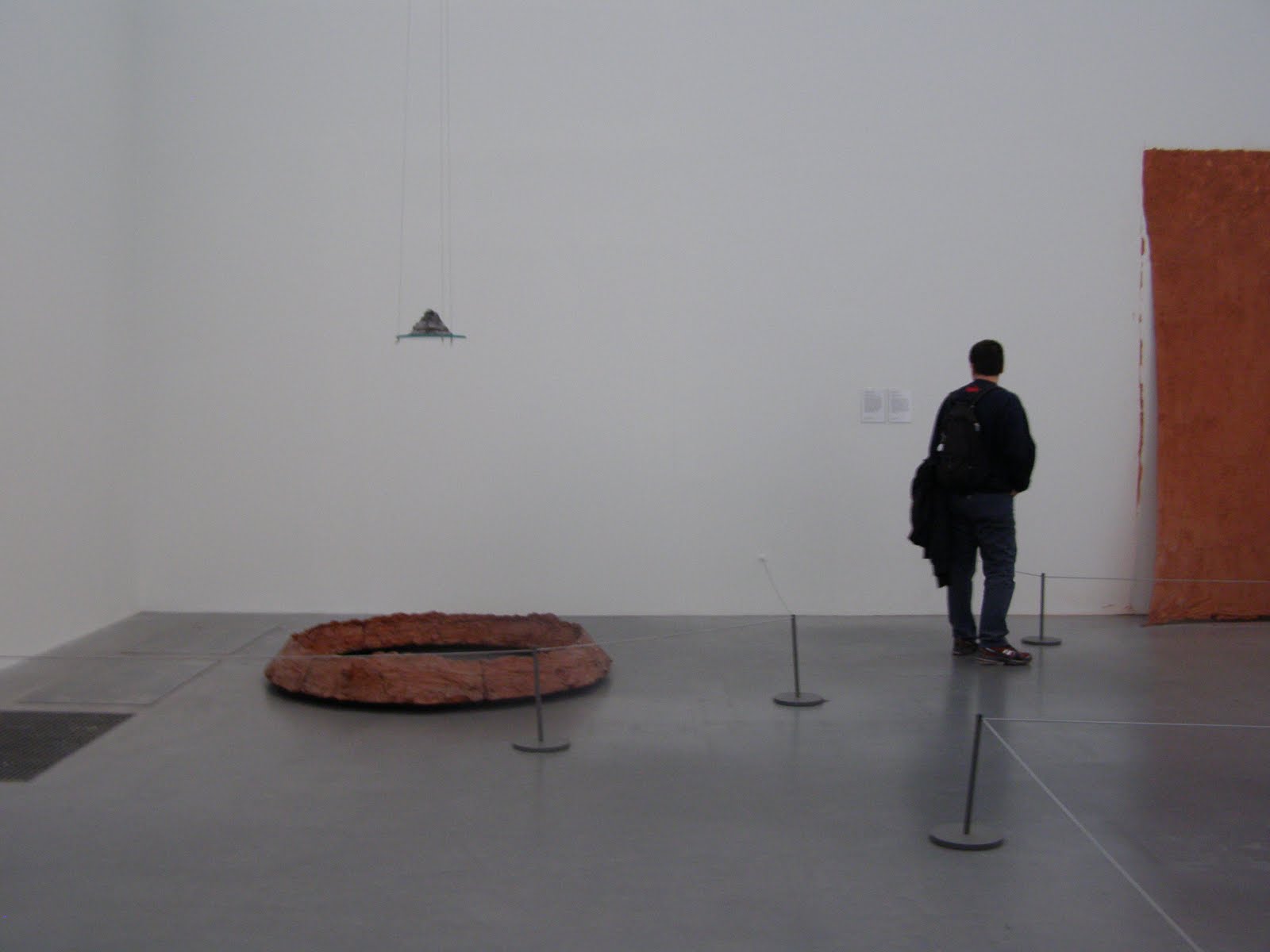
    Martin Heidegger. ’Building Dwelling Thinking’ Pattern and Chaos/Liminality/Tectonics

    Architectural surface for a Library, raw materials, light, silence and solitude.

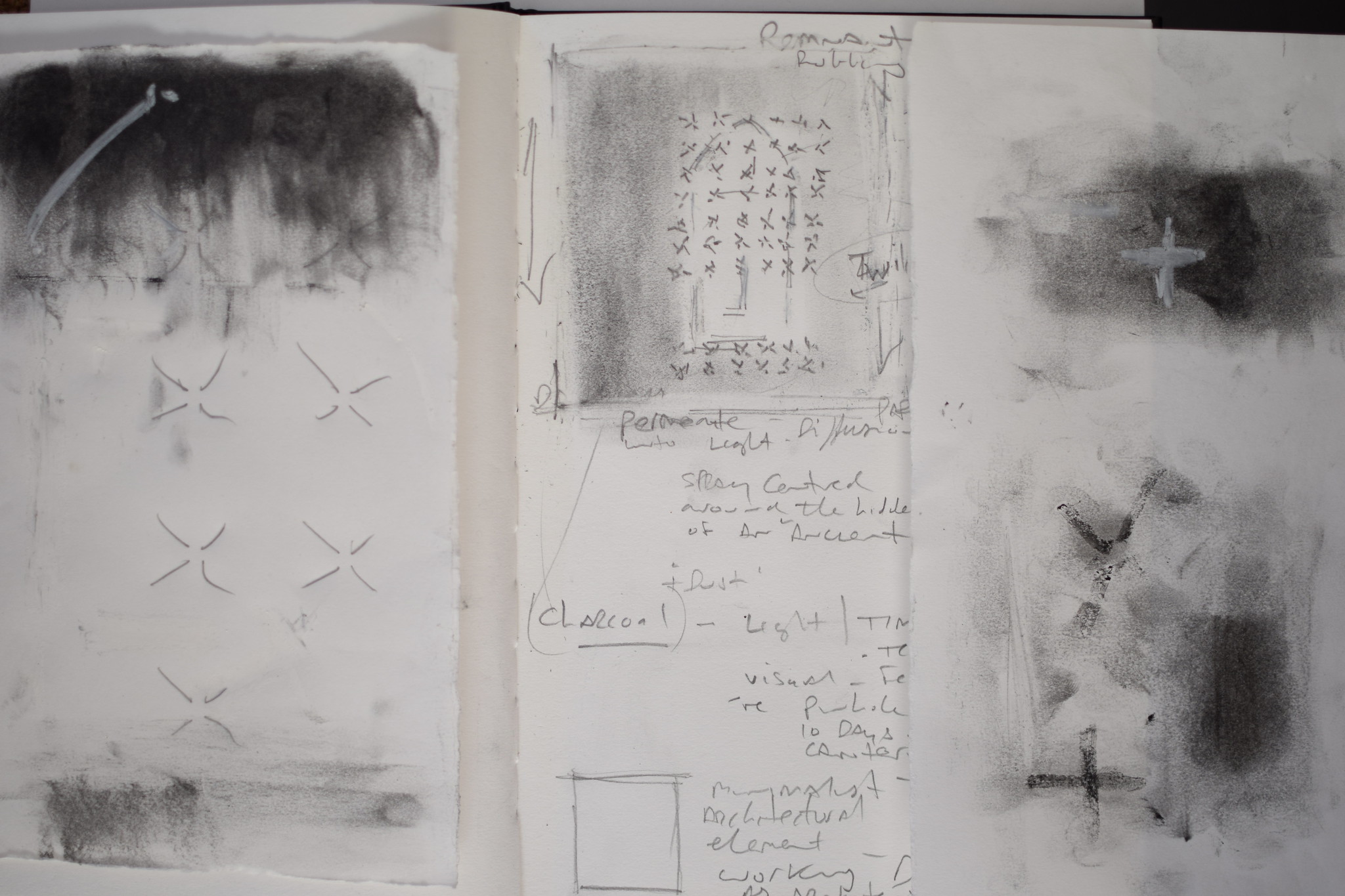
    CELL, COURT, DOMAIN FIELDS : Experimental surfaces and actions on layered paper.

    House (Gendered House) is actually, both a private museum and a public library. It is a laboratory built on the threshold of diverse and interpretive and creative perimeters, binding architecture to the cinematic/everyday drama of statis and movement in the sensing of space.

    The Voyage of Modernity, Guiliani Bruno.

    The spatial practices of exhibition and education.

    The humanities and architecture, Heidegger/Bachelard/Ingold/Herzog and De Meuron/Zumthor.

    The politics of things/sociology and everyday life/dwelling and making. Natural History learning/thinking through things/situations and vocations. Contents/Contexts and Presentation.

    TEXT FRAGMENTS 27 August 2018

    MORE FORMING THAN FORM

    ART as an inquiry into the phenomena of perception of ourselves and a conduit for others Artwork create our/new futures, connections as yet unknowable

    Room Obscura, etched glass ground,

    Space Between People, Josiah McElheny

    Glass Structures, Warm Glass/Kiln Forming Techniques Penone/Fontana, CLAY

    Those that work with Clay and those that work with CERAMICS Adolbe Constructions, Albers paintings, Terracotta, Kiln forms. Hut,

    Oscar Tuazon,

    George Kubler, Shape of Time,

    A CHRONOPHOTOGRAPH contains INFORMATION about interval, duration, speed and other DERIVATIVES OF SPACE TIME.

    Used as a metaphor for describing more abstract ideas of space/time, ie the notion of Time as a series of INSTANTS or PLANES of SIMULTANEITY.

    Robert Mangold, Josef Albers, Constructed Spaces/Intervals : Minimalist

    Creative Praxis, an articulation in the process of making/field The Drama/Performativity of the art work.

    Merging into the painterly and its sensate abstraction/nature/materiality of evocative surfaces and textures. WANDERLUST/WONDEROUS into imaginative/visionary environs of the everyday, the quotidian detail/MARKS of life/Becoming Experiential.

    Walking is indexical to the landscape as is the thinking that is experiential produced through its agency. Leper Grave Poetry

    INTRA- Spaces

    Art Poverva, Materiality, Agency, Making, Nesting, Building,
    NASCENT FINDINGS

    Encoding DATA, LANGUAGE

    Entanglements of Visual Data and Abstract Language CATHEDRALS OF INTELLIGENCE

    The Urban Documentary,Text, Sebalt, The River : The Colour of Light

    Albers/Colour Perceptions

    Vernacular Architectures, Building/Making beyond the design

    Footings, Voids, Roof Structures, Cavities, Between Walls, Sensing Spaces in the very making of the building.

    The Architectural plan/model and its proposal became the real virtual space for architectural energy and innovation.

    TRANSACTIVE MEMORY Texts, Contents, Particulars. Process,

    Working through ideas with things/devices/apparatuses Cognitive Landscapes /Relationalities ? Possible Worlds Subsumed by the causality of relationships/culture

    Mies van der Rohe The Art of Sculpture

    Moholy Nagy The New Vision Abstract of an Artist

    Light brings the moment in time to us

    Presence, Praesentia, exactitude of light on place and time LAND. LANDSCAPE, CLAY

    Pot, Shard, Remnant, Culture, Jug, Dominion/Grounded Temporal/Spatial Perspectives

    Light/Dark Room : Towards a new Interior Experimental Vision : Research Collage

    Aesthetics of the Everyday Creative, Human Praxis

    Working Towards a Secular Retreat in the Landscape

    TRACE, LIGHTNESS, EXACTITUDE the abstractions of loss/disappearance Matter and Desire, an erotic ecology

    Things held captive by the presence of light/loss of gravity Modulation-Sensate-Mapping-Post Studio-SITE

    Visceral and Ephemeral Research: T Oulton

    MAKING-CREATING-CURATING through experiential process /praxis Notes from the work in progress/Cell,Court,Domain

    ANTHROPOLOGY URBAN MATERIALITY

    The Movement of Body Politics

    Heidegger, Dewey : Landscapes of Everyday Aesthetics

    Cell Court Domain : Capitalism/Consumerism created the house-wife. Threats are within the layers of things

    Being Animal, Deleuze

    Simple structure, construction that is mindful of an austere aesthetic, a liminal zone of contemplative solitude and lightness. Causality at play in the practice creating cognitive and playful frames of subjectivity. Art works by finding things and experiencing something that is beyond themselves, beyond being into the space oor interval of becoming.

    LANDSCAPE and the authorship/design aesthetic of the picturesque Ownership of the land and those who live on it. Gillian Rose/Landscape/Feminism

    Worked with the nature of the river, lived in accord with its ancient spring. Now we take ownership, straighten and pollute it and market it as picturesque. It is this particularly contemporary incarnation of landscape that perfectly reflects the anthropocene nature of our postmodernism.

    The photographic pathology of the image creates the empty depths, a mourning on modernity.

    BLUE, Melancholy and Creative Energy.

    Absences and the passing/(imprinting of memory) of time spent/becoming self. Militaristic aesthetic at work, distillations and meditations

    A pictorial environment of slowtime, an ephemeral apparition. Creating sensibilities that are meanings that are residing in thee process. Encompassing accidents and chance.

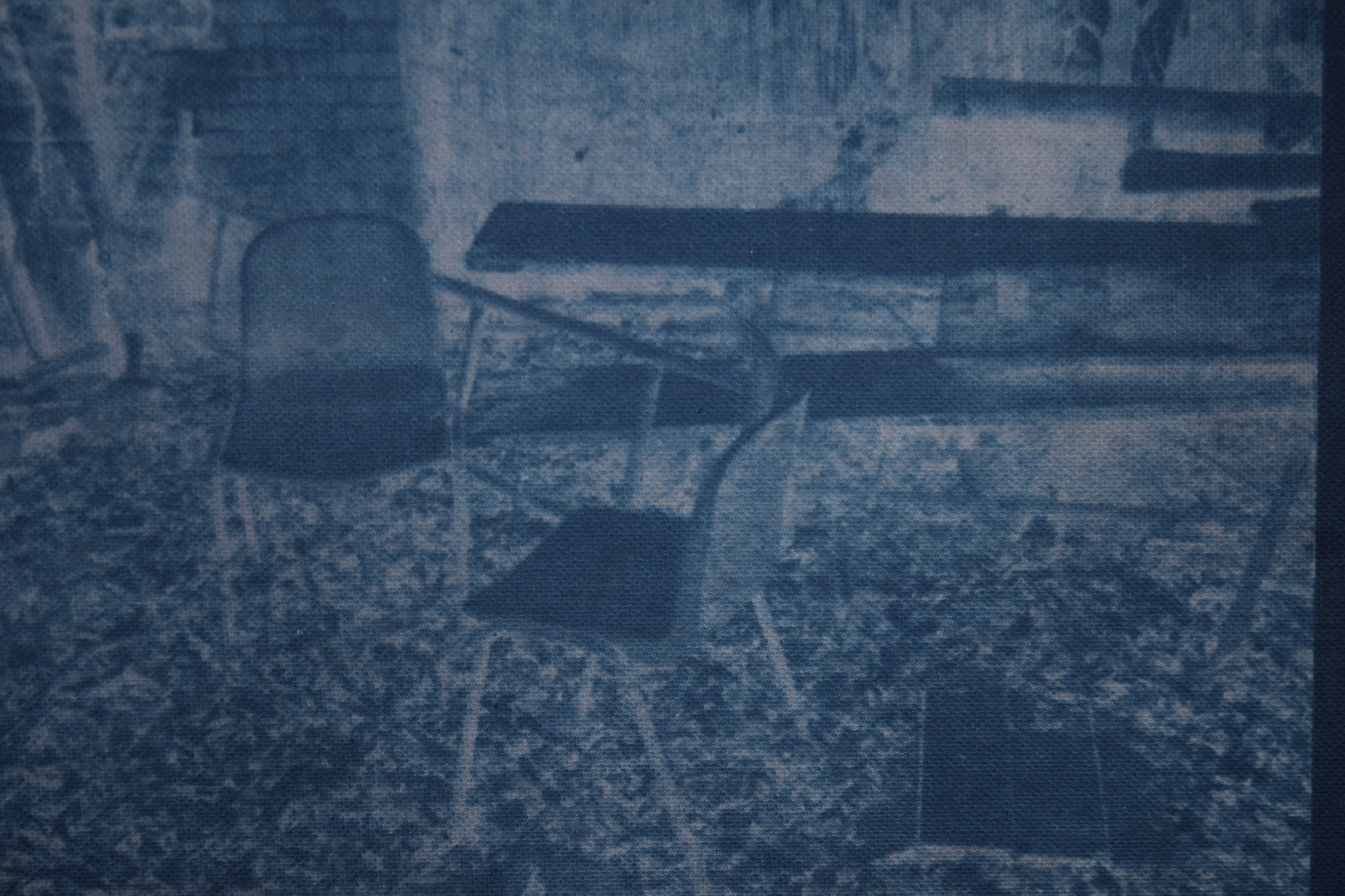
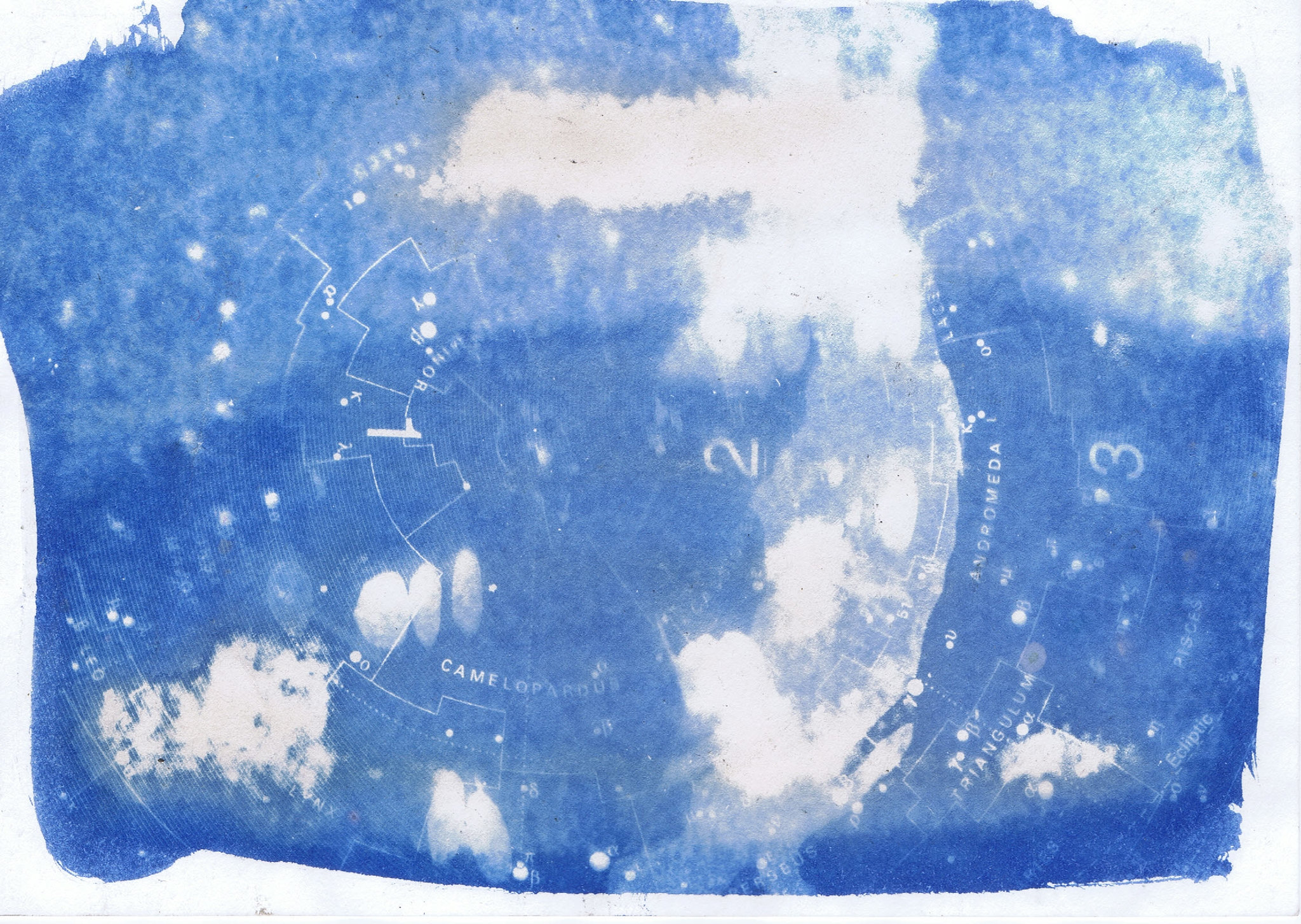
    Cyanotype Documents/Natural History

    Creating propositions/absent abstractions into a theater of experimentation.

    Records the physicality of an objects displacement/nature and documents its qualities of translucency and opacity.

    SHADOWCATCHERS : The casting/performativity of shadows and their aura/otherness Proximity, distances between object, light and the recording surface.

    Luminosity, Liminality, Numinous,

    ANTHROPOLOGY URBAN MATERIALITY

    The Movement of Body Politics

    Heidegger, Dewey : Landscapes of Everyday Aesthetics

    Cell Court Domain : Capitalism/Consumerism created the house-wife. Threats are within the layers of things

    Being Animal, Deleuze

    Simple structure, construction that is mindful of an austere aesthetic, a liminal zone of contemplative solitude and lightness. Causality at play in the practice creating cognitive and playful frames of subjectivity. Art works by finding things and experiencing something that is beyond themselves, beyond being into the space or/and interval of becoming.

    LANDSCAPE and the authorship/design aesthetic of the picturesque Ownership of the land and those who live on it. Gillian Rose/Landscape/Feminism

    Worked with the nature of the river, lived in accord with its ancient spring. Now we take ownership, straighten and pollute it and market it as picturesque. It is this particularly contemporary incarnation of landscape that perfectly reflects the anthropocene nature of our postmodernism.

    The photographic pathology of the image creates the empty depths, a mourning on modernity.

    Subjectivity, the conscious and unconscious thoughts and emotions of the individual, it is not stable but constructed in relationships with others and in everyday practices.

    Entanglements that theorise (an analysis that enables) the social and the natural together, ie intra-acting with matter of our worlds in ways that are transformed by matter and ourselves and vice versa. (Barad)

    The meditation of absence/touching lightness

    Stones as a matrix of gathering slowness.

    Paintings as cognitive landscape

    Creating subjective thoughts and readings embedded through an awareness of space and time. Opportunities for something instantaneous to happen and be recorded.

    Empirical, Indexical, Experiential, Involuntary,

    Taxonomies and Subjectivity/Spatial Narratives of Layered Space (Spatiality) Mark Dion, Thames Dig.

    Herzog and De Meuron, Archaeology of the Mind/Natural History. Peter Greenaway, The Physical Self/Architecture and Allegory.

    Postmodern : Ever Changing, Fleeting, Positive, Nihilistic,

    “There are no simple concepts. Every concept has components and is defined by them.

    It therefore has a combination [chiffre]. It is a multiplicity, although not every multiplicity is conceptual…
    Not only do Descartes, Hegel, and Feuerbach not begin with the same concept,

    they do not have the same concept of beginning… Every concept has an irregular

    contour defined by the sum of its components, which is why,

    from Plato to Bergson, we find

    the idea of the concept being a matter of articulation,

    of cutting and cross-cutting.

    The concept is a whole because it totalizes its components, but it is

    a fragmentary whole.

    Only on this condition can it escape the mental chaos

    constantly threatening it, stalking it, trying to reabsorb it.”

    Gilles Deleuze and Felix Guattari, What is Philosophy?, pp. 15-16.

    ABSURDITY POLEMIC POETRY CONFLICTING DYSFUNCTIONAL

    TETHERED FOLLY against a fabric of time.

    ART AS INDETERMINATE, able to arrest perceptions into different states (becomings) Stone Worlds

    Narrative and Reflexivity in Landscape Archaeology Architecture and Ritual, how buildings shape society. Bought to Light

    Photography and The Invisible 1840-1900 CURATORIAL / DEVICE / BENCH / INTERLOCATOR

    Jannis Kounellis, Theatre, stage crew shifting actors during a performance.

    Interconnected, between contexts, opening places between the social fabric.

    Making spaces, expanding vision to create spaces ‘between’ in which to write ourselves. CONTEXT AND CONSIDERATIONS / MAKING, EXHIBIT, VIEW

    ART MUSEUM CULTURE

    THE CONTEXT FOR CONTEMPORARY ART IS THAT WE MAKE, EXHIBIT AND VIEW

    MUSEUM DIRECTOR, CURATOR, COLLECTOR, ARTIST

    None of that means anything anymore. Artists are now more DIVIDUALISTIC. They discover themselves not by securing a role within the historic narrative of a chosen medium. But by INTERGRATING into a more DIFFUSE ECOLOGY that involves not only making art, but also putting on shows, publishing, organizing events, teaching, networking.

    THE STUDIO is no longer a retreat, but it now INTEGRATES, IT IS ALL EXTERIOR. THE NETWORK places the artist as a ‘like’ ITEM within an INTEGRATIVE

    INVENTORY or DATABASE.

    Melancholy And The Landscape

    Locating Sadness, Memory And Reflection In The Landscape Jacky Bowrin

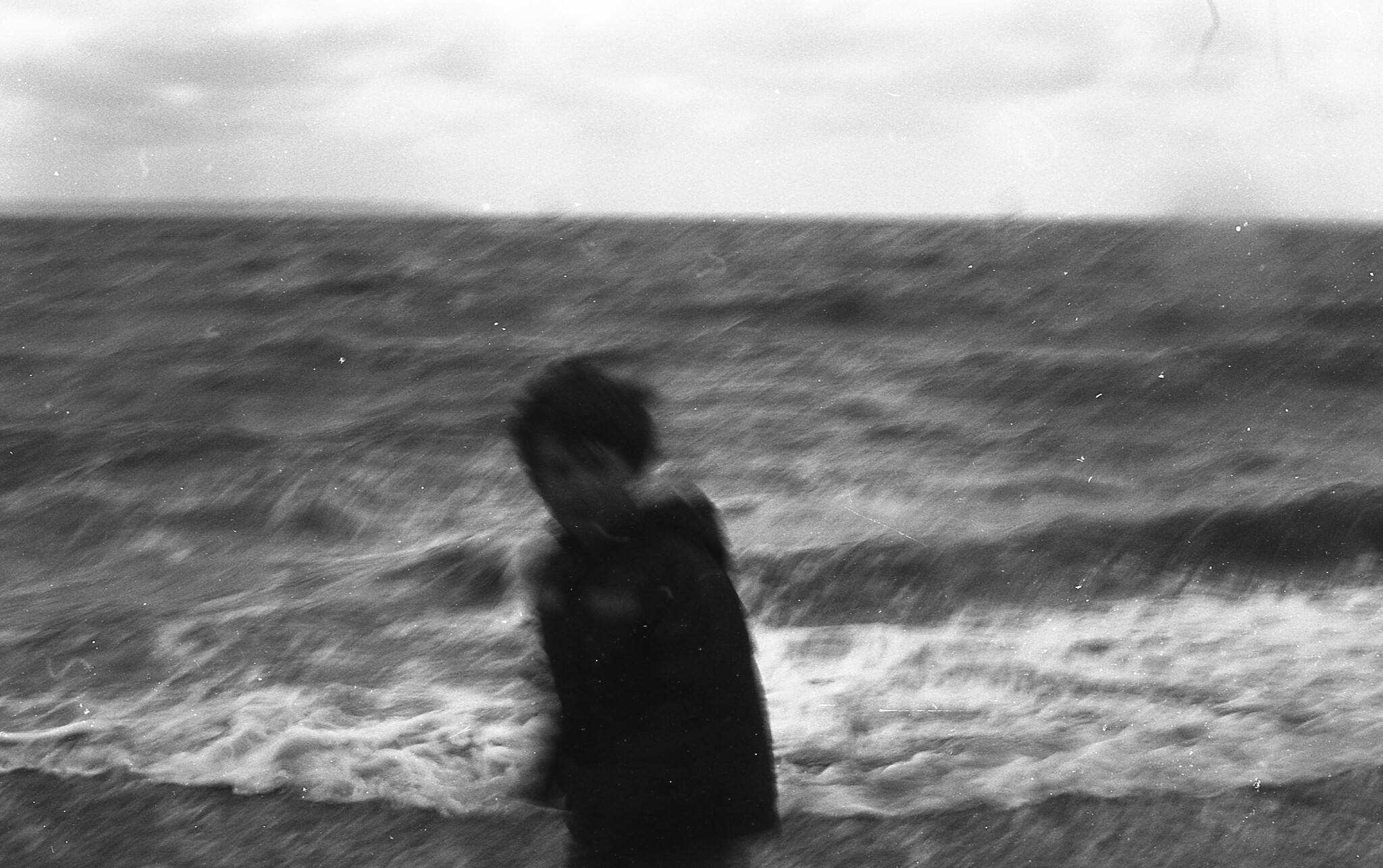
    Path : Analogue Film Process St Catherine’s Hill, Winchester

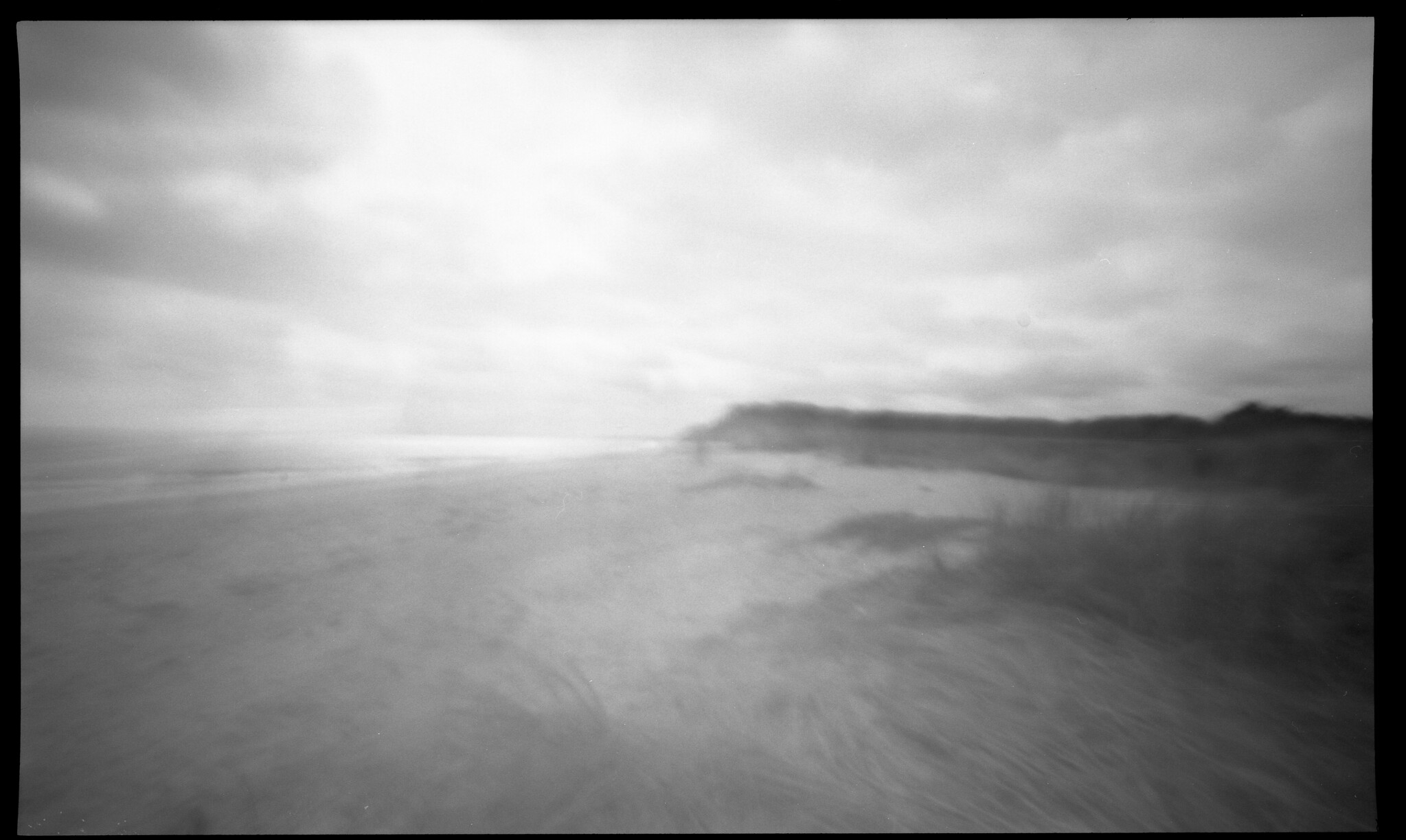
    Anthracene : Nick Cave and the Bad Seeds, Skeleton Tree. Walberswick : Beach Slides/Digital Pinhole

    Covehithe : Walking/Thinking/Physical Entanglements in the Landscape Walking into Emergent Landscapes : Covehithe Beach

    The OLD WAYS, a JOURNEY ON FOOT, Robert Macfariane

    “ Walking was a means of personal myth-making, but it also shaped his everyday longings: Edward Thomas not only thought on paths and of them, but also with them.”

    “To Thomas, paths connected real places but they also led out-wards to metaphysics, backwards to history and inward to the self. These traverses- between the conceptual, the spectral and the personal-occur often without signage in his writing, and are among its most characteristic events. He imagined himself in topographical terms.”

    Landscape : Entanglements of Affect

    Deeper Darkness, Photographic Memory/Process, Metonymy, Negative, Analogue, Negated Nocturne. Walking, Others, Presence, Becoming,


    Source: MORE FORMING THAN FORM : Sensorium, Journeys in Art, Architecture, and Film

  • Discursive Readings : Further Reductions and Fabrications

    Bricolage/Reading : Further Reductions and Fabrications

    The Production/use of Space into Places to engender Societies.

    A site specific induced inquiry into dwelling and building through/by way of an attentive awareness (anthropological) to people and place.

    ‘What I am post interested in now is inverting the structure of a culture that is centred around the city.’

    ‘The richness and strength of that(their) culture cannot be understood until one has worked with the people who live their- until one has eaten their food, drunk their sake, talked together with the craftsmen and made things with them.’

    Kengo Kuma, Complete Works, (preface) 2012

    Diffractive Gratings/Apparatuses/Methodologies through which to use in thinking from different disciplines.

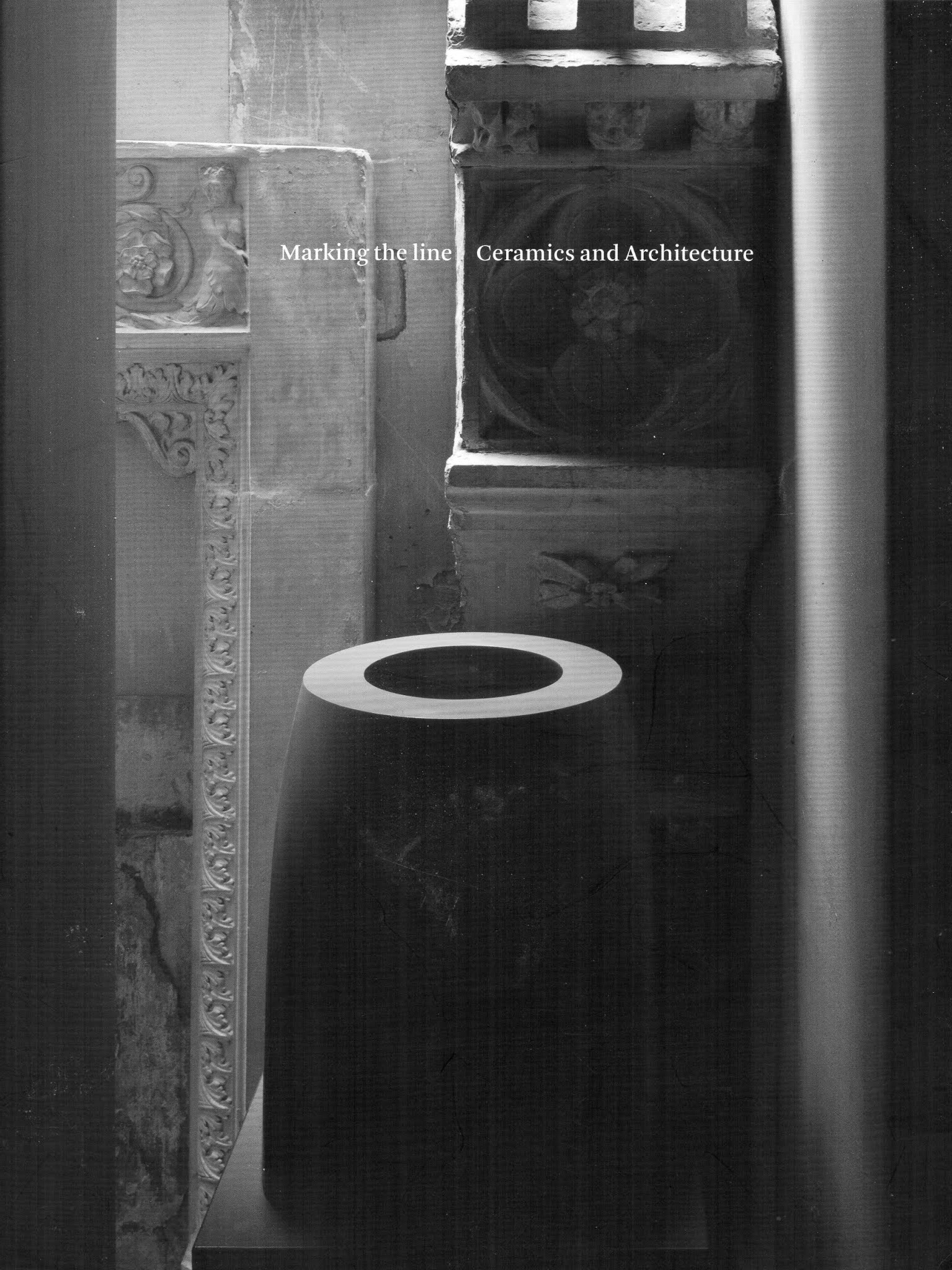
    Clay, Interior Skins of Light and Dark Contemporary Ceramic Practices in Craft and Design.

    Interior Spaces. Environments and Atmospheres. Ceramic Building Technologies.

    Questioning the discursive nature of Screens, Boundaries and Borders.

    Placing different interdisciplinary practices in conversation with one another.

    Situatedness, Performativity, being/becoming attentive to the iterative production of boundaries. (Barad)

    ‘As found is a small affair, it is about being careful.’ Peter Smithson, 2001

    ‘The ‘as found’ attitude is anti-utopian; its form is (site) specific, raw and immediate. It calls the will to question. It is a technique of reaction ( Opposition/Kengo Kuma and Herzog and De Meuron and Multiplicity/Calvino and Zumthor) and a concern for that which exists.’(Schregenberger, 2005)

    Sensuality, Materiality as Memory in the Poetics of Space.

    Breaking The Mould : New Approaches to Ceramics. 2007

    Ceramic Environments.

    Space/Time based work, using clay in large-scale contexts, in gallery or outside spaces to create a fully immersive moment that challenges the common perception of what clay is capable of.

    Surreal Geometries.

    Makers who use large and small-scale sculpture that is in some way abstracted or represents a heightened version of reality.

    The Vessel.

    Works around the practicalities of functional ceramics. Human Interest.

    Explorations into the human form and human nature. Beyond The Vessel.

    Experimentation around the ideas of deconstructing the vessel. Earthly Inspirations.

    Formal and conceptual properties of using the very nature of clay. Surface Pleasures.

    The exterior skin of ceramics and clay.

    Notes from The Essential Vessel, Natasha Daintry. A Vessel defines emptiness as presence.

    Vessel as a fundamental expression of being and non-being a ‘no-thing’ A vessel is both a hollow receptacle for liquid, and also a place where

    “The mind of man balances and reconciles opposites” Tom Chetwynd,

    “We turn clay to make a vessel; but it is on the space where there is nothing that the usefulness of the vessel depends.” Tzu, Lao, Tao Te Ching.

    Around Form and Formlessness.

    A Vessel is an effortless three-dimensional manifestation of form and formlessness.

    ‘The benign existential riddle of the vessel is that we only see the material bit that holds our coffee.’ (Daintry2007:8)

    One comes about as a result of the other, and this search has a particular resonance at the beginning of this fledgling millennium as technological progress masks a perilous sense of physical and psychological uncertainty. (Daintry2007:6)

    Pottery is bound up with the elemental needs of civilisation.

    The search of form/cultural and individual through participating with the potters’ wheel.

    Alternative “Thinking”States, Sensing, Doing and Being.

    ‘Its not easy to talk about sensing, doing and being. They’re not concepts as such, neat little fixed shiny packages of ideas, but more existential states which shift and move as you inhabit them-more amorphous, like clay.’ (Daintry2007:6)

    Amorphous values of things/memory manifested through existential states (as a spatial device/movement/atmosphere) in architectural spaces?

    Zumthor, Holl, Pallasmaa, Bachelard.

    For the potter the making of a cup or bowl through the opening up or hollowing out of clay is itself ‘an essay into abstraction, a clothing of emptiness’; for a vessel is as much defined by the negative space in and around it, as the skin of the ceramic itself. This skin is a sort of negotiation between inside and outside, between solid and fluid, and where they intersect. A vessel embodies something and nothing and is an effortless three-dimension manifestation of form and formlessness. (Daintry2007:8)

    The vessel inhabits rich, liminal territory of uncertainty and abstraction. (Daintry2007:12)

    Metaphors of Memory and Experience by way of the Vessel.

    Spatial Negotiations (Metamorphosis) between Inside and Outside.

    Clay Water Volume Vessel

    A vessel (as membrane/threshold that can hold social rituals/traditions and memories) seems to occupy space but simultaneously be occupied by space.

    Water, although fluid it is supremely germinative and represents the condition of all potentials.(Eliade Mirceal983)

    Permeable in flux, water and water’s symbolism became the pagan’s way of intuitively knowing the world. Matter was plastic, fluid and changeable. The body was plastic with parameters defined not only by individual consciousness, but also in relation to other realms of the physical world.

    The pagan participated in a vast mythology where his identity changed according to narrative fantasies that combined and recombined human and animal activity endlessly, weaving together memory, reason and sensation. In this permeable world there is no sharp division between things or between life and death. It is a world of energetic flow where bodies can indifferently become attached or unattached from myriad objects and forms. (Daintry2007:9)

    Flexible Ways of Seeing/Re-Making the World.

    “A large part of the reason for making is to see things that I have never seen before, to build something which I cannot fully understand or explain.”

    Artist Statement, Ken Eastman.

    Theories of relativity and uncertainty have shown that all matter, even the airy oxygenated void inside a vessel is energy, and that it is composed of the same building blocks generated from exploded stars. (Daintry2007:10)

    Italo Calvino : Six Memos for the Next Millennium. 1996

    LIGHTNESS

    Lucretius, preoccupied with infinitesimal entities on the nature of things.

    A philosophy of lightness (Calvino) formed from Lucretius ‘he is the poet of physical concreteness, viewed in its permanent and immutable substance, but the first thing he tells us that emptiness is just as concrete as solid bodies.’(Calvinol996)

    Knowledge of the world tends to dissolve the solidity of the world. (Daintry2007:10) The synchronic flow between form and emptiness, solid and fluid is in itself an

    awareness of conjoining the concrete with emptiness. The drawings of Cy Twombly as Roland Barthes comments have the ‘appearance of a form (that) testifies to its simultaneous ineluctable disappearance’ this produces a sort of life-death thought and gesture caught within a semblance of writing (graphism). This mark making is evident in the drawings of Alberto Giacometti where the very mark itself seems to illustrate both its arrival and its disappearance. This erasure and its subsequent superimposure is a sensation caught in flux, the written in the unwritten.

    The painted bottles of Giogio Morandi share a similar quality where reality floats somewhere between inscription and erasure. (Daintry2007:l 1)

    Morandi ‘I believe that nothing can be more abstract, more unreal than what we actually see.’ He comments further on the specifics of an objects he paints that a ‘precipitous position can be seen in psychological terms as a confrontation with the void of existence.’(Tate Modem 2001)

    ‘The didactic boundaries of the outer pot surrender to an informal space within that seems far larger than the vessel itself.’ This is how Gareth Clark has described Ebuzziya Siesbye’s hand built pots, how they seem to levitate volume and float in space. (Daintry2007:11)

    A “Retreat” as an entrance to a vast, limitless space- an inner landscape.

    One can speak of this duality of inside and outside but the real experience is more kinetic, more fluid and interchangeable. (Daintry2007:11)

    This dialectic of ‘outside’ and ‘inside’ is explored by Gaston Bachelard in his Poetics of Space. Bachelard points to an interlockingness that inverts the experience of in and out through the imagination. He notes that ‘we absorb a mixture of being and nothingness’ explaining that ‘being does not see itself; it does not stand out, it is not bordered by nothingness’. (Bachelard1994)

    Form

    Form as a Transport/Transitional Device to arrive/present somewhere/something. The Abstract to The Concrete.

    Architectural Experiences.

    Anthropomorphic Qualities. The Physical Self.

    Materials and material sensuality in both architecture and the making processes of vessels.

    Thinking and Learning through Objects (things).

    Do we notice the minute differences between textures, light and spatial volumes? This attending to the physicality of things has the effect of locating you in the world

    and connecting you to you own physicality. It represents a way of felt experience, of being known and knowing the world through the corporal. (Daintry2007:12)

    The Body in Pain: The Unmaking and Making of the World. Elaine Scarry.

    Theorises how creative efforts-making both stories and objects-construct the world. Scarry describes both tools and objects as being extensions of the body into the world and therefore they become ways of knowing it. Importantly Scarry documents how tools have become increasingly detached from the body over time. This detachment from our bodies is creating a disembodied relationship with ourselves, and the technological world we now inhabit.

    Wanderlust, A History of Walking. Rebecca Solnit. 2002

    The Mind at Three Miles an Hour.

    Are we using objects to feel are way back into the world?

    Solnit explores Susan Bordo’s claim that ‘if the body is a metaphor for our locatedness in space and time and thus for the finitude of human perception and knowledge, then the postmodern body is no body at all.’ Solnit comments on this postmodern body that it is more of a passive object, appearing most often laid out upon an examining table or in bed. ‘A medical and sexual phenomenon, it is site of sensations, processes, and desires rather than a source of action and production, this body has nothing left but the erotic as a residue of what it means to be embodied. Which is not to disparage sex and the erotic as fascinating and profound, only to propose that they are so emphasised because other aspects of being embodied have atrophied for many people.’(Solnit 2002)

    The pagan life that St Augustine (bom 354AD) sought to reorganise was too complicated, sensuous and unsettling to be contained within a monotheistic belief system. He stood on the cusp of the two worlds, the sensual, fluid pagan one and the incipient Christian. He succeeded in steering the Christian church into absorbing the essentially Platonic philosophy of a timeless and non-material self, existing alongside the fleeting and decaying material world of the sensory body. Thus creating a reality that was divided onto two, the material and the non material. (Daintry2007:12)

    Does the interior spaces of Hans Coper’s ceramics reverberate with this archaic pagan sense of a permeable sensuality? Is this not what he himself writes about when he comments on the Platonic values of “the Egyptian vessel”.

    Endless repetition, Graham Gussin can take you nowhere, to a non state, akind of Utopia-meaning literally ‘no place’ Gregory Bateson cites this no place as like a plateau ‘a continuous, self-vibrating region of intensities whose development avoids any orientation towards a culminating point or external end’. (Daintry2007:13)

    Voids within vessels become sources of emptiness that cause flows of intensities, held in place and time by being able to allow ourselves to become permeable to the place, to the situation.

    Artists and potters who make reduced forms often work in series. They seemingly go over and over the same terrain in minute but varying detail.

    Throwing and its vocational situation allow the phenomena of ‘forgetting themselves in a function, WH Auden’ Finding deep satisfaction from losing themselves in their work.

    What sense of interior space do we experience with Edmund de Waal’s installations, are we in some way becoming further located in a conceptualised and contextualised postmodern body. A body created and grafted into ’’fetishism” by being nourished solely on conceptual concerns in highly contextualised and ultimately passive spaces. Bachelard’s interlockingness, his mixture of being and nothingness (the sensory space of the void, Ma), is in effect the fluid and kinetically driven attendances we give to the physicality of things.

    Ceramics like an architecture experience as recorded by Pallasmaa “ The duty of architecture is to slow down perceptions and create silences” ceramics are also able to create a ‘sensory map of actions slowed down’. The viewer like the visitor has to slow down their own act of looking and begin to sense and feel their way inch by inch over the pots or the interior spaces of a room, in so doing one is beginning the process of undoing the conceptual knowledge of our current situation into a nowness that allows us to re-learn, to feel something from the inside out, in effect to regain our innerness through the ‘usefulness’ that Tzu, Lao explains as being the usefulness of which the vessel depends, Tao Te Ching.


    Source: Discursive Readings : Further Reductions and Fabrications

  • Making Gestures and Connections in Space : Anecdote of the Jar


    Making Gestures and Connections in Space. 

    The Memory of Objects.

    The Provocative Combination of Densities.

    I placed a jar in Tennessee,

    And round it was, upon a hill.

    It made the slovenly wilderness

    Surround that hill.

    The wilderness rose up to it,

    And sprawled around, no longer wild.

    The jar was round upon the ground

    And tall and of a port in air.

    It took dominion everywhere.

    The jar was gray and bare.

    It did not give of bird or bush,

    Like nothing else in Tennessee.

    Wallace Stevens, ‘Anecdote of the Jar’ (1919)

    Innerness for the potter is always at the heart of the practice, as manifested through the opening up of the thrown vessel.

    Inner spaces of defined interiors forming vessels that are intrinsically cyclical through light and dark by way of their surfaces and volumes.

    Like the cellar, the pots interior and its containment of light and shadow becomes a dwelling space for a submerged primordial memory. (Bachelard/Trigg)

    The clay links the vessel to both locality and our geocentric position.

    ‘Pleasure is moving from darkness to light and vice-versa.’ (Grafton Architects. Sensing Spaces: 2014)

    The pot promotes an architecture of the soul, of an intimate yet social interior illuminated through the imagination.

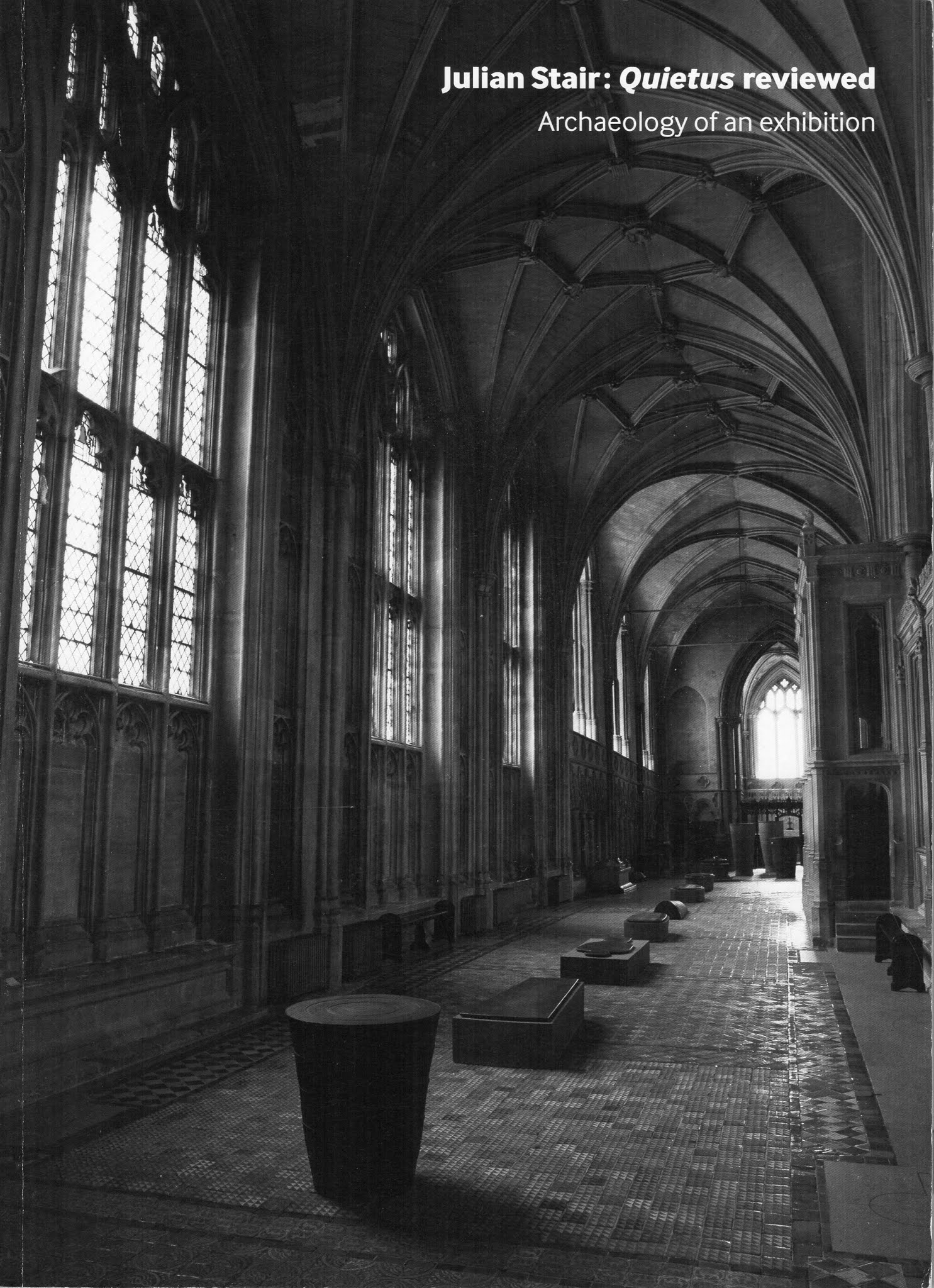
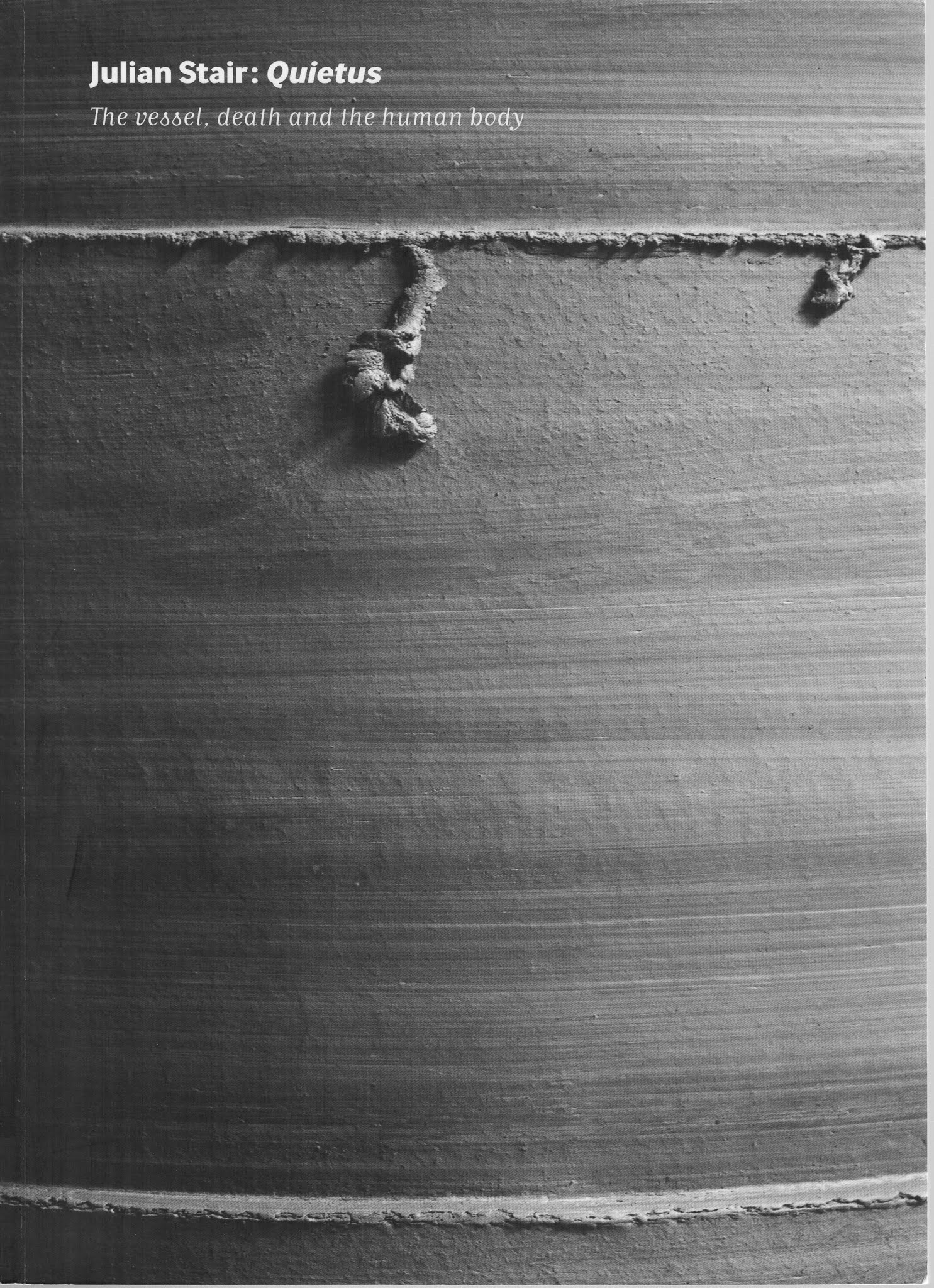
    In The Making : Hollowing out Space through Innerness and Difference. Quietus : Interiors of Silence and Space.

    Innerness : A (sensorial) space or even a place interior to its environment

    Sensing Spaces : Through displacements and hidden volumes.

    Defined Interiors : By material, agency and social and private architectures.

    Interiors of Pots : Analogies with the Hut as both being dwelling places made from the inquiry of form and the need for a reflective solitude.

    Fragment as a broken shard, from notebook March 2014.

    Innerness

    The light of reflection and our immediacy moves from light to dark and from dark to light; from surface to interior and interior to surface. The pot becomes a cyclical vessel reflecting our geocentric origins.

    The Hut is a vessel in the making for reflective dwelling.

    The Pot with its interior underpins its fidelity, its completeness.

    Some pots are tuned and balanced for their “innerness”; others promote their surfaces (noise) at the expense of their interior integrity (quietness).

    Vessels of Defined Spaces : Creatures of Light and Dark

    In sensing a pots interior from its surface, we are as it were in some intimate tacit correspondence with its spatial sensing centre. We become known to it through its maker’s creative gesture of innemess. This anthropological inner space linking us to the potter is both sensual and distant; its vacancy allows us dwell in the maker’s absence.

    Reflections on Heidegger,

    We traverse from light to dark many times as we gather in the pots (thingness) as it were unfolding in our presence (nearness).

    Vessels as Spatial Metaphors around Innerness and DifferenceThe Jug

    Heidegger as a pouring and gathering social metaphor. Anecdote of the Jar.

    Dominion over the Unmade.

    Wallace Stevens, poem cited by Edmund de Waal.

    Atemwende : A breathtum. Edmund de Waal.

    The Great Glass Case of Beautiful Things: About the Art Of Edmund de Waal Adam Gopnik. 2013.

    ‘Actually, I still make pots, you know’ Edmund de Waal. The Sensuality of the Clay Body.

    ‘You have to work quickly and with definition, and your ideas have to come into focus with enormous rapidity.’ Edmund de Waal, on working with the different presence demanded on ones mind and hand whilst throwing with porcelain. The practice of porcelain forced a change in colour and finish in his work. New glazes, shimmering celadon and shiny black, arrived to catch the light and send it back. (Gopnik,2014:9)

    The throwing of pots still remains central to his practice. ‘The material goes down, gets wet, is pulled open by the hand, spins- and then produces, as if by magic, the most transcendently human of all made things; volume, inner space, an interior, the carved out air that connects the morning teacup with the domes and spandrels of San Marco. There’s nothing there but clay and air, then there’s defined air.

    (Gopnik,2014:6)

    Ceramics and Architecture. Exhibition Spaces of the Enlightenment The Porcelain Rooms

    The pot, ancient as it is, is the first instance of pure innerness, of something made from the inside out. Building objects upwards is, in its way, an obvious and brutal thing; it derives from piles, and makes pyramids. Turning objects inward, on the wheel, is a subtler one, and derives from our need to have a place to put things in. (Gopnik,2014:7)

    Together these new porcelain vessels collectively produced by De Waal are an experience of possessed space.

    These collections of vessels in their Modernist vitrines seem to be both an expression of the architecture of a collection and simultaneously an affirmation of an interior space that can hold the singularity of a breath within a small pot.

    ‘ The ceramic module that he uses, the small pot, is deliberately made as non­ functional as possible.’ (Gopnik,2014:9)

    ‘Even if we insist on seeing them impersonally, the sheer force of their numbers creates the poetic sense inherent, as Homer knew, in all inventories. They gang up on us.’ (Gopnik,2014:9) These groupings of objects placed together produce their own narratives, their own relations, and lines of inquiry. In so doing their ordering of the space around them brings meaning to those spaces. This is reinforced through the poetry and metaphor of the effect of ceramic vessels on space, as cited by De Waal himself through Wallace Stevens’s “Anecdote of the Jar” 1919.

    ‘The Jar, the elemental made thing, takes dominion over the unmade world. The air around it suddenly looks “slovenly,” insufficiently jar-like. Made things remake the unmade world. (Gopnik,2014:10)

    Gopnik comments that we can’t look at hollow things without sensing their hollowness, as he notes we perceive haptically as aptly as optically. This allows us to read these vessels through both our sense of sight and our sense of space. The result is that we feel these objects; we can sense the heft of them made from their weight, shape and size. We become aware that we can feel objects as much as we can see them.

    De Waal’s work brings about a sensuality and an empathy manifested between the strict ordering of his presentation through his vitrines and cabinets and the fragility and grouping of his porcelain vessels. This empathy promotes our interest with the interior parts of his groupings, with the interior emptiness and mystery of things we can only sense. His control and command of the geometric spatial relations found in his installations is juxtaposed by the multitude of diminutive interiors and negative spaces.

    The relations of the architectural and those of the vessel are in constant flux, held in some sort of spatial narrative that seems to meditate stillness, like the museum these vessels are protected and intact, yet strangely they are held hostage by their surroundings.

    The empathy we feel for their emptiness is perhaps choreographed, staged and ultimately forced, these are not just pots as De Waal admits but pots that have been by design rendered as non-functional as possible although they still bare the marks of his franchising. This neutering of his thrown clay forms into the realm of perhaps a purely sculptural object that is itself now a mere component in his Minimalist cabinets. What remains is a hollowness, but a contrived hollowness that speaks of spaces designed not made; unlike his Signs and Wonders intervention for the V&A, these works feel orphaned and cut adrift by their surroundings.

    Does? ‘His art takes a familiar grammer of display and turns it into a poetry of memory. Inside a room, a great case filled with rows of porcelain pots. Along each row, a story. Inside each pot, a breath. (Gopnik,2014:11)

    Craft and Art, Skill and Anxiety.

    Craft is logic, and art defies it. The defiance is what makes art. The serenity of the artisan lies in her knowledge that it can all be done again. The anxiety of the artist; lies in knowing that if it is done again, she has become an artisan. (Gopnik,2014:7)

    Edmund de Waal is a maker of objects with imagined histories. (Gopnik,2014:11)

    Donald Judd, Untitled, 1980.

    Working Notes from Signs and Wonders, Edmund de Waal 2009.

    ‘De Waal’s installation is a hybrid of the sculptural and the pictorial.’ (Adamson,2009:40)

    ‘Like Wallace Stevens’s jar, this sculpture is a world unto itself, a self-sufficient object that also gathers its surroundings.’(Adamson,2009:40)

    ‘Judd’s sculptures occupy an uncertain middle ground between craft and industry. He did not make anything himself; instead he worked closely with a team of highly skilled fabricators. The results have the impersonal, serial quality of mass production, but an intensity of finish that can only be achieved by artisanal methods.’(Adamson,2009:40)

    John Roberts, The Intangibilities of Form : Skill and Deskilling in Art after the Readymade. (London,2007)

    Judd’s wall hung stacked sculptures defy direct relationships with the floor; he has in effect taken sculpture of the plinth and into its surroundings. His stacks appear to be only part of an infinitely larger sculptural form that extends down and beyond the floor as well as into the infinity of the space above.

    Contemporary Architecture and Construction. Interior Design through Intervals.

    Spatial and Temporal Extensions. The Sculptural and the Pictorial.

    Working Notes : Clay, Interior Skins of Light and Dark. Contemporary Ceramic Practices in Craft and Design.

    Interior Spaces. Environments and Atmospheres. Ceramic Building Technologies.

    Screens, Boundaries and Borders.

    Sensuality, Materiality as Memory in the Poetics of Space.

    Breaking The Mould : New Approaches to Ceramics. 2007

    Ceramic Environments.

    Space/Time based work, using clay in large-scale contexts, in gallery or outside spaces to create a fully immersive moment that challenges the common perception of what clay is capable of.

    Surreal Geometries.

    Makers who use large and small-scale sculpture that is in some way abstracted or represents a heightened version of reality.

    The Vessel.

    Works around the practicalities of functional ceramics. Human Interest.

    Explorations into the human form and human nature. Beyond The Vessel.

    Experimentation around the ideas of deconstructing the vessel. Earthly Inspirations.

    Formal and conceptual properties of using the very nature of clay. Surface Pleasures.

    The exterior skin of ceramics and clay.


    Source: Making Gestures and Connections in Space : Anecdote of the Jar

  • ‘Architecting’ : Making, Building, Dwelling, Thinking, concretizing existential space

    Heidegger : Poetically Man Dwells. “Man builds in that he dwells”

    Building Dwelling Thinking. 1951

    ‘Architecting’ :  Making, concretizing existential space

    Ann Cline

    A Hut of One’s Own

    Life Outside The Circle of Architecture.

    Herzog  and De Meuron

    NATURAL HISTORY

    Heidegger “resolutely romanticised the rural and the low-tech before, during and after Nazism, skating dangerously close to fascist rhetoric of blood and soil.”1

    Architecture can help to centre people in the world; it can offer individuals places from which to inquire for themselves. Heidegger felt that this was how architecture had been understood in the past, and that the insatiable rise of technology had obscured that understanding.

    Heidegger interested on centring his qualities of architecture around those of human experience, to reintegrate building with dwelling, making the qualities of its inhabitation become part of the buildings authenticity to its locality.

    IMMATERIAL ARCHITECTURES

    MAKING IN THE LANDSCAPE

    SCULPTURE TRAIL 2018

    The House-sheds : Camping

    There’s more truth about a camp than a house. Planning laws need not worry the improvising builder because temporary structures are more beautiful anyway, and you don’t need permission for them. There’s more truth about a camp because that is the position we are in. The house represents what we ourselves would like to be on earth: permanent, rooted, here for eternity. But a camp represents the true reality of things: we’re just passing through.

    Roger Deakin

    WILDWOOD

    A Journey Through Trees

    This almost vocational unfinished “architecture finds itself more at home with the ongoing daily life than any sort of finished product.”2

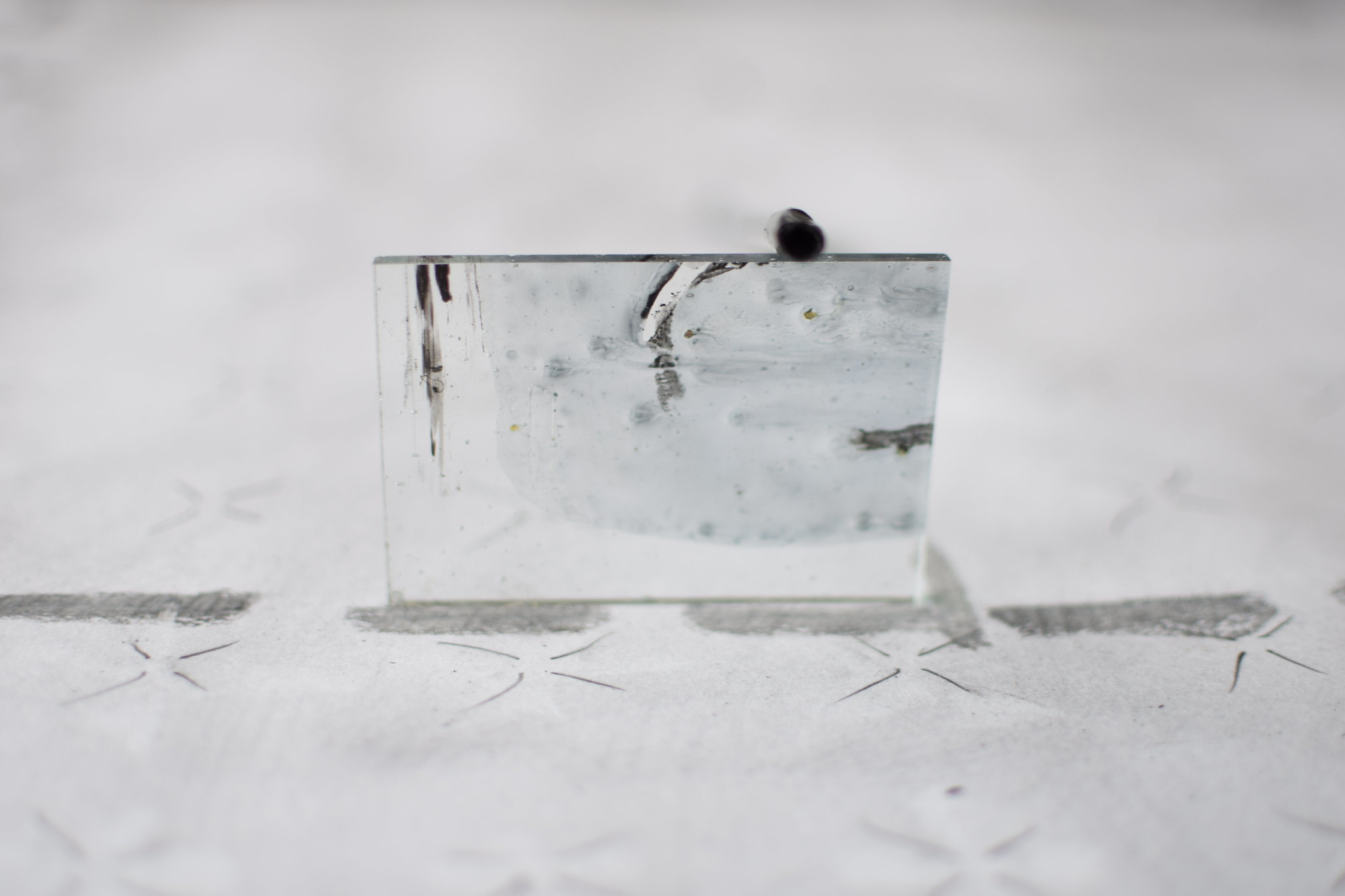
    Immaterial Architecture : The Glass Observatory

    Metaphysics/Atmospheric Cosmogonies

    Spatial themes of inside/outside, negotiations between the physical, phenomenal and a metaphysical world.

    Photogram, a numinous construction, spaces amongst and within other spaces

    Contemporary architects of which Peter Zumthor is an exemplary example utilise and readily acknowledge the influence of Heidegger’s thinking. The inner spaces, the materiality and the locality are all directly traceable to traits found in Heidegger’s notion of the value of human presence and inhabitation.

    Heidegger claims for architecture “the authority of immediate experience”3 As recorded in his most architectural writings.

    The Origin of the Work of Art 1935/trans 1971 Being and Time 1927/1962

    Art and Space 1971/1973

    1  Adam Sharr Heidegger for Architects.

    2  Adam Sharr. Heidegger for Architects. 3

    3  Adam Sharr. Heidegger for /Architects. 3

    Authentic building occurs so far as there are poets, such poets as take the measure for architecture, the structure of dwelling. (Heidegger, 1971:227)

    To Heidegger, when someone with poetic inclinations submits themselves to the world and deliberately or instinctively takes measure of things and phenomena through creative acts, she or he creates poetry themselves. (Sharr,2007:82)

    Making Sense through Measuring.

    For Heidegger, building and dwelling take place through measuring, which binds them together. Whether instinctive or more deliberate, such measuring is always conducted through immediate physical and imaginative experiences rather than through scientific experiment. (Shan,2007:82)

    ‘Measuring should happen in the context of a unity which binds life’s experiences together with the things they measure, not by separating them.’ (Sharr,2007:83)

    This measuring through acts of both becoming and being are principally located to the environment and the buildings that serve it.

    (See Lieberman, Immediate, Architectural, Interventipns/The Politics of Things) The compass suggests no attempt to understand how people have engaged with the

    forest intuitively before. Explorers don’t first engage their own minds with the forest to try to understand it for themselves, but instead rely on an artificial instrument, trampling everything in their way to pursue the imposed route. To Heidegger, exploring by walking a forest path which was already there instead allowed the territory itself to guide exploration. (Sharr,2007:85)

    Being lost in trying to make sense of something, is no problem for Heidegger. It is in this process of an undertaking, and through its motion or agency that this undertaking can attain its dignity and its meaning.

    For the philosopher, individuals have to recognise enough difference between things so they can measure other things with them. But he argued, they should not separate them from everyday experience like science does, making them the object of dissection in a laboratory or analysing them as pure abstract ideas in a lecture threatre. (Sharr,2007:82)

    Heideggerian identifications of place make sense of the world through measuring and oneness. Likewise, the conjoined activity of building and dwelling, for the philosopher. Receives authority through a poetic receptiveness to the existing conditions of site, people and society. (Sharr,2007:87)

    Heidegger: Placing Heidegger

    Heidegger’s life can be characterised by the places where he lived and wrote. (Sharr,2007:15)

    Affirming a commitment to the philosophy he found in the order of his mountain life. It is significant for architects that Heidegger chose to summarise his final writings with the term ‘place’. He referred not only to the sites where he himself thought, particularly his mountain hut, but also to the significance of thought placed in particular contexts. (Sharr,2007:20)

    Heidegger established an intense routine of living, writing, chopping wood, eating, sleeping, walking and skiing: a way of life which became as concentrated and ordered as his childhood in Messkirsh. (Sharr,2007:17)

    Heidegger used his vocational mountain life, its raw presences and natural rhythms as an active living influence from which he could draw and distil his philosophical writings. He was very aware of these conditions and landscapes of building, dwelling and thinking were actually becoming absent from many in the Western world.

    ‘Heidegger felt that we were losing the ability to appreciate our existence in the context of a sweep far longer and broader than our lives. Moments of awareness of our own presence, often brought home to us by our senses, emotions and the phenomena of nature, had become rare opportunities to him. (Sharr,2007:12) This affinity to being in and with the landscape could be seen as tending towards “romanticism”.

    Sharr notes that “romanticism” has a tendency towards introspection, emotion and sensitivity, it contains at its core, ’an awe at natural forces and a perceived transcendence of nature over human affairs. Such qualities infuse Heidegger’s work on dwelling and place.’ (Sharr,2007:12)

    Romanticism has its critics who accuse those engaged with it as being of having a ‘naive optimism and an abdication of responsibility. To them the romantic can be so entranced by solitary poetising as to become unable to perceive the human hardships and evils that surround them. The British tradition of Romanticism as underpinned by Wordsworth, Turner, Blake, William Morris and John Ruskin. It has the feeling of innocence and obscure dreams and pictorial visions derived from the English landscape and the existential sense and sensibility of place.

    Heidegger’s romanticism is deeply problematic given the German context.

    Sharr notes that many see Heidegger’s romanticism through German cultural folk law heroes (epic tales bounded by blood and soil) loaded with invocations that link it with Nazism.

    ‘Where there are those who honour their locality and celebrate a sense of belonging, others can be cast out as not belonging. And here are the seeds of racism and persecution. When the romantic reifies the land, ugly things might be done in the name of that land.’ (Sharr,2007:13)

    Those who have authenticity to the land, can appease those who are not of the land; can this seed the germs of racism?

    ‘Authenticity is dangerous because it is divisive and potentially exclusive, particularly where appropriated as a cultural specific, in this case as distinctively German. Here again is the germ of racism.’ (Sharr,2007:13)

    Heidegger was scathing of tourists, who he felt visited but did not see. Surrounded by the landscape only fleetingly, they were unable to perceive the vital traces of being, which the philosopher found there. Heidegger vehemently held certain ways of life to be authentic and others to be inauthentic. (Sharr,2007:13)

    “Up there” referring to moral attitudes and altitude both of which he found in the locality of his hut.

    “To Heidegger, proper thinking was highly tuned to the fact of being and its traces. These traces, like our own shadow, the outline of the hills or the sounds of birdsong and stream, remain reminders of our miraculous presence,”4 5

    Building locates human existence,

    Heidegger “ believed that building was set out around human presence, configured by it but also configuring the activities of that presence over time”3

    This almost vocational activity of building human presence it at the heart of what it means “to dwell”, the poetics of which form the phenomenological inquiry of Gaston Bachelard’s, Poetics of Space. Heidegger acknowledges that the inhabitants lives are in turn configured by the building.

    Adam Sharr, notes that “for Heidegger, a building was built according to the specifics of place and inhabitants, shaped by its physical and human topography.”6

    Heidegger on Thinking,

    The forest track, the clearing, wandering from a starting point and remaining open to findings reached on the way, it could not be readily summarised or contained by a system. It was referential, mystical model that sought to promote the authority of being.

    Heidegger on the Void at the centre of the Jug.7

    Made from earth/clay/fire connected the human experience of earth and sky. Heidegger attributed sacred qualities to the jugs ability to give/to pour. Part of his fourfold cosmology of earth, sky, divinities and mortals. This “fourfold” represents Heidegger’s attempt at what he judges to be the most primary circumstances of existence, “ the inescapable pre-requisite of the world into which humans are thrown without consent (1962,164-168).

    Mythic and mystical, far from the strictures of logical thinking. Influences on the “fourfold”

    Meister Eckhart/mystic theologian. Lao Tse/eastem philosopher. Friedrich Holderlin/poet.

    George Steiner on the “fourfold” suggests it is a manifestation of an “ideolect” a personal language offered as universal.

    Heidegger would refute this on the grounds that it is our technocratic conception of the world that is unhinged not his.

    Heidegger A mysticism that seems to border onto/into the realm of art?

    Kengo Kuma on “Ma” a void or pause, a rich emptiness, it can be created in many ways, through the effect of light, or through attention to details.8

    4  Adam Sharr. Heidegger for Architects. 7

    5  Adam Sharr Heidegger for Architects. 9

    6  Adam Sharr. Heidegger for Architects. 10

    7  Adam Sharr. Heidegger for Architects. 30

    8  Kengo Kuma. Sensing Spaces. Royal Academy of Arts. 2014, 65

    The Reading Room/Process : Cell, Court, Domain.

    Research as a discursive activity gathering new forms of expression.

    Duration, Steven Holl

    Time is only understood in relation to a process or a phenomenon.

    The duration of human beings alive in one time and place is a relational notion.

    The time of one’s being is provisional; it is a circumstance with an adopted aim for the time being.

    SPACE-and ARCHITECTURE-exceeds the provisional

    Innerness and Defined Space/Air

    Throwing, Building, Dwelling, Thinking

    The innerness of a ceramic vessel can be seen to be dealing with presences and absences, as like that of a building it can demonstrate the presence of its making and the absence of that same presence.


    Source: ‘Architecting’ : Making, Building, Dwelling, Thinking, concretizing existential space

  • Inquiry is essentially the way of learning : Fragile Architectures of Hapticity and Time

     In an era in which architecture is once more learning its potential as a form of inquiry, rather than as a service — as a producer of knowledge, and not merely of ‘projects’.

    Brett Steele, Atlas-Tectonics in Barkow Leibininger, Bricoleur Bricolage. AA 2013

    Inquiry is essentially the way of learning.

    On Learning ‘The Cultivation of a Good Mind’ J. Krishnamurti, Brockwood 1963

    THE WAVERLEY INQUIRY

    ROOMS AS EXPERIENTIAL OUTPOSTS

    Translations from Drawing to Building.

    Robin Evans.

    Interiors crafted as a palimpsest of augmented realities.

    Robin Evans, Figures, Doors and Passages.

    The architect is Not a Carpenter:

    On Design and Building, a talk by Tim Ingold Fieldwork on Foot: Perceiving, Routing, Socializing

    Jo Lee, Tim Ingold.

    The Perception of the Environment,

    Essays on Livelihood, dwelling and Skill, Tim Ingold.

    The Aesthetics of Decay

    Nothingness, Nostalgia, and the absence of Reason, Dylan Trigg. The Projection Room (the darkened room, camera obscura)

    Ruin In Architecture and Cinema, Kiefer, Pallasmaa

    Sculpting in Time, Tarkovsky

    The Artist/’Monk, Andrei Rublev (Tarkovsky 1966)

    Six Memos for the New Millennium, Italo Calvino Architecture as a stage for the effects of an immersive cinema. Palimpsest

    Edward De Waal, Antony Gormley, Studio Spaces designed by Architects. Tony Fretton on Retreats, Creative Centres and Exhibition Spaces. Herzog and De Meuron, Working Models, Surfaces, Images and Materials.

    Subversive Libraries, researching between the walls of culture and politics.

    A HUT WITHIN THE INFLUENCE AND NATURE OF ARCHITECTURE

    The tendency of technological culture to standardize environmental condition

    and make the environment entirely predictable is causing a serious sensory impoverishment. Our buildings have lost their opacity and depth, sensory invitation and discovery, mystery and shadow.

    Juhani Pallasmaa. Hapticity and Time. Notes on Fragile Architecture. 2000

    The Scriptorium Description of Work

    The ruined site of the abbey at Waverley, near Farnham has been appropriated as a site and as a place within which to position and develop architectural and sociological inquires. The design processes of interiors have been employed as a tool to both critique and to create how we might further develop the contents of architecture. This Spatiality and its diffractions of differences and similarities, narratives and subjective experiences are what my interior spaces attempt to initiate.

    Design as a interactive structure, an interlocutory interior in the making of space and spatial relations.

    Interior design presented as an interactive and immersive spatial inquiry

    The Scriptorium brings together a varied and discursive set of objects, texts and i interior architectures. This work seeks to understand how the virtual changes physical architecture and how this affects the space between people and buildings. The “performativity of research” is presented through specifically designed apparatuses and partitions. These designed components, made objects together with annotated texts and drawings conspire to create a complex design led inquiry a “Place Study” staged in a niche-like space. This interior presents itself as both distinct and relational to the other projects in the MA Interiors Show. The interior presents the many manifestations of creative research, structures and even symposia that have been developed through engaging with the site. The visualization of the research and the relational architectures rendered through montage and collage explores digital and analogue technologies. This hybridisation and the use of pinhole photography and film footage further explore interests in the field of performance as an immaterial architecture drawn in the presence of place.

    The realisation of my interiors project consists of two separate but relational elements that are presented into a built environment. The small ‘Scriptorium’ conceived as a space as a refuge, an intimate minimal construction that features a doorway and an interior that contains a place for objects, perhaps books, as well as a small sitting area. This construction, an open cell perhaps is evocative to a state of contemplation between the fabric of the everyday. The rather hybrid design appropriates a merging of minimalism, modernism and the plastic architecture of a ruined Cistercian Abbey. The construction comes into close contact with its occupant, it is a restricted spatial apparatus that attempts to promote through its awkwardness distinctive experiences. In particular the apparatus of the Scriptorium and its materiality is attempting to promote a sensory intensification that is further underpinned by the cognitive processes of reading and perhaps other social dialogues. The sensory intensification of a hut like space promotes a haptic sensibility, allowing the nearness and intimacies of both the built space and the imaginative, virtual realm to become entangled. Ultimately the Scriptorium is trying to build on unique human subjectivities that are manifested through a kinaesthetic repertoire or script that helps to enact further spatial experiences. It might be useful to think of this constructed space as itself still under construction, a site that acts as its own vessel within the multiplicities of human perception itself. The influence of the Cistercian Order, the site of Waverly Abbey and its pastoral landscape, have all contributed to a sense of the design process, The Scriptorium like the ruins themselves is open to the elements. Waverley Abbey remains as a sensory site between the remains of architecture and its society and the effects of our own global culture in the information age.

    In troubled times they all sought to experience life away from social definitions of success or failure. From there, these primitive huts marked personal, original inquires into the ever-mysterious nature of human existence.

    Anne Cline. A Hut of One’s Own

    Life Outside The Circle Of Architecture.

    The Scriptorium began through a research of both architectural themed texts and documentation of the site, and creative practice involving photography (digital, analogue and film) art practices of collage and drawing. The many visits promoted my own subjectivities to the site and these were also frequently subjected to change by the intervention of others in unexpected ways, these social intrusions by other revealed the very boundaries that the historic site engenders, some playful other malicious. These extremities within the social order of the visitors became problematic in designing for the site itself. An earlier proposal to host a Symposium centred on the Arts and The Humanities, that would use the Abbey and its surrounding ground appeared to be a project of vast diversities and logistics better suited to a cultural project through arts management and funding. As the project developed certain creative methodologies around particularities of the site itself began to appear, the notion of palimpsest being one of them. This promoted the idea of a reading room, as an ephemeral interior space that gathers up the experiential values of ‘ruins’ and re-enacts them as a site to explore the architectures of images. It became apparent that ‘palimpsest’ could be both a visual surface of erasures, earlier markings partially over written by newer ones ‘annotations’ and it could be a scaffold of developing ideas clearly visible merging as adaptations into the very usage of the site.

    These re-imaginations through the notion of palimpsest seemed filmic and as such they would able to display a vast amount of diversities and subject matter, a library of recourses that would require users or an audience or both. The referencing of the reading room to the library, and the symposium to the cinema or theatre allowed me to realise that I was dealing with a number of spatial arrangements that needed to develop together, but which could be employed separately. The theatre of research became the vehicle in which to see if this collaboration might be possible.

    The use of the image and text in my architectural collages allowed me to visualize associations, to create the possibilities of interior spaces that might be manifested into the built environment. The use of the collage in Architecture is widely acknowledged, architects from the likes of Mies van der Rohe, Daniel Libeskind and Rem Koolhaas. The ability of the collage process to juxtaposition fragments, images and texts from irreconcilable origins into an experience, that is visual, tactile and time-based makes it an interesting tool into the realms of architectural design. Collage begins to visualise not only the structure of spaces but also there content and circulation. The theatre of research is interested in how to promote collage and its use as a cognitive and perceptive tool in architecture.

    Collage and montage are quintessentially techniques in modern and contemporary art and filmmaking. Collage combines pictorial motifs and fragments from disconnected origins into a new synthetic entity, which casts new roles and meanings to the parts. It suggests new narratives, dialogues, juxtapositions and temporal durations. Its elements lead double-lives; the collaged ingredients are suspended between their originary essences and the new roles assigned to them by the poetic ensemble.

    Juhani Pallasmaa. The World is a Collage

    Jennifer A. H. Shields. Collage and Architecture

    Both the Scriptorium and The Theatre Of Research exist only in the form of the exhibition presentation. What they singularly of together propose can only be imagined through their manifested form as static objects placed within a built structure that loosely references architectural concerns and materials. They appear diminished and assigned to the voyeuristic gaze of the visitor that is equally curios and dismissive. These objects and the interior spaces they promoted seem stilled and stalled, as much they appear beyond reach as if the authenticity of their materials and construction have some how been subsumed by their stature and scale. The issues and qualities of which they are attempting to speak of seem reduced by the hegemony of vision, there is little hapicity and time to encounter, only it seems by investing narratives can we begin to re-enact the spatial encounter.

    How might the performativity of research be staged, and into what contexts might it be appropriated?

    As Hans Ulrich Gumbrecht notes, we live in a culture of meaning, not in a culture of presence. We constantly produce effects of meaning and multiply them with mass media. This applies not only to the humanities but also to a large degree to our wholly normal everyday lives. And in this respect, our experience of presence is getting drastically lost.

    Art works may never completely be explained by theory or meaning. The sensual, material makeup of the work in its presence is not the cinders, slag, and ashes, the undigested remains of theory, but remains of an intensified moment

    Peter Lodermeyer.Time, Symposium Amsterdam 2007.

    Personal Structures, Time, Space, Existence.

    The question I ask is do these objects and their interior spaces cause me to think beyond mere representation and recognition, or rather do they create enough of an encounter to force me to engage with them, even if I or the viewer are un-certain as to their meaning or possible outcome. Deleuze comments that something forces us to think. This something is not an object of recognition, but a fundamental encounter. Something that challenges us. Have these miniature architectures of objects become relational, do we start to use them in perhaps a heuristic manner, a hands-on approach to learning or inquiring, something that we can discover for ourselves. This heuristic finding-out could be made informative through collective collaborations and exhibition through the theatre of research. Is design stripping us of our qualitative spaces as the digital tooling removes the makers trace.

    The model object has served as a thinking place in the development of the idea of the Scriptorium. The materials used and their proportions echo interests in Minimalist Sculpture, the intervals between things in the work of Donald Judd and the architectural languages of memory and tectonics of the craftsman turned architect Peter Zumthor. This open sided hut seems cut away almost anatomical as if we were looking into the internal workings of an environment and resident. The structure would have to be made relational to its surroundings if it were to be placed in the landscape. Adaptations to weather the structure, to make it serviceable for use. The Scriptorium has analogues to the notion of a fire-place and its chimney stack. It is a the heart of a building the place of warmth, of dialogues and under the influence through fire of the imagination. The incompleteness that surrounds the scriptorium creatively asks for further design proposals that are even more site specific. The Solar Pavilion built by the Smithsons utilised the old fire place and chimney from the demolished cottage. Around this central element they developed the beginnings of their Modernist (Brutalism) pavilion, an architecture clad with glass, wood and zinc and contained by a walled garden and situated in the pastoral landscape of Wiltshire. Furthering the themes of being in the landscape the Scriptorium could become an observatory, as place from both to look out from and also to look in. The mobility or need to be re-assembled from site to site could promote innovative design solutions as well as interesting detailing or use of materials and surfaces that would facilitate interactions between visitors.

    The notion of the Scriptorium becoming clad by an exterior skin, an ephemeral membrane which would then render the differences between the interior and the exterior into the realms of an almost immaterial architectural experience; in as much as the usual distinction between the unpredictable forces of nature outside and the predictable domestic spaces inside. This prompt further investigation into an  architecture that blurs the boundaries of both architecture and nature, this could be further explored through the notion of quixotic gestures, art and performance that can capture the experience and the experiential engagement with the natural elements. The Scriptorium becomes the centred structure of remnant that is surrounded by an architecture that can create imprecise boundaries through inconsistent materials. This spatial arrangement will create its own qualitative responses, dialogues and subsequent movements. Architecture in this context becomes purely a sensorial response.

    The body as the vector for active mediation with the world of the spirit. The body is the instrument of a qualitative evaluation, the measure of intensity, which alone is capable of giving space extension and modifying it Space is no objective parameter; it must be ‘excavated’ related to the mobile living parametrics of the body.

    Frederic Migayrou. Architectures of the Intensive Body. Yves Klein. Guggenheim. 2005

    Mark Prizeman. Intensity. Ephemeral, Portable Architecture.

    Time, space and existence are amongst the greatest of themes-so great that we could never be so presumptuous to think we could do them justice, and too close that we could ever escape them, whether with our thoughts or actions, in life or in art.

    Peter Lodermeyer. Personal Structures Time. Space. Existence. 2009

    My design project has attempted to produce spaces and their interiors together with the apparatus of the Scriptorium that qualitatively seek to inquiry into the world we inhabit. The Theatre of Research attempts to establish some sense of a community that can do field work that invigorates the perception of the environment. My own interests are centred through experientially and mindfully exploring voids, cavities, and spaces between things, together with use of clay, glass and other vernacular materials. As an interior designer/artist I have become experiential to the agency of spaces. The theatre of research becomes a meeting place for furthering my programme initially proposed as a symposium at Waverley Abbey.

    Through experiencing familiar images, smells, sounds, and textures, but also through making certain familiar movements and gestures, we achieve a certain symbolic stability. Disrupt that familiar world, and our psychic equilibrium is disturbed. From this we can surmise that home, and the operations performed at home, are linked intimately with human identity. Architecture, it would seem, plays a vital role in the forging of personal identities.

    Neil Leach. Camouflage

    Analysing the desire to blend-in with our surroundings

    Beyond the limits of academic levels of discourse and learning

    Building/Working with Theoretical Objects in Architecture

    The Scriptorium would need to collect up and question considerable more qualitative data. Some sort of portable shelter, lightweight and offering some protection from the elements; would have allowed longer periods of stay and the possibility of experiencing different times of day. The activity of walking to the site, of having to incorporate it into a journey would help to create a stronger sense of place and routine. I am interested in the ‘thingness’ of this place, its influence and how its influence might be transposed into a methodology of reading, theorising and making. I am reminded of the Peter Brook who deliberately demolished his avant-garde theatre building Bouffes du Nord in Paris so as he could create a more emotionally responsive space for theatre. It is this under the influence of the Abbey, which I wish to explore as a creative catalyst, a tool that picks up on its differences as qualitative readings. The ruin by its very nature has re-defined its own architecture from one of form into that of experience, this sense of liminality or immateriality that constitutes itself as the architectural experience.

    A good space cannot be neutral, for an impersonal sterility gives no food to the imagination. The Bouffes has the magic and poetry of a ruin, and anyone who allowed themselves to be invaded by the atmosphere of a ruin knows strongly how the imagination is let loose.

    Peter Brook. The Open Circle

    Andrew Todd. Peter Brook’s Theatre Environments. 2003


    Source: Inquiry is essentially the way of learning : Fragile Architectures of Hapticity and Time

  • Hortus Conclusus : A Serious Place, Peter Zumthor, working ideas.

    Hortus Conclusus : A Serious Place

    Hortus Conclusus : Enclosed Garden
    Often translated as meaning “a serious place”
    To construct a contemplative room, a garden within a garden.
    Pavilion as both a monumental physical structure and as a site of emotional encounter.

    With a refined selection of materials he has created a contemplative space that evokes the spiritual dimension of our physical environment, in so doing he is successfully emphasising the role the senses and emotions play in our experience of architecture. (Zumthor 2011: 15)
    Enclosed all round and open to the sky.
    A garden in an architectural setting.
    “ Sheltered places of great intimacy where I want to stay for a long time.” (Zumthor 2011: 15)
    Every plant name listed here evokes a distinct image; with each of them I associate specific lighting, smells and sounds, many kinds of rest, and a deep awareness of the earth and its flora.
    A garden is the most intimate landscape ensemble I know of. In it we cultivate the plants we need. A garden requires care and protection. And so we encircle it, we defend it and fend for it. We give it shelter. The garden turns into a place.
    There is something else that strikes me in this image of a garden fenced off within the larger landscape around it: something small has found sanctuary within something big.
    (Zumthor 2011: 15)
    Illustration of “Orchard” from Bible of Wenceslaus IV,Vienna, Austrian National Library
    Depicts in the manner of an illuminated manuscript, the husbandry and community of the medieval workforce in the secure and sheltered space of a walled garden. This pastoral craft/gathering is evocative of Zumthor’s Hortus Concluses.
    Working with ones hands, with the earth in sheltered spaces of a pastoral community.
    Zumthor underscores this pastoral setting when he places a pavilion at the centre of the garden; he talks of future meeting there, of looking forward “to the natural energy and beauty of the tableau vivant of grasses, flowers and shrubs. I am looking forward to the colours and shapes, the smell of the soil, the movement of the leaves.” (Zumthor 2011: 15)
    The Vintner’s Luck, Elizabeth Knox.
    Tasting the soil in the wine, the soil and the wine are of the same substance, from the same locality; they are bonded together by the landscape.
    Gardens Are Like Wells: Alexander Kluge
    Inside every person (however serious or playful) lies an “enclosed garden”
    Monasteries in medieval Europe were wells in which the clear waters of antiquity mingled with the dark waters of faith. At the centre of these monasteries was a garden, the most important part of which was enclosed. It was here that the most beautiful plants and medicinal herbs were concentrated. (Kluge 2011: 19)
    Interestingly Kluge notes that these gardens were not everyday places, they were “timeless” because they were not subject to the general daily rituals of monastic life. These gardens were dedicated to the Blessed Virgin, but exposed perhaps to other texts, Homer, Ovid or the Gnostics. This relationship of literature finding a place of contemplation in the enclosed garden speaks perhaps of an “innerness”, an ability to unite mind and eye in the confusing realities of our age.
    Civilisation and societies need ground that is uncultivated, gaps that are not subject to the principle of unity, something that is sufficient unto itself, which we do not consume: a sacrifice. Cities need spaces of piety. (Kluge 2011: 21)
    “We need places in which we can engage in acts of mourning” Richard Sennett
    (Sociologist)
    Gardens of Information: DCPT (Development Company for Television Programmes)
    Using the emblem of the Hortus Conclusus/The Enclosed Garden to stand for the relationship between the barren wastes on the one hand, and the happy isle on the other.
    “To rescue facts from human indifference”
    “To make gardens out of raw material and the bare bones of information.”
    “A precursor of individualism, but has unmistakable traits in a way individualism never can.” (Kluge 2011: 21)
    Spatial Practices for the Next Millennium.
    Forming relationships not through superstructures, concepts or societies, but through inclusive structures/practices and localities. The Hortus Conclusus could stand for this type of concentration of identity (an inquiry, a person and a practice) within an intimate setting or situation.

    Relationscapes : Open Systems/Speculative,Dynamic, Creative. An assemblage/energy of images,collage, drawing and texts and other disparate elements.


    Source: Hortus Conclusus : A Serious Place, Peter Zumthor, working ideas.

  • Relationscapes : Body, Personal Relations and Spatial Values

    Space and Place
    THE PERSPECTIVE OF EXPERIENCE
    Yi-Fu Tuan

    1959 : Patti Smith
    Peace and Noise

    Lingering at the threshold between word and image
    Cy Twombly
    Claire Daigle

    https://www.tate.org.uk/context-comment/articles/lingering-threshold-between-word-and-image

    Although his work resonates strongly with generations of younger artists, ranging from Brice Marden to Richard Prince to Tacita Dean to Patti Smith, it has a general propensity to polarise its audience between perplexity and unbridled admiration.

    Certainly, the fortuities of a name are being pushed too far here, but what does Twombly do but offer up words in all of their resonance: literal, metaphoric, corporeal, material? His citations often have the vanitas effect of graffiti: ‘Cy was here’. Lingering at the threshold between word and image, Twombly renders visible those things – experience, emotion, the body’s share – that lie beyond the reach of verbal articulation.

    Brexit : Existential Gestures : Looking away from the sea

    Albert Camus : The Plague, 1947. (Penguin Fiction)

    The townspeople of Oran are in the grip of a virulent plague.

    Cut off from the rest of the world, living in fear, they each respond in their own way to the grim challenge of the deadly bacillus. Among them is Dr Rieux, a humanitarian and healer, and it is through his eyes that that we witness the devastating course of the epidemic.

    Written in 1947, just after the Nazi occupation of France, Camus’s magnificent novel is also a story of courage and determination against the arbitrariness and seeming absurdity of human existence.

    ‘Camus represents a particularly modern type of temperament, a mystic soul in a Godless universe, thirsty for the absolute, forever rebellious against the essential injustice of the human condition’
    Shusha Guppy, Sunday Times

    Bookmark and Share


    Source: Relationscapes : Body, Personal Relations and Spatial Values

  • EMULSION : Photographic Landscapes/Drawings/Constructed Spaces

    Twilight Abstraction : Liminal Zone

    Exploring spaces between poetics of photography and the experiential values of dwelling/making/thinking through material.

    I do not start with the idea but with the experience
    Peter Lanyon

    The Experience of Landscape
    Paintings, Drawings and Photographs
    South Bank Centre

    An Anthropology Of Landscape
    Christopher Tilley, Kate Cameron-Daum

    The Poetics of Space. Gaston Bachelard.
    The classic look at how we experience intimate places.

    The Eroded Steps. Giuseppe Penone.
    Dean Clough Contour Lines.

    Land Drawings, Installations, Excavations. Kate Whiteford.

    Remote Sensing. Colin Renfrew.

    ECOLOGY WITHOUT NATURE
    Rethinking Environmental Aesthetics
    Timothy Morton

    Ordinary Lives
    Studies in the Everyday
    Ben Highmore

    The Art of Survival?
    Jacqueline Rose
    Essay for ‘Elsewhere’ Therese Oulton

    Hermeneutic Philosophy and The Sociology of Art
    Janet Wolff

    Hermeneutics
    Jens Zimmermann

    Mesh/Material/Light, Cyanotype Process

    Cyanotype is a photographic printing process that produces a cyan-blue print. Engineers used the process well into the 20th century as a simple and low-cost process to produce copies of drawings, referred to as blueprints. The process uses two chemicals: ammonium iron(III) citrate and potassium ferricyanide.

    The English scientist and astronomer Sir John Herschel discovered the procedure in 1842.[1] Though the process was developed by Herschel, he considered it as mainly a means of reproducing notes and diagrams, as in blueprints.[2] It was Anna Atkins who brought this to photography. She created a limited series of cyanotype books that documented ferns and other plant life from her extensive seaweed collection.[3] Atkins placed specimens directly onto coated paper, allowing the action of light to create a silhouette effect. By using this photogram process, Anna Atkins is regarded as the first female photographer.[4]

    Architectural Blueprint

    Cell
    Court
    Domain

    Drawing (performative) into the photographic process

    Aerial, Social Mappings. Winchester Cathedral :  Space for Peace

    Pinhole Photograph (1019) Analogue Processes / Material Memory


    Source: EMULSION : Photographic Landscapes/Drawings/Constructed Spaces