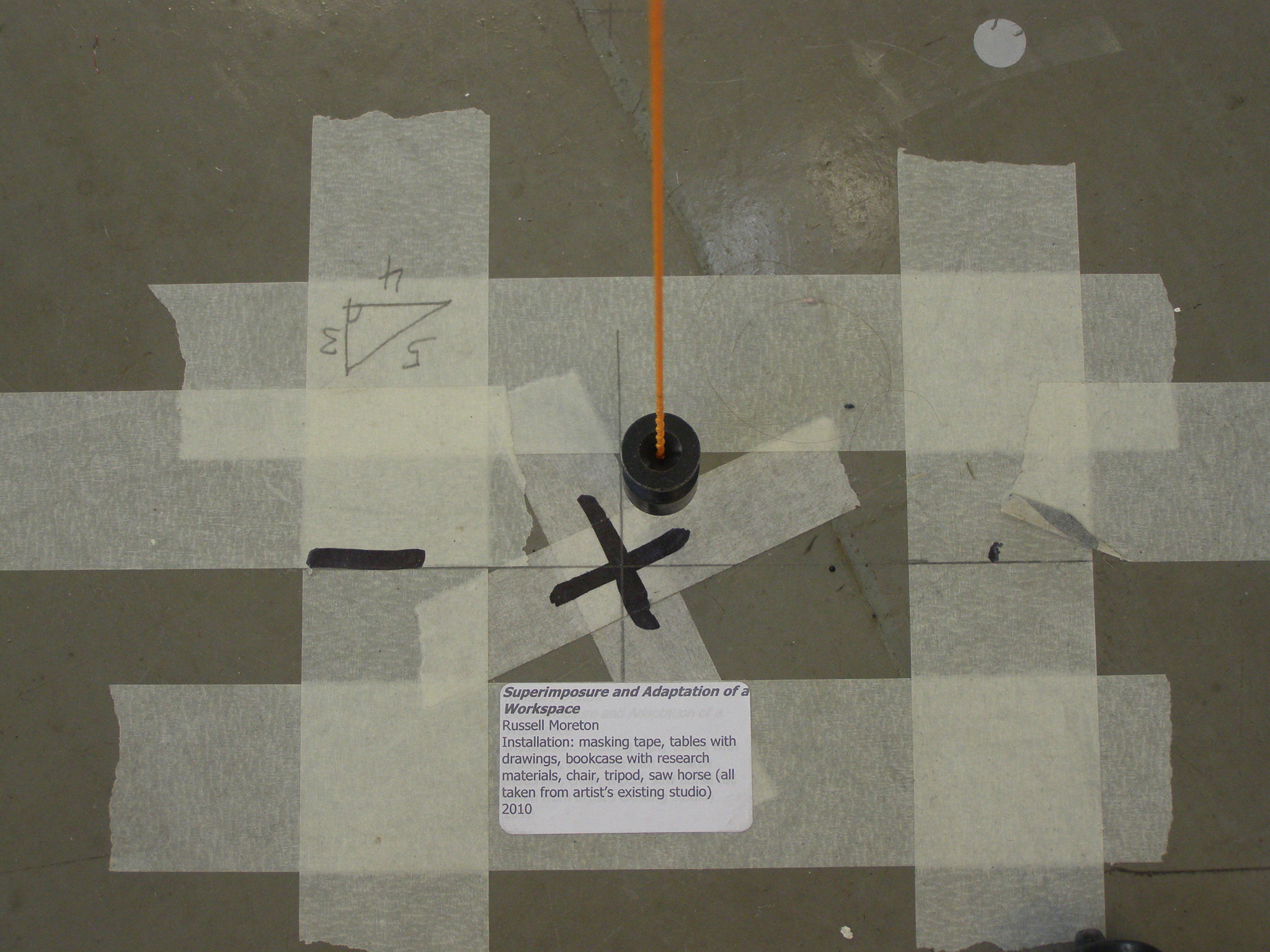
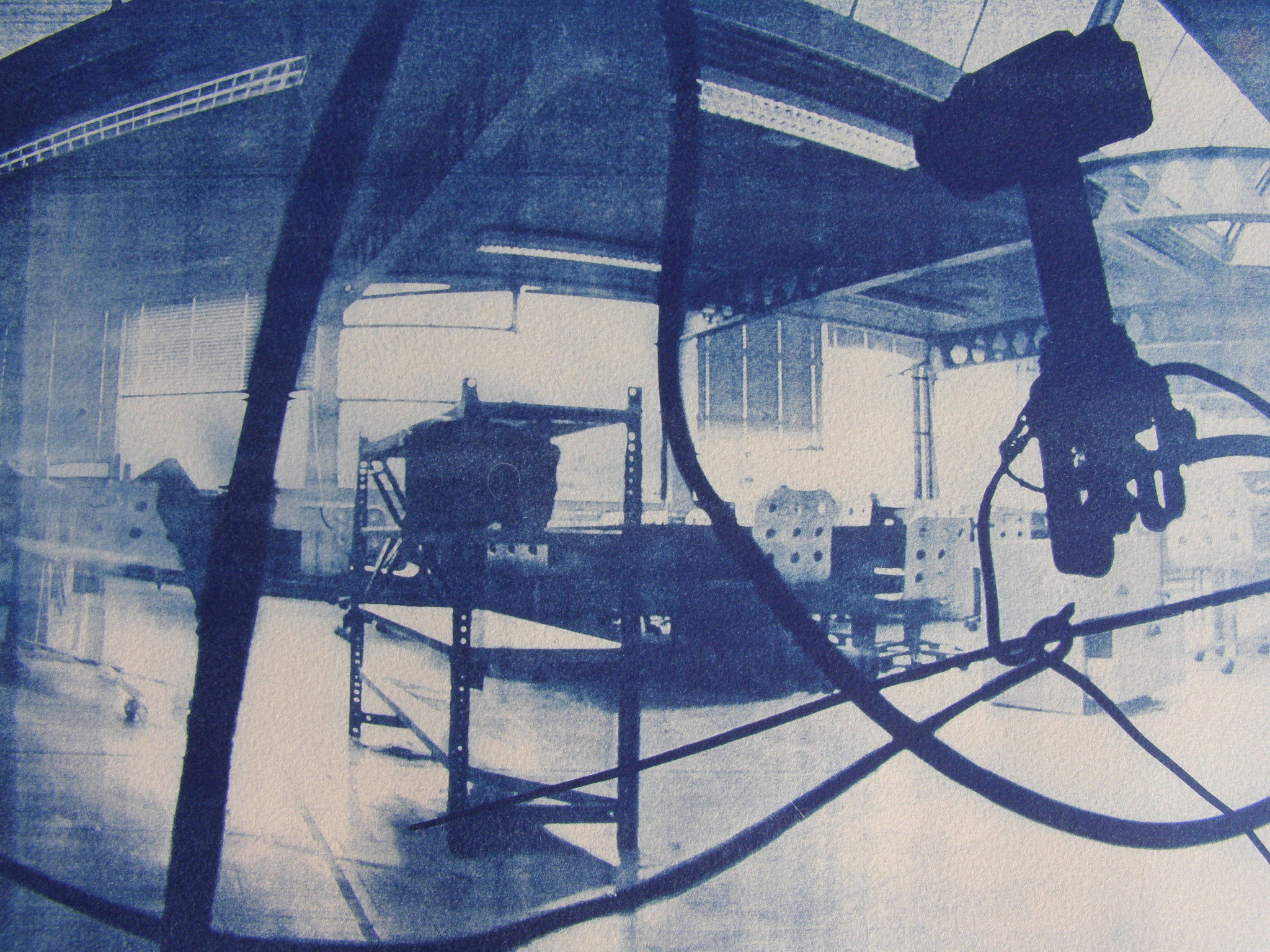
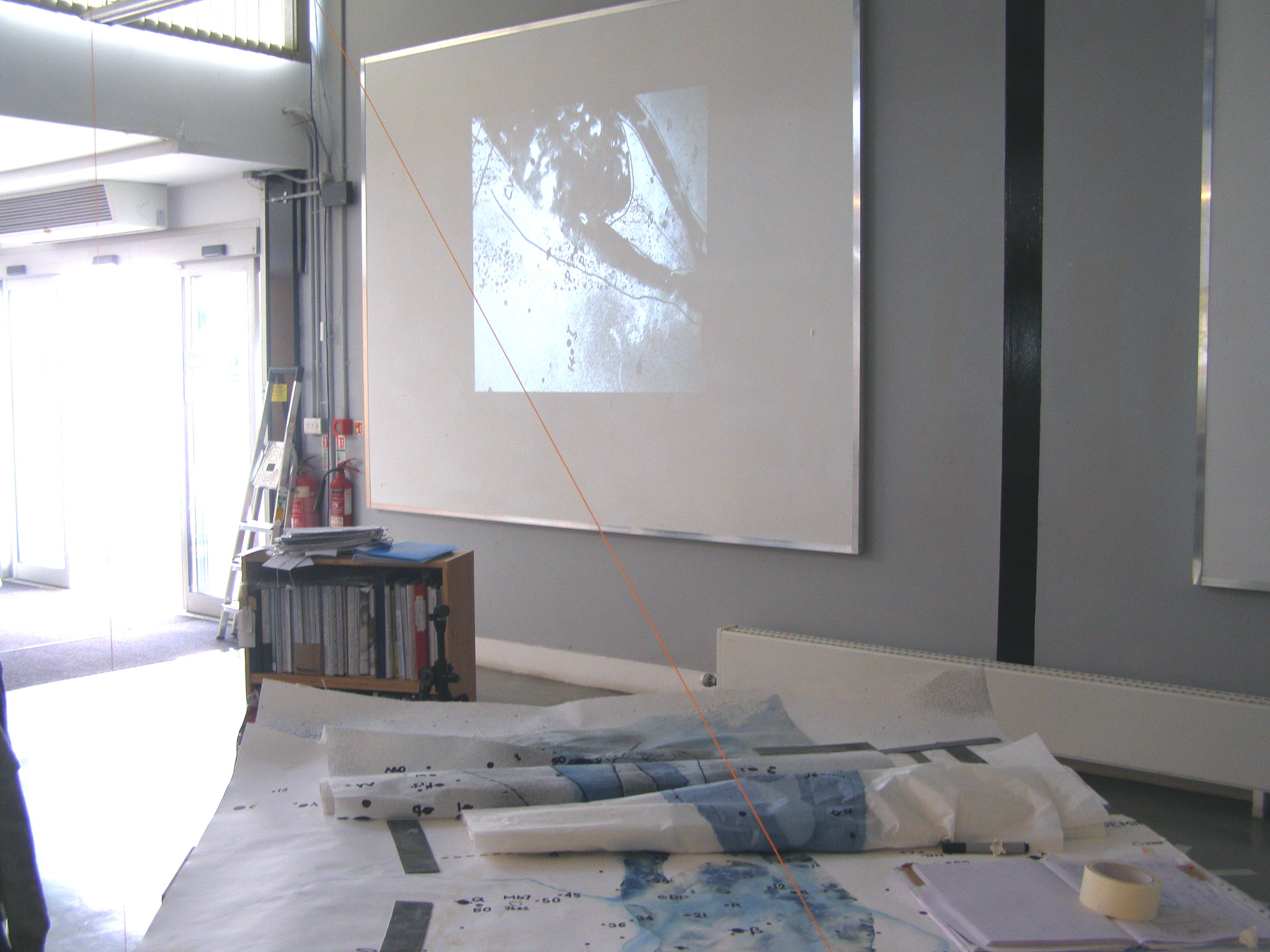
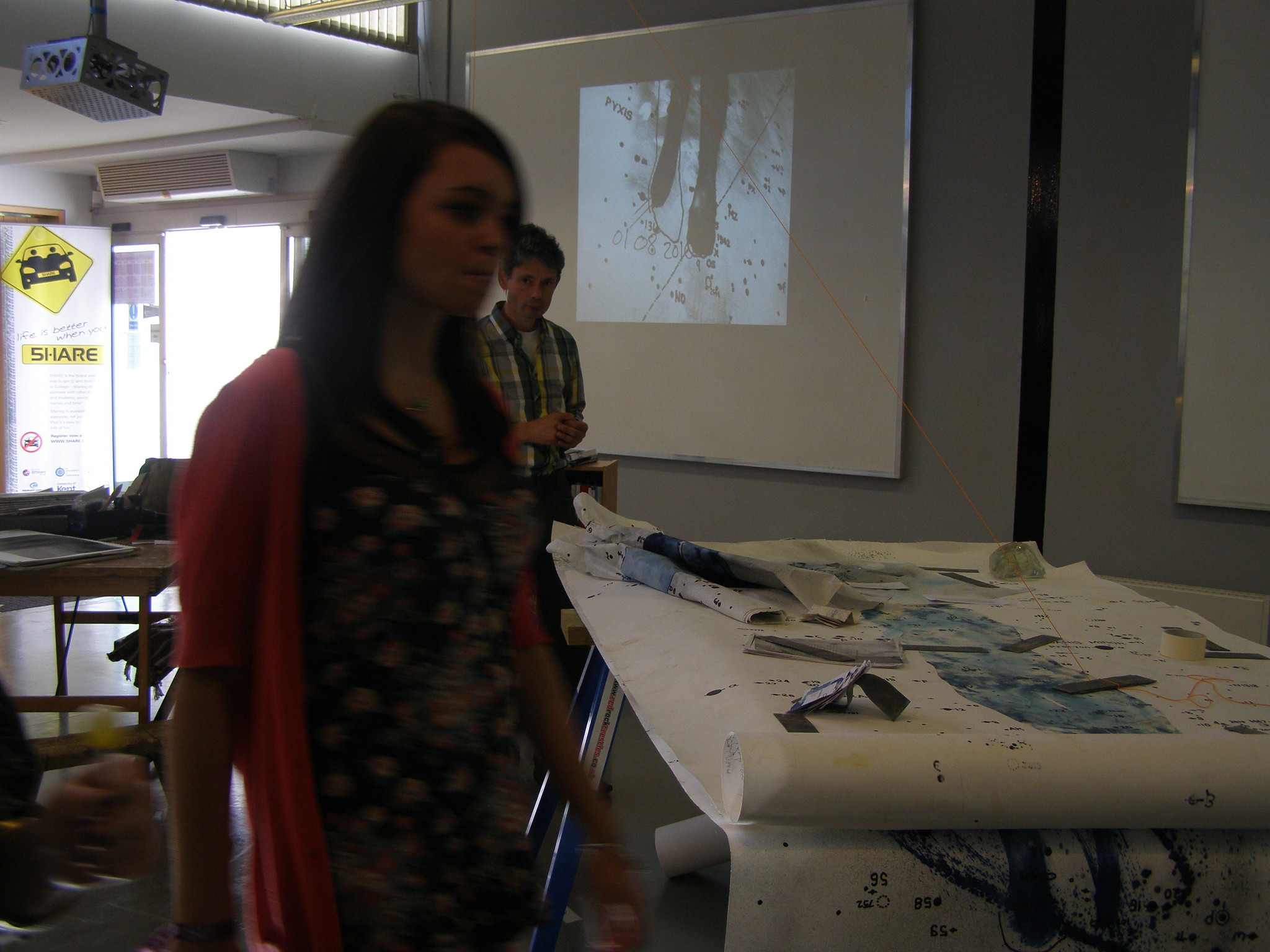
• Hidden Curriculum/Assemblages : Synergies of creative practice

    “When building and art are jointly focused in joint search not of an image, but of a mood, they cannot fail to produce integrity, even if they don’t produce great art.”

    Brian Clarke, Glass In The Environment Conference, held at the RCA, London 1986.

    UCA Canterbury :  Postgraduate School 2010

    My current spatial practice is centred around a multi disciplinary approach through “drawing” to critical issues of site. This activity could be understood as an investigative creativity amongst the phenomenological aspects of architectural place and the potentials of producing working spaces/sites for the reflection of others. The practice informs specific sensibilities and my intuitions through concise and simple trace strategies; promoting a sense of material memory and knowledge which becomes enmeshed with the human condition. These resultant trace strategies, drawings are open, active and present in-situ where they become vessels for placed geographies, maps around human relations.

    The use of site as a working drawing from which to create a temporary intervention into place helps to instigate a threshold, a room or event from which to reflect upon critical spatial, sociological and psychological conditions and perceptions.

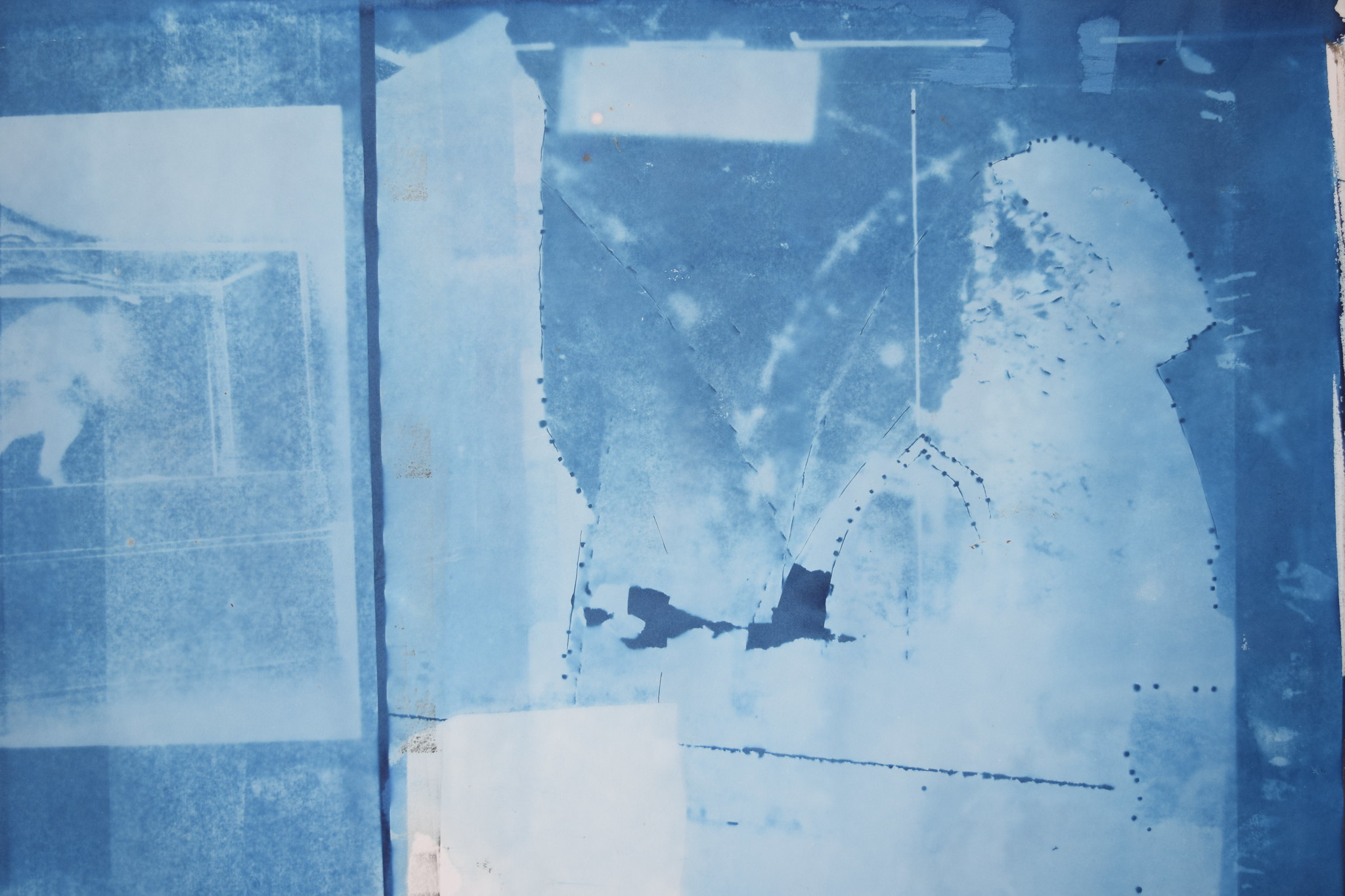
    Previous working sites have used the agencies of natural light, water and clay in long durational works realised by installation, performative drawing and elemental photographic apparatuses and processes (pinhole cameras/cyanotypes).My practice continues to employ simple indexical strategies to promote the possibility of a spatial “open text” from which to render transparency and superimpose a charismatic sense of nowness with an awareness of a duration of place.

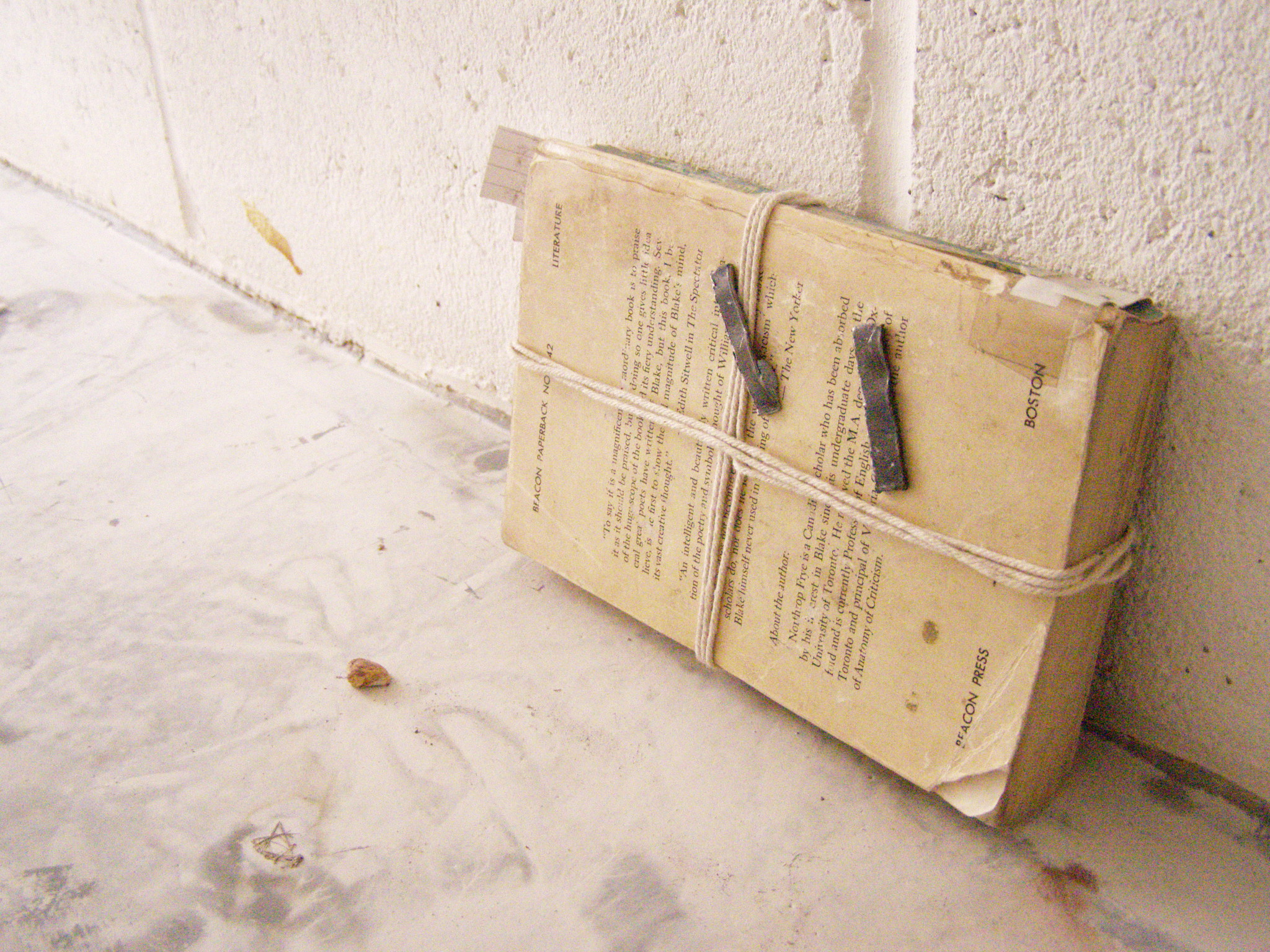
    The beauty of the assemblage is that, since it lacks organization, it can draw into its body any number of disparate elements. The book itself can be an assemblage, but its status as an assemblage does not prevent it from containing assemblages within itself or entering into new assemblages with readers, libraries, bonfires, bookstores, etc.

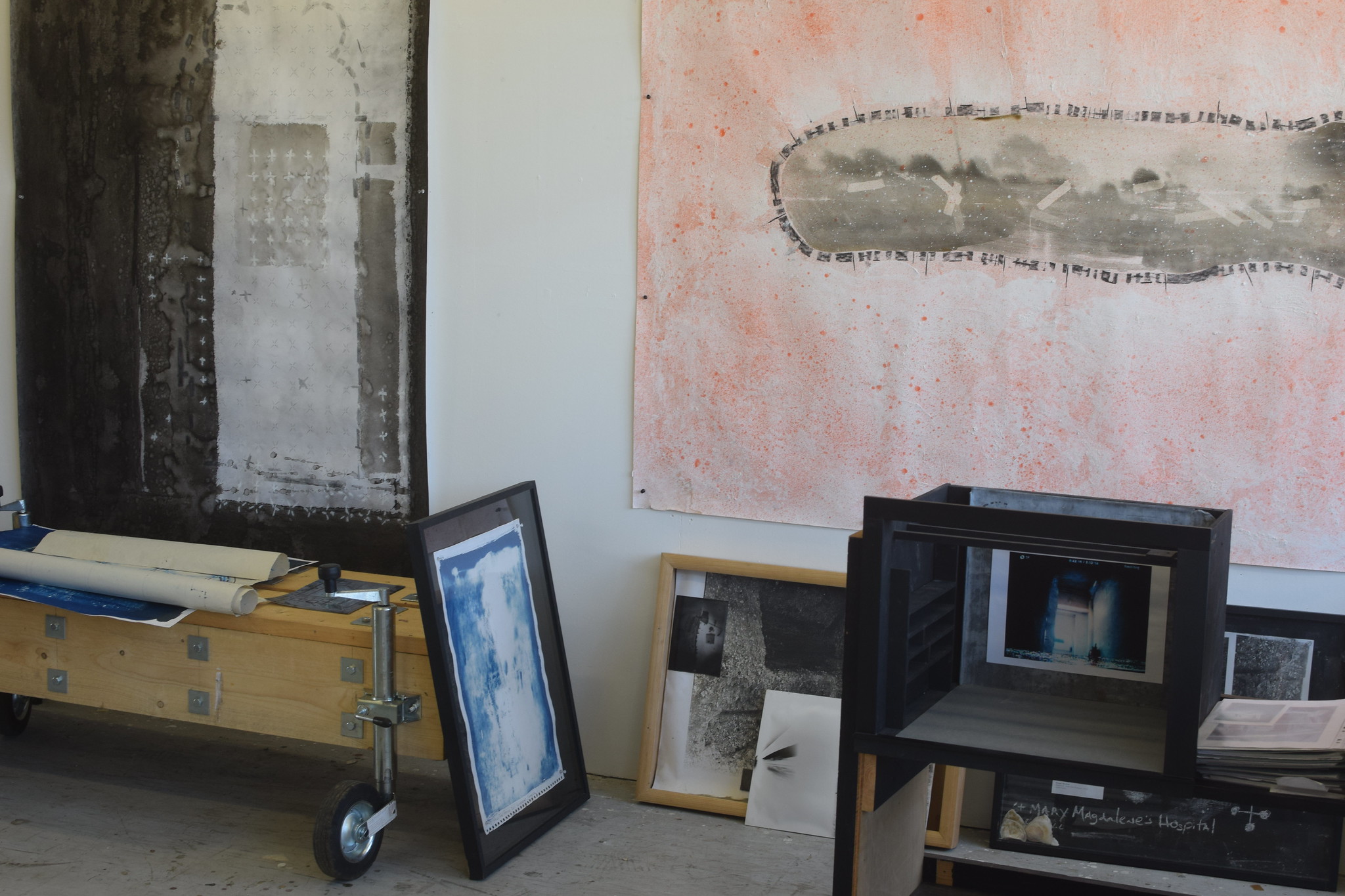
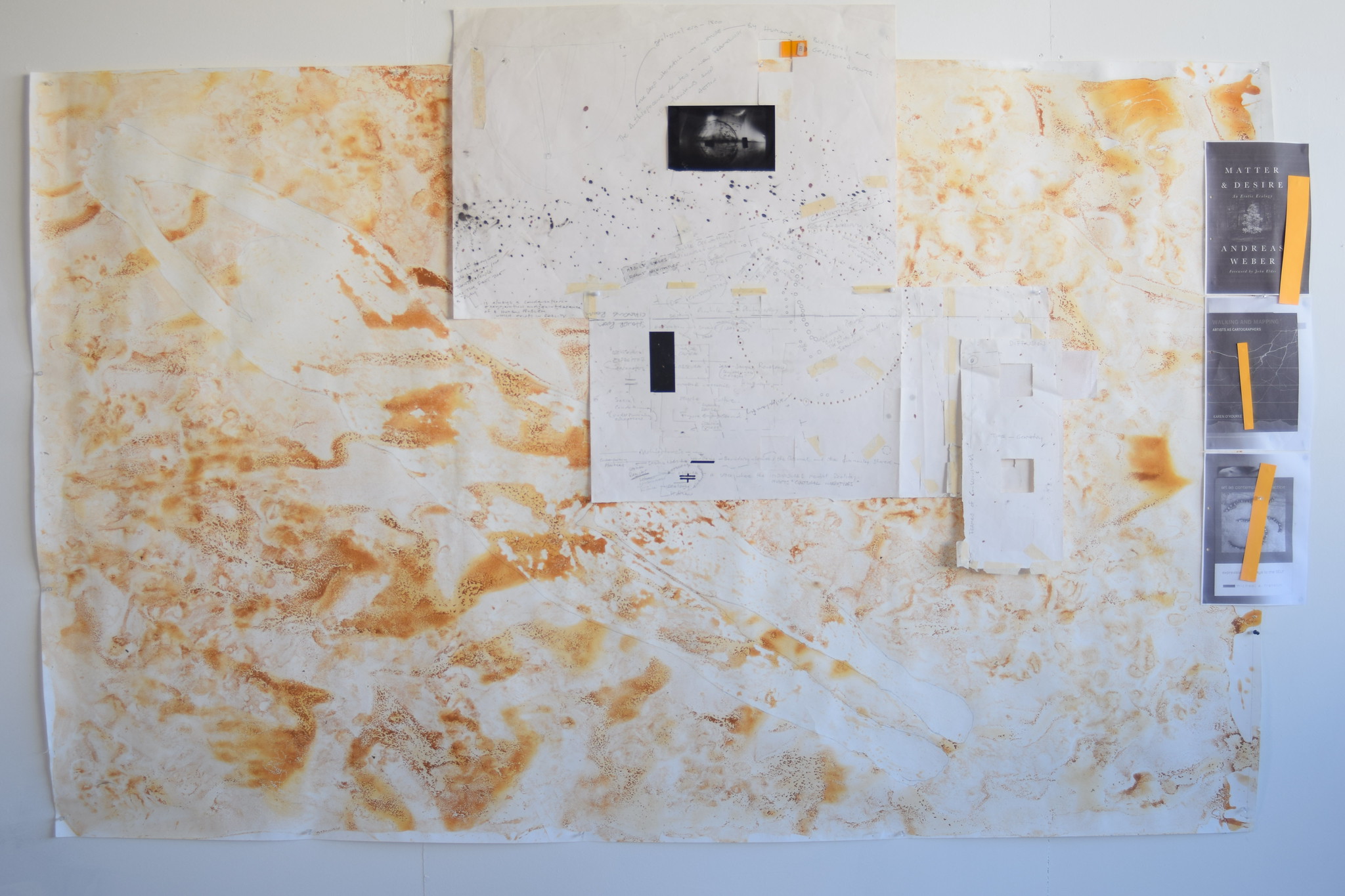
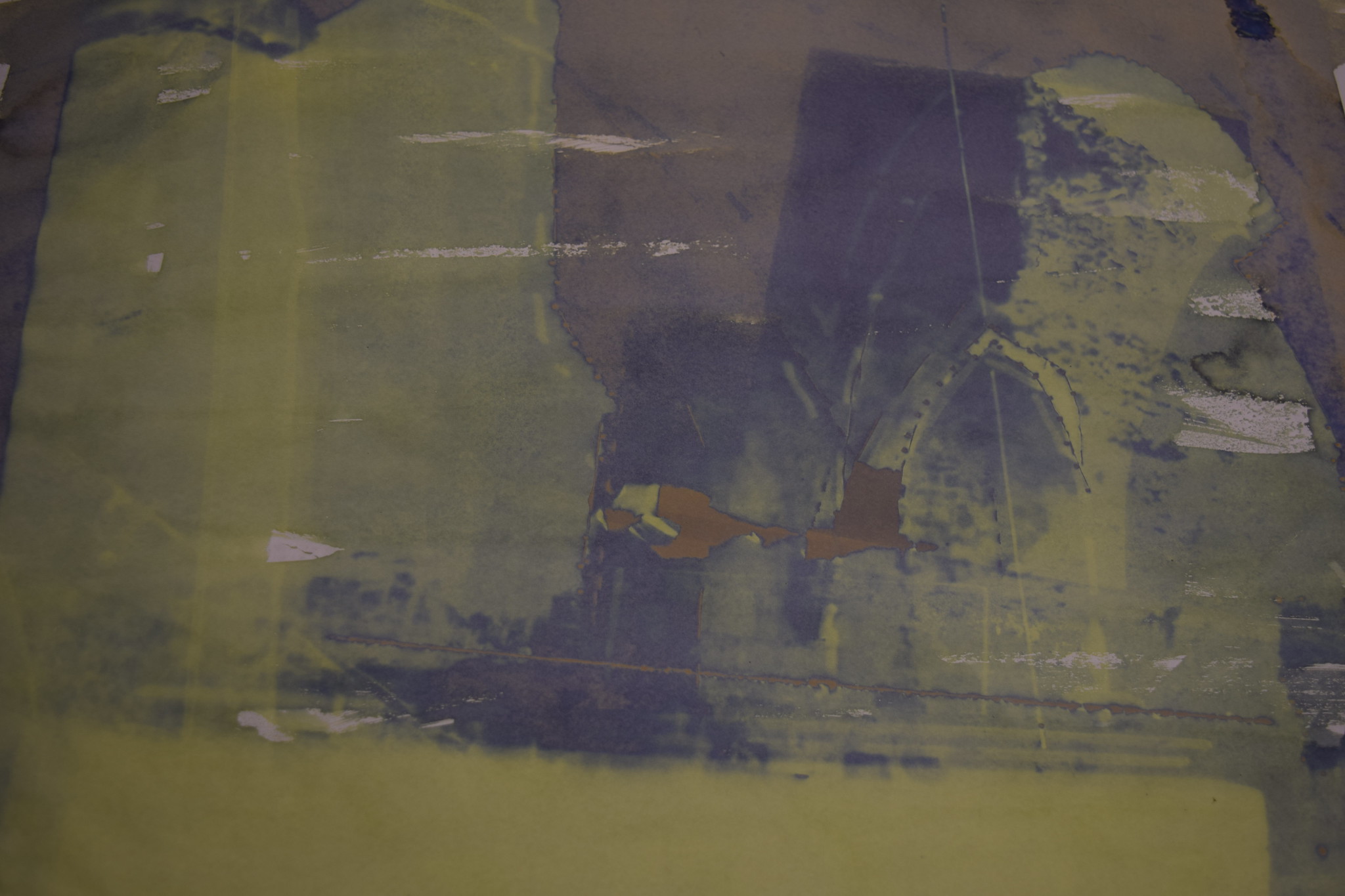
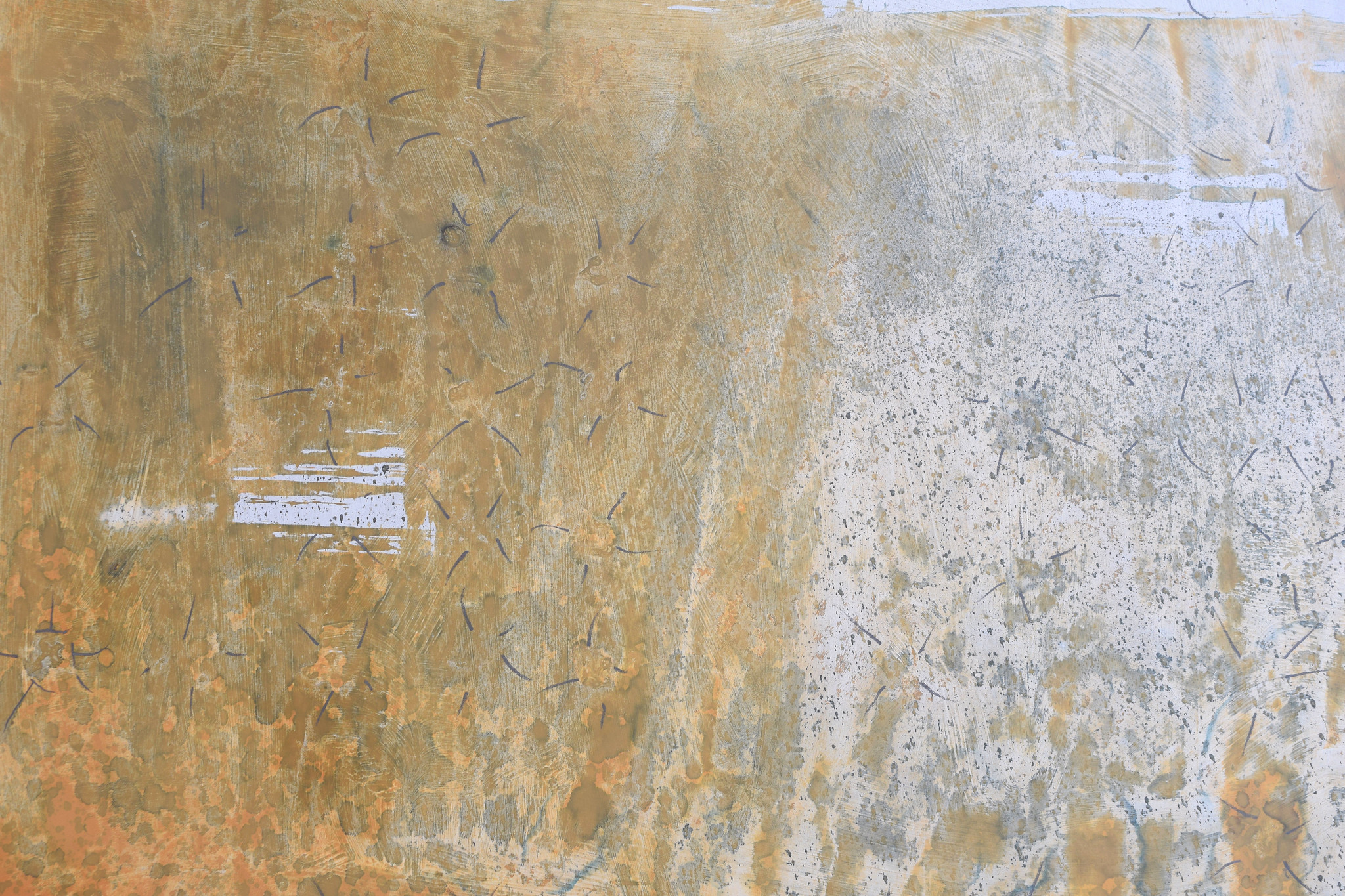
    Land Drawing : Layered Canvas, Gesso, Yellow Ochre on Paper.

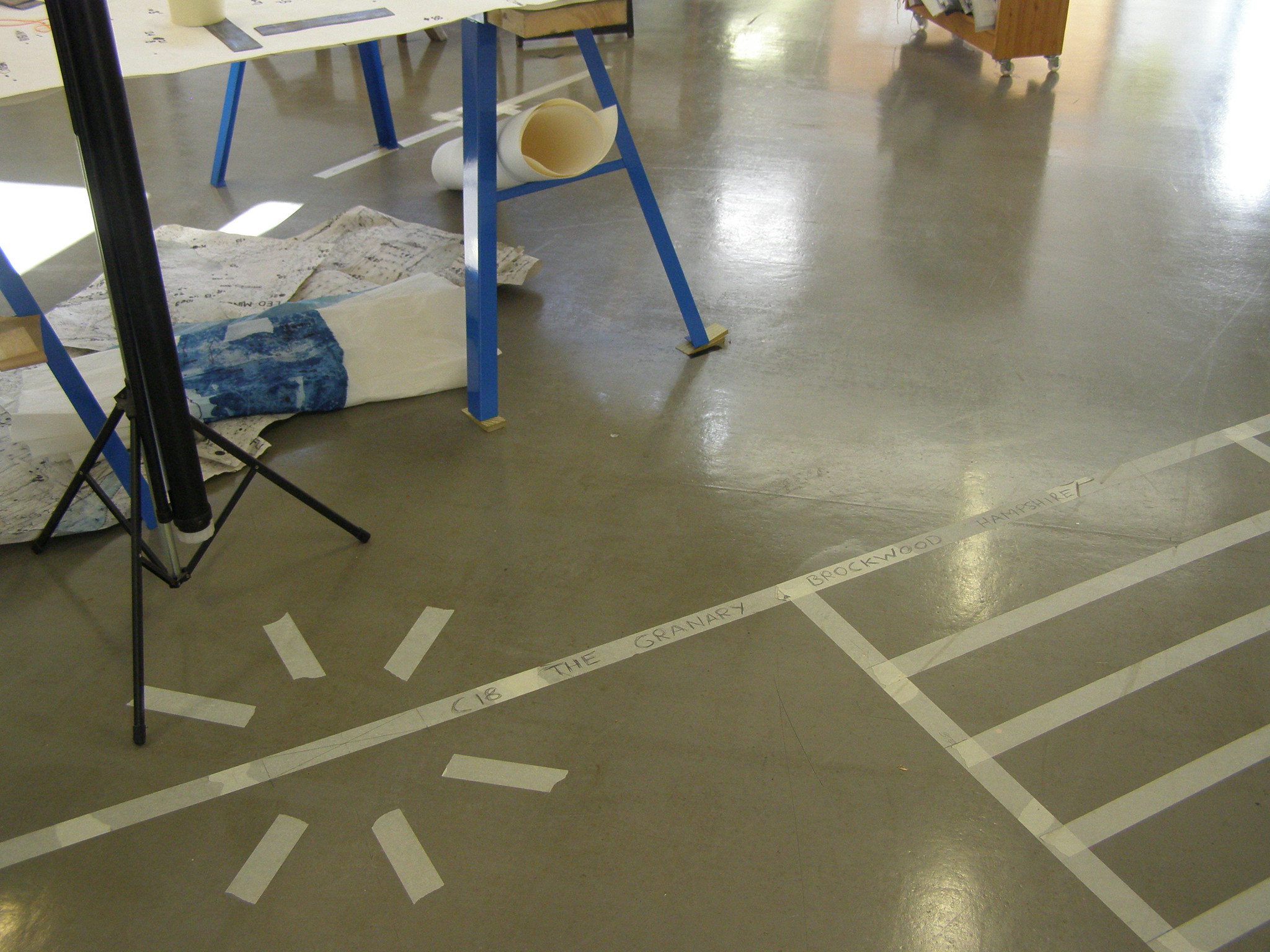
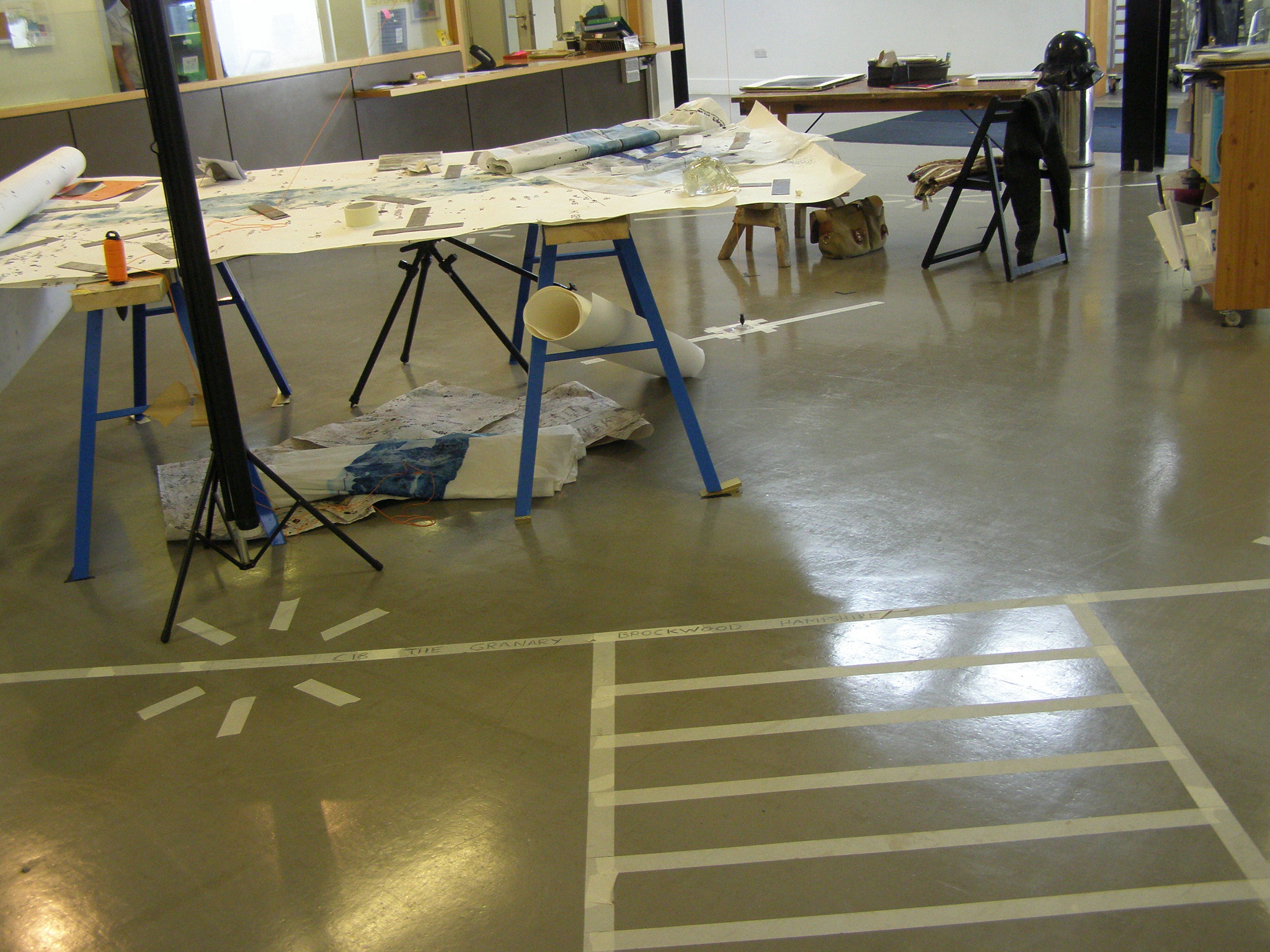
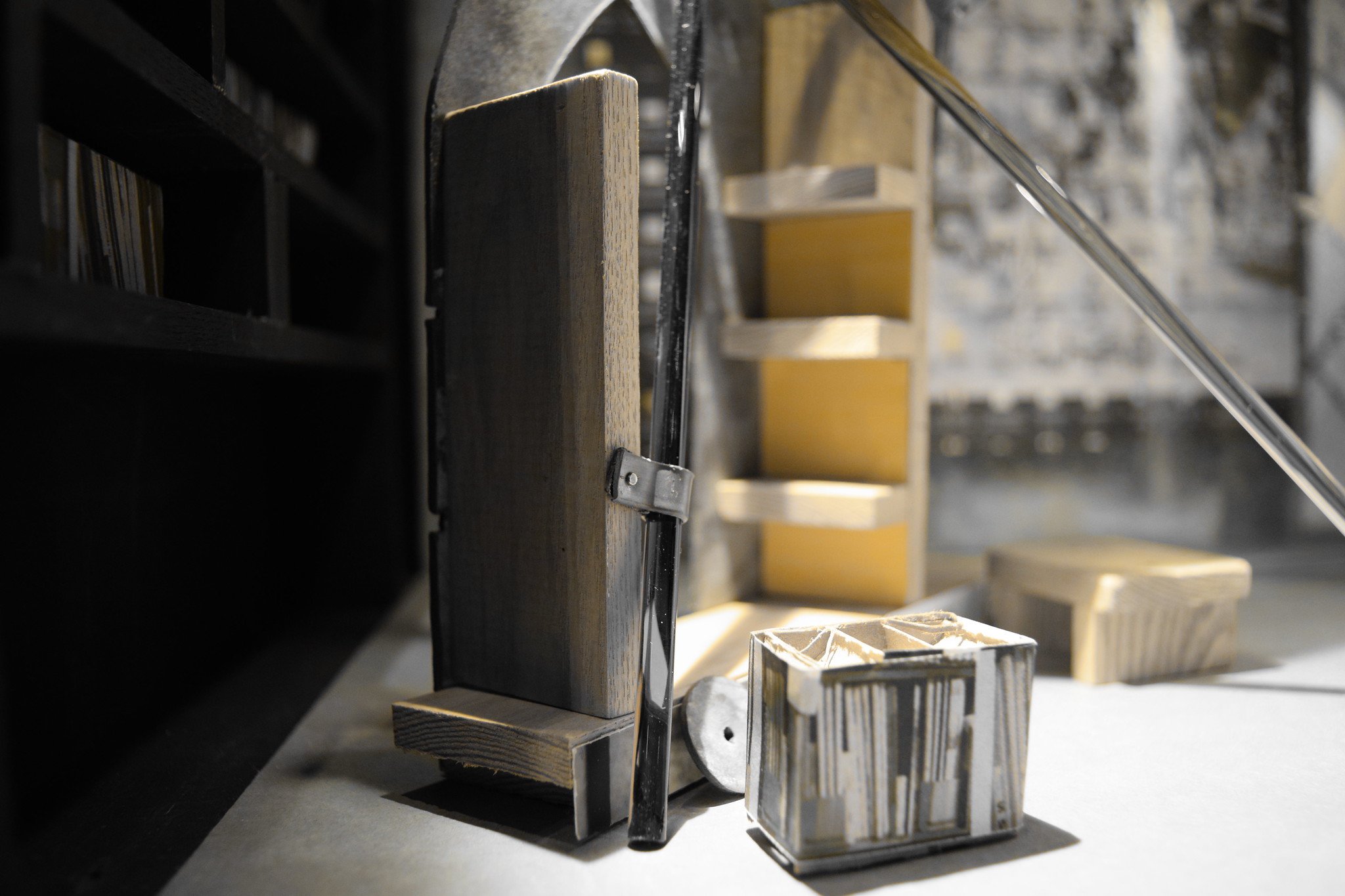
    Hidden Curriculum, teaching intervention in the library of Brockwood Park School.

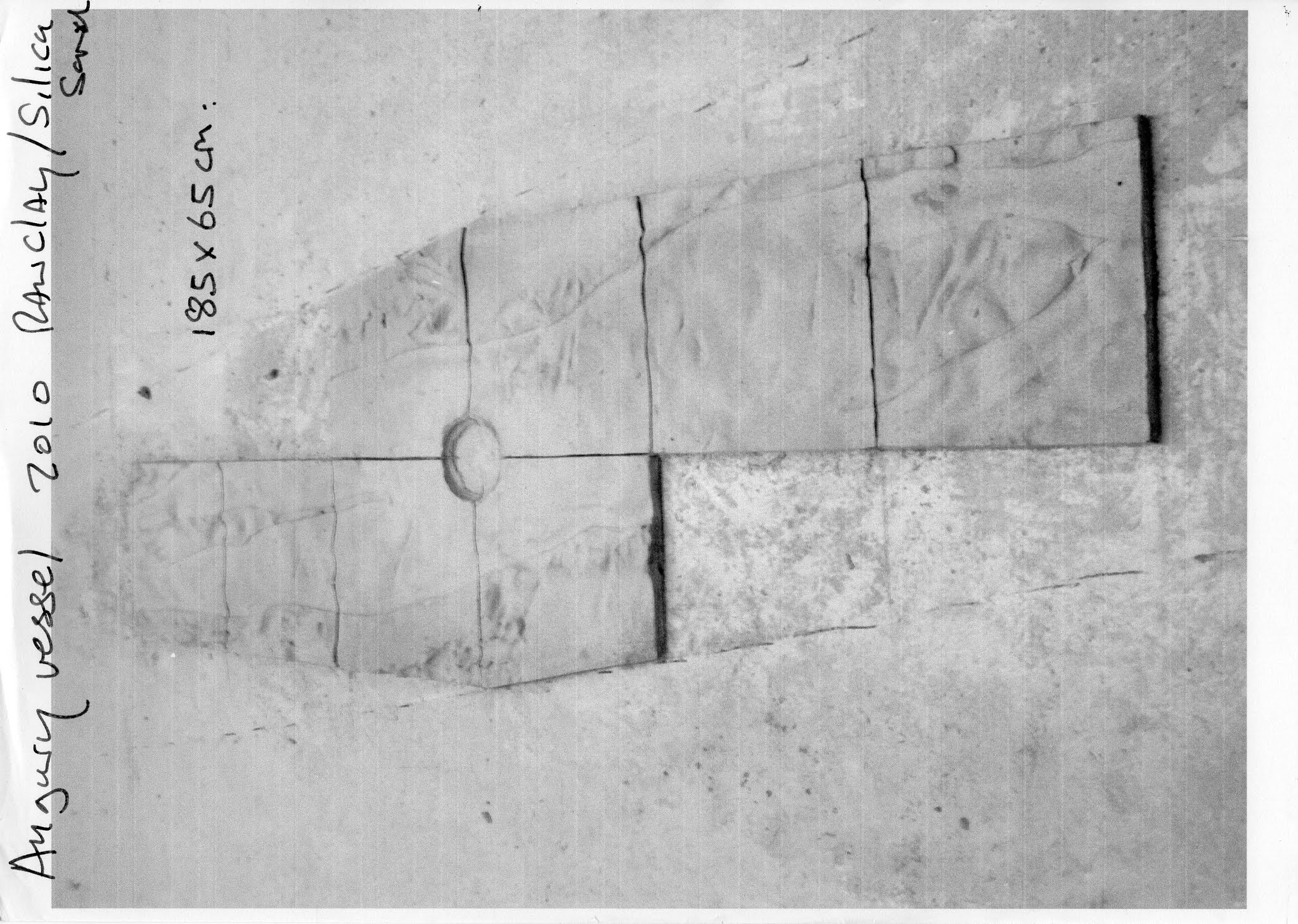
    Auguries into the maternal body. Un-fired clay and silica sand in the chapel of rest, Andover.

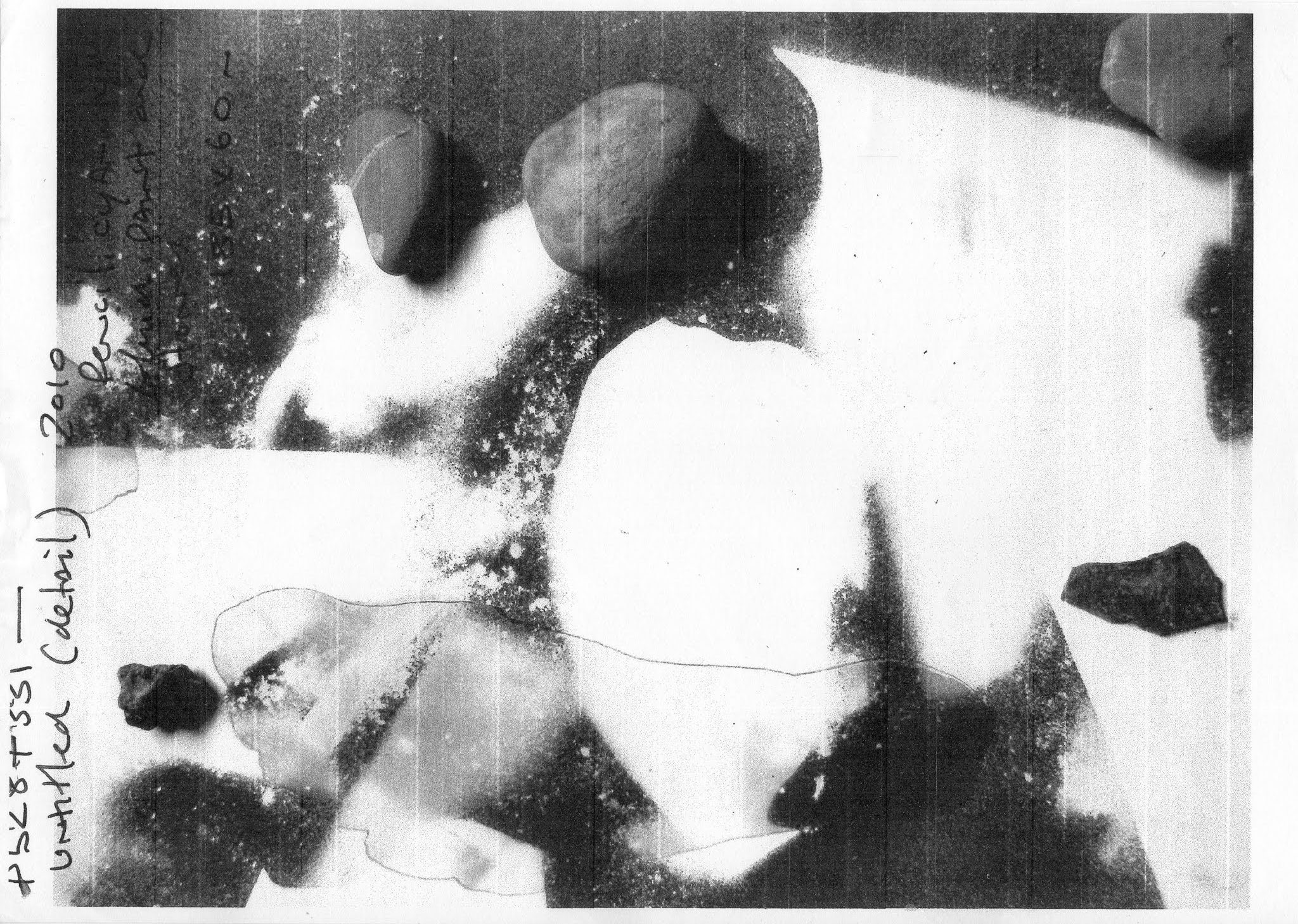
    Fossil Worlds, human outline with cyanotype, field chalk and Jurassic earth materials.

    My practice is an inquiry into the realms of both architecture (built and social) and fine art based methodologies of making/thinking and presentation. Although my working methods and processes are informed by a number of theoretical and philosophical sources and interests, it is however the simple wonder of things and phenomena that can be brought into new forms of expression that I find wonderous and challenging.

    A Philosophy of Solitude

    John Cowper Powys

    a thousand plateaus

    Deleuze, Guattari

    Assemblage

    Becoming

    Body Without Organs

    Nomad

    Rhizome

    Smooth Space

    State

    War Machine

    http://www.rhizomes.net/issue5/poke/glossary.html

    ASSEMBLAGE:

    An assemblage is any number of “things” or pieces of “things” gathered into a single context. An assemblage can bring about any number of “effects”—aesthetic, machinic, productive, destructive, consumptive, informatic, etc. Deleuze and Guattari’s discussion of the book provides a number of insights into this loosely defined term:

    In a book, as in all things, there are lines of articulation or segmentarity, strata and territories; but also lines of flight, movements of deterritorialization and destratification. Comparative rates of flow on these lines produce phenomena of relative slowness and viscosity, or, on the contrary, of acceleration and rupture. All this, lines and measurable speeds constitutes an assemblage. A book is an assemblage of this kind, and as such is unattributable. It is a multiplicity—but we don’t know yet what the multiple entails when it is no longer attributed, that is, after it has been elevated to the status of the substantive. On side of a machinic assemblage faces the strata, which doubtless make it a kind of organism, or signifying totality, or determination attributable to a subject; it also has a side facing a body without organs, which is continually dismantling the organism, causing asignifying particles or pure intensities or circulate, and attributing to itself subjects what it leaves with nothing more than a name as the trace of an intensity… Literature is an assemblage. It has nothing to do with ideology. There is no ideology and never has been. (3-4)
    The book, as described above, is a jumbling together of discrete parts or pieces that is capable of producing any number effects, rather than a tightly organized and coherent whole producing one dominant reading.

    Maternal Body : Clay Impression and Fragmented Form installed at Chapel Arts, Andover

    Auguries into the maternal body. Un-fired clay and silica sand in the chapel of rest.

    Constructed in-situ at the Yard, Winchester.

    A life-size record and memory of a human presence as a site for mutual introspection.

    Inspired in part from the novel  ” The  Children of Men ”  by P D James.

    Artist Statement/Chapel Arts Residency 2009

    Practitioner using the creative receptiveness of material together with the inclusion of drawing to harbour transits and passages of human presence, vulnerabilities centred around the human condition. My work adopts strategies which articulate a sense of absence and anonymity within the abandonment of the work to its location. I feel drawn to this registering of passage, encounter together with its farewell. The choice of materials gathered together implies a personal geography, with both an emotional and aesthetic sense of locality and place. The performative recording by physical means which renders itself as a trace of human presence, now becomes a vacant territory open for the consideration of others.

    My work continues to investigate this sense of material response with the performative trace of a human absences. The place-ment of these acts attempts to promote thresholds from which to reflect upon spatial, sociological and psychological conditions and perceptions.

    Currently working in clay, low fired to produce and promote a fragile vessel. This vessel is installed to act as a dwelling presence reverberating in a resting place. from which work is drawn into the human form to register a surface of absences resulting from past gestures and solitudes.

    Russell Moreton a visual artist uses simple gestures of drawn Human traces gathered and presented amongst natural materials. Exploring themes around the Human condition, vulnerability and abandonment. Materials are employed to further underpin our sense of place and time. The act and gesture of drawing adds a ephemeral mark amongst the materiality and locality of place. Currently using clay to register these themes, installing work Augury Vessel into Chapel Arts as part of their research residency programme.


    “When building and art are jointly focused in joint search not of an image, but of a mood, they cannot fail to produce integrity, even if th…

    Source: Hidden Curriculum/Assemblages : Synergies of creative practice

  • The Arts : The inherent finality of the human condition is concisely and eloquently measured and mapped.

    .
    Russell Moreton  Spatial Practices MA, UCA Canterbury.
    Visual artist who currently uses simple descriptive gestures and processes drawn directly from the human body. His practice continues to explore issues around “Spatiality” and the “Postmodern Human Condition.” The use of site specificity and materials “at hand” are employed to further underpin the practitioners sense of place, memory and dwelling. His descriptive working narratives are in effect physical working ideas, spatial  entanglements between the relations of  life and art.
    Drawing.
    Installation and Working Sites
    Architectural Glass and Ceramics
    Liquid Light and Pinhole Photography

    OUTLINE

    Drawings by sculptors that place the relationship of the line derived from the body on the same field as material/media residues. These configurations give rise to conceptual associations and meanings. This contemporary approach is in evidence in a number of artists work where the per formative aspects of drawing are the key issue. To put it simply there is a growing awareness of the gesture of drawing as the work, and not just simply the representational merit of recognition that has previous acquainted skill and draughtsmanship. I am talking about the authentic gesture of inscription, the combination of both the trait and trace that the trait has circumscribed. This almost primal visual rendering from a sensation of blindness is captured succinctly in the myth of butades, or as it has come to be known “the birth/origin of painting” This myth preserved through the device of its very nature contains an irony trapped, almost withheld until the contemporarily of its content could be recognized. It is my aim to expand on these issues using the situation of my own practice as a bridge to attempt to illustrate some of the complexities unearthed.

    Analysis of a drawing.

    Crafting the mind : Human Inhumation/Containment

    Julian Stair

    Quietus/The Body Politic

    Morality

    Jonathan Sacks

    Jozef Van Wissem

    Grand Central Confessional

    Nature Boy

    He said that in the end it is beauty

    That is going to save the world, now

    Nick Cave and The Bad Seeds

    THE PHYSICAL

    THE EMOTIONAL

    THE CONCEPTUAL

    First Intension (noun) Medicine the healing of a wound by natural contact of the parts involved.

    Fecundity, Fertility, Creativity, Inventiveness, Fruitfulness, Productiveness. What response within ones subjectivity created the desire and its necessity to be

    embodied, to be brought into the realm of things? CREATIVE POST-MORTEM 19.08.2010.

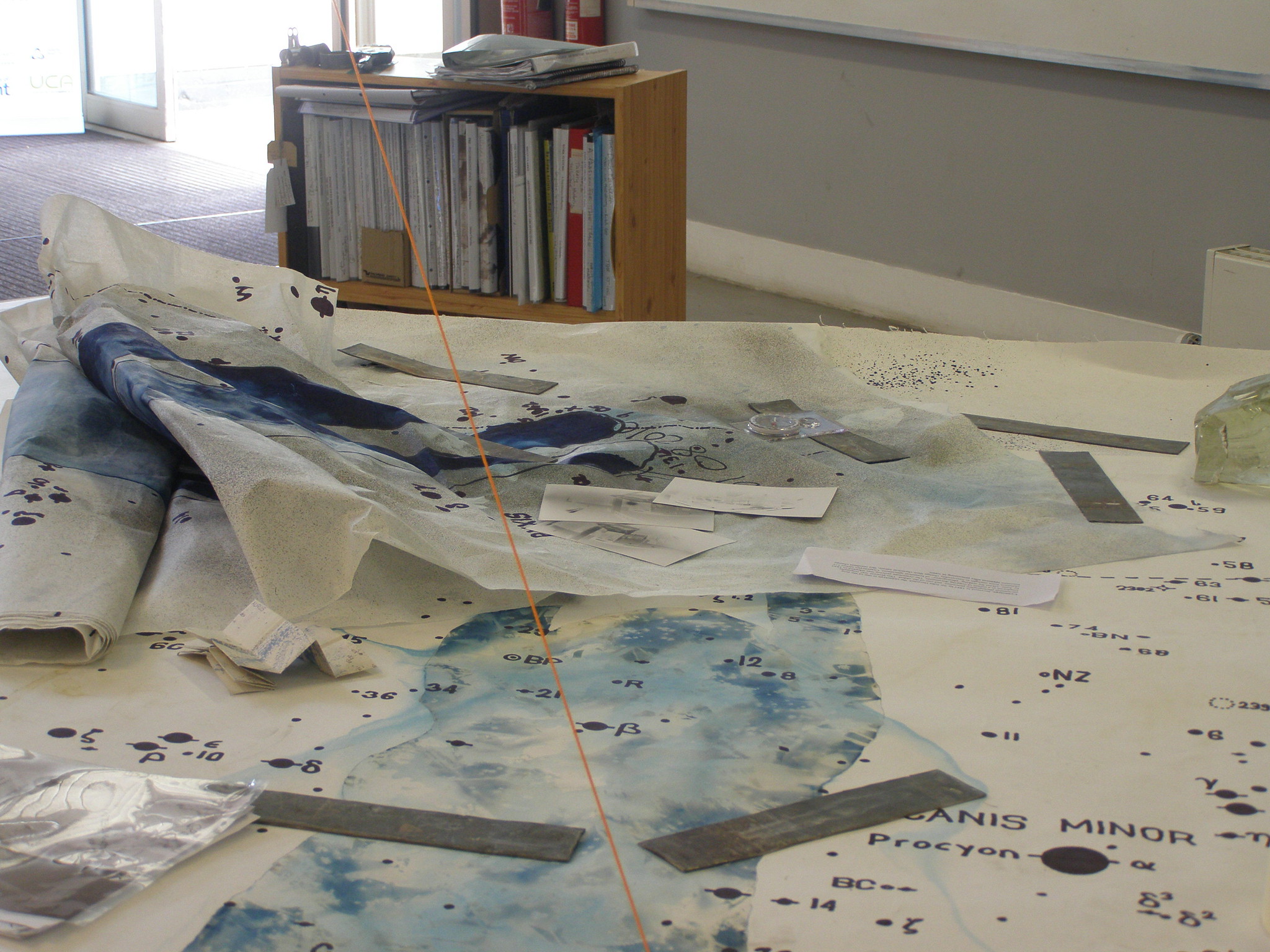
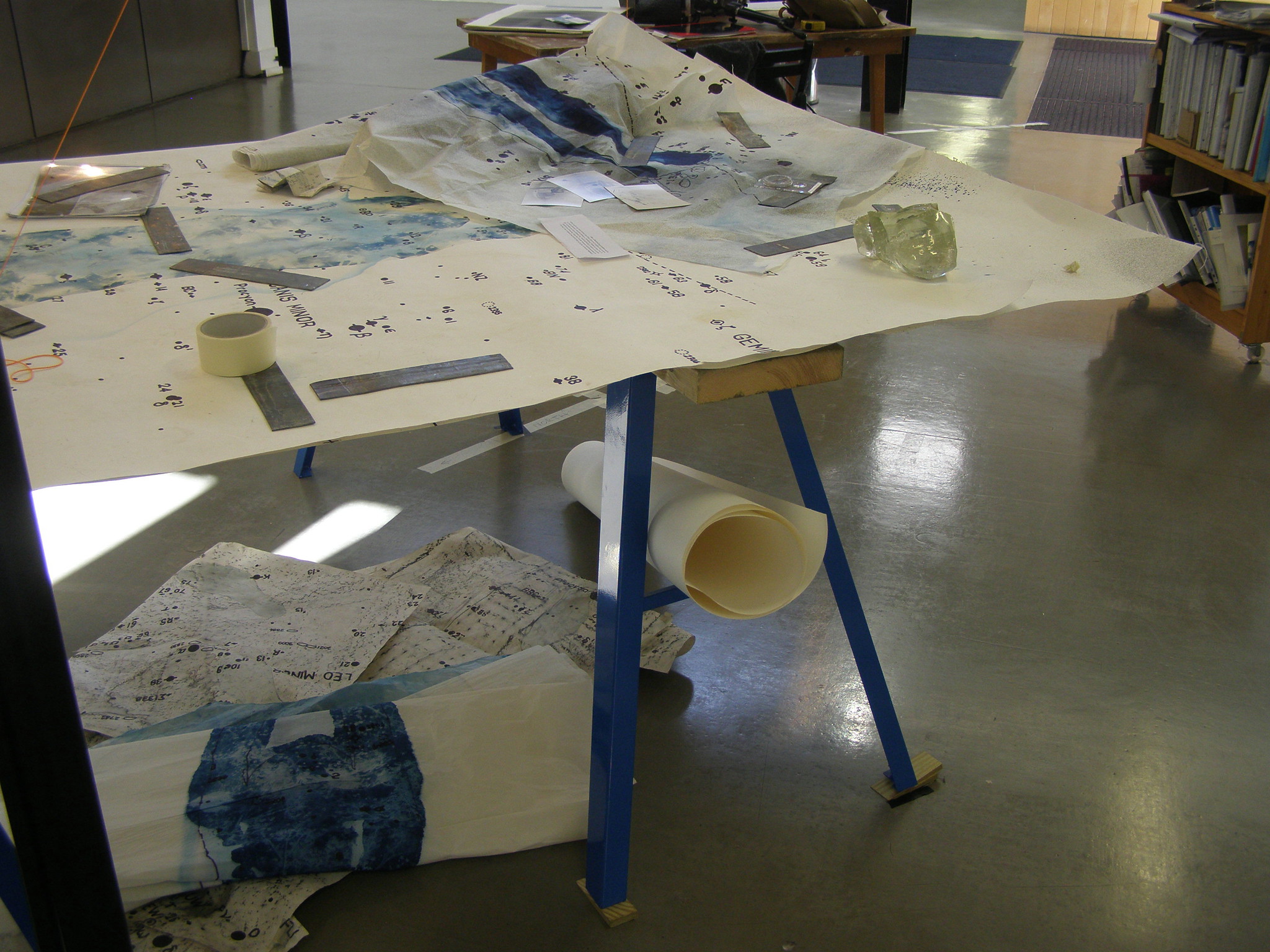
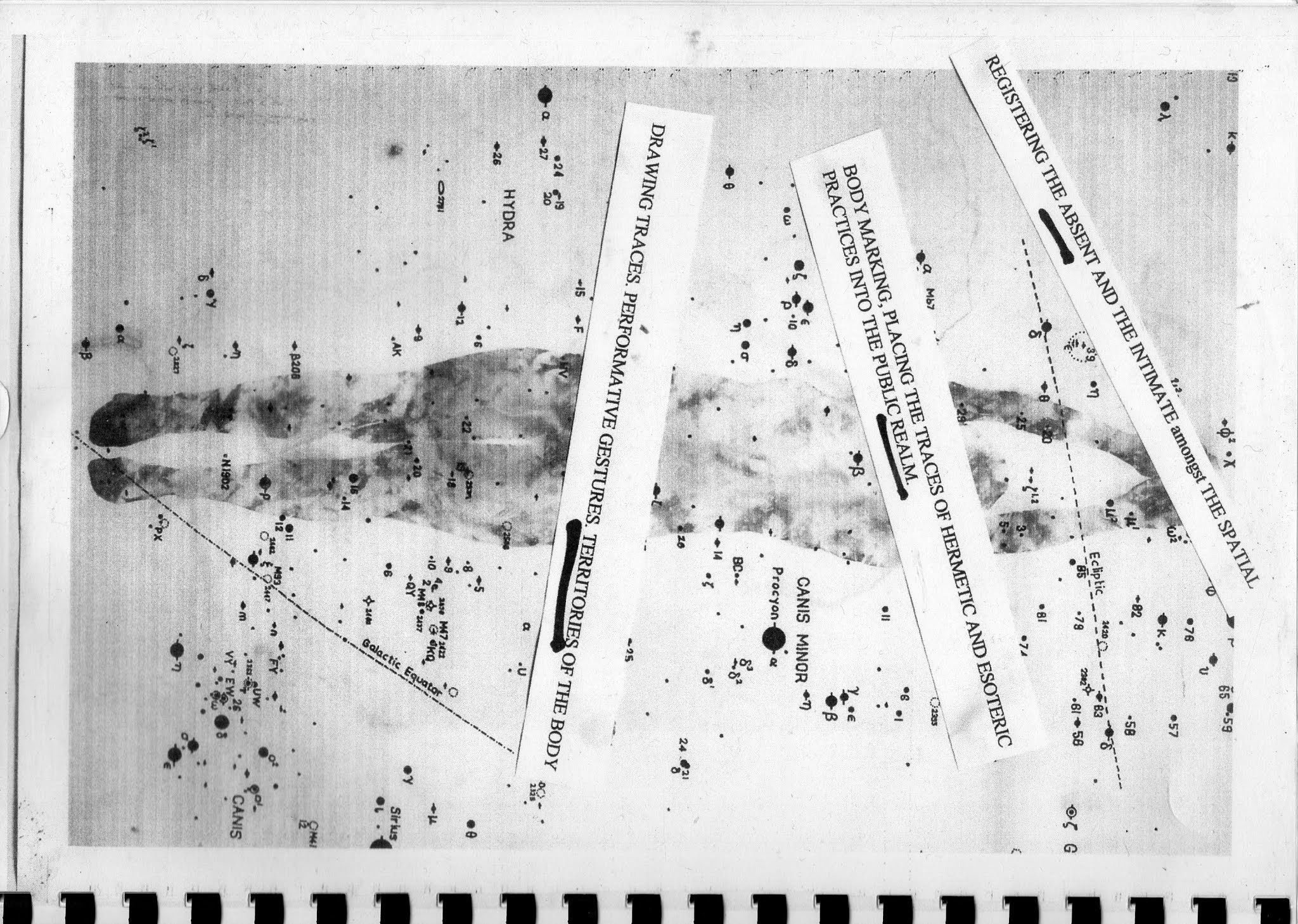
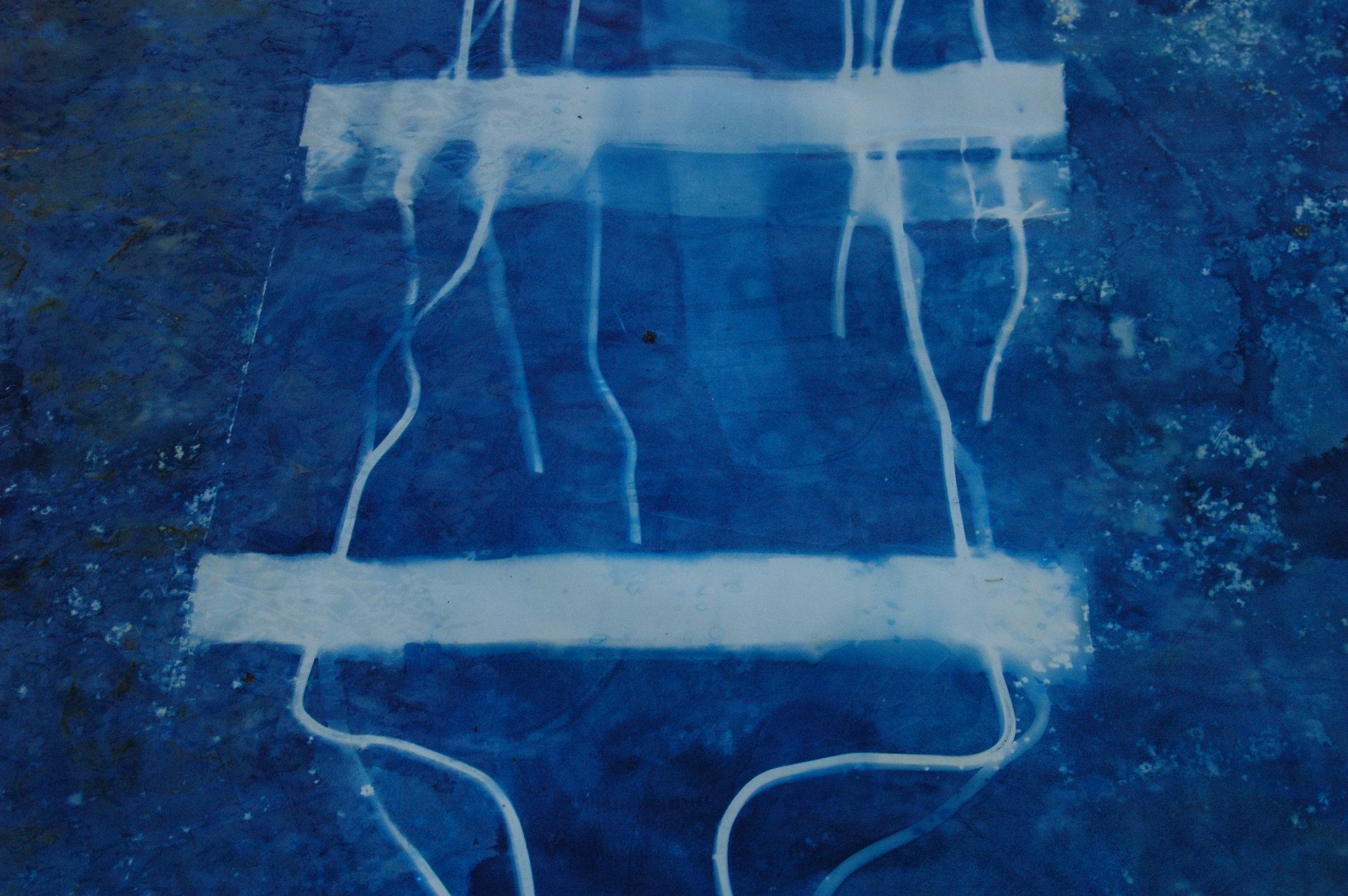
    Outline of a female body on light-weight Chinese paper, life size, laid out as if in the process of making passage through a fluid. The body stance seems tensioned with arms outstretched and together above the head, as is it is being propelled, or conversely the feet together might signify the body is sinking into a space occupied by a fluid. The body seems to be caught in some sort of stasis, between sliding back or diving head first. This outline has been in places in filled with a blue photographic material ( cyanotype).This material that displays a floral print caused by the displacement and actuality of seed heads having been placed directly in contact with the paper. This floral marking occupies only part of the territory which was once occupied by the body. There is evidence that this fluid substance (blueprinting of a fecundity) has transgressed, seeped through the boundaries of the traced form. It has done so through the cyanotypes fluidity and the absorbency inherent in the structure of the paper. Within the territory of the body, there are spaces void of the cyanotype material, these appear as barren areas, unfertile yet they seem to suggest an infinite space which gives the cyanotype surface its ability to both record an actuality and suspended it. This appears to question the spatio-temporal aspect of the relations between the application of the fluid and the drawing of the trace. What is apparent is that they have become superimposed and strangely contingent. There exists a sense of transition between fluidity of the cyanotype and the fixed “registration” of the hand drawn trace this creates different senses of temporalities on the same surface. The residues left over from the cyanotype process are still clearly visible, channeled into a flow which is delivered to a reservoir at the foot of the trace. The outline in what appears to be black marker pen preserves a permanence against this flow. This same marked permanence records an intervention of two back slashes which tags a closure of performance of the trace with a date simply stated across the foot. One might be tempted to consider if this marking and its proximity might have associations that reference the labelling of the mortuary corpse. The inclusion of this precise date marking, renders other material traces some sort empirical touchstone, an observation point clearly defined from which to see other phenomena present. This observational mode of inquiry is perhaps promoted by what appear to be astronomical markings that are only “‘present” within the territory of the body, curiously they appear to have been inscribed from the reverse side of the paper. They appear akin to body markings, tattoos or some other form of writing information on the body. These marks suggest some sort of cartography which can only be read by others, this information is clearly “hosted” for the benefit of others, a message that might contain an augury. The host body might be a vessel for these speculations, but it is clearly not their author in fact the astronomical details place their own authorship right through the vessel of this un-gendered female form. Given that the astronomical markings have been assigned to a human form, a form of mobility the knowledge of these marks therefore exceeds the temporality of the host form, in the literal sense this is already confirmed by an existence only recorded by its trace, its absent presence. This terrestrial being with its absent presence marked and dated is further appropriated into a territory containing celestial mappings and traces from its own host planet. The inherent theme of fecundity and fragility supported by the inherent finality of the human condition is concisely and eloquently measured and mapped. Like a shroud this work is delivered to reaffirm the body as a site.

    There is no authority in the gesture, it is an act of reassurance, he is fixing reality. James Salter


    . Russell Moreton  Spatial Practices MA, UCA Canterbury. Visual artist who currently uses simple descriptive gestures and processes drawn di…

    Source: The Arts : The inherent finality of the human condition is concisely and eloquently measured and mapped.

  • The origins of painting and the scepticism of drawing : Architectural surface for a place of study/studio

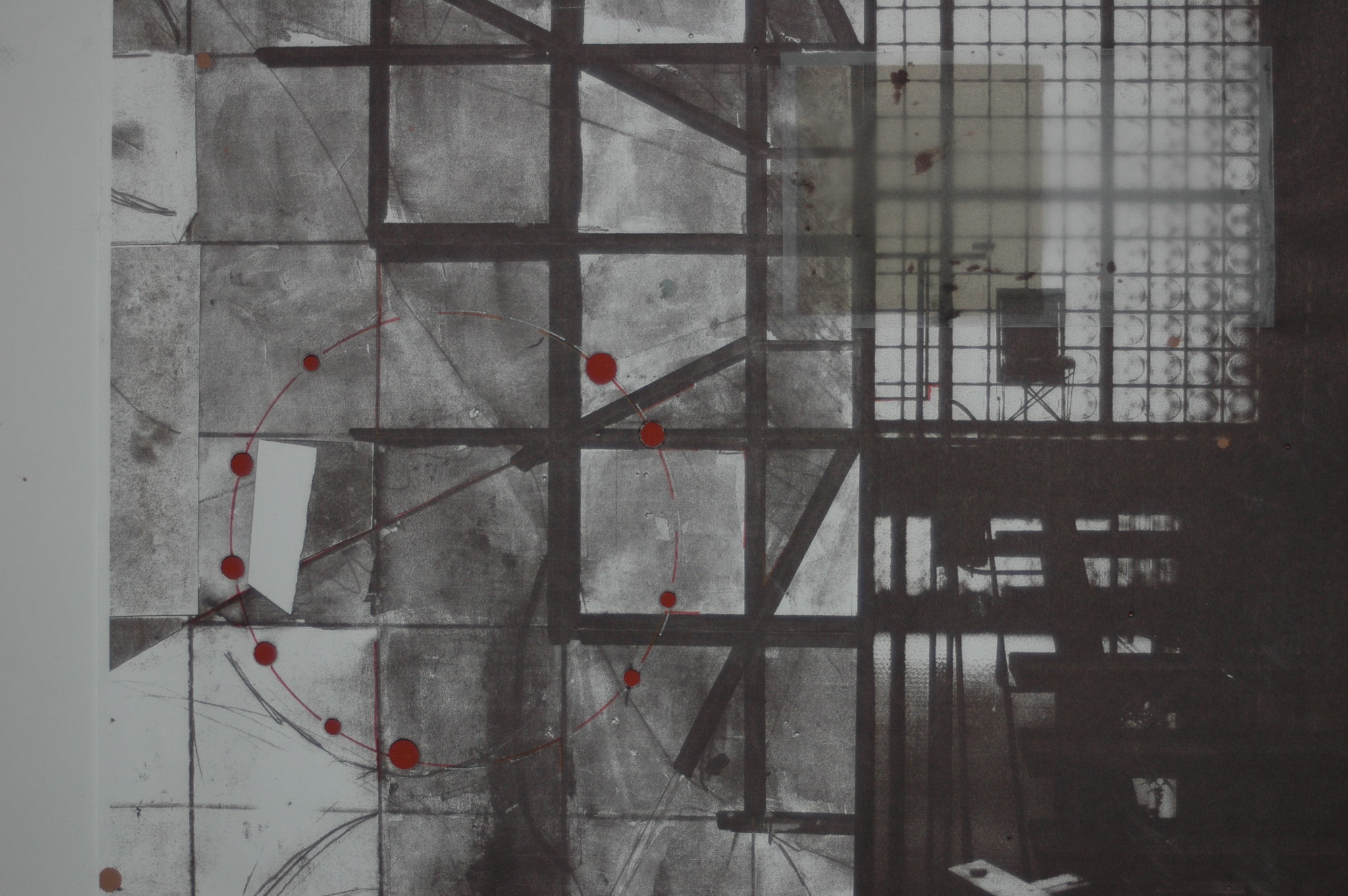
    Painting as an exploratory layered drawing for an architectural surface in a library

    a shadow or an eidolen, an image without substance

    OUTPOST Studio/Cyanotype Process Painting

    THE MYTH:

    PLINY THE ELDER : NATURAL HISTORY,translation H. Rackham 1952. BOOK 35

    Origins of Painting ( XXXV,5).

    The question as to the origin of the art of painting is uncertain and it does not belong to the plan of this work. The Egyptians declare that it was invented among themselves six thousand years ago before it passed over into Greece-which is clearly an idle assertion. As to the Greeks, some of them say it was discovered at Sicyon, others in Corinth, but all agree that it began with tracing an outline round a man s shadow and consequently that pictures were originally done in this way, but the second stage when a more elaborate method had been invented was done in a single colour and called monochrome, a method still in use at the present day.

    Plastic art. Early stages. Butades and others. (XXXV ,43 ).

    Enough and more has now been said about painting. It may be suitable to append to these remarks something about the plastic art. It was through the service of that same earth that modelling portraits from clay was first invented by Butades, a potter of Sicyon, at Corinth He did this owing to his daughter, who was in love with a young man ; and she, when he was going abroad, drew in outline on the wall the shadow of his face thrown by a lamp. Her father pressed clay on this and made a relief, which he hardened by exposure to fire with the rest of his pottery ; and it is said that this likeness was preserved in the Shrine of the Nymphs until the destruction of Corinth by Mummius.

    BIBLIOGRAPHY AND REFERENCES: BOOKS:

    Gaston Bachelard, The Psychoanalysis of Fire (Boston :Beacon Press, 1964).

    Roland Barthes, Camera Lucida (Reading: Vintage,2000).

    Roland Barthes, Mythologies ( Reading: Vintage,2000).

    Georges Bataille, Eroticism (London: Marion Boyars Publishers, 2006).

    Eduardo Cadava, Words of Light (New Jersey: Princetown University Press, 1997).

    Italo Calvino, Six Memos for the Next Millennium (London: Jonathan Cape, 1992).

    Tony Cragg, In And Out of Material {Manchester: Cornerhouse Publications,2006).

    Mary Douglas, Purity and Danger (London: Routledge, 1994).

    Ernst Gombrich, Shadows, The Depiction of Cast Shadows in Western Art (London: National Gallery Publications, 1995).

    Antony Gormley, Drawings (London: The British Museum Press, 2002).

    Tania Kovats, The Drawing Book (London: Black Dog Publishing,2007).

    Amelia Opie, The Father and Daughter (Peterborough: Broadview Press,2003).

    Pliny, Natural History Books 33-35 trans H. Rackham, (London: Harvard University Press,2003).

    Maurice Merleau-Ponty, The Visible and the Invisible (Evanston: Northwestern University Press, 1968).

    Victor 1. Stoichita, A Short History of The Shadow ( London: Reaktion, 1997).

    Andrey Tarkovsky, Sculpting in Time (Austin: University of Texas Press, 1986).

    Rose Temkin, Thinking is Form: The Drawings of Joseph Beuys (London: Thames and Hudson, 1993).

    Tracey Warr, The Artists Body ( London: Phaidon Press,2000).

    EXHIBITION CATALOGUES:

    Anthony Bond, Body (New South Wales: The Art Gallery of NewSouthWales,1997).
    Michael Craig-Martin, Drawing the Line(London South Bank Centre, 1995).
    Jacques Derrida, Memoirs of the Blind, The Self-Portrait and Other Ruins (Chicago: Chicago Press, 1993).
    Avis Newman, The Stage of Drawing, Gesture and Act (London: The Tate Drawing Centre, 2003 ).
    Giuseppe Penone, The Eroded Steps (Halifax. Henry Moore Sculpture Trust, 1989).
    The South Bank Centre, The Body of Drawing, Drawings by Sculptors (London: The South Bank Centre, 1993).
    Michaela Unterdorfer, In Search of The Perfect Lover (Baden-Baden: Staatliche Kunsthalle,2003).

    JACQUES DERRIDA THE SCEPTICISM OF DRAWING:

    Jacques Derrida in 1993 wrote an extensive text to accompany an exhibition of paintings from the Louvre. This text titled Memoirs of the Blind, The Self-Portrait and Other Ruins contains within it some particular references to “Pliny’s Origins of Painting.” Together with the aid of illustrations of paintings on this theme, he examines and interrogates their philosophical and historical qualities.

    Derrida makes particular mention and emphasis of the “state of blindness” in his analysis of the Butades myth. In particular the notion of  “scepticism” which is at the very heart of drawing. This notion of the “difference between believing and seeing”1, and what he remarks as “believing one sees and seeing between” evokes the emergence of a “glimpse” caught in a state in which “doubt ever becomes a system“2. There is a moment of delay between the gaze with its vigilance and attention, and what one reflects upon seeing. These actions will conspire to create the moment of conclusion. So by keeping the thing in sight it is being constantly examined but not reflected on, until the point when the gaze is averted to the drawing .It is a this instant, withdrawn from the sight of the object, that a “blindness” forces the recollection (the moment of conclusion to emerge) to which the drawn mark is visual evidence of that moment Derrida makes the observation that representations substitute memory for perception and that blindness is a constant withdrawal into memory. Derrida is of the view that drawings, paintings are “representations drawn most often from an exemplary narrative.” This myth of Butades with its “exemplary narrative” relates directly to the absence or invisibility of (being in) the drawing process whilst in the presence of the object, that the very act of drawing withdrawals and blinds its participant. Butades daughter is “blinded” in the acts of both love and the act of drawing. Through these conditions it can be seen that Butades daughter is blind to the vision of her lover and in drawing around his projection she is forced to recollect and reflect to produce a conclusion of that action by the simple gesture and act of an inscription drawn aided by a flickering silhouette.

    Derrida uses the example of the painting by J. B. Suvee “Butades or the Origin of Drawing 1791” or as it is referred in English as “The Daughter of Butades Drawing the Shadow of Her Lover ” to illustrate that it was “as if one drew only on the condition of not seeing.” The drawing in effect becomes a “declaration of love destined for or suited to the invisibility of the other.”3 Derrida comments that the origin of drawing may have become born from the desire to create some sort of surrogate mark which originates “from seeing the other withdrawn from sight.“4 The important observation Derrida continues to make is that the daughter in “following the traits of a shadow or a silhouette” who is in effect drawing on a blindness which will through recollection, initiates a sense with which she is in effect “already loves in nostalgia.”5

    Derrida dwells on the very nature of drawing moving away from “the origin of drawing” to “the thought of drawing” he comments that the thought of a drawing has a “certain pensive pose, a memory of the trait that speculates, as in a dream, about its own possibility.”6 It is as if the potency of drawings is a projected development that occurs as Derrida states “on the brink of blindness.” This notion of the “trait” (a feature to a line, stroke, or mark) a visible presence that accompanies the lines odyssey, a sense of presence that can witness something of the invisible in the visible is touched upon. ’’Merleau-Ponty’s The Visible and the Invisible is cited by Derrida as having already made “Indications” in this respect Derrida footnote from The Visible and the Invisible seems to sum up something of the invisibility and presence of the trait acting on a drawing. This extract taken from the “working notes” section of the book it reads” One has to understand that it is visibility itself that involves a non visibility.”7

    Distilled from the salient points of Derrida’s extensive interrogation Memoirs of the Blind seems to acknowledge the fact that “whether Butades daughter follows the tracts of a shadow or a silhouette or even if she draws on the surface of a wall or in a veil.”8 the resultant inscription in any event “inaugurates an act of blindness.” Derrida’s revelation is that “perception belongs to recollection.” Butades daughter’s act is in blindness, as if she was drawing a declaration of love that simultaneously that also contains her anticipation of a loss, and as a result, a nostalgia that is reflected upon before it is actually perceived.

    1  . Jacques Derrida, Memoirs of the Blind, The Self Portrait and Other Ruins (Chicago: Chicago Press, 1993),page 1.

    2  .Ibid., page 1.

    3  .Ibid., page 49.

    4  .Ibid., page 49.

    5  .Ibid., page 51.

    6  .Ibid., page 3.

    7   Maurice Merleau-Ponty, The Visible and the Invisible (Evanston: Northwestern University Press, 1968),257.

    8   Jacques Derrida, Memoirs of the Blind, page 51.

    VICTOR I. STOICHITA PLINY’S MYTH:

    V. I. Stoichita in his book “A Short History of the Shadow” has analysed “Pliny’s Butades myth,” he makes the point in his introduction “that it is of unquestionable significance that the birth of Western artistic representation was in the negative,1” and that it emerged as such from the projection of the body marking it’s very presence by a projection, a shadow or an eidolen, an image without substance. Butades daughter therefore attempts to capture this intangible immaterial, the double of the one through whom she anticipates her impending loss.

    Stoichita has noted that “Pliny” returns to the myth twice, first to discus the origins of painting and then further on to the production of sculpture. Stoichita elaborates further that Pliny claims that “the Greeks discovered painting, not by looking at Egyptian works of art but by observing the human shadow.” Pliny quotes” but all agree that it began with tracing an outline round a man’s shadow. “Stoichita connects Pliny correspondence as being a “three part theory” in which he Pliny uses early Greek painting, Egyptian painting, and the shadow.

    Stoichita makes the connection that “Plinys approach can be placed at the crossroads of history and artistic mythology.2” Pliny uses a fable as a myth of origin to interpret the historical existence of early Egyptian painting The evolution of painting from this “early shadow stage” is then replaced by the advancement of a mono-chrome painting which was then later replaced by relief and shading now becomes a means of expression not just a support to give a sense of form to an outline.

    1  Victor I. Stoichita, A Short History of the Shadow (London: Reaktion, 1997), page 7.

    2  . Ibid., page 14.

    The Daughter of Butades : Visual Art Winchester. 2008

    My research centred on various situations that owe their inspiration to Pliny’s simple concise statement in his Natural History on the “origins of painting and the plastic arts.” My initial reason for selecting this particular mythical tale is its sense of performance through the simple act of drawing. It records the daughter of Butades and her lover, collaborating to produce an intimate trace of her gesture and his presence.

    This performative action is at the heart of contemporary art practice. In some respects this trace is done with a form of blindness as commented upon by Derrida. This blindness of drawing and the blindness of love seem to stimulate the idea of a myth within a myth, one blind to the other. The notion that she is in the act of drawing in the anticipation of loss; and simultaneously she is sensing a nostalgic moment. This all transpires whilst her lover is still present.

    Andrey Tarkovsky manages to suffuse these values into his work. These “poetics” are derived from the enduring sensibilities of mythical language. They allow things of wonder to attach themselves to the everyday. Italo Calvino’s comment “with myths, one should not be in a hurry,” seems at odds with our culture of speed and its overabundance of events and information.

    But ironically this “supermodemity” with its non-places that induce a sort of solitary individuality might actually grant access to a mythical language centred by the very anonymity of these transitional sites. It is into these non-places that Butades daughter cites her act and gesture of an artist. The residue and vestige of what remains is her commenting actions, not some attempt at pictorial representation.

    The inscription or mark which through an authenticity of an artist becomes captured by the place, it becomes marooned, vacated, at a standstill, time passes through somewhat stalled. This trace of authenticity of the contemporary artist becomes an absence marked, a passage and a dimension of possibilities.

    The contemporary artist is already using a language of material residues, and past events from which new languages will evolve.

    Myth must be the lightest historical residue there is; perhaps that is why it can survive on the barest of traces.

    White Noise

    Nocturnes of Silence


    Painting as an exploratory layered drawing for an architectural surface in a library  a shadow or an eidolen, an image without substance OUT…

    Source: The origins of painting and the scepticism of drawing : Architectural surface for a place of study/studio

  • Russell Moreton Axisweb: Contemporary Art UK Network :

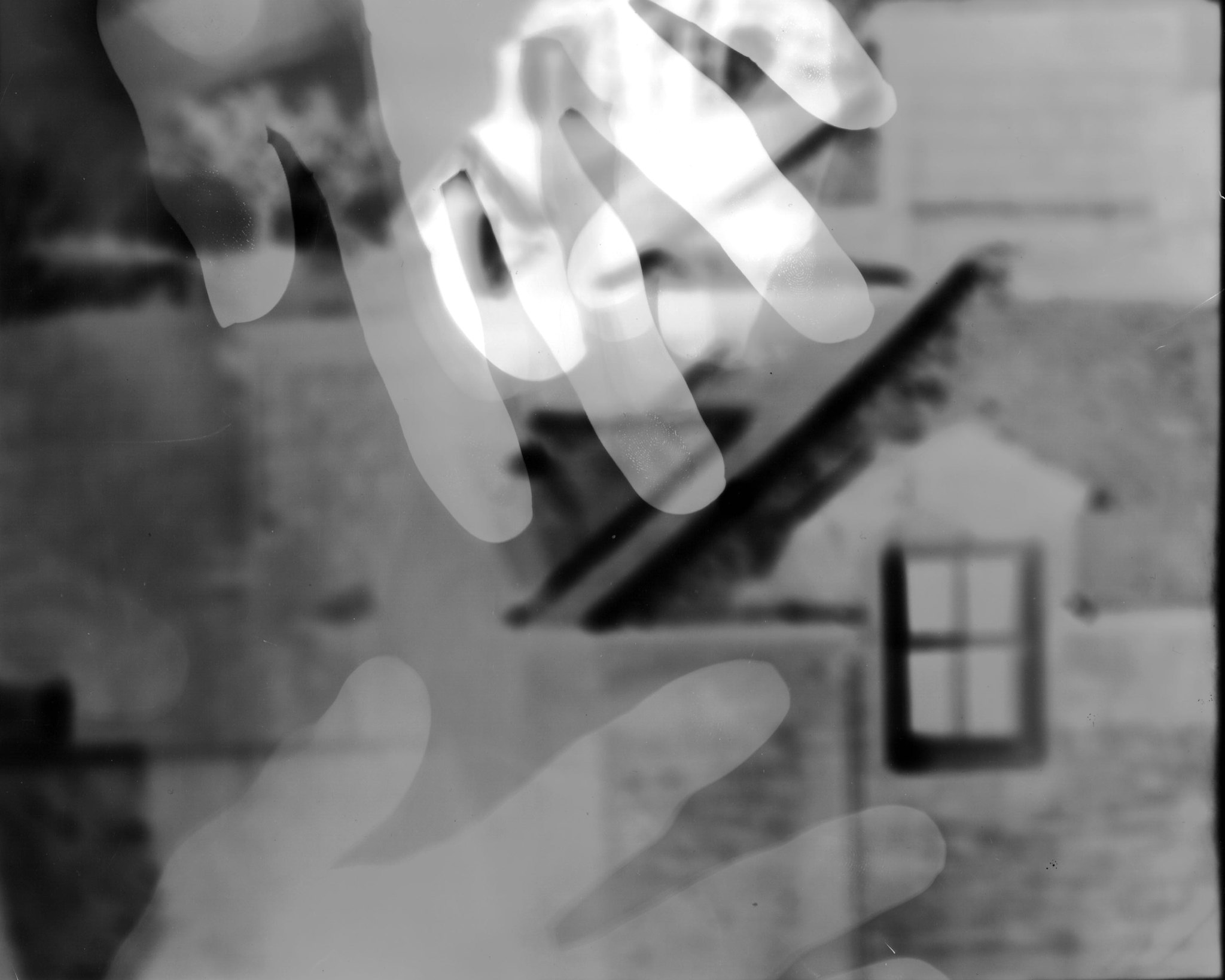
    Alternative photographic photograms and collages for the CD artwork to promote the ambient music of Kontakte.

    Limited edition CD artwork, and booklet.


    Alternative photographic photograms and collages for the CD artwork to promote the ambient music of Kontakte. Limited edition CD artwork, an…

    Source: Russell Moreton Axisweb: Contemporary Art UK Network :

  • Architectures within the photographic process : Intermediary Surfaces of Information and Affect

     AWKWARDNESS.

    I work from awkwardness, by that I mean I don’t arrange things.

    If I stand in front of something instead of arranging it.

    I arrange myself.

    Rem Koolhaas, S,M,L,XL.

    Working Practice

    Possible Strategies/Tools/Agents/Abstractions for “working sites” that occur within a site/field of practice. Interested in the abstraction of information, its collection/registering, its wrapping/framing, and un-wrapping/transmission to inform others, and its relation to embodied knowledge.

    A spatial practice that unavoidably inserts the role of the observer into the language and function of “working situations” and to participate in the analysis of “the objective statement” and its subjectivity around “sites activities”.

    INFORMATION, THE NEW LANGUAGE OF SCIENCE. Baeyer.

    Ockham’s Razor,(economy of expression) Briefer is better. “The philosophical principle that values simpler, briefer explanations over more complex ones.”1 Interesting notion that this could be used a device to “prune the proliferating set of primitive entities, and reduce the number of a priori assumptions that must be fed into a theory.” 2

    Fechner’s law, on the magnitude of a sensation being proportional to the intensity of the stimulus. Today regarded as a historical curiosity after serious departures from it in the 1950s, but it is still emblematic of a profound relation. “If the intensity of the material world is plotted along the horizontal axis, and the response of the human mind is on the vertical, the relation between the two is represented by the logarithmic curve.”3After this illustrative definition Hans Christian von Baeyer posits a speculation and retires with this rather enchanting question to his reader.

    Could this rule provide a clue to the relationship between the objective measure of information, and our subjective perception of it?

    Boltzmann interpretation of entropy. The term entropy invented by the German physicist Rudolf Clausius as a theoretical counterpoint to energy, defined mathematically, entropy is heat divided by temperature. It does however have a peculiar quality not shared with energy. When entropy (heat from a cup of tea) is left out in the ambient and open condition of the surrounding air, the two entropies combine to give an entropic state that will always remain constant or increases, what it cannot do is to become diminished. It displays a one-way set of relational coordinates.

    Entropy can be used as a simple additive quantity as in “combining two identical volumes of gas , and you get twice the mass, twice the energy and twice the entropy of one vessel”.4 What Boltzmanns interpretation of entropy was able to supply was firstly a mechanical model which supports the traditional values of entropy, with something that was entirely new to physics. Entropy now gained a strange subjective quality imparted by the number of ways in which a system or more “specifically the number of rearrangements consistent with the known properties of the system.”5

    Entropy by this interpretation is not an absolute property of a system, but rather it displays a relational component with is wholly subjective to the amount of “information” that is available.

    Boltzmann goes further with these connections, he makes them specific. By “pointing out that since the value of entropy rises from zero , when we know all about a system, to its maximum value when we know least.”6 Hans Christian von Baeyer interprets and theorises this as illustrating that entropy was actually measuring “our ignorance about the details of the motions of the molecules of a system,”7 Which can be interpreted and appropriated to mean that entropy can register our lack of information about a system through the possibility and probability of what occurs and what might not occur in that system.

    This intersection of the “relational” both empirical and subjective is an interesting site in which to stage a per formative element with empirical phenomena. This offers up to the “work site” a duality and a paradoxical sense of resonance.

    In much the same way in which Democritus understood that all empirical evidence found in science is “collected” through and “mediated” by the senses, “working sites” could help to usher-in this gesture of analysis. This gesture of “sense experiments” creates and affirms and gives insights into our relational reality.

    “We are all observers, equipped with both senses and intellects and whilst trying to understand the universe we are trying to understand man. We work from a theoretical objective (not absolute) reality from which we proceed to an understanding of the human senses and its consciousness.”7 The work is in-effect using the notion of the “logarithmic curve” of Fechners law as the route of experiences encountered by interlocutory aspects of the “guest” as they are registered by the “axis’s” of the architectural installation and its laboratory like situation.

    Strangely and with some irony as in all scientific theories and break-throughs we inevitable end up learning more and simultaneously knowing less. This duality which contains, a theoretical state of reflection with its exactitudes and phenomena’s held captive on one hand; whilst reflecting our own “un-captiveness” (or perhaps we are captive through un-captiveness) our being constantly temporal and momentary with all relations having to be applied/registered through a human subjectivity.

    This interrogative compound of the theoretical and the temporal sensuality of being, of becoming relational to self/other/others and its/their placement in worlds forms the main-spring of my practice.

    We live in worlds that are in effect part of a “participatory universe” according to John Wheeler(dean of American theoretical physicists).In worlds in which “the observer cannot be redacted out of the picture”.8As such the observer must therefore set-up some sort of apparatus were the subjectivity of its information also quantifies the effect of the observers presence and perspective. Unfortunately the choice of apparatus, even if freely made will partially determine the possible answers to the question at hand. The apparatus fundamentally makes things “knowable” through its ability to formulate a measurement (in the world of things) in the context/inquiry of a particular question.

    What if this apparatus which gives measurement was situated not to give evidence to a context of questioning criteria, but was allowed to record/register without relevance to any specific question or questions, but just to record a empirical condition or occurrences, perhaps a sensor more than an actual apparatus, something that doesn’t produce information, which is already already positing a value, a recognition of a question. If the abstractive data information from this sensor was “without determination” other mechanics could be “framed up” so as to allow a relational space frame to render-up a temporal subjective perspective and hence give a relational enactment of being.

    Being in the atomic perspective of the universe.

    1 Hans Christian von Baeyer, Information, The New Language of Science (London: Weidenfeld &Nicolson, 2003) page 17.

    2  Ibid., Page 40.

    3  Ibid., Page 85

    4  Ibid., page 96

    5  Ibid., page 97

    6  Ibid.

    7  Ibid.

    8  Ibid., page 13

    Working Spaces/Sites of Inquiry and Dialogue. Canterbury 2010

    Mechanisms Of  Seeing/Architectures and Images

    Perception is in the “condition” of an interruption.

    Rehearsal is the creative part of any performance.

    Interested in the speculative nature of work-sites that contain a narrative intervention via a device that registers and records the documentary and its rehearsal.

    Work as revealed into a final sequence of superimposures on a surface created from the collective transparency of the text.

    Thresholds that reveal the interspace between the Human and its condition/environment.

    MAKING SPACES PARTIAL to the material flows and currents of sensory awareness in which IMAGES and OBJECTS reciprocally take shape/meaning.

    The Poetics of Space : The house, from cellar to garret.

    The significance of the hut.

    “He will revive the primitivity and the specificity of the fears. In our civilization, which has the same light everywhere, and puts electricity in its cellars, we no longer go to the cellar carrying a candle.

    But the unconscious cannot be civilized. It takes a candle when it goes to the cellar.”

    Gaston Bachelard.

    TRANSPARENCY AND THE DIALECTICAL IMAGE AS AN ARCHITECTURAL SURFACE.

    A “PLAY” CONSOLIDATED INTO BOTH SURFACE AND PROJECTED FORM.

    Temporal issues in and around activities of “SITE” and its Performativity/drama of encounter and residency.

    Notes from introduction/Allegory, Montage, Dialectical Image.

    Between ART and ARCHITECTURE. Jane Rendell.

    A way of thinking about temporal issues of SITE/Situation and event.

    VISUAL

    MATERIAL

    SPATIAL REGISTERS

    Allegories are, in the realm of thoughts what ruins are in the realm of things. Benjamin on the origin of German Tragic Drama.

    DRAMAS- sadness at the transience of life, represented as nature petrified in the form of fragments of death, and as civilization disintegrating as ruins of classical monuments and buildings.

    ALLEGORIES OF THE HUMAN CONDITION RUIN its relation to TIME

    FRAGMENT as RUIN and on melancholia as an attitude of retrospective contemplation.

    DIALECTICS AT A STANDSTILL, a moment where the past is recognized in the present as a ruin that was once desired, allowing Allegory to be “understood” felt as a contemplative calm/equilibrium in the becoming and wrapping nowness of the  self/situation.

    DIALECTICAL THINKING involves the clarification of ideas through DISCUSSION/CONTRADICTION.

    WHAT REMAINS AFTER THE PROCESS OF DIALECTICAL THINKING? An initial THESIS IS OPPOSED by an antithesis then RESOLVED through a SYNTHESIS of the two terms, which can in turn become a NEW THESIS.

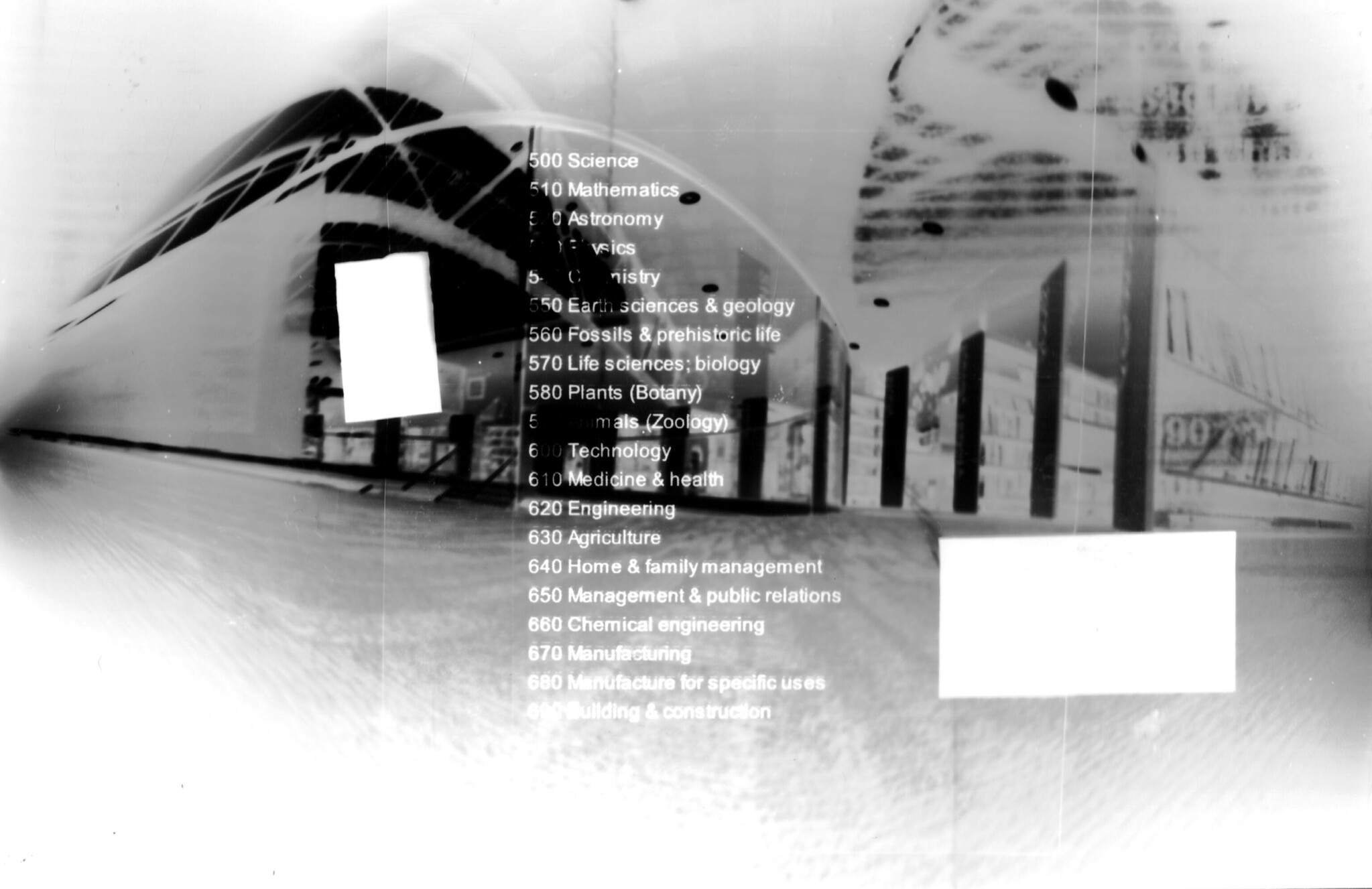
    Proposal to use pinhole camera to capture/explore threshold space of image/architecture/environment

    An architectural darkness is a silent solid, but light gives texture to its stillness

    The camera obscura’s darken room becomes a stage and a cinema; a drawing black boarded room for making creative reciprocal social practices.

    Draft Proposal/itinerary/Layout for “Forum Presentation UCA”

    Move assembled group from lecture room to studio space to start presentation as a situation in which to arrange oneself, the group, the fieldwork and research.

    Work Experience/early art works and influences; note any traits that have remained faithful to ones formative years.

    Closer analysis on the nature of SITE and its performative role in the Practice. Material Soundings, Drawing and Photography, Sculpture and installation in-situ work.

    Dialogues and Proximities in performative of making space recorded in-situ as a surface/membrane of the architectural structure.

    Photographic surface of relational gestures becoming consolidated and simultaneously projected into what is now an altered reality. The architectural “text” remains as a collaborative custodian to the light entering the building.

    Transparency as a “custodian value” and interface for the interaction of encounters and farewells.

    Requiem of surface inscriptions that allows light to overwrite its projection in a visionary present.

    Photographic surface of events, a visual entropy resolved as a history of consolidated exactitudes/enactments.

    The photographic surface shows that which no longer exists, it concretizes contingences on offer into an image of irreversibility.

    Double Occupancy , Dwelling with the critique and its realization of an uncovering event, criticism collides with and into the work. Deleuze, Baroque house (65).

    DRAWING INTO THE READING ROOM

    FLEDGLING ARCHITECTURE IN THE MAKING ISOTROPIC SPACE

    SOCIALIZED SOCIABLE

    INTERIOR ARCHITECTURE through a sensitive adaptation of place studies, and using materials and built spaces to form the container/scaffold/stage for an activity not its contents. Working spaces that can be given a multiplicity of tasks that can accommodate the humanities and the life sciences.

    Architecture and landscape, together with the localised weather, and the sheltering buildings all contribute to finding the mental spaces for the retreat.

    APPARATUSES DURATIONS EFFECTS

    THINGS-MAKING-PEOPLE-IN THE WORLD

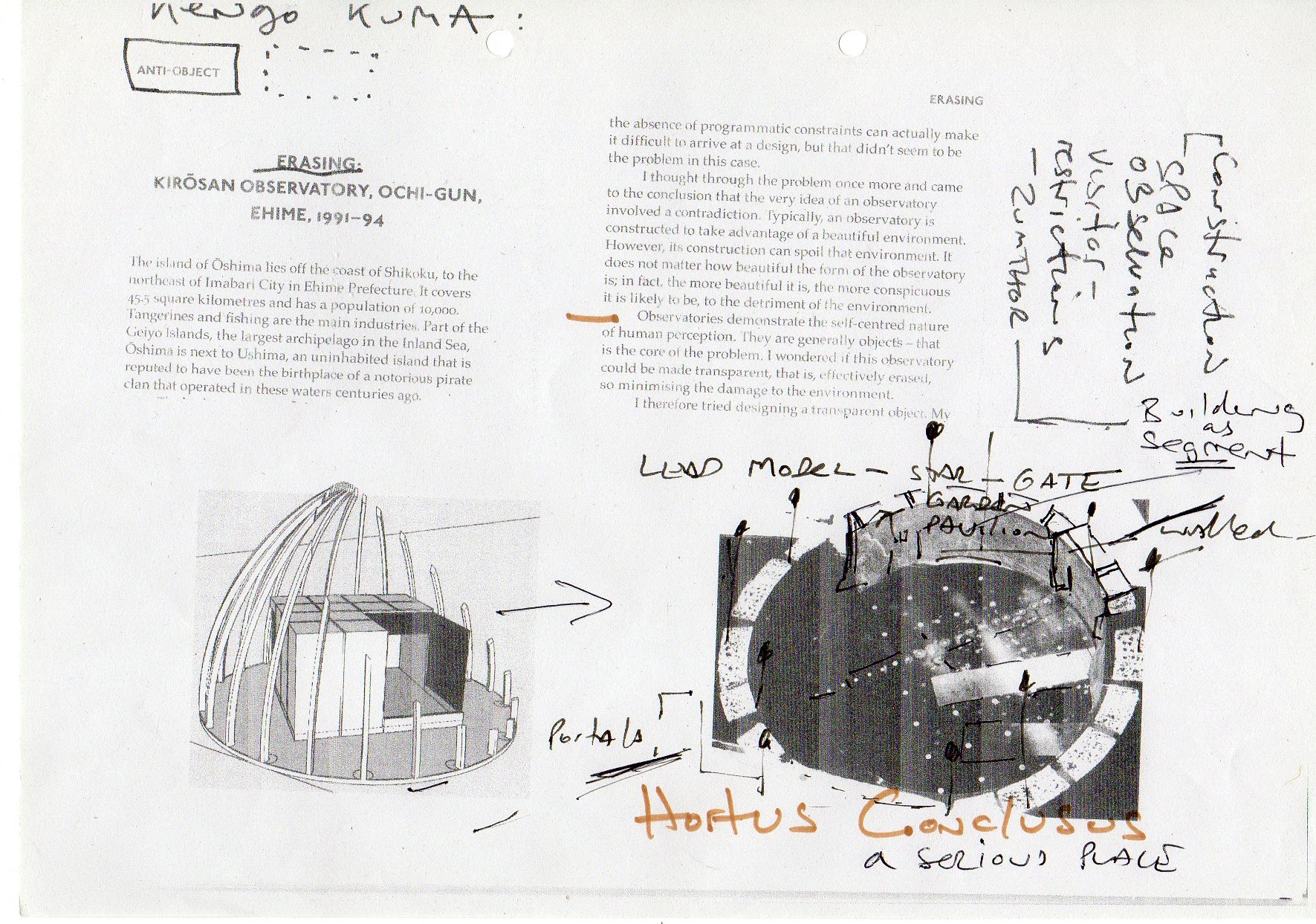
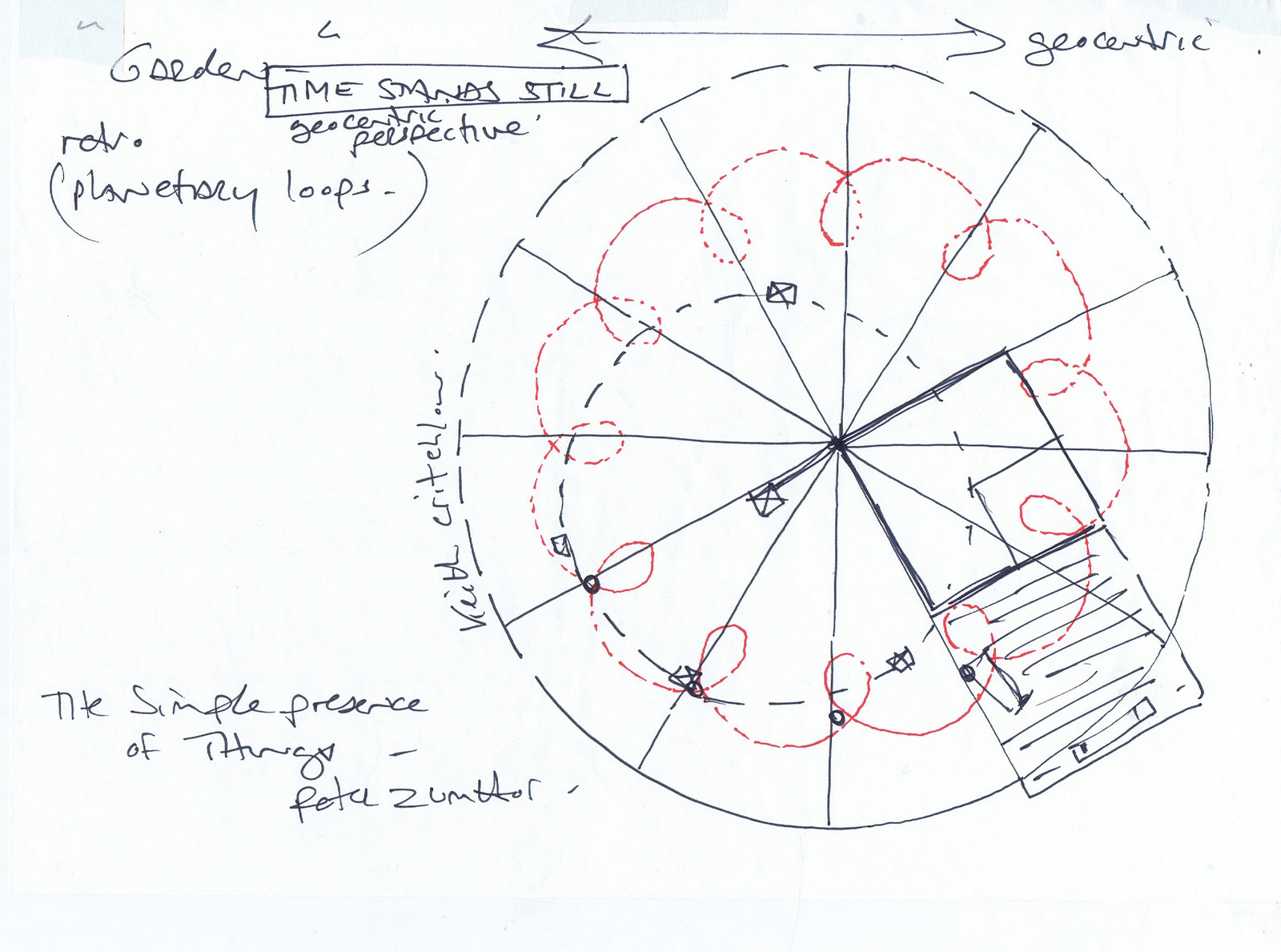
    Heightening the experiential experiences of place. Ramps, stairs and passages as devices (movable) to examine and to create immediate architectural interventions. Notion of the observatory as being part built/part still under development through drawing, (monuments as instruments/astronomical, Japor, India).


    AWKWARDNESS.  I work from awkwardness, by that I mean I don’t arrange things.  If I stand in front of something instead of arranging it.  I…

    Source: Architectures within the photographic process : Intermediary Surfaces of Information and Affect

  • Immaterial Architecture : Collage/Enumeration of Visual Information

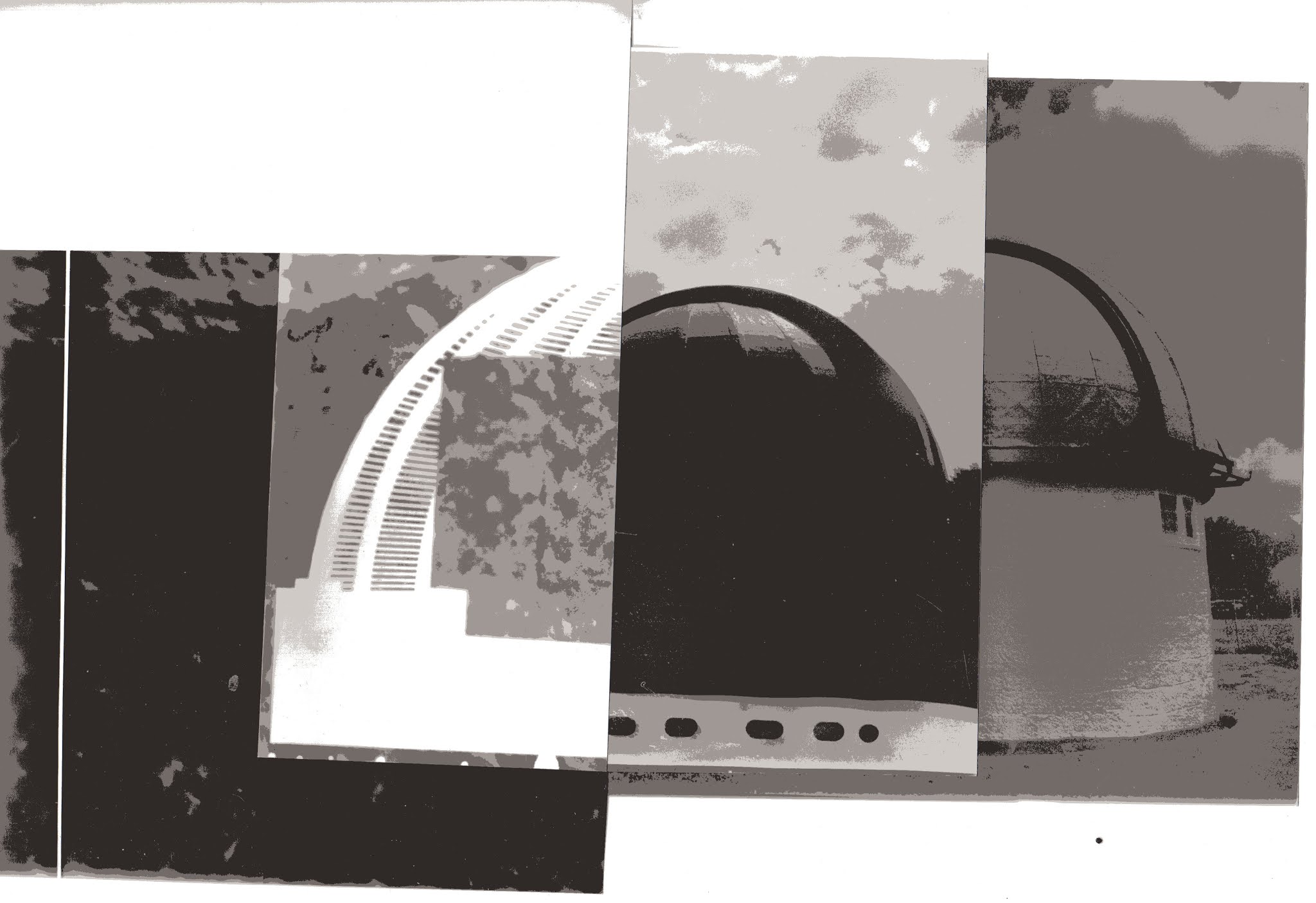
    Immaterial Architecture : The Glass Observatory

    Site Drawing : Speculative Fields/Spatial Practices
    Site Writing/Place Making
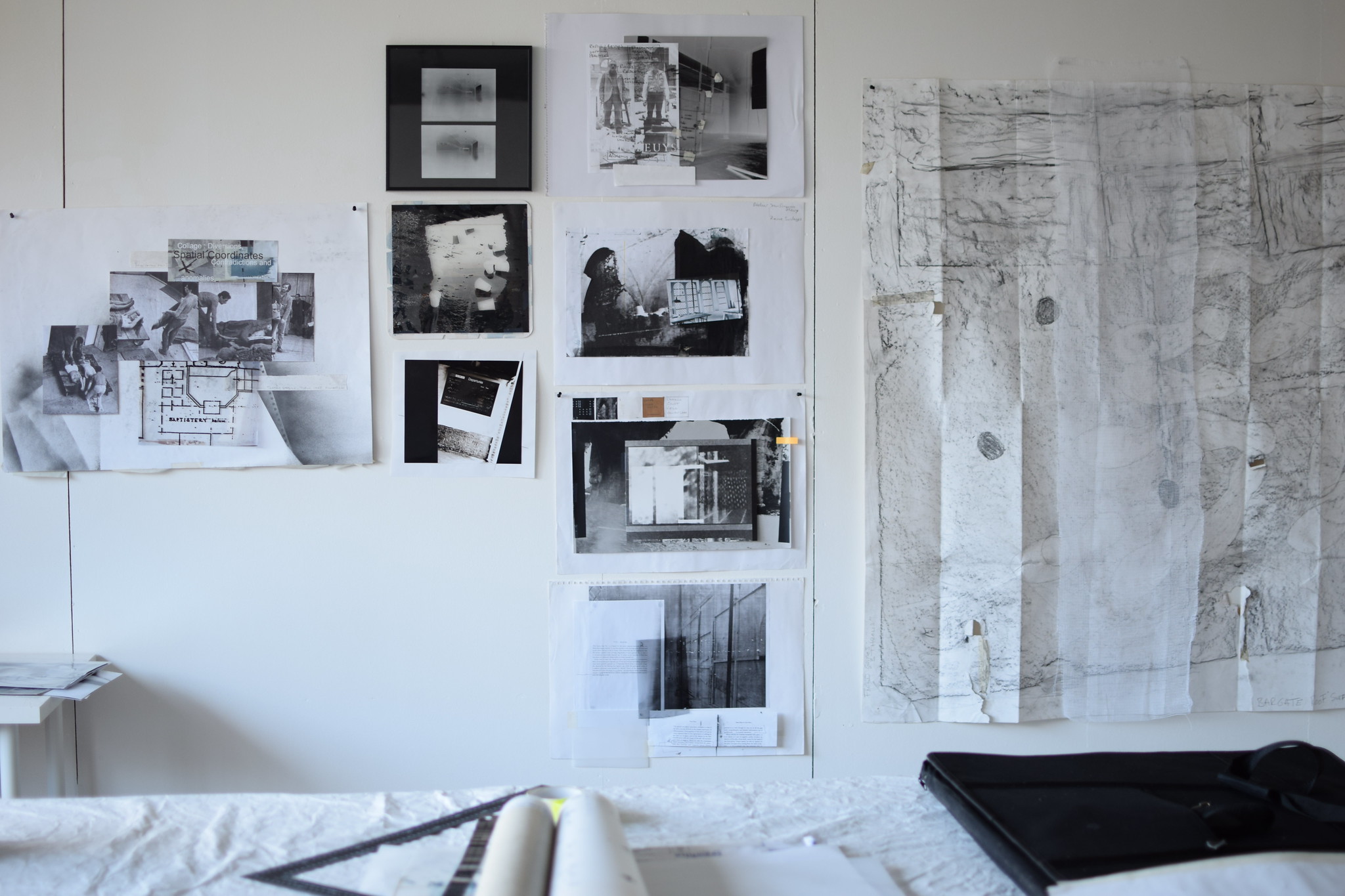
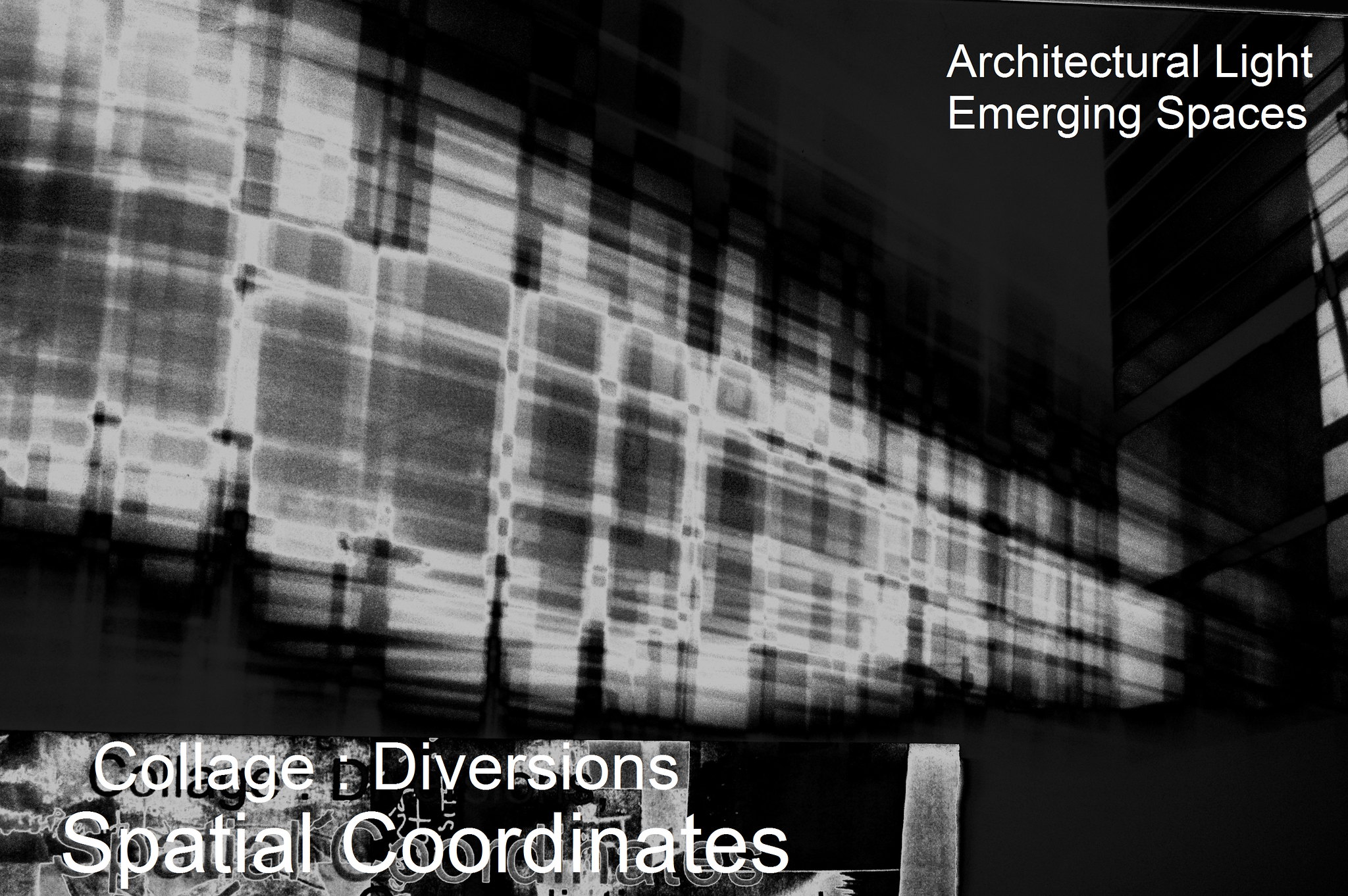
    Collage/Enumeration of photographic elements

    Antique Glass Sample : Seedy Handblown
    Photograph of light, surface/shadow and projection

    Reading Room
    Research Collage


    Immaterial Architecture : The Glass Observatory Site Drawing : Speculative Fields/Spatial Practices Site Writing/Place Making Collage/E…

    Source: Immaterial Architecture : Collage/Enumeration of Visual Information

  • Performative Documentation : Time as both a structure and an event

    DID SOMEONE SAY PARTICIPATE? AN ATLAS OF SPATIAL PRACTICE.

    Edited by Markus Miessen and Shumon Basar

    A few notes relating to thoughts and critical theory around which I am beginning to formulate about my practice and its application as a site from which to “stage a performative discourse of exchange”. My Spatial Practice becoming more like a curatorial trans-disciplinary producer of  “on-site” exchanges and relations.

    PREFACE

    PARTICIPATION LASTS FOREVER Hans Ulrich Obrist

    The Museum as oscillating between object and process; the “ elastic museum ” as being flexible  allowing  displays  to  be  placed  within  an  adaptable  building.  Alexander  Dorner,

    Ways Beyond Art.

    Hans Ulrich Obrist notes Dorners critical remark ’’the museum as a bridge built between artists and a variety of scientific disciplines”. This observation has been taken-up by contemporary curatorial practice with the inclusion of architects, philosophers, political thinkers/theorists and visual artists into the production of exhibitions and events. The contemporary exhibition can be viewed as part of an on-going and indeed a “complex dynamic learning system” quotes Obrist.

    One should renounce the closed, paralysing homogeneity of the traditional exhibition master plan. Artworks would be allowed to extend tentacles to other works- and other fields of knowledge. The curator must not stand in the way of such growth. Hans Ulrich Obrist.

    Working Spaces, Sites of Inquiry and Dialogue, Spatial Practices, Canterbury 2009

    OPEN TEXTS.

    Allow readers to have multiple interpretations, they allow for the possibility of  “determinations”.

    Relationality

    Gaps between connecting and disconnecting.

    Notion that categories hide and weaken our perceptions of reality.

    Fluctuating networks of existential events.

    Emergent state of contingences that create materials for relationality.

    For me this curatorial setting could be an interesting set of relations that might be rehearsed and re-presented within a “site” ( an intervention and interruption into our notion of place and placed relations).The notion that one could become an active agent and on-site translator amongst this “ trans- disciplinarily” would be worth investigating . The opportunity to be in the position to have dialogue with other practitioners and to negotiate and expand that dialogue between the different realities and fields made apparent by “site“ could produce new relational meanings.

    My particular interest is with the production of ephemeral values and situations, free spaces and sites created from the interruption of place. Photography and installation have been used as an intervention into place. The artists Jane and Louise Wilson have successfully used it to present work around the psychology of architectural spaces. This value of psychology tied up with our psychological reality created by the motion of our own emotions as we project ourselves into space, could be presented by some analogy (working device) to theories, or rather theorising with the camera obscura.

    Photographic Laboratory, roving camera and apparatuses during the arts event 10 Days in The Laundry, Winchester.

    Performative work using the simple enchantment of the pinhole camera to question and explore the extrusive nature of time, performativity and site.

    Proposed Title, Molecular Sieve/Photographic Apparatus/Theorising Object

    Currently using a spatial practice to investigate issues around architectural influences on the placed self. Utilising the mobility and awkwardness of an appropriated object as an apparatus to both theorise and register spatial relations/phenomena. interested in using the values and traits of transparency and superimposures to describe the dimensionality of dwelling in place, how might these “on-site” recordings become registered into the possibility of a surface membrane of material metaphors of memory?

    A performative documentation that makes visible the extrusive nature of time as it accumulates and is deposited on a photographic surface.

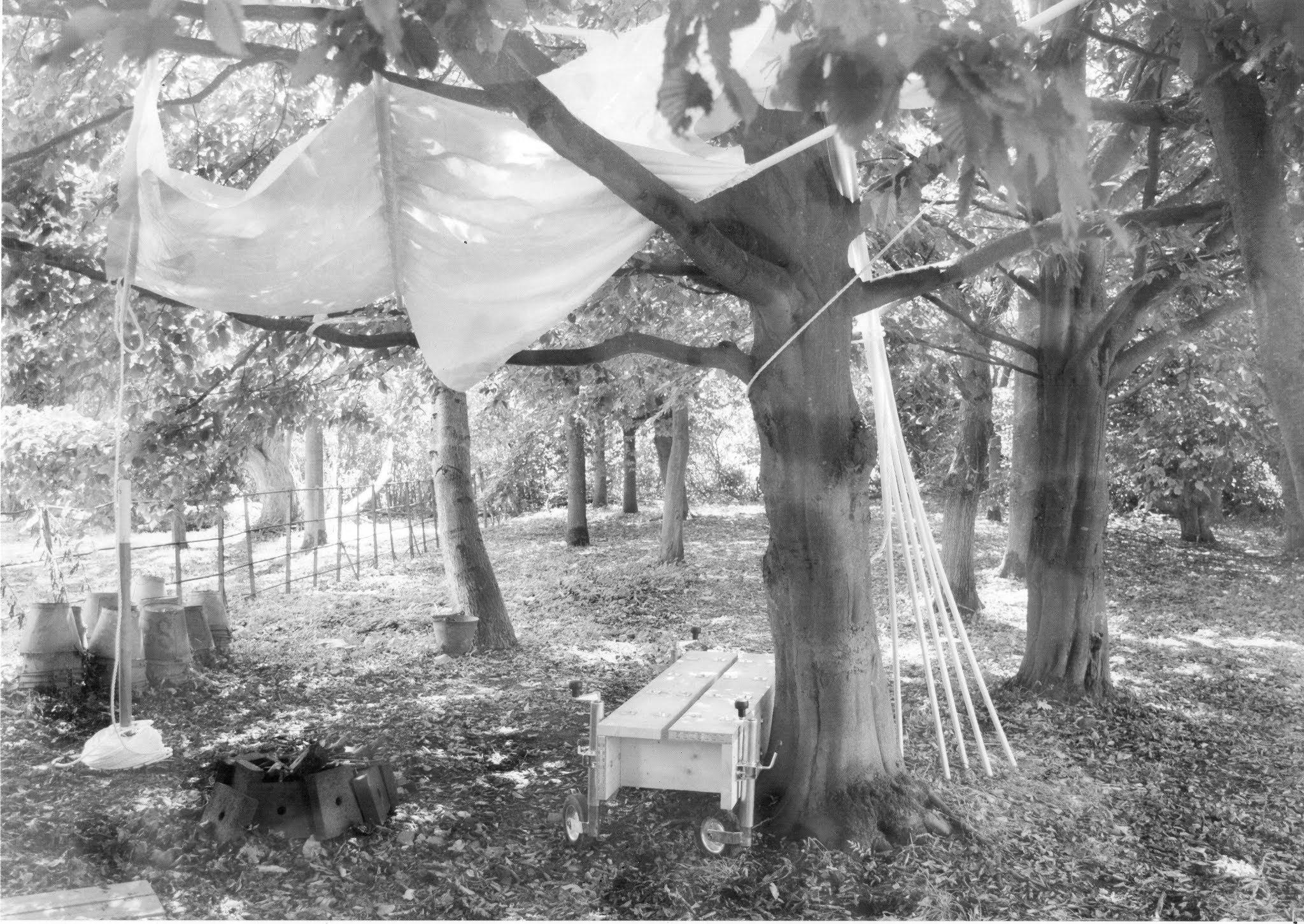
    This performative investigation utilises a large pinhole chamber which is allowed mobility through the attachment of castors to its base and the use of a sack-barrow for undulating terrain. This apparatus produces through its very inclusion into the “space” a theoretical device centred around and relational to spatial values and influences. My aim is to utilise this device as a means of registering “worksite” both in the duration of the event and in its pre-per formative state. The mobility of this research device could be used to investigate, register and illustrate a constantly changing set of dynamics throughout the site and its event. The use of perhaps adjacent wall surfaces or even a “sandwich-board” could render a tangible re-presentation of spatial information for the visitor. Darkroom facilities could be arranged on-site to complement this work as a “working site” functioning within the orbits of both the other works and their prospective guests.

    Contextual Issues. Urban Fallow-Sites.

    Brief description about methodologies and goals. Urban Fallow,

    Solentcentre for architecture and design.

    Urban Fallow aims to develop a pragmatic but fluid approach to public access, cultural intervention, use and temporary transformation of urban spaces.

    Urban Fallow is interested in using vacant urban land and spaces. The project is about reanimating these sites through the use of artists, architects, performers and other professionals, all of which have an interest in engaging with the public. This could be undertaken by the use of temporary events and per formative interventions, this would also have an effect on reducing urban blight and help to reinvigorate interest in these sites for potential investment.

    Other longer term legacies might include the provision of longer term public access and cultural use even the possibility of a permanent change of use for a chosen site. To help to deliver an “improved perception and identity of the space for the public together with current user groups and prospective developers.”

    Winchester, Hyde Abbey Laundry.

    A site of approximately 1500 square metres made up of redundant industrial buildings together with a yard. The property is close to Winchester School of Art and the town centre. The Laundry closed in 2007 and has been vacant ever since then. The building in its current state of dis-repair is unsuitable for most purposes. However it is being viewed by creative practitioners from a broad range of practices as potential studio spaces.

    Other Documents,

    List re, Participating artists, actors, writers, musicians and chef.

    Artist Statement/Work Statement as public handouts, made available (resting on apparatus) for visitors. 10 Days at the Laundry, on flickr site with installation images.

    The Apparatus/Device/Research Collage

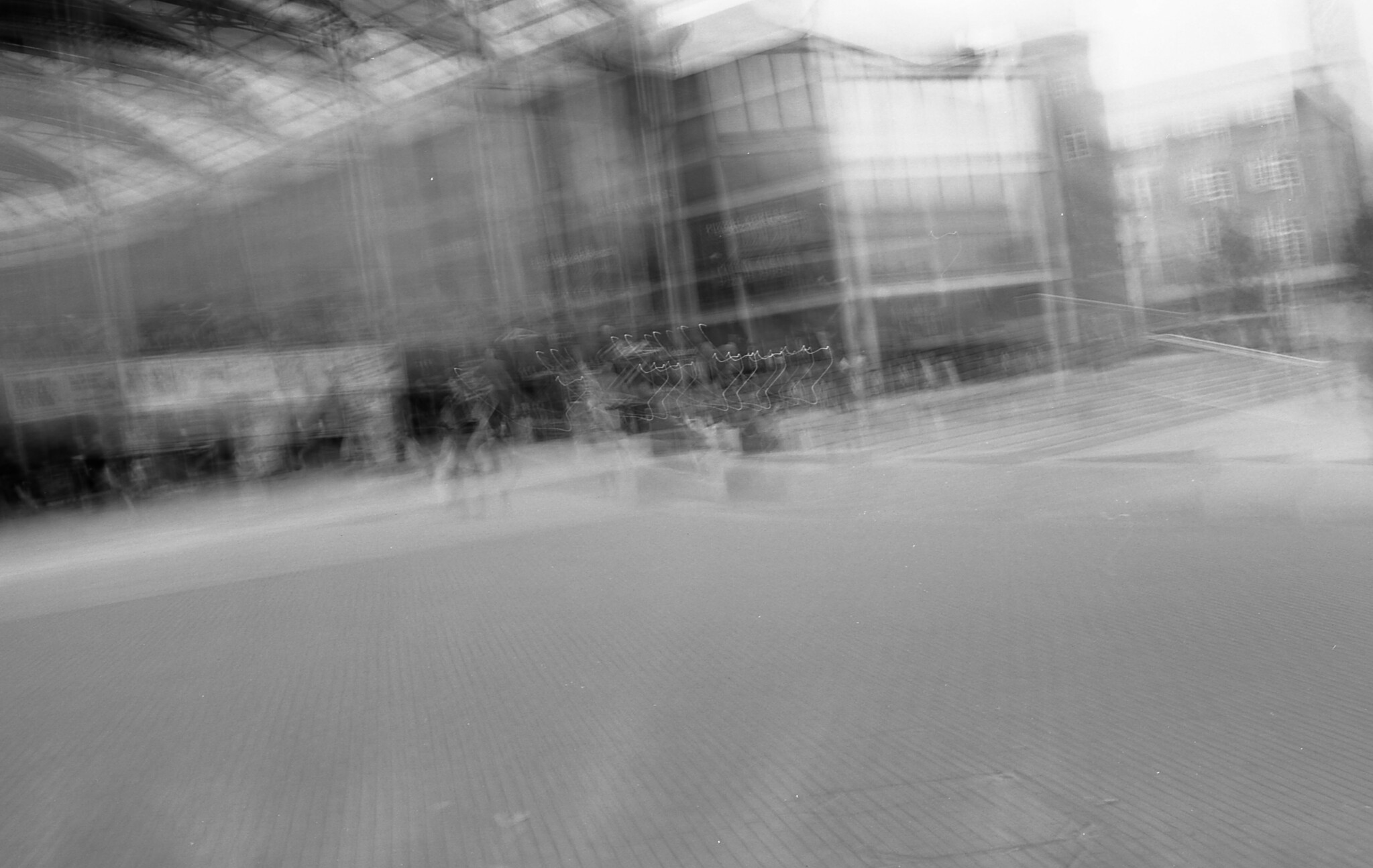
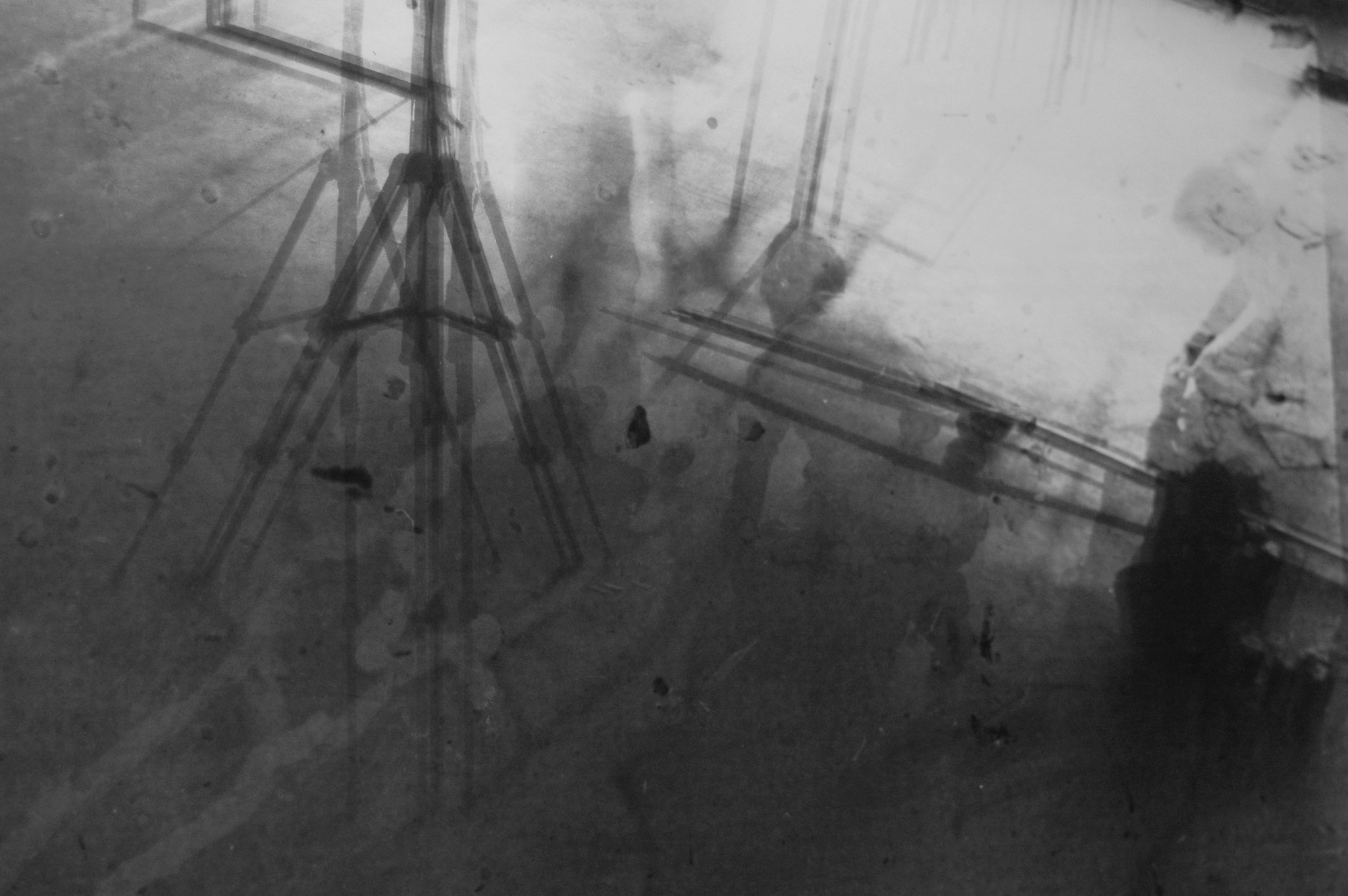
    Time as both a structure and an event, photographic image from a moving apparatus

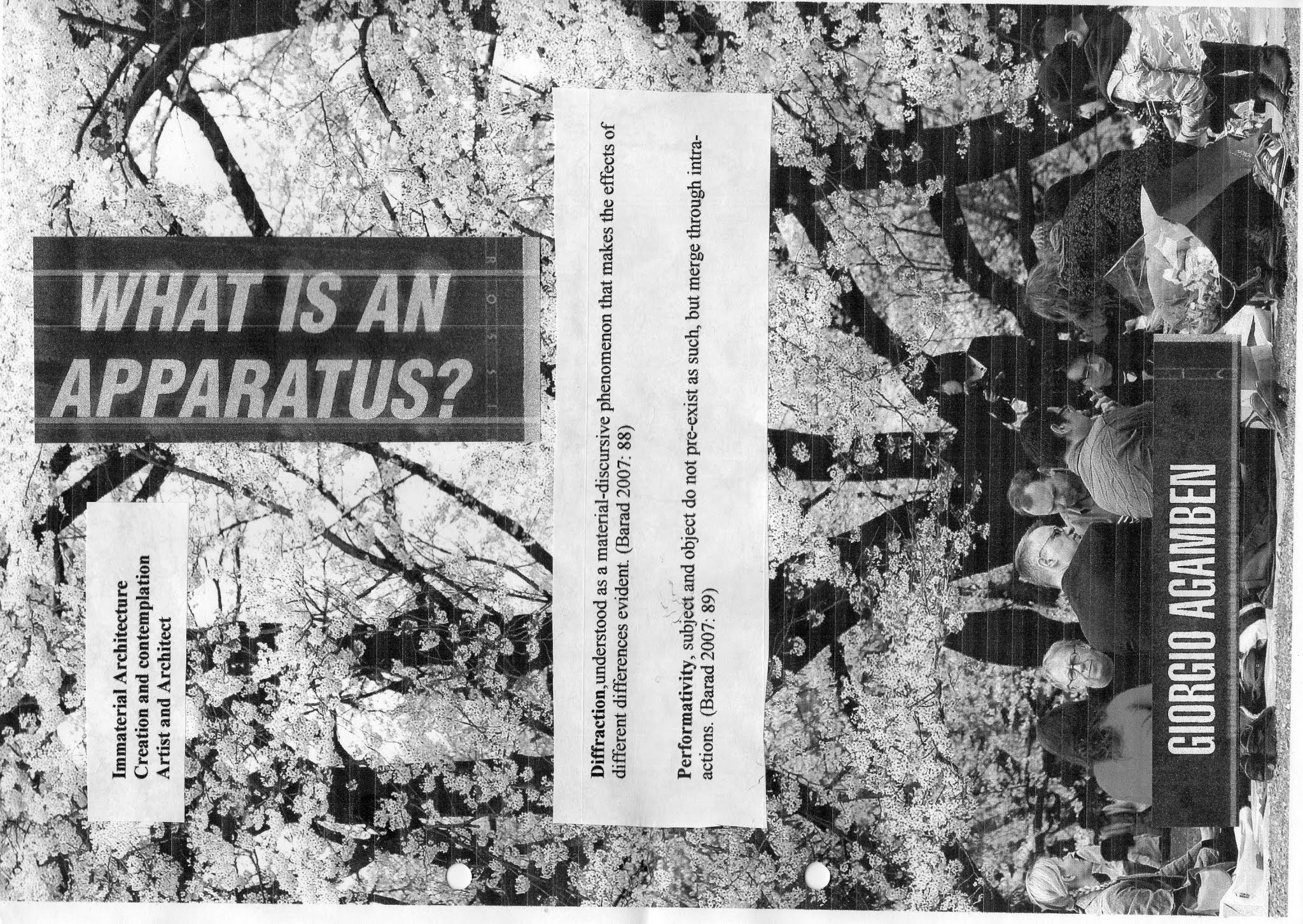
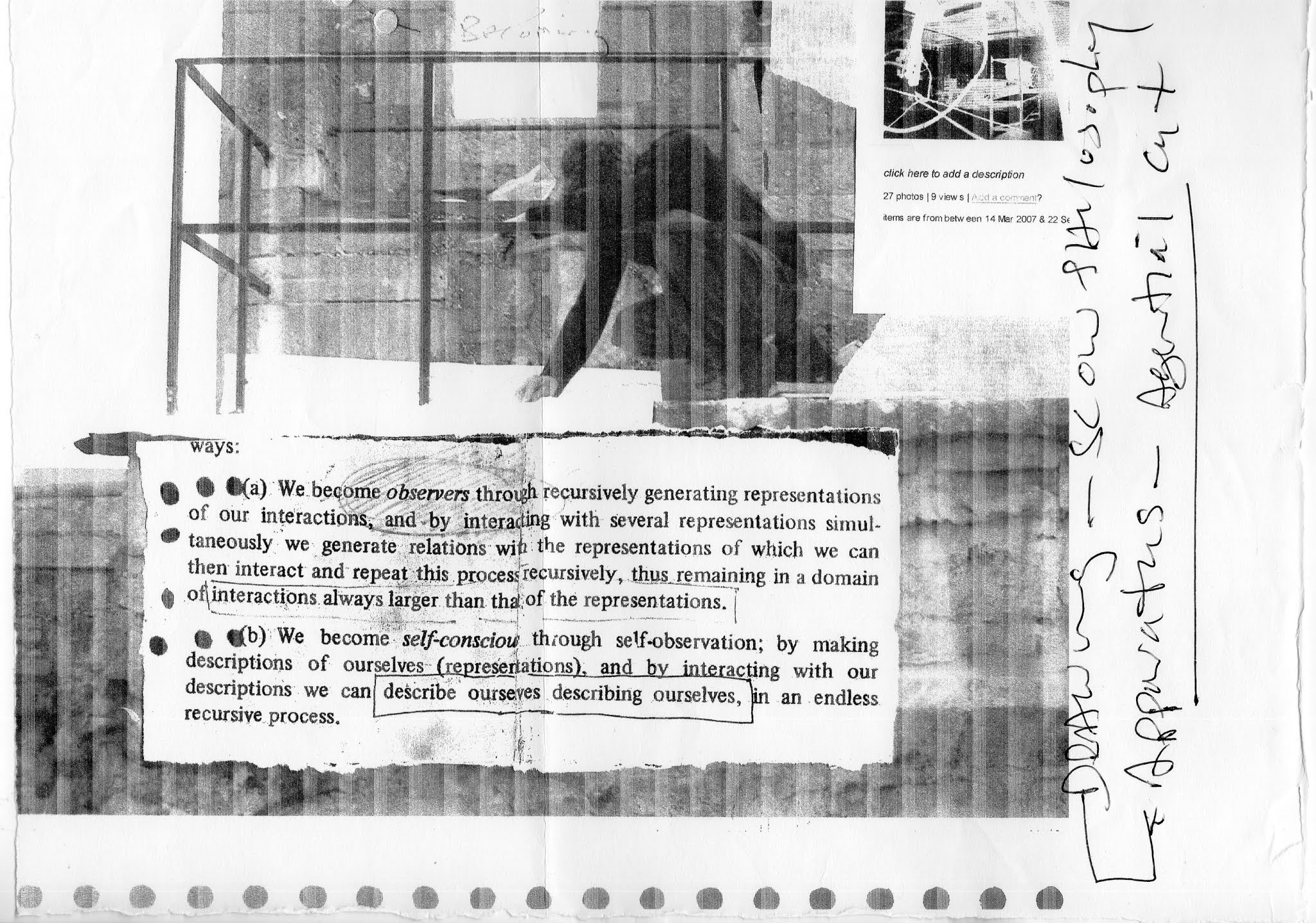
    Brief comment around my use of “apparatuses” researched and questioned through the text “The Apparatus” Vilian Flusser.

    Definitions, An Apparatus would be a thing that lies in wait or in readiness for something, and a preparatus would be a thing that waits patiently for something.

    The photographic apparatus (a camera) lies in wait for photography. A camera is a tool whose intention is to produce photographs. Tools inform the materials, they “work” them.

    This fact/interpretation that tools inform materials has interesting consequences. Flusser states, ’’The object( the thing the tool acts on) acquires an unnatural and improvable form, it becomes cultural. The issue is to keep the definition of “apparatus” open and refrain from referring it as a “tool in the service of photography.”

    Other issues regard the “recording of something” as an image and the “registering of information” about a specific duration or experiment. Further issues of “intension” and “reading for what destination/purpose” will need to be clarified to continue. At this point I began to view the perspective of the “apparatus” as a sort of carrier and container, a sensor for some type of “isotope.” I imagined that the apparatus was just some sort of “litmus paper” something that functioned as a sort of barometer in the proximity of “site relations” the architectural. The sociological and the encountering and relational element of human curiosity. This rather spatialised concept envisaged human subjectivity as a mapping around scientific and sociological phenomena, a geography brought about by the performativity of place, time as both a structure and an event.

    Francis Aly’s, POLITICS OF REHEARSAL

    “While everything Aly’s creates has a simplicity that makes it instantly accessible, his work also offers a complexity that continues to resonate long after it has been seen”. Anne Philbin Directors Forward, Politics of Rehearsal;

    Francis Aly’s work has up to this point emphasized issues of place (Mexico City in particular becoming his adopted home).Aly’s originally trained as an Architect and was practicing as such in Belgium. When he moved to Mexico City in the early 1990s where he began to experiment with art which reflected his own inclination to avoid definite conclusions.

    In this sense he was already formulating the notion of a “rehearsal for a presentation that may or not be completed”.1 The use of interventional tactics and strategies as a result of a “reaction” to Mexico City and also a way of positioning himself. It is interesting that Aly’s continues to make fresh interventions into apparently completed works.

    Aly’s describes his work in these terms ”a sort of discursive argument composed of episodes, metaphors or parables, staging the experience of time in Latin America”.2

    The Politics of Rehearsal deals with issues around the concepts of rehearsal and repetition, with its “open ended” process which allows specific details to be retained whilst also allow the possibility of others to be reviewed/worked over and possibly changed. This creates an “open site” prescribed around “key” or interlocutory relations that can then be literally presented as being a “presentation” of a process rehearsing for its re-presentation.

    This sense of an evolutionary on-going situation, a working site that permit’s the interventions of other activities that pass through and beyond the register of its own narrative space.

    What interests me is the notions/propositions of “the rehearsal” as a non-consecutive chronological structure, which does not have to render a specific conclusion, it only has to announce that it is over/finished or ended. It can even announce/negate that their will be “no-rehearsal” thereby paradoxically marking its proposal and place but then deigning its presence in place.

    Rehearsal also offers up its space/time relation for performers to re-start, stop and begin again, it allows a multiplicity of spatial relations to be configured in segmented intervals/time slots under a durational influence which is driven by the purpose and intension of a proposal to perform. Aly”s has also utilised the use of the chronicle.

    The proposal of “to Chronicle” to record occurrences, a chronicle is always in the end a record of a series of consecutive events, of which there might be no final resolution, but what a chronicle sets out unequivocally and without adjusting the flow of events is to give a precise record/witness that one thing exists prior to the recording of the next.

    This particularity is mirrored in some respects by the duration and entropic nature of the photographic surface, what it has in common with the nature of being able to chronicle is that of “times arrow” a precise directional flow, mediated by the amount of light,(too little, no visible traces remain, too much, and what had been recorded is over-written to the point of total obliteration through too much information) The surface literal becomes spent, used up by agencies and proportions of the light based durations. The chronicle remains readable because it keeps-up this the unfolding of events, whilst the photographic surface is rendered un-readable unless it bracketed into individual but sequential episodes.

    The notion of episodes and chronicles both require a pre-determination from the outset to create their form, they in effect act by framing segments of “what is occurring” into a prescribed duration or form.

    The photographic surface renders consecutive occurrences via a transposition of transparency which produces a superimposure as a direct unequivocal evidence of something having existed before something else.

    This marking out, in scripting, overlaying of occurrences as factual specific/spatial realities become relational to themselves through the negative/positive aspect of their physicality.

    What the photographic surface lacks is a definitive time-line a frame of reference in proximity to the information which has become abstractively distant.

    The relations of a material or form that can register consecutive occurrences and still register the totality of an event as a surface, a transparency of episodes.

    1 Russell Ferguson, Politics of Rehearsal, (Los Angeles: Hammer Museum, 2008)

    2 Interview with Russell Ferguson.


    DID SOMEONE SAY PARTICIPATE? AN ATLAS OF SPATIAL PRACTICE. Edited by Markus Miessen and Shumon Basar A few notes relating to thoughts and cr…

    Source: Performative Documentation : Time as both a structure and an event

  • Humanities : Spatial Relations/The Laboratory of Anthropology, Archaeology, Art and Architecture

    SENSORIUM  AND STILLNESS, MOVEMENT AND MIRROR

    A MIRROR ON WHAT IT IS TO BE HUMAN

    VISITORS : A film by Godfrey Reggio

    We have art so that we may not perish by the truth. Friedrich Nietzsche

    MEANING IN THE FORM OF THE FILM

    THE RECIPROCAL GAZE :

    The screen is gazing at us; we are framed by our own looking. A direct relationship (what the image tells me); a singularity held by the vivacity of the image, through the activity of perception and introspection.

    THE SPECTATOR MAKES THE JOURNEY into the PREMORDIAL IMAGINATION OF THE CAMERA.

    CONCRETE PHOTOGRAPHY, PHOTOGRAMS, IMPRESSIONS, TRACES

    THE SENSATE AND THE CONCEPTUAL

    PAINTING, Robert Mangold.

    TRANSFORMATION AND PROPHECY

    BEUYS-KLEIN-ROTHKO

    ARCHITECTURAL LEXICON OF STRUCTURES AND SYMBOLS


    GESALT,

    GRISAILLE,

    LEITMOTIF,

    MATRIX,

    FORMAL PATTERN,

     SURFACE

     John Wood, The Virtual Embodied, (London: Routledge, 1998)

    The Virtual Embodied, “ explores the ideas of embodiment, knowledge and space to address fundamental questions about technology and human presence,” these parameters are being investigated and researched in my creative practice.

    Embodied knowledge and virtual space.

    Physical, Psychological and Virtual Realities, Max Velmans.

    List of “typical beliefs about physical, psychological and virtual realities”. PHYSICAL REALITY

    Extended in space-in the world

    Exists independently of the observer

    Has tangible properties, e.g. Mass and solidity

    Descartes s proposed our classical view of the mind/body split into res extensa ( material that extends in space) and res cogitans (thinking material). We commonly associate the physical world as having both extension and location in space.

    PSYCHOLOGICAL REALITY

    Non-extended in space-in the mind

    Existence depends on the observer

    Is relatively intangible and insubstantial

    Psychological realities do not have spatial dimensions, and their location is only metaphorically “ in the mind”. It is crucial to note that psychological realities are only real for a given observer. Velmans notes” these intuitions are confirmed by the fact that physical realities have tangible, substantial properties such as mass, solidity and weight. Whilst psychological properties are, by comparison, intangible and insubstantial”.

    VIRTUAL REALITY

    Appears to have extension in space, but has no actual extension Appears to be in the world, but is actually in the mind

    Existence depends on the interaction of the observer with VR equipment

    Can appear to have tangible properties ( with suitable equipment) but does not have such properties.

    Virtual realities via appropriate headsets which give “feedback” from bodily movements and visual displays, conspire to give the appearance of a virtual world extended into our physical space, but they have no actual 3D physical extension. Interestingly such worlds are physical in the fact that they rely on the physical existence and placement of equipment, virtual realities seek to create apparent changes in “self location” which do not correspond with actual changes in location. New developments can now give a physical realm into the virtual by the use of body interfaces that can restrict the movement of the body to correspond to the visual perception of a virtual identity.

    Fragment from material resonances project, spatial practice research, CSA.

    THE ACTIVITY OF PERCEPTION

    Perception is in the “condition” of an interruption.

    Rehearsal is the creative part of any performance.

    Humanities : Spatial Relations

    Interested in the speculative nature of work-sites that contain a narrative intervention via a device that registers and records the documentary and its rehearsal.

    Work as revealed into a final sequence of superimposures on a surface created from the collective transparency of the text.

    Thresholds that reveal the interspace between the Human and its condition/environment.

    Photographic surface of events, a visual entropy resolved as a history of consolidated exactitudes/enactments.

    The photographic surface shows that which no longer exists, it concretizes contingences on offer into an image of irreversibility.

    Double Occupancy , Dwelling with the critique and its realization of an uncovering event, criticism collides with and into the work. Deleuze, Baroque house (65).

    Presenting both a virtual walk through “text” ,using the transparency of “text” both as a literal transparency and its phenomenal “physicality” as applied to surface and structures within the site. Using the body of the visitor to enable

    enactments/sensitivities to be derived from the site encounter. Enactments triggered by the singularity of an individuals engagement with walking amongst the working site. The final experience/superimpose remains uniquely a product of the visitor. This site driven explorative experience undertaken by both a passitivity and a curiosity on the part of “the guest” creates a self /space/time/ place relation, a localised intimacy that promotes an encapsulated sense of enchantment/wisdom.

    The entirety of the “text” is stored latent in the interlocutor as they investigate the physicality of material relationships and spatial significations. In this respect the interlocutor defines his/her “traits” through a recognition and curiosity with their own body as it weaves a narrative of navigation through the experience of “site”. This theorizing by the body of its encounters, material and spatial, alone or within the proximities of others interests me as a “trace” of the encountering space through the human agent. This working notion and its site begin to posit the idea of an

    “interspace” between the human and its environment. This theoretical and abstracted site could be utilized to research interventions and their effects, to attempt to register the spatial relations/traits of contemporary society. How might this material and its spatial census (human/ site temporalities) be gathered, registered and finally presented.

    10 days, Observational material from site, They sense this articulating moment, their consolation becomes recursively and inexplicably consolidated with others unfamiliar undistinguishable, they are rendered into the resultant homogeneity of a surface relation bonded by specifics of space and time.

    10 Days, Observational/Reflection, Journal notes Their erasure by the transits of change and chance of others over-writing themselves to reveal the transparency of temporalities as registered by the photographic duration of capture.

    What remains is an exactitude of “what occurred” in a form/manner unknowable to those present, by dwelling in this visual interface of the photographic surface, things become inexplicably and irreversibly compounded with a time stretched and stilled.

    Photography has the unusual attributes to be able to act as a particle accelerator on the human subject, it can present material assessed from numerous durational encounters with time. It can render a seduction and conversely an invisibility.

    Spatial Practice is in effect a laboratory (of the self and worlds) from which I define and register and relate material tested under those conditions. This makes me part of the process and part of the results, part also of the problem of the investigation.

    Reflections on the use of “the Negative” expedient use of material creates this inherent property, interesting analogy with human process of vision, in as much as the after-image rendered by the eye is always in the negative. This final image of what was is in effect being erased by the negative/negated. The perspective of the negative reveals more informative relations about the spatial/displacement of the environment in which the “objectivity” is being both immersed and conversely displaced. Like the displacement of a solid form by a liquid of the same displacement, the negative reveals the object displacing/relating in spatial terms. The negative gives proof to our mutual dependency and our forgetting of air as both surface and support.

    In Drawing and Mapping it is tensions between the negative and the positive objectivity of things that helps to define a limit, a definition of form that is both simultaneously relational and indexical. The “Trace” also maintains these properties but interestingly it contains a transparency, a dimensionality that makes it both reflective and confrontational, it remains registered to the present but unable to escape its signification of the past.

    Public Intimacy, Architecture and the Visual Arts. Giuliana Bruno.

    Series of “essays” on the relations between Architecture and The Arts. Bruno notes the critical role in which architecture constitutes and supports a “public intimacy” initiated through both historical references and Contemporary Art. This spatiality of a public constructed space that grants the reception of an intimacy is seen by Bruno as being a “new moving space- a screen of vital cultural memory”. She proposes a view that Architecture is mobilized as a screen/vessel in which to define a frame of memory. Architecture in this sense becomes not just “a matter of space but an art of time.” Interestingly it is in the work of Rebecca Horn that she notes the combination of both the scientific and the artistic. This combination has a resonance with the architectural model and intended purpose of the anatomical theatre. Rebecca Hom and a growing number of contemporary practitioners are actively engaged in creating “works” which use architectonics and situation to create personal and profound experiences, intimacies evolved from public spaces. This new conceptualization of “body space” and its relationship to the production of space is ultimately being absorbed back into Architectural practice, the work of Nigel Coates “Guide to Ecstacity” and Rem Koolhaas use of materials and interventions that challenge our sensory and cultural aesthetics about architecture illustrate issues around the spatialisation of the body and its intimate consumption in the public realm of the senses.

    To Live is to pass from one space to another. Georges Perec.

    Bruno Taut, The New Dwelling, Women as Creator, (Leipzig : Klinkhardt und Biermann, 1924).

    Taut asserts that it is a woman’s way of inhabiting space that creates and modifies architecture, see also Mark Wigley, White walls, Designer dresses: The fashioning of Modern Architecture. (Cambridge: MIT press , 1995)

    I would say that my fiction is set in the visionary present. J G Ballard.

    Underlining the Hostility of the external world, The Autopsy Room/Theatre.

    Victims surrender all that is left of their unique identities, what is left after the basic components are separated, nothing much to claim not even a faint presence of existence. We feel pity and the oblivion patiently waiting for us. J G Ballard on CSI

    Frozen frames of a perverse geometry, flickering into a narrative of their own volition. The work is accompanied by a critical voyeurism that has the ability to reveal a prognosis.

    Ballard, Every paragraph of this “fiction is frightening obscure and an obtuse puzzle. Surreal geometries, with a pervasive atmosphere of doom and imminent cataclysm that “exposes” the sordidly within us all.

    Ballard, Obsessions- Dystopias/Sexuality/Technology and their discontinuities’ Ballard, Abstractions-Science/Psychiatry/Mathematics.

    Questions the “concrete delinearations of morality, ethics and sanity”.

    Notion that Aesthetics/Landscapes can harbour relations, The Gaze, male/female.

    THE RESEARCH POSTER, a document outlining a field of inquiry, placing ones pitch into the public domain.

    Life is Data

    Progress is Optional

    Understanding is a product of good marketing.

    Attempting to keep the moment from being realized. Robert Rauschenberg

    On Photography, Rauschenberg.

    My photography is supported by a personal conflict between curiosity and shyness. Rauschenberg uses his camera as a social shied, he has “a need to be where it will always never be the same again.” He comments that “photography is the most direct communication in non-violent contacts”.His concern is to move at a speed within which to act in the “archaeology” of what light or its darkness touches.

    The object itself is dictating your possibilities.

    Validity, cannot exist without standards. How long are standards fresh? Every minute everything is different everywhere. Where is the basis for criticism. Criticism collides into the work ,it attempts to arrest it, it deliberately attempts to affect a stop.

    Oren Lieberman, The “Plastic Wallet thing/Spatial Practice interview Canterbury” They promote attention, They are seductive in their surface, they “house” temporalities into a permanent/recognisable system or archive. They are deterministic in the sense of belonging to an instantly recognisable protective and presentational system of storing information. The indexical “holes” themselves promote the notion of a terminology on the material within them, sort of ironic when they contain thoughts and issues about methodologies. Perhaps these useful wallets have just become another material victim of contemporary homogeneities. Corrupt their inherent homogeneity by removal or adaptation of their indexical register (the punched holes) thereby making them unique or of a non­ purpose, or for a purpose not yet disclosed/realised.

    Tim Ingold
    MAKING 2013
    Anthropology, Archaeology, Art and Architecture.
    Practical Geometry
    The Architect and The Carpenter
    The Cathedral and The Laboratory
    Templates and Geometry
    The Return to Alchemy
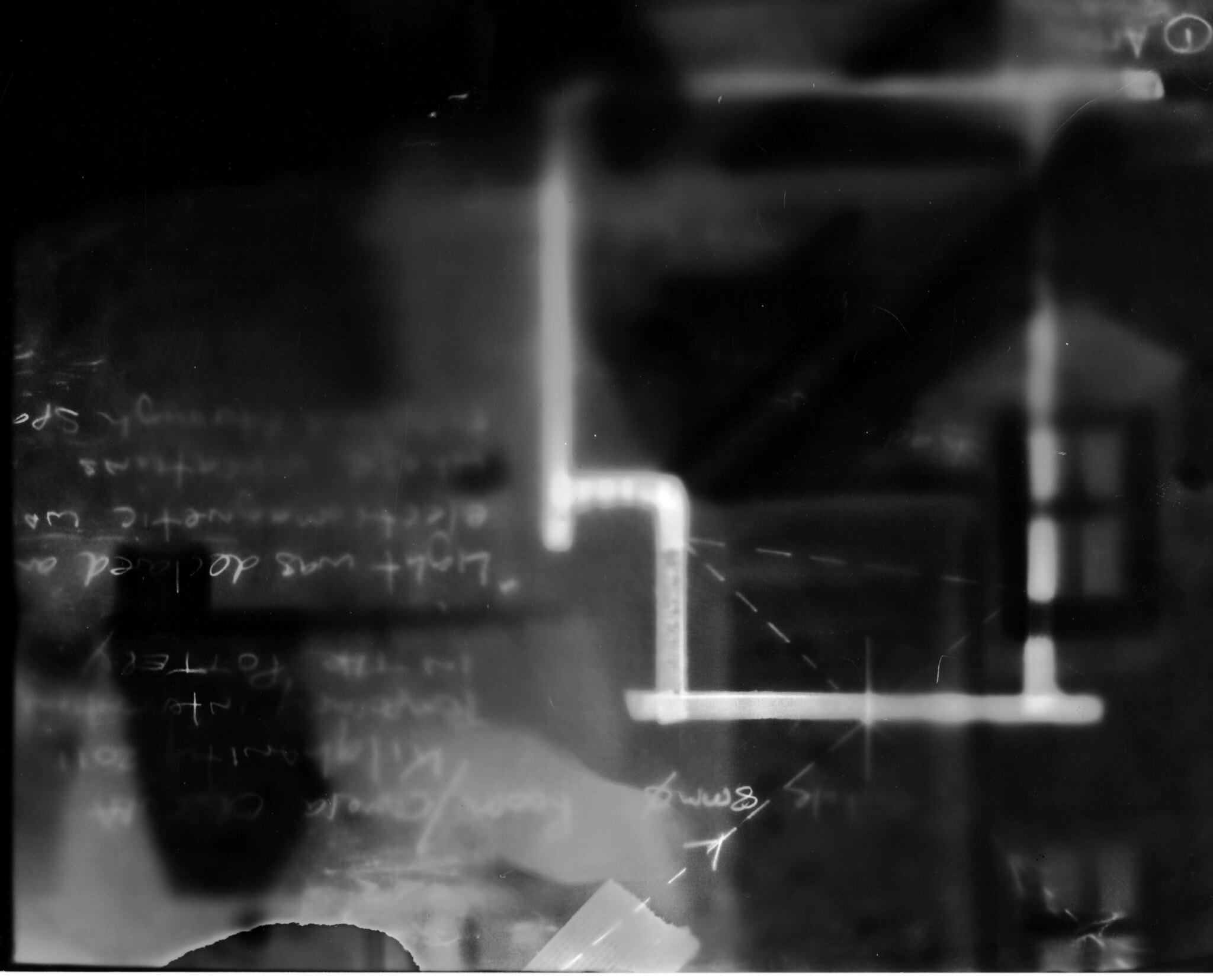
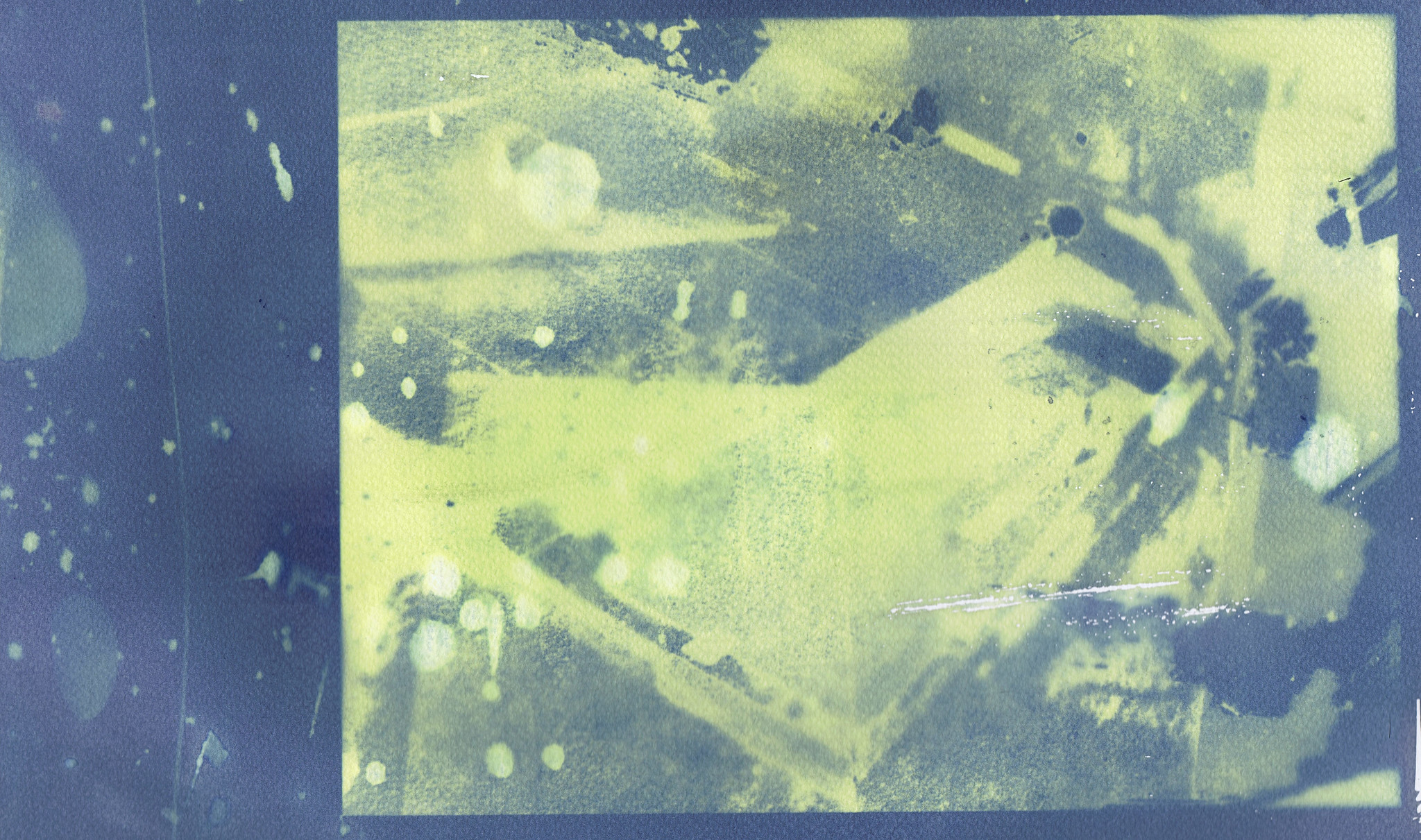
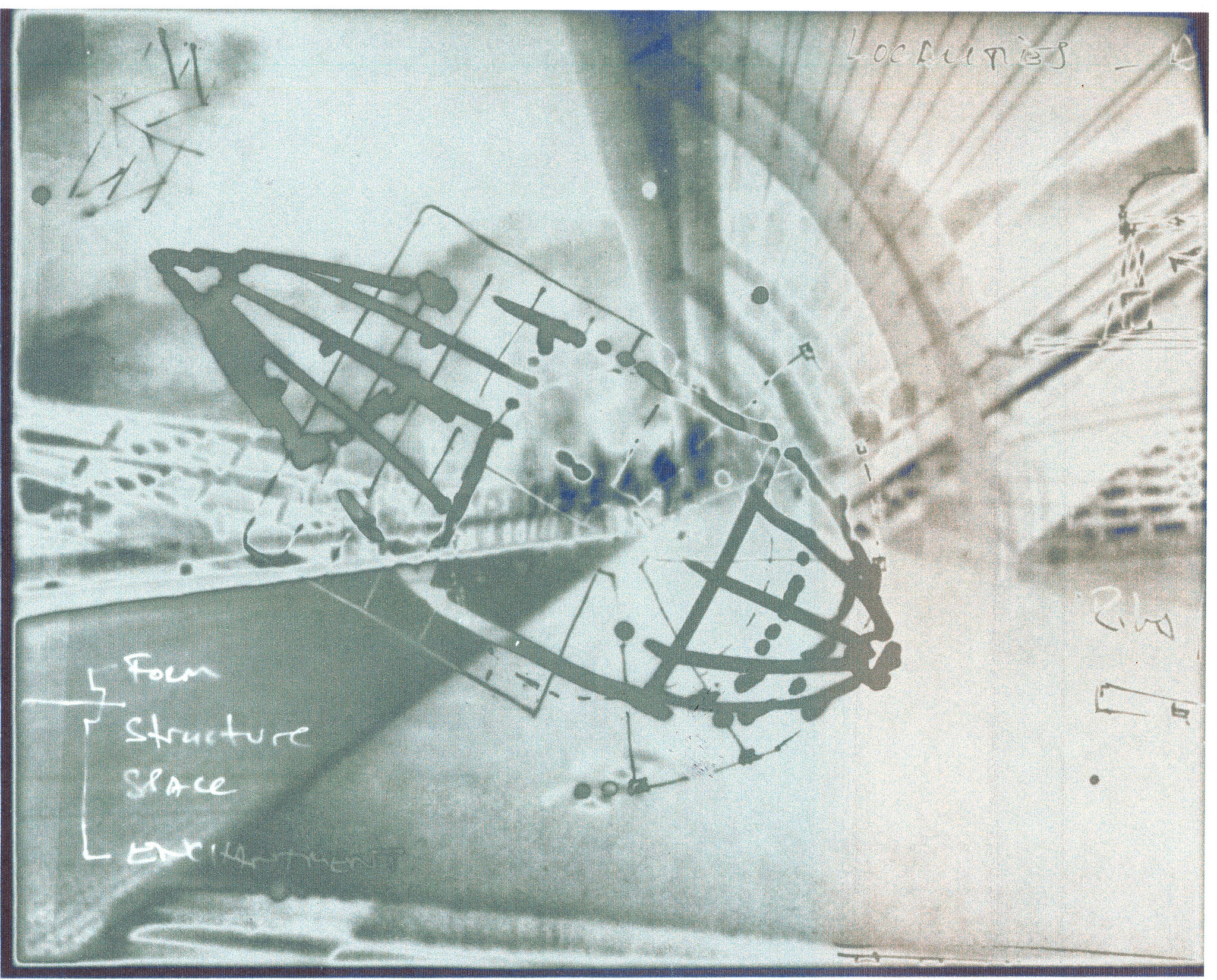
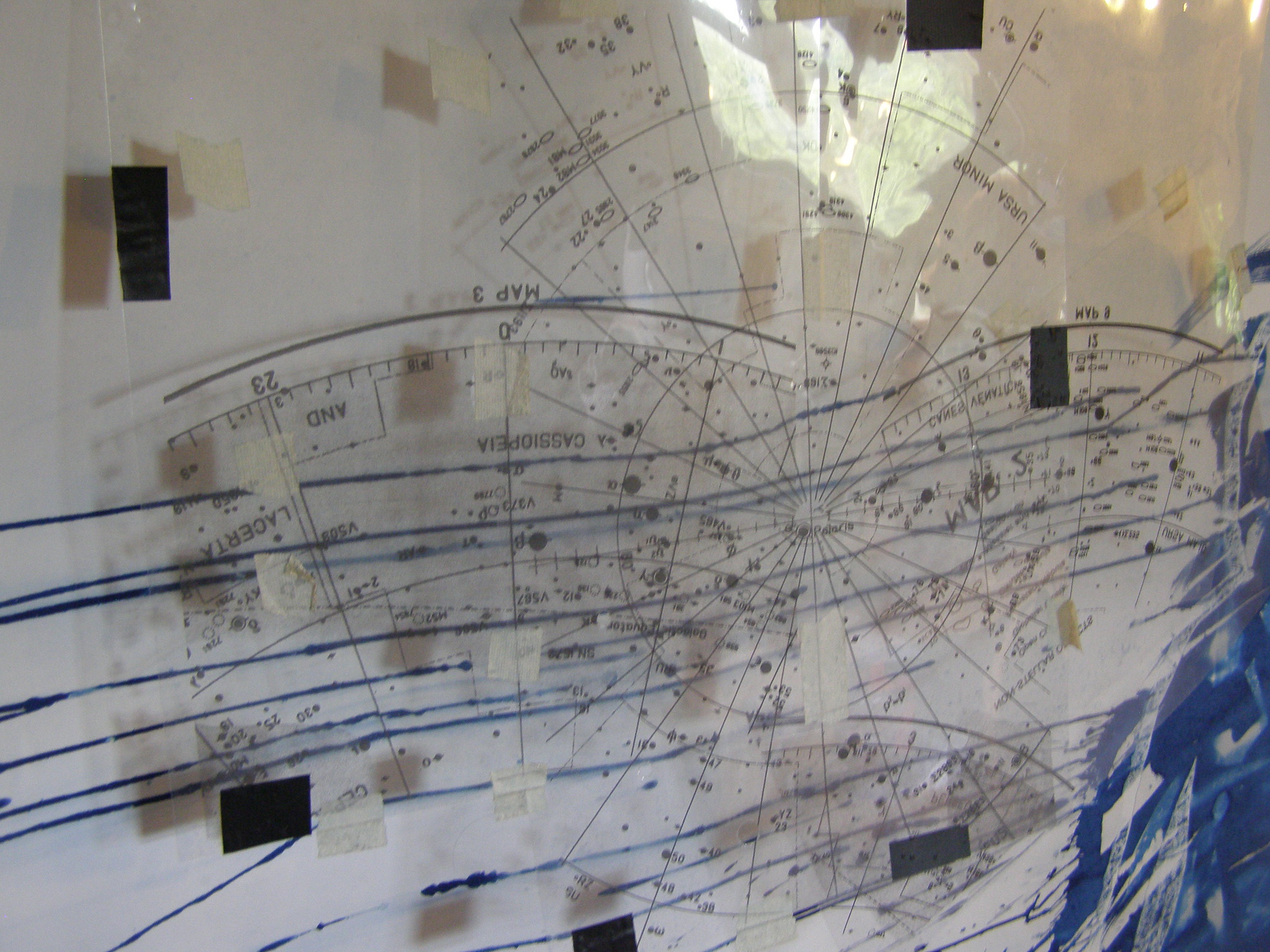
    Cyanotype image from pinhole camera with sound intervention/device within the apparatus of the camera, performative material gathered from the Canterbury School of Architecture.
    UCA Spatial Practices MA under Oren Lieberman.

    The marked agency and its absence of the artist leaves the site live and open. Oxford MOMA 2006 Jannis Kounallis left his coat hanging by a window adjacent and in the same room as his installation.

    RUSSELL MORETON. MA SPATIAL PRACTICES.

    Artist Statement used to accompany promotional powerpoint display at UCA Canterbury, 2009.

    Spatial Practice provides an interesting set of methodologies in which to explore our own “relationality”1. This is particularly relevant in respect to my understanding and subsequent proposal for the role of the interlocutor within my work. Becoming increasingly interested in the concept of “ open text ”2 to explore the nature of space and its relational properties that create place, or rather a self placed. At present using Photography (large pinhole chambers) embedded in working environments to further explore properties of latency, transparency and the peripheral dwelling of spatial material.

    The Practice.

    Currently exploring the dynamics and dwellings of spatial relations. The use of a large oil drum as a “pin hole camera” creates a tool that records/witnesses a specific duration (dwelling) in place. This duration of approximately 45 minutes renders visual data that underpins our temporality as we constantly re-form spatial relations with each other and that of the architectural environment. The internal architectonics of the chamber gives a sense of both the proximity of peripheral space and the distance/dislocation of a filmic surface concretized by time. These imaged surfaces render a sense of place, an aura and a psychosis/pathology around images and their representation.

    1 Robert Cooper, Peripheral Vision: Relationality ( London: Sage Publishing, 2005)

    2 Jane Rendell, Art and Architecture: A Place Between ( London: I. B. Tauris, 2006)

    METHODOLOGIES/PROJECT PROPOSAL

    TIME

    RELATIONALITY

    CONTINGENT

    SURFACE

    CONSOLATIONS

    The Trace becoming a material witness to an event/situation

    Use of “information” gathered from site being re-invested with another sense of time and ambient light.

    Transparent/Translucent materials “surfaced” by contemporary digital technologies, corporate media presentational light boxes, large format 24 square metres.

    Use of “interventions” liquids between visual and haptic membranes, utilization of direct drawing within and amongst the “media technologies”.

    Direct more of “working practice” into larger scale painting investigations with drawing and photography as inclusions. Suggest notion of temporary space situated in fine art.

    Explore relationships of “objects” as the custodian of place. Analysis of the Reception and relations generated by this “first objectivity”.

    Relation of “what was ”to what is left being a “spatial involvement” placed back into the continuum of ongoing spatial relations.

    Spatial involvements as a surface of contingent enactments giving “us” a sense of our temporality, exactitude and anonymity that becomes “preserved” by Place/Studies (Rendell).

    Drawing a relationality through others in site.

    Drawn inscriptions that leave traces for others to respond

    Documents of a theoretical investigation over the surface from both beneath (the place) and from above (the event).

    A performative membrane/drawing/diagram/script that gains its authenticity/performativity from being there and allowing what might occur to be witnessed.

    Drawing as a “open text” that allows a perspectival immersion/situatedness, because it is still active, un-resolved needing to be taken further under the authorship of viewer.

    These fragments of precise interventions/enactments  engender a dynamic of relational possibilities.


    SENSORIUM  AND STILLNESS, MOVEMENT AND MIRROR A MIRROR ON WHAT IT IS TO BE HUMAN VISITORS : A film by Godfrey Reggio We have art so that we …

    Source: Humanities : Spatial Relations/The Laboratory of Anthropology, Archaeology, Art and Architecture

  • Intermedia : Articulating Sensory Thought. Yard and Metre Event

     Cyanotype Project/Poetry Reading : Winchester College


    Shroud

    Richard Stillman

    Yard and Metre Event, Winchester

    As the marks resonated, did they sound true?

    Could we tolerate margins of error or latitude?

    Is there strength in that built by blue ink?

    It is hard to see without certainty.

    Why have they flown, gathered, shrouded?

    Is the date significant? A memorial?

    Or is it white noise reverberating,

    striking parallels, refusing focus, insisting?

    The shape of the cross is still distinct

    but opening out, refusing definition,

    never quite caught as an intention,

    pinned on dimensions it wants to refuse.

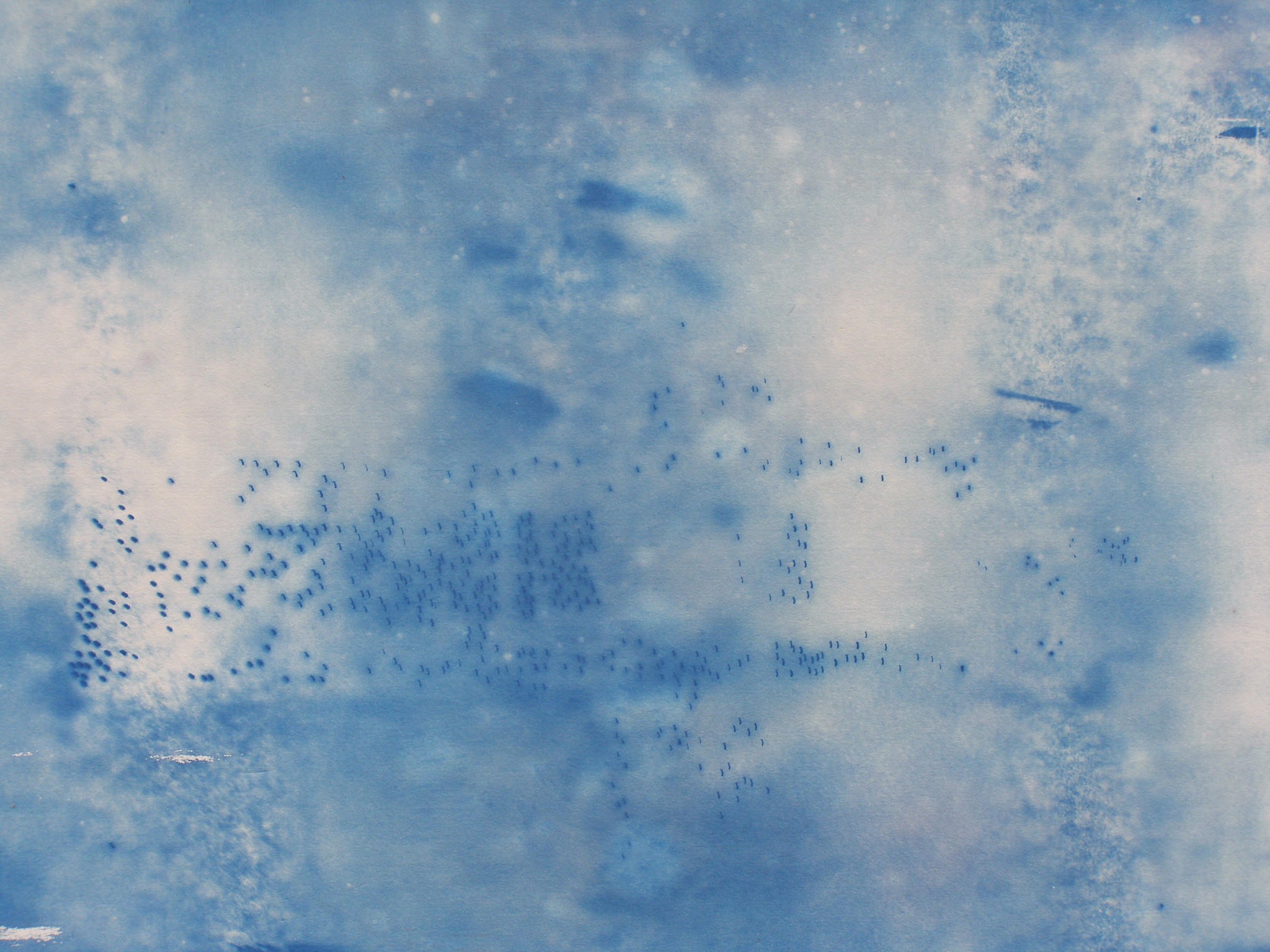
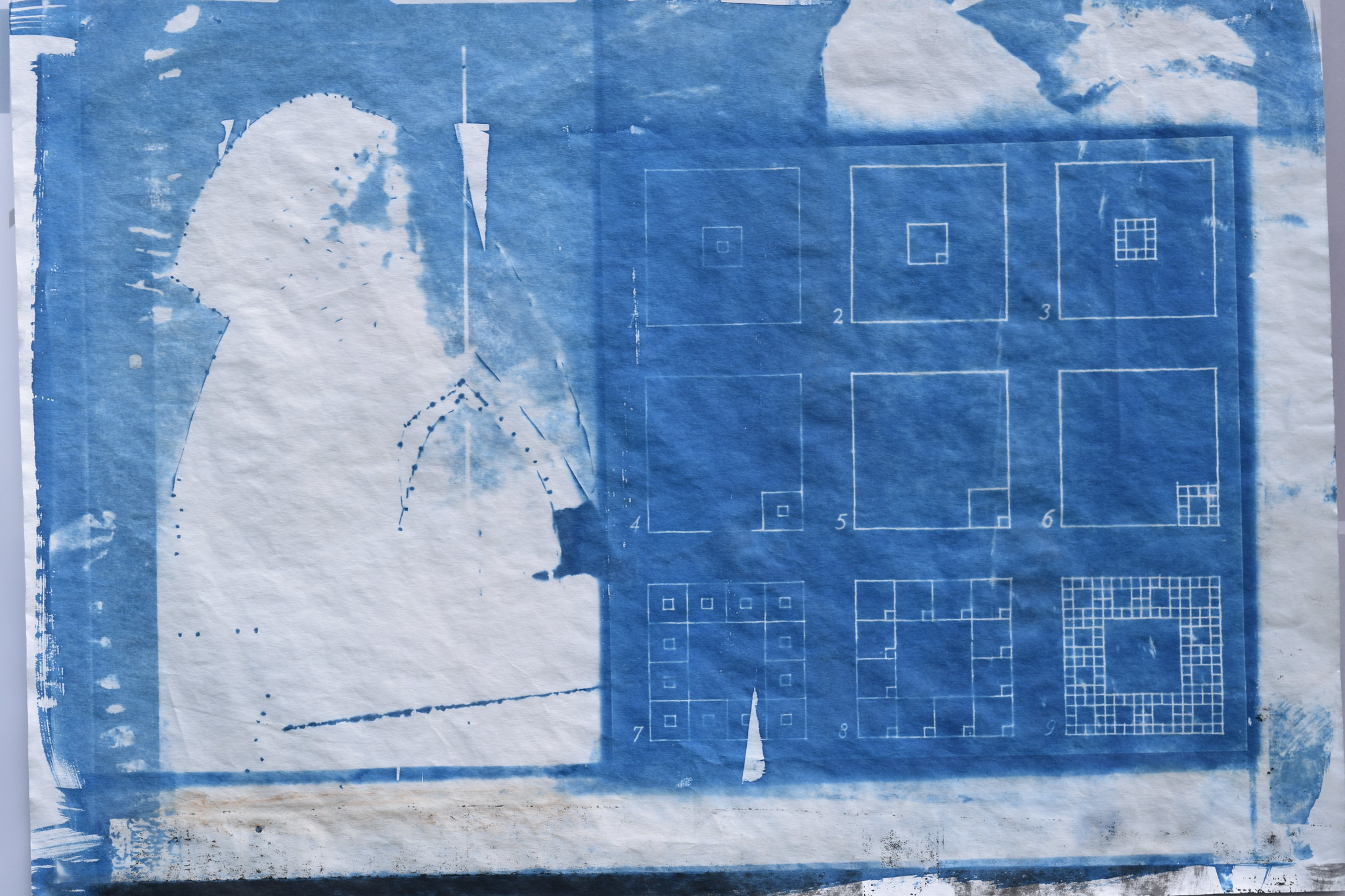
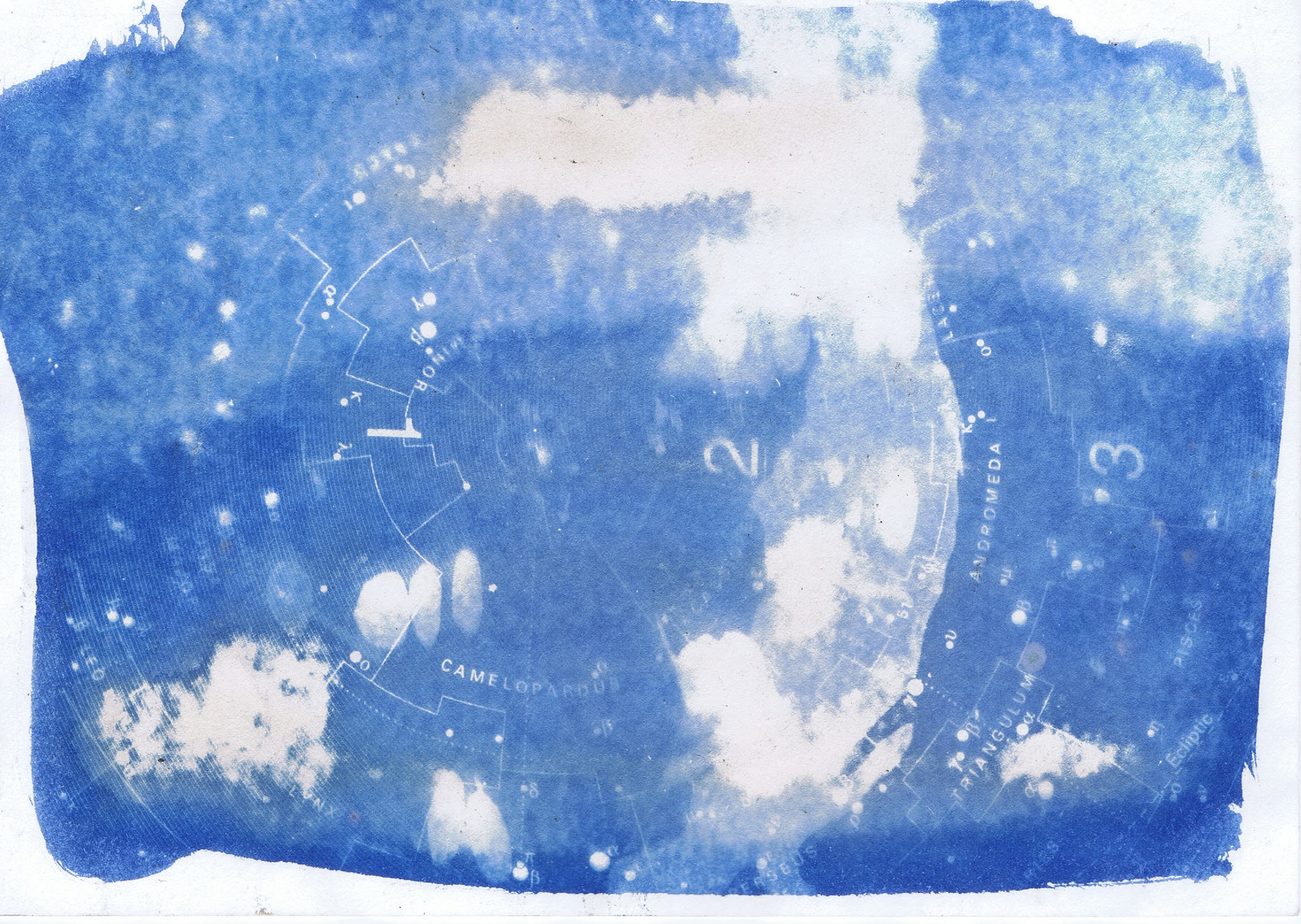
    Cyanotype from a site drawing, Space for Peace, Winchester Cathedral 2011.

    When objects or atmospheres collide energy is transferred, a new force may be created. And, as forensic scientists can attest, when objects touch they exchange traces, each leaves something of itself with the other.

    This is why artists enjoy collaborating. Working with another artist can give a jolt of inspiration, a spark of creative thinking, a surge of new skill, the stimulus for a new work. And the experience will leave its mark in some way on each individual’s practice.

    The specific ‘collision’ may also result in a work which has its own integrity, which does not belong’ to either party and where their particular contributions merge indistinguishably – in effect fusion takes place.

    This is the thinking behind 10 days | Creative Collisions and for The Yard artists  and Hyde Writers it was the ideal excuse to come together, to let the shockwaves flow and see what new possibilities emerged. As with all the best creative practice, in science or in art, this has been an experiment, it involved risk, trust and open minds. Whether or not the outcomes are fully resolved they will be filled with potential – and with potency.

    Stephen Boyce

    The Hyde Writers

    The writers  revelled in a close engagement with artists  and their work. Rather than respond to emailed images, the writers could immerse themselves in the artist’s world. Writers  could examine the artist’s  studio space, watch the artist working and feel with their own hands  the materials  in use. They  could smell the turpentine, feel clay under their nails  and trail their fingers  over the rippling textures of paintings. Some writers took artists’ work home, so that they could live with the work. Naturally some artists provided a response to the writer’s work and the non-verbal feedback was unusual and exciting.

    Writers  faced a dilemma over which aspect of an artist to focus  on. Some writers  found inspiration in the personality of an artist and others were entranced by a part of the artist’s  process. The art itself, of course provided a rich source of creativity. Writers  found that the artists’ studios  and individual objects  within them were inspiring. A fractured shell of a first world war helmet might suggest several stories. Writers  could see familiar techniques, such as  collage being used by  the artists, but they  could also understand the strange dictatorship imposed by  physical materials. The materials  are often tricky  things  that impose their own rules  and can bring uncontrollability  into a process.

    It was  an experience that changed the writers. For ever afterwards a small part of us will be noticing the world from a different viewpoint, such as  that of a painter or a sculptor.

    Hugh Greasley

    The Hyde Writers are a group of poets, novelists, script and short story writers  who meet every  first and third Monday  in the Hyde Tavern, Winchester.

    Founded in 2007, the group aims to produce high quality, challenging writing across a diverse range of genres.

    The group acts as a workshop to facilitate the development of an individual writer’s works through rigorous yet supportive critical comment

    Our members  include prize winning novelists  and short story  writers, published poets and broadcasters, as well as young writers developing their craft.

    The Yard Artists

    When the studio management group discussed how to represent The Yard in 10 days Creative Collisions, we could not have possibly  envisaged the quality  and ambition of the project. Several months  later, following a successful proposal, speed dating event and BBQ, two thriving creative communities  in Winchester have collaborated, partnering artist with writer, and produced twenty  six  ‘creative collisions’ of new and innovative work. These projects  have been prepared for an evening of projection, performance and poetry  at Winchester College.

    As  a collective, Yard and Metre fuses  traditional with contemporary, the analytical with the intuitive, the tangible with the abstract, in a collision of observation and enquiry. The breadth of subject and concept, as well as  the standard of work  produced, is  testament to the dedication and enthusiasm of those participating in the project.

    Thanks  to  Beatrix  Kovacs,  this  beautifully  designed  publication  documents  the  collaboration  between The Yard artists and Hyde Writers and pays tribute to the significance of the event.

    Jane Price

    The Yard is a working studio environment in Wharf Hill, Winchester, established in 2007 by a group of local artists with the assistance of Winchester City Council. It provides affordable studio space within a vibrant, supportive community for up to twenty five artists and aims to promote contemporary fine art in the Winchester district

    Cyanotype from a site drawing, Space for Peace, Winchester Cathedral 2011.


    Cyanotype Project/Poetry Reading : Winchester College Shroud Richard Stillman Yard and Metre Event, Winchester As the marks resonated, did …

    Source: Intermedia : Articulating Sensory Thought. Yard and Metre Event

  • Molecular Sieve/Performative Apparatuses : CREATING CREATIVE ANTHROPOLOGY INTO TEMPORAL SITES/10 DAYS WINCHESTER

    Winchester – Hyde Abbey Laundry

    The site of approximately 1,500 sq. metres comprises redundant industrial buildings and a yard at the edge of the city centre and close to the Winchester School of Art. The site is considered to be important in townscape terms and being vacant is an underused resource. The Laundry ceased trading in 2007 and has been empty since. It is a short walk from the city centre, near car parks, leisure centre, Winchester School of Art, the Colour Factory artists’ co-operative, but in an otherwise residential neighbourhood. The site consists of a large industrial space with high ceilings, a series of different sized workshops around this main zone, and on its upper floors, office accommodation, staff canteen and a workshop. The private owner and his developer wish to demolish the old buildings and develop the site for housing; however, WCC planning officers wish to see the site or part of the site, retained as offering employment within the city.

    Urban Fallow could encourage the owner to consider live-work units and studios for artists to be constructed on the site and demonstrate that there is demand for this type of activity. The Council’s Estates, Arts Development and Economic Development staff have for some years, been looking for potential sites and business models to establish affordable studios in Winchester. While demand is known, the value of assisting in the establishment of such a scheme is unproven. Urban Fallow has the potential to provide further evidence and advocacy for a permanent studio facility on this site. Winchester City Council would want to work with Winchester School of Art (arts faculty of Southampton University) and the University of Winchester, and the Hampshire Economic Partnership as partners in this scheme.

    The building in its present state, although unsuitable for most purposes, is viewed by creative practitioners from a range of practice, as having great potential as studio space (in great demand in Winchester where suitable premises are hard to find – and afford). In the current market conditions, the site is likely to remain ‘fallow’ for some time to come until these issues are resolved, and the market conditions improve.

    Urban Fallow will bring into sharp focus areas of vacant urban land resulting from the slowdown in construction and the halting of some major redevelopment and housing projects. It is important that these spaces, many of which are significant in both scale and location are not allowed to deteriorate and damage the public perception of a place. The project will reanimate these areas of land by offering them for use by artists, architects, performers and other professionals with an interest in engaging with the public to develop temporary events and interventions. As well as transforming the spaces and reducing urban blight, this project could also have the effect of reinvigorating interest and potential investment in the spaces, encouraging developers and local authorities to look at them again with renewed creativity and optimism.

    Urban Fallow/Solentcentre for architecture and design aims to develop a pragmatic but fluid approach to public access, cultural intervention, use and temporary transformation of urban spaces.

    CREATING CREATIVE ANTHROPOLOGY INTO TEMPORAL SITES

    between the concrete and the spatial

    THE WORKING PRACTICE IS FUNDAMENTALLY SUPPORTED BY ANTHROPOLOGICAL NOTIONS AROUND ISSUES OF SPACES, ORIGINS, SOCIAL RITUALS AND TABOOS

    CAPTURED BY APPARATUSES

    Heuristic Practices : The trace/space of the anthropological
    Utilising processes and strategies and terminologies.

    Demarcation, set the boundaries or limits.

    Acculturate, assimilate to a different culture.

    Ethnology, the study of the characteristics of different peoples and the differences and relationships between them.

    NON- SPACES, Introduction to an anthropology of super modernity. Marc Auge.

    My working practice intuitively reflects and responds to what Marc Auge considers to be the condition of Supermodemity, briefly his defining parameters on the idea of Supermodemity are.

    Overabundance of events.

    Spatial overabundance.

    The individualization of references.

    A SOCIETY IN EXCESS.

    My creative practice attempts to reconstitute spaces from this condition of Supermodemity into temporal sites, places from which to solicit a sense of a mobile anthropology, a dwelling that is both intimate and public and promotes solitudes and subjectivity.

    Marc Auge states the twenty-first century will be anthropological, not because the three figures of excess are just the current form of a perennial raw material which is the very ore of anthropology, but also because in situations of supermodemitiy the components pile up without destroying one another.1

    Contemporary Practitioners like anthropologists will attempt to make sense, they will attempt to resolve, to make or rather remake meaning through the processes of observing the phenomena of acculturation. My practice has now entered into a process that proposes a site for research driven by condition of acculturation. This site of inquiry will attempt to set up an anthropological place of localised relations amidst the condition of Supermodemity.

    This proposed temporal demarcation, a marking out of a territory which will become adaptive, reflexive and spatial. Sets out to engender the inquiry of the ethnologist, to attempt of rather to reflect on how the place is organised. This site marks a private acculturation of material sourced from the world, from a hermetic and esoteric realm of private geographies, now processed and made available, accessible to the social.

    The observer in the role of the ethnologist with others is invited to formulate their own invention of place through their own curiosity of encounter. This demarcation of space into the social, anticipates an intervention which creates a common adventure for a group in movement.

    An interesting comment about gendered space in classical literature examines the relationship between what might theoretically and spatially link the interior with its exterior boundary is to found Mythe et pensee chez les Grecs written by Jean-Pierre Vemant. In this account Vemant describes the spatial and social arrangements of the Hestia/Hermes couple. Marc Auge acknowledges this relation as

    “Hestia symbolizes the circular hearth placed in the centre of the house, the closed space of the group withdrawn into itself (and thus in a sense of its relations with itself);

    while Hermes, god of the threshold and the door, but also of crossroads and town gates, represents movement and relations with others.”2

    Auge makes the critical point that in anthropology studied by both classic literature and history it is identity and relations that form spatial arrangements which are also inscribed in time. It is this time that materially renders the temporal dimension of these spaces and with it our reading of anthropology.

    My earlier usage of long durational photographic devices (large pinhole cameras) was an attempt to realise the identity and relation of a place (its spatial activity and fixity) is totally contingent to its method of register and the particularities of fixed and temporal details. In fact these surfaces rendered from these devices are evidences of historical spaces of hidden social itineraries.

    1  Marc Auge, Non-Places, introduction to an anthropology of super modernity. (London: Verso, 1992) page 41.

    2  Marc Auge, Non-Places, introduction to an anthropology of supermodernity. (London: Verso, 1992) page58.

    Fragment, research/Mechanisms of Seeing/The Architecture of Image

    Architectural Apparatuses of Affect : Daniel Libeskind/Small Voids/Cameras

    light; the darkness is a silent solid, the light etches its surface, it is simultaneously sign and cypher. The light etching itself on the dark surface is akin to a revelation, an epiphany before the building is transformed by its users and movement.

    Daniel Libeskind’s building will, when finished, offer a path for the visitor, the path of history that crosses the void of commemoration. This void is the body of an absence—that of the Berlin Jews who perished in the Holocaust. The void makes us meet this absence, but we meet it by passing through it. When an absence, in the form of a void, meets the surface of daily reality, memory marks that surface. The Holocaust has created such a void, which, in projects such as the Berlin Museum with the Jewish Museum, is brought to the surface and given a place and a house. The void intersects the surface of time and creates a place of passage, of commemoration, of ritual in our daily life. The void is linear sign: lest we forget. But the incisions in the walls of the main exhibition spaces, spaces which house the historical material about the city of Berlin, create voids through which light is let in. These calligraphic empty spaces create a near biblical writing on the wall.

    Cameras consist of small voids, the ‘camera’, a lens and photographic film. They are camerae obscurae  that collect light and allow it to meet the surface of the film. But in fact the light comes from the larger void outside the camera. The moment the light has registered on the light-sensitive surface of the film, memories are constructed. The memory is literally conceived in this meeting and is added to life as an additional layer of being. The process through which void meets surface is therefore also about love—the love of ancestors and relatives, but also of life and its conception.

    Russell Moreton, 10 Days in the Laundry

    MOLECULAR SIEVE, is a performative analysis of “this place” utilising the simple properties of the pinhole camera. This appropriated apparatus makes visible the extrusive nature of time as it is deposited on the photographic surface. The extended durations required to register “place” impart a sense of dwelling as recorded by the apparatuses passive gaze. These surfaces record and register a relation constructed by the architecture of the chamber and what is beyond it. Movements when visible appear as simple abbreviated enactments caught like inclusions within this consolidated and timely consolation of place.


    Time as it accumulates on a photographic surface.

    This performative investigation utilizes a large pinhole chamber which is given mobility via a sack-barrow. This apparatus produces through its very inclusion into spaces a “spatial practitioner” in its own right. My aim is to utilize this device as a means of registering “worksites” both in the duration of the event and in its pre-performative state. The mobility of this research could be used to illustrate a constantly changing set of dynamics throughout the site and its event. The use of perhaps adjacent wall spaces or even a

    “sandwich board” would render a tangible re-presentation of spatial information for the visitor. Darkroom facilities or conversely off-site arrangements would be organised.

    Artist Statement 2009/10 Days

    SITE is anti-place hovering precariously over the abyss of no-place.1

    This “undoing of place” might instigate a threshold and a situation/room from which to reflect upon critical spatial, sociological and psychological conditions and perceptions.

    Practitioner with earlier experience in ceramics and glass, recently completed visual arts course at Winchester, now at Canterbury studying spatial practices. Interested in drawing, photography and interventions that can explore our sense and experience of place. My work seems to harbour a need for a reflective solitude, a sense of dwelling amongst absences. The use of materials from the locality (field chalk) imply a personal geography drawn from the direct relationship to an inherited Earth. There is the suggestion that the absence recorded by the trace is an inclusion, a legacy set into a field of materiality, but it might also suggest a metaphysical field of thought. This act of drawing becomes its own experimental field of exploration, a sort of “in­ between reality”( Merleau-Ponty) an enmeshed experience. Perhaps all that remains is some sense of a material memory encountering the realm of the insubstantial.

    Interested in collaborative projects and ventures that might facilitate issues of “site” as being the very undoing of place. Site for me is part of the rehearsal for the construction of place, site holds relations and intimacies/geographies that will be over-written by methodologies destined to be terminated to create place.

    What is an Apparatus? Giorgio Agamben
    by the term “apparatus” I mean a kind of a forma­tion, so to speak, that at a given historical moment has as its major function the response to an urgency. The appa­ratus therefore has a dominant strategic function.
    I said that the nature of an apparatus is essentially strategic, which means that we are speaking about a certain manipulation of relations of forces, of a rational and concrete intervention in the relations of forces, either so as to develop them in a particular direction, or to block them, to stabilize them, and to utilize them. The apparatus is thus always inscribed into a play of power, but it is also always linked to certain limits of knowledge that arise from it and, to an equal degree, condition it. The apparatus is precisely this: a set of strategies of the relations of forces supporting, and supported by, certain types of knowledge.
    I wish to propose to you nothing less than a gen­ eral and massive partitioning of beings into two large groups or classes: on the one hand, living beings (or substances), and on the other, apparatuses in which living beings are incessantly captured. On one side, then, to return to the terminology of the theologians, lies the ontology of creatures, and on the other side, the oikonomia of apparatuses that seek to govern and guide them toward the good.


    Winchester – Hyde Abbey Laundry The site of approximately 1,500 sq. metres comprises redundant industrial buildings and a yard at the edge o…

    Source: Molecular Sieve/Performative Apparatuses : CREATING CREATIVE ANTHROPOLOGY INTO TEMPORAL SITES/10 DAYS WINCHESTER