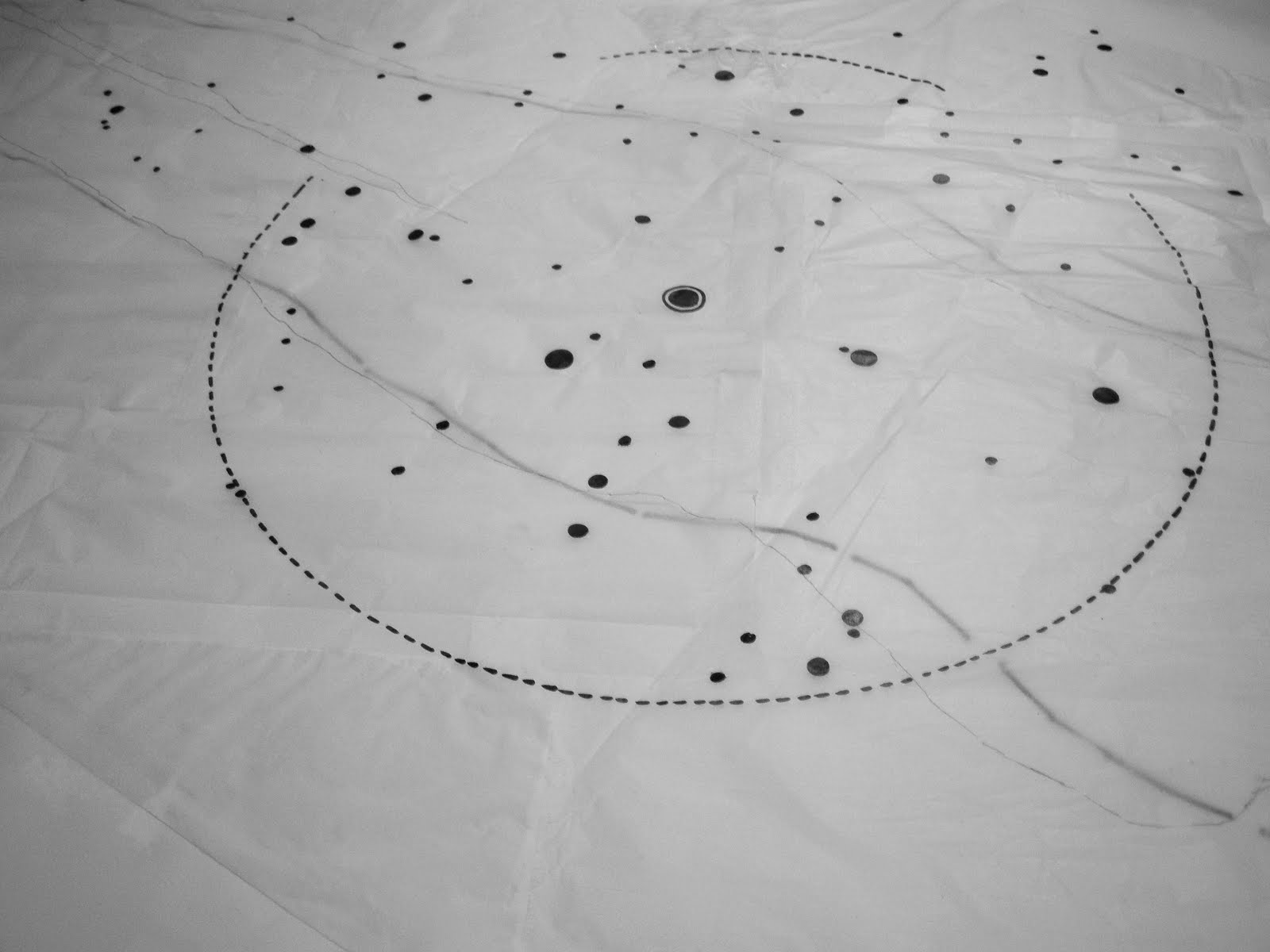
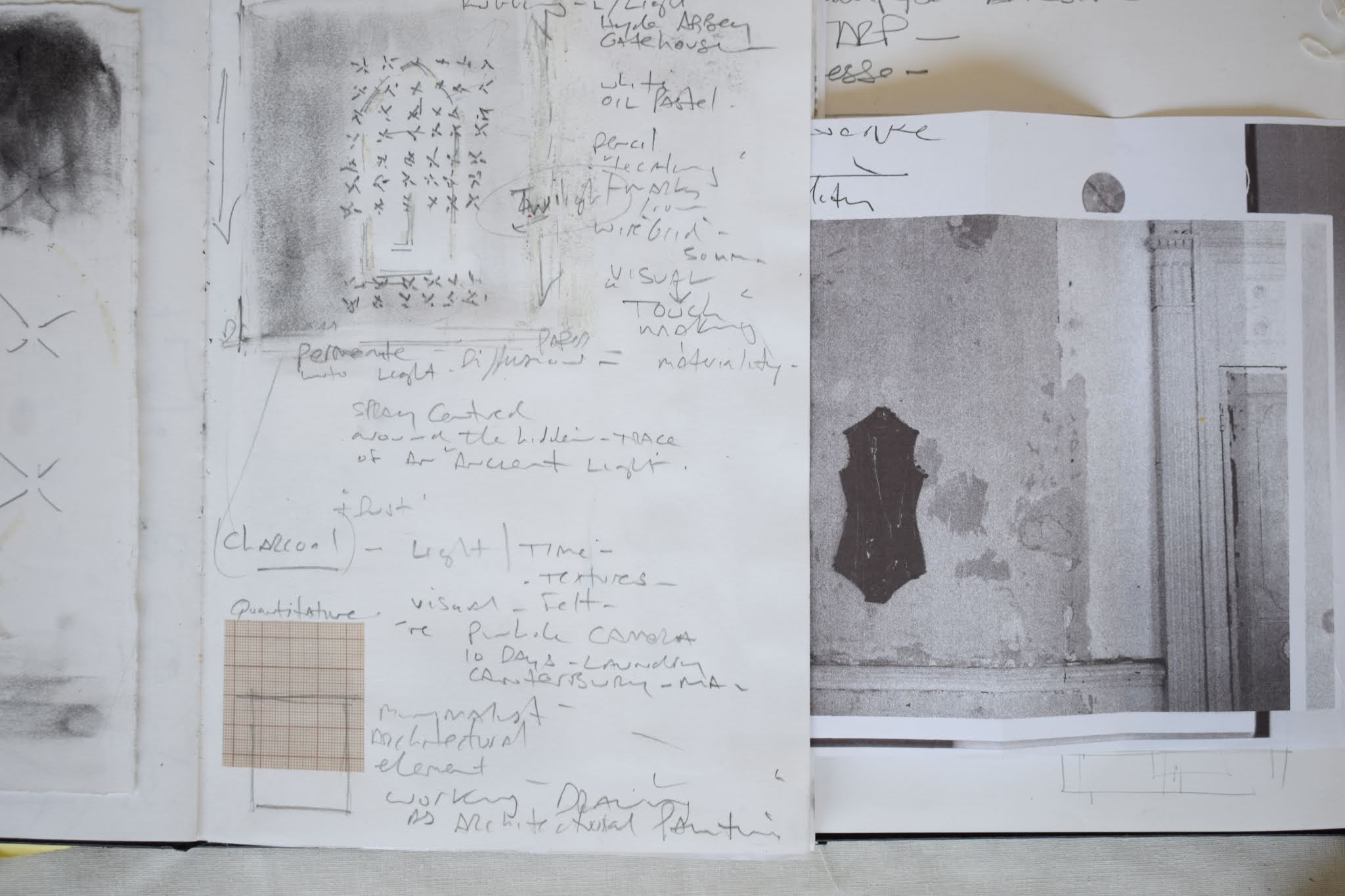
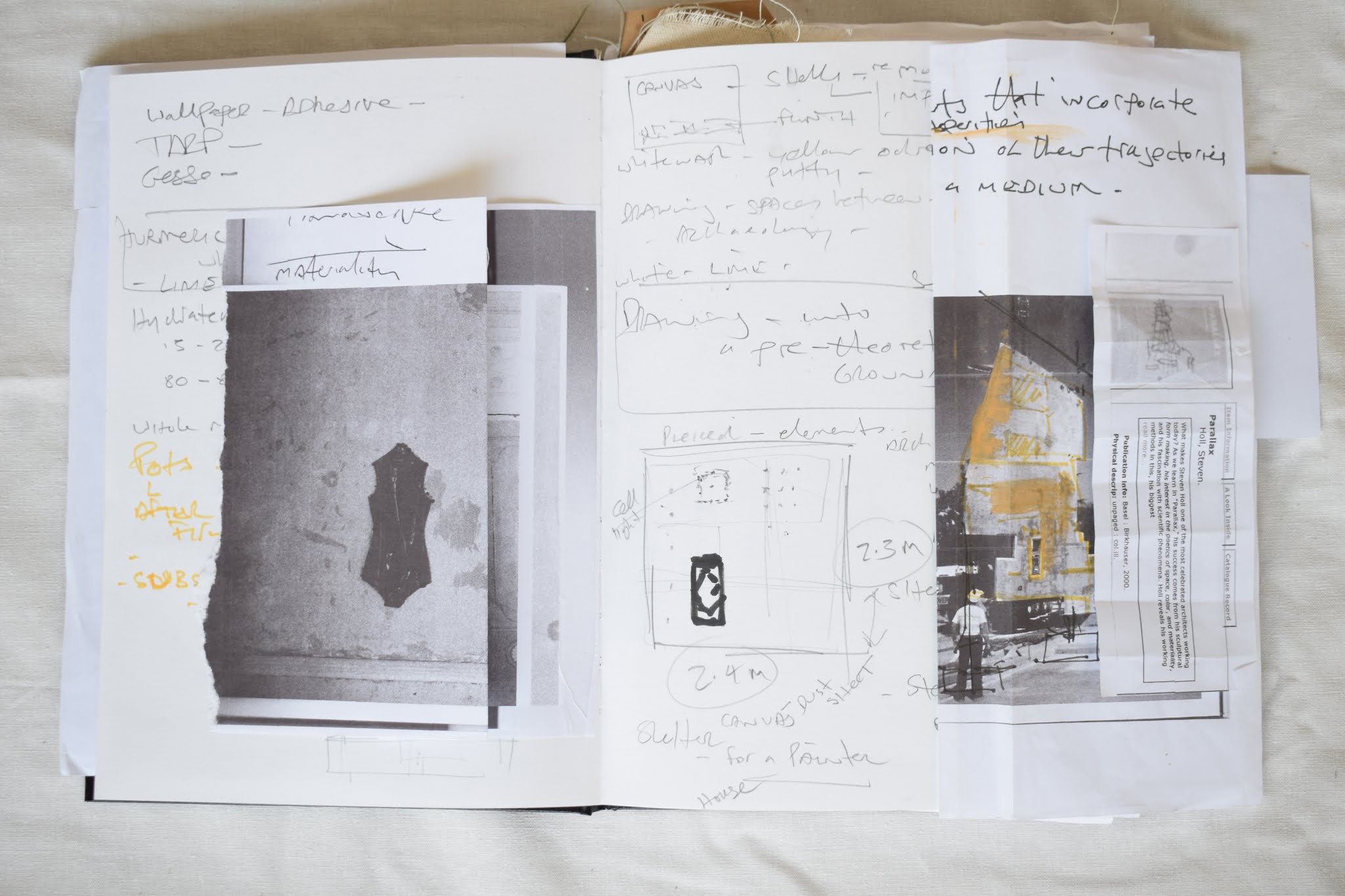
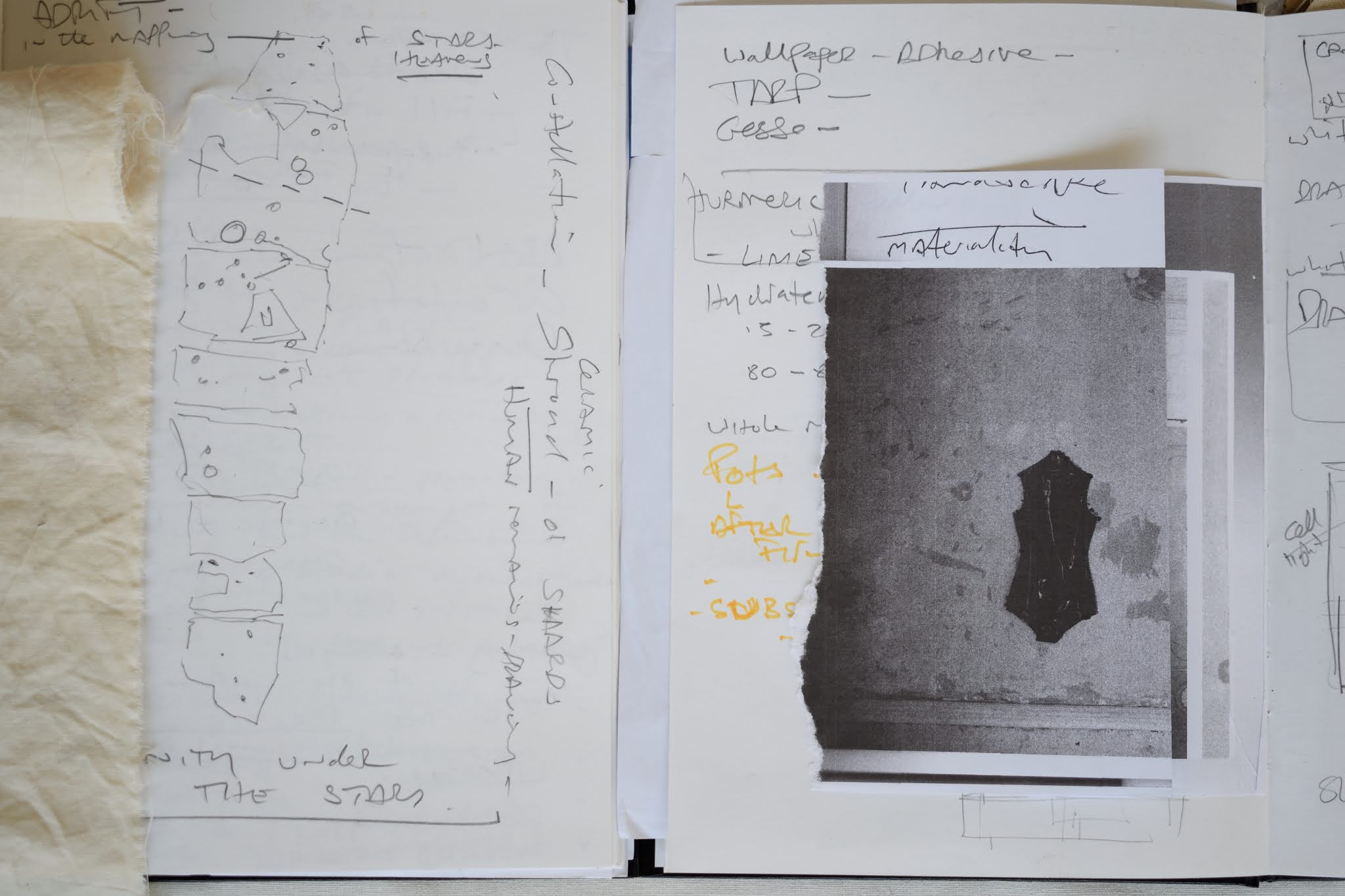
• The origins of painting and the scepticism of drawing : Architectural surface for a place of study/studio

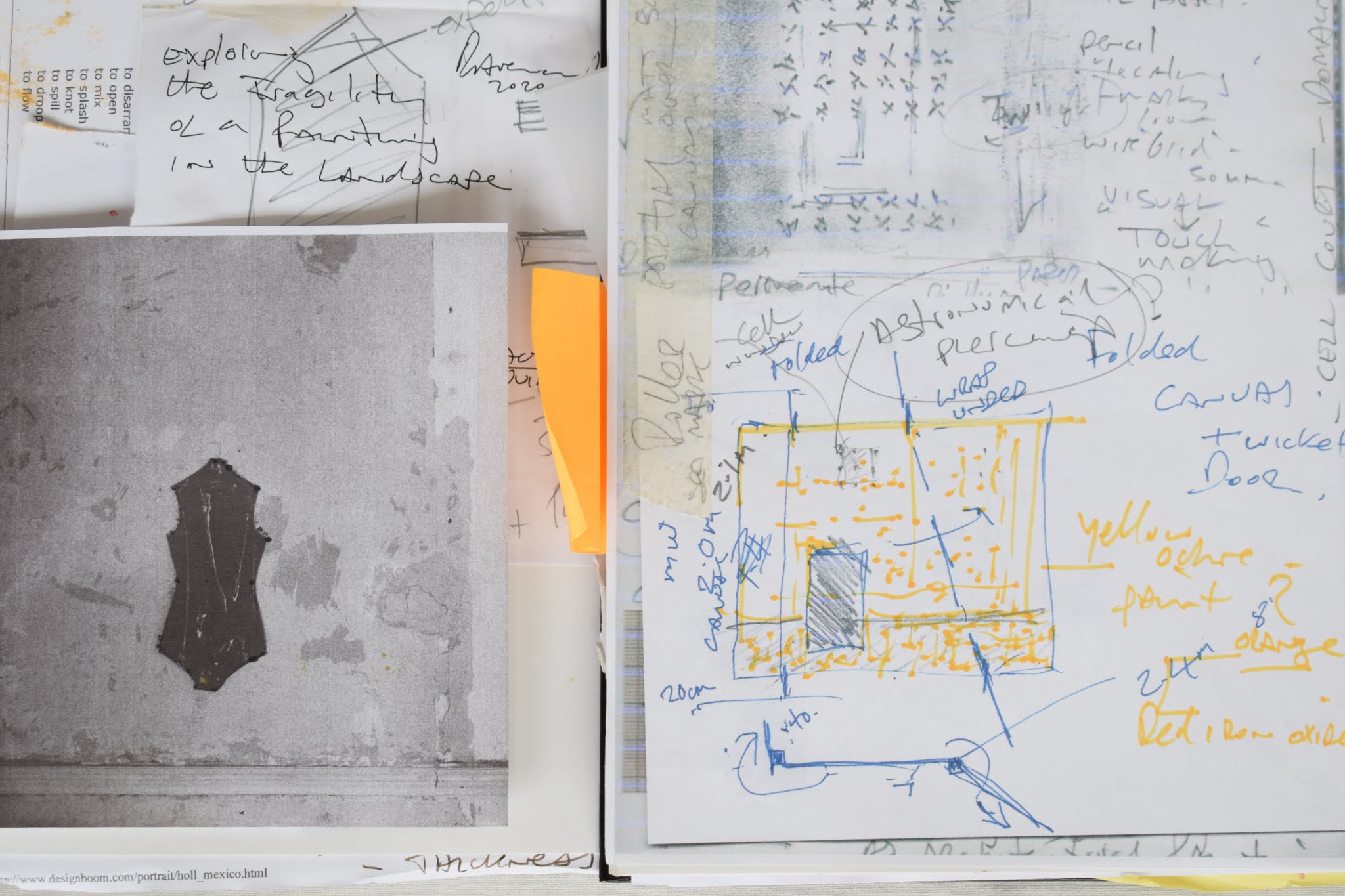
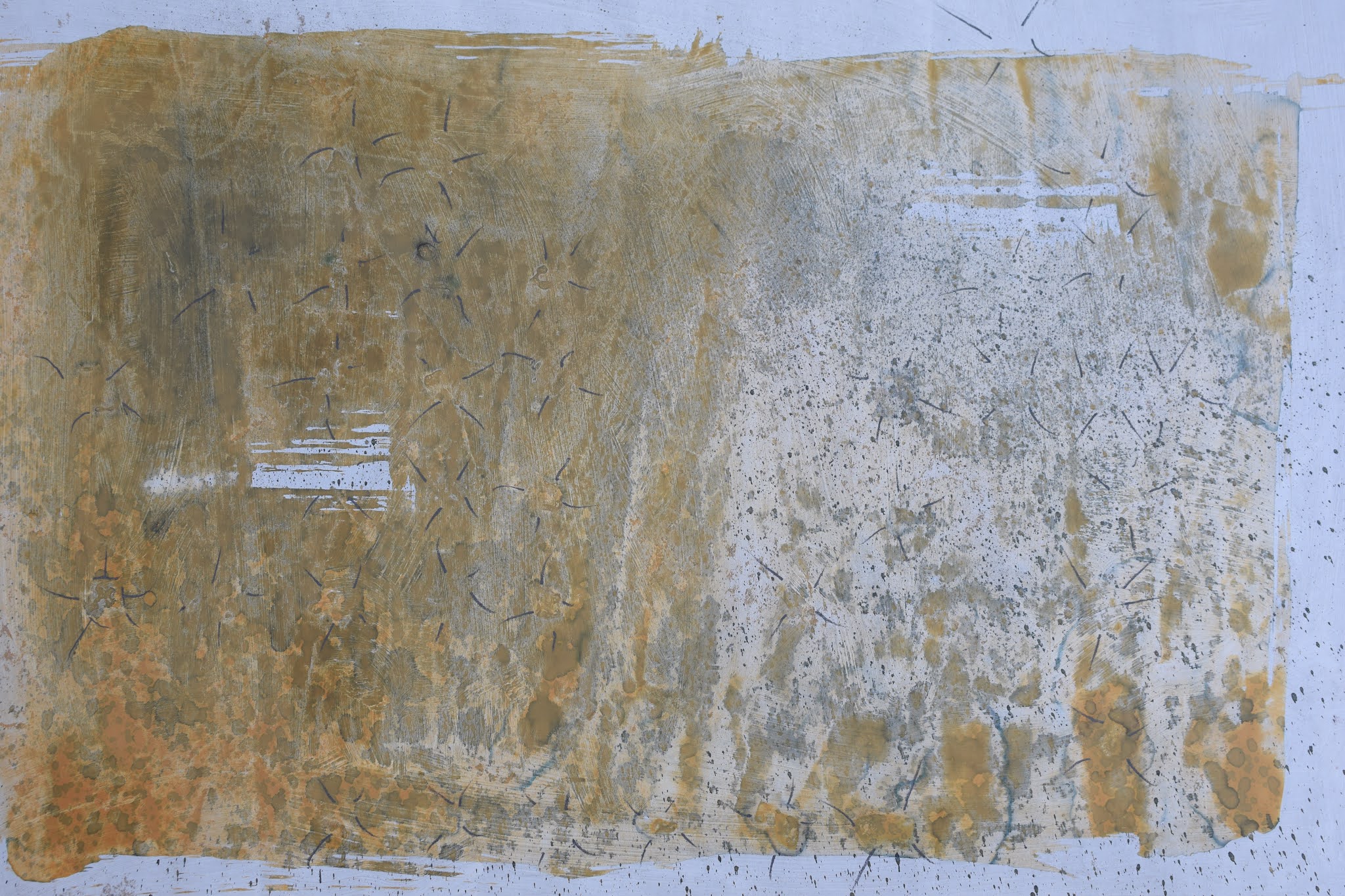
    Painting as an exploratory layered drawing for an architectural surface in a library

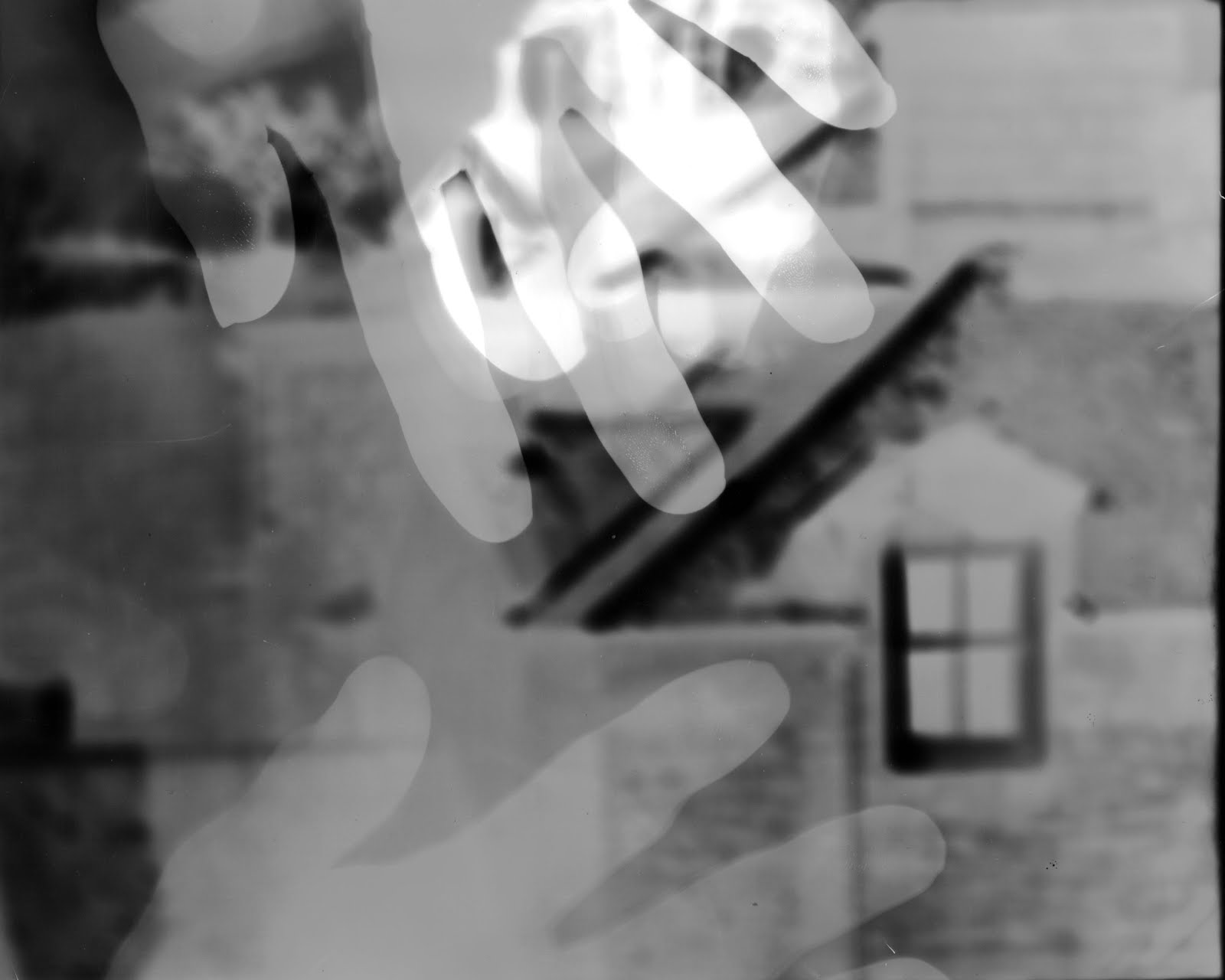
    a shadow or an eidolen, an image without substance

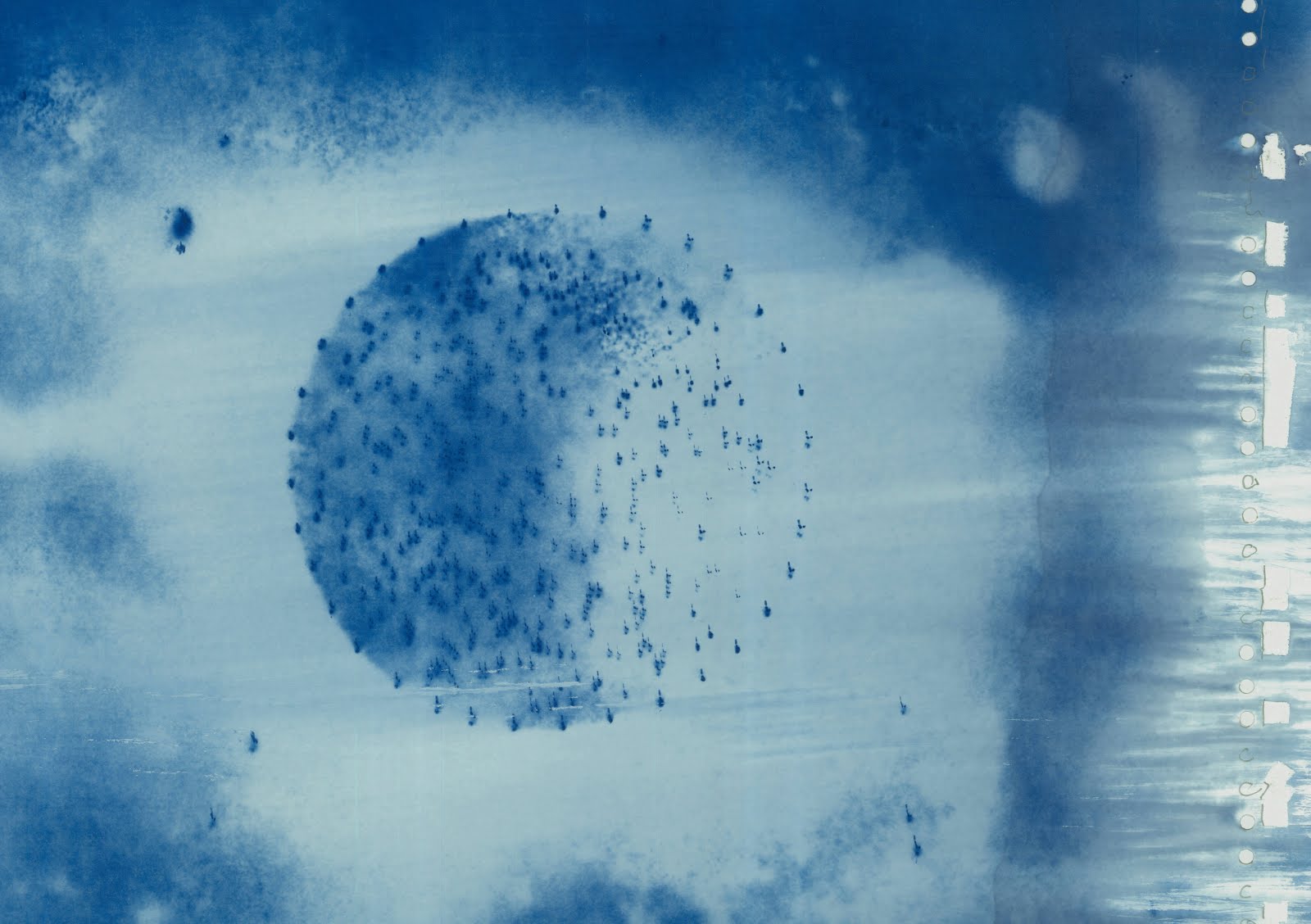
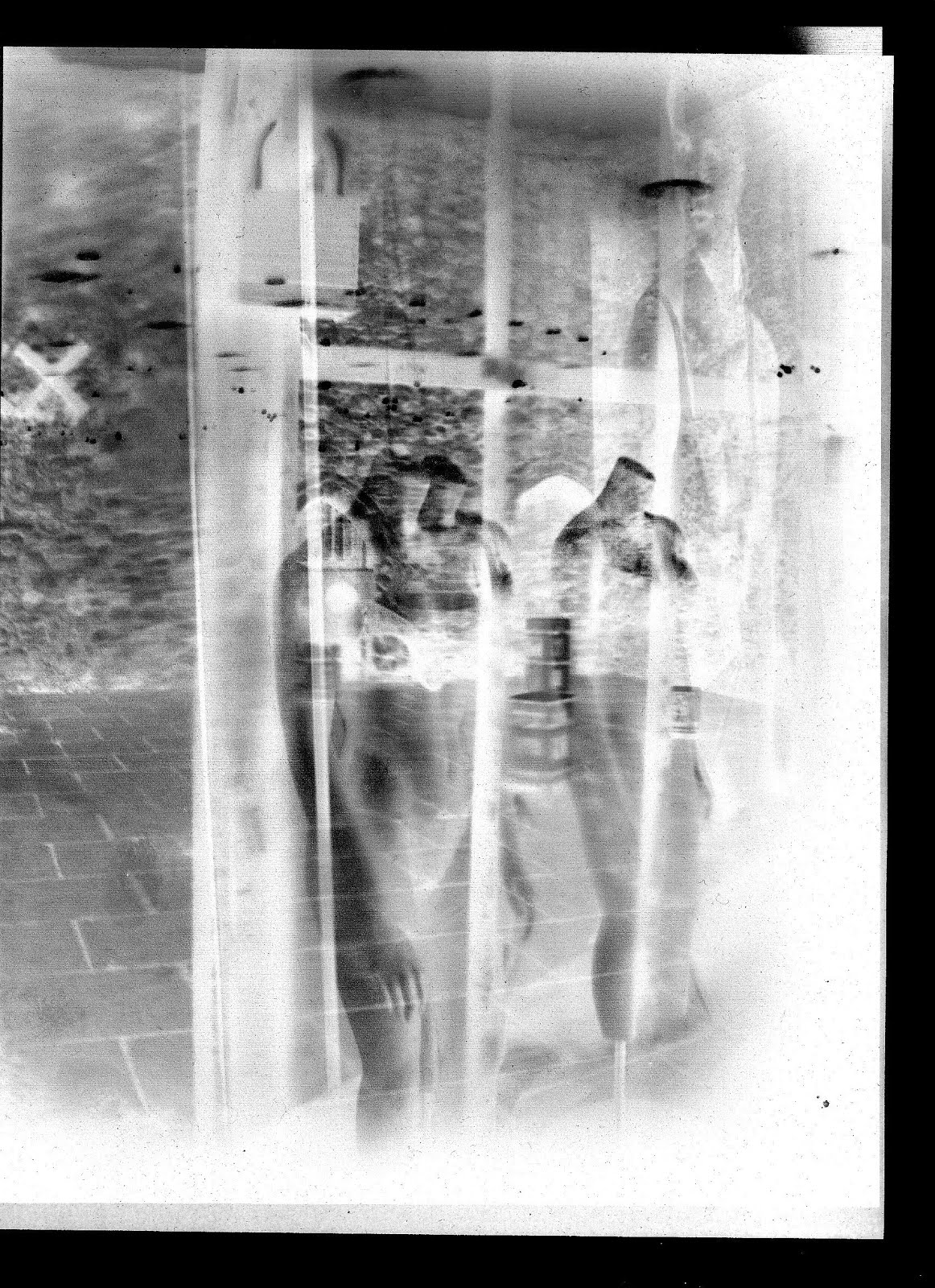
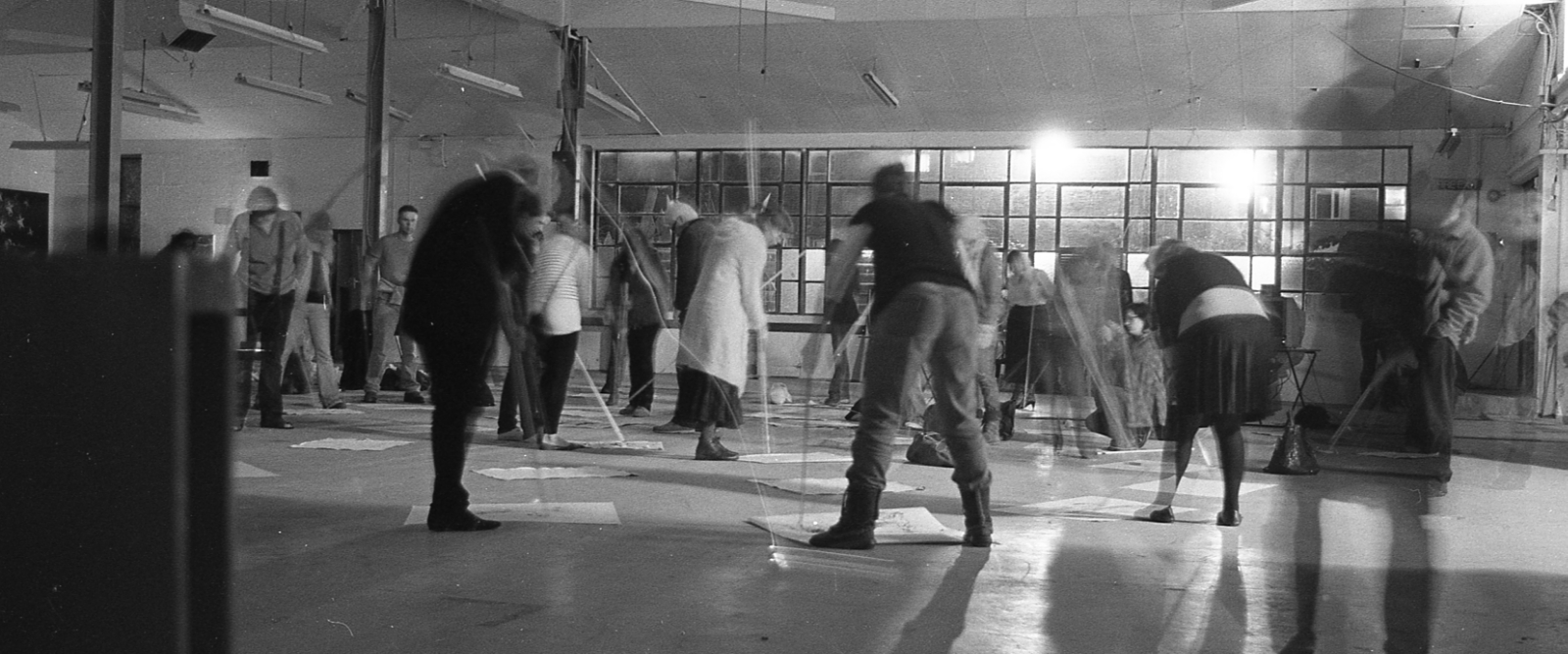
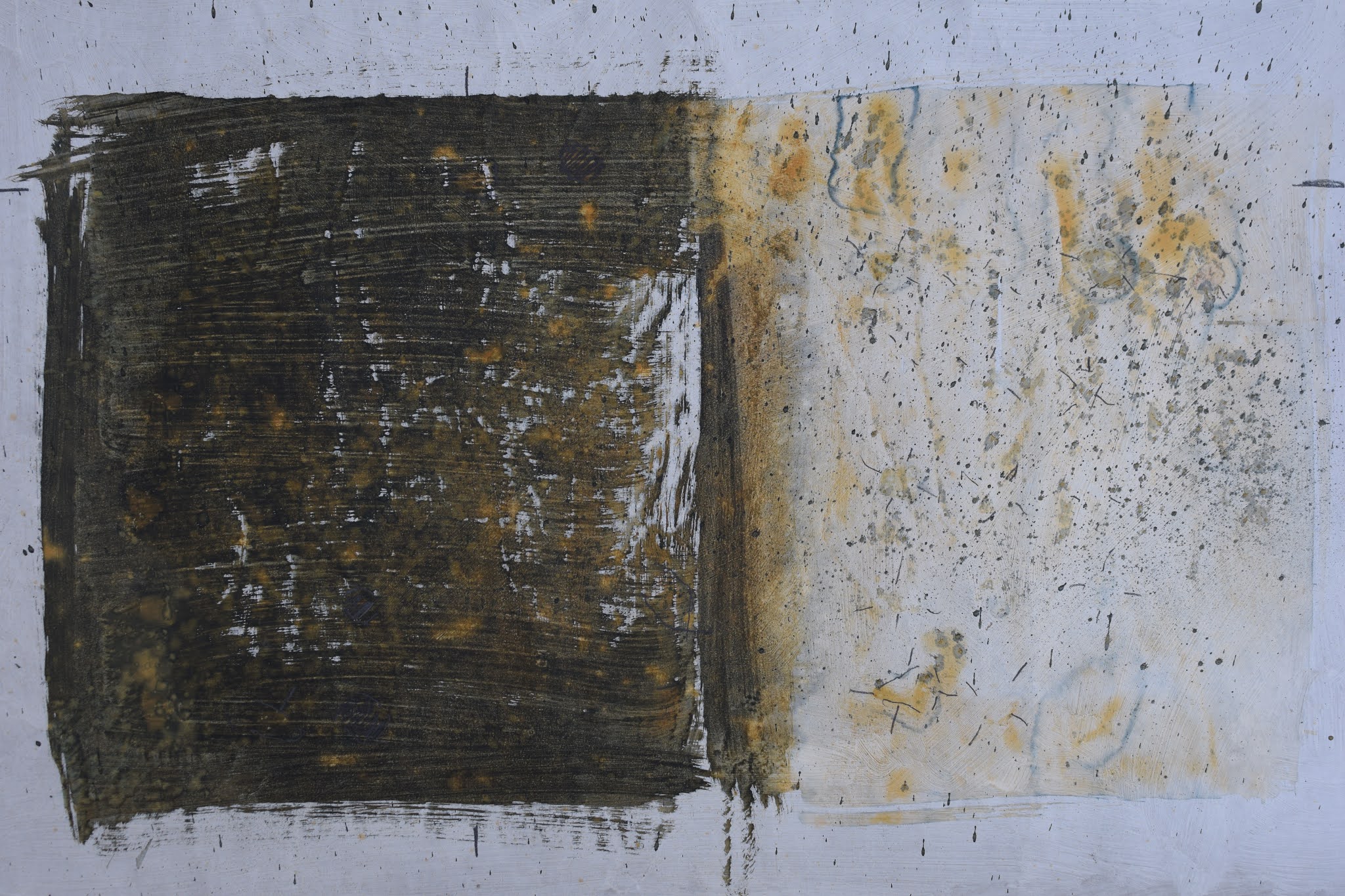
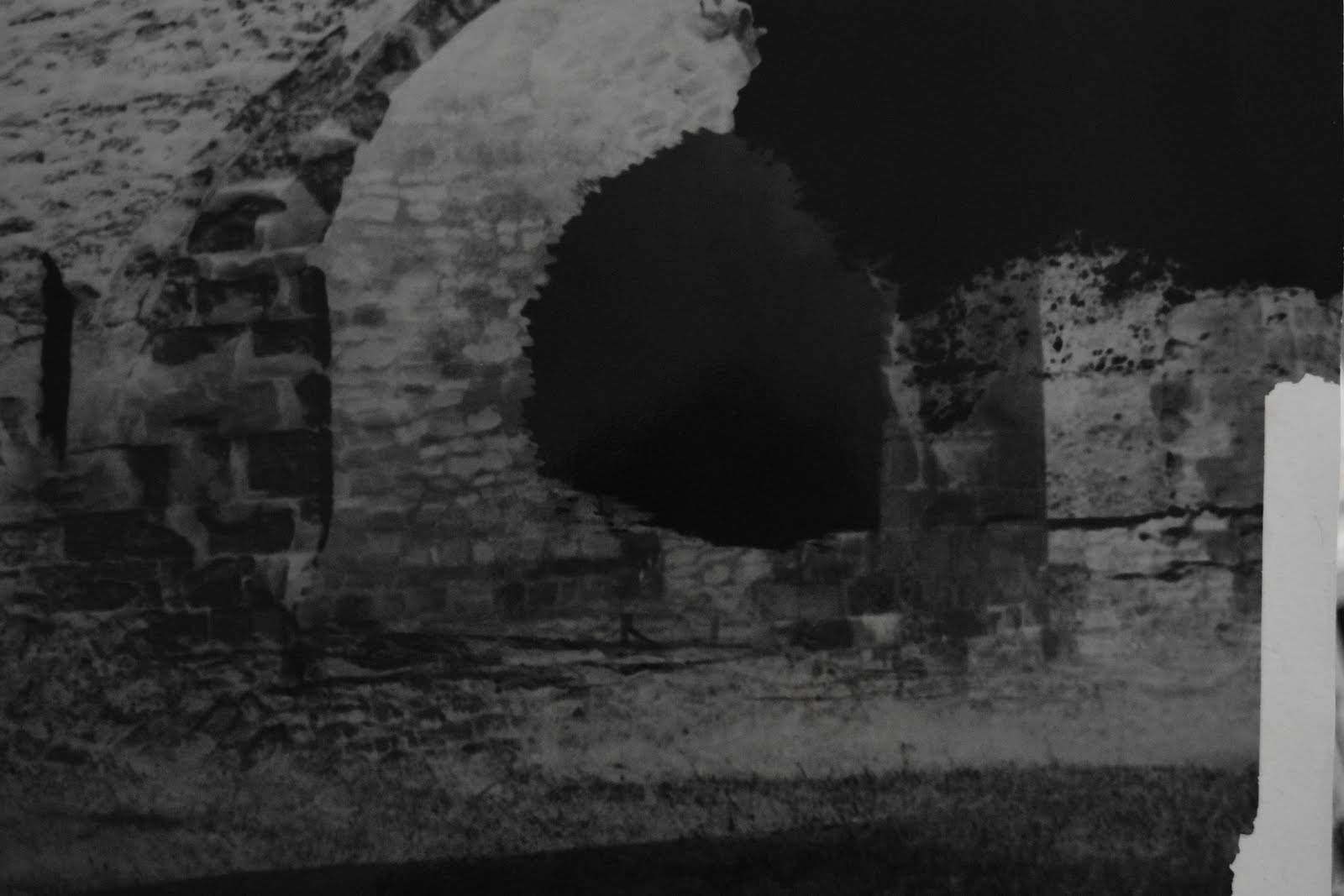
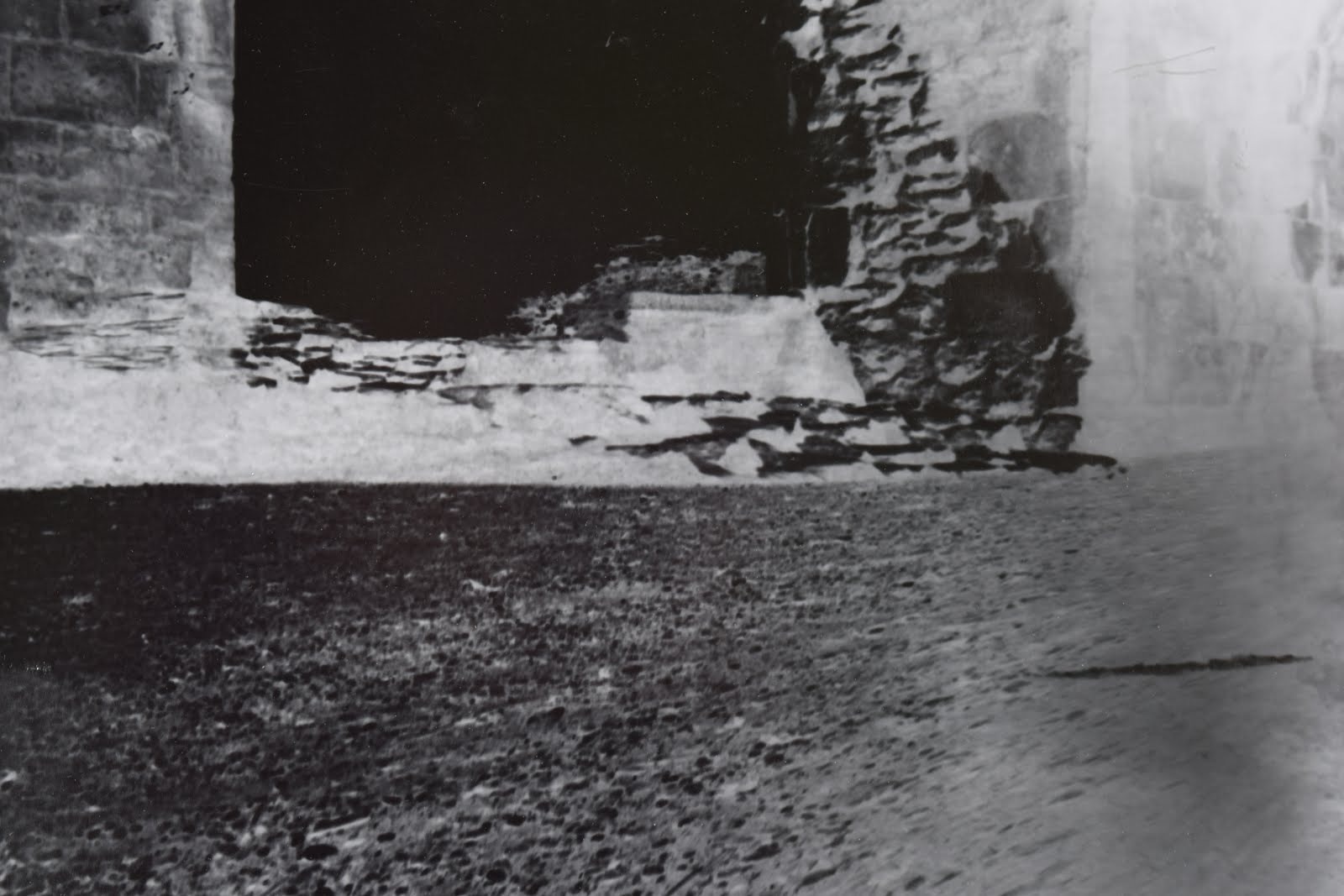
    OUTPOST Studio/Cyanotype Process Painting

    THE MYTH:

    PLINY THE ELDER : NATURAL HISTORY,translation H. Rackham 1952. BOOK 35

    Origins of Painting ( XXXV,5).

    The question as to the origin of the art of painting is uncertain and it does not belong to the plan of this work. The Egyptians declare that it was invented among themselves six thousand years ago before it passed over into Greece-which is clearly an idle assertion. As to the Greeks, some of them say it was discovered at Sicyon, others in Corinth, but all agree that it began with tracing an outline round a man s shadow and consequently that pictures were originally done in this way, but the second stage when a more elaborate method had been invented was done in a single colour and called monochrome, a method still in use at the present day.

    Plastic art. Early stages. Butades and others. (XXXV ,43 ).

    Enough and more has now been said about painting. It may be suitable to append to these remarks something about the plastic art. It was through the service of that same earth that modelling portraits from clay was first invented by Butades, a potter of Sicyon, at Corinth He did this owing to his daughter, who was in love with a young man ; and she, when he was going abroad, drew in outline on the wall the shadow of his face thrown by a lamp. Her father pressed clay on this and made a relief, which he hardened by exposure to fire with the rest of his pottery ; and it is said that this likeness was preserved in the Shrine of the Nymphs until the destruction of Corinth by Mummius.

    BIBLIOGRAPHY AND REFERENCES: BOOKS:

    Gaston Bachelard, The Psychoanalysis of Fire (Boston :Beacon Press, 1964).

    Roland Barthes, Camera Lucida (Reading: Vintage,2000).

    Roland Barthes, Mythologies ( Reading: Vintage,2000).

    Georges Bataille, Eroticism (London: Marion Boyars Publishers, 2006).

    Eduardo Cadava, Words of Light (New Jersey: Princetown University Press, 1997).

    Italo Calvino, Six Memos for the Next Millennium (London: Jonathan Cape, 1992).

    Tony Cragg, In And Out of Material {Manchester: Cornerhouse Publications,2006).

    Mary Douglas, Purity and Danger (London: Routledge, 1994).

    Ernst Gombrich, Shadows, The Depiction of Cast Shadows in Western Art (London: National Gallery Publications, 1995).

    Antony Gormley, Drawings (London: The British Museum Press, 2002).

    Tania Kovats, The Drawing Book (London: Black Dog Publishing,2007).

    Amelia Opie, The Father and Daughter (Peterborough: Broadview Press,2003).

    Pliny, Natural History Books 33-35 trans H. Rackham, (London: Harvard University Press,2003).

    Maurice Merleau-Ponty, The Visible and the Invisible (Evanston: Northwestern University Press, 1968).

    Victor 1. Stoichita, A Short History of The Shadow ( London: Reaktion, 1997).

    Andrey Tarkovsky, Sculpting in Time (Austin: University of Texas Press, 1986).

    Rose Temkin, Thinking is Form: The Drawings of Joseph Beuys (London: Thames and Hudson, 1993).

    Tracey Warr, The Artists Body ( London: Phaidon Press,2000).

    EXHIBITION CATALOGUES:

    Anthony Bond, Body (New South Wales: The Art Gallery of NewSouthWales,1997).
    Michael Craig-Martin, Drawing the Line(London South Bank Centre, 1995).
    Jacques Derrida, Memoirs of the Blind, The Self-Portrait and Other Ruins (Chicago: Chicago Press, 1993).
    Avis Newman, The Stage of Drawing, Gesture and Act (London: The Tate Drawing Centre, 2003 ).
    Giuseppe Penone, The Eroded Steps (Halifax. Henry Moore Sculpture Trust, 1989).
    The South Bank Centre, The Body of Drawing, Drawings by Sculptors (London: The South Bank Centre, 1993).
    Michaela Unterdorfer, In Search of The Perfect Lover (Baden-Baden: Staatliche Kunsthalle,2003).

    JACQUES DERRIDA THE SCEPTICISM OF DRAWING:

    Jacques Derrida in 1993 wrote an extensive text to accompany an exhibition of paintings from the Louvre. This text titled Memoirs of the Blind, The Self-Portrait and Other Ruins contains within it some particular references to “Pliny’s Origins of Painting.” Together with the aid of illustrations of paintings on this theme, he examines and interrogates their philosophical and historical qualities.

    Derrida makes particular mention and emphasis of the “state of blindness” in his analysis of the Butades myth. In particular the notion of  “scepticism” which is at the very heart of drawing. This notion of the “difference between believing and seeing”1, and what he remarks as “believing one sees and seeing between” evokes the emergence of a “glimpse” caught in a state in which “doubt ever becomes a system“2. There is a moment of delay between the gaze with its vigilance and attention, and what one reflects upon seeing. These actions will conspire to create the moment of conclusion. So by keeping the thing in sight it is being constantly examined but not reflected on, until the point when the gaze is averted to the drawing .It is a this instant, withdrawn from the sight of the object, that a “blindness” forces the recollection (the moment of conclusion to emerge) to which the drawn mark is visual evidence of that moment Derrida makes the observation that representations substitute memory for perception and that blindness is a constant withdrawal into memory. Derrida is of the view that drawings, paintings are “representations drawn most often from an exemplary narrative.” This myth of Butades with its “exemplary narrative” relates directly to the absence or invisibility of (being in) the drawing process whilst in the presence of the object, that the very act of drawing withdrawals and blinds its participant. Butades daughter is “blinded” in the acts of both love and the act of drawing. Through these conditions it can be seen that Butades daughter is blind to the vision of her lover and in drawing around his projection she is forced to recollect and reflect to produce a conclusion of that action by the simple gesture and act of an inscription drawn aided by a flickering silhouette.

    Derrida uses the example of the painting by J. B. Suvee “Butades or the Origin of Drawing 1791” or as it is referred in English as “The Daughter of Butades Drawing the Shadow of Her Lover ” to illustrate that it was “as if one drew only on the condition of not seeing.” The drawing in effect becomes a “declaration of love destined for or suited to the invisibility of the other.”3 Derrida comments that the origin of drawing may have become born from the desire to create some sort of surrogate mark which originates “from seeing the other withdrawn from sight.“4 The important observation Derrida continues to make is that the daughter in “following the traits of a shadow or a silhouette” who is in effect drawing on a blindness which will through recollection, initiates a sense with which she is in effect “already loves in nostalgia.”5

    Derrida dwells on the very nature of drawing moving away from “the origin of drawing” to “the thought of drawing” he comments that the thought of a drawing has a “certain pensive pose, a memory of the trait that speculates, as in a dream, about its own possibility.”6 It is as if the potency of drawings is a projected development that occurs as Derrida states “on the brink of blindness.” This notion of the “trait” (a feature to a line, stroke, or mark) a visible presence that accompanies the lines odyssey, a sense of presence that can witness something of the invisible in the visible is touched upon. ’’Merleau-Ponty’s The Visible and the Invisible is cited by Derrida as having already made “Indications” in this respect Derrida footnote from The Visible and the Invisible seems to sum up something of the invisibility and presence of the trait acting on a drawing. This extract taken from the “working notes” section of the book it reads” One has to understand that it is visibility itself that involves a non visibility.”7

    Distilled from the salient points of Derrida’s extensive interrogation Memoirs of the Blind seems to acknowledge the fact that “whether Butades daughter follows the tracts of a shadow or a silhouette or even if she draws on the surface of a wall or in a veil.”8 the resultant inscription in any event “inaugurates an act of blindness.” Derrida’s revelation is that “perception belongs to recollection.” Butades daughter’s act is in blindness, as if she was drawing a declaration of love that simultaneously that also contains her anticipation of a loss, and as a result, a nostalgia that is reflected upon before it is actually perceived.

    1  . Jacques Derrida, Memoirs of the Blind, The Self Portrait and Other Ruins (Chicago: Chicago Press, 1993),page 1.

    2  .Ibid., page 1.

    3  .Ibid., page 49.

    4  .Ibid., page 49.

    5  .Ibid., page 51.

    6  .Ibid., page 3.

    7   Maurice Merleau-Ponty, The Visible and the Invisible (Evanston: Northwestern University Press, 1968),257.

    8   Jacques Derrida, Memoirs of the Blind, page 51.

    VICTOR I. STOICHITA PLINY’S MYTH:

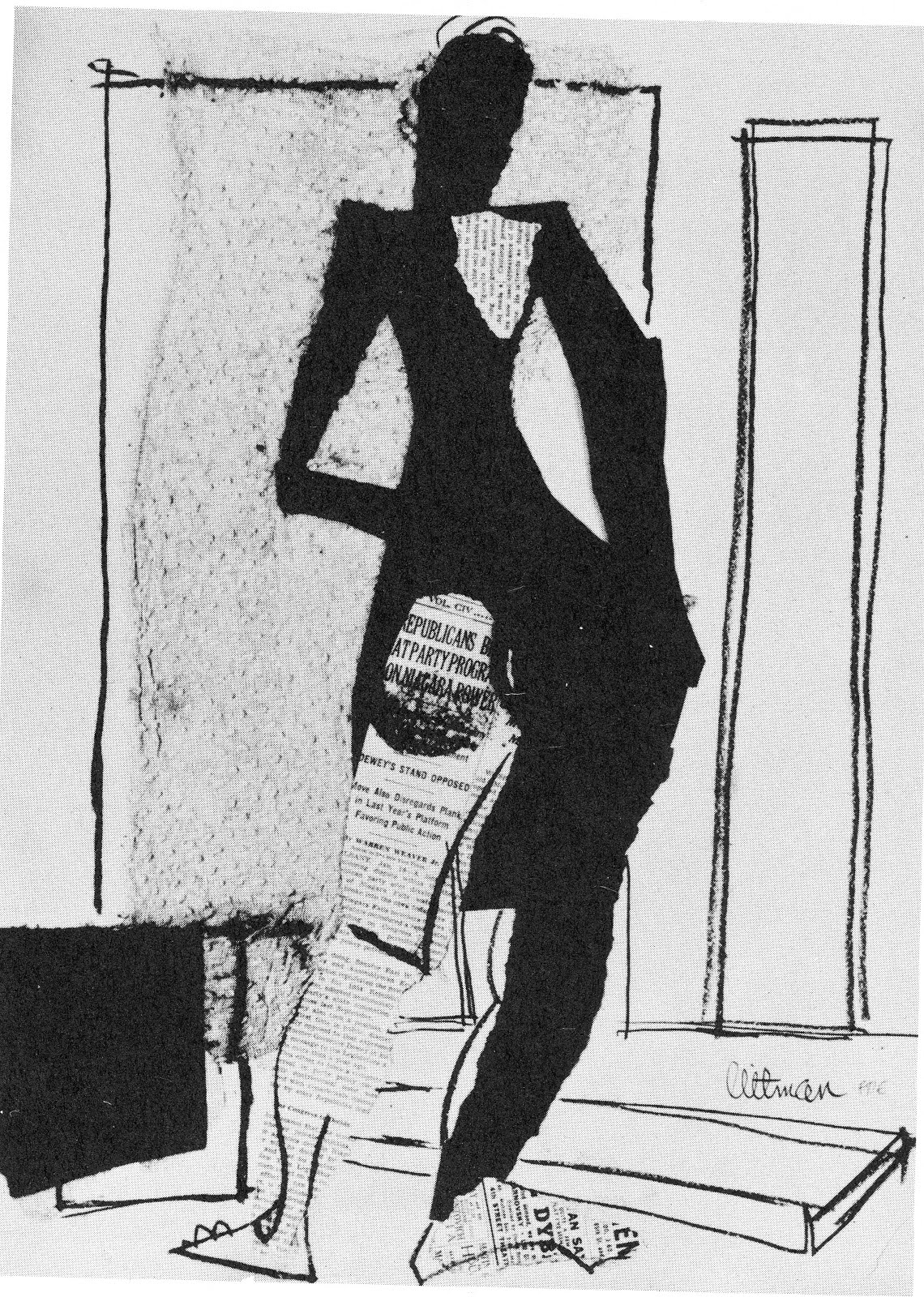
    V. I. Stoichita in his book “A Short History of the Shadow” has analysed “Pliny’s Butades myth,” he makes the point in his introduction “that it is of unquestionable significance that the birth of Western artistic representation was in the negative,1” and that it emerged as such from the projection of the body marking it’s very presence by a projection, a shadow or an eidolen, an image without substance. Butades daughter therefore attempts to capture this intangible immaterial, the double of the one through whom she anticipates her impending loss.

    Stoichita has noted that “Pliny” returns to the myth twice, first to discus the origins of painting and then further on to the production of sculpture. Stoichita elaborates further that Pliny claims that “the Greeks discovered painting, not by looking at Egyptian works of art but by observing the human shadow.” Pliny quotes” but all agree that it began with tracing an outline round a man’s shadow. “Stoichita connects Pliny correspondence as being a “three part theory” in which he Pliny uses early Greek painting, Egyptian painting, and the shadow.

    Stoichita makes the connection that “Plinys approach can be placed at the crossroads of history and artistic mythology.2” Pliny uses a fable as a myth of origin to interpret the historical existence of early Egyptian painting The evolution of painting from this “early shadow stage” is then replaced by the advancement of a mono-chrome painting which was then later replaced by relief and shading now becomes a means of expression not just a support to give a sense of form to an outline.

    1  Victor I. Stoichita, A Short History of the Shadow (London: Reaktion, 1997), page 7.

    2  . Ibid., page 14.

    The Daughter of Butades : Visual Art Winchester. 2008

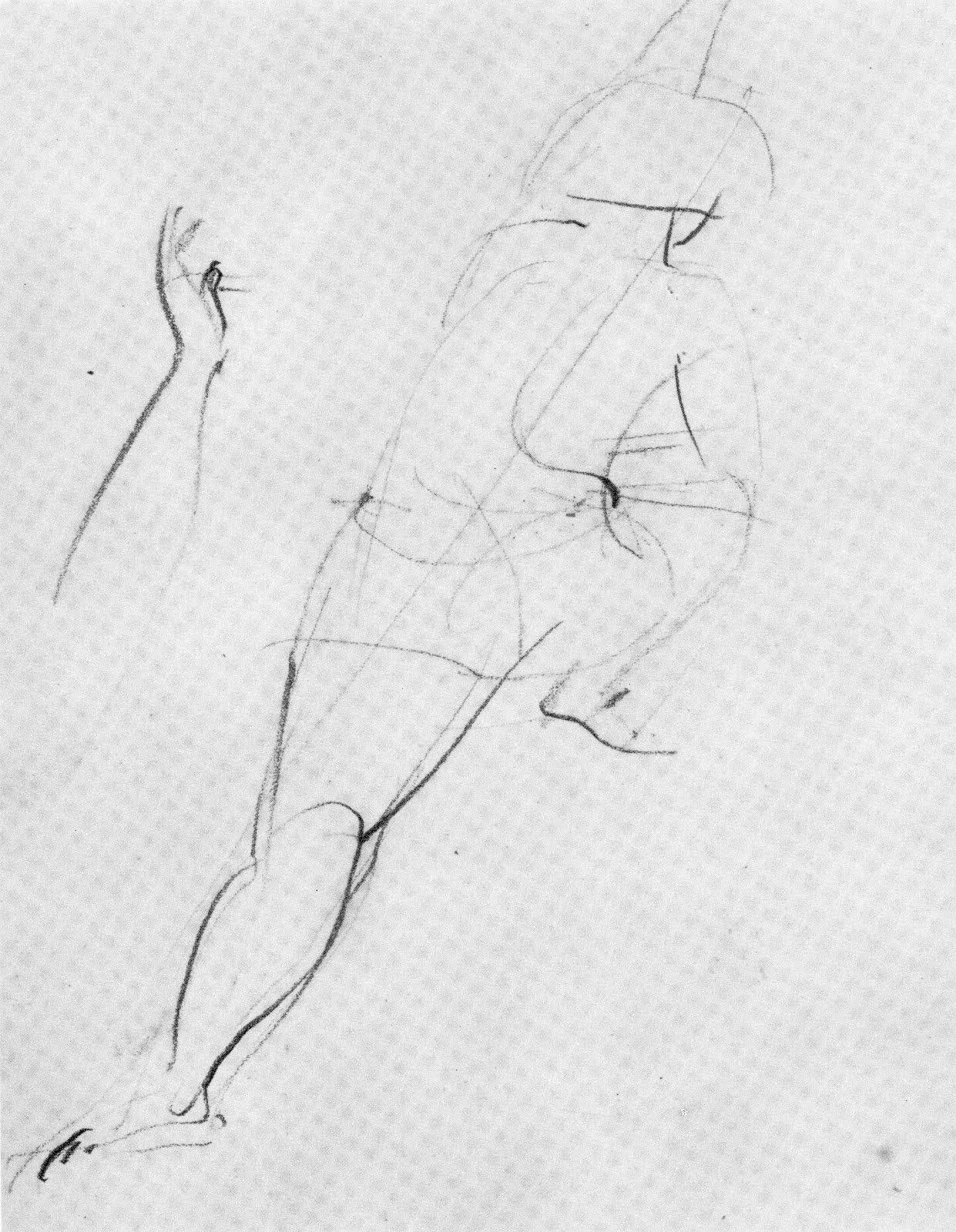
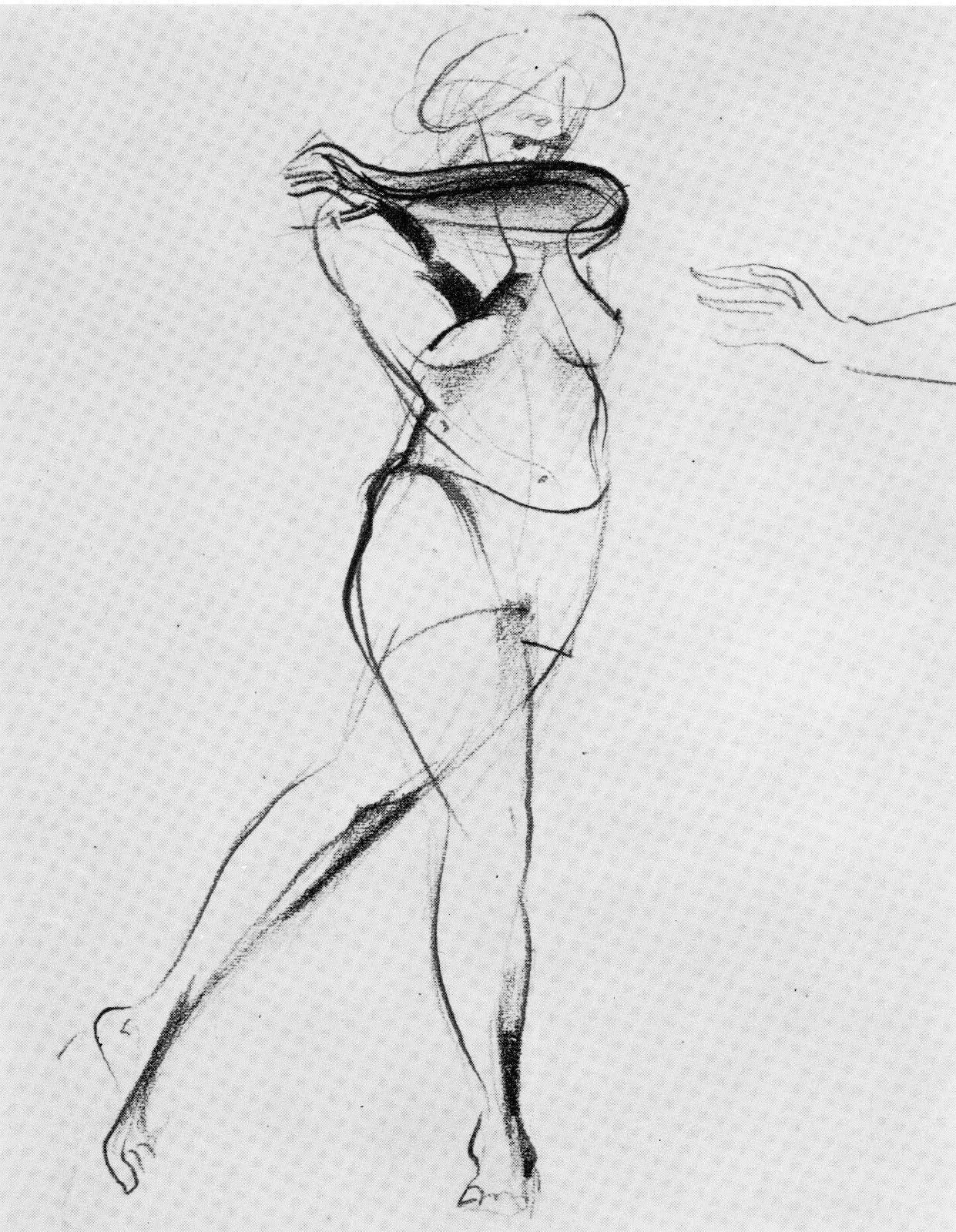
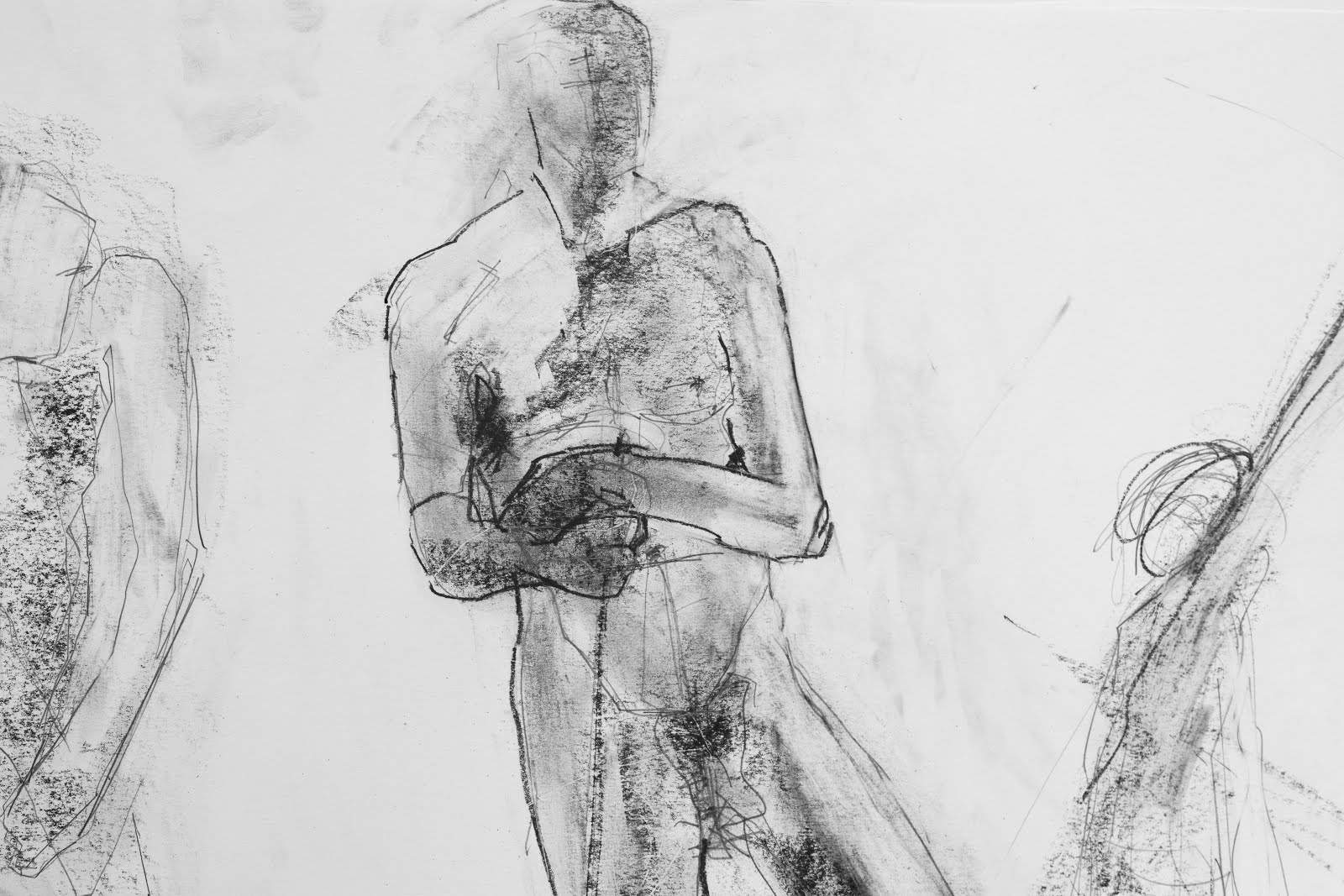
    My research centred on various situations that owe their inspiration to Pliny’s simple concise statement in his Natural History on the “origins of painting and the plastic arts.” My initial reason for selecting this particular mythical tale is its sense of performance through the simple act of drawing. It records the daughter of Butades and her lover, collaborating to produce an intimate trace of her gesture and his presence.

    This performative action is at the heart of contemporary art practice. In some respects this trace is done with a form of blindness as commented upon by Derrida. This blindness of drawing and the blindness of love seem to stimulate the idea of a myth within a myth, one blind to the other. The notion that she is in the act of drawing in the anticipation of loss; and simultaneously she is sensing a nostalgic moment. This all transpires whilst her lover is still present.

    Andrey Tarkovsky manages to suffuse these values into his work. These “poetics” are derived from the enduring sensibilities of mythical language. They allow things of wonder to attach themselves to the everyday. Italo Calvino’s comment “with myths, one should not be in a hurry,” seems at odds with our culture of speed and its overabundance of events and information.

    But ironically this “supermodemity” with its non-places that induce a sort of solitary individuality might actually grant access to a mythical language centred by the very anonymity of these transitional sites. It is into these non-places that Butades daughter cites her act and gesture of an artist. The residue and vestige of what remains is her commenting actions, not some attempt at pictorial representation.

    The inscription or mark which through an authenticity of an artist becomes captured by the place, it becomes marooned, vacated, at a standstill, time passes through somewhat stalled. This trace of authenticity of the contemporary artist becomes an absence marked, a passage and a dimension of possibilities.

    The contemporary artist is already using a language of material residues, and past events from which new languages will evolve.

    Myth must be the lightest historical residue there is; perhaps that is why it can survive on the barest of traces.

    White Noise

    Nocturnes of Silence


    MAKING : Spatial Agency/ Mutual Knowledge/ Discursive Consciousness. Social apparatuses and agents that explore the possibilities of space. Russell Moreton

    Source: The origins of painting and the scepticism of drawing : Architectural surface for a place of study/studio

  • Politics of Architecture : Theorising through speculative spatial (practices)/agency

    Spatial Agency
    Other Ways Of Doing Architecture
    Nishat Awan, Tatjana Schneider, Jeremy Till.
    As buildings become  matters of concern, they enter into socially embedded networks, in which the consequences of architecture are of much more significance than the objects of architecture.
    Beyond Discourse : Notes on Spatial Agency
    Tatjana Schneider, Jeremy Till.
    If we take ‘agency’ in its transformative sense as action that effects social change, the architect becomes not the agent of change, but one among many agents to empower people and spaces.
    Becoming our own agents of progressive politics.
    Spatial Agency, a transformative combination of the discursive and the practical.
    A HUT WITHIN THE INFLUENCE AND NATURE OF ARCHITECTURE
    The discursive and the practical are by no means mutually exclusive as such, they allow the line between discursive and practical consciousness to become fluctuating and permeable.
    Anthony Giddens
    ASSEMBLAGES : THINKING WITH TEMPORAL CONTINUITY
    The tendency of technological culture to standardize environmental condition and make the environment entirely predictable is causing a serious sensory impoverishment. Our buildings have lost their opacity and depth, sensory invitation and discovery, mystery and shadow.
    Juhani Pallasmaa. Hapticity and Time.
    Notes on Fragile Architecture. 2000
    The Scriptorium
     
    Mutual Knowledge and Discursive Consciousness
    Description of Work
    The ruined site of the abbey at Waverley, near Farnham has been appropriated as a site and as a place within which to position and develop architectural and sociological inquires. The design processes of interiors have been employed as a tool to both critique and to create how we might further develop the contents of architecture. This Spatiality and its diffractions of differences and similarities, narratives and subjective experiences are what my interior spaces attempt to initiate.
    Design as a interactive structure, an interlocutory interior in the making of space and spatial relations.
    Interior design presented as an interactive and immersive spatial inquiry
    The Scriptorium brings together a varied and discursive set of objects, texts and interior architectures. This work seeks to understand how the virtual changes physical architecture and how this affects the space between people and buildings. The “performativity of research” is presented through specifically designed apparatuses and partitions. These designed components, made objects together with annotated texts and drawings conspire to create a complex design led inquiry a “Place Study” staged in a niche-like space. This interior presents itself as both distinct and relational to the other projects in the MA Interiors Show. The interior presents the many manifestations of creative research, structures and even symposia that have been developed through engaging with the site. The visualization of the research and the relational architectures rendered through montage and collage explores digital and analogue technologies. This hybridisation and the use of pinhole photography and film footage further explore interests in the field of performance as an immaterial architecture drawn in the presence of place.
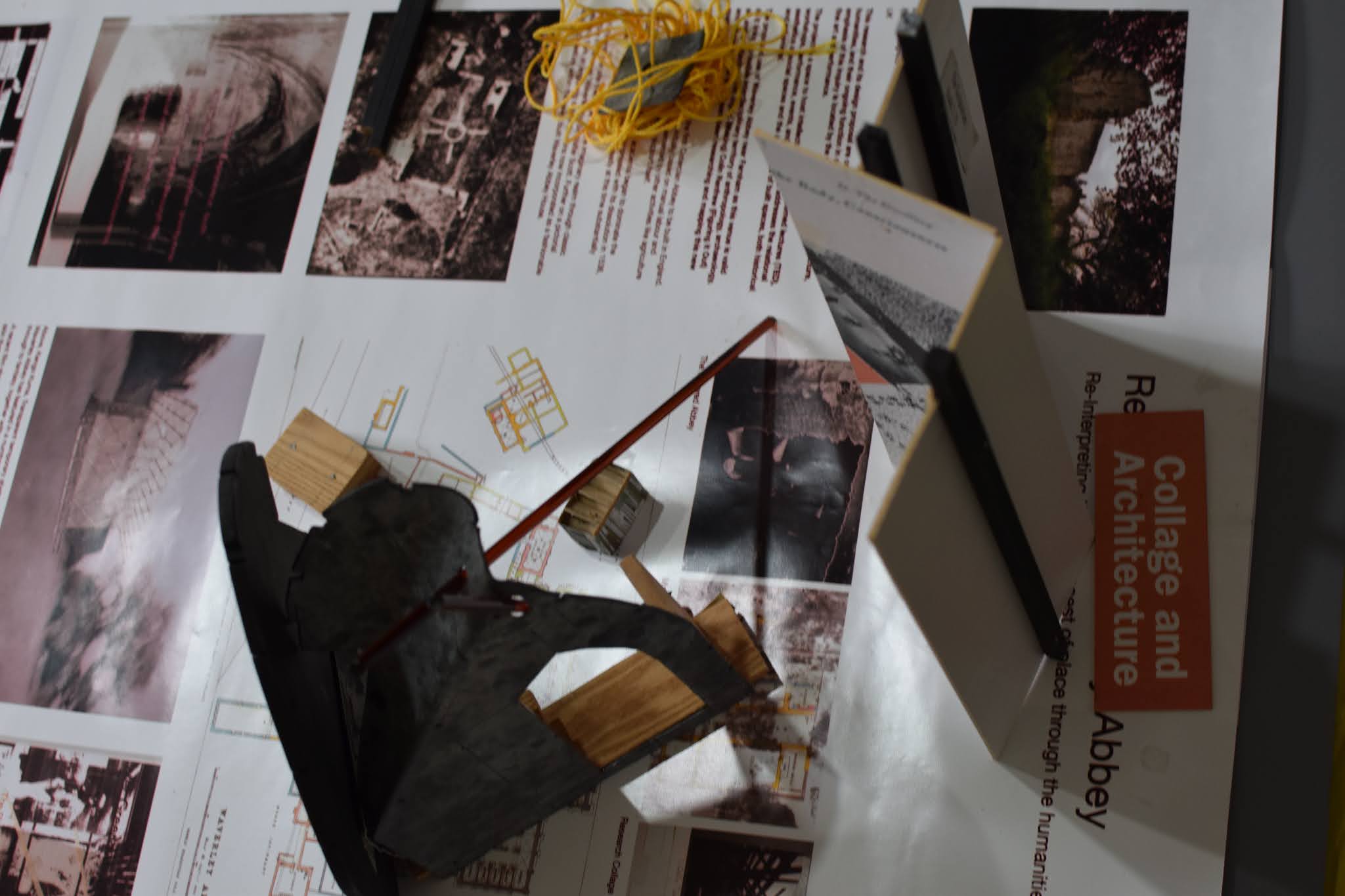
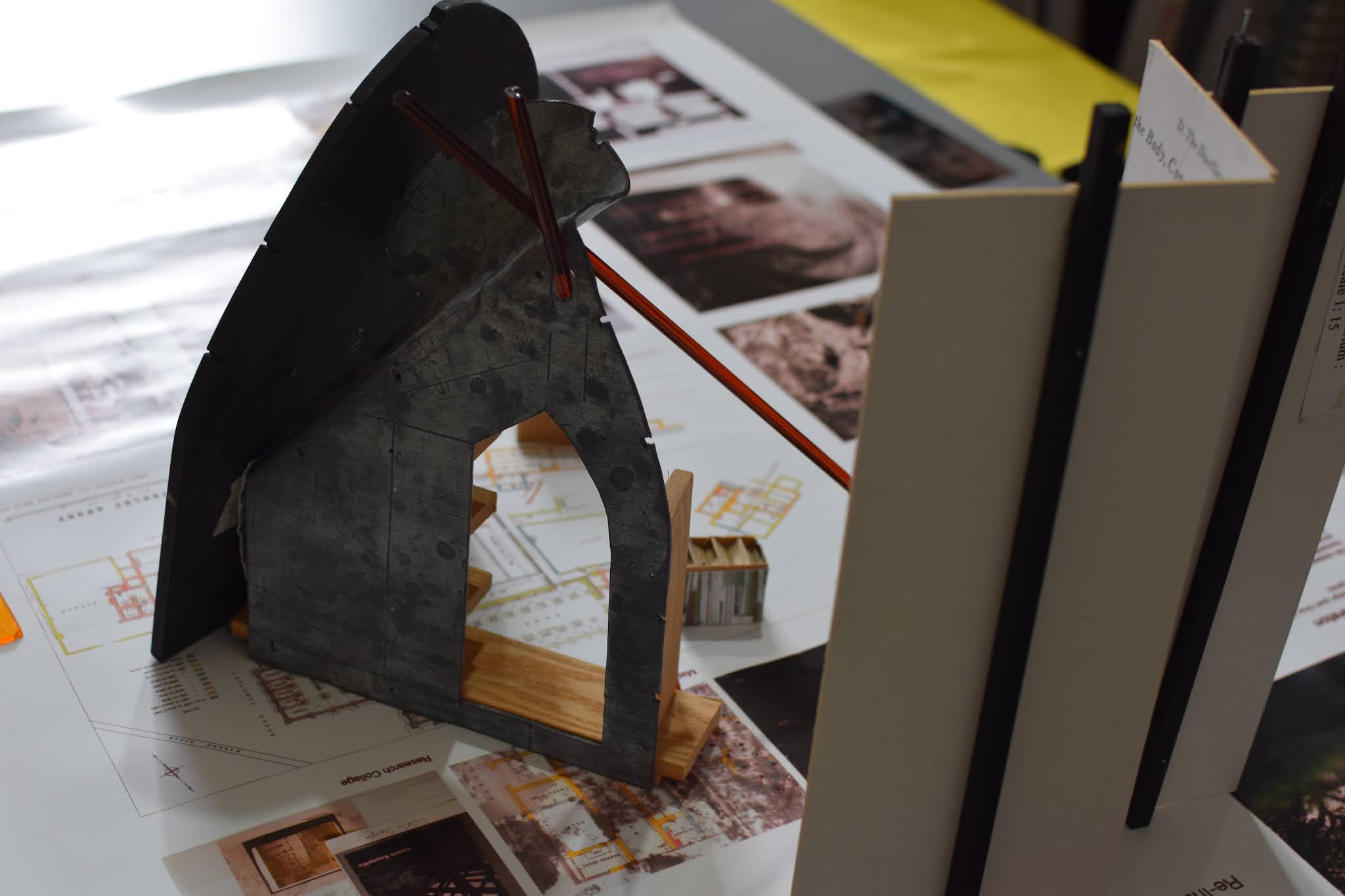
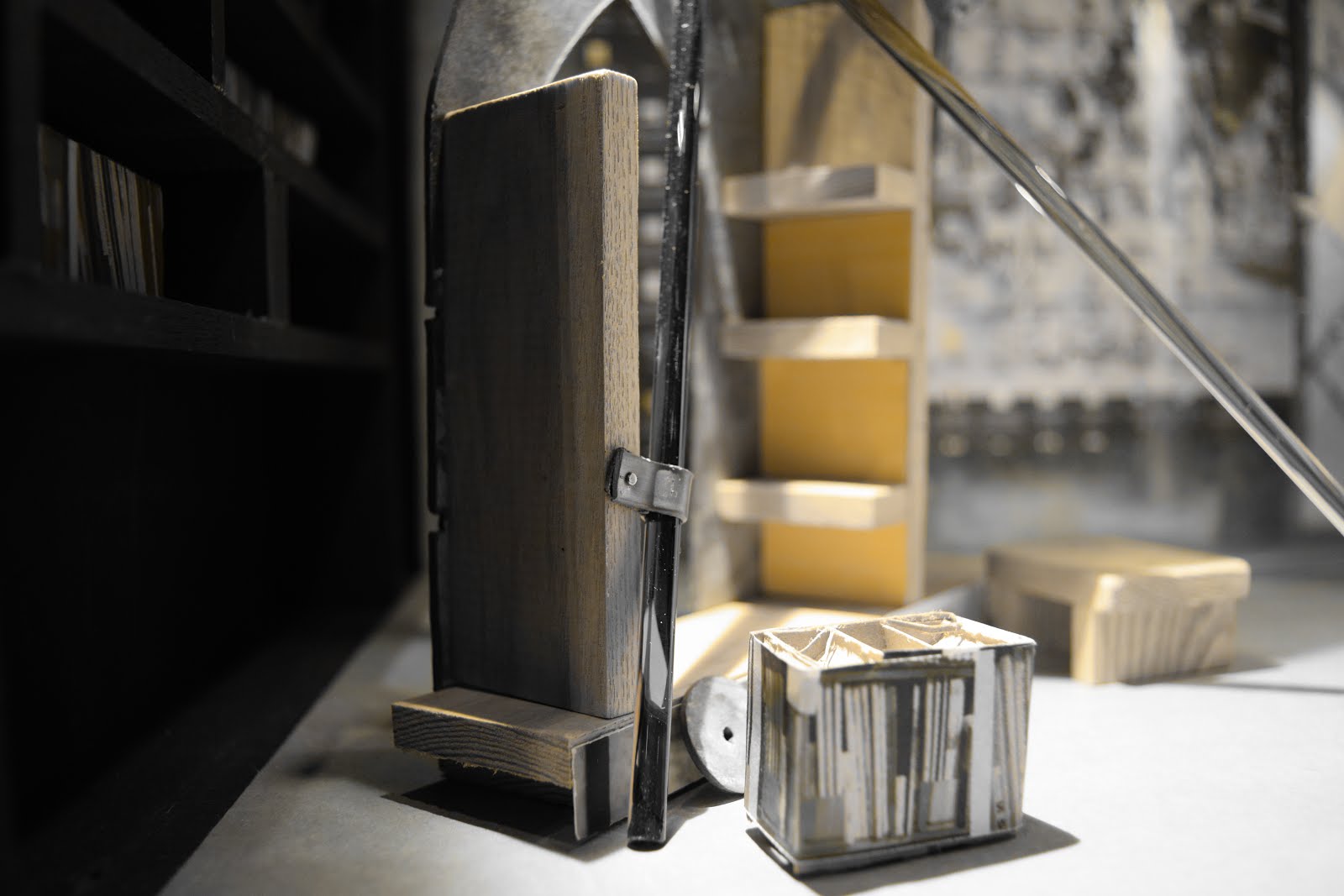
    The realisation of my interiors project consists of two separate but relational elements that are presented into a built environment. The small ‘Scriptorium’ conceived as a space as a refuge, an intimate minimal construction that features a doorway and an interior that contains a place for objects, perhaps books, as well as a small sitting area. This construction, an open cell perhaps is evocative to a state of contemplation between the fabric of the everyday. The rather hybrid design appropriates a merging of minimalism, modernism and the plastic architecture of a ruined Cistercian Abbey. The construction comes into close contact with its occupant, it is a restricted spatial apparatus that attempts to promote through its awkwardness distinctive experiences. In particular the apparatus of the Scriptorium and its materiality is attempting to promote a sensory intensification that is further underpinned by the cognitive processes of reading and perhaps other social dialogues. The sensory intensification of a hut like space promotes a haptic sensibility, allowing the nearness and intimacies of both the built space and the imaginative, virtual realm to become entangled. Ultimately the Scriptorium is trying to build on unique human subjectivities that are manifested through a kinaesthetic repertoire or script that helps to enact further spatial experiences. It might be useful to think of this constructed space as itself still under construction, a site that acts as its own vessel within the multiplicities of human perception itself. The influence of the Cistercian Order, the site of Waverly Abbey and its pastoral landscape, have all contributed to a sense of the design process, The Scriptorium like the ruins themselves is open to the elements. Waverley Abbey remains as a sensory site between the remains of architecture and its society and the effects of our own global culture in the information age.
    In troubled times they all sought to experience life away from social definitions of success or failure. From there, these primitive huts marked personal, original inquires into the ever-mysterious nature of human existence.
    Anne Cline. A Hut of One’s Own
    Life Outside The Circle Of Architecture.
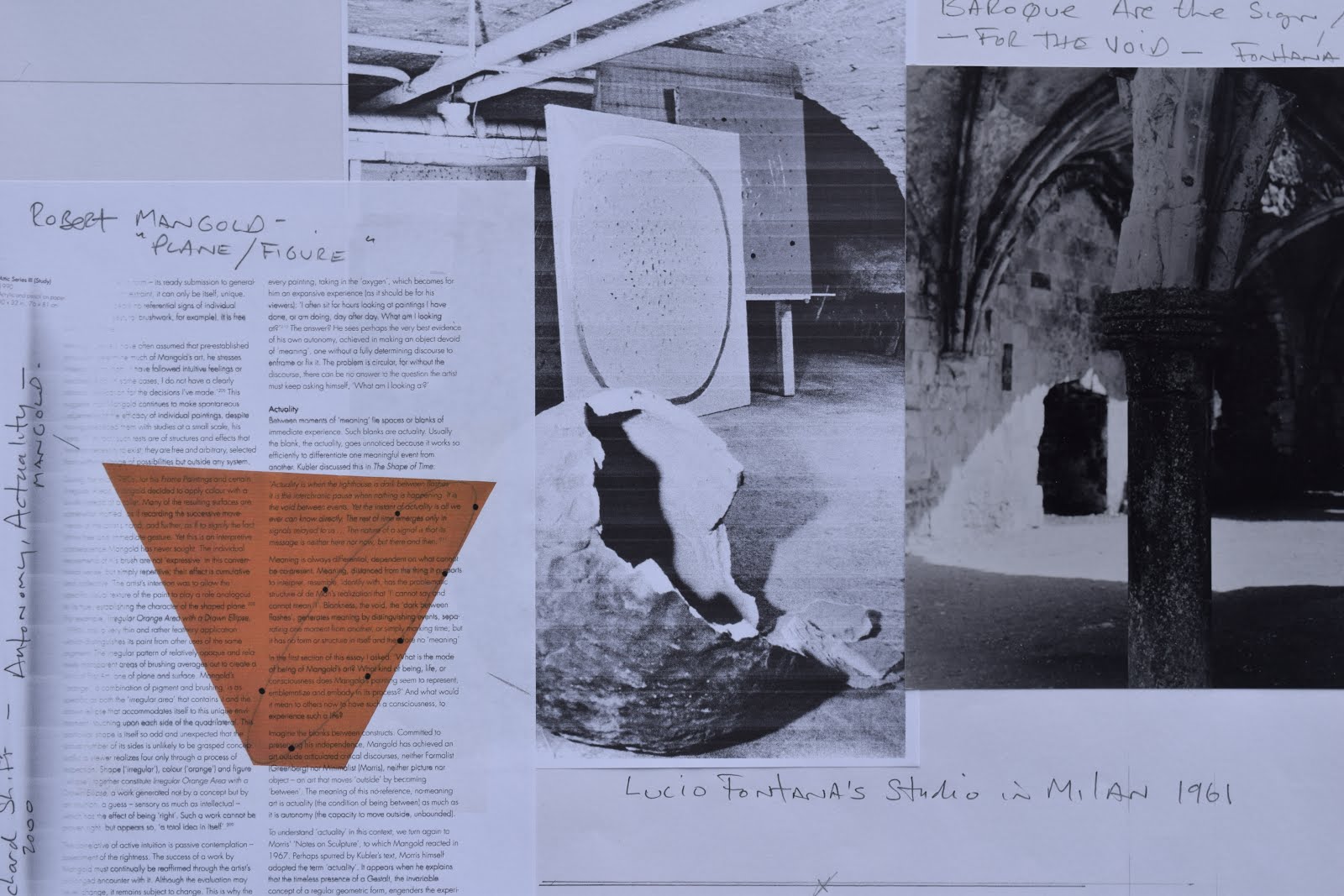
    The Scriptorium began through a research of both architectural themed texts and documentation of the site, and creative practice involving photography (digital, analogue and film) art practices of collage and drawing. The many visits promoted my own subjectivities to the site and these were also frequently subjected to change by the intervention of others in unexpected ways, these social intrusions by other revealed the very boundaries that the historic site engenders, some playful other malicious. These extremities within the social order of the visitors became problematic in designing for the site itself. An earlier proposal to host a Symposium centred on the Arts and The Humanities, that would use the Abbey and its surrounding ground appeared to be a project of vast diversities and logistics better suited to a cultural project through arts management and funding. As the project developed certain creative methodologies around particularities of the site itself began to appear, the notion of palimpsest being one of them. This promoted the idea of a reading room, as an ephemeral interior space that gathers up the experiential values of ‘ruins’ and re-enacts them as a site to explore the architectures of images. It became apparent that ‘palimpsest’ could be both a visual surface of erasures, earlier markings partially over written by newer ones ‘annotations’ and it could be a scaffold of developing ideas clearly visible merging as adaptations into the very usage of the site.
    These re-imaginations through the notion of palimpsest seemed filmic and as such they would able to display a vast amount of diversities and subject matter, a library of recourses that would require users or an audience or both. The referencing of the reading room to the library, and the symposium to the cinema or theatre allowed me to realise that I was dealing with a number of spatial arrangements that needed to develop together, but which could be employed separately.
    In an era in which architecture is once more learning its potential as a form of inquiry, rather than as a service- as a producer of knowledge, and not merely of ‘projects’
    Brett Steele. Atlas-Tectonics in Barkow Leibininger.
    Bricoleur Bricolage. AA. 2013

    Inquiry is essentially the way of learning

    J Krishnamurti. The Cultivation of a Good Mind
    Brockwood. 1963
    The theatre of research became the vehicle in which to see if this collaboration might be possible.
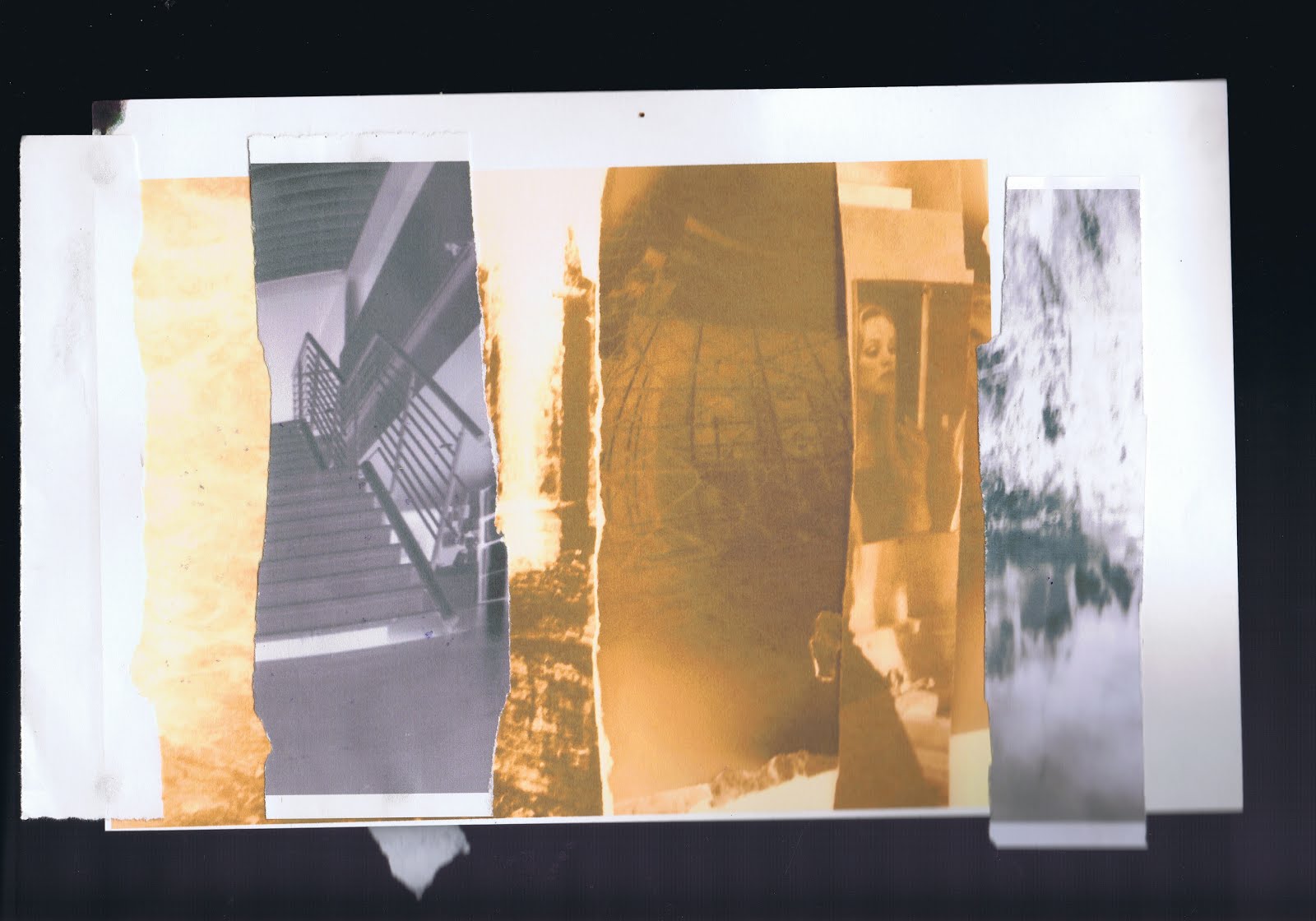
    The use of the image and text in my architectural collages allowed me to visualize associations, to create the possibilities of interior spaces that might be manifested into the built environment. The use of the collage in Architecture is widely acknowledged, architects from the likes of Mies van der Rohe, Daniel Libeskind and Rem Koolhaas.
    The ability of the collage process to juxtaposition fragments, images and texts from irreconcilable origins into an experience, that is visual, tactile and time-based makes it an interesting tool into the realms of architectural design. Collage begins to visualise not only the structure of spaces but also there content and circulation. The theatre of research is interested in how to promote collage and its use as a cognitive and perceptive tool in architecture.
    Collage and montage are quintessentially techniques in modern and contemporary art and filmmaking. Collage combines pictorial motifs and fragments from disconnected origins into a new synthetic entity, which casts new roles and meanings to the parts. It suggests new narratives, dialogues, juxtapositions and temporal durations. Its elements lead double-lives; the collaged ingredients are suspended between their originary essences and the new roles assigned to them by the poetic ensemble.
    Juhani Pallasmaa. The World is a Collage
    Jennifer A. H. Shields. Collage and Architecture
    Reflective Analysis
    Both the Scriptorium and The Theatre Of Research exist only in the form of the exhibition presentation. What they singularly of together propose can only be imagined through their manifested form as static objects placed within a built structure that loosely references architectural concerns and materials. They appear diminished and assigned to the voyeuristic gaze of the visitor that is equally curios and dismissive. These objects and the interior spaces they promoted seem stilled and stalled, as much they appear beyond reach as if the authenticity of their materials and construction have some how been subsumed by their stature and scale. The issues and qualities of which they are attempting to speak of seem reduced by the hegemony of vision, there is little hapicity and time to encounter, only it seems by investing narratives can we begin to re-enact the spatial encounter.
    The question I ask is do these objects and their interior spaces cause me to think beyond mere representation and recognition, or rather do they create enough of an encounter to force me to engage with them, even if I or the viewer are un-certain as to their meaning or possible outcome. Deleuze comments that something forces us to think. This something is not an object of recognition, but a fundamental encounter. Something that challenges us. Have these miniature architectures of objects become relational, do we start to use them in perhaps a heuristic manner, a hands-on approach to learning or inquiring, something that we can discover for ourselves. This heuristic finding-out could be made informative through collective collaborations and exhibition through the theatre of research. Is design stripping us of our qualitative spaces as the digital tooling removes the makers trace.
    The model object has served as a thinking place in the development of the idea of the Scriptorium. The materials used and their proportions echo interests in Minimalist Sculpture, the intervals between things in the work of Donald Judd and the architectural languages of memory and tectonics of the craftman turned architect Peter Zumthor. This open sided hut seems cut away almost anatomical as if we were looking into the internal workings of an environment and resident. The structure would have to be made relational to its surroundings if it were to be placed in the landscape. Adaptations to weather the structure, to make it serviceable for use. The Scriptorium has analogues to the notion of a fire-place and its chimney stack. It is a the heart of a building the place of warmth, of dialogues and under the influence through fire of the imagination. The incompleteness that surrounds the scriptorium creatively asks for further design proposals that are even more site specific. The Solar Pavilion built by the Smithsons utilised the old fire place and chimney from the demolished cottage. Around this central element they developed the beginnings of their Modernist (Brutalism) pavilion, an architecture clad with glass, wood and zinc and contained by a walled garden and situated in the pastoral landscape of Wiltshire. Furthering the themes of being in the landscape the Scriptorium could become an observatory, as place from both to look out from and also to look in. The mobility or need to be re-assembled from site to site could promote innovative design solutions as well as interesting detailing or use of materials and surfaces that would facilitate interactions between visitors.
    The notion of the Scriptorium becoming clad by an exterior skin, an ephemeral membrane which would then render the differences between the interior and the exterior into the realms of an almost immaterial architectural experience; in as much as the usual distinction between the unpredictable forces of nature outside and the predictable domestic spaces inside. This prompt further investigation into an architecture that blurs the boundaries of both architecture and nature, this could be further explored through the notion of quixotic gestures, art and performance that can capture the experience and the experiential engagement with the natural elements. The Scriptorium becomes the centred structure of remnant that is surrounded by an architecture that can create imprecise boundaries through inconsistent materials. This spatial arrangement will create its own qualitative responses, dialogues and subsequent movements. Architecture in this context becomes purely a sensorial response.
    The body as the vector for active mediation with the world of the spirit. The body is the instrument of a qualitative evaluation, the measure of intensity, which alone is capable of giving space extension and modifying it. Space is no objective parameter; it must be ‘excavated’ related to the mobile living parametrics of the body.
    Frederic Migayrou. Architectures of the Intensive Body.
    Yves Klein. Guggenheim. 2005
    Mark Prizeman. Intensity.
    Ephemeral, Portable Architecture.
    Time, space and existence are amongst the greatest of themes-so great that we could never be so presumptuous to think we could do them justice, and too close that we could ever escape them, whether with our thoughts or actions, in life or in art.
    Peter Lodermeyer. Personal Structures
    Time. Space. Existence. 2009
    My design project has attempted to produce spaces and their interiors together with the apparatus of the Scriptorium that qualitatively seek to inquiry into the world we inhabit. The Theatre of Research attempts to establish some sense of a community that can do field work that invigorates the perception of the environment. My own interests are centred through experientially and mindfully exploring voids, cavities, and spaces between things, together with use of clay, glass and other vernacular materials. As an interior designer/artist I have become experiential to the agency of spaces. The theatre of research becomes a meeting place for furthering my programme initially proposed as a symposium at Waverley Abbey.
    Through experiencing familiar images, smells, sounds, and textures, but also through making certain familiar movements and gestures, we achieve a certain symbolic stability. Disrupt that familiar world, and our psychic equilibrium is disturbed. From this we can surmise that home, and the operations performed at home, are linked intimately with human identity. Architecture, it would seem, plays a vital role in the forging of personal identities.
    Neil Leach. Camouflage
    Analysing the desire to blend-in with our surroundings.
    Reflective Critique/Appraisal.
    How might I start again?
    The Scriptorium would need to collect up and question considerable more qualitative data. Some sort of portable shelter, lightweight and offering some protection from the elements; would have allowed longer periods of stay and the possibility of experiencing different times of day. The activity of walking to the site, of having to incorporate it into a journey would help to create a stronger sense of place and routine. I am interested in the ‘thingness’ of this place, its influence and how its influence might be transposed into a methodology of reading, theorising and making. I am reminded of the Peter Brook who deliberately demolished his avant-garde theatre building Bouffes du Nord in Paris so as he could create a more emotionally responsive space for theatre. It is this under the influence of the Abbey, which I wish to explore as a creative catalyst, a tool that picks up on its differences as qualitative readings. The ruin by its very nature has re-defined its own architecture from one of form into that of experience, this sense of liminality or immateriality that constitutes itself as the architectural experience.
    A good space cannot be neutral, for an impersonal sterility gives no food to the imagination. The Bouffes has the magic and poetry of a ruin, and anyone who allowed themselves to be invaded by the atmosphere of a ruin knows strongly how the imagination is let loose.
    Peter Brook. The Open Circle
    Andrew Todd. Peter Brook’s Theatre Environments. 2003
    How might the performartivity of research be staged, and into what contexts might it be appropriated?
    As Hans Ulrich Gumbrecht notes, we live in a culture of meaning, not in a culture of presence. We constantly produce effects of meaning and multiply them with mass media. This applies not only to the humanities but also to a large degree to our wholly normal everyday lives. And in this respect, our experience of presence is getting drastically lost.
    Art works may never completely be explained by theory or meaning. The sensual, material makeup of the work in its presence is not the cinders, slag, and ashes, the undigested remains of theory, but remains of an intensified moment.
    Peter Lodermeyer.Time, Symposium Amsterdam 2007.
    Personal Structures, Time, Space, Existence.

    SENSORY THEATRE

    EX MACHINA, Robert Lepage
    While Legage continues to pioneer the use of technology, his work is imbued with an intimacy and humanity that few can match. Edinburgh festival 2015
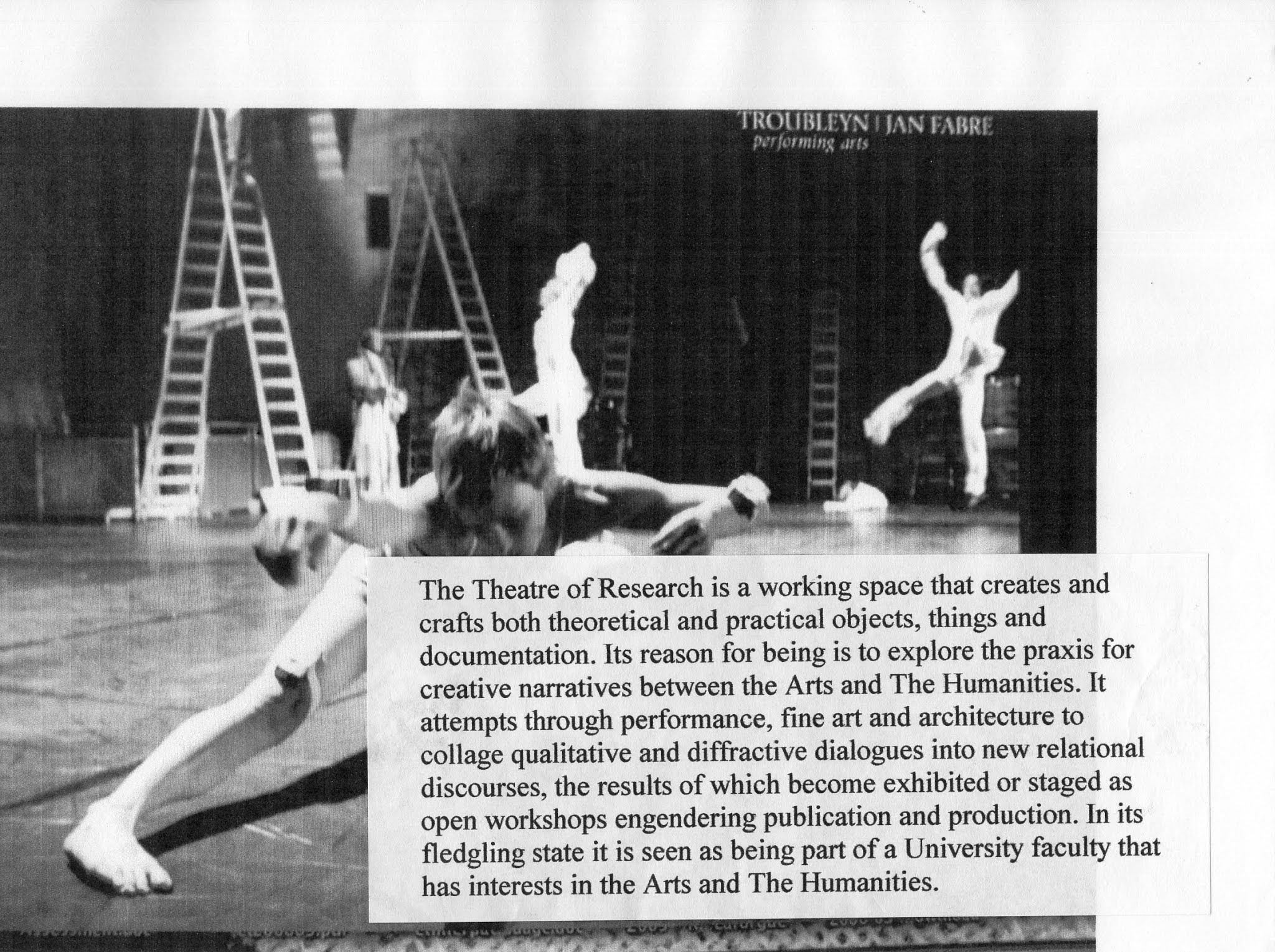
    ABBATOIR FERME, Jan Fabre (Troubleyn, Performing Arts)
    A SOMATIC ARCHIVE, of subjectivities whose perceptions and environments are going to change forever; like the particularities of the analogue trace in photography that is now becoming a distant experiential condition, an orphan extinct from the subjectivities of its originating culture/organism.
    The Waverley Inquiry
    A Theoretical and Somantic search amongst Ruins and Archetypes
    Historical Perspectives
    Dwelling/Poetics Heidegger
    Archetypes/Symbols Jung
    Flesh and Stone, Richard Sennett
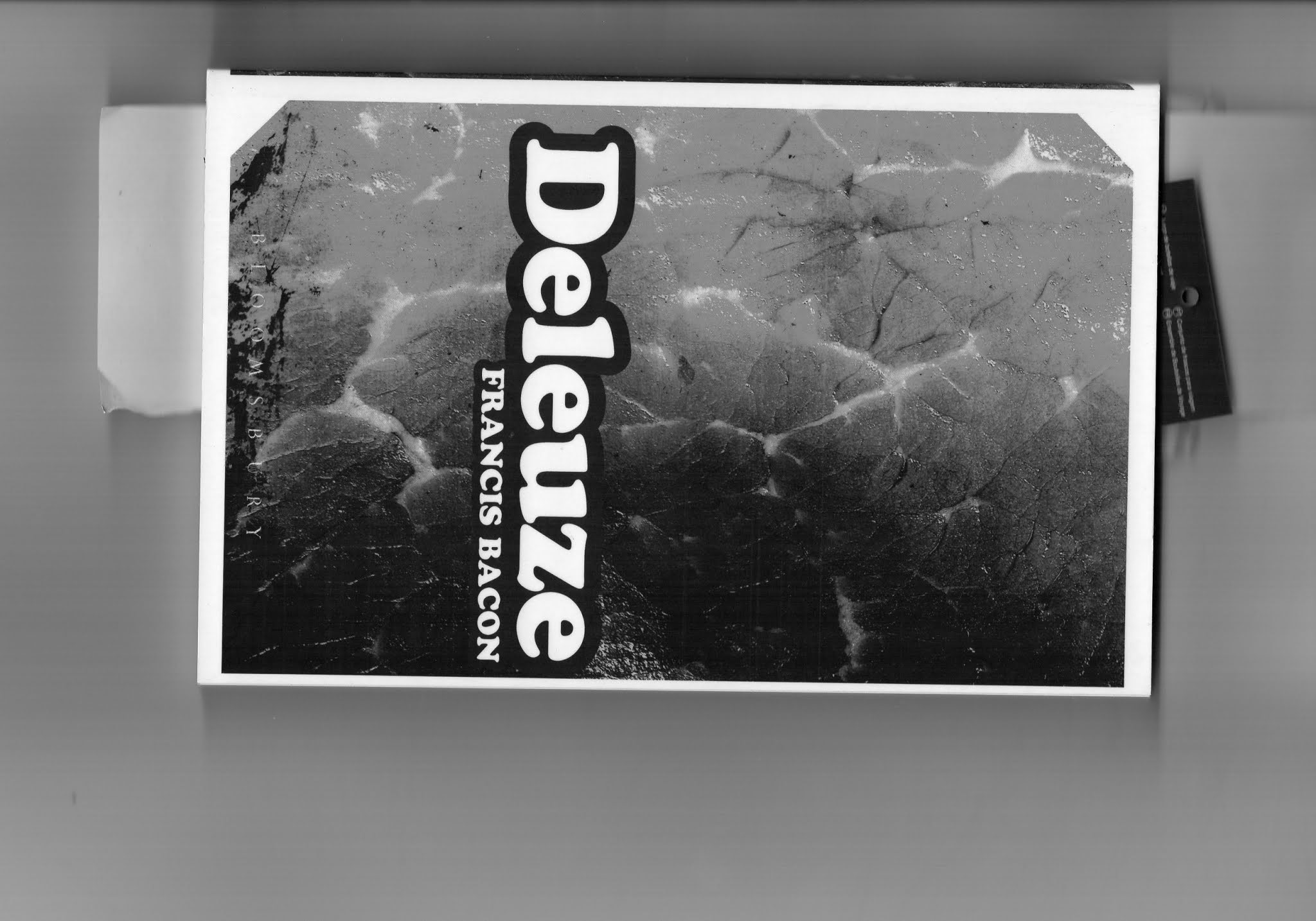
    Flesh and The Logic of Sensation, Deleuze/Bacon
    Contemporary Spatial Practices
    Feminist Geographies
    The Posthuman
    Posthuman thought inscribes the contemporary subject in the conditions of its own historicity.
    Posthuman Subjectivity ,Rosi Braidotti
    LIGHT into SOMANTIC SPACES
    Continuum and Chora (light and the shadow of chora)
    Life expresses itself in a multiplicity of empirical act: there is nothing to say, but everything to do. Life, simply by being life, expresses itself by actualiizing flows of energies, through codes of vital information across complex somatic, cultural and technologically networked systems. (Braidotti, 2013:190)
    De Architectura, Vitruvius
    Architecture consists of order, arrangement, proportion or eurythmy, symmetry and décor, and distribution.
    Arrangement as an “Idea” refers to the Aristotelian notion of “Image-representation” as phaantasia a precondition to drawing, effectively occupying and revealing a space between Being and becoming.

    Contents List from a folder in the Theatre of Research

    Chora Body and Building
    Space as Membrane
    Chora (Exhibition) 1999
    Lessons of a dream. Karsten Harries
    Concrete Blonde: Joanna Merwood
    A probe into the negative spaces where mysteries are created.
    Surrealist Paris : Dagmar Motycka Watson
    The non-perspectival space of the lived city
    Body and Building : George Dodds
    Essays on the changing relation of body and architecture.
    Sphere and Cross : Karsten Harries
    Vitruvian refections on the Pantheon Type
    Body and Building : Marcia f. Feuerstein
    Inside the Bauhaus’s Darker Side
    Desiring Landscapes/Landscapes of Desire. George Dodds
    A Tradition of Architectural Figures: Marco Frascari
    Interwining Metamorphoses : Germano Celant
    On the work of Guiseppe Penone
    Space as a Membrane : Siegried Ebeling
    Unlike a Library the Theatre of Research is a working space that creates and crafts both theoretical and practical objects, things and documentation. Its reason for being is to explore the praxis for creative narratives between the Arts and The Humanities. It attempts through performance, fine art and architecture to collage qualitative and diffractive dialogues into new relational discourses, the results of which become exhibited or staged as open workshops engendering praxis, publication and production. In its fledgling state it is seen as being part of a University faculty that has interests in the Arts and The Humanities. The possible linking with other establishments could be investigated. The working space becomes operational as a studio or laboratory that is engaged with full-time research led activities . Separate yet collaborative spaces and activities promote an environment for inquiry and personal development. The Theatre for research becomes a space that allows for the Post Production of ideas into new forms of social interaction. The theoretical merging with the practical into a relational narrative or methodology that enriches the practices of others, forming both new creative environments that can contain innovative ecologies that can question global perspectives.


    MAKING : Spatial Agency/ Mutual Knowledge/ Discursive Consciousness. Social apparatuses and agents that explore the possibilities of space. Russell Moreton

    Source: Politics of Architecture : Theorising through speculative spatial (practices)/agency

  • Discursive Documents/Architectures of Entanglements : Enchantment/Somantic Affects/Assemblage and Texts

    The dynamic, and hence temporal, nature of space means that spatial production must be understood as part of an evolving sequence, with no fixed start or finish, and that multiple actors contribute at various stages. Spatial Agency, Jeremy Till.
    Exploratory, Textual Entanglements, Perceptual Relationships.

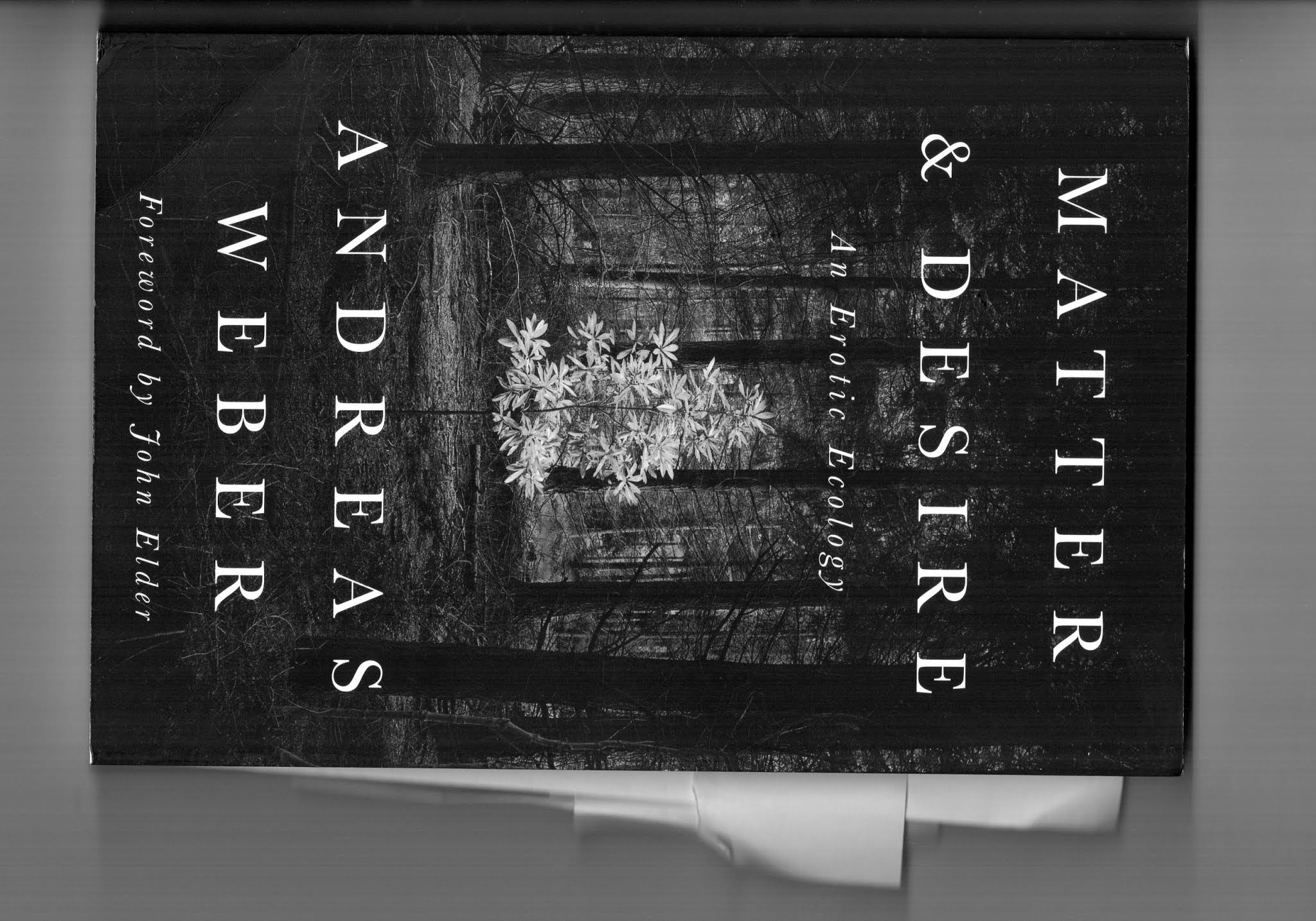
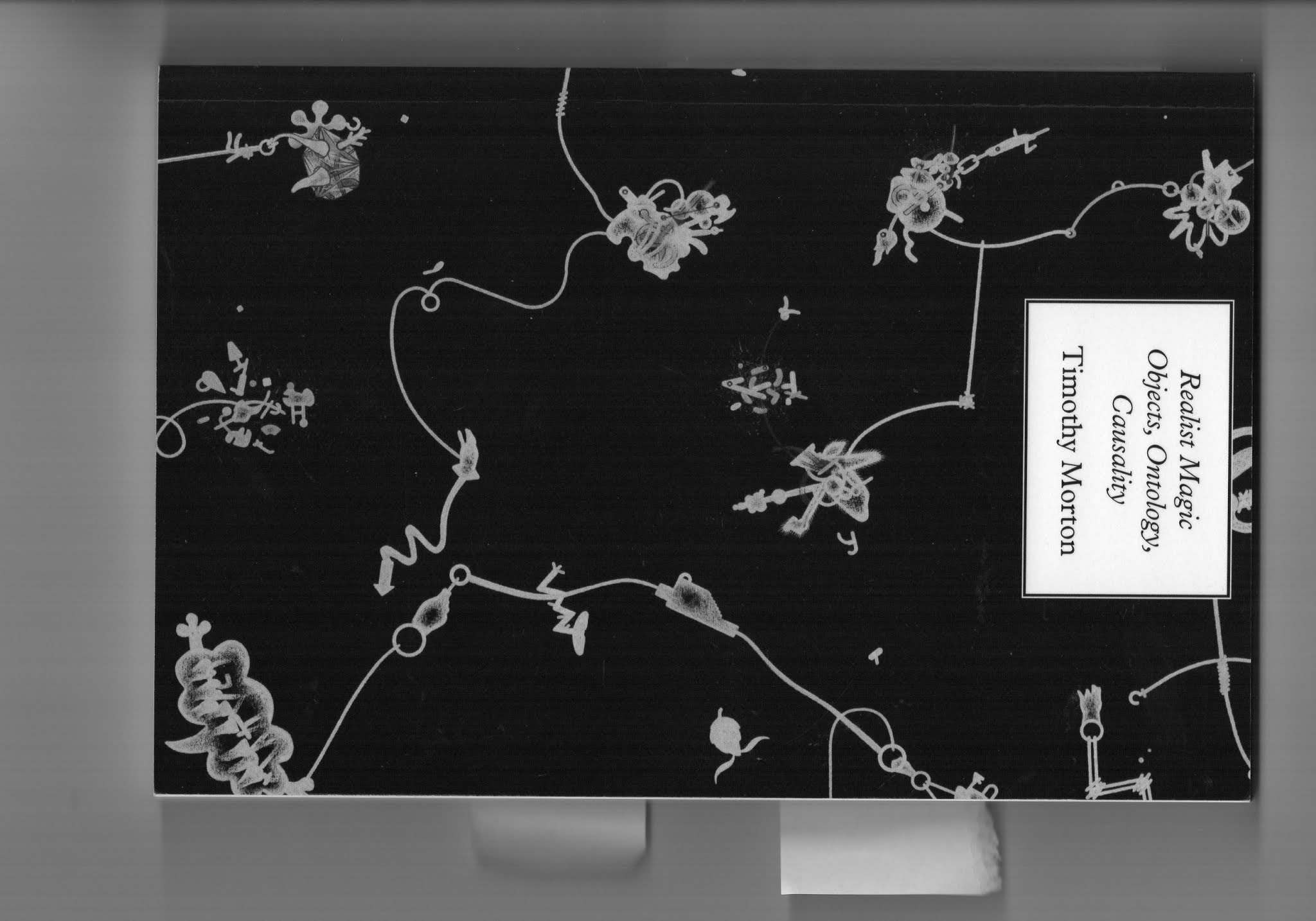
    DSC_8759 Discursive Documents : Enchantment/Somantic Affects, Jane Bennett Assemblage : Aesthetic Convergence Cultivation Field/Vibrant Matter Becoming complicit with materials Realist Magic, Objects, Ontology, Causality. Timothy Morton. 2013 Matter and Desire, an erotic ecology. Andreas Weber. 2017 Vibrant Matter, a political ecology of things. Jane Bennett. 2010 Therese Oulton Paintings and new digital prints Lines of Flight. 2006 Being Alive Essays on Movement, Knowledge and Description Tim Ingold. 2011 MAKING vibrant gaps/assemblages between the texts/images/objects and everyday things LANDSCAPES OF AFFECTIVE AESTHETIC ATTRACTION MATERIALS THEMSELVES become the TOOLS of PERCEPTION Enchantment from the potential of things. The Fabric of thoughts The invisible within the visible (energy,magic,causality) RELATEDNESS, connected to the Place and Function of Things within a Field. Texts, form their own contexts/reflexivity, breaking down phenomena into meaning, conclusions and critique, they render phenomena and its psychic information redundant. We think we know how we should feel sociologically, yet in doing so we deny ourselves the direct affectiveness of people and objects that can provide different perceptual relationships. EMBODIED KNOWLEDGE=ECOLOGY Lygia Clark : A Space open to time. Cornelia H. Butler The World is a Collage Collage and montage are quintessential techniques in modern and contemporary art and filmmaking. Collage combines pictorial motifs and fragments from disconnected origins into a new synthetic entity which casts new roles and meanings to the parts. It suggests new narratives, dialogues, juxtapositions and temporal durations. Its elements lead double-lives; the collaged ingredients are suspended between their originary essences and the new roles assigned to them by the poetic ensemble. Juhani Pallasmaa Hapticity and Time Notes on a fragile Architecture The Perception of the Environment Essay in Livelihood, dwelling and skill Tim Ingold See Yourself Sensing Redefining Human Perception Madeline Schwartzman STILLNESS IN A MOBILE WORLD Bissell, Fuller

    Spatial Agency : Lefebvre’s redefinition of space
    Its production is a shared enterprise.
    Social space is dynamic space; its production continues over time and is not fixed to a single moment of completion. This dynamic inevitably shifts the focus of spatial attention away from the static objects of display that constitute the foreground of so much architectural production, and moves it onto the continuous cycle of spatial production, and to all the people and processes that go into it.
    Social space is intractably political space, in so much as people live out their lives in this space, and so one has to be continuously alert to the effects of that space on those lives.
    Spatial Agency, Other ways of Doing Architecture, Jeremy Till


    MAKING : Spatial Agency/ Mutual Knowledge/ Discursive Consciousness. Social apparatuses and agents that explore the possibilities of space. Russell Moreton

    Source: Discursive Documents/Architectures of Entanglements : Enchantment/Somantic Affects/Assemblage and Texts

  • Politics of Architecture : Theorising through speculative spatial (practices)/agency

    Spatial Agency
    Other Ways Of Doing Architecture
    Nishat Awan, Tatjana Schneider, Jeremy Till.
    As buildings become  matters of concern, they enter into socially embedded networks, in which the consequences of architecture are of much more significance than the objects of architecture.
    Beyond Discourse : Notes on Spatial Agency
    Tatjana Schneider, Jeremy Till.
    If we take ‘agency’ in its transformative sense as action that effects social change, the architect becomes not the agent of change, but one among many agents to empower people and spaces.
    Becoming our own agents of progressive politics.
    Spatial Agency, a transformative combination of the discursive and the practical.
    A HUT WITHIN THE INFLUENCE AND NATURE OF ARCHITECTURE
    The discursive and the practical are by no means mutually exclusive as such, they allow the line between discursive and practical consciousness to become fluctuating and permeable.
    Anthony Giddens
    ASSEMBLAGES : THINKING WITH TEMPORAL CONTINUITY
    The tendency of technological culture to standardize environmental condition and make the environment entirely predictable is causing a serious sensory impoverishment. Our buildings have lost their opacity and depth, sensory invitation and discovery, mystery and shadow.
    Juhani Pallasmaa. Hapticity and Time.
    Notes on Fragile Architecture. 2000
    The Scriptorium
     
    Mutual Knowledge and Discursive Consciousness
    Description of Work
    The ruined site of the abbey at Waverley, near Farnham has been appropriated as a site and as a place within which to position and develop architectural and sociological inquires. The design processes of interiors have been employed as a tool to both critique and to create how we might further develop the contents of architecture. This Spatiality and its diffractions of differences and similarities, narratives and subjective experiences are what my interior spaces attempt to initiate.
    Design as a interactive structure, an interlocutory interior in the making of space and spatial relations.
    Interior design presented as an interactive and immersive spatial inquiry
    The Scriptorium brings together a varied and discursive set of objects, texts and interior architectures. This work seeks to understand how the virtual changes physical architecture and how this affects the space between people and buildings. The “performativity of research” is presented through specifically designed apparatuses and partitions. These designed components, made objects together with annotated texts and drawings conspire to create a complex design led inquiry a “Place Study” staged in a niche-like space. This interior presents itself as both distinct and relational to the other projects in the MA Interiors Show. The interior presents the many manifestations of creative research, structures and even symposia that have been developed through engaging with the site. The visualization of the research and the relational architectures rendered through montage and collage explores digital and analogue technologies. This hybridisation and the use of pinhole photography and film footage further explore interests in the field of performance as an immaterial architecture drawn in the presence of place.
    The realisation of my interiors project consists of two separate but relational elements that are presented into a built environment. The small ‘Scriptorium’ conceived as a space as a refuge, an intimate minimal construction that features a doorway and an interior that contains a place for objects, perhaps books, as well as a small sitting area. This construction, an open cell perhaps is evocative to a state of contemplation between the fabric of the everyday. The rather hybrid design appropriates a merging of minimalism, modernism and the plastic architecture of a ruined Cistercian Abbey. The construction comes into close contact with its occupant, it is a restricted spatial apparatus that attempts to promote through its awkwardness distinctive experiences. In particular the apparatus of the Scriptorium and its materiality is attempting to promote a sensory intensification that is further underpinned by the cognitive processes of reading and perhaps other social dialogues. The sensory intensification of a hut like space promotes a haptic sensibility, allowing the nearness and intimacies of both the built space and the imaginative, virtual realm to become entangled. Ultimately the Scriptorium is trying to build on unique human subjectivities that are manifested through a kinaesthetic repertoire or script that helps to enact further spatial experiences. It might be useful to think of this constructed space as itself still under construction, a site that acts as its own vessel within the multiplicities of human perception itself. The influence of the Cistercian Order, the site of Waverly Abbey and its pastoral landscape, have all contributed to a sense of the design process, The Scriptorium like the ruins themselves is open to the elements. Waverley Abbey remains as a sensory site between the remains of architecture and its society and the effects of our own global culture in the information age.
    In troubled times they all sought to experience life away from social definitions of success or failure. From there, these primitive huts marked personal, original inquires into the ever-mysterious nature of human existence.
    Anne Cline. A Hut of One’s Own
    Life Outside The Circle Of Architecture.
    The Scriptorium began through a research of both architectural themed texts and documentation of the site, and creative practice involving photography (digital, analogue and film) art practices of collage and drawing. The many visits promoted my own subjectivities to the site and these were also frequently subjected to change by the intervention of others in unexpected ways, these social intrusions by other revealed the very boundaries that the historic site engenders, some playful other malicious. These extremities within the social order of the visitors became problematic in designing for the site itself. An earlier proposal to host a Symposium centred on the Arts and The Humanities, that would use the Abbey and its surrounding ground appeared to be a project of vast diversities and logistics better suited to a cultural project through arts management and funding. As the project developed certain creative methodologies around particularities of the site itself began to appear, the notion of palimpsest being one of them. This promoted the idea of a reading room, as an ephemeral interior space that gathers up the experiential values of ‘ruins’ and re-enacts them as a site to explore the architectures of images. It became apparent that ‘palimpsest’ could be both a visual surface of erasures, earlier markings partially over written by newer ones ‘annotations’ and it could be a scaffold of developing ideas clearly visible merging as adaptations into the very usage of the site.
    These re-imaginations through the notion of palimpsest seemed filmic and as such they would able to display a vast amount of diversities and subject matter, a library of recourses that would require users or an audience or both. The referencing of the reading room to the library, and the symposium to the cinema or theatre allowed me to realise that I was dealing with a number of spatial arrangements that needed to develop together, but which could be employed separately.
    In an era in which architecture is once more learning its potential as a form of inquiry, rather than as a service- as a producer of knowledge, and not merely of ‘projects’
    Brett Steele. Atlas-Tectonics in Barkow Leibininger.
    Bricoleur Bricolage. AA. 2013

    Inquiry is essentially the way of learning

    J Krishnamurti. The Cultivation of a Good Mind
    Brockwood. 1963
    The theatre of research became the vehicle in which to see if this collaboration might be possible.
    The use of the image and text in my architectural collages allowed me to visualize associations, to create the possibilities of interior spaces that might be manifested into the built environment. The use of the collage in Architecture is widely acknowledged, architects from the likes of Mies van der Rohe, Daniel Libeskind and Rem Koolhaas.
    The ability of the collage process to juxtaposition fragments, images and texts from irreconcilable origins into an experience, that is visual, tactile and time-based makes it an interesting tool into the realms of architectural design. Collage begins to visualise not only the structure of spaces but also there content and circulation. The theatre of research is interested in how to promote collage and its use as a cognitive and perceptive tool in architecture.
    Collage and montage are quintessentially techniques in modern and contemporary art and filmmaking. Collage combines pictorial motifs and fragments from disconnected origins into a new synthetic entity, which casts new roles and meanings to the parts. It suggests new narratives, dialogues, juxtapositions and temporal durations. Its elements lead double-lives; the collaged ingredients are suspended between their originary essences and the new roles assigned to them by the poetic ensemble.
    Juhani Pallasmaa. The World is a Collage
    Jennifer A. H. Shields. Collage and Architecture
    Reflective Analysis
    Both the Scriptorium and The Theatre Of Research exist only in the form of the exhibition presentation. What they singularly of together propose can only be imagined through their manifested form as static objects placed within a built structure that loosely references architectural concerns and materials. They appear diminished and assigned to the voyeuristic gaze of the visitor that is equally curios and dismissive. These objects and the interior spaces they promoted seem stilled and stalled, as much they appear beyond reach as if the authenticity of their materials and construction have some how been subsumed by their stature and scale. The issues and qualities of which they are attempting to speak of seem reduced by the hegemony of vision, there is little hapicity and time to encounter, only it seems by investing narratives can we begin to re-enact the spatial encounter.
    The question I ask is do these objects and their interior spaces cause me to think beyond mere representation and recognition, or rather do they create enough of an encounter to force me to engage with them, even if I or the viewer are un-certain as to their meaning or possible outcome. Deleuze comments that something forces us to think. This something is not an object of recognition, but a fundamental encounter. Something that challenges us. Have these miniature architectures of objects become relational, do we start to use them in perhaps a heuristic manner, a hands-on approach to learning or inquiring, something that we can discover for ourselves. This heuristic finding-out could be made informative through collective collaborations and exhibition through the theatre of research. Is design stripping us of our qualitative spaces as the digital tooling removes the makers trace.
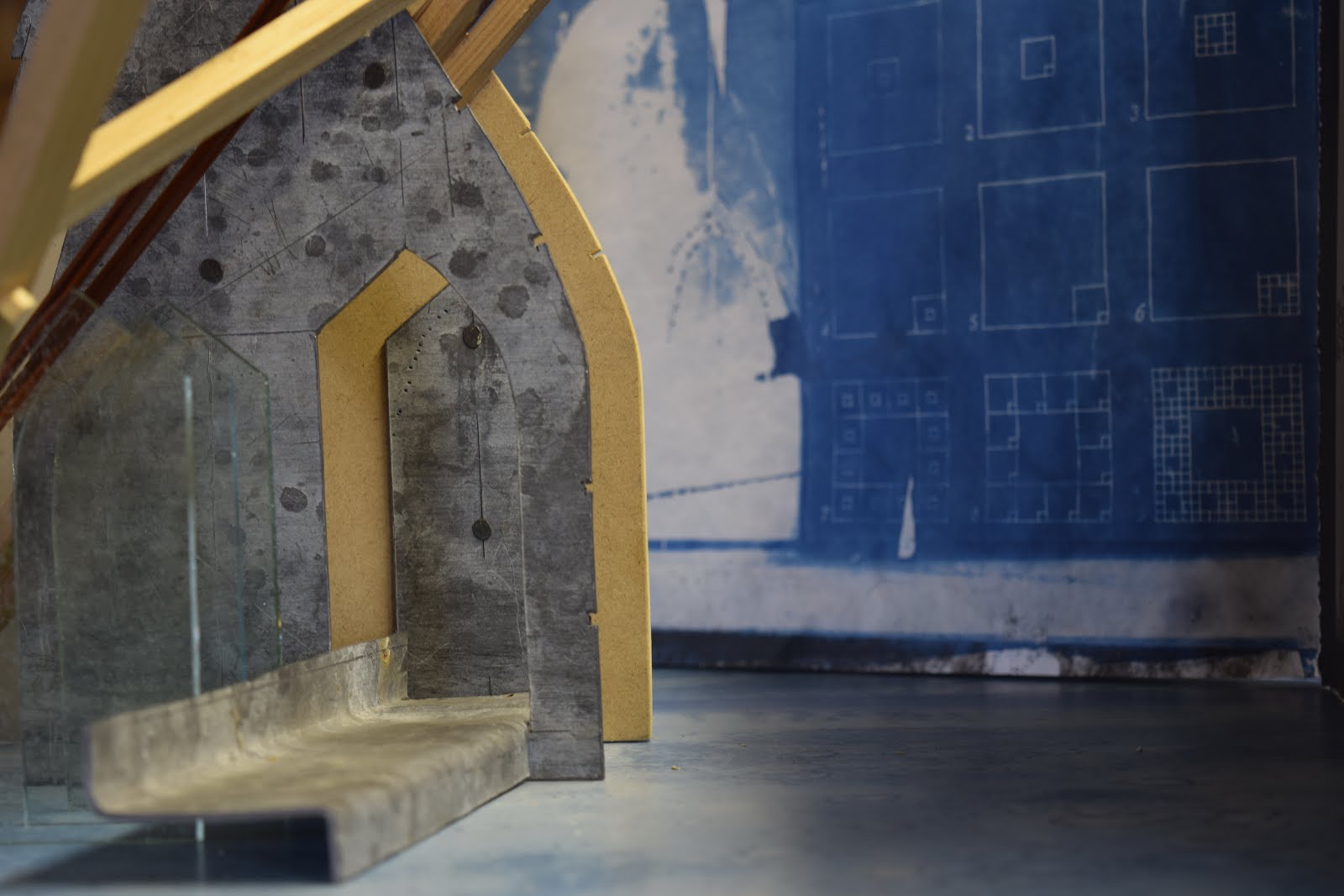
    The model object has served as a thinking place in the development of the idea of the Scriptorium. The materials used and their proportions echo interests in Minimalist Sculpture, the intervals between things in the work of Donald Judd and the architectural languages of memory and tectonics of the craftman turned architect Peter Zumthor. This open sided hut seems cut away almost anatomical as if we were looking into the internal workings of an environment and resident. The structure would have to be made relational to its surroundings if it were to be placed in the landscape. Adaptations to weather the structure, to make it serviceable for use. The Scriptorium has analogues to the notion of a fire-place and its chimney stack. It is a the heart of a building the place of warmth, of dialogues and under the influence through fire of the imagination. The incompleteness that surrounds the scriptorium creatively asks for further design proposals that are even more site specific. The Solar Pavilion built by the Smithsons utilised the old fire place and chimney from the demolished cottage. Around this central element they developed the beginnings of their Modernist (Brutalism) pavilion, an architecture clad with glass, wood and zinc and contained by a walled garden and situated in the pastoral landscape of Wiltshire. Furthering the themes of being in the landscape the Scriptorium could become an observatory, as place from both to look out from and also to look in. The mobility or need to be re-assembled from site to site could promote innovative design solutions as well as interesting detailing or use of materials and surfaces that would facilitate interactions between visitors.
    The notion of the Scriptorium becoming clad by an exterior skin, an ephemeral membrane which would then render the differences between the interior and the exterior into the realms of an almost immaterial architectural experience; in as much as the usual distinction between the unpredictable forces of nature outside and the predictable domestic spaces inside. This prompt further investigation into an architecture that blurs the boundaries of both architecture and nature, this could be further explored through the notion of quixotic gestures, art and performance that can capture the experience and the experiential engagement with the natural elements. The Scriptorium becomes the centred structure of remnant that is surrounded by an architecture that can create imprecise boundaries through inconsistent materials. This spatial arrangement will create its own qualitative responses, dialogues and subsequent movements. Architecture in this context becomes purely a sensorial response.
    The body as the vector for active mediation with the world of the spirit. The body is the instrument of a qualitative evaluation, the measure of intensity, which alone is capable of giving space extension and modifying it. Space is no objective parameter; it must be ‘excavated’ related to the mobile living parametrics of the body.
    Frederic Migayrou. Architectures of the Intensive Body.
    Yves Klein. Guggenheim. 2005
    Mark Prizeman. Intensity.
    Ephemeral, Portable Architecture.
    Time, space and existence are amongst the greatest of themes-so great that we could never be so presumptuous to think we could do them justice, and too close that we could ever escape them, whether with our thoughts or actions, in life or in art.
    Peter Lodermeyer. Personal Structures
    Time. Space. Existence. 2009
    My design project has attempted to produce spaces and their interiors together with the apparatus of the Scriptorium that qualitatively seek to inquiry into the world we inhabit. The Theatre of Research attempts to establish some sense of a community that can do field work that invigorates the perception of the environment. My own interests are centred through experientially and mindfully exploring voids, cavities, and spaces between things, together with use of clay, glass and other vernacular materials. As an interior designer/artist I have become experiential to the agency of spaces. The theatre of research becomes a meeting place for furthering my programme initially proposed as a symposium at Waverley Abbey.
    Through experiencing familiar images, smells, sounds, and textures, but also through making certain familiar movements and gestures, we achieve a certain symbolic stability. Disrupt that familiar world, and our psychic equilibrium is disturbed. From this we can surmise that home, and the operations performed at home, are linked intimately with human identity. Architecture, it would seem, plays a vital role in the forging of personal identities.
    Neil Leach. Camouflage
    Analysing the desire to blend-in with our surroundings.
    Reflective Critique/Appraisal.
    How might I start again?
    The Scriptorium would need to collect up and question considerable more qualitative data. Some sort of portable shelter, lightweight and offering some protection from the elements; would have allowed longer periods of stay and the possibility of experiencing different times of day. The activity of walking to the site, of having to incorporate it into a journey would help to create a stronger sense of place and routine. I am interested in the ‘thingness’ of this place, its influence and how its influence might be transposed into a methodology of reading, theorising and making. I am reminded of the Peter Brook who deliberately demolished his avant-garde theatre building Bouffes du Nord in Paris so as he could create a more emotionally responsive space for theatre. It is this under the influence of the Abbey, which I wish to explore as a creative catalyst, a tool that picks up on its differences as qualitative readings. The ruin by its very nature has re-defined its own architecture from one of form into that of experience, this sense of liminality or immateriality that constitutes itself as the architectural experience.
    A good space cannot be neutral, for an impersonal sterility gives no food to the imagination. The Bouffes has the magic and poetry of a ruin, and anyone who allowed themselves to be invaded by the atmosphere of a ruin knows strongly how the imagination is let loose.
    Peter Brook. The Open Circle
    Andrew Todd. Peter Brook’s Theatre Environments. 2003
    How might the performartivity of research be staged, and into what contexts might it be appropriated?
    As Hans Ulrich Gumbrecht notes, we live in a culture of meaning, not in a culture of presence. We constantly produce effects of meaning and multiply them with mass media. This applies not only to the humanities but also to a large degree to our wholly normal everyday lives. And in this respect, our experience of presence is getting drastically lost.
    Art works may never completely be explained by theory or meaning. The sensual, material makeup of the work in its presence is not the cinders, slag, and ashes, the undigested remains of theory, but remains of an intensified moment.
    Peter Lodermeyer.Time, Symposium Amsterdam 2007.
    Personal Structures, Time, Space, Existence.

    SENSORY THEATRE

    EX MACHINA, Robert Lepage
    While Legage continues to pioneer the use of technology, his work is imbued with an intimacy and humanity that few can match. Edinburgh festival 2015
    ABBATOIR FERME, Jan Fabre (Troubleyn, Performing Arts)
    A SOMATIC ARCHIVE, of subjectivities whose perceptions and environments are going to change forever; like the particularities of the analogue trace in photography that is now becoming a distant experiential condition, an orphan extinct from the subjectivities of its originating culture/organism.
    The Waverley Inquiry
    A Theoretical and Somantic search amongst Ruins and Archetypes
    Historical Perspectives
    Dwelling/Poetics Heidegger
    Archetypes/Symbols Jung
    Flesh and Stone, Richard Sennett
    Flesh and The Logic of Sensation, Deleuze/Bacon
    Contemporary Spatial Practices
    Feminist Geographies
    The Posthuman
    Posthuman thought inscribes the contemporary subject in the conditions of its own historicity.
    Posthuman Subjectivity ,Rosi Braidotti
    LIGHT into SOMANTIC SPACES
    Continuum and Chora (light and the shadow of chora)
    Life expresses itself in a multiplicity of empirical act: there is nothing to say, but everything to do. Life, simply by being life, expresses itself by actualiizing flows of energies, through codes of vital information across complex somatic, cultural and technologically networked systems. (Braidotti, 2013:190)
    De Architectura, Vitruvius
    Architecture consists of order, arrangement, proportion or eurythmy, symmetry and décor, and distribution.
    Arrangement as an “Idea” refers to the Aristotelian notion of “Image-representation” as phaantasia a precondition to drawing, effectively occupying and revealing a space between Being and becoming.

    Contents List from a folder in the Theatre of Research

    Chora Body and Building
    Space as Membrane
    Chora (Exhibition) 1999
    Lessons of a dream. Karsten Harries
    Concrete Blonde: Joanna Merwood
    A probe into the negative spaces where mysteries are created.
    Surrealist Paris : Dagmar Motycka Watson
    The non-perspectival space of the lived city
    Body and Building : George Dodds
    Essays on the changing relation of body and architecture.
    Sphere and Cross : Karsten Harries
    Vitruvian refections on the Pantheon Type
    Body and Building : Marcia f. Feuerstein
    Inside the Bauhaus’s Darker Side
    Desiring Landscapes/Landscapes of Desire. George Dodds
    A Tradition of Architectural Figures: Marco Frascari
    Interwining Metamorphoses : Germano Celant
    On the work of Guiseppe Penone
    Space as a Membrane : Siegried Ebeling
    Unlike a Library the Theatre of Research is a working space that creates and crafts both theoretical and practical objects, things and documentation. Its reason for being is to explore the praxis for creative narratives between the Arts and The Humanities. It attempts through performance, fine art and architecture to collage qualitative and diffractive dialogues into new relational discourses, the results of which become exhibited or staged as open workshops engendering praxis, publication and production. In its fledgling state it is seen as being part of a University faculty that has interests in the Arts and The Humanities. The possible linking with other establishments could be investigated. The working space becomes operational as a studio or laboratory that is engaged with full-time research led activities . Separate yet collaborative spaces and activities promote an environment for inquiry and personal development. The Theatre for research becomes a space that allows for the Post Production of ideas into new forms of social interaction. The theoretical merging with the practical into a relational narrative or methodology that enriches the practices of others, forming both new creative environments that can contain innovative ecologies that can question global perspectives.


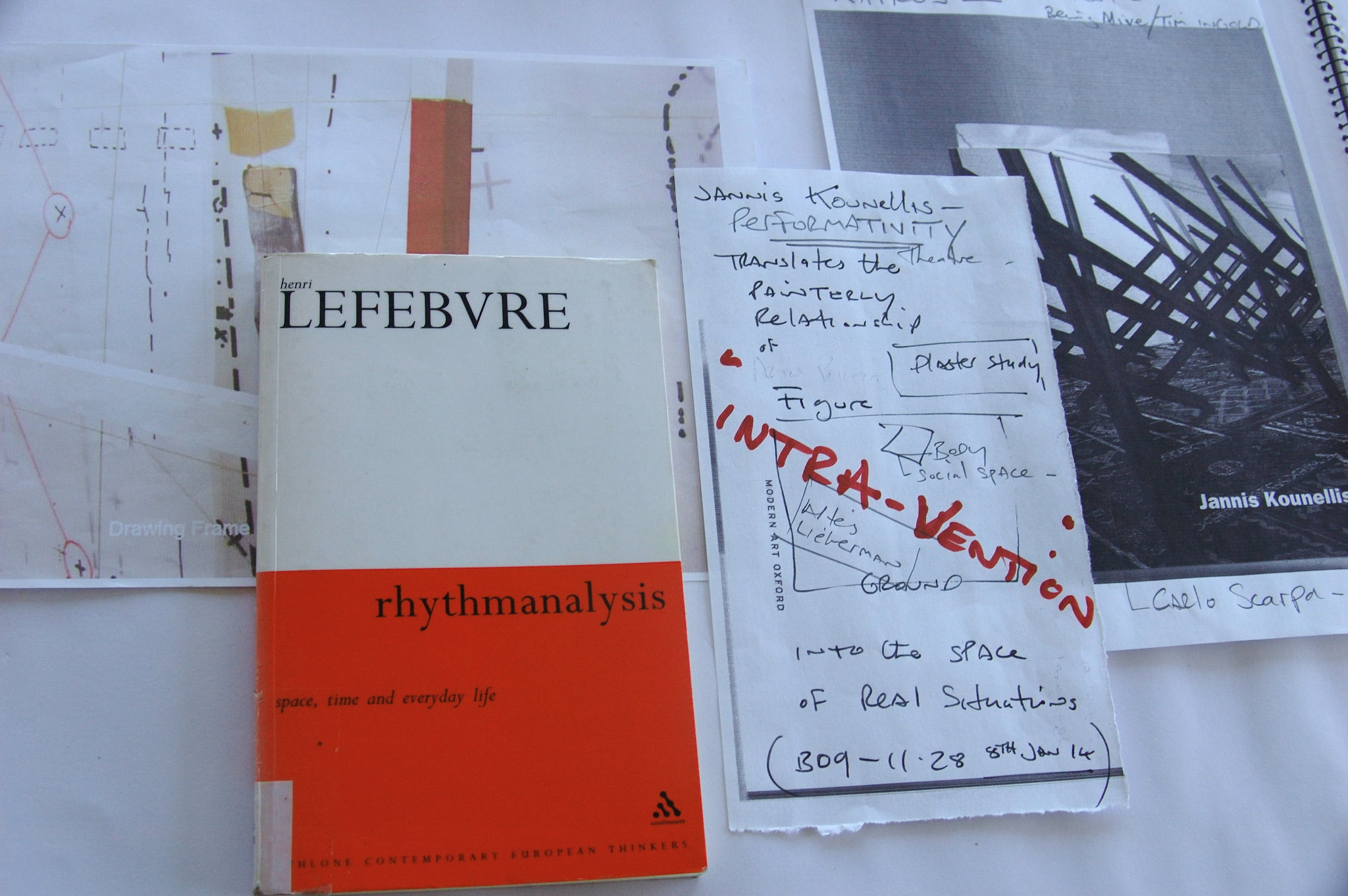
    Spatial Agency Other Ways Of Doing Architecture Nishat Awan, Tatjana Schneider, Jeremy Till. As buildings become  matters of concern, they e…
    Source: Politics of Architecture : Theorising through speculative spatial (practices)/agency

  • Observatories/Astronomical Images/Libraries : Slow reading/seeing as a thing, not as a resource

    Astronomical Images/Observatories/Libraries

    To read slowly, deeply, looking cautiously before and aft, with reservations, with doors left open, with delicate eyes and fingers.
    Friedrich Nietzsche
    To read is to be attentive to the trace of the other, and this attention takes time. Additionally, and perhaps paradoxically, it calls for an emptying of the self to prepare for the other, abandon that allows the other to gleam.
    Slow Philosophy : Why Slow Reading Today? Boulous Walker. 2017
    https://www.bloomsburycollections.com/book/slow-philosophy-reading-against-the-institution/preface-why-slow-reading-today

    Celestial Sphere : Stars and Dust Particles

    Entanglements of matter and meaning.

    Karen Barad, Meeting The Universe Halfway, 2007.

    Hawking understood black holes because he could stare at them. Black holes mean oblivion. Mean death. And Hawking has been staring at death all his adult life. Hawking could see.
    Martin Amis, Night Train, 1997.

    For Baudrilland the actual photographs are beside the point.

    It is what precedes them that counts in his eyes- the mental event of taking a picture.
    Sylvere Lotringer, The Piracy of Art, 2008.

    The Library : A Meditation on the Human Condition (Giacometti, artist-philosopher)

    Books can step up to us- into us- in many ways.
    Voices from Chernobyl by Svetlana Alexievich was for me that rare precipitate force which calls another book into being.

    Mario Petrucci, Heavy Water, a poem for Chernobyl.


    Astronomical Images/Observatories/Libraries  To read slowly, deeply, looking cautiously before and aft, with reservations, with doors left o…

    Source: Observatories/Astronomical Images/Libraries : Slow reading/seeing as a thing, not as a resource

  • Atemwende, a breathturn : Adam Gopnik and Edmund de Waal

    Craft and Art, Skill and Anxiety.
    Craft is logic, and art defies it. The defiance is what makes art. The serenity of the artisan lies in her knowledge that it can all be done again. The anxiety of the artist; lies in knowing that if it is done again, she has become an artisan. (Gopnik,2014:7)
    Edmund de Waal is a maker of objects with imagined histories. (Gopnik,2014:11)
    Atemwende : A breathturn.
    Edmund de Waal.
    The Great Glass Case of Beautiful Things:
    About the Art Of Edmund de Waal
    Adam Gopnik. 2013.
    ‘Actually, I still make pots, you know’ Edmund de Waal.
    The Sensuality of the Clay Body.
    ‘You have to work quickly and with definition, and your ideas have to come into focus with enormous rapidity.’ Edmund de Waal, on working with the different presence demanded on ones mind and hand whilst throwing with porcelain. The practice of porcelain forced a change in colour and finish in his work. New glazes, shimmering celadon and shiny black, arrived to catch the light and send it back. (Gopnik,2014:9)
    The throwing of pots still remains central to his practice. ‘The material goes down, gets wet, is pulled open by the hand, spins- and then produces, as if by magic, the most transcendently human of all made things; volume, inner space, an interior, the carved out air that connects the morning teacup with the domes and spandrels of San Marco. There’s nothing there but clay and air, then there’s defined air. (Gopnik,2014:6)
    Ceramics and Architecture.
    Exhibition Spaces of the Enlightenment
    The Porcelain Rooms
     
     
    The pot, ancient as it is, is the first instance of pure innerness, of something made from the inside out. Building objects upwards is, in its way, an obvious and brutal thing; it derives from piles, and makes pyramids. Turning objects inward, on the wheel, is a subtler one, and derives from our need to have a place to put things in. (Gopnik,2014:7)
    Together these new porcelain vessels collectively produced by De Waal are an experience of possessed space.
    These collections of vessels in their Modernist vitrines seem to be both an expression of the architecture of a collection and simultaneously an affirmation of an interior space that can hold the singularity of a breath within a small pot.
    ‘ The ceramic module that he uses, the small pot, is deliberately made as non-functional as possible.’ (Gopnik,2014:9)
    ‘Even if we insist on seeing them impersonally, the sheer force of their numbers creates the poetic sense inherent, as Homer knew, in all inventories. They gang up on us.’ (Gopnik,2014:9) These groupings of objects placed together produce their own narratives, their own relations, and lines of inquiry. In so doing their ordering of the space around them brings meaning to those spaces. This is reinforced through the poetry and metaphor of the effect of ceramic vessels on space, as cited by De Waal himself through Wallace Stevens’s “Anecdote of the Jar” 1919.
    ‘The Jar, the elemental made thing, takes dominion over the unmade world. The air around it suddenly looks “slovenly,” insufficiently jar-like. Made things remake the unmade world. (Gopnik,2014:10)
    Gopnik comments that we can’t look at hollow things without sensing their hollowness, as he notes we perceive haptically as aptly as optically. This allows us to read these vessels through both our sense of sight and our sense of space. The result is that we feel these objects; we can sense the heft of them made from their weight, shape and size. We become aware that we can feel objects as much as we can see them.
    De Waal’s work brings about a sensuality and an empathy manifested between the strict ordering of his presentation through his vitrines and cabinets and the fragility and grouping of his porcelain vessels. This empathy promotes our interest with the interior parts of his groupings, with the interior emptiness and mystery of things we can only sense. His control and command of the geometric spatial relations found in his installations is juxtaposed by the multitude of diminutive interiors and negative spaces.
    The relations of the architectural and those of the vessel are in constant flux, held in some sort of spatial narrative that seems to meditate stillness, like the museum these vessels are protected and intact, yet strangely they are held hostage by their surroundings.
    The empathy we feel for their emptiness is perhaps choreographed, staged and ultimately forced, these are not just pots as De Waal admits but pots that have been by design rendered as non-functional as possible although they still bare the marks of his franchising. This neutering of his thrown clay forms into the realm of perhaps a purely sculptural object that is itself now a mere component in his Minimalist cabinets. What remains is a hollowness, but a contrived hollowness that speaks of spaces designed not made; unlike his Signs and Wonders intervention for the V&A, these works feel orphaned and cut adrift by their surroundings.
    Does? ‘His art takes a familiar grammer of display and turns it into a poetry of memory. Inside a room, a great case filled with rows of porcelain pots.Along each row, a story. Inside each pot, a breath. (Gopnik,2014:11)


    Craft and Art, Skill and Anxiety. Craft is logic, and art defies it. The defiance is what makes art. The serenity of the artisan lies …

    Source: Atemwende, a breathturn : Adam Gopnik and Edmund de Waal

  • Wednesday, 26 May 2021

    Littoral Environments : Arts and Subjectivity (the making of things)

    Text Extract/Inclusion. “Pure Presence”

    The enchantment of modern life: attachments, crossings, and ethics : Jane Bennett 2001.

    It is a commonplace that the modern world cannot be experienced as enchanted–that the very concept of enchantment belongs to past ages of superstition. Jane Bennett challenges that view. She seeks to rehabilitate enchantment, showing not only how it is still possible to experience genuine wonder, but how such experience is crucial to motivating ethical behavior. A creative blend of political theory, philosophy, and literary studies, this book is a powerful and innovative contribution to an emerging interdisciplinary conversation about the deep connections between ethics, aesthetics, and politics.

    As Bennett describes it, enchantment is a sense of openness to the unusual, the captivating, and the disturbing in everyday life. She guides us through a wide and often surprising range of sources of enchantment, showing that we can still find enchantment in nature, for example, but also in such unexpected places as modern technology, advertising, and even bureaucracy. She then explains how everyday moments of enchantment can be cultivated to build an ethics of generosity, stimulating the emotional energy and honing the perceptual refinement necessary to follow moral codes. Throughout, Bennett draws on thinkers and writers as diverse as Kant, Schiller, Thoreau, Kafka, Marx, Weber, Adorno, and Deleuze. With its range and daring, The Enchantment of Modern Life is a provocative challenge to the centuries-old ”narrative of disenchantment,” one that presents a new ”alter-tale” that discloses our profound attachment to the human and nonhuman world.

    The making of things and discovering relationships.

    Constructing site and situation based methodologies.

    Playing out in the public realm, exploring through spatial engagements the “virtues” of courage, caution, confidence and risk.


    Text Extract/Inclusion. ‘Pure Presence’ The enchantment of modern life: attachments, crossings, and ethics : Jane Bennett 2001. It is a …

    Source: Littoral Environments : Arts and Subjectivity (the making of things)

  • Drawing Rooms : Cyanotypes/Collages/Photography

    Slow Philosophy. 2017
    Reading against the institution
    Michelle Boulous Walker

    Saturnian Form : Lead and Library Dates
    Russell Moreton

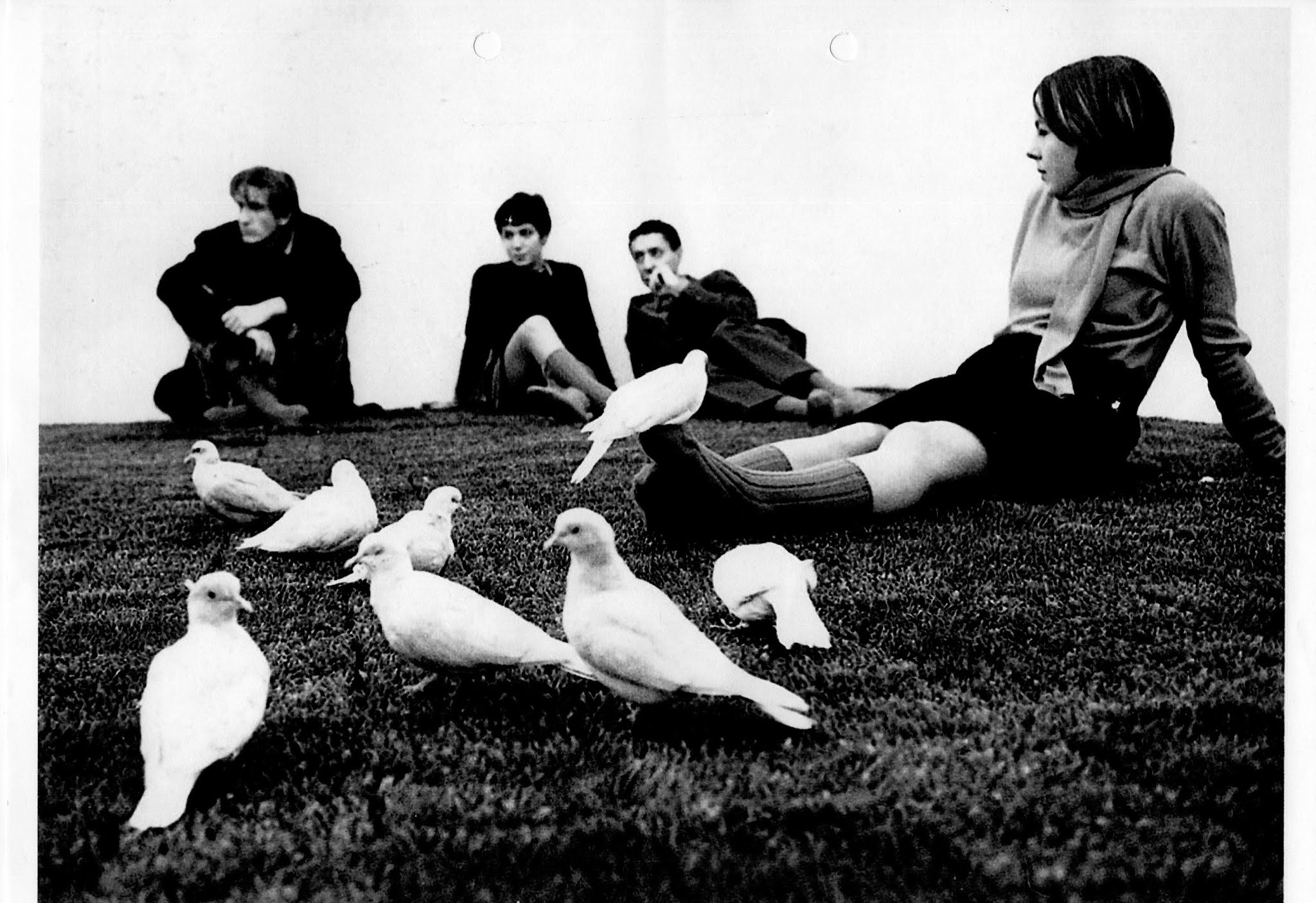
    Emilio Prini
    The filter and welcome to the angel, 1967
    Environment with participants, doves, artificial green grass, socks, ultra-violet light.
    Dimensions variable,
    Installation, Studio Bentivoglio, Bologna.

    Artist-run exhibition space

    Emilio Prini well illustrates the spirit of Arte Povera: the artist is not the creator of artefacts, nor even of a documented ‘happening’. In the transferral of energy and subjectivity into matter or an event, the work exists in the instant it comes into being and is simultaneously received.

    To document his work in photographs and present these as a record of it contradicts the very basis of Prini’s art.
    Arte Povera, Themes and Movements
    Carolyn Christov-Bakargiev

    Intermedia Chart
    Dick Higgins
    Molvena, Italy. 1993


    Slow Philosophy. 2017 Reading against the institution Michelle Boulous Walker Saturnian Form : Lead and Library Dates Russell Moreton …

    Source: Drawing Rooms : Cyanotypes/Collages/Photography

  • Wanderlust : Visual Feelings of Anarchism and Beauty

    Wanderlust : A History of Walking, Rebecca Solnit.

    The Mind at Three Miles an Hour
    This kind of unstructured, associative thinking is the kind most often connected to walking, and it suggests walking as not an analytical but improvisational act.

    Land : Antony Gormley, Clare Richardson, Jeanette Winterson.

    Temporary is human. We don’t live long. Our ancestors lived less long. Graveyards and ruins remind us of the atom and jot of our span. Against the reality of temporary, humans stage heroic battles for permanence : Archives, museums, endowments, societies.

    Wandering is “not purposeful”. A lot of art is made while wandering about either in your mind or on foot, Its a necessary aimlessness.
    Jeanette Winterson

    Anarchism : A Very Short Introduction, Colin Ward.

    It is possible to discern four principles that would shape an anarchist theory of organisations: that they should be voluntary, functional, temporary and small.

    The Rings of Saturn : W.G.Sebald.

    I pressed on to towards Dunwich, which seemed so far in the distance as to be quite beyond my reach. It was as if I had been walking for hours before the tiled roofs of houses and the crest of a wooded hill gradually became defined.

    Inside Phenomena/Catching The Light
    Layered drawing : Sensuality, Drawing and Astronomical Space.
    Locality/Social Complexity- Works on Paper
    An ephemeral structure built to house a poetic impulse : The Book of Tea/A Hut of Ones Own
    Reading Into the Visual : Exploratory Images
    Littoral Zone


    Wanderlust : A History of Walking, Rebecca Solnit. The Mind at Three Miles an Hour This kind of unstructured, associative thinking is the…

    Source: Wanderlust : Visual Feelings of Anarchism and Beauty

  • Primordial Memory/Dreaming/Making/Corporeality : Antony Gormley/Francesca Woodman/Bodies, movements of becoming

    Concept of the Body : Merleau-Ponty

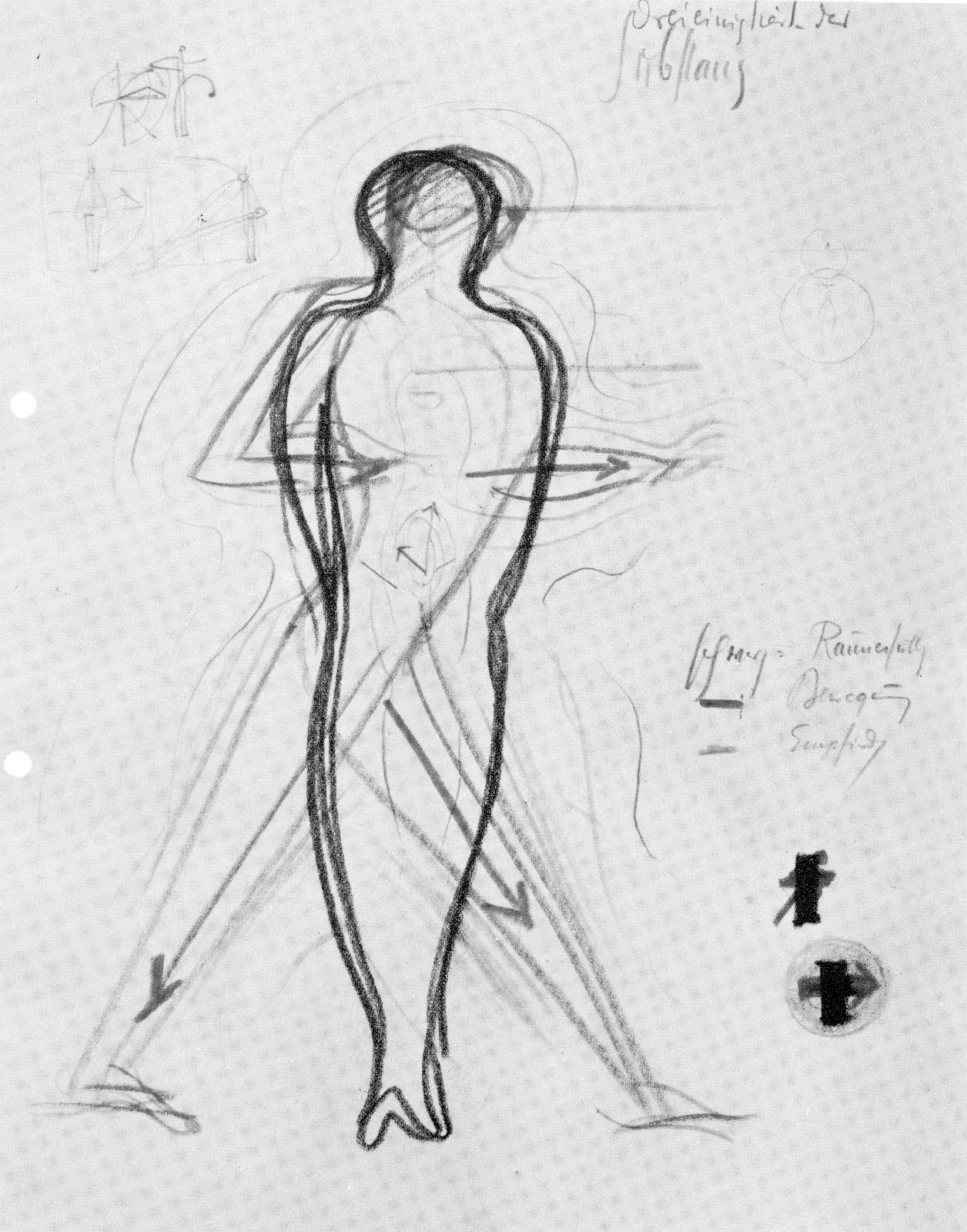
    Fundamental assumption that the body was not an object, the body is the condition and context through which I am able to have relations with objects.

    The mind in its insertion in (creating/becoming) corporeality creates the ambiguous relation with our body, and correlatively with perceived things/superimpositions/entanglements.

    Understanding the material/body image in discursive terms

    The body generates and presumes interpretations, perspectives which serve its needs in the world, its will to power and its drive towards self expansion/self overcoming, the movement of becoming, vigorous, free, joyful activity. (Nietzsche)


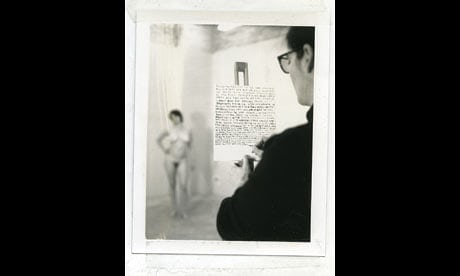
    Francesca Woodman explores the spatial relationship of the body in space and time.

    These performative images and her relationship to the pictorial space, her body traces, are witnessed and further manipulated/annotated by drawn lines enclosing and creating other spaces.

    Barad: Thinking with intra-action

    There is an important sense in which practices of knowing cannot hilly be claimed as human  practices,  not simply  because we use nonhuman  elements in  our practices but because knowing is a matter of part of the world making itself intelligible to another part. Practices of knowing and being are not isolable; they are mutually implicated. We don’t obtain  knowledge by  standing  outside the world; we know because we are of the world.  We are part of the world  in  its differential becoming.  The separation  of epistemology from ontology is a reverberation of a metaphysics that assumes an inher­ent difference between  human  and  nonhuman,  subject and  object,  mind  and  body, matter and discourse. Onto-epistem-ology—the study of practices of knowing in being— is probably a better way to think about the kind of understanding that we need to come to terms with how specific interactions matter.

    Karen Barad, Meeting the Universe Halfway: Quantum Physics and the Entanglement of Matter and Meaning (Durham: Duke University Press, 2007), 141.

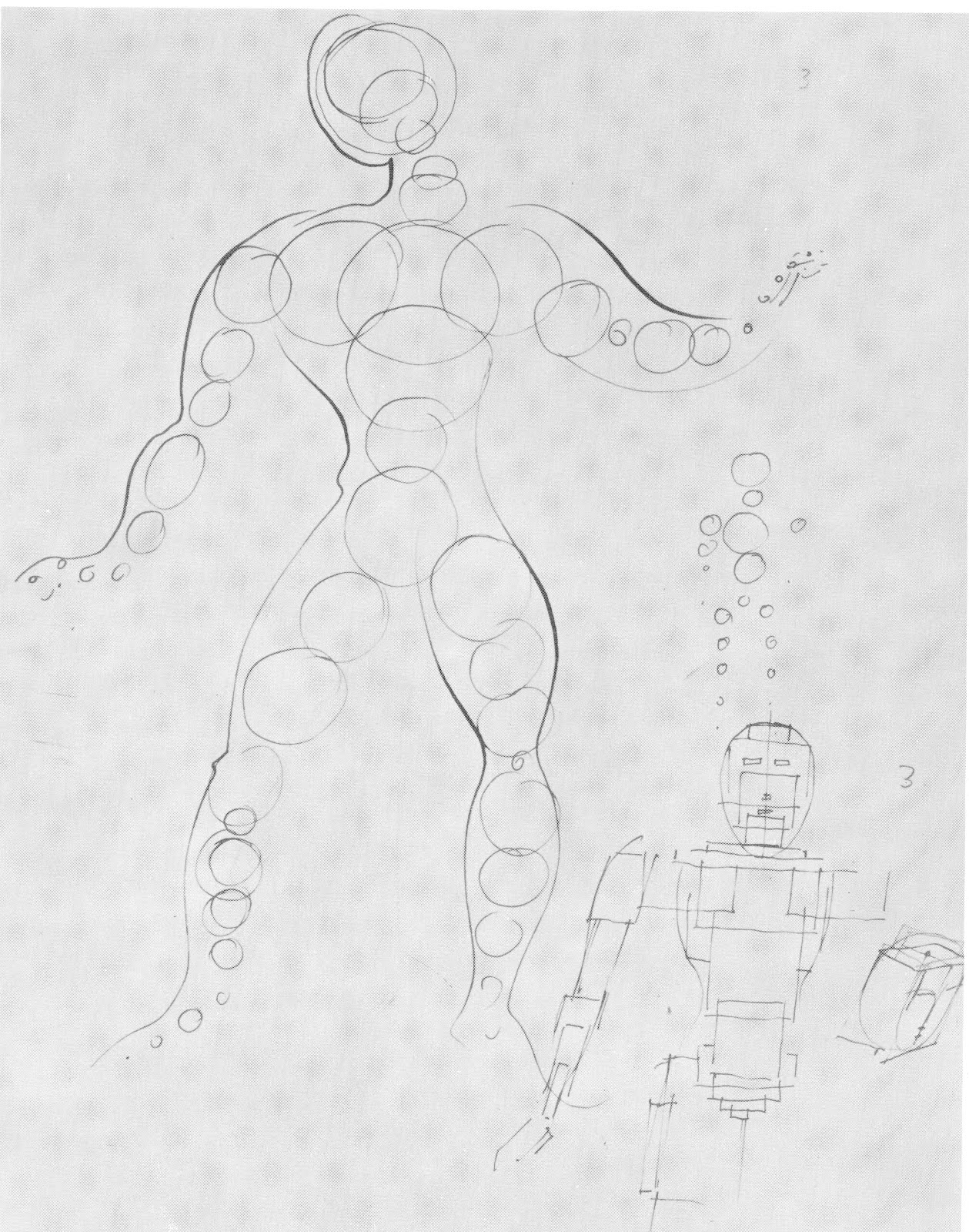
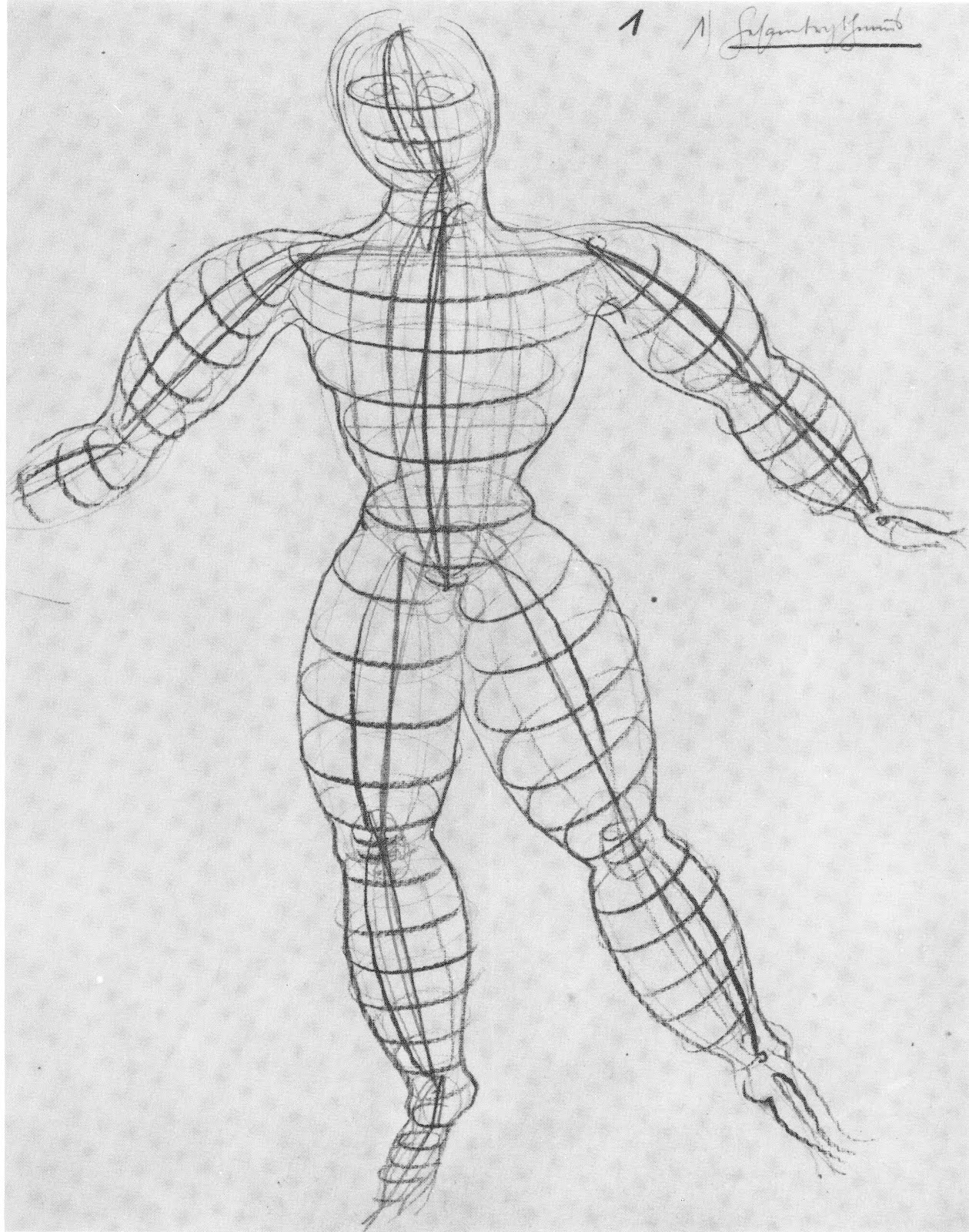
    Antony Gormley, states, that one of his central concerns has been to recover a sense of being in the conditions of today’s increasingly materialist and mediated social environment. He uses sculpture, via the intimate process of the body cast, to construct surrogate forms, derived from an almost sacrificial process. A rehearsal of death of an absent body, recorded as an enclosed volume of air, entombed in a lead sarcophagus of fragmented body sections, soldered to reconstruct a new wholeness. He creates, within this sculptural volume, an “infinity of space within the body.” His works are embodiments of the body. They are literally body cases. The use of lead with its own alchemical and historical contexts and its particular non­ aesthetic further adds to the tomb like qualities of the work.

    Each sculpture invites occupation; it is complete when the imagination or the mind inhabits them.

    Gormley’s body cases are almost orphans, cast adrift from their symbolic maternal mother. They have become shells; empty humanoid spaces, awaiting an identity in the mind of the post-modern witness. In return their identification identifies the witness. The experience of metaphysical inhabiting this surrogate human space might allow us to lose all sense of the present and our identity with ourselves. Gormley’s sculptures, with this lack of identity or questioning of identity with the space they are placed in, prompt a different mode of questioning the purpose of their presence. The viewer becomes more interrogatory, more concerned, almost asking the sculpture to confirm its placement, not its actual identity. We see in them something of ourselves, externalised for scrutiny, a dialogue of intervention caused by a bodily proximity to something unknown, which can compound meaning, or conversely it can fragment it.

    An investigation into a disembodied physicality, inducing elements of fetishism and narcissism, with the search for an identification of the feminine, within the confines of spaces, loaded with tactility, dust, dilapidation and decay?

    Some of  Francesca Woodman’s work involves herself and female characters in staged film, feminised melodrama. Stills with an unknown and possibly convoluted narrative, together with ambiguous relationships amongst the characters. The images are shot as straight documentary stills and seem to be searching for the identity of the partially hidden women, as seen through the response and body language of the other characters facing us. These works are full of conceptual ambiguities.

    Photographs are indexical; they point to something else; a mirror with a memory; a stage for an inquiry.

    Francesca Woodman’s use of the camera’s ability to witness and document, is subverted into a personal language of aggressive tactility and the notion of the body’s identification being partially hidden or even lost; just its trace remains recorded in the latency of the camera’s recorded time.

    Her work seems to have an inherent almost codified, femininity, probably due the semiotics and symbolism of early surrealist influences. She performs, re-enacts and exposes her body for the witnessing of the camera. She seems to, fleetingly, seduce and then disappear, just leaving a trace of her being, her sexuality and its actions, entrusted to the fragility of the light sensitive gelatin. (extracts from The Body, Francesca Woodman and Antony Gormley, WSA Russell Moreton 2006)

    Reading The Landscape

    This Enchanted Isle : Peter Woodcock 2000

    Radio On by Chris Petit.

    The film has a hallucinogenic noir-like quality, a weird hybrid of Fifties Americana and a displaced Britain. It is a seismographic disruption of British culture in a limbo land of displaced dreams, elements of an almost mythical Britain fleetingly appear.

    What distinguishes Neo-Romanticism from traditional romanticism is the feeling of danger, the juxtaposition of the urban with the countryside, the element of darkness, dissolution, an almost pagan reverie breaking through the ruins of post-industrialism (Woodcock,2000:55)

    England Dreaming : Primordial Memory/Dreaming

    The darkness is a silent solid, the light etches its surface, it is simultaneously sign and cypher. The light etching itself on the dark surface is akin to a revelation, an epiphany before the building is transformed by its users and movement. (Daniel Libeskind)

    The Drought : J G Ballard

    The Tempest : Alchemy, Prospero.

    The Neo-Romantic Vision from William Blake to the New Visionaries.

    ‘A new alchemy is being formed which encompasses traditional methods of art, the new technology, and the revolutionary new scientific discoveries.’

    Re-Enchanting the Land. (Woodcock,2000:140)

    ‘When one lacks outer space one creates inner space. Invention becomes more complex, cup and circle markings on stones, intricate Celtic spirals and knots, illuminated manuscripts, gothic architecture with its inherent story telling.’ (Woodcock,2000:131)

    Throughout John Piper’s long and prolific life he remained fascinated not only with churches, country houses and landscapes but also ancient sites. He comments on the landscape of Snowdonia, each rock lying in the grass had a positive personality, for the first time I saw the bones and the structure and the lie of mountains, living with  them and climbing them as I was, lying on them in the sun and getting soaked with rain in their cloud cover and enclosed in their improbable, private rock-world in fog. Piper never dismissed the archaic spirit of place.

    (Woodcock,2000:31)

    To take a picture is to have an interest in things as they are in the status quo remaining unchanged. It is to be in complicity with what makes a subject interesting.

    Cameras consist of small voids, the ‘camera’, a lens and photographic film. They are camerae obscurae  that collect light and allow it to meet the surface of the film. But in fact the light comes from the larger void outside the camera. The moment the light has registered on the light-sensitive surface of the film, memories are constructed. The memory is literally conceived in this meeting and is added to life as an additional layer of being. The process through which void meets surface is therefore also about love—the love of ancestors and relatives, but also of life and its conception.

    The camera records subjects considered disreputable, taboo and marginal. Sontag notes Times relentless passage and photographs as a pause of evidence, Together with the camera’s ability to turn people into objects that can be symbolically possessed. She recognizes the inherent pathos in .objects being photographed, and the compulsion to take photographs. Sontag realizes the photographic recycling of reality, acceptable as a daily activity in our consumer society. Photographs do not explain themselves, they just acknowledge.

    Bibliography

    Bachelard, Gaston, Psychoanalysis of fire, New York, Beacon press 1964

    Benjamin, George, Antony Gormley: critical mass, London, Royal Academy of the Arts 1998

    Curtis, Penelope, Sculpture in 20th Century Britain, Leeds, Henry Moore Institute 2003

    Deneuve, Catherine, Bettina Rheims, Munchen, Schirmer-mosel, 1989

    Douglas, Mary, Purity and Danger, London, Ark Paperbacks, 1984

    Gormley, Antony, European Field, Museum of Modem Art, 1994

    Greenaway, Peter, The Physical self, Rotterdam, Museum-Boymans, 1992

    Israel, Deborah Turbeville: Wallflower, London, Quartet, 1978

    Karabelnik, Marianne, Stripped Bare, London, Merrell, 2004

    Krauss, Rosalind, L ’Amour fou, New York, Abbeyville, 1985

    Moszynska, Anna, Antony Gormley Drawing, London, British Museum, 2002

    Sollers, Philippe, Francesca Woodman, Paris, Foundation Cartier, 1998

    Solomon-Godeau, Abigail, Francesca Woodman, Photographic work, New York, Hunter College, 1996

    Thewelt, Kllaus, Antony Gormley, Germany, Kerber Verlag, 1999

    Articles

    Riches, Harriet, A disappearing Act; Francesca Woodman’s portrait of a reputation, Oxford Art Journal, 27.1 2004 95-113, Oxford university press

    Rus, Eva, Surrealism and self-representation in the photography of Francesca Woodman, http://www.palazzoesposizioni.it/schede/woodman, 2004


    Concept of the Body : Merleau-Ponty Fundamental assumption that the body was not an object, the body is the condition and context through wh…

    Source: Primordial Memory/Dreaming/Making/Corporeality : Antony Gormley/Francesca Woodman/Bodies, movements of becoming