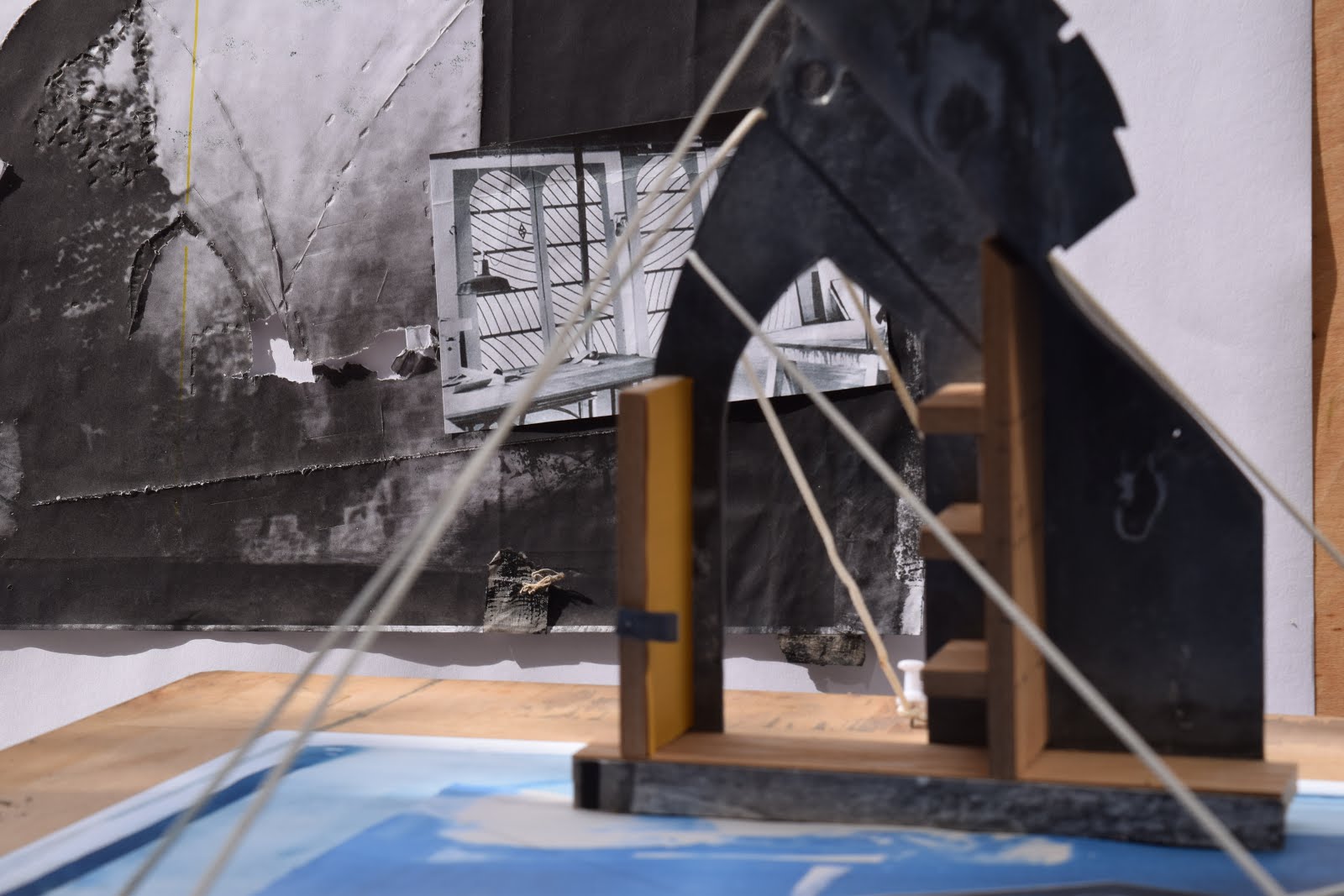
• Bodies in Spaces : Interiors and Outposts

    Drawing into the contemporary sociological imagination

    Intermezzo : Nomadic Photographic Assemblage

    a thousand plateaus
    Deleuze, Guattari

    Assemblage
    Becoming
    Body Without Organs
    Nomad
    Rhizome
    Smooth Space
    State
    War Machine

    www.rhizomes.net/issue5/poke/glossary.html

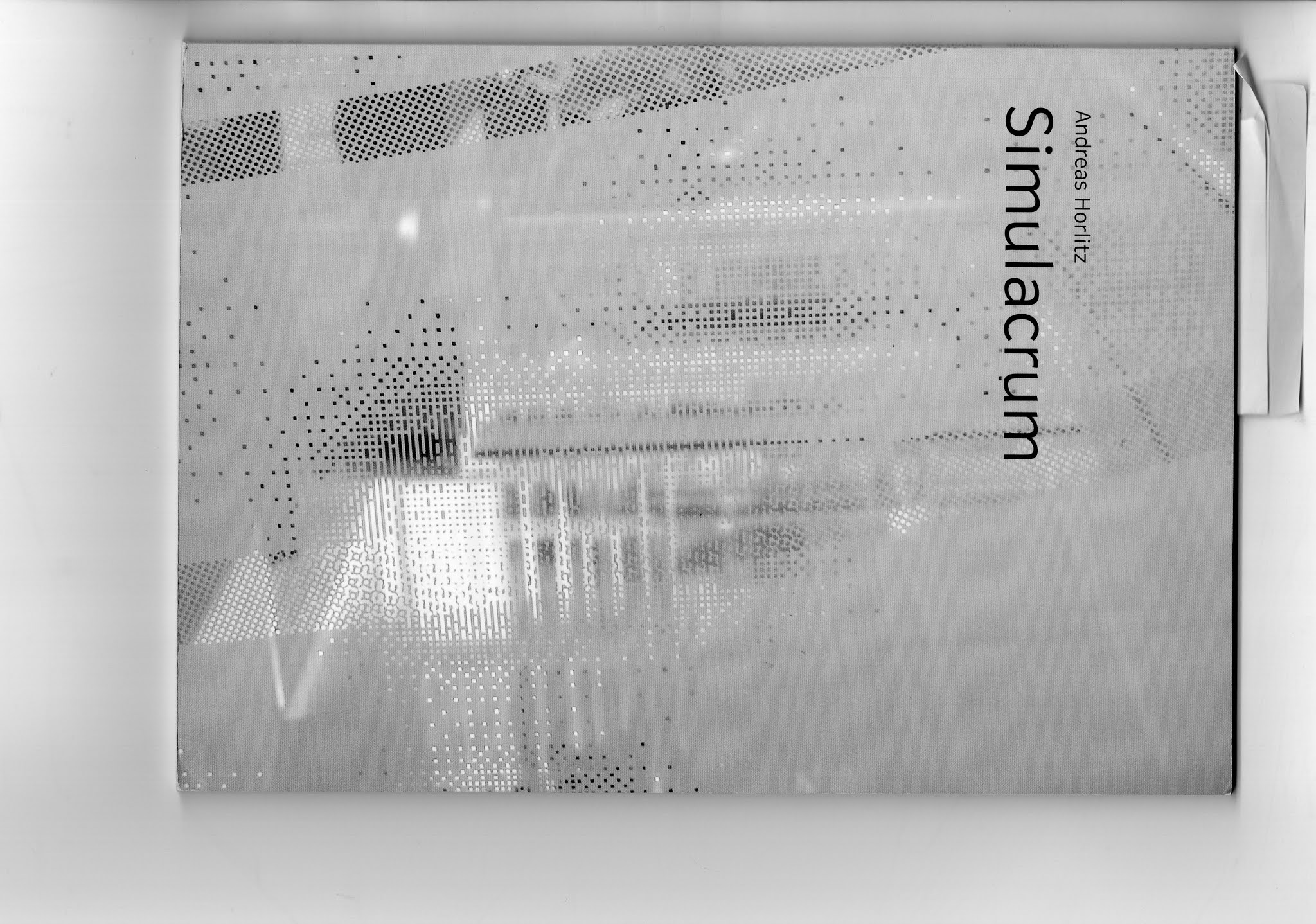
    The Uberficiation of the University
    BY MARK CARRIGAN ON NOVEMBER 22, 2016• ( 0 )
    sociologicalimagination.org/archives/18986

    The Sharing Economy
    Platform Capitalism
    Uber.edu
    The Reputation Economy
    The Microentrepreneur of the Self
    The Para-academic
    The Artrepreneur
    Affirmative Disruption

    A fascinating short book by Gary Hall, available open access at the Coventry University repository:
    curve.coventry.ac.uk/open/file/4b7671d5-371f-438b-83c7-92…

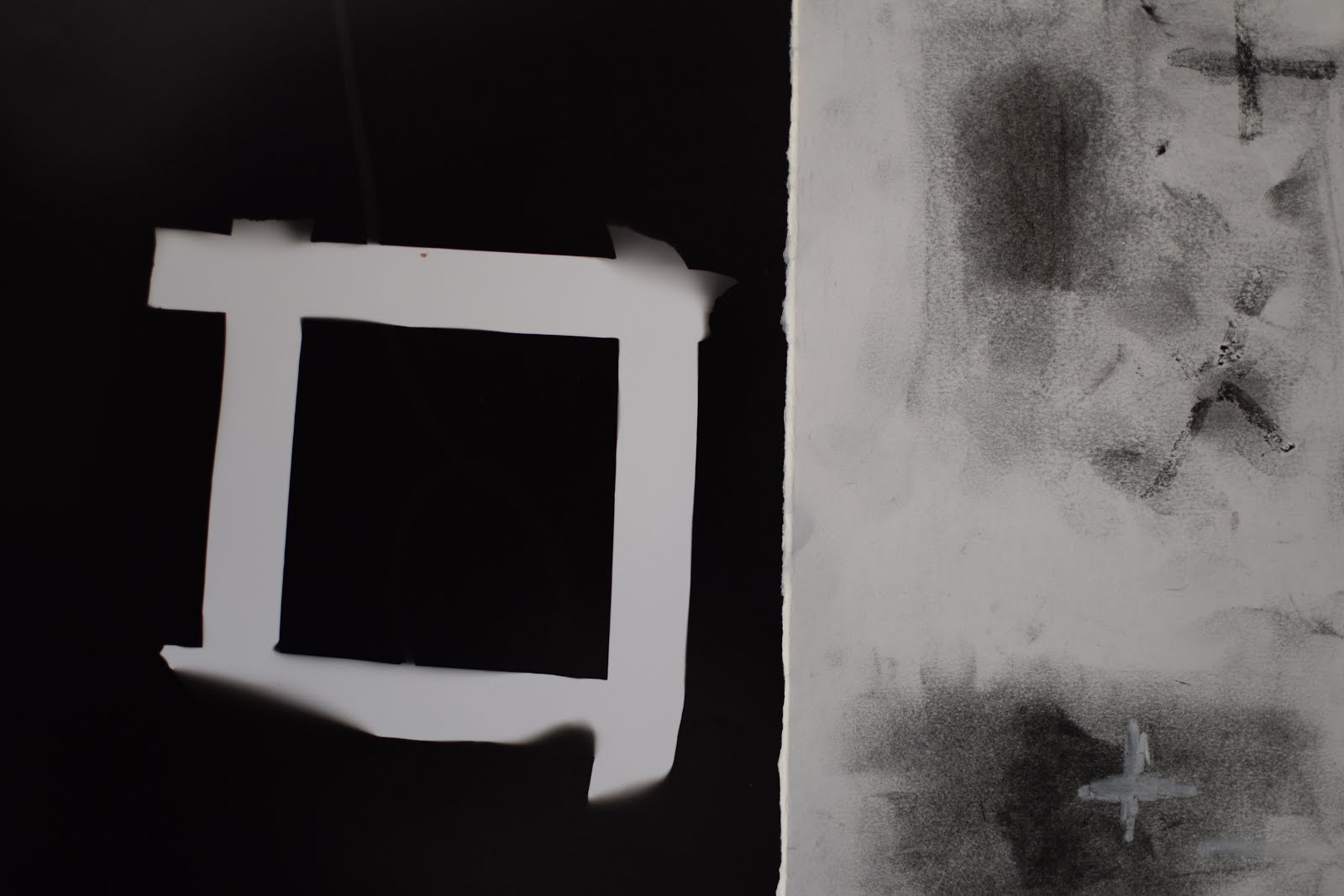
    img20161120_17325939 Photographic Forms

    Drawing figure/ground, documentation of work in progress.

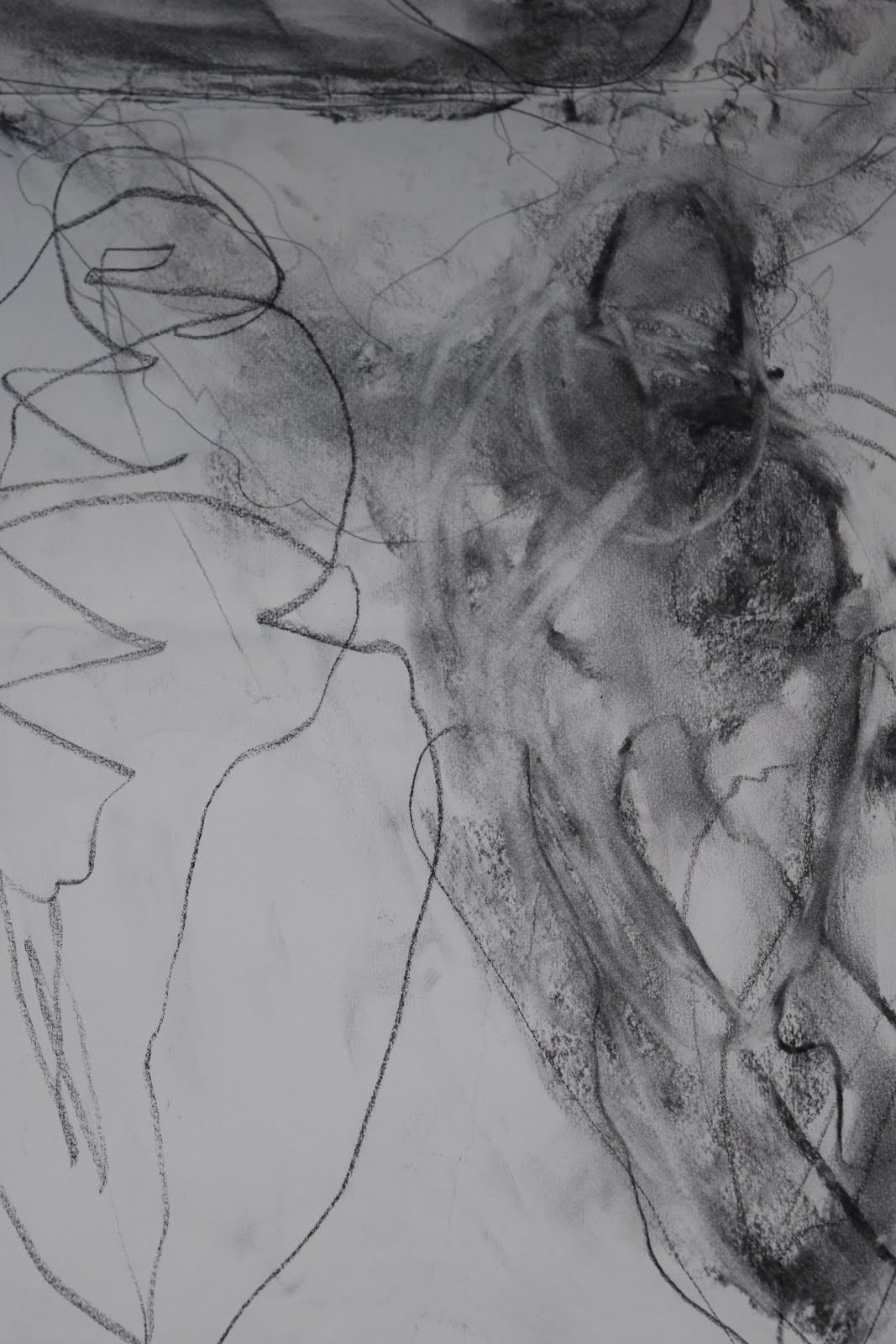
    Life “drawing” trace on paper with water and field chalk. Work submitted to Interfaith Group Show at the Link Gallery, Winchester 2010.

    “This particular event invokes for me the notion of simple material relations and collaborative gestures that underpin human agency.
    Art space/practice can promote these working intimations that enter into the realm of beliefs.”

    Artist’s Statement (archive)  07.12.2009.

    Camera Obscura : Kilquhanity 2011. #4
    Dark Session’s : Shadowy speculations in the pottery. Kilquhanity 2011

    Silver gelatin prints from a “room obscura” set up at Kilquhanity, Scotland 2011 as part of “Back to Free school, Drawing out the Archive”

    Sequential Photograph : In the space around the “spatial turn” (539)
    Art as Spatial Practice.
    Space folds : Containing “Spatialities around historicality and sociality”

    “All that is solid melts into air”

    Karl Marx, Friedrich Engels,
    (Poetic observation concerning the constant revolutionizing of social conditions)

    Perceptions now gathering at the end of the millennium. Spatiality, Robert T. Tally Jr. 2013

    pictify.com/user/russellmoreton

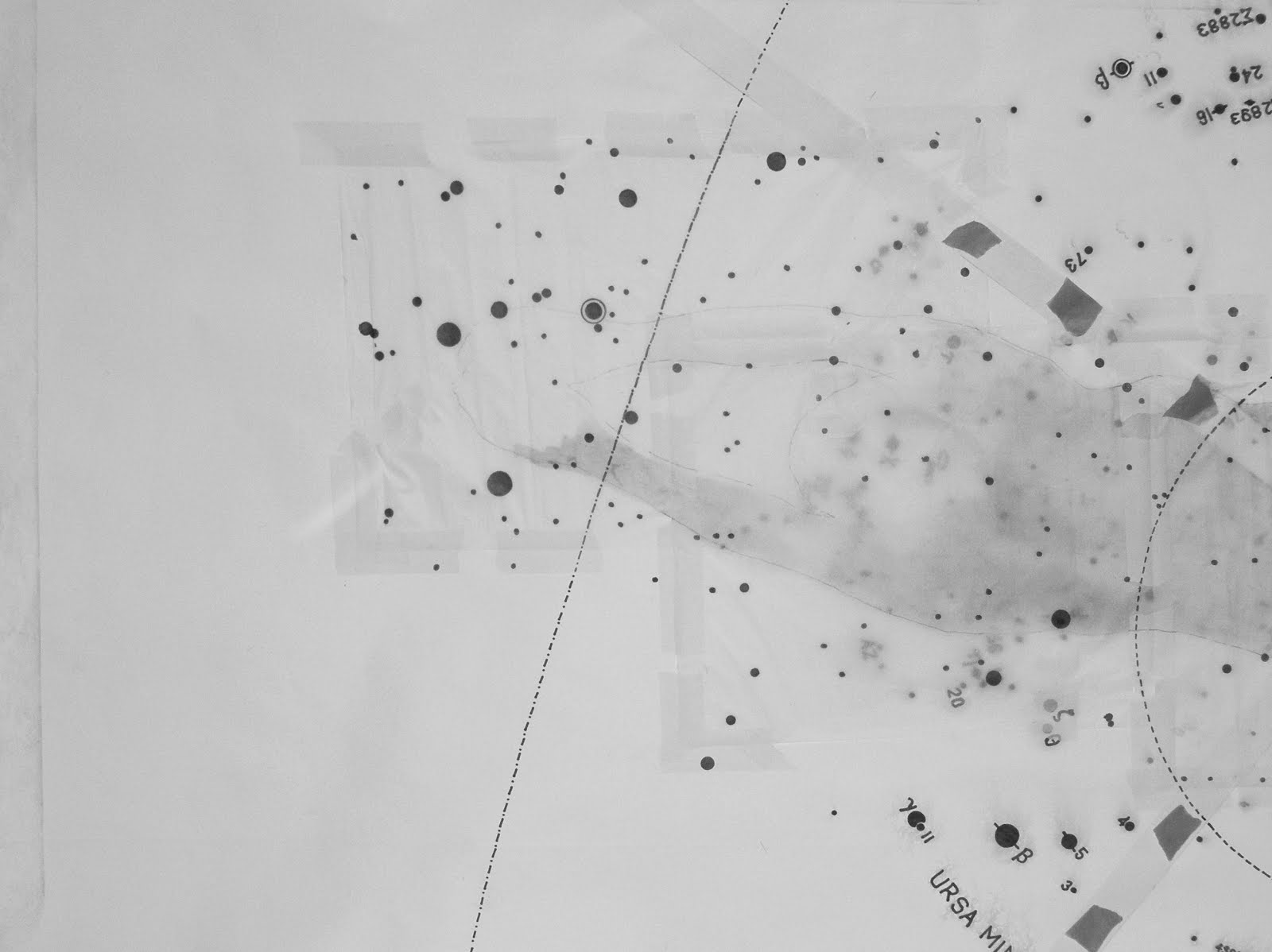
    PB144997a : Mapping.


    Drawing into the contemporary sociological imagination Intermezzo : Nomadic Photographic Assemblage a thousand plateaus Deleuze, Guatta…

    Source: Bodies in Spaces : Interiors and Outposts

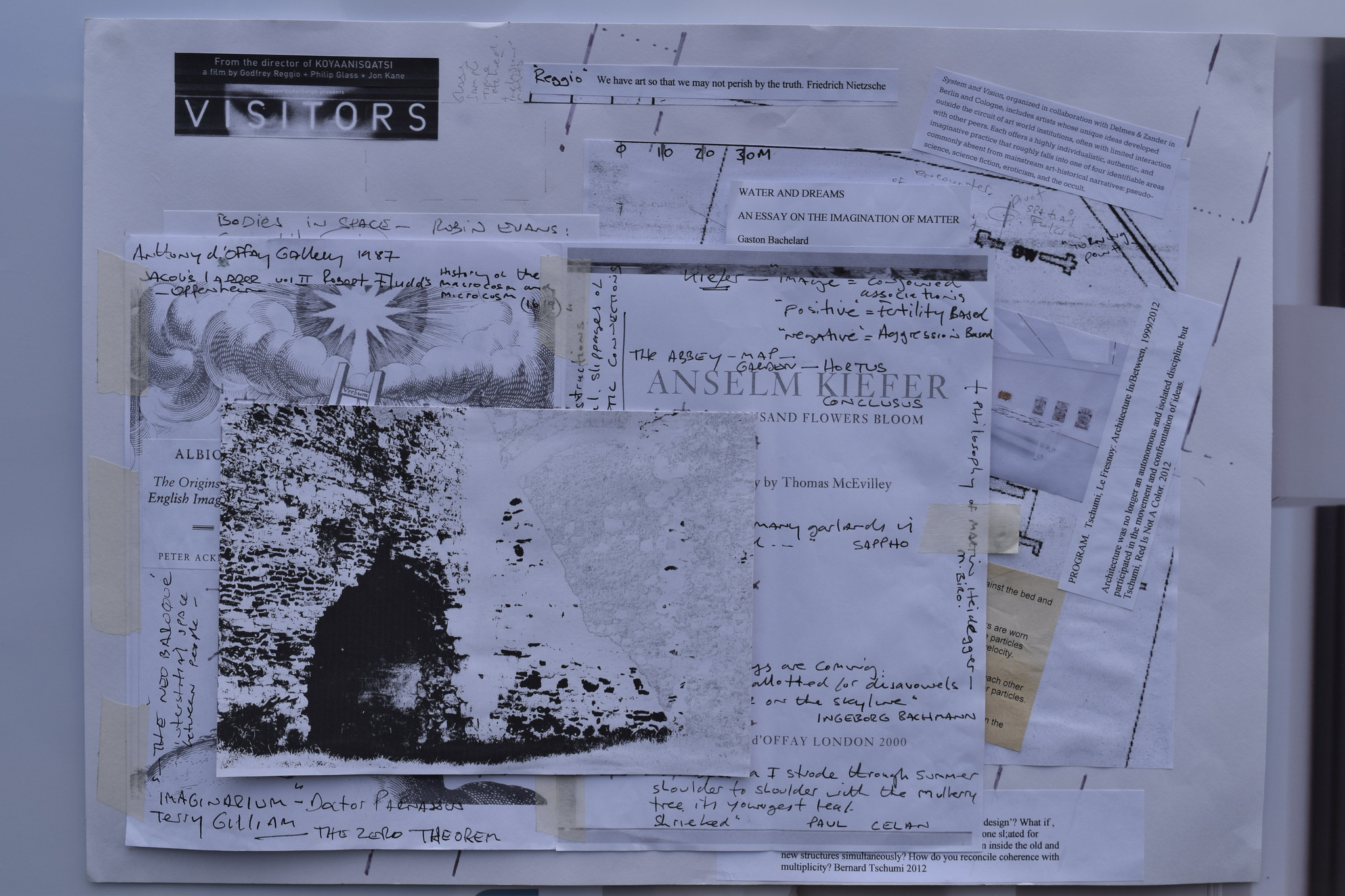
  • Researching Bodies/Discursive Collages : Theoretical Objects/Desiring Machines/Diversions/Anomalies/Contradictions


    OUTPOST STUDIO 3.16

    Sensations in Space and Time (the experience/entanglement of phenomena and idea)

    Agency/Foraging/Making/Gathering

    Subjectivity is relational (always in process)

    A Species of Making Spaces

    Tentativeness, attentive to situatedness

    A diffractive methodology enables a critical rethinking of science and the social in their relationality, moving beyond separate entities, separate sets of concern.

    Karen Barad

    Organism

    Person

    Environment

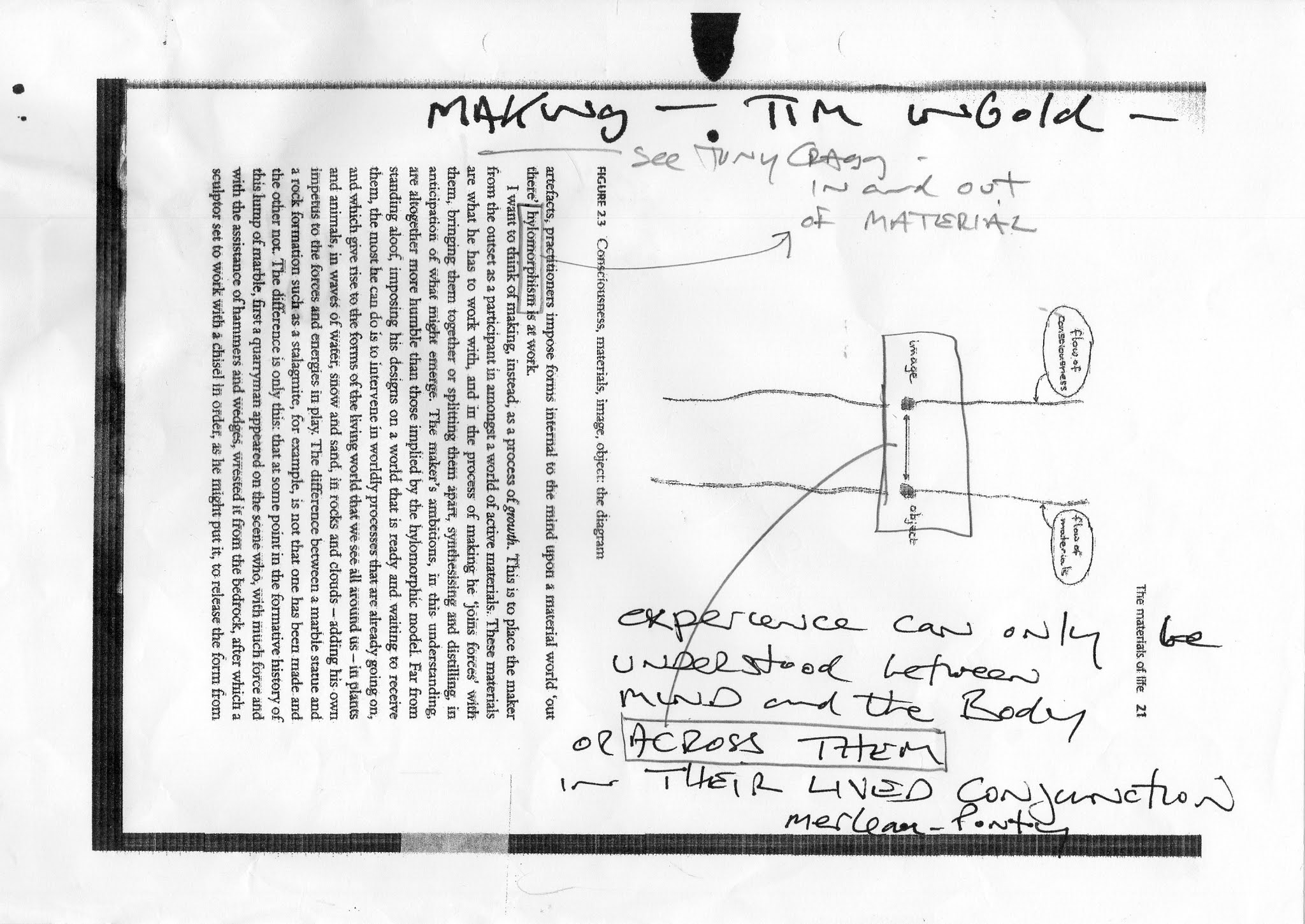
    For Merleau-Ponty, Experience can only be understood between the mind and the body or across them in their lived conjunction.

    The mind is always embodied, always based on corporeal and sensory relations.

    Elizabeth Grosz.

    Richard Serra : Verb List Compilation

    Actions to Relate to Oneself, 1967-1967

    Drawing in its frameworks and dimensions/presence and absence/its here and elsewhere

    Exploring the fragility of a painting in the landscape

    Canvas as sheltering construction, Raveningham Sculpture Trail

    Diagram-Map-Chart, is a symbolic depiction emphasizing (mapping) relationships

    Diagrams For The Imagination : Arakawa

    Semper Femina : Laura Marling

    Apokatastasis : Jim Jarmusch, Jozef Van Wissem

    Litany Of Echoes : James Blackshaw

    New Music, for old instruments : Paul Metzger, Jozef Van Wissem

    Brilliant Trees : David Sylvian

    Body As Cultural Product

    Both psychic and social dimensions must find their place in reconceptualizing the body, not in opposition to each other, but as necessarily interactive.

    Volatile Bodies/Chaos-Territory-Art : Elizabeth Grosz

    Spatial Asperity/Mesh, Membrane and Gauze, Möbius Strip, Pattening,

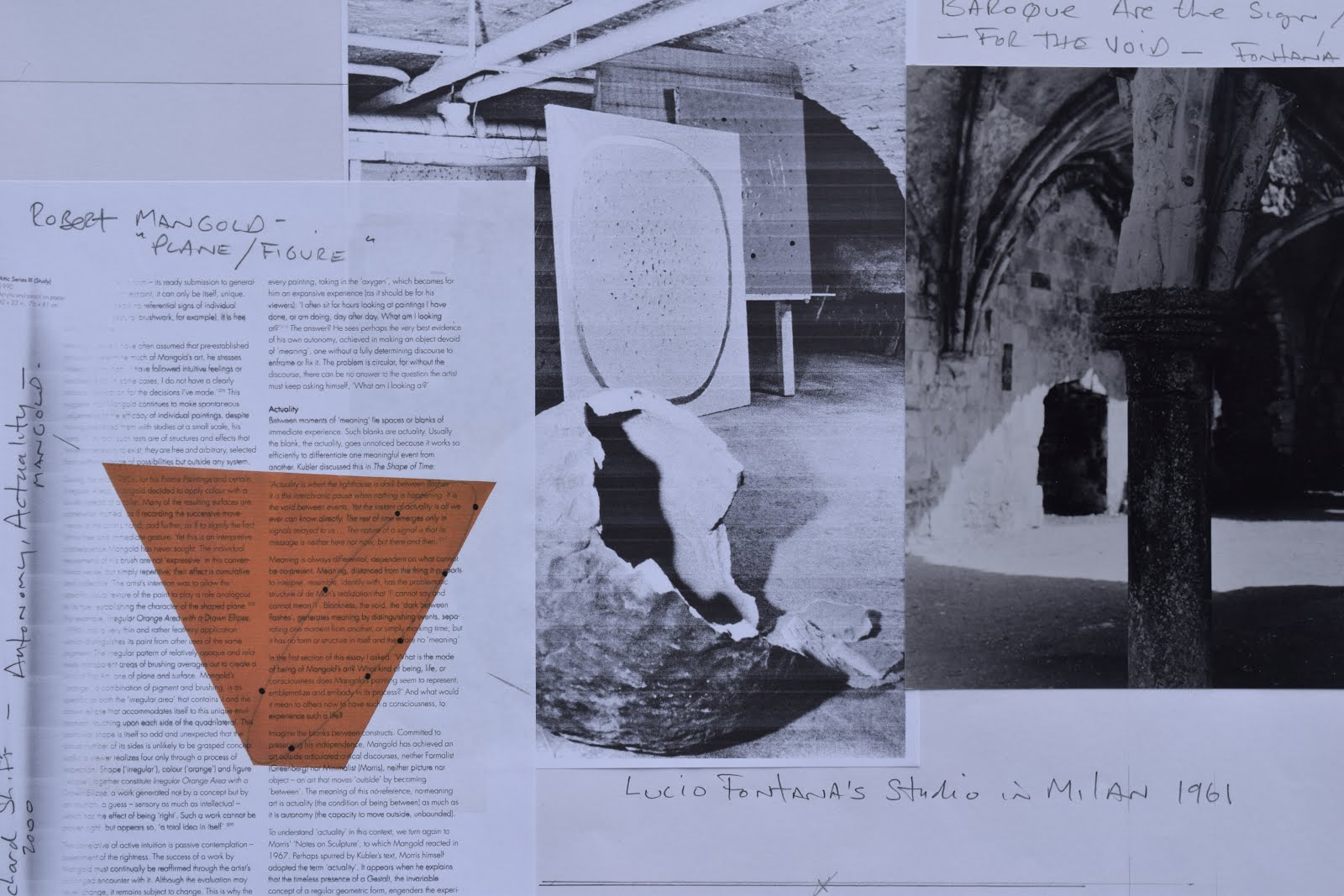
    Actuality : Robert Mangold

    Paintings around the particles/flows of things/boundaries/intervals of presence and absence

    Induction/Capacitance/Encapsulated Layers

    Drawing and its attempts to map out/make visible contingent things

    Contingency, is what remains, as it comes up against causality/constantly passing through

    Objects/Things conceptualized by the exploration of drawing (intervals of blindness)

    Linking Surface to the Aesthetic Experience of Space.

    Experiences incorporating interests with environmental textures into Art.

    Points of Contact/Confluence of Circumstances

    Materials bound by contact/canvas

    Patina, absences, gesso, textile wrappings, field chalk, exhumed oyster shells, yellow ochre,

    A philosophy of Reading/Matter/Rooms,

    The Lake of The Mind

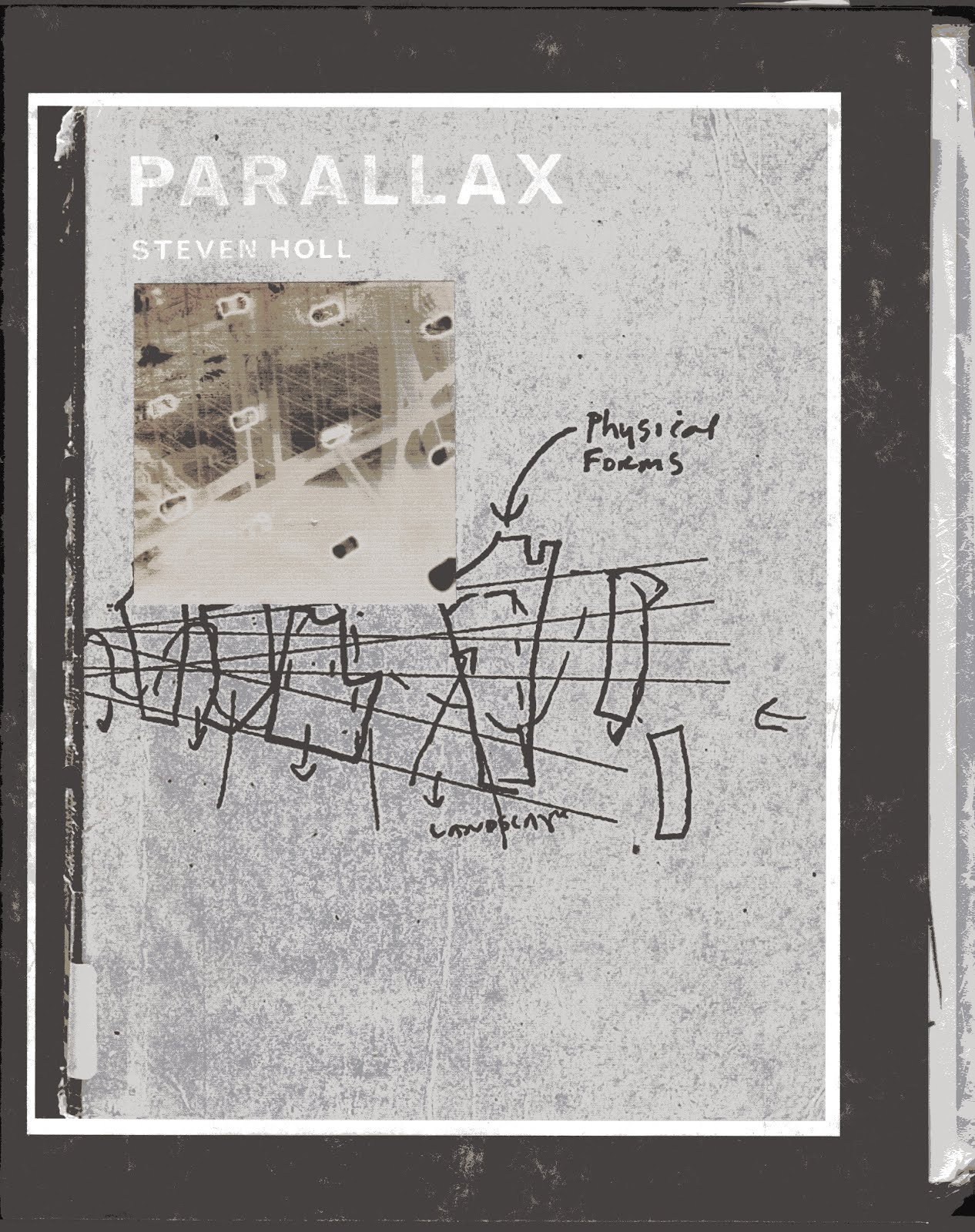
    Stochastic Thinking, Steven Holl

    Solitude/Libraries : Cell/Court/Domain

    Capacitance, relationships between intensities and movements

    Clay, Waxed Surface, Liquid Rust, Calico,

    Sensate Bandages/Windings/Armatures : Corporeal Landscapes/Assemblages/Things

    Flesh, elementary pre-communicative, subject and object develop.

    Making as Growth : Tim Ingold

    Social Architectures/Anthropologies/Imaginary Projects/Interfaces/Screens

    Timothy Morton : Realist Magic

    The elasticity of sensation, affective and wonderous

    Sally Mann : Matter Lent/Collodion wetplate negatives

    Corpus, liquid light, flesh, spirit, trace, outline, human body, performative,

    Paintings/Enactments : Canvas as a spatial verb

    Espace-Milieu, painting as environment/entanglements and situations

    Ceramic/Process and its theoretical objects

    As a series of practices, making reality by bringing things together or separating them into their singularities, or making machines/desiring machines

    Desire can be seen as an Actualization

    Gathering Notations : Bernard Tschumi

    Both presence and absence are coupled in this framework

    Deleuze/Guattari

    Glass/GLAS : Resistivity/Inclusions, A Field in England.

    Translucent aesthetics, beyond the opacities of the sensible the rational.

    An image that adequately expresses both the efficacy and the temporariness of the phenomena ( joining a diffused/invisible flow of energy, a breadth that wends its way ceaselessly through the world). Animating it as it goes.

    Vital Nourishment, Departing from happiness, Francois Jullian.

    What is a body capable of –

    Spinoza

    Building/Making, into the theoretical performative object (that does theory)

    Albers/Clarke : Interactions, Counterpoints, Intervals between colour/forms,

    Membrane, Discursive, Diffractive, Sensory, Layered and Filtered Light,

    Body, Movement, Mind, Assemblages, Exploratory, Speculative, Choreographic,

    Deleuze/Guattari, understand the body more in terms of what AFFECTS it is capable of, instead of the consequences of having a body.

    Peter Zumthor : Thermal Baths

    Human Agency/Temporal transitions between matter and movement.

    Immaterial/Concrete/Water : Bodies in contact/the corporeal social human body

    Manifolds/Theory of Temporality/3 Synthesis of Time

    Memory Past Preserved Condition

    Present Habit Instants Agent

    New Future, actual/virtual Creation of The New

    Multiplicity, purality of contemplating souls.

    Asymmetries between particular past and general future.

    Temporality involves multiple interacting processes.

    Architecture becomes Spatial Agency

    We all make space : Jeremy Till

    Paintings, space, volume, surface, passages, actualizations, claddings/camouflage

    One conceives and reads a building in terms of sequences, both phenomenological and filmic, reading a space by its depth of field, its thickness.
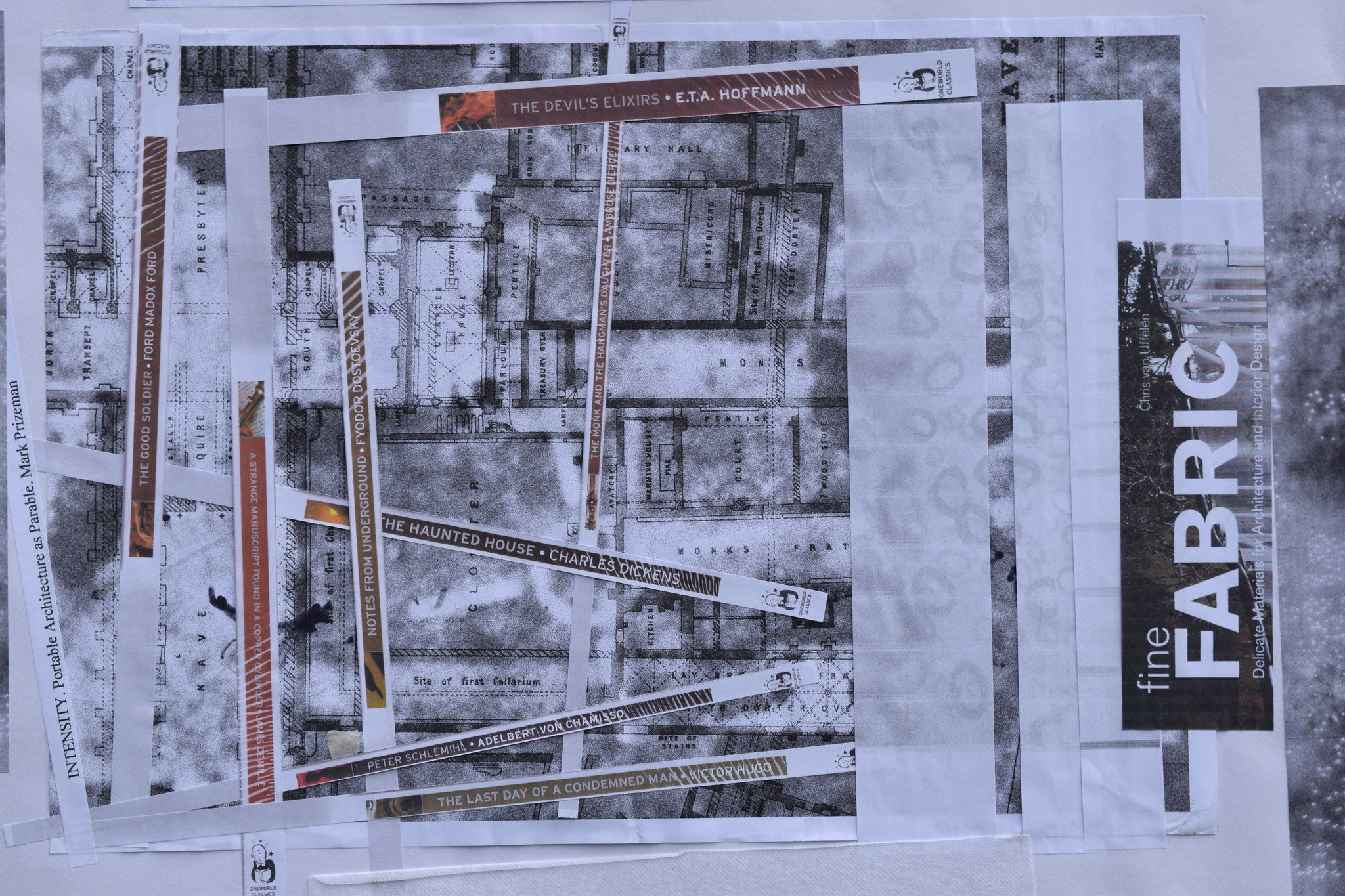
    Turbulence House, New Mexico, Steven Holl.

    Aesthetics/Asperities : Resultants that incorporate the friction (asperity) of their trajectories through a medium. Tilt-up concrete construction, Chapel of St, Ignatius, Seattle. Steven Holl.

    Navigations and Vectors/conduits/intervals and traces between discursive practices.

    Wrapped Silences : Assembled Sectional Elements/Thresholds

    Surfaces on Mourning/Samsara, a beauty fed on emptiness


    OUTPOST STUDIO 3.16 Sensations in Space and Time (the experience/entanglement of phenomena and idea) Agency/Foraging/Making/Gatherin…

    Source: Researching Bodies/Discursive Collages : Theoretical Objects/Desiring Machines/Diversions/Anomalies/Contradictions

  • Life Drawing : An Emotional History of The Performative/Rhizomatic Body

    Humanity : An Emotional History
    Stuart Walton. 2004

    Fear
    Anger
    Disgust
    Sadness
    Jealousy
    Contempt
    Shame
    Embarrassment
    Surprise
    Happiness

    Oxford Dictionary of Geography: spatiality

    The effect that space has on actions, interactions, entities, concepts, and theories. Physical spatiality can also be metaphorical. It is used to show social power—thrones are higher than the seats of commoners, and ‘high tables’ for university teachers in most Oxbridge colleges physically elevate the teachers over the taught. People use proximity to show how intimate they want to be with others (See personal space), or orientation; we may face someone or turn away from them. Institutions and governments have used large architectural spaces to invoke awe, while restaurateurs may create ‘cosiness’ in small spaces.
    LIFE DRAWING : Phenomenological Reductions
    The body is not an object, but the condition and context through which I am able to have relations with others.
    Merleau-Ponty
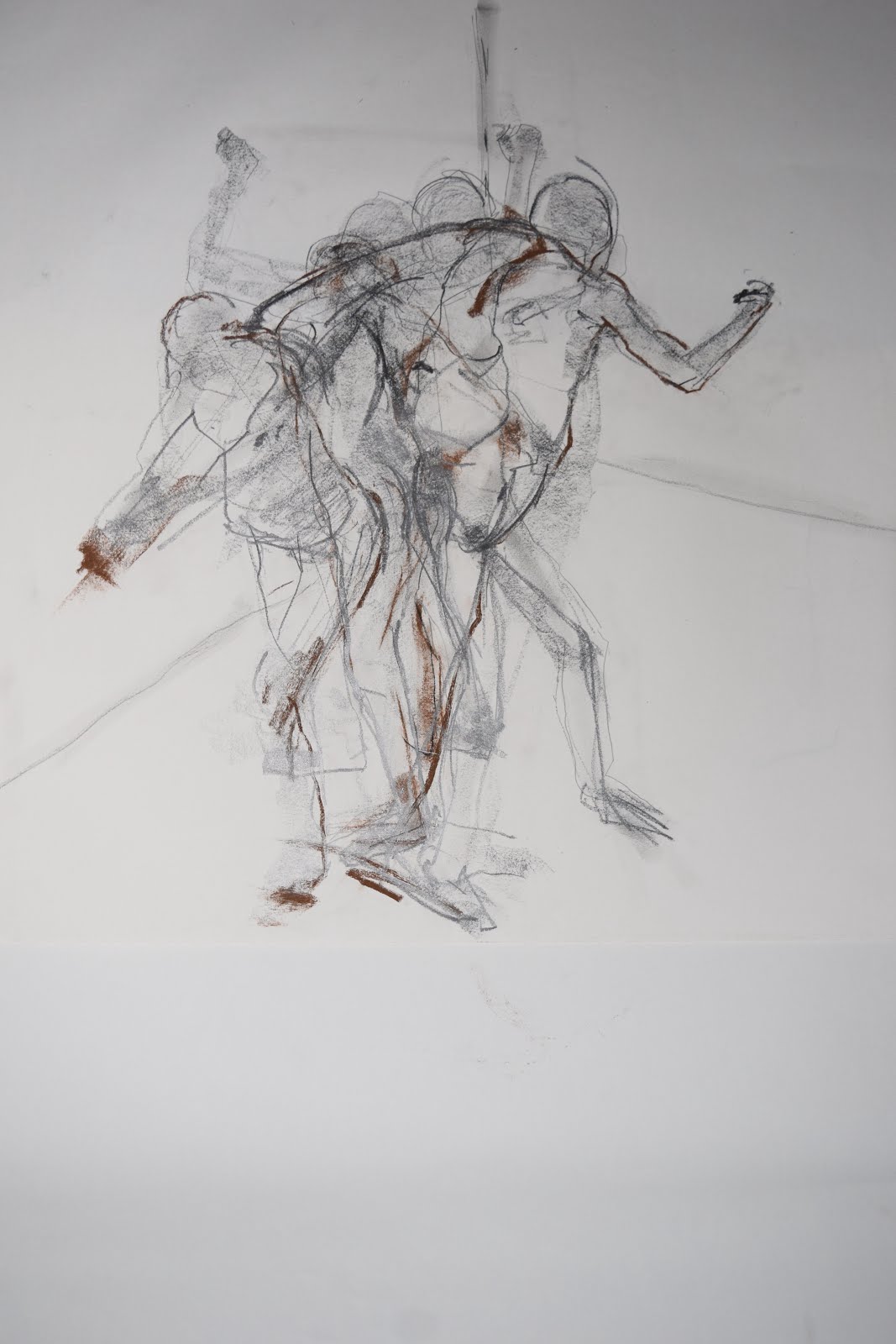
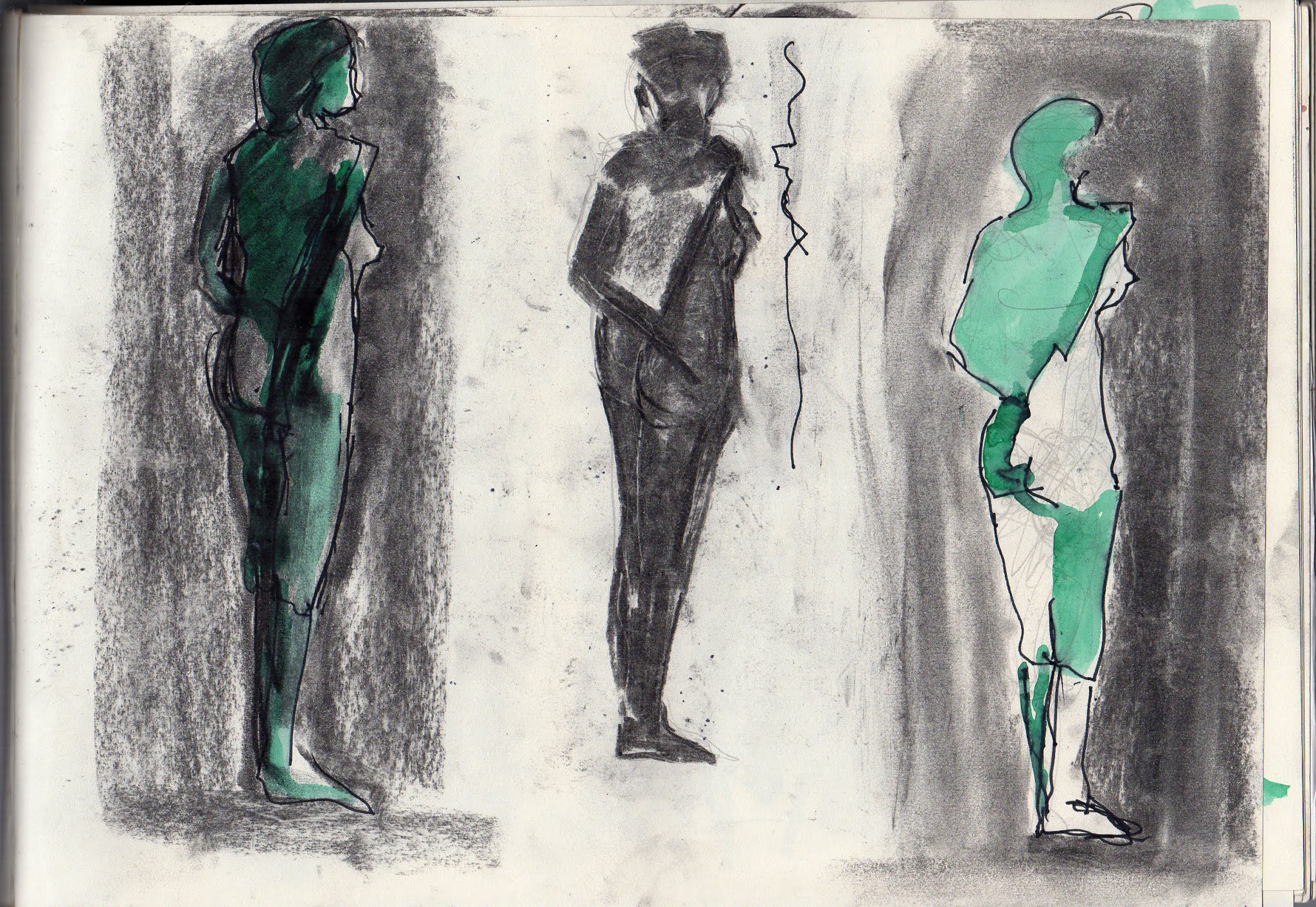
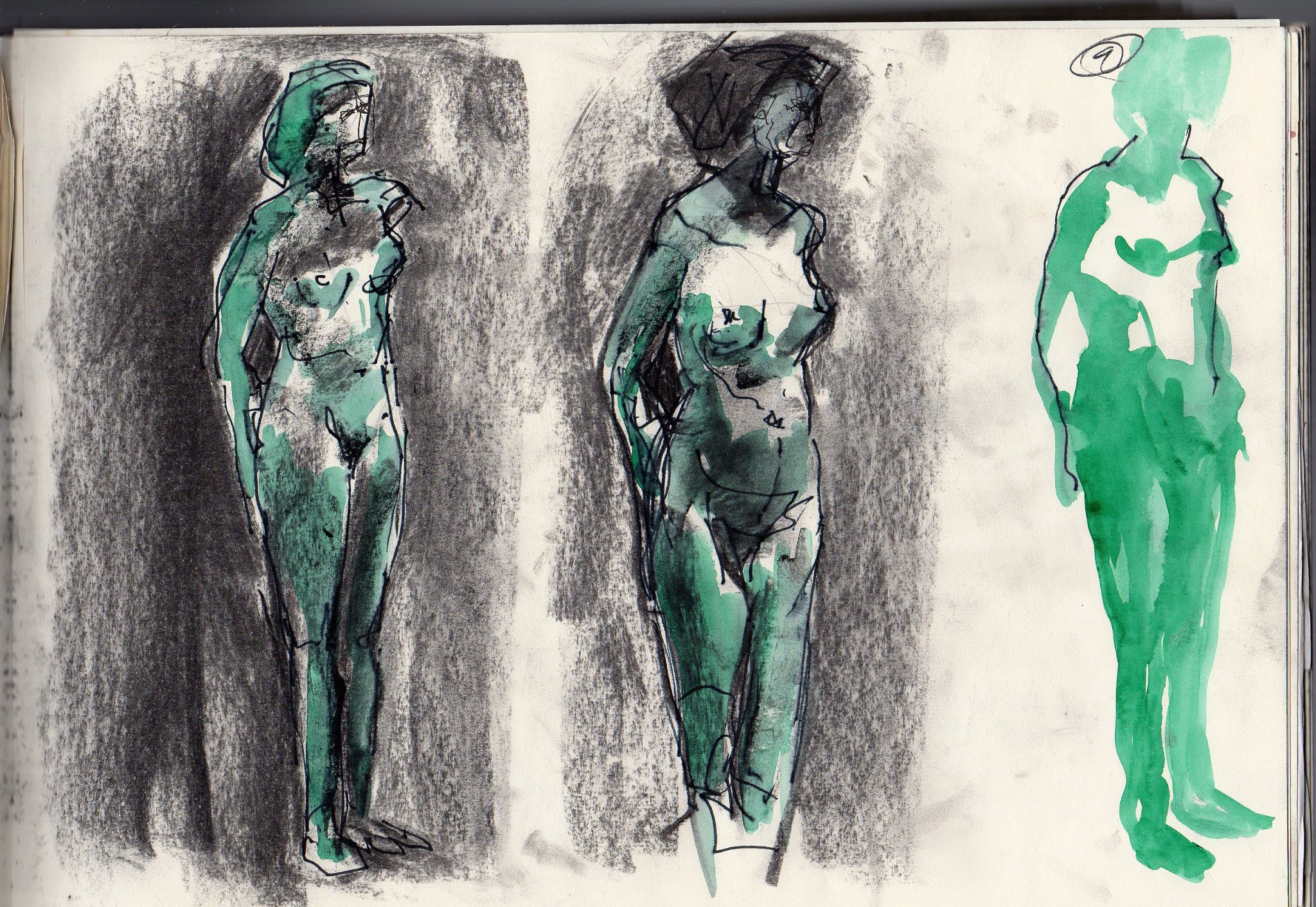
    A study of one body in front of another body.
    Our body is our connection with the world and all its phenomena, it is fundamental in our communication and interactions.
    The body is a force of creative action and a site of resistance.
    An exploration in various forms of physical dialogue between performing bodies.
    Energetic flows from others, what energy and phenomena will these relationships bring about on these bodies and the space they inhabit.
    Personal and public boundaries of others, a being towards things through the intermediality of the body.
    For Deleuze and Gauttari the body is rhizomatic (containing multiplicities, intensities and flows) and in active connection and interaction with its becomings, surroundings and situatedness.
    What a body can do, what a body is capable of
    The body without organs (BwO) is an attempt by Deleuze and Gauttari to denaturalize ‘human bodies’ and place the body in direct relation and connection to flows and particles of other bodies and things, creating constellations from its modes of organization of disparate substances.

    “Spatial turn” The increased attention to matters of space, place and mapping in literary and cultural studies, as well as in social theory, philosophy, and other disciplinary fields.

    Spatiality, Robert T. Tally Jr. Routledge 2013.

    The origin of “True Humanity” : Tim Ingold


    Humanity : An Emotional History Stuart Walton. 2004 Fear Anger Disgust Sadness Jealousy Contempt Shame Embarrassment Surprise Ha…

    Source: Life Drawing : An Emotional History of The Performative/Rhizomatic Body

  • Visual Poetics/Bricolage : The Studio/Space of Real Situations

    Spatial Collage : Research/Discourse/Apparatus

    Farnham University of the Creative Arts

    rhythmanalysis : Space, Time and Everyday Life.

    Lefebvre

    Jannis Kounellis

    Carlo Scarpa

    Translates the painterly relationship of figure and ground into the space of real situations

    The Visual Poetics of Jannis Kounellis, Suzanne Cotter and Andrew Nairne.

    Modern Art Oxford, 2004-2005.

    bricolaged notes  from STUDIO UNBOUND : Lane Relyea

    Institutional Critique : Studio/Post Studio Activity

    SPATIAL AGENCY : Spaces of Fluid Interchange Between Objects, Activities, People.

    Today studio and museum are superseded by more temporal, transient events.

    The Function of the Studio

    Daniel Buren

    The Studio is no longer as seen as belonging to a system.

    No longer a retreat but it now INTEGRATES

    It is all exterior.

    Material Flows 2007/2017 Towards Disentanglement

    Social behaviour is trapped in inescapable patterns of interaction coded by techno-linguistic machines, smartphones, screens of every size, and all of these sensory and emotional devices end up destroying our organism’s sensibility by submitting it to the stress of competition and acceleration.

    Franco “bifo” Berardi

    The Network places the artist as a ‘like item’ within an integrative inventory or database.

    Networks are both integrative and decentralizing in that they privilege casual or weak ties over formal commitments.

    Being part of a network that privileges itinerancy and circulation over fixity, that diminishes hierarchies and boundaries in favour of mobility and flexibility across a more open extensive environment.

    ‘The Studio made into a showroom display’

    Antagonism and Relational Aesthetics. 2004

    Claire Bishop

    The Individual and The Social

    A place where meanings, properties and behaviors fluctuate radically.

    Bennett Simpson. Can you work as fast as you like to think. 2003

    The hosting/re-created artist’s workspaces, like a threshold between private and public actuality and potentiality.

    The Notion of the Evolutionary Exhibition.

    Placing greater emphasis on INFORMATION, DISCUSSION and GATHERINGS

    Establishing NETWORKS, fluctuating between highly specialized work by scientists, artists, dancers and writers

    Obrist/Vanderlinden, Laboratorium, Antwerp. 1999

    MODULATION, Deleuze

    Immaterial Social Acquaintances/Information

    Along with the rise of Networks comes a new Ideology, one that Advertises Agency, Practice and Everyday Life.

    The Dividual (The New Mobile Creator) Deleuze

    Someone who is ‘UNDULATORY In ORBIT, in a CONTINUOUS NETWORK

    Colour Nexus : Promiscuous Mobility

    OBSCURED MATERIAL

    OUTPOST STUDIO 3.16

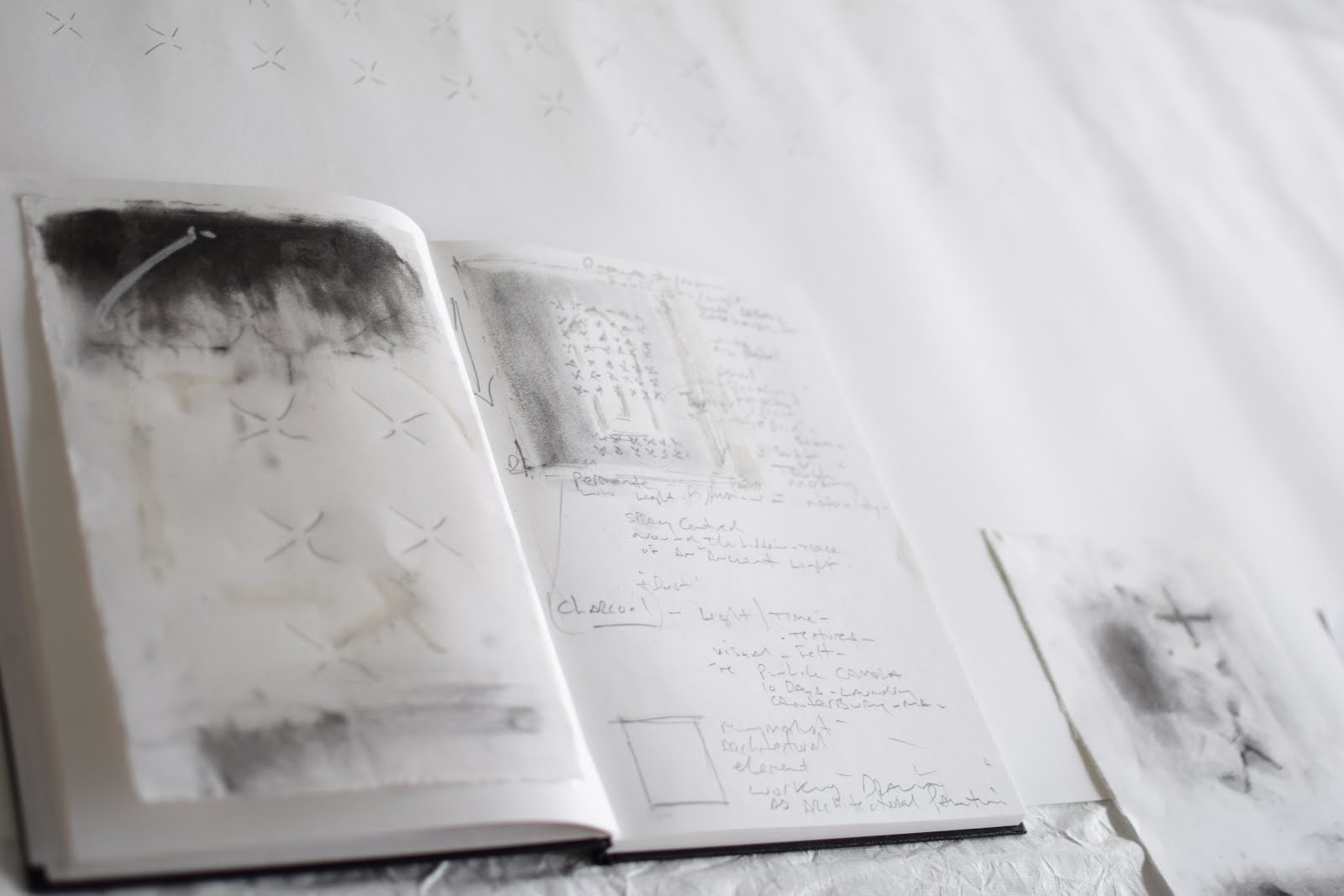
    Notes from sketchbooks

    Apokatastasis : Jim Jarmusch, Jozef Van Wissem

    Spatial Asperity/Mesh, Membrane and Gauze

    Drawing and its attempts to map out/make visible contingent things

    Contingency, is what remains, as it comes up against causality/constantly passing through

    Objects/Things conceptualized by the exploration of drawing (intervals of blindness)

    Linking Surface to the Aesthetic Experience of Space.

    Experiences incorporating interests with environmental textures into Art.

    Points of Contact/Confluence of Circumstances

    Materials bound by contact/canvas

    Patina, absences, gesso, textile wrappings, field chalk, exhumed oyster shells, yellow ochre,

    A philosophy of Reading

    Solitude/Libraries : Cell/Court/Domain

    Clay, Waxed Surface, Liquid Rust, Calico,

    Sensate Bandages/Windings/Armatures : Corporeal Landscapes/Assemblages/Things

    Social Architectures/Anthropologies/Imaginary Projects

    Timothy Morton : Realist Magic

    The elasticity of sensation, affective and wonderous

    Sally Mann : Matter Lent/Collodion wetplate negatives


    Corpus, liquid light, flesh, spirit, trace, outline, human body, performative,


    Spatial Collage : Research/Discourse/Apparatus Farnham University of the Creative Arts rhythmanalysis : Space, Time and Everyday Life. Lefeb…

    Source: Visual Poetics/Bricolage : The Studio/Space of Real Situations

  • Reflective Narratives around The Instant Art and Aesthetic Patterns The theme of the human body as landscape and the biological link bet…

    Tarkovsky filming the Instant : Flux and Quality in Nature’s Time

    Reflective Narratives around The Instant

    Art and Aesthetic Patterns

    The theme of the human body as landscape and the biological link between humanity and nature

    Filmic Modalities


    An Ecology of Mind

    We are so accustomed to thinking of aesthetic phenomena as a discursive or representational construct, that we often forget that without arousal of perception, no aesthetic experience is possible.

    Going beyond what it may represent into the important psychic information it contains

    Bateson credits art with playing the role of confronting the quantitative limit built into consciousnesses

    Art assists mind in recognizing that the potentiality of heightened consciousnesses exist and that it resides in you and in me

    Flux and Quality in Nature’s Time

    Perception of Environment/Relational Situations

    Tim Ingold

    Each thing framed dwells in the world differently.

    The frame and framing, through its configuration, must never offer a gap or a bridge through which as it were, the world could get in, or from which the picture could get out.

    The picture frame reminds us that the work of art, while it hangs in our room, does not disturb our day-to-day sentient and perceptual ecologies.

    It is like an island in the world that waits until one approaches it and which one can as well pass by and overlook.

    On The Picture Frame, Simmel

    Art becomes art by virtue of literal and institutional framing

    Aesthetic contemplation blurs reals and emotional space in a way that produces tangible affects in the world

    The thinking hand that mediates a haptic bridge in which creating and holding, becoming and grasping are all practical everyday activities extending the thinking body

    Objects that stand in two worlds at once and becoming drawn into the movement of practical life through the virtue of being held in the hand

    The intermingling of persons and objects in pictorial space and the aesthetics of the intermingling of function and form in everyday things

    The pictorial space is one in which persons and images intermingle and passions can be aroused.

    Art and Agency, Alfred Gell

    Nature as “Comfort Zone” in the Films of Andrei Tarkovsky by Donato Totaro

    Volume 14, Issue 12 / December 2010  18 minutes (4324 words)

    In this essay Totaro analyzes the unique thematic and aesthetic import of Tarkovsky’s use of nature.

    Tarkovsky relies on nature and natural phenomena to underscore and often dictate the time-pressure (rhythm) of a shot. The movement of time, its flux and quality, flows from the life-process that is recorded in the shot. Even though the fires, downpours and gusts of wind are staged, re-shot or recreated there still remains the spontaneous element of “nature’s time” within the filmic time. Each of the natural events and elements (water, wind, fire, snow) have their own sustained rhythm. Tarkovsky uses these natural rhythms to express his own, that of his characters and the temporal shape of the film (23-24).

    I would like to conclude this analysis of Tarkovsky’s unique use of nature as a ‘comfort zone’ by saying a few things about his two science-fiction films, Solaris and StalkerSolaris is based on the great same-titled science-fiction novel by Stanislaw Lem. The many philosophical and ethical differences between the novel and film can be summarized by the fact that, whereas the novel begins in space on the Solaris space station orbiting the planet Solaris, the film begins with a 45 minute prologue on earth, which establishes the importance of home, family, and ‘mother’ earth to the psychologist Kris Kelvin (and by extension all humans), who is soon to leave for outer space. The theme of the human body as landscape and the biological link between humanity and nature is established right from the opening, a (second) slow motion close-up shot of plant life swaying under a crystal clear stream that slowly pans right to reveal the hand of a man wearing brown trousers and a dark leather coat standing amidst waist high reeds.

    http://offscreen.com/view/nature_as_comfort_zone

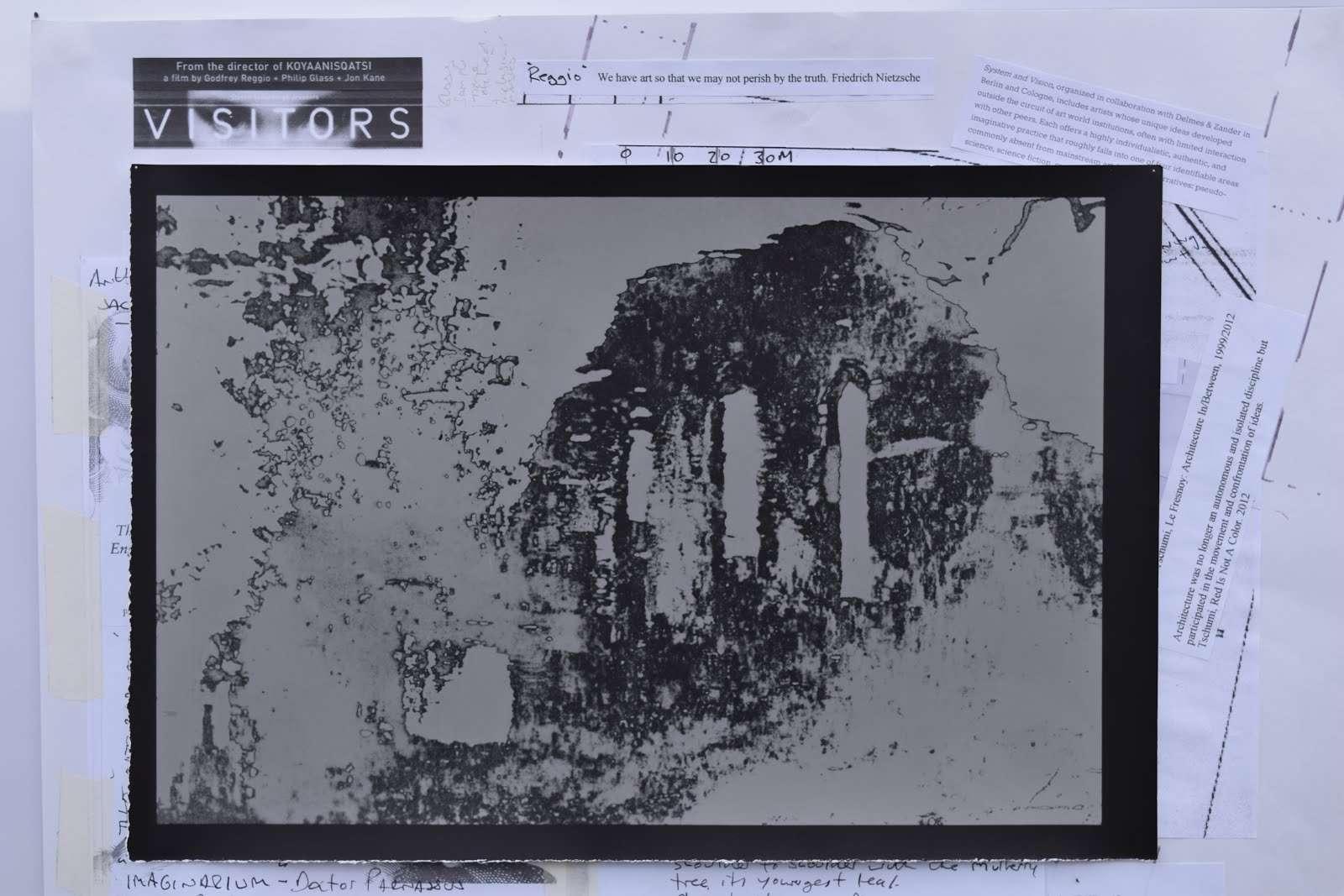
    Waverley Abbey
    Reflected ruins in flooded interior

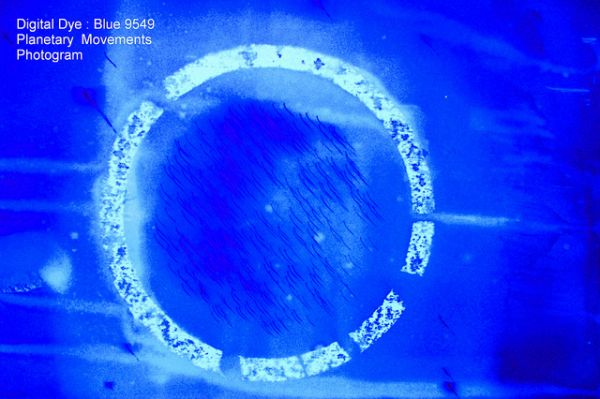
    Photogram formed from a design collage for The Reading Room, Waverley Abbey.
    Intuition of the Instant : Gaston Bachelard


    Source: Tarkovsky filming the Instant : Flux and Quality in Nature’s Time

  • MAKING : Spatial Agency/ Mutual Knowledge/ Discursive Consciousness. Social apparatuses and agents that explore the possibilities of space. Russell Moreton


    Sketch Books/Strange Loops : Drawings, Materials, Annotations, Collages and Constructions 2018-20

     OUTPOST STUDIO 3.16

    Agency through sketchbooks

    Apokatastasis : Jim Jarmusch, Jozef Van Wissem

    Spatial Asperity/Mesh, Membrane and Gauze

    Drawing and its attempts to map out/make visible contingent things

    Contingency, is what remains, as it comes up against causality/constantly passing through

    Objects/Things conceptualized by the exploration of drawing (intervals of blindness)

    Linking Surface to the Aesthetic Experience of Space.

    Experiences incorporating interests with environmental textures into Art.

    Points of Contact/Confluence of Circumstances

    Materials bound by contact/canvas

    Patina, absences, gesso, textile wrappings, field chalk, exhumed oyster shells, yellow ochre,

    A philosophy of Reading

    Solitude/Libraries : Cell/Court/Domain

    Clay, Waxed Surface, Liquid Rust, Calico,

    Sensate Bandages/Windings/Armatures : Corporeal Landscapes/Assemblages/Things

    Social Architectures/Anthropologies/Imaginary Projects

    Timothy Morton : Realist Magic

    The elasticity of sensation, affective and wonderous

    Sally Mann : Matter Lent/Collodion wetplate negatives

    Corpus, liquid light, flesh, spirit, trace, outline, human body, performative,

    Source: Sketch Books/Strange Loops : Drawings, Materials, Annotations, Collages and Constructions 2018-20

  • Cyanotypes : Creative Ecologies

    The sun has gone mad and stripped the earth of its ionosphere. For decades blasting radiation has poured upon earth, melting the polar caps and turning permafrost into streams, rivers, oceans. Huge deltas have been built, lakes formed, seas have risen.

    The Drowned World, JG Ballard.

    Blueprints : Anthropological Forms
    Botanical traces with leper graves

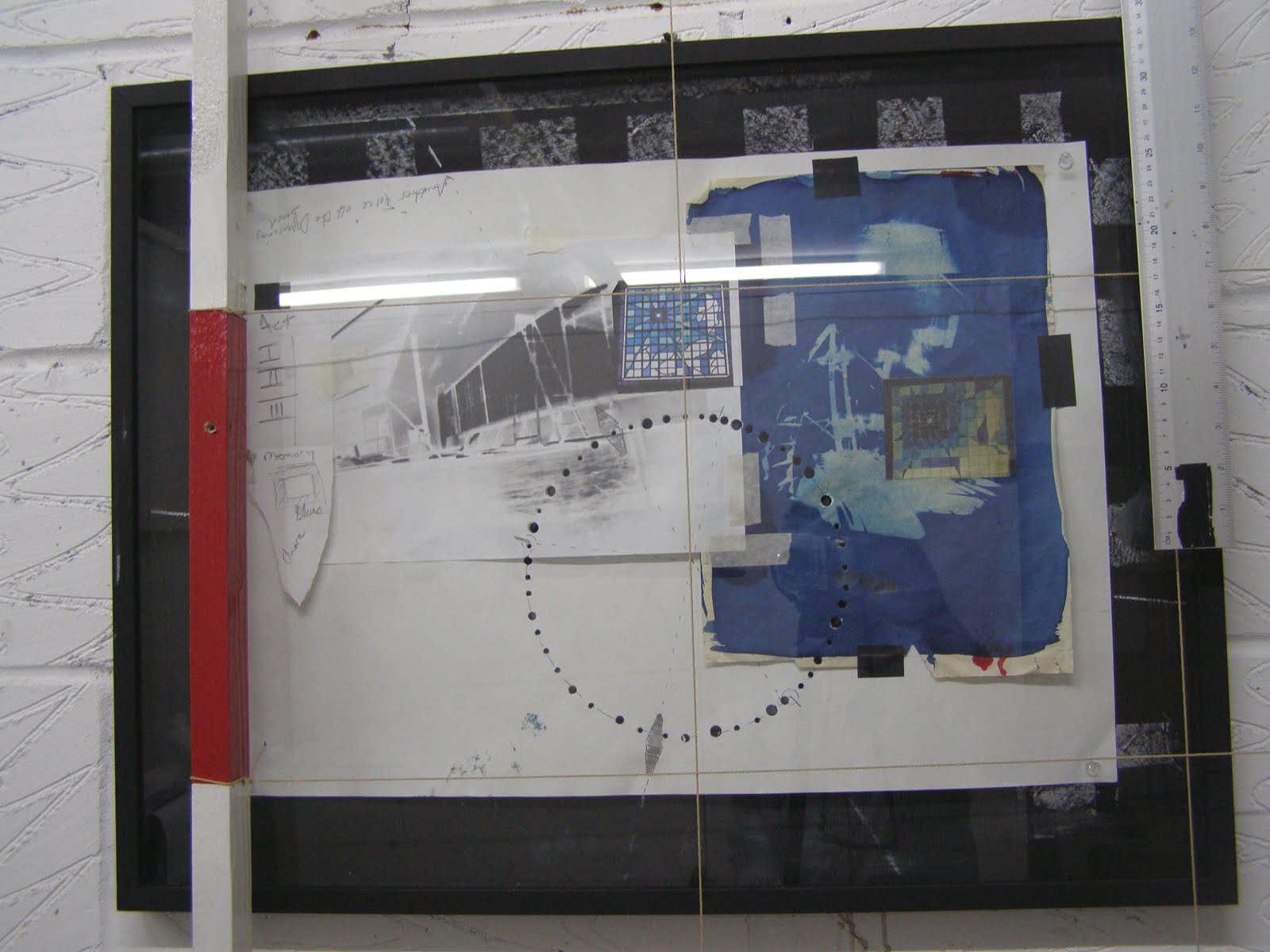
    DSC_0205 Archipelagic

    DSC_0250 Architectural Blueprint

    Biosphere (Ecology and Entropy) 2012.


    MAKING : Spatial Agency/ Mutual Knowledge/ Discursive Consciousness. Social apparatuses and agents that explore the possibilities of space. Russell Moreton

    Source: Cyanotypes : Creative Ecologies

  • Art and Architecture : a place between, Jane Rendell, Peter Greenaway, Intertextuality/Transparency

     OPEN TEXTS.

    Allow readers to have multiple interpretations, they allow for the possibility of  “determinations”.

    Intertextuality fundamental concept “that no text much as it might like to appear so, is original and unique in itself. Rather it is a tissue of the inevitable , and to an extent unwittingly references to and quotation from other texts.”

    SELECTED BIBLIOGRAPHY AND REFERENCES

    Edward S. Casey, The Fate of Place (Berkley: University of California Press, 1998 )

    Juhani Pallasmaa, Eyes of the Skin, Architecture and the Senses (Chichester: Wiley, 2005 )

    Peter Greenaway, The Physical Self (Rotterdam: Boymans-van Beuningen Museum, 1992)

    Henri Lefebvre, The Production of Space (Oxford: Blackwell, 2000)

    J. G. Ballard, High Rise (London: Jonathan Cape, 1967)

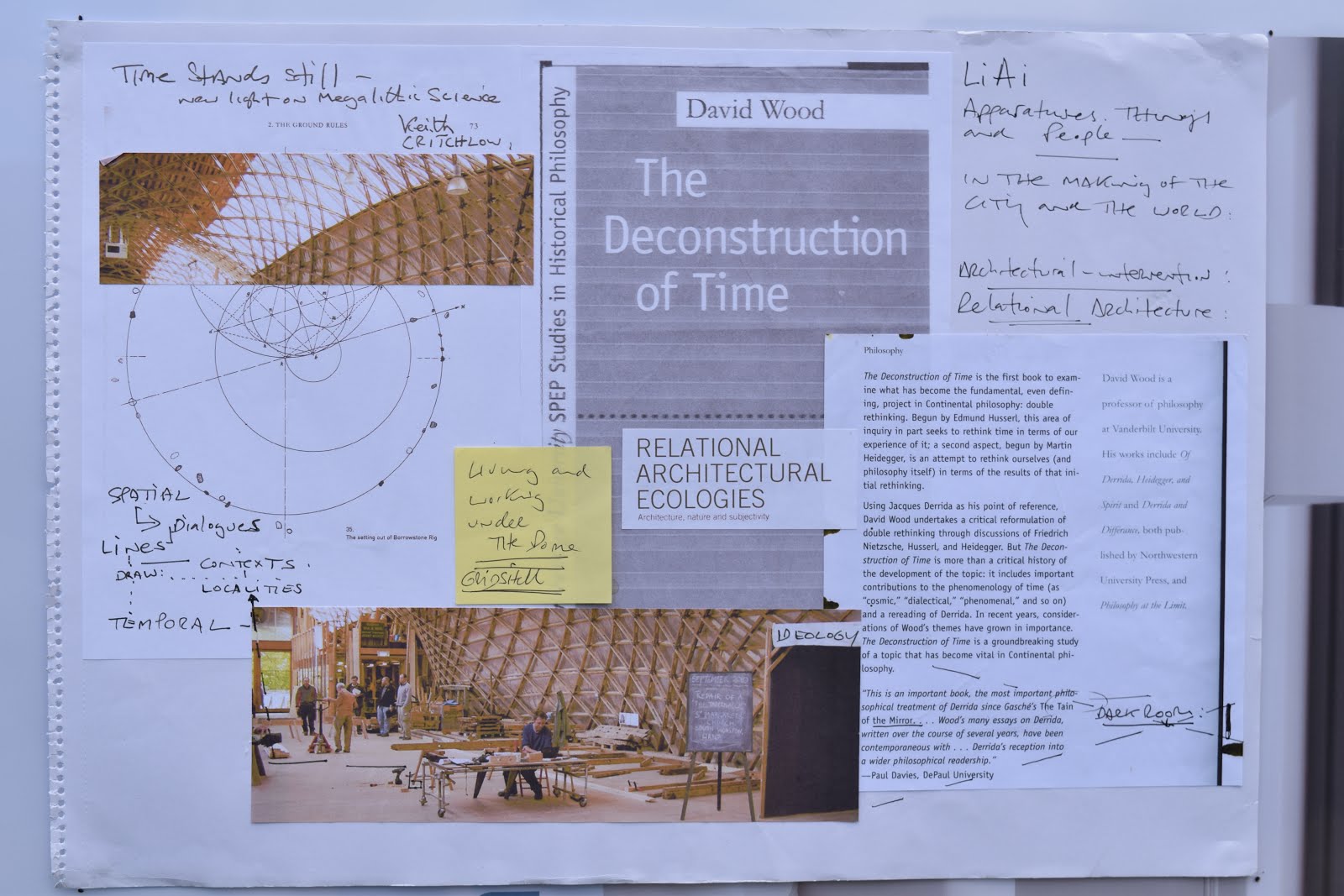
    David Wood, The Deconstruction of Time (Evanston: Northwestern University Press, 2001 )

    Ian Buchanan, Deleuze and Space (Edinburgh: Edinburgh University Press, 2006)

    Vilem Flusser, Towards a Philosophy of Photography (London: Reaktion, 2000 )

    Robert Cooper, Peripheral Vision: Relationality (London: Sage Publishing, 2005)

    Jonathan Murdoch, Post Structuralist Geography ( London: Sage Publishing, 2006)

    Markus Miessen, Did Someone Say Participate, an atlas of Spatial Practice (Cambridge, Massachusetts: MIT Press, 2006)

    Russell Ferguson, Francis Alys, Politics of Rehearsal (Los Angeles: Hammer Museum, 2008)

    Elizabeth Grosz, Space, Time, and Perversion (London: Routledge, 1996)

    Tracey Wan, The Artists Body (London: Phaidon Press, 2000)

    Francois Dagonet, Etienne-jules Marey: a passion for the trace ( New York: Zonebooks, 1992 )

    Colin Rowe, Transparency ( Basel: Birkhauser, 1997)

    Avis Newman, The Stage of Drawing, Gesture and Act (London: The Tate Drawing Centre, 2001)

    Giuseppe Penone, The Eroded Steps (Halifax: HMST, 1989)

    Glen Onwin, The Recovery of dissolved substances ( Halifax: HMST, 1992)

    Carolyn Bakargiev, Arte Povera (London: Phaiden Press, 2003)

    David Green, Stillness and Time, Photography and the moving image ( Brighton: Photoworks, 2006)

    Catherine Lupton, Chris Marker, memories of the future (London: Reaktion, 2004 )

    Martin Amis, Times Arrow (London: Jonathan Cape, 1991)

    Yve Lomax, Sounding the Event: escapades in the dialogue and matters of art, nature and time (London: I. B. Tauris, 2005 )

    John Wood, The Virtual Embodied, presence, practice, technology (London: Routledge, 1998)

    Lucy Bullivant, Responsive Environments, Architecture Art and Design { London: V&A, 2005)

    Gaston Bachelard, The Poetics of Space (Boston: Beacon Press, 1994)

    Italo Calvino, Six Memos for the next millennium (London: Jonathan Cape, 1992)

    Douwe Draaisma Metaphors of Memory (Cambridge: Cambridge University Press, 2000)

    Paul St George, Sequences: Contemporary chronophotography and experimental digital art ( London: Wallflower, 2008)

    Hans Christian von Baeyer Information, The new language of Science (London: Weidenfeld and Nicolson, 2003)

    Andrey Tarkovsky, Sculpting in Time (Austin: University of Texas Press, 1986)

    Susan Broadhurst, Liminal Acts ,a critical review of contemporary performance and theory ( London: Cassell, 1999)

    Eduardo Cadava, Words of Light (New Jersey: Princetown University Press, 1997)

    Giuliana Bruno, Public Intimacy ( London: MIT press, 2007 )

    Jeanette Winterson, Written on the body (London: Jonathan Cape, 1992)

    Jane Rendell, Art and Architecture, a place between (London: I. B. Tauris, 2006 )

    Thierry de Duve, The Definitively unfinished Marcel Duchamp ( Cambridge, mass: MIT Press, 1991 )

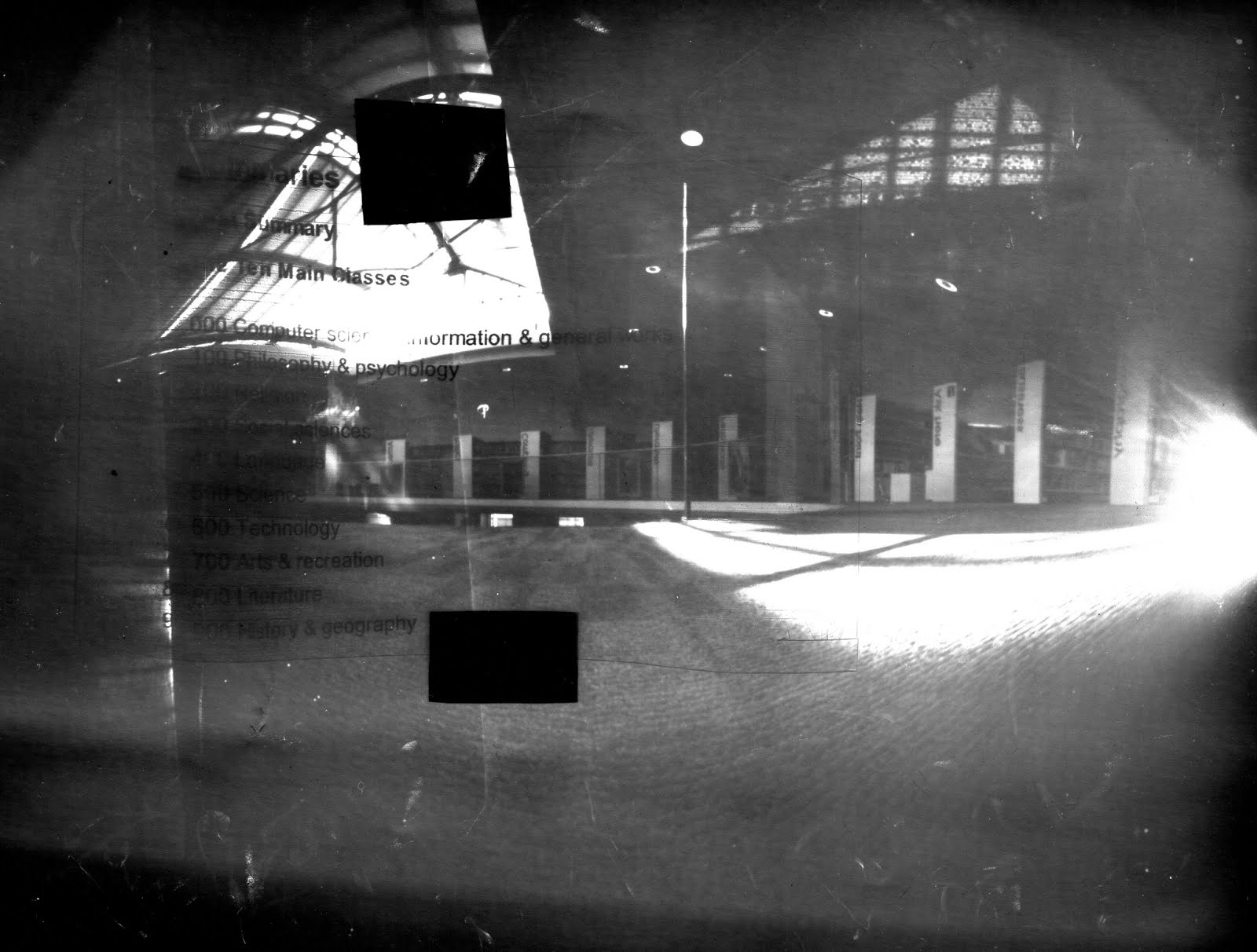
    Always fascinated by the “return shelves” in a library, its like a barometer of specific activity, it holds within it occurrences and possibilities that are un-calculable to predict It concurs traits of other events/projects happening outside, it reflects those items of the libraries resource have been selected and those not. It is perhaps the curiosity, the reading between what is presented that prompts speculation and ultimately one forms/registers a subjectivity and an opinion based around ones own particular space of time. These shelves “sample” my potentialities amid a on-going field of relations of which I am part as my “returns” configure a new abstraction of data.

    RESEARCH METHODOLOGIES:

    Fluctuating networks of existential events.

    Emergent state of continguences that create materials for relationality.

    TRANSPARENCY: LITERAL AND PHENOMENAL. COLIN ROWE AND ROBERT SLUTZKY.

    Space-time, simultaneity, interpenetration, superimposition, ambivalence. Transparency has a material condition that is pervious to light and air. Together with an “intellectual imperative” this has an “inherent demand for that which should de easily detected, perfectly evident, and free from dissimulation.”1 Transparency allows things to interpenetrate. Things can become masked and ambivalent by this superimposition but the things themselves remain authentic and unabridged.

    Transparency can grant us a “simultaneous perception of different spatial locations.” These values of being able to interpenetrate simultaneously and thus create a potential threshold that is in a state of in-betweeness.

    Transparency by its very nature confronts us with the contradiction of spatial dimensions. Contradictions that might require the physicality of the body to authenticate. There are also Contradictions centred on a linguistic transparency.

    Transparency could become a site or form of temporal phenomena, granting some sort of deconstruction when viewed as a simultaneous multiplicity.

    The interesting proprieties of transparency is its ability to have the quality of a substance ( glass, plastics, film, water) together with qualities we ascribe to it when we use it in the context of organisational systems. It is this literal and phenomenal spatiality that is infinitely relational. This relation allows us to invest transparency with a literal depth so as we can assume the phenomenal substance beyond it.

    This sense of a spatial transparency is exploited as a filmic phenomenon, film directors by moving in and out of the framic reference of the camera, create within the mind of the viewer an illusion of a spatiality that is both transparent and virtual.

    The use of transparency as a device to aid the spatial organisation of place in architecture is under investigation. Notions that “worksites” could be “assigned directional systems” which could help to engender relations of human enterprise and encounter.

    The organizational transparency of the figure ground relation in architectural mapping creates a differentiation to the integral ordering of space. This opens up the possibilities of investigative ideas around poche (a drawing method showing material structure and space in relation to each other) poche is related to transparency by precise inversion (material and space).

    Transparency can be used as a method of creating multiplicities through the device of superimposition.In so doing it creates surfaces that have mutuality by the nature of being able to be visually overwritten.

    1.Colin Rowe and Robert Slutzky, Transparency: Literal and Phenomenal (Berlin: Birkhauser Basel, 1998),page 22.

    ALLEGORY, MONTAGE AND DIALECTICAL IMAGE, JANE RENDELL.

    This chapter, in Jane Rendell’s Art and Architecture, A Place Between, offers a number of possibilities for the interpretation of my current investigative research. In particular, her analysis of Walter Benjamin’s discussion on the temporal aspects of allegorical and montage techniques in works of art.1

    Rendell cites Benjamin’s The Origin of German Tragic Drama,2 as having a particular form of a baroque theatre, where the temporal, and the corporeal body, meet the transcendental. Within the structure of these there plays a sadness of life represented as a “nature petrified in the form of fragments of death.”3

    This notion of using objects as allegorical devices within the duration and place of an event, interests me.

    This allegorical device within “Place” is further elaborated by Benjamin himself when he remarks, “allegories are, in the realm of thoughts, what ruins are in the realm of things”.4

    This relationship with time and allegory could be performative and immersive. Benjamin notes baroque allegory to be “an appreciation of the transience of things, as well as an expression of sadness over the futility of attempting to save for eternity those things that are transient.”5 This expression could be rendered as a work of art. Joseph Beuys has used the device of vitrines that suggest the collection of relics from a museum. His work Sweeping Up 1972/85 is a vitrine containing contents originated from an “action” performed by Beuys. In this work the contents were collected after a political parade in Berlin. This work, on view in Tate Modem, has a sensibility of indexical residues suffused with almost alchemeric properties. The notion of a vitrine being able to carry a visual joke or pun is perhaps Duchampian. Peter Greenaway’s curated exhibition, The Physical Self6 explores these notions further, through static displays of both objects and human bodies presented in the context of a museum. Greenaway has in effect, attempted to use a museum setting to amplify the sense of retrospectective contemplation of our own temporality.

    Rendell remarks on Benjamin’s interest in the dialectical image, explained as an image whose “moment where the past is recognized in the present as a ruin that was once desired.”7 The interesting thing is that Benjamin’s dialectical image is an “attempt to capture dialectical contradiction in an instant, as a visual image or object.”8 It is this dialectical threshold the “point at which thesis and antithesis converged”9 that could be utilized as a physical possibility (intervention) within a place. The clarification of ideas through interactions and contradictions through a performative exploration with an immersion with site might be made to occur. The uses, as noted by Rendell, of montage and Dadaist artwork in film, was admired by Benjamin for its shock tactics and are also  associative with the notion of interventions whose purpose is to “interrupt the context into which it is inserted.”10 This idea of an intervention, could work as an emergent phenomena that sets up a sense of temporal dynamics in a location or place.

    A number of contemporary artists have used a wide range of physical interventions with their particular dialogues with place. Jane Prophets, Conductor 2000 was a site specific response to Wapping Hydraulic Pumping station. Prophet utilized water and electro luminescent cables in her installation. Glen Onwins, As Above So Below 1991, was again a site specific intervention, utilizing black and white dyed brine, gypsum and coal with green light, all installed at Square Chapel, Halifax. Graham Gussin, Spill 1999, was a filmic work of a situation in which a disused commercial building was infiltrated by “fog” (dry ice).
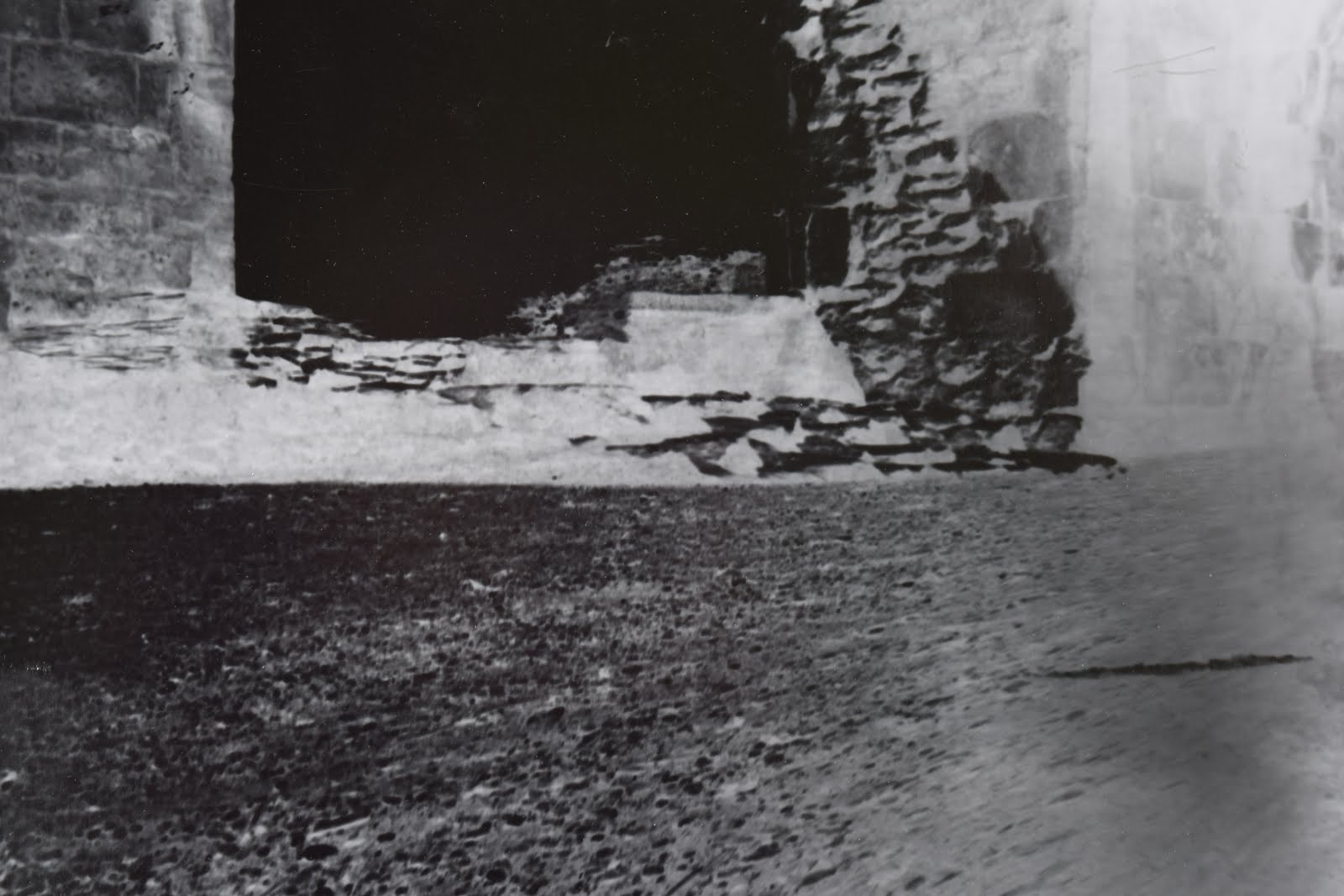
    The architect Rem Koolhaas has used an intervention device in the initial design, which produces an architectural structure that is inherently “weak”, then requiring a major structural intervention to be made to stabilize the building. This in turn re-scripts the building through chance and change and produces innovative and creative possibilities through contingences now made apparent.
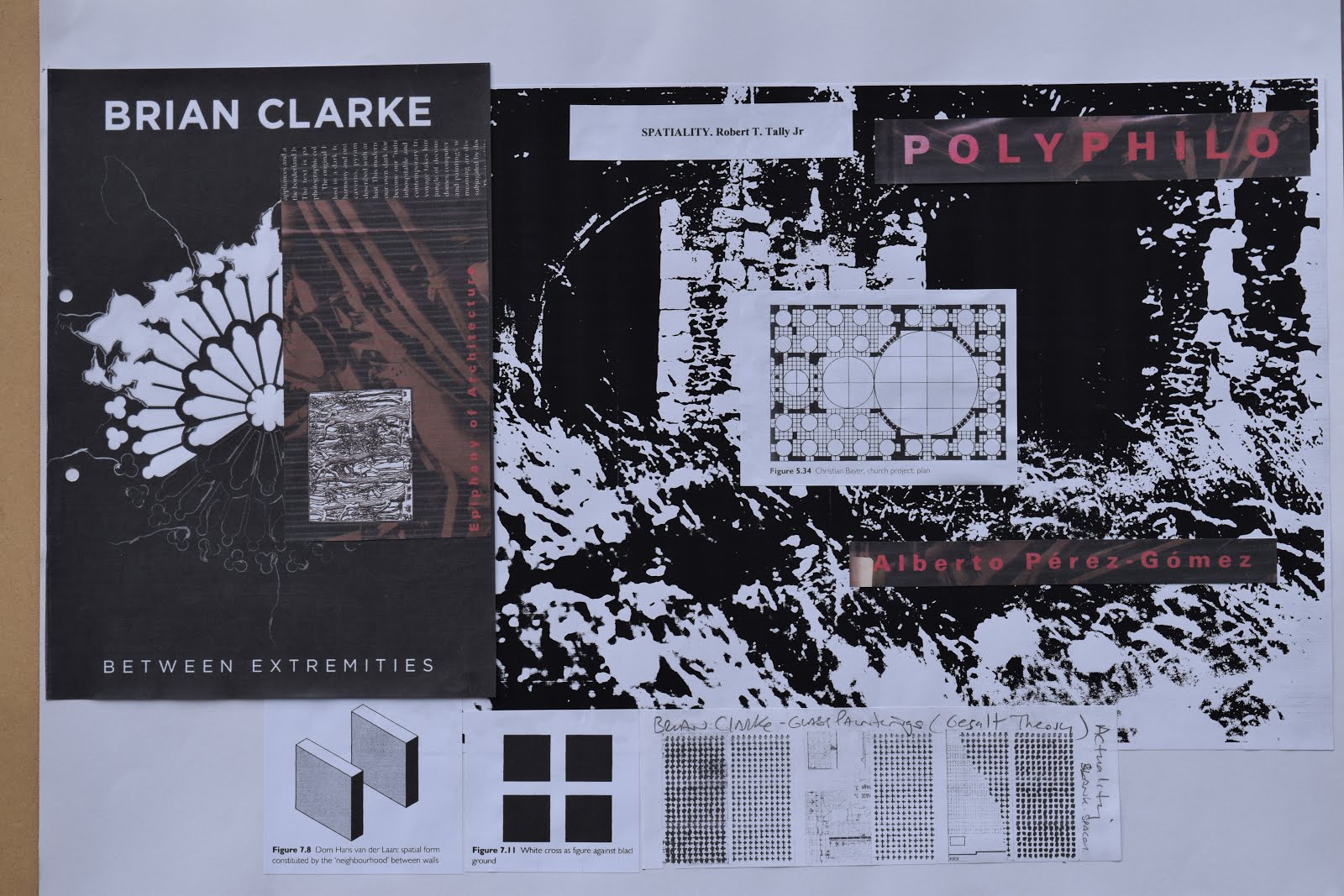
    To bring about some sense of conclusion regarding Benjamin’s dialectical image or rather its device of using “dialectics at a standstill” that create an intervention of retrospective contemplation, is Jane Rendell’s suggestion, taken from Howard Caygill, that Benjamin’s writing was part of the “speculative effort to discover and invent new forms.”11 This speculative nature promotes “moments where the viewer is required to act as critic and to engage in a slower time.”12 The interlocutor into a site could be said to be given the dialectical task of synthesizing/theorizing what has been “present”, with what has become emergent with their own encounter .This notion of both site specificity and open text is of interest.
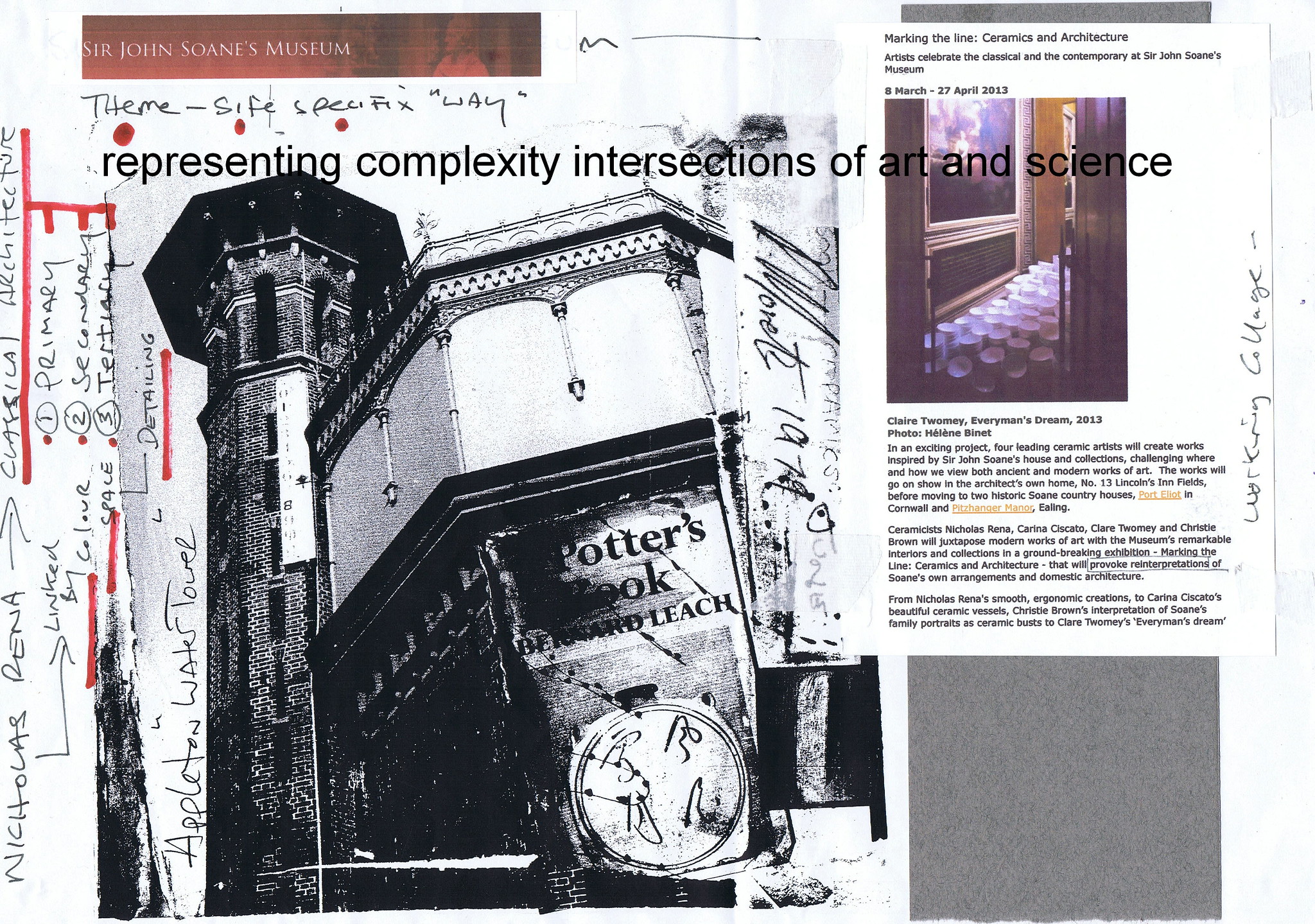
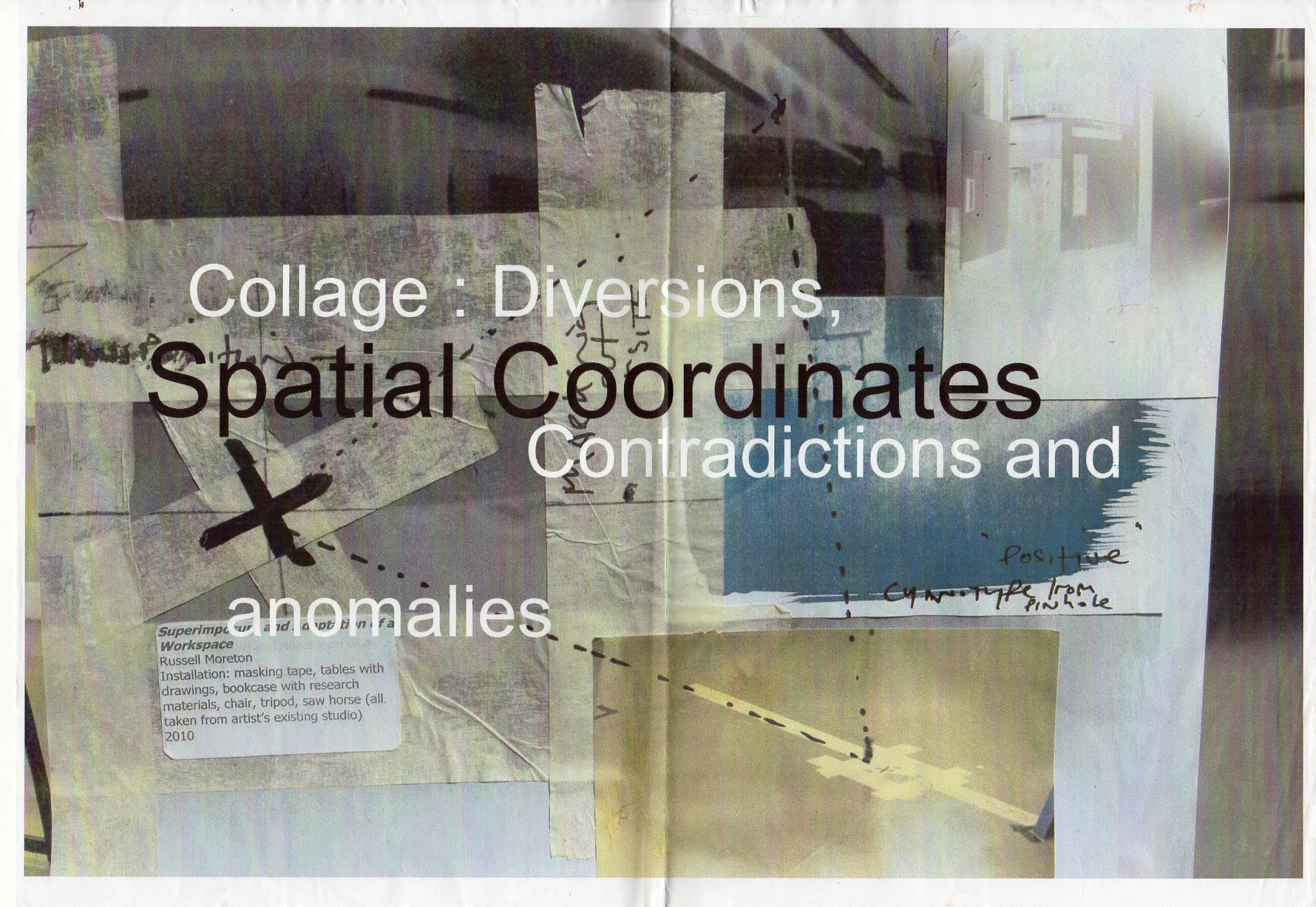
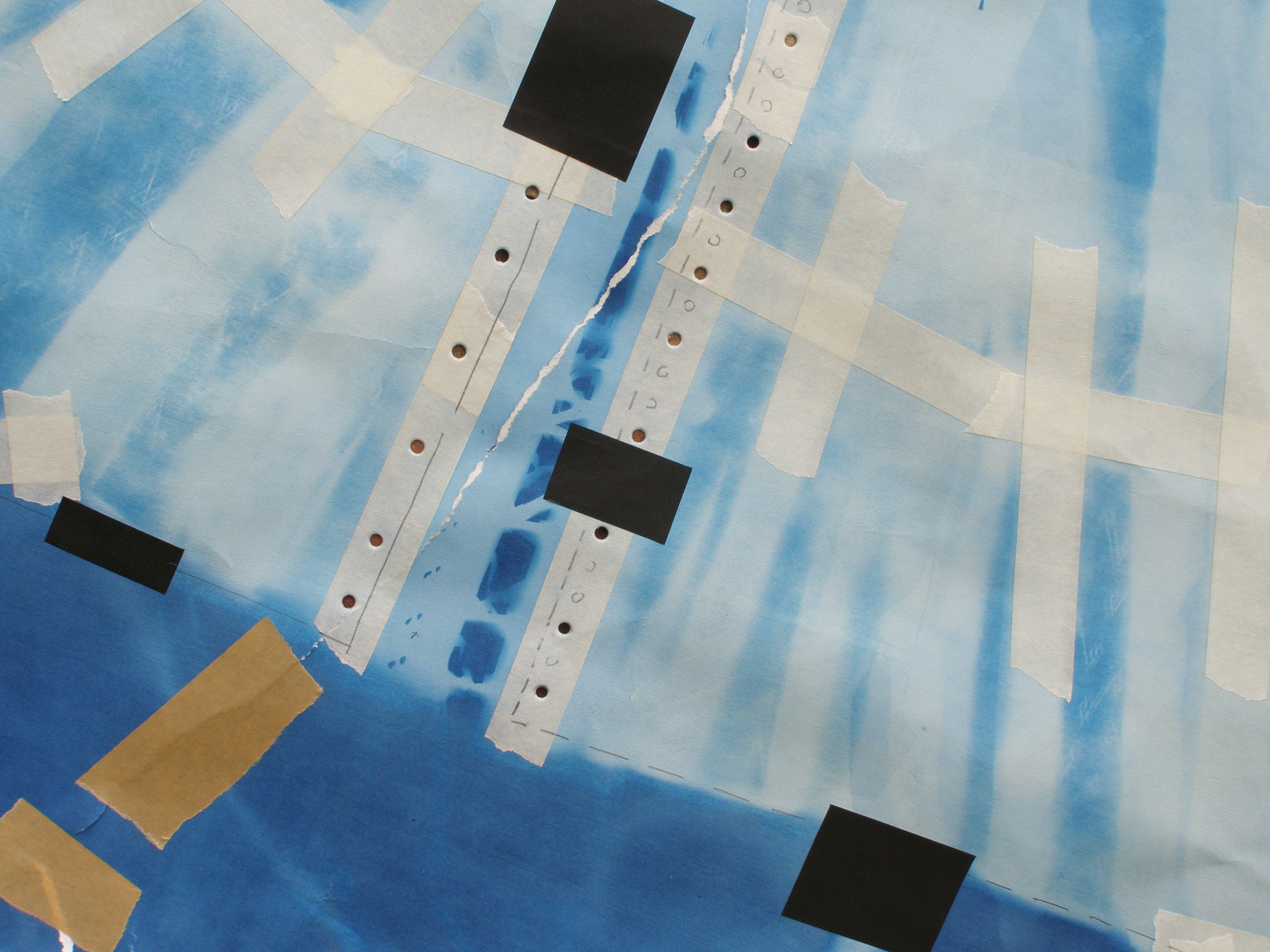
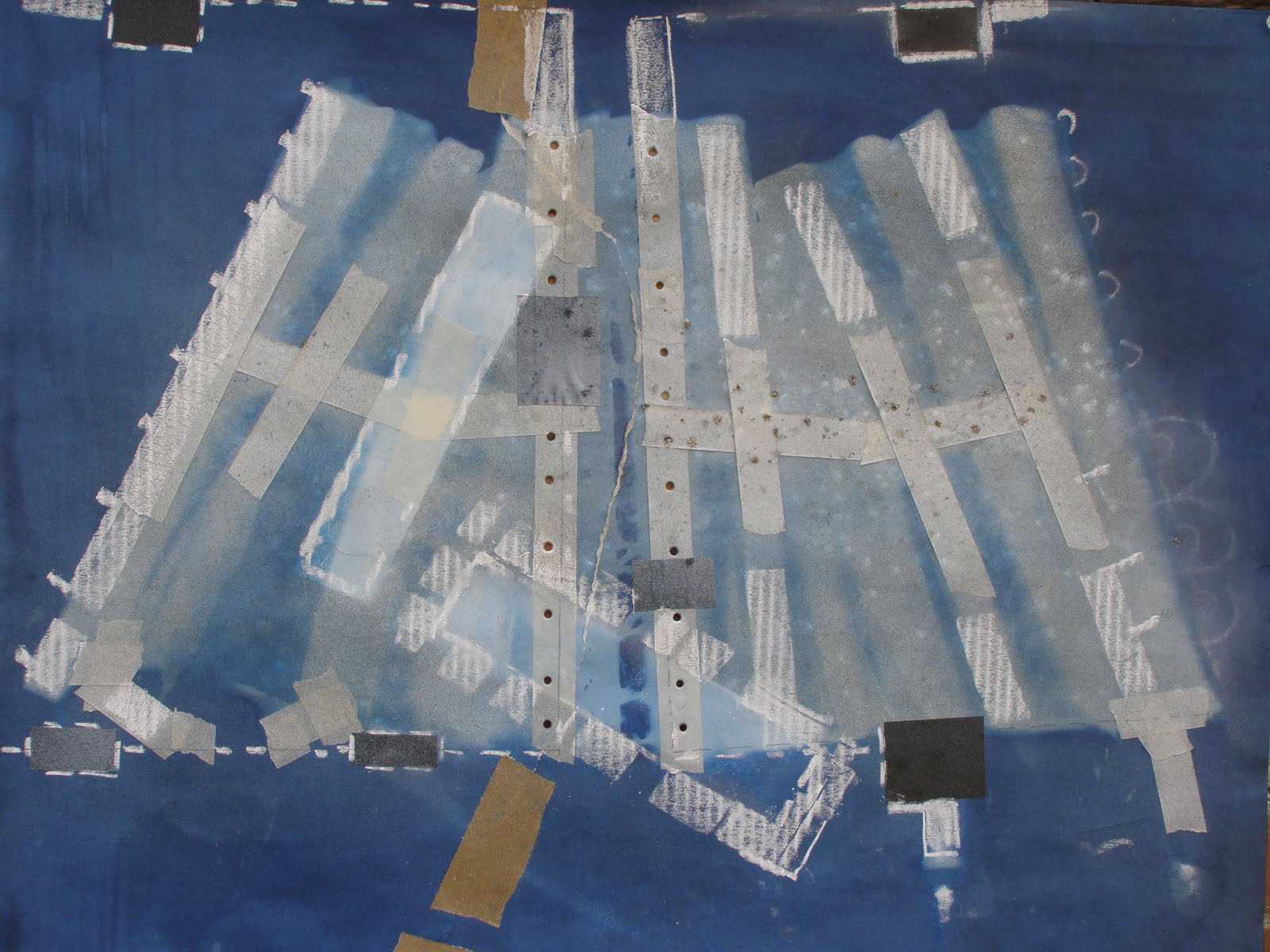
    Further potentials within “place” for an immersive engagement that might foster an “open reading”. This scripting of ones presence as an interlocutor amongst others could create a performative gesture. Like a drawing whose informative mark is just a starting point amongst others unknowable until the intimacy of the unfamiliar is breached, so the “place “ is inscribed or known by its initial un-familiarity.

    1  .Jane Rendell, Art and Architecture: A place Between (London: I. B. Tauris,2006), page75.

    2  .Benjamin, Origin of German Tragic Drama, translated by John Osborne (London: Verso, 1977).

    3  .Ibid., page 178.

    4  .Ibid., page 178.

    5  .Benjamin, Origin of German Tragic Drama, translated by John Osborne (London: Verso, 1977),page223.

    6  .Peter Greenaway, The Physical Self (Rotterdam: Museum Boymans-van Beuningen,1992).

    7  .Jane Rendell, Art and Architecture: A Place Between, (London: I. B. Tauris,2006), page 77.

    8  .Ibid., page 77.

    9  .Ibid., page 77.

    l0  .Jane Rendell, Art and Architecture: A Place Between (London: I. B. Tauris, 2006),page 78.

    11 .Howard Caygill, The Colour of Experience (London: Routledge, 1998),page74-75.

    12 .Jane Rendell, Art and Architecture: A Place Between (London: I. B. Tauris, 2006), pagel43.

    Mise-en abyme “Play within a Play”

    “A play within a play alludes to and explicates the plot of a larger play within which it is staged”

    THE PHYSICAL SELF: PETER GREENAWAY,

    MUSEUM BOYMANS-VAN BEUNINGEN ROTTERDAM.

    Peter Greenaway’s work interests me with its playful and investigative attitudes to the visualization of dialogues around what he himself calls “the physical human predicament.”

    His exhibition is centred on the interactions on the issue of “the physical human predicament” and the available “contents” of the place of its presentation. The situation and contents of the display of historical artefacts and naked human beings in glass cases are relational attempts to illustrate Greenaway’s sense of the dissimilarities between objects and human existence.

    This work touches the territory of the allegorical. Walter Benjamin has said of the allegorical “allegories are, in the realm of thoughts, what ruins are in the realm of things.”1 This relation is embodied by the physical display of living human beings being firstly dislocated/annexed and then displayed as “an equivalent”, along side with that of the artefacts objectivity.

    This shared proximity prompts, as does allegory notions of the transcendental, as to what of “the human”, remains from this objectivity. This presentation is not so dissimilar from a theatrical showcase, with elements of “baroque theatre” and objects from a personal taxonomy drawn mostly with haptic associations. Artefacts could be said to be “orphans” taken out of the ruins of place.

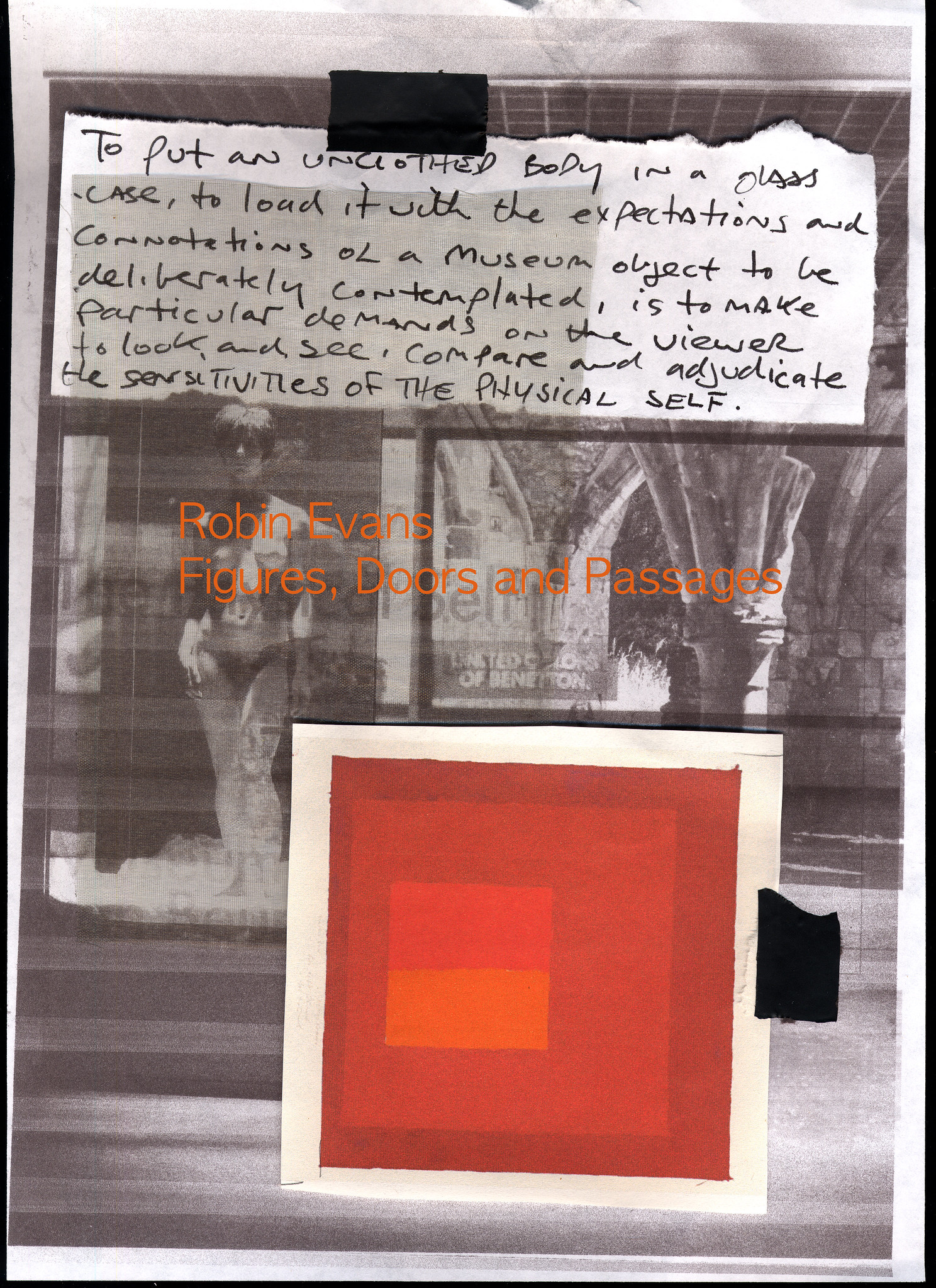
    The museum becomes their adopted orphanage, a repositoiy, where they can be viewed scrutinized. Greenaway makes this comment about the inclusion of the human, “to put an unclothed body in a glass case, to load it with the expectations and connotations of a museum object, to be deliberately contemplated, is to make particular demands on a viewer to look and see, compare and adjudicate the sensitivities of the physical self.”2

    MOTHER AND CHILD

    AGE

    MAN AND WOMAN

    MAN

    WOMAN

    TOUCH

    FEET

    HANDS

    NARCISSISM

    1  Benjamin, The Origin of German Tragic Drama, translated by John Osborne (London: Verso, 1977), page 178.

    2 Peter Greenaway, The Physical Self (Rotterdam: Museum Boymans-van Beuingen, 1992), page 13.


    MAKING : Spatial Agency/ Mutual Knowledge/ Discursive Consciousness. Social apparatuses and agents that explore the possibilities of space. Russell Moreton

    Source: Art and Architecture : a place between, Jane Rendell, Peter Greenaway, Intertextuality/Transparency