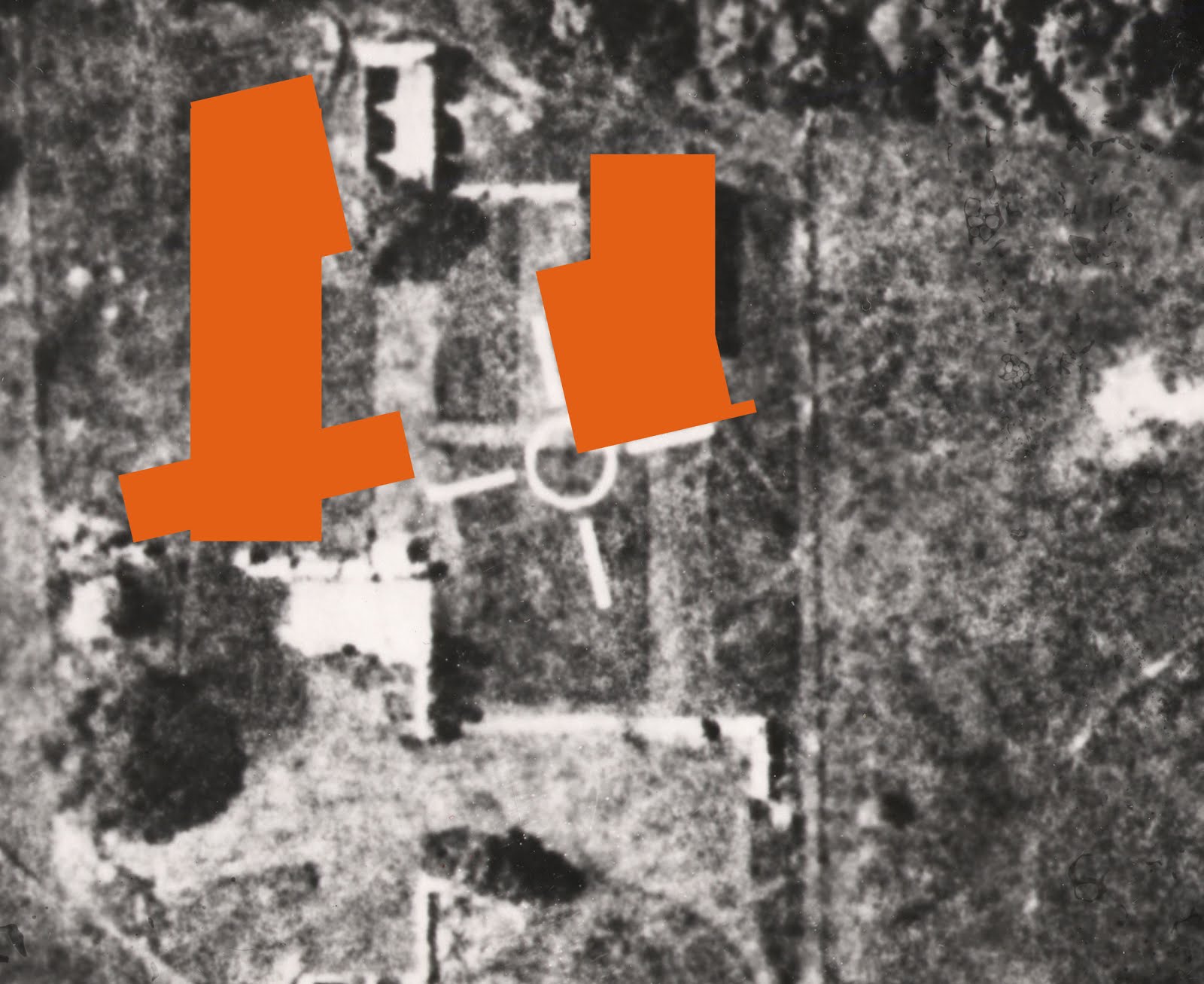
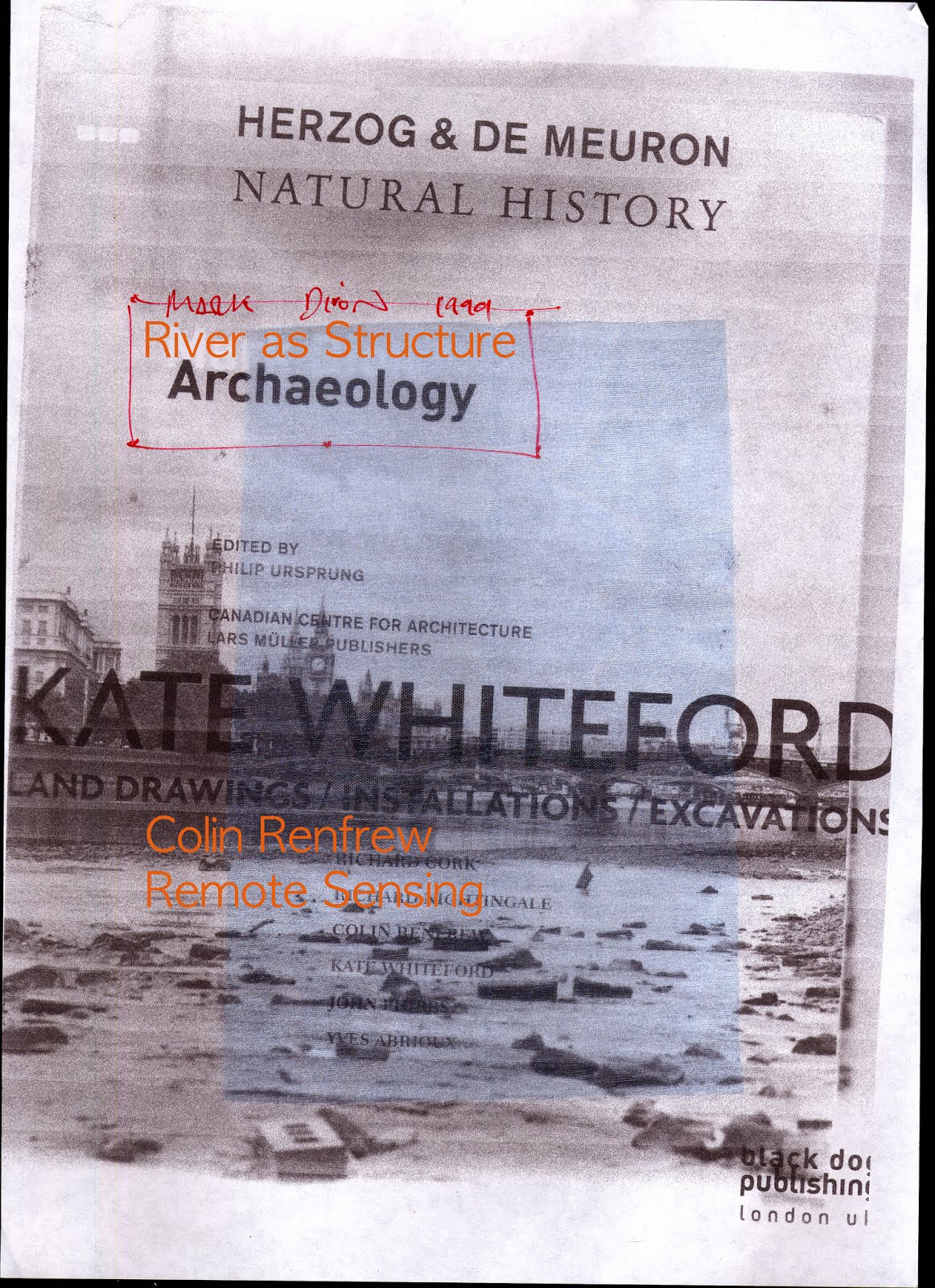
• MATERIAL MATTERS : STRANGE TOOLS AND THE CONDITION OF POSTMODERNITY

    STRANGE TOOLS
    ART and HUMAN NATURE
    ALVA  NOE

    THE CONDITION OF POSTMODERNITY
    DAVID HARVEY

    As David Harvey argues in his seminal Condition of Postmodernity, architecture becomes one of the aestheticised products by which global capitalism and political regimes express themselves. It is with this realisation that we must reverse the equation. Not space and time in architecture, but architecture in space and time, in an  concepts of the former acceptance of Harvey’s conclusion that ‘neither time or space can be assigned objective meanings independent of material processes, and that it is only through investigations of the latter that we can properly ground our’.

    ARCHITECTURE IN SPACE AND TIME
    Jeremy Till | Collected Writings | Architecture in Space, Time 1996

    There is a feeling of intimidation for the architect faced with a broad cultural landscape, and so an understandable reaction is to look for stable elements. In this way architecture, fixed and permanent, shrugs off the ephemeral and the present, and enters into dialogue with the deeper structures which may condition culture. The language of traditional anthropology (mythic, ritual, cosmic, symbolic) is used as a vehicle for architectural exploration, with the intent that architectural will engage with enduring and stable cultural factors. The architect here reverses the role of the anthropologist. Where the latter may investigate and describe social practices through their inscription in space and time, the architect describes temporal spaces in which to set those practices. There is an emphasis on architecture as a setting for ritual and as the embodiment of archetypal human situations, all constituted within cultural tradition. At its worst this approach reeks of conservative nostalgia, at its best it is a project of interpretative re-visioning of an active tradition in which to set human action. It is an architecture that is firmly rooted in space and time, but in very particular interpretations of them. The space is one of concrete representation, informed by the search for authentic meaning. The time is one which combines the cyclic movements of cosmology and nature with a backward-looking naturalisation of history, both characterised by the sense of reinterpreted repetition. The implication is that time and space should stand outside the contingent forces of the present, and that production must resist immanent distractions in an attempt to ground architecture in a more profound cultural horizon. It is this detachment that is both the real strength of this approach but also its weakness, because in looking for the truth it bypasses the real.


    STRANGE TOOLS ART and HUMAN NATURE ALVA  NOE THE CONDITION OF POSTMODERNITY DAVID HARVEY As David Harvey argues in his seminal Condition …

    Source: MATERIAL MATTERS : STRANGE TOOLS AND THE CONDITION OF POSTMODERNITY

  • Acts of Drawing/Derrida : Becomings through immaterial, memory and blindness

     JACQUES DERRIDA THE SCEPTICISM OF DRAWING:

    Jacques Derrida in 1993 wrote an extensive text to accompany an exhibition of paintings from the Louvre. This text titled Memoirs of the Blind, The Self-Portrait and Other Ruins contains within it some particular references to “Pliny’s Origins of Painting.” Together with the aid of illustrations of paintings on this theme, he examines and interrogates their philosophical and historical qualities.

    Derrida makes particular mention and emphasis of the “state of blindness” in his analysis of the Butades myth. In particular the notion of  “scepticism” which is at the very heart of drawing. This notion of the “difference between believing and seeing”1, and what he remarks as “believing one sees and seeing between” evokes the emergence of a “glimpse” caught in a state in which “doubt ever becomes a system“2. There is a moment of delay between the gaze with its vigilance and attention, and what one reflects upon seeing. These actions will conspire to create the moment of conclusion. So by keeping the thing in sight it is being constantly examined but not reflected on, until the point when the gaze is averted to the drawing .It is a this instant, withdrawn from the sight of the object, that a “blindness” forces the recollection (the moment of conclusion to emerge) to which the drawn mark is visual evidence of that moment Derrida makes the observation that representations substitute memory for perception and that blindness is a constant withdrawal into memory. Derrida is of the view that drawings, paintings are “representations drawn most often from an exemplary narrative.” This myth of Butades with its “exemplary narrative” relates directly to the absence or invisibility of (being in) the drawing process whilst in the presence of the object, that the very act of drawing withdrawals and blinds its participant. Butades daughter is “blinded” in the acts of both love and the act of drawing. Through these conditions it can be seen that Butades daughter is blind to the vision of her lover and in drawing around his projection she is forced to recollect and reflect to produce a conclusion of that action by the simple gesture and act of an inscription drawn aided by a flickering silhouette.

    Derrida uses the example of the painting by J. B. Suvee “Butades or the Origin of Drawing 1791” or as it is referred in English as “The Daughter of Butades Drawing the Shadow of Her Lover ” to illustrate that it was “as if one drew only on the condition of not seeing.” The drawing in effect becomes a “declaration of love destined for or suited to the invisibility of the other.”3 Derrida comments that the origin of drawing may have become born from the desire to create some sort of surrogate mark which originates “from seeing the other withdrawn from sight.“4 The important observation Derrida continues to make is that the daughter in “following the traits of a shadow or a silhouette” who is in effect drawing on a blindness which will through recollection, initiates a sense with which she is in effect “already loves in nostalgia.”5

    Derrida dwells on the very nature of drawing moving away from “the origin of drawing” to “the thought of drawing” he comments that the thought of a drawing has a “certain pensive pose, a memory of the trait that speculates, as in a dream, about its own possibility.”6 It is as if the potency of drawings is a projected development that occurs as Derrida states “on the brink of blindness.” This notion of the “trait” (a feature to a line, stroke, or mark) a visible presence that accompanies the lines odyssey, a sense of presence that can witness something of the invisible in the visible is touched upon. ’’Merleau-Ponty’s The Visible and the Invisible is cited by Derrida as having already made “Indications” in this respect Derrida footnote from The Visible and the Invisible seems to sum up something of the invisibility and presence of the trait acting on a drawing. This extract taken from the “working notes” section of the book it reads” One has to understand that it is visibility itself that involves a non visibility.”7

    Distilled from the salient points of Derrida’s extensive interrogation Memoirs of the Blind seems to acknowledge the fact that “whether Butades daughter follows the tracts of a shadow or a silhouette or even if she draws on the surface of a wall or in a veil.”8 the resultant inscription in any event “inaugurates an act of blindness.” Derrida’s revelation is that “perception belongs to recollection.” Butades daughter’s act is in blindness, as if she was drawing a declaration of love that simultaneously that also contains her anticipation of a loss, and as a result, a nostalgia that is reflected upon before it is actually perceived.

    1  . Jacques Derrida, Memoirs of the Blind, The Self Portrait and Other Ruins (Chicago: Chicago Press, 1993),page 1.

    2  .Ibid., page 1.

    3  .Ibid., page 49.

    4  .Ibid., page 49.

    5  .Ibid., page 51.

    6  .Ibid., page 3.

    7   Maurice Merleau-Ponty, The Visible and the Invisible (Evanston: Northwestern University Press, 1968),257.

    8   Jacques Derrida, Memoirs of the Blind, page 51.


    JACQUES DERRIDA THE SCEPTICISM OF DRAWING: Jacques Derrida in 1993 wrote an extensive text to accompany an exhibition of paintings from the…

    Source: Acts of Drawing/Derrida : Becomings through immaterial, memory and blindness

  • Friday, 11 June 2021

    Oscar Tuazon “See Through” : Working Spatial Forms/Windows

    Oscar Tuazon “See Through”
    Galerie Eva Presenhuber is pleased to present “See Through,” the gallery’s third solo-exhibition featuring new works by the Los Angeles-based artist Oscar Tuazon.
    Oscar Tuazon‘s sculptural oeuvre is situated at the border of art, architecture and technology. His large-scale works – shown in exhibition spaces as well as public space and nature – often seem like functional do-it-yourself structures which were once inhabited or will be made inhabitable soon. In terms of form, Tuazon is close to artists of Minimalism and Land Art, such as Donald Judd or Carl Andre. He goes so far as to copy single works of artists like Richard Serra, but without the ironical distance that characterizes appropriation. The process of copying is rather to be understood as a re-building that reduces the work to its sheer material and potential. Furthermore, Tuazon doesn’t focus on the relation between work and architectural space, but on material, the process of building, and the physical agency of the work itself. Often, the collective process of constructing his large-scale sculptures could be seen as a performance which naturally takes place before the actual work is realized.
    In “See Through,” Tuazon borrows a form which condenses various concepts explored in his previous work: the window. He installs massive wooden frames made of spruce, cedar, and plywood, that stand in the middle of the gallery space or directly against the wall. At first glance the sculptures seem minimalistic: geometrical frames that define and order space, and at the same time evoke, like Fred Sandbacks sculptures, larger structures. However, Tuazon transcends minimalism: his windows consist of two parts. One part is transparent with a pane of glass built into it, while the other part is crossed by three wooden bars which belong to the wall of a house. These objects, quite clearly, have a certain function. They are windows that separate inside from outside and, at the same time, are transparent. The title gives account to this main feature of windows. But contrary to minimalist sculptures, which put the focus on the surrounding architecture, Tuazon‘s windows exist as architectural elements themselves– constructed by the artist in the studio.
    In the exhibition space, the windows are fundamentally alienated in several ways. First, they are not part of a house. Second, their layout creates doubt about their ability to separate inside and outside – to be tight. Furthermore, they don’t allow to look outside anyway: They are positioned either in the middle of the gallery or on the wall. In their quasi-functionality, they go beyond the way of perceiving space expressed by minimalist artists.
    Tuazon’s sculptures are easy to grasp, but it’s difficult to spell out their complexity. As windows, their basic function is to disappear. They should be transparent. At the same time, they are displaced, don’t quite work the way they are supposed to, and so are alienated from their usual function. Ultimately, Tuazon’s objects create their own space, which is not equivalent with the surrounding gallery space. What happens within this new space expands the space itself: What happens between the objects and their perception is left to the exhibition visitors – and even that can’t always be controlled individually.
    .
    at Galerie Eva Presenhuber, Zurich


    Oscar Tuazon “See Through” Galerie Eva Presenhuber is pleased to present “See Through,” the gallery’s third solo-exhibition featuring new wo…

    Source: Oscar Tuazon “See Through” : Working Spatial Forms/Windows

  • Thursday, 10 June 2021

    Gathering Energies/Planetary Movements/Reveries on Reverie : Blue Drawing 9549

    Presentation Slide,  The Architecture of Continuity : Lars Spuybroek, essays and conversations. Rotterdam 2008. The Poetics of Memory “The Cinema of Robert Lepage : Alexsander Dundjerovic. London 2003. Spatiality : Robert T. Tally Jr. London 2013. The Poetics of Reverie “Childhood, Language, and the Cosmos” : Gaston Bachelard (trans Daniel Russell). Boston 1971.

    Reveries on Reverie/Reveries toward Childhood
    Childhood sees the World illus­trated,  the World  with  its original colors,  its true colors.  The great once-upon-a-time (autrefois) which we relive by dreaming in our memories of childhood is precisely the world of the first time.
    For those of us who can only work on written documents, on documents which are produced by a will to ‘edit,’ a certain indecision cannot be obliterated in the conclusions which terminate our inquiries. In point of fact, who writes? The animus or the anima?
    These seasons find  the means to  be singular while remaining universal.  They  circle in  the sky  of Childhood  and  mark  each childhood  with  indelible signs.  Thus our great memories lodge within the zodiac of memory, of a cosmic memory which does not need the precisions of the social memory in order to be psycholog­ically  faithful.  It is the very  memory  of our belonging  to  the world,  to  a world  commanded  by  the dominating  sun.
    Gaston Bachelard


    Presentation Slide,  The Architecture of Continuity : Lars Spuybroek, essays and conversations. Rotterdam 2008. The Poetics of Memor…

    Source: Gathering Energies/Planetary Movements/Reveries on Reverie : Blue Drawing 9549

  • Wednesday, 9 June 2021

    Drawing/Openings and Conclusions/Collages for the Reading Room : Heuristic/Discursive/Practical/Agency

    Ordinary things contain the deepest mysteries

    On the horizon, then, at the furthest edge of the possible, it is a matter of producing the space of the human species-the collective (generic) work of the species-on the model of what used to be called “art” ; indeed, it is still so called, but art no longer has any meaning at the level of an “object” isolated by and for the individual.

    Henri Lefebvre, Openings and Conclusions. from On Installation and Site Specificity (introduction) Erika Suderburg

    Is there still an aesthetic illusion? And if not, a path to an “aesthetic” illusion, the radical illusion of secret, seduction and magic? Is there still, on the edges of hypervisibility, of virtuality, room for an image?

    Jean Baudrillard : The Conspiracy of Art, 2005

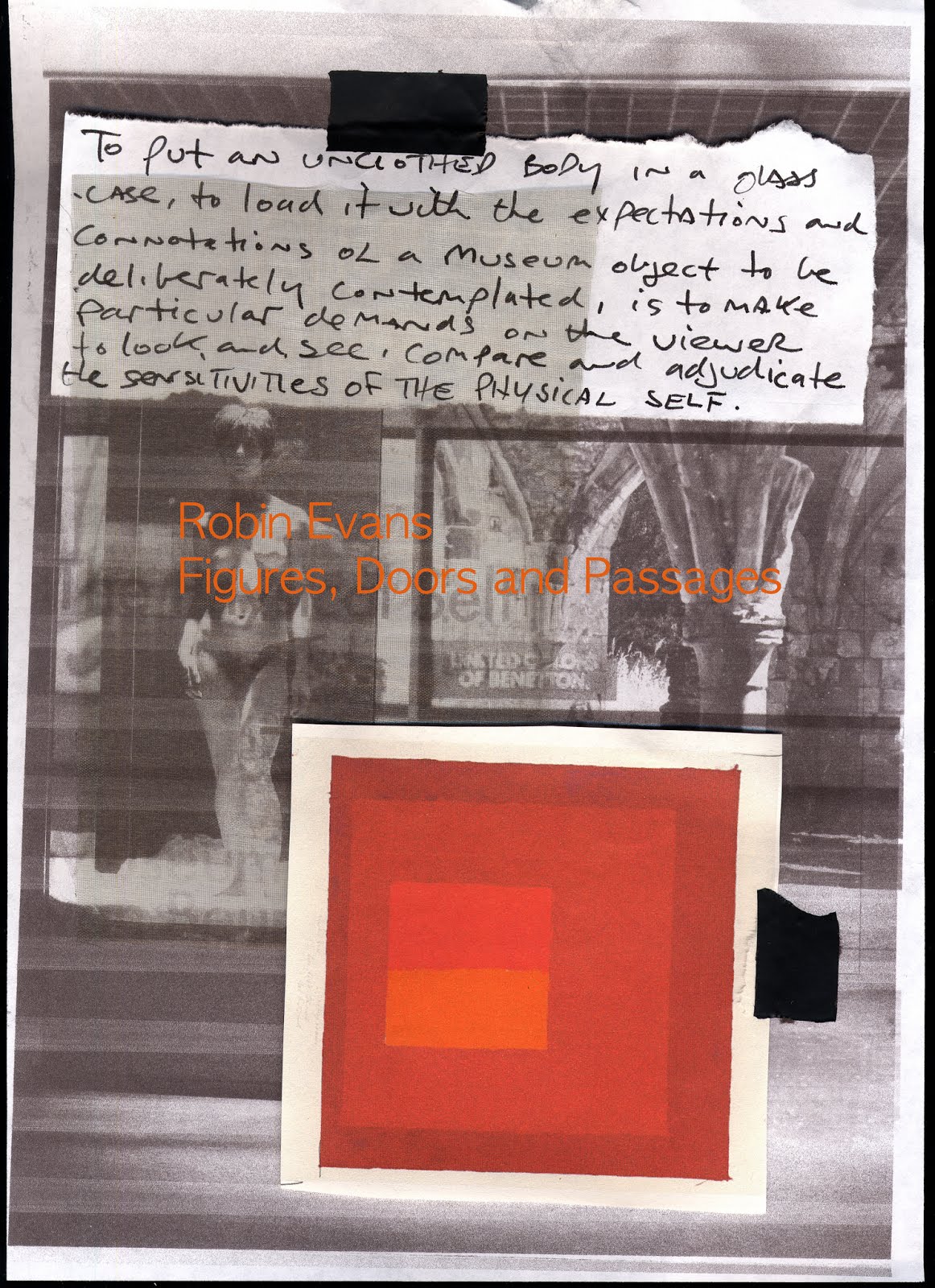
    The Social Condenser in Operation.

    Five figures and a stature distributed evenly in its isotropic space; a picture of the socialized as opposed to the sociable.

    Robin Evans : Figures, Doors and Passages.

    A Hut of One’s Own : Ann Cline

    Texts, Annotations, Foundations, Pathways, Corridors, Bookmarks, Walking, Thinking, Ramble, Cross Country, Disciplines,

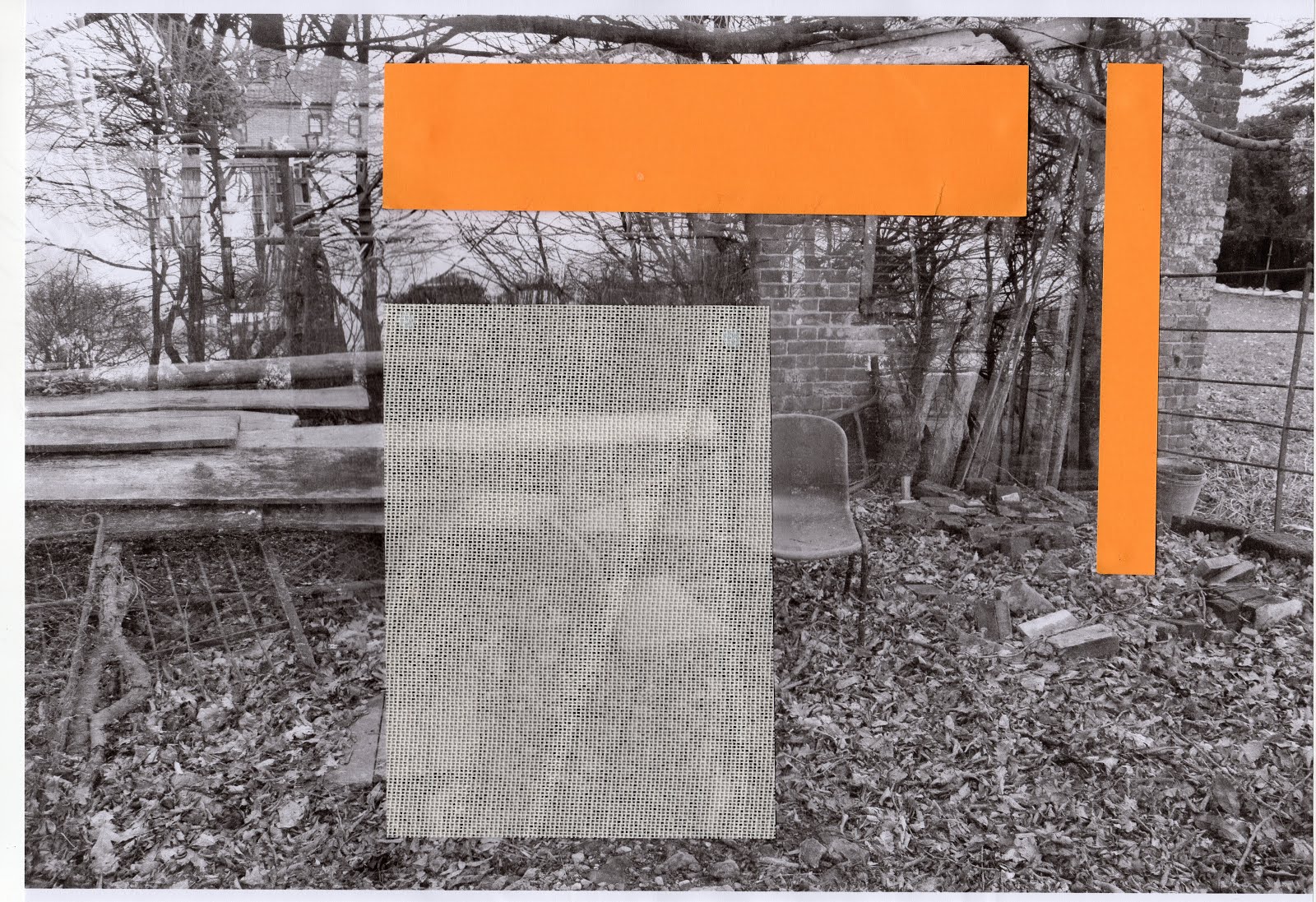
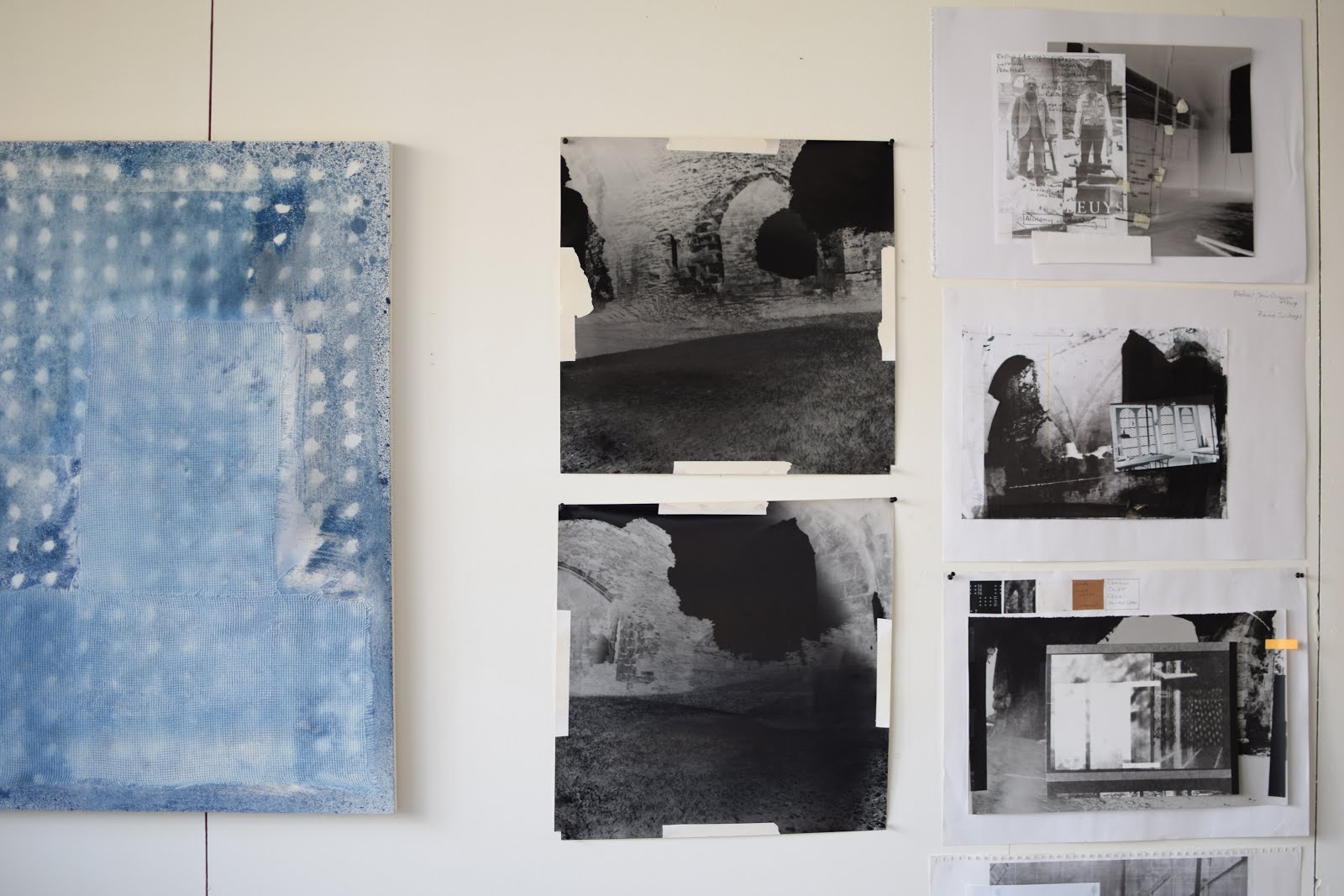
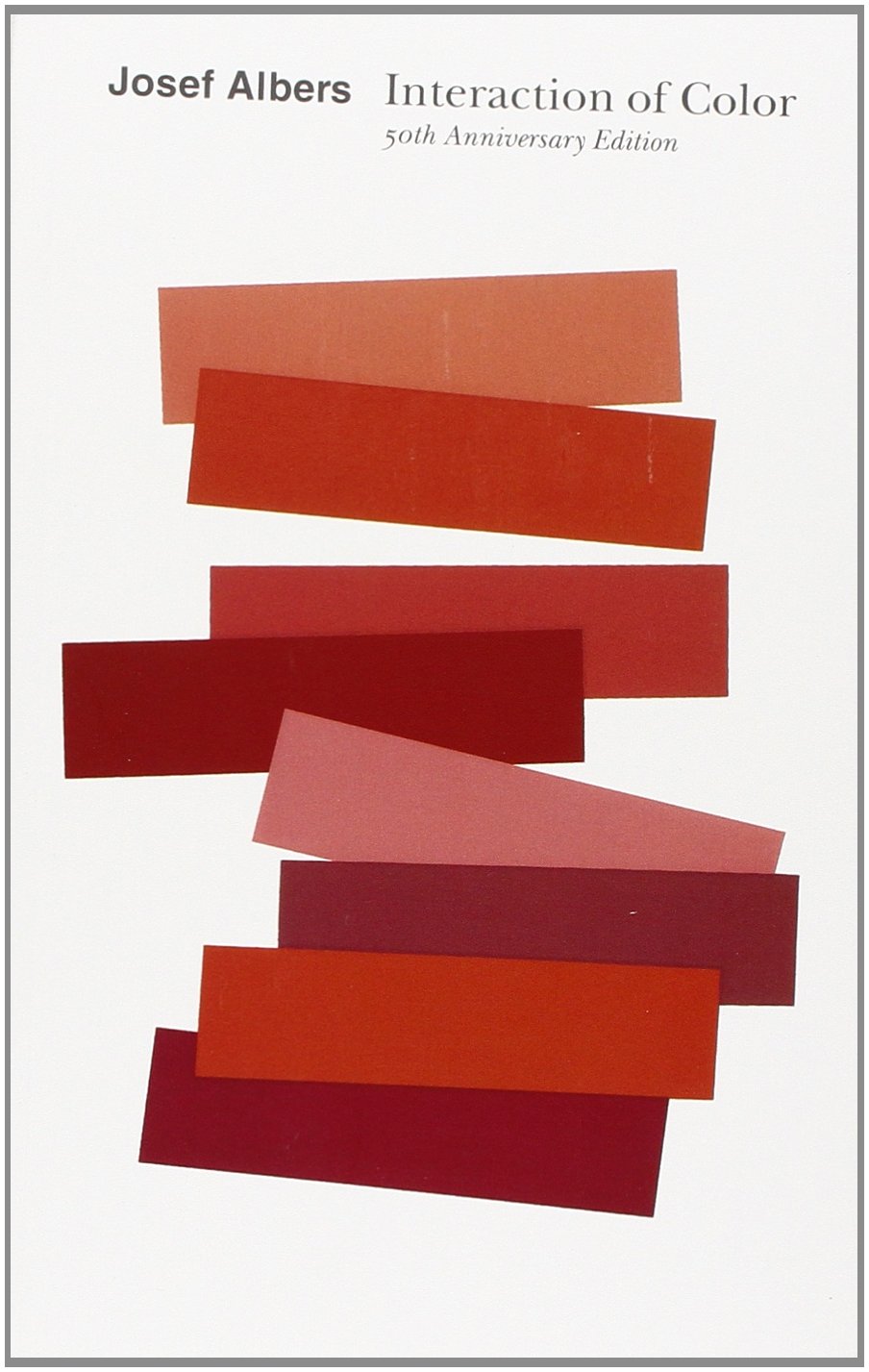
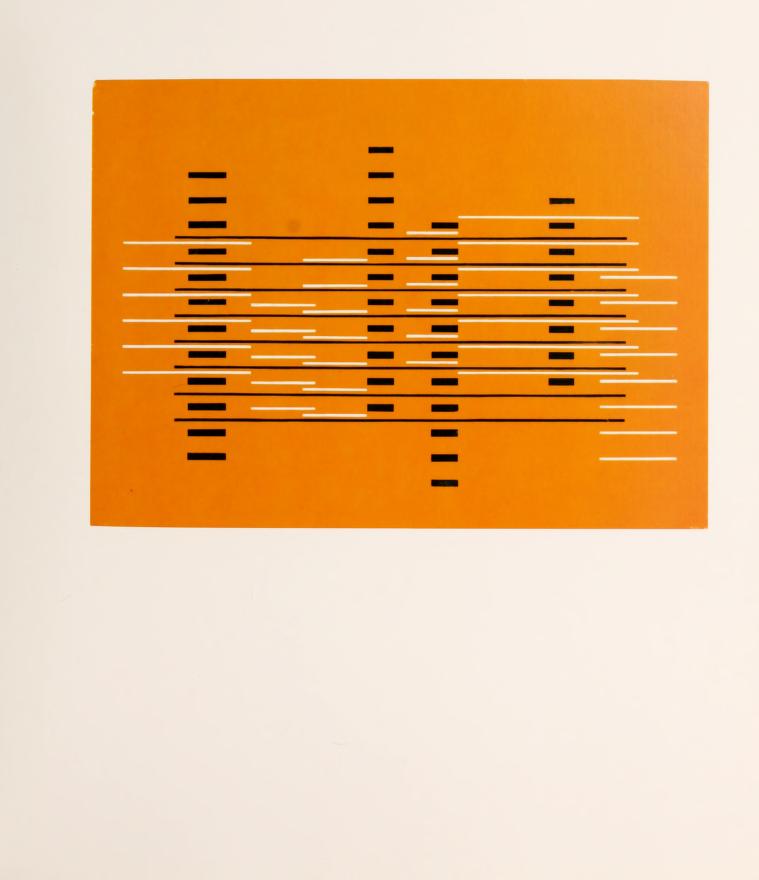
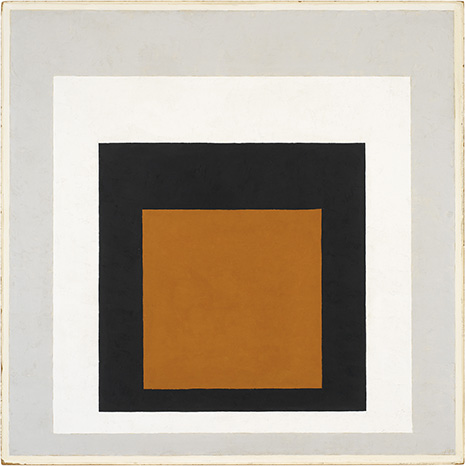
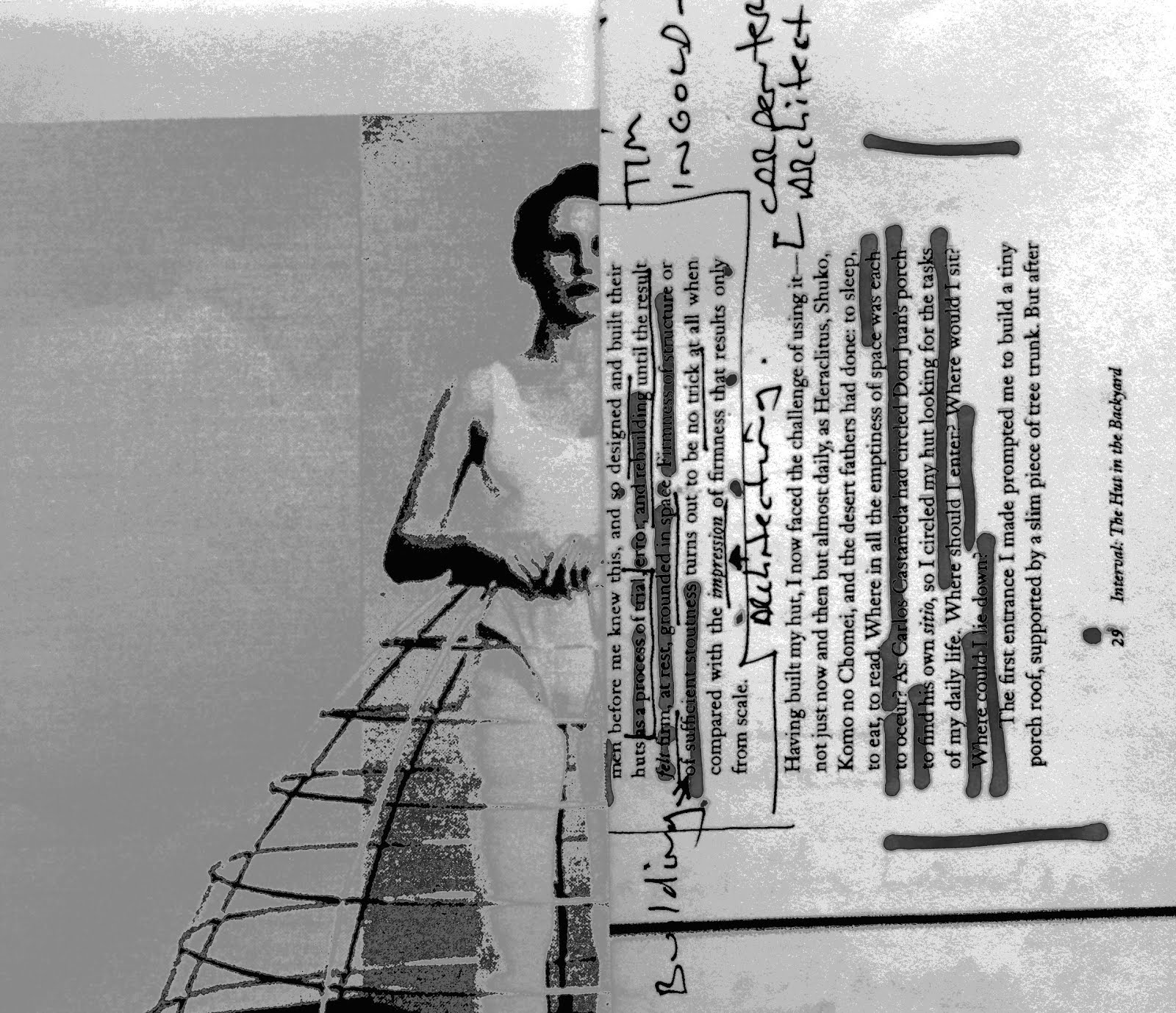
    Collage on paper, written fragments and images from Peter Greenaway, Josef Albers and Robin Evans. Photo montage of The Physical Self (Greenaway) and Waverley Abbey UK.

    Visual research as part of The Waverley Project/Obscura and Reading Room.

    A heuristic technique (/hjᵿˈrɪstᵻk/; Ancient Greek: εὑρίσκω, “find” or “discover”), often called simply a heuristic, is any approach to problem solving, learning, or discovery that employs a practical method not guaranteed to be optimal or perfect, but sufficient for the immediate goals.


    Ordinary things contain the deepest mysteries On the horizon, then, at the furthest edge of the possible, it is a matter of producing the sp…

    Source: Drawing/Openings and Conclusions/Collages for the Reading Room : Heuristic/Discursive/Practical/Agency

  • Other ways, other than buildings of making : Reading Rooms/Performative Collages and Models

    Spatial Agency : Other ways of thinking about social space and its architectural structuring.

    Other ways, other than buildings of making a spatial difference.
    Collage and Architecture. Jennifer A. E. Shields
    Collage Methodologies in Architectural Analysis + Design
    Architecture as Collage
    Social Space, is dynamic space, things happen, and its production continues over time and hence it is not fixed to/by a single moment of completion.

    Performative Collages : Dualities of agency and structure, linked but separately identifiable conditions or proposals.
    Agents are neither completely free as individuals, nor are they completely entrapped by structure. They are negotiators of existing conditions in order to partially reform them.
    Spaces are charged with the dynamics of power, empowerment, interaction, isolation, control, freedom, alienation.
    Social space is intractably political space, in so much as people live out their lives in this space.


    Spatial Agency : Other ways of thinking about social space and its architectural structuring. Other ways, other than buildings of making a s…

    Source: Other ways, other than buildings of making : Reading Rooms/Performative Collages and Models

  • Tuesday, 8 June 2021

    Painting/Abstraction/Assemblage/Beyond Discourse : Architectural Plan/ Library/Victorian Corset/Blueprint/Spatial Frame

    Postmodernity is no more than ‘modernity’ without illusions
    Zygmunt Bauman
    We are less interested in whether we are living in a critical or post-critical era, because these terms circle round each other. Indeed, it is the fate of all ‘post’ terms (postmodern, post-critical, post-theoretical) that they never escape the hold of the condition that they would wish to succeed.
    On Discourse
    From a sociological point of view, discourse includes all that a particular category of agents say (or write) in a specific capacity and in a definable thematic area. Discourse commonly invites dialogue, but discourse is not open to everyone, but based on social appropriation and a principle of exclusion.
    Beyond Discourse : Notes on Spatial Agency. Tatjana Schneider and Jeremy Till.

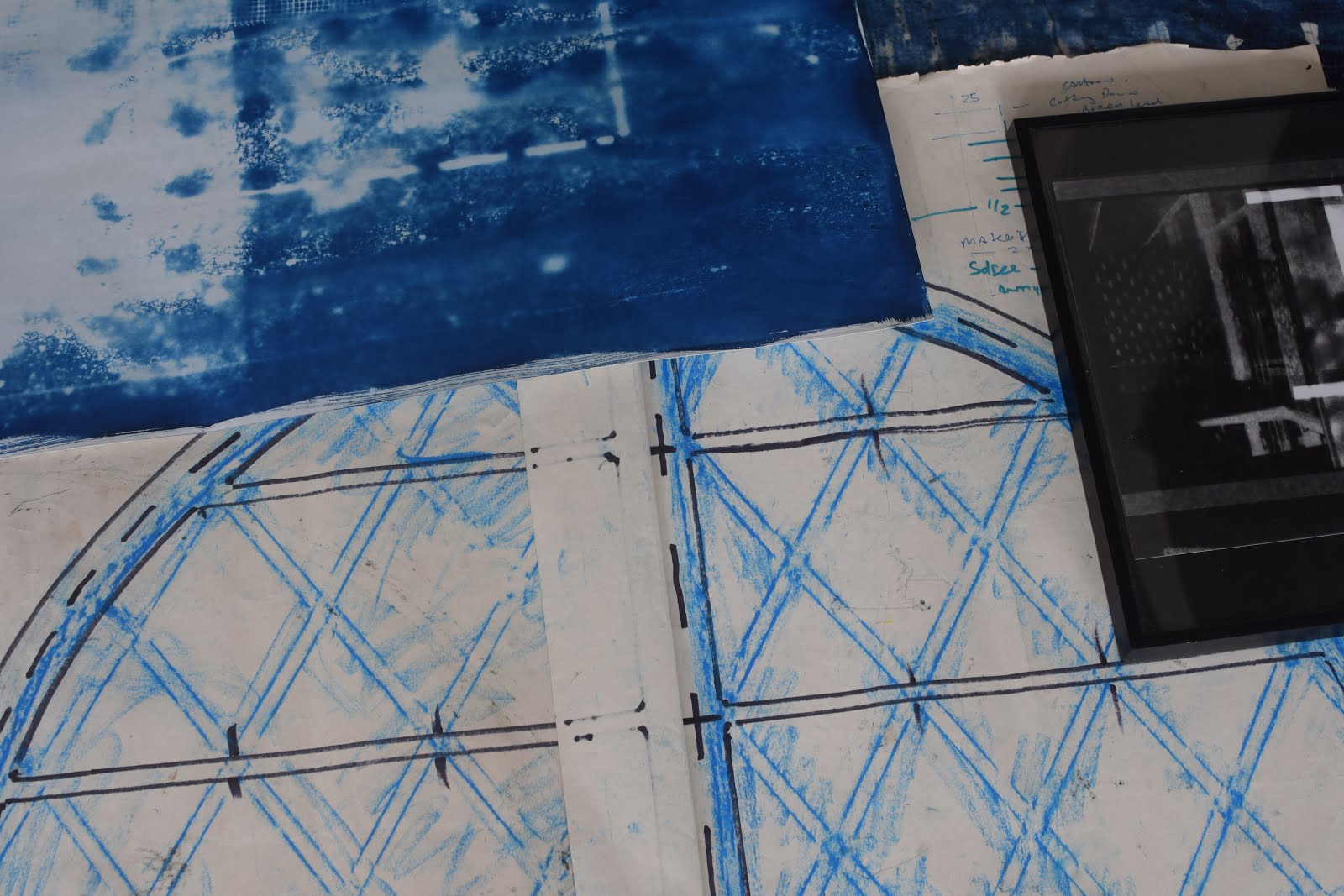
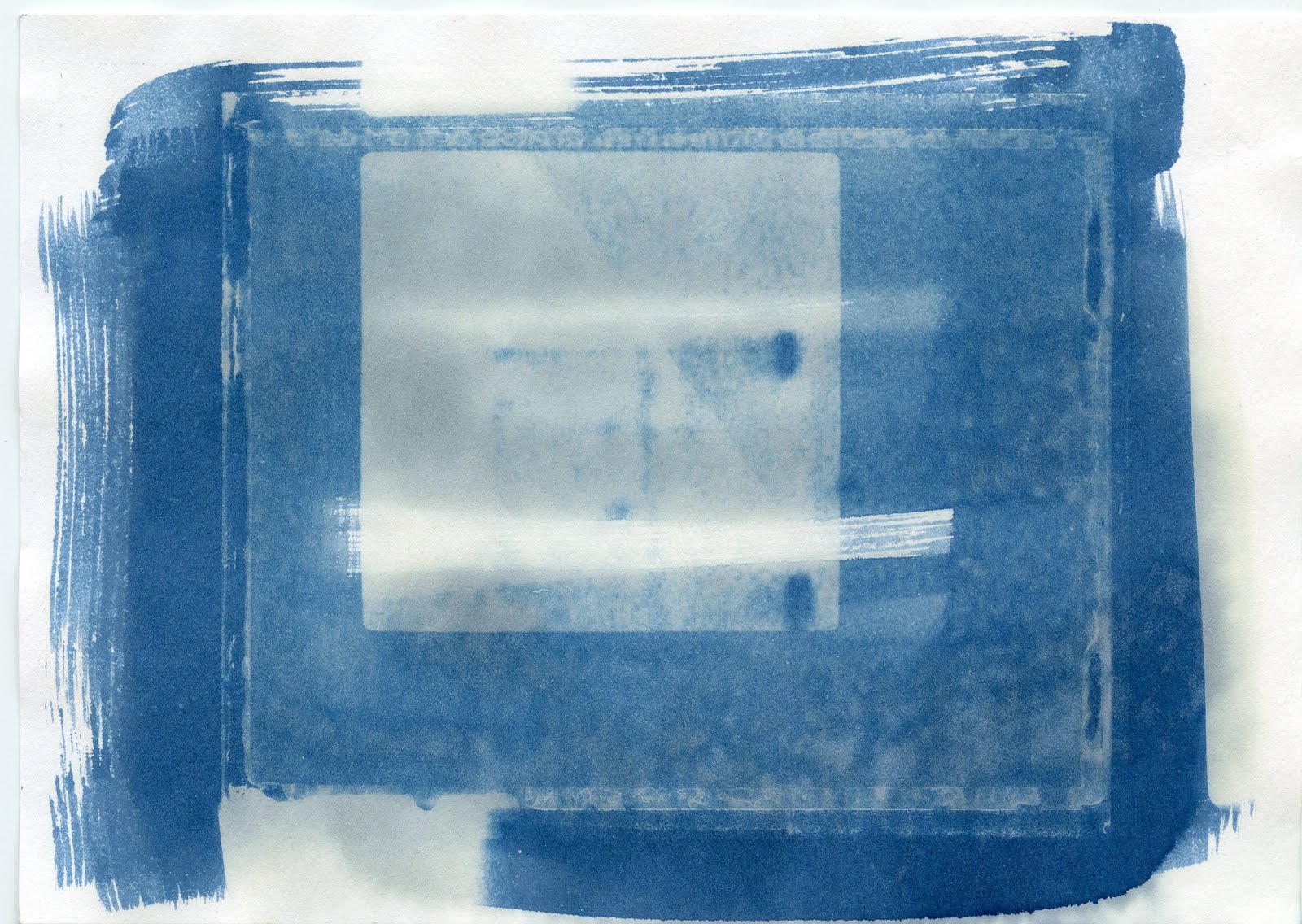
    Blueprint, Photogram and Collage

    Collage : Diversions/Contradictions/Anomalies
    Collage and Architecture

    a thousand plateaus
    Deleuze, Guattari

    http://www.rhizomes.net/issue5/poke/glossary.html

    Assemblage

    The beauty of the assemblage is that, since it lacks organization, it can draw into its body any number of disparate elements. The book itself can be an assemblage, but its status as an assemblage does not prevent it from containing assemblages within itself or entering into new assemblages with readers, libraries, bonfires, bookstores, etc.

    Becoming
    Body Without Organs
    Nomad
    Rhizome
    Smooth Space
    State
    War Machine

    Camera Obscura : Reflections and the dark room.

    The Library : A Meditation on the Human Condition (Giacometti, artist-philosopher)

    Books can step up to us- into us- in many ways.
    Voices from Chernobyl by Svetlana Alexievich was for me that rare precipitate force which calls another book into being.

    Mario Petrucci, Heavy Water, a poem for Chernobyl.

    Paths and Boundaries : Stonehenge

    Postmodern : Ever Changing, Fleeting, Positive, Nihilistic,

    “There are no simple concepts. Every concept has components and is defined by them.
    It therefore has a combination [chiffre]. It is a multiplicity, although not every multiplicity
    is conceptual…
    Not only do Descartes, Hegel, and Feuerbach not begin
    with the same concept,
    they do not have the same concept of beginning…
    Every concept has an irregular
    contour defined by the sum of its components,
    which is why,
    from Plato to Bergson,
    we find
    the idea of the concept being a
    matter of articulation,
    of cutting and
    cross-cutting.
    The concept is a whole because it totalizes
    its components, but it is
    a fragmentary whole.
    Only on this condition can it escape the
    mental chaos
    constantly threatening it, stalking it, trying to reabsorb it.”

    — Gilles Deleuze and Felix Guattari, What is Philosophy?, pp. 15-16.

    Footnote

    Critical Modernism, where is post-modernism going?
    The Garden of  Cosmic Speculation
    Charles Jencks


    Postmodernity is no more than ‘modernity’ without illusions Zygmunt Bauman We are less interested in whether we are living in a critical or …

    Source: Painting/Abstraction/Assemblage/Beyond Discourse : Architectural Plan/ Library/Victorian Corset/Blueprint/Spatial Frame

  • Sunday, 6 June 2021

    Spatial Agency/The Arts and the dance of thinking : The body is open to the intensities of the present.

    BIOSPHERE
    And all of our thinking, for its part, forms its own ecosystem as well. Mind is an ecological phenomenon, the result of a collective dance.
    Gregory Bateson was fascinated by the fact that the relational networks between  root hairs and  mycelial filaments,  between  predator and  prey,  partners and  competitors,  have a form similar to  the neural pathways between the different hubs of our brains. Bateson drew several conclusions from this: that the landscape is also capable of thinking—not in  ideas and  words,  but in  forms,  colors,  tones,  and  scents.  Its thinking has no  object,  and  it therefore knows nothing  of either accusations or reproaches.  The natural world  thinks by  transforming  itself as a subject. The relationships within  an  ecosystem thereby  constitute something  like the synapses of a landscape’s nervous system (a very  specific nervous system,  which  has the form of a very  specific landscape).  In  this,  an ecosystem resembles a brain. Like a brain, it is capable of cognition. The way in which vegetation changes as the climate around it becomes more dry, for example, could be imagined as the way in which that ecosystem imagines a drought.  The biosphere is a system that constantly  produces new relationships by  responding  to  existing  ones.  Our brain  does the very  same thing.  Moreover,  since it resides within  a body,  it does not just map  the relationships from the outside,  but is itself a part of the relational network within an ecosystem.
    Matter and Desire, an erotic ecology, Andreas Weber. 2017
    The mind is always embodied, always based on corporeal and sensory relations.
    Elizabeth Grosz.

    Categories and things may make it easier for us to grasp reality, but they also hide its underlying complexities.

    Peripheral Vision, Relationality. Robert Cooper. 2005
    Oxford Dictionary of Geography: spatiality

    The effect that space has on actions, interactions, entities, concepts, and theories. Physical spatiality can also be metaphorical. It is used to show social power—thrones are higher than the seats of commoners, and ‘high tables’ for university teachers in most Oxbridge colleges physically elevate the teachers over the taught. People use proximity to show how intimate they want to be with others (See personal space), or orientation; we may face someone or turn away from them. Institutions and governments have used large architectural spaces to invoke awe, while restaurateurs may create ‘cosiness’ in small spaces.

    FILMIC COLLAGE : Veiled Melancholy/Book Narratives

    “He rubbed his eyes. The riddle of his surroundings was confusing but his mind was quite clear – evidently his sleep had  benefited him. He was not in a bed at all as he understood the word, but lying naked on a very soft and yielding mattress, in a trough of dark glass. The mattress was partly transparent, a fact he observed with a sense of insecurity, and below it was a mirror reflecting him greyly. Above his arm- and he saw with a shock that his skin was strangely dry and yellow – was bound a curious apparatus of rubber, bound so cunningly that it seemed to pass into his skin above and below. And this bed was placed in a case of greenish-coloured glass (as it seemed to him), a bar in the white framework of which had first arrested his attention. In the corner of the case was a stand of glittering and delicately made apparatus, for the most part quite strange appliances, though a maximum  and minimum thermometer was recognizable.”

    H. G. Wells : The Sleeper Awakes. 1899/1910

    “Spatial turn” The increased attention to matters of space, place and mapping in literary and cultural studies, as well as in social theory, philosophy, and other disciplinary fields.

    Spatiality, Robert T. Tally Jr. Routledge 2013.

    Immediate Architectural Interventions, Durations and Effects : Apparatuses, Things and People in the Making of the City and the World. Alberto Altes Arlandis, Oren Lieberman. 2013

    Preface (1921) ” The great city of this story is no more than a nightmare of Capitalism triumphant, a nightmare that was dreamt a quarter of a century ago. It is a fantastic possibility no longer possible. Much evil may be in store for mankind, but to this immense, grim organization of servitude, our race will never come” H.G. Wells. Easton Glebe, Dunmow,1921.

    EMULSION : Photographic Landscape

    I do not start with the idea but with the experience
    Peter Lanyon

    The Experience of Landscape
    Paintings, Drawings and Photographs
    South Bank Centre

    An Anthropology Of Landscape
    Christopher Tilley, Kate Cameron-Daum

    ECOLOGY WITHOUT NATURE
    Rethinking Environmental Aesthetics
    Timothy Morton

    Matter and Desire, An Erotic Ecology
    Andreas Weber
    BLUE SPACES : White Absences #2. Silence/Void : Gap/Reveal

    Ordinary Lives
    Studies in the Everyday
    Ben Highmore

    RUINED INTERIOR : Consumerism and Culture.
    The Art of Survival?
    Jacqueline Rose
    Essay for ‘Elsewhere’ Therese Oulton

    Hermeneutic Philosophy and The Sociology of Art
    Janet Wolff

    Hermeneutics
    Jens Zimmermann


    BIOSPHERE And all of our thinking, for its part, forms its own ecosystem as well. Mind is an ecological phenomenon, the result of a collecti…

    Source: Spatial Agency/The Arts and the dance of thinking : The body is open to the intensities of the present.

  • Saturday, 5 June 2021

    Body Politics : Drawing Geographies

    Figure/Foreground : Drawing/Sensing

    In drawing the moments of choice have been kept visible.
    John Berger, Berger On Drawing.

    A drawing is essentially a private work, related only to the artists own needs.
    The Drawn Line-A Recession-A Past Statement Brought Forward

    The Body of Drawing
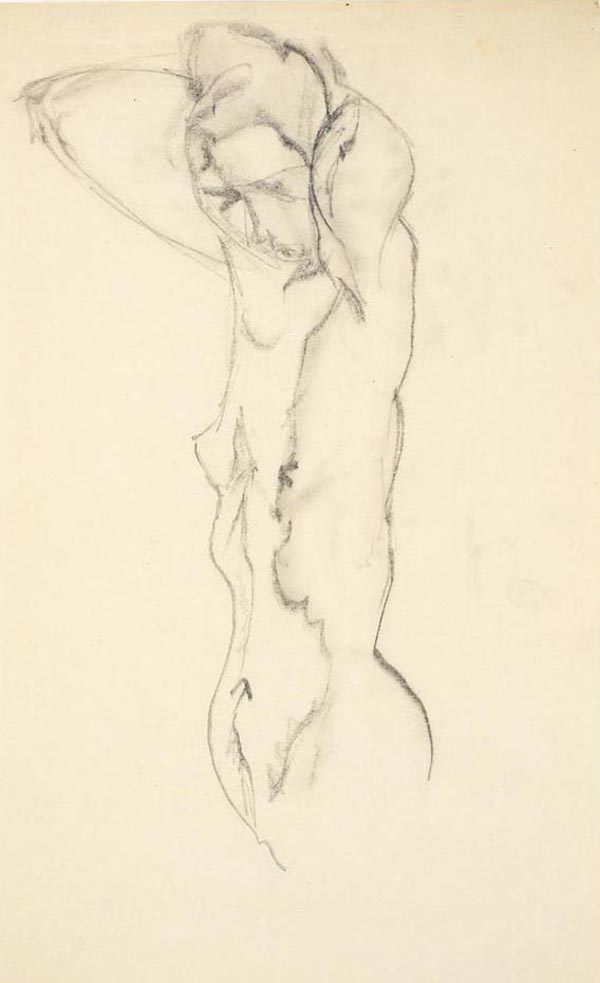
    Drawings by Sculptors
    South Bank

    Drawing registers the transforming effects of the imagination and the memory.
    Drawings are images of flux; flux both imaginative and physical.

    Drawing is a verb.
    There is no way to make a drawing-there is only drawing.
    Richard Serra

    The Drawing Book
    Tania Kovats
    Drawing is something where you have  a really direct-immediate relationship with the material. You make a mark, and then you make another mark in relation to that mark.
    Kiki Smith
    The Body
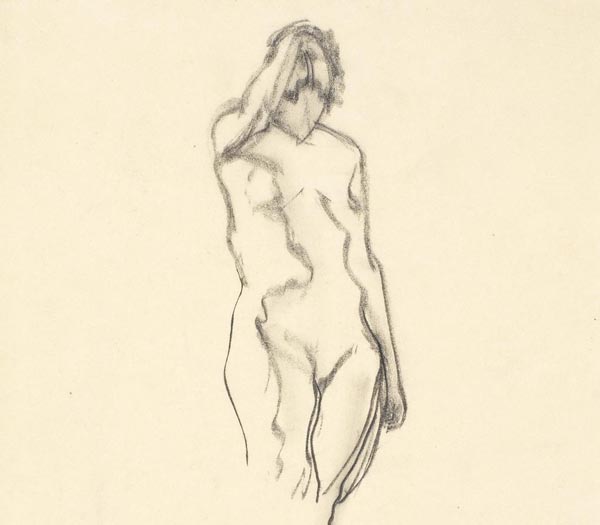
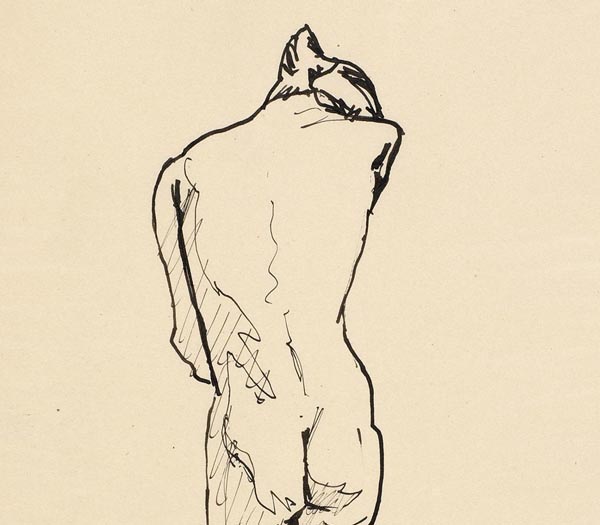
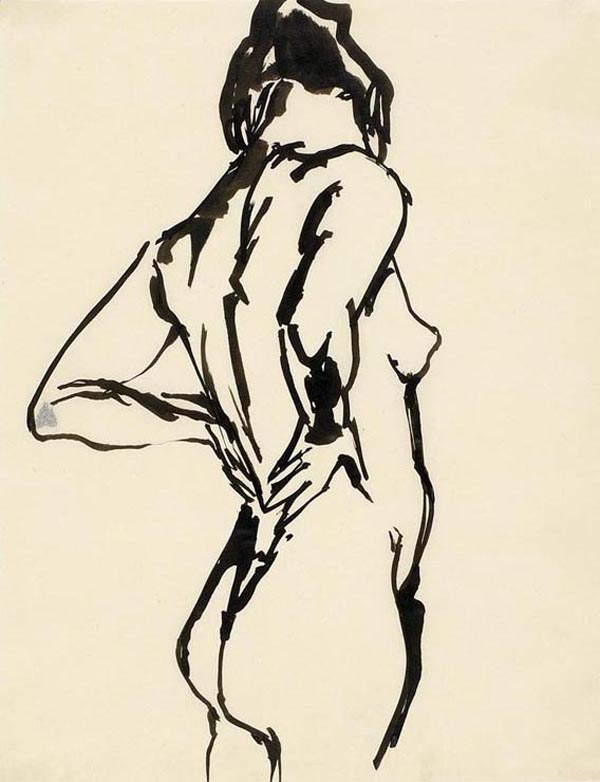
    Rodin’s lines dont just represent carnality; they are themselves carnal, invasive, sexy. Uninterrupted by the space between the material and the body; the line made by the drawing hand stands in for other haptic things. The body is where drawing begins and where it ends.

    Looking at images does not lead us to the truth, it leads us into temptation.
    Marlene Dumas

    Sexuality and Space
    Beatrice Colomina

    Drawing and Random Interference
    From Chaos To Order And Back Again
    Sally O’Reilly

    Quantum Chance
    Janna Levin

    AFTERIMAGE : Drawing Through Process
    Cornelia H. Butler

    Fiona Banner
    Life Drawing
    Performance Nude

    Marking Time
    Examining Life Drawing as Methexis
    Margaret Mayhew

    Rather than regarding life-drawing as an event of realism, it may be more productive to
    explore it as an assemblage of events, a field of practices, or as a cluster of performances.


    Figure/Foreground : Drawing/Sensing In drawing the moments of choice have been kept visible. John Berger, Berger On Drawing. A drawing …

    Source: Body Politics : Drawing Geographies
  •  

    Teaching Drawing Concepts : Oskar Schlemmer/Calvin Albert

    Oskar Schlemmer, Man.1971
    Lund Humphries/MIT, London,

    Oskar Schlemmer’s conception of man
    Syllabuses/Teaching Schedules
    Drawing from the nude
    Measurement and proportion
    Natural sciences
    Figure drawing
    Philosophy
    Psychology
    Question and answers to the preliminary course ‘man’
    Postscript

    Figure Drawing Comes To Life, Albert Seckler. 1957
    Reinhold Publishing Corporation, New York

    A series of experiments in drawing the figure conducted by Calvin Albert

    Interpreted in a text by Dorothy Gees Seckler

    New concepts of architecture
    Existence, Space and Architecture, Christian Norberg-Schulz. 1972

    Anthropometrics for designers, John Croney. 1971

    Oskar Schlemmer, Man.1971 Lund Humphries/MIT, London, Oskar Schlemmer’s conception of man Syllabuses/Teaching Schedules Drawing from th…

    Source: Teaching Drawing Concepts : Oskar Schlemmer/Calvin Albert