Visual artist working in the UK.
UCA Farnham, Interior Design MA.
Canterbury School of Architecture, Spatial Practices MA.
University of Southampton, Visual Fine Art BA hons.
Epsom School of Art and Design, Ceramics HSND.
Art as Experience : Interactions of Color/ Art as Experience, Josef Albers
GLASS-COLOUR-LIGHT-INTERIOR-LANDSCAPE
ART AS EXPERIENCE
WHAT IS THE CAPACITY OF THE MATERIAL
Josef Albers
Life is change-day and night, cold and warm, sun and rain. It is more in-between the facts than the facts themselves.
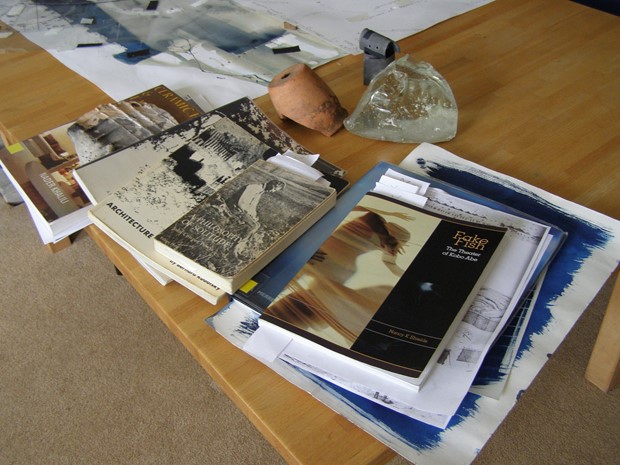
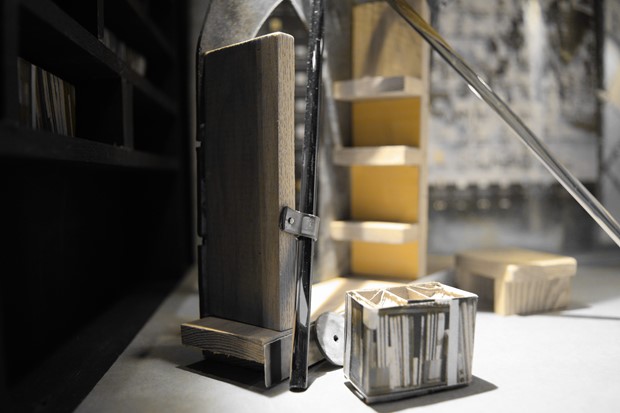
I believe it is now time to make a change of method in our art teaching, that we now move from looking at art as a part of historical science to an understanding of art as part of life.
In art we can still experience revelation and wonder.
On Glass Pictures
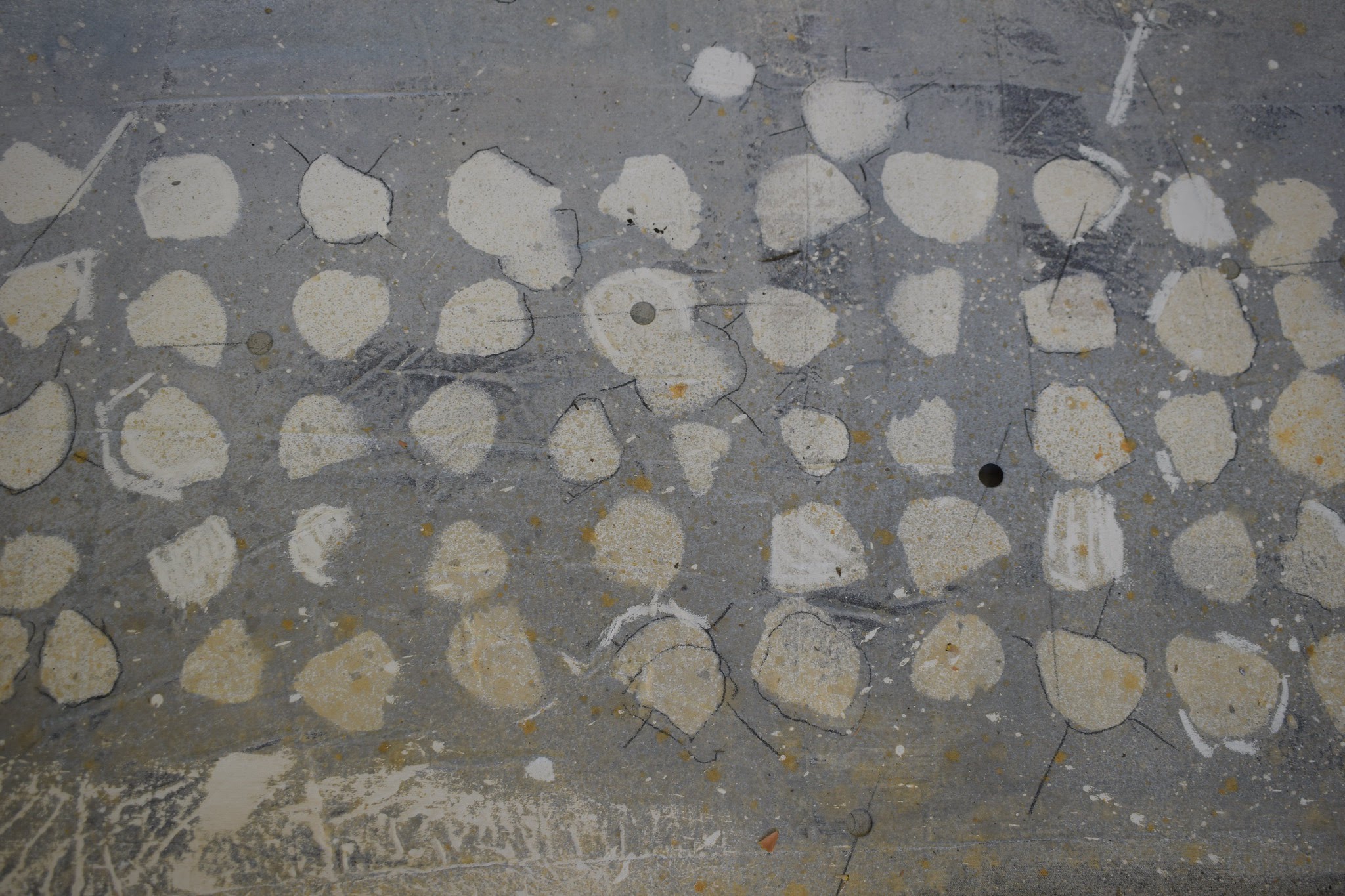
Opaque Glass/Sandblasting
Colour Intensity
The flatness of the design elements offer an unusual and particular material and form effect.
Colour Intersection/Instant and a Spatial Flow
Colour Interaction
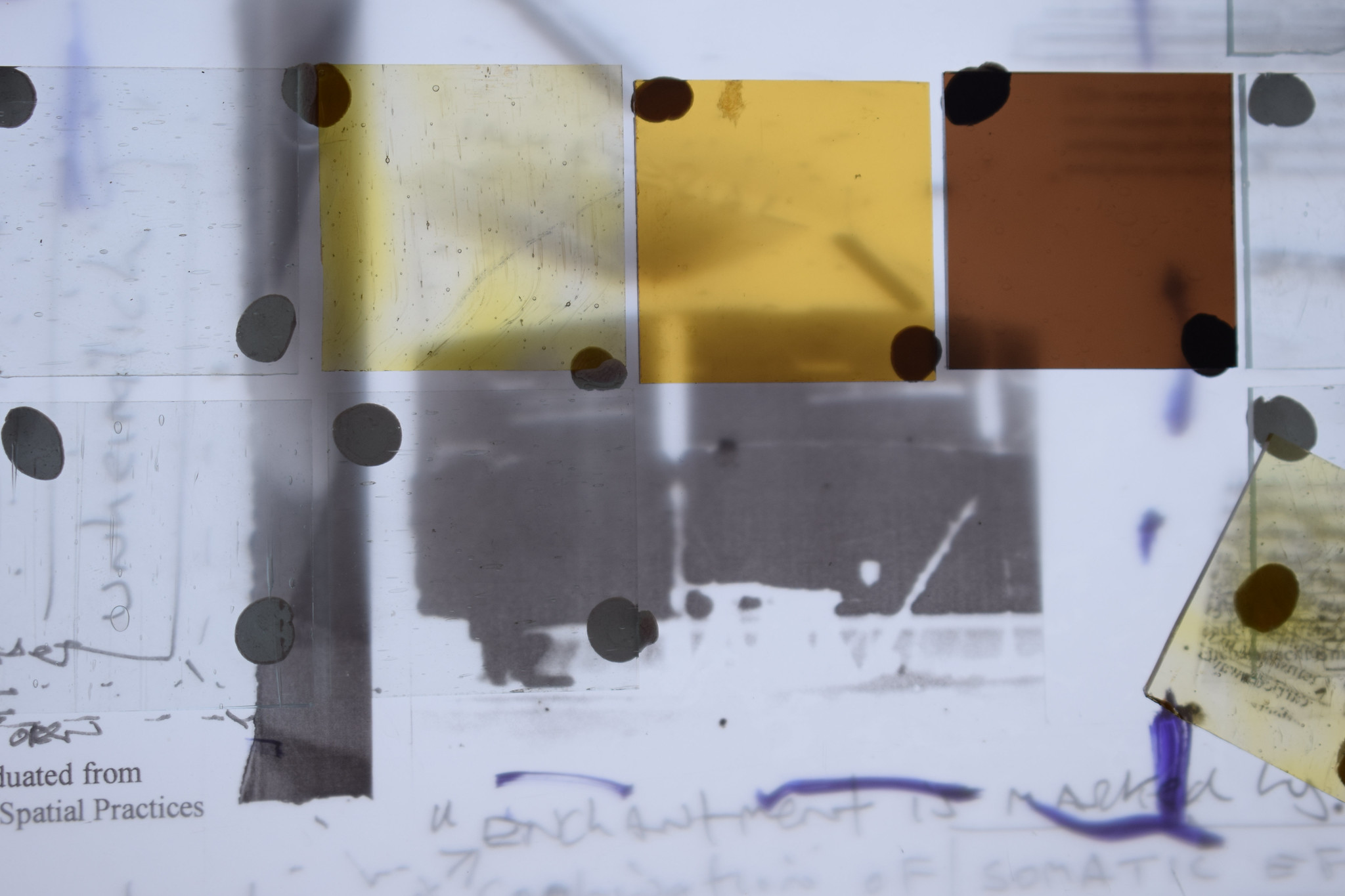
Square-on-square studies, of closely observed colour events staged within a controlled setting.
Oral History
Interview with Josef Albers, 1968 June 22-July 5
The role of art in society to reveal visually the attitude of our mentality
Working in Collage and Stained Glass under Itten
Collage to Montage
His belief that he teaches a philosophy (of how to see) not technique.
Guggenheim Museum. 1994
Catalogue
32. Skyscaper 11
1929
Sandblasted flashed glass 36.2 x 36.2cm.
28. City
1928
Sandblasted opaque flashed glass with black paint, 33 x 55.3cm.
Badley damaged with sections of glass missing.
Alber’s numerical notations in white chalk or pencil are visible on the surface.
21. Frontal
1927
Sandblasted opaque flashed glass with black paint, 34.8 x 47.9cm.
Art is something that cannot be taught, what can be taught is craft
His program focused mainly on the study, analysis, manipulation, assembly and transformation of matter.
Albers structured his teaching method as a natural, consistent consequence of his unusual training.
He brought to life works of art that are never merely the result of a thorough process or of the correct application of norms and rules. Rather, they are works of art that discover their own rules in the very process of their making.
Art is not an object but experience
The Artist as Alchemist
Nicholas Fox Weber
He (Albers) saw his art as representing an ideal for the integration of the individual in society both in its tone and in the simultaneous independence and interdependence of its forms and colours.
TEACHING FORM THROUGH PRACTICE 1928
Learning is better than teaching because it is more intensive : the more we teach/examine, the less the students can learn.
Learning and practicing techniques develops insight and dexterity, but not creative energies. Inventive construction and an attentiveness that leads to discoveries are developed, at least initially through experimentation that is undisturbed, independent, and thus without preconceptions. This experimentation is initially a playful tinkering with the material for its own sake.
That is to say, through experimentation that is amateurish (ie not burdened by training).
The Three Ecologies Institute
An Open Laboratory for Thinking in the Making
THOUGHT IN THE ACT
Passages in the ecology of experience
Erin Manning
Brian Massumi
GLASS-COLOUR-LIGHT-INTERIOR-LANDSCAPE ART AS EXPERIENCE WHAT IS THE CAPACITY OF THE MATERIAL Josef Albers Life is change-day and …
Aesthetics of the Everyday : A Creative Human Praxis
Working Praxis into Creative Research
Clay, Paint, Matter/Everyday Landscapes
The Subject Matter of Lived Experience
The Potter’s wheel creates cognitive enactments (materiality) through encountering clay.
The Heideggerian Roots of Everyday Aesthetics
A Hermeneutical Approach to Art
Cristian Hainic
The mere aesthetic experience of understanding one’s being-in-the-world as made up by everyday phenomena, is in itself overwhelmingly sufficient to constitute a foundation for an aesthetic of everyday life.
Textuality/Interpretations (Texts and their inherent lack of perceptual immediacy)
Everything in language belongs to the process of understanding
Human understanding/interpretation takes place not in the immediacy of representational thinking but rather in the lack of objects and experiences available for direct confrontation.
John Dewey
Live Creature, an aesthetic experience comes to be defined as active and alert commerce with the world. Life does not merely go on in an environment, but rather because of an environment and because we interact with it.
THE ART OF SURVIVAL
Jacqueline Rose’s catalogue essay on Therese Oulton
How to paint the earth lovingly but without false solace,a world in which love might be impotent?
But then, at the very moment you have ceded such intimacy, she manages to give you the sensation of a world hurtling to the point when there might no longer be anything, or anyone there.
The Art of Jeremy Gardiner
UNFOLDING LANDSCAPE
LANDSCAPE, MEMORY, AND PLACE
Robert Ayers
Often for these painters the experience that they concern themselves with most directly, is that of nature, which in its vast and enormously inflected range can act as a metaphor for lived experience.
They are concerned more with how nature feels than how landscape looks. They share too an awareness that it is the translation of that feeling into paint mark, the achievement of an equivalence, that is of crucial importance. It is in the consummation of paint and experience that picture-making finds experience.
Paint marks flicker as we look at them between substance and illusion.
CONTESTED SPACE
Urban/Social/Landscapes
Landscapes are contested, untidy and messy, tensioned, always in the making. Our landscapes of modernity are frequently on the move and peopled by diasporas and migrants of identity, people making homes in new places.
An Anthropology of Landscape
Christopher Tilley, Kate Cameron-Daum
ORDINARY LIVES
Studies in the Everyday
Ben Highmore
Lukács’s Literary Cartography:
Spatiality, Cognitive Mapping, and The Theory of the Novel
Robert T. Tally Jr.
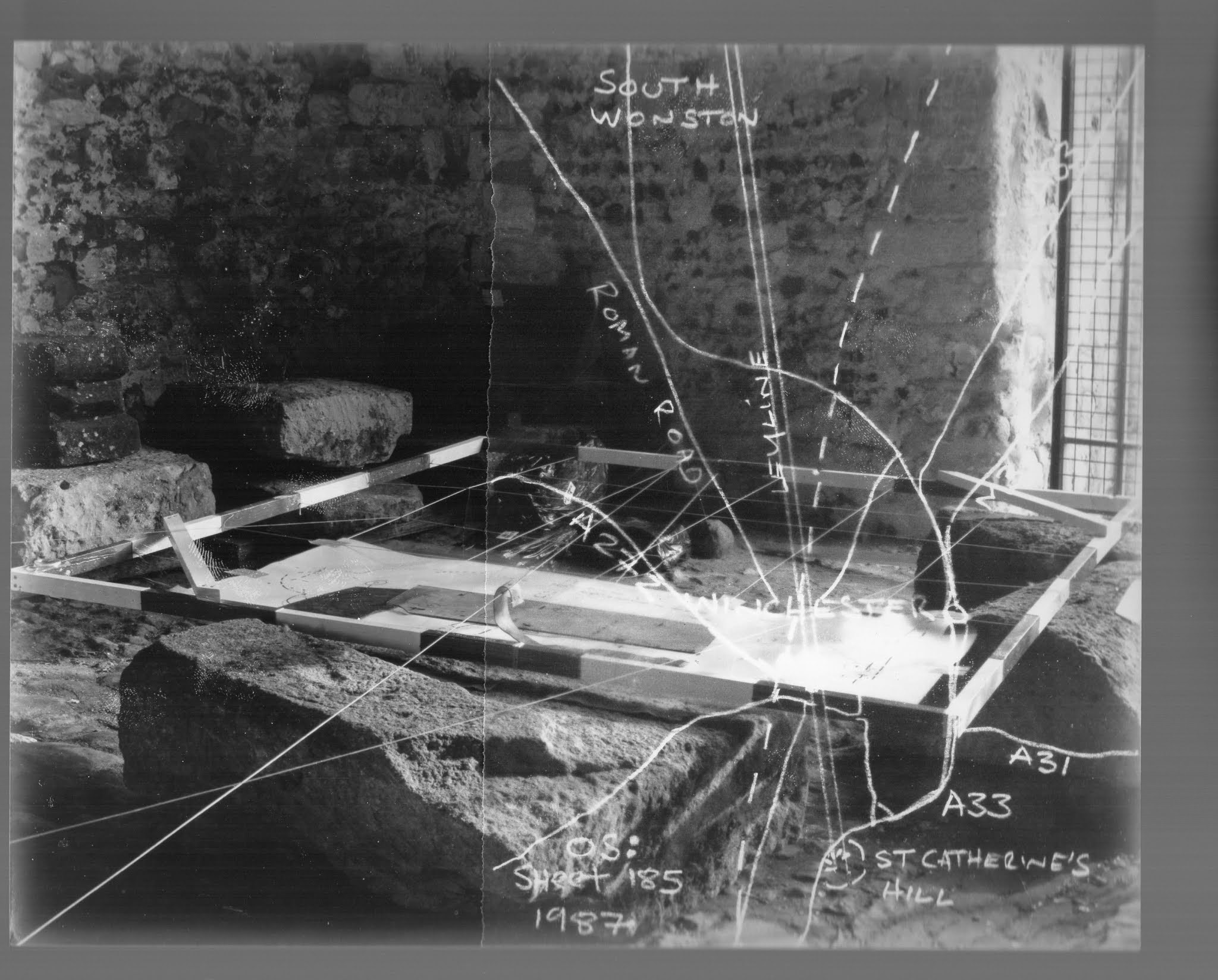
Objects and Traces/Map Reading : Visual Archaeology/Anthropology in Social Space
The map fosters interpretation and exploration
Inseparable Attendant : Place and Process
Assemblage and blueprint : Site drawing/Leper Graves
Drawing figure/ground, documentation of work in progress.
Life “drawing” trace on paper with water and field chalk. Work submitted to Interfaith Group Show at the Link Gallery, Winchester 2010.
“This particular event invokes for me the notion of simple material relations and collaborative gestures that underpin human agency. Art space/practice can promote these working intimations.” Artist’s Statement (archive) 07.12.2009.
Anthropological Landscape : Morn Hill, Winchester
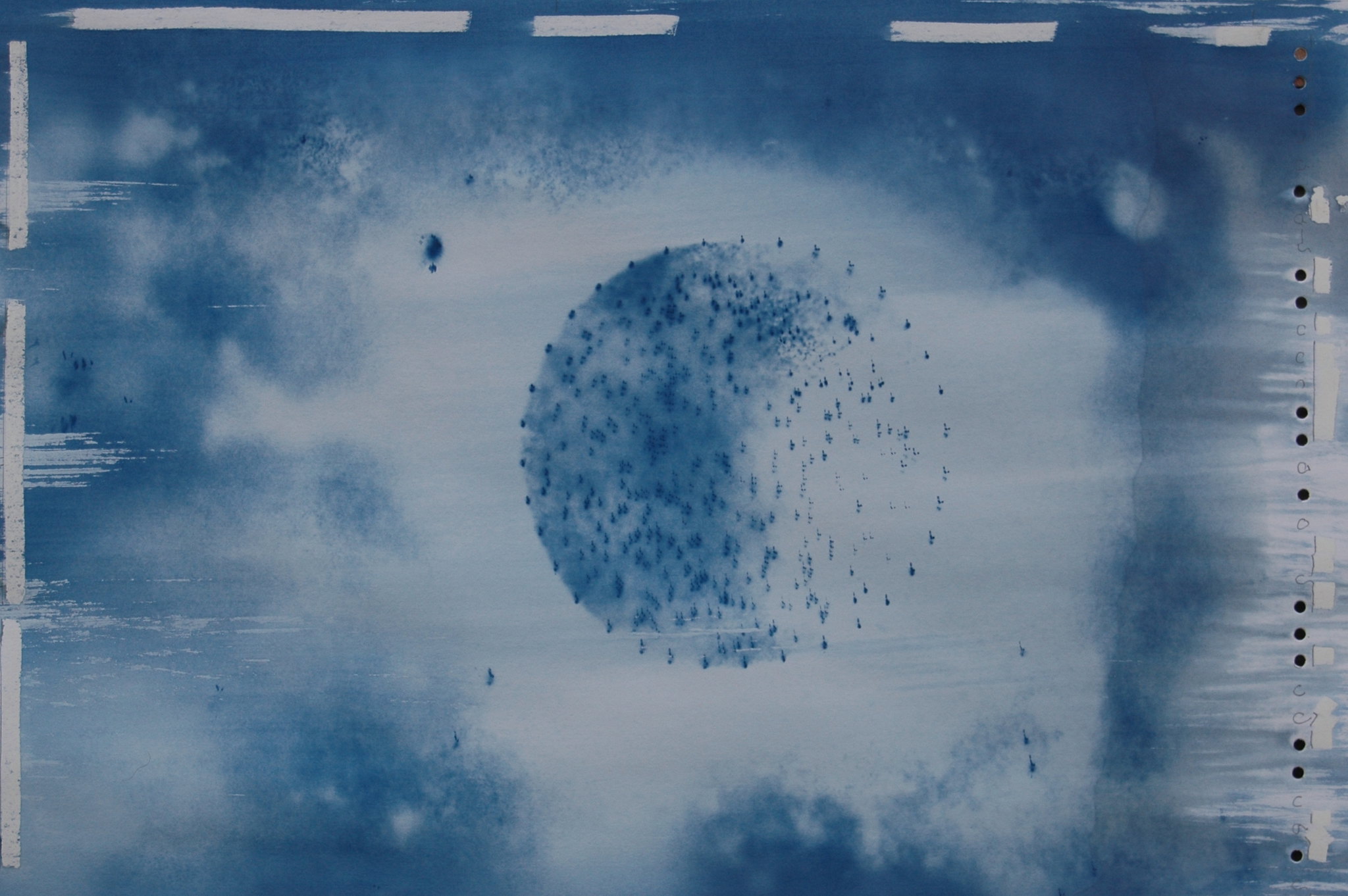
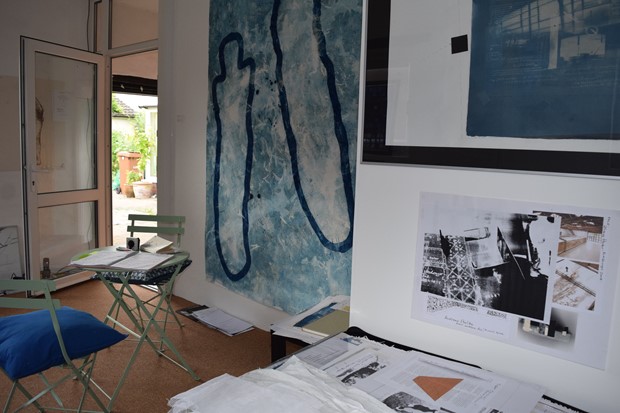
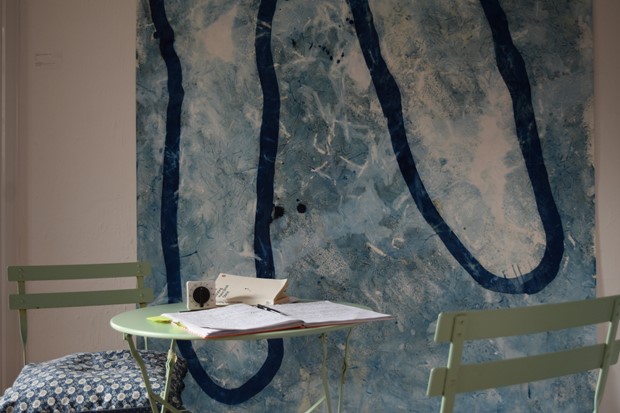
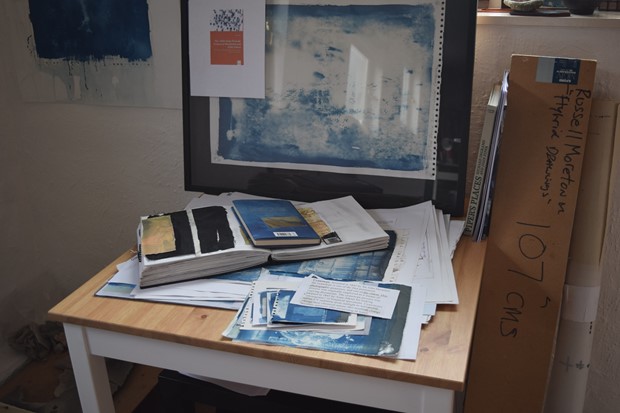
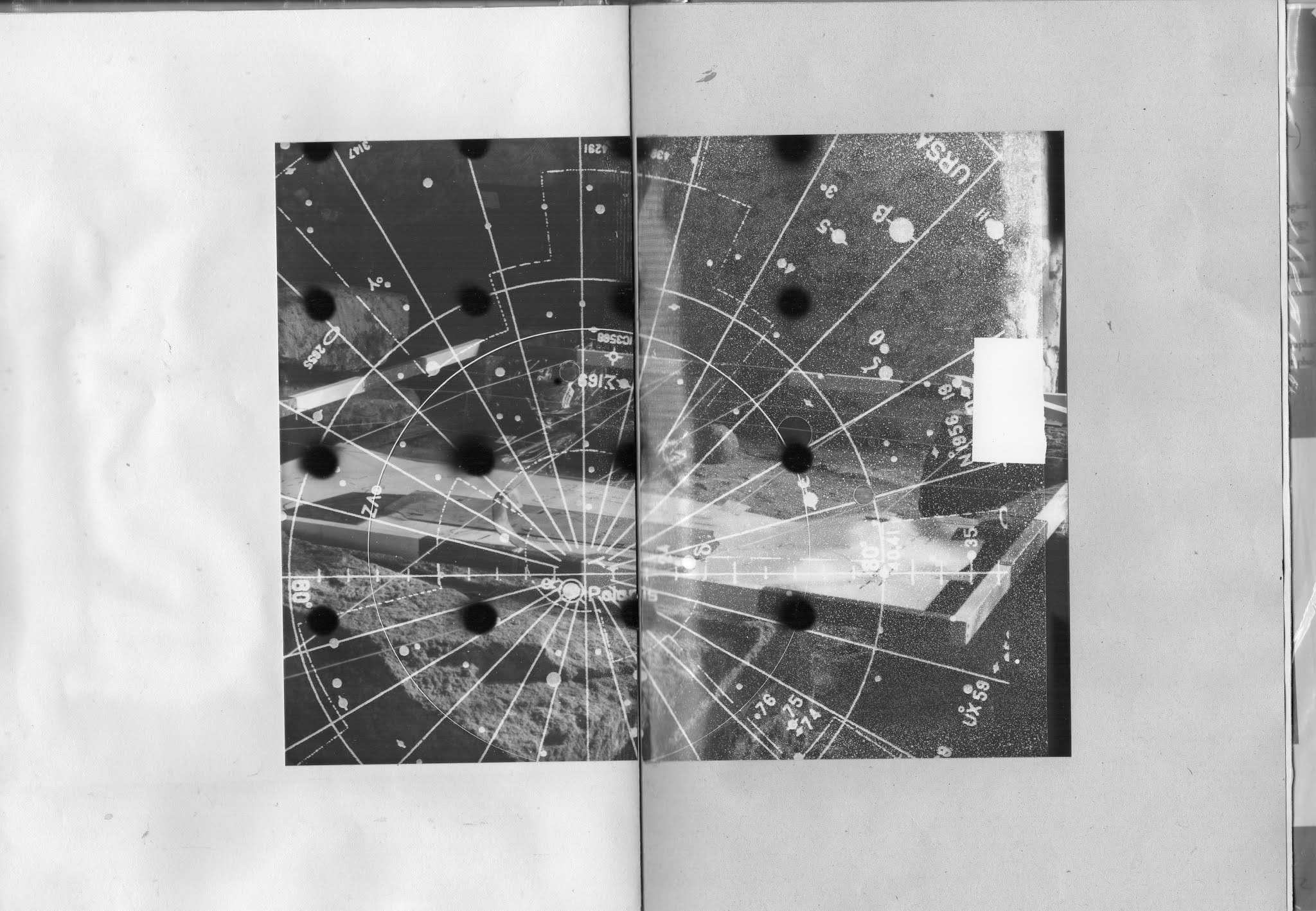
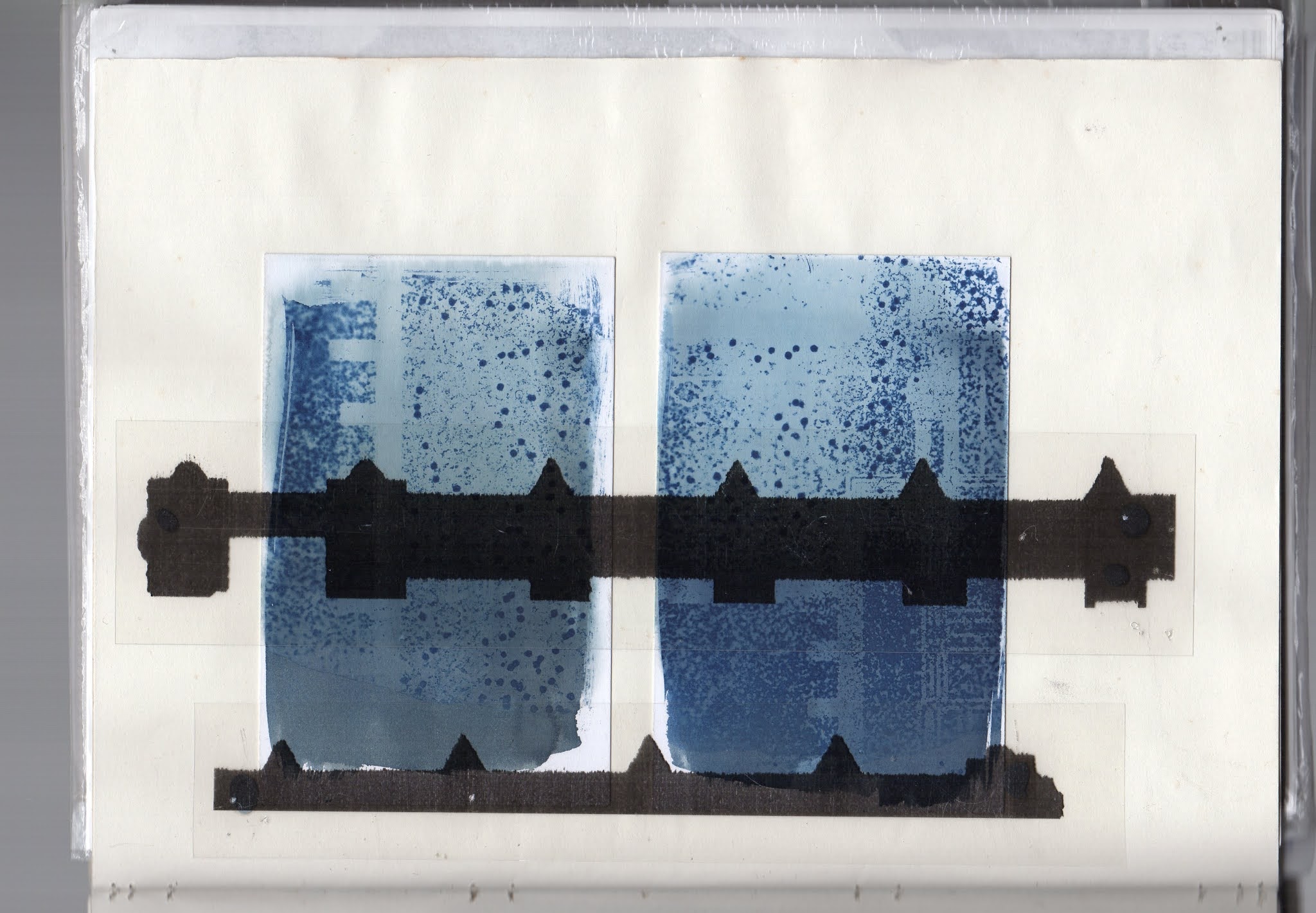
Panspermia : Cyanotype Drawing
150×240 cms
Human form drawn on paper with cyanotype and black ink. Astronomical data and traces of seed heads together with reference material/notes (directed panspermia) in pencil.
The map fosters interpretation and exploration Inseparable Attendant : Place and Process Assemblage and blueprint : Site drawing/Leper Gra…
Art practice/agents of a discursive social praxis : Building on Differentiated Data/Collage
Folder Cover, The Thinking Hand
TheThinking Hand: Existential and Embodied Wisdom in Architecture.
Juhani Pallasmaa
Frameworks with Enclosures
Of the mason’s who built them, we can say that they both designed as they drew, and drew as they designed. But their designing, like their drawing, was a process of work, not a project of the mind.
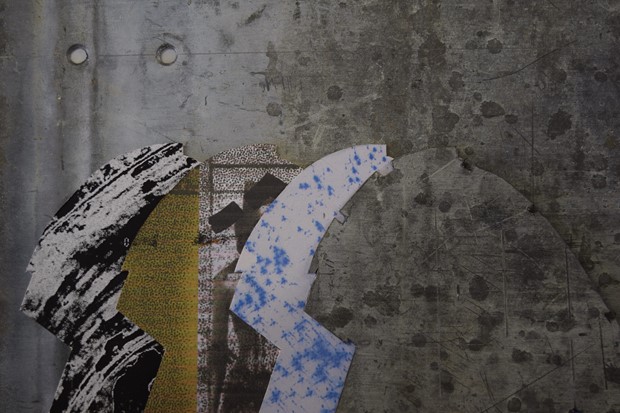
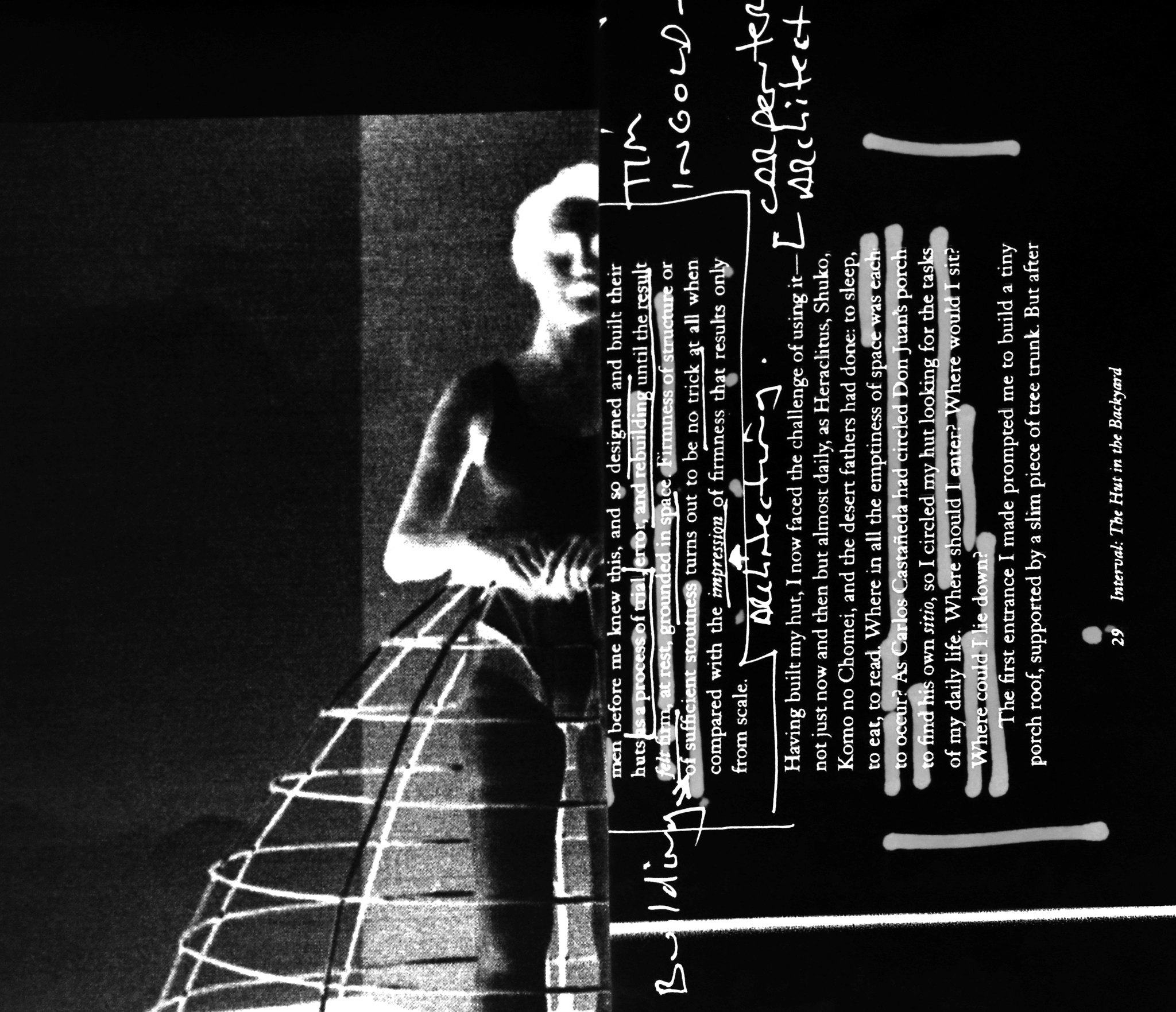
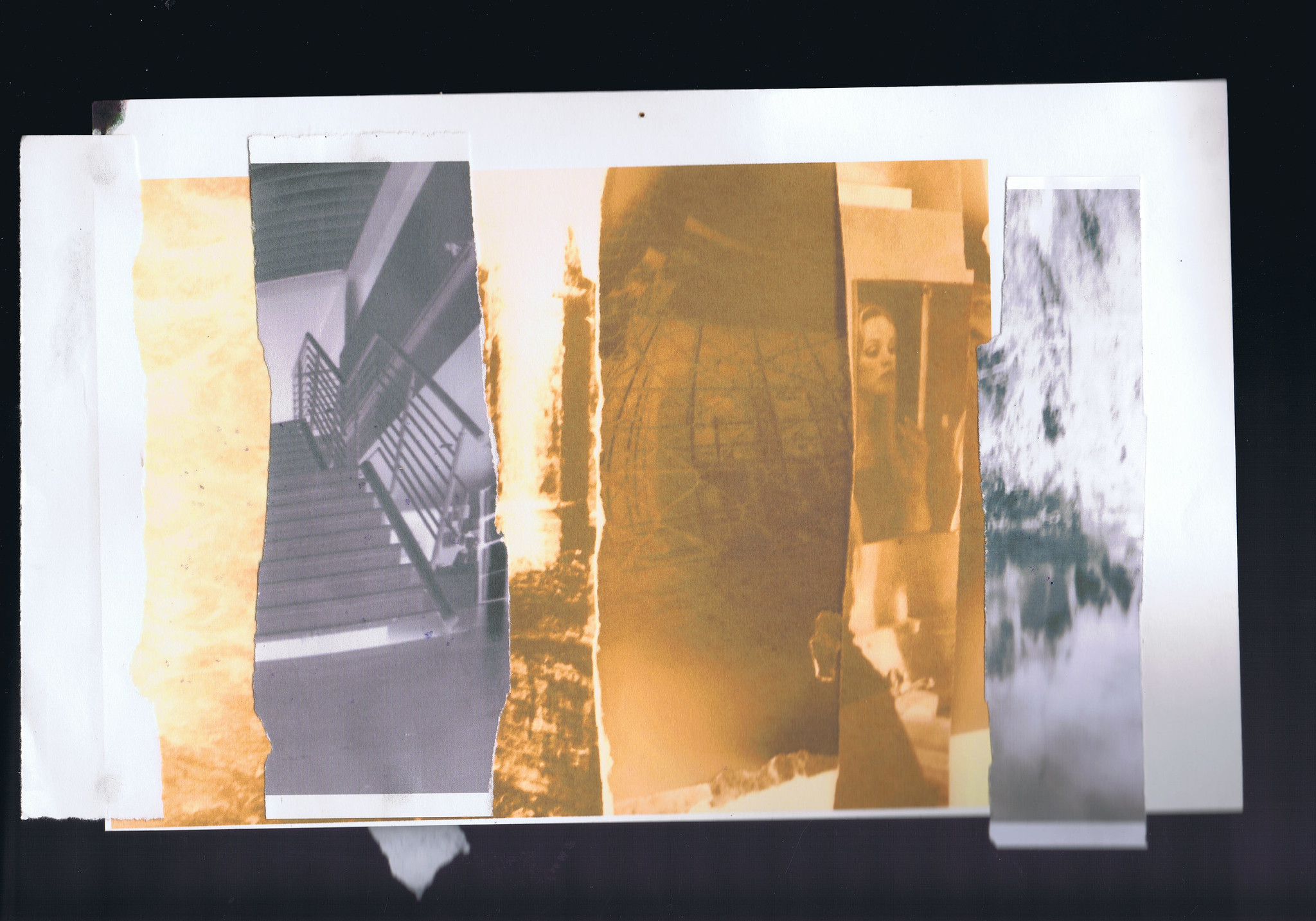
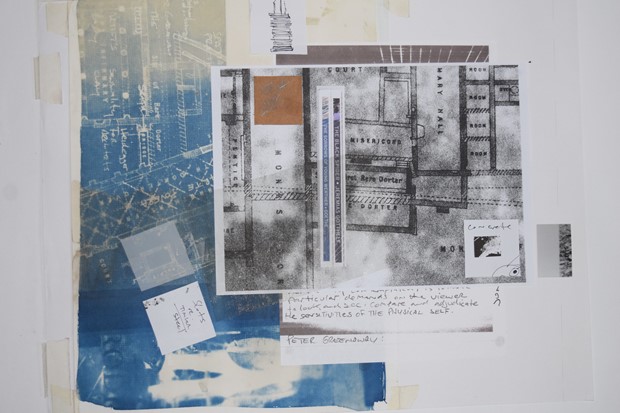
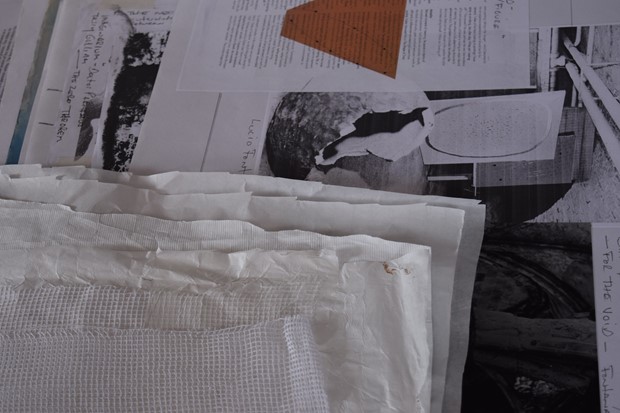
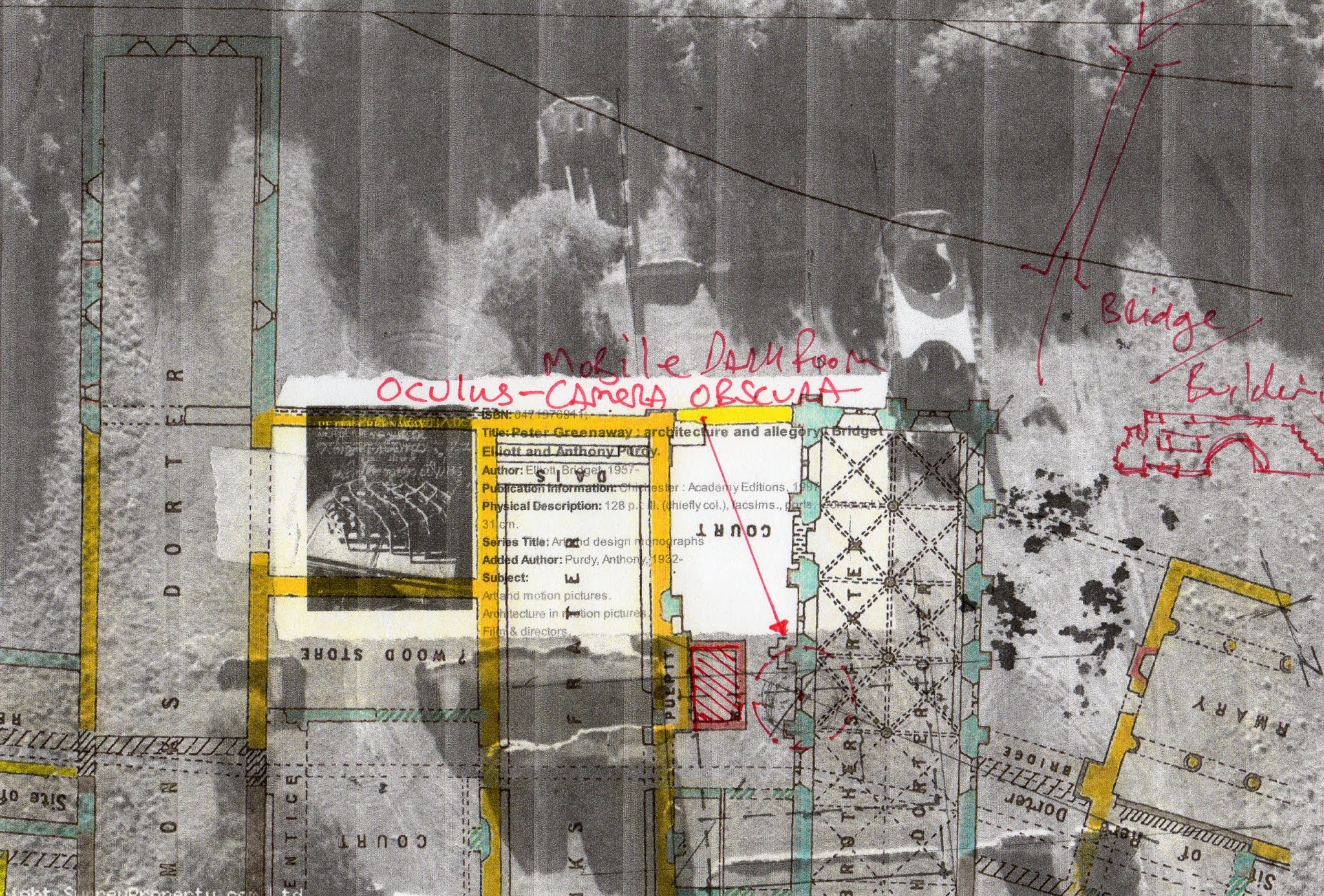
Collage on paper,written fragments and images from Peter Greenaway, Josef Albers and Robin Evans. Photo montage of The Physical Self (Greenaway) and Waverley Abbey UK.Visual research as part of The Waverley Project/Obscura and Reading Room.
On the horizon, then, at the furthest edge of the possible, it is a matter of producing the space of the human species-the collective (generic) work of the species-on the model of what used to be called “art” ; indeed, it is still so called, but art no longer has any meaning at the level of an “object” isolated by and for the individual.
Henri Lefebvre, Openings and Conclusions. from On Installation and Site Specificity (introduction) Erika Suderburg
Folder Cover, The Thinking Hand TheThinking Hand: Existential and Embodied Wisdom in Architecture. Juhani Pallasmaa Frameworks with En…
Atemwende, a breathturn : Adam Gopnik and Edmund de Waal
Craft and Art, Skill and Anxiety.
Craft is logic, and art defies it. The defiance is what makes art. The serenity of the artisan lies in her knowledge that it can all be done again. The anxiety of the artist; lies in knowing that if it is done again, she has become an artisan. (Gopnik,2014:7)
Edmund de Waal is a maker of objects with imagined histories. (Gopnik,2014:11)
Atemwende : A breathturn.
Edmund de Waal.
The Great Glass Case of Beautiful Things:
About the Art Of Edmund de Waal
Adam Gopnik. 2013.
‘Actually, I still make pots, you know’ Edmund de Waal.
The Sensuality of the Clay Body.
‘You have to work quickly and with definition, and your ideas have to come into focus with enormous rapidity.’ Edmund de Waal, on working with the different presence demanded on ones mind and hand whilst throwing with porcelain. The practice of porcelain forced a change in colour and finish in his work. New glazes, shimmering celadon and shiny black, arrived to catch the light and send it back. (Gopnik,2014:9)
The throwing of pots still remains central to his practice. ‘The material goes down, gets wet, is pulled open by the hand, spins- and then produces, as if by magic, the most transcendently human of all made things; volume, inner space, an interior, the carved out air that connects the morning teacup with the domes and spandrels of San Marco. There’s nothing there but clay and air, then there’s defined air. (Gopnik,2014:6)
Ceramics and Architecture.
Exhibition Spaces of the Enlightenment
The Porcelain Rooms
The pot, ancient as it is, is the first instance of pure innerness, of something made from the inside out. Building objects upwards is, in its way, an obvious and brutal thing; it derives from piles, and makes pyramids. Turning objects inward, on the wheel, is a subtler one, and derives from our need to have a place to put things in. (Gopnik,2014:7)
Together these new porcelain vessels collectively produced by De Waal are an experience of possessed space.
These collections of vessels in their Modernist vitrines seem to be both an expression of the architecture of a collection and simultaneously an affirmation of an interior space that can hold the singularity of a breath within a small pot.
‘ The ceramic module that he uses, the small pot, is deliberately made as non-functional as possible.’ (Gopnik,2014:9)
‘Even if we insist on seeing them impersonally, the sheer force of their numbers creates the poetic sense inherent, as Homer knew, in all inventories. They gang up on us.’ (Gopnik,2014:9) These groupings of objects placed together produce their own narratives, their own relations, and lines of inquiry. In so doing their ordering of the space around them brings meaning to those spaces. This is reinforced through the poetry and metaphor of the effect of ceramic vessels on space, as cited by De Waal himself through Wallace Stevens’s “Anecdote of the Jar” 1919.
‘The Jar, the elemental made thing, takes dominion over the unmade world. The air around it suddenly looks “slovenly,” insufficiently jar-like. Made things remake the unmade world. (Gopnik,2014:10)
Gopnik comments that we can’t look at hollow things without sensing their hollowness, as he notes we perceive haptically as aptly as optically. This allows us to read these vessels through both our sense of sight and our sense of space. The result is that we feel these objects; we can sense the heft of them made from their weight, shape and size. We become aware that we can feel objects as much as we can see them.
De Waal’s work brings about a sensuality and an empathy manifested between the strict ordering of his presentation through his vitrines and cabinets and the fragility and grouping of his porcelain vessels. This empathy promotes our interest with the interior parts of his groupings, with the interior emptiness and mystery of things we can only sense. His control and command of the geometric spatial relations found in his installations is juxtaposed by the multitude of diminutive interiors and negative spaces.
The relations of the architectural and those of the vessel are in constant flux, held in some sort of spatial narrative that seems to meditate stillness, like the museum these vessels are protected and intact, yet strangely they are held hostage by their surroundings.
The empathy we feel for their emptiness is perhaps choreographed, staged and ultimately forced, these are not just pots as De Waal admits but pots that have been by design rendered as non-functional as possible although they still bare the marks of his franchising. This neutering of his thrown clay forms into the realm of perhaps a purely sculptural object that is itself now a mere component in his Minimalist cabinets. What remains is a hollowness, but a contrived hollowness that speaks of spaces designed not made; unlike his Signs and Wonders intervention for the V&A, these works feel orphaned and cut adrift by their surroundings.
Does? ‘His art takes a familiar grammer of display and turns it into a poetry of memory. Inside a room, a great case filled with rows of porcelain pots.Along each row, a story. Inside each pot, a breath. (Gopnik,2014:11)
Craft and Art, Skill and Anxiety. Craft is logic, and art defies it. The defiance is what makes art. The serenity of the artisan lies …
Beyond Hylomorphism : Making/Spatial Agency and Social Spaces Through Building
MAKING
TIM INGOLD
THE MATERIALS OF LIFE
Consciousness, materials, image, object : the diagram
I want to think of making, instead, as a process of growth. This is to place the maker from the outset as a participant in amongst a world of active materials. These materials are what he has to work with, and in the process of making he ‘joins forces’ with them, bringing them together or splitting them apart, synthesising and distilling, in anticipation of what might emerge. The maker’s ambitions, in this understanding, are altogether more humble than those implied by the hylomorphic model. Far from standing aloof, imposing his designs on a world that is ready and waiting to receive them, the most he can do is to intervene in worldly processes that arc already going on, and which give rise to the forms of the living world that we see all around us — in plants and animals, in waves of water, snow and sand, in rocks and clouds – adding his own impetus to the forces and energies in play. The difference between a marble statue and a rock formation such as a stalagmite, for example, is not that one has been made and the other not The difference is only this: that at some point in the formative history of this lump of marble, first a quarryman appeared on the scene who, with much force and with die assistance of hammers and wedges, wrested it from the bedrock, after which a sculptor set to work with a chisel in order, as he might put it, to release the form from the stone.
MAKING TIM INGOLD THE MATERIALS OF LIFE Consciousness, materials, image, object : the diagram I want to think of making, instead, as a proce…
Layered Drawings : Architectural Screens/Modulations of Translucency
Space Between People
How the virtual changes physical architecture
Stephan Doesinger
This book shows how the virtual has completely changed the physical world around us. If architecture is the construction of space between people, what happens when that space exists in a virtual world? That question is the starting point for this collection of revolutionary projects by a new generation of designers. The book begins by examining the important issues that have emerged as technology reshapes our idea of place and proceeds to present the four winning projects from the first architecture competition held within the explosively popular Internet community known as Second Life. Chosen for their inventiveness and aesthetic excellence, these structures – a cloud that can be inhabited; a meta-museum; an interactive sound scape; and a snow palace of discarded objects – illustrate the mindbending possibilities of digital design. In the books final section, media artists share their real-time experiences conceptualizing and creating projects for the virtual world.
Non Spaces/Digital Still Image : Fire escape Winchester School of Art
Meshworks/Norwich, moving analogue source : Midway/Dante
Beginning as one always does in the middle, in mediis rebus, one experiences a sense of disorientation, a sort of cartographic anxiety or spatial perplexity that appears to be part of our fundamental being-in-the-world. It is an experience not unlike that of Dante, in the opening lines of his Commedia:
Midway along the journey of our life,
I woke to find myself in a dark wood,
for I had wandered off from the straight path.
( Dante 1984 : 67)
Introduction : Spatiality .
Robert T. Tally Jr.
the New Critical Idiom, Routledge 2013
Art as Spatial Practice.
Space folds : Containing “Spatialities around historicality and sociality”
“All that is solid melts into air”
Karl Marx, Friedrich Engels,
(Poetic observation concerning the constant revolutionizing of social conditions)
Perceptions now gathering at the end of the millennium. Spatiality, Robert T. Tally Jr. 2013
Working Drawings : Spatial Agency/refigurations on the everyday possibilities between movements and social space
The Making/Production of Space
We All Make Space/The Social Production of Possibility
Space and the Social becomes Spatial Agency (a continuity of action and occupation)
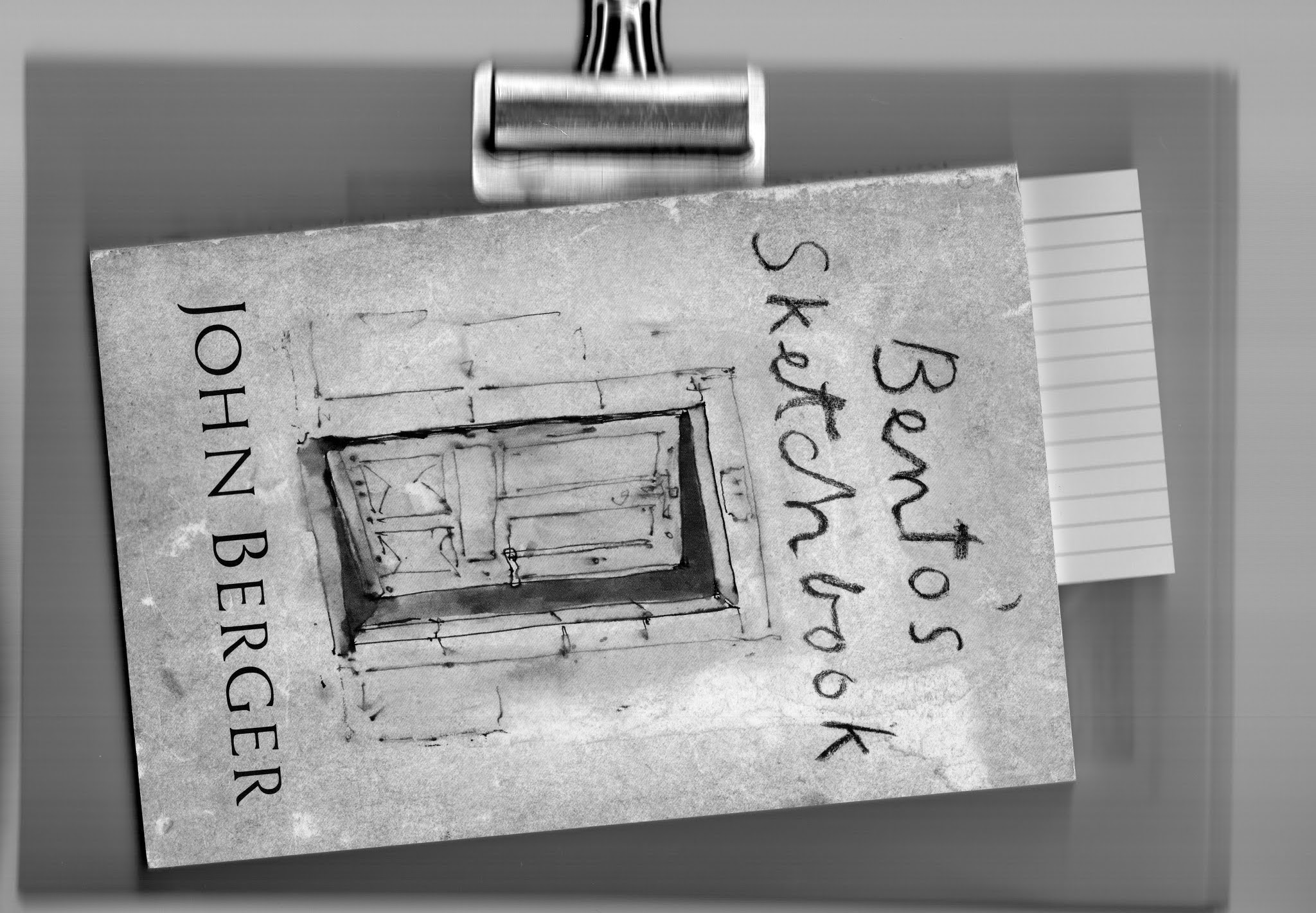
Life Drawings : The nature of minor everyday movements/narratives. Becoming responsive and flexible with materials to the dynamics of social structures/contexts. Drawings become reshaped as they are enacted through their working conditions and beyond (a here and an elsewhere, John Berger)
Drawing into the everyday, calling upon an anthropology of the here and now, so as to reveal the spatial and temporal inscriptions of present-day social practices. Marc Auge, Non-Spaces.
Agency means being able to intervene in the world or to refrain from such intervention with the effect of influencing a specific process or state of affairs. Anthony Giddens/Jeremy Till.
The defining point of agency is namely its potential to transform the given.
‘Everyday life is lived in the medium of cultural form. Its phenomenological immediacy is the sedimented result of myriad repetitive practices, yet it is constantly open to the randomness of the chance occurrence, the unexpected encounter, the surprising event, as well as to the refiguration of its meanings by more explicit forms of social intervention.’ The everyday thus acknowledges the historical constitution of the now, but also its very incompleteness demands an active (political) response to what could happen, to the ‘social production of possibility’. It is through such temporalisation that one escapes a myopic entrapment in the present and moves into viewing the everyday as a site for transformative practice.
Peter Osborne, The Politics of Time. Jeremy Till, Architecture in Space,Time.
The Making/Production of Space We All Make Space/The Social Production of Possibility Space and the Social becomes Spatial Agency (a continu…