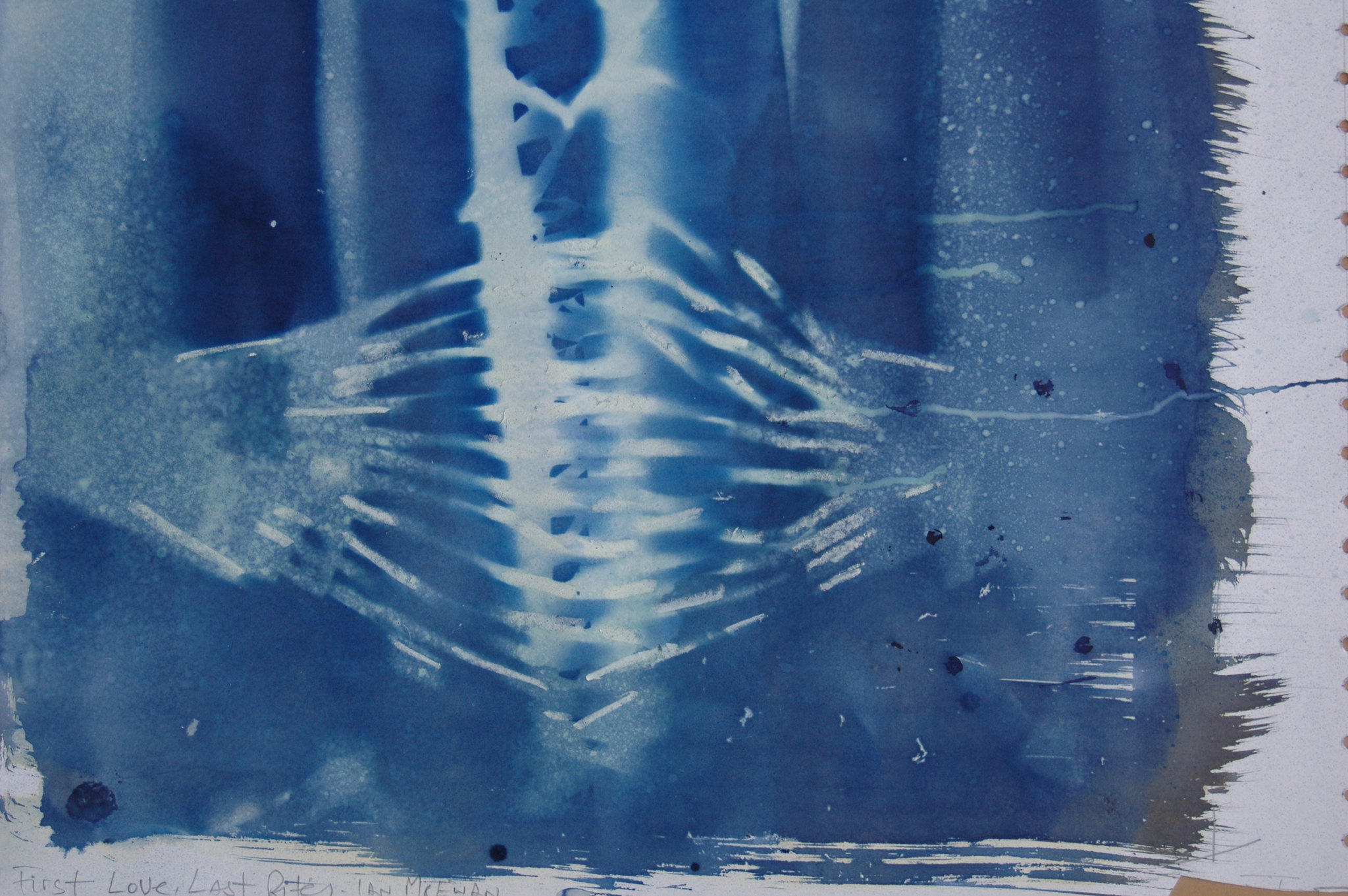
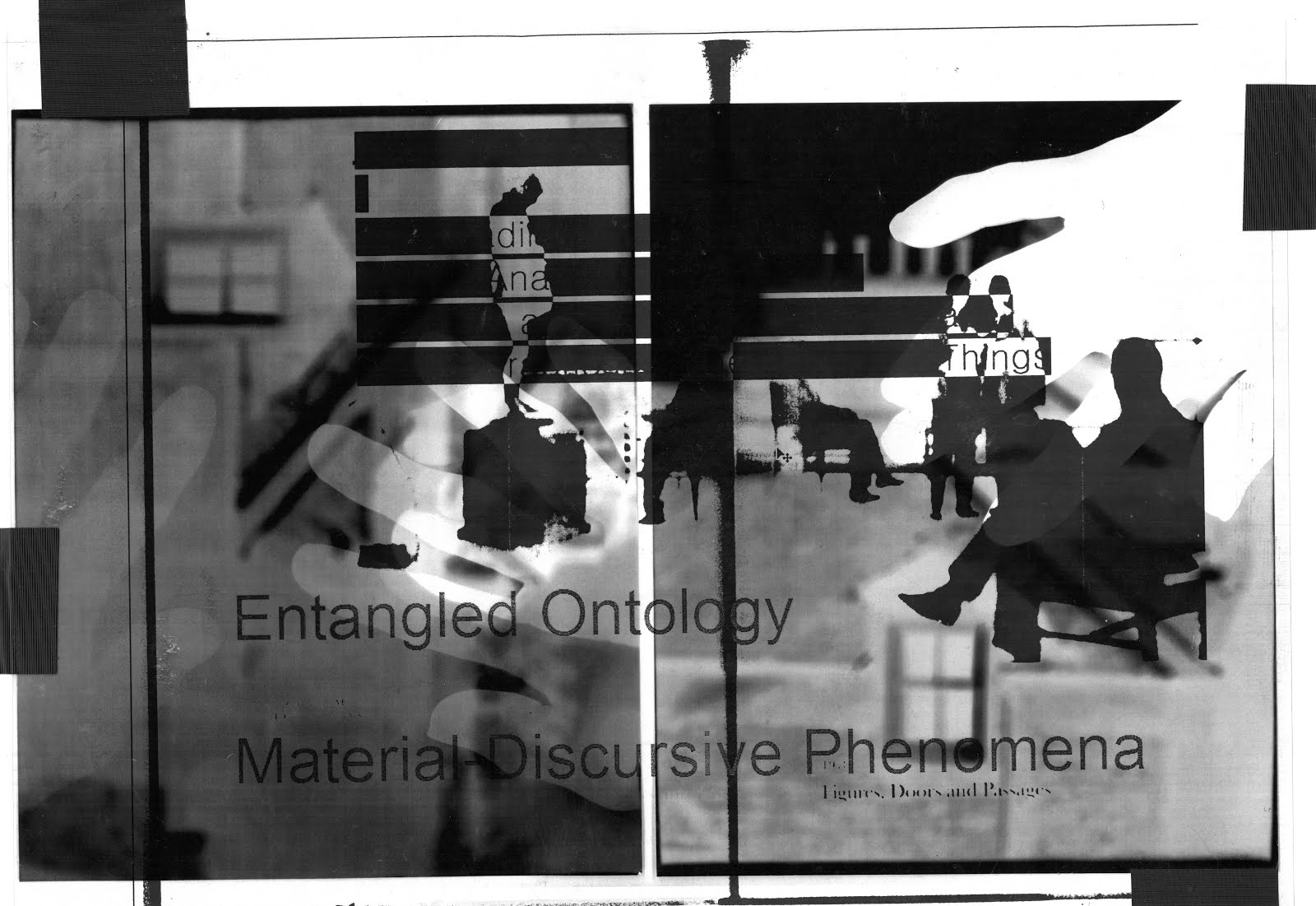
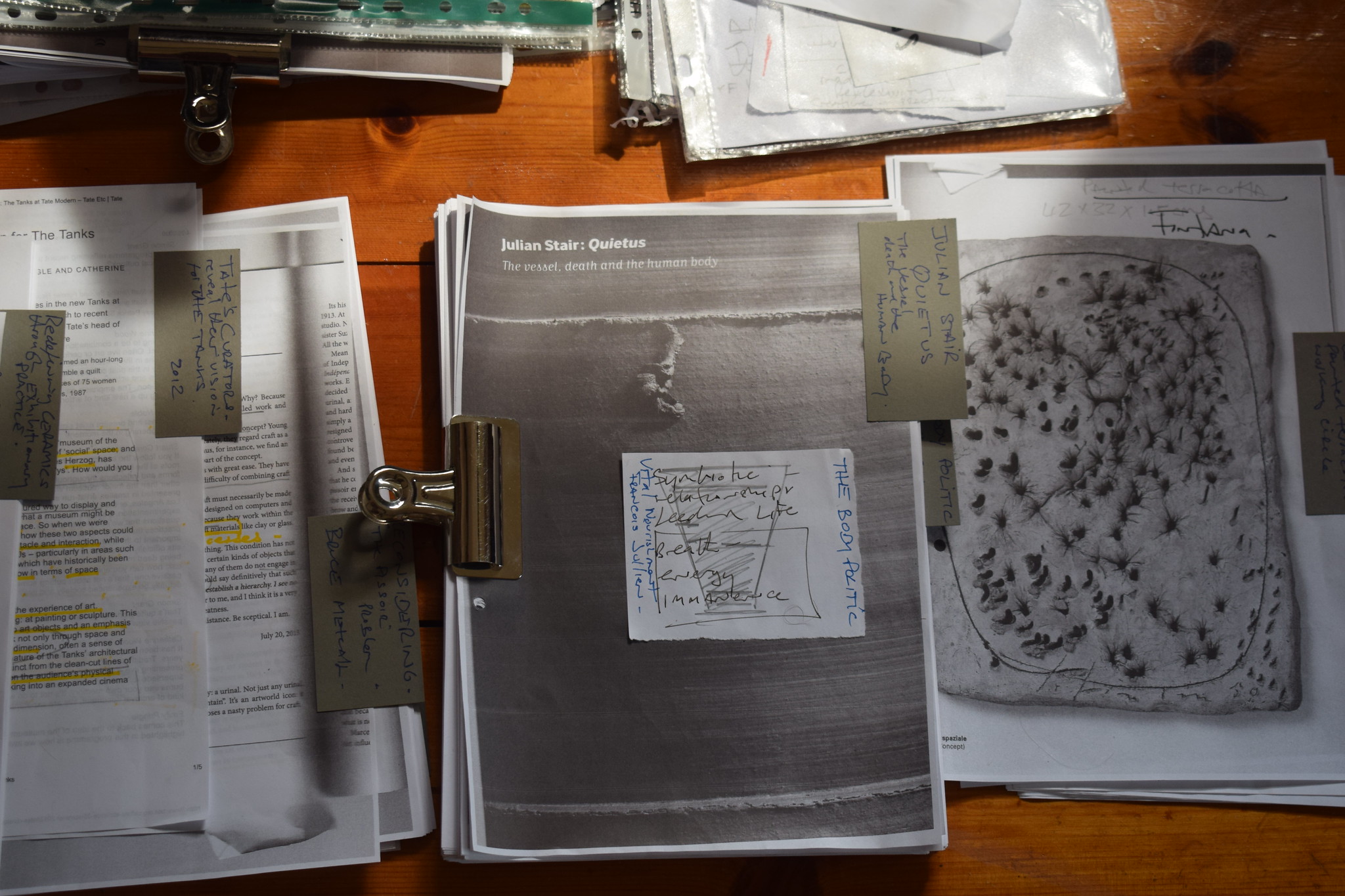
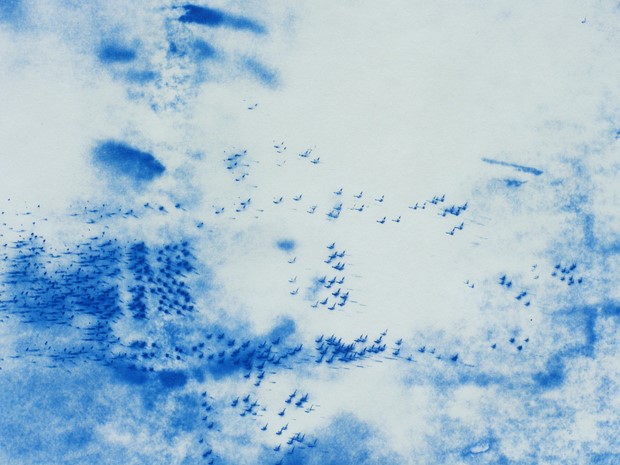
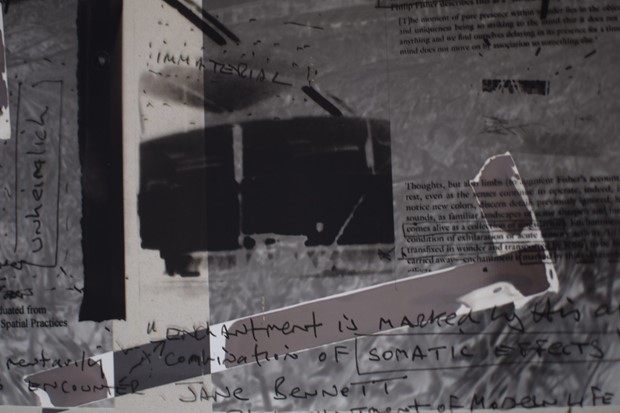
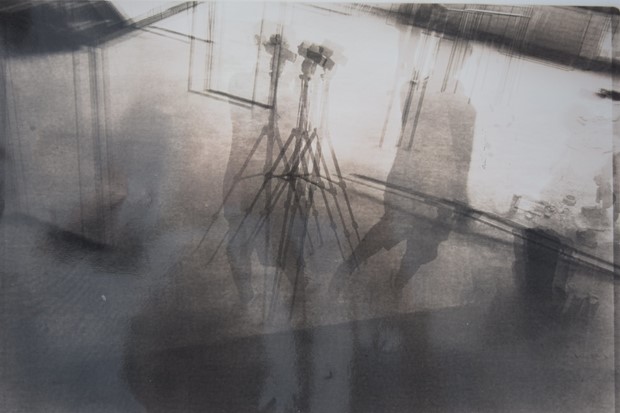
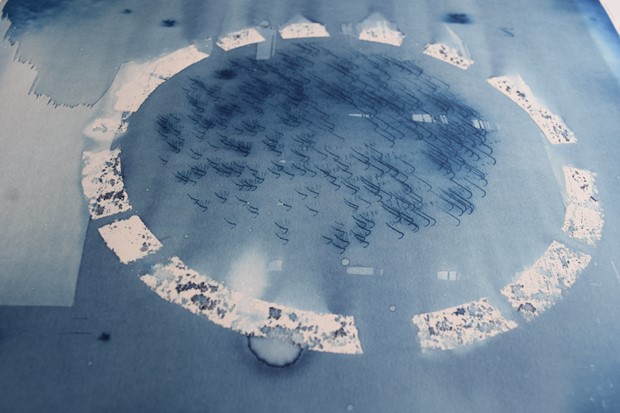
• Architecture and Experimental Photography : Glass Panels/Stevens Competition

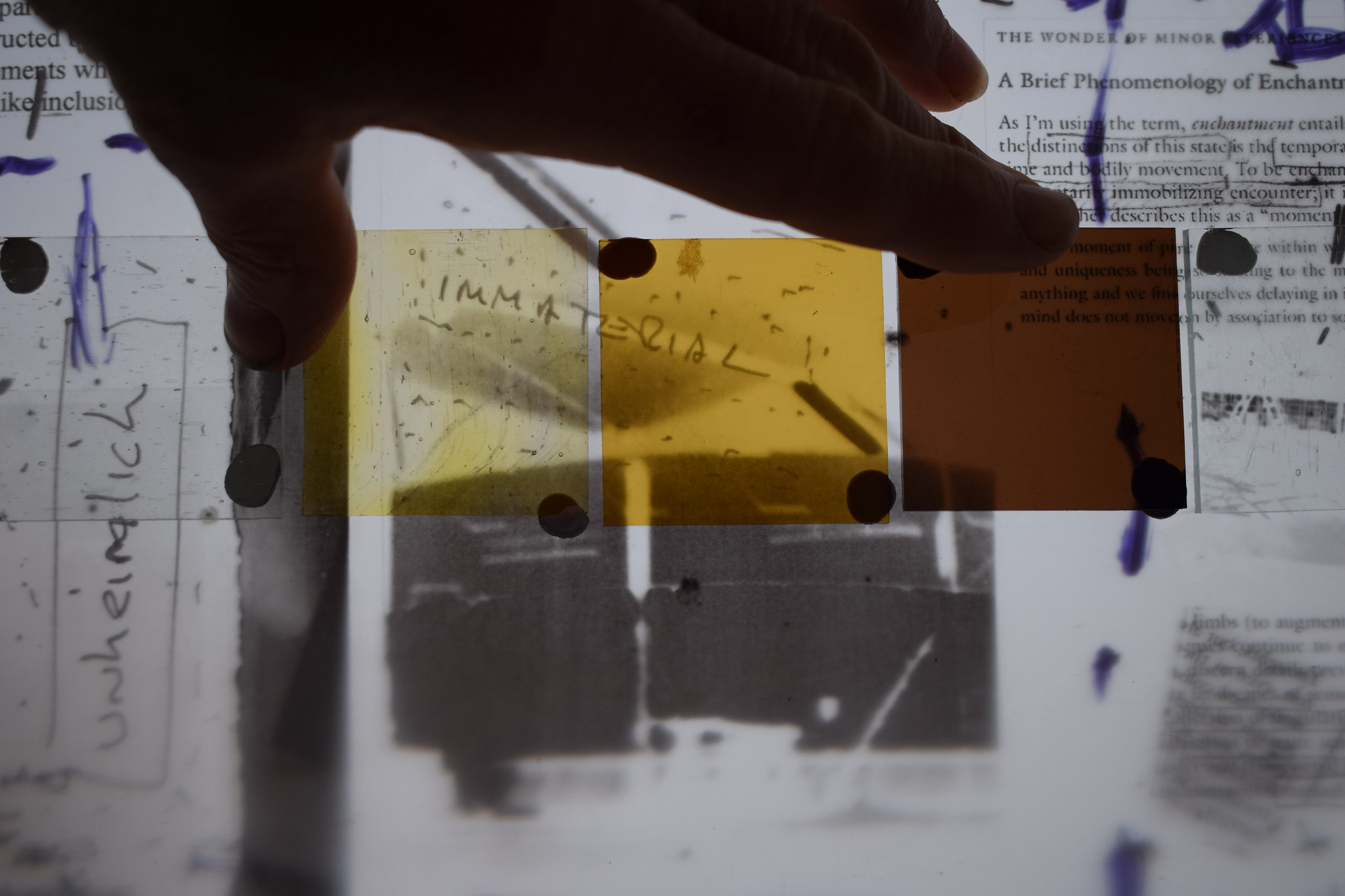
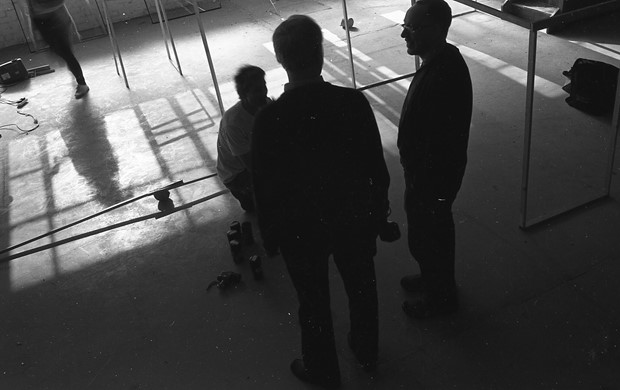
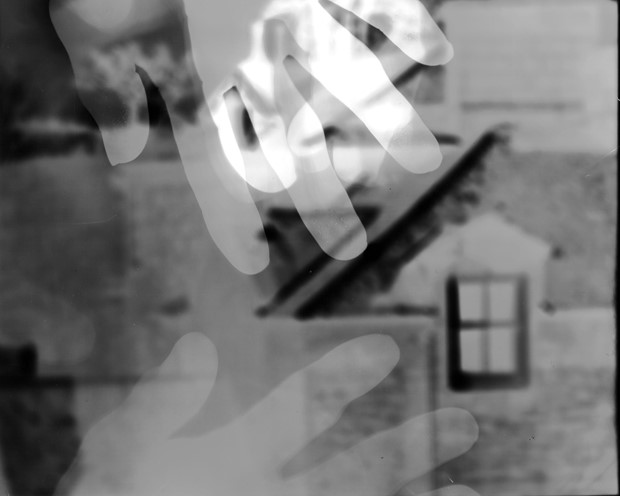
    Architecture and Experimental Photography/Stained Glass
    Winchester Science Centre, SPUD, experimental photography, architectural glass, Stevens Competition, glass walls, translucency, Russell Moreton, interior design, photogram, spatial practice, shelter design, UCA Farnham,
    Posted 02/04/2014


    Architecture and Experimental Photography/Stained Glass  Winchester Science Centre, SPUD, experimental photography, architectural glass, Ste…
    Source: Architecture and Experimental Photography : Glass Panels/Stevens Competition

  • J G Ballard, matters of aesthetics : The Plague of Images

    The planet drowns in an ocean of photographic emulsion.

    The more civilised we are, the fewer moral choices we have to make. But the mind atrophies. A moral calculus that took thousands of years to develop starts to wither from neglect. Once you dispense with morality, the important decisions become a matter of aesthetics.
    Super Cannes, J G Ballard. 2000

    Speculative Fields/Spatial Agents

    Textual Realities, J G Ballard on Chris Marker
    La Jetée “a fusion of science fiction, a psychological fable”

    The sun has gone mad and stripped the earth of its ionosphere. For decades blasting radiation has poured upon earth, melting the polar caps and turning permafrost into streams, rivers, oceans. Huge deltas have been built, lakes formed, seas have risen.
    The Drowned World, JG Ballard.

    DSC_0149 Light/Darkroom

    Cinema, Mizmaze St Catherine’s Hill.

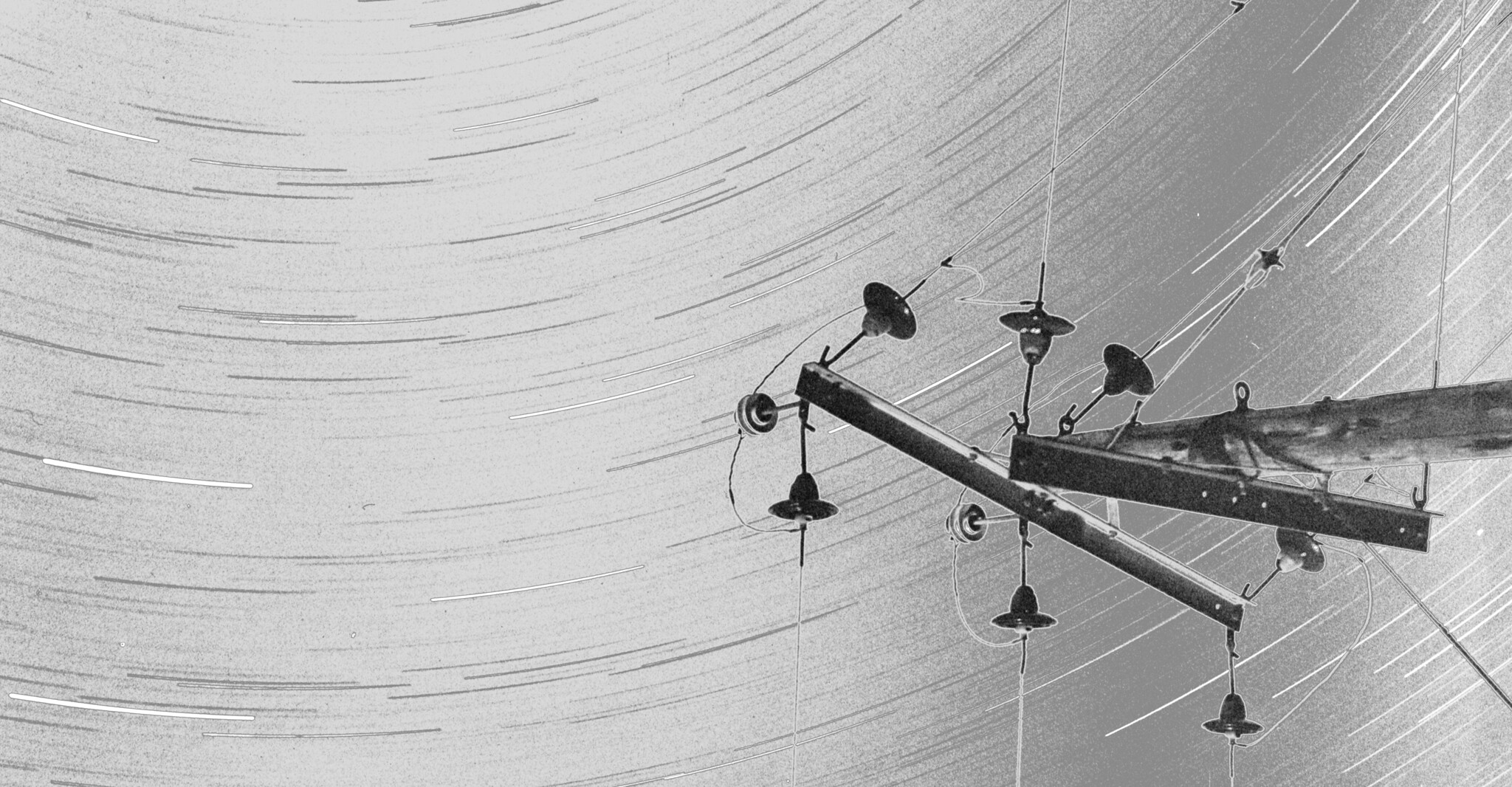
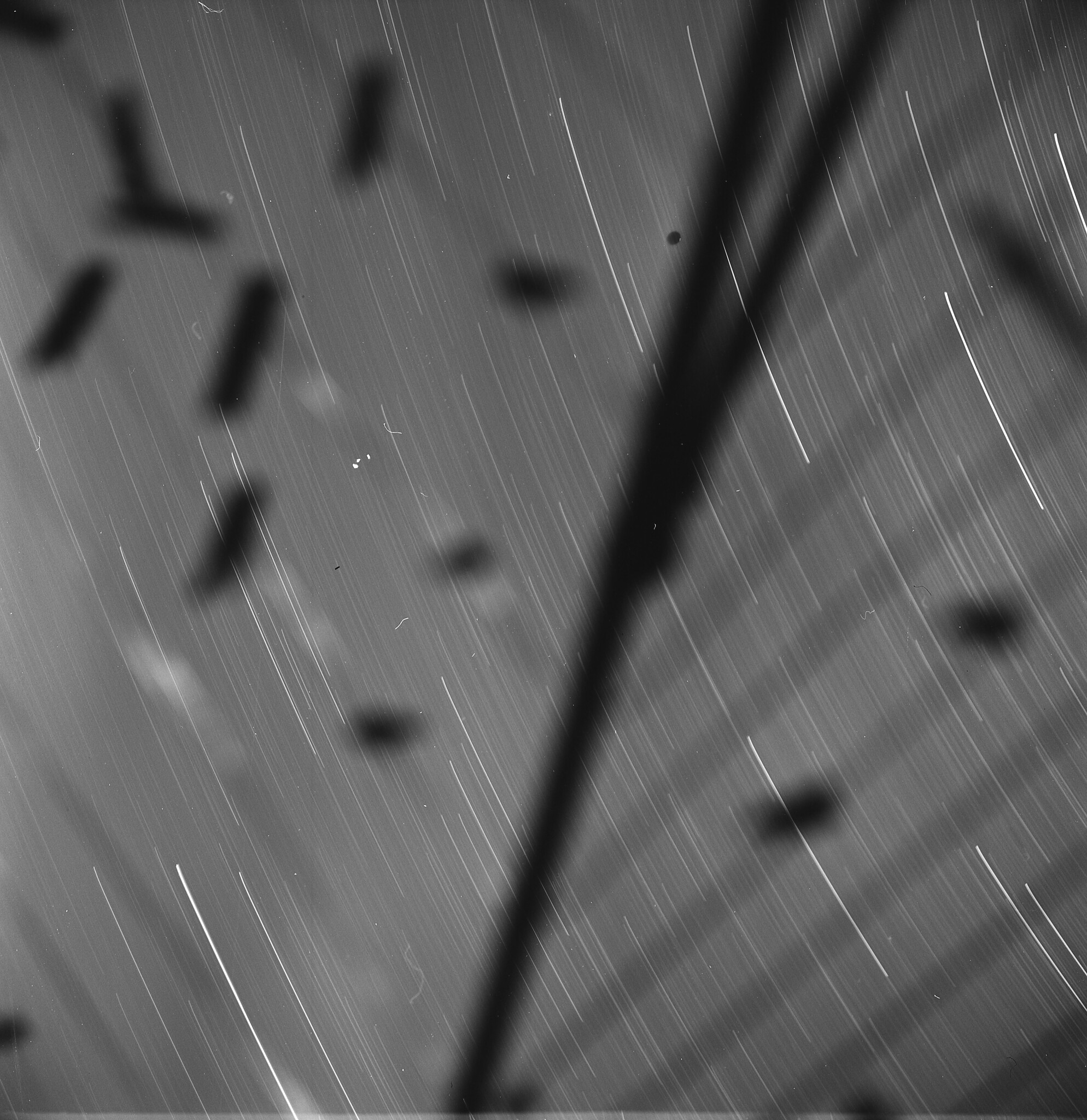
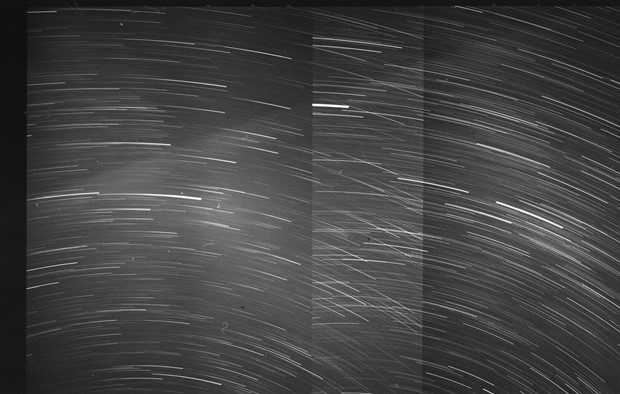
    Amorphous Photography : Star Trails
    Prints from an Archive of Negatives

    “He rubbed his eyes. The riddle of his surroundings was confusing but his mind was quite clear – evidently his sleep had  benefited him. He was not in a bed at all as he understood the word, but lying naked on a very soft and yeilding mattress, in a trough of dark glass. The mattress was partly transparent, a fact he observed with a sense of insecurity, and below it was a mirror reflecting him greyly. Above his arm- and he saw with a shock that his skin was strangely dry and yellow – was bound a curious apparatus of rubber, bound so cunningly that it seemed to pass into his skin above and below. And this bed was placed in a case of greenish-coloured glass (as it seemed to him), a bar in the white framework of which had first arrested his attention. In the corner of the case was a stand of glittering and delicately made apparatus, for the most part quite strange appliances, though a maximum  and minimum thermometer was recognizable.”
    H. G. Wells : The Sleeper Awakes. 1899/1910
    Spatiality : The Spatial Turn, Robert T. Tally Jr. 2013
    Immediate Architectural Interventions, Durations and Effects : Apparatuses, Things and People in the Making of the City and the World. Alberto Altes Arlandis, Oren Lieberman. 2013
    Preface (1921) ” The great city of this story is no more than a nightmare of Capitalism triumphant, a nightmare that was dreamt a quarter of a century ago. It is a fantastic possibility no longer possible. Much evil may be in store for mankind, but to this immense, grim organization of servitude, our race will never come” H.G. Wells. EastonGlebe, Dunmow,1921.
    Veiled Melancholy/Book Narratives : Film Collages


    The planet drowns in an ocean of photographic emulsion. The more civilised we are, the fewer moral choices we have to make. But the mind …

    Source: J G Ballard, matters of aesthetics : The Plague of Images

  • Thursday, 1 July 2021

    Theatre/Studio : Art Practice in Re-imagining Education

    Hidden Curriculum : Art Practices in Education
    Speculative Learning Environments : Discursive and practical methods of inquiry.
    Contexts : Conference/Symposium, Practice Based Research, Public Art, Socially Engaged, Technical/Fabrication, Curatorial, Educational Project, Further Education,
    Artforms : Mixed Media, Printmaking, Painting, Drawing, Architecture, Environment, Intervention, Performance, Installation,
    Brockwood Park School, re-imagining education, teaching academy,
    students work, art practice, art barn, OCR, Krishnamurti
    Speculative Learning Environments
    The Library
    Re-Imagining Education
    AS and A2 Student Exhibition in The Art Barn
    Brockwood Park Schoo
    Theatre for research, spatial practice, interior design, historic site,
    reading room, scriptorium, construction, making place, architectural model
    Interior design project developed from the historical site of Waverley Abbey, Farnham, Surrey.
    The Scriptorium was devised as an interior architectural intervention that explored the existential and the poetic.
    Norwich and Norfolk Open Studio 2018, Harleston.
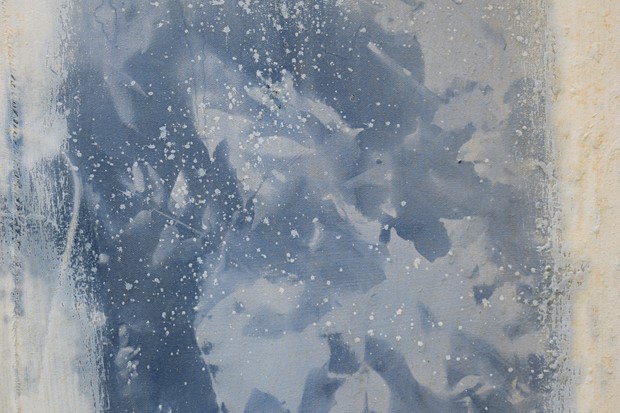
    blueprints, alternative printing processes, cyanotype,
    field paintings, archaeological collage, bookworks

    Cyanotype Paintings
    Drawings
    Collage
    Artist Books


    Hidden Curriculum : Art Practices in Education Speculative Learning Environments : Discursive and practical methods of inquiry. Contexts : C…

    Source: Theatre/Studio : Art Practice in Re-imagining Education

  • Social sites of space/situatedness/matter : Explorations in developing spatial intelligence

    Discursive and practical apparatuses, both drawing on the other in the act of agency.

    The defining point of agency is namely its potential to transform the given.

    Spinoza : Practical Philosophy by Gilles Deleuze

    Bento’s Sketchbook : John Berger

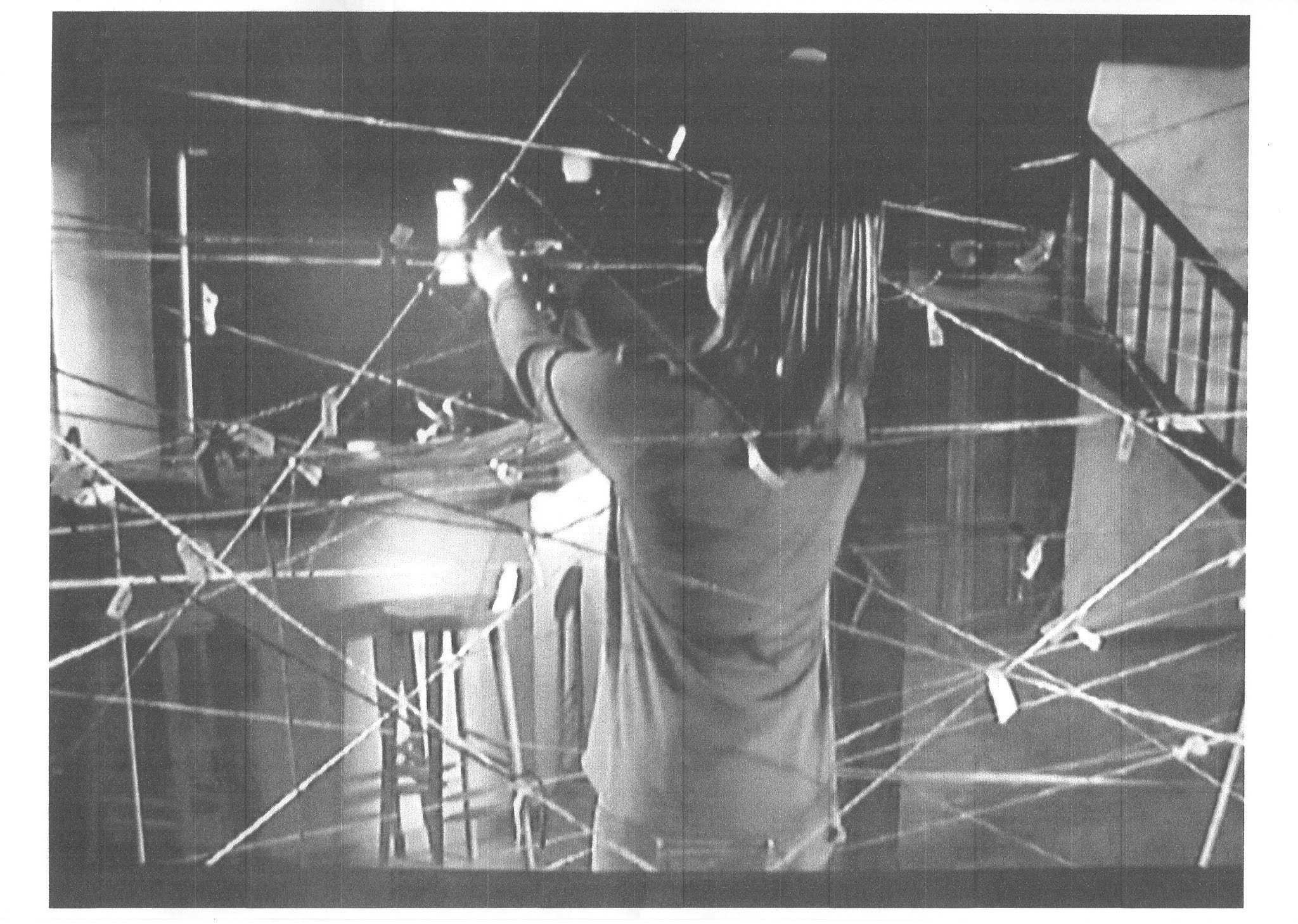
    Beams and Netting: Negotiations in the chamber, Hyde Abbey Gatehouse, Winchester.

    Clay, hessian, drawings and transparencies, drawing frame, antique glass, lead and nylon lines.

    ‘Leylines’ has been appropriated and employed as both a practical and as a conceptual strategy to inquiry into places and localities. Site visits and sensitive dialogues with the other artists at a number of locations have further brought materials and processes into the creative realm. The spatial practice of setting-up this work has produced a social narrative of its own invention.

    This intervention into a listed building has become a temporary refuge for a work in progress. The work attempts to show a creative agency as it encounters a host of installed hierarchies and conditions. The architectural motif on the drawings has been derived directly from the open apertures of the chamber.

    Artist’s Book: white and coloured pages

    A hand-bound book comprising of five signatures each with four folios. This book contains a collection of postcards made from contact prints and photograms from Tidbury Ring using the cyanotype process.


    MAKING : Spatial Agency/ Mutual Knowledge/ Discursive Consciousness. Social apparatuses and agents that explore the possibilities of space. Russell Moreton

    Source: Social sites of space/situatedness/matter : Explorations in developing spatial intelligence

  • The Social Life of Making : Thoughts with materials, making good, occupation and maintenance

     A Species of Spaces

    The Social Turn

    Museum Site and Display

    Political Philosophy

    We have all the choice in the world in terms of products, but very little choice in terms of the kind of economy within which those things are made, accessed and used

    Whose Economy Reframing the Debate After Neoliberalism Doreen Massey

    Other ‘material interventions’ and the revaluation of making through strategies of repair and maintenance

    Making Ecological Politics

    A world teeming with impulsive movements, deviations and many other lively (capacious) materialities Influences that pervade, enable, and disrupt us

    Vibrant Matter, Jane Bennett

    Makers work in a world that does not stand still

    Iteration allows for continual correction (material conversation) in response to an ongoing perceptual monitoring of the task as it unfolds, mixing the potential for blending or combining matter that already exists into new combinations

    Tim Ingold 2010

    Making is central to who we are as individuals, what we make as part of everyday practice forms our identities and place in the world

    The mundane experience of making, and thus of labour, is resolutely political, a geographical imperative, and a critical means of operating a meaningful relationship with this material life The Quarry as Sculpture : The Place of Making

    D A Paton 2013

    The making of a building does not stop when the building work is (temporarily) finished. But only really begins upon occupation, when the work commences of maintaining the buildings integrity against an onslaught of willfully destructive elements, insects, rodents, fungal infestations, corrosion, damp, harsh sun, water, wind

    Evocative Thoughts on Building, Alvaro Siza

    The social life of making

    Making good is about maintaining continuity with the past, in the face of efforts to rupture that continuity

    The need for repair is a remorseless and necessary process that keeps society ticking over


    MAKING : Spatial Agency/ Mutual Knowledge/ Discursive Consciousness. Social apparatuses and agents that explore the possibilities of space. Russell Moreton

    Source: The Social Life of Making : Thoughts with materials, making good, occupation and maintenance

  • MAKING as a process of iteration : Painting and geographies of matter

    Making Ecological Politics

    A world teeming with impulsive movements, deviations and many other lively (capacious) materialities.

    Influences that pervade, enable, and disrupt us.

    Vibrant Matter, Jane Bennett

    Makers work in a world that does not stand still

    Iteration allows for continual correction (material conversation) in response to an ongoing perceptual monitoring of the task as it unfolds, mixing the potential for blending or combining matter that already exists into new combinations

    Tim Ingold 2010

    Making speaks in vivid dialogue with two associated themes, material and skill

    Creativity involves not merely a spark of innovation or the execution of artistic inspiration. But the capacity to respond to unfolding iterations with materials. To use slowly accrued haptic knowledge to manipulate processes on the fly, and to judge how to counteract error and seize opportunities as they evolve

    Making becomes a process of iteration, and a maker works with this iteration prolifically Geographies of Making

    ReThinking Materials and Skills for Volatile Futures

    The skill to sustain the life of something through repair and reappropriation

    Collecting is an example or a pre-emptive activity that people who are skilled with their hands commonly share

    Matter and materials are lively and require attention, materials continue to thwart in unpredictable ways, decaying and breaking down or wearing or breaking under force

    Vibrant Matter, A Political Ecology of Things Jane Bennett 2010

    Attending to the process of making opens up prospects for following the lead of the material, where the properties of the materials themselves shape the direction in which making proceeds

    Tim Ingold 2010

    New Urban Adventures in Collaboration/Conceptual Ceramics

    Ceramic Practice as a form of research engaged in a process/ecology of inquiry, an exploration of ideas predicated on and exploiting the characteristics of clay

    The transformation of the material is a central concern and semiotic significance unfolds with making Seeking a symbiotic relationship between idea and object

    Materials are substances in becoming Karen Barad

    Towards an Ecology of Materials Tim Ingold 2012

    From the ‘objectness’ of things to the material flows and formative processes wherein they come into being. It means to think of making as a process of growth or ontogenesis

    Materials-Centered Perspective Making, almost defies precise definition

    The composition and/or manipulation of materials that bring into being new or revised objects Tim Ingold 2010

    Cultures of thrift and scavenging, maintenance and repair

    Making encompasses the ingenuity of fluid, locally situated and adapted technologies


    MAKING : Spatial Agency/ Mutual Knowledge/ Discursive Consciousness. Social apparatuses and agents that explore the possibilities of space. Russell Moreton

    Source: MAKING as a process of iteration : Painting and geographies of matter

  • Transactive Spatial Agents : Anticipation and Action/Affective Energies/Luminosity


    Textures of Light : Vision and Touch in Irigarey, Levinas and Merleau-Ponty : Cathryn Vasseleu.

    Bento’s Sketchbooks : John Berger. 2015

    Spinoza, practical philosophy : Gilles Deleuze. 2001

    A concise and illuminating book about the Dutch philosopher Baruch Spinoza, one of the early thinkers of the Enlightenment and modern biblical criticism.

    Spinoza’s theoretical philosophy is one of the most radical attempts to construct a pure ontology with a single infinite substance. This book, which presents Spinoza’s main ideas in dictionary form, has as its subject the opposition between ethics and morality, and the link between ethical and ontological propositions. His ethics is an ethology, rather than a moral science.

    Attention has been drawn to Spinoza by deep ecologists such as Arne Naess, the Norwegian philosopher and this reading of Spinoza by Gilles Deleuze lends itself to a radical ecological ethic. As Robert Hurley says in his introduction, “Deleuze opens us to the idea that the elements of the different individuals we compose may be nonhuman within us. One wonders, finally, whether Man might be defined as a territory, a set of boundaries, a limit on existence.”

    Gilles Deleuze, known for his inquiries into desire, language, politics and power, finds a kinship between Spinoza and Nietzsche. He writes, “Spinoza did not believe in hope or even in courage; he believed only in joy and in vision . . . he more than any other gave me the feeling of a gust of air from behind each time I read him, of a witch’s broom that he makes one mount.”

    Gilles Deleuze was a professor of philosophy at the University of Paris at Vincennes.

    Robert Hurley is the translator of Michel Foucault’s History of Sexuality.


    Gilles Deleuze’s Luminous Philosophy : Hanjo Berressem. 2021

    ‘The plane of immanence is entirely made up of Light’, Deleuze writes in Cinema 1: The Movement-Image. Engaging the whole body of Deleuze’s work, including less rehearsed texts such as The Actual and the Virtual, Lucretius and the Simulacrum and his lectures on Spinoza, Hanjo Berressem traces the ‘line of light’ that runs through Deleuze’s thought. The focus on the philosophical luminism that suffuses Deleuze’s work delivers a novel reading of Deleuzian philosophy from the perspective of the complementarity of the photon. Berressem reveals a wealth of surprising and brilliant insights for anyone with an interest in Deleuze and in the implications of Deleuze’s philosophical photonics for historiography, literary studies, painting and film.


    Textures of Light : Vision and Touch in Irigarey, Levinas and Merleau-Ponty : Cathryn Vasseleu. Bento’s Sketchbooks : John Berger. 2015 Sp…

    Source: Transactive Spatial Agents : Anticipation and Action/Affective Energies/Luminosity

  • Reclamations/Ruins on the photographic surface : Volatile Inscriptions around the Body

    The Photographic Image/Volatile Bodies/Architectural Ruins
    Helena Eflerova
    Interior Spaces, Waverley Abbey.
    The future must no longer be determined by the past. I do not deny that the effects of the past are still with us. But I refuse to strengthen them by repeating them, to confer upon them an irremovability the equivalent of destiny, to confuse the biological and the cultural. Anticipation is imperative.
    Helene Cixous, “The Laugh of the Medusa” (1980:145)

    The Language Of Women
    Volatile Bodies/Sexed Bodies : Elizabeth Grosz
    1  have  attempted  to  read  the  male  discourses  dealt  with  here  as  discourses for  and  about  men,  discourses  which  have  ignored  or  misunderstood  the  radical implications  of  insisting  on  a  recognition  of  sexual  specificity,  discourses  which have  presented  their  claims—radical  as  these  might  be—without  any  understand­ ing of their relevance to or usefulness for women’s self-representations. I have not attempted  to  give  an  alternative  account,  one  which  provides  materials  directly useful  for  women’s  self-representation.  To  do  so  would  involve  knowing  in  ad­vance,  preempting,  the  developments  in  women’s  self-understandings  which  are now  in  the  process  of  being  formulated  regarding  what  the  best  terms  are  for representing  women  as  intellectual,  social,  moral,  and  sexual  agents.  It  would involve  producing  new  discourses  and  knowledges,  new  modes  of  art  and  new forms  of  representational  practice  outside  of  the  patriarchal  frameworks  which have  thus  far  ensured  the  impossibility  of  women’s  autonomous  self-representa­tions,  thus  being  temporally  outside  or  beyond  itself.  No  one  yet  knows  what  the conditions are for developing knowledges, representations, models, programs, which provide women   with  nonpatriarchal  terms  for  representing  themselves  and the world from women’s interests and points of view. This book has been a pre­liminary  exploration  of  some  of  the  (patriarchal)  texts  which  feminists  may  find useful  in  extricating  the  body  from  the  mire  of  biologism  in  which  it  has  been entrenched.  But  the  terms  by  which  feminists  can  move  on  from  there,  can  su­persede  their  patriarchal  forebears,  are  not  dear  to  me.  But  perhaps  the  frame­ work  I  have  been  trying  to  use  in  this  book—a  framework  which  acknowledges both  the  psychical  or  interior  dimensions  of  subjectivity  and  the  surface  corporeal exposures of the subject to social inscription and training; a model which resists, as much  as possible,  both  dualism and  monism; a model which  insists on  (at least) two surfaces which cannot be collapsed into one and which do not always harmoniously  blend  with  and  support each  other; a model where the join,  the interaction of the two surfaces, is always a question of power; a model that may

    be represented  by  the geometrical form of the Mobius strip’s two-dimensional torsion in three-dimensional space—will nevertheless be of some use if feminists wish to avoid the impasses of traditional theorizing about the body.
    Patti Smith
    Cartwheels
    Come my one, look at the world Bird beast butterfly
    Girls sing notes of heaven Birds lift them up to the sky
    Spring is departing Spring is departing
    Her thoughts are darting like a rabbit Like a rabbit ‘cross the moon
    Shines of light over your hair As boys croon
    Pretty in pink It makes me wonder
    What could ever bring you down I see tears falling
    From those eyes of brown
    Hearing a voice, you turn your head You vanish into the mist
    Of your thoughts And I
    Want to grasp What brings you down
    Open up those eyes of brown
    The world is changing Your heart is growing
    Hearing a voice you turn your head Girls turn by ones, by twos
    Notes pour bad and tender Eradicate your blues
    The good world The good world
    Come my one, look around you Bird, beast, butterfly
    Girls sing…


    The Photographic Image/Volatile Bodies/Architectural Ruins Helena Eflerova Interior Spaces, Waverley Abbey. The future must no longer be det…

    Source: Reclamations/Ruins on the photographic surface : Volatile Inscriptions around the Body

  • Spatial Mediators and Intercessors : Creating Loops/Rhetorical Silences/Strange Tools

    Immaterial Architectures
    Painting/Form for Reading Spaces/Intervals
    Pattern and Chaos/Liminality/Tectonics
    Architectural surface for a Library,  raw materials, light, silence and solitude.

    Christopher Wilmarth ; Poetics/Duality of Light and gravity
    Other Architecture
    Constructing Metaphysical Space

    Wilmarth’s art reveals his essential concern with the mystical and physical properties of light, especially the ways in which light evokes reverie and generates sensations of space and containment.

    The Architecture of Natural Light : Henry Plummer

    EVANESCENCE
    Orchestration of light to mutate through time

    Intensity and integrity of Wilmarth’s practice/vision.

    PROCESSION
    Choreography of light/moving eye

    VEILS OF GLASS
    Refraction of light/diaphanous film

    Wilmarth made possibly his strongest, most beautiful works on paper, exploring a new level of expression while retaining continuity with past work.

    ATOMIZATION
    Sifting of light/through a porous screen

    These drawings also contain allusions to the human presence. Their haunting, foreboding quality is prefigured in the grave, austere tones of some of the glass and steel structures.

    CANALIZATION
    Channelling of light/through a hollow mass

    The duality of light and shadow and contrasts between abstraction and representation continue to be central concerns in his final drawings.

    ATMOSPHERIC SILENCE
    Suffusion of light with a unified mood

    Wilmarth’s sculptures from the early 1980’s are influenced by the poetry of Stephane Mallarme. To affirm Mallarme’s emphasis on the spiritual, the artist used a simple ovoid form, evoking a multitude of symbols, including the human head. These ovoids were made of blown glass, which Wilmarth viewed as “frozen breath”. The artist pursued this figurative impulse into the mid 1980s, combining the anthropomorphic ovoid shapes with the larger abstract forms of his earlier sculpture.

    LUMINESCENCE
    Materialization of light in physical matter

    Wilmarth composed with planes of delicate colour and light, placing plates of blackened steel behind translucent sheets of etched glass imbued with a luminous, greenish cast.

    “He employed a painterly technique that emphasized the tactility and fichness of his materials, which like an alchemist he persistently sought to transform. He continually examined the concept of duality: contrasts between light and shadow, transparency and opacity, heaviness and weightlessness, materiality  and ethereality, form and spirit are repeatedly presented; the synthesis of geometric with organic forms, the range between abstraction and representation are constantly explored.”
    Laura Rosenstock, catalogue essay.

    White Noise : Nocturnes of Silence

    Behind Appearance
    A Study of the relations between painting and the natural sciences in this century
    C. H. Waddington

    Adam Fuss
    Home and the World

    Strange Loops
    Art, Science and Consciousness
    An Exploration of Mind, Matter and Form through the Work of Susan Derges
    Stephen Gaughan

    The Music of Waves
    The Poetry of Particles
    Thoughts on Implicate Order for Susan Derges
    Martin Kemp

    Adam Fuss
    Eugenia Perry

    Aesthetic Allure
    Rhetorical Silences/Strange Tools

    the sensual energy of the dimension in which causality/aesthetics happens

    Graham Harman, Timothy Morton

    Paintings/Research/Archive/Art Practice
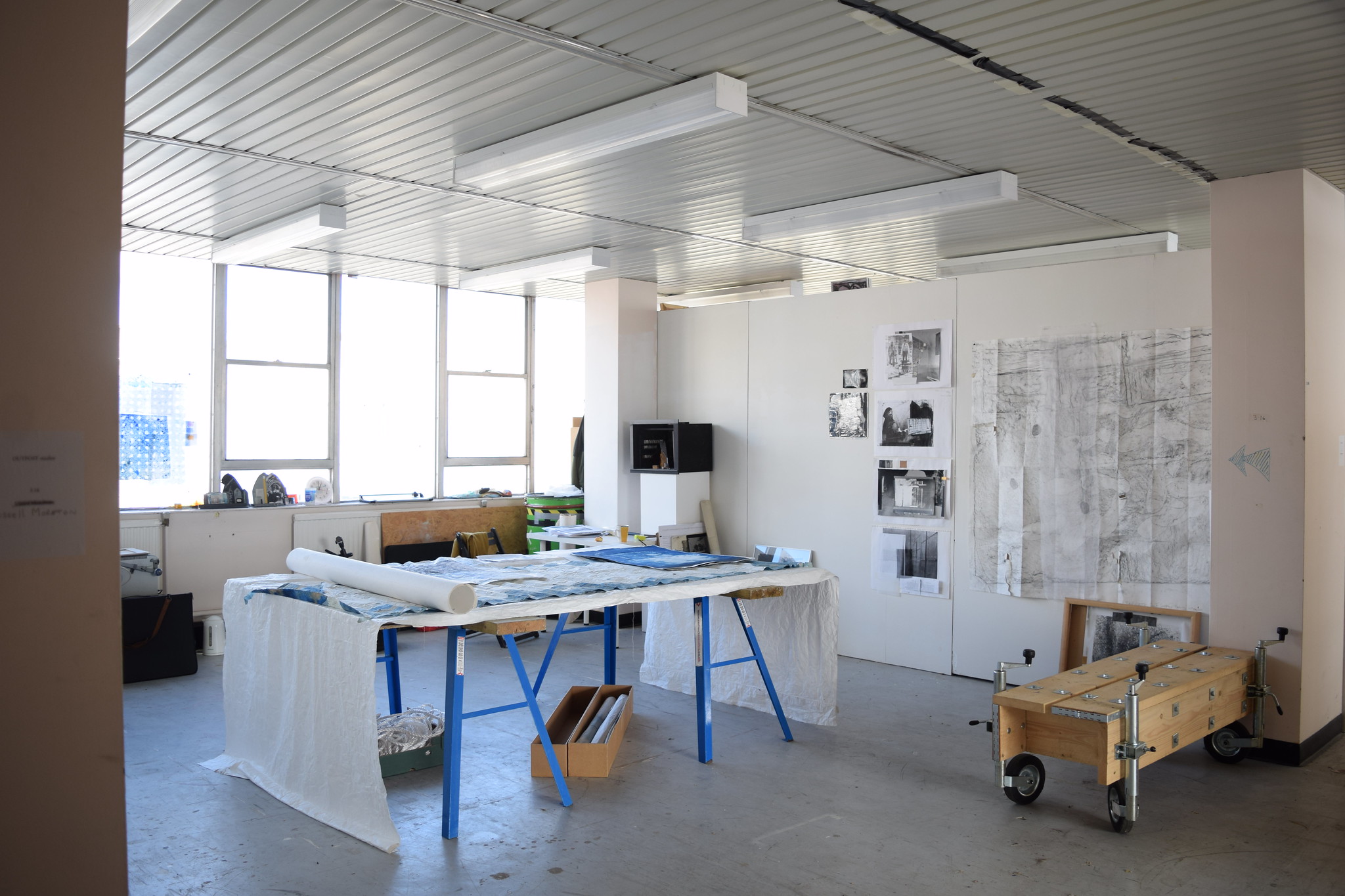
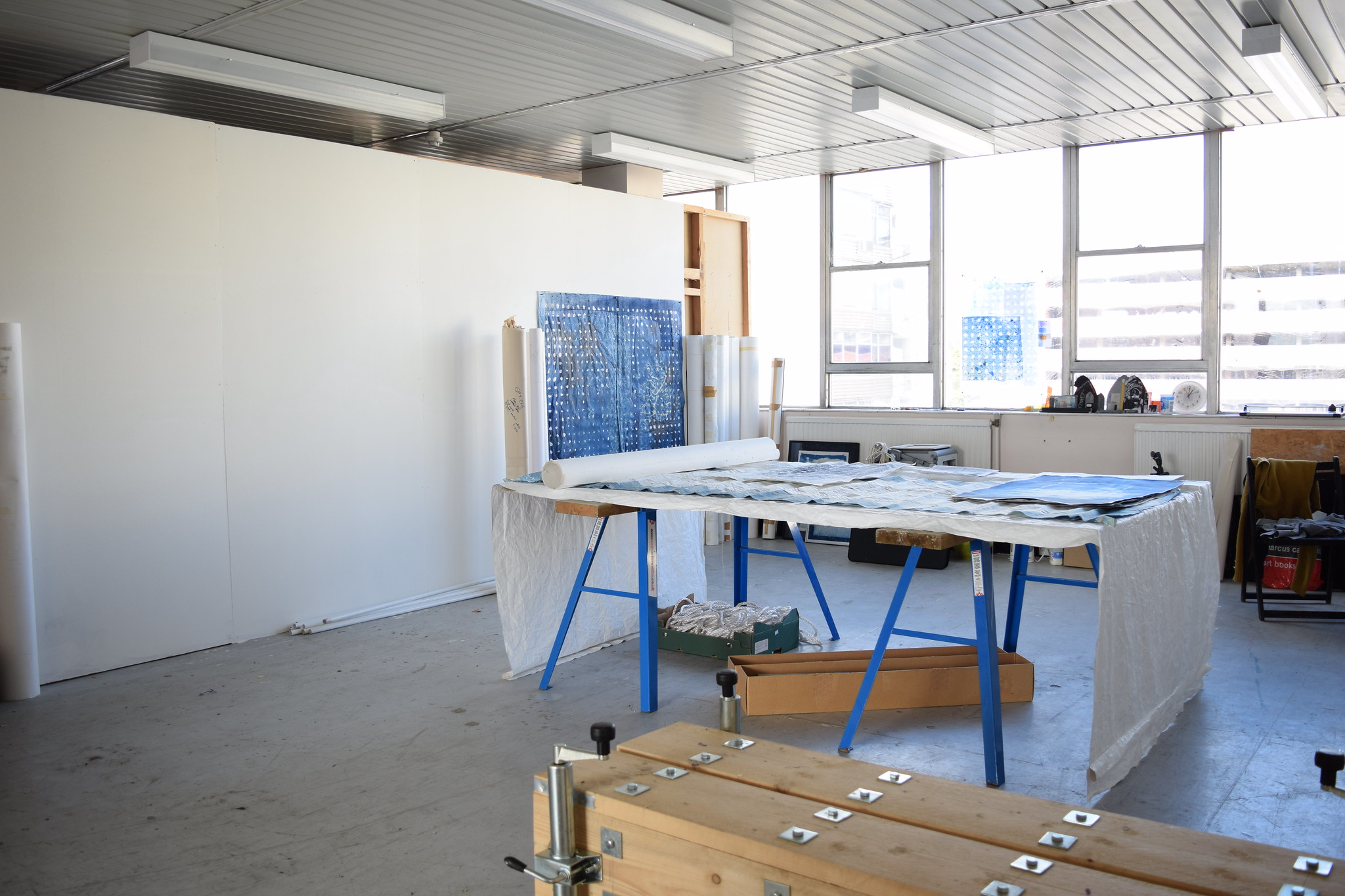
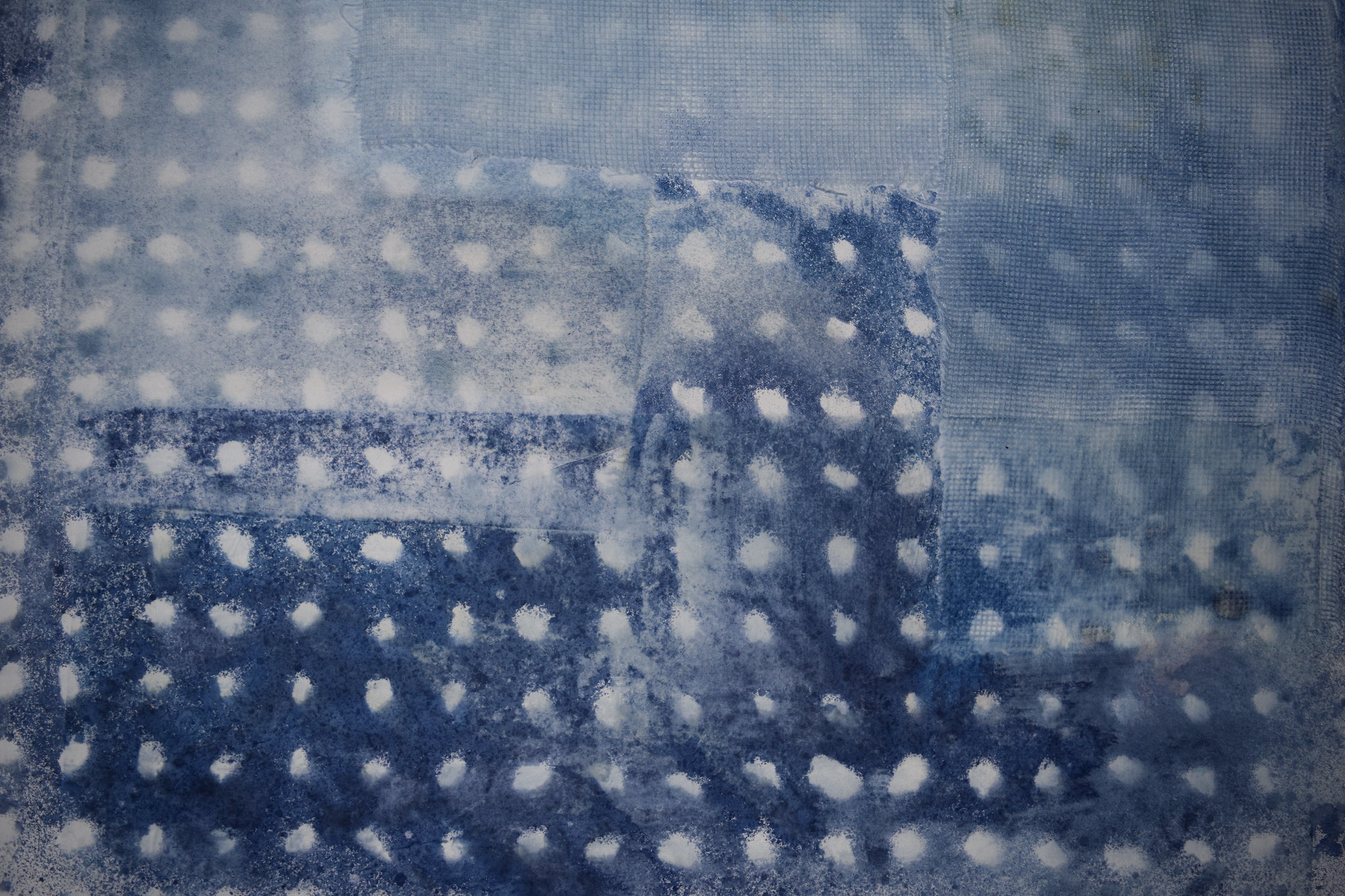
    Cyanotype material,objects on canvas.
    Russell Moreton 2018

    https://www.flickr.com/photos/russellmoreton/40286364403/in/dateposted-public/

    Spaces/Aesthetics : ‘Spatiality’ between Objects, Concepts and Beings

    In his discussion of mediators, Gilles Deleuze (1995,121) describes being taken up in the motion of a big wave. He notes that instead of looking for ‘points of origin’ attention should be directed to mediators that enable a ‘putting-into-orbit’ that facilitate the movement of concepts, sensations and matter without recourse to origins or destinations.

    Katve-Kaisa Kontturi uses the term ‘intercessor’ instead of  ‘mediator’ as it aligns better with Deleuze’s argument, where importance is placed not on mediating between already formulated shapes or beings, but on opening beings up to movement through a third actant.
    For Deleuze (1995,125), Intercessors are about entering into or creating a series.

    Gilles Deleuze. 1995, Negotioations, 1972-1990.
    Translated by Martin Joughin. New York: Columbia University Press.

    Notes, Introduction
    Ways of Following
    Art, Materiality, Collaboration
    Katve-Kaisa Kontturi

    Open Humanities Press
    London 2018

    Immaterial Architectures : Raveningham Pavilion #1
    DSC_3283 Raku Beakers : Lead Glaze/Yellow Ochre
    DSC_4049 Field Aesthetic : Causality/Layered Drawings
    DSC_3776 Sacred/Secular : Vessels on Painting
    DSC_4097 Field Aesthetic : Causality/Layered Drawings
    DSC_8923 Artists Studio : Collage/Photography/Painting

    Outpost Studies
    Norwich
    UK


    Immaterial Architectures Painting/Form for Reading Spaces/Intervals Pattern and Chaos/Liminality/Tectonics Architectural surface for a Libra…

    Source: Spatial Mediators and Intercessors : Creating Loops/Rhetorical Silences/Strange Tools

  • Dwelling/Reverberation/Poetics : Physical Grammar/Passages

    On The Experiential Level of Life

    Investigating/Expanding ‘The Spatial/Sculptural’
    Space over Time/Operative Design

    Tony Cragg
    IN AND OUT OF MATERIAL
    Demonstration
    Tony Cragg : I basically mean the effectiveness of the object, of the material. But because the metaphysical and physical association are already occupied, I’m interested in somehow establishing some relationship with the materials and the things around me without using any preconceived notions of an already occupied language. It is a bit like taking away a Christian name and depersonalising something. What I mean is that it’s an attempt on my side to restart the relationship with the material, which I think sculptors have to do anyway.
    Jon Wood : Thinking of the increased awareness that this side of your work tries to capture and harness in the viewer, can you say a bit about the kind of sensitivities that you would like to be heightened? What would you see your work as demonstrations of and for? Your sculptures are triggers for what kind of thinking?
    Tony Cragg : Well there is an attitude to looking at things and to looking at objects and materials which is based on a meditative tradition of contemplation : the universe in a grain of sand idea, or maybe even religious ideas where you actually get in contact on some level with the material world, on a deeper level than the one you obviously are capable of reaching in an everyday situation, so on an extraordinary level, outside of your own experiences.
    I am not saying that that’s not interesting or important. But I also think that this leaves the battleground for the everyday life to be governed by non-contemplative thought and non-meditative thought. And this may sound like a mixture of terms, but I think that there is a job to be done even on an everyday, “second for second” level of life—on the experiential level of life. I think there is a job to be done here improving the quality of contemplation about an awareness of the material world—the material world seen as an immediate extension of the communal social effort, the cultural effort that you are part of.
    Jon Wood : How does it move from being an individual contemplative experience to being one that has a communal relevance?
    Tony Cragg : In the main part it only has communal relevance. All you can do for yourself is formulate your sentences, cook yourself a meal that suits you, get dressed in a fashion that suits you, and everything else you have to put up with as having been made by other people for you. But obviously, even if they didn’t ask your permission, there’s something consensual about that, isn’t there? Even though you don’t like it, it doesn’t look like you’re making an effort to change it. And maybe there’s some active thing there. My idea is that even if I don’t like it, I wouldn’t be able to change a great deal of it, but I could sow the seed for some change in the direction that I would feel would be important. It’s a measure of how much responsibility one takes for the change. Looking for more in the visual world around me and looking for more language, in a sense, is one way of heightening sensibilities and expanding a vocabulary and then expanding the responses to a vocabulary is a way of heightening sensibilities. I’m not a politician, but I think we still live in a world that is greatly dominated by mesmerism and mystical models, which are very distracting because they actually stop us from really trying to face reality.

    Objects/Subjects in Space : Passages in Sculpture

    OPERATIVE DESIGN : SPATIAL VERBS

    To serve as a fundamental tool for spatial and architectural interpretation
    Spatial operations, illustrated beginnings to activate architectural inquiry.
    This catalogue thus introduces the possibility of understanding spatial formation as a process that can be derived from fundamental actions, here grouped into volumetric addition, subtraction, or displacement, which define a lexicon of starting points for the creation of space and also imply the relationship between oneself and the space created.

    OPERATIONS
    to | Expand | Extrude | Inflate | Branch | Merge | Nest | Offset | Bend | Skew | Split | Twist | Interlock | Intersect | Lift | Lodge | Overlap | Rotate | Shift | Carve | Compress | Fracture | Grade | Notch | Pinch | Shear | Taper | Embed | Extract | Inscribe | Puncture |
    MAKE SPACE
    Space matters. We read our physical environment like we read a human face.
    The Eyes Of The Skin
    Architecture and the Senses
    Juhani Pallasmaam Steven Holl
    2005
    How to set the stage for creative collaboration
    Scott Doorley, Scott Witthoft, David Kelley
    2012
    Surface + Volume
    Generative Process
    Combinations and Aggregations
    Implementations
    Writing and Seeing Architectue
    Christian de Portzamparc, Philippe Sollers
    2008

    In and Out of material : Passages in Sculpture

    COMBINATIONS
    to | Inscribe + Inscribe | Intersect + Intersect | Split + Split | Embed + Embed | Taper + Taper | Bend + Bend | Branch + Branch | Shift + Shift | Notch + Notch | Inscribe + Intersect | Intersect + Split | Split + Embed | Embed + Taper | Taper + Bend | Bend + Branch | Branch + Expand | Expand + Shift | Shift + Notch | Notch + Twist |
    Languages,dialogues,conflicts that can evoke form,experience and interaction.
    Research, inquiry and practice as a systematic approach through operative terms.
    Investigating the ‘Spatial’ its formal/experiential essence/action and character for spatial opportunities.
    The Feeling Of What Happens
    Body,emotion and the making of consciousness
    Antonio Damasio
    1999
    The Architecture Of The Jumping Universe
    A Polemic
    How Complexity Science is Changing Architecture and Culture
    Charles Jencks
    1995
    RESPONSIVE ENVIRONMENTS
    ARCHITECTURE, ART AND DESIGN
    V&A Contemporary, Lucy Bullivant
    2006
    to fold
    to modulate
    of tension
    of entropy
    Richard Serra, “Verb List Compilation: Actions to Relate to Oneself” [1967-1968]

    to roll to crease to fold to store to bend to shorten to twist to dapple to crumple to shave to tear to chip to split to cut to sever to drop to remove to simplify to differ to disarrange to open to mix to splash to knot to spill to droop to flow to curve to lift to inlay to impress to fire to flood to smear to rotate to swirl to support to hook to suspend to spread to hang to collect of tension of gravity of entropy of nature of grouping of layering of felting to grasp to tighten to bundle to heap to gather to scatter to arrange to repair to discard to pair to distribute to surfeit to compliment to enclose to surround to encircle to hole to cover to wrap to dig to tie to bind to weave to join to match to laminate to bond to hinge to mark to expand to dilute to light to modulate to distill of waves of electromagnetic of inertia of ionization of polarization of refraction of tides of reflection of equilibrium of symmetry of friction to stretch to bounce to erase to spray to systematize to refer to force of mapping of location of context of time of cabonization to continue

    AGGREGATIONS
    to | Reflect | Expand
    Reflect + Pack | Skew
    Pack | Inflate
    Pack + Stack | Branch
    Stack | Bend
    Array + Stack | Rotate
    Array | Taper
    Join + Array | Pinch
    Join | Split
    Poetics and Place
    The Architectures Of Sign, Subjects and Site
    Kristen Kreider
    2014
    A Hut of One’s Own
    Ann Cline

    Open Office/Making Space : Passages in Sculpture

    Texts,Annotations, Foundations, Pathways, Corridors, Bookmarks, Walking, Thinking, Ramble, Cross Country, Disciplines,
    SPATIALITY
    Writer as mapmaker, literature of the city and urban space, concepts of literary geography, cartographics and geocriticism.
    Robert T. Tally Jr
    2013
    OPERATIVE DESIGN
    A Catalogue of Spatial Verbs
    2012/18

    IMPLEMENTATIONS
    to | Carve + Offset
    Poli House : Pezo von Ellrichshausen
    Offset program | Perimeter Services | Thickened Openings
    to | Embed + Branch
    Villa 1 : Powerhouse Company
    Branched Programs | Volume Wrapper | Embedded Entry
    to | Embed + Overlap
    Casa para un Carpintero : RCR Arquitectes
    Overlapping Program | Circulation Core | Embedded Entry
    to | Expand + Nest
    House N : Sou Fujimoto Architects
    Expanded Outer Volume | Nested Private Program | Nested Living + Dining

    Collage/Drawing Frame : Passages in Sculpture
    to | Overlap + Expand

    House in Minamimachi 2 : Suppose Design Office
    Overlapping Light Wells | Stacked Program | Expanded Volumes
    to | Bend + Shift
    Nursing Home : Aires Mateus
    Shifted Volumes | Bent Massing | Embedded Massing
    to | Embed + Taper
    Leimondo Nursery School : Archivision Hirotani Studio
    Tapered Volumes | Thickened Roof | Embedded Program
    to | Lift + Carve
    Gouveia Law Courts : Barbosa and Guimaraes
    Carved Massing | Lifted Program | Carved Plinth
    to | Lift + Extrude
    Carabanchel Housing : Dosmasuno Arquitectos
    Extruded Living Spaces | Lifted Massing | Carved Plinth
    to | Overlap + Rotate
    Ironbank : RTA Studio
    Rotated Volumes | Stacked Utility and Circulation Cores | Plinth and Street Facade
    Anthony Di Mari
    Nore Yoo

    Volumetric Spatial Operations/Agents/Variations/Combinations

    Additions
    Subtractions
    Displacements

    Colour/Making Space : Passages in Sculpture/Architectural Glass

    Mesh Topologies : Pattern and Chaos
    Speculative Narratives 12
    DSC_0018 Spatial/Visual Apparatus
    Spatiality : Space over Time
    DSC_0476 Spatial/Architectural Drawing
    Reading Collage : Spatial Drawings/Documents/Analogue Photography
    Speculative Narratives 8
    Flickr


    On The Experiential Level of Life Investigating/Expanding ‘The Spatial/Sculptural’ Space over Time/Operative Design Tony Cragg IN AND OUT …

    Source: Dwelling/Reverberation/Poetics : Physical Grammar/Passages