ROTHKO IN BRITAIN // WHITECHAPEL GALLERY
I am always excited by the Gallery 4 / Foyle Reading Room exhibitions at The Whitechapel Gallery. Utilising the gallery’s extensive archives self-conscious ‘meta exhibitions’ (an exhibition about an exhibition) analyse the impact of past Whitechapel shows in terms of their engagement with the surrounding community, broader public and critics, as well as presenting fascinating documentation, correspondence and ephemera relating to the original event.
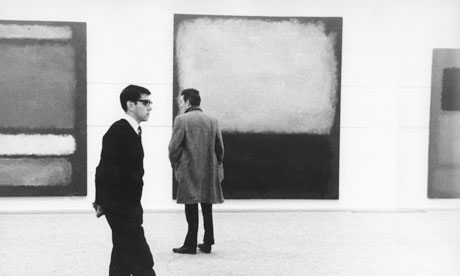
‘Rothko in Britain’ presents Whitechapel’s breathtaking 1961 show, which displayed Rotho’s work for the first time in Britain. Most of the reviews of the exhibition in question seem to spent far longer dwelling on this original show and it’s awe-inspiring impact, as opposed to what is actually going on now in Gallery 4. Perhaps this is a testament to the success of this show? It is at least re-igniting an ever present love affair that British institutions have with Rothko. But perhaps the defining factor here is that the meta-exhibitions of Gallery 4 always explore their subject in relation to their human interaction and impact, with the benefit of hindsight. The gallery space itself is relatively small in comparison to the vast expanse of The Whitechapel, and yet this lends itself to the nature of the pieces on display. The only original piece: ‘Light Red Over Black’ engulfs one wall space, creating the considerable impact expected from a Rothko show.
However the documentation is what really enthralls me. Sandra Lousada’s beautiful photographs encompass both installation shots and visitors to the gallery. The variety of viewers is incredible: mothers with prams, art students, a couple of elderly women. Add to this of course the romanticism and ‘cool’ cache of 1960s Britain (some of the outfits literally floored me, others were indecipherable from modern hipsters) and you have some truly fascinating social history.
The exhaustive instructions laid out in a letter entitled ‘Suggestions from Mr. Mark Rothko regarding installation of his paintings’ also reveals the painstaking detail given to the hanging and installation of this show. Such archival information never fails to fascinate me, I feel there is always a compelling need to know how and why something was done and appreciate the huge amount of work that goes into a final presentation.
A cabinet containing correspondence, family photos of Rothko, press cuttings (even the most marginal mentions) also remains a defining feature, coupled with a listening deck in which both modern retellings of viewer experiences play alongside 60s discussions.
All of these aspects create a colourful and comprehensive cultural history not only of the show itself, but of the 1960s viewing public, London’s East End and a snapshot into Rothko’s life.
I always find the Gallery 4 shows a triumph, and I only wish that more established galleries would take an invested interest in displaying the enormous archival materials they have at their disposal. Of course it could be argued that much is available online, but sadly Britain’s galleries and museums actually have an awful track record of maintaining any form of relevant online presence.
By actually embodying this information within an exhibition context it also makes it much more accessible to a wider audience. A tangible show which can be visited and reflected upon is much more likely to seem appealing to a member of the public than the offer of consulting an archive, something which is only really associated with academic activity.
The Whitechapel has always been extremely aware of it’s position within the East End, and in my view strikes a brilliant chord between addressing it’s social and cultural responsibility to the area and maintaining it’s profile as a respected artistic institution. This unassuming gallery and immediately accessible reading room (I must also mention that the archivist is the friendliest and most helpful member of a gallery institution I have ever met) is a real pleasure to visit, and will always leave you coming away with not only a sense of increased artistic knowledge, but a greater sense of the gallery’s history, and our own collective memory.
Go and visit.
 russellmoreton.com
Leave a comment