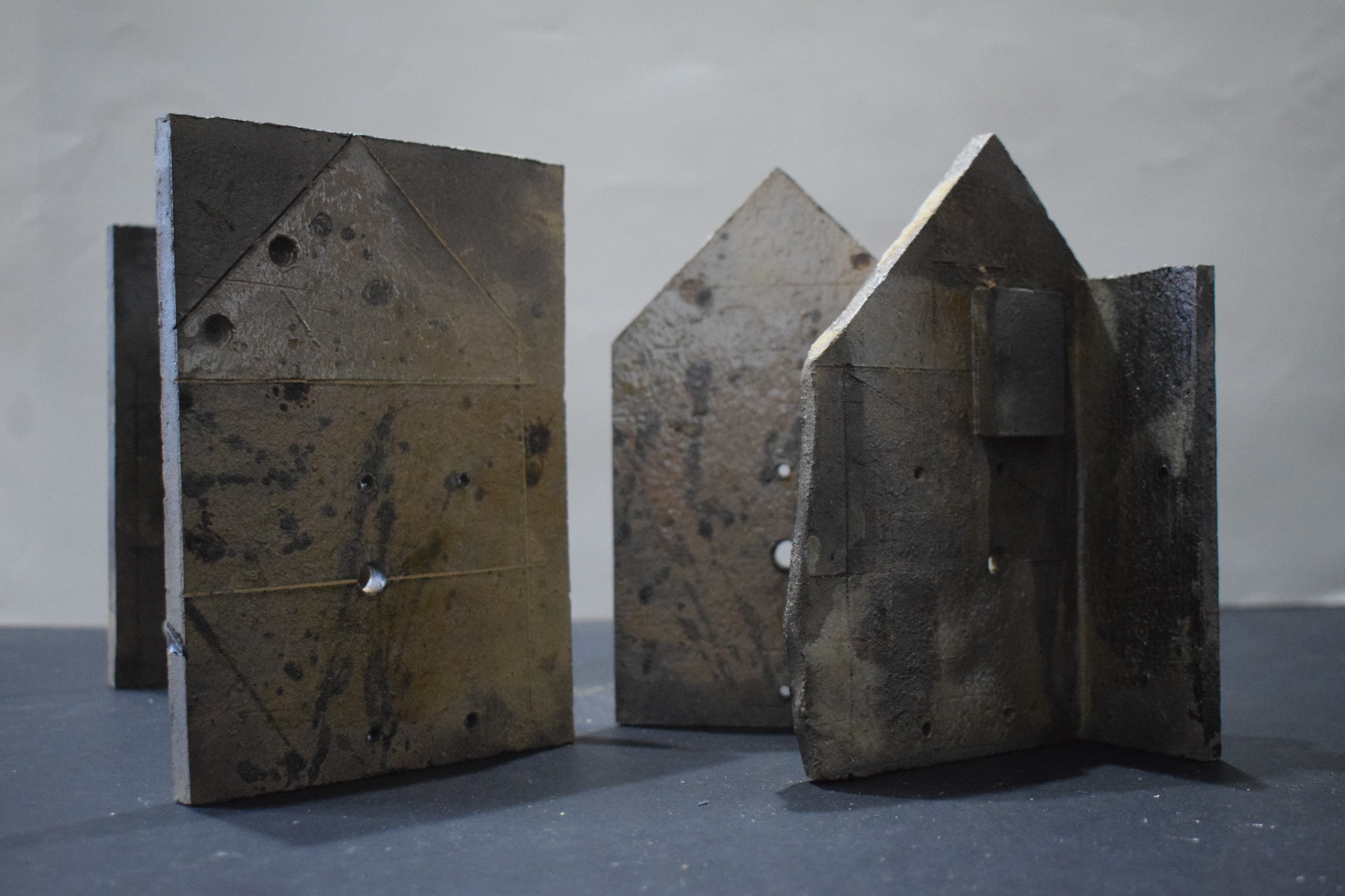
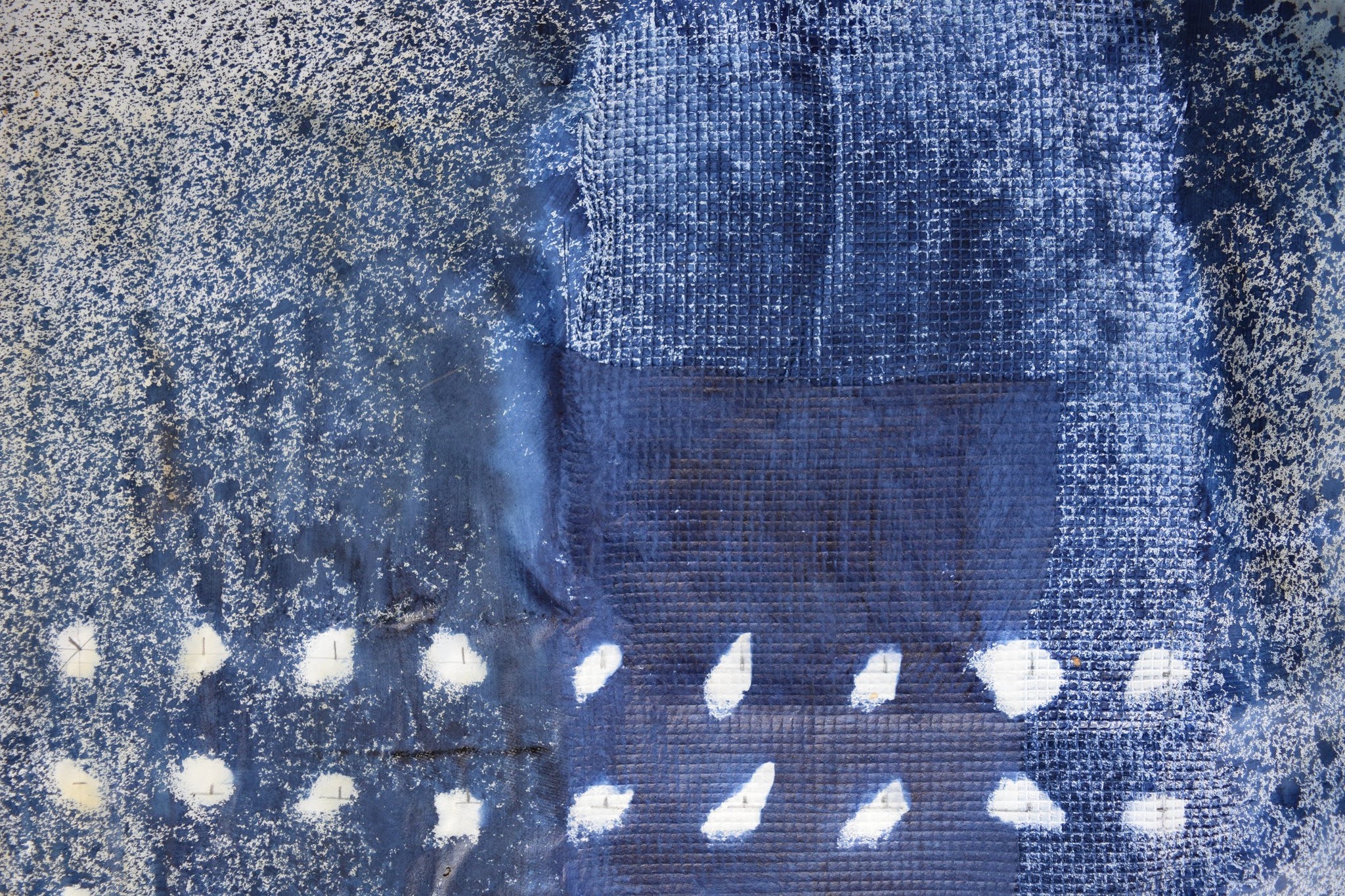
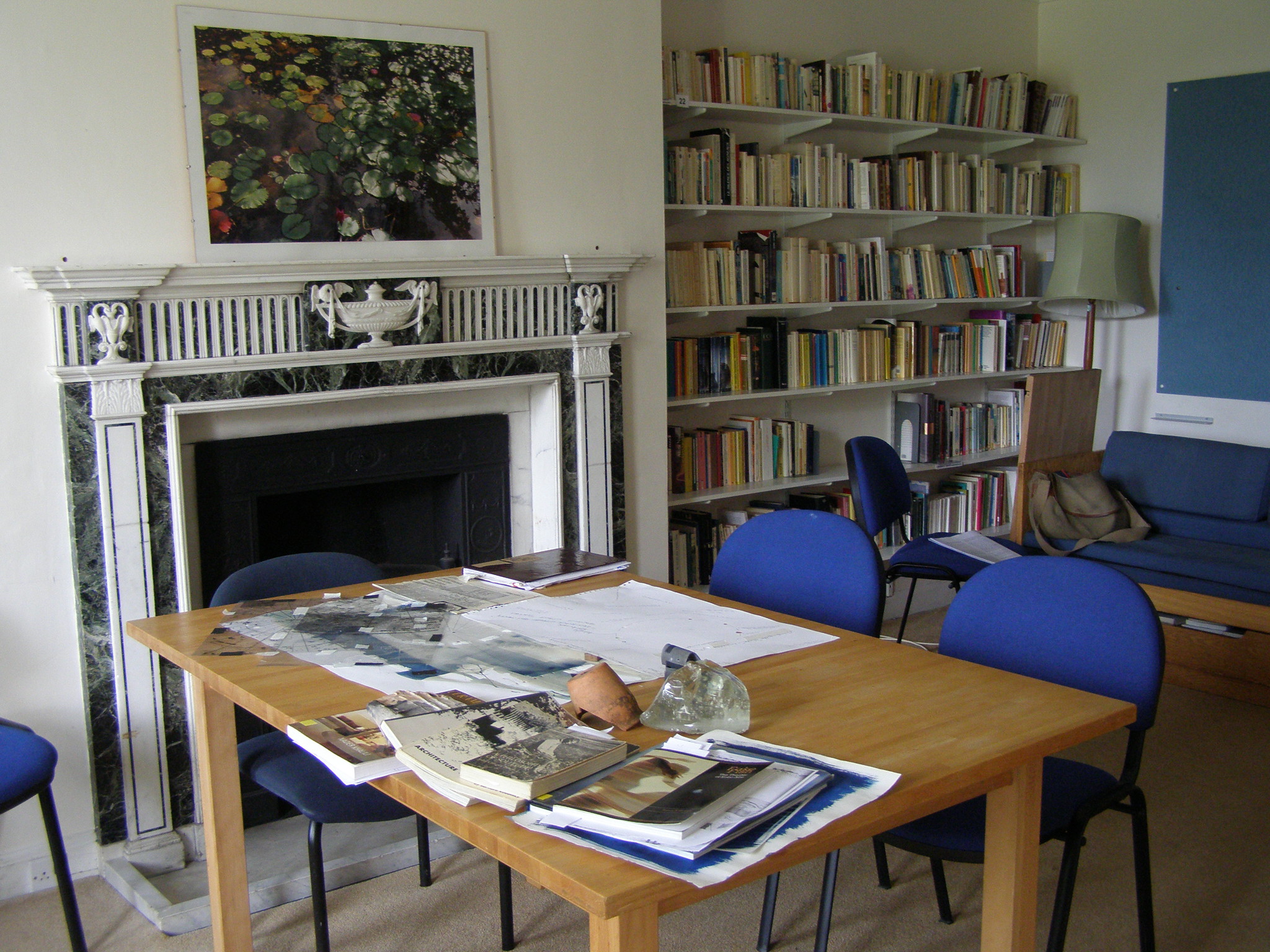
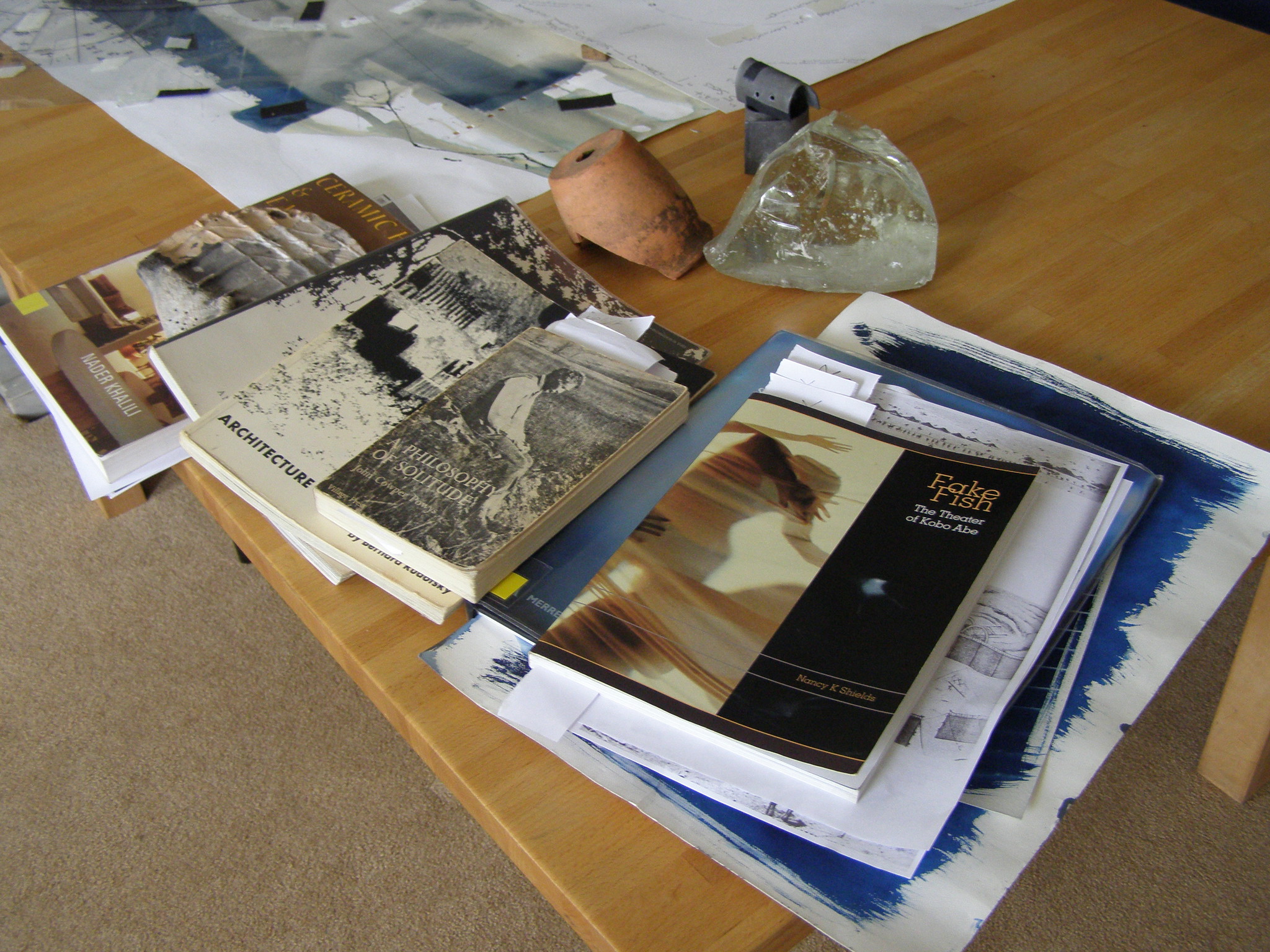
Spatial Practices : Experimental drawing and alternative photography.

  • Making/Photography/Process and Aesthetics

    Found Objects : Archaeological Photogram

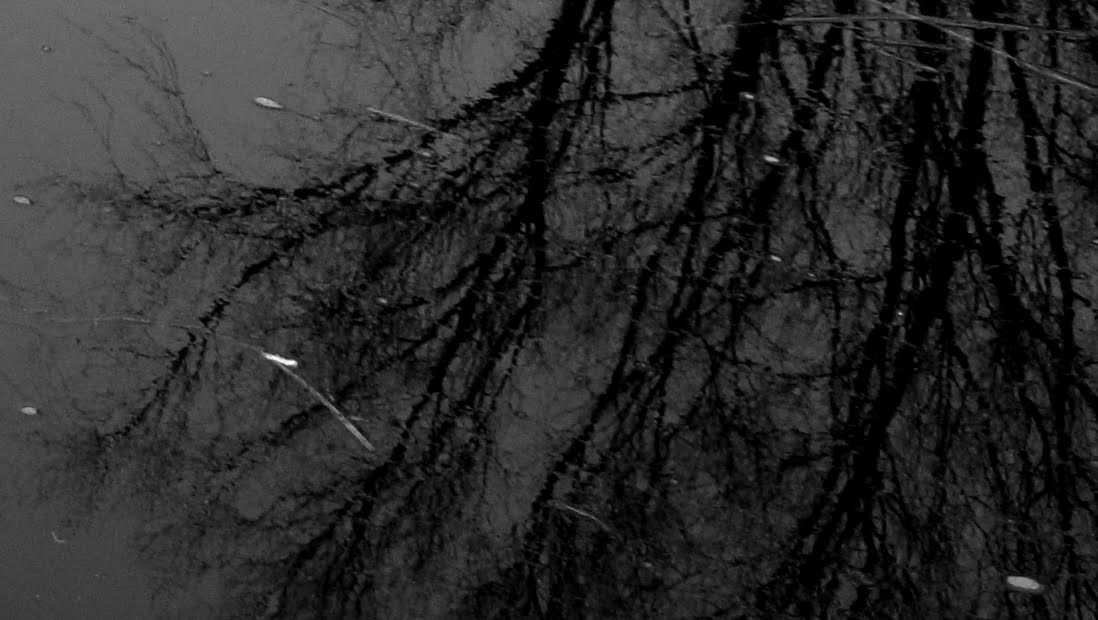
    When you make photograms, without the use of a camera, you can indeed call that abstract photography, as the lens and the corresponding registration medium are lacking. No longer do you have pictures of reality or objects; you only have their shadows. It is a bit like Plato’s cave, where one could only imagine reality; the objects themselves were not visible.
    —Thomas Ruff

    Frameworks with Enclosures 6

    Of the mason’s who built them, we can say that they both designed as they drew, and drew as they designed. But their designing, like their drawing, was a process of work, not a  project of the mind.
    Tim Ingold ‘Making’

    The Mirrored Abbey :  The Photographic Aesthetics of Decay

    Nothingness, Nostalgia and the Absence of Reason.
    The Aesthetics of Decay, Dylan Trigg,

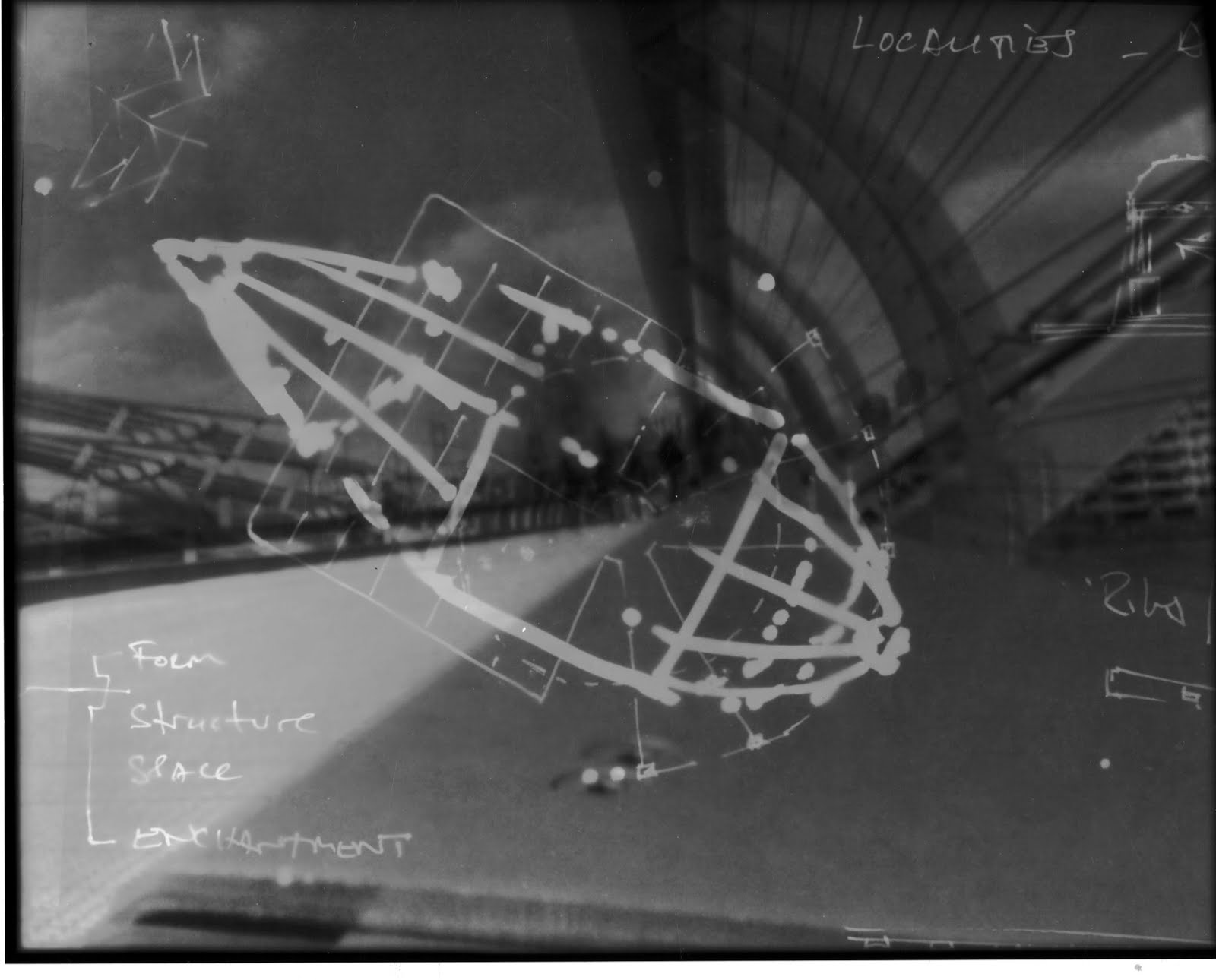
    TRANSPARENT MEDIA : Form,structure, space, enchantment
    Double Take
    15 APR – 3 JUL 2016

    A two-venue exhibition exploring the relationship between drawing and photography, taking place at Drawing Room and The Photographer’s Gallery, London.

    Drawing and photography are each considered the most direct, ‘transparent’ media with which to engage with the world.  They share fascinating parallels:  the relationship to the indexical, the blank sheet of paper or surface, graphite and silver, pencil weight and aperture, the sense of an invisible ‘apparatus’ (the camera and pencil), the engagement with surface, light, negative and positive and the trace. Double Take seeks to explore the multifarious ways photography and drawing have been combined and mirrored to extend both practices into new arenas in modern and contemporary practices.

    “… a freehand sketch diagram that was at the tangent between idea and imagination…if the parti – the first critical diagram – is not made well, it will be difficult for architecture to follow.  If there is no parti, there will be no architecture, only (at best) little more than the utility of construction.  Buried within their early sketches is the germ of a narrative or language.  The early diagrams are reflective conversations with the language of architecture.”

    –  Alan Phillips, Brighton, UK


    Social apparatuses and agents that explore the possibilities of space. Other Worlds : Insistent moments of mark making/subjectivity.

    Source: Making/Photography/Process and Aesthetics

  • Earthbound : Alternative Processes/Art/Archaeology/Philosophy

     The Archaeological Site : Speculative Fields/Spatial Practices

    What are we? Art/Archaeology.

    Contact Photography.

    Historical Presence #4

    Figuring it out.

    What are we?

    Where do we come from?

    The parellel visions of artists and archaeologists.

    Colin Renfrew.

    Do you live as Humans in the Holocene or as Earthbound in the Anthropocene? (50.37)

    Dr. Bruno Latour on climate change and the “Anthropocene”: Wall Exchange, Fall 2013

    Studio Practices
    Silver Gelatin
    Cyanotype
    Drawing
    Liquid Light


    Social apparatuses and agents that explore the possibilities of space. Other Worlds : Insistent moments of mark making/subjectivity.
    Source: Earthbound : Alternative Processes/Art/Archaeology/Philosophy

  • Sensing Places : Dwelling/Making/Attention/Environments

    Russell Moreton
    Artist Statement 2023
    Spatial practitioner employing a  speculative site based practice linking visual fine art, education, architecture and philosophy. Interested in duration and experience, repetition and improvisation, together with intuitive working methods that are local and quotidian.
    Architectural Body
    Organism/Person/Environment.
    Awareness that repetitions and rituals can give meaning to existence.
    Dwelling.
    Giving Sensation Place.
    An Education Of Attention.
    Creative Curriculum Making.
    Developing a creative inquiry and its presentation through generative art based methodologies.
    Re-imagining learning through site based education, art practices and philosophy.
    The construction of working drawings/sites that are themselves habitable and that capture insist moments of mark making and subjectivity.
    Installing a creative practice as a ‘place driven site’ for subjective experience, gathering things and personal inquiry from which to present ‘findings’ into the social environment.
    As a contemporary practitioner operating within the Arts and Architecture, I am interested in social apparatuses and agents that explore the possibilities of place based relations.
    For Tim Ingold, life is the very process wherein forms are generated and held in place.
    And dwelling means that the forms people build, whether in the imagination or on the ground arise within the current of their involved activity in the specific relational contexts of their practical engagement with their surroundings.
    Tim Ingold, Lines. 2007
    Key Words: Site Based Inquiry, Post Studio Practice, Education, Fine Art, Spatial Practice, Philosophy, Presentation, Exhibition, Workshops, Research Led, Exploratory Processes, Curriculum, Placemaking, Sensing, Architecture, Circulation, Subjectivity, Relationscapes, Dwelling, Inhabitation, Environment, Landscape, Person, Organism,


    Social apparatuses and agents that explore the possibilities of space. Other Worlds : Insistent moments of mark making/subjectivity.

    Source: Sensing Places : Dwelling/Making/Attention/Environments

  • Pure Presence : Ethics/Aesthetics/Politics, Jane Bennett

    Text Extract/Inclusion. “Pure Presence”

    The enchantment of modern life: attachments, crossings, and ethics : Jane Bennett. 2001.

    It is a commonplace that the modern world cannot be experienced as enchanted–that the very concept of enchantment belongs to past ages of superstition. Jane Bennett challenges that view. She seeks to rehabilitate enchantment, showing not only how it is still possible to experience genuine wonder, but how such experience is crucial to motivating ethical behavior. A creative blend of political theory, philosophy, and literary studies, this book is a powerful and innovative contribution to an emerging interdisciplinary conversation about the deep connections between ethics, aesthetics, and politics.


    Social apparatuses and agents that explore the possibilities of space. Other Worlds : Insistent moments of mark making/subjectivity.
    Source: Pure Presence : Ethics/Aesthetics/Politics, Jane Bennett

  • Panspermia 2010/Banga, Patti Smith : Layered Drawings/Silent readings/diagrams/ceramics of imaginary space

    Patti Smith – After The Gold Rush – Banga, 2012 (A Neil Young Song).

    Reading : Slow Philosophy
    With Fire, Richard Hirsch
    A Life Between Chance and Design (invites the unknown)
    Scott Meyer 2012
    Hirsch takes us to the heart of the interface between ageless earth and the spare evidence of the rhythm of human utility
    Raku as an Ideology
    Breath-Energy-Immanence
    Raku, A Review of Contemporary Work
    Tim Andrews 1994
    The Poetry of The Vessel
    A calm invitation to thought and imagination
    Chris Tyler
    The vessel (making, thinking, subject) as both a historically grounded form, and a vehicle to examine abstract aspects of the physical body and the natural world
    Arte Povera/Germano Celant, an aesthetic-philosophical movement
    An eclectic synthesis of knowledge fields, that emerges into a total space where disparate categories can meet; a art that asks only for the essential information, that refuses the dialogue with the social and cultural system, and aspires to present itself as something sudden and unforeseen
    Materials are substances in becoming
    Karen Barad
    Towards an Ecology of Materials
    Tim Ingold 2012
    From the ‘objectness’ of things to the material flows and formative processes wherein they come into being. It means to think of making as a process of growth or ontogenesis
    Materials-Centered Perspective
    Making, almost defies precise definition
    The composition and/or manipulation of materials that bring into being new or revised objects
    Tim Ingold 2010
    Cultures of thrift and scavenging, maintenance and repair
    Making encompasses the ingenuity of fluid, locally situated and adapted technologies
    Materials carry on overtaking the formal destinations that, at one time or another, have been assigned to them
    Sensibilities and dispositions that are centred on a deep and considered relationship with materials
    The Craftsman, Richard Sennett 2008
    Crafting, often reconnects mind and body in the sites and processes of production, thereby potentially reconstituting labour processes in ways that ascribe agency to workers
    Makers finding ways to resist norms of gender and neoliberal entrepreneurial subjectivities, finding ways and spaces for ethical practice to predominate
    Contemporary conceptual ceramics operates at the permeable boundary between art and craft, partaking of aspects of both, and ultimately demonstrating (or performing) that permeability.


    Social apparatuses and agents that explore the possibilities of space. Other Worlds : Insistent moments of mark making/subjectivity.

    Source: Panspermia 2010/Banga, Patti Smith : Layered Drawings/Silent readings/diagrams/ceramics of imaginary space

  • A Vessel Defines Emptiness As Presence : Craft, Studio Practice /Theory and Analysis on Hans Coper, Edmund De Waal, Martin Heidegger

    STUDIO PRACTICE, THEORY AND ANALYSIS.

    MA SCHOOL OF CRAFTS AND DESIGN.

    Working Notes : Brockwood Granary 2014

    Theory and Analysis Documents, UCA Farnham

    Working Contexts/Title : Spatial/Making analogies/relationscapes

    “Innerness” in Ceramics/Architecture and Philosophy/Painting

    BUILDing something “existentially unknowable” but with a critical context.

    The CONTENTS of the INTERIOR, defining encounters between objects, feelings and taxonomies, bibliographic research material and explorations.

    Making Things, to locate subjectivities and ground relations around the fluid and the relational.

    Interfaces around the nature of place, its document and its textual narrative creating spatial subjectivities, tools as ways of thinking.

    An Assemblage as INTERIOR, contingent to its situation of partial un-builtness.

    Space as both text and its scaffold.

    Interior as an “Open Text” the spatial development of research from various approaches.

    Hans Coper, essay re “Object Analysis” for CSC Exhibition has opened up a number of new avenues of research.

    Jean Vacher acknowledges Hans Coper’s links with Modernism and that his pots possess an “innerness” that might be profoundly biographical in nature stemming from “the profound displacements that occurred to him and his family as a result of the upheavals in Europe.” (Personal e-mail correspondence CSC 28March 2014)

    “The Pot, ancient as it is, is the first instance of pure innerness, of something made from the inside out.”

    Adam Gopnik 2014

    “A predynastic Egyptian pot, roughly egg-shaped, the size of my hand : made thousands of years ago it has survived in more than one sense. A humble, passive, somewhat absurd object, yet potent, mysterious, sensuous. It conveys no comment, no self-expression, but seems to contain and reflect its maker and the human world it inhabits, to contribute its minute quantum of energy.”

    Hans Coper, 1969

    “Innerness” from Atemwende by Edmund de Waal, text by Adam Gopnik.

    The material goes down, gets wet, is pulled open by the hand, spins and then produces, as if by magic, the most transcendently human of all things: volume, inner space, an interior, the space carved out of air that connects the morning teacup with the domes and spandrels of San Marco.1

    The Potters wheel, one of the most ancient forms of technology, pastoral and low-tech. The notion of making and its practice of craft could be seen in Heideggian terms as a sort of dwelling, a thinking through materials as a building adapting to the process and situation of the practitioner.

    Heidegger on Architecture, through Building Dwelling Thinking.

    His definition of the state of nearness that is carried in an object “nearness is at work in bringing near” and that in so doing it is a fundamental aspect of human experience, and as such it can be experienced and appreciated through the tactile, cognitive and sociological familiarity of things. (Adam Sharr. Heidegger for Architects)

    “Nearness thus becomes a function of immediacy: one is near to what one finds immediate,”

    Is this trait reflected in the throwing of a pot and the urgency of the wet clay?

    The agency of throwing and its attentiveness between mind, body and material.

    “I become part of the process, I am learning to operate a sensitive instrument, which may be resonant to my experience of existence now.” ( Hans Coper on Throwing)

    “A naked confrontation with a single material which would show one’s every mistake and mark.” (Tony Birks comments on Hans Coper’s relationship with clay)

    “You have to work quickly and with definition, and your ideas have to come into focus with enormous rapidity.” ( Edmund de Waal)

    The Porcelain Room:

    Pots and room together to create an experience of possessed space. (Edmund de Waal)

    Use of the Jug as both a hypothetical (cognitive, thinking through things) and actual vessel to carry connotations of meeting and assembly through its void.2

    This interior space/void/Ma is echoed in architecture as referenced by Kengo Kuma, Sensing Spaces RA 2014.3

    “The jar takes dominion over the unmade world.”

    Wallace Stevens

    1 Adam Gopnik. About the art of Edmund de Waal. 6

    2 Adam Sharr. Heidegger for Architects 32

    3 Kengo Kuma. Sensing Spaces RA. 65

    Working Notes: 10 April 2014.

    Crit UCA Farnham MA Interiors

    Interior “encloses space” Design “useful”. Damien Blower

    “Forms” “ a labyrinth” as a being evocative of a formal design language.

    4 Dimensions plus 2. The sensorial/spatial and social body in the interior environment.

    The Project/Structuring with descriptors and contexts.

    1 Context to the building, an interior that relates through a culture, history, or a society.

    2 Brief, what does it need to do to function as an interior and to meet other criteria intrinsic to the user/programme/function relationships on site.

    3 Experiential, what is the experience of this interior space, what phenomenological effects drive the design process.

    The Ruined Abbey :Re-Building Walls : Re-instating or Re-Imagining Hierarchies.

    What’s going on in here, and why?

    Making and Marking the Building:

    Footings over the ruins: Wall/Trench/Event (Ritual)

    Access,

    Containment,

    Privilege,

    Inner Spaces,

    Between Walls,

    Voids,

    Membrane,

    Openings,

    Adaptations,

    Plastic “Building” Stone/Mortar/Bargate Stone/Terracotta.

    Figure/Ground,

    Positive/Negative Spatial Masses,

    Movement/Duration of Participation,

    The Spirit of The Place,

    Detailed site analysis/audit of assets in both qualitative/quantitative terms.

    Use methodologies and narratives together with materials to create a new spatial interior of “authenticity” a design that can function as an experiential charged interior experience.

    Interior designers are not architects; they specialize in the design/programme and function of interior spaces created through architectural practices.

    Working Notes.

    Theory and Analysis Unit.

    Working Title :

    Innerness and Defined Space/Air

    The Potter ( Hans Coper) and the Philosopher (Martin Heidegger),

    Throwing, Building, Dwelling, Thinking,

    The innerness of a ceramic vessel can be seen to be dealing with presences and absences, as like that of a building it can demonstrate the presence of its making and the absence of that same presence.

    The Philosopher. Martin Heidegger.

    Building Dwelling Thinking. 1951

    Heidegger “resolutely romanticised the rural and the low-tech before, during and after Nazism, skating dangerously close to fascist rhetoric of blood and soil.”1

    Architecture can help to centre people in the world; it can offer individuals places from which to inquire for themselves. Heidegger felt that this was how architecture had been understood in the past, and that the insatiable rise of technology had obscured that understanding.

    Heidegger interested on centring his qualities of architecture around those of human experience, to reintegrate building with dwelling, making the qualities of its inhabitation become part of the buildings authenticity to its locality.

    This almost vocational unfinished “architecture finds itself more at home with the ongoing daily life than any sort of finished product.”2

    Contemporary architects of which Peter Zumthor is an exemplary example utilise and readily acknowledge the influence of Heidegger’s thinking. The inner spaces, the materiality and the locality are all directly traceable to traits found in Heidegger’s notion of the value of human presence and inhabitation.

    Heidegger claims for architecture “the authority of immediate experience”3

    As recorded in his most architectural writings.

    The Origin of the Work of Art 1935/trans 1971

    Being and Time 1927/1962

    Art and Space 1971/1973

    “To Heidegger, proper thinking was highly tuned to the fact of being and its traces. These traces, like our own shadow, the outline of the hills or the sounds of birdsong and stream, remain reminders of our miraculous presence,”4

    Building locates human existence,

    Heidegger “ believed that building was set out around human presence, configured by it but also configuring the activities of that presence over time”5

    This almost vocational activity of building human presence it at the heart of what it means “to dwell”, the poetics of which form the phenomenological inquiry of Gaston Bachelard’s, Poetics of Space. Heidegger acknowledges that the inhabitants lives are in turn configured by the building.

    Adam Sharr, notes that “for Heidegger, a building was built according to the specifics of place and inhabitants, shaped by its physical and human topography.”6

    Heidegger on Thinking,

    The forest track, the clearing, wandering from a starting point and remaining open to findings reached on the way, it could not be readily summarised or contained by a system. It was referential, mystical model that sought to promote the authority of being.

    Heidegger on the Void at the centre of the Jug.7

    Made from earth/clay/fire connected the human experience of earth and sky. Heidegger attributed sacred qualities to the jugs ability to give/to pour. Part of his fourfold cosmology of earth, sky, divinities and mortals. This “fourfold” represents Heidegger’s attempt at what he judges to be the most primary circumstances of existence, “ the inescapable pre-requisite of the world into which humans are thrown without consent (1962,164-168).

    Mythic and mystical, far from the strictures of logical thinking.

    Influences on the “fourfold”

    Meister Eckhart/mystic theologian.

    Lao Tse/eastern philosopher.

    Friedrich Holderlin/poet.

    George Steiner on the “fourfold” suggests it is a manifestation of an “ideolect” a personal language offered as universal.

    Heidegger would refute this on the grounds that it is our technocratic conception of the world that is unhinged not his.

    Heidegger: A mysticism that seems to border onto/into the realm of site specific art?

    Waverley Project 2014.

    Spaces and Shadows in Architecture, Defined Light and Volumes.

    In Praise of Shadows. Junichiro Tanizaki

    Architectural Voids/ Spaces only assessable whilst under construction, scaffolding and specific access points, maintenance and service corridors/rooms.

    Kengo Kuma on “Ma” a void or pause, a rich emptiness, it can be created in many ways: through the effect of light, or through attention to details.8

    Being close to things, Heidegger on Nearness.

    “The thing is not “in” nearness, “in” proximity, as if nearness were a container. Nearness is at work in bringing near, as the thinging of the thing,”(1971:177-178)9

    This spatial complexity ( Critical Spatial Practices) suggests that we do indeed think through things, this is picked up by Tim Ingold in The Perception of the Environment (Essays in livelihood, dwelling and skill) 2000.

    Also see, The Politics of Things/Immediate Architectural Interventions : Durations and Effects. Alres/Lieberman 2013.

    On building a house. Ingold.

    “The architect, then, conceives the lineaments of the structure, while the builder’s task is to unite the structure with the material”10

    Simon Unwin defines architecture as “the determination by which a mind gives intellectual structure to a building”, whereas building is “the performance of physical realization”, of which “a building” is the product. (Unwin. Understanding Architecture 2007)

    Heidegger notes that “nearness is a fundamental aspect of human experience, and as such it can be experienced and appreciated through the tactile, cognitive and sociological familiarity of things”11

    It is a this relationship of nearness to the daily intricacies of living, being/becoming and dwelling that Heidegger’s philosophy is appropriated into architectural theory and practice. “Nearness thus becomes a function of immediacy : in that one is near to what one finds immediate, however far away it may be.”

    For Heidegger, the definite characteristic of a thing (of a pot) is its possibility to bring people nearer to themselves, to help them engage with their existence and the fourfold.12

    Heidegger attributed both the Jug and Buildings the potential to gather up and to be able to carry connotations of meeting and assembly, the jug and the building both have a corresponding void, that has the potential to contain/embody his preconditions of existence (the fourfold). This sensing space/void/Ma, can be reflected in the interiors of architecture and can be found within innerness spaces of objects.

    The pot like the building participates in daily life.

    This can be further theorised into the realm of building social spaces.

    In Heidegger’s reasoning by using a table we are in effect constituting ourselves in the process of dwelling, by moving the table to accommodate the needs of its users, we are in effect turning the room back into a building.

    Heidegger’s building and dwelling take place together over time, forming ongoing relationships with the world. Like the Potter in his Studio, these critical spatial relations inform both the working practice and the situation and biography of their making.

    “Heidegger suggested that it was this disruption of relations between building and dwelling, rather than the production of houses, that remained the most important plight in the contemporary world”13

    Piety of Thinking. 1976 (Piety for Heidegger listened to and facilitated the world around)14

    Quietude : Allow and enabling what is already there.

    Silence in Ceramics. Coper/Rie.

    Clay and the Primacy of Being.

    Studio Spaces.

    The residents’ dwelling was recorded over time in the fabric of the building and the paraphernalia of their lives placed there.

    For the philosopher , buildings are rich in insight, comprising a “workshop of long experience and incessant practice. 1971,161.15

    Manifesting the everyday crafts of life in a physical form.

    1 Adam Sharr. Heidegger for Architects.

    2 Adam Sharr. Heidegger for Architects. 3

    3 Adam Sharr. Heidegger for Architects. 3

    4 Adam Sharr. Heidegger for Architects. 7

    5 Adam Sharr. Heidegger for Architects. 9

    6 Adam Sharr. Heidegger for Architects. 10

    7 Adam Sharr. Heidegger for Architects. 30

    8 Kengo Kuma. Sensing Spaces. Royal Academy of Arts. 2014, 65

    9 Adam Sharr. Heidegger for Architects. 35

    10 Tim Ingold. Making. 59

    11 Adam Sharr. Heidegger for Architects. 35

    12 Adam Sharr. Heidegger for Architects. 35

    13 Adam Sharr. Heidegger for Architects. 43

    14 Adam Sharr. Heidegger for Architects. 45

    15 Adam Sharr. Heidegger for Architects. 71


    Social apparatuses and agents that explore the possibilities of space. Other Worlds : Insistent moments of mark making/subjectivity.

    Source: A Vessel Defines Emptiness As Presence : Craft, Studio Practice /Theory and Analysis on Hans Coper, Edmund De Waal, Martin Heidegger

  • Drawing passages in the ecology of experience : Disappearances opposed by assemblages of evidence

    Outpost21022

    Drawing passages in the ecology of experience.

    The Silent Room.

    Silence/Intimacy/Reading.

    Drawing is about following/keeping up with a form/becoming in life.

    What shall I do next?

    The entwining of ever extending trajectories.

    I was asking you: where are we when we draw? The question seems to be expecting a spatial answer, but mightn’t it be a temporal one? Isn’t the act of drawing as well as the drawing itself, about becoming rather than being?

    Isn’t a drawing the polar opposite of a photo? The latter stops time, arrests it; whereas a drawing flows with it. Could we think of drawings as eddies on the surface of the stream of time?

    From each glance a drawing assembles a little evidence, but it consists of the evidence of many glances which can be seen together. On the one hand there is no sight in nature as unchanging as that of a drawing or a painting. On the other hand, what is unchanging  in a drawing consists of so many assembled moments that they constitute a totality rather than a fragment. The static image of a drawing or painting is the result of the opposition of two dynamic processes. Disappearances opposed by assemblage. If, for diagrammatic convenience, one accepts the metaphor of time as a flow, a river, then the drawing, by driving upstream, achieves the stationary.

    John Berger 1926-2017.

    Improvisation is to join with the world or to meld with it. One ventures from home on the thread of a tune.

    Deleuze and Guattari.

    Points are not joined so much as swept aside and rendered indiscernible by the current/energy as it sweeps through.

    Life is open-ended, its impulse is not to reach a terminus, but to keep on going. The plant, the musician or the painter in keeping going, hazards an improvisation.

    Tim Ingold.

    Moments of shared physical and bodily intensities in the enactment of constructions, activities and inhabitatations.

    Drawing/movements into transitions articulated with gaps and spaces for improvisation and the incorporation/corporeality of the quotidian and the unexpected.

    Francis Bacon, The Human Figure.

    Figuring it out, Colin Renfrew.

    The assemblage/collaged/choreographic object works to keep us attentive and entangled/engaged in the world.

    LiAi:

    Laboratory of immediate architectural intervention.

    The workshops/laboratory demonstrated how architecture could be about encounters in space, sensitive material tectonics and social urban exploration, engagement and transformation.


    Social apparatuses and agents that explore the possibilities of space. Other Worlds : Insistent moments of mark making/subjectivity.

    Source: Drawing passages in the ecology of experience : Disappearances opposed by assemblages of evidence

  • Dwelling in Brockwood/Kilquhanity : Drawing isn’t a matter of tools but perception-a form of engagement.

    Outpost 140223

    Matters of Concern.

    Starting conditions for responsible and curiosity driven engagements with the world.

    Creative entanglements in a world of materials.

    Improvisation is drawing.

    Drawing isn’t a matter of tools but perception-a form of engagement.

    Roni Horn.

    Kilquhanity Free School.

    Mission statement to enjoy childhood.

    Kilquhanity promotes a playful difference amongst the locality.

    Back To Freeschool : Drawing Out Of The Archive.

    At Freeschool I turned a dwelling place into both a site of introspection and a social construction.

    By living together as a social group, learning by the practical ‘doing’ from which to extract a sense of practical wisdom.

    Useful work, promotes a sense of being amongst the social group, of an equality of joined forces for the benefit of Kilquhanity.

    Kids encouraged to build camps around the grounds, personal and inter-personal temporary structures that reinforce our sense of ‘passing through’.

    Kilquhanity seems to suit the individual with confidence and those with good social skills, Architects, Film Makers, Craftspeople, others have found it difficult to rejoin society.

    Brockwood Park School

    Our consciousness is not actually yours or mine, it is the consciousness of humanity evolved, grown, accumulated through many, many centuries, when one realises this our responsibility becomes extraordinarily important.

    J. Krishnamurti.

    Projective Speculations, through questioning and research, asking ourselves, how are our intraventions capable of generating previously non-existent possibilities or ideas?

    How can architectural projections become tools for engagement in the actual transformation of the world, and to what extent can they be tools for thinking as well as for the articulation, interrogation, and challenging of discourse.

    Intraventions in live situations are the main form of engagement, we take part from the inside, in the construction and articulation of ‘sites’. We do this by using expanded conditioned, ecologies, localities and actors within a phenomenon in which we operate ‘an architecting’ as responsibly as possible.

    Oren Lieberman, Alberto Altes.

    Raveningham Site Visit/Walking in the Landscape.

    Ephemeral-Site-Drawings.

    The Choreographic Object in The Lanscape.

    Land/Demarcations/Spaces/Occurrences with others

    Filtered light pieces/land markers

    Field Studies/Gathering/Dwelling/Reading/Light/Time/Media

    A Phenomenal Lens.

    Water/glass dishes/construction, floating/submerged objects/.Cyanotype Print.

    Sculptural Array/Sky Watcher/Imaginative Spaces.

    Apparatus for Solargraphy.

    Mast/Conductor/Transponder,

    Hungate Study Day.

    Corporeal Annotations.

    Reading/Materials/Substances/Phenomena

    Water/Light/Architecture/Vessel/Place/Canvas/Filtered Light/Ceramic/Clay

    Undercroft Norwich.

    Plaster/Slab Components/Assemblages/Forms

    Bookmark and Share


    Social apparatuses and agents that explore the possibilities of space. Other Worlds : Insistent moments of mark making/subjectivity.

    Source: Dwelling in Brockwood/Kilquhanity : Drawing isn’t a matter of tools but perception-a form of engagement.

  • Localities of experience and research : Making Entangled

    Making Entangled : An eclectic synthesis of knowledge fields

    Confronting Spatial Intelligence-tracing the use of spatial intelligence.

    What are we learning about in the concrete particularity of this space?

    Leon van Schaik : Spatial Intelligence

    ‘Architecture is the product of our spatial intelligence, of its workings in establishing the mental spaces of every individual, and of the spatial values shared by groups.’

    The Retreat, Upper Lawn Pavilion. 1959

    This country retreat presents itself as a glass box but is grounded by its relationship to the pre-existing masonry of a walled garden.

    Leon van Schaik comments that the little glass house retreat built by Peter and Alison Smithson around a walled garden evokes for him memories(mental spaces) of being a schoolboy working in a conservatory in a walled garden at Cliveden, such that the notion of a retreat is this ideal of being built into the walls of an existing walled garden.

    You rise up into its glazed upper storey with views over the rolling hills beyond and perch atop the wall on the edge of a threshold space carved out of the woods, or remove yourself from view sink down to the ground and sit with your back to the wall.

    Kenneth Frampton subscribes to a general theory of architecture independent of any local articulation beyond adaptations to meet the needs of local climatic conditions.

    Dalibor Vesely, an architectural theorist who spent his teaching life demonstrating that in the modern era the unity of time, place and culture that is essential to architectural reality has been fractured. Leon van Schaik comments as a consequence in architecture today our spatial knowledge is either buried deep within our unconscious, or it is surfaced in a highly simplified (adolescent) form.

    Architecture as ‘a purveyor of esoteric spatial luxuries to domestic elites’ (Schaik, 2008:84)

    It follows that this fractured reality is deeply problematical to architecture, to the increasing number of architectural practices that have no ready connection to the daily expectations of citizens, resulting in a brutal instrumental policing of space (and our mental spaces) via the architecture that underpins the politics of our corporate or governmental interests.

    Mediators for spatial experiences.

    Interior design presented as an interactive and immersive spatial inquiry

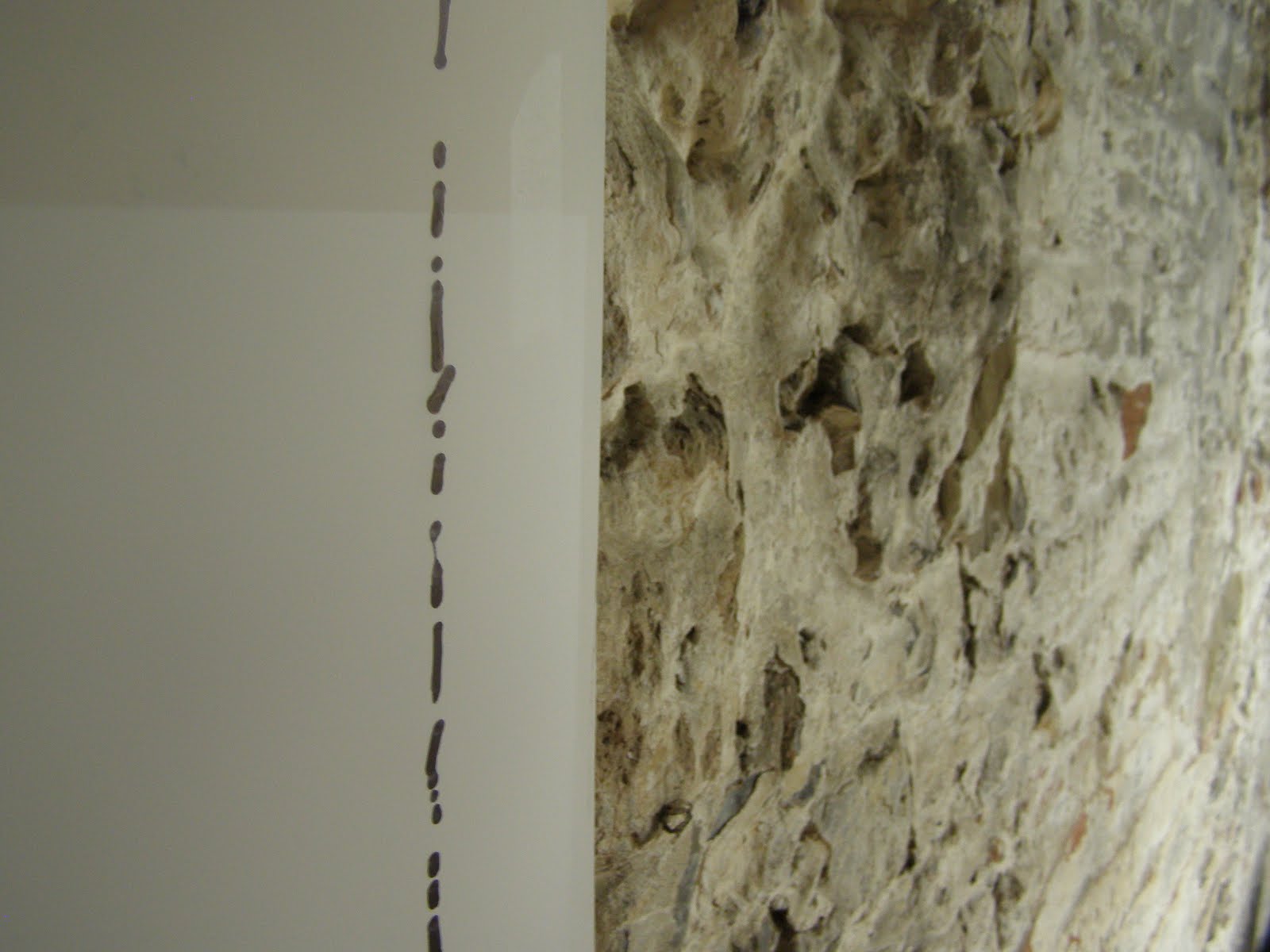
    The ruined site of the abbey at Waverley, near Farnham has been appropriated as a site and as a place within which to position and develop my practice. The Abbey, its buildings, and its grounds have provided a valuable source of the material evidence for thinking about hapticity and time in a pastoral setting.

    The Scriptorium presents the “performativity of research” through specifically designed apparatuses and partitions. These designed components, made objects, together with annotated texts and drawings conspire to create a complex interior design, a “Place Study” staged in a niche-like space. This interior presents itself as both distinct and relational to the other projects in the MA Interiors Show. The interior presents the many manifestations of creative research that have been developed through engaging with the site.

    The small ‘Scriptorium’ conceived as a space as a refuge, an intimate minimal construction that features a doorway and an interior that contains a place for objects, perhaps books, as well as a small sitting area. This construction, an open cell perhaps is evocative to a state of contemplation between the fabric of the everyday. The rather hybrid design appropriates a merging of minimalism, modernism and the plastic architecture of a ruined Cistercian Abbey. The construction comes into close contact with its occupant, it is a restricted spatial apparatus that attempts to promote through its awkwardness distinctive experiences.

    Libraries with research conduits for immersive and interactive cognitive mappings, allowing a praxis to enter the practicability of the everyday, a crafted philosophical inquiry, building new livelihoods.

    Colour Texture Surface Enclosures Voids

    Sample Materials: Relationships through Localities/Mood Boards/Technical and Physical Details.

    Erasure in drawing and architectural planning (space voids) as a methodology to superimpose multiplicities.

    Erasing : Kirosan Observatory, Anti-Object, Kengo Kuma.

    Multiplicities and Memory, Peter Zumthor.

    Learning Spaces as a performative spatial practice through a process of tuning and minimizing. Noh stage in the forest, Kego Kuma.

    PLANNING DOCUMENT use GRAPHIC DESIGN, theories and applications to visualize, design and map out the nature/interior spaces and experiences of this proposal.

    Natural Connections: Retreat and Awareness through Architecture (Architectural Experience).

    Experiencing The Phenomenology of Place at Waverley Abbey

    INTERIOR ARCHITECTURE through a sensitive adaptation of place studies, and using materials and built spaces to form the container/scaffold/stage for an activity not its contents. Working spaces that can be given a multiplicity of tasks that can accommodate the humanities and the life sciences.

    Architecture and landscape, together with the localised weather, and the sheltering buildings all contribute to finding the mental spaces for the retreat.

    APPARATUSES DURATIONS EFFECTS

    THINGS-MAKING-PEOPLE-IN THE WORLD

    Heightening the experiential experiences of place. Ramps, stairs and passages as devices (movable) to examine and to create immediate architectural interventions. Notion of the observatory (part built/part still under development) (monuments as instruments, Japor). The camera obscura’s darken room becomes a stage and a cinema; a drawing black boarded room for making creative reciprocal social practices.

    MAKING SPACES PARTIAL to the material flows and currents of sensory awareness in which IMAGES and OBJECTS reciprocally take shape/meaning.

    The Body in Space: merging/mediating/climbing over architecture and its territory in the landscape.

    Keywords,

    Place Studies : Spatiality : Phenomenology of Place : Spatial Intelligence :

    Relational Aesthetics:

    Retreat, Sensing Spaces, Experiential, Pastoral, Architectural Fabric, Ruined Buildings, Historical Community/Order, Neo Romantic, Camera Obscura, Mortality, Consumption, Palimpsest, Remote Sensing, Architectural Interventions, Material, Massing, Body, Objects and Things, Craft, The Physical Body (Historical/Postmodern), Contemporary Art Practices, Tim Ingold

    ‘Making’ and the inter relationships of Archaeology, Anthropology, Art and Architecture.

    Assets of Site

    Listed Historical Site, Tranquil (of road site in parkland), Otherness (ruination and romance), Water, Archaeology (building), anthropology (significant settlement Cistercian Abbey)

    CREATING FORMS AND MESSAGES

    The Way Things Are Connected (or the stickiness of dependence between things and humans)

    Kengo Kuma. Anti-Object

    Not Networks, but rather Entanglements or Meshworks/Mesh (implying infinite connections and infinitesimal differences) or Mess (resists neat compartmentalization and order).

    Mark Dion. Archaeology

    The Work, its Shelter, the Collection and its Process and Furniture (Agency)

    The Wunderkammer as a structural feature (De Waal, V&A )

    The Mapping/Charting Table (conduit, meeting/passing place)

    Tim Ingold. Making

    Ian Hodder. Entangled: An Archaeology of the Relationships between Humans and Things.

    Peter Greenaway. The Physical Self.

    The Self in a Spatial/Social/Corporeal Situation The Tactility/Closeness of Learning (Craft)

    DESIGN CREATIVELY/COLLABORATIVELY AND STRATEGICALLY THINKING IN THE RUINS

    THINKING IN THE FICTION OF RUINS

    THE ABBEY AS A REMNANT OF ITS WORLD, IN WHICH WE HAVE COME TO LATE,

    TO A WORLD THAT HAS SEEN TOO MUCH.

    POLITICS OF PLACE, English Heritage/Listed Building, has been used as a filming locating in contemporary cinema ranging in genres from the historical to the dystopian. Recently use of the site as a film location allowed the building of a temporary tower structure situated in close proximity to the existing ruinous fabric of the site.

    POETICS OF SPACE/Bachelard AETHETICS OF DECAY/Trigg

    THE WAR OF DREAMS/Marc Auge

    The Theatre of Operations.

    Ruins, as a notion and a phenomena are slowly disappearing from our western cities, out of a lack of time (faute de temps) Marc Auge further comments that we are condemned to produce waste, not remnants of the past.

    LOCATION, Streetfinder O/S. GPS Locality and access options/experiences.

    World placing with solar and astronomical positioning. Scale and proximity

    HISTORY, site, occupations, ruination, dereliction, reclamation into a garden feature. SITE SPECIFIC to GLOBAL CONCERNS

    LOCALITIES and HISTORIES

    HUMAN EXPERIENCE, Qualitative and Quantitative

    DWELLING, LEARNING, RUINS, AND MEMORY> WHAT REMAINS?

    MAPPING/REMOTE SENSING using the palimpsest of this landscape/of its human occupation, of its demise to re-instate and re-imagine the cultural and anthropological shifts that have affected humanity.

    RE-INSTATING a gathering with intellectual concerns in the humanities.

    SPEAKERS/REASEARCH POSTERS/EXHIBITIONS and ART WORKS/SCREENINGS.

    Oren Lieberman, Immediate Architectural Interventions/Intraventions.

    Mark Dion, Thames Dig, tents, taxonomies, teeth and texts.

    Kate Whiteford, Land Drawings, installations and excavations

    Colin Renfrew , Remote Sensing, aerial photography of sites (WW2) being used to re­ image specific archaeological notions of place.

    Tim Ingold, MAKING, on the entanglements of Archaeology, Anthropology, Art and Architecture.

    METHODOLOGIES

    Temporary structures, blue screens, stage flats, projection, surfaces and skins, envelopes and membranes, optics and materials, programmes and debate, exhibition and research, global networking and virtual presentations, workshops around the phenomenology of place and its interrelationships with critical spatial practice. Presentations and Symposium, Curriculum and Practices, Site Specific Work and Performance.

    Public Intimacy in Social Spaces. Architecture and The Contemporary Arts.

    Learning through Making, (The Parallel of Life and Art) Anthropology, Archaeology, Art and Architecture.

    Visitor’s Centre, with interpretive exhibition (Stonehenge/Denton Corker Marshall) or an immersive intervention (Winchester Cathedral,Anima-Animus/Elferova and Wilson). A place where the interior space evokes a sense of place/a becoming (Existential, Historical, Social, Cultural) see ‘The Physical Self exhibition curated by Peter Greenaway. The Fate of Place/Human Sociology.

    A contemplative space or spiritual/secular retreat featuring a series of interventions (Follies/Pavilions/Huts/Heidegger/Tschumi) that focuses the gaze on a particular view or detail, framing a distant reference (landmark or natural phenomenon, research into Lutyen’s ‘Thunder House’ for Gertrude Jekyll).

    Museum of Wisdom. Kengo Kuma.

    Noh Stage In The Forest. Kengo Kuma.

    Hortus Conclusus. Peter Zumthor.

    The Solar Pavilion. Alison and Peter Smithson.

    The Secular Retreat, Living Architecture. Peter Zumthor.

    Heidegger’s Hut, Bachelard’s Poetics, Ingold’s making.

    Spatial Apparatuses, Buildings and Social Devices/Agendas

    Events as Interventions producing Intraventions from Sociology, Architecture and the Humanities/Contemporary Arts.

    USING the existing site to host concerns and education through a light footprint of temporary structures and intermediary arts based events.

    THEMATIC SPACES in literature and the arts locate themselves within the ruins; become new creative points of departure, new narratives that add to the spatiality of the events experience.

    CRITICAL SPATIAL PRACTICES (Architecture/Fine Art and Performance) as a methodology for engaging with the transformative processes now emerging is of vital scholarly concern for design practices and professionals.

    Inclusions of observation and practice.

    Experiential experiences from a place by the river, under the canopy of dappled sunlight; a secluded proximity of the monks dormitory through the pleasing decay that is aging beautifully.

    Variegated and mutable veiling of transparencies through sunlight and a gentle breeze.

    Shadow (voids) and Forms (layered movements) Permeable membrane (time passes through here)

    The River (Jackie Leven/Kenneth Patchen, The Skaters) a corporeal presence on loss, memory/absence, subjectivity and flow.

    Kengo Kuma. Complete Works, Kenneth Frampton.

    ‘Our aim is to create architecture that confronts and fuses with the earth’

    ‘Architecture should not be cut off from the ground like a building designed and transported to the site’

    Kema’s ‘anti-objective’ architecture is anti-perspectival in that it is categorically anti­ thetical to the subject/object split of the occidental tradition.

    ‘The asymmetrical projection of the Water/Glass volume, derived from the diagonal platform of the Noh stage, makes it explicit that there is no single ideal point from which this waterborne scene may be experienced.’ (Frampton, 2012:12)

    Katsura Aesthetic.

    Non Corporeal Architecture ( 2001 A Space Odyssey, the final room with its dematerialised phantom character of absence and voyeurism)

    Japanesse Vernacular, Void/Ma space, Translucency, Sequence of Spaces,

    Siddig El’Nigoumi’s pots hold an interior space that cannot itself be transposed only broken ; they are in effect testimonial silences to his humility and his agency working with clay. In my mental space on these inner spaces of Nigoumi’s ceramics I can reach a correspondence, a pitch with its distinctive mutual timbre that is still active. The existential trait left in the innerness of these vessels is irreducible to my own subjectivity.

    Site drawings, archaeology of found objects, anthropological observations, time based media, architectural plans.

    Interior Spaces/Making and the adaptation of existing.

    Photographic drawings, collage, montage, interventions through designed walls/pathways/interactions.

    “Hut” Sensing Spaces/Building.

    Materials, aesthetics, volumes, dwelling, social, light and dark, place.

    Localities of experience and research.

    Negative Capability Exhibition (art works in response to archaeological sites),Winchester University.

    Bookmark and Share


    Social apparatuses and agents that explore the possibilities of space. Other Worlds : Insistent moments of mark making/subjectivity.

    Source: Localities of experience and research : Making Entangled

  • Learning-In-The-Making/Processual Learning : Reading/Intraventions at Hungate.

    HUNGATE

    Staging of a caring curiosity that wants to know and understand and explore relations.

    Site Visit/Working Notes.

    070223

    Hungate, Norwich.

    Building/Surface Movements : Breathing Forms

    Water/Light/Vessel/Body : Sacred/Secular/Holy/Profane

    Scriptorium, Waverley Abbey Project

    Collage/Matters of Concern : Discursive/Graphic/Diagrammatic/Mappings

    https://www.flickr.com/photos/russellmoreton/

    Architectural Body

    A Holding In Place

    Dwelling/Situatedness/Inhabitation

    A Domain Of Entanglement

    A Vital Emotional Dimension

    Landscapes Of Action

    Relationscapes

    Learning-In-The-Making

    Processual learning occurs in movements, gestures, postures, expressions and exchanges with other bodies and things.

    Rituals through water linking the organism-person-environment.

    Fonts as an apparatus linking the corporeal and the spiritual body with others.

    Dwelling/Inhabitation is a perspective that treats the immersion of the organism-person in an environment or life-world as an inescapable condition of existence.

    Life is the very process wherein forms are generated and held in place.

    Tim Ingold.

    Baptism/Water/Society as a holding/resting in place.

    Letting the building breathe, with and through the narratives of others.

    Site/an intravention or creative apparatus for the un-doing/un-folding of place.

    Partrners-with-things

    Practices that do engage in the complexities and contingencies of corporeal experiences.

    Conceptual Frameworks/Cognitive/Corporeal/Imaginative

    We need to live the consequences of non-stop curiosity inside mortal situated relentlessly relational worlding.

    Donna Haraway.

    Exploratory Movements/Dwelling/Duration/Light/Pinhole Camera

    Reading

    The Eyes of the Skin

    Architecture and the Senses.

    PARALLAX

    Steven Holl.

    Banga

    Patti Smith

    WATER

    Matter and Desire

    An Erotic Ecology

    Andreas Weber

    Sacred/Secular/Holy/Profane

    The Mind as a leaky vessel

    Wensum/Chalk Stream

    Lime Plaster/Yellow Ochre/Lead/Silver Stain/Pot Metals

    Ceramic/Cloth Wrappings/Canvas/Construction/Scriptorium/Lead Trays/Photographic Materials

    Bookmark and Share


    Social apparatuses and agents that explore the possibilities of space. Other Worlds : Insistent moments of mark making/subjectivity.

    Source: Learning-In-The-Making/Processual Learning : Reading/Intraventions at Hungate.