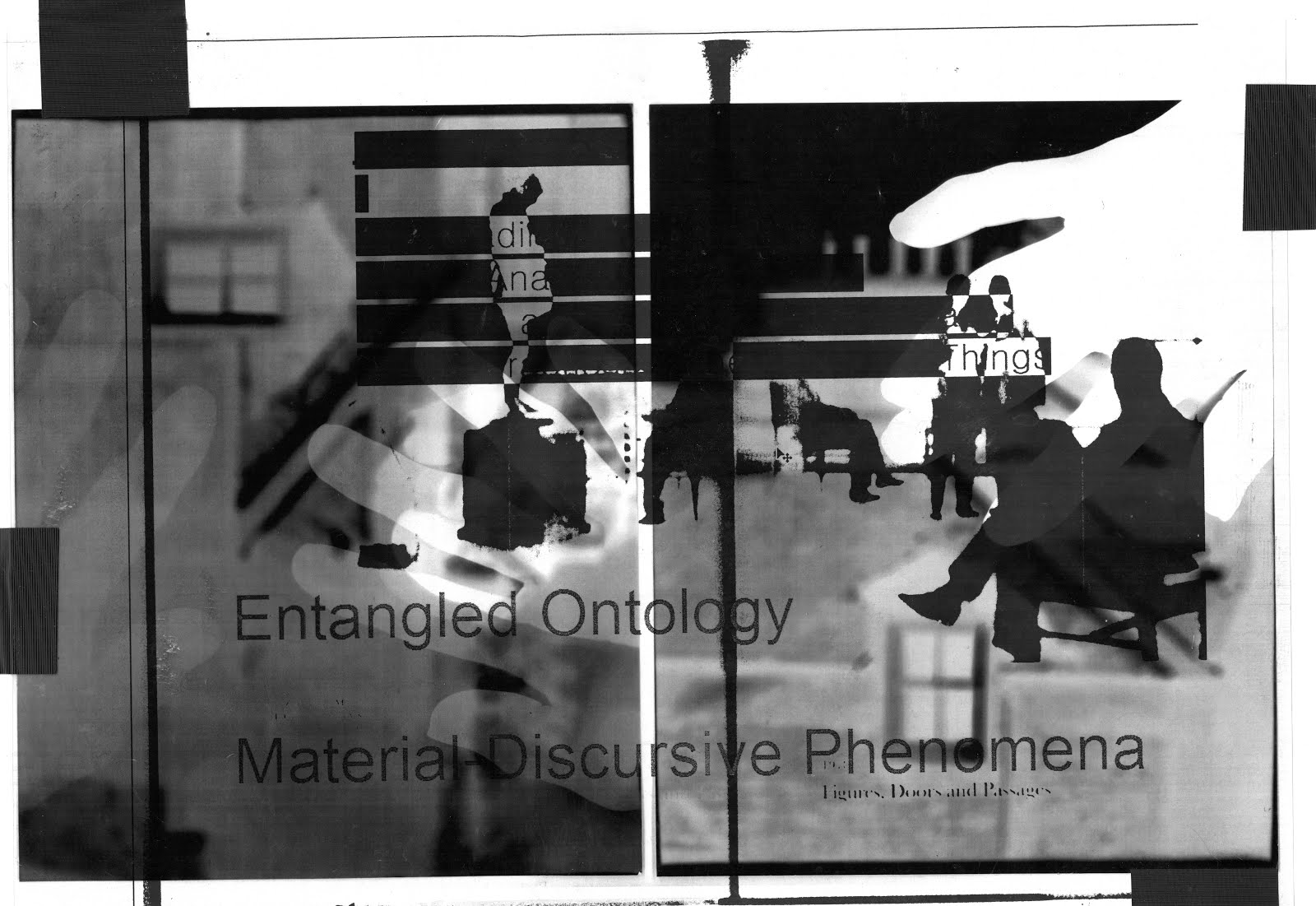
An assemblage of images,collage, drawing and texts and other disparate elements.
Spatial Practices : Experimental drawing and alternative photography.
recent posts
about
-
Clay/Jug and the Primacy of Being :The Potter and The Philosopher
Working Notes. Visuals and TextClay and the Primacy of Being
The Potter and The PhilosopherInnerness and Defined Space
Manifesting the everyday crafts of life in a physical form
The Potter ( Hans Coper) and the Philosopher (Martin Heidegger),
Throwing, Building, Dwelling, Thinking.The innerness of a ceramic vessel can be seen to be dealing with presences and absences, as like that of a building it can demonstrate the presence of its making and the absence of that same presence.
The Philosopher. Martin Heidegger.
Building Dwelling Thinking. 1951
Heidegger “resolutely romanticised the rural and the low-tech before, during and after Nazism, skating dangerously close to fascist rhetoric of blood and soil.”1Architecture can help to centre people in the world; it can offer individuals places from which to inquire for themselves. Heidegger felt that this was how architecture had been understood in the past, and that the insatiable rise of technology had obscured that understanding.
Heidegger interested on centring his qualities of architecture around those of human experience, to reintegrate building with dwelling, making the qualities of its inhabitation become part of the buildings authenticity to its locality.
This almost vocational unfinished architecture finds itself more at home with the ongoing daily life than any sort of finished product.”2
Contemporary architects of which Peter Zumthor is an exemplary example utilise and readily acknowledge the influence of Heidegger’s thinking. The inner spaces, the materiality and the locality are all directly traceable to traits found in Heidegger’s notion of the value of human presence and inhabitation.
Heidegger claims for architecture “the authority of immediate experience”3
As recorded in his most architectural writings.
The Origin of the Work of Art 1935/trans 1971
Being and Time 1927/1962
Art and Space 1971/1973“To Heidegger, proper thinking was highly tuned to the fact of being and its traces. These traces, like our own shadow, the outline of the hills or the sounds of birdsong and stream, remain reminders of our miraculous presence,”4
Building locates human existence,
Heidegger “ believed that building was set out around human presence, configured by it but also configuring the activities of that presence over time”5This almost vocational activity of building human presence it at the heart of what it means “to dwell”, the poetics of which form the phenomenological inquiry of Gaston Bachelard’s, Poetics of Space. Heidegger acknowledges that the inhabitants lives are in turn configured by the building.
Adam Sharr, notes that “for Heidegger, a building was built according to the specifics of place and inhabitants, shaped by its physical and human topography.”6
Heidegger on Thinking,
The forest track, the clearing, wandering from a starting point and remaining open to findings reached on the way, it could not be readily summarised or contained by a system. It was referential, mystical model that sought to promote the authority of being.Heidegger on the Void at the centre of the Jug.7
Made from earth/clay/fire connected the human experience of earth and sky. Heidegger attributed sacred qualities to the jugs ability to give/to pour. Part of his fourfold cosmology of earth, sky, divinities and mortals. This “fourfold” represents Heidegger’s attempt at what he judges to be the most primary circumstances of existence, “ the inescapable pre-requisite of the world into which humans are thrown without consent (1962,164-168).
Mythic and mystical, far from the strictures of logical thinking.
Influences on the “fourfold”
Meister Eckhart/mystic theologian.
Lao Tse/eastern philosopher.
Friedrich Holderlin/poet.George Steiner on the “fourfold” suggests it is a manifestation of an “ideolect” a personal language offered as universal.
Heidegger would refute this on the grounds that it is our technocratic conception of the world that is unhinged not his.Heidegger: A mysticism that seems to border onto/into the realm of site specific art?
Waverley Project 2014.Spaces and Shadows in Architecture, Defined Light and Volumes.
In Praise of Shadows. Junichiro Tanizaki
Architectural Voids/ Spaces only assessable whilst under construction, scaffolding and specific access points, maintenance and service corridors/rooms.Kengo Kuma on “Ma” a void or pause, a rich emptiness, it can be created in many ways: through the
effect of light, or through attention to details.8Being close to things, Heidegger on Nearness.
“The thing is not “in” nearness, “in” proximity, as if nearness were a container. Nearness is at work in bringing near, as the thinging of the thing,”(1971:177-178)9
This spatial complexity ( Critical Spatial Practices) suggests that we do indeed think through things, this is picked up by Tim Ingold in The Perception of the Environment (Essays in livelihood, dwelling and skill) 2000.
Also see, The Politics of Things/Immediate Architectural Interventions : Durations and Effects. Alres/Lieberman 2013.
On building a house. Ingold.
“The architect, then, conceives the lineaments of the structure, while the builder’s task is to unite the structure with the material”10Simon Unwin defines architecture as “the determination by which a mind gives intellectual structure to a building”, whereas building is “the performance of physical realization”, of which “a building” is the product. (Unwin. Understanding Architecture 2007)
Heidegger notes that “nearness is a fundamental aspect of human experience, and as such it can be experienced and appreciated through the tactile, cognitive and sociological familiarity of things”11
It is a this relationship of nearness to the daily intricacies of living, being/becoming and dwelling that Heidegger’s philosophy is appropriated into architectural theory and practice. “Nearness thus becomes a function of immediacy : in that one is near to what one finds immediate, however far away it may be.”
For Heidegger, the definite characteristic of a thing (of a pot) is its possibility to bring people nearer to themselves, to help them engage with their existence and the fourfold.12
Heidigger attributed both the Jug and Buildings the potential to gather up and to be able to carry connotations of meeting and assembly, the jug and the building both have a corresponding void, that has the potential to contain/embody his preconditions of existence (the fourfold). This sensing space/void/Ma, can be reflected in the interiors of architecture and can be found within innerness spaces of objects.
The pot like the building participates in daily life.
This can be further theorised into the realm of building social spaces.
In Heidegger’s reasoning by using a table we are in effect constituting ourselves in the process of dwelling, by moving the table to accommodate the needs of its users, we are in effect turning the room back into a building.Heidegger’s building and dwelling take place together over time, forming ongoing relationships with the world. Like the Potter in his Studio, these critical spatial relations inform both the working practice and the situation and biography of their making.
“Heidegger suggested that it was this disruption of relations between building and dwelling, rather than the production of houses, that remained the most important plight in the contemporary world”13
Piety of Thinking. 1976 (Piety for Heidegger listened to and facilitated the world around)14
Quietude : Allow and enabling what is already there.
Silence in Ceramics. Coper/Rie.Clay and the Primacy of Being.
Studio Spaces.
The residents’ dwelling was recorded over time in the fabric of the building and the paraphernalia of their lives placed there.
For the philosopher , buildings are rich in insight, comprising a “workshop of long experience and incessant practice. 1971,161.15Notes:
1 Adam Sharr. Heidegger for Architects.
2 Adam Sharr. Heidegger for Architects. 3
3 Adam Sharr. Heidegger for Architects. 34 Adam Sharr. Heidegger for Architects. 7
5 Adam Sharr. Heidegger for Architects. 9
6 Adam Sharr. Heidegger for Architects. 10
7 Adam Sharr. Heidegger for Architects. 30
8 Kengo Kuma. Sensing Spaces. Royal Academy of Arts. 2014, 65
9 Adam Sharr. Heidegger for Architects. 35
10 Tim Ingold. Making. 59
11 Adam Sharr. Heidegger for Architects. 35
12 Adam Sharr. Heidegger for Architects. 35
13 Adam Sharr. Heidegger for Architects. 43
14 Adam Sharr. Heidegger for Architects. 4515 Adam Sharr. Heidegger for Architects. 71
An assemblage of images,collage, drawing and texts and other disparate elements.
Source: Clay/Jug and the Primacy of Being :The Potter and The Philosopher
-
An assemblage of images,collage, drawing and texts and other disparate elements.
Drawing/Building Scripts : Collage/Photography
-
Russell Moreton abstracts (Heuristic Fragments) Reflective Material #1
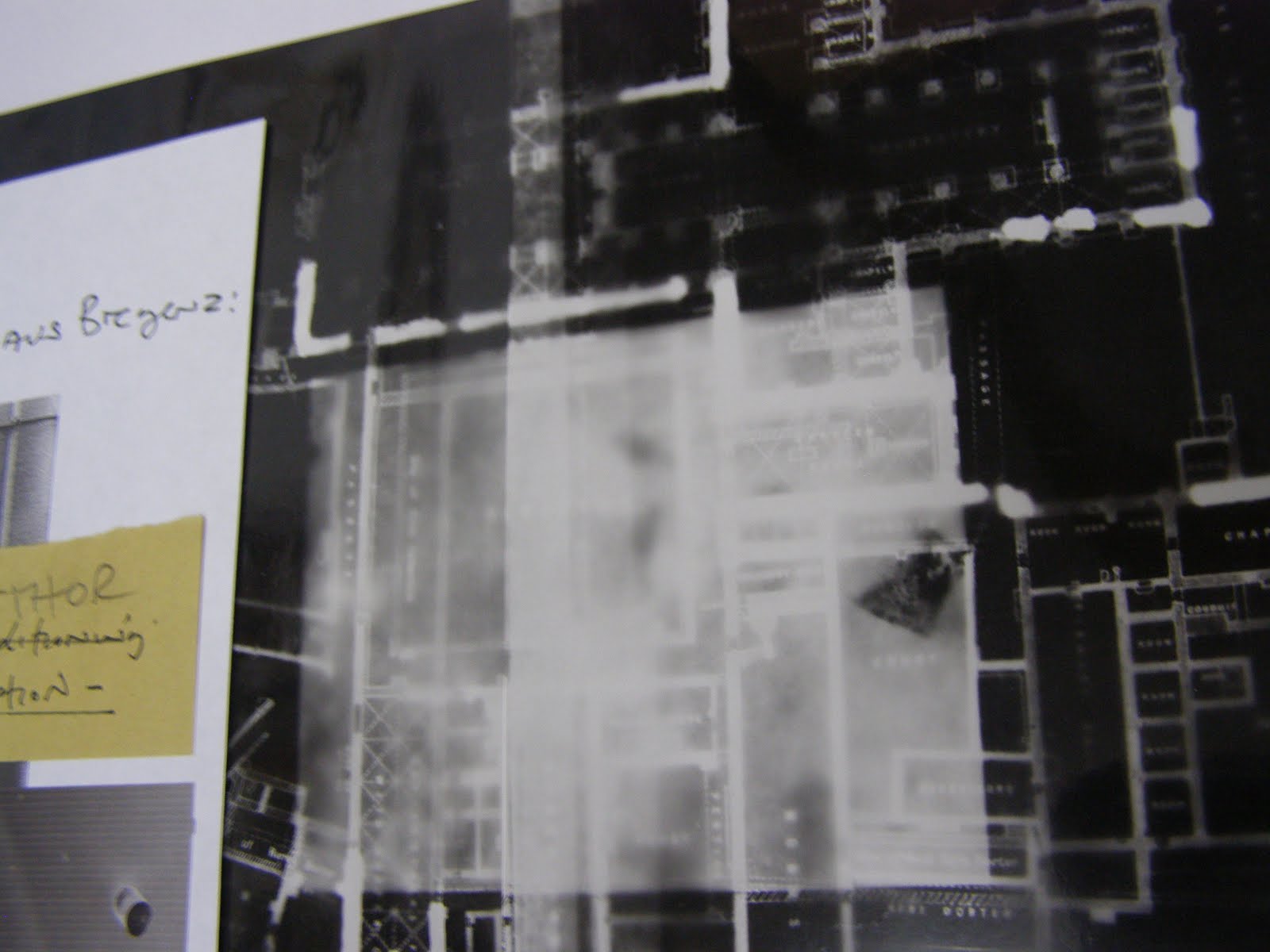
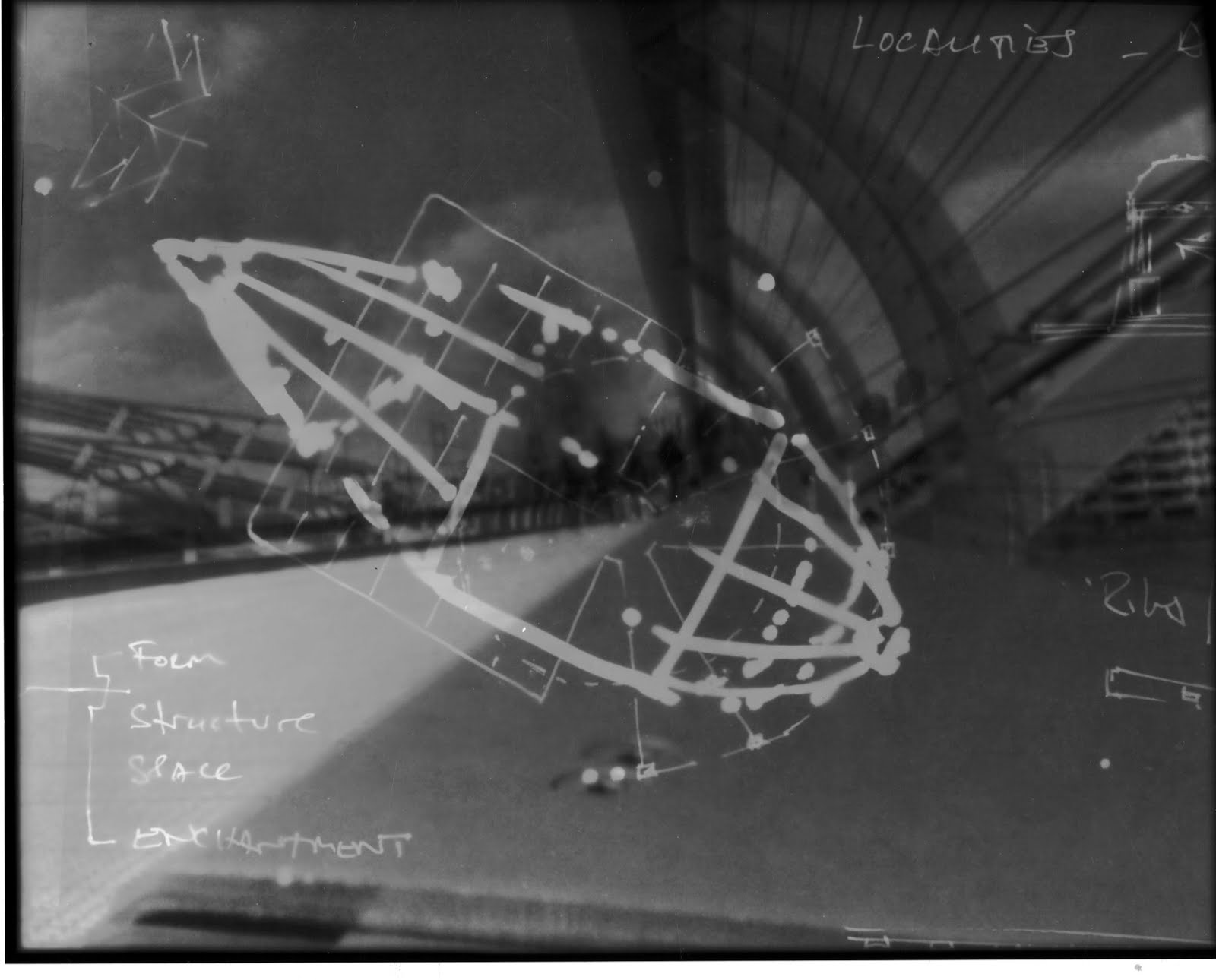
Is there still an aesthetic illusion? And if not, a path to an “aesthetic” illusion, the radical illusion of secret, seduction and magic? Is there still, on the edges of hypervisibility, of virtuality, room for an image?— Jean Baudrillard, The Conspiracy of Art, 2005A heuristic technique (/hjᵿˈrɪstᵻk/; Ancient Greek: εὑρίσκω, “find” or “discover”), often called simply a heuristic, is any approach to problem solving, learning, or discovery that employs a practical method not guaranteed to be optimal or perfect, but sufficient for the immediate goals.Heuristic Material : Collage1. encouraging a person to learn, discover, understand, or solve problems on his or her own, as by experimenting, evaluating possible answers or solutions, or by trial and error: a heuristic teaching method.2. serving to indicate or point out; stimulating interest as a means of furthering investigation.Reading Collage : Spatial Drawings/Documents/Analogue PhotographyA Hut of One’s Own, Ann ClineTexts,Annotations, Foundations, Pathways, Corridors, Bookmarks, Walking, Thinking, Ramble, Cross Country, Disciplines,Herzog and De MeuronNATURAL HISTORYJana SterbakRemote Control 1989Source: Russell Moreton abstracts (Heuristic Fragments) Reflective Material #1
-
Atemwende, a breathturn : Adam Gopnik and Edmund de Waal
Craft and Art, Skill and Anxiety.Craft is logic, and art defies it. The defiance is what makes art. The serenity of the artisan lies in her knowledge that it can all be done again. The anxiety of the artist; lies in knowing that if it is done again, she has become an artisan. (Gopnik,2014:7)Edmund de Waal is a maker of objects with imagined histories. (Gopnik,2014:11)Atemwende : A breathturn.Edmund de Waal.The Great Glass Case of Beautiful Things:About the Art Of Edmund de WaalAdam Gopnik. 2013.‘Actually, I still make pots, you know’ Edmund de Waal.The Sensuality of the Clay Body.‘You have to work quickly and with definition, and your ideas have to come into focus with enormous rapidity.’ Edmund de Waal, on working with the different presence demanded on ones mind and hand whilst throwing with porcelain. The practice of porcelain forced a change in colour and finish in his work. New glazes, shimmering celadon and shiny black, arrived to catch the light and send it back. (Gopnik,2014:9)The throwing of pots still remains central to his practice. ‘The material goes down, gets wet, is pulled open by the hand, spins- and then produces, as if by magic, the most transcendently human of all made things; volume, inner space, an interior, the carved out air that connects the morning teacup with the domes and spandrels of San Marco. There’s nothing there but clay and air, then there’s defined air. (Gopnik,2014:6)Ceramics and Architecture.Exhibition Spaces of the EnlightenmentThe Porcelain RoomsThe pot, ancient as it is, is the first instance of pure innerness, of something made from the inside out. Building objects upwards is, in its way, an obvious and brutal thing; it derives from piles, and makes pyramids. Turning objects inward, on the wheel, is a subtler one, and derives from our need to have a place to put things in. (Gopnik,2014:7)Together these new porcelain vessels collectively produced by De Waal are an experience of possessed space.These collections of vessels in their Modernist vitrines seem to be both an expression of the architecture of a collection and simultaneously an affirmation of an interior space that can hold the singularity of a breath within a small pot.‘ The ceramic module that he uses, the small pot, is deliberately made as non-functional as possible.’ (Gopnik,2014:9)‘Even if we insist on seeing them impersonally, the sheer force of their numbers creates the poetic sense inherent, as Homer knew, in all inventories. They gang up on us.’ (Gopnik,2014:9) These groupings of objects placed together produce their own narratives, their own relations, and lines of inquiry. In so doing their ordering of the space around them brings meaning to those spaces. This is reinforced through the poetry and metaphor of the effect of ceramic vessels on space, as cited by De Waal himself through Wallace Stevens’s “Anecdote of the Jar” 1919.‘The Jar, the elemental made thing, takes dominion over the unmade world. The air around it suddenly looks “slovenly,” insufficiently jar-like. Made things remake the unmade world. (Gopnik,2014:10)Gopnik comments that we can’t look at hollow things without sensing their hollowness, as he notes we perceive haptically as aptly as optically. This allows us to read these vessels through both our sense of sight and our sense of space. The result is that we feel these objects; we can sense the heft of them made from their weight, shape and size. We become aware that we can feel objects as much as we can see them.De Waal’s work brings about a sensuality and an empathy manifested between the strict ordering of his presentation through his vitrines and cabinets and the fragility and grouping of his porcelain vessels. This empathy promotes our interest with the interior parts of his groupings, with the interior emptiness and mystery of things we can only sense. His control and command of the geometric spatial relations found in his installations is juxtaposed by the multitude of diminutive interiors and negative spaces.The relations of the architectural and those of the vessel are in constant flux, held in some sort of spatial narrative that seems to meditate stillness, like the museum these vessels are protected and intact, yet strangely they are held hostage by their surroundings.The empathy we feel for their emptiness is perhaps choreographed, staged and ultimately forced, these are not just pots as De Waal admits but pots that have been by design rendered as non-functional as possible although they still bare the marks of his franchising. This neutering of his thrown clay forms into the realm of perhaps a purely sculptural object that is itself now a mere component in his Minimalist cabinets. What remains is a hollowness, but a contrived hollowness that speaks of spaces designed not made; unlike his Signs and Wonders intervention for the V&A, these works feel orphaned and cut adrift by their surroundings.Does? ‘His art takes a familiar grammer of display and turns it into a poetry of memory. Inside a room, a great case filled with rows of porcelain pots.Along each row, a story. Inside each pot, a breath. (Gopnik,2014:11)Source: Atemwende, a breathturn : Adam Gopnik and Edmund de Waal
-
Hans Coper : Potter,”the experience of existence”
CRAFTS STUDY CENTRE.
FARNHAM, SURREY. UK
RUSSELL MORETON“I become part of the process, I am learning to operate a sensitive instrument which may be resonant to my experience of existence now.”
Hans Coper, Artist Statement 1969.Hans Coper’s iconic assembled ceramics frame the later part of the twentieth century with an ambivalence of both alienation and reconciliation. His pots reveal differences that have resisted the homogenizing effects of the culture of the time. They embody and are a physical testament to what the potter himself has reflected on his life, “endure your own destiny”1 within the space and time of the human condition.
Born in 1920 into a prosperous middle class background, his childhood years were spent in the small town of Reichenbach in Germany. In 1935 his father Julius, is singled out like many other Jewish businessmen for harassment and ridicule under National Socialist Party. This would result in the Coper family moving frequently to escape the attention of the Nazis. Tragically in 1936 Julius takes his own life in an attempt to safeguard the future of his family. The remaining family, Erna Coper and her two sons return to Dresden. In 1939 Hans at the age of 18 leaves Germany for England, the following year he is arrested in London and interned as an enemy alien. He spends the next three years first in Canada then returns to England by volunteering to enrol in the Pioneer Corps. In 1946 a meeting with William Ohly who ran an art gallery near to Berkeley Square, brought about an opportunity for a job in a small workshop run by Lucie Rie, a refugee potter from Vienna. Hans Coper now began earnestly through his engagement with ceramics to reveal a continental modernity “whose work seemed uncomfortably abrasive to the traditionalists.”2
Hans Coper and Lucie Rie worked together at Albion Mews for 13 years forming a friendship and a working relationship that was mutually reciprocated through practical concerns, innovation and experimentation. There is a creative synergy in place through their mutual sharing of process and experimentation within the practicalities of the studio space. A documented instance of this reciprocal inventiveness is in the appropriation of the technique of “Sgraffito” which Lucie Rie employs after being inspired by some Bronze Age pottery at Avebury Museum bearing incised patterns, which are displayed with some bird bones, which may have been used as tools to incise the pottery. These “dark bowls of Avebury”3 are transposed through the use of manganese engobe and a steel needle into Lucie Rie’s ceramics, Hans Coper although not present appropriates the bird bone for the engineered steel of a pointed needle file and uses the action of an abrasive hand tool to remove layers of the manganese engobe. In this way Coper is enacting onto the surfaces of his ceramics, the very agencies that Modernism was acting out in the realms of architectural space and surface treatment of materials. In 1959 a move to Digwell Arts Trust would bring to a close his working relationship with Lucie Rie. Coper now became involved with a number of architecturally based projects through the Digswell Group of architects and building professionals. Coper’s engagement with the Digwell Group was not without problems and creative frustrations, but seen in retrospect it became an experimental period where Coper was strengthening his ability to bring his pottery into a spatial communion with the modernist architectural sensibilities of the time. However it was a wartime friend Howard Mason who introduced Coper’s work to Basil Spence, from this introduction Hans Coper was commissioned to design the candlesticks for the new modernist cathedral at Coventry. The Six Coventry Candlesticks completed in 1962 explicitly reveal a sensitive and progressive spatial awareness to the architectonics of built spaces. The candlesticks delicately tapered and waisted are made in sections and assembled on site onto rods set into the architectural interior. These assembled thrown and fired towering forms seem to be more about a presence than their actual physicality. They appear to paradoxically transcend the monumentality of their setting through their very immateriality, their slight of form being perfectly balanced to accommodate a single candle and its temporal flame.
As a maker of pots he was in constant touch with his working process, an analogue process, a creative membrane that surrounded the agency of making and thinking. He was able to pursue his vocation “My concern is with extracting essence rather than with the experiment and exploration”4 His resultant works reflect what might be termed a “machining in” of a creative durability that is both ancient and modern that contains both tensions and fragility, and that above all seems to exist in a state of timelessness.His assembled “pots” are constructed from thrown components, “throwing” as a process that he remarks on “I become part of the process, I am learning to operate a sensitive instrument, which may be resonant to my experience of existence now”. It is through the wheel, the body and the interplay between clay and air that the inner space that defines the form is created. Adam Gopnik writing about the art of Edmund de Waal describes what I might be termed a spatial sensibility “the pot-ancient as it is, is the first instance of pure innerness, of something made from the inside out.”5 Hans Coper further adds sensuality to this “innerness” when he encloses it in a skin that appears archaic through a deeply physical surface treatment of engobes, incised grooves and scratching of the raw pot; then when finally once fired the dry vitreous surface is further machined and abraded to give a graphite-like sheen.
Hans Coper’s pots speak in silence of this interior “architectonic” space that is itself reverberated through an almost archaic modernity. He seems to be able to tune the interior, to load its mass, its void.
There is a strong sense of the vessel, the concrete with the emptiness, even an analogy to corporality set in motion by his treatment of the surface and interiors of his pots. The pots themselves belong to ever extended families, to new familiarities created by the subtle interlays between the negative spaces created through the spatial awareness that has been crafted into their very making. The pots through proximity with each other are in a spatial communion, they act to define particular spaces by defining boundaries and creating thresholds between exterior surfaces and space. These pots are themselves are “encounters” they ask us to be attentive to the responsive sensory inner space set up in residence by the permeable world of the ceramic vessel.1 Birks, Tony. 1983. Hans Coper. London. William Collins Publishers : p75.
2 Birks, Tony. 1983. Hans Coper. London. William Collins Publishers : p22.
3 Birks, Tony. 2009. Lucie Rie. Catrine. Stenlake Publishing ltd: p44.
4 The Essential Potness. Hans Cper and Lucie Rie 2014. Collingwood and Coper Exhibition 1969. Victoria and Albert Museum.
5 Gopnic,Adam. 2013. The Great Glass Case of Beautiful Things : About the Art of Edmund de Waal. New York; Gagosian Gallery : p6-7. -
An assemblage of images,collage, drawing and texts and other disparate elements
Source: Alfredo Pirri : RWD-FWD