Pinhole Photography
https://www.fosterandpartners.com/projects/millennium-bridge/

Lukács’s Literary Cartography:
Spatiality, Cognitive Mapping, and The Theory of the Novel
Robert T. Tally Jr.
It may seem strange to put it this way, especially given the prominence of his later critique of the ideology of modernism, but György Lukács’s magnificent “historico-political essay on the forms of great epic literature” strikes me as a profoundly modernist work, drawing upon a vast array of cultural resources in response to the feelings of generalized anxiety and uncertainty associated with the historical moment of its emergence. Indeed, one might say that The Theory of the Novel, first published in 1916 (the same year that James Joyce’s Portrait of an Artist as a Young Man appeared in book form), is a sort of modernist novel. In Lukács’s words (from the 1962 Preface), “it was written in a mood of permanent despair over the state of the world,” particularly in response to the outbreak of the First World War and its well nigh universal acclaim among so many Europeans.1 The text itself is vividly experimental, even though Lukács had at first imagined an even more bizarre presentation, a Decameron-like dialog among “a group of young people withdraw[ing] from the war psychosis of its environment.”2 The finished product, ostensibly a more straightforward essay (Versuch) on the ways in which the epic and novel forms of literature give shape to human experience and to the world, is a still remarkable and eccentric exploration. In its attempt to map out the history of those form-giving forms and, more implicitly, the history of the present situation of Western civilization in the early twentieth century, The Theory of the Novel represents both a study and an example of literary cartography.
Was there ever a more striking, evocative opening to a work of literary theory, history, or criticism?
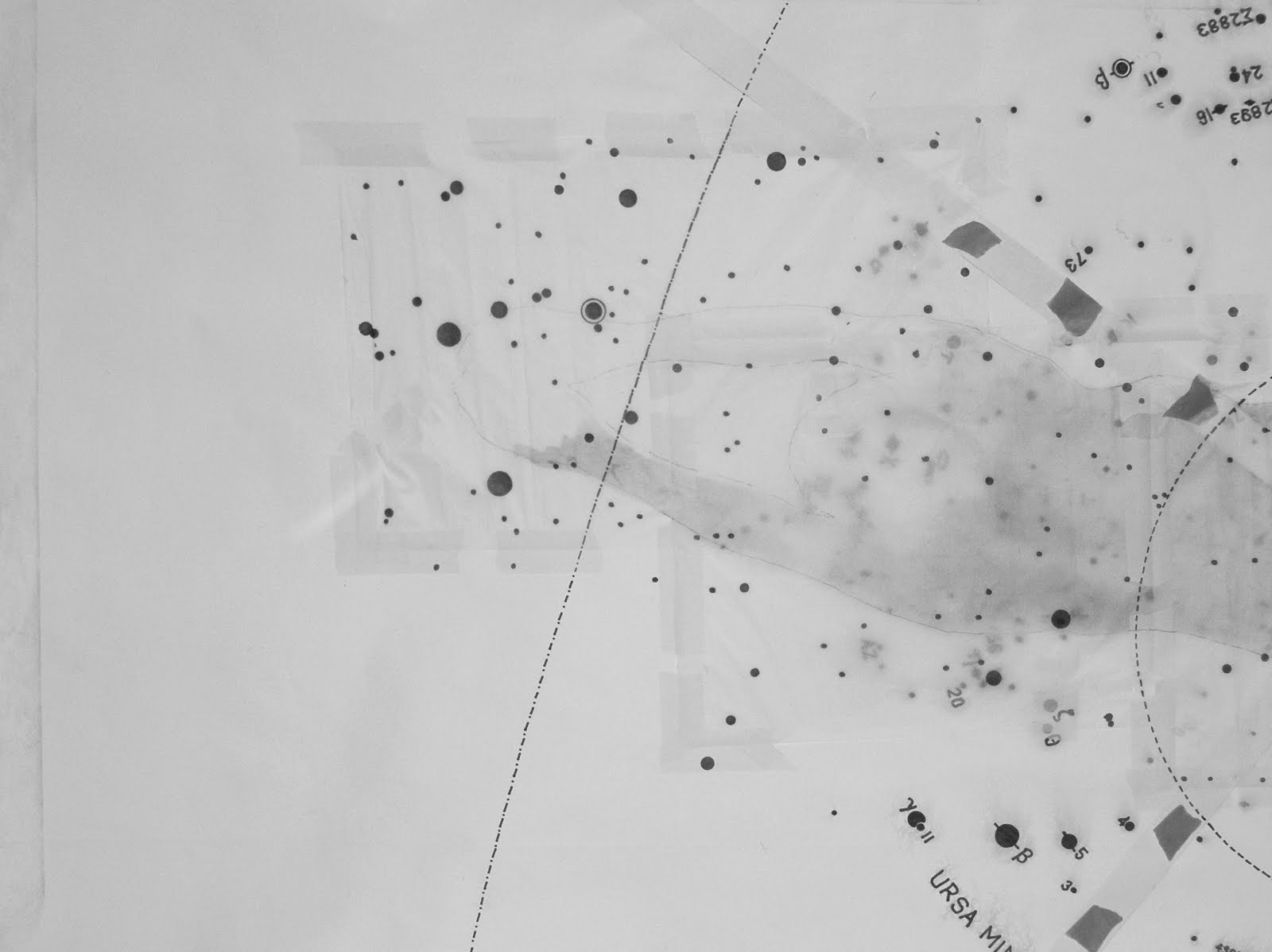
Happy are those ages when the starry sky is a map of all possible paths — ages whose paths are illuminated by the light of the stars. Everything in such ages is new and yet familiar, full of adventure and yet their own. The world is wide and yet it is like a home, for the fire that burns in the soul is that of the same essential nature as the stars; the world and the self, the light and the fire, are sharply distinct, yet they never become permanent strangers to one another, for fire is the soul of all light and all fire clothes itself in light. Thus each action of the soul becomes meaningful and rounded in this duality: complete in meaning — in sense — and complete for the senses; rounded because the soul rests within itself even while it acts; rounded because its action separates itself from it and, having become itself, finds a centre of its own and draws a closed circumference round itself. “Philosophy is really homesickness,” says Novalis: “it is the urge to be at home everywhere.”3
Lukács’s initial reference to this stellar cartography is, of course, metaphorical, but then, so is cognitive mapping or, indeed, any form of mapping. Figuration is a necessary part of the project itself. It is precisely in the figurative discourse of The Theory of the Novel that what I will refer to as his literary cartography is at its most forceful, since the image of the literal map is somewhat confusing under the circumstances. Literary cartography is not a literal form of mapmaking, after all; rather, it involves the ways and means by which a given work of literature functions as a figurative map, serving as an orientating or sense-making form. In this sense, I would argue that Lukács’s project in The Theory of the Novel, which is so often rightly considered a historical or temporal project, also involves a profound sense of spatiality. The Theory of the Novel is an early and influential study of the processes and forms underlying literary cartography.
Crucial to Lukács’s theory of the epic and the novel, form-giving forms by which human beings make sense of their world and invest it with meaning, is the relationship between the individual subject and the milieu in which he or she is situated. Although Lukács does not directly emphasize the particularly spatial aspects of this condition, it is clear that what Lukács refers to poetically as “transcendental homelessness,” the disorientation and angst associated with living in a “world abandoned by God,” has many aspects in common with what Derek Gregory has referred to as the “cartographic anxiety” of modernity.4 In his attention to the way in which the subject makes sense of and gives form to his world through narrative, Lukács’s theory resonates well with Fredric Jameson’s conception of cognitive mapping, insofar as the individual subject attempts to project a map-like figure, a tentative, contingent, and provisional image of the unrepresentable space (for Jameson, the social totality or perhaps even History itself).5 Similarly, but with respect to narrative in particular, literary cartography requires the projection of a figural map through which individual or collective perception and experience may be coordinated with a larger social and spatial totality in meaningful ways. If, as Lukács would have it, “the task of true philosophy” is “to draw that archetypal map,” establishing a connection between subjective experience and objective existence, then the narrative forms of the epic and novel operate as examples of differing modes for engaging in literary cartography.6
Jameson develops the concept of cognitive mapping in relation to his reflections on the postmodern condition, yet the origins of its practice lay in narrative analysis more generally. As I note in my study of his work, Jameson was already using the metaphor of the map (and not merely metaphorically, it should be pointed out) as early as 1968.7 In a brief essay published that year, “On Politics and Literature,” Jameson asserts that the would-be political writer in the United States “has to make something of a map,” by which he or she can
coordinate two different zones of experience and bring them into a coherent relationship to each other. On the one hand he has to do justice to his own lived experience, to the truth of the individual life, of the monad, to the domain if you like of psychology and of the psychological problem. But that isn’t enough: then he has to situate that subjective dimension with respect to the objective, he has to bring the point in relation to the coordinates of the map, he has to give a picture of the objective structure of society as a whole and deal with matters that ordinarily have nothing to do with my own subjective experience, my own psychology, but which are rather ordinarily dealt with in political science textbooks, sociological or economic studies — all those basic questions about how the country is organized, what makes it do what it does, who runs it, and so forth — things I may know about intellectually but which I can’t translate into the terms of my personal experience. The opposition is between subjective and objective, between mere abstract knowledge and lived experience; and the problem for the political writer — perhaps well-nigh impossible to solve — is to find some kind of real experience in which these two zones of reality intersect. But such experiences are very rare: and generally they are only abstract, or allegorical, or somehow symbolic.… Basically, the only way we can think our own individual lives in relationship to the collectivity is by making a picture of the relationship. The notion of a map was such an image, or picture, or the image of an airplane from which you can look down and see masses of life, of houses and cities, disposed out below you like a map.8
How different is this idea from Lukács’s sense of a “transcendental homelessness” in a “world abandoned by God”? Projecting a map-like image of a totality that is not or is no longer accessible through any individual’s lived experience, the storyteller fashions a narrative that can somehow approximate in figurative form the absent totality. In Lukács, of course, this follows from a fundamental breakdown in the relationship of the individual subject to his or her social totality (or Lebenstotalität), which in the “integrated” civilizations of the great Homeric epic is taken to be unified and which in the “problematic” civilizations of the modern novel is viscerally rent. Again, the language is not especially spatial or spatiotemporal, but the phenomenon under consideration is not unlike that spatial confusion or sense of being at sea in the world which Jameson emphasizes in his analysis of postmodern hyperspace.
Jameson’s use of this spatial analogy indicates the degree to which he was already concerned with a recognizably cartographic anxiety of the late modern (or postmodern) existential condition, but the figure of cognitive mapping is particularly relevant to his understanding of realism, and hence one can find in Lukács’s writings, from The Theory of the Novel to Realism in Our Time and beyond, clear precursors to the distinctively Jamesonian concept. For example, Jameson acknowledged that his 1977 article “Class and Allegory in Mass Culture,” an essay ostensibly on the grittily realist crime drama Dog Day Afternoon, was an earlier attempt at illuminating the processes of a cognitive mapping, avant la lettre.9 And Jameson’s first use of the phrase “cognitive mapping,” arguably, appeared in connection to realist narrative in The Political Unconscious, where he observes that “realism… unites the experience of daily life with a properly cognitive, mapping, or well-nigh ‘scientific’ perspective.”10 Yet, for all its value to forms associated with realism, modernism, and perhaps especially postmodernism, cognitive mapping as a figure for what Jameson elsewhere calls “the desire for narrative” can be viewed in retrospect as a critical element of the representational project that Lukács investigates in The Theory of the Novel.11
Lukács’s cultural history imagines three distinctive moments or periods, beginning with the “closed” (geschlossene) or integrated civilization represented by the Homeric epic, moving toward the more problematic relationship between individuals and the Lebenstotalität visible in the medieval epic form of Dante’s Commedia, and on to the more-or-less modern condition of abstract idealism in a “world abandoned by God” so well rendered in the novel form of Don Quixote. In the aftermath of Quixote’s peregrinations, the modern novel registers the distinctive break between self and world, a unbridgeable chasm between subjective and objective reality, which will require a new kind of literary map — the novel itself — best suited to give form to, or make sense of, this condition. In the latter half of his book, Lukács examines the ways in which this works itself out in Goethe, Balzac, Flaubert, and Tolstoy, before declaring that we have not entirely exited the stage of the “romanticism of disillusionment” and coyly suggesting that Dostoevsky’s work lies outside the scope of the study, for he “did not write novels,” and only time will tell whether he is “already the Homer or Dante” of a new world or merely one voice among many that will herald its arrival.12
Lukács establishes a fundamental opposition between the “age of the epic,” that happy era in which the starry sky is the map of all possible paths, and the age of the novel, in which the breakdown of subjective experience and objective reality — a phenomenon Lukács will not be able fully to theorize until he writes his monumental essay on reification in History and Class Consciousness a few years later — necessitates a new form. The Homeric epic, which Lukács also refers to as “strictly speaking” the only true epic form, typifies the condition of this ancient Greek “integrated” civilization.13 The oikoumene made visible in Homer’s narratives is part of a historical plenum, a literary world filled with stories to be woven together in various ways and with various effects, but which all appear to fit within a cognizable totality. Thus Lukács characterizes the age of the epic in terms of “closed” civilizations in The Theory of the Novel, which partly also explains why various stories may be pieced together in such different ways, with some seemingly significant narratives left out entirely and others placed in the foreground. The absence of the Trojan Horse from Homer’s Iliad, for example, is a shock to many modern readers who had every reason to expect its appearance as the climactic moment of the war itself, but because the world of the ancient Greek epic contained that tale in no way required the form of Homer’s epic to include it. In The Poetics, Aristotle praises Homer for recognizing that the unity of a plot does not involve the exhaustive account of a single character’s career:
In composing the Odyssey he did not include all the adventures of Odysseus — such as his wound on Parnassus, or his feigned madness at the mustering of the host — incidents between which there was no necessary or probable connection; but he made the Odyssey, and likewise the Iliad, to center round an action that in our sense of the word is one.14
Unified at its core in a world directly governed and conditioned by the gods, the ancient Greek epic’s space was philosophically stable, and various parts of the map could be examined without disrupting or even touching on the others.
Similarly, what Lukács considers the Lebenstotalität of the classical epic makes available to the epic bard that spatial form which, among other things, allows for virtually any entry point in a given narrative to be as valid as any other. The classic epic begins in medias res, but as Edward Said astutely observed some time ago, this is merely “a convention that burdens the beginning with the pretense that it is not one.”15 Obviously, chronology alone — in some monolithic, rigid, and inconsiderate version of this or that “In the beginning” genesis leading to an absolute, unchanging, and ineluctable telos — has never dictated the form of narrative, and even if the storyteller wishes, naturally enough, to employ chronology as a structuring device, the vicissitudes of time tend to thwart the effort again and again. As Lukács puts it, “[t]he way Homer’s epics begin in the middle and do not finish at the end is a reflexion of the truly epic mentality’s total indifference to any form of architectural construction.”16
This epic indifference to architectonics is reflected in what Joseph Frank famously identified as the genre’s “spatial form.”17 Among other effects of this spatiality, Lukács observes that both character and narrative form are relatively static. “Nestor is old just as Helen is beautiful or Agamemnon mighty.”18 After all, in Lukács’s view, since the epic world is already an integrated totality, the narrative need not project or organize the world’s disparate elements into a totality. One might say that a map is fixed in the mind beforehand, and it is not necessary to create new ones. This is Lukács’s point about the age of the epic having “no philosophy,” since there is no need for that “archetypal map.” Mikhail Bakhtin, in an essay on the distinction between epic and novel, makes a similar assertion: “the epic past is absolute and complete. It is as closed as a circle; inside it everything is finished, already over. There is no place in the epic world for any openendedness, indecision, indeterminacy.”19 For these critics, the contours of the ancient map are more or less fully established prior to the epic’s representation of these spaces, so the Homeric epic is not required to organize the elements of this world into a sensible totality but merely has the duty to present the already-constituted portions of the map or of the history in various, interesting ways.
As I have discussed elsewhere, for Lukács as for Jameson, the desire for such maps arises only when accompanied by that uncanny sense of alienation that could be literalized in the feeling of being lost.20 The key transition between the epic epoch and the age of the novel for Lukács is represented by Dante’s Commedia, itself an epic but also a form that is developing toward a more novelistic or romantische form, perhaps typified in its dramatic opening lines in which the pilgrim finds himself literally and figuratively “lost” in a dark forest (selva oscura), the first sign of a large, symbolic system operating at a level beyond that of the individual subject.21 As Lukács argues,
The totality of Dante’s world is the totality of a visual system of concepts. It is because of this sensual “thingness,” this substantiality both of the concepts themselves and their hierarchical order within the system, that completeness and totality can become constitutive structural categories rather than regulative ones: because of it, the progression through the totality is a voyage which, although full of suspense, is a well-conducted and safe one; and, because of it, it was possible for an epic to be created at a time when the historico-philosophical situation was already beginning to demand the novel.22
Dante’s world is structured according to rigid principles, and yet it is also — as Erich Auerbach so forcefully argued — a profoundly “worldly world” (die irdische Welt), powerfully connecting the abstract moral geography of an Aristotelian or Thomist variety with a human, physical, and visceral experience.23 In Canto XI of the Inferno, for example, the canto in which Virgil explains to Dante just how the lower circles of Hell are organized according to this moral geography, one also notes that the pilgrims are forced to pause because of the irrepressible stench emanating from below. No matter how abstract or idealistic the philosophy, Dante nevertheless situates his hero in the most materially substantial conditions, even in the otherworldly realms.
The abstract yet corporeal experience of the Commedia suggests a sort of dialectical advance in the literary cartography of the epic. Whereas the already well-known tales of Odysseus’s wanderings furnished the raw materials for the Homeric bard to weave into a new whole, Dante’s itinerary is largely restricted by the predetermined, logical structure of the otherworldly territories through which he travels. Literary mapmaking now relies on an impersonal, supra-individual, or even objective body of knowledge to determine its “truth.” In Lukács’s history of epic forms, this represents a powerful break from the earlier epic tradition and a distinctive move in the direction of modern novel. As he puts it,
Dante is the only great example in which we see the architectural clearly conquering the organic, and therefore he represents a historico-philosophical transition from the pure epic to the novel. In Dante there is still the perfect immanent distancelessness and completeness of the true epic, but his figures are already individuals, consciously and energetically placing themselves in opposition to a reality that is becoming closed to them, individuals who, through this opposition become real personalities. The constituent principle of Dante’s totality is a highly systematic one, abolishing the epic independence of the organic part-unities and transforming them into hierarchically ordered, autonomous parts.24
Ironically, perhaps, for such an important religious poem, this is not unlike the technological or scientific developments in the history of cartography, whereby the subjective attempts to orientate oneself in a given space (such as Dante’s selva oscura) must embrace supra-individual or non-subjective means in order to achieve a more accurate representation.
Another modern (or postmodern) example might be useful. In his elaboration of the concept or practice of cognitive mapping, which he took to be an existential and political strategy for coming to grips with the alienating spatial anxiety of the postmodern condition, Jameson illustrates his point by providing historical examples of similarly cartographic practices from earlier epochs.25 This “digression on cartography” starts by examining the ancient itineraries or portulans charts, which in effect were “diagrams organized around the still subject-centered or existential journey of the traveler, along which various significant key features are marked.” With the advent of a more abstract science, aided by such technical developments as the use of a compass or sextant, mapping introduces a new element, “the relationship to the totality,” which will “require the coordination of existential data (the empirical position of the subject) with unlived, abstract conceptions of the geographic totality.”26 Although the Aristotelian ethical order and late-medieval Catholic moral theory are not what we would normally associate with technological or scientific advances in geography and astronomy, Dante’s literary cartography in the Inferno does just this, as it coordinates the pilgrim’s supernatural itinerary with an abstract totality that ultimately shapes the entire terrestrial (and celestial) space and furnishes its significance through the interactions of the individual traveler’s experience and the objective reality. For Dante, this vision can therefore be “true.”
Jameson continues to a third stage, just after Dante’s era but still well before the postmodern epoch in which mapmaking abandons all hope of achieving the sort of true maps that Jorge Luis Borges’s imperial cartographers dreamed of.27 With the advent of the first terrestrial globe in 1490 and the subsequent Mercator projection, “a third dimension of cartography emerges,” which occasions a practical crisis of representation with respect to what Jameson calls “the unresolvable (well-nigh Heisenbergian) dilemma of the transfer of curved space to flat charts.” The “naïvely” mimetic maps — that is, those in which cartographers have honestly attempted to depict the figured space as “realistically” as possible — are not really possible, and indeed are no longer particularly useful. It rapidly becomes apparent that there can be no “true maps,” but it also becomes clear that “there can be scientific progress, or better still, a dialectical advance, in the various moments of mapmaking.”28 Maps based on the Mercator projection notoriously distort the spaces presented, but they become much more useful for navigators plotting courses over long distances. Jameson asserts that this moment represents a watershed in the history of mapmaking, as the impossibility and undesirability of perfectly mimetic maps opens up the possibility of better and more useful maps, maps which are, it may be added, by design expressly figurative or metaphorical.
The logical, hierarchical, and almost scientific vision of Dante’s literary cartography must succumb to the spatiotemporal vicissitudes of a “world abandoned by God” and in an age “in which the extensive totality of life is no longer directly given, in which the immanence of meaning in life has become a problem.”29 In such an epoch, the “age of the novel,” the literary cartography of the world system cannot help but reflect the interiority of the mapmaker.30 The novelist is a cartographer, insofar as she or he must coordinate the various elements of human experience and the world in order to form a new unity, however provisional it may be. “The novel is the epic of an age in which the extensive totality of life is no longer directly given, in which the immanence of meaning in life has become a problem, yet which still thinks in terms of totality.”31 But, as Lukács insists a bit later, the “organic whole” into which the novelist has fused “heterogeneous and discrete elements” is “abolished over and over again.”32 Or, to put it more positively, this uncertain situation also makes possible infinitely new and different maps.
From this perspective, the advent of the age of the novel coincides with the fragmentation of this imagined, ancient coherence or totality. Whereas the epic could reflect the integrated civilization of the ancient Greeks, the novel will have as its vocation the projection of an imaginary, perhaps provisional and contingent, totality, since there is no longer one that we can simply assume. In Lukács’s evocative phrasing, “The novel is the epic of a world that has been abandoned by God.”33
Lukács’s image of the unified totality of the ancients is both romantic, inasmuch as it posits a lost organic wholeness for which we moderns yearn in vain, and largely erroneous, since it is certain that the ancient world also required the surveying of spaces, knitting these spaces together, and projecting a world.34 But it really does not matter whether Lukács — or Hegel or Novalis, for that matter — is “correct” about this historical moment. As Franco Moretti has observed, this is mostly a matter of periodization, of establishing the parameters of a modern world in which meaning is itself the problem. In Moretti’s words, notwithstanding the vast amount of knowledge to be found in the book, “[t]he Theory [of the Novel] is not after knowledge: it is after meaning.”35 The novel for Lukács is above all a form-giving form, whose fundamental vocation is to make sense of, find meaning in, the world and our experience of it. Lukács’s romantic notion of the novel form as an expression of “transcendental homelessness” is of direct relevance to much of the more directly spatial discourse in twentieth-century philosophy and literary theory. So different a thinker as Martin Heidegger postulated that the sense of anxiety, tied to the uncanny (unheimlich) reflected a profound sense of being “not-at-home” (nichts-zu-hause-sein) in Being and Time.36 Whether from a strictly existential perspective or from a more broadly historical and philosophical point of view, this sense of “homelessness” occasions the need for a kind of mapping, which is also the purpose of a literary cartography.
The artistic forms associated with literary cartography undoubtedly derive their force and their desirability from the general unease with respect to our sense of place, what Lukács would have likened to a loss of a sense of totality:
Art, the visionary reality of the world made to our measure, has thus become independent: it is no longer a copy, for all the models have gone; it is a created totality, for the natural unity of the metaphysical spheres has been destroyed forever.37
The representation of reality in a world abandoned by God relies upon a cartographic imperative, by which the novelist projects a figurative map that can, if not restore a sense of transcendental homeliness (assuming that were even desirable at this stage in historical development), at least allow one to become more accustomed to and familiar with the life in exile. Hence, one can see the profound modernism of The Theory of the Novel, less in its nostalgia for the premodern unities than in its embrace of the utopian possibilities of a new world to be mapped and remapped.
This, in turn, makes possible new visions as well. Referring to Joyce’s Ulysses, perhaps the most elaborate reinvention of Homer’s epic in modern literature, Jameson has observed that
it is not the meaning of the Odyssey which is exploited here, but rather its spatial properties. The Odyssey serves as a map: it is indeed, on Joyce’s reading of it, the one classical narrative whose closure is that of the map of a whole complete and equally closed region of the globe, as though somehow the very episodes themselves merged back into space, and the reading of them came to be indistinguishable from map-reading.38
In apprehending the world of the Odyssey in its totality as a spatial form, the modernist artifice becomes a representational mode suited to the far more complex geopolitical system in the twentieth century. The map, like the narrative, is ultimately a means of making sense of the world it depicts, which is why both have such persistent value as tools of knowledge. But above all, the map fosters interpretation and exploration, making it more suited to narrative than to epistemological ends.
In spite of its close association with postmodernism and postmodernity, Jameson has conceded that cognitive mapping is ultimately a “modernist strategy,” for it “retains an impossible concept of totality whose representational failure seemed for the moment as useful and productive as its (inconceivable) success.”39 Unlike the more properly postmodern celebration of the fragmentary or of the incessant play of difference, the necessarily representational project of cognitive mapping cannot help but shore these fragments upon modernity’s ruins, and thus it cannot help but also involve a distinctively utopian dimension.40 The value of the novel form’s literary cartography lies in a similarly utopian, and perhaps therefore impossible, project, since it must constellate the disparate stars which in themselves offer no sure map of any possible paths into a meaningful ensemble that we may use to make our own way in the world. Here, utopia is not the ideal state to be realized, but — as Jameson has stated in various places — a boundary by which we come to comprehend our own imaginative limits, a frame for the map that we create and re-create in various moments along the way.41 The novel as form thus exceeds the epic, since the latter had a kind of transcendent reality to be represented, whereas the novel’s literary cartography generates its own territories at it allows us to explore them. Lukács’s warning about art’s inability to transform the world — “the great epic is a form bound to the historical moment, and any attempt to depict the utopian as existent can only end in destroying the form, not in creating reality” — is well taken, but the final word of The Theory of the Novel offers the barest hope of a new world resistant to “the sterile power of the merely existent.”42 In a characteristically modernist and Marxist formulation, then, we see the dialectic of modernity played out in the literary forms of its age. The maps are no longer laid out in the firmament before our eyes, but the promise of new, different, and hitherto unimaginable cartographies impels us to give form to, and make sense of, those radically alternative spaces and places that we will ineluctably occupy and attempt to represent.
György Lukács, The Theory of the Novel, trans. Anna Bostock (Cambridge, MA: MIT P, 1971) 12.BACK
Lukács, Theory of the Novel 11–12.BACK
Theory of the Novel 29.BACK
See Derek Gregory, Geographical Imaginations (Oxford: Blackwell, 1994) especially 70–75.BACK
See Fredric Jameson, Postmodernism, or, the Cultural Logic of Late Capitalism (Durham: Duke UP, 1991) 51–54.BACK
Theory of the Novel 29–30.BACK
See Robert T. Tally Jr., Fredric Jameson: The Project of Dialectical Criticism (London: Pluto, 2014) 100–102.BACK
Fredric Jameson, “On Politics and Literature,” Salmagundi 2.3 (Spring-Summer 1968) 22–23.BACK
Fredric Jameson, Signatures of the Visible (London: Routledge, 1990) 54.BACK
Fredric Jameson, The Political Unconscious: Narrative as a Socially Symbolic Act (Ithaca: Cornell University Press, 1981) 104.BACK
Fredric Jameson, “Introduction,” The Ideologies of Theory: Essays, 1971–1986, Volume 1: Situations of Theory (Minneapolis: U of Minnesota P, 1988) xxviii.BACK
Theory of the Novel 152–153.BACK
Theory of the Novel 30.BACK
Aristotle, Poetics, trans. S. H. Butcher (New York: Hill and Wang, 1961) 67.BACK
Edward W. Said, Beginnings: Intention and Method (New York: Columbia UP, 1985) 43.BACK
Theory of the Novel 67.BACK
See Joseph Frank, The Idea of Spatial Form (New Brunswick: Rutgers UP, 1991).BACK
Theory of the Novel 121.BACK
Mikhail Bakhtin, “Epic and Novel,” The Dialogic Imagination: Four Essays, ed. and trans. Caryl Emerson and Michael Holquist (Austin: U of Texas P, 1981) 16.BACK
See Robert T. Tally Jr., Spatiality (London: Routledge, 2013) 1–7.BACK
As Jonathan Arac points out, citing Friedrich Schlegel’s “Letter on the Novel,” the German word romantische could be translated either as “romantic” or “novelistic,” and hence referring to a work as a “romantic novel” (a potentially oxymoronic expression for some English readers) would seem almost a tautology — that is, a “romantic romance” or a “novelistic novel” — in German. See Arac, “‘A Romantic Book’: Moby-Dick and Novel Agency,” boundary 2 17.2 (1990) 44.BACK
Theory of the Novel 70.BACK
See Erich Auerbach, Dante: Poet of the Secular World, trans. Ralph Mannheim (New York: NY Review of Books P, 2001).BACK
Theory of the Novel 68.BACK
Fredric Jameson, Postmodernism, or, the Cultural Logic of Late Capitalism (Durham: Duke UP, 1991) 51–54.BACK
Jameson, Postmodernism 52.BACK
See Jorge Luis Borges, “On Exactitude in Science,” Collected Fictions, trans. Andrew Hurley (New York: Penguin, 1999) 325.BACK
Postmodernism 52.BACK
Theory of the Novel 88, 56.BACK
For Lukács, this “age” has begun by the time Don Quixote makes his first sally, but Arac has used this phrase to name a more recent epoch extending from the early nineteenth to the middle twentieth centuries, a period in which the novel — over and against, say, poetry, drama, or other forms — dominated Western cultures; see Jonathan Arac, Impure Worlds: The Institution of Literature in the Age of the Novel (New York: Fordham UP, 2011).BACK
Theory of the Novel 56.BACK
Theory of the Novel 84.BACK
Theory of the Novel 88.BACK
See, e.g., François Hartog, The Mirror of Herodotus: The Representation of the Other in the Writing of History, trans. Janet Lloyd (Berkeley: U of California P, 1988).BACK
Franco Moretti, “Lukács’s Theory of the Novel: Centenary Reflections,” New Left Review 91 (Jan–Feb 2014) 41.BACK
See Martin Heidegger, Being and Time, trans. John Macquarrie and Edward Robinson (New York: Harper and Row, 1962) 233.BACK
Theory of the Novel 37.BACK
Fredric Jameson, “Modernism and Imperialism,” The Modernist Papers (London: Verso, 2007) 167.BACK
Postmodernism 409.BACK
See, e.g., Robert T. Tally Jr., Utopia in an Age of Globalization: Space, Representation, and the World System (New York: Palgrave Macmillan, 2013).BACK
See, e.g., Fredric Jameson, Archaeologies of the Future: The Desire Called Utopia and Other Science Fictions (London: Verso, 2005) 232–233.BACK
Theory of the Novel 152–153.BACK
ISSN: 1942-2458 // © 2007-16 Mediations // Site by Nora Brown Design.












 Russell Moreton : Matter(s) in Correspondence