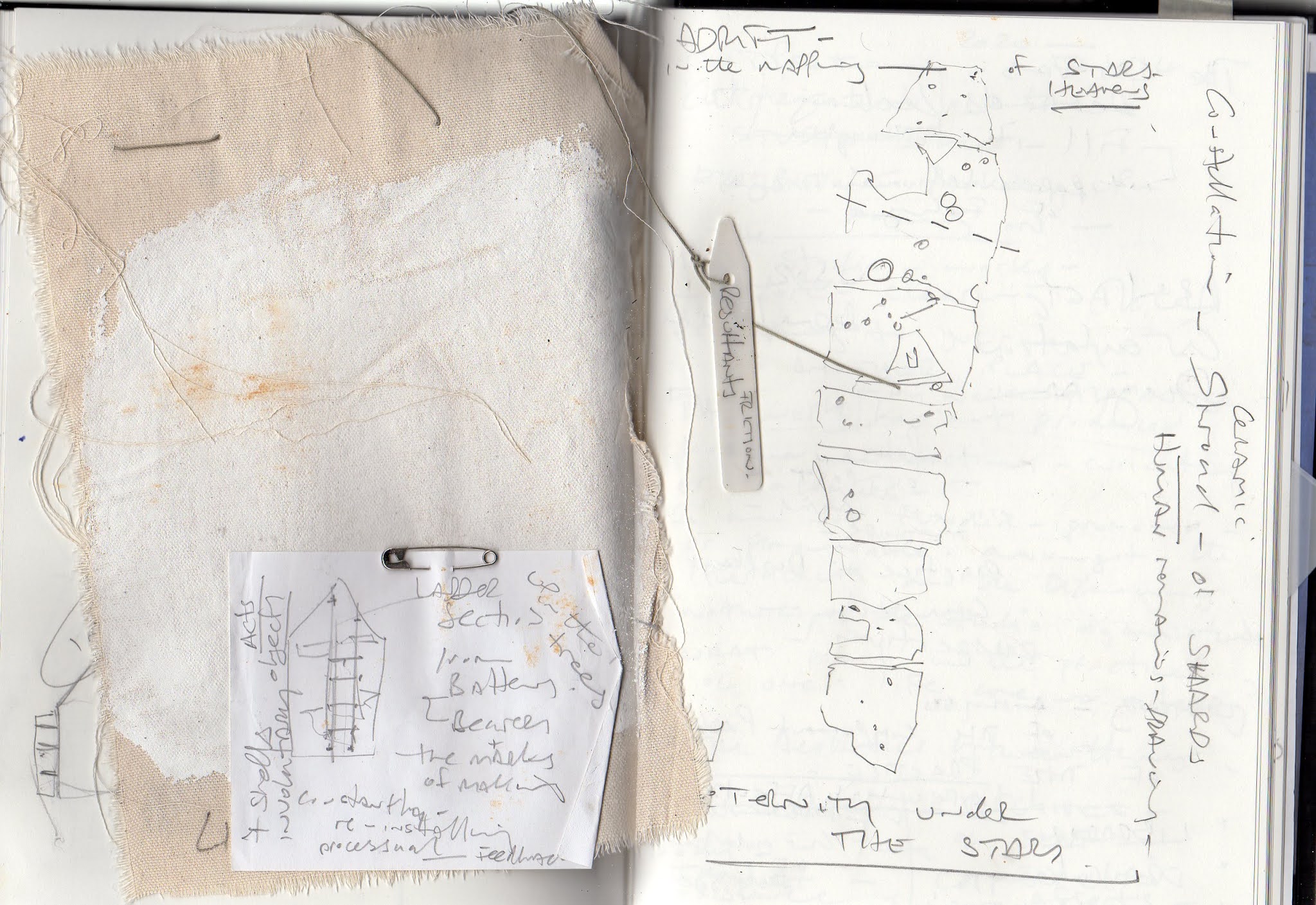
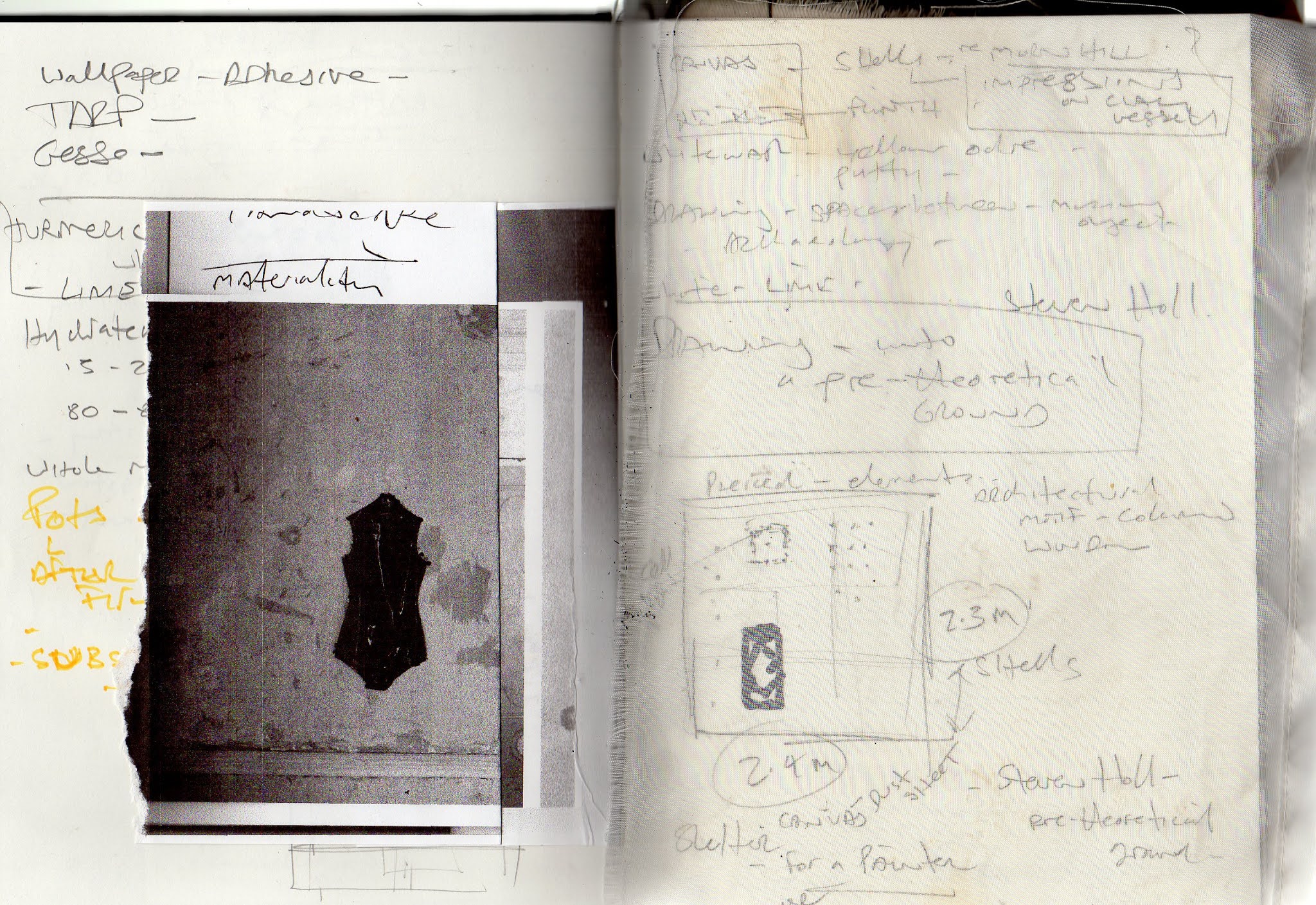
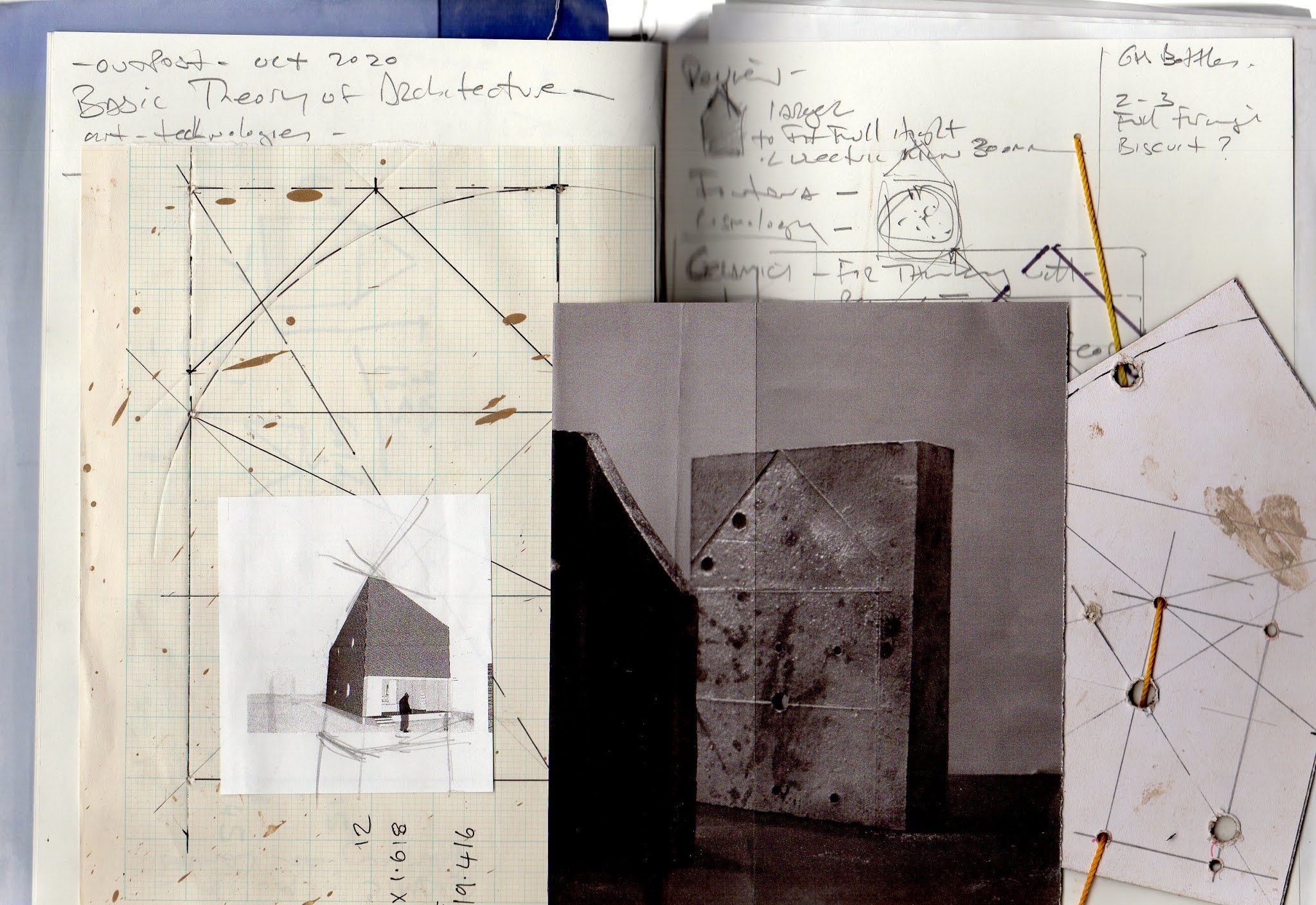
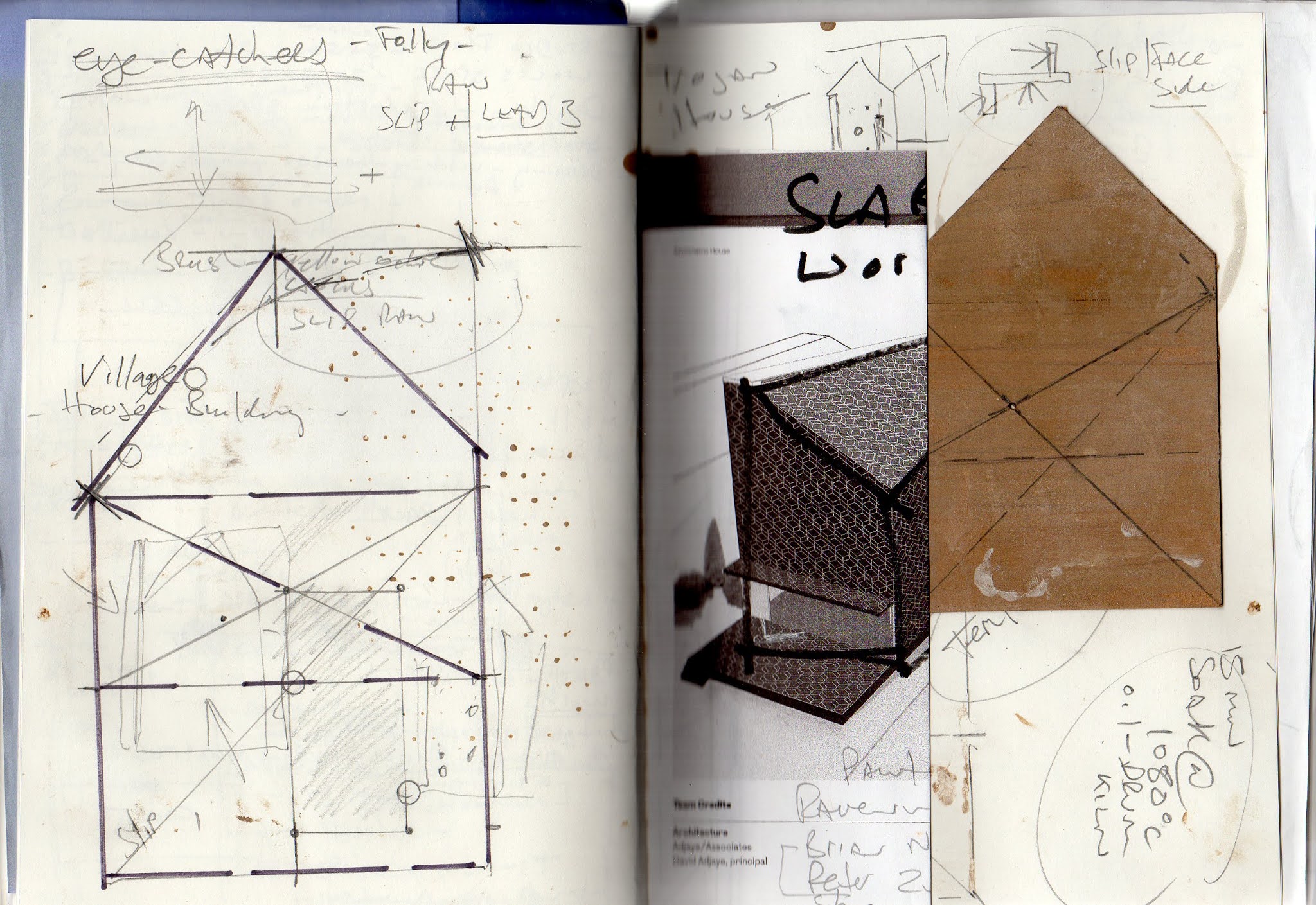
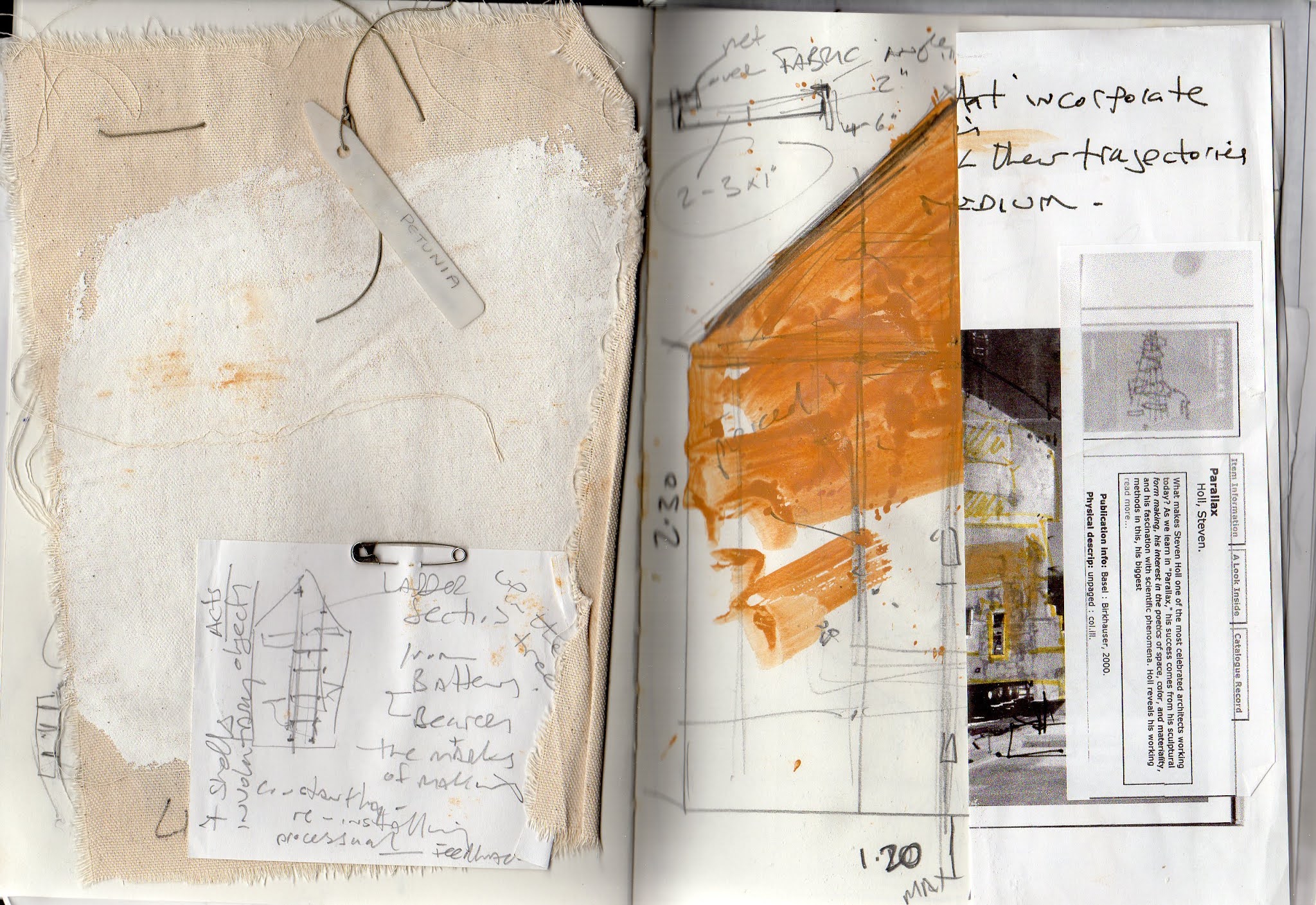
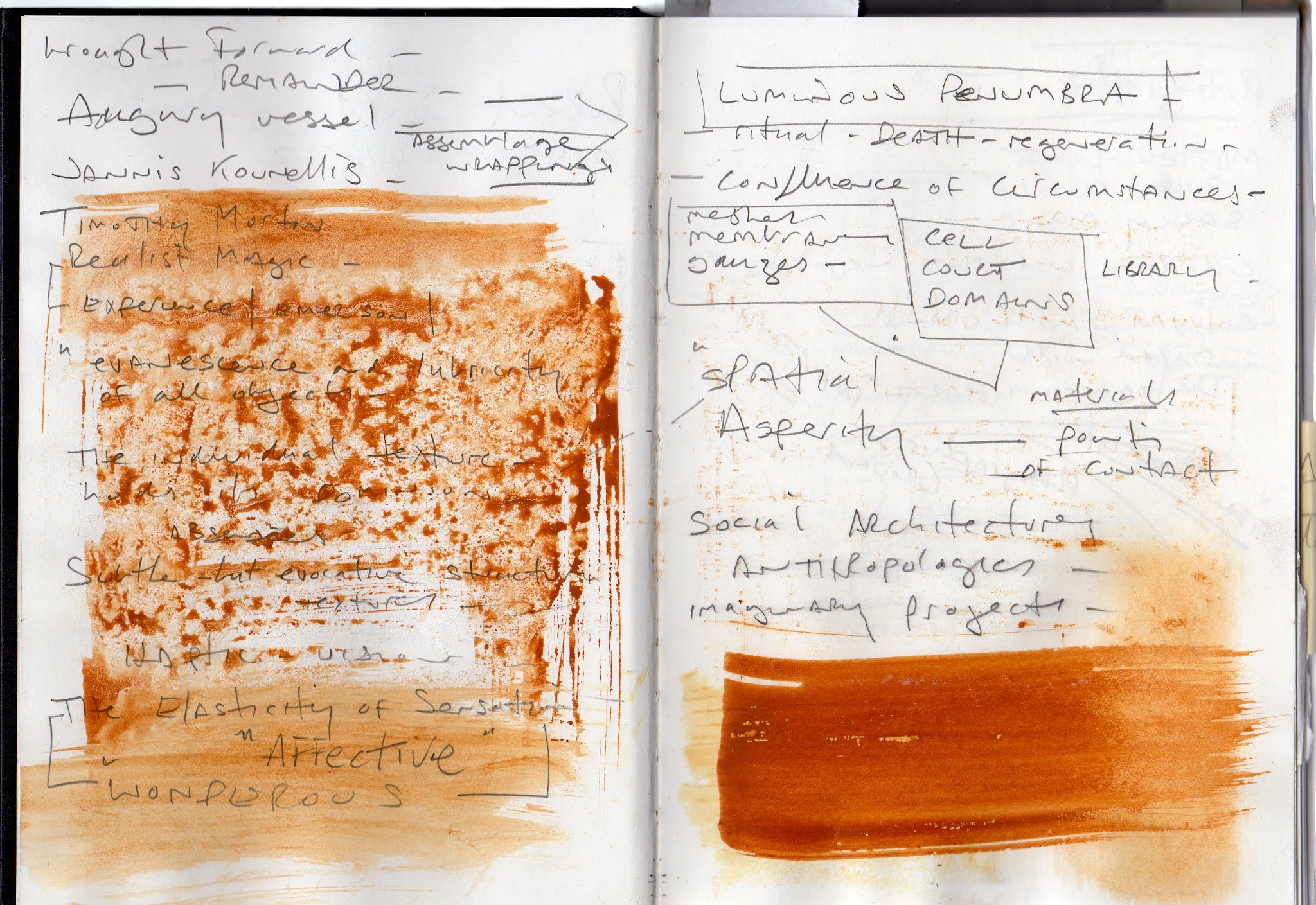
Spatial Practices : Experimental drawing and alternative photography.

  • Inquiry is essentially the way of learning : Fragile Architectures of Hapticity and Time

    In an era in which architecture is once more learning its potential as a form of inquiry, rather than as a service — as a producer of knowledge, and not merely of ‘projects’.

    Brett Steele, Atlas-Tectonics in Barkow Leibininger, Bricoleur Bricolage. AA 2013

    Inquiry is essentially the way of learning.

    On Learning ‘The Cultivation of a Good Mind’ J. Krishnamurti, Brockwood 1963

    THE WAVERLEY INQUIRY
    ROOMS AS EXPERIENTIAL OUTPOSTS

    Translations from Drawing to Building.

    Robin Evans.

    Interiors crafted as a palimpsest of augmented realities.

    Robin Evans, Figures, Doors and Passages.

    The architect is Not a Carpenter:

    On Design and Building, a talk by Tim Ingold Fieldwork on Foot: Perceiving, Routing, Socializing

    Jo Lee, Tim Ingold.

    The Perception of the Environment,

    Essays on Livelihood, dwelling and Skill, Tim Ingold.

    The Aesthetics of Decay

    Nothingness, Nostalgia, and the absence of Reason, Dylan Trigg. The Projection Room (the darkened room, camera obscura)

    Ruin In Architecture and Cinema, Kiefer, Pallasmaa

    Sculpting in Time, Tarkovsky

    The Artist/’Monk, Andrei Rublev (Tarkovsky 1966)

    Six Memos for the New Millennium, Italo Calvino Architecture as a stage for the effects of an immersive cinema. Palimpsest

    Edward De Waal, Antony Gormley, Studio Spaces designed by Architects. Tony Fretton on Retreats, Creative Centres and Exhibition Spaces. Herzog and De Meuron, Working Models, Surfaces, Images and Materials.

    Subversive Libraries, researching between the walls of culture and politics.

    A HUT WITHIN THE INFLUENCE AND NATURE OF ARCHITECTURE

    The tendency of technological culture to standardize environmental condition

    and make the environment entirely predictable is causing a serious sensory impoverishment. Our buildings have lost their opacity and depth, sensory invitation and discovery, mystery and shadow.

    Juhani Pallasmaa. Hapticity and Time. Notes on Fragile Architecture. 2000
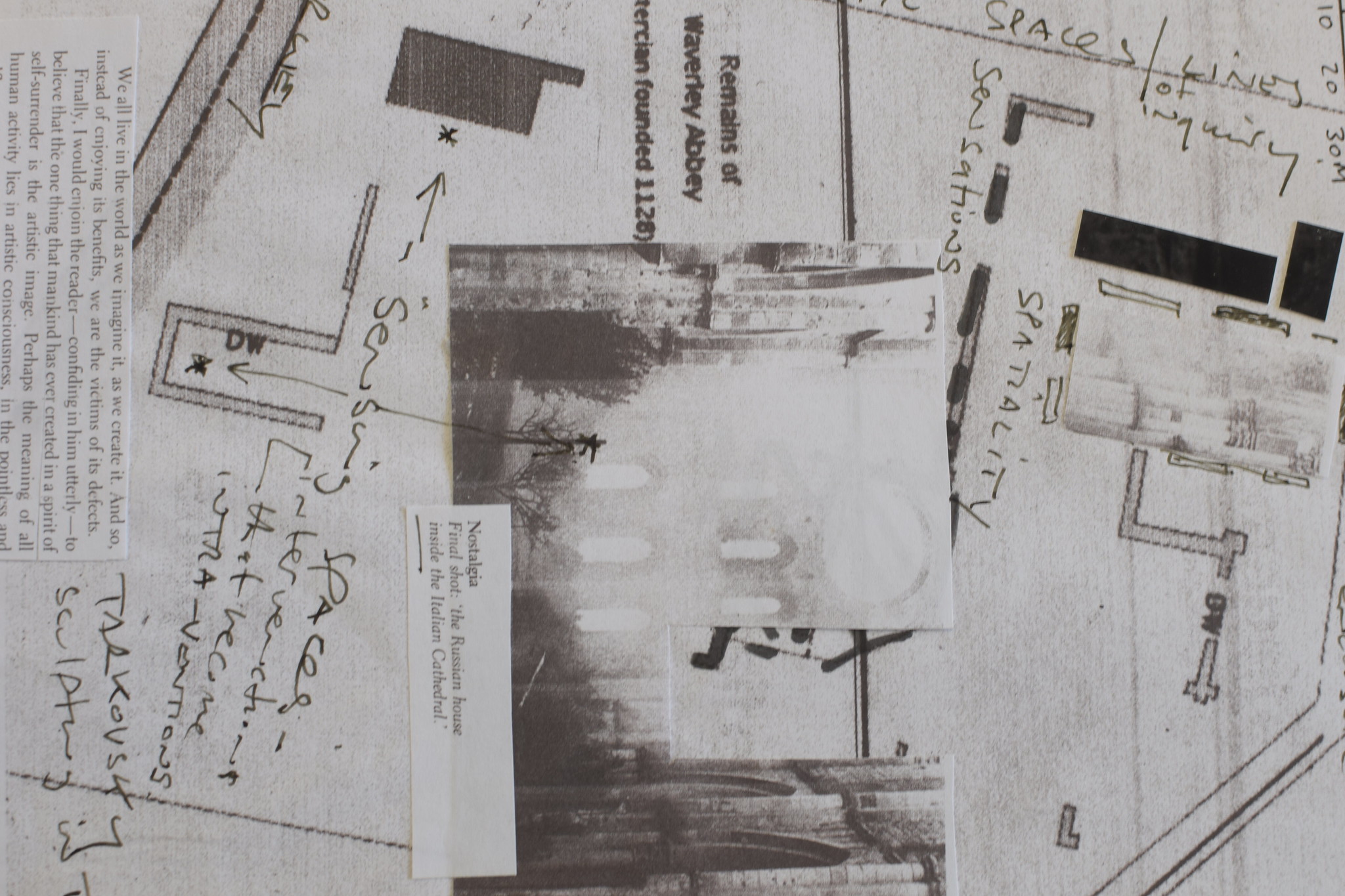
    The Scriptorium Description of Work

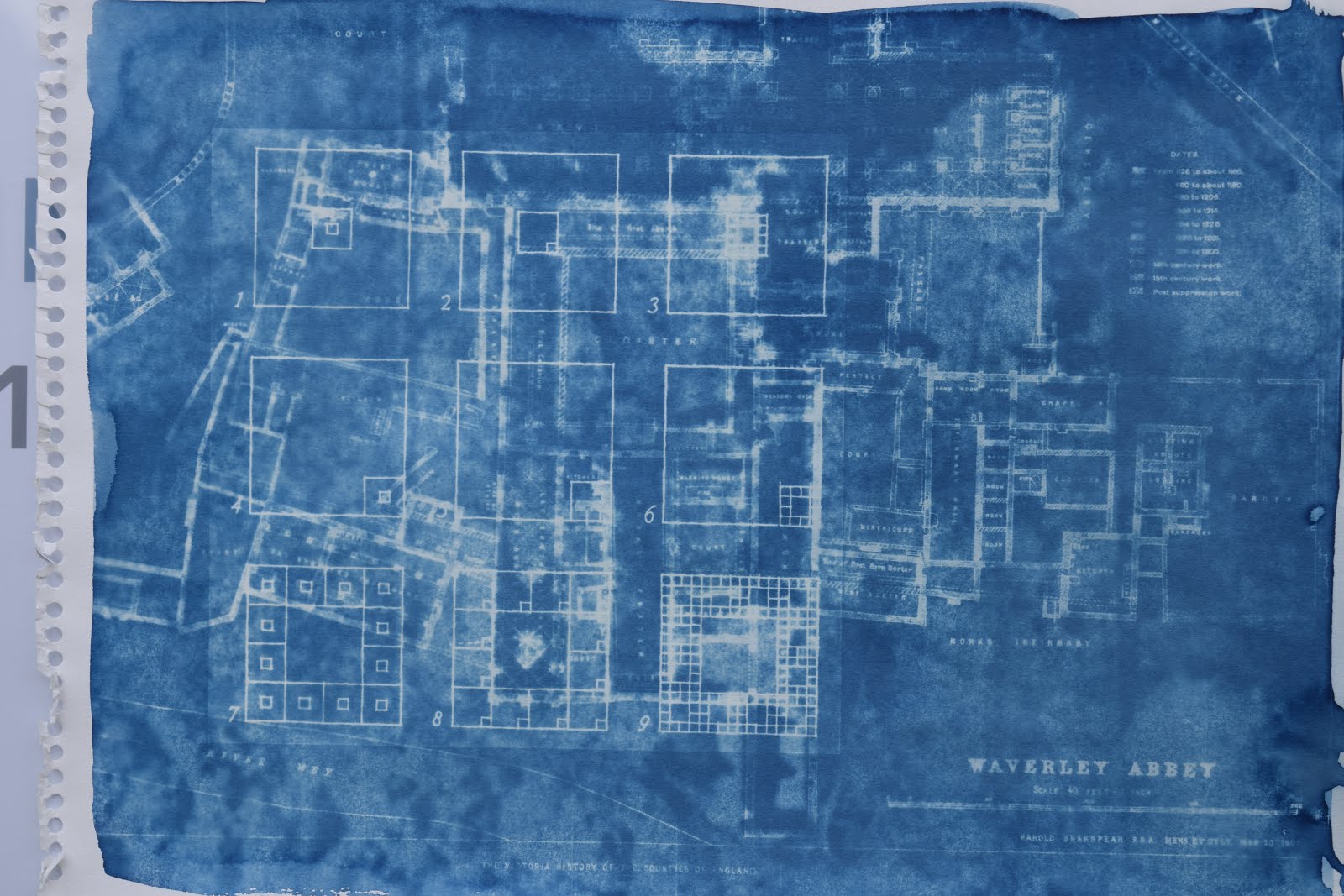
    The ruined site of the abbey at Waverley, near Farnham has been appropriated as a site and as a place within which to position and develop architectural and sociological inquires. The design processes of interiors have been employed as a tool to both critique and to create how we might further develop the contents of architecture. This Spatiality and its diffractions of differences and similarities, narratives and subjective experiences are what my interior spaces attempt to initiate.

    Design as a interactive structure, an interlocutory interior in the making of space and spatial relations.

    Interior design presented as an interactive and immersive spatial inquiry

    The Scriptorium brings together a varied and discursive set of objects, texts and i interior architectures. This work seeks to understand how the virtual changes physical architecture and how this affects the space between people and buildings. The “performativity of research” is presented through specifically designed apparatuses and partitions. These designed components, made objects together with annotated texts and drawings conspire to create a complex design led inquiry a “Place Study” staged in a niche-like space. This interior presents itself as both distinct and relational to the other projects in the MA Interiors Show. The interior presents the many manifestations of creative research, structures and even symposia that have been developed through engaging with the site. The visualization of the research and the relational architectures rendered through montage and collage explores digital and analogue technologies. This hybridisation and the use of pinhole photography and film footage further explore interests in the field of performance as an immaterial architecture drawn in the presence of place.

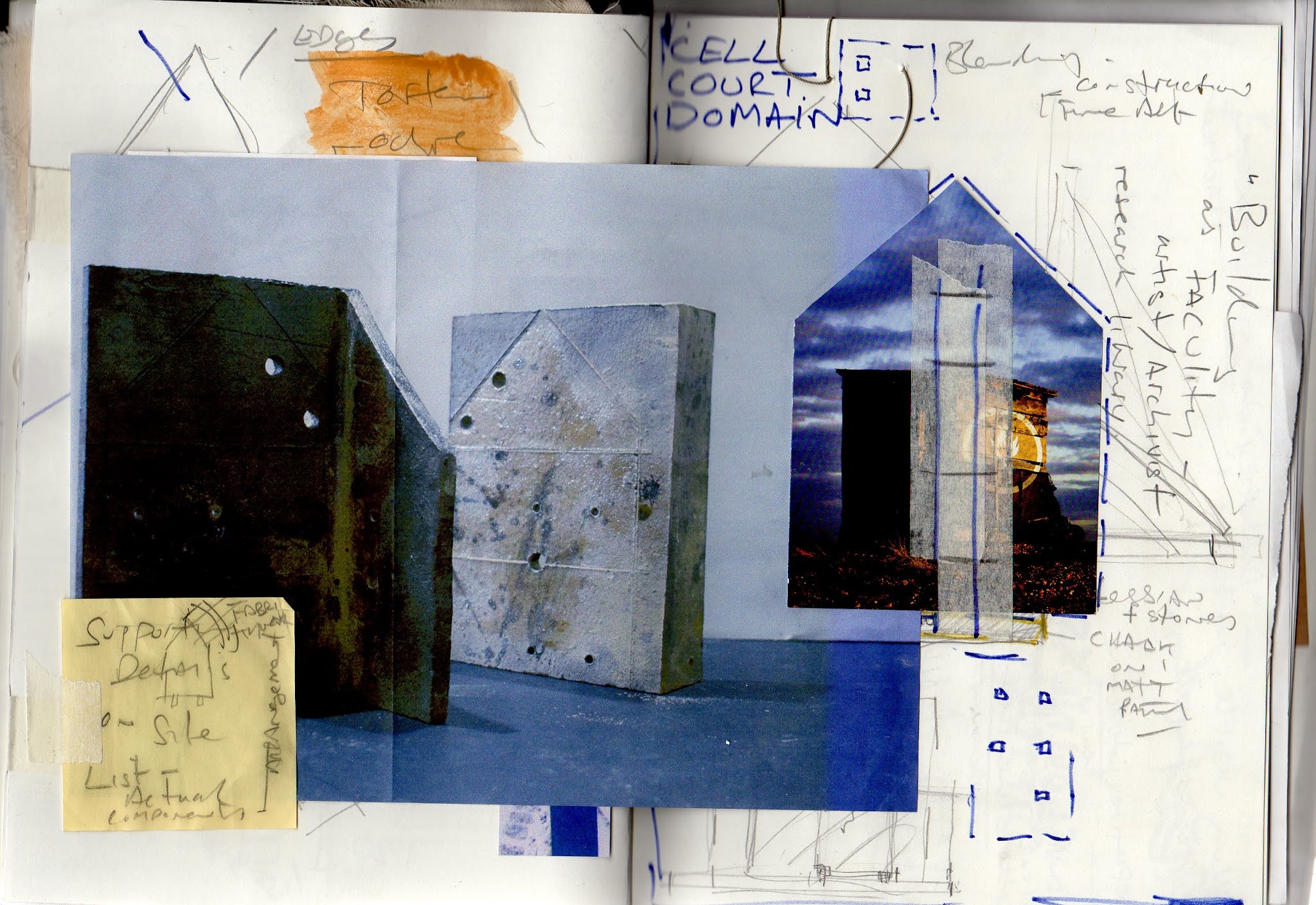
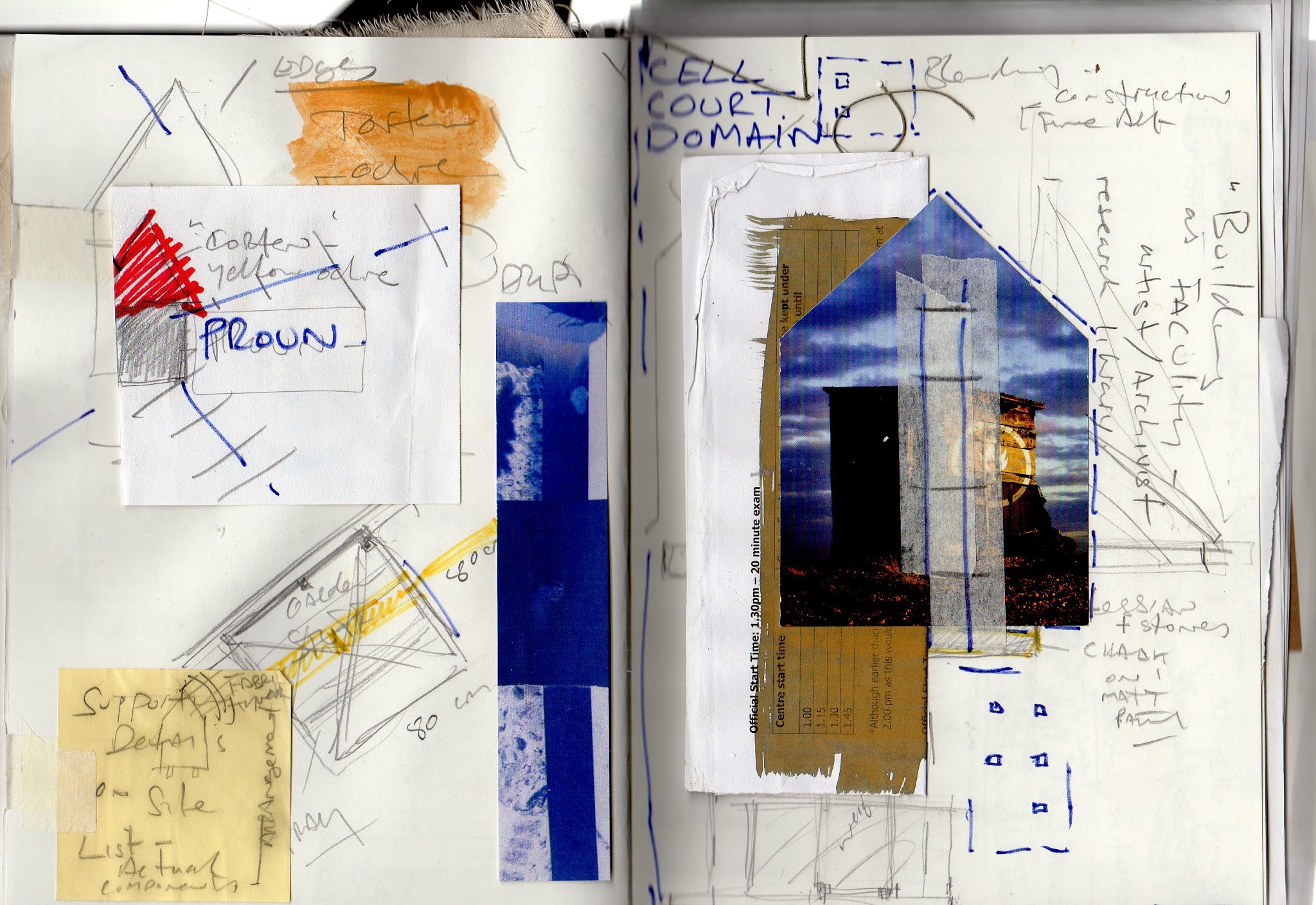
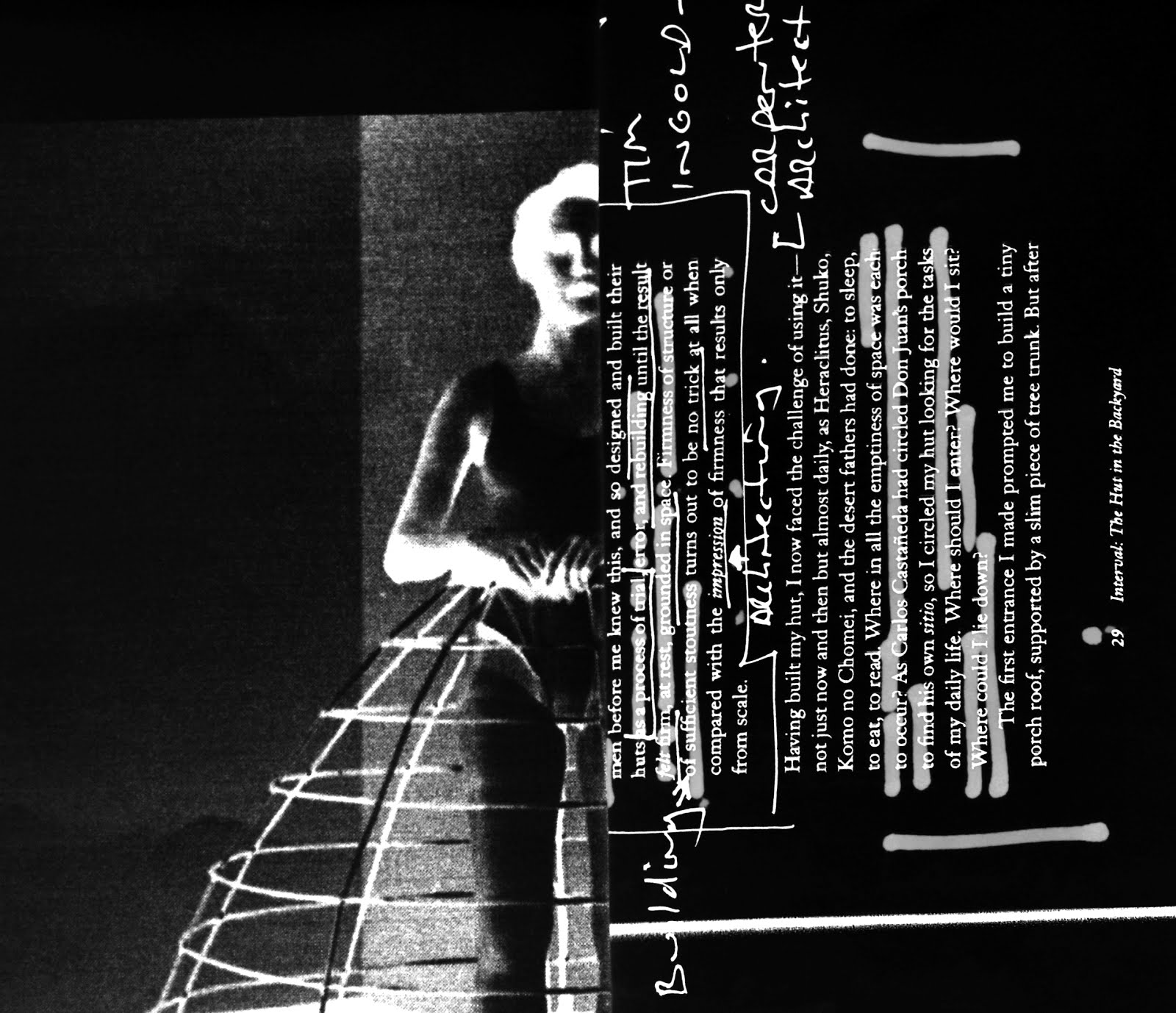
    The realisation of my interiors project consists of two separate but relational elements that are presented into a built environment. The small ‘Scriptorium’ conceived as a space as a refuge, an intimate minimal construction that features a doorway and an interior that contains a place for objects, perhaps books, as well as a small sitting area. This construction, an open cell perhaps is evocative to a state of contemplation between the fabric of the everyday. The rather hybrid design appropriates a merging of minimalism, modernism and the plastic architecture of a ruined Cistercian Abbey. The construction comes into close contact with its occupant, it is a restricted spatial apparatus that attempts to promote through its awkwardness distinctive experiences. In particular the apparatus of the Scriptorium and its materiality is attempting to promote a sensory intensification that is further underpinned by the cognitive processes of reading and perhaps other social dialogues. The sensory intensification of a hut like space promotes a haptic sensibility, allowing the nearness and intimacies of both the built space and the imaginative, virtual realm to become entangled. Ultimately the Scriptorium is trying to build on unique human subjectivities that are manifested through a kinaesthetic repertoire or script that helps to enact further spatial experiences. It might be useful to think of this constructed space as itself still under construction, a site that acts as its own vessel within the multiplicities of human perception itself. The influence of the Cistercian Order, the site of Waverly Abbey and its pastoral landscape, have all contributed to a sense of the design process, The Scriptorium like the ruins themselves is open to the elements. Waverley Abbey remains as a sensory site between the remains of architecture and its society and the effects of our own global culture in the information age.

    In troubled times they all sought to experience life away from social definitions of success or failure. From there, these primitive huts marked personal, original inquires into the ever-mysterious nature of human existence.

    Anne Cline. A Hut of One’s Own

    Life Outside The Circle Of Architecture.

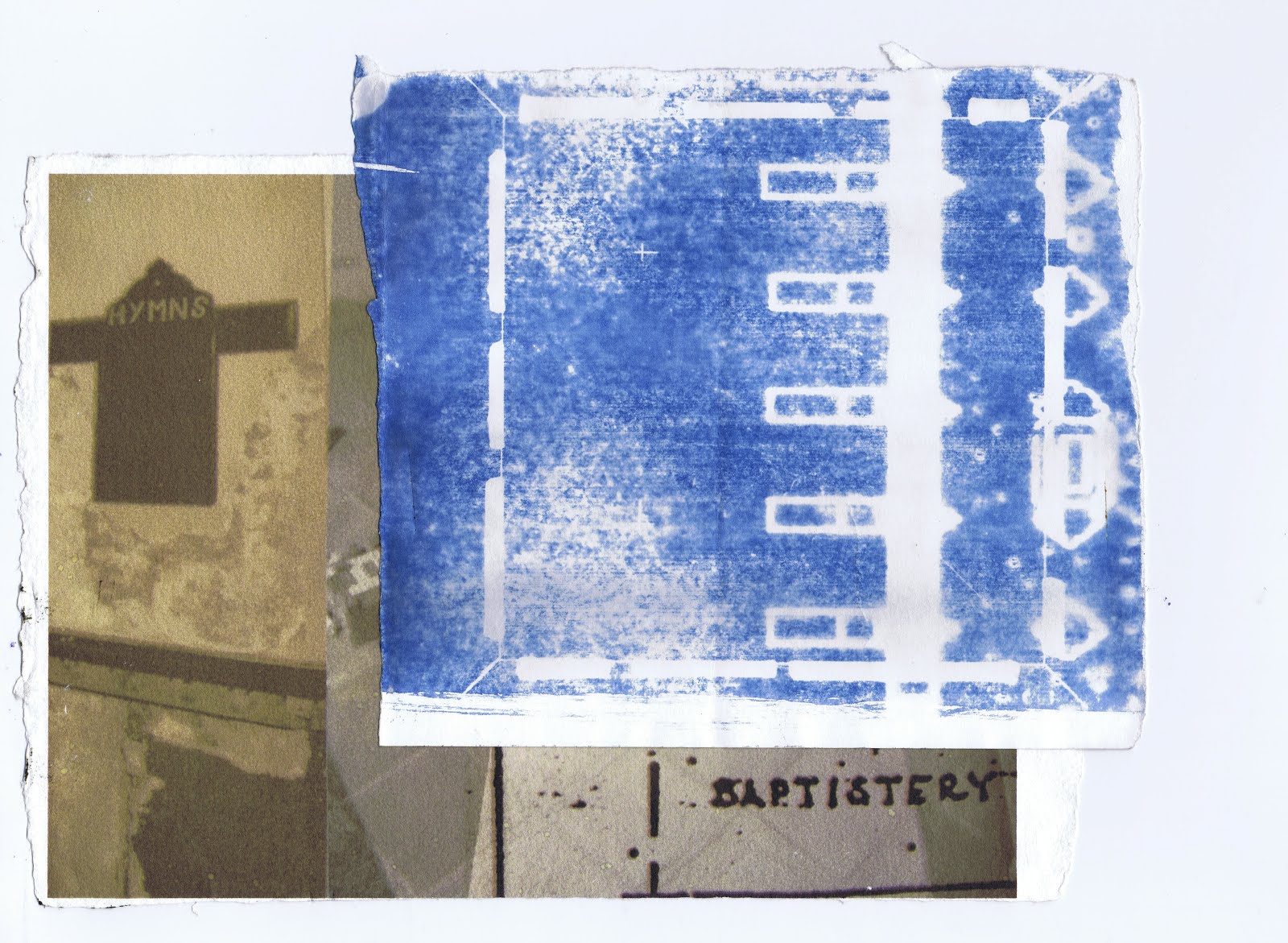
    The Scriptorium began through a research of both architectural themed texts and documentation of the site, and creative practice involving photography (digital, analogue and film) art practices of collage and drawing. The many visits promoted my own subjectivities to the site and these were also frequently subjected to change by the intervention of others in unexpected ways, these social intrusions by other revealed the very boundaries that the historic site engenders, some playful other malicious. These extremities within the social order of the visitors became problematic in designing for the site itself. An earlier proposal to host a Symposium centred on the Arts and The Humanities, that would use the Abbey and its surrounding ground appeared to be a project of vast diversities and logistics better suited to a cultural project through arts management and funding. As the project developed certain creative methodologies around particularities of the site itself began to appear, the notion of palimpsest being one of them. This promoted the idea of a reading room, as an ephemeral interior space that gathers up the experiential values of ‘ruins’ and re-enacts them as a site to explore the architectures of images. It became apparent that ‘palimpsest’ could be both a visual surface of erasures, earlier markings partially over written by newer ones ‘annotations’ and it could be a scaffold of developing ideas clearly visible merging as adaptations into the very usage of the site.

    These re-imaginations through the notion of palimpsest seemed filmic and as such they would able to display a vast amount of diversities and subject matter, a library of recourses that would require users or an audience or both. The referencing of the reading room to the library, and the symposium to the cinema or theatre allowed me to realise that I was dealing with a number of spatial arrangements that needed to develop together, but which could be employed separately. The theatre of research became the vehicle in which to see if this collaboration might be possible.

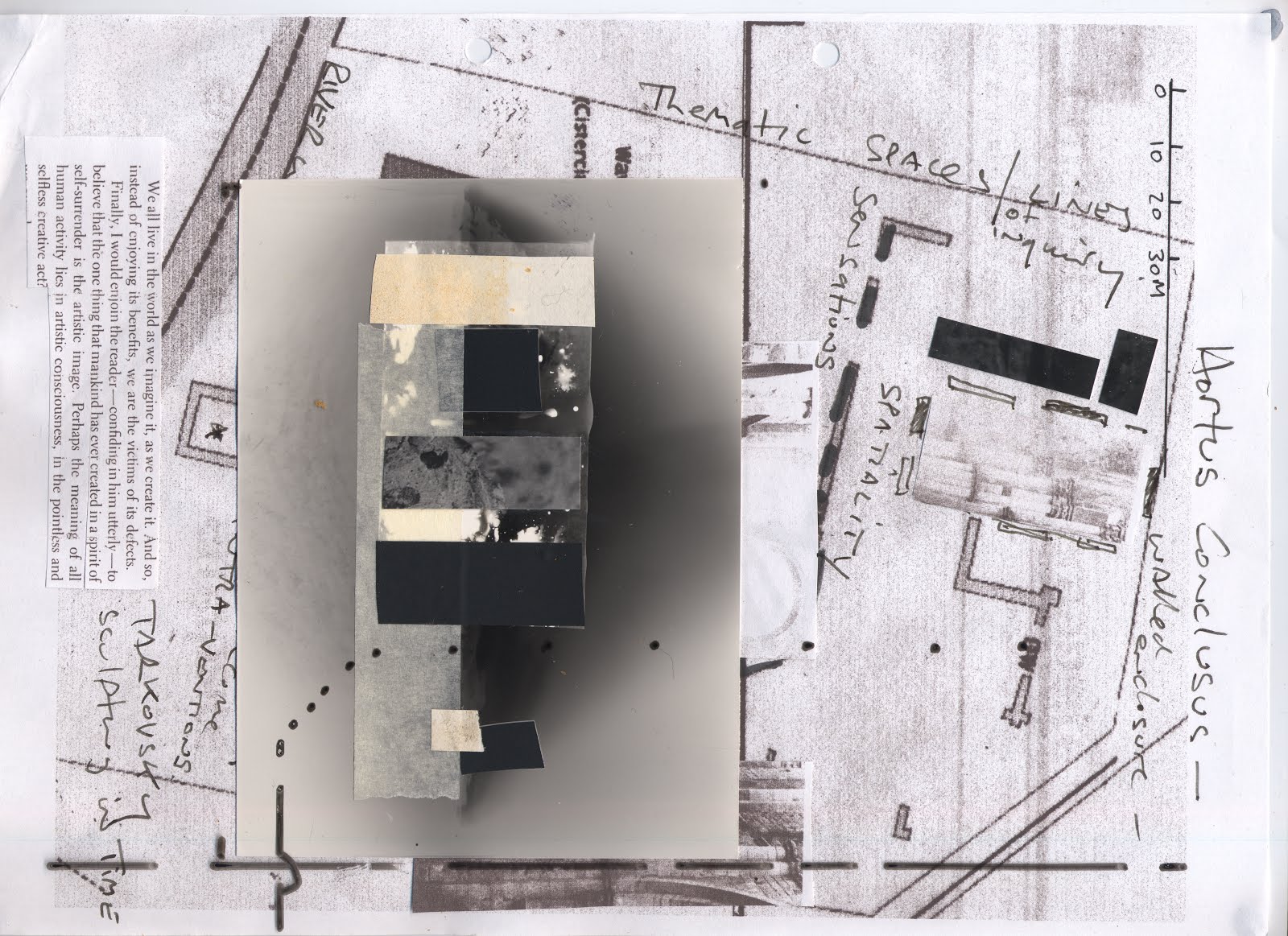
    The use of the image and text in my architectural collages allowed me to visualize associations, to create the possibilities of interior spaces that might be manifested into the built environment. The use of the collage in Architecture is widely acknowledged, architects from the likes of Mies van der Rohe, Daniel Libeskind and Rem Koolhaas. The ability of the collage process to juxtaposition fragments, images and texts from irreconcilable origins into an experience, that is visual, tactile and time-based makes it an interesting tool into the realms of architectural design. Collage begins to visualise not only the structure of spaces but also there content and circulation. The theatre of research is interested in how to promote collage and its use as a cognitive and perceptive tool in architecture.

    Collage and montage are quintessentially techniques in modern and contemporary art and filmmaking. Collage combines pictorial motifs and fragments from disconnected origins into a new synthetic entity, which casts new roles and meanings to the parts. It suggests new narratives, dialogues, juxtapositions and temporal durations. Its elements lead double-lives; the collaged ingredients are suspended between their originary essences and the new roles assigned to them by the poetic ensemble.

    Juhani Pallasmaa. The World is a Collage

    Jennifer A. H. Shields. Collage and Architecture

    Both the Scriptorium and The Theatre Of Research exist only in the form of the exhibition presentation. What they singularly of together propose can only be imagined through their manifested form as static objects placed within a built structure that loosely references architectural concerns and materials. They appear diminished and assigned to the voyeuristic gaze of the visitor that is equally curios and dismissive. These objects and the interior spaces they promoted seem stilled and stalled, as much they appear beyond reach as if the authenticity of their materials and construction have some how been subsumed by their stature and scale. The issues and qualities of which they are attempting to speak of seem reduced by the hegemony of vision, there is little hapicity and time to encounter, only it seems by investing narratives can we begin to re-enact the spatial encounter.

    How might the performativity of research be staged, and into what contexts might it be appropriated?

    As Hans Ulrich Gumbrecht notes, we live in a culture of meaning, not in a culture of presence. We constantly produce effects of meaning and multiply them with mass media. This applies not only to the humanities but also to a large degree to our wholly normal everyday lives. And in this respect, our experience of presence is getting drastically lost.

    Art works may never completely be explained by theory or meaning. The sensual, material makeup of the work in its presence is not the cinders, slag, and ashes, the undigested remains of theory, but remains of an intensified moment

    Peter Lodermeyer.Time, Symposium Amsterdam 2007.

    Personal Structures, Time, Space, Existence.

    The question I ask is do these objects and their interior spaces cause me to think beyond mere representation and recognition, or rather do they create enough of an encounter to force me to engage with them, even if I or the viewer are un-certain as to their meaning or possible outcome. Deleuze comments that something forces us to think. This something is not an object of recognition, but a fundamental encounter. Something that challenges us. Have these miniature architectures of objects become relational, do we start to use them in perhaps a heuristic manner, a hands-on approach to learning or inquiring, something that we can discover for ourselves. This heuristic finding-out could be made informative through collective collaborations and exhibition through the theatre of research. Is design stripping us of our qualitative spaces as the digital tooling removes the makers trace.

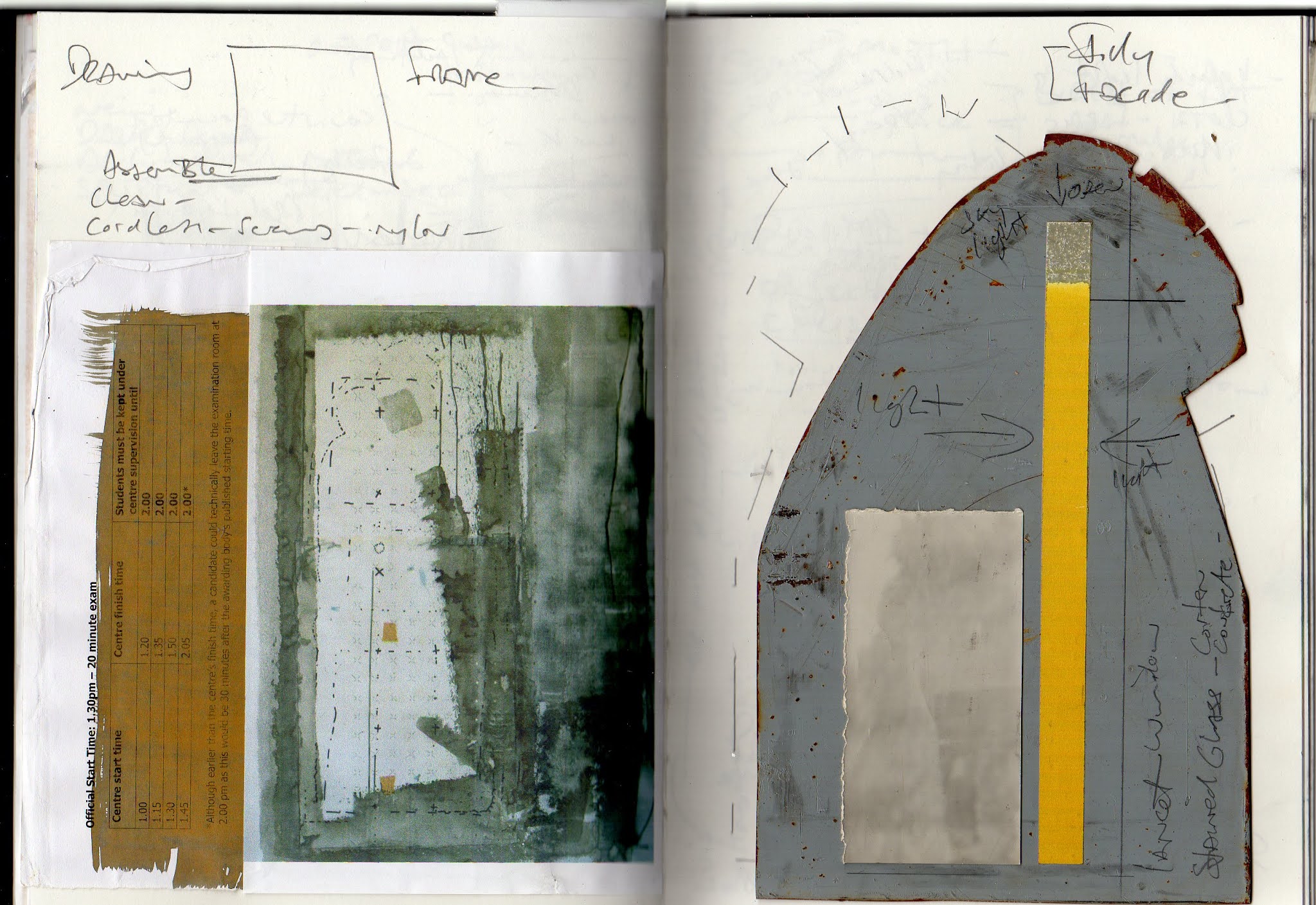
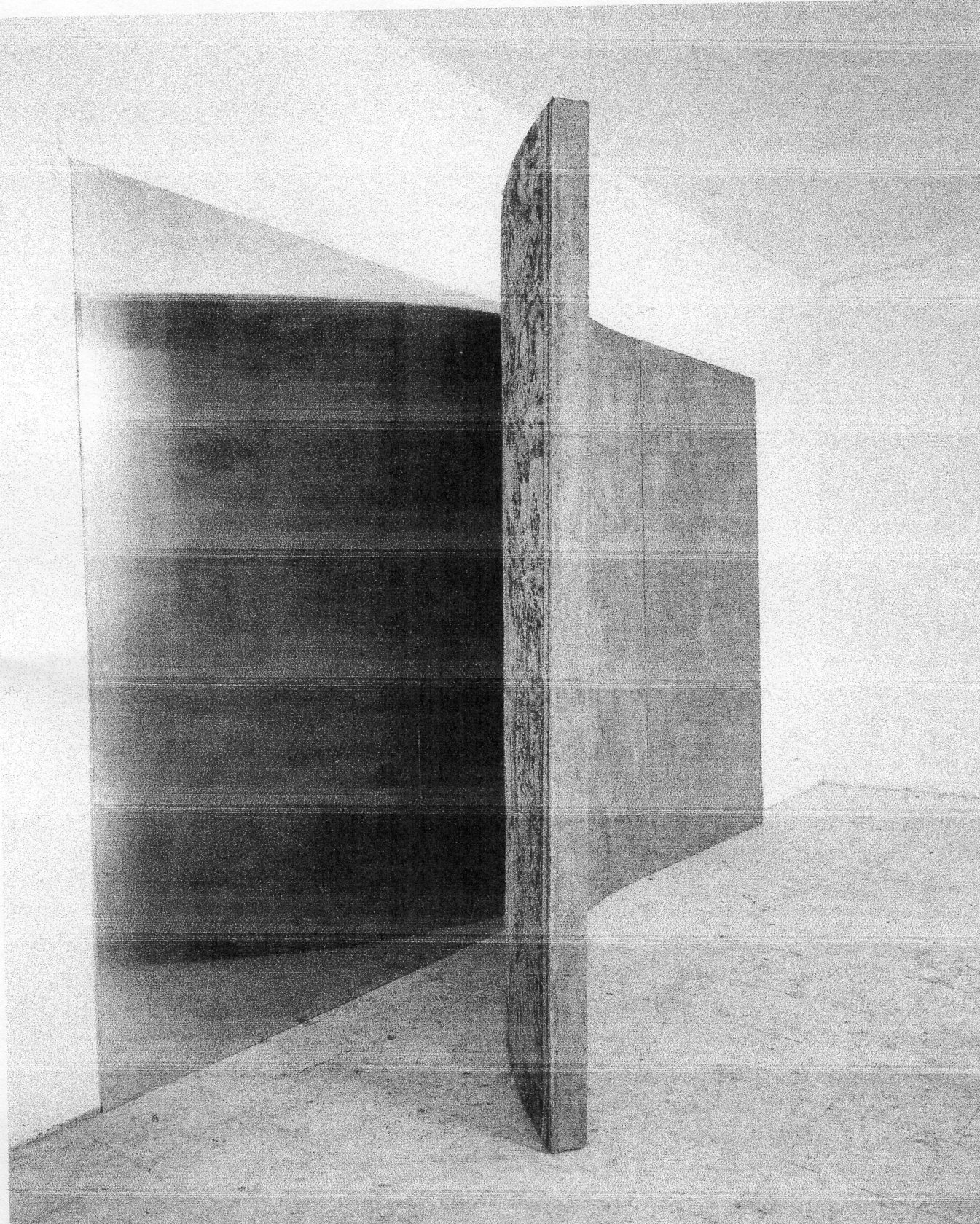
    The model object has served as a thinking place in the development of the idea of the Scriptorium. The materials used and their proportions echo interests in Minimalist Sculpture, the intervals between things in the work of Donald Judd and the architectural languages of memory and tectonics of the craftsman turned architect Peter Zumthor. This open sided hut seems cut away almost anatomical as if we were looking into the internal workings of an environment and resident. The structure would have to be made relational to its surroundings if it were to be placed in the landscape. Adaptations to weather the structure, to make it serviceable for use. The Scriptorium has analogues to the notion of a fire-place and its chimney stack. It is a the heart of a building the place of warmth, of dialogues and under the influence through fire of the imagination. The incompleteness that surrounds the scriptorium creatively asks for further design proposals that are even more site specific. The Solar Pavilion built by the Smithsons utilised the old fire place and chimney from the demolished cottage. Around this central element they developed the beginnings of their Modernist (Brutalism) pavilion, an architecture clad with glass, wood and zinc and contained by a walled garden and situated in the pastoral landscape of Wiltshire. Furthering the themes of being in the landscape the Scriptorium could become an observatory, as place from both to look out from and also to look in. The mobility or need to be re-assembled from site to site could promote innovative design solutions as well as interesting detailing or use of materials and surfaces that would facilitate interactions between visitors.

    The notion of the Scriptorium becoming clad by an exterior skin, an ephemeral membrane which would then render the differences between the interior and the exterior into the realms of an almost immaterial architectural experience; in as much as the usual distinction between the unpredictable forces of nature outside and the predictable domestic spaces inside. This prompt further investigation into an  architecture that blurs the boundaries of both architecture and nature, this could be further explored through the notion of quixotic gestures, art and performance that can capture the experience and the experiential engagement with the natural elements. The Scriptorium becomes the centred structure of remnant that is surrounded by an architecture that can create imprecise boundaries through inconsistent materials. This spatial arrangement will create its own qualitative responses, dialogues and subsequent movements. Architecture in this context becomes purely a sensorial response.

    The body as the vector for active mediation with the world of the spirit. The body is the instrument of a qualitative evaluation, the measure of intensity, which alone is capable of giving space extension and modifying it Space is no objective parameter; it must be ‘excavated’ related to the mobile living parametrics of the body.

    Frederic Migayrou. Architectures of the Intensive Body. Yves Klein. Guggenheim. 2005

    Mark Prizeman. Intensity. Ephemeral, Portable Architecture.

    Time, space and existence are amongst the greatest of themes-so great that we could never be so presumptuous to think we could do them justice, and too close that we could ever escape them, whether with our thoughts or actions, in life or in art.

    Peter Lodermeyer. Personal Structures Time. Space. Existence. 2009

    My design project has attempted to produce spaces and their interiors together with the apparatus of the Scriptorium that qualitatively seek to inquiry into the world we inhabit. The Theatre of Research attempts to establish some sense of a community that can do field work that invigorates the perception of the environment. My own interests are centred through experientially and mindfully exploring voids, cavities, and spaces between things, together with use of clay, glass and other vernacular materials. As an interior designer/artist I have become experiential to the agency of spaces. The theatre of research becomes a meeting place for furthering my programme initially proposed as a symposium at Waverley Abbey.

    Through experiencing familiar images, smells, sounds, and textures, but also through making certain familiar movements and gestures, we achieve a certain symbolic stability. Disrupt that familiar world, and our psychic equilibrium is disturbed. From this we can surmise that home, and the operations performed at home, are linked intimately with human identity. Architecture, it would seem, plays a vital role in the forging of personal identities.
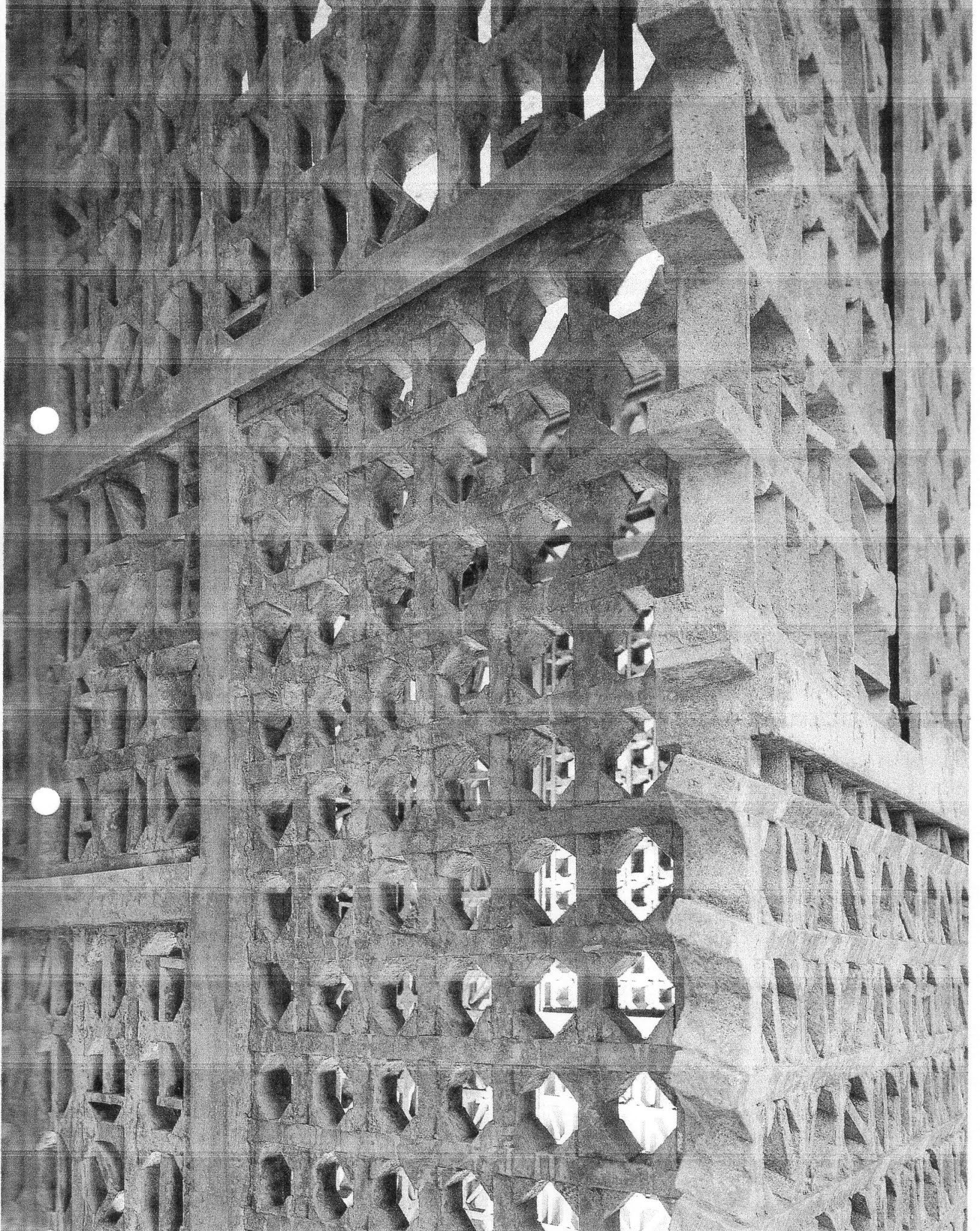
    Neil Leach. Camouflage

    Analysing the desire to blend-in with our surroundings

    Beyond the limits of academic levels of discourse and learning

    Building/Working with Theoretical Objects in Architecture

    The Scriptorium would need to collect up and question considerable more qualitative data. Some sort of portable shelter, lightweight and offering some protection from the elements; would have allowed longer periods of stay and the possibility of experiencing different times of day. The activity of walking to the site, of having to incorporate it into a journey would help to create a stronger sense of place and routine. I am interested in the ‘thingness’ of this place, its influence and how its influence might be transposed into a methodology of reading, theorising and making. I am reminded of the Peter Brook who deliberately demolished his avant-garde theatre building Bouffes du Nord in Paris so as he could create a more emotionally responsive space for theatre. It is this under the influence of the Abbey, which I wish to explore as a creative catalyst, a tool that picks up on its differences as qualitative readings. The ruin by its very nature has re-defined its own architecture from one of form into that of experience, this sense of liminality or immateriality that constitutes itself as the architectural experience.

    A good space cannot be neutral, for an impersonal sterility gives no food to the imagination. The Bouffes has the magic and poetry of a ruin, and anyone who allowed themselves to be invaded by the atmosphere of a ruin knows strongly how the imagination is let loose.

    Peter Brook. The Open Circle

    Andrew Todd. Peter Brook’s Theatre Environments. 2003


    In an era in which architecture is once more learning its potential as a form of inquiry, rather than as a service — as a producer of knowle…

    Source: Inquiry is essentially the way of learning : Fragile Architectures of Hapticity and Time
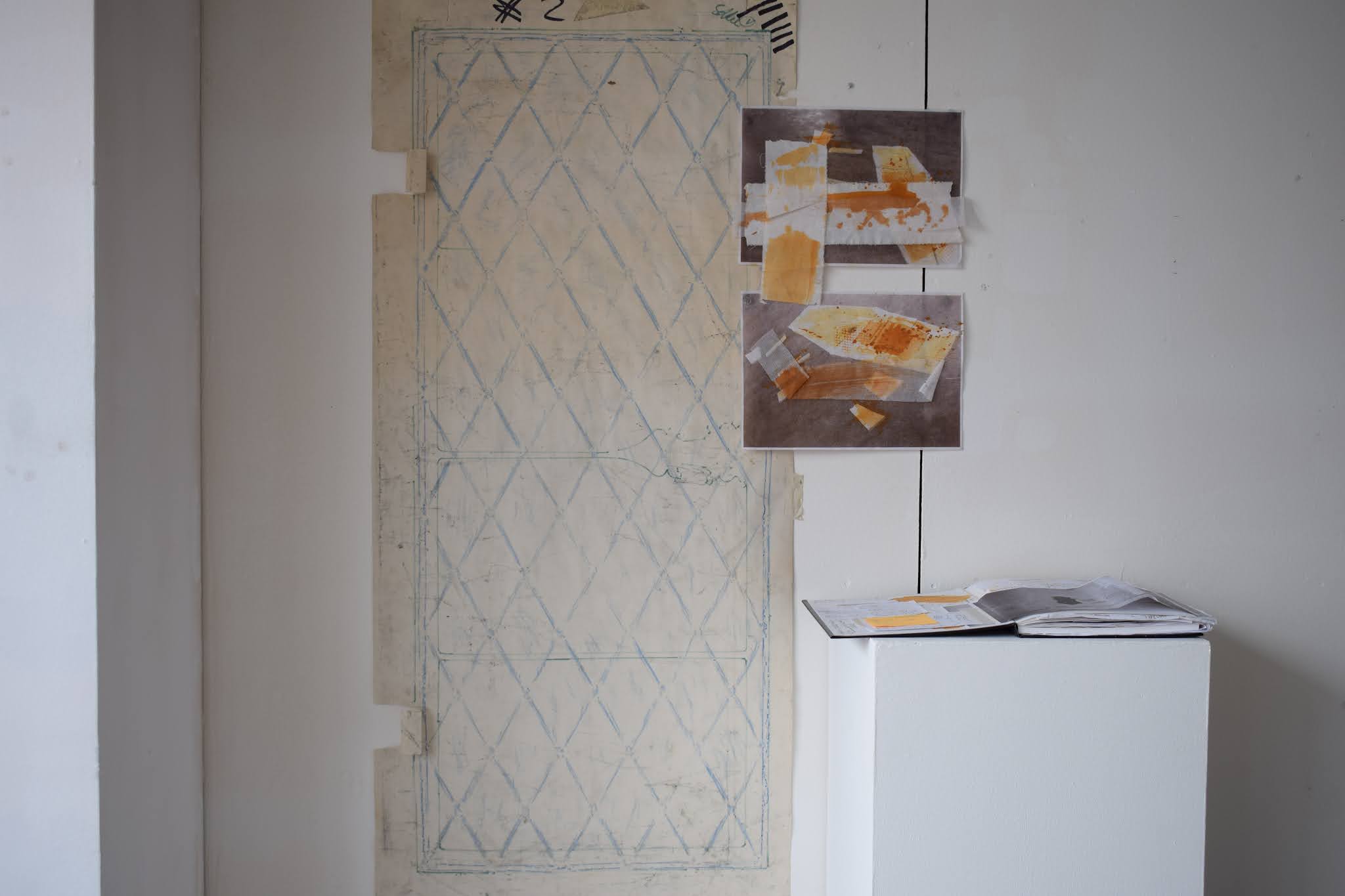
  • Atmosphere and Surrounding Objects : Loose Assemblages/Living Emotions/Theoretical Gaze

    Paintings being living emotions. Mark Rothko

    The atmosphere of a work of art, what surrounds it, that ‘place’ in which it exists – all this is thought of as a lesser thing, charming but not essential. Professionals insist on essentials … not understanding that everything we use to make art is precisely what kills it. This is what every painter I know understands. And this is what almost no composer I know understands.

    The Music of Morton Feldman, reprinted from his essay  “The anxiety in art”

    OUTPOST STUDIO  July 2021

    Loose Assemblages : The Movement of Ideas and Feelings

    Touch and materials as a normative support/exploration for the theoretical gaze

    Bento’s Sketchbook : John Berger

    Existence appertains to the nature of substance.

    A substance cannot be produced from anything else: it will therefore be its own cause, that is its essence necessarily involves existence, or, existence appertains to its nature.

    Ethics, Part 1, Proposition VII, Proof

    Conscious minds arise from establishing a relationship between organism and an object-to-be-known. Damasio

    Architectural Body

    Organism-Person-Environment

    Drawing is a  form of probing. And the first generic impulse to draw derives from the human need to search, to plot points, to place things and to place oneself.

    The Human Body through drawing and philosophy

    Berger/Spinoza 141

    Matters of a discursive consciousness are explicit and explainable, and the line between discursive and practical consciousness is fluctuating and permeable, both drawing on the other in the act of agency/making social.

    The defining point of agency is namely its potential to transform the given.

    Generative energies, entanglements, sensorial diversions from an open studio window overlooking Anglia Square

    Improvisations/choreographed with the music/ambient noise are exploratory encounters  between flesh and sound

    A hut of ones own (within and bounded by others), crafted and organized around simple processes and interactions within a fallow site given over to creative ecology of energies and enterprise

    Vibrant yet curiously passive form of  urbanism

    Affectivity as a mimesis of lively transfers between things, humans and non-humans

    Human subjectivity : Mimetic Encounters/Explorations

    Art works by gathering up forms and materials for affective experimentations in subjectivity

    Corporeal unconscious animated by sensitivities/sympathies, a putative affinity (haptic) between certain things including bodies and organs which makes them liable not only to be similarly affected by the same influence, but more especially to affect or influence one another.

    Intentionality/Sympathy/Sentiment/Difference

    Inducing a particular set of ethical/political/social responses in actor/social audience

    Mimesis : Paradox or Encounter. Jane Bennett

    Calling a sympathy/subjectivity between coloured cloth/wallpaper/display cabinet and human flesh

    Francesca Woodman

    Mimesis and suggestion in the social,enacted through layers of mediation surrounding humans, objects and non-humans.

    Camouflage. Neil Leach

    Mimesis

    Sensuous Correspondence

    Sympathetic Magic

    Mimicry

    Becoming

    Sensations in Space and Time (the experience/entanglement of phenomena and idea)
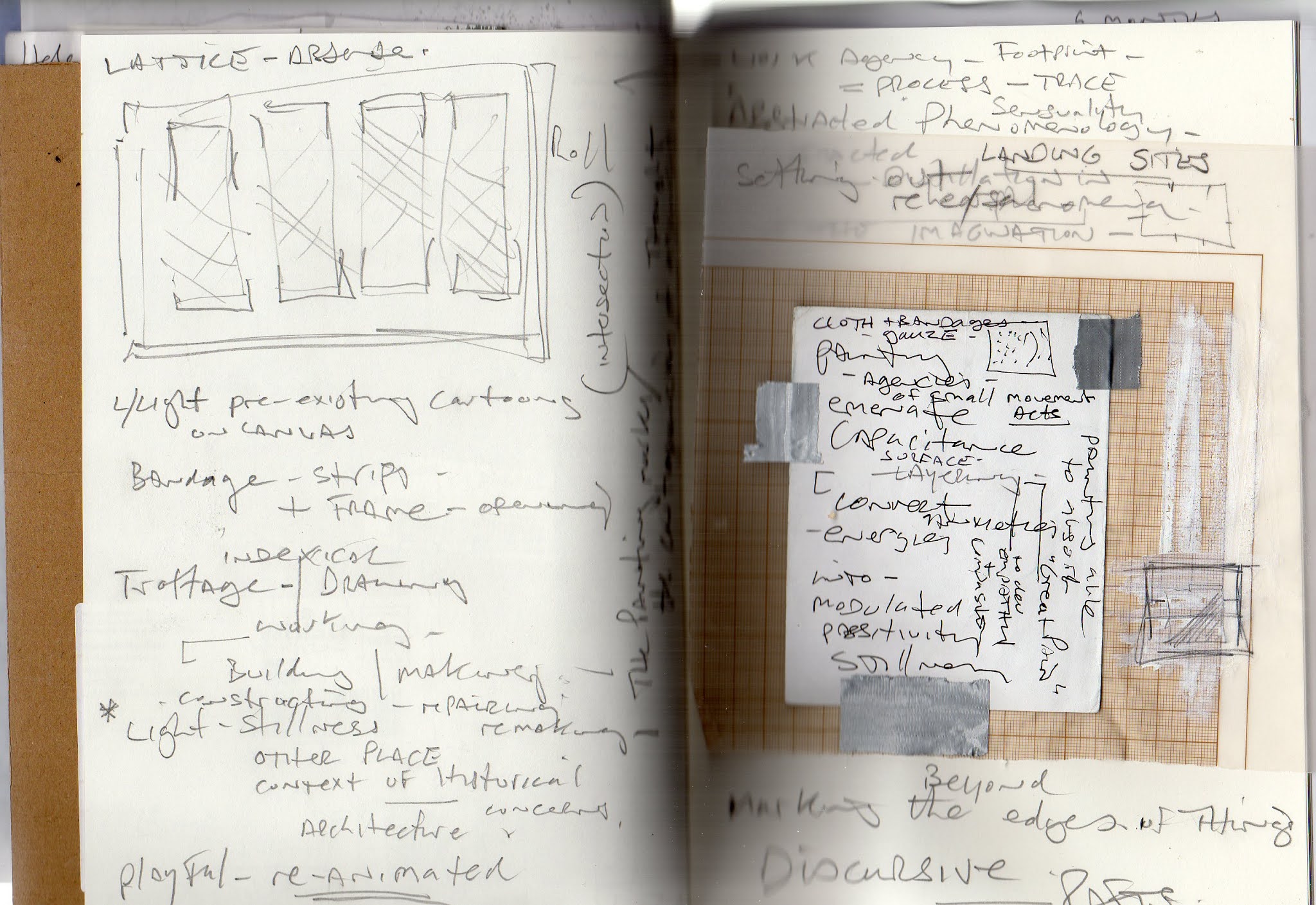
    Agency/Foraging/Making/Gathering
    Subjectivity is relational (always in process)
    A Species of Making Spaces
    Tentativeness, attentive to situatedness
    A diffractive methodology enables a critical rethinking of science and the social in their relationality, moving beyond separate entities, separate sets of concern.
    Karen Barad
    Organism
    Person
    Environment
    Arakawa and Madeline Gins
    For Merleau-Ponty, Experience can only be understood between the mind and the body or across them in their lived conjunction.
    The mind is always embodied, always based on corporeal and sensory relations.
    Elizabeth Grosz.
    Richard Serra : Verb List Compilation
    Actions to Relate to Oneself, 1967-1967
    Drawing in its frameworks and dimensions/presence and absence/its here and elsewhere
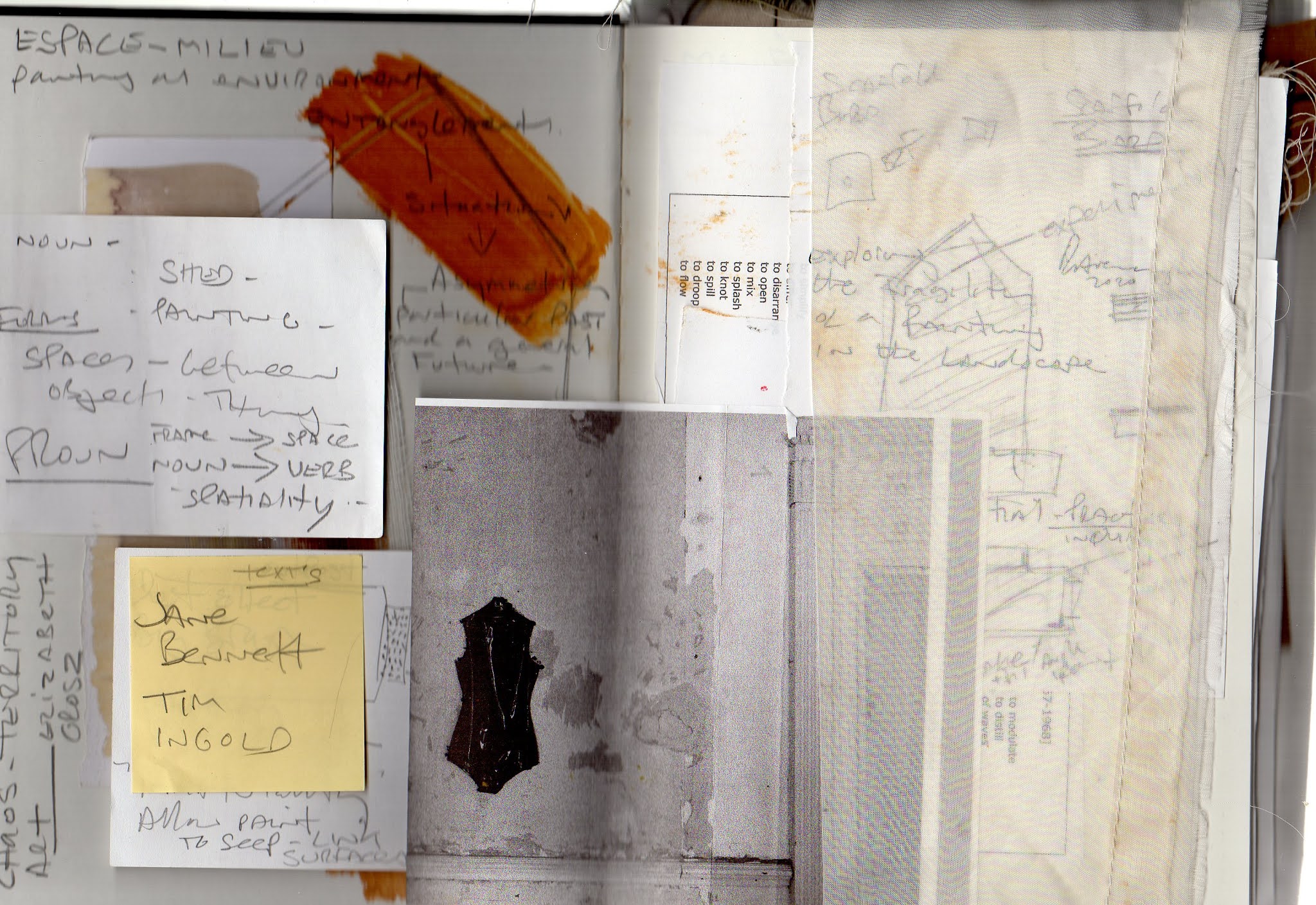
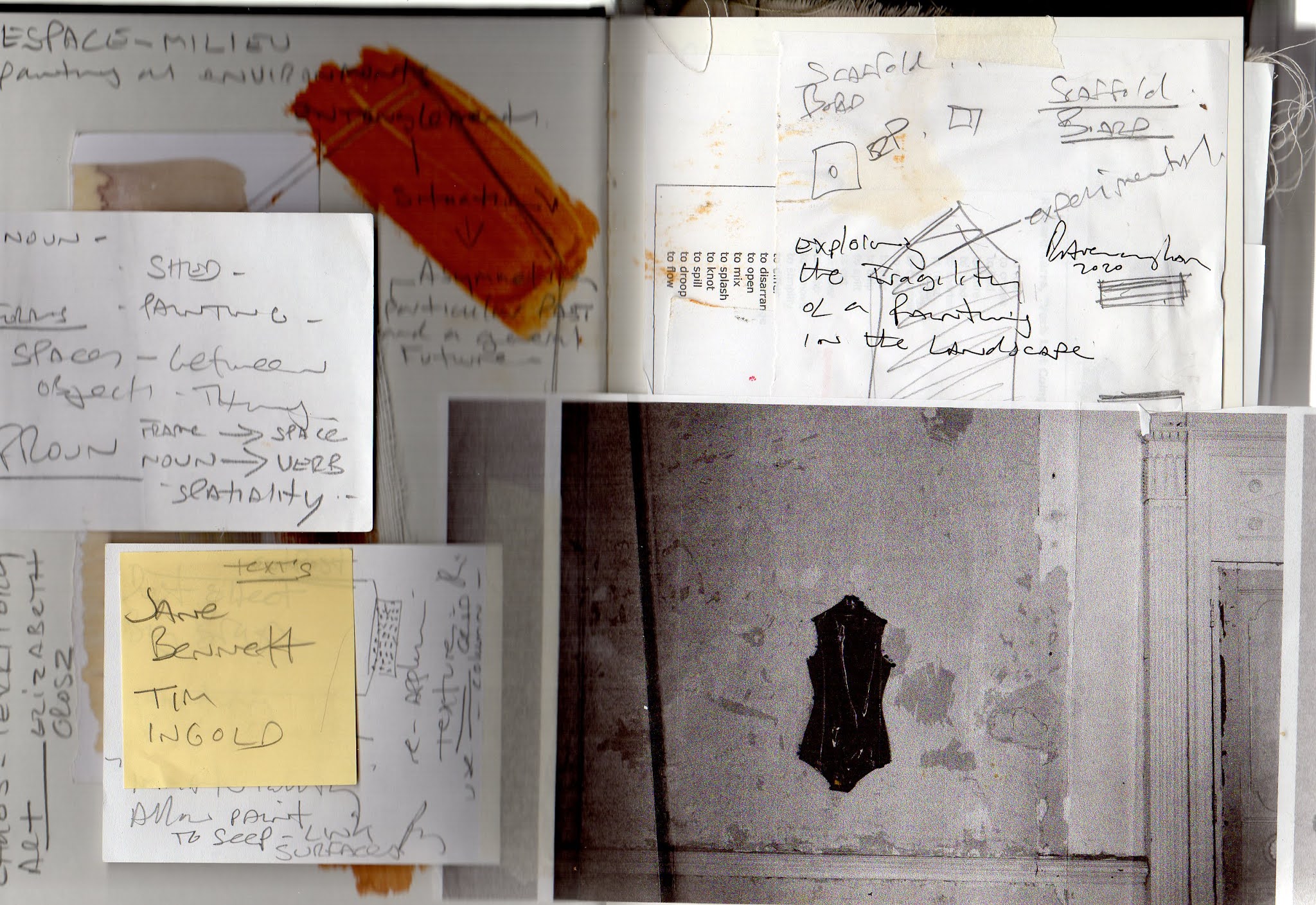
    Exploring the fragility of a painting in the landscape
    Canvas as sheltering construction, Raveningham Sculpture Trail
    Diagram-Map-Chart, is a symbolic depiction emphasizing (mapping) relationships
    Diagrams For The Imagination : Arakawa
    Apokatastasis : Jim Jarmusch, Jozef Van Wissem
    Litany Of Echoes : James Blackshaw
    New Music, for old instruments : Paul Metzger, Jozef Van Wissem
    Brilliant Trees : David Sylvian
    Body As Cultural Product
    Both psychic and social dimensions must find their place in reconceptualizing the body, not in opposition to each other, but as necessarily interactive.
    Volatile Bodies/Chaos-Territory-Art : Elizabeth Grosz
    Spatial Asperity/Mesh, Membrane and Gauze, Möbius Strip, Pattening,
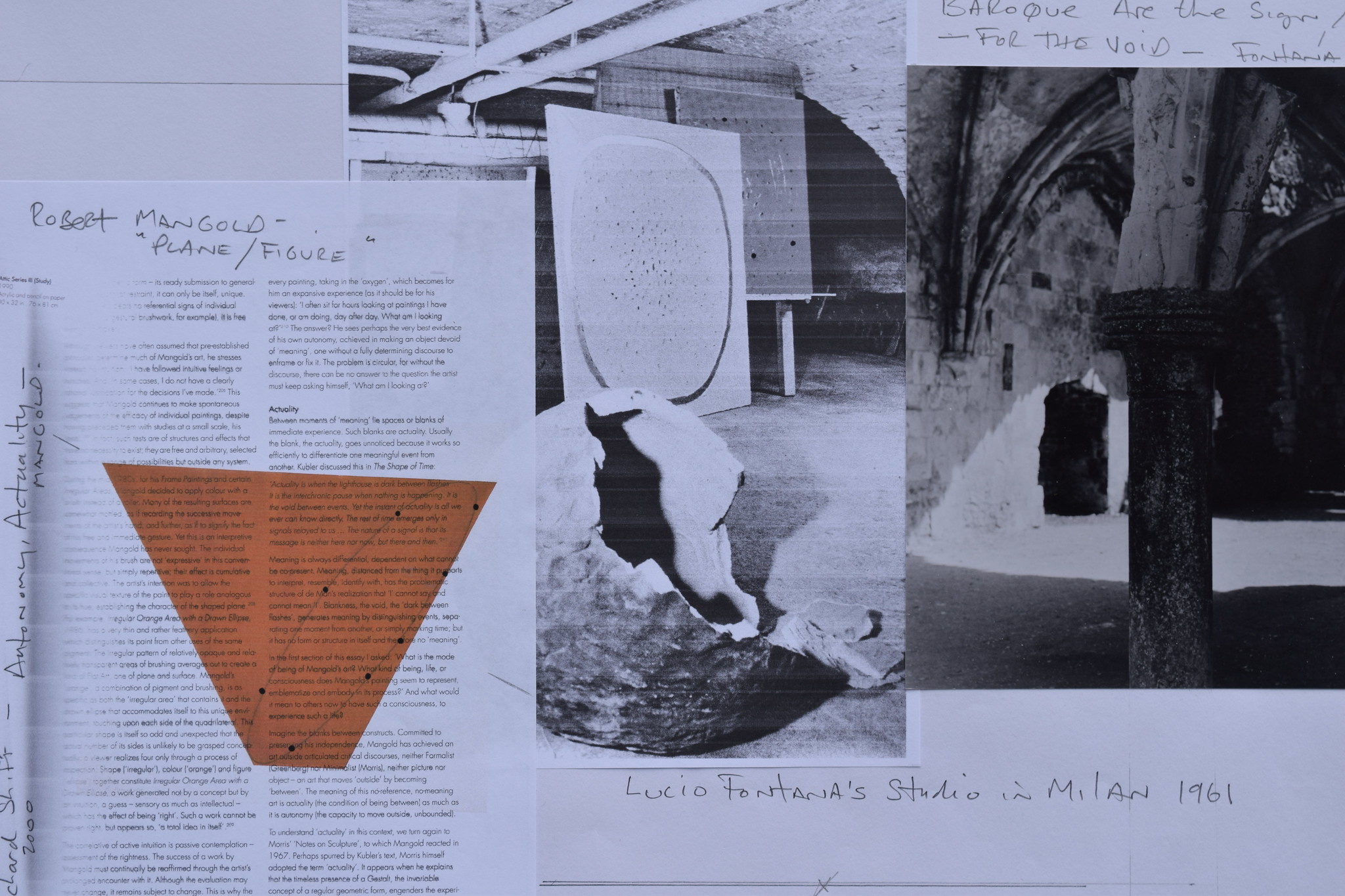
    Actuality : Robert Mangold
    Paintings around the particles/flows of things/boundaries/intervals of presence and absence
    Induction/Capacitance/Encapsulated Layers
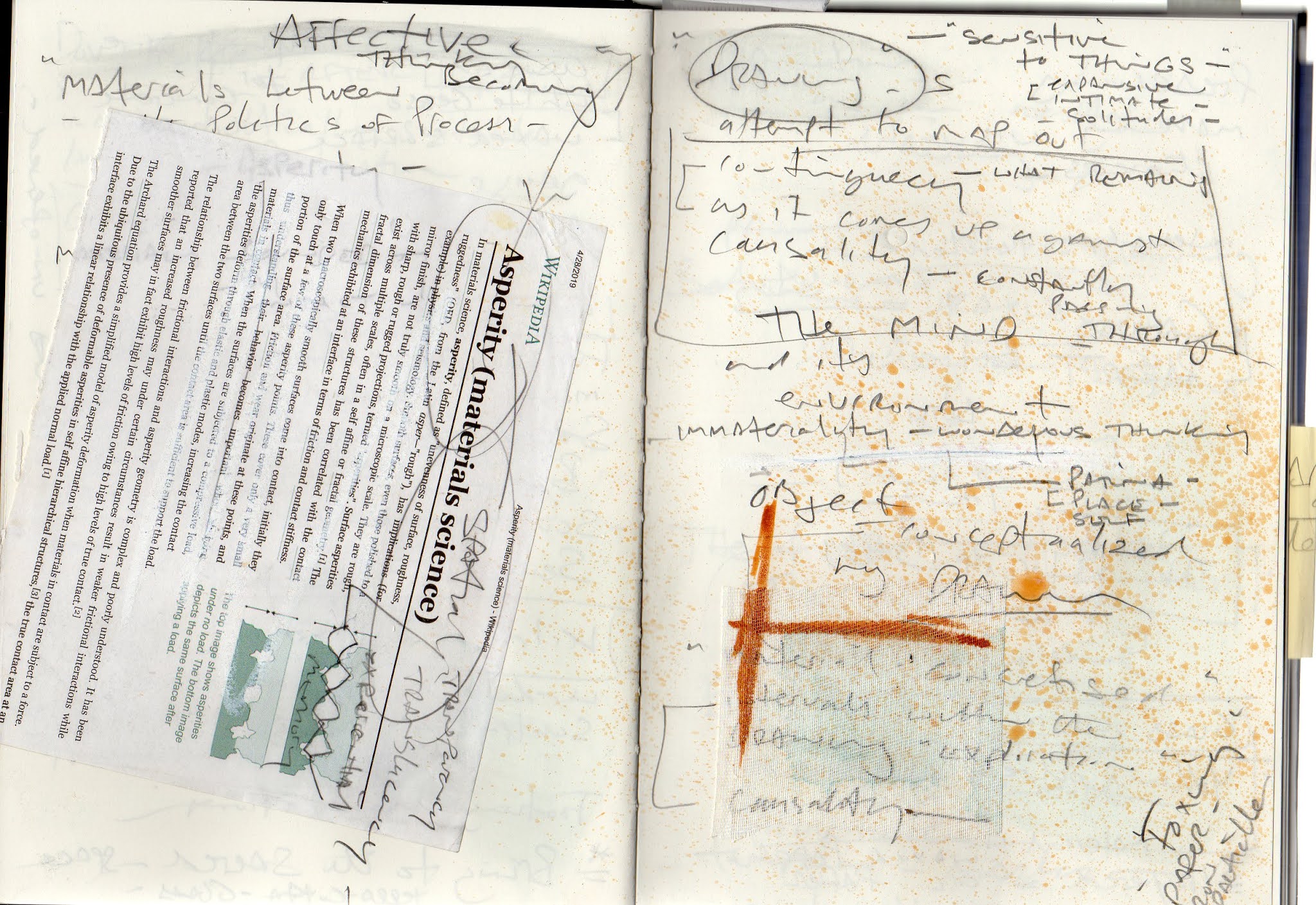
    Drawing and its attempts to map out/make visible contingent things
    Contingency, is what remains, as it comes up against causality/constantly passing through
    Objects/Things conceptualized by the exploration of drawing (intervals of blindness)
    Linking Surface to the Aesthetic Experience of Space.
    Experiences incorporating interests with environmental textures into Art.
    Points of Contact/Confluence of Circumstances
    Materials bound by contact/canvas
    Patina, absences, gesso, textile wrappings, field chalk, exhumed oyster shells, yellow ochre,
    A philosophy of Reading/Matter/Rooms,
    The Lake of The Mind
    Stochastic Thinking, Steven Holl
    Solitude/Libraries : Cell/Court/Domain
    Capacitance, relationships between intensities and movements
    Clay, Waxed Surface, Liquid Rust, Calico,
    Sensate Bandages/Windings/Armatures : Corporeal Landscapes/Assemblages/Things
    Flesh, elementary pre-communicative, subject and object develop.
    Making as Growth : Tim Ingold
    Social Architectures/Anthropologies/Imaginary Projects/Interfaces/Screens
    Timothy Morton : Realist Magic
    The elasticity of sensation, affective and wonderous
    Sally Mann : Matter Lent/Collodion wetplate negatives
    Corpus, liquid light, flesh, spirit, trace, outline, human body, performative,
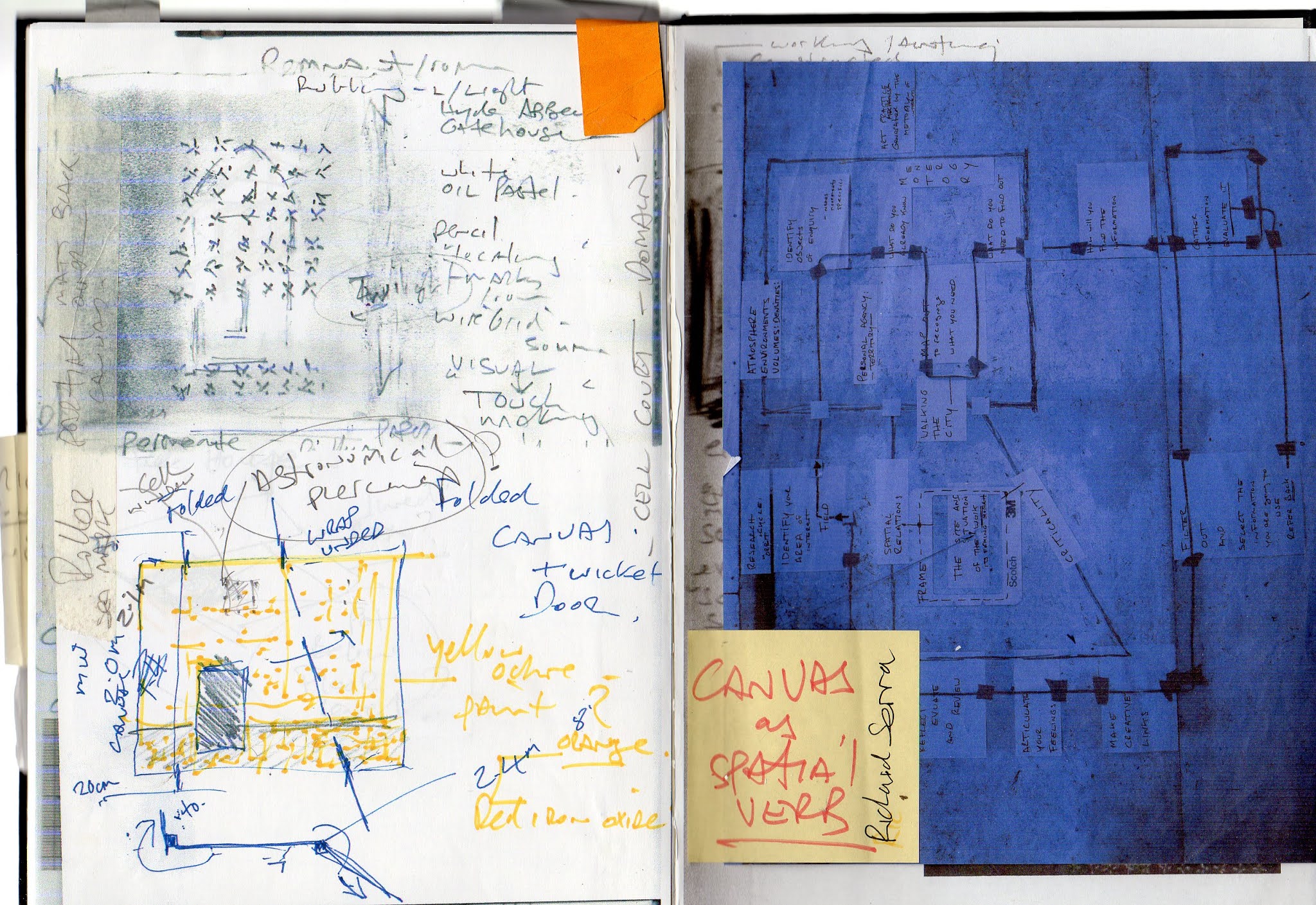
    Paintings/Enactments : Canvas as a spatial verb
    Espace-Milieu, painting as environment/entanglements and situations
    Ceramic/Process and its theoretical objects
    As a series of practices, making reality by bringing things together or separating them into their singularities, or making machines/desiring machines
    Desire can be seen as an Actualization
    Gathering Notations : Bernard Tuchumi
    Both presence and absence are coupled in this framework
    Deleuze/Guattari
    Glass/GLAS : Resistivity/Inclusions, A Field in England.
    Translucent aesthetics, beyond the opacities of the sensible the rational.
    An image that adequately expresses both the efficacy and the temporariness of the phenomena ( joining a diffused/invisible flow of energy, a breadth that wends its way ceaselessly through the world). Animating it as it goes.
    Vital Nourishment, Departing from happiness, Francois Jullian.
    What is a body capable of –
    Spinoza
    Building/Making, into the theoretical performative object (that does theory)
    Albers/Clarke : Interactions, Counterpoints, Intervals between colour/forms,
    Membrane, Discursive, Diffractive, Sensory, Layered and Filtered Light,
    Body, Movement, Mind, Assemblages, Exploratory, Speculative, Choreographic,
    Deleuze/Guattari, understand the body more in terms of what AFFECTS it is capable of, instead of the consequences of having a body.
    Peter Zumthor : Thermal Baths
    Human Agency/Temporal transitions between matter and movement.
    Immaterial/Concrete/Water : Bodies in contact/the corporeal social human body
    Manifolds/Theory of Temporality/3 Synthesis of Time
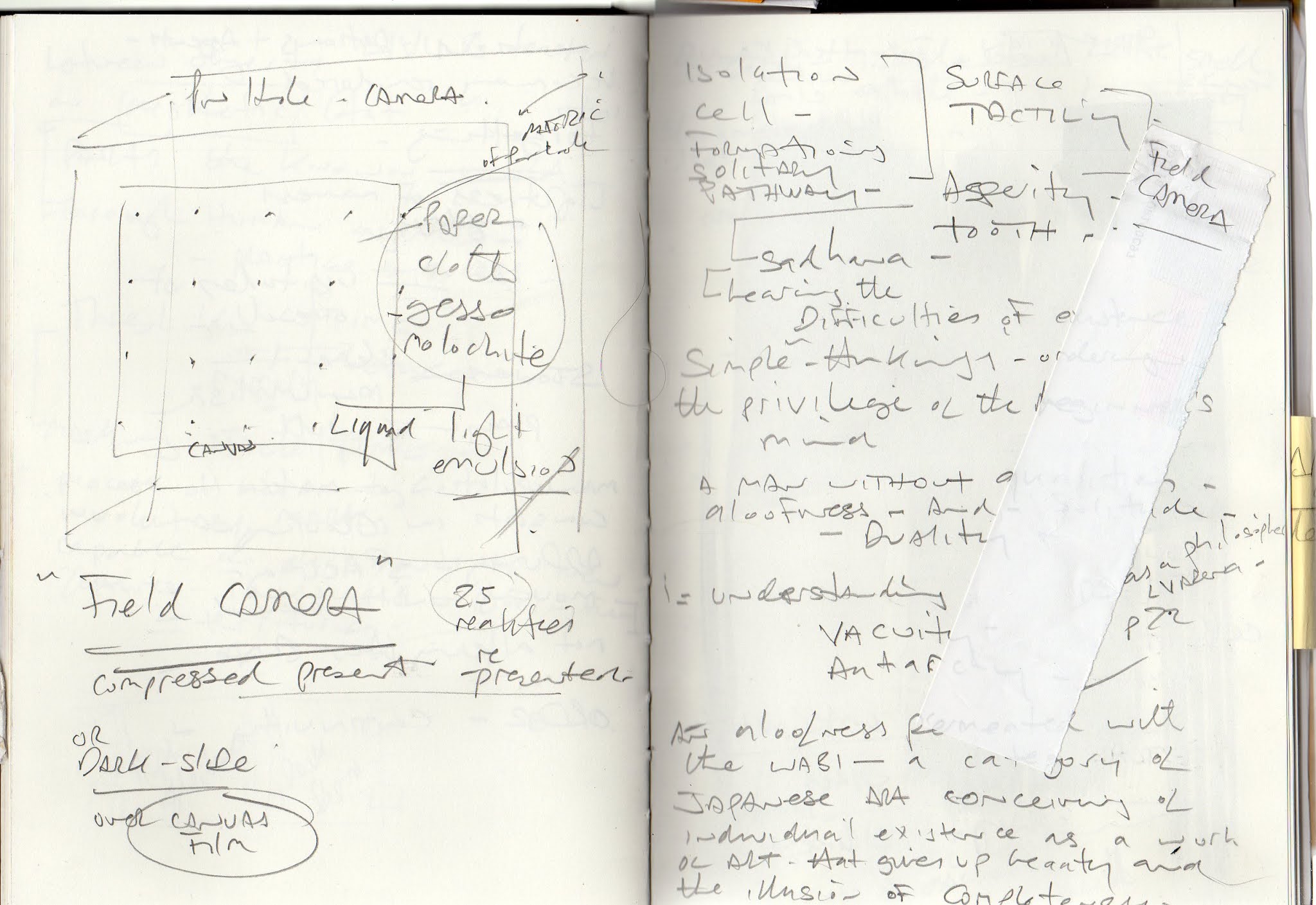
    Memory     Past Preserved                    Condition
    Present       Habit Instants                     Agent
    New           Future, actual/virtual          Creation of The New
    Multiplicity, purality of contemplating souls.
    Asymmetries between particular past and general future.
    Temporality involves multiple interacting processes.
    Architecture becomes Spatial Agency
    We all make space : Jeremy Till
    Paintings, space, volume, surface, passages, actualizations, claddings/camouflage
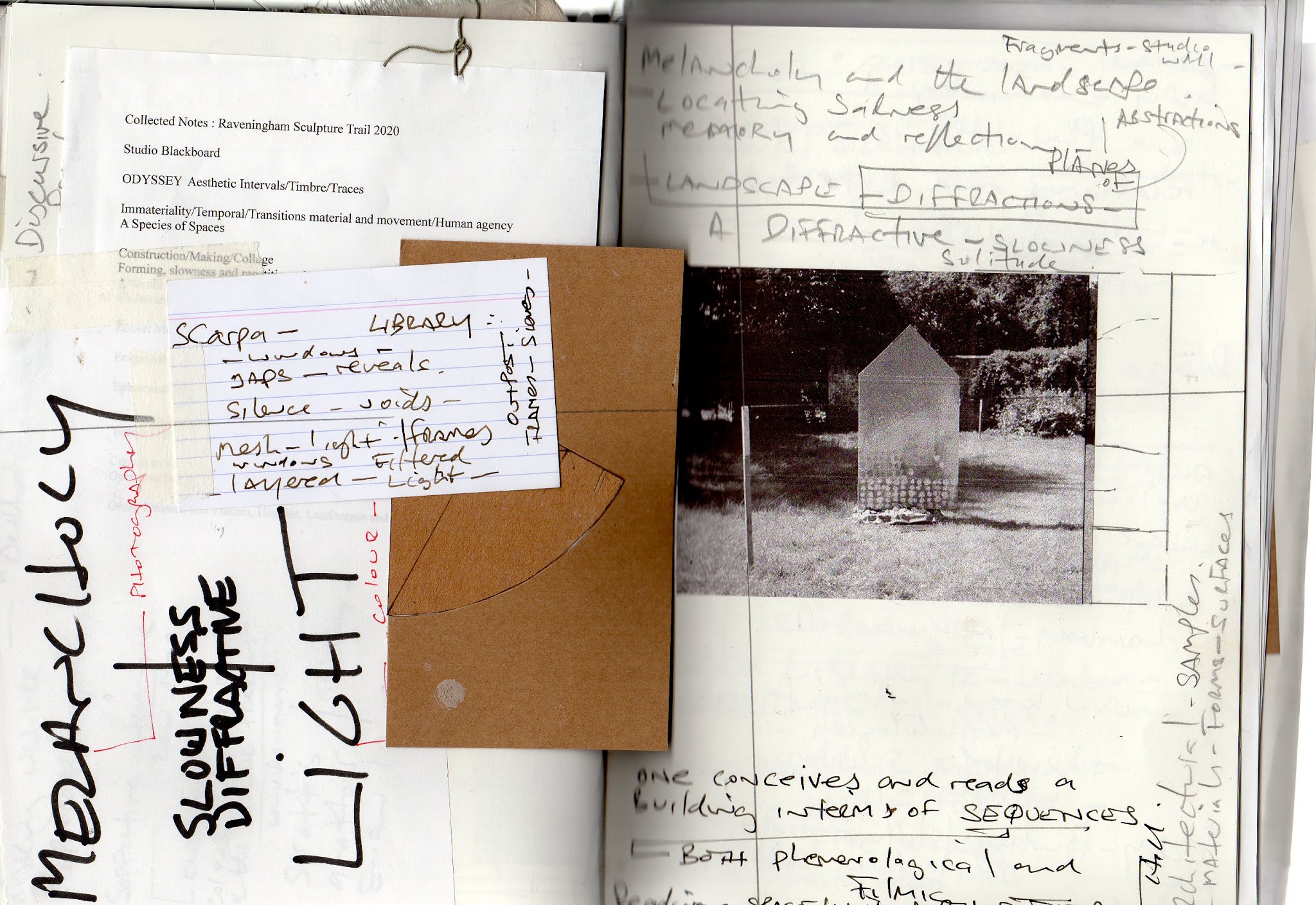
    One conceives and reads a building in terms of sequences, both phenomenological and filmic, reading a space by its depth of field, its thickness.
    Turbulence House, New Mexico, Steven Holl.
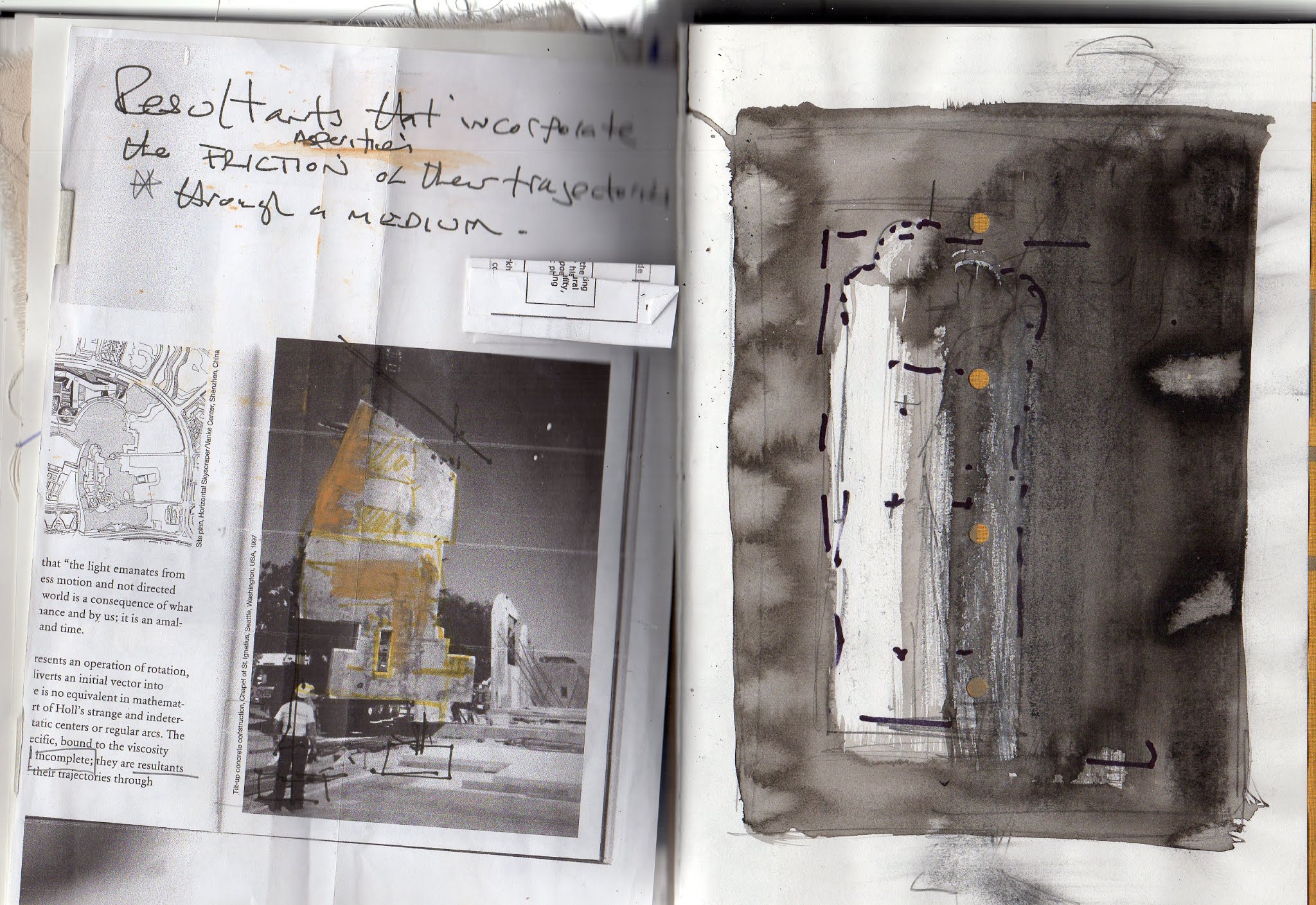
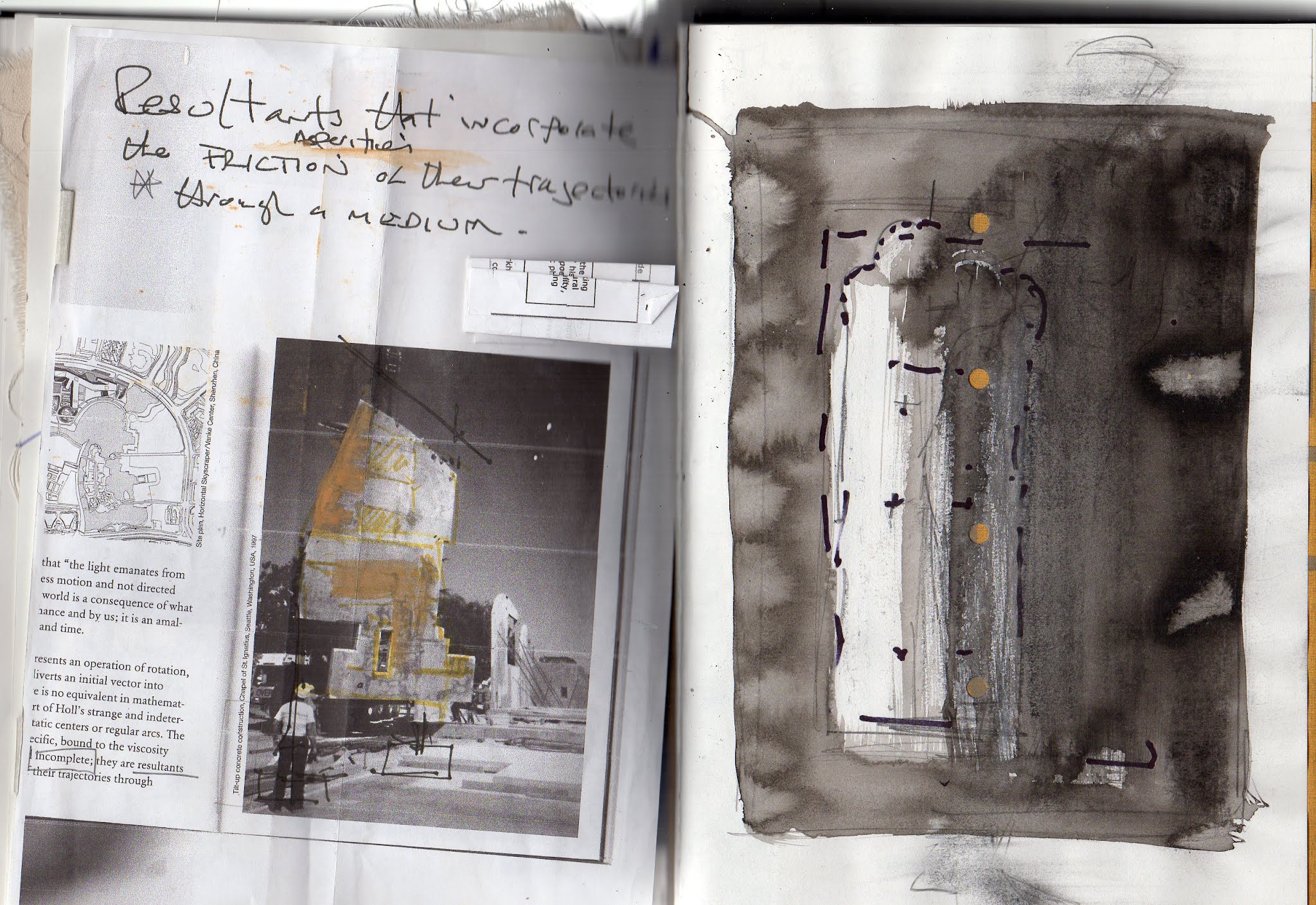
    Aesthetics/Asperities : Resultants that incorporate the friction (asperity) of their trajectories through a medium. Tilt-up concrete construction, Chapel of St, Ignatius, Seattle. Steven Holl.
    Navigations and Vectors/conduits/intervals and traces between discursive practices.
    Wrapped Silences : Assembled Sectional Elements/Thresholds
    Surfaces on Mourning/Samsara, a beauty fed on emptiness


    Paintings being living emotions. Mark Rothko The atmosphere of a work of art, what surrounds it, that ‘place’ in which it exists – all this …

    Source: Atmosphere and Surrounding Objects : Loose Assemblages/Living Emotions/Theoretical Gaze

  • Sketch Books/Strange Loops : Drawings, Materials, Annotations, Collages and Constructions 2018-20

     OUTPOST STUDIO 3.16

    Agency through sketchbooks

    Apokatastasis : Jim Jarmusch, Jozef Van Wissem

    Spatial Asperity/Mesh, Membrane and Gauze

    Drawing and its attempts to map out/make visible contingent things

    Contingency, is what remains, as it comes up against causality/constantly passing through

    Objects/Things conceptualized by the exploration of drawing (intervals of blindness)

    Linking Surface to the Aesthetic Experience of Space.

    Experiences incorporating interests with environmental textures into Art.

    Points of Contact/Confluence of Circumstances

    Materials bound by contact/canvas

    Patina, absences, gesso, textile wrappings, field chalk, exhumed oyster shells, yellow ochre,

    A philosophy of Reading

    Solitude/Libraries : Cell/Court/Domain

    Clay, Waxed Surface, Liquid Rust, Calico,

    Sensate Bandages/Windings/Armatures : Corporeal Landscapes/Assemblages/Things

    Social Architectures/Anthropologies/Imaginary Projects

    Timothy Morton : Realist Magic

    The elasticity of sensation, affective and wonderous

    Sally Mann : Matter Lent/Collodion wetplate negatives

    Corpus, liquid light, flesh, spirit, trace, outline, human body, performative,


    OUTPOST STUDIO 3.16 Agency through sketchbooks Apokatastasis : Jim Jarmusch, Jozef Van Wissem Spatial Asperity/Mesh, Membrane and Gauz…

    Source: Sketch Books/Strange Loops : Drawings, Materials, Annotations, Collages and Constructions 2018-20

  • Camouflage/Concept and Design : Re-Working Aesthetics/The Everyday

    Everyday Aesthetics : Ordinary Lives

    If the everyday can be considered an ecology where passions circulate in a perpetual state of intensification and entropic decline, the empirical self (and not just David Hume’s version of it) is essentially in a state of flux. This posits the human as an organism constantly adjusting to its passionate environment, with a self that is constantly appearing and disappearing, crystallising and dissolving.

    Ben Highmore
    Camouflage : Neil Leach
    Camouflage offers  a mechanism of locating the self against the otherwise homogenising placelessness of contemporary existence. It thereby promotes a sense of attachment and connection to place.
    Camouflage may  therefore provide a sense of belonging in a society where the hegemony of traditional structures of belonging – the family, church and so on – has begun to break down. This aesthetic sense of belonging can be compared to other modes of belonging, such as religious devotion or romantic attachment.
    In highlighting the creative capacity of human beings to adapt to their environment, this book offers a more optimistic account of human existence, which valorizes the present as the site of productive endeavor.
    Here we might cite the work of more positive thinkers, such as Fredric Jameson who looks to the realm of representation for a mechanism of reinserting the individual within society. Jameson has  developed a notion of  ‘cognitive mapping’, which serves  to overcome the lack of spatial co-ordinates within a society of late capitalism. He sees the potential of such mapping within the aesthetic  domain. What we need today, Jameson seems to be saying, is a viable form of aesthetic expression that reinserts the individual into society. The aesthetic  domain can therefore be seen to be somewhat Janus-faced. It is  both the source of many  of our problems, in a culture in which everything is co-opted into images and commodities, and potentially the way out.
    Aesthetic  production should maintain the capacity  to operate as  a mediation between the self and the environment, but only aesthetic production whose design has been carefully  controlled can achieve this. The difference between productive and unproductive modes of expression is therefore a question of design. In this respect we can recognise the important social role of design in providing a form of connectivity for ‘cognitively  mapping an individual within the environment.
    Design becomes  a crucial consideration for the effective operation of camouflage.
    Design plays a crucial social role in offering a form of connectivity, a mode of symbolisation, that allows  people to relate to their environment. Exquisitely designed works such as S, M, L, XL can therefore be interpreted not simply as highly aesthetic publications that could be accused of a process of ‘glossification’ — of turning the world into a designer representation of itself.
    Rather they  can be seen to be operating in the very space of contemporary culture, a space that is highly visual.
    The concept of ‘Camouflage’ can therefore also respond to some of the questions that Koolhaas himself raises. In his essay on the Generic City, for example, Koolhaas offers a critique of the placelessness of the contemporary cityscape, where each city is virtually indistinguishable from the next. The theory  of camouflage, however, would seem to suggest that design itself can overcome this  condition by  providing a mechanism for relating the individual to the environment.
    Design here must be contrasted to junk. If the junk  city  has  become the placeless  generic  city, the exquisitely  designed city  can become the city  of a new form of spatial mapping. This  theory  of camouflage is therefore presented not only  as  a retroactive manifesto through which to appreciate Koolhaas’s work, but also as a contribution to the debates which he initiates.
    The concept of ‘Camouflage’ will allow us, at least, to move beyond the often simplistic denigration of the aesthetic realm within recent critiques of postmodern culture, and to grasp the complexities involved in our negotiation with the world afforded through that realm. Above all, it will allow us  to recognise the important strategic  significance of aesthetics in contemporary culture in general and in Rem Koolhaas’s work in particular.

    The Architectural Plan

    An Anthropology of Architecture

    Embodiment and Architectural Form
    Process-Relational Philosophy

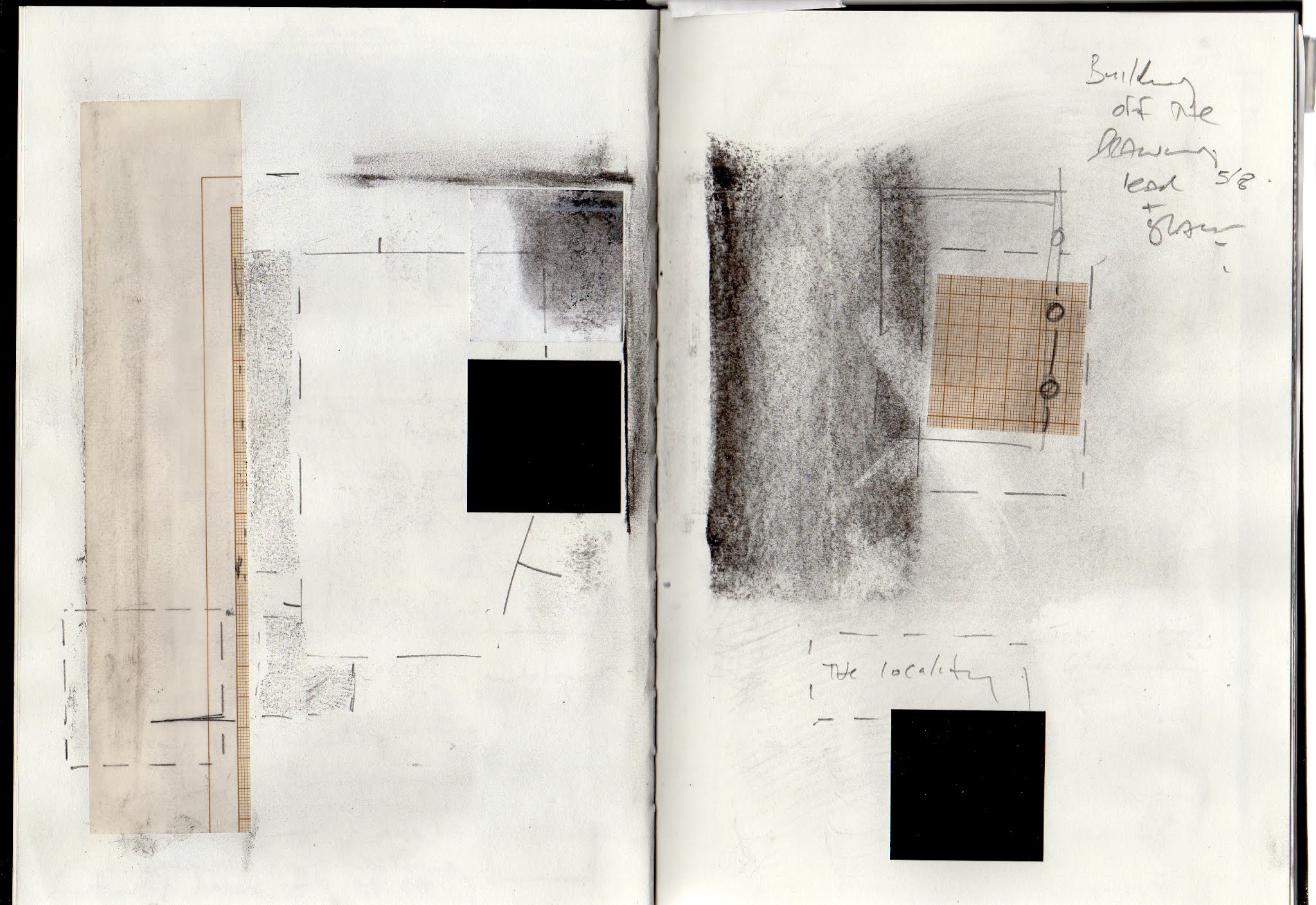
    Building The Drawing

    The drawing as analogue allows more subtle relations, of technique, material and process, to develop between drawing and building.
    Immaterial Architecture
    The Illegal Architect
    Jonathan Hill

    Oak Tree
    Oil
    Paper
    Plaster
    Rust
    Sgratfito
    Silence
    Sound
    Steel
    Television
    Weather

    Frosted Light
    Index of immaterial architectures

    TRANSPARENCY : LITERAL AND PHENOMENAL
    Colin Rowe, Robert Slutzky

    Interactions of the Abstract Body
    Josiah McElheny

    Object Lesson
    Interactive Abstract  Body (Square)
    The Spatial Body (After Fontana)

    Tracing Eisenman
    Stan Allen
    Indexical Characters

    FABRIC=MASS+ FORM
    Alan Chandler
    The interest in fabric formwork is in its deployment in a building process, which is faster than conventional formwork. Fabric formwork is inherently more sustainable due to the minimising of both concrete and shuttering, and more radically, allows the constructor to intervene in the process of casting even as the cast is taking place.

    ANTI OBJECT
    Kengo Kuma
    We are composed of matter and live in the midst of matter. Our objective should not be to  renounce matter, but to search for a form of matter other than objects.
    What that form is called- ARCHITECTURE, GARDENS< TECHNOLOGY is not important.

    ReThinking Matereriality
    The engagement of mind with the material world
    Elizabeth DeMarrais, Chris Gosden, Colin Renfrew

    The Affordances of Things
    Towards a  Theory of Material Engagement
    Aesthetics, Intelligence and Emotions
    Relationality of Mind and Matter

    Material Agency
    Towards a Non-Anthropocentric Approach
    Carl Knappett, Lambros Malafouris

    At The Potter’s Wheel : An Argument for Material Agency
    We should replace our view of cognition as residing inside the potter’s head, with that of cognition enacted at the potter’s wheel.

    The Neglected Networks of Material Agency : Artefacts, Pictures and Texts

    Material Agency as Cognitive Scaffolding

    The Cognitive Life of Things
    Material Engagement and the Extended Mind
    Lambros Malafouris, Colin Renfrew

    Minds, Things and Materiality
    Michael Wheeler

    Communities of Things and Objects : A Spatial Perspective
    Carl Knappett

    Imagining the Cognitive Life of Things
    Edwin Hutchins

    Things and Their Embodied Environments
    Architectures for Perception
    Structuring Perception through Material Artifacts
    Charles Goodwin

    Leach Pottery, Studio and Museum
    A Potter’s Book
    Bernard Leach

    Adventures of the Fire, Vessels Through Time
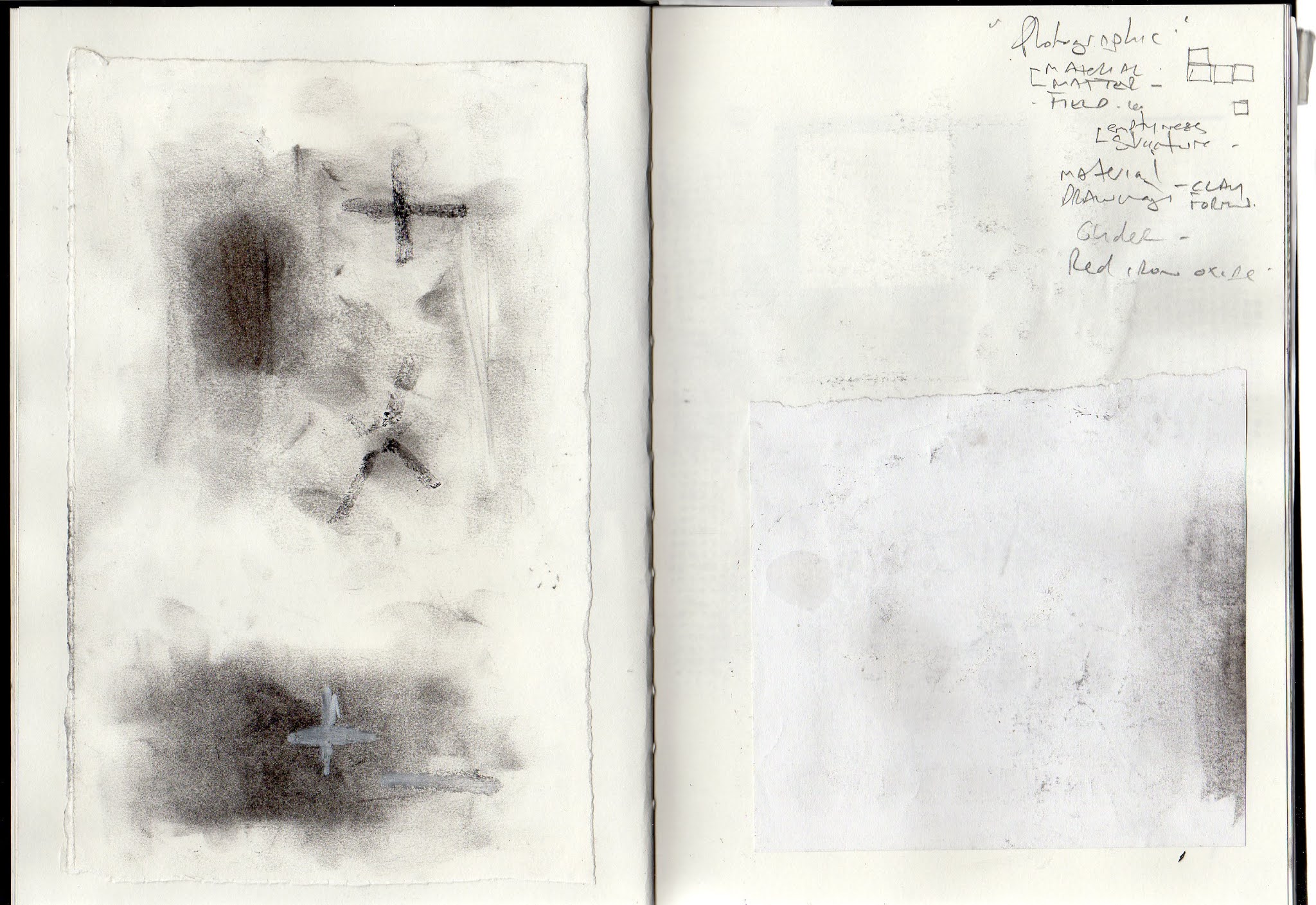
    Ceramic Pavilion
    People make space, and space contains people
    Ceramic space and life

    Gordon Baldwin
    Objects For A Landscape
    David Whiting
    Vessels-Spaces that cannot be drawn, rather they  need to be experienced.
    Imagining a Vessel in a Rock on a Beach, 2006,(charcoal on paper)

    The Architecture of The Ceramic Vessel
    The use of the vessel in the investigation of our world.
    The exploration through the dichotomy of the analysis between exterior and interior, of one pot to another and from  the message they convey.

    MATERIAL MATTERS
    ARCHITECTURE
    AND MATERIAL PRACTICE
    Katie Lloyd Thomas

    PLENUMS : RETHINKING MATTER, GEOMETRY AND SUBJECTIVITY
    Peg Rawes

    ARCHITECTURE
    IN THE AGE  OF DIVIDED REPRESENTATION
    The Question of Creativity in the Shadow of Production
    Dalibor Vesely
    The Nature of Communicative Space
    Creativity in the Shadow of Modern Technology
    The Rehabilitation of Fragment
    Towards a Poetics of Architecture

    The Projective Cast
    Architecture and its Three Geometries
    Robin Evans
    Architects do not produce geometry, they consume it
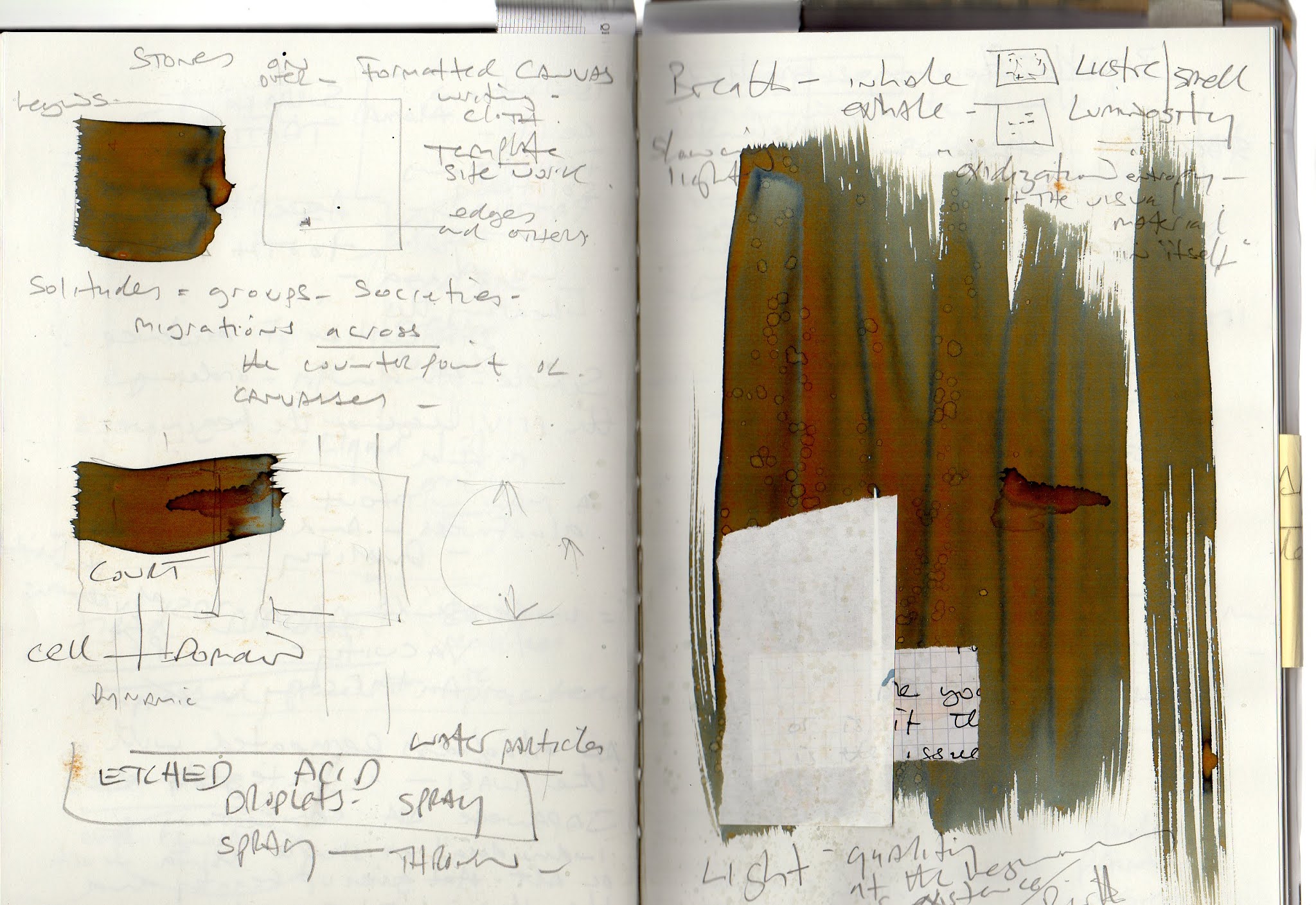
    Analysing ARCHITECTURE
    Simon Unwin
    Geometries of Being
    Architecture as Making Frames
    Space and Structure


    Everyday Aesthetics : Ordinary Lives If the everyday can be considered an ecology where passions circulate in a perpetual state of intensi…

    Source: Camouflage/Concept and Design : Re-Working Aesthetics/The Everyday

  • Composite Bodies in Spaces : Drawing into the contemporary sociological imagination

    Drawing into the contemporary sociological imagination

    Intermezzo : Nomadic Photographic Assemblage

    a thousand plateaus
    Deleuze, Guattari

    Assemblage
    Becoming
    Body Without Organs
    Nomad
    Rhizome
    Smooth Space
    State
    War Machine

    www.rhizomes.net/issue5/poke/glossary.html

    The Uberficiation of the University
    BY MARK CARRIGAN ON NOVEMBER 22, 2016• ( 0 )
    sociologicalimagination.org/archives/18986

    The Sharing Economy
    Platform Capitalism
    Uber.edu
    The Reputation Economy
    The Microentrepreneur of the Self
    The Para-academic
    The Artrepreneur
    Affirmative Disruption

    A fascinating short book by Gary Hall, available open access at the Coventry University repository:
    curve.coventry.ac.uk/open/file/4b7671d5-371f-438b-83c7-92…

    img20161120_17325939 Photographic Forms

    Drawing figure/ground, documentation of work in progress.

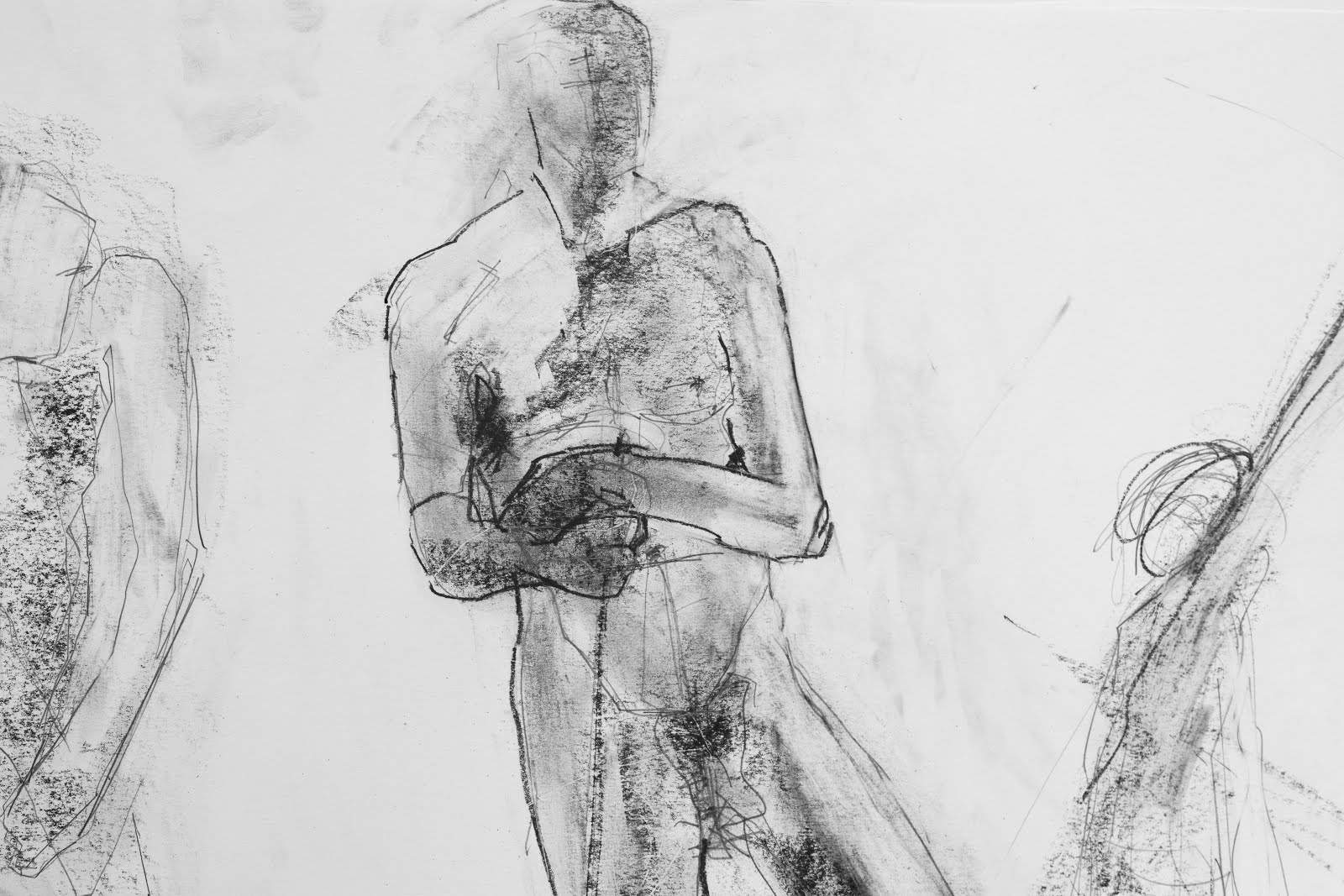
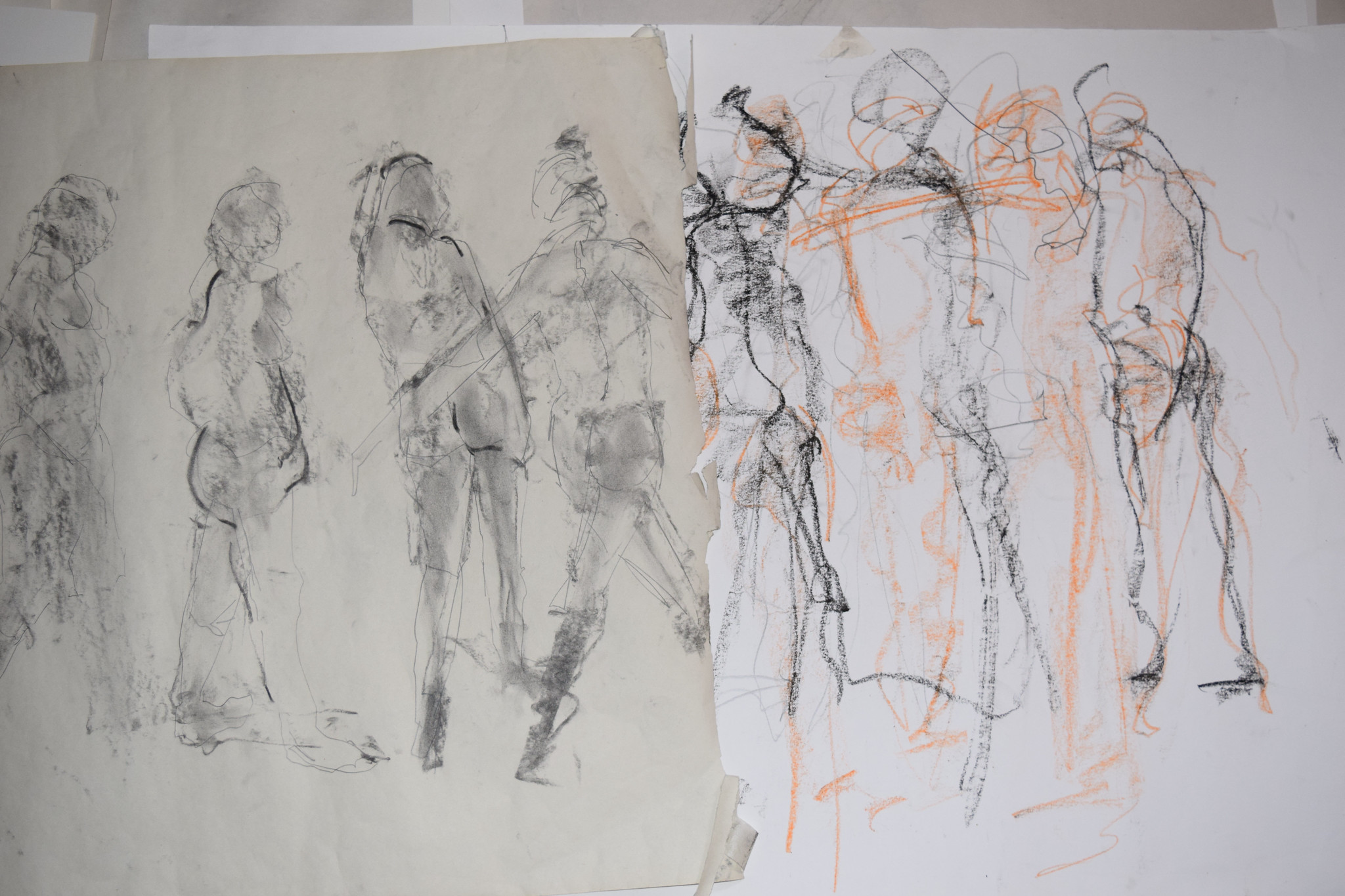
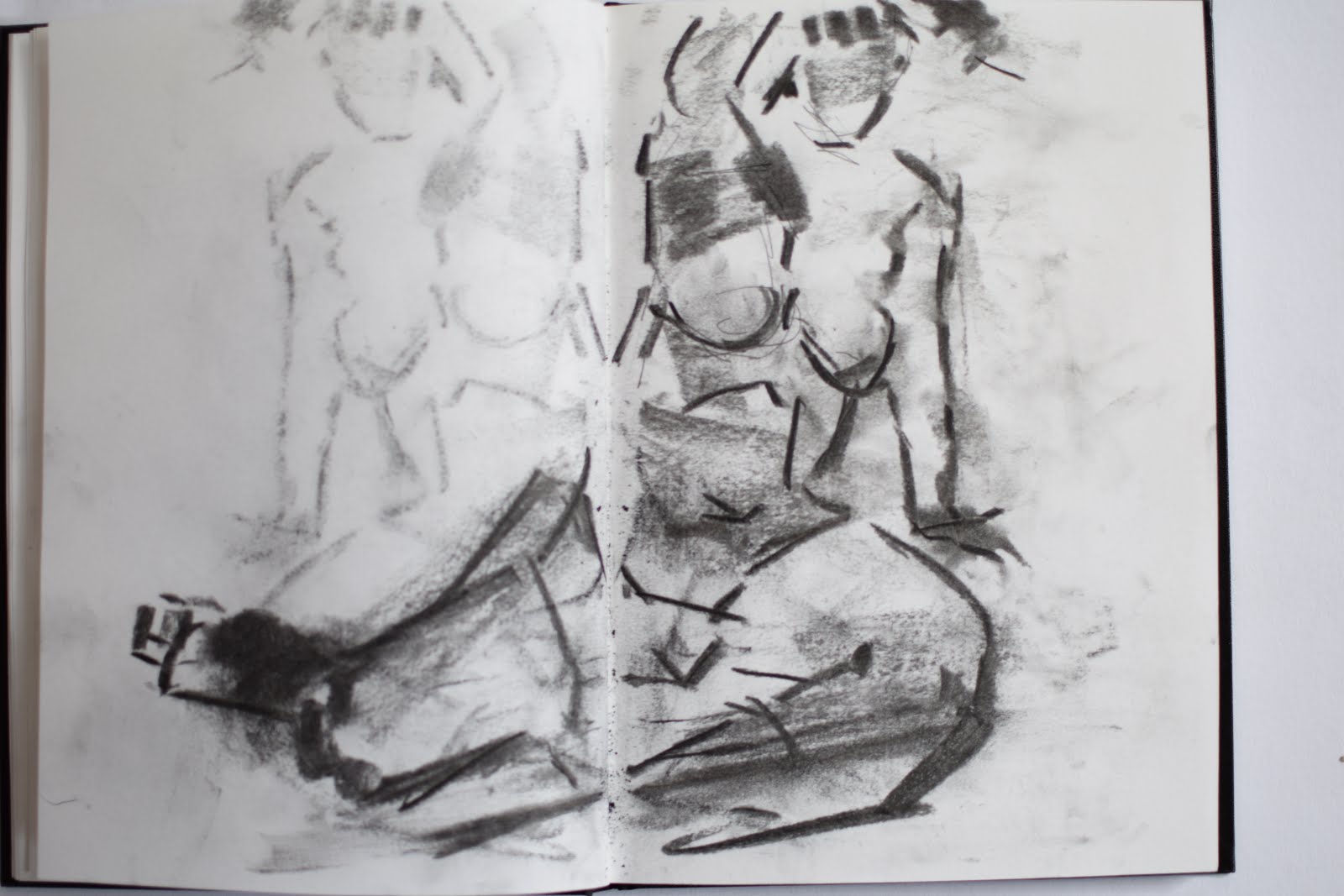
    Life “drawing” trace on paper with water and field chalk. Work submitted to Interfaith Group Show at the Link Gallery, Winchester 2010.

    “This particular event invokes for me the notion of simple material relations and collaborative gestures that underpin human agency.
    Art space/practice can promote these working intimations that enter into the realm of beliefs.”

    Artist’s Statement (archive)  07.12.2009.

    Camera Obscura : Kilquhanity 2011. #4
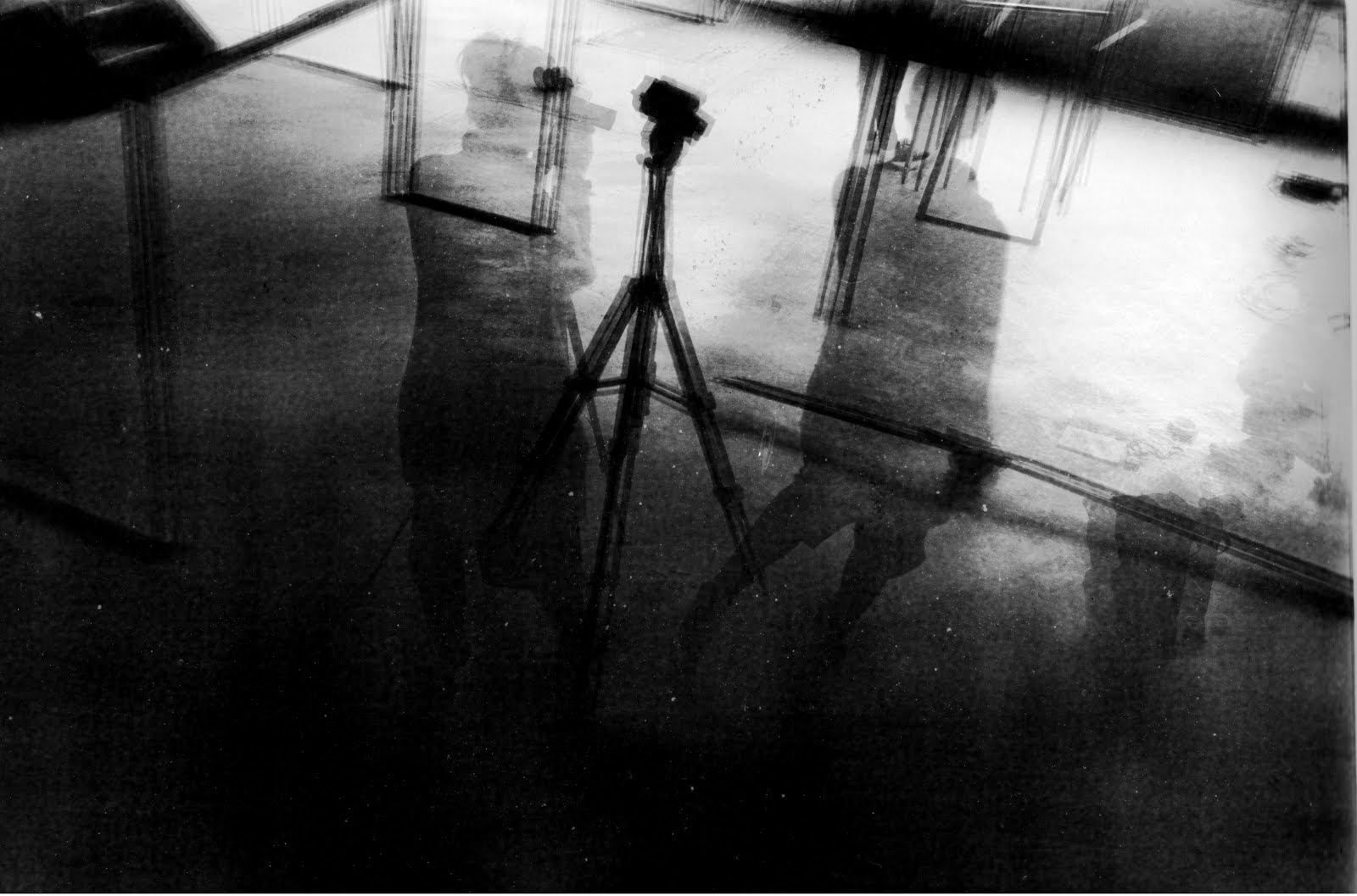
    Dark Session’s : Shadowy speculations in the pottery. Kilquhanity 2011

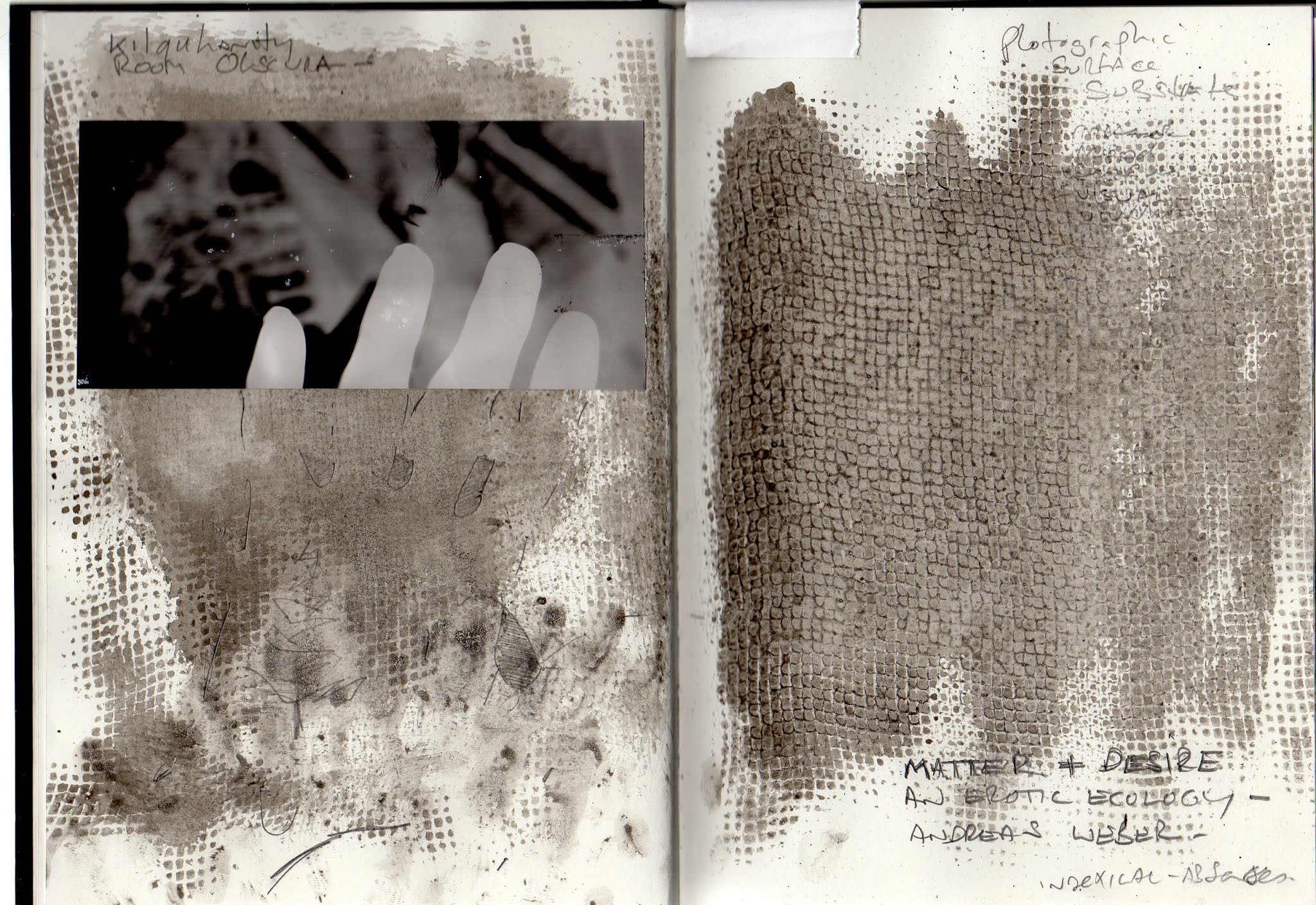
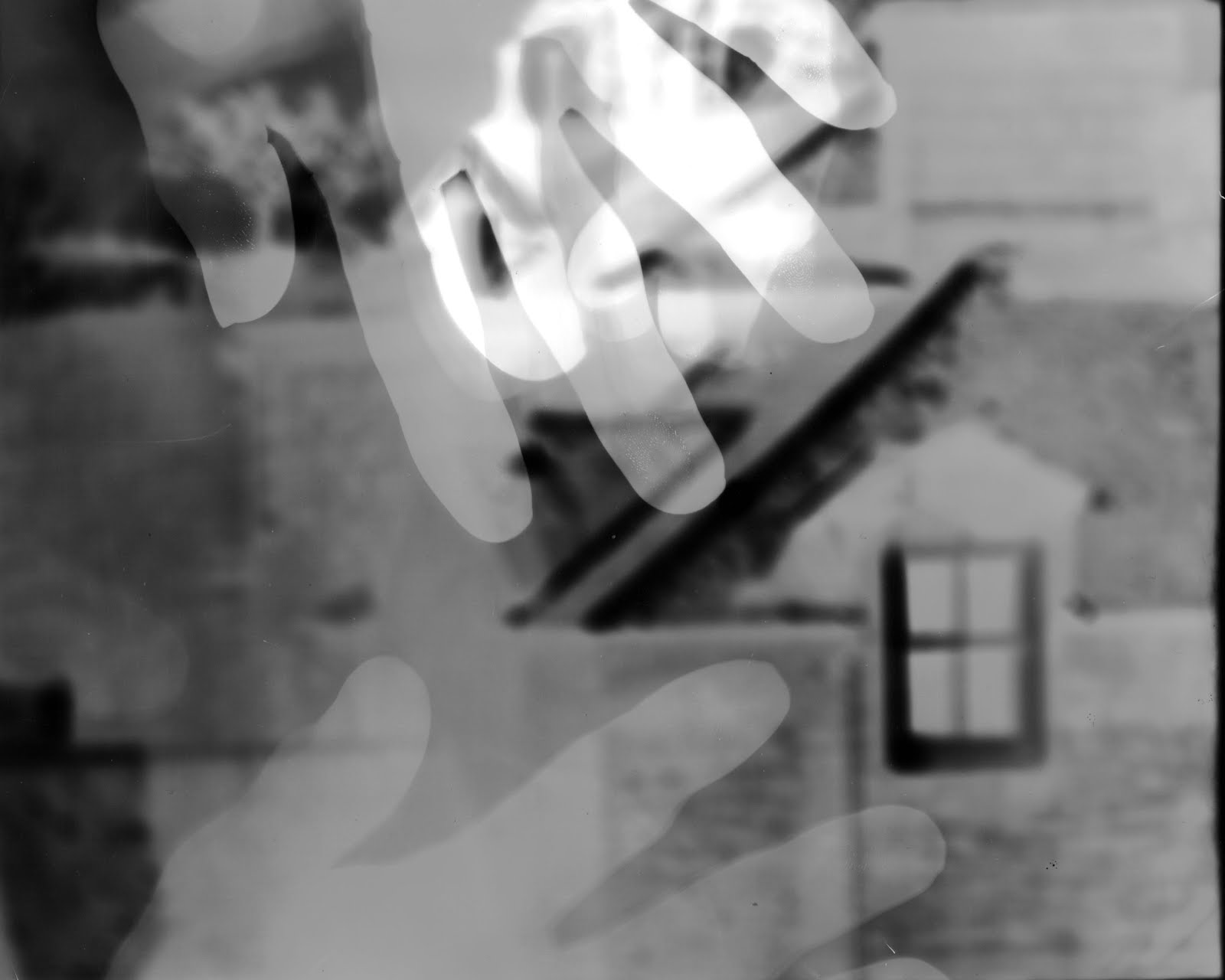
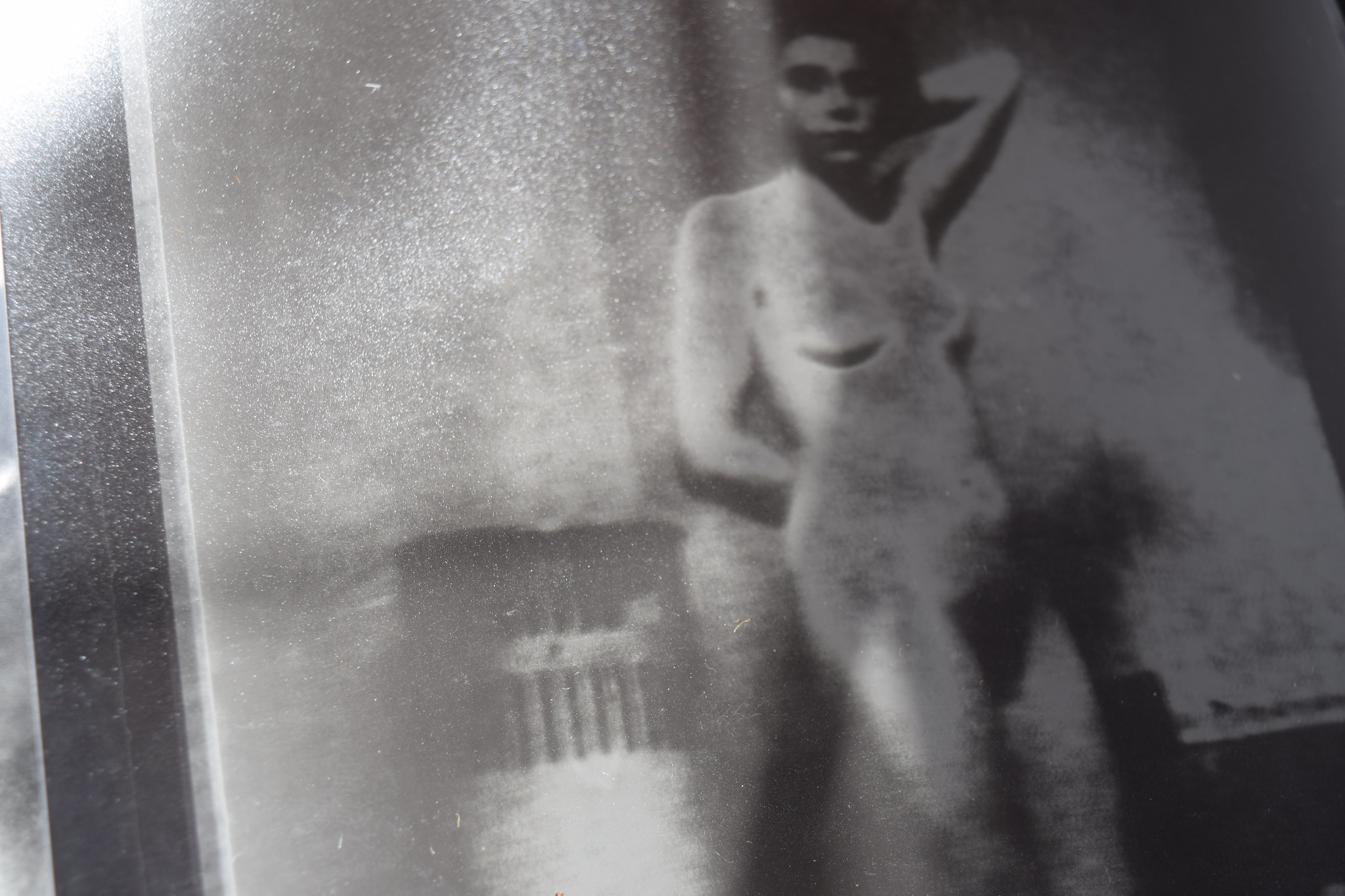
    Silver gelatin prints from a “room obscura” set up at Kilquhanity, Scotland 2011 as part of “Back to Free school, Drawing out the Archive”

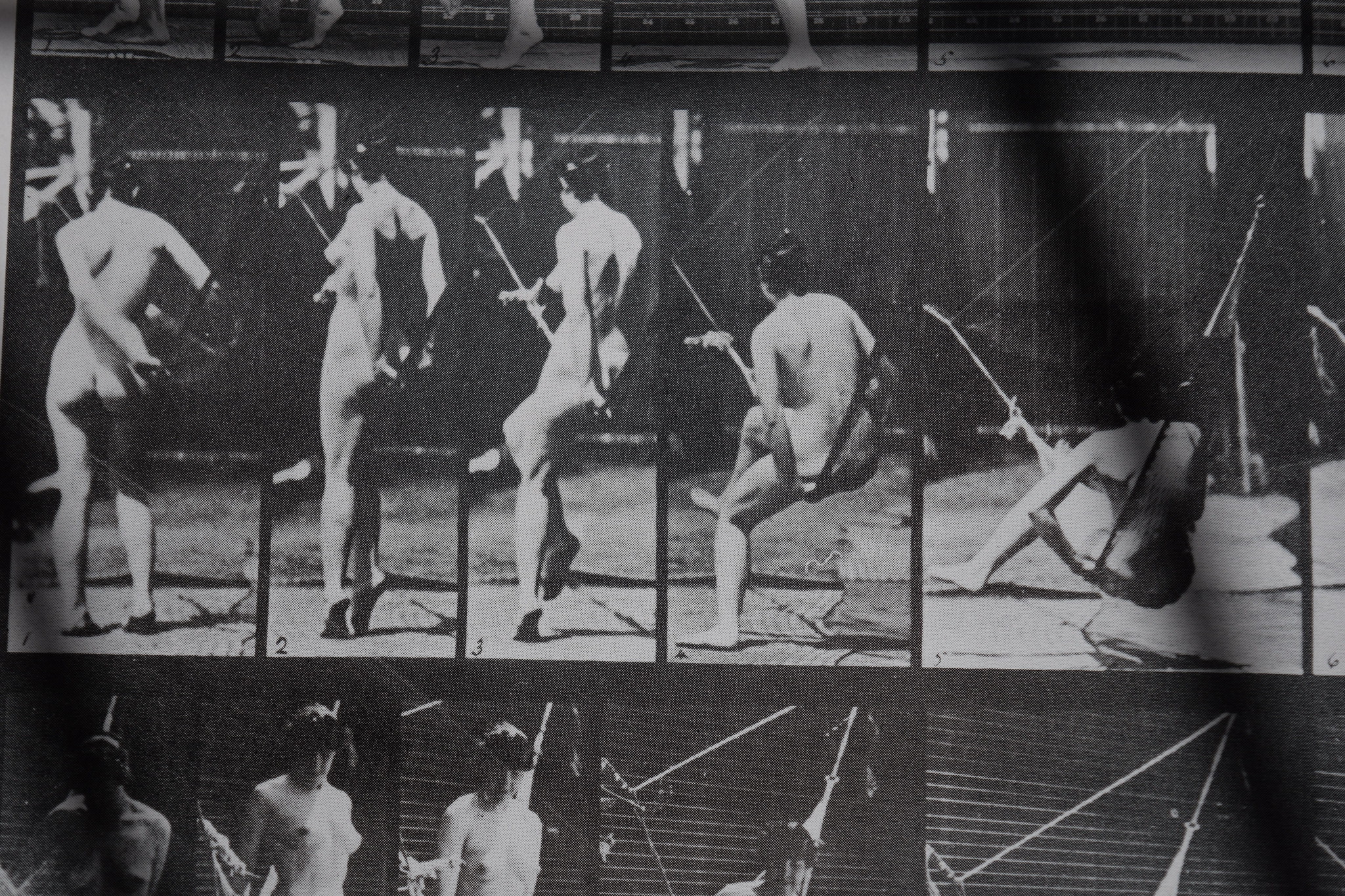
    Sequential Photograph : In the space around the “spatial turn” (539)
    Art as Spatial Practice.
    Space folds : Containing “Spatialities around historicality and sociality”

    “All that is solid melts into air”

    Karl Marx, Friedrich Engels,
    (Poetic observation concerning the constant revolutionizing of social conditions)

    Perceptions now gathering at the end of the millennium. Spatiality, Robert T. Tally Jr. 2013

    pictify.com/user/russellmoreton

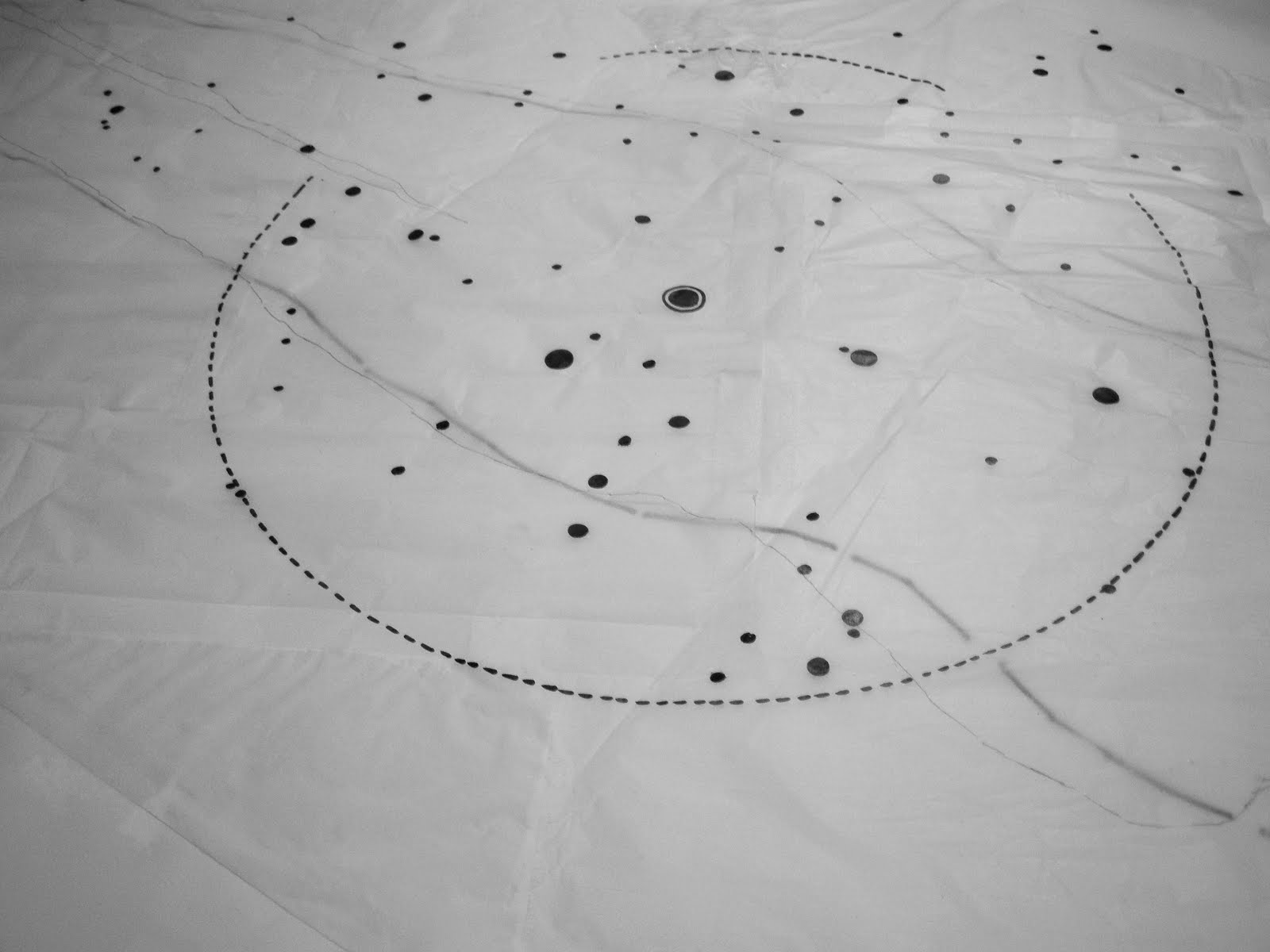
    PB144997a : Mapping.

    Bento’s Sketchbook : John Berger

    The human  body  {corpus humanum) is composed  of many individuals (of different nature),  each  one of which  is highly composite.
    The  individuals  of  which  the  human  body  is  composed  are some fluid, some soft and some hard.
    The individuals composing  the human  body,  and  conse­quently  the human  body  itself is affected  in  many  ways by external bodies.
    The human body needs for its preservation many other bodies from which it is, so to speak, continually regenerated.
    When a fluid part of the human body is so determined by an external body that it impinges frequently on another part which is soft, it changes its surface and as it were imprints on it the traces of the external impelling body.
    The  human  body  can  move  external  bodies  in  many  ways, and dispose them in many ways.
    The human mind is apt for perceiving many things, and more so according as its body can be disposed in more ways.
    {Ethics, Part II, Postulates I-VI, Proposition XIV)


    Drawing into the contemporary sociological imagination Intermezzo : Nomadic Photographic Assemblage a thousand plateaus Deleuze, Guatta…

    Source: Composite Bodies in Spaces : Drawing into the contemporary sociological imagination

  • Cyanotypes : Creative Ecologies

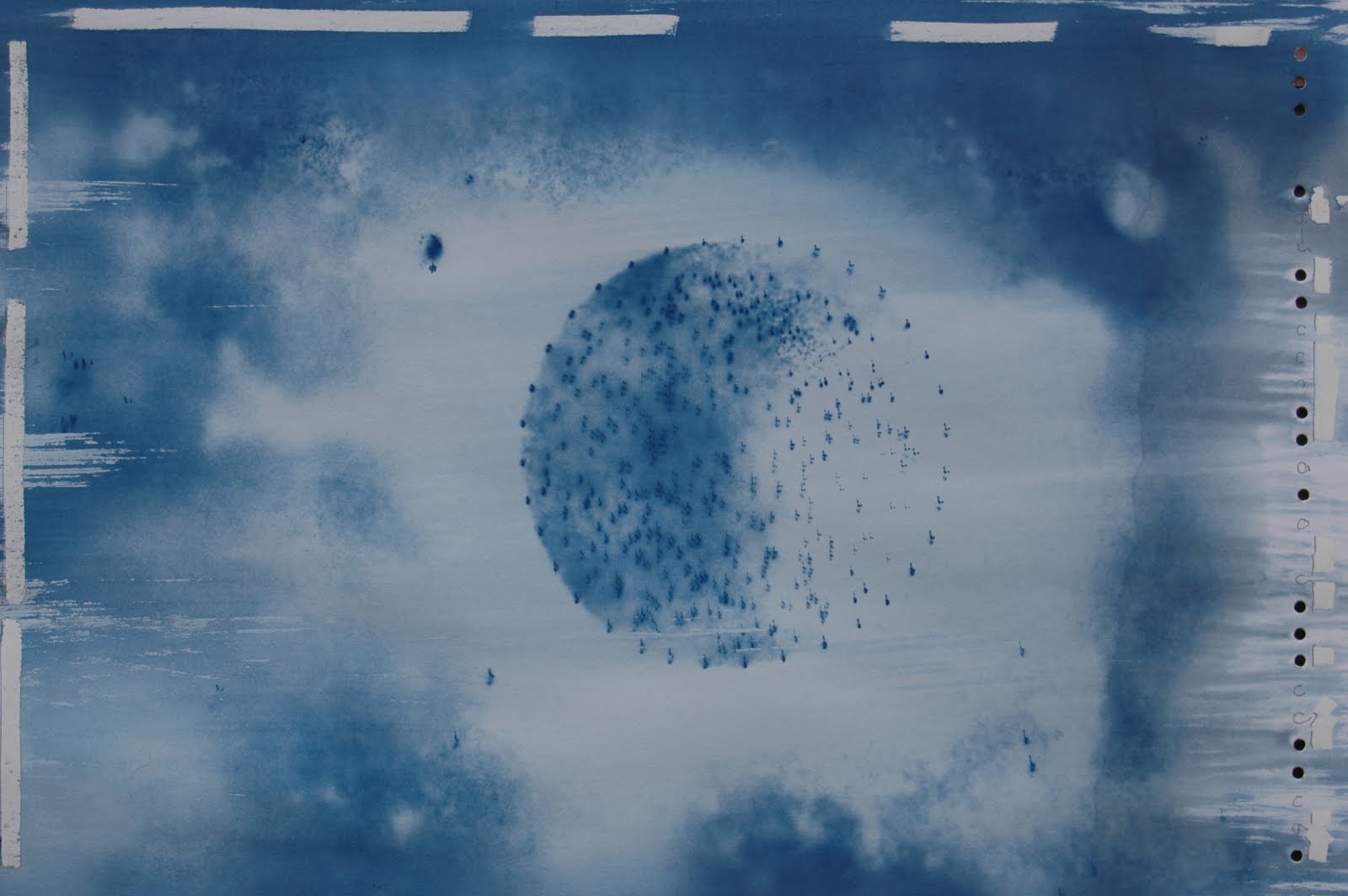
    The sun has gone mad and stripped the earth of its ionosphere. For decades blasting radiation has poured upon earth, melting the polar caps and turning permafrost into streams, rivers, oceans. Huge deltas have been built, lakes formed, seas have risen.

    The Drowned World, JG Ballard.

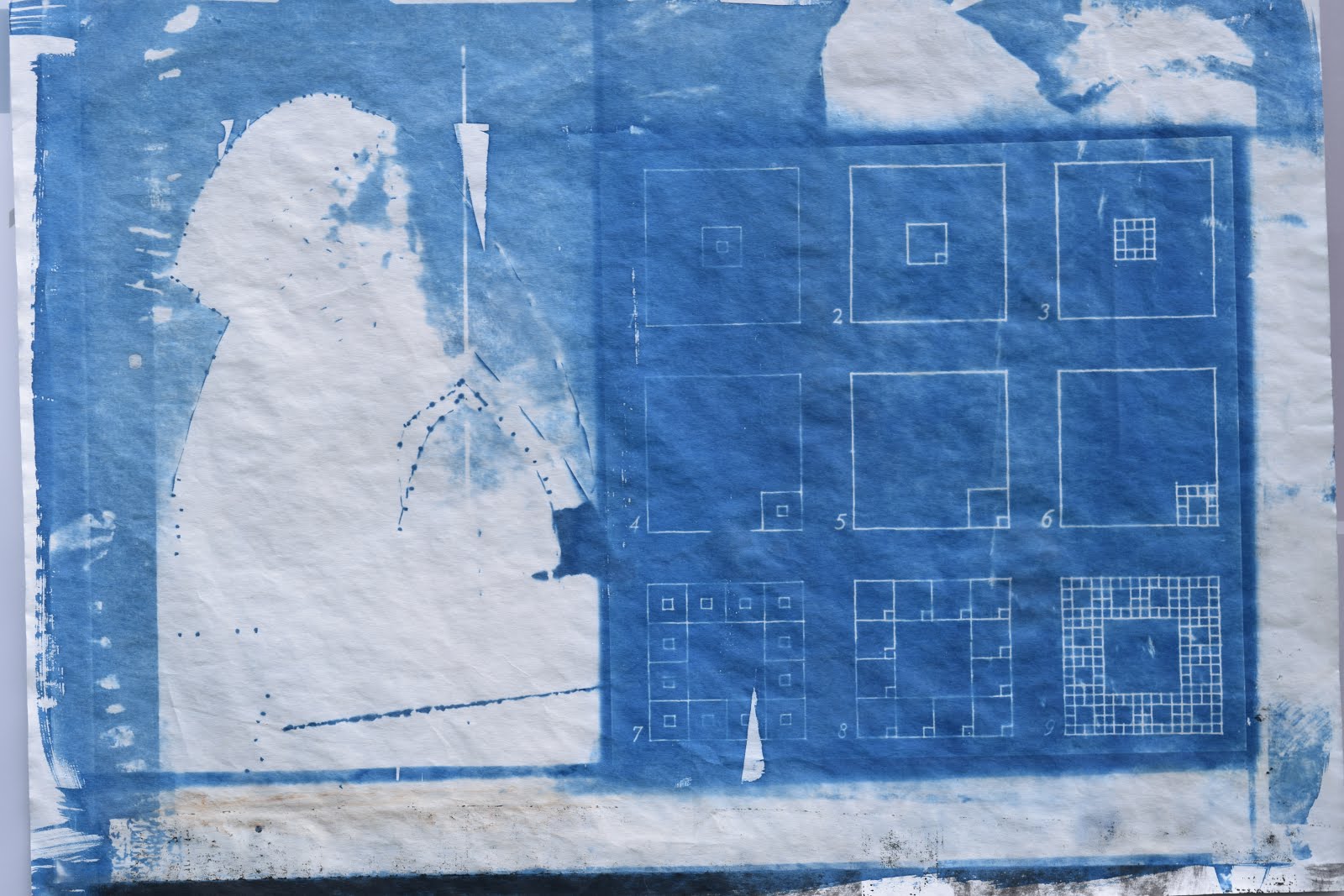
    Blueprints : Anthropological Forms
    Botanical traces with leper graves

    DSC_0205 Archipelagic

    DSC_0250 Architectural Blueprint

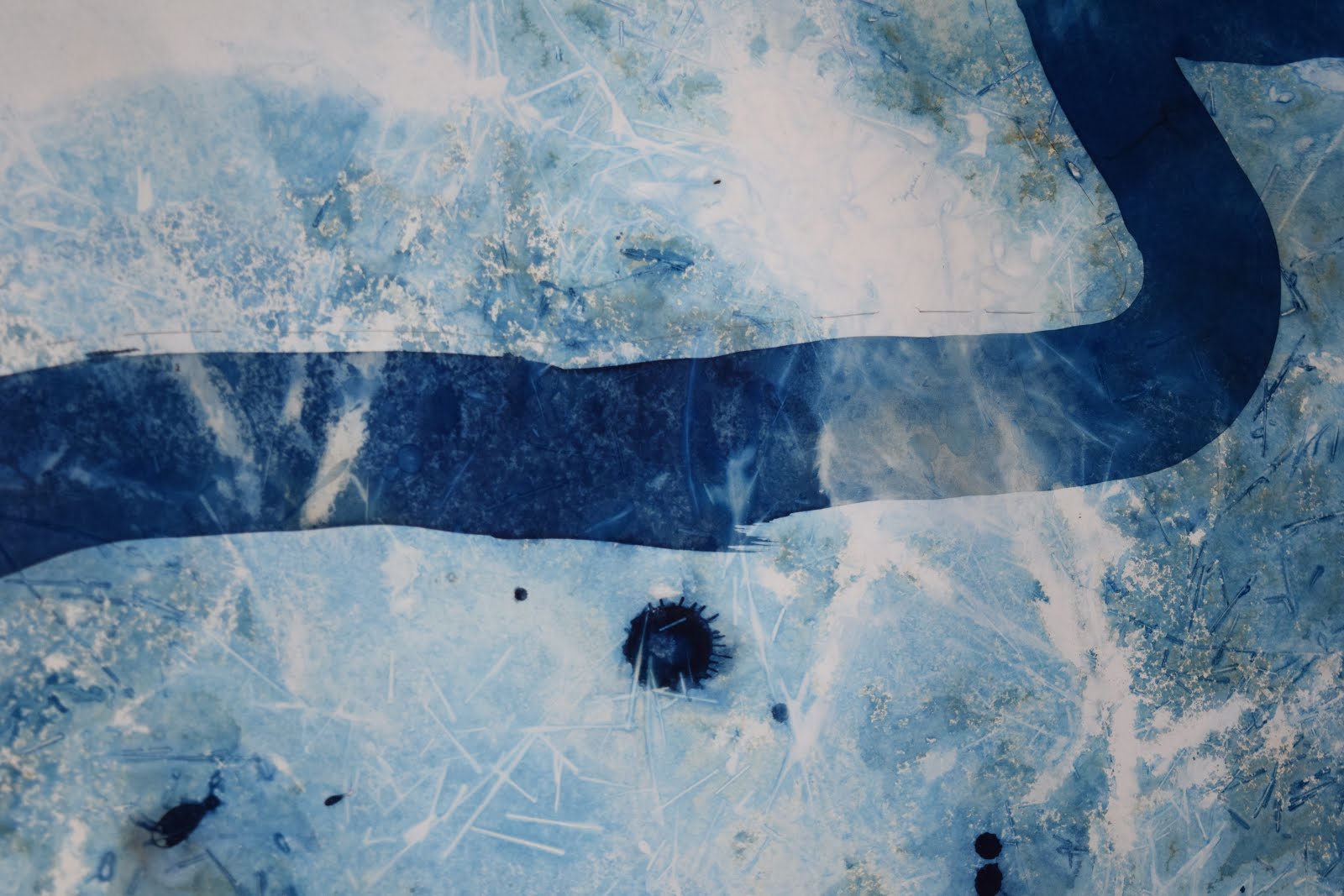
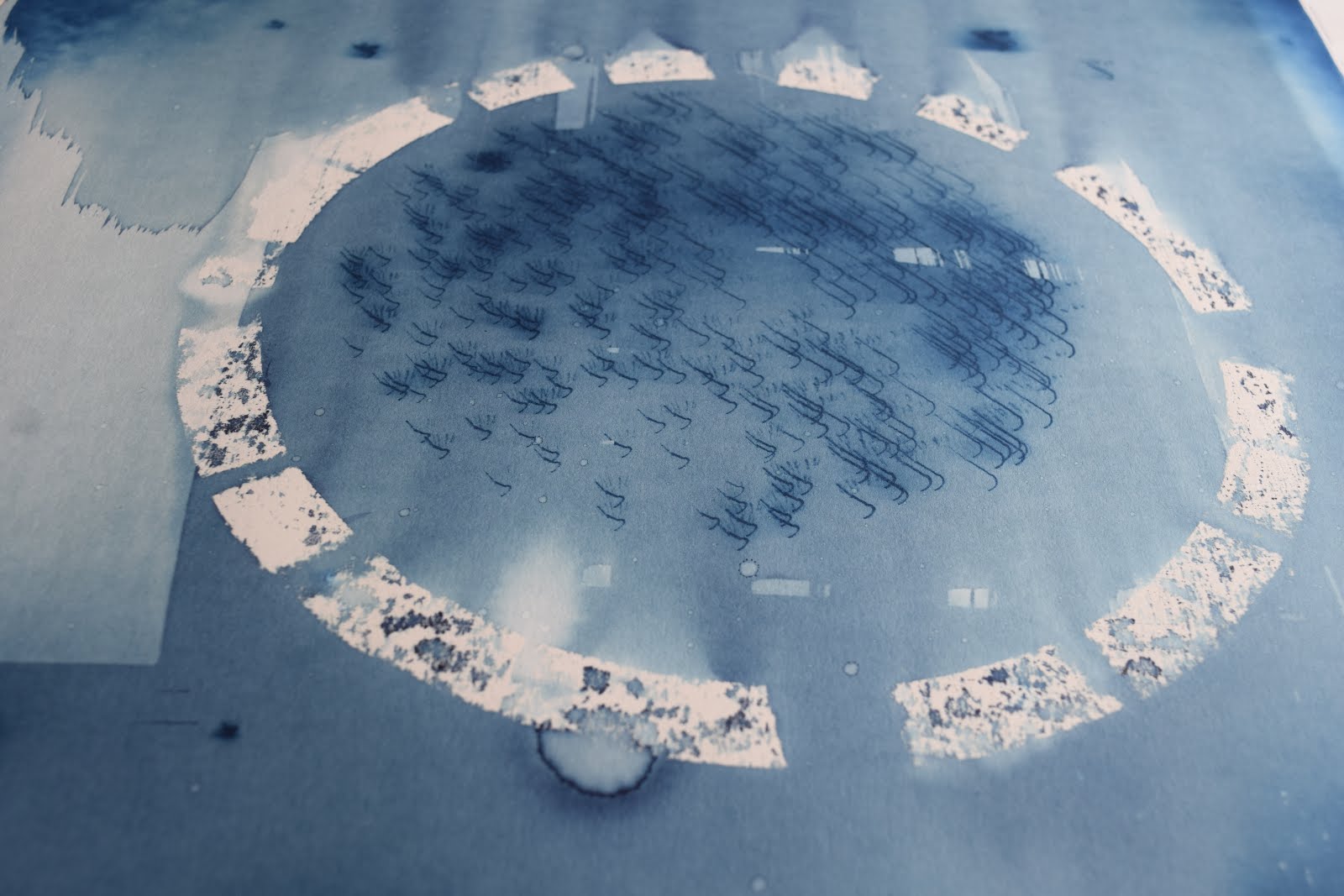
    Biosphere (Ecology and Entropy) 2012.


    The sun has gone mad and stripped the earth of its ionosphere. For decades blasting radiation has poured upon earth, melting the polar caps …

    Source: Cyanotypes : Creative Ecologies

  • Figure/Foreground/Afterimage : Drawing

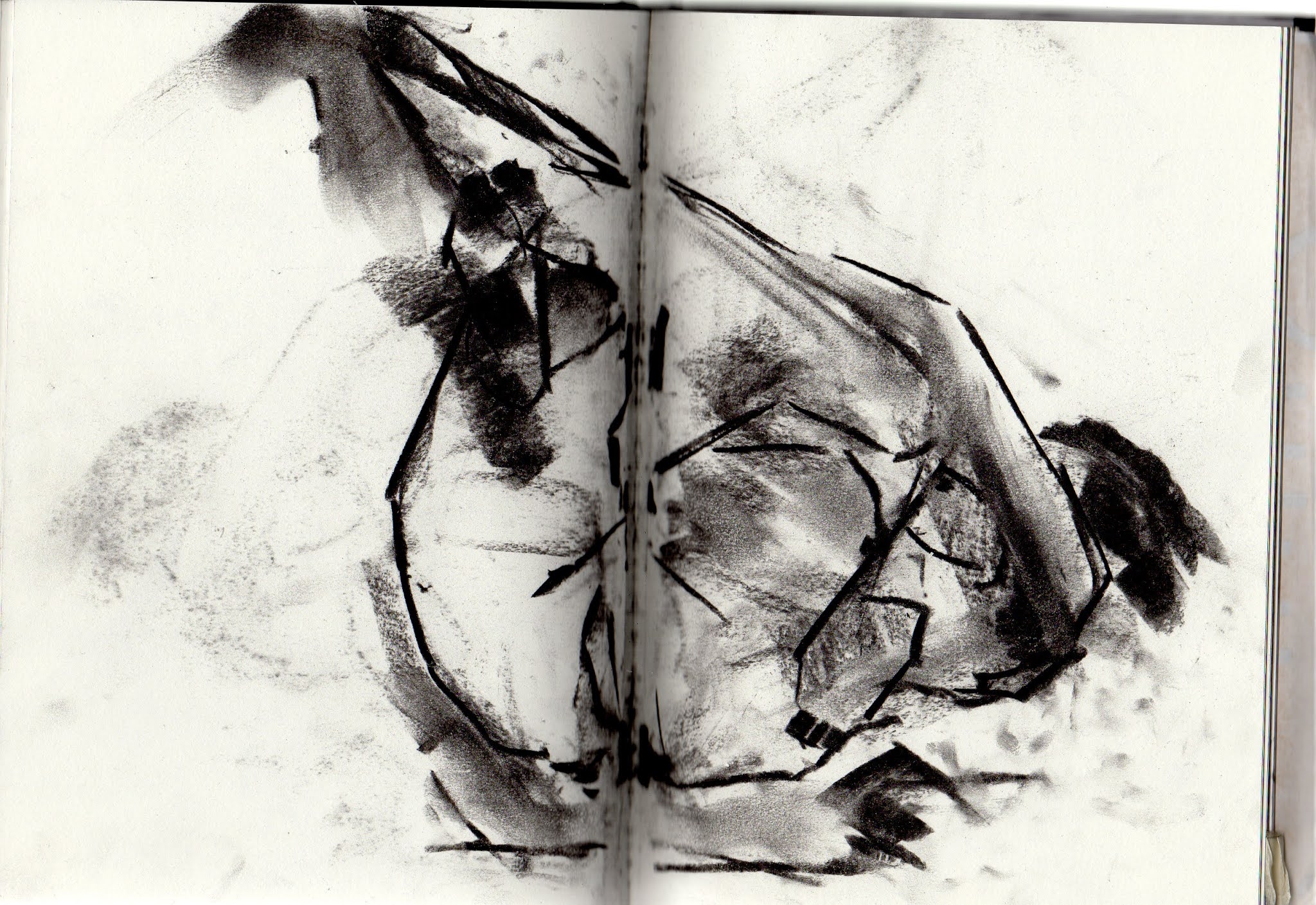
    In drawing the moments of choice have been kept visible.
    John Berger, Berger On Drawing.

    A drawing is essentially a private work, related only to the artists own needs.
    The Drawn Line-A Recession-A Past Statement Brought Forward

    The Body of Drawing
    Drawings by Sculptors
    South Bank

    Drawing registers the transforming effects of the imagination and the memory.
    Drawings are images of flux; flux both imaginative and physical.

    Drawing is a verb.
    There is no way to make a drawing-there is only drawing.
    Richard Serra

    The Drawing Book
    Tania Kovats
    Drawing is something where you have  a really direct-immediate relationship with the material. You make a mark, and then you make another mark in relation to that mark.
    Kiki Smith
    The Body
    Rodin’s lines dont just represent carnality; they are themselves carnal, invasive, sexy. Uninterrupted by the space between the material and the body; the line made by the drawing hand stands in for other haptic things. The body is where drawing begins and where it ends.

    Looking at images does not lead us to the truth, it leads us into temptation.
    Marlene Dumas

    Sexuality and Space
    Beatrice Colomina

    Drawing and Random Interference
    From Chaos To Order And Back Again
    Sally O’Reilly

    Quantum Chance
    Janna Levin

    AFTERIMAGE : Drawing Through Process
    Cornelia H. Butler

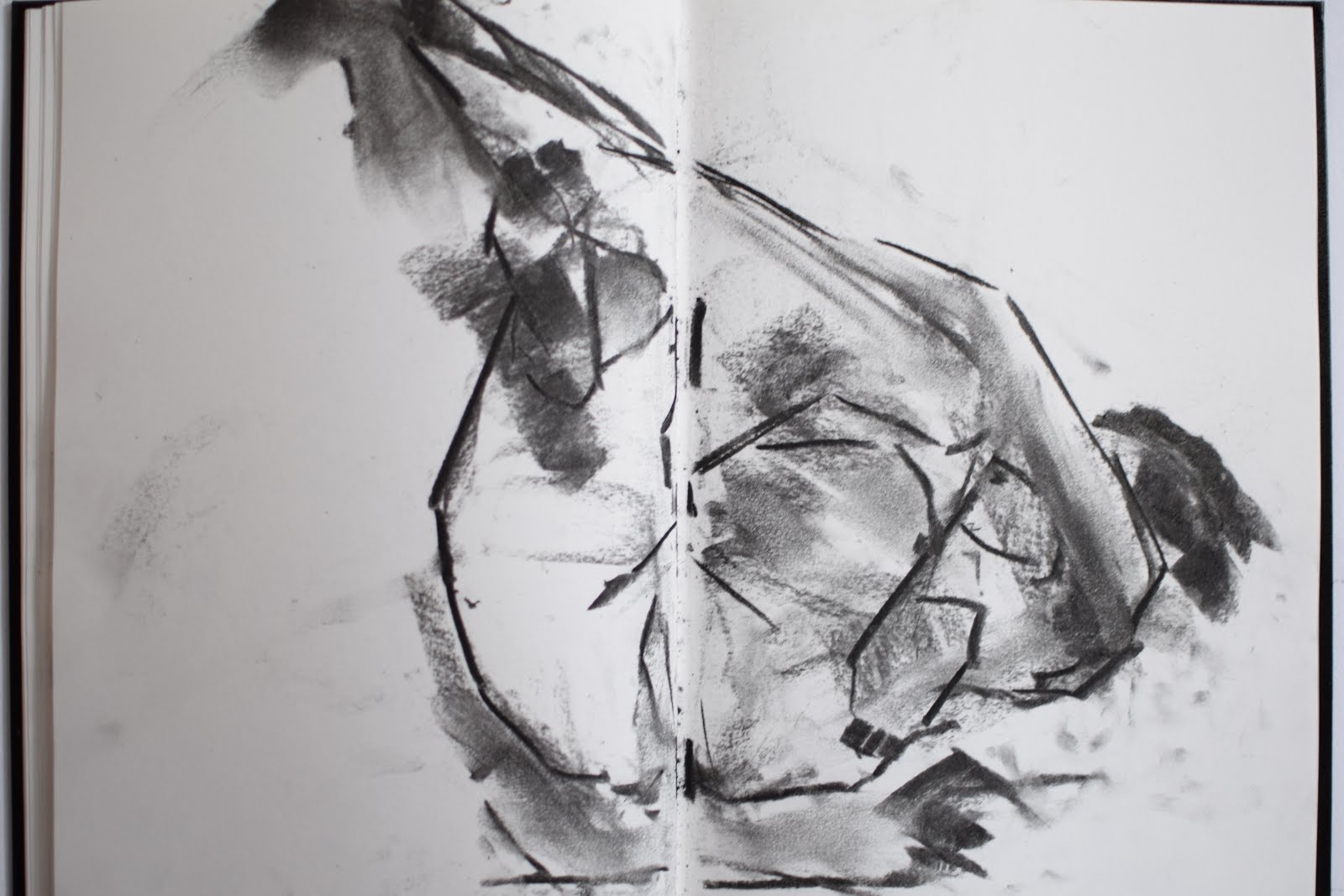
    Rather than regarding life-drawing as an event of realism, it may be more productive to
    explore it as an assemblage of events, a field of practices, or as a cluster of performances.

    https://www.flickr.com/photos/russellmoreton/26820152469/in/photostream/


    In drawing the moments of choice have been kept visible. John Berger, Berger On Drawing. A drawing is essentially a private work, relate…

    Source: Figure/Foreground/Afterimage : Drawing

  • Opening Collages : Ambiguous Borders

    Curatorial Practices
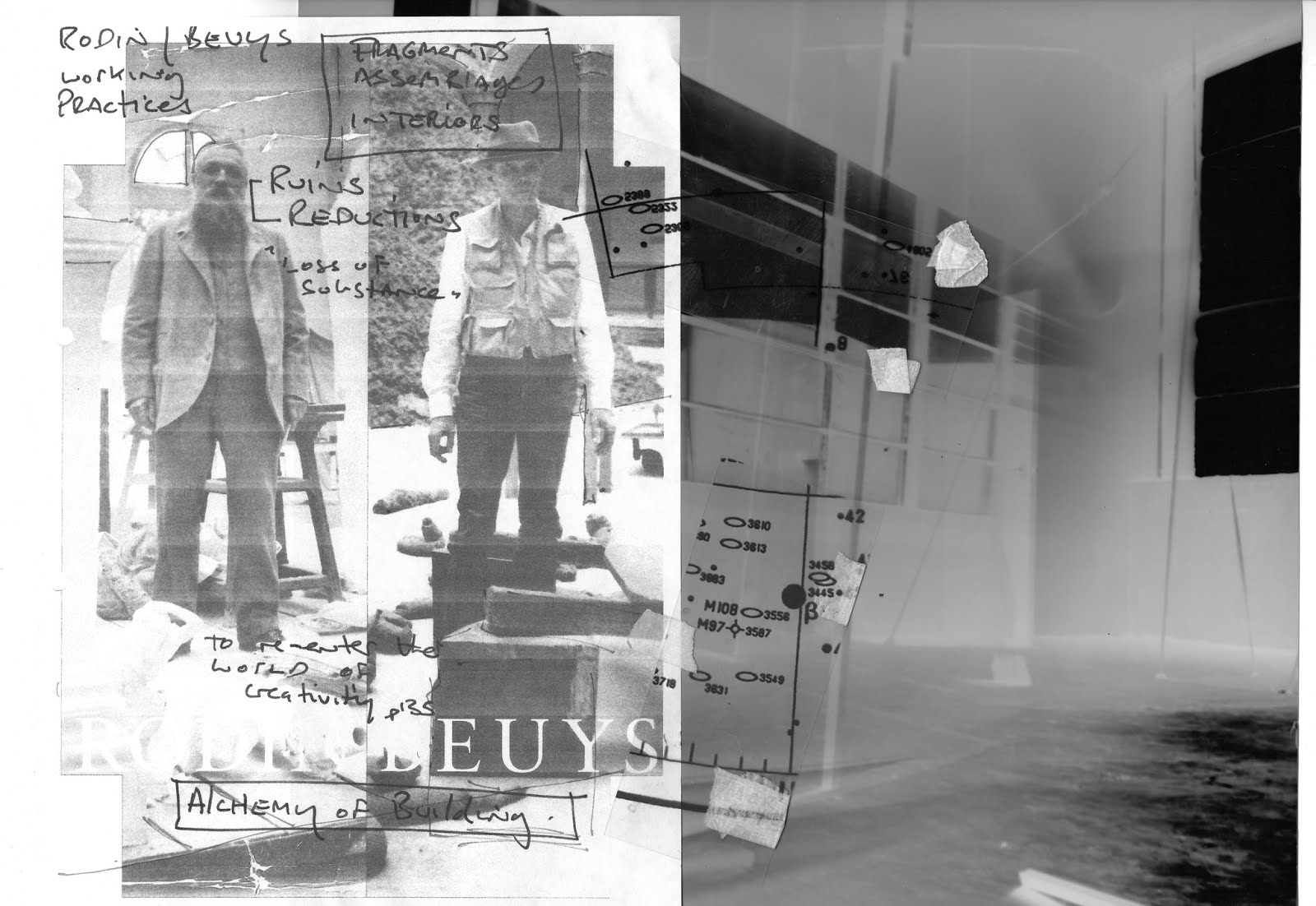
    The Alchemy of Building
    Collages/Inclusions : Creative Ecologies

    Yvonne Buchheim
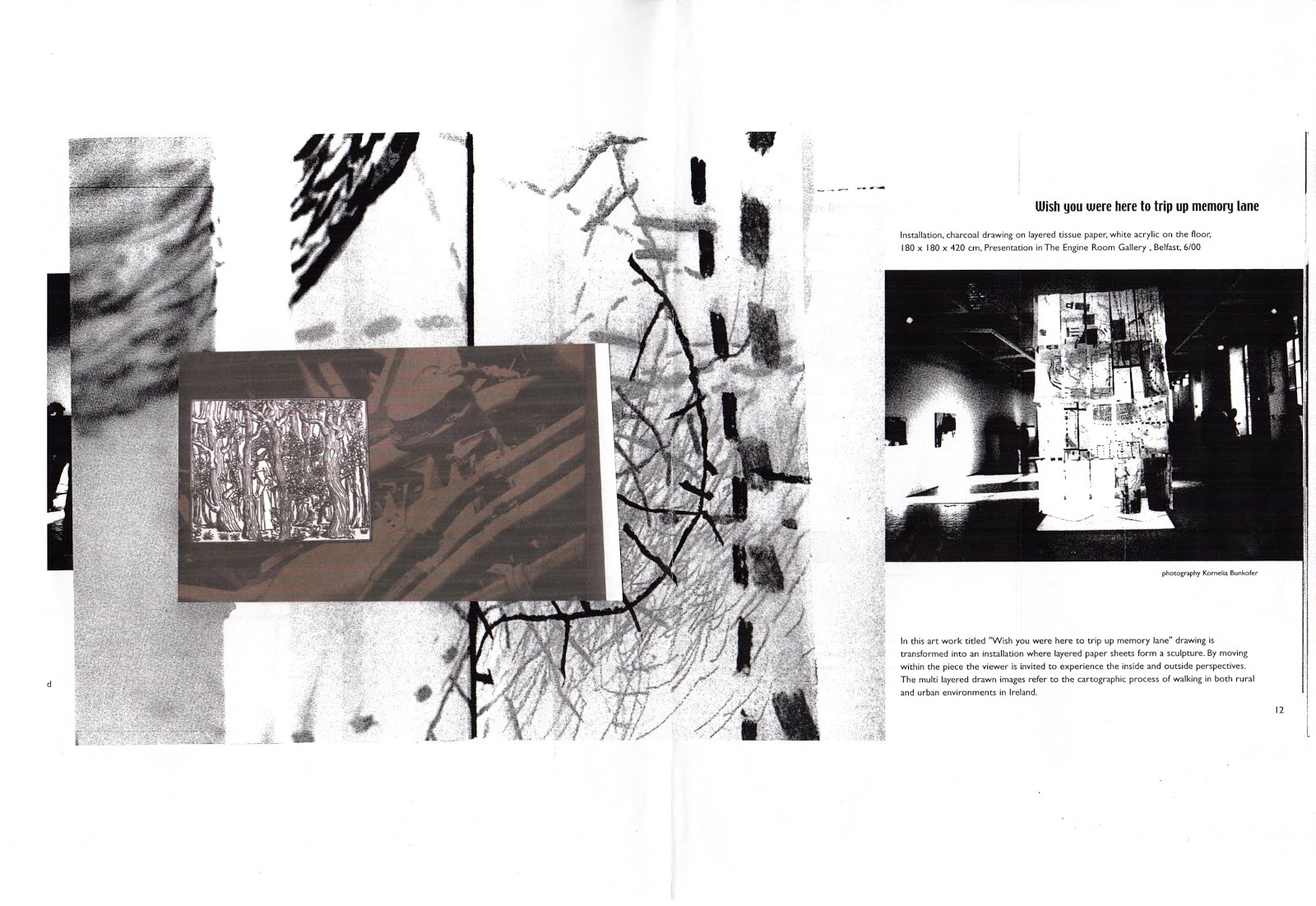
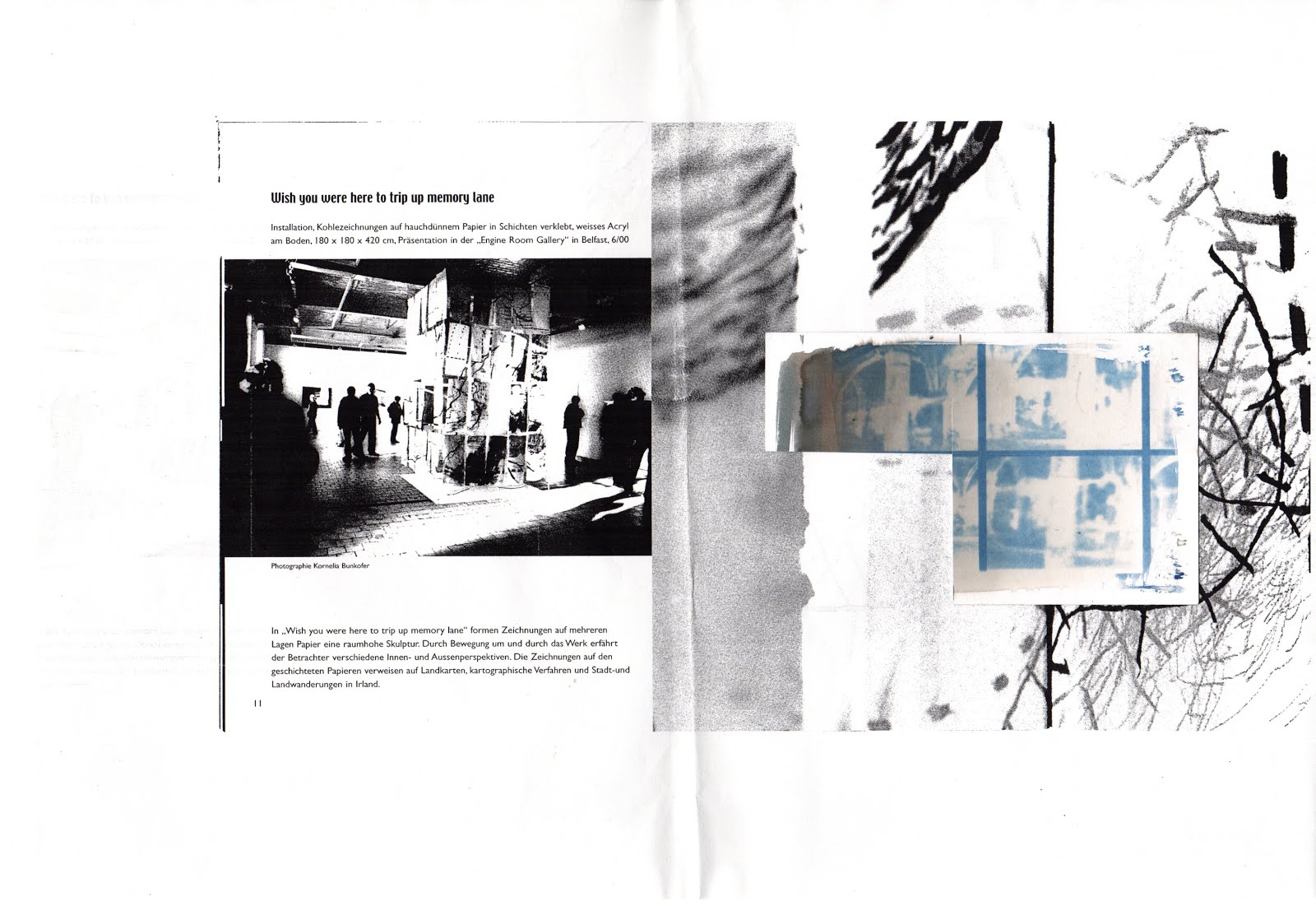
    Wish you were here to trip up memory lane. Belfast 2000
    http://www.acid.uwe.ac.uk/buchheim/belfast1.htm

    Alberto Perez-Gomez
    POLYPHILO
    or The Dark forest Revisited
    An Erotic Epiphany of Architecture

    Robert Mangold

    Sarah Purvey
    Landscape Series, Rhythm. 2012
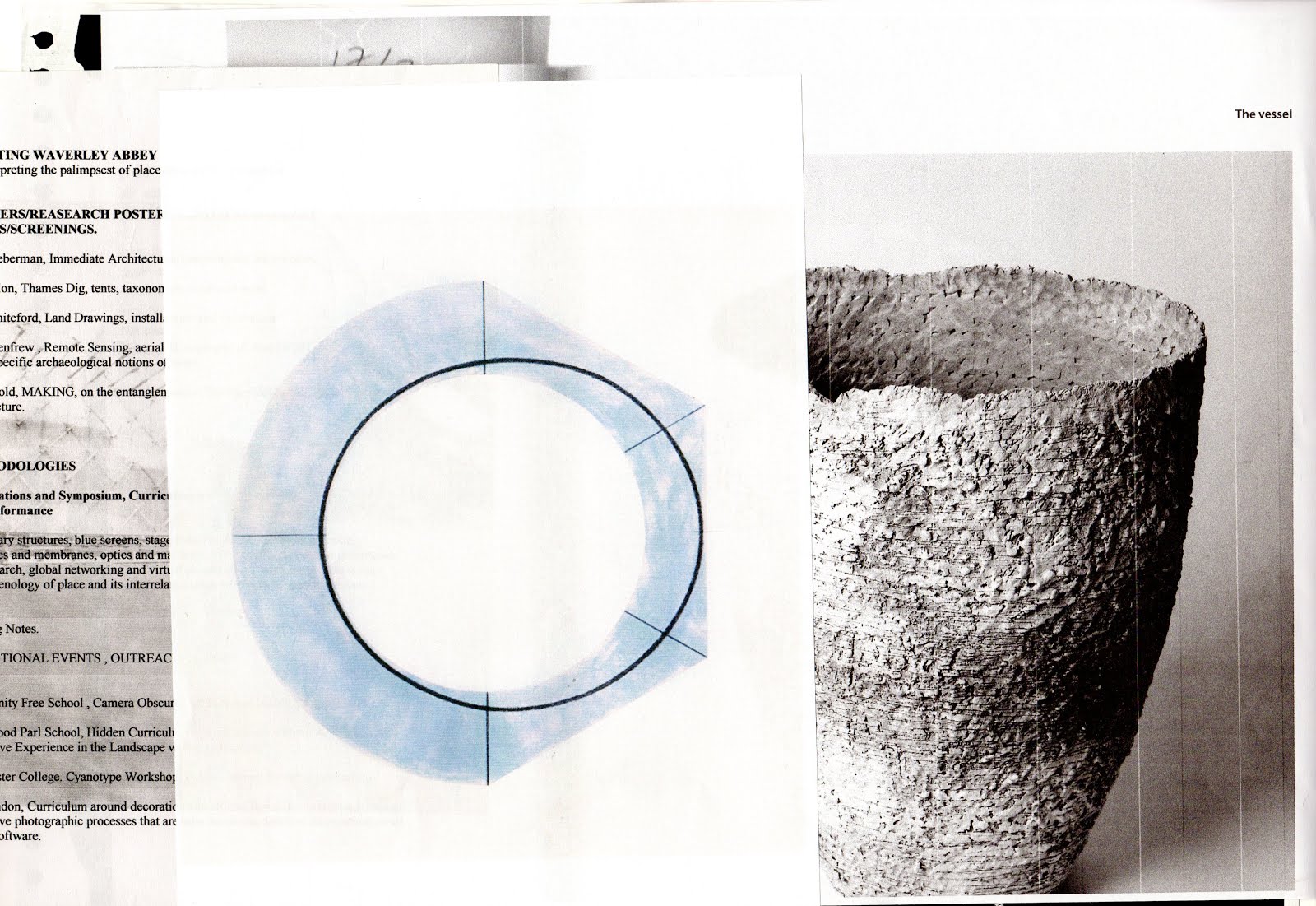
    Crank vessel with slips

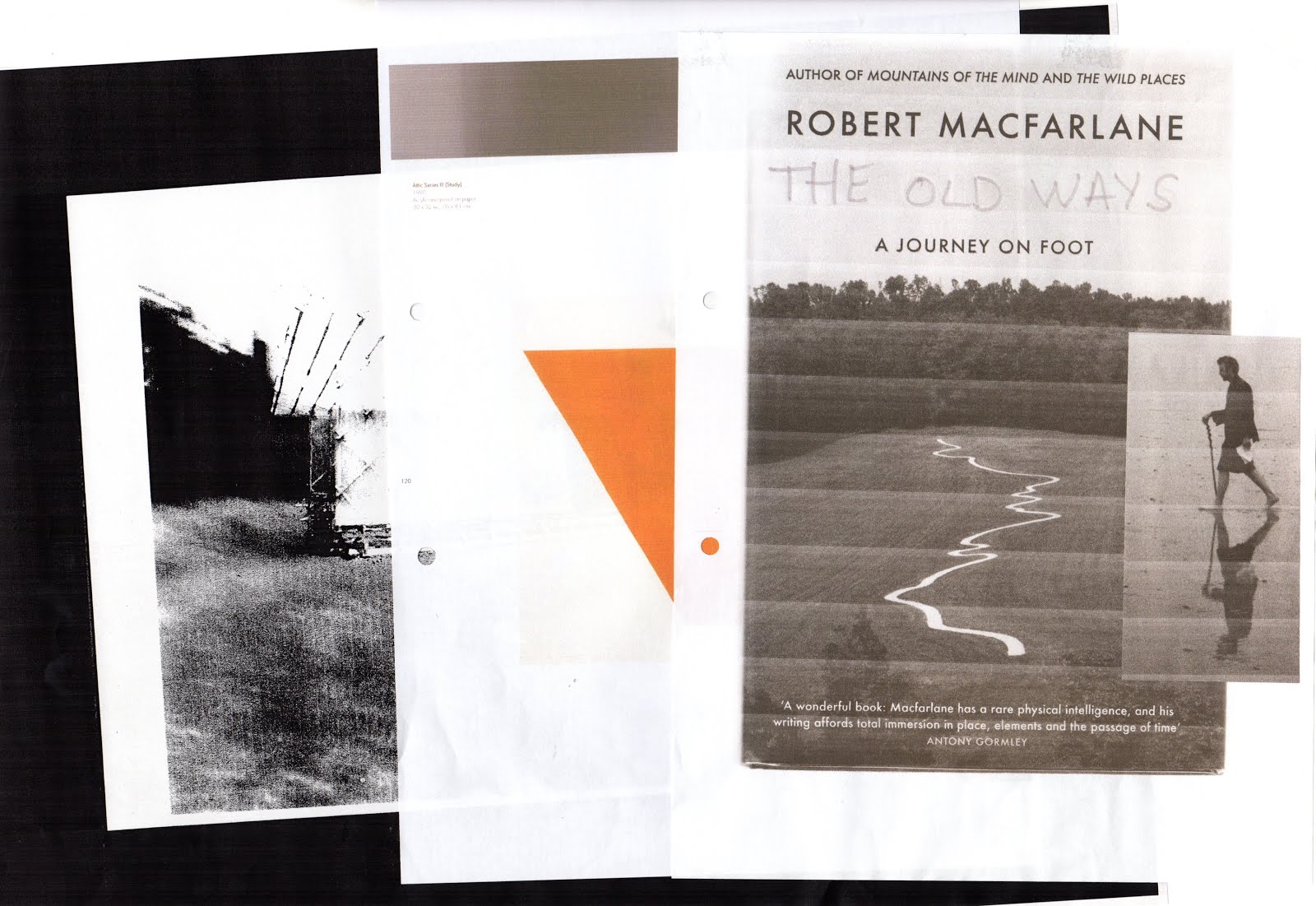
    Robert Macfarlane
    The Old Ways
    A Journey On Foot

    Kengo Kuma
    Transparent Pavilion


    Curatorial Practices The Alchemy of Building Collages/Inclusions : Creative Ecologies Yvonne Buchheim Wish you were here to trip up mem…

    Source: Opening Collages : Ambiguous Borders

  • Mapping Relationships : Contexts and Locations #3

    Collage and drawing with cyanotypes, photographs, negatives and painted surfaces.

    The Laboratory , Canterbury 2009

    Tim Ingold
    MAKING 2013
    Anthropology, Archaeology, Art and Architecture.

    Practical Geometry
    The Architect and The Carpenter
    The Cathedral and The Laboratory
    Templates and Geometry
    The Return to Alchemy

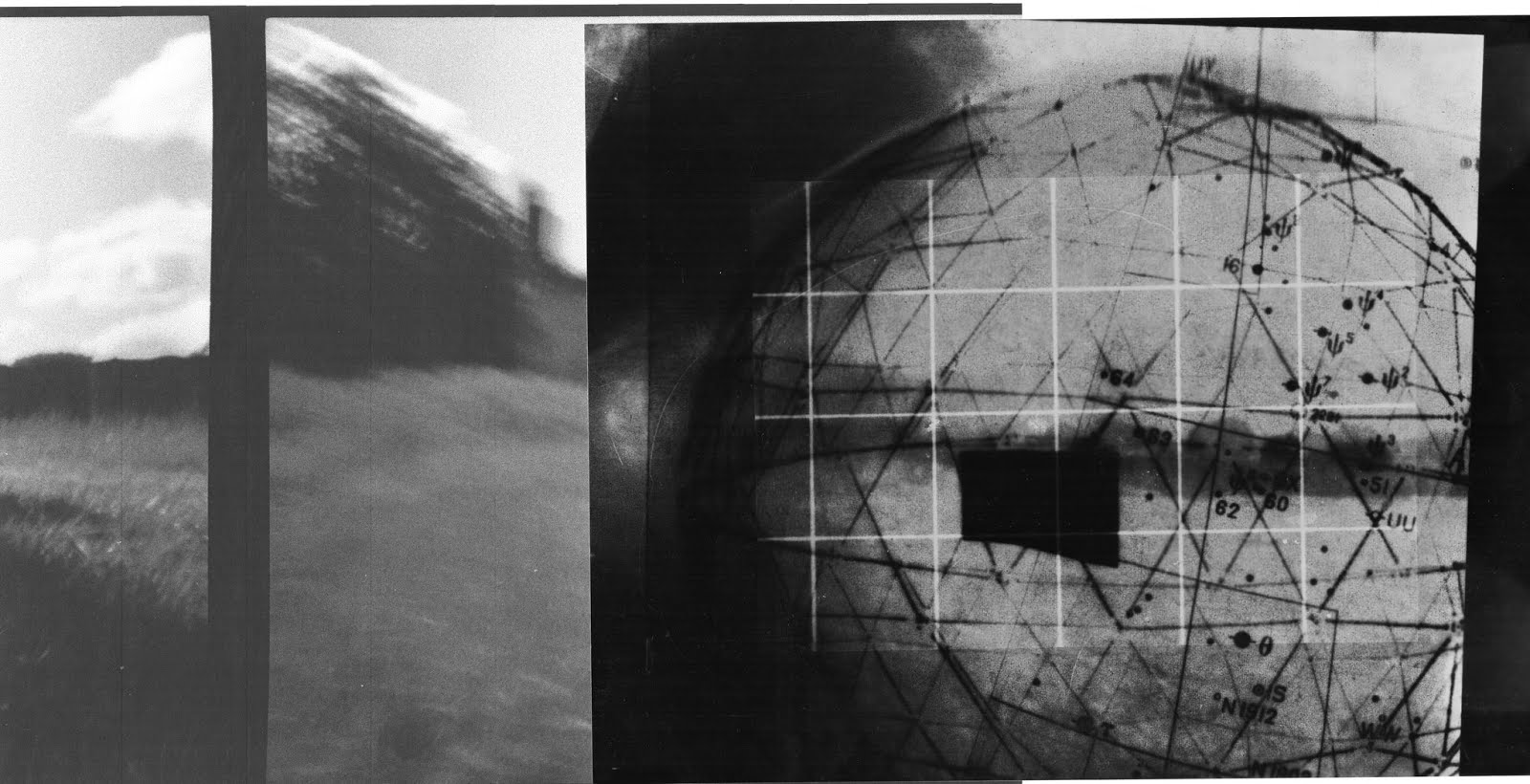
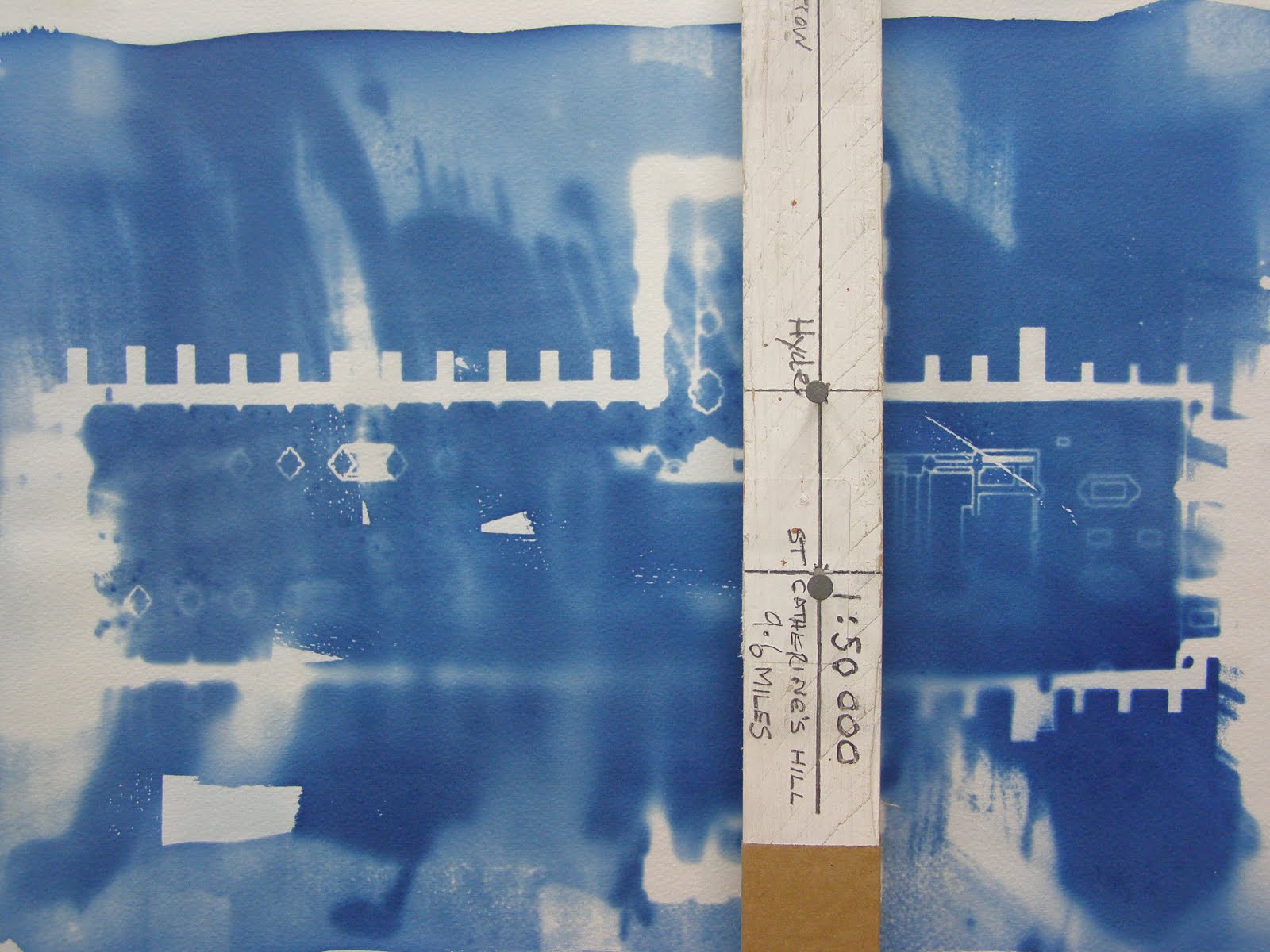
    Cyanotype image from pinhole camera with sound intervention/device within the apparatus of the camera, performative material gathered from the Canterbury School of Architecture.

    UCA Spatial Practices MA under Oren Lieberman.

    DSC_0876 : Figure/Field/Research

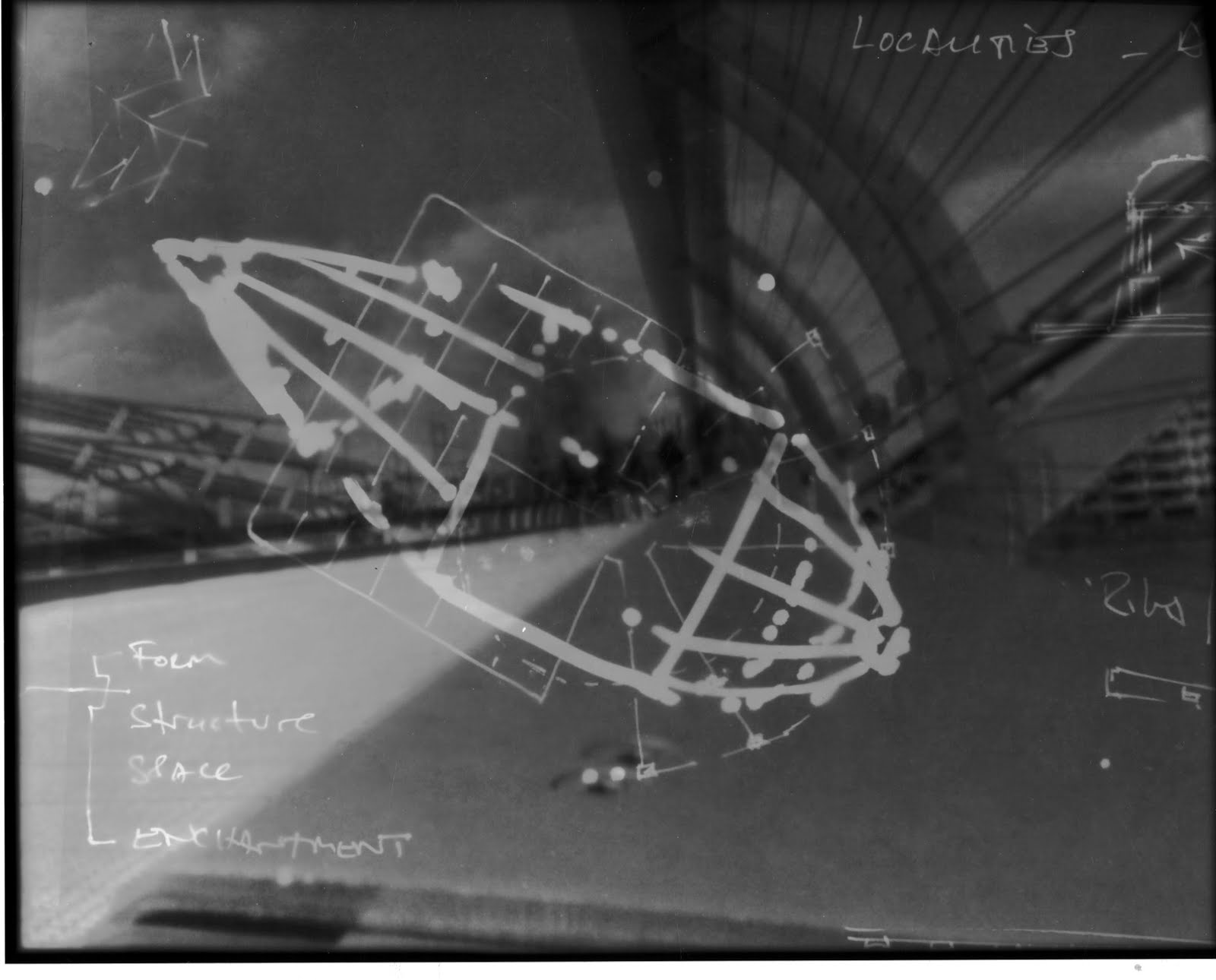
    TRANSPARENT MEDIA : Form,structure, space, enchantment
    Double Take
    15 APR – 3 JUL 2016

    A two-venue exhibition exploring the relationship between drawing and photography, taking place at Drawing Room and The Photographer’s Gallery, London.

    Drawing and photography are each considered the most direct, ‘transparent’ media with which to engage with the world.  They share fascinating parallels:  the relationship to the indexical, the blank sheet of paper or surface, graphite and silver, pencil weight and aperture, the sense of an invisible ‘apparatus’ (the camera and pencil), the engagement with surface, light, negative and positive and the trace. Double Take seeks to explore the multifarious ways photography and drawing have been combined and mirrored to extend both practices into new arenas in modern and contemporary practices.

    “… a freehand sketch diagram that was at the tangent between idea and imagination…if the parti – the first critical diagram – is not made well, it will be difficult for architecture to follow.  If there is no parti, there will be no architecture, only (at best) little more than the utility of construction.  Buried within their early sketches is the germ of a narrative or language.  The early diagrams are reflective conversations with the language of architecture.”

    –  Alan Phillips, Brighton, UK

    Marking Stick : Leylines, Directions and Sites. #11

    Sequential Photograph : In the space around the “spatial turn” (539)
    Art as Spatial Practice.
    Space folds : Containing “Spatialities around historicality and sociality”

    “All that is solid melts into air”

    Karl Marx, Friedrich Engels,
    (Poetic observation concerning the constant revolutionizing of social conditions)

    Perceptions now gathering at the end of the millennium. Spatiality, Robert T. Tally Jr. 2013


    Collage and drawing with cyanotypes, photographs, negatives and painted surfaces. The Laboratory , Canterbury 2009 Tim Ingold MAKING 20…

    Source: Mapping Relationships : Contexts and Locations #3

  • Working Collage : Marking the Line/Art, Architecture and Craft Narratives.

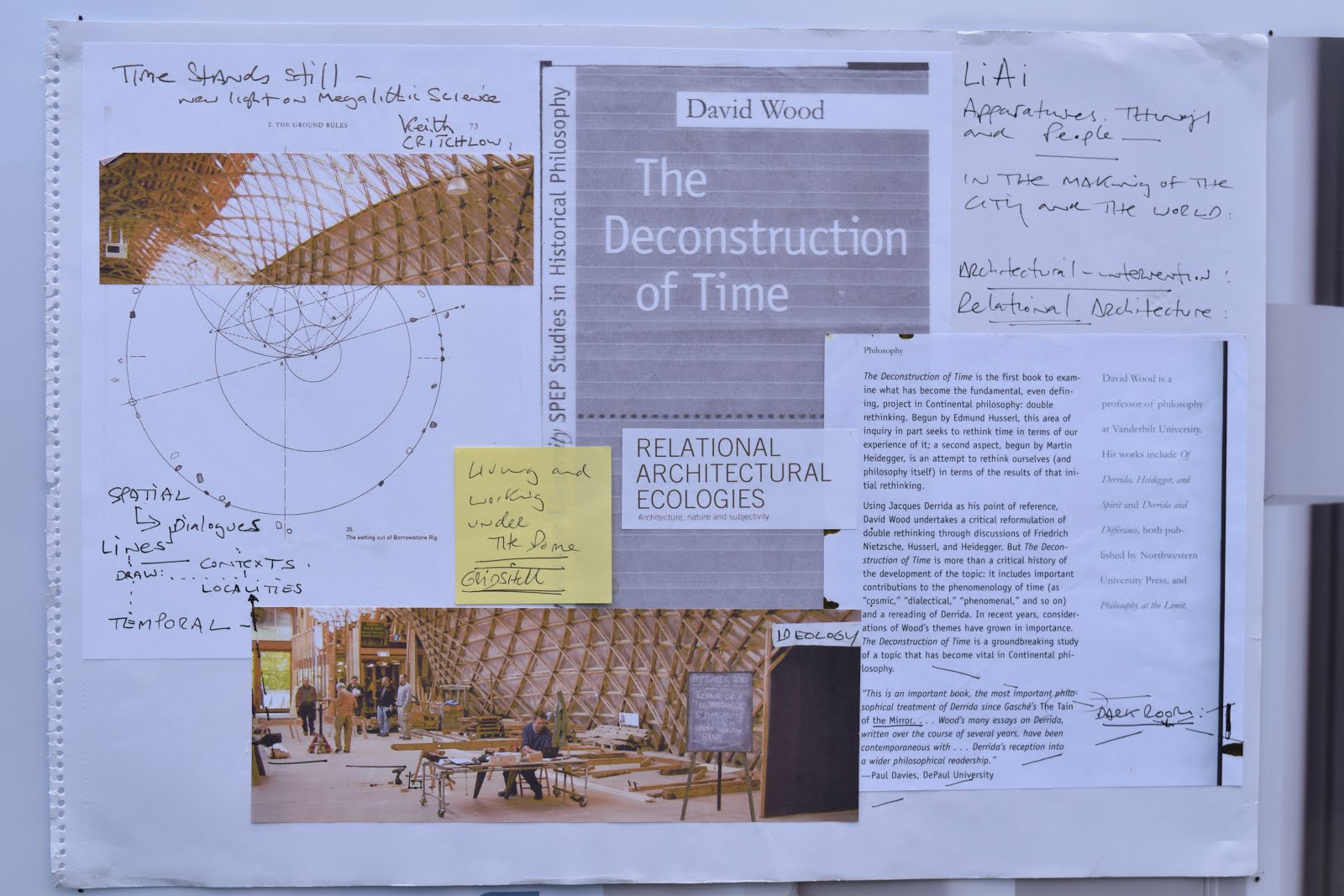
    Architecture, Nature and Subjectivity.
    Atmospheric ecologies/architecting through situated learning.
    Is there still an aesthetic illusion? And if not, a path to an “aesthetic” illusion, the radical illusion of secret, seduction and magic? Is there still, on the edges of hypervisibility, of virtuality, room for an image?
    — Jean Baudrillard, The Conspiracy of Art, 2005
    Jana Sterbak
    Remote Control 1989
    A heuristic technique (/hjᵿˈrɪstᵻk/; Ancient Greek: εὑρίσκω, “find” or “discover”), often called simply a heuristic, is any approach to problem solving, learning, or discovery that employs a practical method not guaranteed to be optimal or perfect, but sufficient for the immediate goals.
    A Hut of One’s Own, Ann Cline
    Texts,Annotations, Foundations, Pathways, Corridors, Bookmarks, Walking, Thinking, Ramble, Cross Country, Disciplines,
    Ecosophy : Social ecology, mental ecology, environmental ecology.
    “Concerning the continuous development of its practice as much as its theoretical scaffolding.”
    The Three Ecologies, Guattari


    Architecture, Nature and Subjectivity. Atmospheric ecologies/architecting through situated learning.  Is there still an aesthet…

    Source: Working Collage : Marking the Line/Art, Architecture and Craft Narratives.