Social apparatuses and agents that explore the possibilities of space. Other Worlds : Insistent moments of mark making/subjectivity.
Source: Immaterial Architectures : Raveningham Pavilion and The Architecture of Natural Light
Spatial Practices : Experimental drawing and alternative photography.
Social apparatuses and agents that explore the possibilities of space. Other Worlds : Insistent moments of mark making/subjectivity.
Source: Immaterial Architectures : Raveningham Pavilion and The Architecture of Natural Light

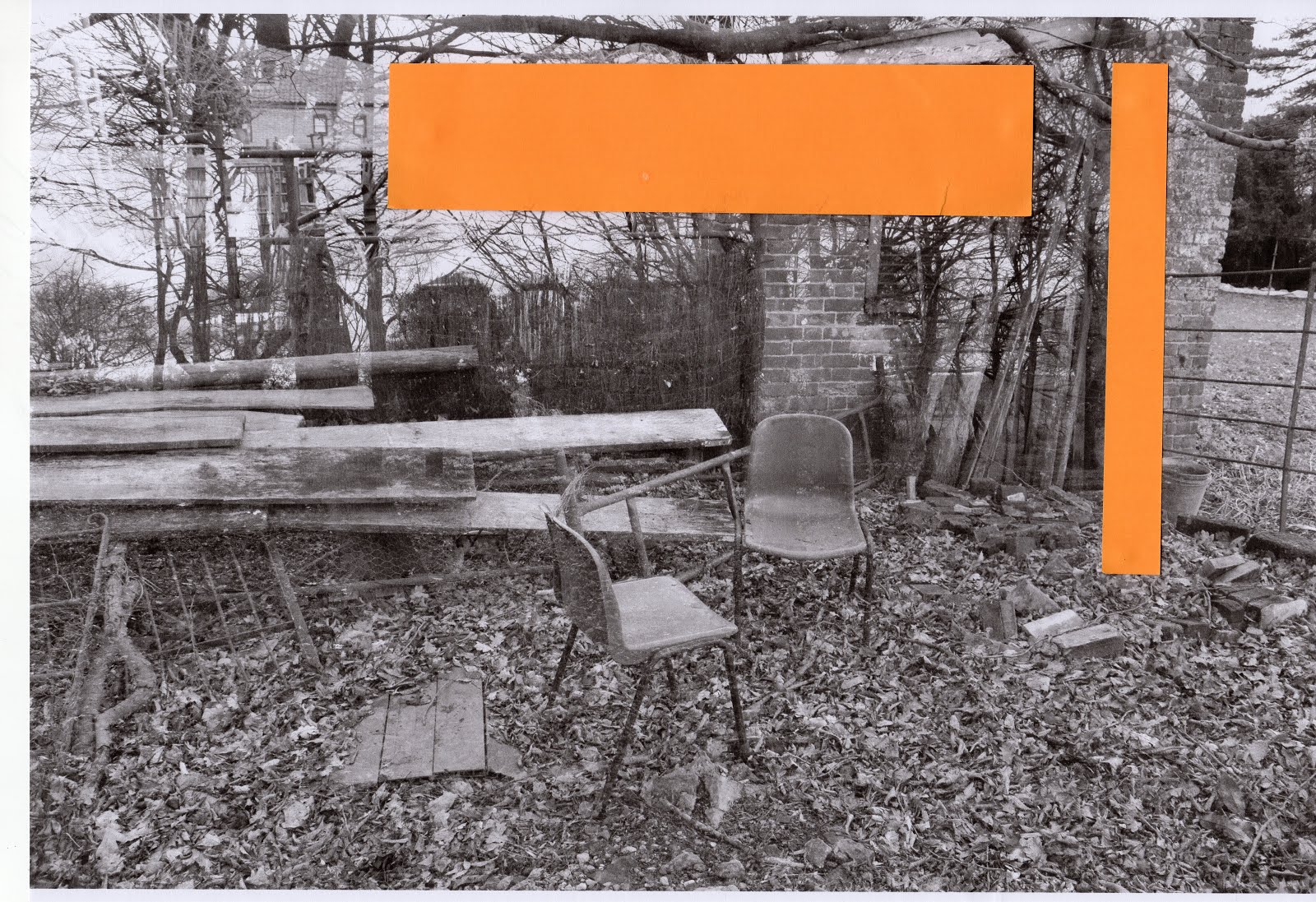
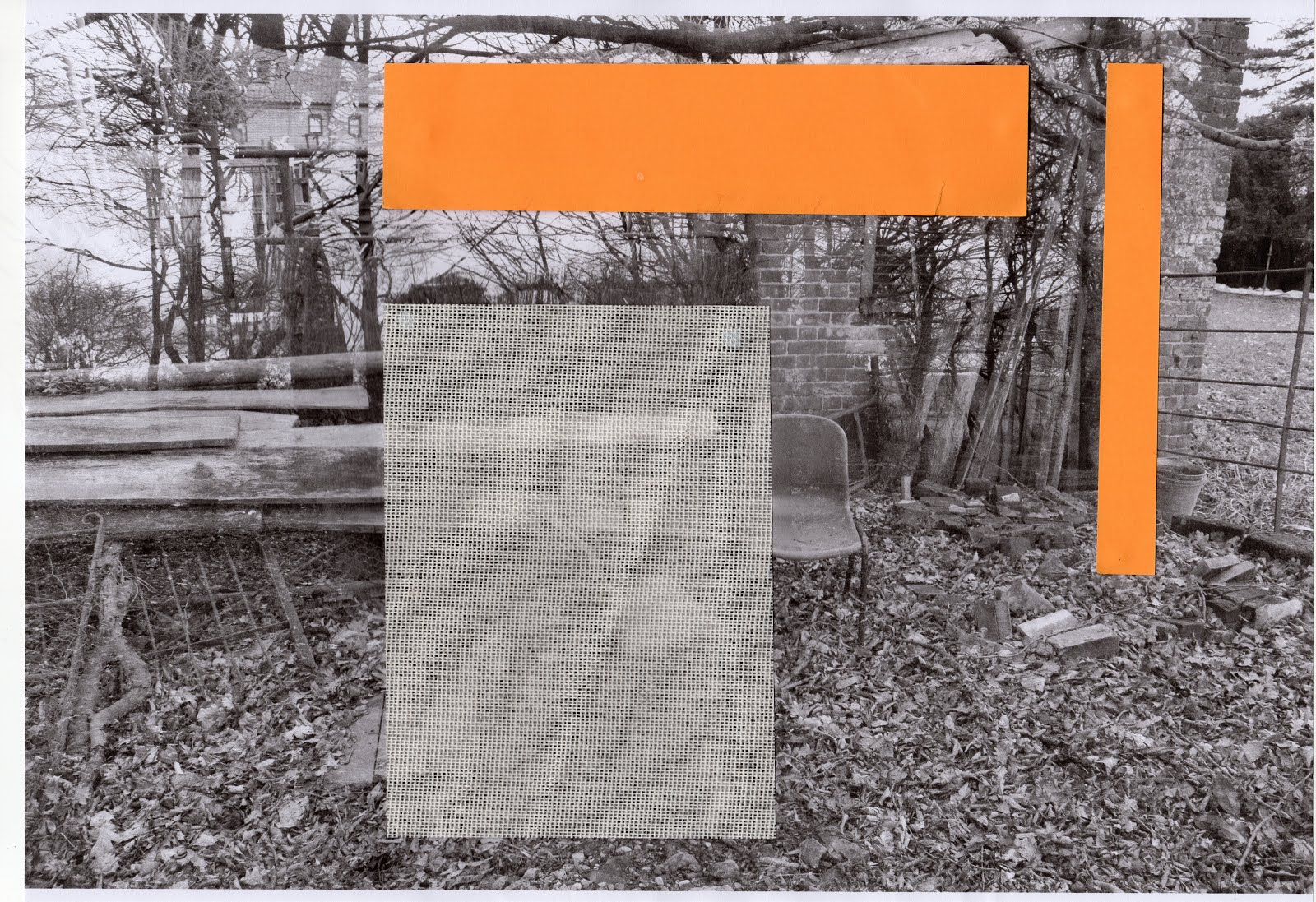
Social apparatuses and agents that explore the possibilities of space. Other Worlds : Insistent moments of mark making/subjectivity.
Source: Immaterial Architectures : Raveningham Pavilion and The Architecture of Natural Light
Outpost 290722
TIME/ACTION/DIAGRAM.
Maya Deren’s 1948 film, Meditation on Violence.
Two parabolic arcs describe three types of Chinese boxing in a single continuous movement.
The last portion of the film is printed in reverse motion.
DURATION
The not yet meets the already gone.
A fluid, flowing time is interwined with an experience of being where past, present and future merge. If one extreme of time is the experiential time of individual being, the other extreme is the abstract, anonymous, measured time of science.
Parallax, Steven Holl.
The Great Hall of Ascension can receive 10,000 people; its floor and ceiling are made of glass. It is intersected by the glass cages of nine elevators, each rising to its respective destination, traversing the other interiors with a discreet hiss. On the elevator shafts, electronic billboards announce different libraries. With fragments of texts, titles, names, songs descending in a continuous movement, the entire building seems supported by signs in a perpetual countdown to takeoff.
Rem Koolhaas.
Into The Frame Enters
The foreignness of the intimate or the violence and charity of perception.
R. Bruce Elder.


Kairos
The Movement and its Moment
Being Alive
Tim Ingold
Jannis Kounellis
At Castelvecchio, Sparpa embarked on a much more far-reaching idea of not only cleaning the building but attempting to clarify and expose the layers of history by selective excavation and creative demolition.
An Attitude to History, Carlo Scarpa.
It cannot be, it has gone!
They believe that we can do the same sort of work in the same spirit as our forefathers whereas for good or evil we are completely changed and we cannot do the work they did.
William Morris.
There is no stage at which human beings do not demarcate, beacon or sign their space, leaving traces that are both symbolic and practical.
The Production of Space, Lefebvre.
Autopoises and Cognition
The Realization of the Living
Humberto R. Maturana
Francisco J. Varela
We become observers through recursively generating representations of our interactions, and by interacting with several representations simultaneously we generate relations with the representations of which we can then interact and repeat this process recursively, thus remaining in a domain of interactions always larger than that of the representations.
We become self-conscious through self-observation, by making descriptions of ourselves (representations), and by interacting with our descriptions we can describe ourselves describing ourselves, in an endless recursive process.
For colour and against line and drawing.
Works identified as Expanded Cinema often open up questions surrounding the spectator’s construction of time/space relations, activating the spaces of cinema and narrative as well as other contexts of media reception. In doing so it offers an alternative and challenging perspective on film-making, visual arts practices and the narratives of social space, everyday life and cultural communication.
The concept of pure colour in a monochrome.
I seek to put the spectator in front of the fact that the colour is an individual, a character, a personality. I solicit a receptivity from the observer placed before my works.
This permits him to consider everything that effectively surrounds the monochrome painting.
Thus he can impregnate himself with colour and colour impregnates itself in him.
Thus, perhaps, he can enter into the world of colour.
Yves Klein.
Colourspace that is not visible but within which one is impregnated.
Parallax and the free movement of the landscape through physical forms.
To resolve the material object into its spiritual substance.
Presenting Pure Pigment.
I did not like colours ground with oil. They seemed to be dead.
What pleased me above all was pure pigments in powder like the ones I often saw at the wholesale colour dealers.
They had a burst of natural and extraordinarily autonomous life.
Living and tangible colour material.
Magdalena Broska
Beuys Brown and Klein Blue.
Fire Pictures
Rain Sculptures
Air Architecture
Cosmogonies
Although it was a room painted totally in white, the artist spoke of an extraordinarily intense experience of blue: it was a true blue, the blue of the blue depths of space.
The demonstration of nothingness, the void of a white space.
Klein wanted to demonstrate the idea of a development from blue, a visible, tangible colour, via white to immaterialised blue.
There is an imaginary beyond, a pure beyond, one without a within, in which Bachelard’s beautiful sentence resides: First there is nothing, then there is a deep nothing, then a blue depth.
Blue blood of sensibility
Bachelard/Shelley.
A wide variety of different expressions for the process of progressive dematerialisation.
The release of colour from the binding agent.
Work with dematerialised materials such as the elements fire, water, air and dust.
The term Expanded Cinema identifies a film and video practice which activates the live context of watching, transforming cinema’s historical and cultural architectures of reception into sites of cinematic experience that are heterogeneous, performative and non-determined.
Narrative Exploration in Expanded Cinema, seeks to explore the various histories of expanded cinema and their impact on the question of narrative, space and time in experimental film and art practices.
Film/Expanded Cinema.
Temporal Spaces/Surfaces.
Transparency/Translucency, littoral and Phenomenal.
Mark Burry and Jane Burry
Prototyping for Architects.
Steven Holl
Parallax.
Designing buildings as serial prototypes.
Spatial Clocks/Theoretical Objects/Entanglements.
Materials imbue the wind-permeable wall with rich textile qualities.
The whole house acted as a prototype, not only showcasing the latest developments in green technology but also exploring at full scale, the performance of the house and the way in which people interacted with it.
The artists wanted to make the same gesture that many cultures make when marking the land through which they have passed, the placing of one stone on top of another to signal a route back.
Social apparatuses and agents that explore the possibilities of space. Other Worlds : Insistent moments of mark making/subjectivity.
Source: TIME/ACTION/DIAGRAM : Kairos

In his discussion of mediators, Gilles Deleuze (1995,121) describes being taken up in the motion of a big wave. He notes that instead of looking for ‘points of origin’ attention should be directed to mediators that enable a ‘putting-into-orbit’ that facilitate the movement of concepts, sensations and matter without recourse to origins or destinations.
Katve-Kaisa Kontturi uses the term ‘intercessor’ instead of ‘mediator’ as it aligns better with Deleuze’s argument, where importance is placed not on mediating between already formulated shapes or beings, but on opening beings up to movement through a third actant.
For Deleuze (1995,125), Intercessors are about entering into or creating a series.
Gilles Deleuze. 1995, Negotioations, 1972-1990.
Translated by Martin Joughin. New York: Columbia University Press.
Notes, Introduction
Ways of Following
Art, Materiality, Collaboration
Katve-Kaisa Kontturi
Open Humanities Press
London 2018
Immaterial Architectures : Raveningham Pavilion #1
DSC_3283 Raku Beakers : Lead Glaze/Yellow Ochre
DSC_4049 Field Aesthetic : Causality/Layered Drawings
DSC_3776 Sacred/Secular : Vessels on Painting
DSC_4097 Field Aesthetic : Causality/Layered Drawings
DSC_8923 Artists Studio : Collage/Photography/Painting
Outpost Studies
Norwich
UK
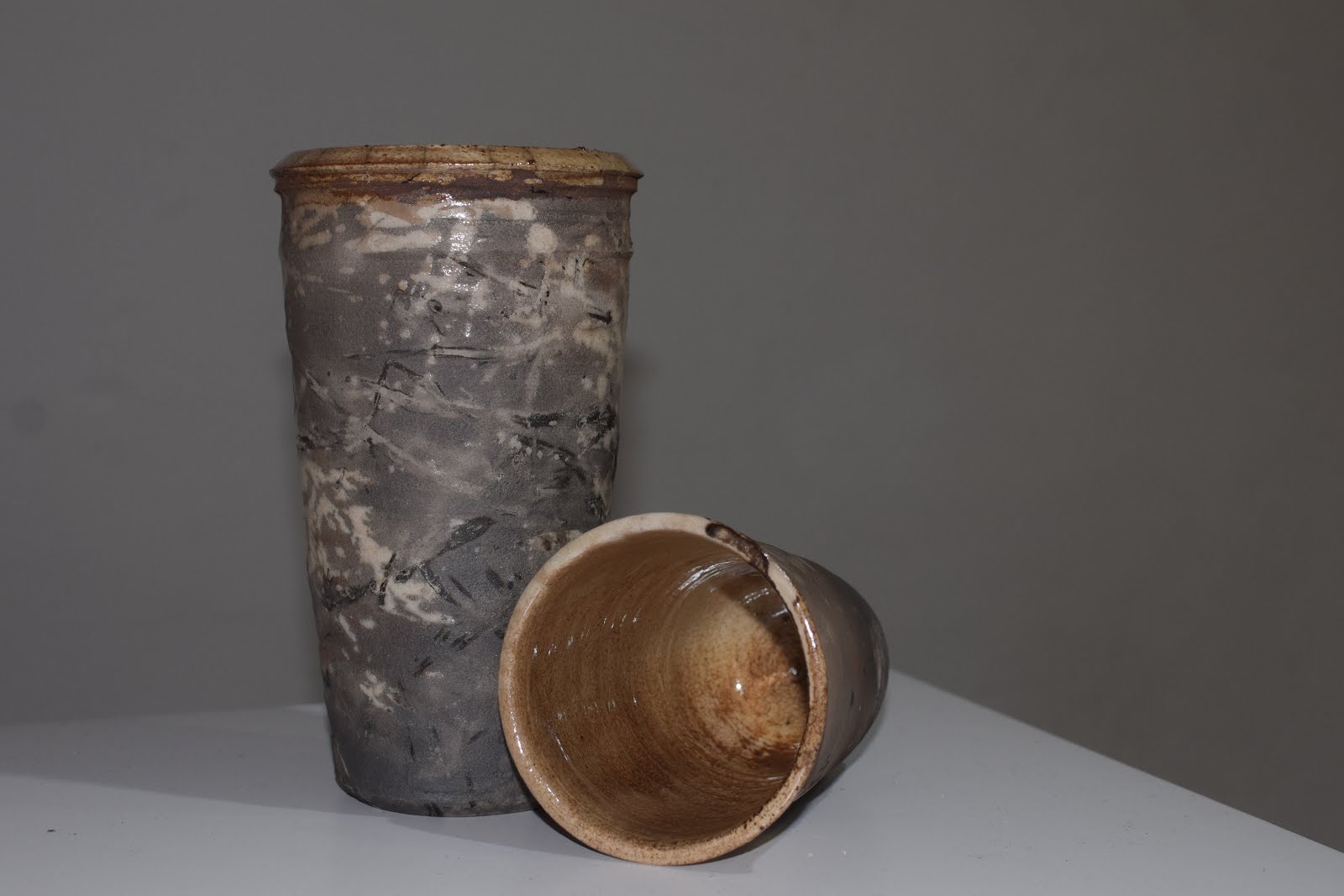
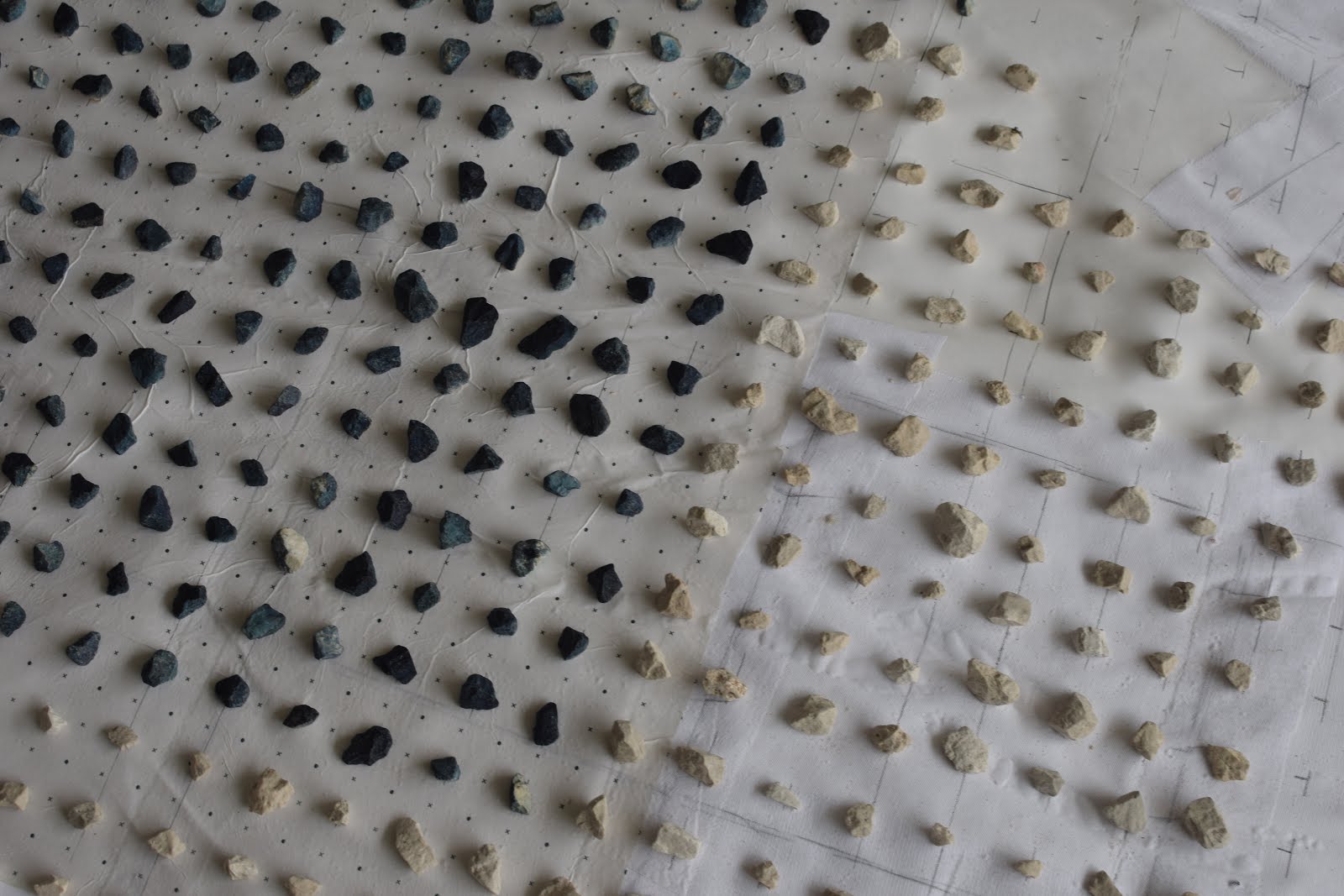
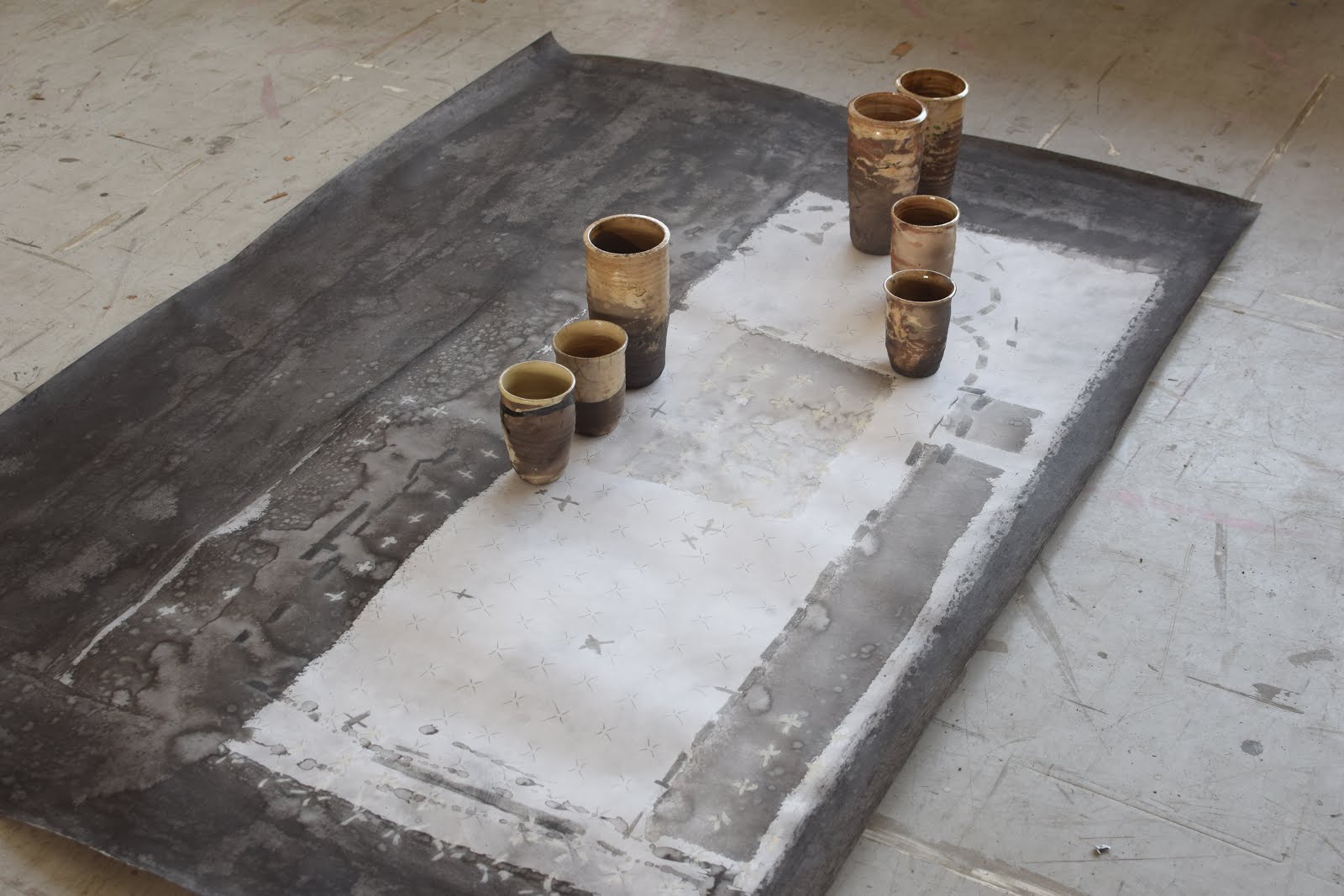
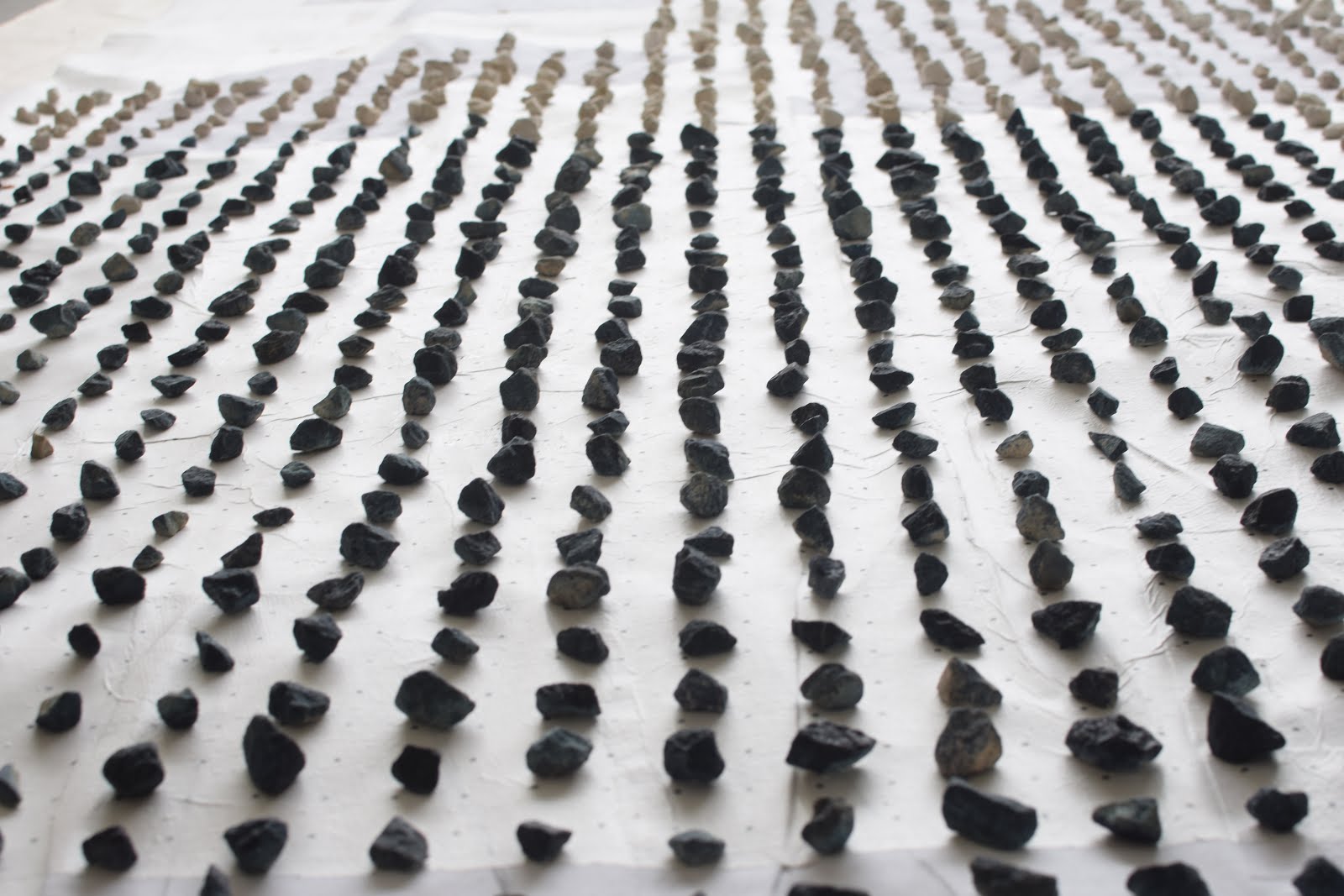
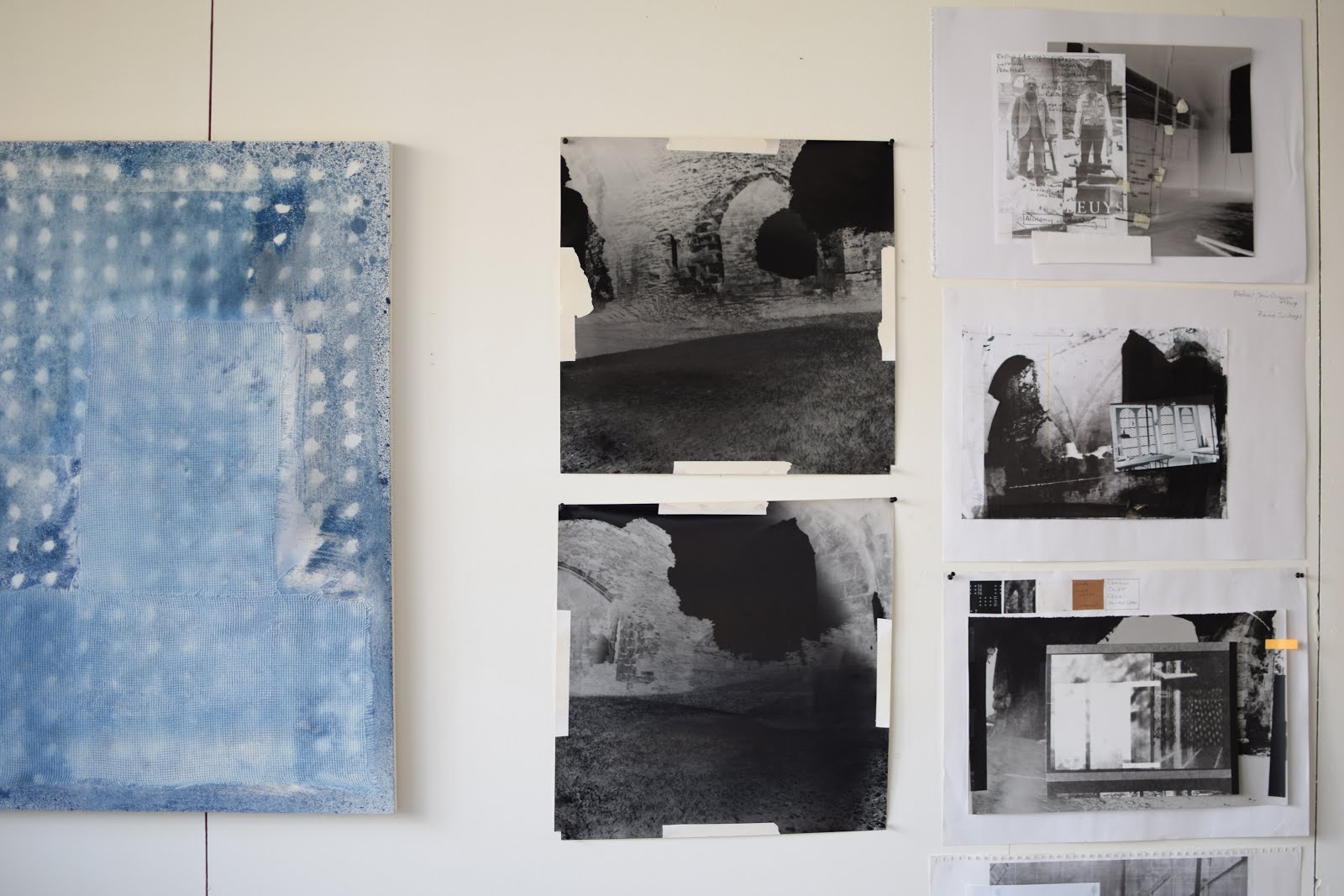
Social apparatuses and agents that explore the possibilities of space. Other Worlds : Insistent moments of mark making/subjectivity.
Source: Mediators : Vessels and Drawings creating Intercessors
Outpost 050822
The Thinking Field/Speculative Curriculums.
The Body-In-Action/Making Spaces between Art, Architecture, Archaeology and Anthropology.
Sequences of actions that add up to an observational-heuristic procedure.
Conserved without restoration of lost detail.
The problem of historical materials, which we can never ignore but can’t imitate directly either, is an issue that has always concerned me. I am primarily interested not in any concepts of restoration but an idea to do with historical clarity, making history visible by the co-existence of overlaying fragments of construction.
Carlo Scarpa, Castelvecchio.
Lime Wash, Field Chalk, China Clay.
Human Figure Drawing.
Waxed Paper, Canvas.
Charcoal, Clay, Liquid Iron Oxide.
Essential Work Only.
The SPAB Approach.
The Society’s approach very often involves carefully considered inaction.
Where no problems exist, or where a problem has no major effect on use or conservation, an old building is best left alone and simply enjoyed.
Problems need to be tackled, but the society encourages work which is no more, but no less, than is essential.
Restricting work to these things helps ensure the maximum survival of historic fabric.
Site Sequencing/The Infra-Thin/The Viewing Chamber.
Tactically posed surrounds that contrast/entangle one segment of world with another.
Mapping Photons/Subjectivity.
Architectural Body/Collaged Users
Procedural Movements of Conservation/Care and Repair.
Extracting that which has become interred.
Observing quotidian detail within the ruins of a fabric of building.
Domestic and intimate details that create poetic themes that are universal and transcendent.
Wanting to see what things look like photographed/interrogations.
Pushing the photographic image to the point of failure, using the fading twilight to create new abstractions of light and movement.
The intermediate space of the negative.
A gap created between the mechanical attentive and unassumptive nature/vision of the camera and the presumptive and subjective vision of the human eye.
In The Visible and the Invisible Merleau Ponty struggled with the development of a theory of vision that would take account our embodied relationship to it, describing the ‘chiastic’ relationship between the viewer and the world, an intertwining through which the world was bought into a kind of visibility.
What needed to be put into question and seen as problematic was how the viewer came to be seen as separate from the world, how the visual ever became positioned as something other, something differentiated and separate from the spectator.
The force of presence/presentness.
Stillness and Time, 2006.
Still Video Portraits and the Account of The Soul.
Joanna Lowry.
The Visual, is predicated upon the construction of a distance between the spectator and the world, a distance maintained through the work of culture and the work of technology.
Photographic technologies have provided one key cultural mechanism for defining the place of the visual and positioning it in relationship to us.
In representing the subject they also define the site of the subjects’s visibility, the place at which he or she can be seen.
They cut through the world, interrupt it, producing difference and distance and projecting it onto the surface of the paper or the screen.
They produce a differentiated space of the visible within which the subject and the spectator are made aware of their otherness and their distance from from each other.
Photographic Drawings/Haiku.
Luminous/Insubstantial Spectral Abstractions.
Focus and detail would drag it back to our world.
Vision is the place where are continuity with the world conceals itself, the place where we mistake our contact for distance, imagining that seeing is a substitute for, rather than a mode of, touching, and it is this anaesthesia, this senselessness, at the heart of transparency that demands our acknowledgement and pushes our dealings with the visual beyond recognition.
Stephen Melville.
Recombinant Poetics
Pinhole Photography/Qualitative Visual/Haptic Soundings.
St Martins, Shotesham. SPAB
Camera Room/Still Life
Paintings from the overlaying intervals of materials and processes of construction.
The Essential Solitude
Maurice Blanchot
Self Communion.
The person who is writing the work is thrust to one side, the person who has written the work is dismissed. What is more, the person who is dismissed does not know it.
This ignorance saves him, diverts him and allows him to go on.
The writer never knows if the work is done.
What he has finished in one book, he begins again or destroys in another.

.jpg)


Social apparatuses and agents that explore the possibilities of space. Other Worlds : Insistent moments of mark making/subjectivity.
Source: Studio Works
Outpost 190822
LIGHTNESS
QUICKNESS
EXACTITUDE
VISIBILITY
MULTIPLICITY
Six Memos for The Next Millennium.
Italo Calvino, 1992.
.jpg)
The difference between the first versions I read and the final ones lies in structure, not content.
Calvino wanted to call the sixth lecture ‘consistency’ and he planned to write it in Cambridge.
I found the others, all in perfect order, in the Italian original, on his writing desk ready to be put into his suitcase.
Esther Calvino.
The Drought.
J.G. Ballard.
Allegories are, in the realm of thoughts what ruins are in the realm of things.
Walter Benjamin on the origin of German Tragic Drama.
Photographic ruins an amalgam/agency of what remains.
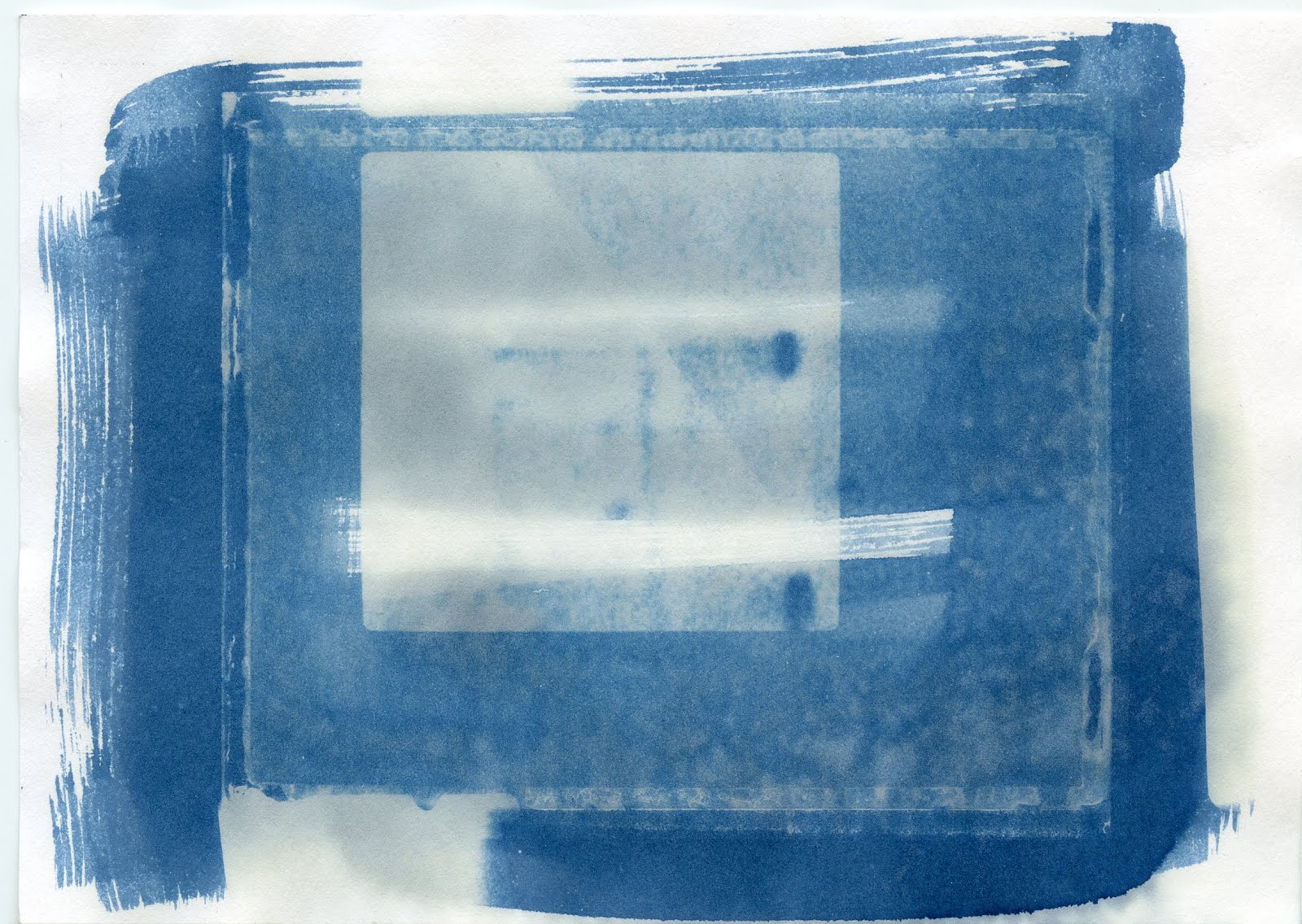
Brown and Blue.
A Field in England.
Cyanotype material on canvas with iron pigment.
Developing a spatial serenity/synthesis/synergy.
This amalgam of colour with various substances demonstrates the change and transformation of the material world, which can be interpreted as essentially an alchemistic procedure.
The goal of such procedures is ultimately to resolve the material object into its spiritual substance.
Yves Klein.
Beuys Brown and Klein Blue.
Magdalena Broska.
Air and Dreams.
An essay on the imagination of movement.
Gaston Bachelard.
Shotesham, site based inquiry,studio practice.
Spatial registers around the corporeal and the transcendental.
Ruin its relation to time.
Fragment as ruin and on melancholia as an attitude of retrospective contemplation.
Dialectics at a standstill, a moment where the past is recognized in the present as a ruin that was once desired, allowing allegory to be understood, felt as a contemplative calm, an equilibrium in the becoming and wrapping nowness of the self/situation.
Dialectical thinking involves the clarification of ideas through discussion and contradiction.
What remains after the process of dialectical thinking?
An initial thesis is opposed by an antithesis, then resolved through a synthesis of the two terms, which can in turn become a new thesis.
Objects/inclusions for painting with/layered transitions and movements.
Holga 120WPC, f135.
Ilford Delta 100/8 exposures 92x55mm.

The Gaze of Orpheus.
Maurice Blanchot.
The Essential Solitude
In the solitude of the work, we see a more essential solitude, a self communion.
MULTIPLICITY
The work grew denser and denser from the inside through its own organic vitality.
For Musil, knowledge is the awareness of the incompatibility of two opposite polarities. One of these he calls exactitude or at other times mathematics, pure spirit, or even the military mentality, while the other he calls soul, or irrationality, humanity, chaos.
Everything he knows or thinks he deposits in an encyclopedic book that he tries to keep in the form of a novel, but its structure continually changes; it comes to pieces in his hands.
The result is that not only does he never manage to finish the novel, but he never succeeds in deciding on its general outlines or how to contain the enormous mass of material within set limits.
The network that links all things is also Proust’s theme, but in him this net is composed of points in space-time occupied in succession by everyone, which brings about an infinite multiplication of the dimensions of space and time.
The world expands until it can no longer be grasped, and knowledge, for Proust, is attained by suffering this intangibility. In this sense a typical experience of knowledge is the jealousy felt by the narrator for Albertine.
It is the extension of that being to all the points in space and time that it has occupied and will occupy.
But we cannot touch all these points. If only they were indicated to us, we might perhaps contrive to reach out to them. But we grope for them without finding them. Hence mistrust, jealousy, persecutions. We waste precious time on absurd clues and pass by the truth without suspecting it.
Remembrance of Things Past : The Captive.
Infra-ordinary.
Species of Spaces
We sleep through our lives in a dreamless sleep.
But where is our life?
Where is our body?
Where is our space?
Georges Perec.
CHORA : trace/mark/map/body
The drama of encountering space.
Recombinant Poetics via Interventions.
Thinking about temporal issues through visual, material and spatial registers.
Concerned with artworks and architectural projects that reconfigure the temporality of sites, repositioning the relationship of the past and the present in a number of different ways.
Allegory, Montage, Dialectical Image.
Between Art and Architecture.
Jane Rendell.
Performativity/Drama of Residency
Transient readings and encounters.
Other Enactments,Dialogues,Relationalities.
Sites of evidence/knowledge and understanding.
The scheme should incorporate both careful repair of existing fabric and a significant element of new construction in a contemporary design.
SPAB, design competition.
We are not calling for a new disordered architecture to match the disorder of culture; this would only affirm the chaotic.
Rather, we propose experiments in search of new orders, projections of new relationships.
We do not wish to transpose our study into a system or method.
The energy inherent in opening up relationships presents us with a continuity of ordering that compels refection.
Steven Holl.
Correlational Programming, Parallax.
Social apparatuses and agents that explore the possibilities of space. Other Worlds : Insistent moments of mark making/subjectivity.
Source: Lightness/Synthesis/Solitude
Outpost 020922
Perceptual Experience.
On The Nature of Things.
The notion of specific agential intra-actions in architectural practice.


Thingification, the turning of relations into things, entities, relata, all infects much of the way we understand the world and our relationship to it.
Karen Barad sees reality composed of intra-acting elements which together make up a phenomena.
Making Use of Useful Correlations/Meaningful Information.
The actor of this process is not a subject distinct from phenomenal reality outside it, nor any transcendent point of view, rather it is a portion of that reality itself.
Our discourse on reality is itself part of that reality.
The radical questioning of our mental maps of reality.
Lines of thought that take inspiration from, or rooted in quantum physics.
Karen Barad’s utilization of the ideas of Niels Bohr.
Physics seemed to me the place where the weave between the structure of reality and the structure of thought was closest, the place where this intertwinement was subject to the incandescent test of continuous evolution.
Helgoland.
Carlo Rovelli.
In Phenomenology of Perception, Merleau-Ponty explores being as it resides in the perceptual situatedness of the body-subject into the world.
When the body-subject gains access into the world through perception, the world becomes what we perceive.
Perception is considered as the fundamental act that enables human beings to inhabit space and time.
Reality is not composed of things in themselves or things behind phenomena,
but things in phenomena.
For Steven Holl, the intertwining of idea and phenomena occurs with the realization of a building as the means for materialization of the idea-force.
For Merleau-Ponty idea is the invisible of this world which inhabits this world, sustains it and renders it visible.
Holl is interested in the phenomenal nature of the idea, in his search for connecting the phenomenal properties with conceptual strategy.
According to Bohr, the primary epistemological unit is not independent objects with inherent boundaries and properties but rather phenomena.
Phenomena are the ontological inseparability of agentially intra-acting components.
Phenomena are produced through agential intra-actions of multiple apparatuses of bodily production.
Things in phenomena/agential intra action
Steven Holl points out a path of passage in architecture that leads from the abstract to the concrete, the unformed to the formed. In this architectural journey the idea-force, phenomenal properties and the site-force interact with each other. This interaction begins with the formation of an abstract idea, the formation of a concept out of this idea and its transformation into a material, a spatial and formal reality on a physical site.
The Visible and The Invisible.
Phenomenology of Perception.
Maurice Merleau-Ponty.
Posthumanist Performativity.
Towards an understanding of how matter comes to matter.
Karen Barad.
A Living Room For The City : V&A Dundee.
Kengo Kuma, Maurizio Mucciola.
Parallax
Some approaches and interpretations of phenomenology in architecture.
Steven Holl.
Social apparatuses and agents that explore the possibilities of space. Other Worlds : Insistent moments of mark making/subjectivity.
Source: Some approaches and interpretations of phenomenology in architecture.


Outpost 090222
Architectural Body/Procedural Architecture
Organism/Person/Environment
Earth, House, Hold, Dwelling Places.
Unlike the sense of sight or hearing, only the sense of touch can discern space and time at once.
The skin as the harbourer of a subjects sense of touch.
Skin/Subjectivity becomes as flesh a connective tissue which both unites and divides.
The skin can judge time less well than the ear, and space less well than the eye, but it is skin alone that combines the spatial and temporal dimensions.
Maternal Skin/Subject Formation, Anzieu.
A Field in England : On the nature of Photography.
Between Art and Information.
Brought to Light : Photography and the Invisible.
The Visible/Invisibility between the potential of things.
The Photograph and The Lacanian Mirror.
In which identity is constantly shored up and broken down, but also as a persistent space invested with the paradoxical qualities of intimacy and alienation, of proximity and utter detachment all through which an offer of an encounter is held out in invitation.
Inter-Subjective Encounters, a space in which the subjectivities of the artist and the spectator might meet and mingle.
The skin is the surface through which self and other are mediated.
The mutuality of touch itself is echoed by the skins structure, it both touches and is touched and this duality is reflected in the way the skins surface is exposed to the outside world, whilst also protecting and containing the unseen interiority of the body.
Harriet Katherine Riches, 2004.
Light and Spaces of Intersubjectivity.
Tactile Light.
The photograph holds out the promise of an encounter through its carnal medium.
For Riches, the self-representational photograph becomes a kind of veil or mask, a displaced surface whose skin-like relationship to the subject is always suspended, and perpetually deferred. It frames a space of contact and a fantasy of union with the original subject, the photograph’s skin-like quality also enables it to be imagined as an inter-subjective space of exchange.
Light creates the spatiality/transitions that passes beyond subject/object relationships.
Skin/Surface/Subjectivity : Movements in thinking through Spatial Agency
Skin becomes a site of symbolic acts of aggression/gesture.
Surfaces of suggested pain/experience through which subjectivity is created.
Conduits of colour specificities and counterpoints
Relationscapes : Movements, created through colour temperature and spatial contact.
The phenomena of things being brought into perception/focus.
Through a body every colour creates movement and has its own/creates its own perspective/its mapping/layering/extension of spatial temporal material.
Analogies/Difference : Spaces created through mimesis,wavelengths intermingling with the spatial.
Glass/Lead/Filtered Light.
Glass Slide/Subjectivities brought into the light
Colour Subjectivities, the appearance/experience of mattering material.
Social apparatuses and agents that explore the possibilities of space. Other Worlds : Insistent moments of mark making/subjectivity.
Outpost 070922


Radical Perspectives.
Space-time Manifolds.
Intertwined cinemas within a bottle of light.
Fissure space reflection on underside of suspended cinemas.
Concept Studies/Diagrams.
Space was perceived by the body moving through time.
Parallax, Steven Holl.
Plastic Media
Performative Apparatuses.
The Observer and The Observed.
A return via the time exposures to the unexpected and a intricate order made up of patterns, movements and constellations.
New thrilling metaphorical structures.
Beyond the purely visual, to get a flat surface to interact with physical phenomena, which would be recorded without any intervention or involvement. Photographic events in which some images recorded very determined fixed forms, and in other time-exposures the images became more about traces and about movement.
Susan Derges.
Infra-ordinary
Dust Breeding.
Giacometti’s Cell/Studio.
A Species of Spaces.
Intra-acting
Contemporary Architectural Practices.
Spatial Practices/Visual Fine Art.
Quantum Superposition.
At the moment a measurement is made in Beijing, everything remains in quantum superposition with respect to Vienna. The equipment making the measurements, the scientists reading them, the notebooks in which they are written down, the messages in which the results of the measurements are conveyed, are all quantum objects themselves.
Helgoland,Carlo Rovelli.
Quantum intra-acting
The concretization of colour as substance/matter/movement/agency.
Beuy’s brown and Klein’s blue form a pair of opposites, according to the hermetic-alchemical world view, such opposites contain the arcane power of polar dissimilarity that seeks to be augmented and joined together.
Beuys Brown and Klein Blue, Magdalena Broska.
Elective Affinities
Susan Derges/Garry Fabian Miller.
The direct use of physical materials, the interest in systematic experimentation and a preoccupation with the fluctuating perception of events depending on the position of the observer and the nature of the light.
Through the realm of perceptual experiences.
Both art and science alter our perceptions and knowledge, whether from philosophy, science or the arts it filters down into our general awareness to affect our world view.
Wondrous essences put back into existence, through re-achieving a direct and primitive contact with the world.
Plastic media, time based immateriality.
Surface interactions produced from physical phenomena made visible.
Metaphors for phenomena
Patterns as either/both particles and waves.
Unknowing Expectation.
Prints of a scientific exactness.
This reduction of process down to such a simple method.
He felt amazed by the clarity of the procedure, it seemed incredibly releasing and radical, and something to aspire to.
Working series that focusses on the immense through engagement with the specific.
Homeland, the body gains access to the world as a way of living and working.
Making a garden after the making of the mornings pictures, feels like the right way to fill the hours which remain in the day.
Field Studies/Kilquhanity.
Building template for positioning of circulatory pathways.
Garden drawings and sculptural mappings of the passage of sunlight.
Shifting relationships of the real world have been assimilated into her imagery.
In particular her world view was affected by the ideas of contemporary physicists.
New possibilities for plastic media has been that phenomena are no longer seen as static entities in space and time, but as dynamic and interrelated with specific structured laws and principles.
The Darkroom as cell and workroom, a room apart from the world.
Science, Order and Creativity.
David Bohm.
The Implied Observer
Towards an understanding of how matter comes to matter.
Performativity is precisely a contestation of the excessive power granted to language to determine what is real, performativity is actually a contestation of the unexamined habits of mind that grant language and other forms of representation more power in determining our ontologies than they deserve.
Thingification, the turning of relations into things, entities, relata, which infects much of the way we understand the world and our relationship to it.
In Posthumanist Performativity, Karen Barad advocates agential realism as an alternative to representationist ontologies that split semiotic from material reality.
Barad argues that matter is not a substance but an intra-activity, and that agency is not an exclusively human attribute, but rather the enactment of iterative changes across macro/microscopic levels of matter.
Matter is performative in that it reproduces itself through the effects of its own intra-active dynamic material relationships. Relata do not pre-exist these relationships, but emerge through them in the fluid, diffractive boundaries that crystalize phenomenon/matter into things/thingification that are positioned in a spatial-temporal affective relation.
The subject/object dichotomy is performatively enacted through the specific spatial temporal proximity between the two necessary for apprehension, in which the approximal relationship through which subject and object emerge. The cognitive split that constitues the I is a discursive practice called the agential cut which is a conception of separability between one thing and another that grants the illusion of agency.
For Barad, discursive practices are not only linguistic expressions of human language, but extend to other material specific practices of intra-action entangled with other intra-actions that produce material phenomena. The material apparati which constrain, but do not over determine these practices find within their own diffractive limits possible dynamic reconfigurations of the world.
Because being is not a static relationality but a doing, that always entails constituting exclusions, a posthumanist engagement with performative matter must not only account for the sites of human/non human cuts, but also challenge the ethical stakes of such cuts.
Summary Notes : Karen Barad, Posthuman Performativity, S.A. Colclough.
Intra-actions produce material phenomenon.
Social apparatuses and agents that explore the possibilities of space. Other Worlds : Insistent moments of mark making/subjectivity.
Source: Radical Perspectives : Sky Watching /Outpost Studio Space
Outpost 150922

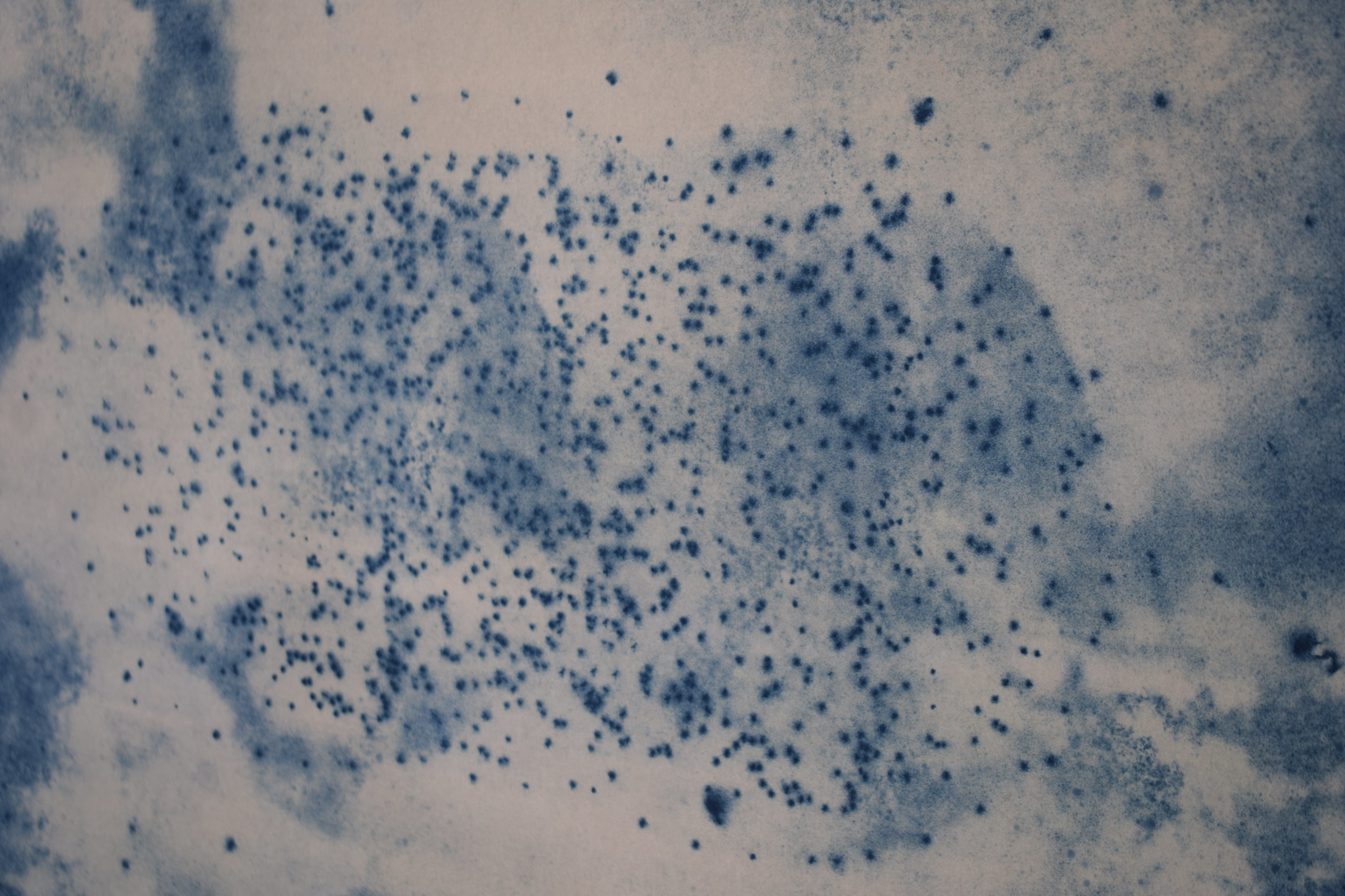
Drawing Space.
The Material Discursive.
Figurative Configurations/Bodies and Landscapes.
Jenny Saville.
Intimate Drawings
Wall Scratchings
Situatedness of intra-activities.
A matrix and an archive.
It was the crucible of his art, and one of the most hauntingly eloquent spaces an artist has ever surrounded himself with.
In Giacometti’s Studio.
The hermit’s cave.
The alchemist’s cell.
The chemist’s laboratory.
Correlations do not become real, relational until the signals arrive.
Becoming Real.
The Exchange of Signals.
Framing Entanglements.
The Concretization of the Colour.
Nothing travels instantaneously and an exchange of signals is an interaction, where new elements of reality come about.
The joint properties of two objects exist only in relation to a third.
Everything that manifests itself does so in relation to something, a correlation between two objects is a property of the two objects and like all properties it exists it exists, is existential only in relation to a further third object.
Entanglement is not a dance for two partners, it is a dance for three.
Entanglement is none other than the external perspective on the very relations that weave reality.
The manifestation of one object to another in the course of an interaction in which properties of the object become actual.
Working notes/fragments.
Helgoland, Carlo Rovelli.
Lead label reads/stamped with “dwelling is always dwelling in nearness, Heidegger”.
Counterpoints/Contrapuntal Movements.
ENMESHED EXPERIENCES
WORKING WITH DOUBT
DURATION
THE FLUX OF A VECTOR FIELD
PARALLAX.
The existence/trace/invisibility/of a third object that interacts with both the systems is necessary to give reality to the correlations.
Resultants that incorporate the friction/asperities of their trajectories through medium/material.
Building as a body, a battleground of invisible forces.
The spine is the central elevator. The structure is a tube of concrete covered with insulation and tarred black wood boards.
Steven Holl.
Knut Hamsun Museum, Hamarey, Norway. 1996
Monumental sculptures take the form of vast, spectral structures built from corroded, sinewy metals and disintegrating found objects.
He seeks inspiration from sources that speak to the expansive, cyclical nature of the universe.
Kiefer looks to Norse mythology, Hebrew folklore, alchemy and theoretical physics to build dense imagery that is too often interpreted as simply apocalyptic.
While some might see wastelands and abject destruction, Kiefer sees vitality and resurrection. This attitude extends to the physical properties of his paintings and sculptures.
He embraces the ravages of time, while others might strive to suspend it in an effort to preserve a moment of imperceptible genius. Instead, his art buckles and shifts, constantly evolving and reforming under the burden of its own existence.
Artists on art, Holly Black. 2021
Sky Correlations
Cloud Space.
Particle Speculations
Seed Dispersal
Panspermia
Granular Gardens
Third Spaces
Spatial Vectors/Constellations.
Observational Blueprints/Apparatuses.
Pierced Constellations.
Vectors for Entanglements.
Spatial Agency.
Sunlight Circulations.
Daylight Drawings/New Worlds.
The Spab Magazine
Autumn 2022.
The Living and the Dead, 2017-18.
I am not interested in conservation.
If something falls down, it has meaning.
Anselm Kiefer.
Organism, Person, Environment.
Bioscleave, Architectural Body, Gins, Arakawa.
Time as experienced duration is relative to an individual and to a space.
Constantin Brancusi’s studio and Endless Column, fabricated as a timepiece, where the finite time of place and culture is counterposed to infinity.
Visual substance, causal doing, investigating, agency, matter, phenomena, material discursive, iterative, creative, apparatuses, intra-activity, performativity, bodies that matter,
Social apparatuses and agents that explore the possibilities of space. Other Worlds : Insistent moments of mark making/subjectivity.
Source: Assemblages/Architectural Prototyping : Formative Ideas.
 russellmoreton.com