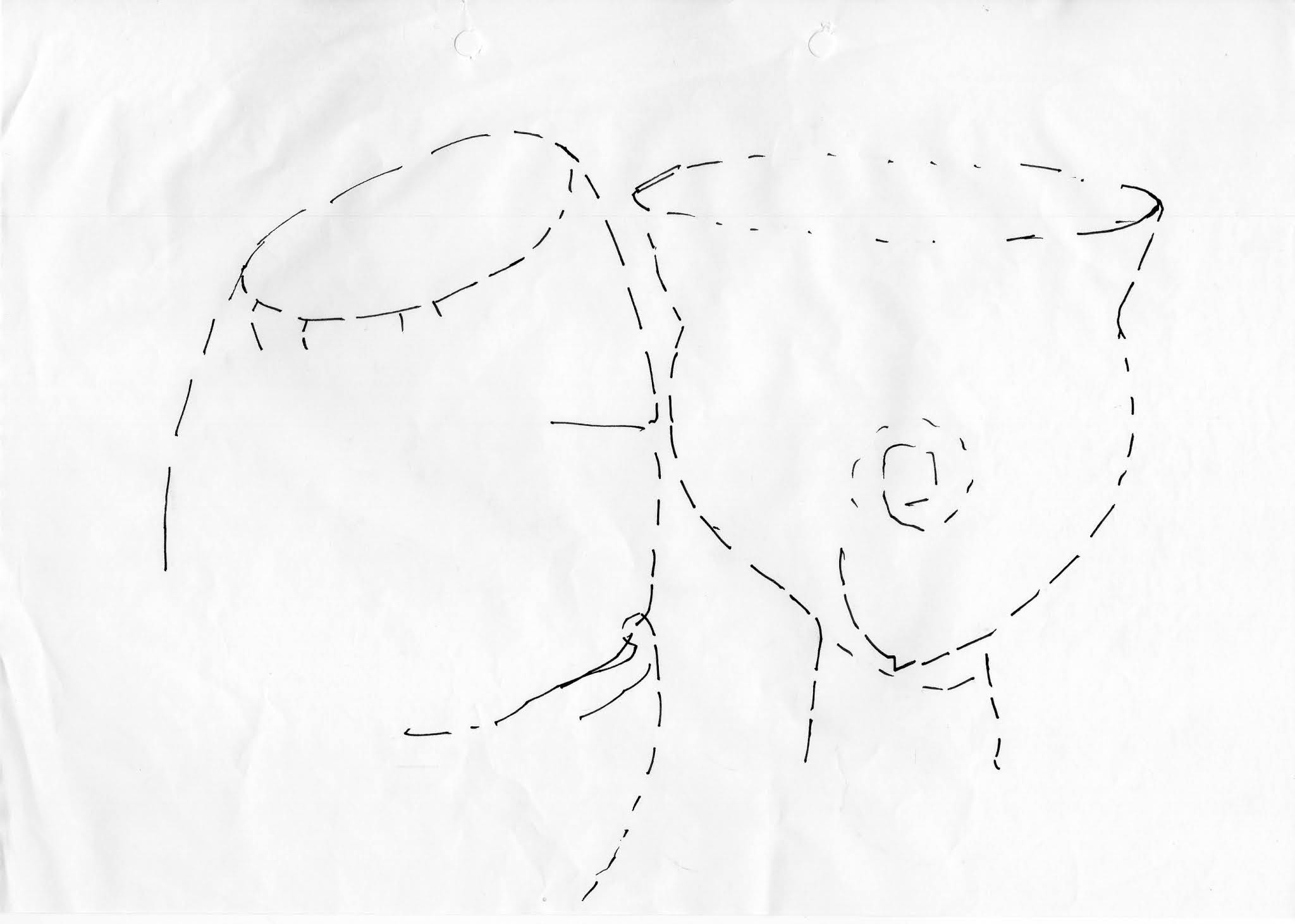
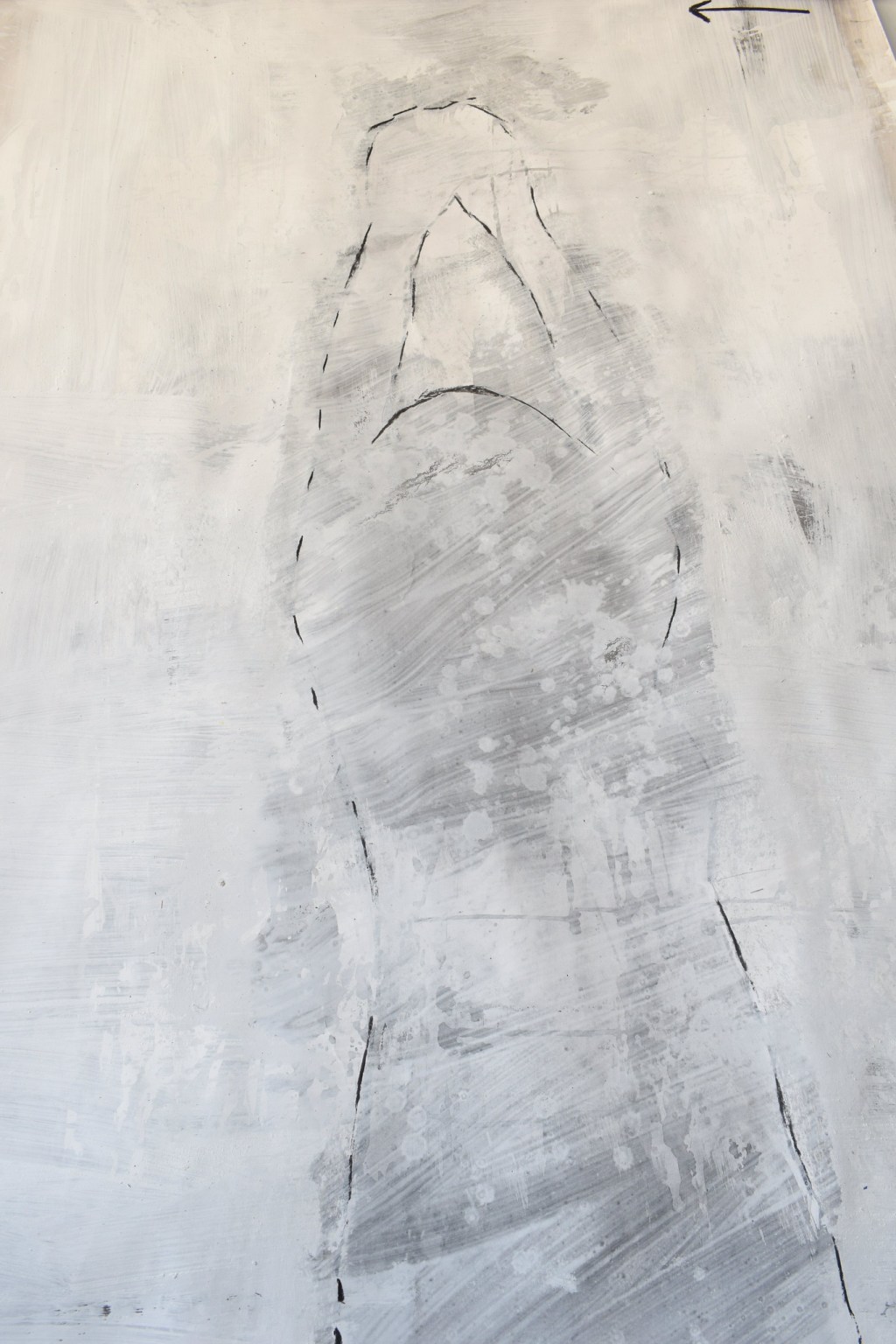
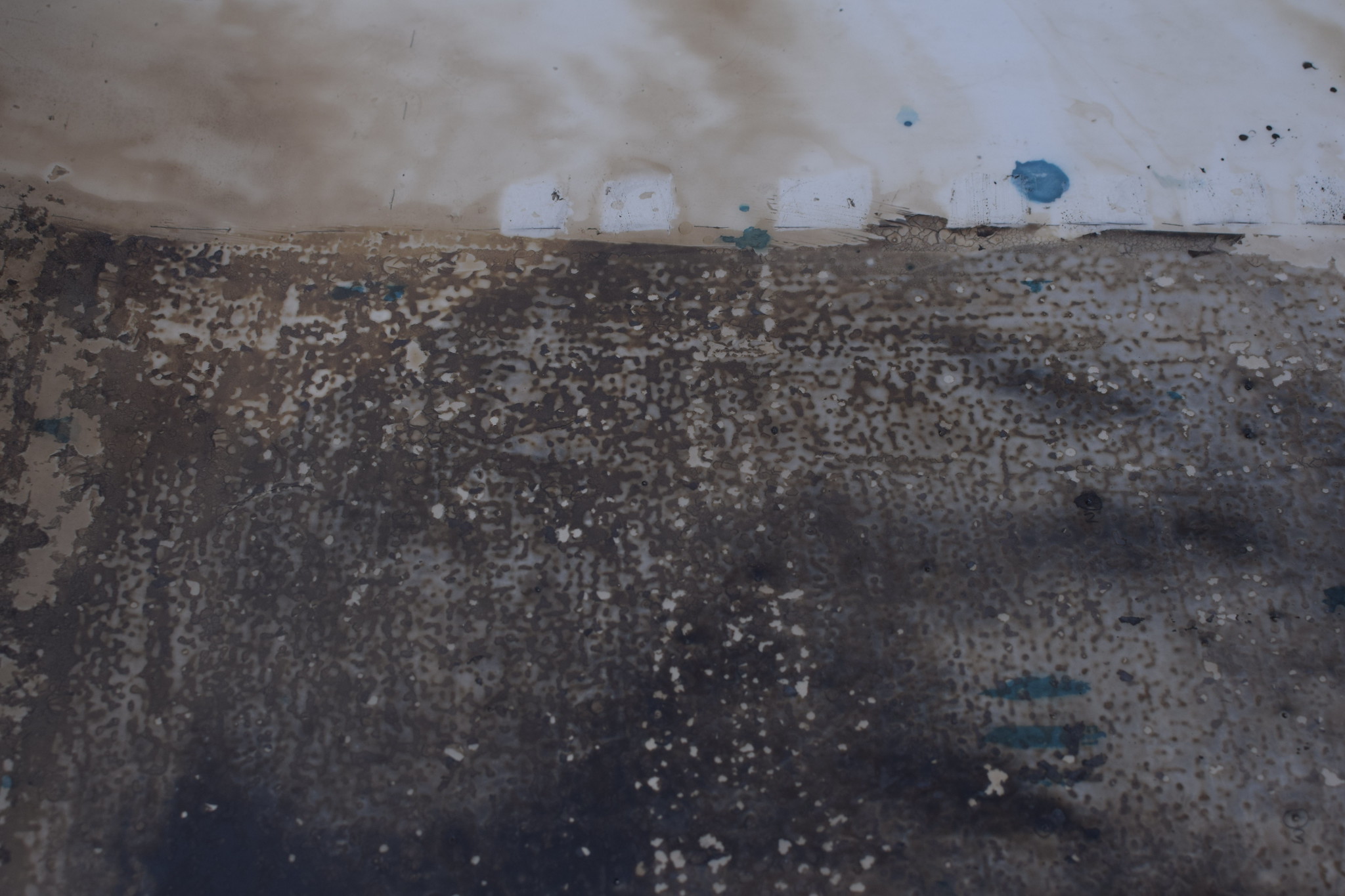
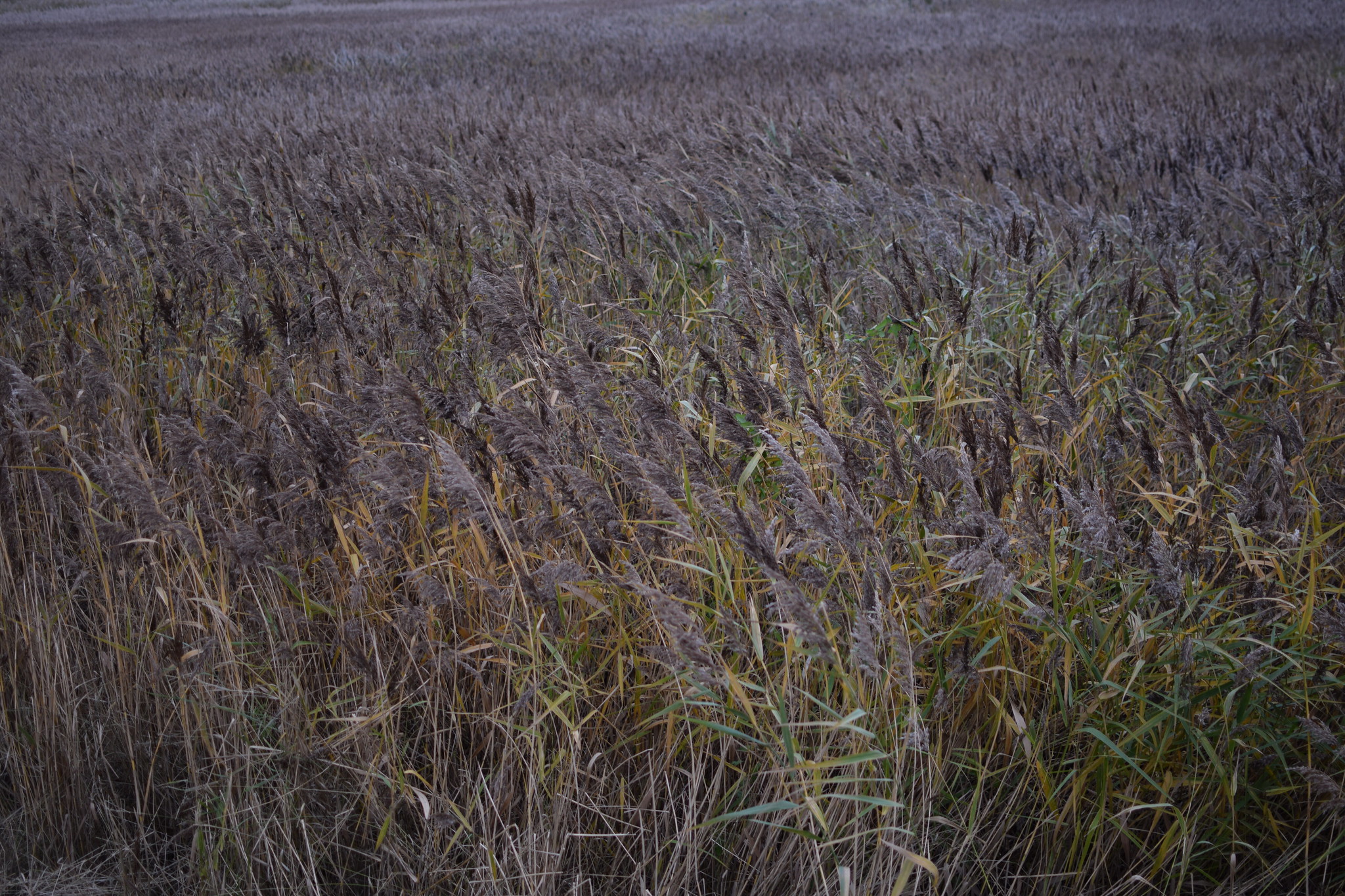
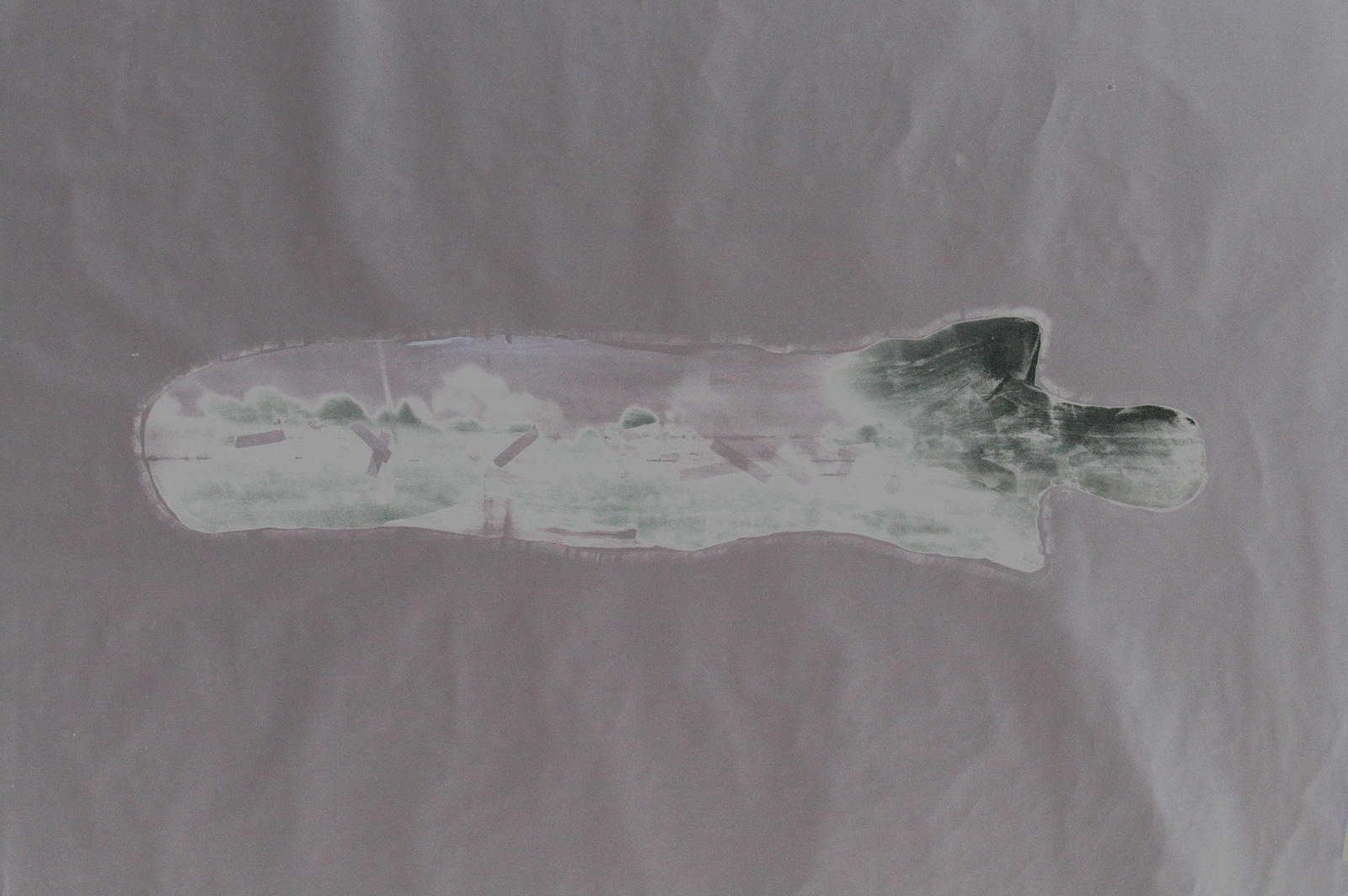
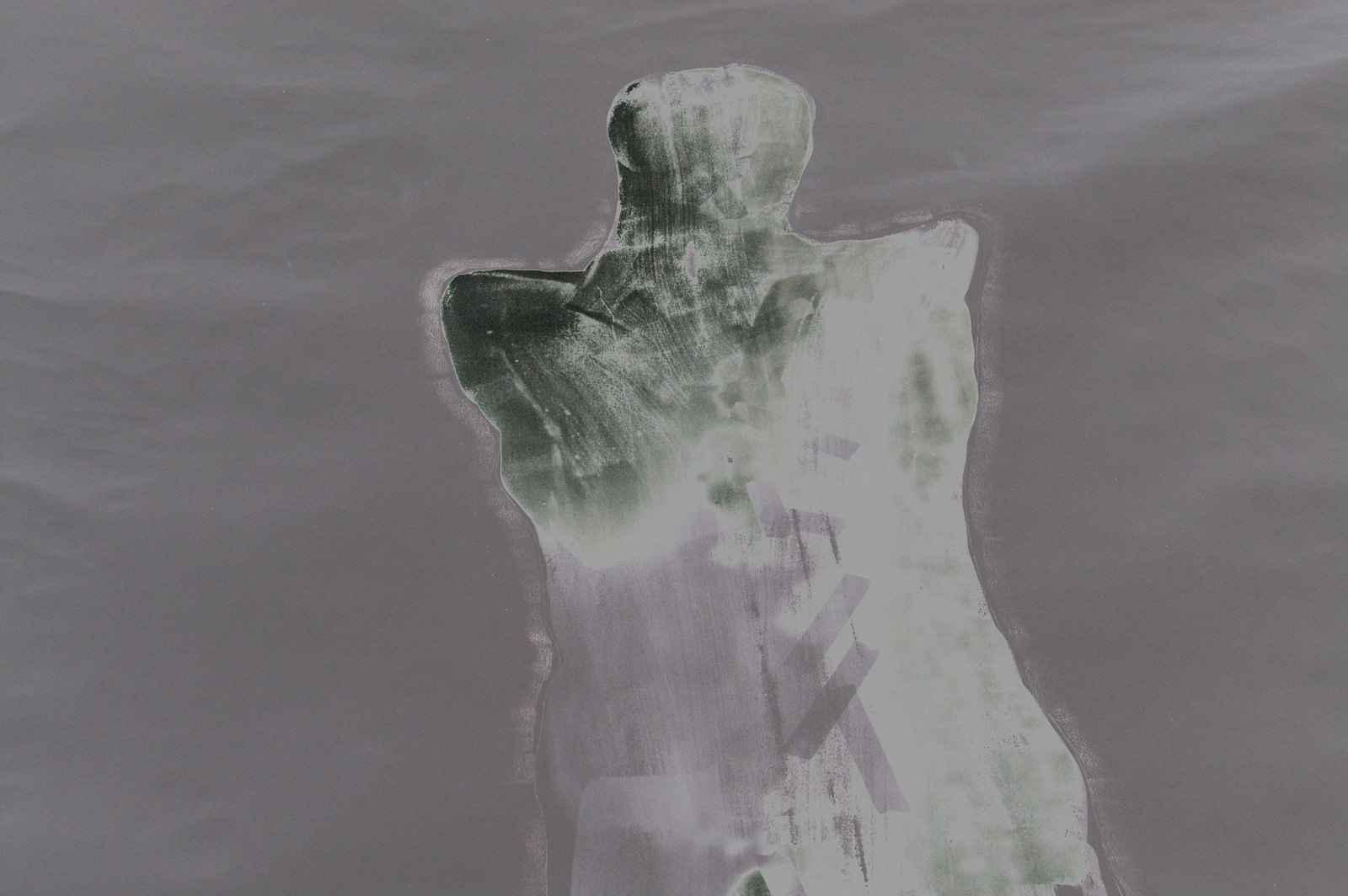
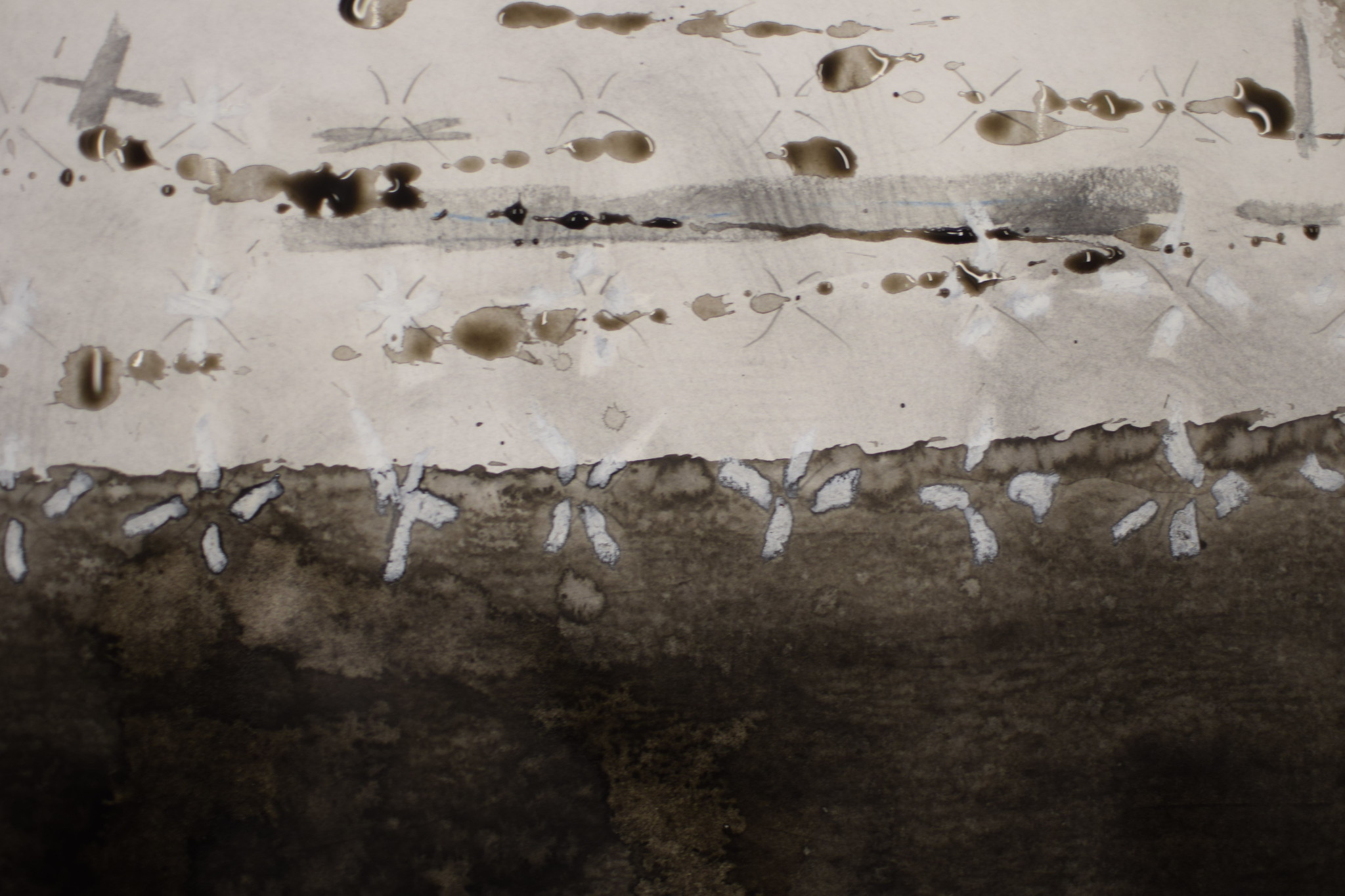
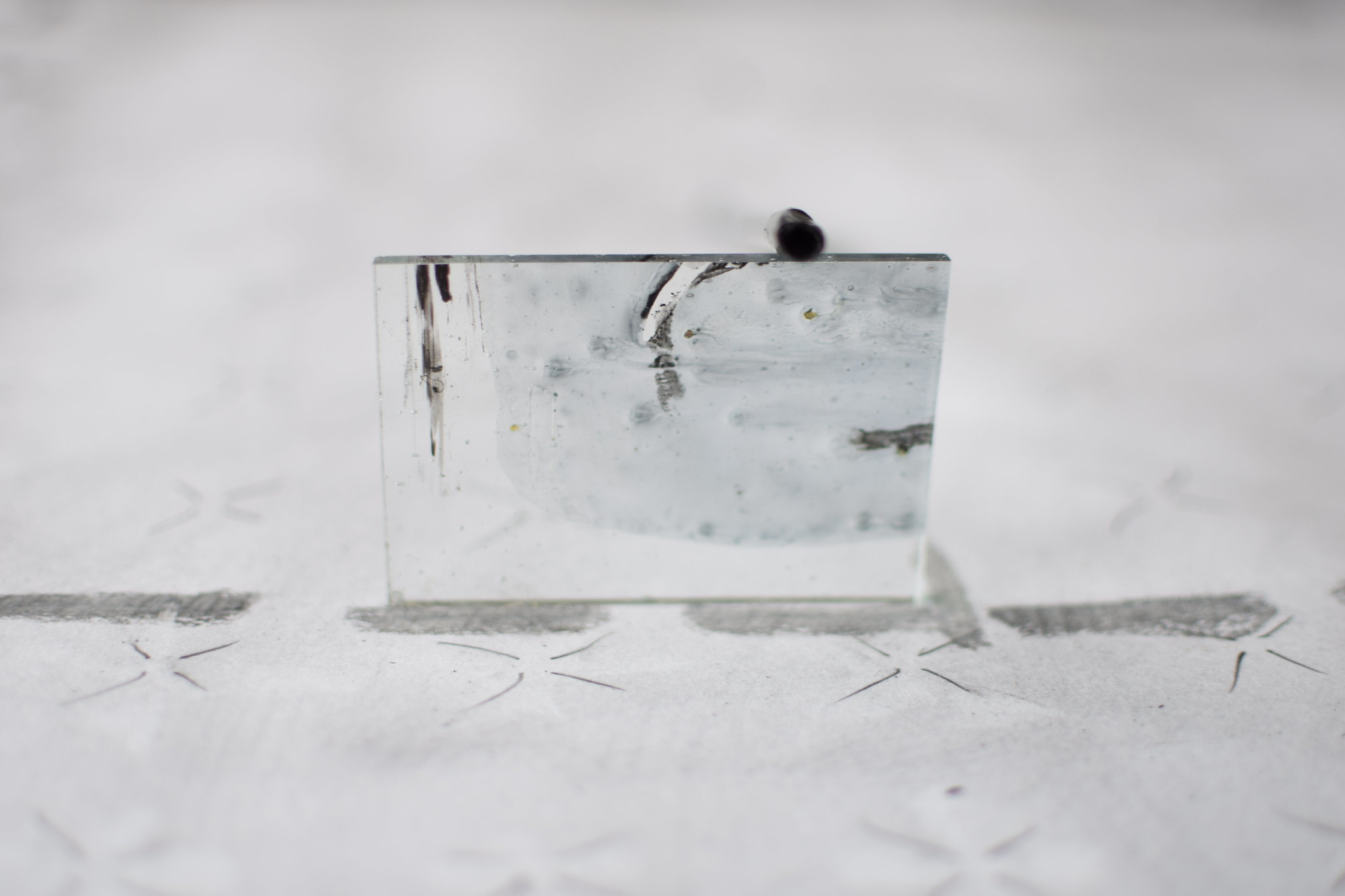
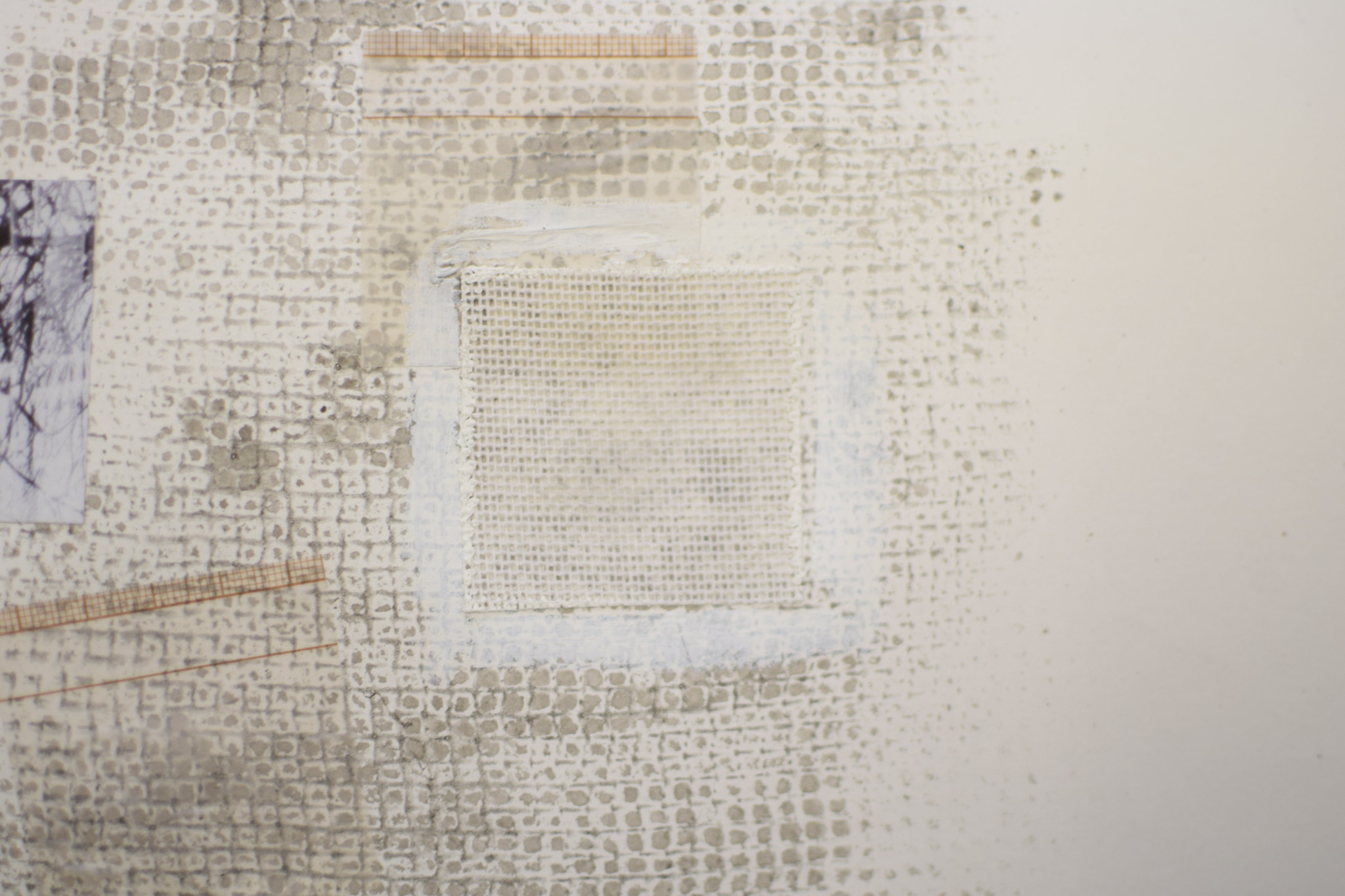
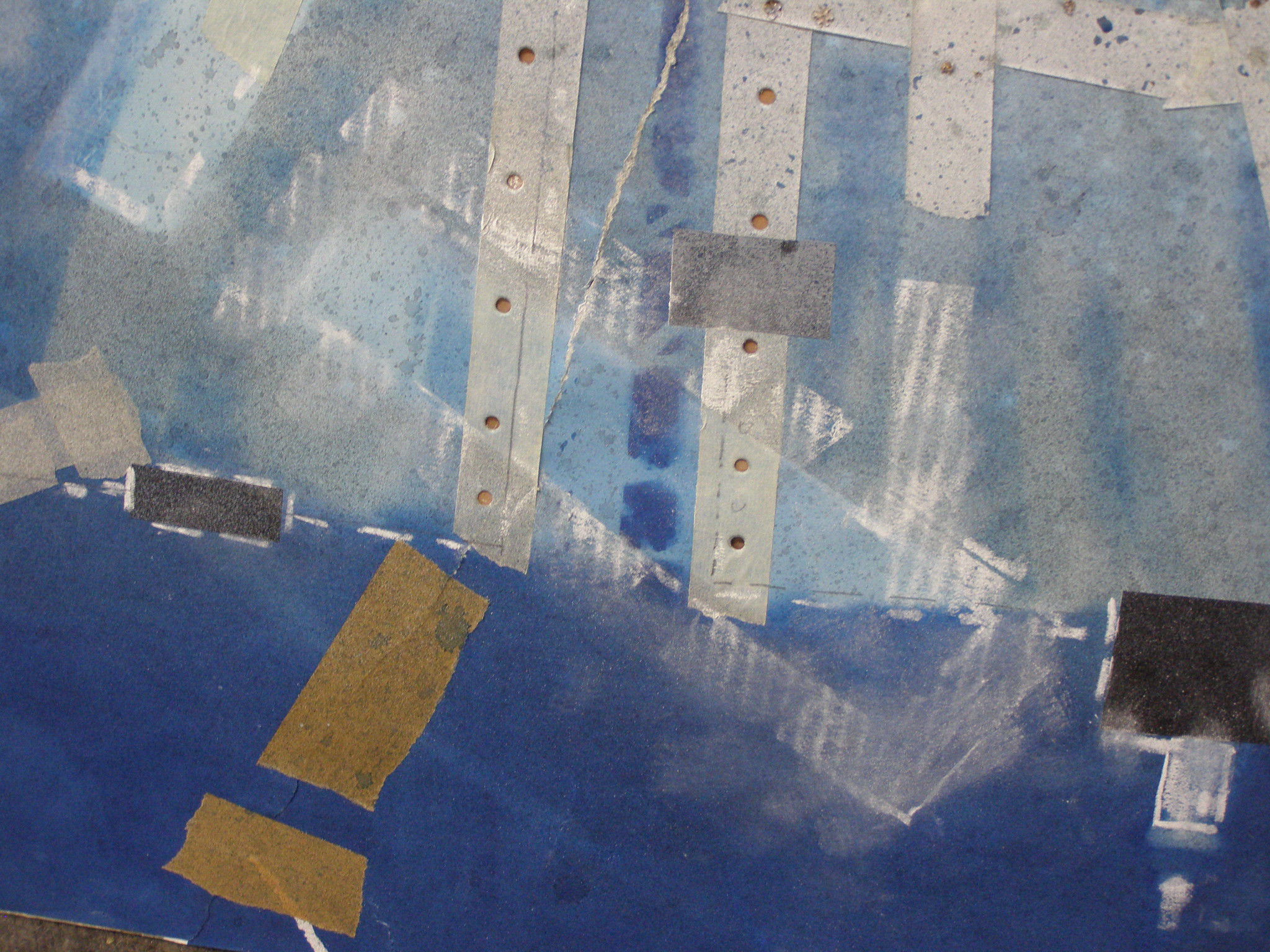
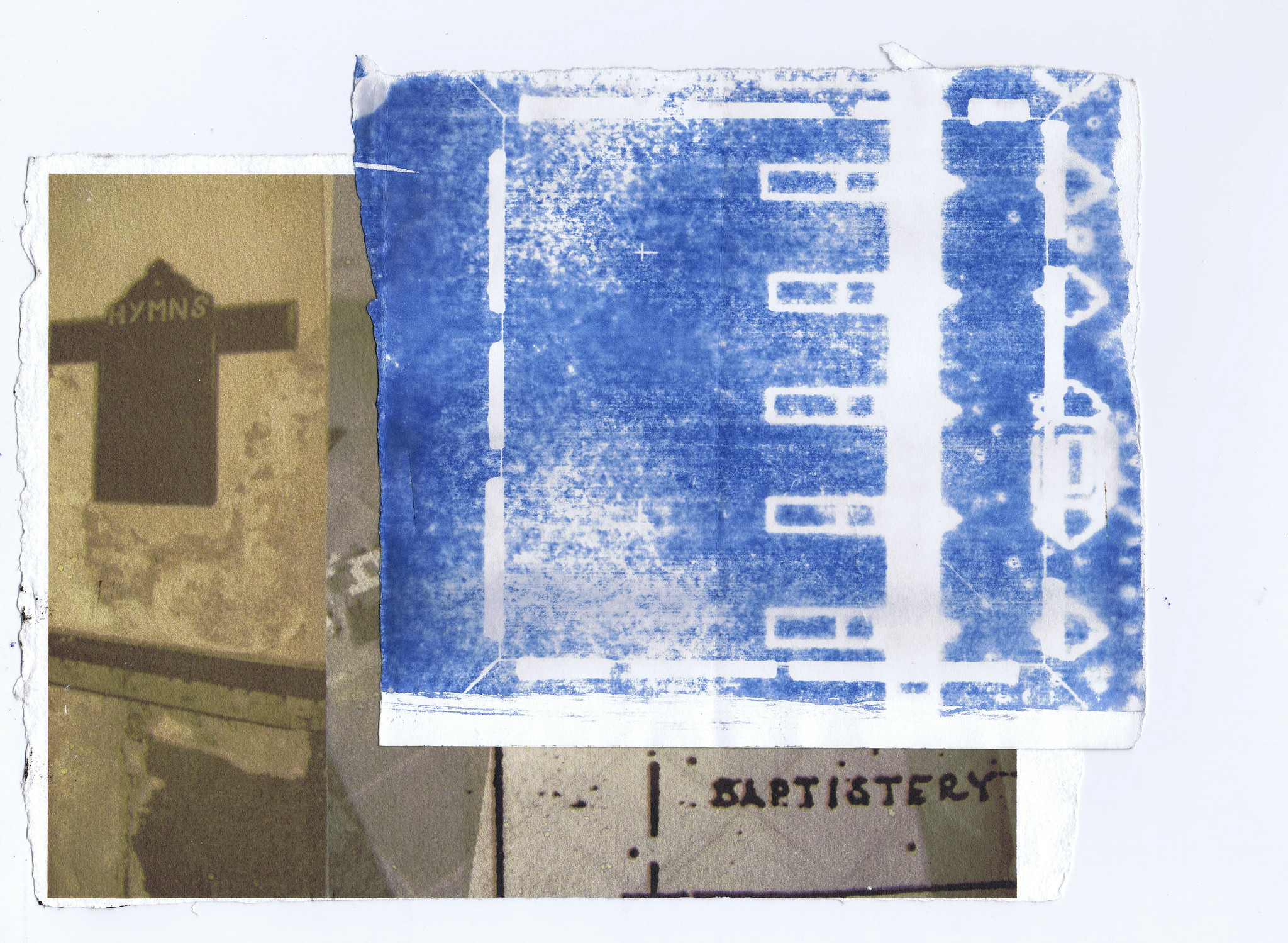
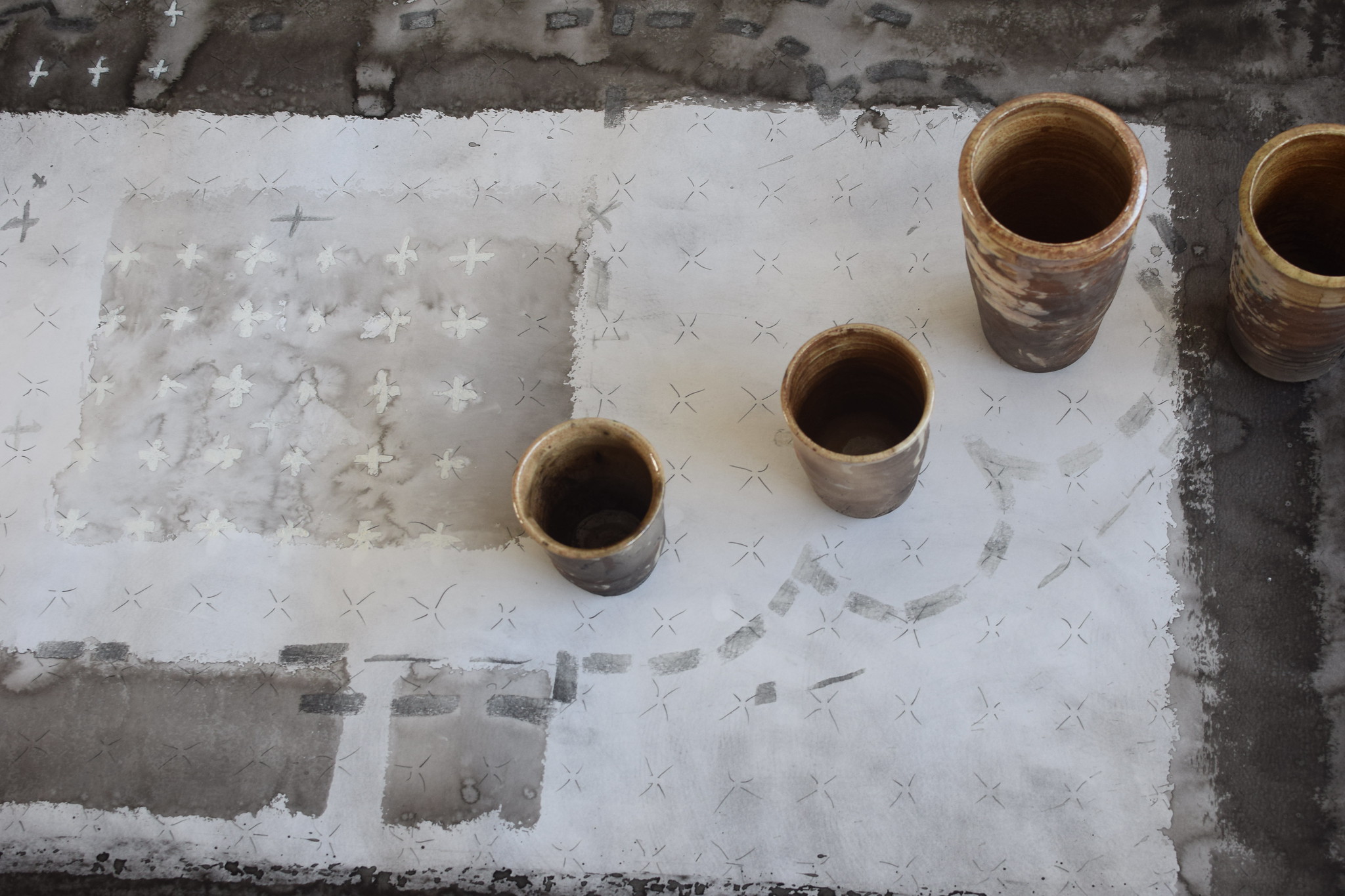
• Plastic Horizons/Strange Attractors

     Outpost 010722

    Intermediaries/Exploratory Realities.

    Constructs/Apparatuses.

    Elastic Horizons/Schisms

    Space-Time Manifolds

    Heuristic Devices/Poetic Ideas

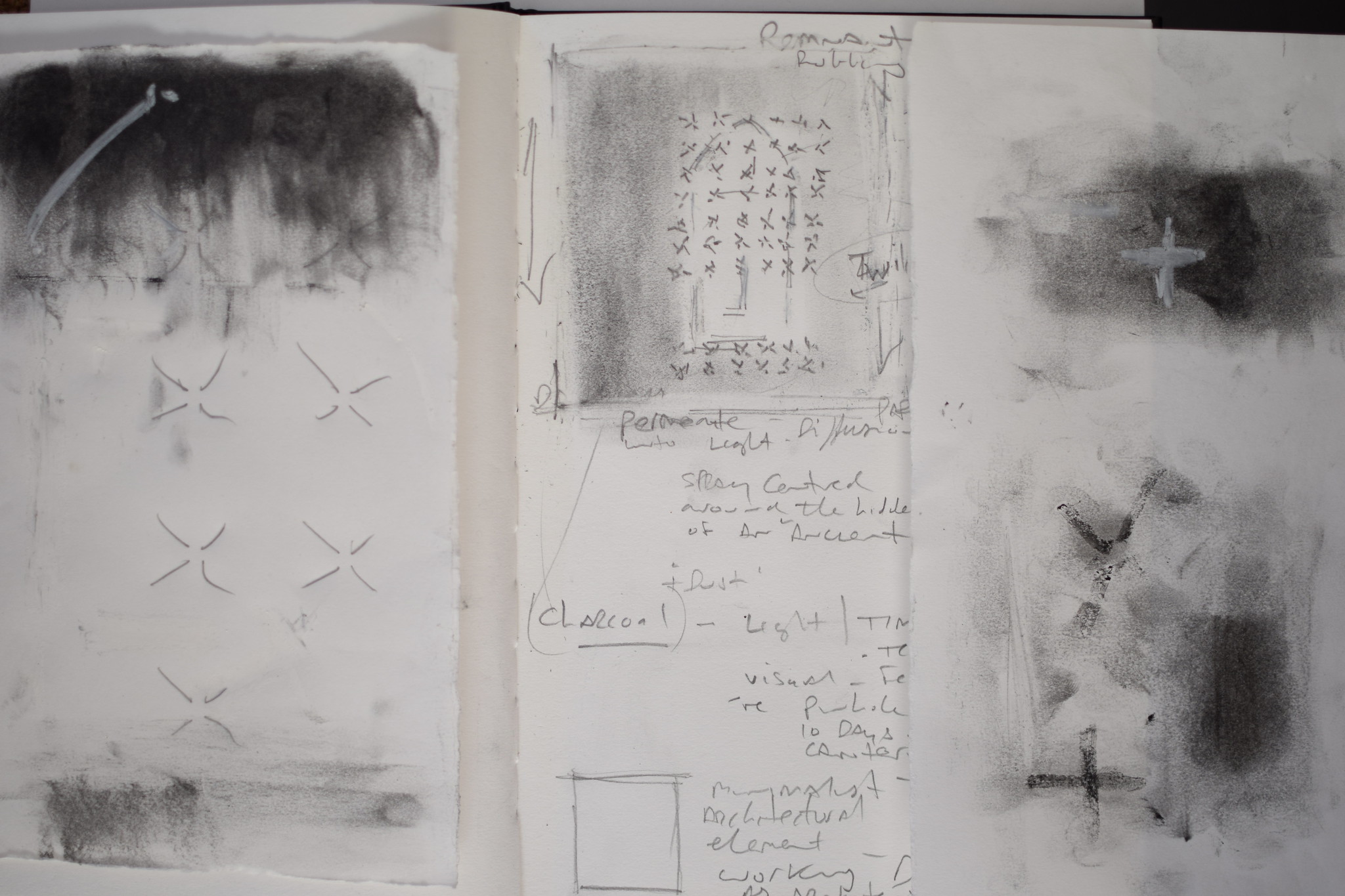
    Strange Attractors/Drawings/Diagrams

    Architectures that embody philosophy, through limited concepts that work with the contingent and the uncertain.

    Light has a new prolific dimension today as a means of measurement and communication.

    Light that is not seen with the eyes can be felt.

    Light’s psychological effects can lead to extremes of feeling with direct repercussions.

    The revelations of new spaces, like interwoven languages, dissolve and reappear in light. In magnificent spaces, light changes and appears to describe form.

    An eclipse of white clarity suddenly gives way to a pulse with colour; light is contingent, its shadows intermittent.

    In the mist of the metropolis at night, space dissolves before our eyes, only to take shape again within seconds.

    The spatial depth of the urban field cannot be objectified precisely. In its pulse the polarised position of our body and its perceptions are upset.

    If we explore spatial depth, then we can consider how objects appear correct or inverted. During our thought-experiments regarding space, especially space beyond the earthbound (Event Horizon, black hole) we accept new spatial levels and by the force of our imaginations, alter the known spatial levels of previous human existence.

    Horizon with aurora borealis.

    A horizon is not only an optical condition but also a spinning moment in space-time.

    In this sense, the earth is not the ground.

    As things continue to float, they spin and accelerate creating subtle centrifugal forces.

    We are organic beings.

    All of our objective relations begin from the inside out.

    We  must form an extended comprehension of space and time at the scale of astronomical events while not losing the perspective of the microscopic.

    Parallax, Steven Holl.

    Prototyping For Architects, Mark Burry, Jane Burry.

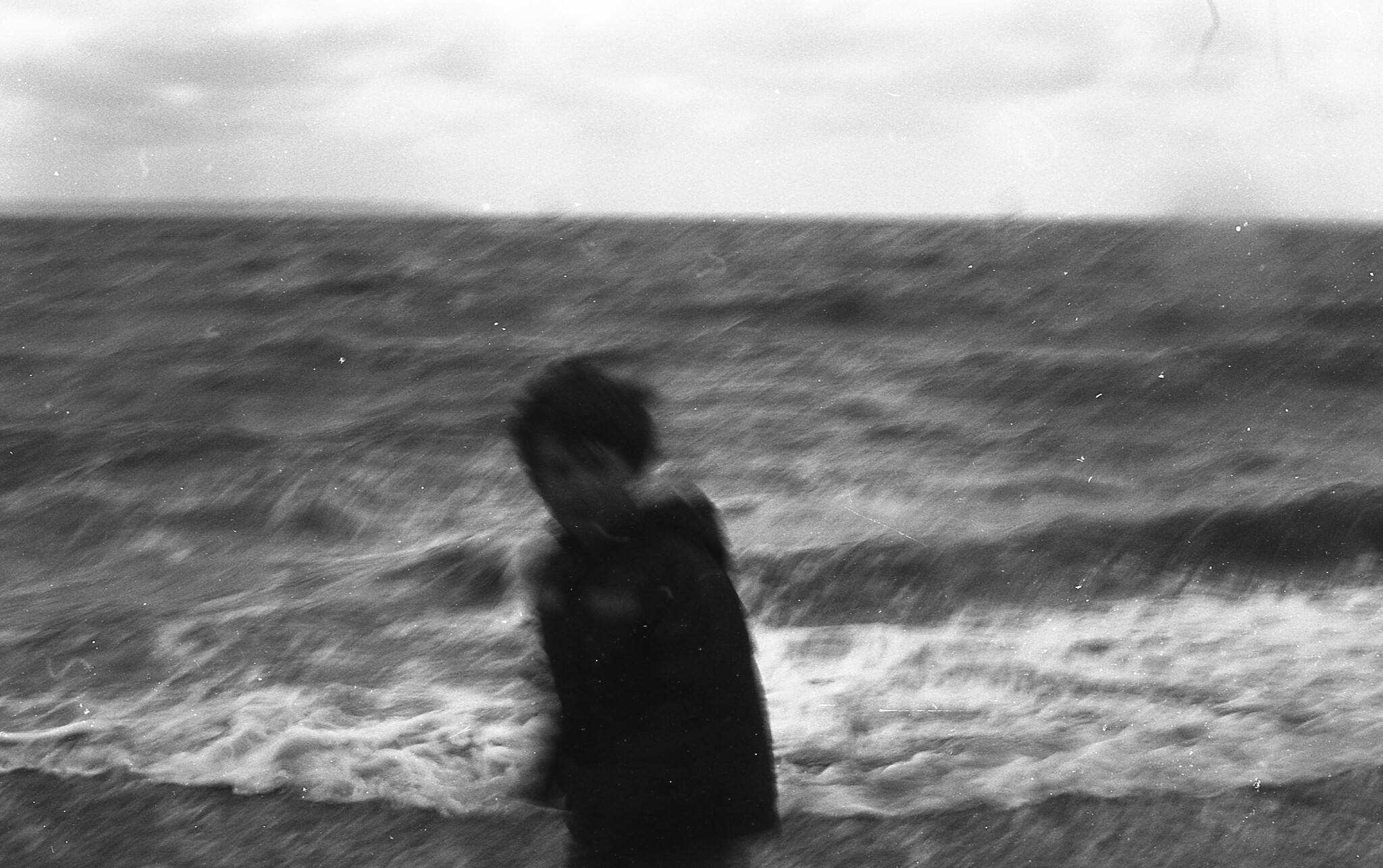
    Why it does not have to be in focus, Jackie Higgins.

    Studio Painting/Constituent Parts.

    Matter and Affect

    Presence and Mutability

    Affective Abstractions

    Robert Ryman

    Shifting perceptions into immersions within a sensate world.

    Japanese Minimalism

    Exploratory Diagrams

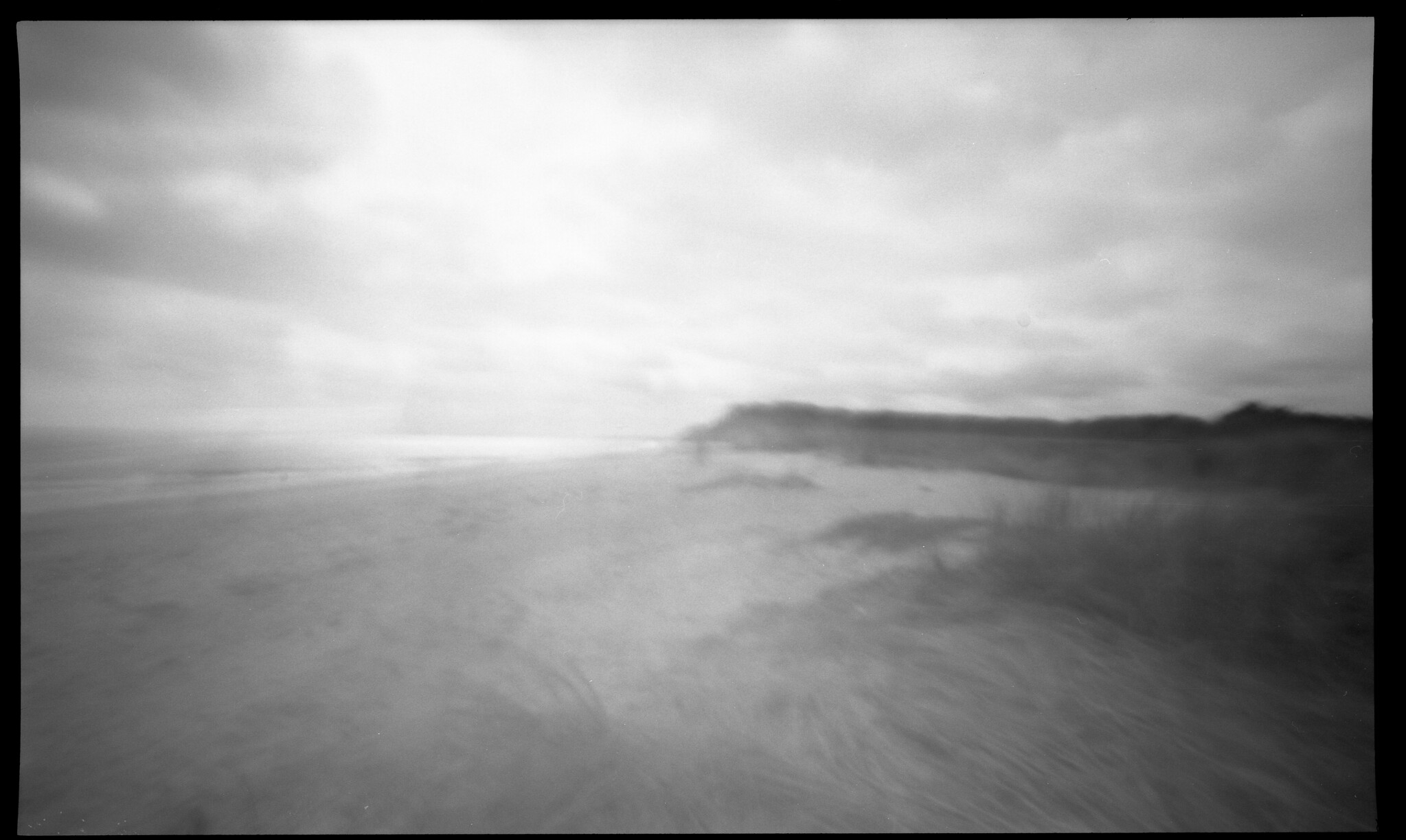
    Spatial Forms/Horizons

    Building as a body, a battleground of invisible forces. The spine is the central elevator.

    The structure is a tube of concrete covered with insulation and tarred black wood boards.

    Knut Hamsun Museum, Hamaroy, Norway.

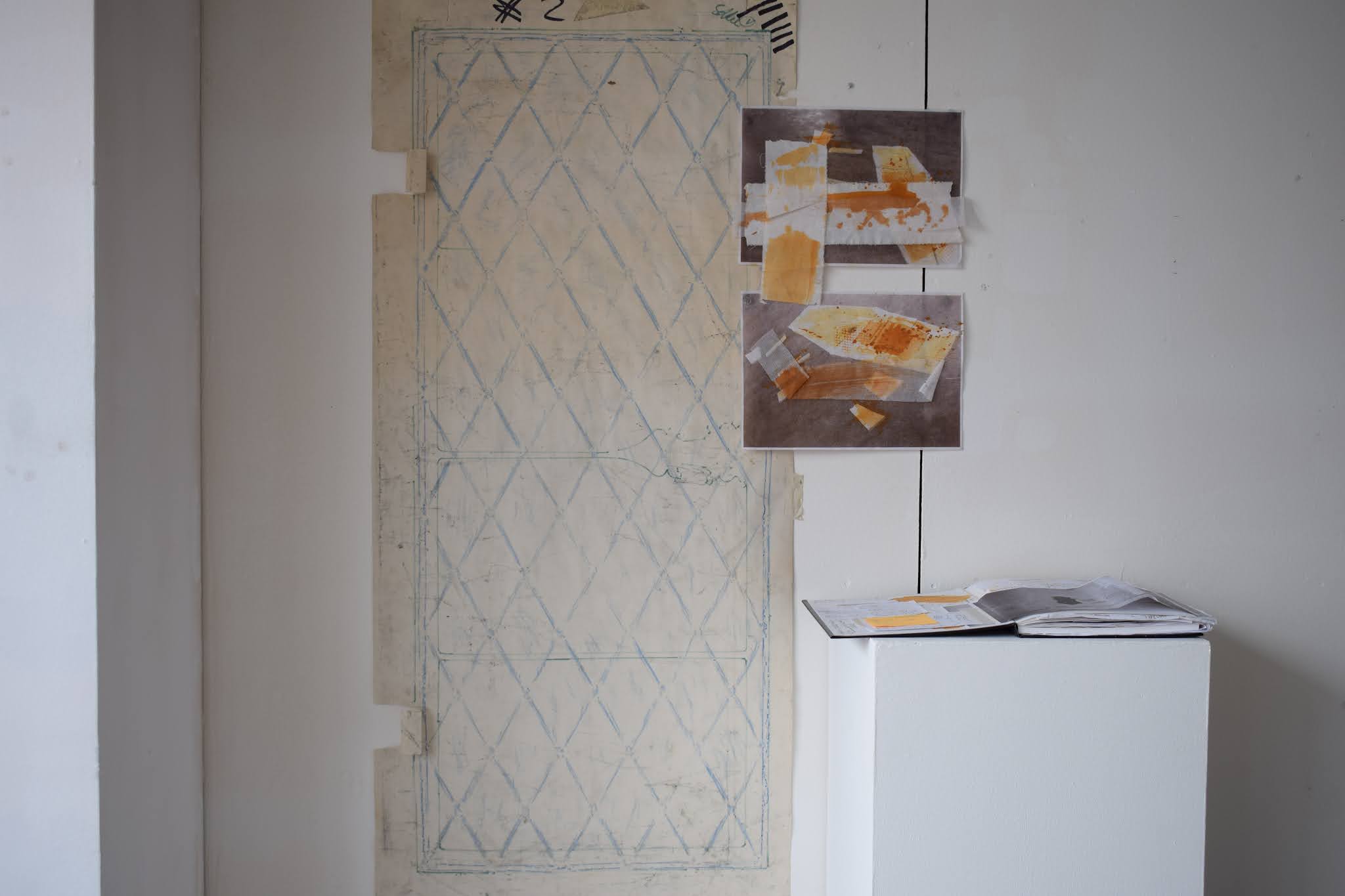
    Works on Paper and Cloth, visible fixings, securely situated to the wall space.

    Architectural Panels/Painting Surfaces.

    Soundproofing social noise

    The solitary artist literally at the edge of his environment, in a state of profound meditation about our place in the wider cosmos.

    We are no longer on the outside as an objective, dispassionate observer, but are now part of the journey and perhaps more subtly part of a ceaseless life-giving cycle.

    When we are at the beginning of a journey we, like Odysseus, contemplate a character (or concept) that does not yet exist. Absence and loss precede the appearance of an abstract driving force.

    Chaos, confusion, and implosion of information bound up in rules, constraints, and limited means precede every architectural challenge. Once the imagined concept takes hold, its correctness is tested in the way it can work in different modes, from program to light, to space and to material.

    The journey from the abstract to the concrete is a metamorphosis from a poetic idea with an exploratory diagram, a coherent purpose to form.

    Mattering/Metaphor

    Dartmoor/Water

    Stream of thought, cascades of neural activity in your mind.

    Imprints of the natural environment, explorations of matter and light, self and other.

    Works that seem caught between this world and evoking a place that is otherworldly.

    She works outdoors using the nocturnal landscape as a darkroom.

    On The Presentness Of Photography, Craigie Horsfield.

    For Horsfield, by separating the act of taking the image from that of printing it, he believes he draws attention to the ‘pastness’ of the photograph, which is what the picture depicts, its subject and what he calls the ‘presentness’ which is how the photograph exists through its surface, its matter, and the physical object.

    The instant of the moment is also a past reality.

    Slow History/Slow Time on the presentness of things and their complicated relationships to time.

    Tactile Light/Casting Images.

    Pliny/Butades, tracing an outline of a shadow onto a wall.

    Christopher Bucklow has devised a process to depict figures composed of myriad pinhole photographs of the sun. He dispenses with the negative by casting images directly into photograms.

    She, is rendered not as a shadow but manifested as a radiant, luminous being.

    They flesh themselves in the astral remnants of dilated starlight.

    Skin

    Surface

    Subjectivity

    The composed image is given an apparent physicality, its surface should be constituted by and of  place and time, it should be vulnerable, porous to impressions like skin.

    Physical Forms

    Landscape

    Free Movement

    Cone of Vision/Refraction Diagram

    Parallax

    Elastic Horizons

    Science remains essentially mysterious, yet our daily scientific and phenomenal experiences shape our lives; experience sets a new frame from which we interpret what we perceive.


    Social apparatuses and agents that explore the possibilities of space. Other Worlds : Insistent moments of mark making/subjectivity.
    Source: Plastic Horizons/Strange Attractors

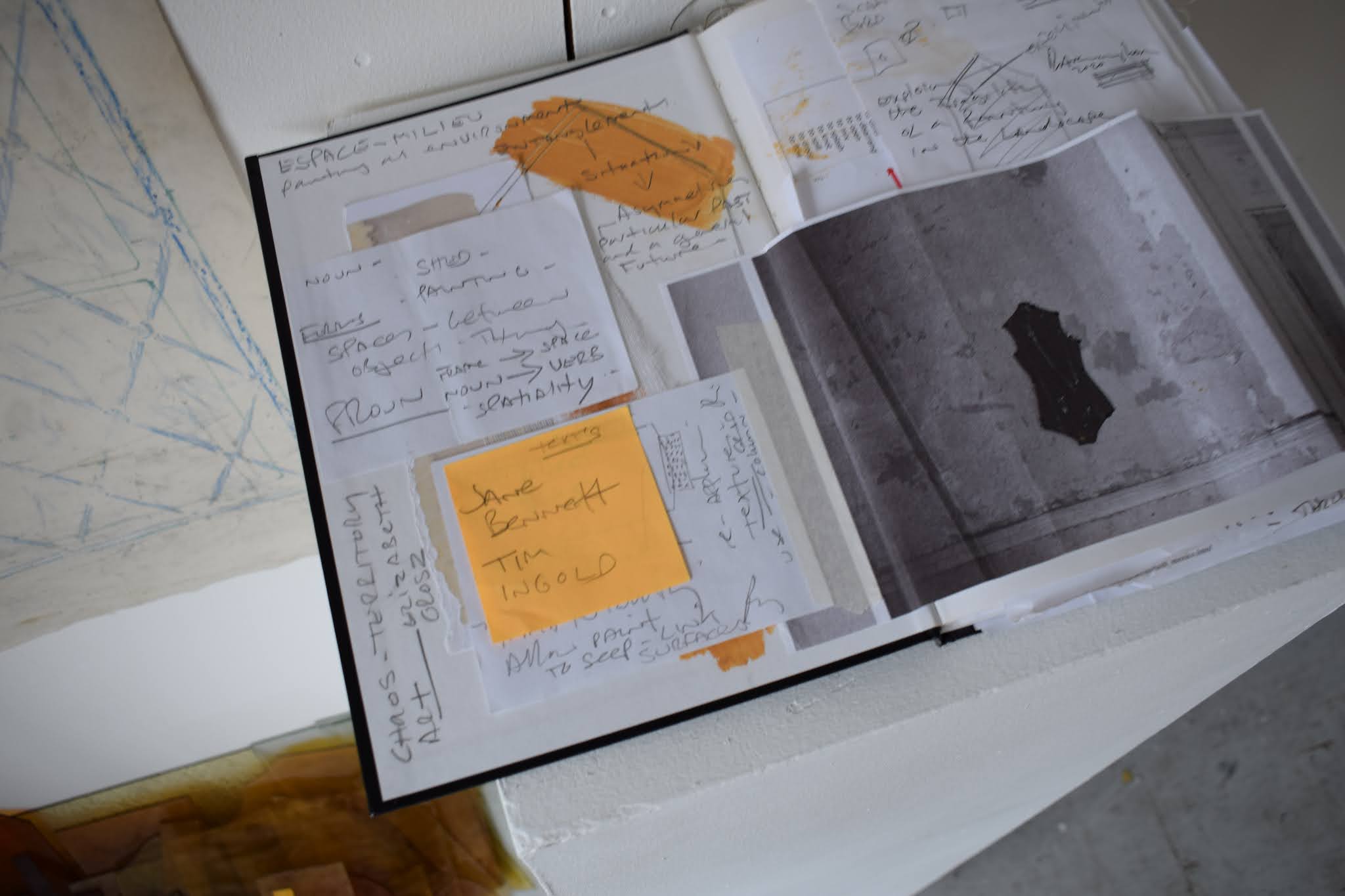
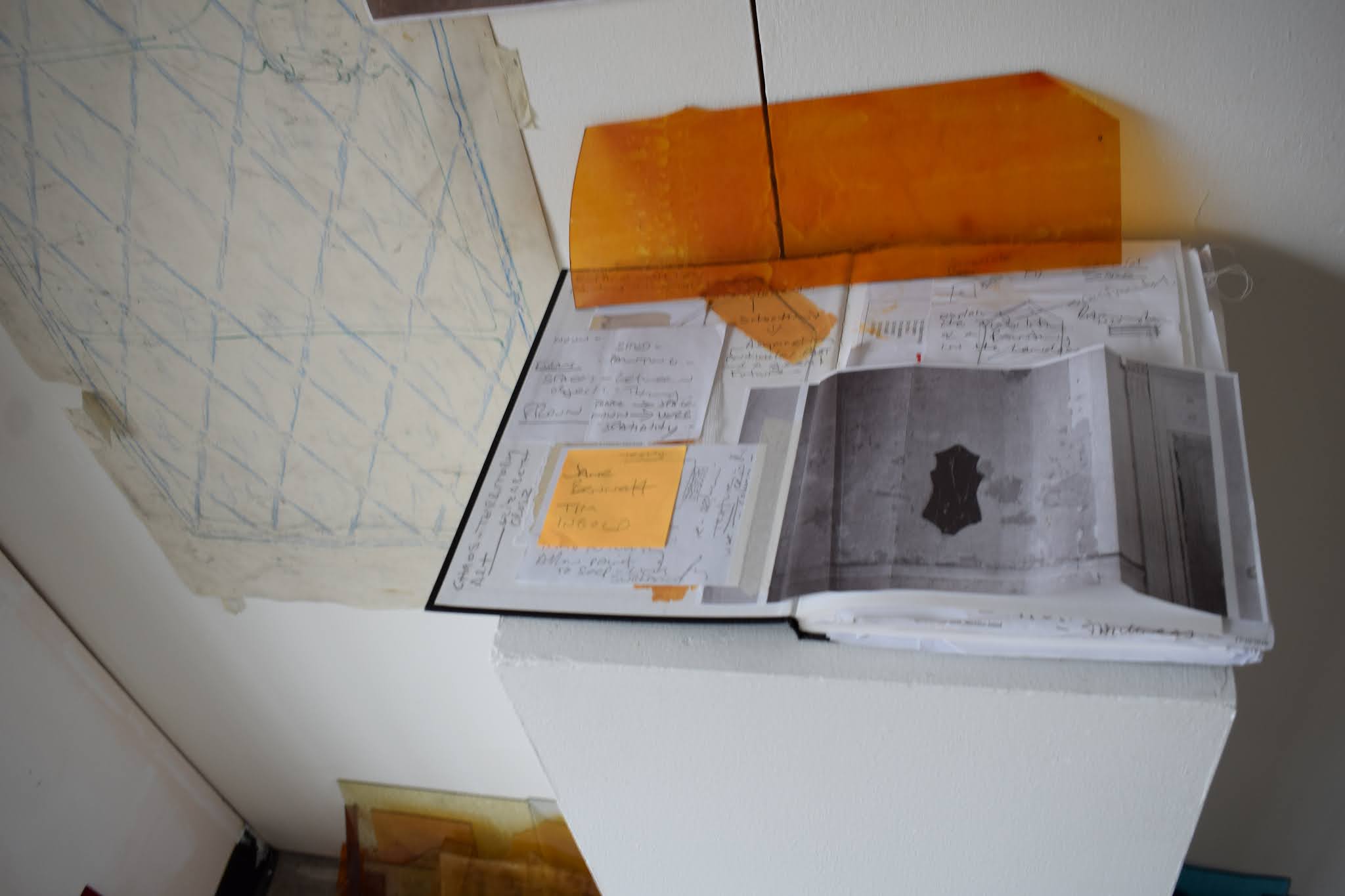
  • Tentative Building Profiles : Speculative landing sites of surface, image and texts.


    Tentative Building Profiles : Speculative landing sites of surface, image and texts. 

    5

    Procedural Architecture

    Start by thinking of architecture as a tentative constructing toward a holding in place. Architecture’s holding in place occurs within and as part of a prevailing atmospheric condition that others routinely call biosphere but which we, feeling the need to stress its dynamic nature, have renamed bioscleave.

    Architectural Body

    Madeline Gins and Arakawa

    Working Notes/Holding in Place

    Wayfinding/Movements through accumulated research

    Running scripts, enactments, instances, involvements

    Collaborative texts, complexity, emergent, discursive

    From The Bookcase to The Field Table : Landing Sites of Inquiry

    Camouflage

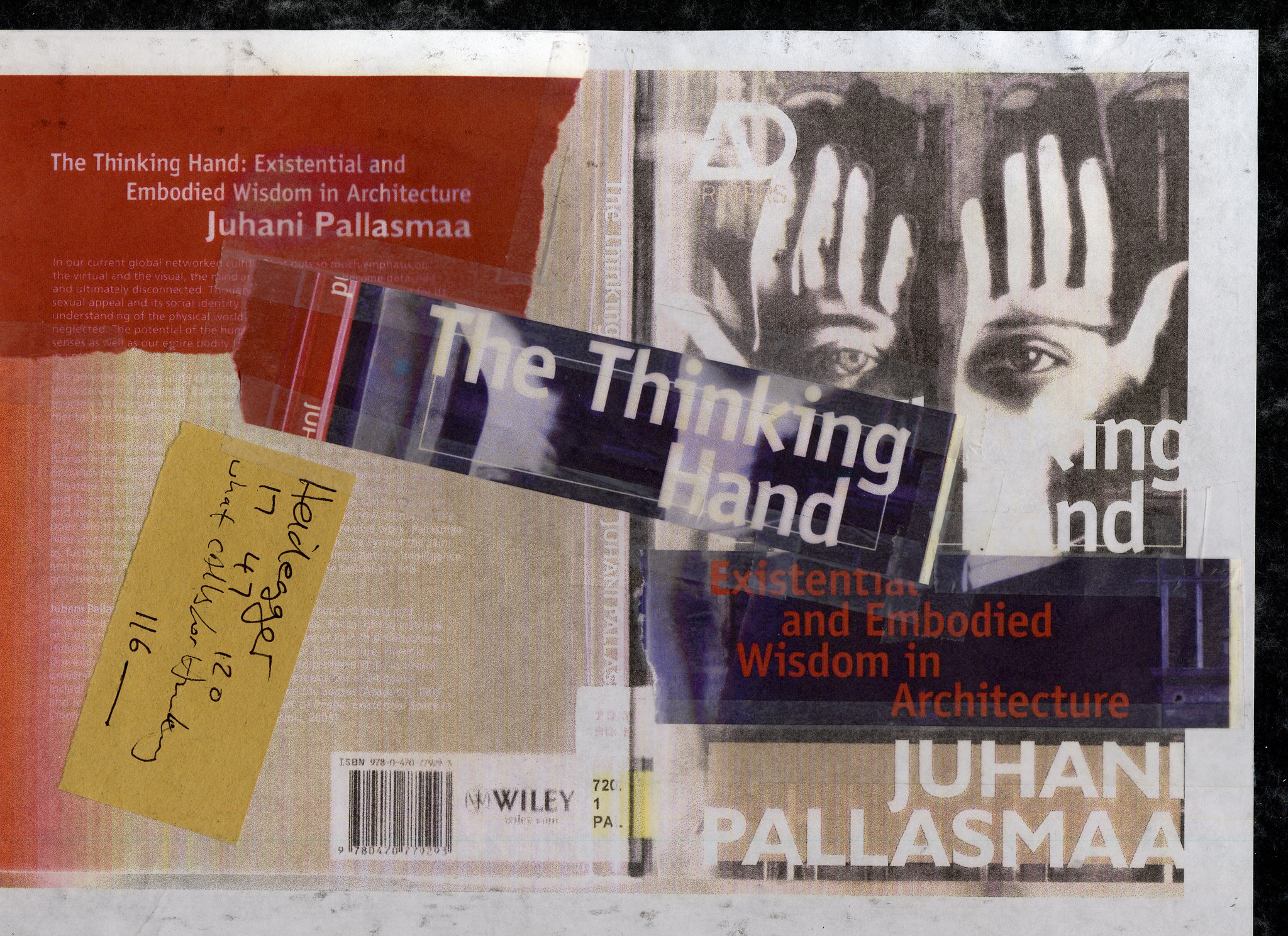
    Neil Leach

    For Benjamin, the twentieth century is an age of alienation. Human beings are no longer ‘cocooned’ within their dwelling spaces. Architectural spaces are no longer reflections of the human spirit. Something has been lost.

    Mimesis, 19.

    New Concepts of Architecture

    Existence, Space and Architecture

    Christian Norberg-Schulz

    A child ‘concretizes’ its existential space.

    A Philosophy of Emptiness

    Gay Watson

    Artistic Emptiness

    Everything flows, nothing remains.

    Heraclitus

    Rethinking Architecture

    Neil Leach

    Figure 1, Sketch by Jacques Derrida for Choral Work project. 343

    Foucault, Figure 2 Bentham’s Panopticon (1791). 360

    Page laid in, The Atrocity Exhibition by J. G. Ballard, new revised edition,annotations, commentary, illustrations and photos.

    Tracing Eisaenman

    Plenum, juxtaposed to form/haptic values/body absences

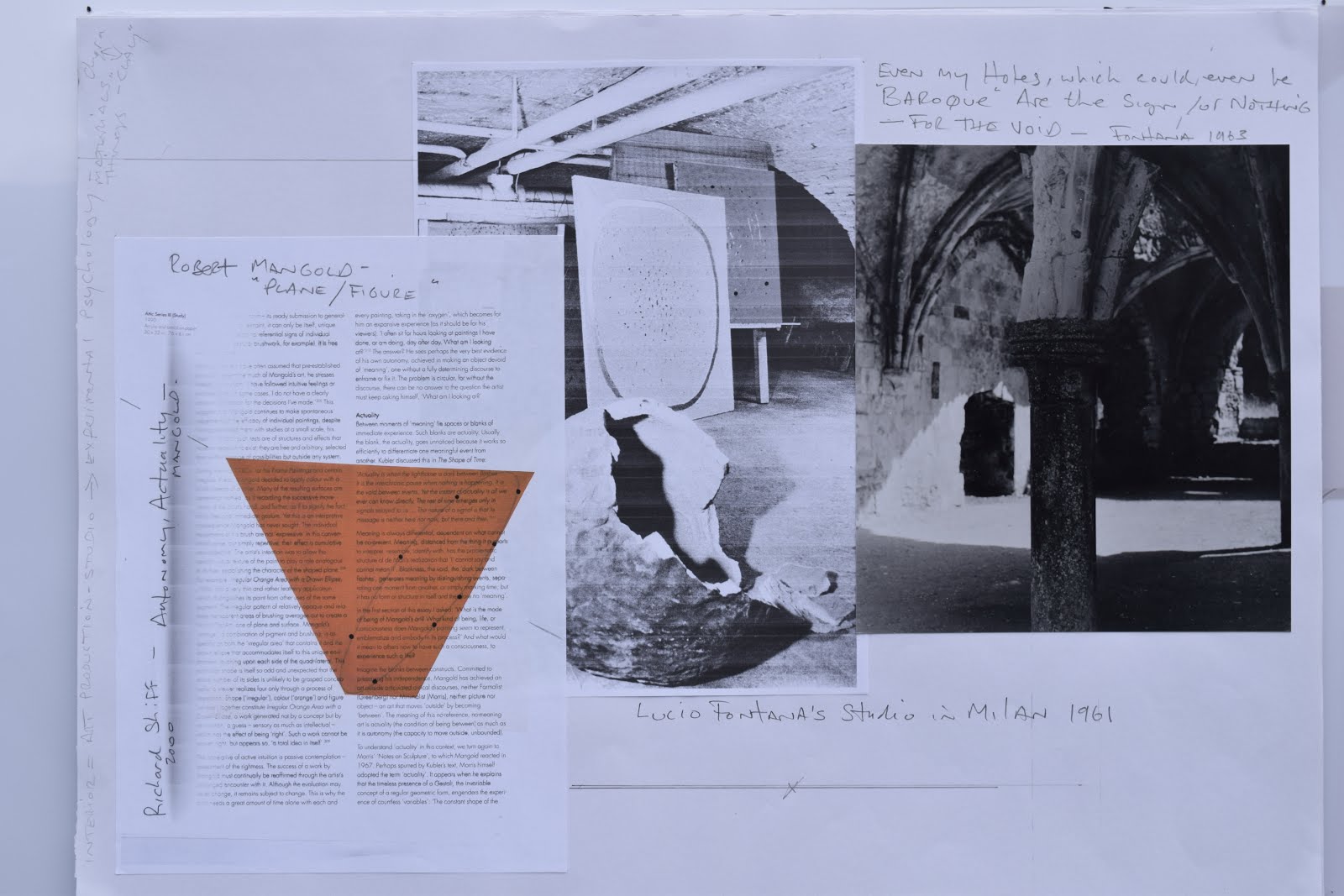
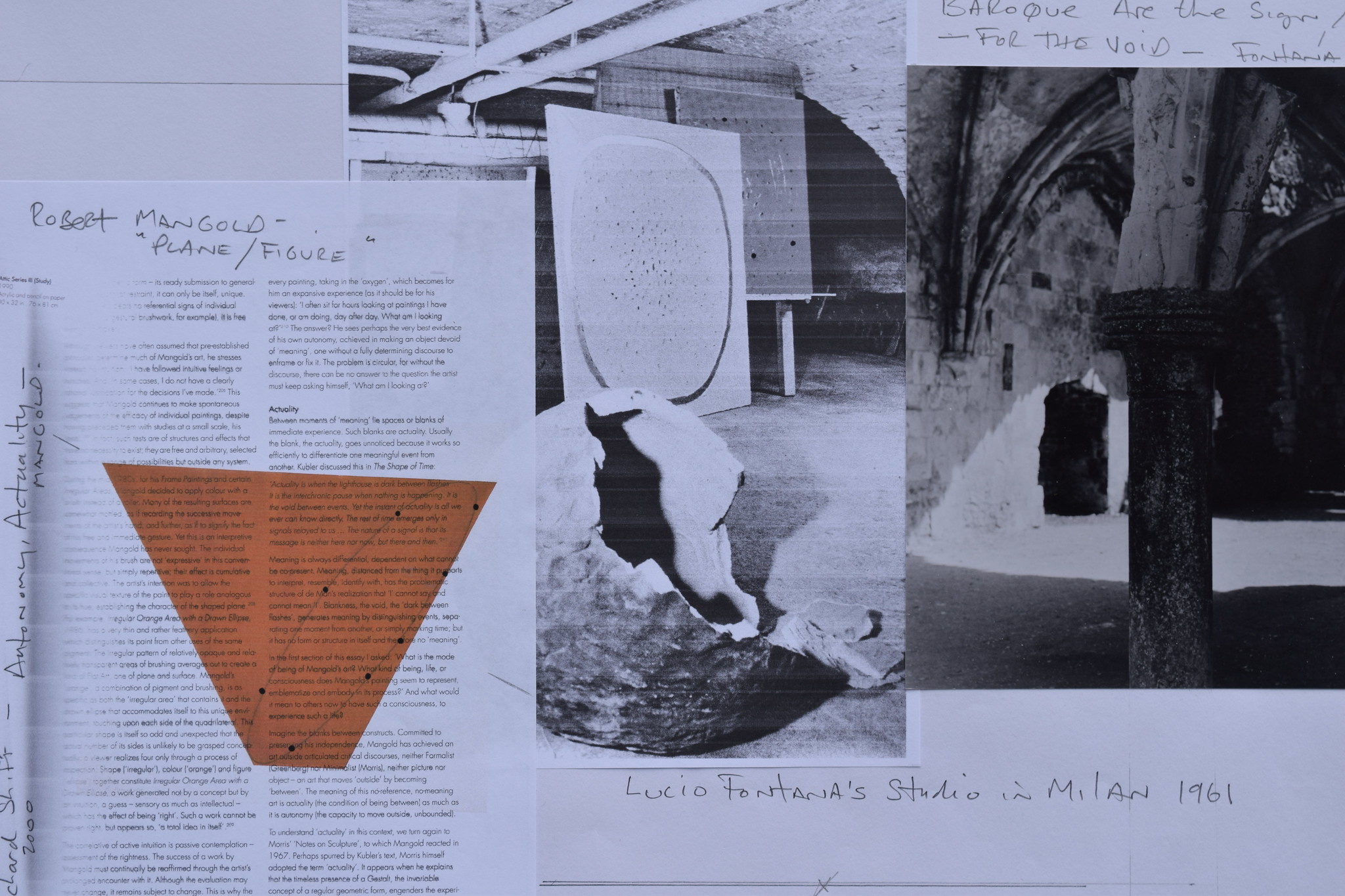
    Robert Mangold

    Between moments of ‘meaning’ lie spaces or blanks of immediate experience. Such blanks are actuality. Usually the blank, the actuality, goes unnoticed because it works so efficiently to differentiate one meaningful event from another. Kubler discussed this in The Shape of Time.

    Interactions of the Abstract Body

    Josiah McElheny

    Object Lesson/Heuristic Device

    The term ‘heuristic’ is understood here to denote a method of addressing and solving problems that draws not on logic but on experience, learning and testing. In this regard stories and fictional narratives can be heuristic devices in acting as ideal models that are not to be emulated but which help to situate characters, actions and objects.

    Space Between People

    Degrees of virtualization

    Mario Gerosa

    Adaptive Architectural Design

    Device-Apparatus

    Place

    Function

    Adaptation

    The second phase of project activity acknowledges that the proposal involves two sites; the landscape of settlement and the artifice of the factory. The design is intended to be a reflection of the conditions of each, so there was a need to work directly with the manufacturing process, at full scale, as early as possible. This would provide an immediate counterpoint to the earlier representations and a necessary part of exploring the manufacturing medium in the context of architectural design. 69

    Building The Drawing

    The Illegal Architect

    Immaterial Architecture

    Mark Cousins suggests that the discipline of architecture is weak because it involves not just objects but relations between subjects and objects. And if the discipline of architecture is weak, then so, too, is the practice of architects. Architecture must be immaterial and spatially porous, as well as solid and stable where necessary, and so should be the practice of architects.

    Jonathan Hill

    Index of immaterial architectures

    Herzog and De Meuron

    Natural History

    Exhibiting Herzog and De Meuron

    We are not out to fill the exhibition space in the usual manner and to adorn it with records of our architectonic work. Exhibitions of that kind just bore us, since their didactic value would be conveying false information regarding our architecture. People imagine that they can follow the process, from the sketch to the final, photographed work, but in reality nothing has really been understood, all that has happened is that records of an architectural reality have been added together.

    My studio is a piece of architecture that is silent. The things of which it is made say all and at the same time nothing. Its strength lies in its demanding silence. A stern silence in order to permit works to occur. I imagine that a painting by Newman could be hung there.

    The arrival of Beuys in a world that was gradually falling asleep amidst minimalism generated a kind of confusion that was truly excellent for opening up the mind. Comfort vanished, driven away by subversive complexity.

    Speculative architecture

    On the aesthetics of Herzog and De Meuron

    Without opposition nothing is revealed,

    no image appears in a clear mirror

    if one side is not darkened

    Jacob Bohme, De tribus principii (1619)

    Reflections on a photographic medium

    Memorial to the Unknown Photographer

    Thomas Ruff’s Newspaper Photos

    Valeria Liebermann

    Working Collages

    Karl Blossfeldt

    Anti Object

    We are composed of matter and live in the midst of matter. Our objective should not be to renounce matter, but to search for a form of matter other than objects. What that form is called architecture, gardens, technology is not important.

    Kengo Kuma


    Social apparatuses and agents that explore the possibilities of space. Other Worlds : Insistent moments of mark making/subjectivity.
    Source: Tentative Building Profiles : Speculative landing sites of surface, image and texts.

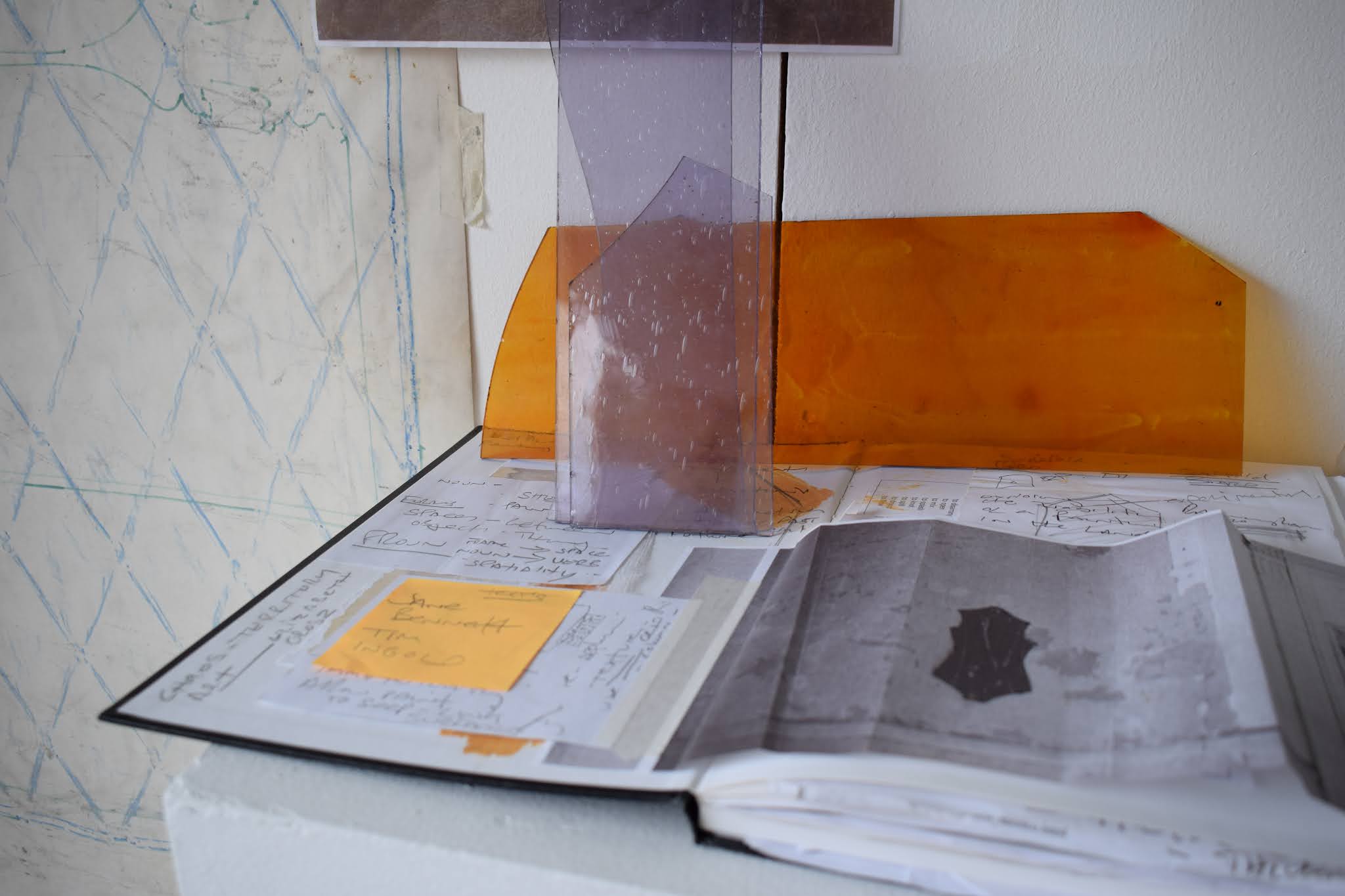
  • DSC_7317 Reading : Slow Philosophy/Ecology of Material Thinking

    Orange School Graph Books

    Harleston 2020-2021

    A Species of Spaces

    The Social Turn

    Museum Site and Display

    Political Philosophy

    Makers work in a world that does not stand still

    Iteration allows for continual correction (material conversation) in response to an ongoing perceptual monitoring of the task as it unfolds, mixing the potential for blending or combining matter that already exists into new combinations

    Tim Ingold 2010

    The social life of making

    Making speaks in vivid dialogue with two associated themes, material and skill

    Creativity involves not merely a spark of innovation or the execution of artistic inspiration. But the capacity to respond to unfolding iterations with materials. To use slowly accrued haptic knowledge to manipulate processes on the fly, and to judge how to counteract error and seize opportunities as they evolve

    Making becomes a process of iteration, and a maker works with this iteration prolifically

    Matter and materials are lively and require attention, materials continue to thwart in unpredictable ways, decaying and breaking down or wearing or breaking under force

    Vibrant Matter, A Political Ecology of Things

    Jane Bennett 2010

    Attending to the process of making opens up prospects for following the lead of the material, where the properties of the materials themselves shape the direction in which making proceeds

    Tim Ingold 2010

    New Urban Adventures in Collaboration/Conceptual Ceramics

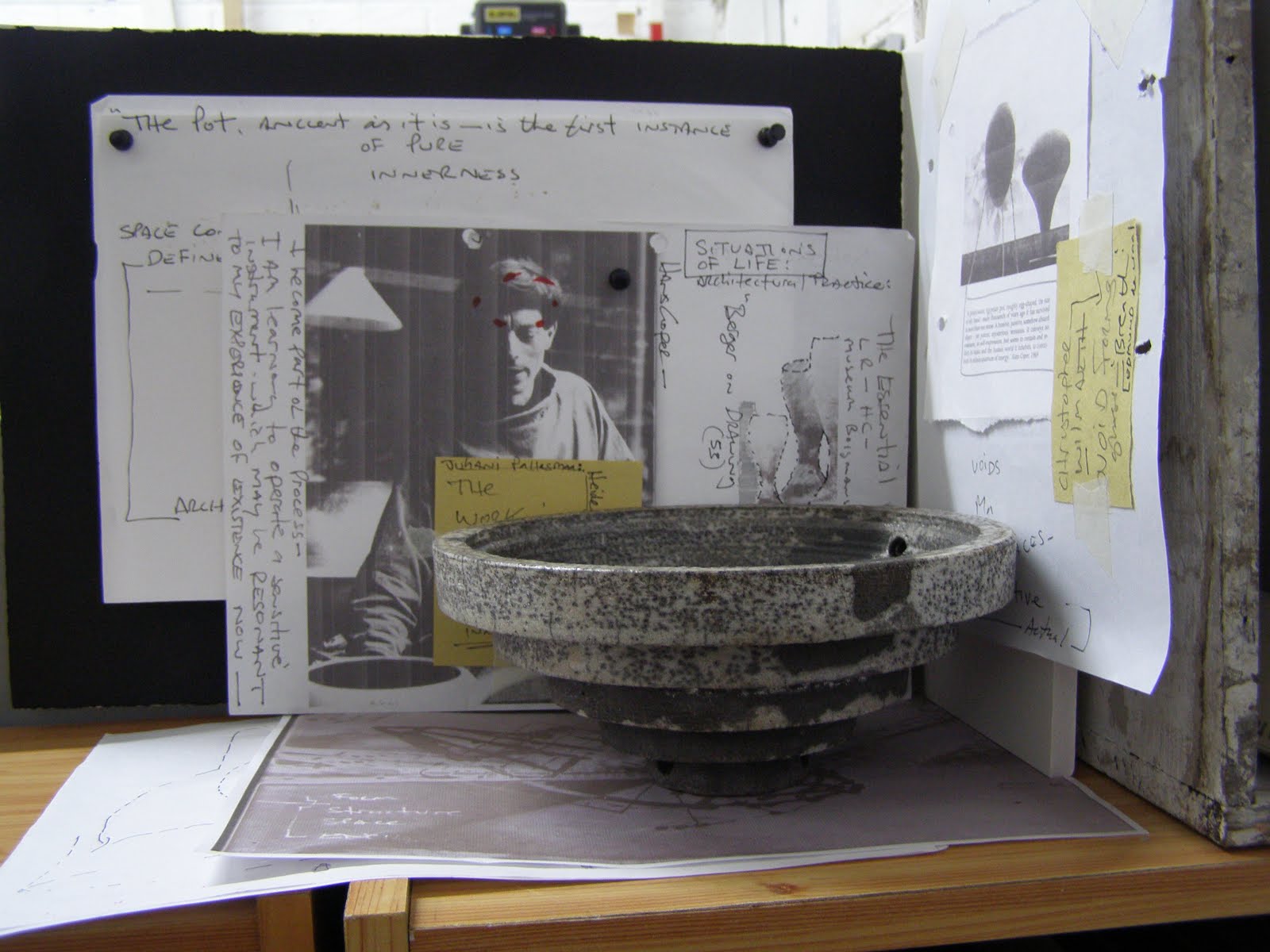
    Ceramic Practice as a form of research engaged in a process/ecology of inquiry, an exploration of ideas predicated on and exploiting the characteristics of clay

    The transformation of the material is a central concern and semiotic significance unfolds with making

    Seeking a symbiotic relationship between idea and object

    Materials are substances in becoming

    Karen Barad

    Towards an Ecology of Materials

    Tim Ingold 2012

    From the ‘objectness’ of things to the material flows and formative processes wherein they come into being. It means to think of making as a process of growth or ontogenesis


    Materials-Centered Perspective

    Making, almost defies precise definition

    The composition and/or manipulation of materials that bring into being new or revised objects

    Tim Ingold 2010

    Cultures of thrift and scavenging, maintenance and repair

    Making encompasses the ingenuity of fluid, locally situated and adapted technologies

    Materials carry on overtaking the formal destinations that, at one time or another, have been assigned to them

    Sensibilities and dispositions that are centred on a deep and considered relationship with materials

    The Craftsman, Richard Sennett 2008

    Crafting, often reconnects mind and body in the sites and processes of production, thereby potentially reconstituting labour processes in ways that ascribe agency to workers

    Makers finding ways to resist norms of gender and neoliberal entrepreneurial subjectivities, finding ways and spaces for ethical practice to predominate

    Contemporary conceptual ceramics operates at the permeable boundary between art and craft, partaking of aspects of both, and ultimately demonstrating (or performing) that permeability

    The emergence of the museum as proactive laboratory of social evolution

    Extradisciplinary Investigations/Operative Principle

    At work here is a new tropism and a new sort of reflexivity, involving artists as well as theorists and activists in a passage beyond the limits traditionally assigned to their practice

    Microtopias, small contained sites of functioning democracy

    Tropism conveys the desire or need to turn towards something else, towards an exterior field or discipline

    The New Institutional Practice

    Projective Enterprises (should unsettle, activate, and raise questions)

    The exhibitions to emerge through new institutionalism are considered as points of exchange and collision, made through intersections of social, economic and political relations, it follows that the predominant forms of artistic practice included are the social, the spatial, the interdisciplinary

    So our understanding of site has shifted from a fixed , physical location to somewhere or something constituted through social-economic-cultural and political processes

    Site-Specific Art and Locational Identity

    Miwon Kwon 2002

    Collaborations and its Discontents

    Claire Bishop 2006

    The motivating factors for participatory projects is its critiquing of the essentialising of site and community in context-specific activities/exhibitions

    A complex environment, awash in affect and subjectivity

    When subjective and analytic processes mesh together to form a new productive and political ‘contexts’ of communicational labour

    New curatorial initiatives must unpack the terminologies we use to distinguish one project from another

    A playful psychogeographical situation, that resists the representative, illustrative and thematic narratives

    Unsettling-Complicit

    Provocative-Strategic

    Interventionist-Collaborative

    Perforative Curating/Prescribed Participation

    Creating new/more coded patterns of behavior/conventions/role play for visitor’s

    New Institionalism and the Exhibition As Situation/Social Experiment

    Claire Doherty 2006

    Participation

    In which people constitute the central artistic medium and material

    In the manner of theatre and performance

    Participatory art is both a social activity and a symbolic one, as it is both embedded in the world and at one, remove from it

    The artist is conceived less as an individual producer of discrete objects, than as a collaborator and producer of situations

    The contemporary artwork is finite, portable, commodifiable product, and is reconceived as an ongoing or long term project with an unclear beginning and end

    Artists are more interested in the creative rewards of participation as a politicised working process, than the relational aesthetic which renders discursive and dialogic projects more amenable to museums and galleries

    Artificial Hells (exposing the political and aesthetic limitations in the work)

    Participatory Art and the Politics of Spectatorship

    Claire Bishop 2011

    Site-Specificity/Spatial Practice

    The distinguishing characteristic of today’s site-oriented art is the way in which both the art work’s relationship to the actuality of a location (as site) and the social conditions of the institutional frame (as site) are subordinated to a discursively determined site that is delineated as a field of knowledge, intellectual exchange or cultural debate

    Miwon Kwon 1997

    Whilst temporary exhibitions can expand the scope of medium-specific discourse, they can also impose alternative, but equally restrictive frames

    Participation, creating a bridge between socially engaged practice and the permanent collection

    Expressing itself expressing

    Creating a conceptual and linguistic dexterity between absolutes, certainties, definitions

    Dissolving the intellectual relevance, with its symbiotic relationship with utility to create ‘vessels’ beyond art and artifact

    The strategy of making artworks as response

    The Ceramic Object, by means of preservation and display becomes a vehicle/vessel for a social and historical narrative/entanglement/engagement

    Making vessels, beyond the examining and intellectually impoverished questions

    A vessel is identified as such by its physical disposition, giving shape to the contents and clarifying what is inside and what is outside

    Few boundaries are impenetrable

    They are rather, semi-permeable membranes providing housing while allowing selective commerce

    Like the vessel, the house shapes and nurtures the life contained inside

    The Factory I build in the Tate is a place to discuss the transactions and transformations of Labour that Create Knowledge and Community

    In the Factory we will examine skills and how we form Exchanges at Work , with ourselves and with others

    Clare Twomey, Lead artist at Tate Exchange 2017

    Post Studio Ceramics

    Interfaces between Making-Makers-Museums

    Exploring object engagement beyond the known historical models of clay practice

    ‘Generate’ Historical Material and Spatial Relations as they interacted with the work, and reflected on the role of the Museum/Hospital

    Clare Twomey

    Ceramics In The Environment

    An International Review

    Janet Mansfield 2005

    With Fire, Richard Hirsch

    A Life Between Chance and Design (invites the unknown)

    Scott Meyer 2012

    Hirsch takes us to the heart of the interface between ageless earth and the spare evidence of the rhythm of human utility

    Raku as an Ideology

    Breath-Energy-Immanence

    Raku, A Review of Contemporary Work

    Tim Andrews 1994

    The Poetry of The Vessel

    A calm invitation to thought and imagination

    Chris Tyler

    The vessel (making, thinking, subject) as both a historically grounded form, and a vehicle to examine abstract aspects of the physical body and the natural world

    Arte Povera/Germano Celant, an aesthetic-philosophical movement

    An eclectic synthesis of knowledge fields, that emerges into a total space where disparate categories can meet; a art that asks only for the essential information, that refuses the dialogue with the social and cultural system, and aspires to present itself as something sudden and unforeseen


    Social apparatuses and agents that explore the possibilities of space. Other Worlds : Insistent moments of mark making/subjectivity.
    Source: DSC_7317 Reading : Slow Philosophy/Ecology of Material Thinking

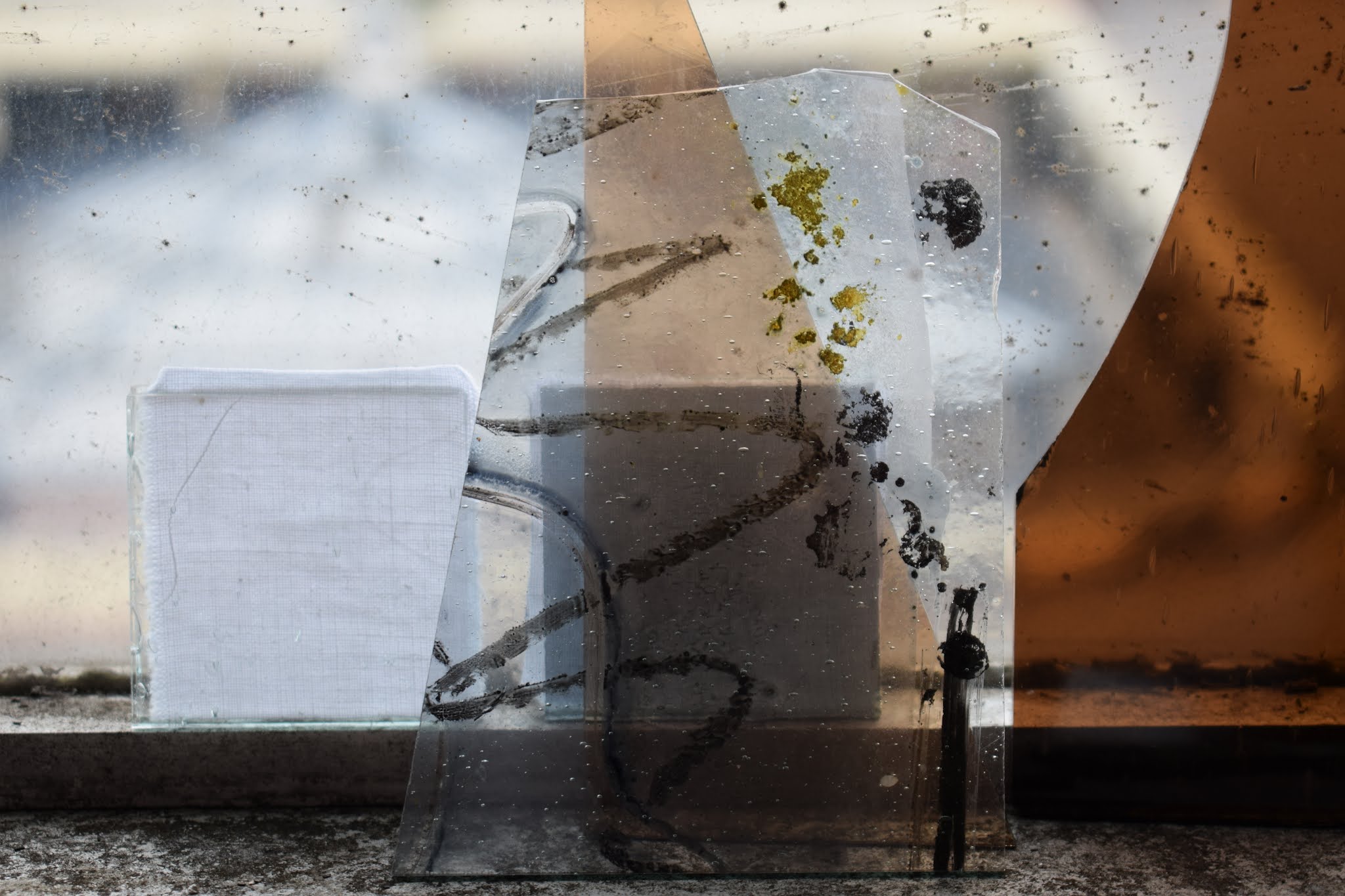
  • DSC_6111 Spatial Drawing/Speculative Site

     BOUNDARIES AND JUNCTION POINTS

    Lefebvre, The Production of Space.

    Lefebvre in his chapter on Spatial Architectonics makes reference to the relationships established by boundaries and the relationship between boundaries and named places. These relationships promote significant and specific conditions or features to a space. This in turn results in various kinds of space. Lefebvre states that “every social space, then, once duly demarcated and oriented, implies a superimposition of certain relations upon networks of named places.”1

    It is this superimposition of space that can within it demarcate other thresholds of experiences, within an existing demarcated space that interests me.

    The act of “blocking in “ the dimensions of another space onto the floor of another create a temporal junction between a host space and a site within this host, a guest. This sets-up the notion of a temporal double occupancy held by the demarcation of a boundary and a site of proposal. This basic and temporal site marking could be said to have affinity towards some sort of anthropological marking, a territory. (Lefebvre defines anthropological marking as being at the stage when demarcation and orientation begin to create place and its social reality in archaic cultures)2. This activity also has associations with nomadic and agricultural-pastoral societies as they use paths and routes as spatio- temporal markers or determinants.

    Lefebvre acknowledges that geographical space created through the body, through routes which were inscribed by means of simple linear markings. These first markings, paths and tracks drawn into the landscape would become the pores through “which without colliding would produce the establishment of places (localities made special for one reason or another).”3Within my practice drawing is used to form sites which contain visual information, evidence of temporal activities and traces of actual objects. These territories within other territories create fields from with boundaries form material relations, differences. My drawings are inside the temporality of site I have instigated and yet they propose a territory and a surface of light years which could accommodate the temporality of terrestrial space.

    Interestingly Lefebvre comments “there is no stage at which ’’man” does not demarcate, beacon or sign his space, leaving traces that are both symbolic and practical.”4

    1 Lefebvre, The Production of Space, (London: Blackwell, 1991) page 193.

    2 Ibid.,page 192.

    3 Ibid.,page 192.

    4 Ibid.,page 192.


    Social apparatuses and agents that explore the possibilities of space. Other Worlds : Insistent moments of mark making/subjectivity.
    Source: DSC_6111 Spatial Drawing/Speculative Site

  • Paintings, spatial field grounds, layered paint and paper with photographic inclusions.

     Outpost 080722

    Paintings, spatial field grounds, layered paint and paper with photographic inclusions.

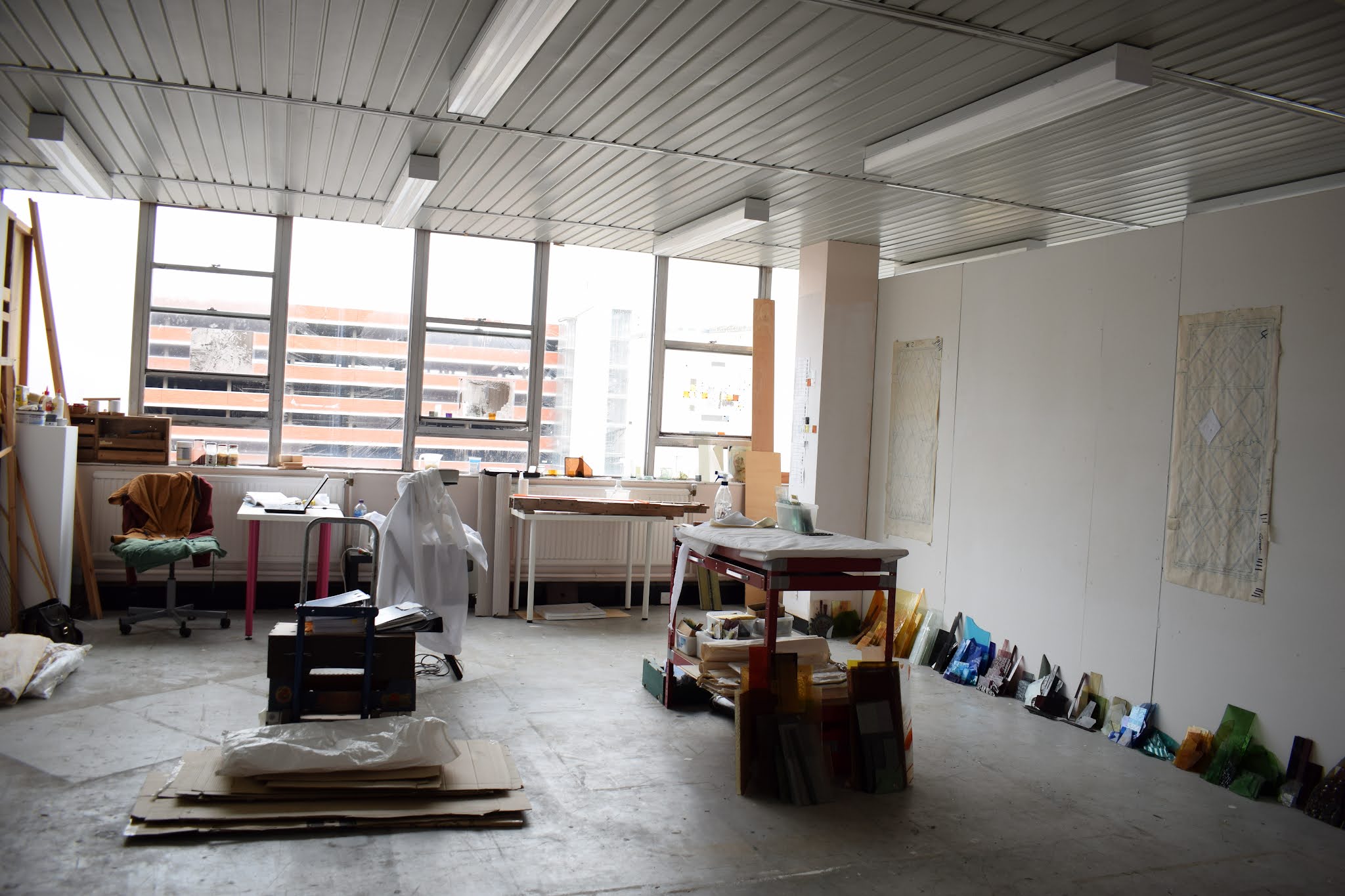
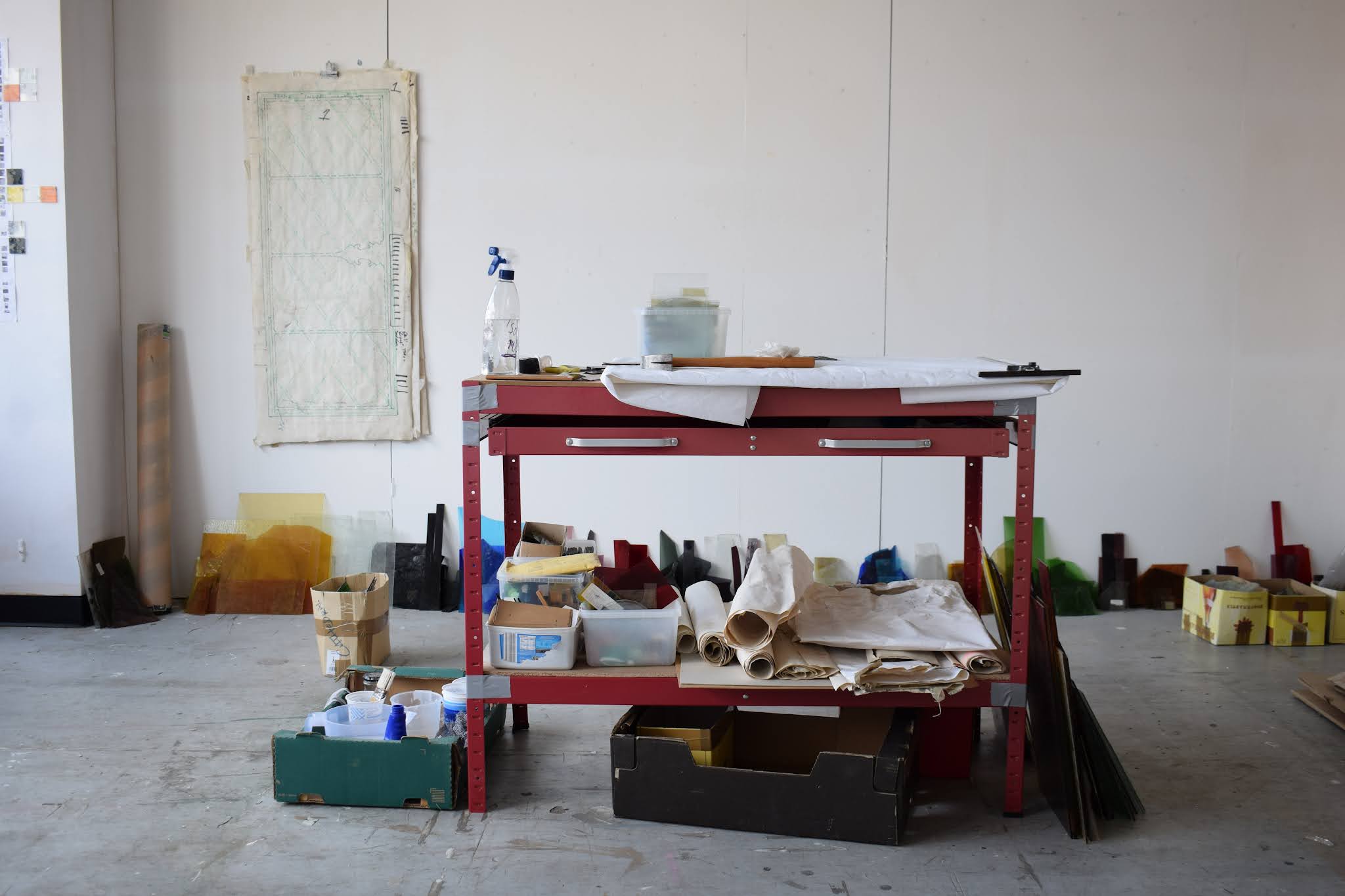
    Output of Artists’ Studios

    Vital space for production, presentation, connection and exchange.

    The cyanotype  process in contemporary art practice.

    Cyanotype Collages, Karl Blossfeldt

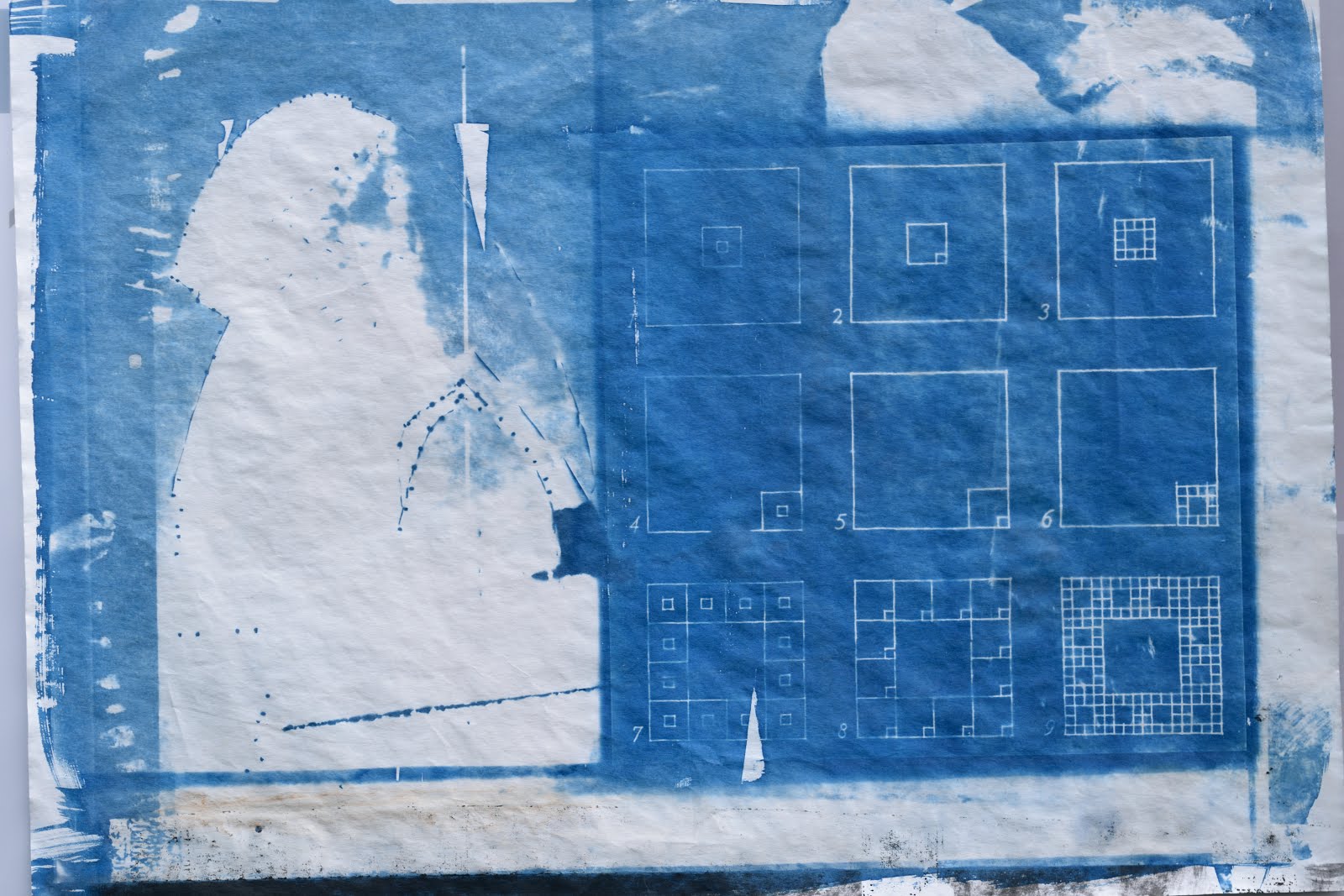
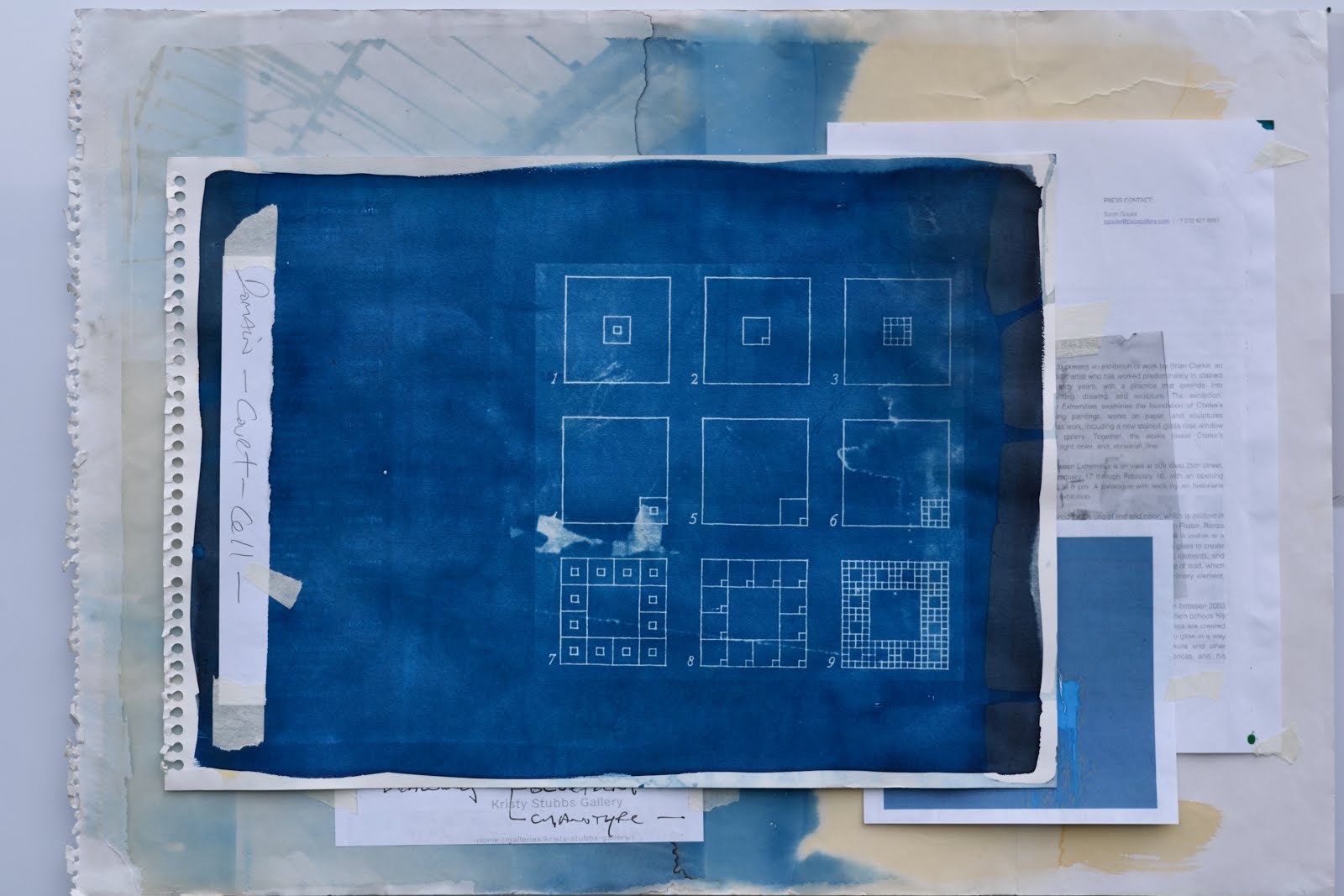
    Cyanotype canvas, yellow ochre, sun mappings, spatial space/time forms, apparatuses and diagrams.

    Harleston drawing/research, access to archive material.

    Parallax, Steven Holl.

    Enmeshed Experience

    A complex interlocking of time, light, material, and detail creates the cinematic whole wherein we can no longer distinguish individual elements.

    Filmmaker Andrey Tarkovsky speaks of cinematic enmeshing in his description of a scene from Akira Kurosawa’s The Seven Samurai. A medieval Japanese village. A fight is going on between some horsemen and the samurai who are on foot. It is pouring rain; there is mud everywhere. The samurai wears an ancient Japanese garment, which leaves more of the leg bare, and their arms are plastered in mud. And, when one samurai falls down dead, we see the rain washing away the mud and his leg becoming white, as white as marble.

    Enric Ruiz-Geli. Cloud 9 Architects.

    Building As Prototype.

    In the case of a practice like Cloud 9, driven as it is by inventing, making and testing via the evolving prototype, its buildings are never just a pavilion, a case study, a prototype or even a ‘really nice sculpture’: they are all of them.

    Formwork/Prefabricated Coffers/Interior Surface/Exterior Substrate.

    An architectural practice driven by the the act of making in which the prototype has a fundamental role in testing performance and performativity for the user.

    On-site prototypes, not modelling or mock-ups that just represent design issues, but prototypes that develop with fabricators and builders to become the ‘final prototype’ the completed building.

    Case Study House/Pavilion 3

    Research Invention/Patenting.

    A prototype is something between a patent and the user.

    Realizing The Physical Prototype

    Prototyping Performance

    Prototyping Through Subtraction

    Virtual Prototyping

    Distinguishing between models and prototypes by attributing to each of them different communication tasks.

    Models are a means of visually communicating concepts among the design team, whereas prototypes are for communicating performance as well as helping to envisage and test new ideas.

    Mock-ups keep the designer from having a meaningful dialogue with the process of designing-through-making.

    Architectural students are beginning to think of new ways of working, including much greater integration between off-site fabrication and on-site assembly.


    Social apparatuses and agents that explore the possibilities of space. Other Worlds : Insistent moments of mark making/subjectivity.
    Source: Paintings, spatial field grounds, layered paint and paper with photographic inclusions.

  • Beuys Brown and Klein Blue : Colour as substance/the transubstantiation of matter.

     Outpost 150722

    Cyanotype Durational Sun Print.

    Charcoal and Clay trace drawing.

    Beuys Brown and Klein Blue

    Magdalena Broska.

    The Transubstantiation of Matter.

    Beuys’s materials are not to be understood literally, by their outward appearance.

    Beuys emphasises that the brown floor paint is not just a colour but also a plastic substance.

    I have chosen brown so as to present a plastic substance and thus express something that relates to every form of substantiality, just as I am trying to do with this superimposed red. I simply want to bridge the gap between a discussion about colour and the problem of substantiality.

    Joseph Beuys, Drawings. 1979

    For Beuys the real and the concretely employed material is only seemingly real, fully in a philosophical sense: a phenomenon from some essential being that is hidden behind appearances, and that is to be elicited by a kind of counter- image process.

    Conceptions of Counter Images/Transformation.

    The Homoeopathic Method/Like cures like.

    Beuys’s brown and Klein’s blue form a pair of opposites: according to the hermetic-alchemical world view, such opposites contain the arcane power of polar dissimilarity that seeks to be augmented and joined together, a polar way of thinking that seeks resolution.

    With his brown oil paint, Joseph Beuys assumed a counter-position to Yves Klein and his blue, which stands for immaterial manifestations, the sky, the sea, and the light of the south, and which conveys space and wide vistas.

    In terms of consistency, Beuys’s brown is purely coating paint, as commonly used for rust proofing.

    Its visual appearance links it with earth, heaviness, darkness, and also blood.


    Social apparatuses and agents that explore the possibilities of space. Other Worlds : Insistent moments of mark making/subjectivity.
    Source: Beuys Brown and Klein Blue : Colour as substance/the transubstantiation of matter.

  • Intertwined Media/Modalities/Architectures : Idea, Space, Materials

    Idea is, the invisible of this world, which inhabits this world, sustains it, and renders it visible

    Merleau Ponty

    For Steven Holl, the intertwining of idea and phenomena occurs with the realization of a building as the means for the materialization of the idea force

    A methodology of connecting phenomenal properties with a conceptual strategy

    Responds to every project by re-evaluating the physical, cultural, historical references of the site-time or program, through which he achieves a ‘limited concept’ that establishes an order, a field of inquiry, a limited principle for each architectural design process

    As the body-subject is perceptually situated into the world by inhabiting space and time, a building is rooted into a specific site and situated by inhabiting, ‘the visible and invisible of the site and situation’

    By locating the body, ‘at the very essence of our being and our spatial perception’ Holl redefines architectural space as perceived space with reference to the perceiving-body-subject

    Steven Holl uses ‘parallax’ as an experiential tool as well as a design tool in which architectural space is redefined with reference to the moving body’s constantly changing spatial perceptions

    Merleau Ponty’s main thesis that phenomenology has potential to put the essences back into existence by re-achieving a direct and primitive contact with the world through the realm of perceptual experiences drives Steven Holl to search for vitalizing these essences through the experiences of architectural forms, spaces, materials, light and colour

    Intellectual and Phenomenal

    Philosophical Inquiry

    Interplays in his thinking on and making of architecture

    Utility/Interpretation

    Bachelard’s Poetics of Space, explores the essence of being as it resides in the perceptual situadedness of the body-subject into the world

    Perception fundamentally ‘acts’ enabling human beings to inhabit space and time

    When the body-subject gains access into the world through perception, the world becomes, what we perceive

    Architecture

    That which begins as an interaction with the formation of an abstract idea, the formation of a concept out of this idea and its transformation into a material, a spatial and formal reality on a physical site

    Creating the experiential power of architecture

    Intertwining, idea-space-material

    Anchoring, physics and metaphysics of site

    A path of passage in architecture that leads from the abstract to the concrete, the unformed to the formed. An architectural journey in which the idea-force, phenomenal properties and the site force interact with each other


    Social apparatuses and agents that explore the possibilities of space. Other Worlds : Insistent moments of mark making/subjectivity.

    Source: Intertwined Media/Modalities/Architectures : Idea, Space, Materials

  • DSC_6111 Spatial Drawing/Speculative Site

     BOUNDARIES AND JUNCTION POINTS

    Lefebvre, The Production of Space.

    Lefebvre in his chapter on Spatial Architectonics makes reference to the relationships established by boundaries and the relationship between boundaries and named places. These relationships promote significant and specific conditions or features to a space. This in turn results in various kinds of space. Lefebvre states that “every social space, then, once duly demarcated and oriented, implies a superimposition of certain relations upon networks of named places.”1

    It is this superimposition of space that can within it demarcate other thresholds of experiences, within an existing demarcated space that interests me.

    The act of “blocking in “ the dimensions of another space onto the floor of another create a temporal junction between a host space and a site within this host, a guest. This sets-up the notion of a temporal double occupancy held by the demarcation of a boundary and a site of proposal. This basic and temporal site marking could be said to have affinity towards some sort of anthropological marking, a territory. (Lefebvre defines anthropological marking as being at the stage when demarcation and orientation begin to create place and its social reality in archaic cultures)2. This activity also has associations with nomadic and agricultural-pastoral societies as they use paths and routes as spatio- temporal markers or determinants.

    Lefebvre acknowledges that geographical space created through the body, through routes which were inscribed by means of simple linear markings. These first markings, paths and tracks drawn into the landscape would become the pores through “which without colliding would produce the establishment of places (localities made special for one reason or another).”3Within my practice drawing is used to form sites which contain visual information, evidence of temporal activities and traces of actual objects. These territories within other territories create fields from with boundaries form material relations, differences. My drawings are inside the temporality of site I have instigated and yet they propose a territory and a surface of light years which could accommodate the temporality of terrestrial space.

    Interestingly Lefebvre comments “there is no stage at which ’’man” does not demarcate, beacon or sign his space, leaving traces that are both symbolic and practical.”4

    1 Lefebvre, The Production of Space, (London: Blackwell, 1991) page 193.

    2 Ibid.,page 192.

    3 Ibid.,page 192.

    4 Ibid.,page 192.


    Social apparatuses and agents that explore the possibilities of space. Other Worlds : Insistent moments of mark making/subjectivity.

    Source: DSC_6111 Spatial Drawing/Speculative Site

  • Paintings, spatial field grounds, layered paint and paper with photographic inclusions.

     Outpost 080722

    Paintings, spatial field grounds, layered paint and paper with photographic inclusions.

    Output of Artists’ Studios

    Vital space for production, presentation, connection and exchange.

    The cyanotype  process in contemporary art practice.

    Cyanotype Collages, Karl Blossfeldt

    Cyanotype canvas, yellow ochre, sun mappings, spatial space/time forms, apparatuses and diagrams.

    Harleston drawing/research, access to archive material.

    Parallax, Steven Holl.

    Enmeshed Experience

    A complex interlocking of time, light, material, and detail creates the cinematic whole wherein we can no longer distinguish individual elements.

    Filmmaker Andrey Tarkovsky speaks of cinematic enmeshing in his description of a scene from Akira Kurosawa’s The Seven Samurai. A medieval Japanese village. A fight is going on between some horsemen and the samurai who are on foot. It is pouring rain; there is mud everywhere. The samurai wears an ancient Japanese garment, which leaves more of the leg bare, and their arms are plastered in mud. And, when one samurai falls down dead, we see the rain washing away the mud and his leg becoming white, as white as marble.

    Enric Ruiz-Geli. Cloud 9 Architects.

    Building As Prototype.

    In the case of a practice like Cloud 9, driven as it is by inventing, making and testing via the evolving prototype, its buildings are never just a pavilion, a case study, a prototype or even a ‘really nice sculpture’: they are all of them.

    Formwork/Prefabricated Coffers/Interior Surface/Exterior Substrate.

    An architectural practice driven by the the act of making in which the prototype has a fundamental role in testing performance and performativity for the user.

    On-site prototypes, not modelling or mock-ups that just represent design issues, but prototypes that develop with fabricators and builders to become the ‘final prototype’ the completed building.

    Case Study House/Pavilion 3

    Research Invention/Patenting.

    A prototype is something between a patent and the user.

    Realizing The Physical Prototype

    Prototyping Performance

    Prototyping Through Subtraction

    Virtual Prototyping

    Distinguishing between models and prototypes by attributing to each of them different communication tasks.

    Models are a means of visually communicating concepts among the design team, whereas prototypes are for communicating performance as well as helping to envisage and test new ideas.

    Mock-ups keep the designer from having a meaningful dialogue with the process of designing-through-making.

    Architectural students are beginning to think of new ways of working, including much greater integration between off-site fabrication and on-site assembly.


    Social apparatuses and agents that explore the possibilities of space. Other Worlds : Insistent moments of mark making/subjectivity.
    Source: Paintings, spatial field grounds, layered paint and paper with photographic inclusions.