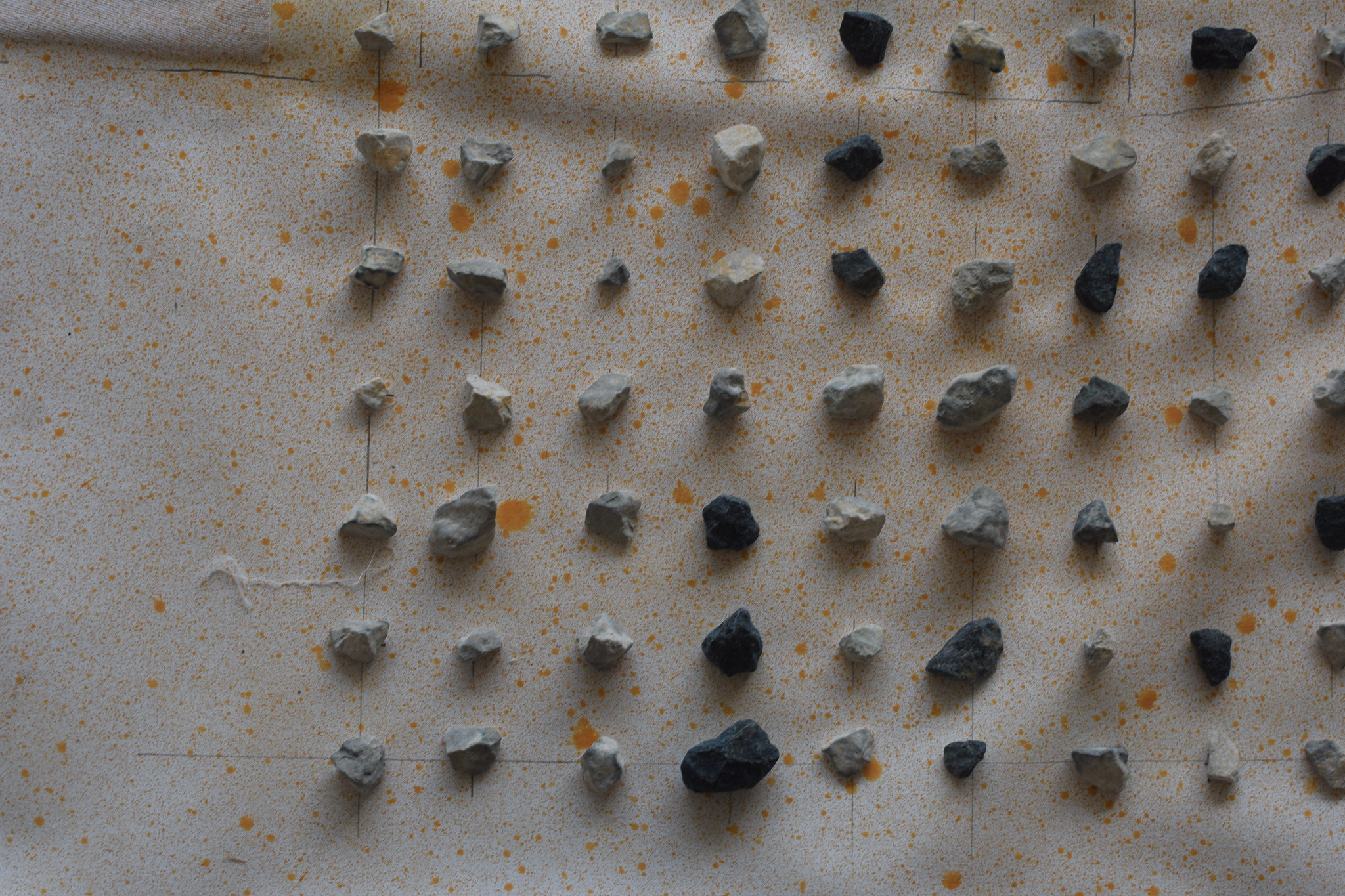
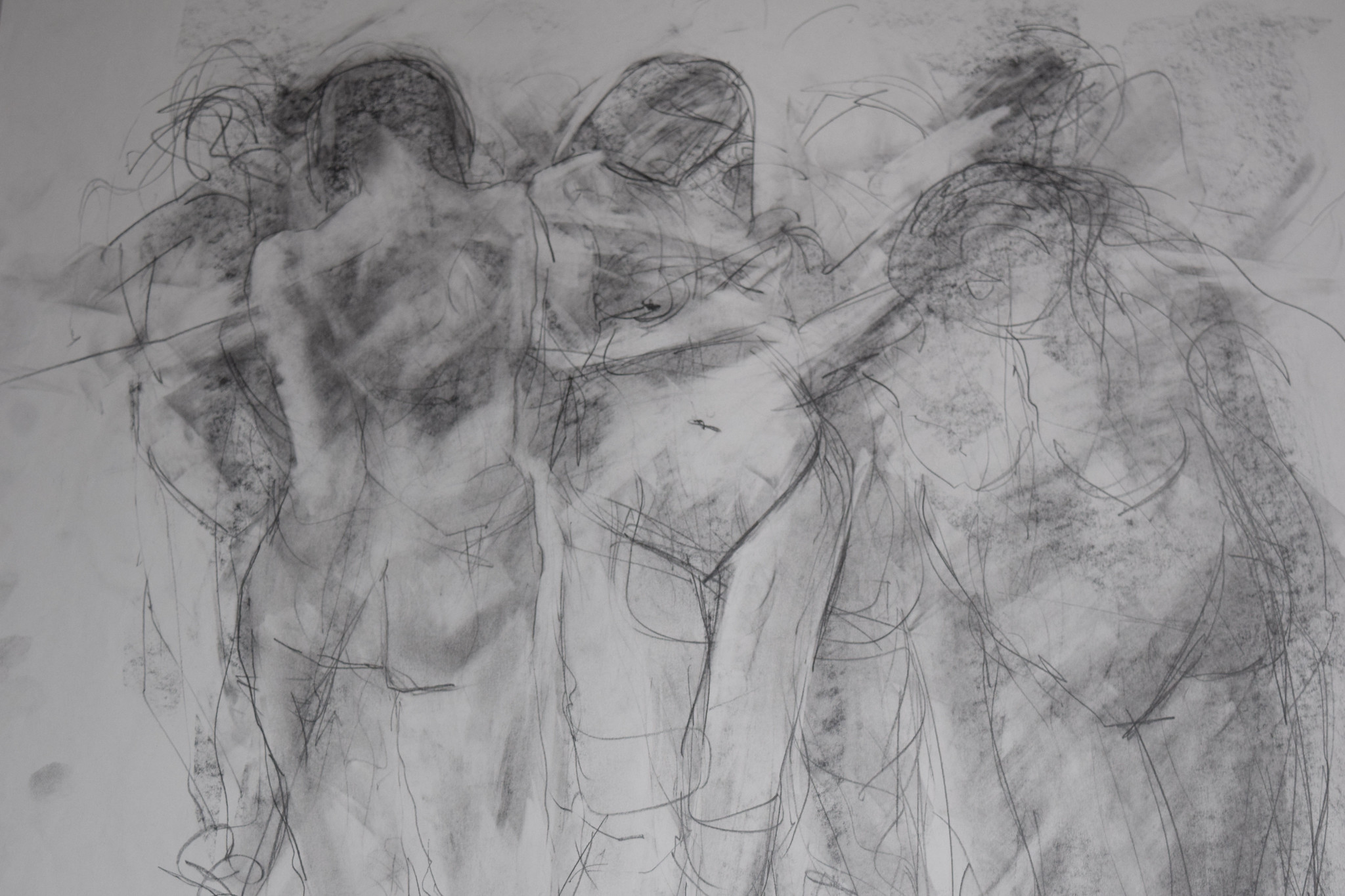
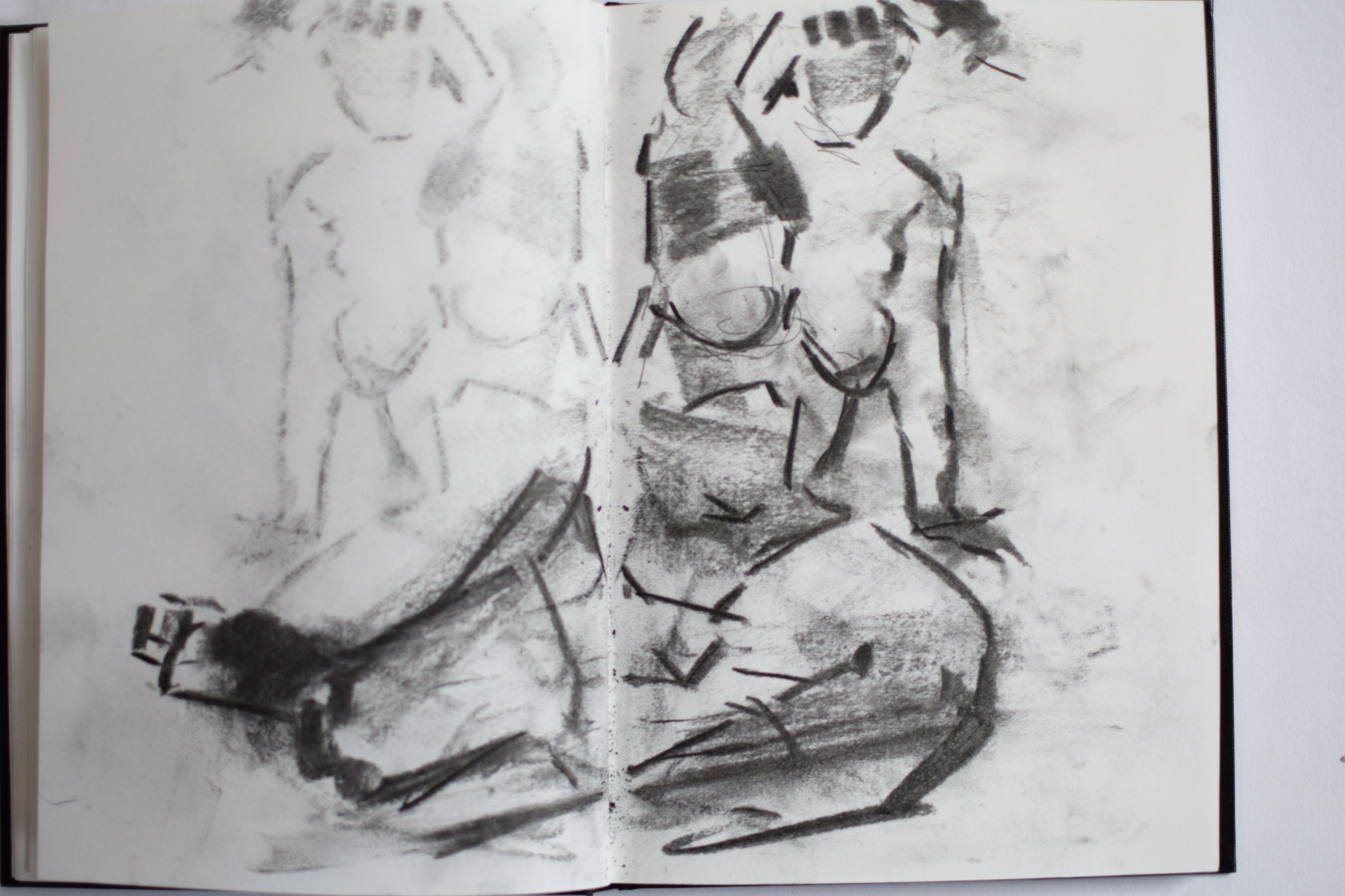
• Figure/Foreground/Afterimage : Drawing

    In drawing the moments of choice have been kept visible.
    John Berger, Berger On Drawing.

    A drawing is essentially a private work, related only to the artists own needs.
    The Drawn Line-A Recession-A Past Statement Brought Forward

    The Body of Drawing
    Drawings by Sculptors
    South Bank

    Drawing registers the transforming effects of the imagination and the memory.
    Drawings are images of flux; flux both imaginative and physical.

    Drawing is a verb.
    There is no way to make a drawing-there is only drawing.
    Richard Serra

    The Drawing Book
    Tania Kovats
    Drawing is something where you have  a really direct-immediate relationship with the material. You make a mark, and then you make another mark in relation to that mark.
    Kiki Smith
    The Body
    Rodin’s lines dont just represent carnality; they are themselves carnal, invasive, sexy. Uninterrupted by the space between the material and the body; the line made by the drawing hand stands in for other haptic things. The body is where drawing begins and where it ends.

    Looking at images does not lead us to the truth, it leads us into temptation.
    Marlene Dumas

    Sexuality and Space
    Beatrice Colomina

    Drawing and Random Interference
    From Chaos To Order And Back Again
    Sally O’Reilly

    Quantum Chance
    Janna Levin

    AFTERIMAGE : Drawing Through Process
    Cornelia H. Butler

    Rather than regarding life-drawing as an event of realism, it may be more productive to
    explore it as an assemblage of events, a field of practices, or as a cluster of performances.

    https://www.flickr.com/photos/russellmoreton/26820152469/in/photostream/


    In drawing the moments of choice have been kept visible. John Berger, Berger On Drawing. A drawing is essentially a private work, relate…

    Source: Figure/Foreground/Afterimage : Drawing

  • Opening Collages : Ambiguous Borders

    Curatorial Practices
    The Alchemy of Building
    Collages/Inclusions : Creative Ecologies

    Yvonne Buchheim
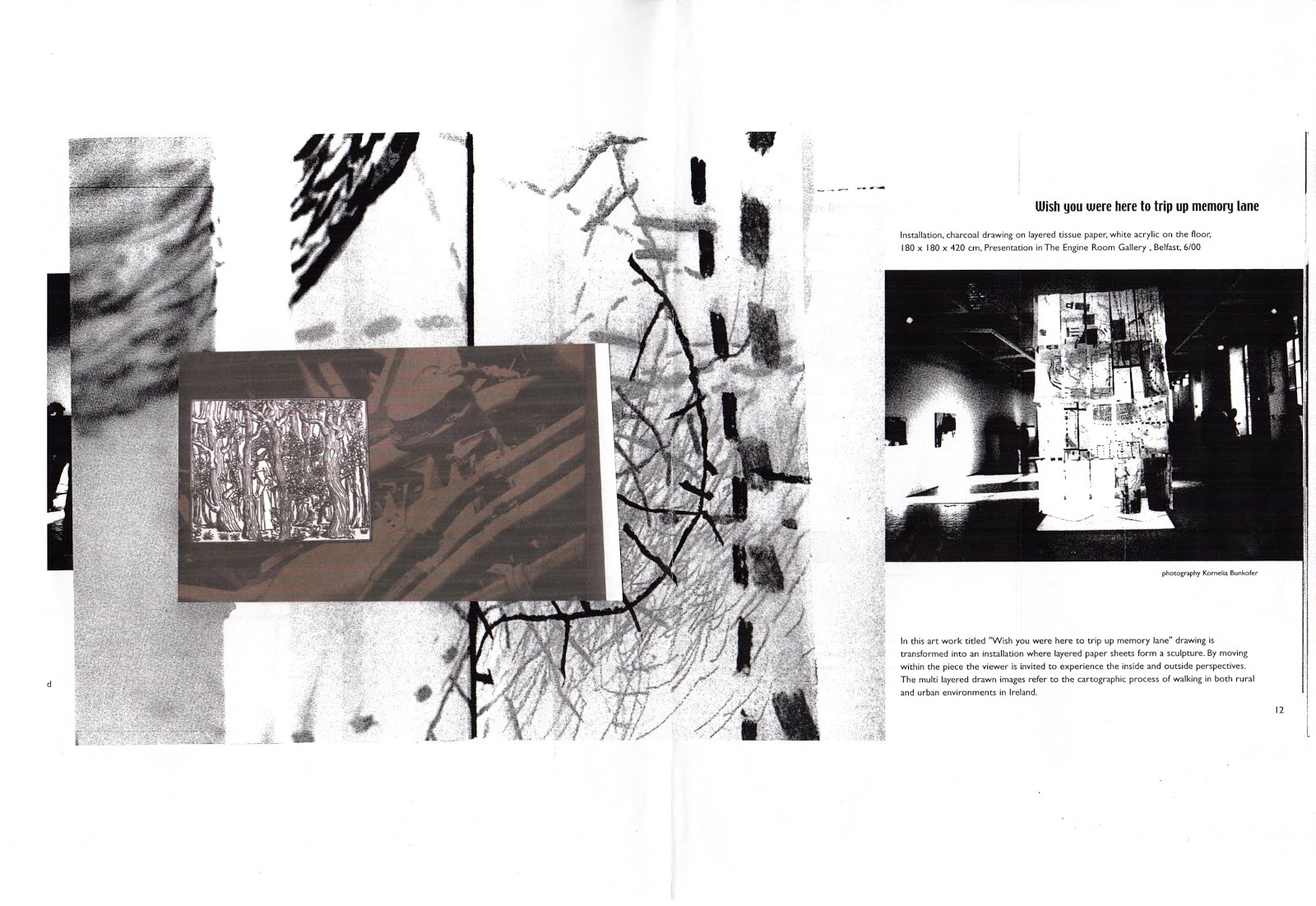
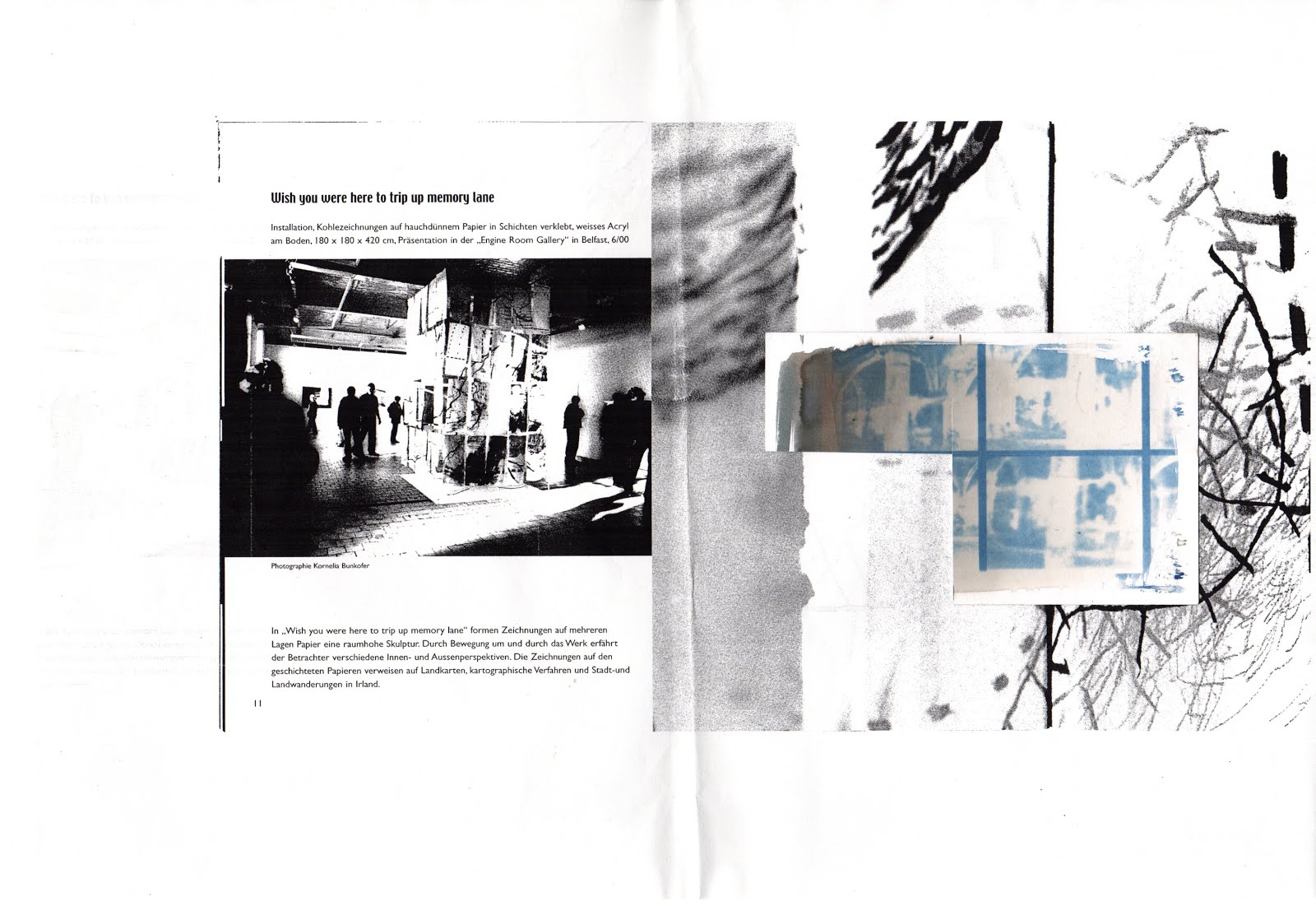
    Wish you were here to trip up memory lane. Belfast 2000
    http://www.acid.uwe.ac.uk/buchheim/belfast1.htm

    Alberto Perez-Gomez
    POLYPHILO
    or The Dark forest Revisited
    An Erotic Epiphany of Architecture

    Robert Mangold

    Sarah Purvey
    Landscape Series, Rhythm. 2012
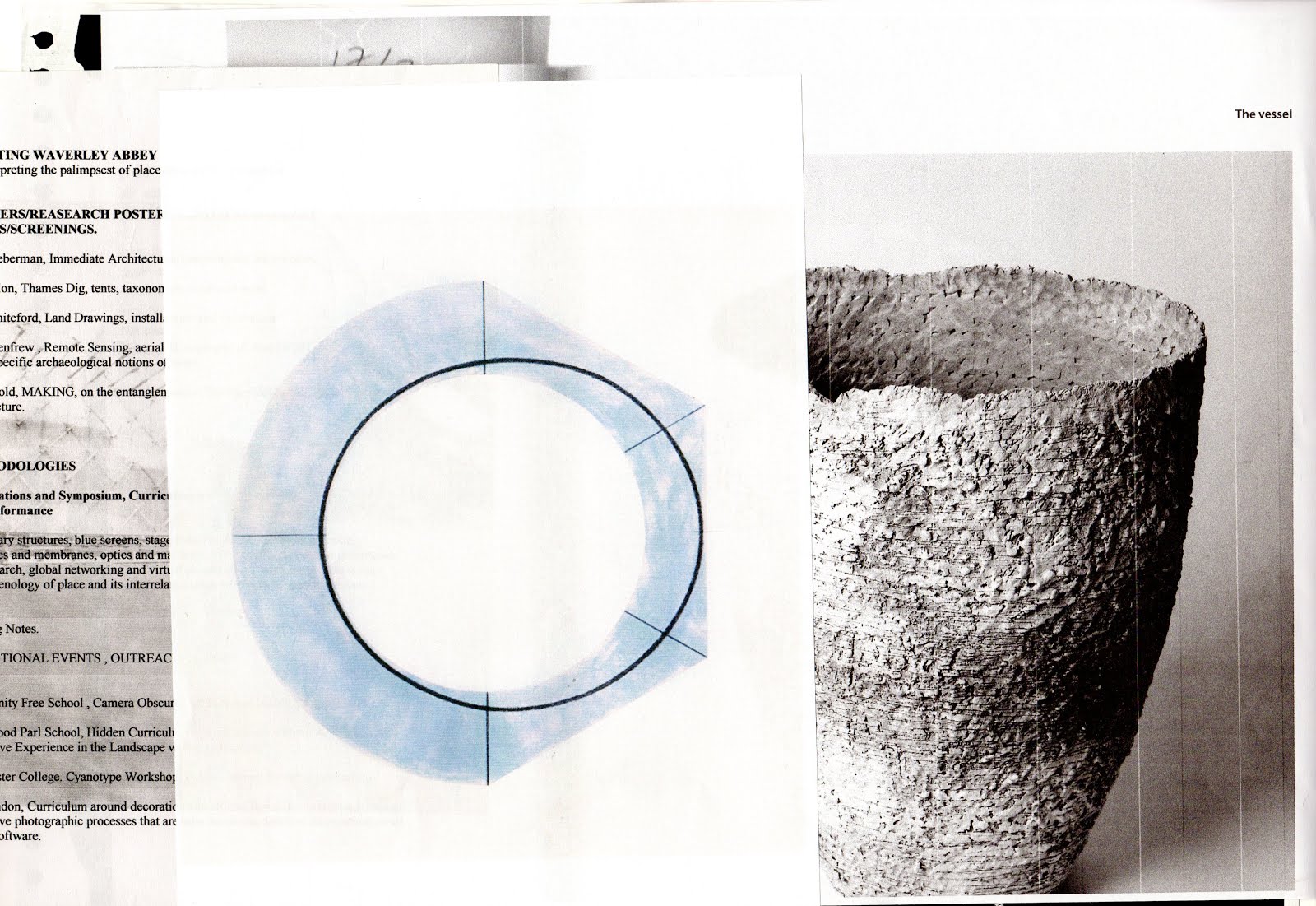
    Crank vessel with slips

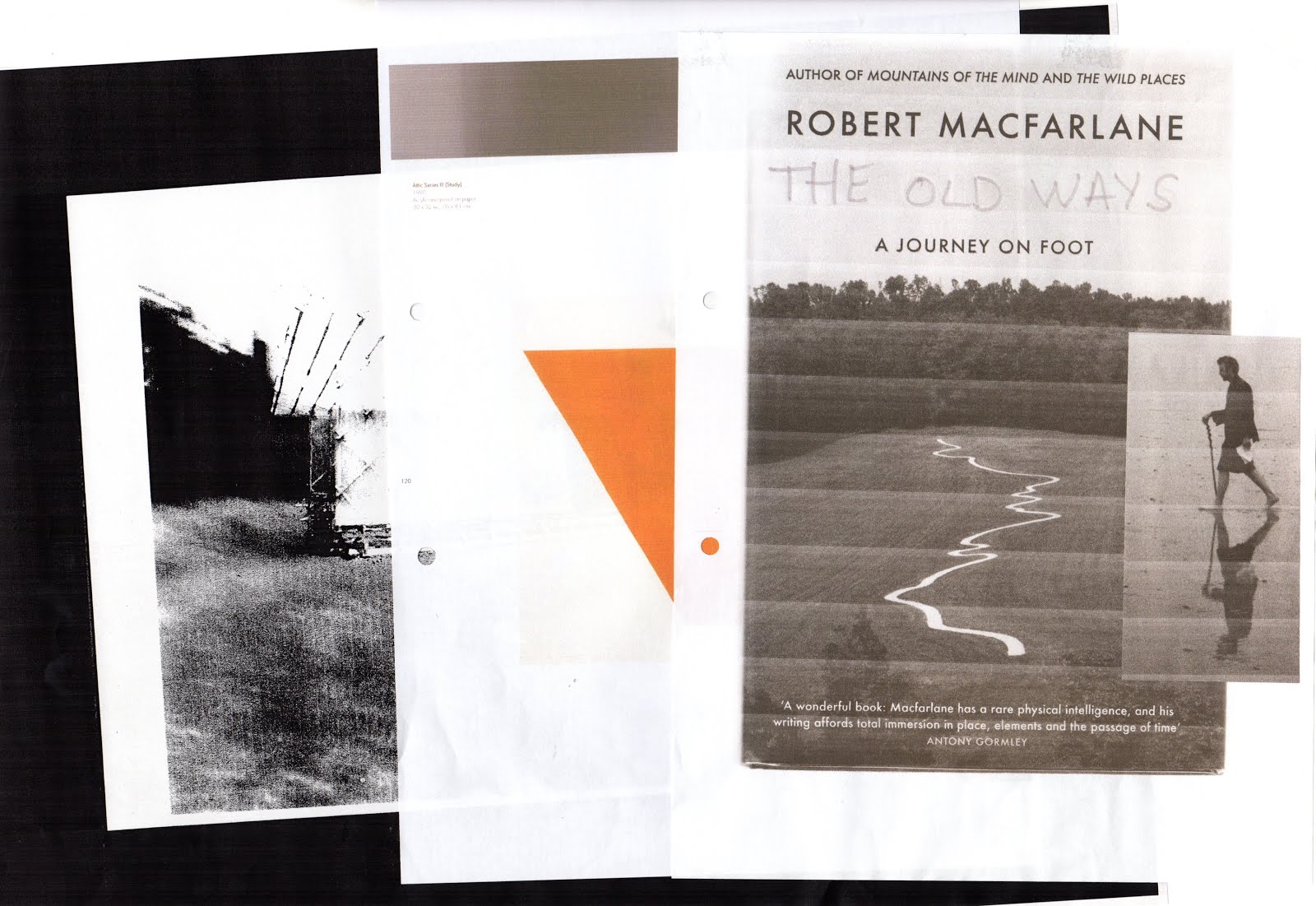
    Robert Macfarlane
    The Old Ways
    A Journey On Foot

    Kengo Kuma
    Transparent Pavilion


    Curatorial Practices The Alchemy of Building Collages/Inclusions : Creative Ecologies Yvonne Buchheim Wish you were here to trip up mem…

    Source: Opening Collages : Ambiguous Borders

  • Mapping Relationships : Contexts and Locations #3

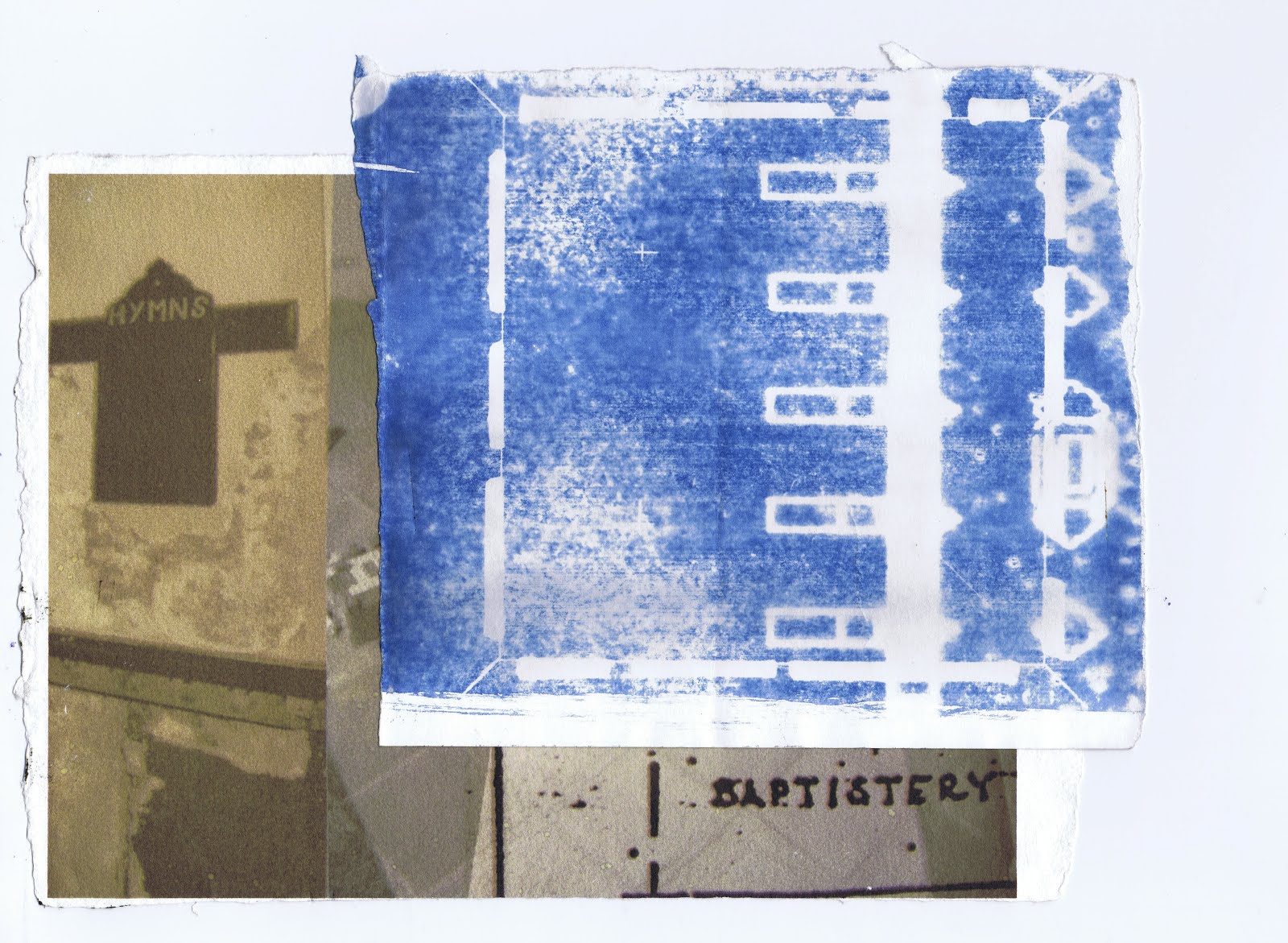
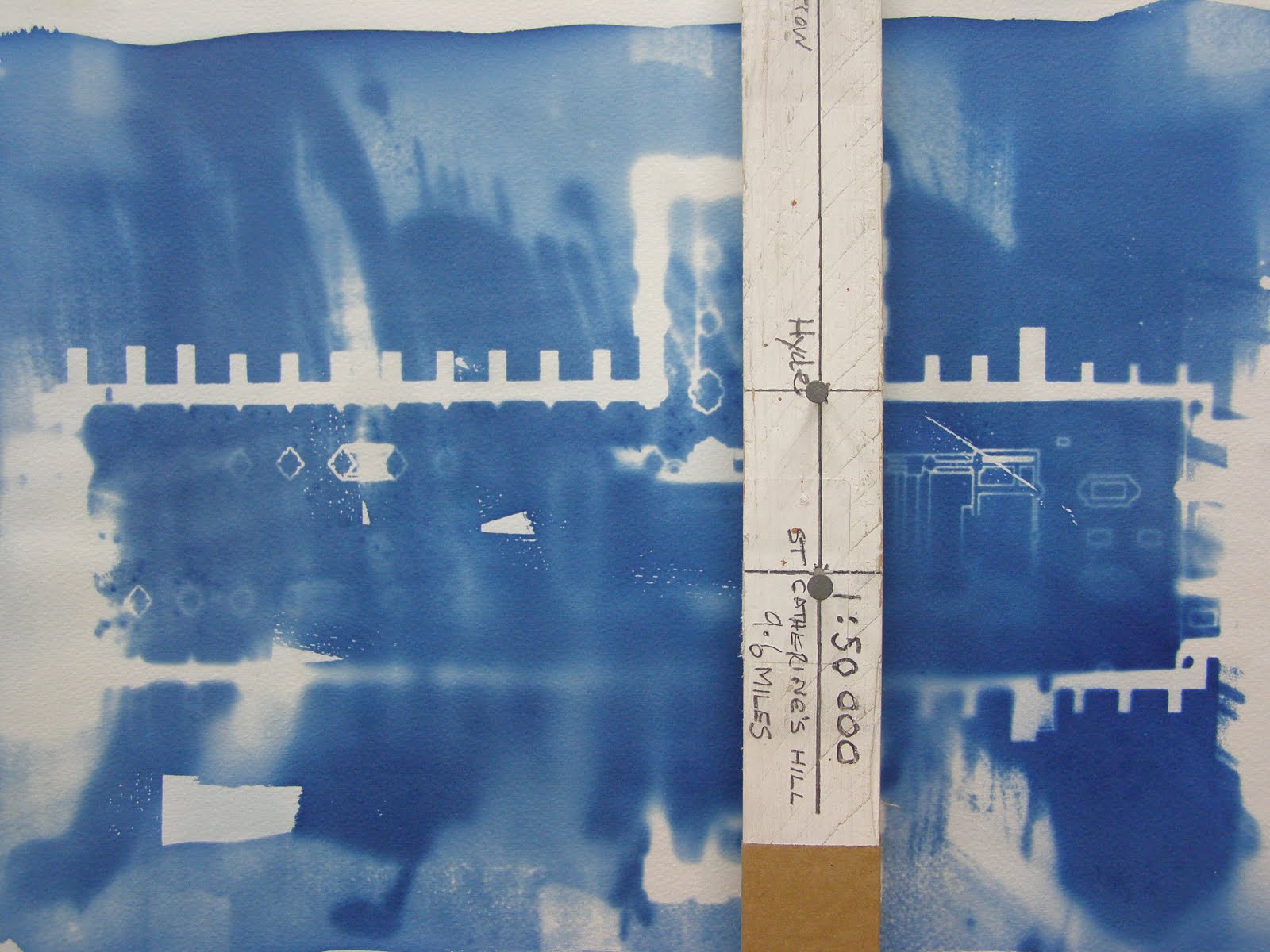
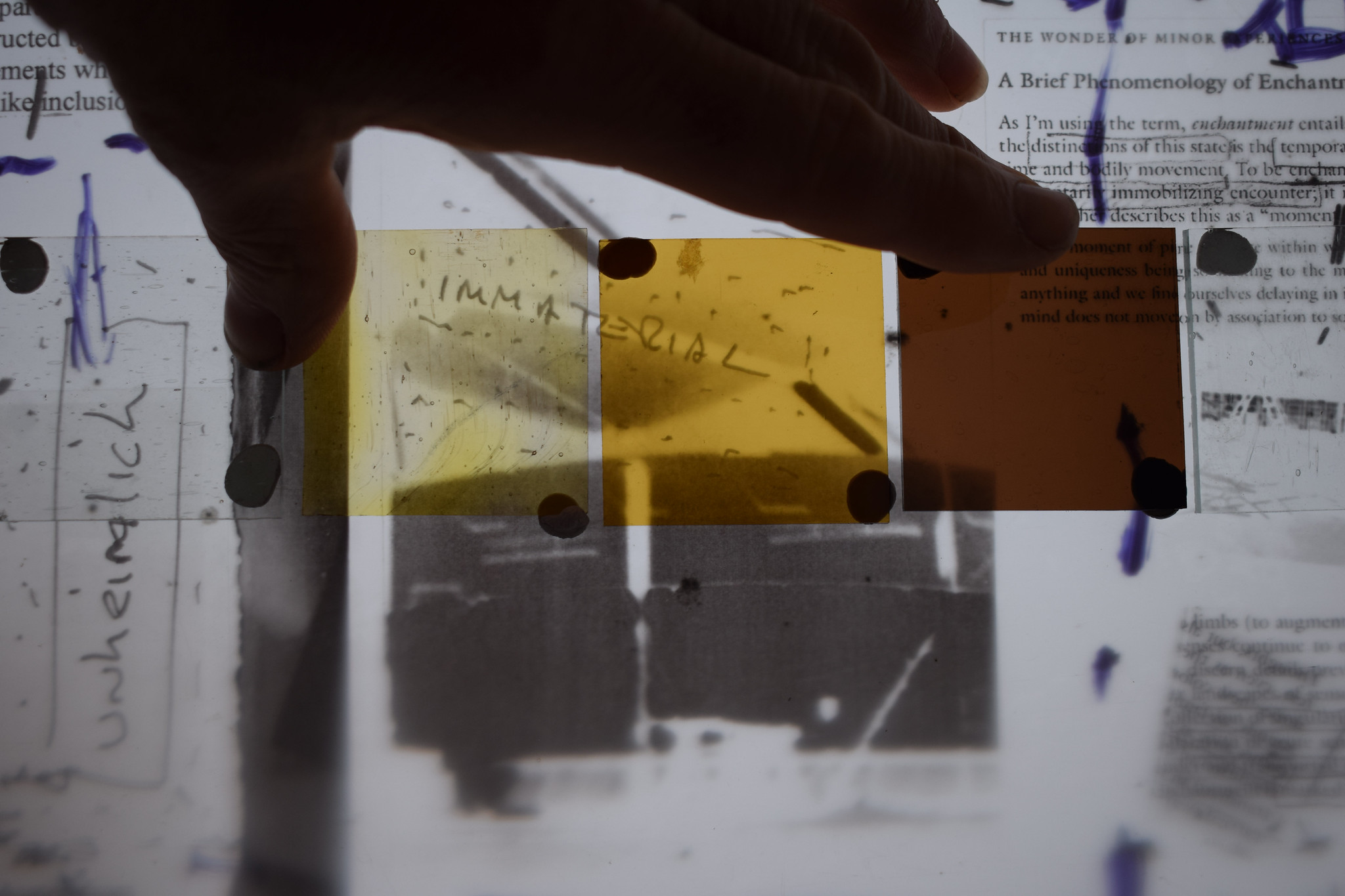
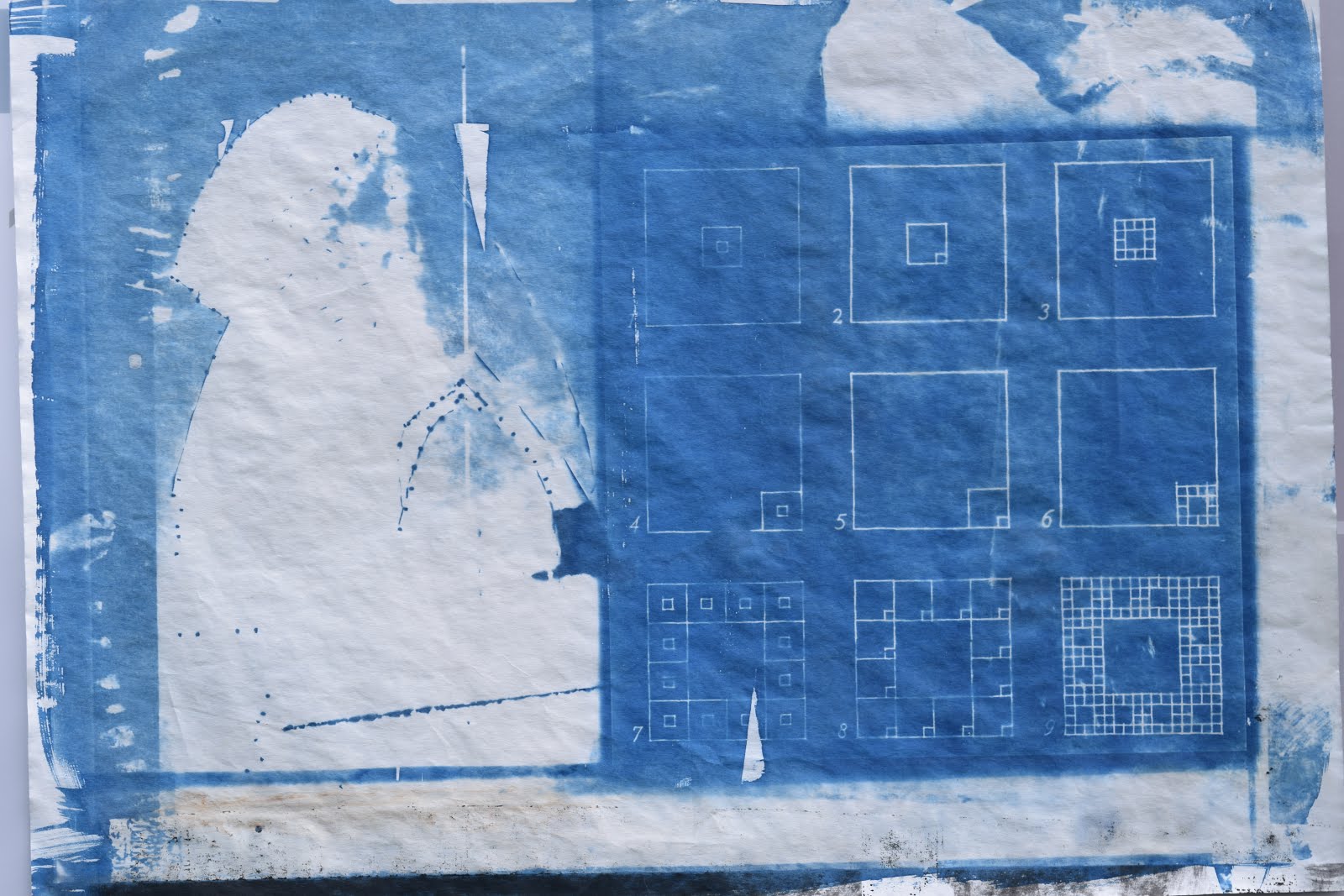
    Collage and drawing with cyanotypes, photographs, negatives and painted surfaces.

    The Laboratory , Canterbury 2009

    Tim Ingold
    MAKING 2013
    Anthropology, Archaeology, Art and Architecture.

    Practical Geometry
    The Architect and The Carpenter
    The Cathedral and The Laboratory
    Templates and Geometry
    The Return to Alchemy

    Cyanotype image from pinhole camera with sound intervention/device within the apparatus of the camera, performative material gathered from the Canterbury School of Architecture.

    UCA Spatial Practices MA under Oren Lieberman.

    DSC_0876 : Figure/Field/Research

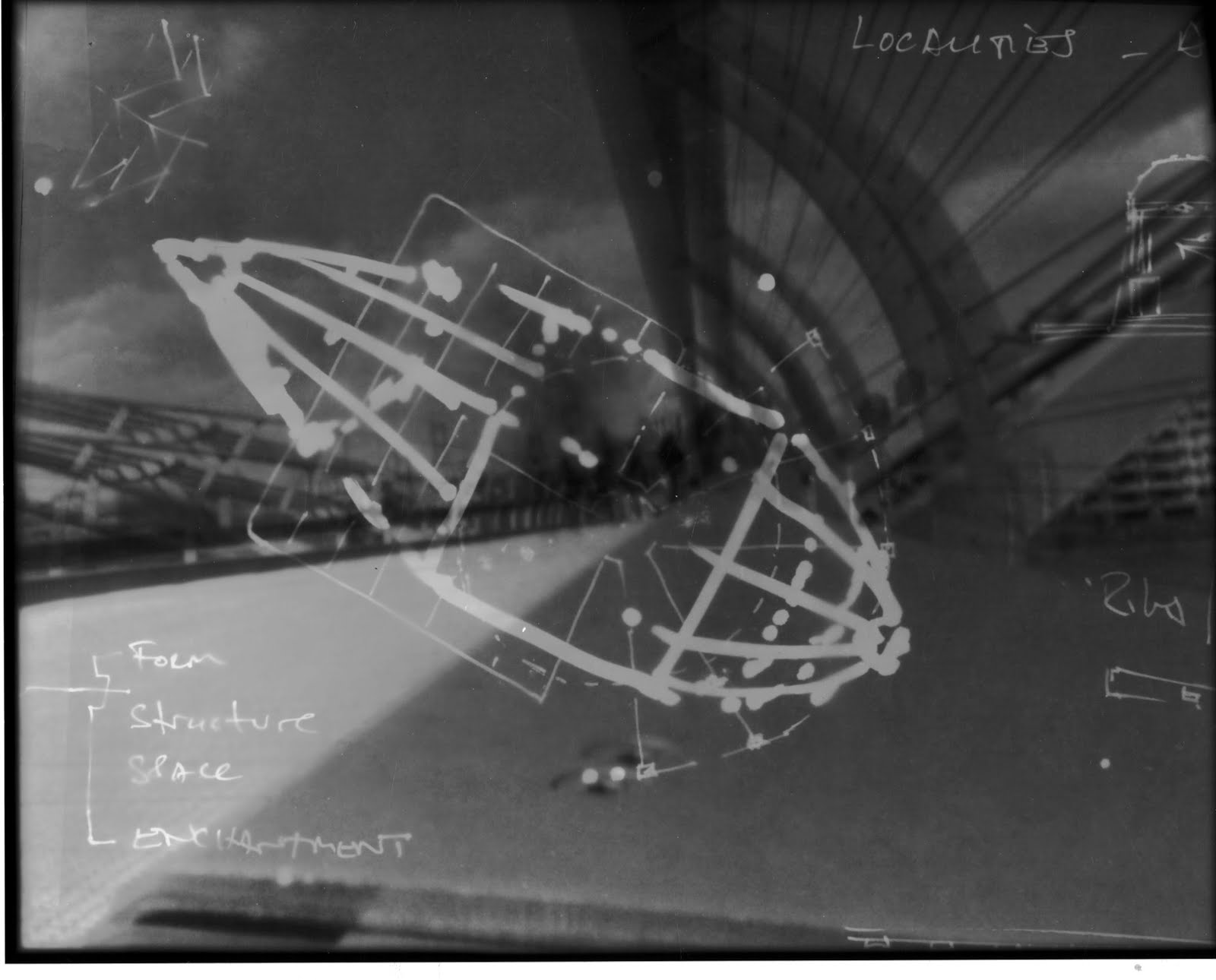
    TRANSPARENT MEDIA : Form,structure, space, enchantment
    Double Take
    15 APR – 3 JUL 2016

    A two-venue exhibition exploring the relationship between drawing and photography, taking place at Drawing Room and The Photographer’s Gallery, London.

    Drawing and photography are each considered the most direct, ‘transparent’ media with which to engage with the world.  They share fascinating parallels:  the relationship to the indexical, the blank sheet of paper or surface, graphite and silver, pencil weight and aperture, the sense of an invisible ‘apparatus’ (the camera and pencil), the engagement with surface, light, negative and positive and the trace. Double Take seeks to explore the multifarious ways photography and drawing have been combined and mirrored to extend both practices into new arenas in modern and contemporary practices.

    “… a freehand sketch diagram that was at the tangent between idea and imagination…if the parti – the first critical diagram – is not made well, it will be difficult for architecture to follow.  If there is no parti, there will be no architecture, only (at best) little more than the utility of construction.  Buried within their early sketches is the germ of a narrative or language.  The early diagrams are reflective conversations with the language of architecture.”

    –  Alan Phillips, Brighton, UK

    Marking Stick : Leylines, Directions and Sites. #11

    Sequential Photograph : In the space around the “spatial turn” (539)
    Art as Spatial Practice.
    Space folds : Containing “Spatialities around historicality and sociality”

    “All that is solid melts into air”

    Karl Marx, Friedrich Engels,
    (Poetic observation concerning the constant revolutionizing of social conditions)

    Perceptions now gathering at the end of the millennium. Spatiality, Robert T. Tally Jr. 2013


    Collage and drawing with cyanotypes, photographs, negatives and painted surfaces. The Laboratory , Canterbury 2009 Tim Ingold MAKING 20…

    Source: Mapping Relationships : Contexts and Locations #3

  • Working Collage : Marking the Line/Art, Architecture and Craft Narratives.

    Architecture, Nature and Subjectivity.
    Atmospheric ecologies/architecting through situated learning.
    Is there still an aesthetic illusion? And if not, a path to an “aesthetic” illusion, the radical illusion of secret, seduction and magic? Is there still, on the edges of hypervisibility, of virtuality, room for an image?
    — Jean Baudrillard, The Conspiracy of Art, 2005
    Jana Sterbak
    Remote Control 1989
    A heuristic technique (/hjᵿˈrɪstᵻk/; Ancient Greek: εὑρίσκω, “find” or “discover”), often called simply a heuristic, is any approach to problem solving, learning, or discovery that employs a practical method not guaranteed to be optimal or perfect, but sufficient for the immediate goals.
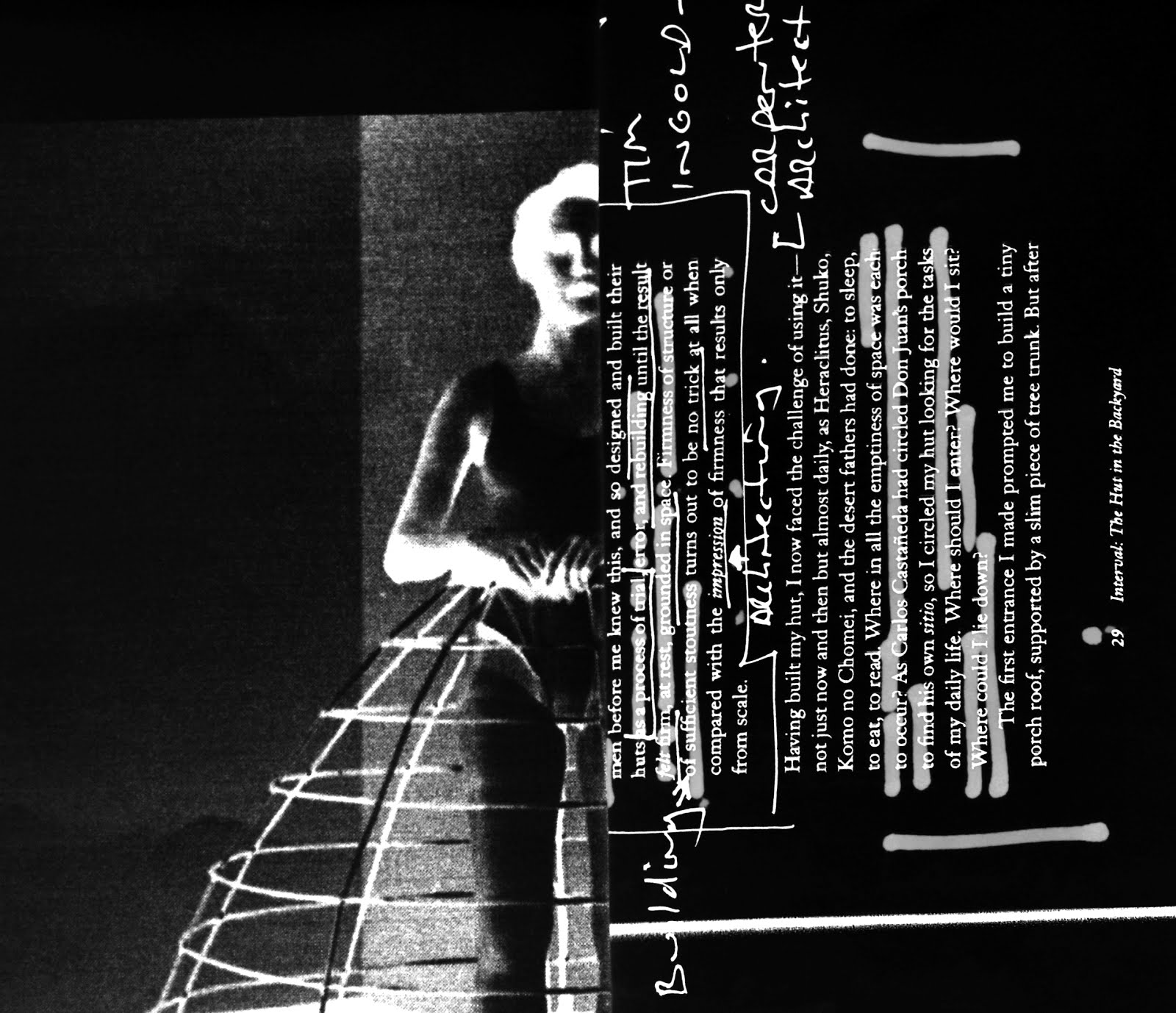
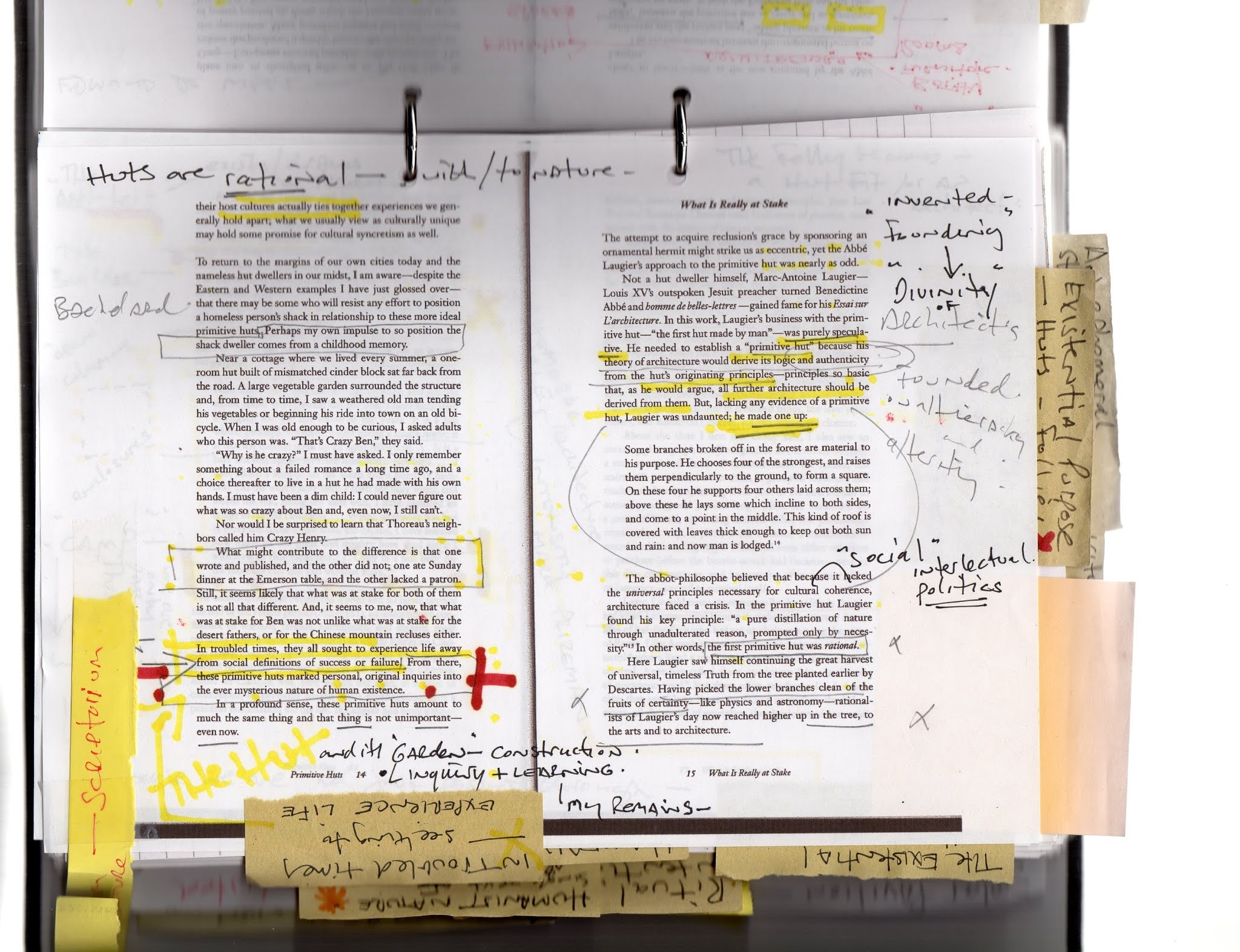
    A Hut of One’s Own, Ann Cline
    Texts,Annotations, Foundations, Pathways, Corridors, Bookmarks, Walking, Thinking, Ramble, Cross Country, Disciplines,
    Ecosophy : Social ecology, mental ecology, environmental ecology.
    “Concerning the continuous development of its practice as much as its theoretical scaffolding.”
    The Three Ecologies, Guattari


    Architecture, Nature and Subjectivity. Atmospheric ecologies/architecting through situated learning.  Is there still an aesthet…

    Source: Working Collage : Marking the Line/Art, Architecture and Craft Narratives.

  • Hans Coper : The Shape of Time/Working Notes/Diagrams

    Sainsbury Centre

    UEA Norwich

    Hans Coper : Working Notes Crafts Study Centre. 2014.

    Extracts from catalogue “The Esssential Potness, Hans Coper and Lucie Rie 2014”
    “I become part of the process, I am learning to operate a sensitive instrument which may be resonant to my experience of existence now.”
    “My concern is with extracting essence rather than with the experiment and exploration. The wheel imposes its economy, dictates limits, and provides momentum and continuity. Concentrating on continuous variations of simple themes I become part of the process.”
    Artist Statement, Victoria and Albert Museum/Collingwood, Coper Exhibition 1969.
    Small Beige Spade 1966.
    The body comprises a thrown circular form, from which the bottom has been flattened into an oval and the lower section has been pressed together.
    Throwing rings are visible on the inside.
    Areas of the white engobe have loosened from the underlying layer during firing and formed blisters.
    Cycladic Vase 1973.
    Blisters in the slip have been sanded down to reveal a rust coloured underlying layer.
    Medium Sized Spade 1973.
    There is a clear delineation between the light upper section and the rougher and darker lower section.
    Small Thistle Shaped Vase 1973.
    There is a large incised circle on one side of the disc and a smaller circle on the other.
    Hans Coper’s characteristic use of light engobe and dark manganese oxide has produced a hazy texture.
    Black Aryballos 1966.
    This ceramic form has its origins with the Oil Flask used by athletes in Greece and Asia Minor.
    Tall elongated diabolo forms.
    After being thrown the cup has been formed into an oval and then indented at four points.
    Text Fragments/Lines of Interest
    Momentum Wheel.
    It is difficult to determine in which order the parts were assembled.
    The underlying surface is showing through the grooves that are linking the body and the base.
    The manganese engobe is demarcating dark and light zones through an undulating incised line.
    “Rings” caused by the placement of a prop in the kiln.
    Brown-Beige Colorations.
    Sensations caught within the form.
    Soil like deposits/remains.
    Reductions of the fired surface.
    Abraded Surfaces
    Incised Line.
    Droplet.
    Blisters, pricked open and sanded after firing. This process has produced an irregular, patch surface.
    Parallel lines have been incised with a pointed object on the exterior of the base.
    Thistle Shaped Vase 1966.
    The dark brown patches (around the jointing of the pot) and flecks appear randomly distributed but have been purposefully placed to accentuate the structure of the vase. This flat vase with the contour of a stylised thistle flower is made up of five individually thrown pieces. The tall cylindrical foot supports a vertical disc, comprising of two individually thrown flat plates. It is as though the disc has sunk approximately ten centimetres into the foot.
    Spherical Vase with Tall Broad Oval Neck 1966.
    The transition from sphere to neck is accentuated with darker colourations.
    Notes re/statements
    1. Specific to the form in question.
    2. Context in relation other similar forms.
    3. Key Words: Impregnated, Incised, Eroded, Reduction, Surface, Soil, Abraded Surfaces, Machining, Grinding, Assemblage, Components, Parts, Groups “Aryballos,Spade, Thistle, Diabolo, Cycladic, Spherical,” Sculptural, Pottery, Architectonic, Space between Forms, Spatial, Sensuality, Form and Fold, Bodily Spaces, Light and Dark, Clay, Water, Fire, Agency, Difference,
    Rotterdam Exhibition with Lucie Rie. 1967
    Hans Coper.
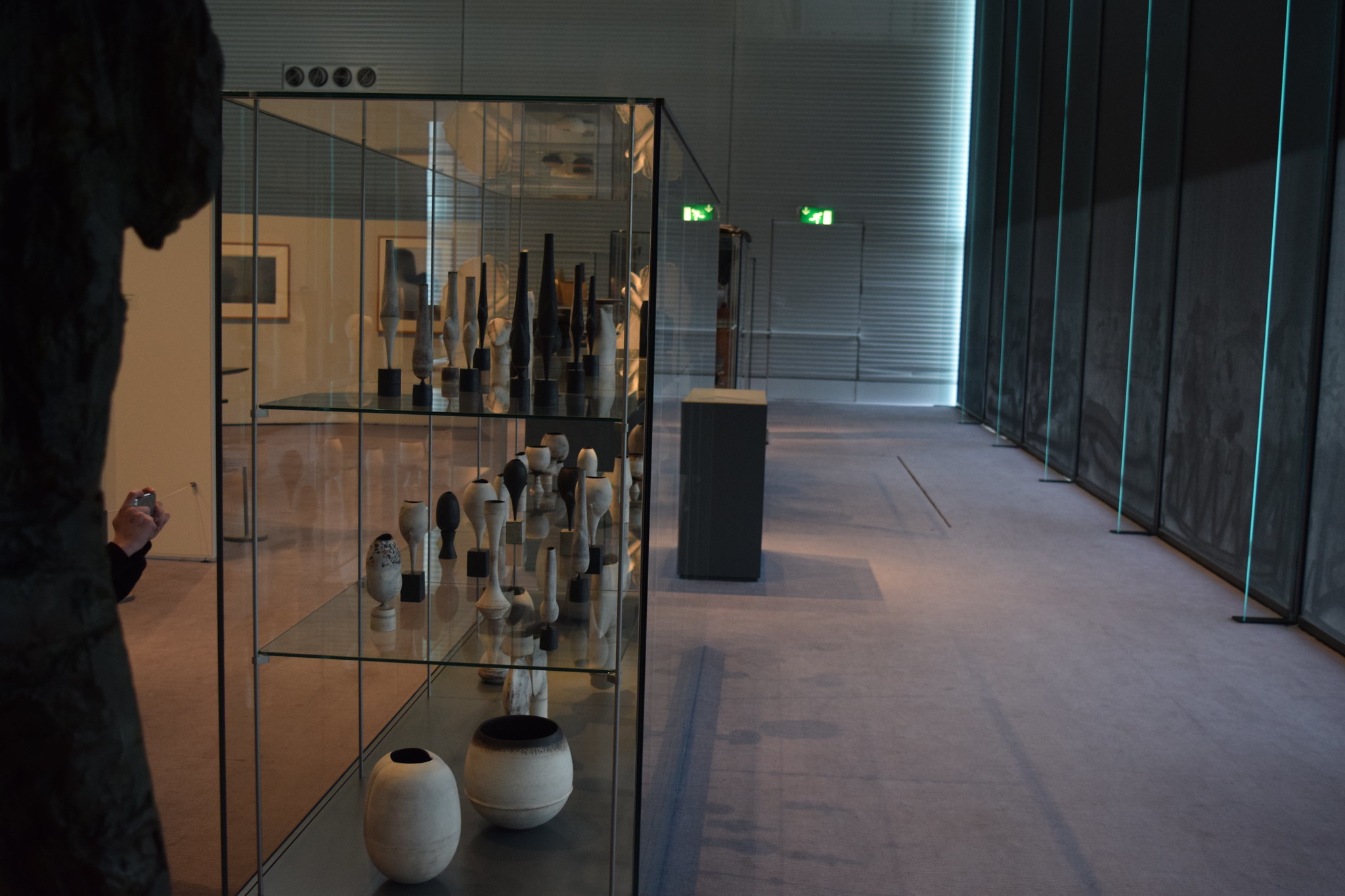
    His arrangement was highly original and innovative, he showed his families of vases in groups, emphasising their subtle differences in form and surface treatment. The space between the pieces was just as important as the objects themselves. The architectonic character of Coper’s pots become visible through their dry, stone like skin and the sophisticated way in which Jane Gate photographs the work.
    “Potters of reconciliation, they sought a marriage of function and beauty.”
    Douglas Hill SF author/intro to exhibition.
    P7478
    Additions to description.
    Thistle shaped vase constructed from five individually thrown pieces. The joints making up the pot have been selectively accentuated with the residues of the manganese engobe. Incised geometric marks remain from the initial turning process of the component parts, prior to the construction of the pot.
    P7430
    Additions to description.
    Wheel thrown forms, comprising of bowl, open cylinder and an interior ring acting as a flower holder. The bowl form has been turned before being jointed with the upper section. The piece was then indented at four points to form an ovoid form. Pronounced incised horizontal marks remain from the joining, which has been further transposed by the action of becoming ovoid. Very subtle and restrained use of the manganese engobe followed by Coper’s characteristic post firing technique of abrading the surface of the ceramic.
    P7539
    Additions to description.
    Single thrown form with the remains of the sgraffito technique after the ceramic has been heavily abraded after firing. The vertical lines of the sgraffito technique and the form itself are similar to Lucie Rie’s flower vases, see Lucie Rie by Tony Berks page 112.
    This single thrown form perhaps best illustrates the creative union of both Coper’s and Rie’s practices, the form almost a kind of beaker might itself been inspired by the “dark pots” Lucie Rie found whilst visiting Avebury Museum.

    Notes on Hans Coper’s process and materials.
    Material for Black Clay Body.
    T Material 73.2%
    Red Clay 18.3%
    Manganese dioxide 1.2%
    China Clay 7.3%
    Material for White Clay Body.
    T Material 100%
    Slip/Engobe
    Feldspar
    Whiting
    China Clay
    (proportions remain unknown/never revealed by the potter)
    Manganese dioxide 3parts
    Yellow Ochre 2parts
    (mixed with water and gum Arabic 1tsp per 500cc)
    Firing 1250, Once Fired Ceramics.
    Finishing.
    Hans Coper used a metal scouring pad “Springo” to scratch the surface of the unfired pots. The exterior of the fired pots were then painstakingly burnished using an emery disc attached to an electric drill. This action resulted in turning the dry vitreous surface into a one having a graphite-like sheen (sea pebble).

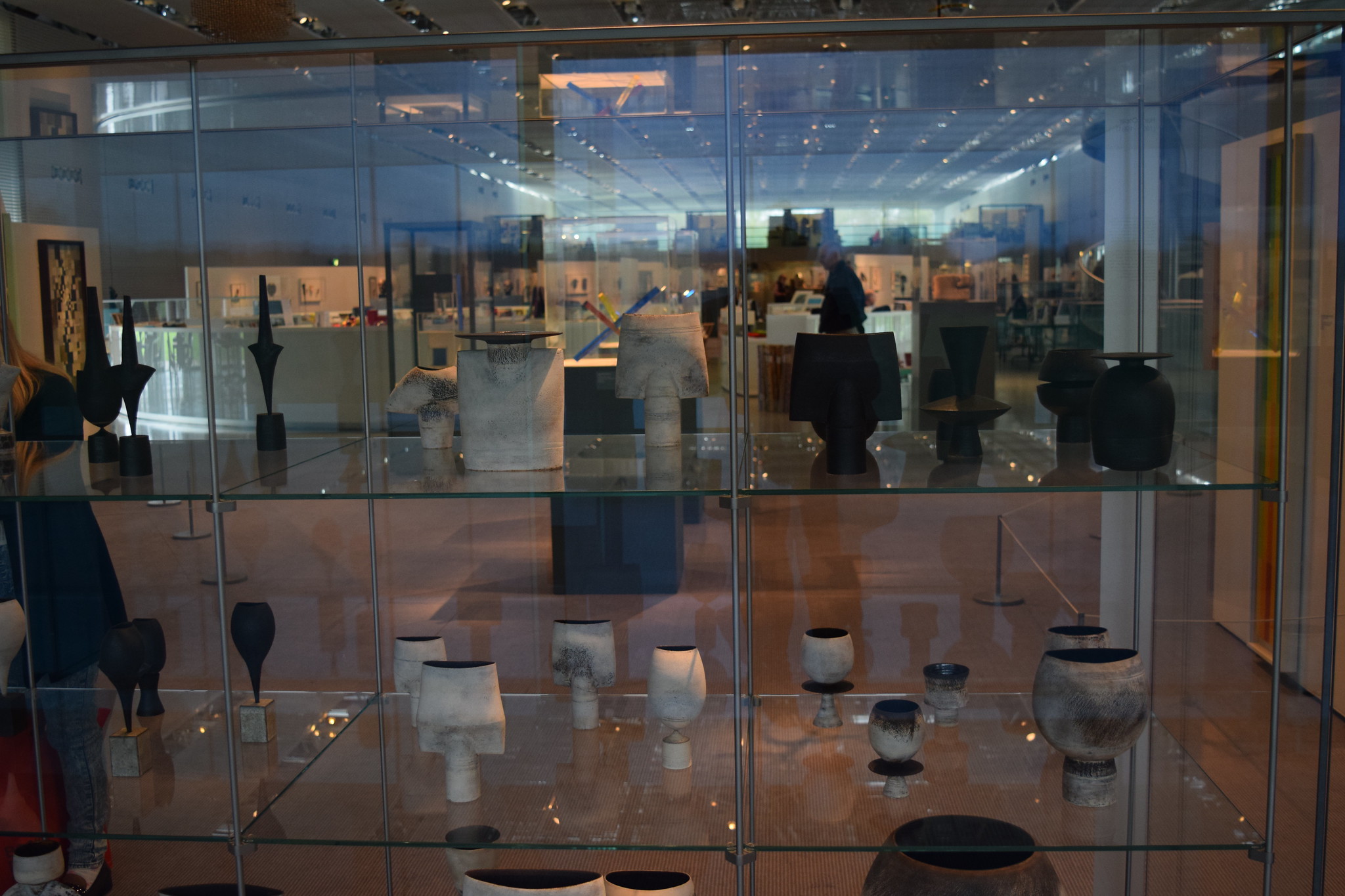
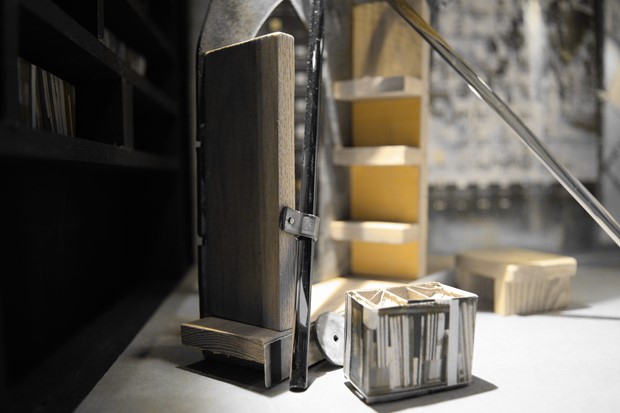
    Drawings in the form of tracings were gathered from the flat planes of the display cabinet; these were further superimposed in an attempt to map the surface and forms of the Hans Coper pots and to explore their volumes and interior spaces. These new sight lines subjectively link surface details with profiles into the possibility of new spatial forms. These plans and mappings became the starting point for a series of slab and thrown assemblages. Thrown and slab worked clay forms in T Material, preliminary drawings done in-situ some with annotations  Russell Moreton, 2014


    Sainsbury Centre  UEA Norwich  Hans Coper : Working Notes Crafts Study Centre. 2014. Extracts from catalogue “The Esssential Potness, Hans C…

    Source: Hans Coper : The Shape of Time/Working Notes/Diagrams

  • Collage : Solar Pavilion/A Philosophy of Solitude/John Cowper Powys : The Hut as a projection of self/Ann Cline

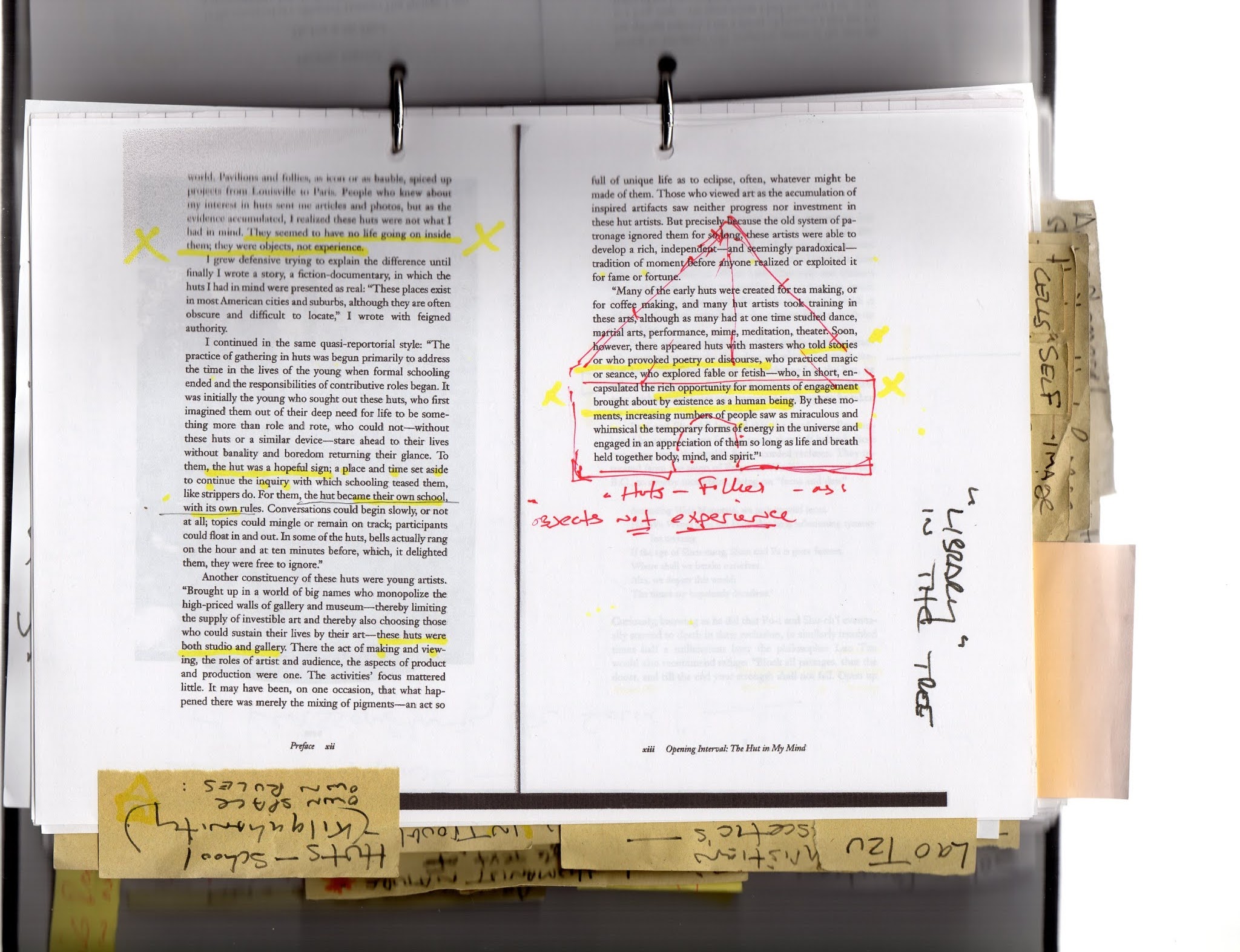
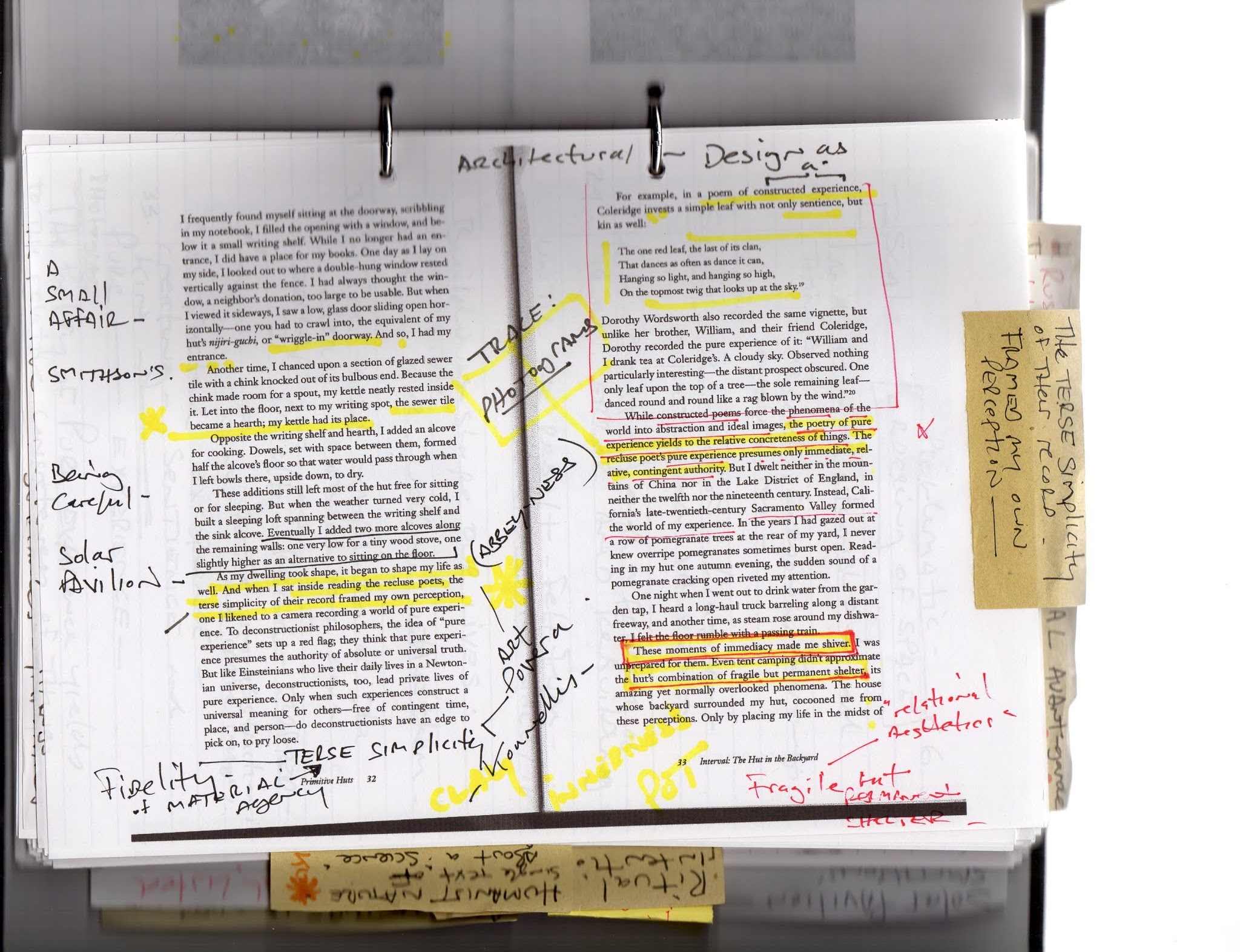
    As my dwelling took shape, it began to shape my life as well. And when I sat inside reading the recluse poets, the terse simplicity of their record framed my own perception, one I likened to a camera recording a world of pure experience.

    Ann Cline

    Architecture is not made with the brain.

    The labour of Alison and Peter Smithson.

    Architectural Association 2005.

    Smithson’s on modernity, not as a goal but as an established reality that needs to be interpreted.

    Articulation of the volumes based on rigorous rules that derive from the ordering capacity of the necessities of daily life.

    Holistic Practices.

    The way person and work fit together so seamlessly.

    Embedding building within a specific contemporary cultural context. (Krucker, 2005:85)

    Transitions between spaces.

    ‘Building relationships to relate to what already exists.’ Herzog and de Meuron The Parallel of Art and Life

    Aesthetics about Perception Poetics about Production

    ‘The approach leads from the static object of the mere picture to the dynamic process of imagining.’(Schregenberger,2005:82)

    ‘As found is a small affair, it is about being careful.’ (attentive awareness (anthropological) to people and place) Peter Smithson 2001

    ‘The ‘as found’ attitude is anti-utopian; its form is specific, raw and immediate. It calls the will to question. It is a technique of reaction and a concern for that which exists.’ (Schregenberger,2005:81)

    Complex Ordinariness Bruno Krucker

    Urban Structuring.

    Importance of urban planning, specific responses to the surroundings generated different shapes. Testing out spatial bound volumes and aligning them with the site or urban fabric/passages of use and existing features.

    ‘As Found, is a small affair: it is about being careful, the as found (is) where the art is in the picking up, turning over and putting with.’ (Smithson.)

    ‘The essence of ‘as found’ as a concept lies in accepting the value of the everyday. Any aspect of the built environment can be interpreted and employed as a trigger for architectural propositions. To consider ways in which the ‘ordinary’ can be harnessed through reinterpretation.’ (Sergison’2005:98)

    The Everyday.

    Life between buildings.

    The necessities of daily life (the repetition of basic sequences) giving shape and layout to the architecture.

    Heavy Prefabrication: Whole wall sections used to a homogeneous expression that emphasises their tactile qualities.

    John Cowper Powys hopes to create a new level of discourse that will appeal to the common person, that person who desperately needs a philosophy of life, a means of comprehending the world around him or her, while at the same time being a person who is receptive and curious.

    ‘The Solar Pavilion, is both a lookout over the distant landscape on the north facade, sitting on top of the existing cottage wall, and a garden pavilion mediating between two types of controlled landscape. It aims to provide a minimal enclosure that allows as immediate a relationship between interior and exterior as possible.’

    (Sergison’2005:97)

    The hut addresses the core of ritual as a part of nature versus the supposed freedom of modernist thought and the architectural contrivances it pursues. The hut represents the convergence of ritual and naturalness, at the same time addressing cultural issues and practices.

    To systematise transitions of both components and internal spatial orderings. The sizes of elements are determined by the inner spatial ordering in an almost organic, non-schematic way.’
    We developed elements that embrace the entire thickness of the wall.’ (Krucker, 2005:85)
    The search for directness while avoiding too much design, but still ensuring that our buildings look right in their surroundings.
    Cultural Background.
    Fitting in with the ordinariness of the environment, an ordinariness that only reveals its strength over time.
    Embedding building within a specific contemporary cultural context. (Krucker, 2005:85)
    The anonymous settings of settlements and agglomerations create documents/cinematic presences of familiarity within these architectural contexts. It is important to go beyond any superficial fascination with the ‘periphery’.
    John Cowper Powys (1872-1963) created an attractive and congenial meditation in his best non-fiction book: A Philosophy of Solitude.
    Writing in the early 1930’s in his adopted United States, where he was living and working as a free-lance lecturer, a popularizer of intellectual themes barnstorming the country, Powys’ book is prompted by his experiences, his insights, and his disappointments. He sees the United States as a slave of modem technology — of megalopolis, pandemonium, noise, of “the Gargantuan monstrosities and Dantesque horrors of our great modem cities.”
    The situation, he declares, is too far gone for the inspiration of American writers like Emerson, Thoreau, and Whitman, with their facile optimism and their confidence in the virtues of an American character now lost in the twentieth century.
    The only thing that can really help us is a much more definite and drastic philosophy … a real, hard, formidable, unrhetorical introspection …”
    And this is the philosophy of solitude that Powys sets out of construct.
    To Powys, solitude is the necessary social, psychological, and intellectual state of the individual. It is social in pulling away from the life and tumult of the crowd (Powys lived for decades in New York City, finally moving to a small town in upper-state New York before returning to Wales a few short years after this book’s publication).
    It is psychological in the sense of identifying and pursuing a frame of mind for the personal pursuit of solitude. And it is intellectual in offering a philosophy calling upon a variety of classic thinkers and using the tools of plain everyman logic.
    Powys sees this simplicity of mind and desire as a key to self-control and understanding. His elementalism is based on the solitude that is evoked by this self-knowledge, which allows a person to make and define a life for themselves based not upon the tempo and rhythms of the crowd and technology but on the unspoken wisdom that wells up from solitude itself.
    The hut has a sense of immediacy that no room-filled house can achieve. The hut focuses its dweller on immediacy and meaningfulness. I had found the commodity of my dwelling through the poetry of its use.
    Structural Thinking. Anti Object: Kengo Kuma.
    Identity out of structure/layers of latticed structure.
    Character-forming ability of structures, through the transitions of interior to exterior spaces. ‘Our approach was to act decisively at an urban and a spatial level and to create precise alignments that would strengthen existing elements. Within the structure, it becomes possible to give specific places an individual identity and to create an awareness of the relation between repetition and difference. Seen in this way , the facades are less a surface around a volume, and more the outer edges of the structure itself (importantly the structuring becomes independent of the programme, which can change over time).’ (Krucker, 2005:87)
    The power of a building originates from its structuring (a character of a building that is not wholly subservient to its programme).

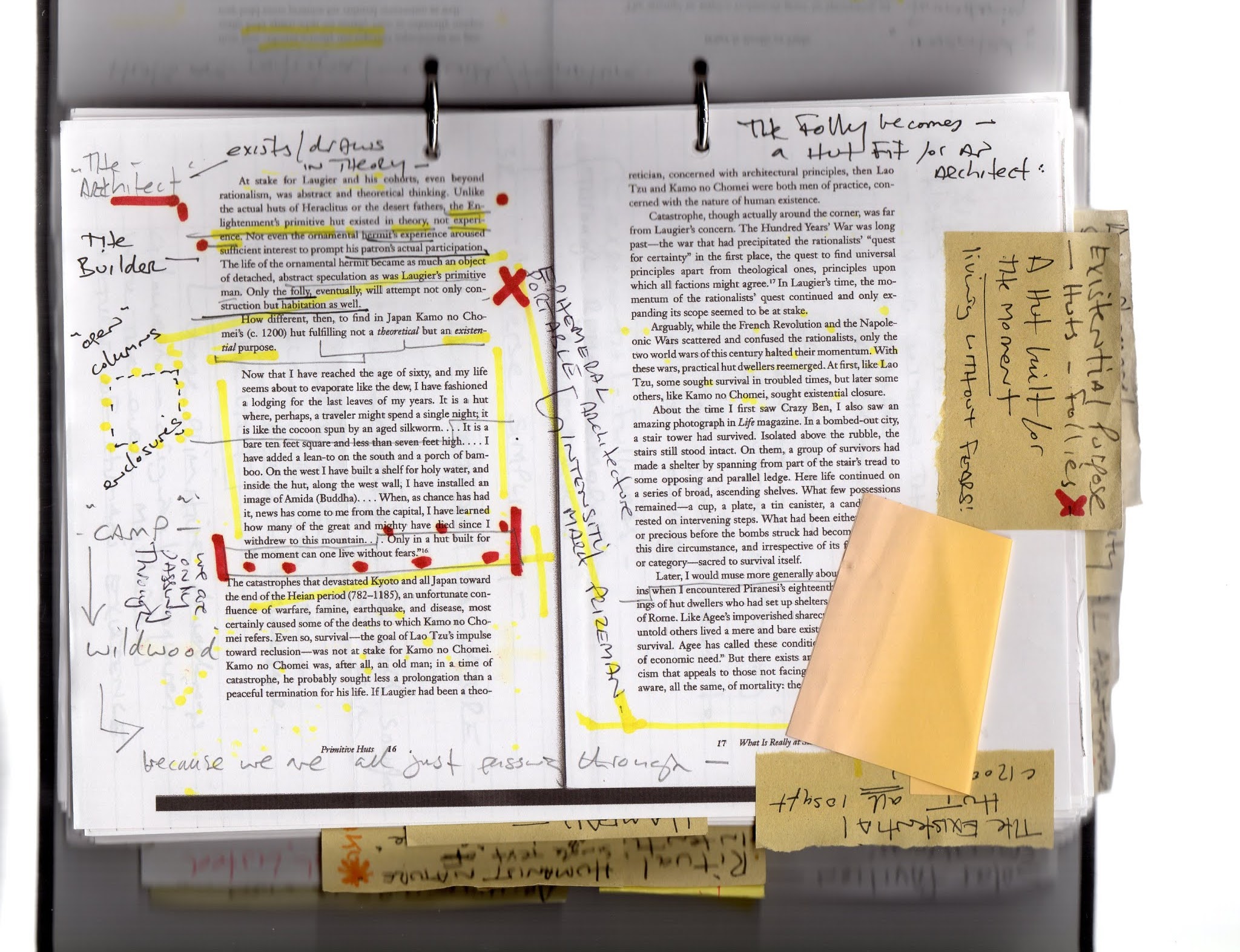
    The book is an extended essay, not a history, but it does call for a close sense of identity with the subject and with those who have come before. The author dives into the subject of primitive huts, skimming the surface with Po-i and Shu-ch’i, the recluse archetype brothers of Chinese antiquity, with modems like Gaston Blanchard and Thomas Merton, classics like Lao-tzu and Heraclitus, plus the great Japanese hut-dwellers Kamo no Chomei and Hoshida Kenko. The hut, she notes, has always been a projection of the self. When Heraclitus was chided on why he lived in such a small and humble abode, he responded, “Even here, the gods reside.”

    Ground Notations, the need to find an existing physical structure, see ‘Shifting the Track’ (Smithson.)
    ‘The Smithsons’ search for a strong existing element that could be added to and adjusted, if necessary, ensures that a project is grounded in its place. Successful ground notations operate at varying scales, ranging from large pieces of infrastructure (roadways,etc) to natural, seasonal landscape infrastructure (trees and meadows). Once absorbed into an existing situation, new ground notations begin to refocus a place and act as the basis for subsequent actions’ (Sergison’2005:97)
    Drawing on an existing topographic ground notation (earth-bunds) matrices of bundways that help irrigate the marshlands and define land ownership.
    ‘New topographical features containing the infrastructure necessary for development, with roads on top and supply conduits inside them. Public buildings were located on top of swollen bunds, for visibility and orientation, while the spaces in between bunds became serviced fields for new settlement.’ (Sergison’2005:98)
    Could it be that where a human settlement seems structureless, without purpose, we invent and build ‘ground-notations’ to offer an analogous power to that offered by strong natural landforms?
    Neutrality and Character.
    ‘This kind of structural thinking supports the search for a more anonymous everyday architecture that can nevertheless develop a character of its own.
    The prefabricated parts generate complex volumetric forms that remain only partly visible after assembly. The effect is similar to that of Japanese timber construction, in which the simplicity and clarity of appearance belie the complexity of the joining techniques involved.’ (Krucker, 2005:89)
    ‘The Smithson’s embraced an architecture that was not purely driven by formal intensions but by questions regarding content. This is an architecture that results from an attitude of openness towards the world (of worlds) and an acute awareness of the impact of the architect’s actions. Such an architecture insists on addressing the nature of real conditions and how they fit into the fabric of a larger context.’ (Krucker, 2005:90)
    Lessons Learnt from Alison and Peter Smithson
    With an agility larger structures can never match, huts bring together the physical environment with such disparate aspects of culture as necessity, fantasy, faith, and “life-style.” The hut, then, may be humankind’s supreme experiment.
    ‘I remember finding the work awkward, even ugly in its removal from architectural conventions. ’

    Research Contexts/Materials

    The Shift/Italian Thoughts, both became pivotal in the understanding of the intensions behind their work.

    What does it mean to be an English architect? The lessons presented as six themes.

    Strategy and Detail, as a design concept and method.

    A manual for negotiating our way through the development of a project.

    ‘All our projects begin with an interpretation of the specifics of the programme and a response to the place we are adding to, either as a series of sketches or a model exploring a building form. A dialogue then begins about the ‘feeling’ of the project, its material presence and its language of construction; this provides a framework in which to take decisions and a structure that can be referred to.’(Sergison’2005:92) Trying it out, testing its placement in place, its on-site feelings.

    A detailing of open brick perpends (a breathing building envelope) that is overlaid on all three elevations, giving a quiet expression to the building’s tectonics.

    Conglomerate Ordering, as an overall interconnected building solution.

    ‘A bold simple form adjusted by the forces of the site, thereby containing an equivalence, an overall tonality through the concrete frame as a structural solution and the block infill and their aluminium dressings. The building form and plan arrangement were adjusted according to the particularities of the site and to rhyme with the geometries of the neighbouring industrial buildings.’ (Sergison’2005:94)

    Ways, (a spine providing a variety of spatial experiences coupled with the means by which circulation is distributed) sometimes Ways are employed in a manner that is latent and discreet; in other instances they are the most public part of a project.

    ‘The concept of Ways as a means of organising circulation and supporting activity.’ (Sergison’2005:94)

    A simple organising circulation element that can be read, at one level, as a street or lane running the length of the plan, linking the apartments. This space is given a strong material intensity, entirely timber-clad on floor, walls and soffit. At selected moments views of the city are framed or the sky is revealed.

    Janus Face, origins in Italian Thoughts, teaches us to understand how mediation is possible between inside and outside, or between one side of a building and another; as all faces are equally engaged with what lies before them.

    By focusing attention on the enclosing envelope and how the building should engage with the conditions around it.

    The opposing forces of a site and its relationships to the different faces of the building can become multifaceted, through scale, the choice of material or even the layering of its construction; a discreet link is sought which connects rather than confronts.


    As my dwelling took shape, it began to shape my life as well. And when I sat inside reading the recluse poets, the terse simplicity of their…

    Source: Collage : Solar Pavilion/A Philosophy of Solitude/John Cowper Powys : The Hut as a projection of self/Ann Cline

  • CRAFTS STUDY CENTRE
    Working Notes 2 July 2014-07-02
    The Production/use of Space into Places to engender Societies.
    A site specific induced inquiry into dwelling and building through/by way of an attentive awareness (anthropological) to people and place.
    Ann Cline : A Hut of One’s Own
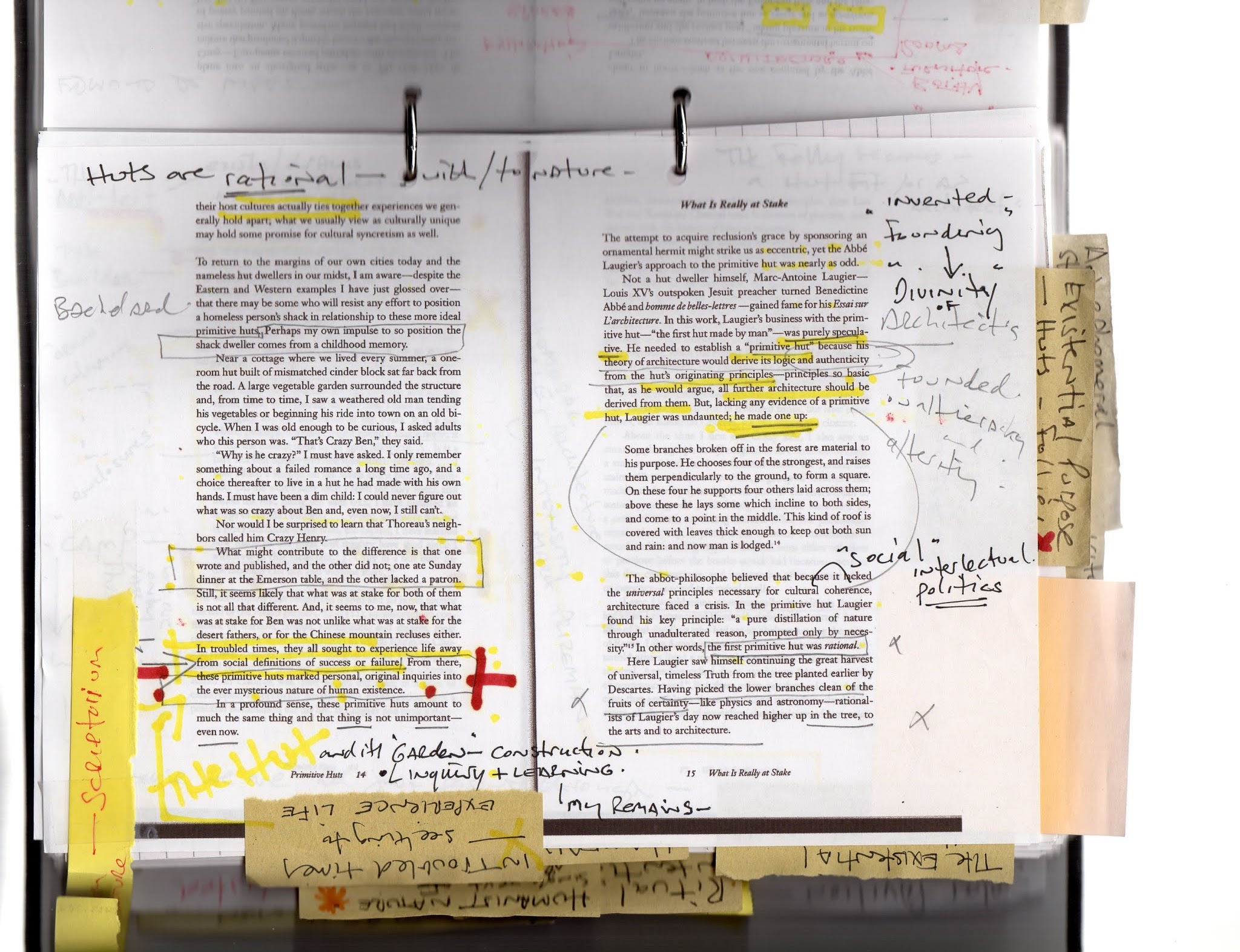
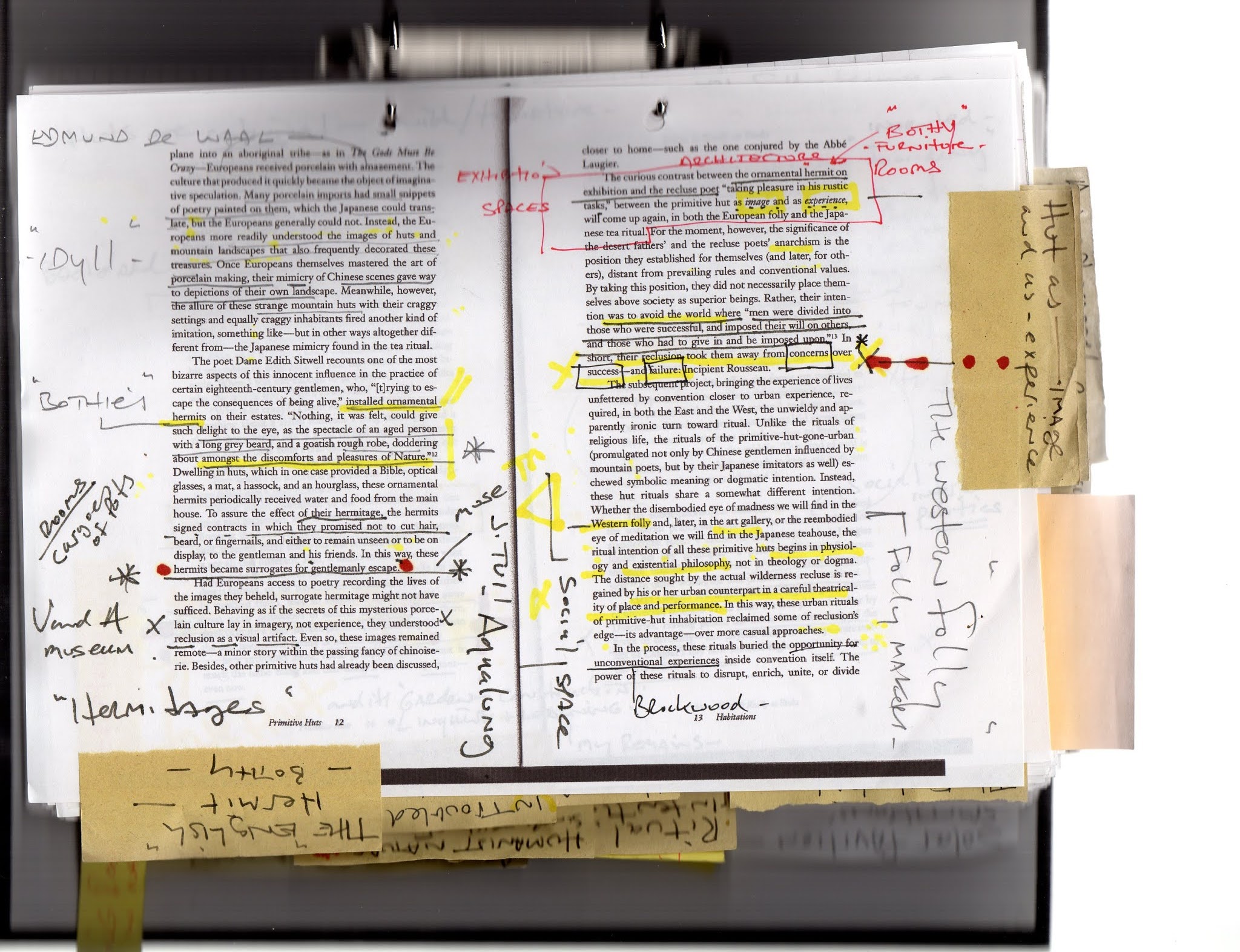
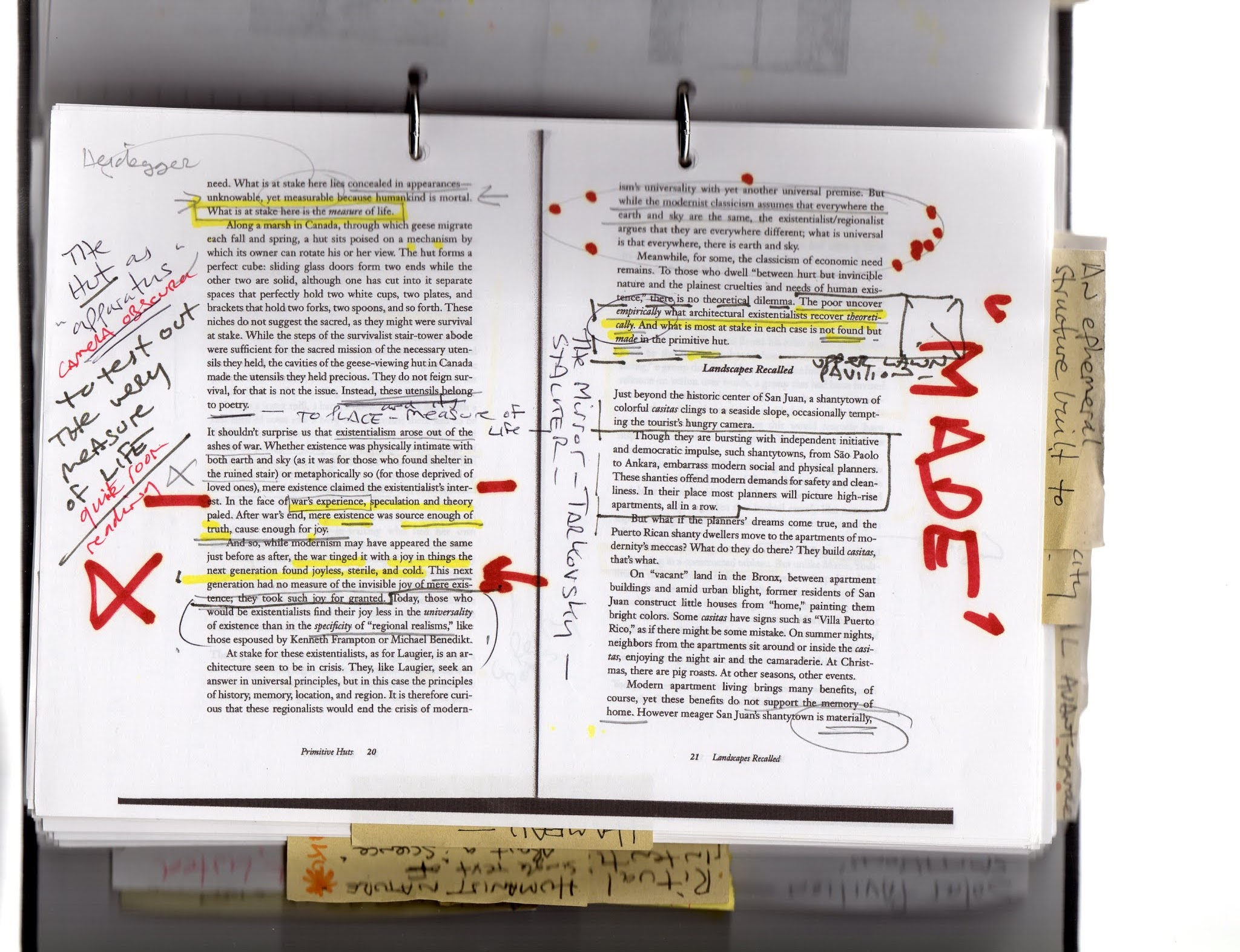
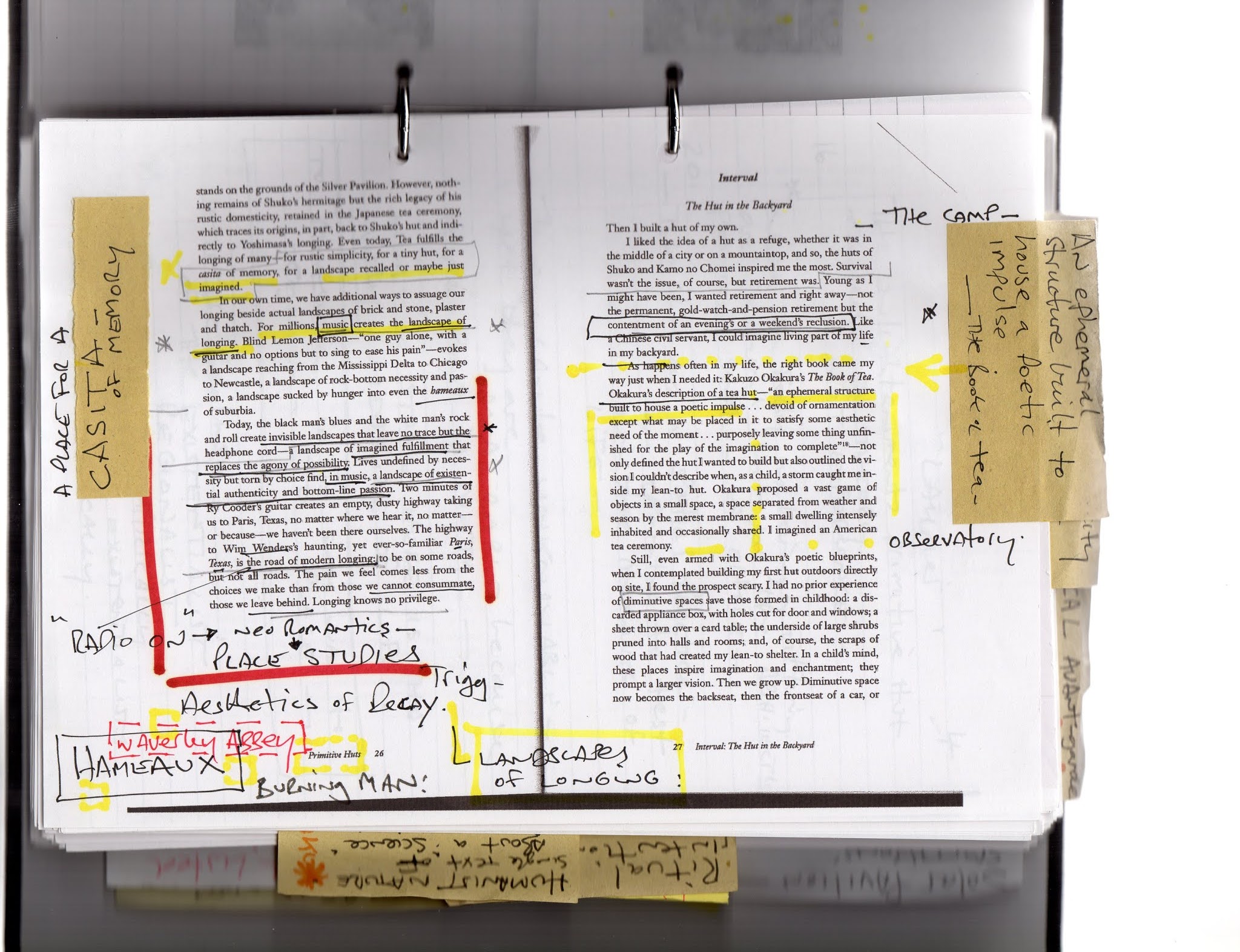
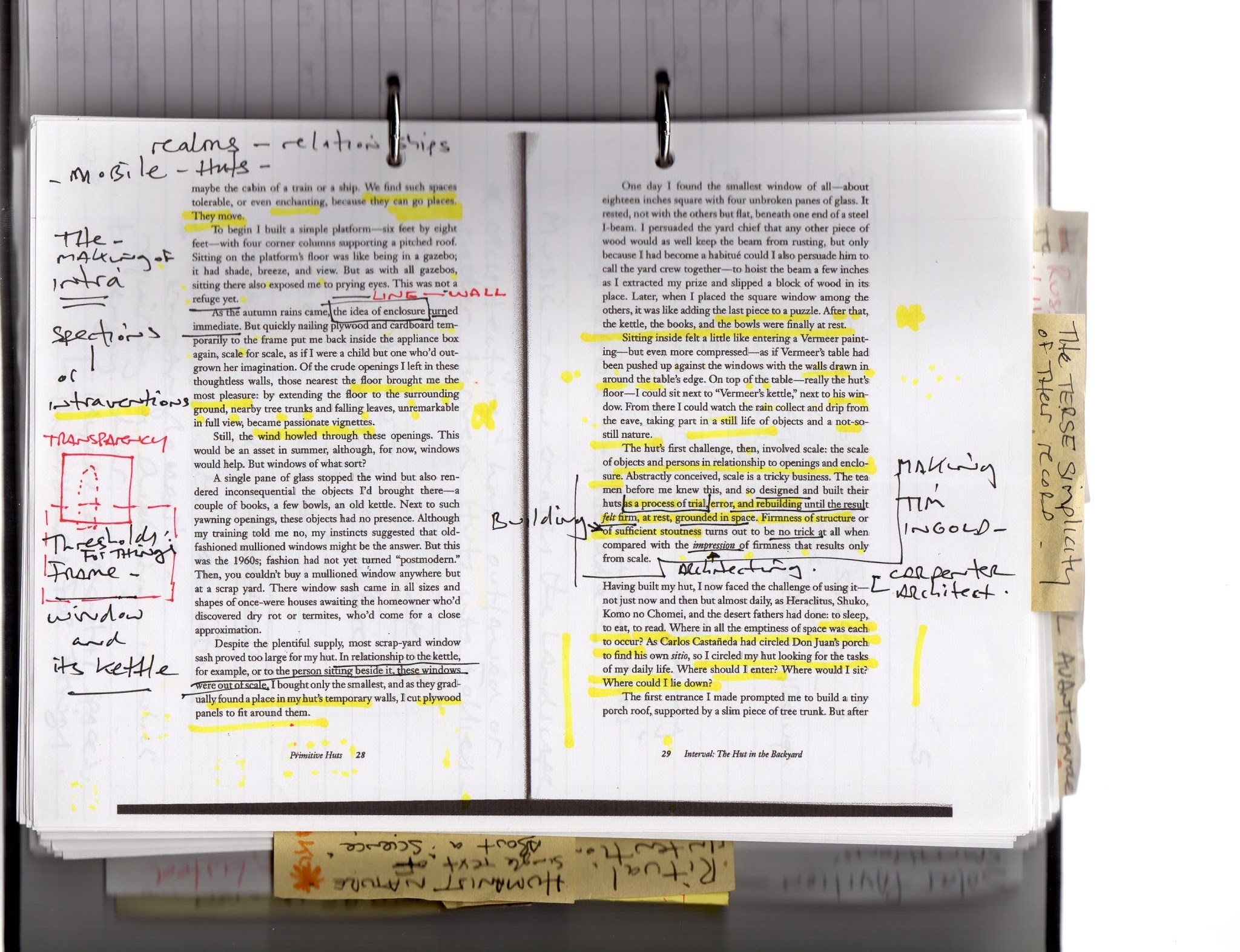
    Huts are always fascinating but the huts of sophisticated cultures are especially so: from the huts of ancient recluse poets to those of ornamental hermits, from the casitas of the Bronx to the huts of seventeenth-century tea masters, from the shacks of the homeless to the follies of postmodern architectures. All these huts deconstruct the optimistic sophistication of their age. Then they rearrange it. …
    Nowadays [one] who wishes to experience the poetry of life … should have a hut of one’s own…. Here, isolated from the wasteland and its new-world saviors, a person might gain perspective on life and the forces that threaten to smother it. …
    Only in a hut of one’s own can a person follow his or her own desires — a rigorous discipline, and one that the poet Gary Snyder calls the hardest of all, presupposing as it does self-knowledge while balancing free action and cultural taboo, knowing whether desire is instructive or the imprint of culture or if personal, whether such desires are the product of thought, of contemplation, or the unconsciousness.
    Even if this hut is only one’s normal abode inhabited in a different way, here in a hut of one’s own, a person may find one’s very own self, the source of humanity’s song.
    Architectural Canvas : Working with diversity and specificity
    Numinous Odyssey
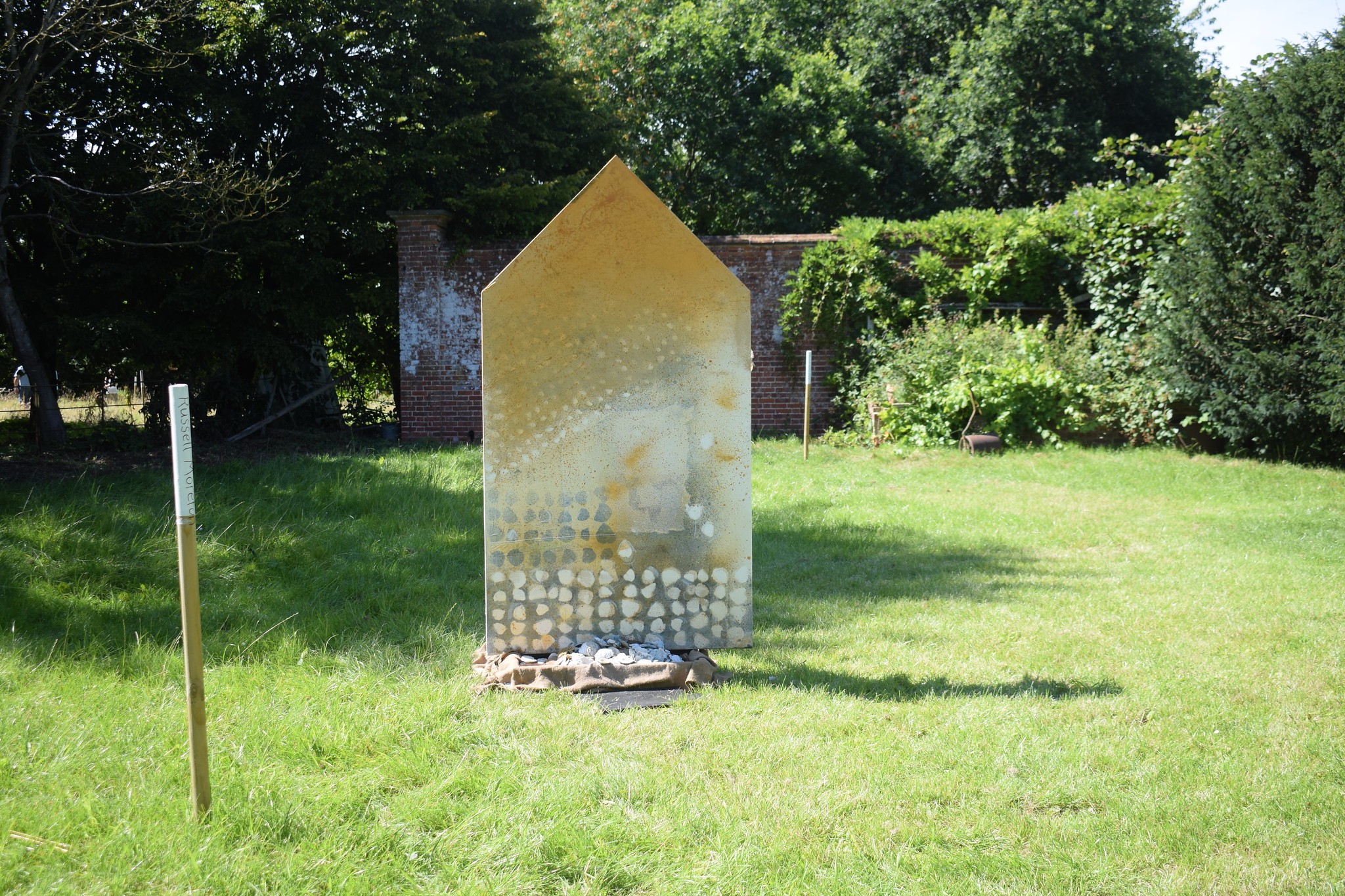
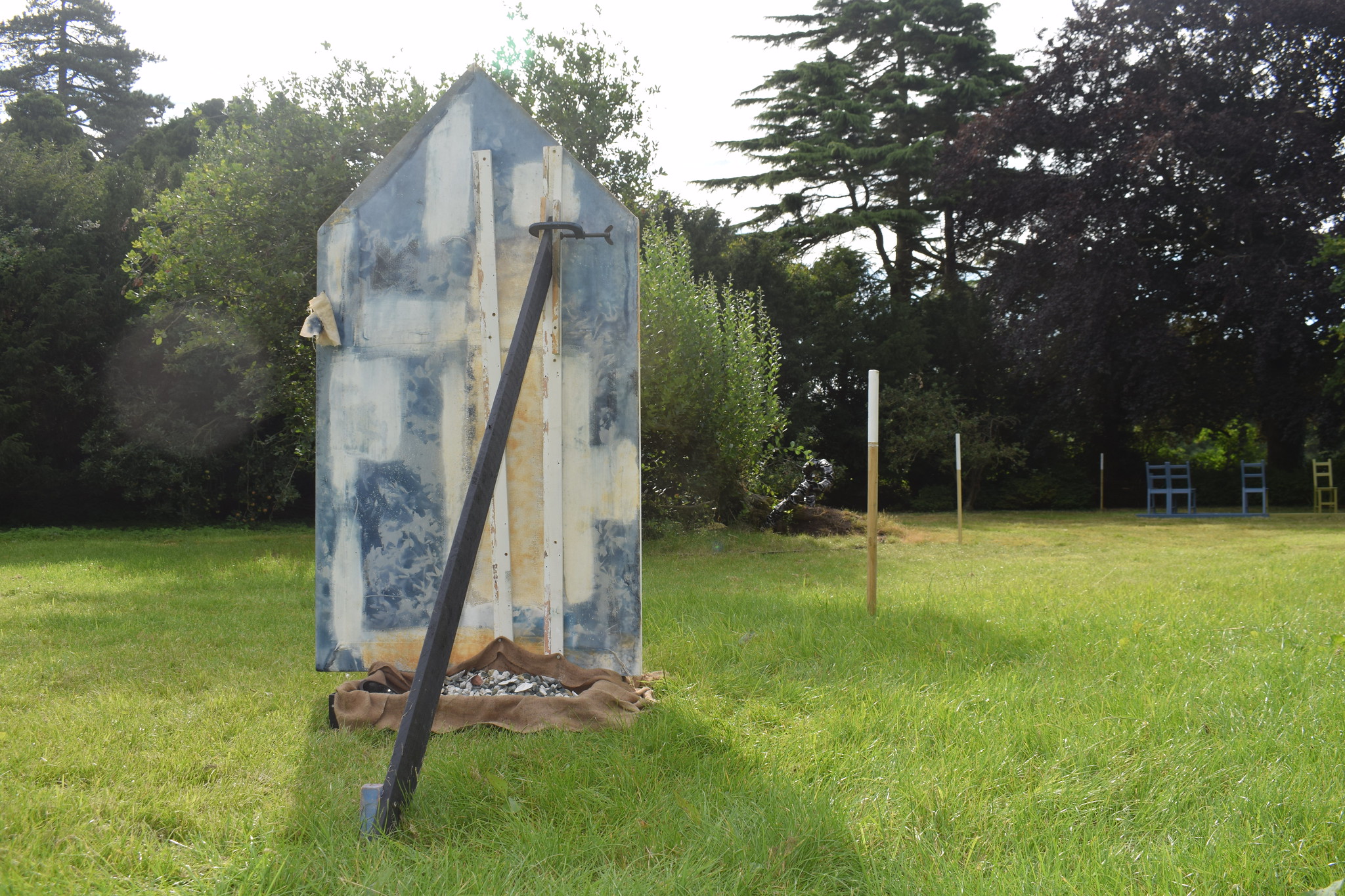
    Raveningham Sculpture Trail 2020
    ‘What I am most interested in now is inverting the structure of a culture that is centred around the city.’
    ‘The richness and strength of that(their) culture cannot be understood until one has worked with the people who live their- until one has eaten their food, drunk their sake, talked together with the craftsmen and made things with them.’
    Kengo Kuma, Complete Works, (preface) 2012
    ‘As found is a small affair, it is about being careful.’
    Peter Smithson, 2001
    ‘The ‘as found’ attitude is anti-utopian; its form is (site) specific, raw and immediate. It calls the will to question. It is a technique of reaction (Opposition/Kengo Kuma and Herzog and De Meuron and Multiplicity/Calvino and Zumthor) and a concern for that which exists.’
    Schregenberger, 2005
    The spatial practices of exhibition and education.
    The humanities and architecture, Heidegger/Bachelard/Ingold/Herzog and De Meuron/Zumthor.
    The politics of things/sociology and everyday life/dwelling and making.
    Natural History learning/thinking through things/situations and vocations.
    Contents/Contexts/Collection and Presentation.
    Taxonomies and Subjectivity/Spatial Narratives of Layered Space (Spatiality)
    Mark Dion, Archaeology, Thames Dig.(Allegories of a pseudo-archaeology)
    Herzog and De Meuron, Archaeology of the Mind/Natural History.
    Peter Greenaway, The Physical Self/Architecture and Allegory.
    Visual/Spatial Vocabularies and Narratives (Livelihoods and Social Interactions)
    Spatial Methodologies.
    Worlds and Thresholds.
    The Fanciful and The Scientific.
    The Playful and The Reverent.
    The Material and The Metaphysical.
    Tensions in built spaces.
    Between Evanescence and Substance.
    Between Illusion and Specificity.
    Between Slickness and Tactility.
    Making Places where times and tastes, human fabrications and accidents of nature, all collide; in these situations under the shelter of a forming/becoming architecture these ‘spatial texts’ or ‘visual conversations’ of one sort or another are suggested and are manifested and explored through a praxis of inquiry and making.
    The Projects Evolution.
    Philosophy of Solitude, thresholds/spaces of a vital serenity, a poetics of dwelling and its angle of repose hovering somewhere between the transcendental and the real.
    Relationships between Art, Photography, Craft and Building.
    Expanded through Exhibition, Performance, Teaching and Making.
    Realized as a dialogue/delivery (Built Work) into Architectural Terms between Sites of Collection and Sites of Construction.
    Working Analysis.
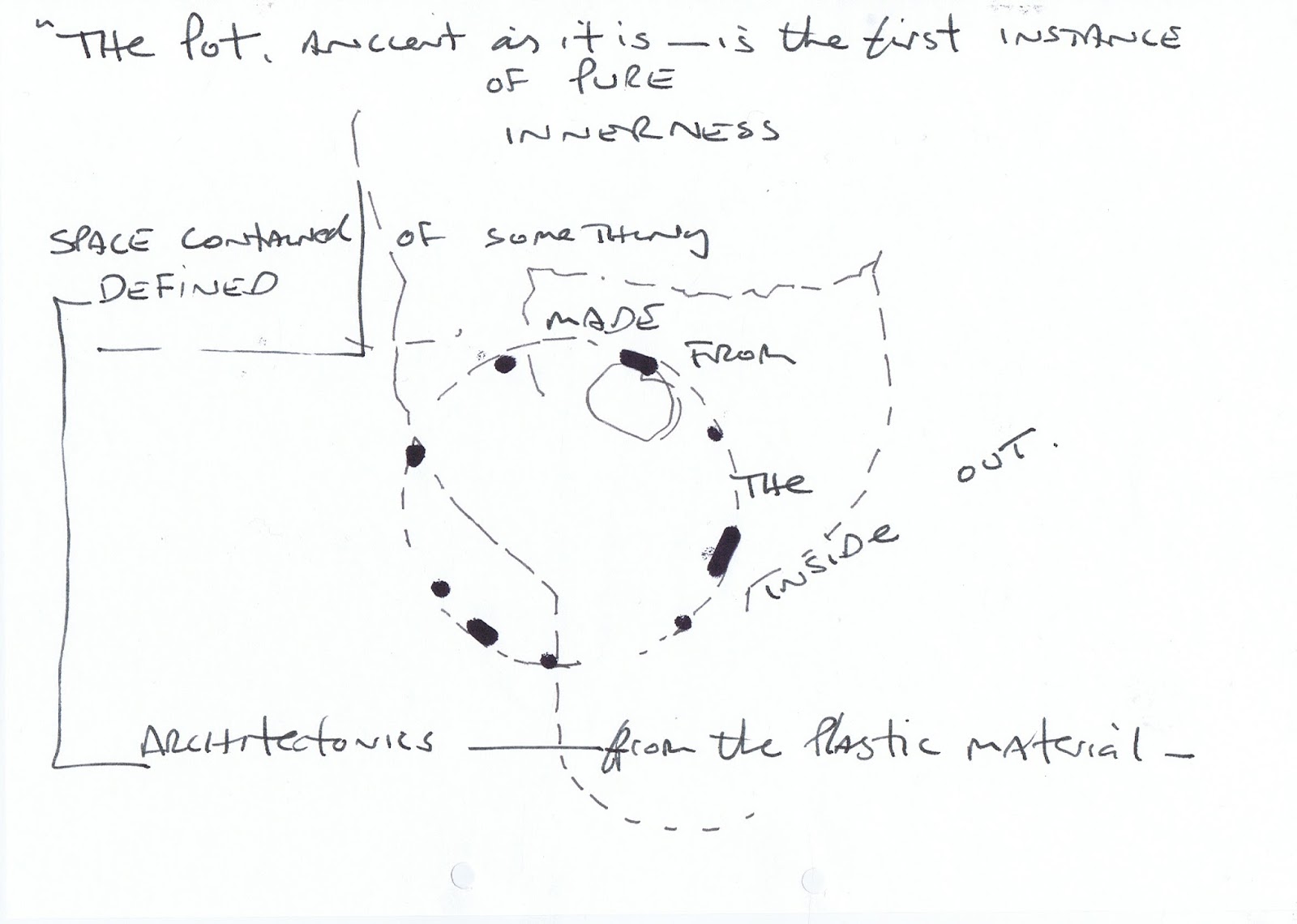
    CSC Object Analysis : Hans Coper/Innerness in the Ceramic Vessel and Architecture.
    Making (act/sacred bond of both an individual and a civilization) from the inside out, from the interior, from the first movement or impulse, from the everyday condition/situation the as found nature of things. The innerness of the vessel of a room remains the property of our shared humanity, of our social being/becoming.
    Why did this opportunity produce a wealth of transformative insights (conduits and territories) that are now active agents working across all facets of my practice?
    Why does the teaching and the ultimate examination or rather the grading of the project destroy the delicate praxis that is trying to be engendered?
    What, and why does the hidden agenda (any university course can only offer a limited introduction to a level of study) or hierarchical academic position corrupt the learning from not being a mutual experience, into a policing of interrogative and prescriptive learning outcomes?
    Properties:
    Pastoral Setting.
    Built within and amongst a monastery.
    Facility and retreat for cross disciplinary inquiry (Humanities and the Social Sciences).
    Repository and archive of artefacts, texts and objects.
    Exhibition and making spaces, workshops and residential living spaces.
    Walled garden complex containing a reading pavilion and library.
    Catalyst Events/Situations to engender the experience of learning.
    West Dean, Singleton. Residential courses in the arts, both the grounds and the house are fully utilised in the social activity of learning.
    Kilquhanity, Scotland. Free School in country setting, used as a site for exploratory fine art practices(converted a pottery into a camera obscura and drew a garden from the movements of the sun across a specific terrain).
    Brockwood Park School, Bramdean. Re-imagining learning, conducted a walk across a landscape with clay, and hidden curriculum in the library with objects and texts centred around philosophy and architecture.
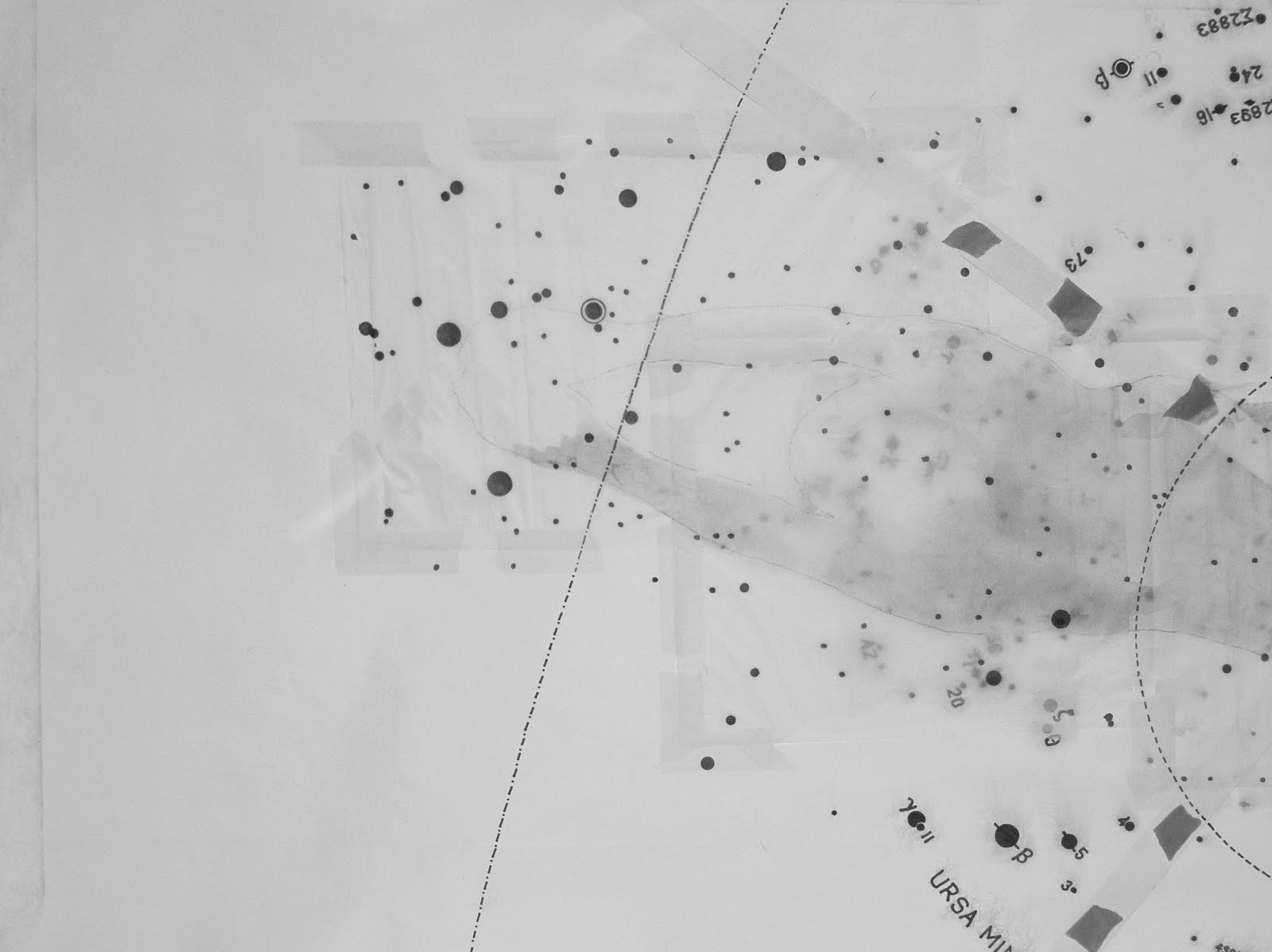
    Winchester College, Winchester. Exhibition with talk on creative practice, display of large body drawings, cyanotypes, astronomical charts and architectural notebooks. Workshop conducted in the making and experimentation of using the cyanotype process (historical, light based, printing process 1843).
    Link Gallery Winchester University, Winchester. Art and Archaeology around the Keatsian notion ‘Negative Capability’ photograms of anthropomorphic leper graves with excavated oyster shells found at the site (Morn Hill, Winchester).
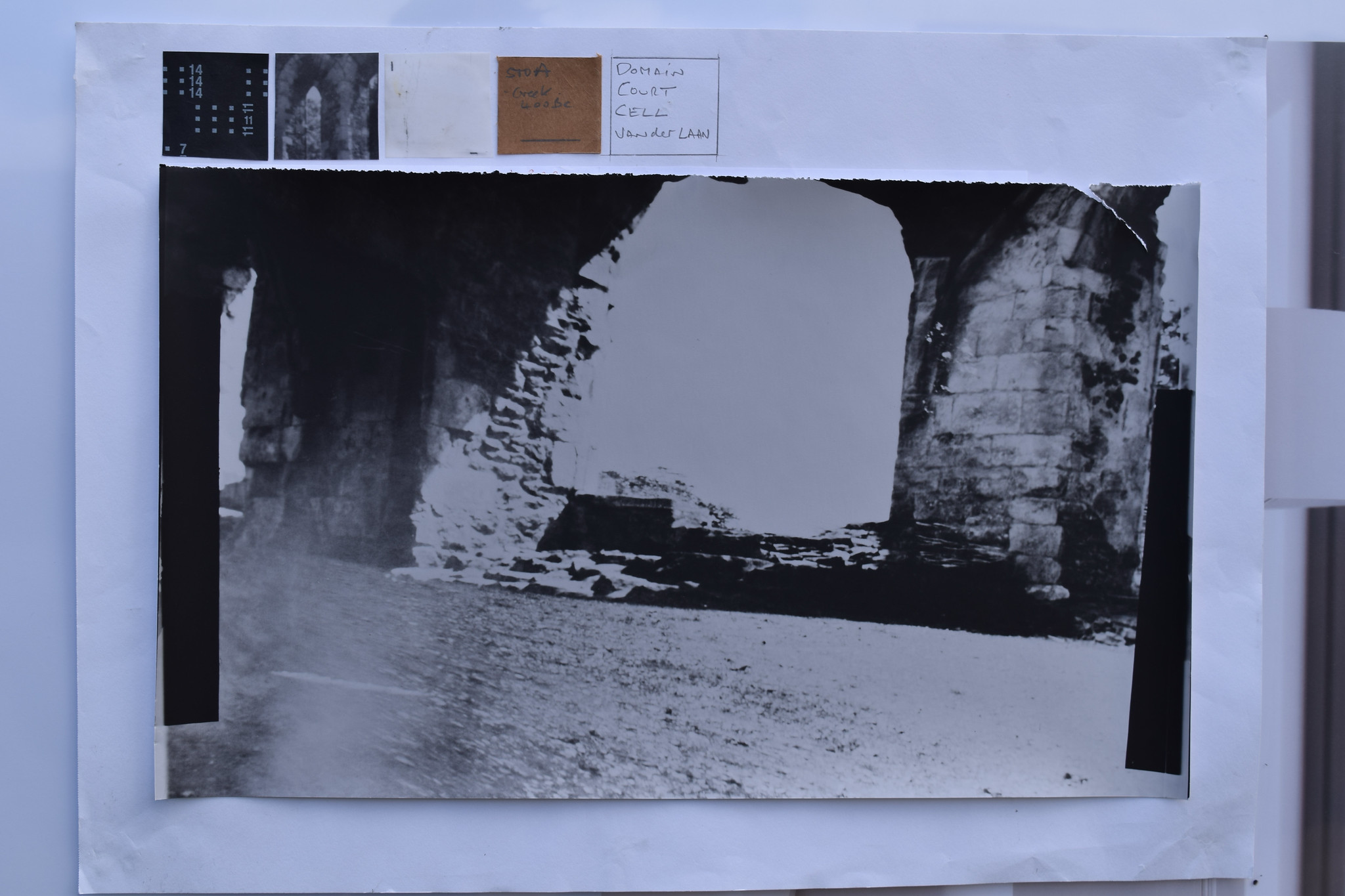
    Hyde Abbey Gatehouse and St Bart’s Church Winchester. Leylines exhibition of artist book photographs, drawings, maps and collages. Installation of archaeologist drawing frame with annotated lead labels, plumb bob, orientated to align with the speculative leyline phenomena.

    CRAFTS STUDY CENTRE Working Notes 2 July 2014-07-02 The Production/use of Space into Places to engender Societies. A site specific …

    Source: Space into Places : As Found, a concern for that which exists/A hut of one’s own

  • The Poetics of Order/Making/Odyssey : Dom Hans van der Laan/Tim Ingold/Jane Bennett

    Architectonic Space: Fifteen Lessons on the Disposition of the Human Habitat

    By Hans van der Laan

    http://www.vanderlaanstichting.nl/en/home/

    Makers work in a world that does not stand still

    Iteration allows for continual correction (material conversation) in response to an ongoing perceptual monitoring of the task as it unfolds, mixing the potential for blending or combining matter that already exists into new combinations
    Tim Ingold 2010
    The social life of making
    Making speaks in vivid dialogue with two associated themes, material and skill
    Creativity involves not merely a spark of innovation or the execution of artistic inspiration. But the capacity to respond to unfolding iterations with materials. To use slowly accrued haptic knowledge to manipulate processes on the fly, and to judge how to counteract error and seize opportunities as they evolve
    Making becomes a process of iteration, and a maker works with this iteration prolifically
    Matter and materials are lively and require attention, materials continue to thwart in unpredictable ways, decaying and breaking down or wearing or breaking under force
    Vibrant Matter, A Political Ecology of Things
    Jane Bennett 2010
    Attending to the process of making opens up prospects for following the lead of the material, where the properties of the materials themselves shape the direction in which making proceeds
    Tim Ingold 2010
    The aesthetic/vibrant spaces between objects
    Collected Notes : Raveningham Sculpture Trail 2020
    Walking underneath, through, passing by,
    … are all laid out in different moments in time.
    Dom Hans van der Laan
    ODYSSEY Aesthetic Intervals/Timbre/Traces
    Studio Blackboard
    Immateriality/Temporal/Transitions material and movement/Human agency
    A Species of Spaces
    Construction/Making/Collage
    Forming, slowness and repetition, elements of painting
    Assemblage, sensation, surface, objects and spaces between them gathered/thresholds
    Sheltering/Weathered/ Exploring a fragility of a painting in the landscape
    Robert Mangold, Paintings and Architectural Forms
    Fragments from sketchbooks
     Ephemeral Architecture
    Canvas as spatial verb
    Yellow Ochre, Molochite, Gesso, Canvas, Paper, Textiles,
    Wood, Lead, Nails
    Canvas as folded construction/shelter/place
    Operative Design, A Catalogue of Spatial Verbs
    Georg Simmel, text Frames, Handles, Landscapes and the aesthetic ecology of things

    The poetics of order:

    Dom Hans van der Laan’s architectonic space
    Caroline Voet

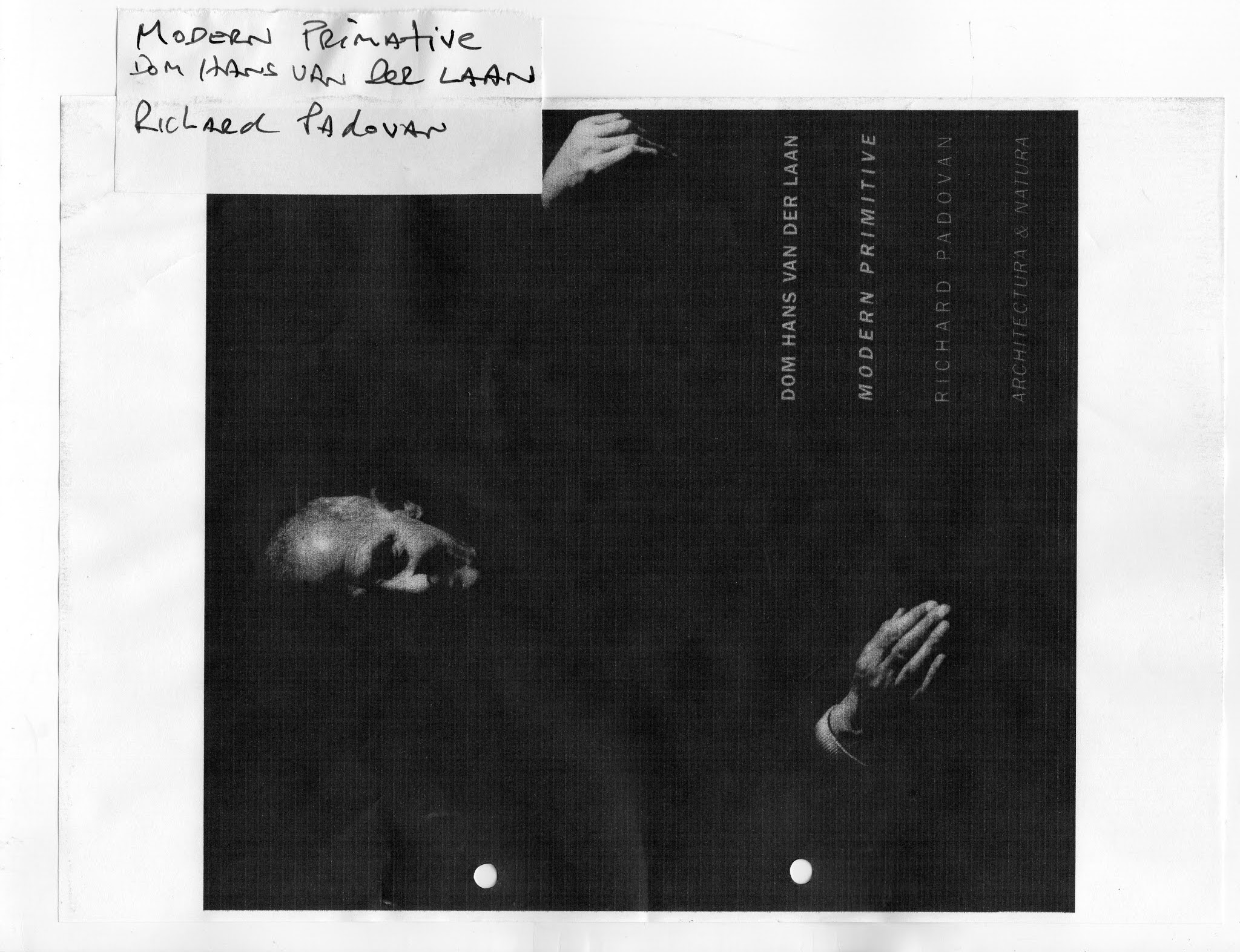
    Already in his first writings in the 1930s, Dom van der Laan aims to define architectural principles that provide an intellectual expression of the act of dwelling (‘wonen’). To dwell is to enter into a relationship with one’s surroundings, meaning to understand them. For van der Laan, this is the primordial function of architecture: it makes space readable. From his Benedictine background, he draws concepts that enable him to understand this complex process of cognition. He studies the old church fathers such as St Thomas Aquinas, especially his comments on Plato and Aristotle. The Benedictine way of life builds upon the intertwined relation between mystery and matter, between intellect and senses, believing that this relation can be expressed through a Platonic order.5 Professor van Hooff, in describing the work of Dom van der Laan, defines cognition as a dual process of synthesis and analysis.6 On the one hand, there is the act of living, a synthesis of the concrete and singular reality. On the other hand, there is the process of analysis by the abstracting intellect. For us to know the concrete and singular reality, an intense interrelation between the two processes is needed.

    http://www.vanderlaanstichting.nl/pics/pdf/130105-poetics_of_order-Caroline_Voet.pdf


    Architectonic Space: Fifteen Lessons on the Disposition of the Human Habitat By Hans van der Laan http://www.vanderlaanstichting.nl/en/home/…

    Source: The Poetics of Order/Making/Odyssey : Dom Hans van der Laan/Tim Ingold/Jane Bennett

  • Spatial Assemblage : Apparatus/Diffraction

     Assemblage : Apparatus/Diffraction

    “There are no simple concepts. Every concept has components and is defined by them.

    It therefore has a combination [chiffre]. It is a multiplicity, although not every multiplicity

    is conceptual…

    Not only do Descartes, Hegel, and Feuerbach not begin

    with the same concept,

    they do not have the same concept of beginning…

    Every concept has an irregular

    contour defined by the sum of its components,

    which is why,

    from Plato to Bergson,

    we find

    the idea of the concept being a

    matter of articulation,

    of cutting and

    cross-cutting.

    The concept is a whole because it totalizes

    its components, but it is

    a fragmentary whole.

    Only on this condition can it escape the

    mental chaos

    constantly threatening it, stalking it, trying to reabsorb it.”

    — Gilles Deleuze and Felix Guattari, What is Philosophy?, pp. 15-16.

    Assemblage (Wilcox)

    As opposed to concepts like structure, culture, science, objectivity, production, agency, technology, and nature, the idea of assemblage emphasizes the material-discursive heterogeneity of which the cosmos is constituted. As Deleuze explains:

    In assemblages you find states of things, bodies, various combinations of bodies, hodgepodges; but you also find utterances, modes of expression, and whole regimes of signs. The relations between the two are pretty complex. For example, a society is defined not by productive forces and ideology, but by ‘hodgepodges’ and ‘verdicts.’ [i]

    Fortun and Bernstein (1998) use the term “realitty” to describe the complex, messy world made up of assemblages and trace the genealogy of the concept throughout the twentieth century’s continental philosophical traditions. Beginning with Frankfurt School critical theorists like Walker Benjamin and Theodor Adorno, who coined the term “constellation,” and moving through Foucault and Deleuze, Fortun and Bernstein characterize the concept of the assemblage thus:

    In an assemblage, nothing explains it all: not the sciences, not the social sciences, not the human sciences. There isn’t anything that is first or fundamental in an assemblage—nature, language, culture, institutions, whatever—it’s all at once, and we with our questions come after it. Meaning that we are both assembled by it, and in pursuit of it. Even though we’re consigned to come after the assemblage has been assembled, both with and without our intentionality, that doesn’t stop us from going after it, too.[ii]

    https://conceptsinsts.wikispaces.com/Assemblage+%28Wilcox%29

    Assemblage (Weiss)

    (Disambiguation: Assemblage (Wilcox))

    The assemblage is introduced as a heuristic tool to map out the realitty of an idea: the conceptual connections surrounding and contributing to the formation of a topic, such as Darwin’s theory of evolution. The primary source text for this idea is Muddling Through by Fortun and Bernstein.

    There are four general characteristics of assemblages:

    1) Assemblages are a kind of infrastructure (1, 2) – “a complex, crazily reticulated transportation system” (105) – that, like roadways, facilitate (conceptual) movement in certain directions while constraining movement in other ways.

    2) Despite the constraining nature of assemblages, they still allow for some elements of power and agency to be exercised. If you have the ability, granted by some modes of thinking, to go “off-road” or to start a new chain of self-organizing “roadwork”, then you are able to recoup more agency in choosing which direction to think in. (105)

    3) An assemblage is always in some type of restricted motion as various nodes are afforded slight shifting within the constraints of their linkages. “The lobster form is not entirely whimsical, but a deliberate reminder that the sciences are in motion and, indeed, composed of linked motions.” (106) Stabilization is possible in small regions of an assemblage through stronger interconnections made between nodes of institutions, concepts, and activities, such as those found in the sciences. It is important to recognize that this stabilization effect comes not from reality, but from realitty, the social elements that contribute to a sense of fact or truth. This movement also emphasizes that visual representations are “diagrams of contingency” – the elements are all interdependent upon connections to other elements and that shifts in force or direction will transfer across the diagram, sometimes in indirect ways. (107)

    4) The representation of an assemblage is itself a kludged tool to aid our understanding of and inquiry into scientific activities. Rather than providing answers or hard-and-fast explanations, assemblages are meant to provoke questions and to open up possibilities in thinking about events and topics in new ways.

    https://conceptsinsts.wikispaces.com/Assemblage+(Weiss)

    Agential Realism

    A theory coined by Karen Barad, agential realism reconceptualizes the process by which objects are examined and knowledge created in scientific activities. Barad emphasizes that agential realism is not just an epistemological theory, but an ontological one, as it describes how reality is actually shaped.

    ” [Agential realism] is an epistemological and ontological framework that extends Bohr’s insights and takes as its central concerns the nature of materiality, the relationship between the material and the discursive, the nature of “nature” and of “culture” and the relationship between them, the nature of agency, and the effects of boundary, including the nature of exclusions that accompany boundary projects.

    Agential realism entails a reformulation of both of its terms – “agency” and “realism” – and provides an understanding of the role of human and nonhuman factors in the production of knowledge, thereby moving considerations of epistemic practices beyond the traditional realism versus social constructivism debates.” (89)

    Agency, according to Barad, “is a matter of intra-acting; it is an enactment, not something that someone or something has.” (112)

    Niels Bohr’s Quantum Physics

    “Bohr’s epistemology calls into question several foundationalist assumptions that Western epistemology generally takes as essential to its project; among these are an inherent subject/object distinction and the representational status of language.” (89)

    Influential in the development of agential realism was Niels Bohr, a quantum physicist who asserted that observing apparatuses are not merely passive instruments, but things that participate in the formulation of scientific observation. He also resolved the “wave-particle” duality paradox (97) by positing that the paradox existed because the methods used by scientists to measure light as a wave versus as a particle were mutually exclusive.

    By granting apparatuses a more active role in the production of knowledge, Bohr challenged the separateness of observer and object by referring to “objects of observation” and “agencies of observation”.

    “[T]his interaction between object and apparatus thus forms an inseparable part of the phenomenon.” (95)

    Apparatus

    “[A]pparatuses are specific material reconfigurings of the world that do not merely emerge in time but iteratively reconfigure space-timematter as part of the ongoing dynamism of becoming.”

    “…apparatuses are not mere instruments or devices that can be deployed as neutral probes of the natural world, or determining structures of a social nature, but neither are they merely laboratory instruments or social forces that function in a performative mode.”

    Barad uses the example of the transducer in a sonogram machine that is used to “view” a fetus:

    “the transducer does not allow us to peer innocently at the fetus, nor does it simply offer constraints on what we can see; rather, it helps produce and is “part of” the body it images.” (101)

    A transducer in a sonogram is not merely a passive instrument; it actively participates in the production of an image of a fetus, both in how it transforms auditory input (sound waves) into visual outputs on a screen, but also in how it makes the fetus seem to be more real and existent than it would have been without.

    Diffraction

    Another key idea behind agential realism is Barad’s emphasis on a transformative and transgressive diffraction, not just reproducing reflection:

    “In this regard, it is important not to confuse the fact that I am drawing on an optical phenomenon for my inspiration in developing certain aspects of my methodological approach … with the nature of the method itself. In particular, calling a method ‘diffractive’ in analogy with the physical phenomenon of diffraction does not imply that the method itself is analogical. On the contrary, my aim is to disrupt the widespread reliance on an existing optical metaphor – namely, reflection – that is set up to look for homologies and analogies between separate entities. By contrast, diffraction, as I argue, does not concern homologies but attends to specific material entanglements.” (87)

    Again, Barad’s posthumanist expansion of performativity to include nonhumans comes into play:

    “I propose a posthumanist performative approach to understanding technoscientific and other naturalcultural practices that specifically acknowledges and takes account of matter’s dynamism. The move toward performative alternatives to representationalism shifts the focus from questions of correspondence between descriptions and reality to matters of practices, doings, and actions.” (135)

    Barad clarifies that her posthumanism is not celebrating “after humans”, but more challenging the prima facie segregation and privileging of humans over and from other beings:

    “Posthumanism, as I intend it here, is not calibrated to the human; on the contrary, it is about taking issue with human exceptionalism while being accountable for the role we play in the differential constitution and differential positioning of the human among other creatures (both living and nonliving)” (136)

    Hearkening back to her physics roots, Barad compares the conceptual diffraction to optical diffraction versus reflection, explaining that diffraction allows for more insight because it transforms (conceptual) images:

    “Such an approach also brings to the forefront important questions of ontology, materiality, and agency, which social constructivist and traditional realist approaches get caught up in the geometrical optics of reflection where, much like the infinite play of images between two facing mirrors, the epistemological gets bounced back and forth, but nothing more is seen.

    Moving away from the representationalist trap of geometrical optics, I shift the focus to physical optics, to questions of diffraction rather than reflection. Diffractively reading the insights of poststructuralist theory, science studies, and physics through one another entails thinking the cultural and the natural together in illuminating ways.” (135)

    This diffraction challenges the singularity and solidity of boundaries, making what was sharply delineated a zone of fuzzy regions that have questionable divisions held in place by iterative performativity:

    https://conceptsinsts.wikispaces.com/Agential+Realism+%28Weiss%29


    Assemblage : Apparatus/Diffraction ‘There are no simple concepts. Every concept has components and is defined by them. It therefore has a c…
    Source: Spatial Assemblage : Apparatus/Diffraction

  • Drawing on Life : Bento’s Sketchbook/A Hut of One’s Own : John Berger/Ann Cline/Bento de Spinoza

    In the backyard of where she was living, Cline once decided to build a hut inspired by Kakuzo Okakura’s The Book of Tea.

    As my dwelling took shape, it began to shape my life as well. And when I sat inside reading the recluse poets, the terse simplicity of their record framed my own perception, one I likened to a camera recording a world of pure experience.

    The hut has a sense of immediacy that no room-filled house can achieve. The hut focuses its dweller on immediacy and meaning fulness. “I had found the commodity of my dwelling through the poetry of its use,” Cline concludes.

    The hut addresses the core of ritual as a part of nature versus the supposed freedom of modernist thought and the architectural contrivances it pursues. The hut represents the convergence of ritual and naturalness, at the same time addressing cultural issues and practices.

    With an agility larger structures can never match, huts bring together the physical environment with such disparate aspects of culture as necessity, fantasy, faith, and “life-style.” The hut, then, may be humankind’s supreme experiment.

    This may seem a bold conclusion given the modesty of the hut throughout history, and the modest ambitions of its makers, but this is Cline’s point, that the experiment in solitude and simplicity is bolder than any social or culturally-sanctioned experiments or projects, simply because the latter are contrived and unnatural, even anti­ natural.

    https://www.hermitary.com/bookreviews/cline.html

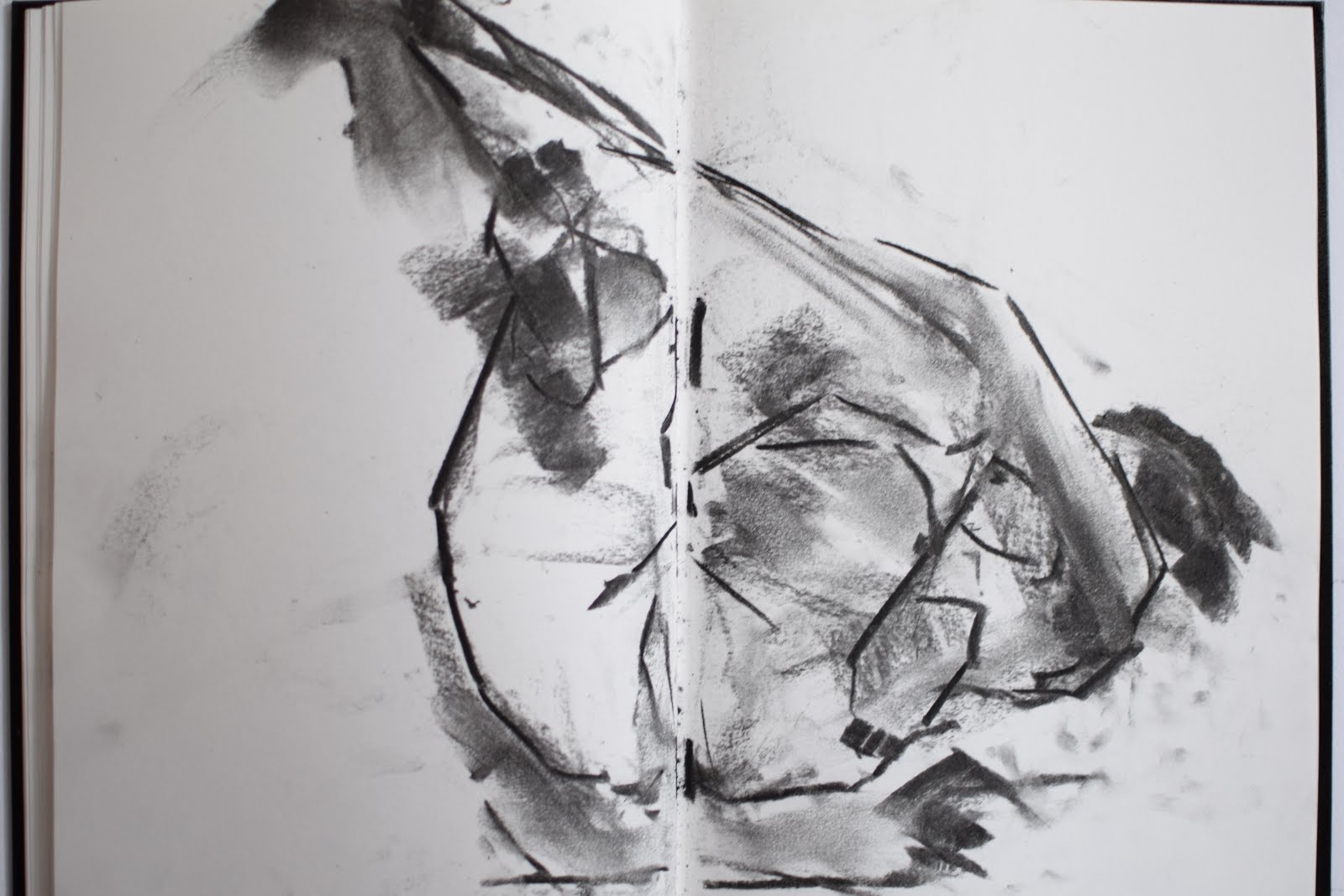
    Then the days of working at home on it. The image in my head was often clearer than the one on the paper. I redrew and redrew. The paper became grey  with  alterations and  cancelations.  The drawing didn’t get better, but gradually she, about to stand up, was more insistently there.

    The effort of my  corrections and  the endurance of the paper have begun  to resemble the resilience of Maria’s own body. The surface of the drawing – its skin, not its image — make me think of how there are moments when a dancer can make your hairs stand on end.

    We who  draw do  so  not only  to  make something  observed visible to others, but also to accompany something invisible to its incalculable destination.

    The bodies of dancers with their kind of devotion are dual. And this is visible whatever they are doing. A kind of Uncertainty Principle determines them; instead of being alternately particle and wave, their bodies are alternately giver and gift.

    They know their own bodies in such a penetrating way that they can be within them, or before them and beyond them. And this alternates,  sometimes changing  every  few seconds,  some­ times every few minutes.

    The duality  of each  body  is what allows them,  when  they perform,  to  merge into  a single entity.  They  lean  against,  lift, carry, roll over, separate from, co-join, buttress each other so that two or three bodies become a single dwelling, like a living cell is a dwelling for its molecules and messengers, or a forest for its animals.

    The same duality  explains why  they  are as much  intrigued by falling as by leaping, and why the ground challenges them as much as the air.


    In the backyard of where she was living, Cline once decided to build a hut inspired by Kakuzo Okakura’s The Book of Tea. As my dwelling took…
    Source: Drawing on Life : Bento’s Sketchbook/A Hut of One’s Own : John Berger/Ann Cline/Bento de Spinoza